
Coconut Flour Market Size and Share
Market Overview
| Study Period | 2022 - 2032 |
|---|---|
| Market Size (2027) | USD 2.43 Billion |
| Market Size (2032) | USD 3.42 Billion |
| Growth Rate (2027 - 2032) | 7.08 % |
| Fastest Growing Market | Asia-Pacific |
| Largest Market | Asia-Pacific |
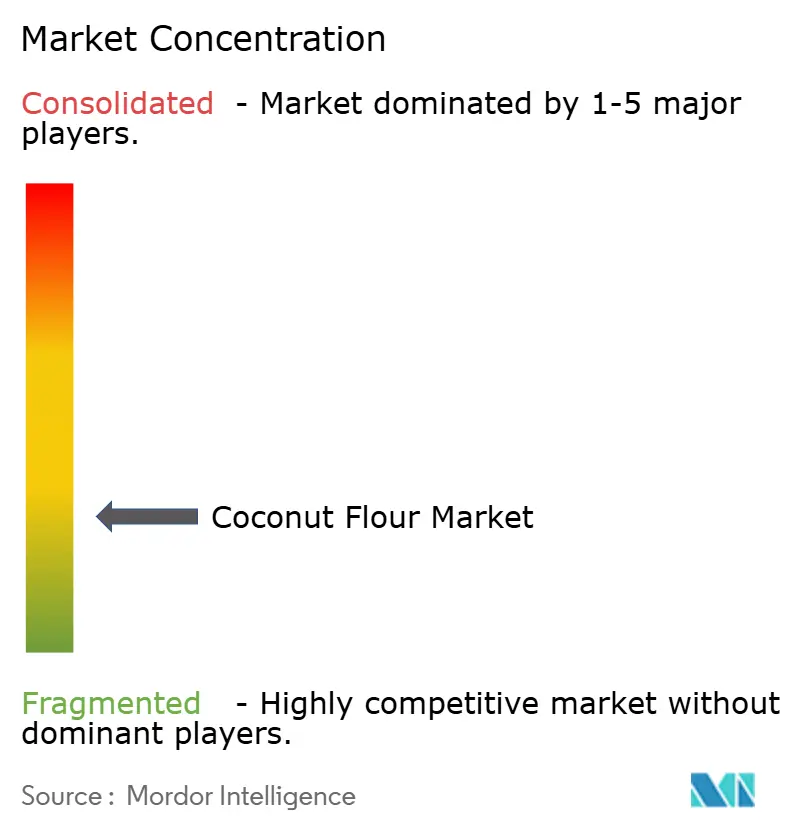
| Market Concentration | Low |
Major Players *Disclaimer: Major Players sorted in no particular order Image © Mordor Intelligence. Reuse requires attribution under CC BY 4.0. | |
Coconut Flour Market Analysis by Mordor Intelligence
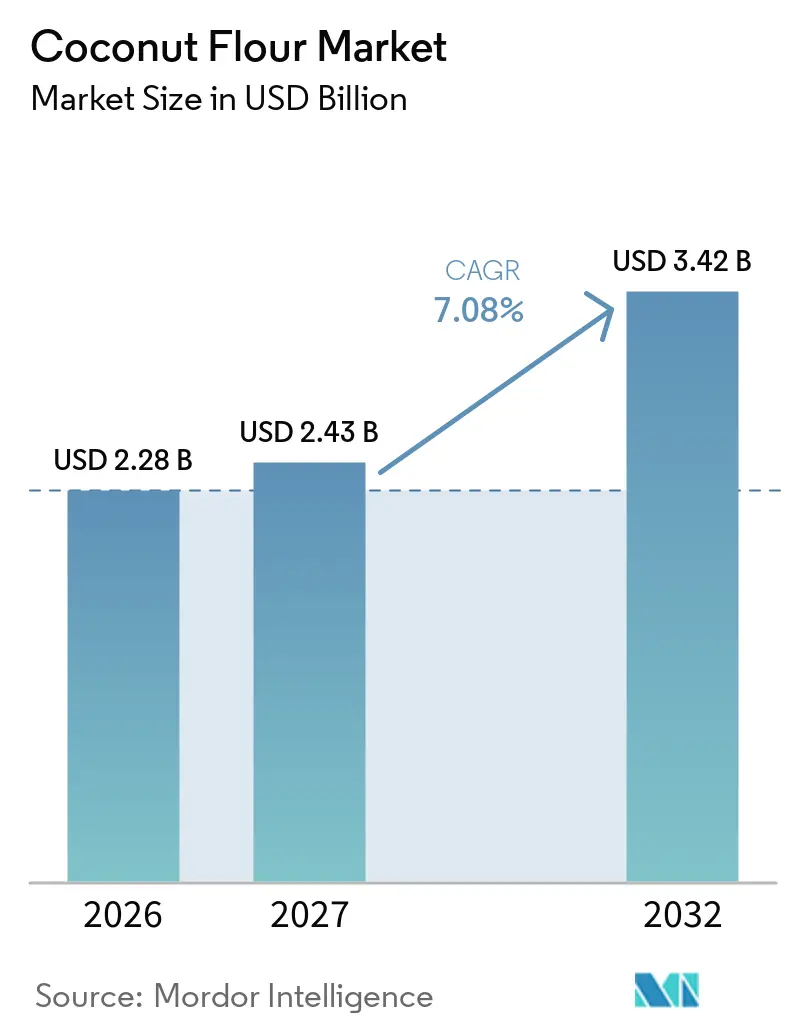
The coconut flour market size grows from USD 2.28 billion in 2026 to USD 2.43 billion in 2027, and is forecast to reach USD 3.42 billion by 2032 at a 7.08% CAGR over 2027-2032. The coconut flour market is supported by food manufacturers seeking gluten-free, fiber-rich, and recognizable ingredients for bakery, snack, and functional food formulations. Its single-ingredient profile provides suppliers with a clear advantage as brands increasingly prefer products with short ingredient lists and require fewer formulation changes. The market also benefits from processing models that maximize coconut utilization, as manufacturers can produce flour from material remaining after oil extraction. However, supply conditions remain critical, as raw coconut shortages can increase costs and limit the volumes available to processors. Certification, traceability, consistent moisture control, and the ability to meet buyer specifications are becoming increasingly important competitive factors, surpassing basic commodity positioning.
Key Report Takeaways
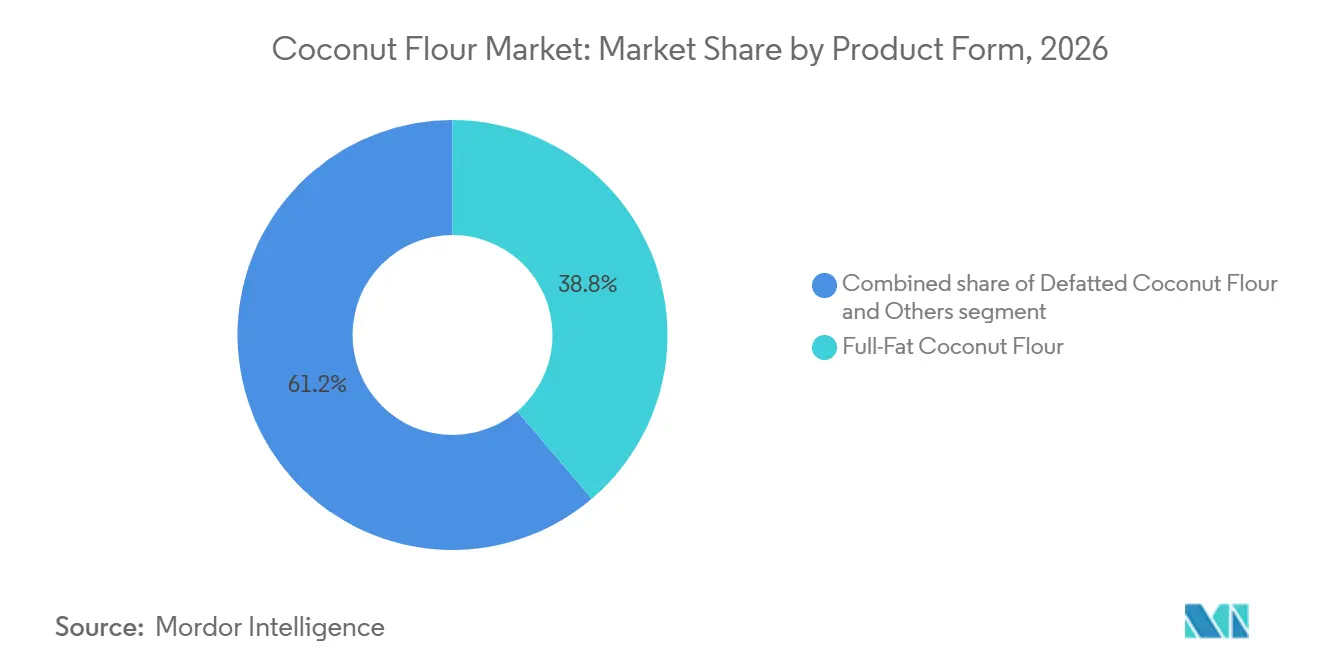
- By product form, full-fat coconut flour led the coconut flour market with a 38.78% share in 2026, while defatted coconut flour is expected to register the fastest CAGR of 8.23% during 2027-2032.
- By nature, conventional retained a 62.95% share in 2026, while organic is anticipated to expand at an 8.45% CAGR through 2032.
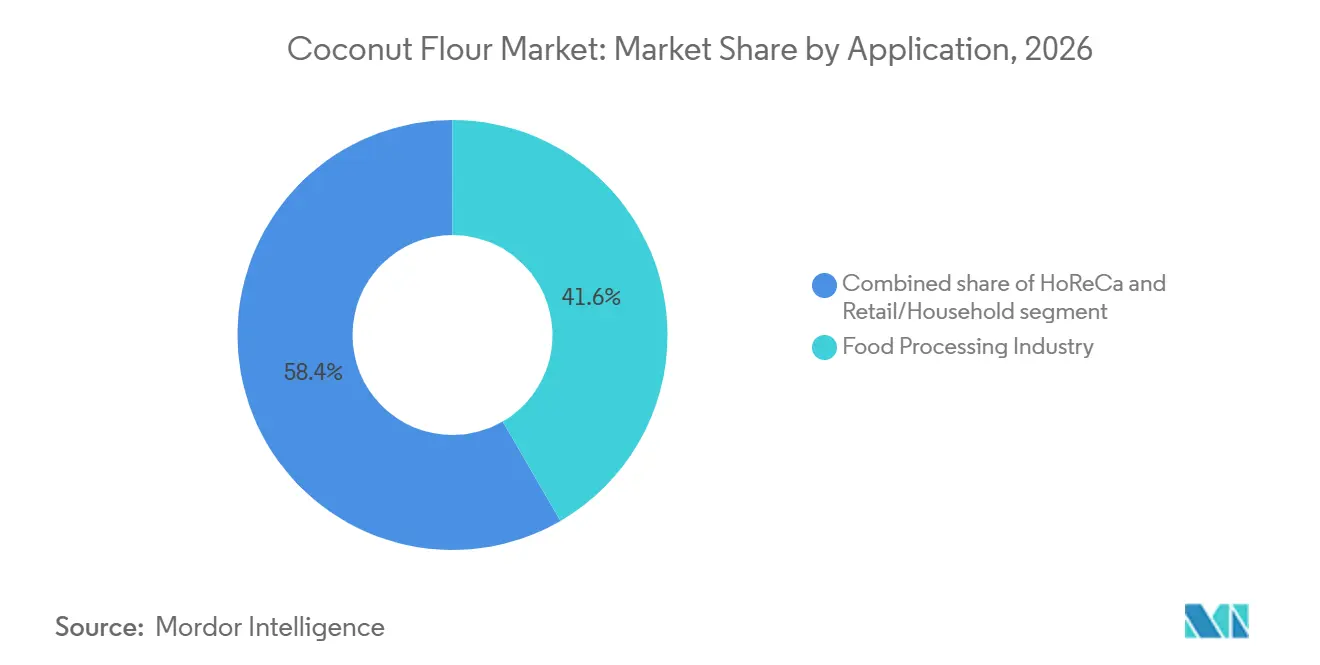
- By application, the food processing industry led the market with a share of 41.63% in 2026, while retail/household is anticipated to register the fastest CAGR of 8.01% during 2027-2032.
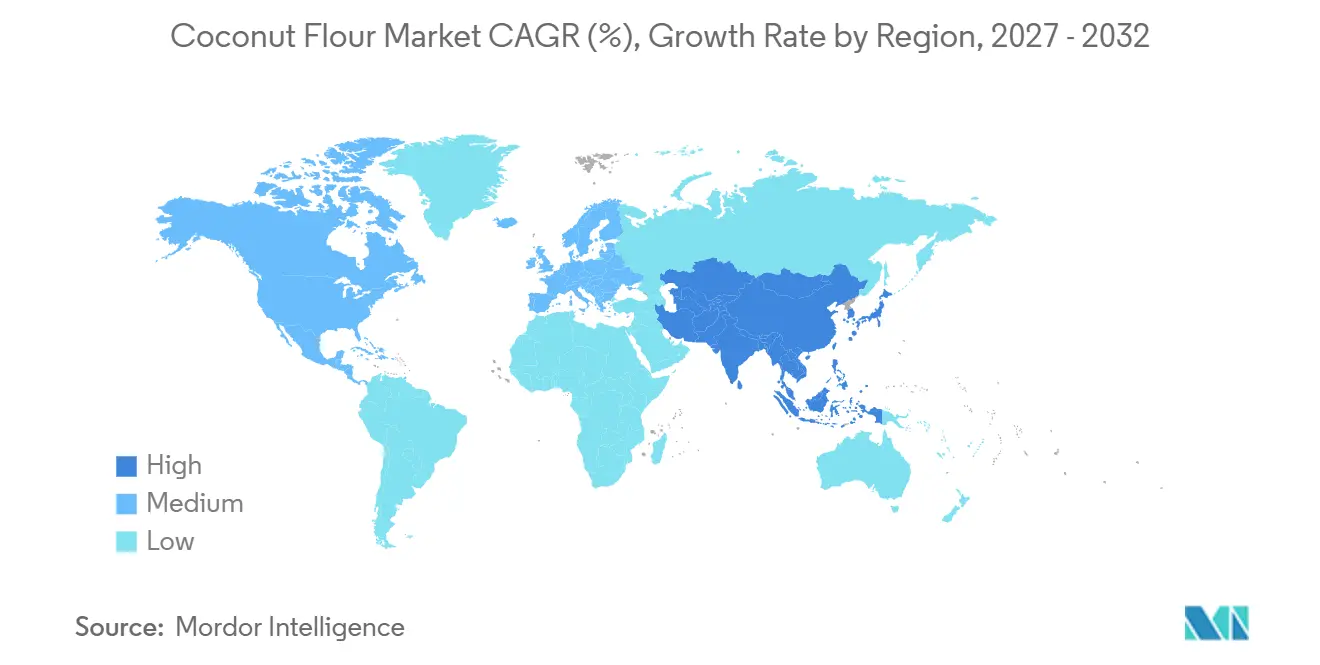
- By geography, Asia-Pacific led the coconut flour market in 2026 with a 43.12% share, and is projected to advance at a 7.87% CAGR through 2032.
Note: Market numbers in this report are based on Mordor Intelligence's proprietary estimation framework, which combines nine months of actuals with Q4 projections for base year 2026.
Global Coconut Flour Market Trends and Insights
Drivers Impact Analysis*
| Driver | (~) % Impact on CAGR Forecast | Geographic Relevance | Impact Timeline |
|---|---|---|---|
| Rising demand for gluten-free flour alternatives | +2.2% | North America and Europe, with growing relevance in Asia-Pacific and the Middle East and Africa | Medium term (2-4 years) |
| Growth in commercial bakery and packaged baking mix production | +1.6% | Global, with strongest relevance in North America, Europe, and Southeast Asia | Short term (≤ 2 years) |
| Rising demand for high-fiber ingredients in food formulation | +1.1% | Global, particularly North America, Europe, and urban Asia-Pacific | Medium term (2-4 years) |
| Expansion of plant-based and alternative-ingredient food manufacturing | +0.9% | North America and Europe, with spillover to Asia-Pacific | Medium term (2-4 years) |
| Increasing valorization of coconut-processing residues | +0.5% | Asia-Pacific, especially Indonesia, the Philippines, and Vietnam, with spillover to Europe | Long term (≥ 4 years) |
| Growing utilization of coconut flour in nutritional and sports food products | +0.5% | Asia-Pacific, particularly Indonesia, the Philippines, and India, with potential opportunities in North America and Europe | Long term (≥ 4 years) |
| Source: Mordor Intelligence | |||
Rising Demand for Gluten-Free Flour Alternatives
Coconut flour supports gluten-free product development because it is naturally gluten-free and can be positioned without artificial substitutes. According to the Code of Federal Regulations 2026 article, foods marketed with a gluten-free claim in the United States must contain less than 20 parts per million (ppm) of gluten under the Food and Drug Administration's rule[1]. The European Union framework applies the same threshold, providing ingredient buyers with a familiar basis for sourcing and testing. The coconut flour market can benefit as flour producers that document testing and segregation practices help food manufacturers meet labeling requirements. Consumer demand for recognizable ingredients further strengthens this role, as coconut flour is typically sold as a single-ingredient product. The Celiac Disease Foundation has also called for global discussion on whether the existing threshold adequately protects all individuals with celiac disease, maintaining attention on tightly controlled gluten-free ingredient supply chains.
Growth in Commercial Bakery and Packaged Baking Mix Production
Commercial bakery applications are expanding as coconut flour increases fiber content in composite flour formulations. This enables bakery manufacturers to evaluate the ingredient before adopting higher replacement levels. However, coconut flour has high water absorption properties, requiring product developers to adjust hydration levels and processing conditions rather than use it as a direct substitute for wheat flour. Packaged mix producers can leverage this characteristic by developing formulations specifically designed for coconut flour. The ingredient also creates opportunities for specialty baking mixes targeting consumers seeking gluten-free and fiber-enriched alternatives. Consequently, the coconut flour market depends on suppliers’ ability to provide clear technical guidance on inclusion rates, moisture management, and finished-product texture.
Rising Demand for High-Fiber Ingredients in Food Formulation
Coconut flour contains substantial dietary fiber, creating opportunities in foods positioned around satiety, digestive health, and fiber claims. The ingredient supports bakery applications and emerging formats that require a dry, plant-based component with moisture-management properties. A 2026 article by Springer Nature states that spent coconut flour highlighted its potential use in plant-based cheese spreads, expanding its application scope beyond baked goods. These findings support demand from food formulators seeking to combine plant protein with fiber rather than relying on protein alone. The coconut flour market benefits when processors provide consistent particle size, low moisture content, and food safety documentation for these more demanding applications.
Expansion of Plant-Based and Alternative-Ingredient Food Manufacturing
Coconut flour provides food manufacturers with a plant-derived, fiber-rich ingredient for developing alternative formulations across bakery products, snacks, and noodles. In October 2025, the Philippine government’s Agricultural Training Institute, in collaboration with the Philippine Coconut Authority and the Department of Trade and Industry, trained 54 coconut farmers in processing food-based coconut products and by-products[2]. This initiative supports the development of value-added coconut ingredients and food products. The government initiative reflects continued support for expanding coconut processing capabilities and developing value-added products. Manufacturers can incorporate coconut flour into selected food formulations to increase fiber content and diversify plant-based ingredient offerings. However, its water absorption properties and texture characteristics require recipe adjustments. These factors create opportunities for manufacturers developing specialty foods containing coconut-derived ingredients and for suppliers that can provide consistent flour specifications and technical formulation support.
Restraints Impact Analysis*
| Restraint | (~) % Impact on CAGR Forecast | Geographic Relevance | Impact Timeline |
|---|---|---|---|
| High production costs compared with conventional flours | -1.8% | Global, with the strongest effect in North American and European import markets | Short term (≤ 2 years) |
| Volatility in coconut raw-material availability | -1.5% | Asia-Pacific origin markets, with cost pass-through to North America and Europe | Short term (≤ 2 years) |
| Quality preservation challenges associated with moisture control and microbial safety | -0.8% | Global, with greater exposure in tropical processing hubs and long-haul export channels | Medium term (2-4 years) |
| Competition from alternative specialty flours | -1.2% | North American and European retail, plus Asia-Pacific premium food segments | Medium term (2-4 years) |
| Source: Mordor Intelligence | |||
High Production Costs and Competition From Alternative Specialty Flours
Coconut flour incurs higher processing costs than conventional wheat flour because its production involves oil extraction, drying, milling, sieving, and testing. Certifications, including HACCP, ISO, Halal, and Organic, can further increase costs, although institutional customers often require them. Its high water absorption capacity may also necessitate recipe adjustments, complicating cost comparisons for food manufacturers. These factors restrict coconut flour’s use in price-sensitive products and create opportunities for alternative specialty flours with different cost structures or handling characteristics. The coconut flour market relies on processors that can control costs while maintaining food safety and product consistency. Although the improved utilization of coconut fractions can help reduce cost pressures, the cost gap compared with mainstream flour remains difficult to narrow in the short term.
Volatility in Coconut Raw-Material Availability and Quality Preservation
Coconut flour production depends on a reliable supply of mature coconuts and suitable residues generated during coconut milk and oil extraction. However, climatic conditions, pest infestations, and crop diseases can cause fluctuations in coconut cultivation, affecting raw material availability and procurement stability. In September 2025, India's Central Plantation Crops Research Institute identified climate variability and emerging pests and diseases as key challenges for the coconut sector [3]. These agricultural uncertainties reduce harvest volumes, disrupt coconut supplies to processing facilities, and cause fluctuations in raw material procurement costs. For coconut flour manufacturers, inconsistent feedstock availability can complicate production planning, capacity utilization, and inventory management. These constraints may also limit manufacturers' ability to maintain consistent product availability and fulfill supply commitments to food processors and distributors across international markets.
*Our forecasts treat driver/restraint impacts as directional, not additive. The impact forecasts reflect baseline growth, mix effects, and variable interactions.
Segment Analysis
By Product Form: Defatted Coconut Flour Variants Gain Stronger Formulation Traction
Full-fat coconut flour accounted for 38.78% of the coconut flour market size in 2026, supported by its broad availability and familiar use in traditional baking applications. Its fat content enhances mouthfeel and moisture retention in recipes where these attributes are important. Defatted coconut flour represents the fastest-growing form and is forecast to expand at a CAGR of 8.23% through 2032. This growth reflects rising demand from functional food manufacturers seeking lower-fat, high-fiber ingredients. Defatted coconut flour also provides oil-absorption properties that support texture and moisture management in food formulations.The coconut flour market is likely to favor processors that can deliver consistent specifications for these applications. Reliable analytical data will become increasingly important as customers transition from product trials to regular purchases.
The other category includes partially defatted and blended products designed to balance absorption, texture, and cost. These products may combine coconut flour with almond, cassava, or oat flour when customers do not require the handling characteristics of coconut flour alone. Composite blends can help bakery companies incorporate a fiber-focused value proposition while maintaining familiar processing behavior. This approach makes gradual adoption more feasible for manufacturers that are cautious about modifying established formulations. Suppliers that provide guidance on hydration, particle size, and shelf life can reduce customers’ reformulation risk. Full-fat products will remain relevant in applications where sensory performance is critical, while defatted grades offer a distinct growth opportunity in fiber-focused food product development.

By Nature: Organic Premiumization Outpaces Conventional Volume Growth
Conventional coconut flour accounted for 62.95% of the coconut flour market size in 2026, supported by its wider availability and lower procurement costs. It is also well established in institutional contracts where organic certification is not a formal requirement. Organic coconut flour is projected to grow at a CAGR of 8.45% through 2032, as brands use certification to differentiate products in premium natural food channels. Organic certification helps food manufacturers communicate sourcing and production practices to consumers who closely examine product labels. However, this advantage involves additional audit, recordkeeping, and segregation requirements for processors. These requirements can challenge smaller processors that source from numerous smallholder farms. Consequently, the coconut flour industry has a bifurcated structure, comprising high-volume conventional supply and a smaller certified segment with a higher-value proposition. Both segments require reliable sourcing, while the organic segment also depends on formal chain-of-custody controls.
Organic supply depends closely on the ability of Indonesian and Philippine processors to develop certified farm networks. Compliance with the United States National Organic Program and European organic regulations can increase operating costs, but it can also enable suppliers to access premium retail and private-label contracts. The coconut flour market offers opportunities for certified suppliers that combine credible documentation with consistent flour quality. Conventional grades remain important, as many food processors prioritize reliable supply and competitive input costs. Suppliers that cannot demonstrate origin or process controls may face greater price competition, whereas those that can meet these requirements may establish longer-term customer relationships in markets with stringent retailer standards. Therefore, the market structure will continue to support both scale-focused conventional producers and smaller premium suppliers with strong certification capabilities.
By Application: Industrial Processing Anchors Demand While Retail Expands
The food processing industry accounted for 41.63% of the coconut flour market size in 2026, making it the largest application segment. Bakery and confectionery production represents a significant share of this demand, as manufacturers use coconut flour in breads, cakes, cookies, and baking mixes. The ingredient can be incorporated at varying inclusion levels depending on the desired texture, fiber target, and processing conditions. Snacks and cereals represent another application area, as formulators use coconut flour for fiber fortification and texture management. Nutritional and functional foods also contribute significantly to demand because coconut flour aligns with gluten-free and plant-based product positioning. HoReCa demand remains relevant for dietary-restriction menus and premium foodservice offerings, although it does not represent the largest sales channel.
Retail/household is the fastest-growing application segment, with a projected CAGR of 8.01% through 2032. Health food stores, supermarkets, hypermarkets, and online stores have increased the ingredient's visibility among home bakers and consumers seeking specialty flours. Online retail enables smaller brands to reach niche consumer groups without relying on extensive physical distribution networks. Supermarkets and hypermarkets remain important because they provide broad consumer access and support routine grocery purchases. The coconut flour market also benefits from packaging that clearly explains recommended use levels and liquid adjustments. Household users may discontinue use if recipes fail; therefore, clear instructions and consistent product quality are essential. Retail growth is thus driven by both shelf availability and consumer confidence in successfully using the product.
Geography Analysis
Asia-Pacific accounted for 43.12% of global revenue in 2026 and is expected to grow at a CAGR of 7.87% through 2032. The region combines significant coconut production, established export networks, food manufacturing capacity, and rising urban demand across Indonesia, the Philippines, and India. Indonesian authorities have identified downstream coconut processing as a priority, supporting the development of higher-value coconut products. The coconut flour market in Asia-Pacific depends on the availability of raw materials after meeting demand for whole-coconut exports. Domestic consumption complements export opportunities, making the region important for both processing volumes and ingredient demand.
North America is import-dependent but remains attractive for certified and clean-label coconut flour products that can command premium positioning. The United States’ gluten-free labeling regulations provide ingredient suppliers and food producers with clear compliance standards. The coconut flour market in North America is influenced by import costs, supply reliability, and the documentation buyers require for gluten-free claims, microbiological standards, organic certification, and product origin. E-commerce platforms, club stores, and mainstream grocery formats can expand household access across the region.
The United Kingdom, Germany, France, Italy, and the Netherlands generate demand from consumers and commercial food producers seeking certified ingredients. South America and the Middle East and Africa represent smaller markets; however, demand is emerging through premium retail channels and imported gluten-free foods. The coconut flour market can expand in these regions as importers establish reliable distribution channels and communicate the ingredient’s applications in local recipes.
Competitive Landscape
The coconut flour market is fragmented, with competition among processors, importers, private-label suppliers, and consumer brands. No single supplier acts as a price-setter. Vertically integrated Asian processors compete through access to raw materials, milling capabilities, export logistics, and the ability to sell multiple coconut-based ingredients. Importers and re-processors in North America and Europe differentiate through organic certification, customized specifications, and private-label services.
Consumer-facing brands compete through packaging, retail distribution, and consumer trust in product quality. Traceability, direct farmer relationships, and verified food safety systems help suppliers differentiate when serving larger food manufacturing accounts. Such moves can also improve access to related material streams and shared quality infrastructure for coconut ingredients. Leading companies are investing in supply resilience, processing scale, and product diversification rather than relying solely on flour sales.
High-specification defatted coconut flour can provide a differentiated position when buyers require strict control over moisture content, particle size, and microbiological quality. Digital moisture monitoring and routine microbial testing can reduce batch rejections and increase the share of products that meet customer specifications. HACCP, ISO 22000, Halal, and Kosher certifications can be essential for institutional contracts in North America and Europe. Smaller companies can use e-commerce channels and credible upcycled-ingredient positioning to reach consumers; however, scale, regulatory compliance, and reliable supply will determine their ability to secure larger accounts.
Coconut Flour Industry Leaders
-
Celebes Coconut Corporation
-
Bob’s Red Mill Natural Foods, Inc.
-
The Coconut Company (UK) Ltd
-
Healthy Traditions, Inc.
-
NOW Health Group, Inc.
- *Disclaimer: Major Players sorted in no particular order
Recent Industry Developments
- June 2026: Marx Brothers Inc. launched Embe Organic Coconut Flour in more than 190 H-E-B supermarket locations across Texas, expanding the brand’s mainstream grocery distribution for organic coconut flour.
- May 2026: Asia Ingredients Group (AIG) broke ground on its Asia Coconut Processing Plant II in Vinh Long Province, Vietnam, with a total investment of VND 630 billion (USD 24 million). The facility includes a UHT sterilization line with an annual capacity of 48,000 tons and two desiccated coconut processing lines with a combined annual output capacity of 2,400 tons.
- January 2026: With support from the International Finance Corporation, CBL Group completed the acquisition of PT Tri Jaya Tangguh Indonesia, an Indonesian coconut processing facility, for more than USD 25 million. The acquisition aimed to expand exports to Europe and the United States.
Global Coconut Flour Market Report Scope
Coconut flour is a gluten-free ingredient produced by drying and grinding coconut meat or the residue remaining after coconut milk or oil extraction. It is used in bakery products, snacks, cereals, and other food applications because of its high dietary fiber content and distinctive coconut flavor.
The coconut flour market is segmented by product form, nature, application, and geography. By product form, the market is segmented into full-fat coconut flour, defatted coconut flour, and others. By nature, the market is segmented into organic and conventional. By application, the market is segmented into the food processing industry (bakery and confectionery, snacks and cereals, savory foods and cooking, nutritional and functional foods, and other food applications), HoReCa, and retail/household (hypermarkets and supermarkets, convenience/grocery stores, online retail, other distribution channels). Based on geography, the market is classified into North America, Europe, South America, Asia-Pacific, and the Middle East and Africa. The market forecasts are provided in terms of value (USD).
| Full-Fat Coconut Flour |
| Defatted Coconut Flour |
| Others |
| Organic |
| Conventional |
| Food Processing Industry | Bakery and Confectionery |
| Snacks and Cereals | |
| Savory Foods and Cooking | |
| Nutritional and Functional Foods | |
| Other Food Applications | |
| HoReCa | |
| Retail/Household | Hypermarkets and Supermarkets |
| Convenience/Grocery Stores | |
| Online Retail | |
| Other Distribution Channels |
| North America | United States |
| Canada | |
| Mexico | |
| Rest of North America | |
| Europe | Germany |
| United Kingdom | |
| Italy | |
| France | |
| Spain | |
| Netherlands | |
| Rest of Europe | |
| Asia-Pacific | China |
| India | |
| Japan | |
| Australia | |
| Indonesia | |
| Thailand | |
| Rest of Asia-Pacific | |
| South America | Brazil |
| Argentina | |
| Rest of South America | |
| Middle East and Africa | South Africa |
| Saudi Arabia | |
| United Arab Emirates | |
| Turkey | |
| Rest of Middle East and Africa |
| By Product Form | Full-Fat Coconut Flour | |
| Defatted Coconut Flour | ||
| Others | ||
| By Nature | Organic | |
| Conventional | ||
| By Application | Food Processing Industry | Bakery and Confectionery |
| Snacks and Cereals | ||
| Savory Foods and Cooking | ||
| Nutritional and Functional Foods | ||
| Other Food Applications | ||
| HoReCa | ||
| Retail/Household | Hypermarkets and Supermarkets | |
| Convenience/Grocery Stores | ||
| Online Retail | ||
| Other Distribution Channels | ||
| By Geography | North America | United States |
| Canada | ||
| Mexico | ||
| Rest of North America | ||
| Europe | Germany | |
| United Kingdom | ||
| Italy | ||
| France | ||
| Spain | ||
| Netherlands | ||
| Rest of Europe | ||
| Asia-Pacific | China | |
| India | ||
| Japan | ||
| Australia | ||
| Indonesia | ||
| Thailand | ||
| Rest of Asia-Pacific | ||
| South America | Brazil | |
| Argentina | ||
| Rest of South America | ||
| Middle East and Africa | South Africa | |
| Saudi Arabia | ||
| United Arab Emirates | ||
| Turkey | ||
| Rest of Middle East and Africa | ||
Key Questions Answered in the Report
What is the current and projected size of the coconut flour market, and what growth rate is it expected to achieve?
The coconut flour market was valued at USD 2.28 billion in 2026 and is estimated to reach USD 2.43 billion in 2027, before expanding to USD 3.42 billion by 2032. The market is projected to grow at a CAGR of 7.08% during 2027-2032, following a 6.38% growth rate between 2026 and 2027.
Which product form held the largest share of the coconut flour market in 2026?
Full-Fat Coconut Flour was the leading product form, accounting for 38.78% of the market in 2026.
Which nature segment dominated the coconut flour market in 2026?
The Conventional segment dominated the market with a 62.95% share in 2026.
Which application segment accounted for the largest market share in 2026?
The Food Processing Industry was the largest application segment, capturing 41.63% of the market in 2026.
Which region led the coconut flour market in 2026?
Asia-Pacific was the largest regional market, accounting for 43.12% of revenue in 2026.