
Cloud-based Software As A Medical Device (SaMD) Market Size and Share
Market Overview
| Study Period | 2020 - 2031 |
|---|---|
| Market Size (2026) | USD 3.39 Billion |
| Market Size (2031) | USD 6.88 Billion |
| Growth Rate (2026 - 2031) | 15.25 % |
| Fastest Growing Market | Asia-Pacific |
| Largest Market | North America |
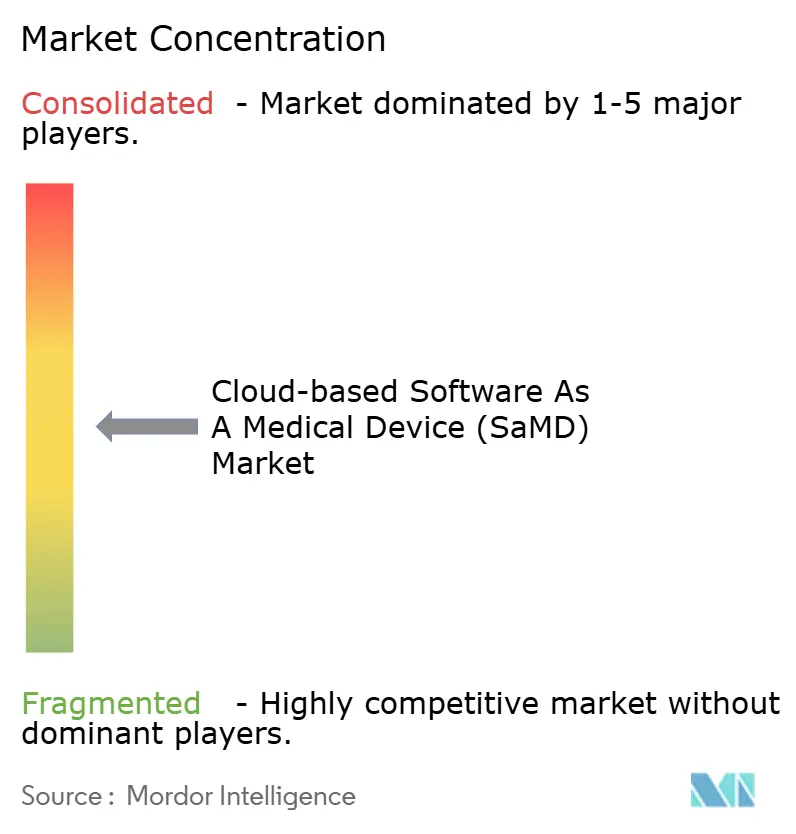
| Market Concentration | Medium |
Major Players *Disclaimer: Major Players sorted in no particular order Image © Mordor Intelligence. Reuse requires attribution under CC BY 4.0. | |
Cloud-based Software As A Medical Device (SaMD) Market Analysis by Mordor Intelligence
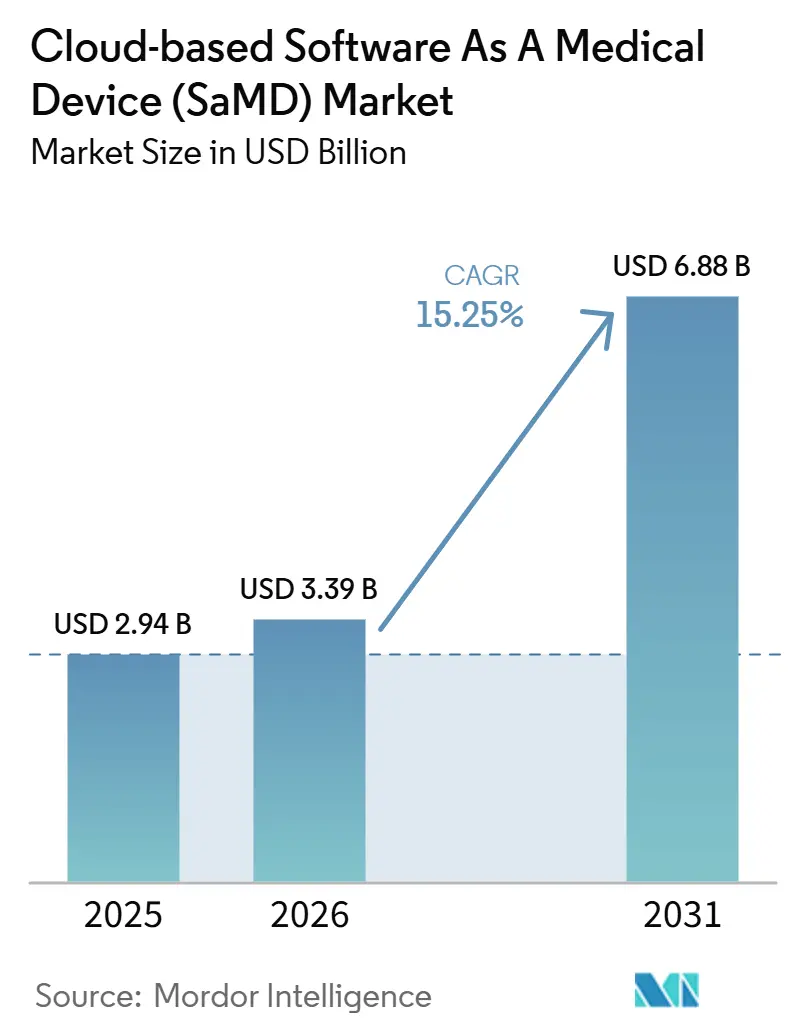
The cloud-based software as a medical device market size was valued at USD 2.94 billion in 2025 and is estimated to grow from USD 3.39 billion in 2026 to reach USD 6.88 billion by 2031, at a CAGR of 15.25% during the forecast period (2026-2031).
AI-enabled clinical workflows, remote care infrastructure, and cloud delivery models are supporting growth in the cloud-based software as a medical device market. In December 2024, the FDA finalized guidance on Predetermined Change Control Plans, creating a framework for certain authorized AI-enabled device software functions to undergo planned modifications without a new marketing submission for every change. This framework supports cloud platforms that manage model versions, monitoring, and software updates through controlled processes while maintaining records of each release’s clinical impact. However, data residency, cybersecurity, clinical validation, and model performance across patient groups remain key adoption constraints, especially across hospitals, regions, and patient populations with varying governance requirements.
Key Report Takeaways
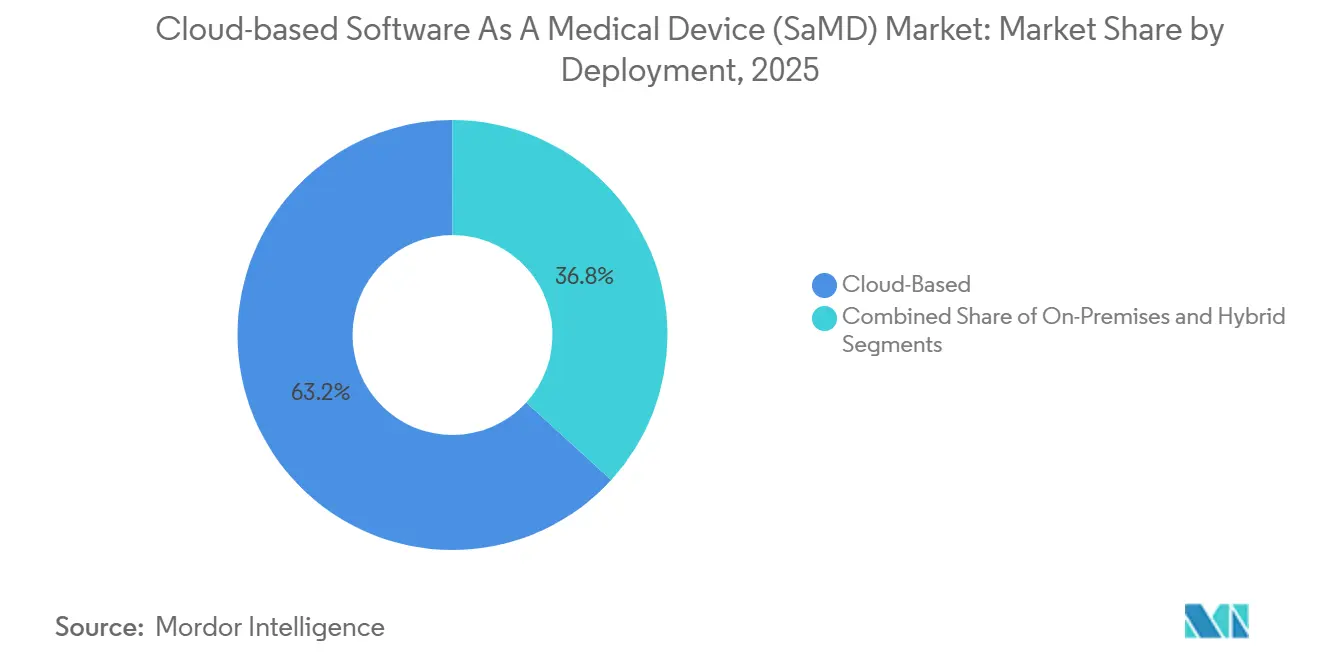
- By deployment, cloud-based solutions held 63.22% of the cloud-based software as a medical device market share in 2025, while on-premises deployment is projected to grow at an 18.93% CAGR through 2031.
- By device type and access channel, wearable devices held 35.23% revenue share in 2025, while web-based clinical workstations are projected to grow at a 17.67% CAGR through 2031.
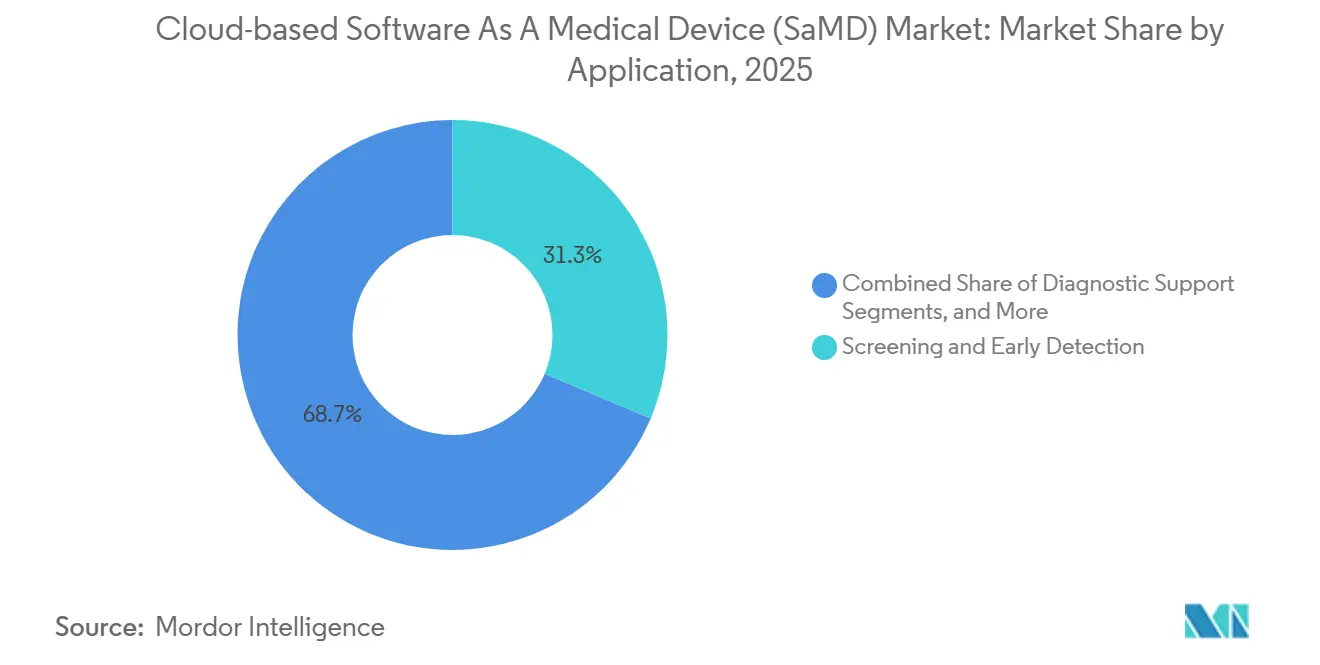
- By application, screening and early detection accounted for 31.34% of the cloud-based software as a medical device market size in 2025, while chronic disease management is projected to grow at an 18.35% CAGR through 2031.
- By clinical specialty, radiology held 28.88% revenue share in 2025, while cardiology is projected to grow at a 17.78% CAGR through 2031.
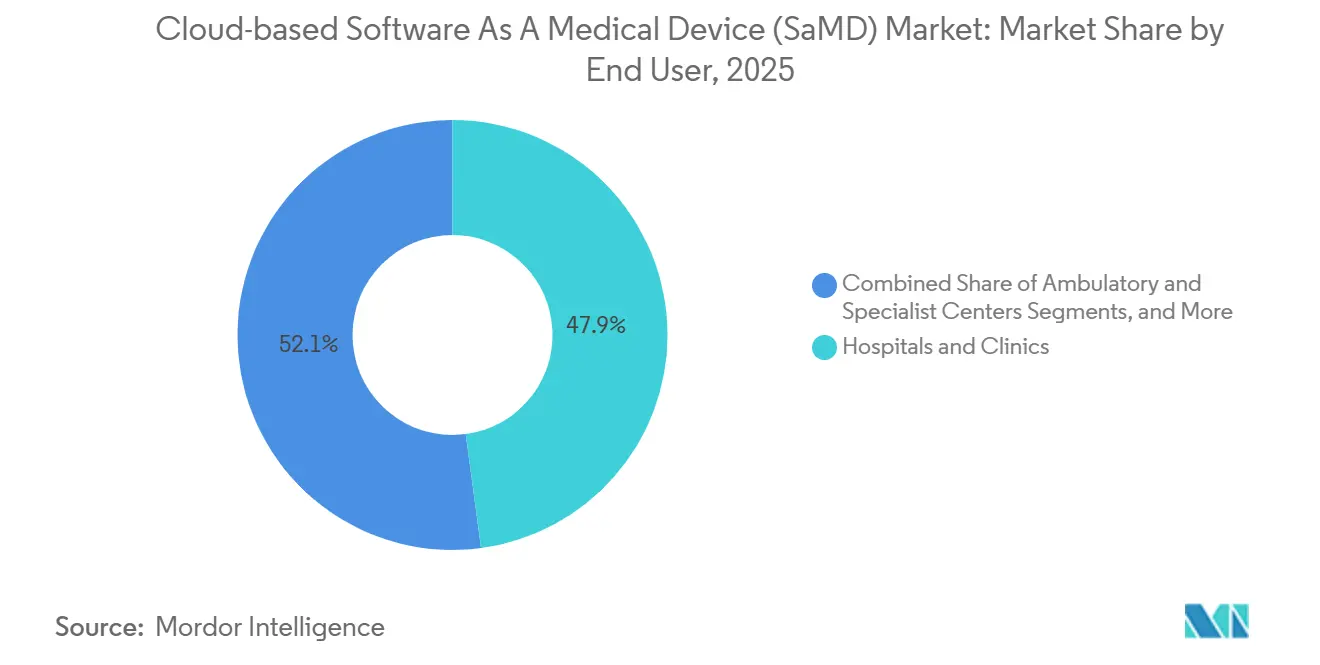
- By end user, hospitals and clinics accounted for 47.89% of the cloud-based software as a medical device market size in 2025, while diagnostic laboratories are projected to grow at a 16.45% CAGR through 2031.
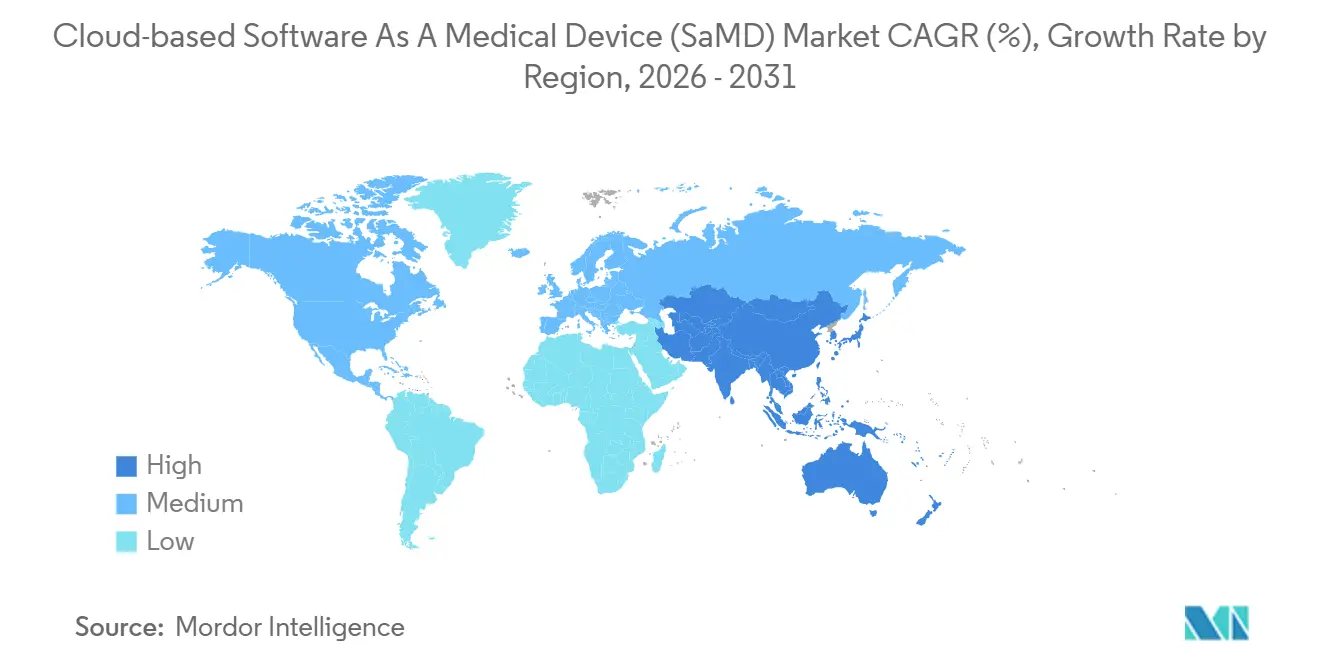
- By geography, North America held 40.56% revenue share in 2025, while Asia-Pacific is projected to grow at a 17.56% CAGR through 2031.
Note: Market size and forecast figures in this report are generated using Mordor Intelligence’s proprietary estimation framework, updated with the latest available data and insights as of January 2026.
Market Trends and Insights
Drivers Impact Analysis of Cloud-based Software As A Medical Device (SaMD) Market*
| DRIVER | (~) % IMPACT ON CAGR FORECAST | GEOGRAPHIC RELEVANCE | Impact Timeline |
|---|---|---|---|
| Growing clinical adoption of AI-enabled diagnostic software | +3.8% | Global, with North America and Europe leading cleared deployments | Short term (≤ 2 years) |
| Expansion of remote patient monitoring and virtual care | +3.0% | Global, with the highest uptake in North America and core Asia-Pacific markets | Short term (≤ 2 years) |
| Healthcare provider demand for scalable cloud infrastructure | +2.4% | North America and Europe, with a growing footprint in core Asia-Pacific markets | Medium term (2-4 years) |
| Increasing availability of regulated cloud-based therapeutic and diagnostic platforms | +2.0% | Global, with early gains in North America, the United Kingdom, Germany, and Japan | Medium term (2-4 years) |
| Increasing use of real-world data and real-world evidence | +1.9% | North America and the European Union, with spillover to the Middle East, Africa, and South America | Medium term (2-4 years) |
| Continuous-learning architecture enabled by predetermined change-control plans | +1.7% | North America and the European Union | Medium term (2-4 years) |
| Source: Mordor Intelligence | |||
Growing Clinical Adoption of AI-Enabled Diagnostic Software
The FDA reported 295 new AI-enabled medical device authorizations in 2025, bringing the cumulative total to 1,451 devices by December 30, 2025. This growth supported broader clinical familiarity with software used for diagnosis, triage, and image interpretation, although authorization still required local validation and implementation. Radiology accounted for 1,104 of the 1,451 cumulative FDA-listed AI-enabled devices by the end of 2025, underscoring its established role in clinical AI adoption. The 2024 PCCP guidance gave developers a defined route to describe planned model modifications and controls in a marketing submission, while cloud delivery supported version management, monitoring, and rollback processes.[1]U.S. Food and Drug Administration, “Artificial Intelligence-Enabled Medical Devices,” U.S. Food and Drug Administration, fda.gov
Expansion of Remote Patient Monitoring and Virtual Care
Remote patient monitoring increasingly connected biosensor data with clinical review and patient support. The FDA launched the Technology-Enabled Meaningful Patient Outcomes pilot in December 2025, and Dexcom became its first participant on July 22, 2026. Dexcom’s program combined data from Dexcom G7 and Stelo biosensors with nutritional, sleep, and activity inputs for prediabetes and Type 2 diabetes interventions. A National Institute for Health and Care Research horizon scan identified 576 emerging wearable technologies under clinical evaluation for chronic disease management, including 25 novel technologies and 14 with a CE mark or FDA approval.[2]National Institute for Health and Care Research, “Horizon Scan of Wearable Devices for Chronic Disease Management,” National Institute for Health and Care Research, io.nihr.ac.uk
Healthcare Provider Demand for Scalable Cloud Infrastructure
Health systems are shifting procurement in the cloud-based software as a medical device market toward services that reduce dependence on dedicated local storage and computing capacity. GE HealthCare introduced its Genesis cloud portfolio in March 2025, with vendor-neutral archive, edge-to-cloud storage, and data migration capabilities. The company stated that it aimed to triple its cloud-enabled product offerings by 2028. Cloud services allow providers to use subscription- or utilization-based models and integrate imaging, AI tools, and workflow functions into one enterprise procurement arrangement.
Increasing Use of Real-World Data and Real-World Evidence
Real-world data is becoming more central to clinical evidence generation and product monitoring. In June 2026, Tempus announced the publication of a multi-center validation of its FDA-cleared ECG-AF model in Heart Rhythm. The study addressed 1-year atrial fibrillation risk prediction across diverse patient populations in a clinical setting. Connected cloud platforms can capture post-deployment performance data, support product oversight, and help vendors build evidence across multiple care settings while meeting privacy and quality requirements.
Restraints Impact Analysis of Cloud-based Software As A Medical Device (SaMD) Market*
| RESTRAINT | (~) % IMPACT ON CAGR FORECAST | GEOGRAPHIC RELEVANCE | IMPACT TIMELINE |
|---|---|---|---|
| Cybersecurity, data privacy, and cross-border health-data restrictions | -2.5% | Global, with the greatest effect in the European Union, the United States, China, and cross-border deployments | Medium term (2-4 years) |
| Clinical validation, liability, and workflow-integration complexity | -1.9% | Global, with high friction in the European Union and the United States | Medium term (2-4 years) |
| Cloud outage, connectivity, and service-level dependence in clinical use | -1.3% | Core Asia-Pacific markets, the Middle East, Africa, rural North America, and high-dependency settings globally | Short term (≤ 2 years) |
| Dataset shift, algorithmic drift, and bias monitoring burden | -1.1% | Global, with an acute risk in multi-ethnic Asia-Pacific populations and other underrepresented groups | Long term (≥ 4 years) |
| Source: Mordor Intelligence | |||
Cybersecurity, Data Privacy, and Cross-Border Health-Data Restrictions
The FDA issued final cybersecurity guidance for medical devices on June 27, 2025, covering cybersecurity design, documentation, and vulnerability management expectations for connected devices. The Quality Management System Regulation became effective on February 2, 2026, aligning FDA quality system requirements with ISO 13485:2016. These requirements increased compliance responsibilities for developers of cloud-hosted medical software. Data protection rules may require vendors to adjust where they store and process health information, while national requirements can limit the use of a single cloud architecture across every market. These obligations favor providers with established security, quality, and local compliance capabilities.
Clinical Validation, Liability, and Workflow-Integration Complexity
Most clinical software under EU MDR Rule 11 requires classification and conformity assessment based on its clinical role. Evidence requirements, technical documentation, and review processes can increase the time and cost of product introduction. Deployment in the cloud-based software as a medical device market can stall when interfaces, user authentication, alerts, and clinical processes do not align with hospital environments. Responsibility for an AI-assisted clinical decision may involve the software developer, the health system, and the clinician, making some providers cautious when evaluating new applications. Vendors can reduce procurement friction by providing clear intended-use information, performance monitoring tools, bias disclosures, and practical integration support.
*Our forecasts treat driver/restraint impacts as directional, not additive. The impact forecasts reflect baseline growth, mix effects, and variable interactions.
Cloud-based Software As A Medical Device (SaMD) Market Segment Analysis
By Deployment:
Cloud Services Lead While On-Premises Systems Serve Sovereignty NeedsCloud-based deployment held 63.22% of the cloud-based software as a medical device market share in 2025. Health systems use cloud deployment to manage imaging archives, analytics capacity, and software update cycles without relying solely on local infrastructure. This model supports subscriptions and pay-per-scan arrangements, helping providers align technology spending with usage while avoiding local system replacements solely to access new analytical capacity. Vendors also use cloud deployment to distribute updates and monitor software performance across multiple sites.
On-premises deployment is forecast to expand at an 18.93% CAGR from 2026 to 2031. Demand comes from air-gapped government hospitals, defense health facilities, and markets with data sovereignty requirements. Hybrid systems provide a practical middle path for academic medical centers that retain local graphics processing units for model development while using cloud inference in clinical settings. GE HealthCare’s Genesis portfolio was introduced to support cloud and hybrid workflows alongside existing capital investments.



By Device Type and Access Channel:
Wearables Connect Patient Data With Clinical ReviewWearable devices accounted for 35.23% of revenue in 2025, making them the largest category in this segmentation. Cardiac monitoring, continuous glucose sensing, and pulse oximetry remain key use cases. Wearables collect frequent measurements that can move to software platforms in the cloud-based software as a medical device market for review and clinical action. Their value increases when data enters structured clinical workflows that support review, assignment, and documentation.
Web-based clinical workstations are forecast to grow at a 17.67% CAGR from 2026 to 2031. Zero-footprint viewers and cloud-native picture archiving systems reduce the need for site-specific hardware. In March 2026, GE HealthCare received FDA 510(k) clearance for View, a cloud-based diagnostic viewer designed to provide browser access for radiologists. Smartphones, tablets, personal computers, and connected sensors complete the remaining access mix, with smartphones gaining relevance in lower-acuity primary care settings in Asia-Pacific.
By Application:
Screening Remains Largest While Chronic Care ExpandsScreening and early detection represented 31.34% of revenue in 2025. This segment includes lung cancer CT screening, diabetic retinopathy detection, and early sepsis identification. These applications benefit from the high number of AI-enabled devices in imaging and diagnostic workflows, where clinicians routinely review images and findings before final decisions. Early detection tools fit existing clinical processes when they provide a clear clinician review step.
Chronic disease management is forecast to expand at an 18.35% CAGR through 2031. Diabetes, heart failure, chronic obstructive pulmonary disease, and hypertension require repeated monitoring beyond periodic clinical visits. Cloud software in the cloud-based software as a medical device market can organize connected-device data and support alerts or treatment follow-up. In June 2026, GE HealthCare received FDA 510(k) clearance for MIM Contour ProtégéAI+ 2.0, an AI-enabled radiation therapy planning solution with expanded clinical capabilities.
By Clinical Specialty:
Radiology Has an Installed Base and Cardiology Adds MomentumRadiology held a 28.88% revenue share in 2025, the largest share among clinical specialties. The specialty has a long history of digital image management and radiologist review of machine-generated findings. The FDA listed 1,104 radiology devices among its 1,451 cumulative AI-enabled medical device authorizations by the end of 2025. This installed base gives radiology vendors workflow familiarity and broad clinical data resources.
Cardiology is forecast to advance at a 17.78% CAGR from 2026 to 2031. AI-assisted ECG interpretation, cardiac image analysis, and risk stratification can use signals from connected devices and clinical records. The specialty suits cloud systems in the cloud-based software as a medical device market because many cardiac conditions require continuing observation rather than a single diagnostic review. Oncology, neurology, ophthalmology, pathology, respiratory care, diabetes care, mental and behavioral health, and women’s health also widen the clinical range.
By End User:
Hospitals Lead Adoption While Laboratories Increase DemandHospitals and clinics accounted for 47.89% of revenue in 2025. These organizations are the main deployment sites for enterprise imaging AI, clinical decision support, and electronic health record-linked tools. They also have defined vendor review processes and IT teams that can manage integration. Hospitals remain the central commercial route for vendors seeking broad clinical deployment across departments, users, and connected service lines.
Diagnostic laboratories are forecast to grow at a 16.45% CAGR through 2031. Digital pathology, liquid biopsy analysis, and genomic sequencing create demand for systems that can process multimodal diagnostic information at scale. Tempus reported full-year 2025 revenue of USD 1.27 billion, an 83% increase from the prior year, highlighting commercial activity in AI-enabled laboratory diagnostics. Ambulatory and specialist centers, imaging centers, academic institutions, and research organizations also use cloud platforms for consultation support, monitoring, validation studies, and data collaboration.
Geography Analysis
North America Cloud-based Software As a Medical Device (SaMD) Market
North America held a 40.56% revenue share in 2025, supported by the largest concentration of FDA-cleared AI-enabled medical devices and significant health system spending on digital care. The FDA’s list reached 1,451 authorized AI-enabled devices by the end of 2025. The United States finalized PCCP guidance in December 2024 and launched the TEMPO pilot in December 2025. Longstanding electronic health record, imaging, and laboratory data may support further algorithm development, although developers still need to manage data access, representativeness, and appropriate use.
Europe Cloud-based Software As a Medical Device (SaMD) Market
Europe is shaped by EU MDR classification rules and a varied reimbursement environment. Germany’s DiGA pathway has allowed qualifying digital health applications to be prescribed and reimbursed through statutory health insurance, while France and Belgium have also developed digital health reimbursement pathways. The cloud-based software as a medical device market in Europe must address data protection, interoperability, and national assessment requirements. Germany, the United Kingdom, France, Italy, and Spain account for much of the region’s revenue, but suppliers still need to align reimbursement, procurement, and regulatory approaches with each national system. The European Health Data Space requirements will require manufacturers to plan for interoperability and logging capabilities in cloud platforms before 2029.
APAC Cloud-based Software As a Medical Device (SaMD) Market
Asia-Pacific is forecast to register the highest regional CAGR of 17.56% from 2026 to 2031, driven by hospital digitization, regulatory development, and shortages of specialist physicians supporting demand for AI-assisted diagnosis in the cloud-based software as a medical device market. China released the revised YY/T 1406-2026 standard on March 17, 2026, covering risk management across the medical device software lifecycle and taking effect in March 2027.

Competitive Landscape
The cloud-based software as a medical device market has moderate concentration, with enterprise imaging companies and specialist AI developers competing across various clinical needs. GE HealthCare had 120 FDA-cleared AI-enabled devices by the end of 2025, while Siemens Healthineers had 89 and Philips had 50. Specialist vendors, including Aidoc, iRhythm Technologies, Tempus AI, Viz.ai, Digital Diagnostics, and PathAI, compete on clinical focus and algorithm performance. Larger companies benefit from established customer relationships, integration resources, and the ability to combine software with imaging or clinical infrastructure.
Platform consolidation remained a key competitive strategy. GE HealthCare introduced the Genesis portfolio in March 2025 to integrate cloud services, archive tools, and migration capabilities into its imaging offering. In March 2026, the company received FDA clearance for View, expanding browser-based access to diagnostic imaging. In June 2026, GE HealthCare also received clearance for MIM Contour ProtégéAI+ 2.0 in radiation therapy planning, strengthening its cloud portfolio across diagnosis and treatment planning.
Open and connected platforms may create business value by allowing customers to use more than one algorithm within a workflow. The cloud-based software as a medical device market also offers strong opportunities in mental and behavioral health, women’s health, and population health tools that use payer or multi-provider data. These areas have fewer established products than imaging-focused specialties, creating room for companies with reliable clinical performance and strong integration with routine care delivery. Data quality systems, ISO 13485 processes, and IEC 62304 software lifecycle controls remain key entry barriers, as companies must manage documentation, validation, updates, and post-market support in addition to algorithm development.
Cloud-based Software As A Medical Device (SaMD) Industry Leaders
AliveCor, Inc.
GE HealthCare Technologies Inc.
Koninklijke Philips N.V.
Medtronic plc
Siemens Healthineers AG
- *Disclaimer: Major Players sorted in no particular order
Cloud-based Software As A Medical Device (SaMD) Market Companies Covered in this Report
- Aidoc Medical Ltd.
- AliveCor
- Alphabet Inc.
- Amazon Web Services, Inc.
- Apple
- Arterys Inc.
- Biofourmis Inc.
- Brain Lab
- BrightInsight, Inc.
- Digital Diagnostics
- Roche
- GE HealthCare Technologies Inc.
- Huma Therapeutics Limited
- iRhythm Technologies
- Koninklijke Philips
- Median Technologies SA
- Medtronic
- Microsoft
- MindMaze SA
- NVIDIA
- PathAI, Inc.
- Siemens Healthineers
- Singular Health Group Limited
- Tempus AI, Inc.
- Viz.ai, Inc.
- XUND Solutions GmbH

Recent Industry Developments in Cloud-based Software As A Medical Device (SaMD) Market
- July 2026: Dexcom became the first participant in the FDA’s TEMPO pilot, deploying an AI-powered glucose health program using Dexcom G7 and Stelo biosensors with contextual data to assess prediabetes and Type 2 diabetes interventions.
- July 2026: NewYork-Presbyterian and Columbia launched EchoNext after FDA clearance as the first AI tool to detect six structural heart disease types from a standard 12-lead ECG.
- June 2026: Aidoc received FDA Breakthrough Device Designation for First Read, an AI model that generated preliminary radiology report text from chest radiograph analysis.
- June 2026: GE HealthCare received FDA 510(k) clearance for MIM Contour ProtégéAI+ 2.0, an AI-enabled radiation therapy planning solution with expanded clinical capabilities.


Global Cloud-based Software As A Medical Device (SaMD) Market Report Scope
As per the scope of the report, Cloud-based Software as a Medical Device (SaMD) refers to software that performs medical functions using cloud computing infrastructure for data storage, processing, analytics, and information exchange. These solutions enable secure, real-time access to medical data, support remote diagnostics and clinical decision-making, facilitate interoperability between healthcare systems, and allow continuous software updates without requiring installation on local hardware.
The cloud-based Software as a Medical Device (SaMD) market is segmented by deployment, device type and access channel, application, clinical specialty, and end user. By deployment, the market includes cloud-based, on-premises, and hybrid. By device type and access channel, the market is segmented into wearable devices, smartphones and tablets, personal computers and laptops, web-based clinical workstations, connected medical devices and sensors, and others. By application, the market is categorized into screening and early detection, diagnostic support, monitoring and alerting, chronic disease management, clinical decision support, digital therapeutics, treatment planning and therapy optimization, medication management and dosing support, population health and risk stratification, clinical trial and drug development applications, and other applications. By clinical specialty, the market is segmented into cardiology, radiology, oncology, neurology, ophthalmology, pathology, respiratory care, diabetes care, mental and behavioral health, women’s health, and other clinical specialties. By end user, the market is segmented into hospitals and clinics, ambulatory and specialist centers, diagnostic laboratories, imaging centers, academic and research institutions, and others.
| Cloud-Based |
| On-Premises |
| Hybrid |
| Wearable Devices |
| Smartphones and Tablets |
| Personal Computers and Laptops |
| Web-Based Clinical Workstations |
| Connected Medical Devices and Sensors |
| Others |
| Screening and Early Detection |
| Diagnostic Support |
| Monitoring and Alerting |
| Chronic Disease Management |
| Clinical Decision Support |
| Digital Therapeutics |
| Treatment Planning and Therapy Optimization |
| Medication Management and Dosing Support |
| Population Health and Risk Stratification |
| Clinical Trial and Drug Development Applications |
| Other Applications |
| Cardiology |
| Radiology |
| Oncology |
| Neurology |
| Ophthalmology |
| Pathology |
| Respiratory Care |
| Diabetes Care |
| Mental and Behavioral Health |
| Women's Health |
| Other Clinical Specialties |
| Hospitals and Clinics |
| Ambulatory and Specialist Centers |
| Diagnostic Laboratories |
| Imaging Centers |
| Academic and Research Institutions |
| Others |
| North America | United States |
| Canada | |
| Mexico | |
| Europe | Germany |
| United Kingdom | |
| France | |
| Italy | |
| Spain | |
| Rest of Europe | |
| Asia-Pacific | China |
| India | |
| Japan | |
| Australia | |
| South Korea | |
| Rest of Asia-Pacific | |
| Middle East and Africa | GCC |
| South Africa | |
| Rest of Middle East and Africa | |
| South America | Brazil |
| Argentina | |
| Rest of South America |
| By Deployment | Cloud-Based | |
| On-Premises | ||
| Hybrid | ||
| By Device Type and Access Channel | Wearable Devices | |
| Smartphones and Tablets | ||
| Personal Computers and Laptops | ||
| Web-Based Clinical Workstations | ||
| Connected Medical Devices and Sensors | ||
| Others | ||
| By Application | Screening and Early Detection | |
| Diagnostic Support | ||
| Monitoring and Alerting | ||
| Chronic Disease Management | ||
| Clinical Decision Support | ||
| Digital Therapeutics | ||
| Treatment Planning and Therapy Optimization | ||
| Medication Management and Dosing Support | ||
| Population Health and Risk Stratification | ||
| Clinical Trial and Drug Development Applications | ||
| Other Applications | ||
| By Clinical Specialty | Cardiology | |
| Radiology | ||
| Oncology | ||
| Neurology | ||
| Ophthalmology | ||
| Pathology | ||
| Respiratory Care | ||
| Diabetes Care | ||
| Mental and Behavioral Health | ||
| Women's Health | ||
| Other Clinical Specialties | ||
| By End User | Hospitals and Clinics | |
| Ambulatory and Specialist Centers | ||
| Diagnostic Laboratories | ||
| Imaging Centers | ||
| Academic and Research Institutions | ||
| Others | ||
| By Geography | North America | United States |
| Canada | ||
| Mexico | ||
| Europe | Germany | |
| United Kingdom | ||
| France | ||
| Italy | ||
| Spain | ||
| Rest of Europe | ||
| Asia-Pacific | China | |
| India | ||
| Japan | ||
| Australia | ||
| South Korea | ||
| Rest of Asia-Pacific | ||
| Middle East and Africa | GCC | |
| South Africa | ||
| Rest of Middle East and Africa | ||
| South America | Brazil | |
| Argentina | ||
| Rest of South America | ||


Key Questions Answered in the Report
What is driving demand for cloud-based software as a medical device?
AI-enabled clinical workflows, remote monitoring, and provider demand for scalable cloud infrastructure support demand. The sector is forecast to grow at a 15.25% CAGR from 2026 to 2031.
Which deployment model leads cloud-based SaMD adoption?
Cloud-based deployment led with 63.22% share in 2025. On-premises deployment is projected to record the fastest growth at an 18.93% CAGR through 2031.
Which application is expected to grow fastest?
Chronic disease management is forecast to grow at an 18.35% CAGR through 2031, supported by the need for continuing monitoring of conditions such as diabetes and heart failure.
Why are wearable devices important for clinical software?
Wearables held 35.23% share in 2025 and generate recurring measurements that cloud software can organize for remote review and care management.
Which region is forecast to grow fastest?
Asia-Pacific is projected to grow at a 17.56% CAGR from 2026 to 2031 as hospital digitization and regulatory development support adoption.
What are the main barriers to adoption?
Cybersecurity, data privacy, cross-border data rules, clinical validation requirements, and workflow integration challenges can slow deployment.
Page last updated on:





