
Chordoma Disease Therapeutics Market Size and Share
Market Overview
| Study Period | 2021 - 2032 |
|---|---|
| Market Size (2027) | USD 7.95 Billion |
| Market Size (2032) | USD 11.11 Billion |
| Growth Rate (2027 - 2032) | 6.92 % |
| Fastest Growing Market | Asia-Pacific |
| Largest Market | North America |
| Market Concentration | Medium |
Major Players *Disclaimer: Major Players sorted in no particular order Image © Mordor Intelligence. Reuse requires attribution under CC BY 4.0. | |
Chordoma Disease Therapeutics Market Analysis by Mordor Intelligence
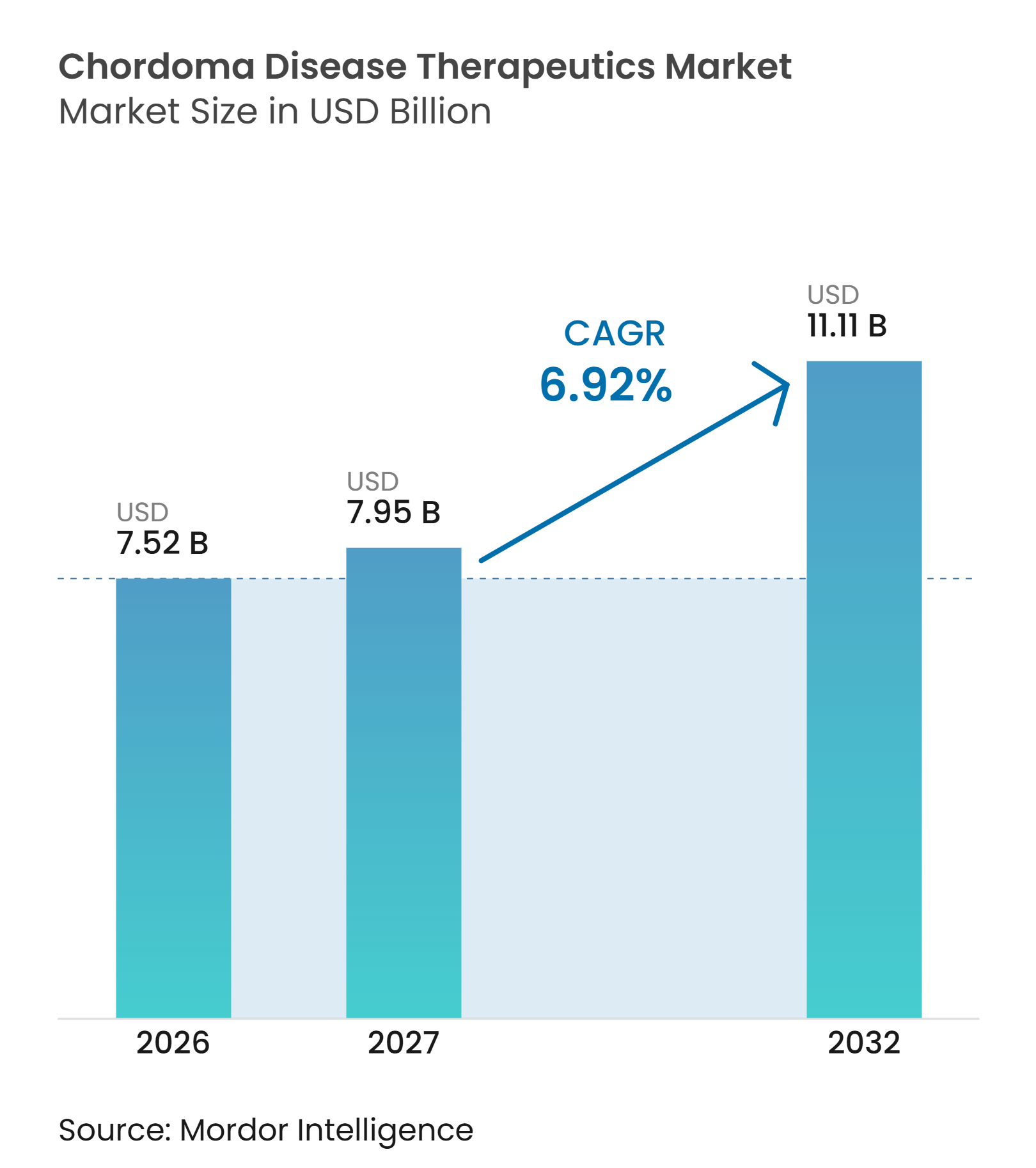
The Chordoma Disease Therapeutics Market size is expected to grow from USD 7.52 billion in 2026 to USD 7.95 billion in 2027 and is forecast to reach USD 11.11 billion by 2032 at 6.92% CAGR over 2027-2032.
The chordoma disease therapeutics market remains shaped by a rare malignancy that arises from notochordal remnants and occurs in the skull base, spine, and sacrum. Precision oncology is shifting systemic treatment away from empirical prescribing and toward treatment choices based on genomic and receptor findings. Orphan-drug pathways give developers a clearer route to exclusivity and regulatory engagement for rare conditions. The absence of a drug approved specifically for chordoma continues to make reimbursement, trial design, and specialist access central issues for the chordoma disease therapeutics market. Foundation-backed research, public funding, and focused biotechnology programs are widening the set of drug candidates under study.
Key Report Takeaways
- By therapy type, targeted therapy held 40.16% of the chordoma disease therapeutics market share in 2026, while immunotherapy is forecast to expand at a 7.06% CAGR through 2032.
- By drug class, antimetabolites commanded 38.33% of the chordoma disease therapeutics market share in 2026, while anthracyclines are expected to grow at an 8.15% CAGR through 2032.
- By route of administration, oral formulations led with 39.26% revenue share in 2026, while intravenous administration is anticipated to record an 8.63% CAGR through 2032.
- By end-user, hospitals accounted for 43.63% of revenue in 2026, while specialty oncology clinics are forecast to advance at a 7.73% CAGR through 2032.
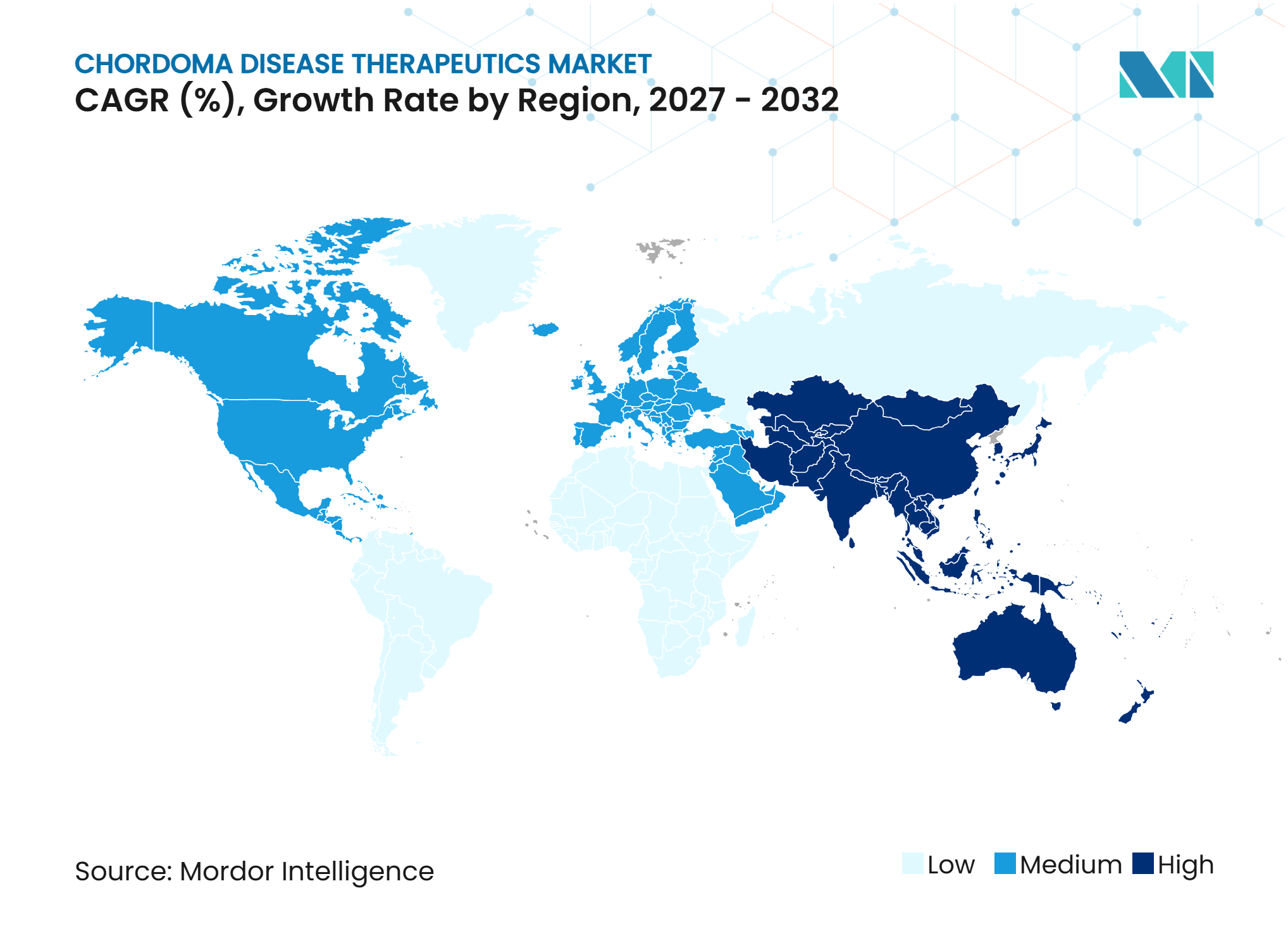
- By geography, North America held 47.25% of revenue in 2026, while Asia-Pacific is projected to grow at a 9.31% CAGR through 2032.
Note: Market numbers in this report are based on Mordor Intelligence's proprietary estimation framework, which combines nine months of actuals with Q4 projections for base year 2026.
Market Trends and Insights
Drivers Impact Analysis of Chordoma Disease Therapeutics Market*
| Driver | (~) % Impact on CAGR Forecast | Geographic Relevance | Impact Timeline |
|---|---|---|---|
| Precision Oncology and Molecular Profiling | +1.5% | Global, strongest in North America and Europe | Medium term (2-4 years) |
| Orphan-Drug Incentives and Accelerated Regulatory Pathways | +1.2% | North America and Europe | Short term (≤ 2 years) |
| Specialized Chordoma Centers and Multidisciplinary Care | +0.9% | North America and Europe, with spillover to Japan and South Korea | Medium term (2-4 years) |
| Clinical-Trial and Rare-Cancer Research Funding | +1.0% | Global, concentrated in the United States, China, and the European Union | Medium term (2-4 years) |
| TBXT Brachyury Druggability Challenge and Prize-Led Innovation | +0.8% | Global | Long term (≥ 4 years) |
| Patient Registries and International Trial Networks | +0.7% | Global, with early gains in the United States and European Union | Medium term (2-4 years) |
| Source: Mordor Intelligence | |||
Expansion of Precision Oncology and Molecular Profiling
Molecular profiling is changing treatment selection in the chordoma disease therapeutics market from an empirical TKI default toward biomarker-stratified care. Next-generation sequencing can identify CDKN2A loss, EGFR overexpression, PIK3CA mutation, and PTEN deletion that may inform drug-class selection. A 2025 meta-analysis covering 12 studies and 365 patients reported median overall survival of 39.3 months with imatinib and 25.0 months with other TKIs.[1] The June 2025 Global Chordoma Consensus Group guidelines placed profiling within specialist care pathways after review by more than 150 experts. This approach creates identifiable biomarker-defined populations for clinical development and future companion diagnostic strategies.
Orphan-Drug Incentives and Accelerated Regulatory Pathways
Orphan-drug designation changes the development case for therapies used in chordoma. In the United States, designation is available for conditions affecting fewer than 200,000 people and can provide 7 years of market exclusivity after approval. The European pathway applies to conditions affecting no more than 5 in 10,000 people and provides a related framework for rare-disease development. These programs give developers defined regulatory incentives in a patient population with only 300-500 new cases annually in the United States. The Chordoma Foundation planned at least 6 Phase 2 trials over 3 years and reported pooled data from 328 patients across Phase 2 studies.[2]The historical dataset can support endpoint selection and give regulators more context when assessing small studies in the chordoma disease therapeutics market.
Growth of Specialized Chordoma Centers and Multidisciplinary Care
Specialist centers concentrate treatment decisions and clinical expertise in the chordoma disease therapeutics market. Northwell Health reported that its chordoma program treated 60 patients annually, with 2 in 3 patients traveling from other states or countries.[3] This referral pattern directs many patients toward a limited group of high-volume prescribers and trial sites. Academic-center treatment was associated with better overall survival in a National Cancer Database analysis. Specialist formulary access and named-patient trial partnerships can therefore have an outsized effect on the adoption of new agents. The 2025 treatment guidance is expected to reduce variation in systemic therapy protocols across participating specialist centers.
Increasing Clinical-Trial and Rare-Cancer Research Funding
Philanthropic, public, and venture funding are supporting a broader research base for chordoma. The Chordoma Foundation funded 9 research projects totaling more than USD 2 million in 2024, covering antibody-drug conjugates, radiopharmaceuticals, and cell therapies. CF Labs also received a USD 500,000 grant from the Chan Zuckerberg Initiative for AI-enabled drug discovery during 2024. MD Anderson Cancer Center also received a multi-million-dollar NIH grant to study brachyury-directed cell therapy. This mix reduces reliance on commercial funding alone and supports continued Phase 2 activity in the chordoma disease therapeutics market.
Restraints Impact Analysis of Chordoma Disease Therapeutics Market*
| Restraint | (~) % Impact on CAGR Forecast | Geographic Relevance | Impact Timeline |
|---|---|---|---|
| Ultra-Rare Population and Trial-Recruitment Constraints | -1.1% | Global | Short term (≤ 2 years) |
| High Treatment Cost and Reimbursement Friction | -0.9% | Global, most acute in the Middle East and Africa, South America, and Southeast Asia | Medium term (2-4 years) |
| Anatomical Heterogeneity and Pseudo-Progression in Endpoint Interpretation | -0.6% | Global | Medium term (2-4 years) |
| Limited Validated Biomarkers and Surrogate Endpoints | -0.5% | Global, most acute in Asia-Pacific and the Middle East and Africa | Long term (≥ 4 years) |
| Source: Mordor Intelligence | |||
Ultra-Rare Population and Trial-Recruitment Constraints
Chordoma rarity imposes a structural limit on enrollment and validation in the chordoma disease therapeutics market. The disease has an incidence of 0.8 new cases per million people annually, and single-arm Phase 2 studies often enroll only 10-33 patients over several years. The cited palbociclib trial enrolled 28 patients. A 2025 systematic review found that U.S. chordoma trials enrolled predominantly White, non-Hispanic participants, partly because major centers are located in urban academic settings. Small cohorts make survival endpoints difficult to evaluate and can delay regulatory submissions. International registries and coordinated trial networks remain important because disease incidence is dispersed across countries.
High Treatment Cost and Reimbursement Friction
Off-label status creates reimbursement friction for systemic treatment in the chordoma disease therapeutics market. Payer decisions are often made case by case because there is no drug specifically approved for chordoma. Initial surgery, radiation, and ongoing surveillance can create substantial financial requirements for patients and health systems. Checkpoint inhibitors are less likely to receive reimbursement in price-sensitive markets when labeled indications drive formulary decisions. The European Cross-Border Healthcare Directive can enable access to specialist centers, but prior authorization and incomplete coverage remain practical barriers. These barriers can limit the use of advanced agents at specialty clinics and cancer centers in lower-income settings.
*Our forecasts treat driver/restraint impacts as directional, not additive. The impact forecasts reflect baseline growth, mix effects, and variable interactions.
Chordoma Disease Therapeutics Market Segment Analysis
By Therapy Type:
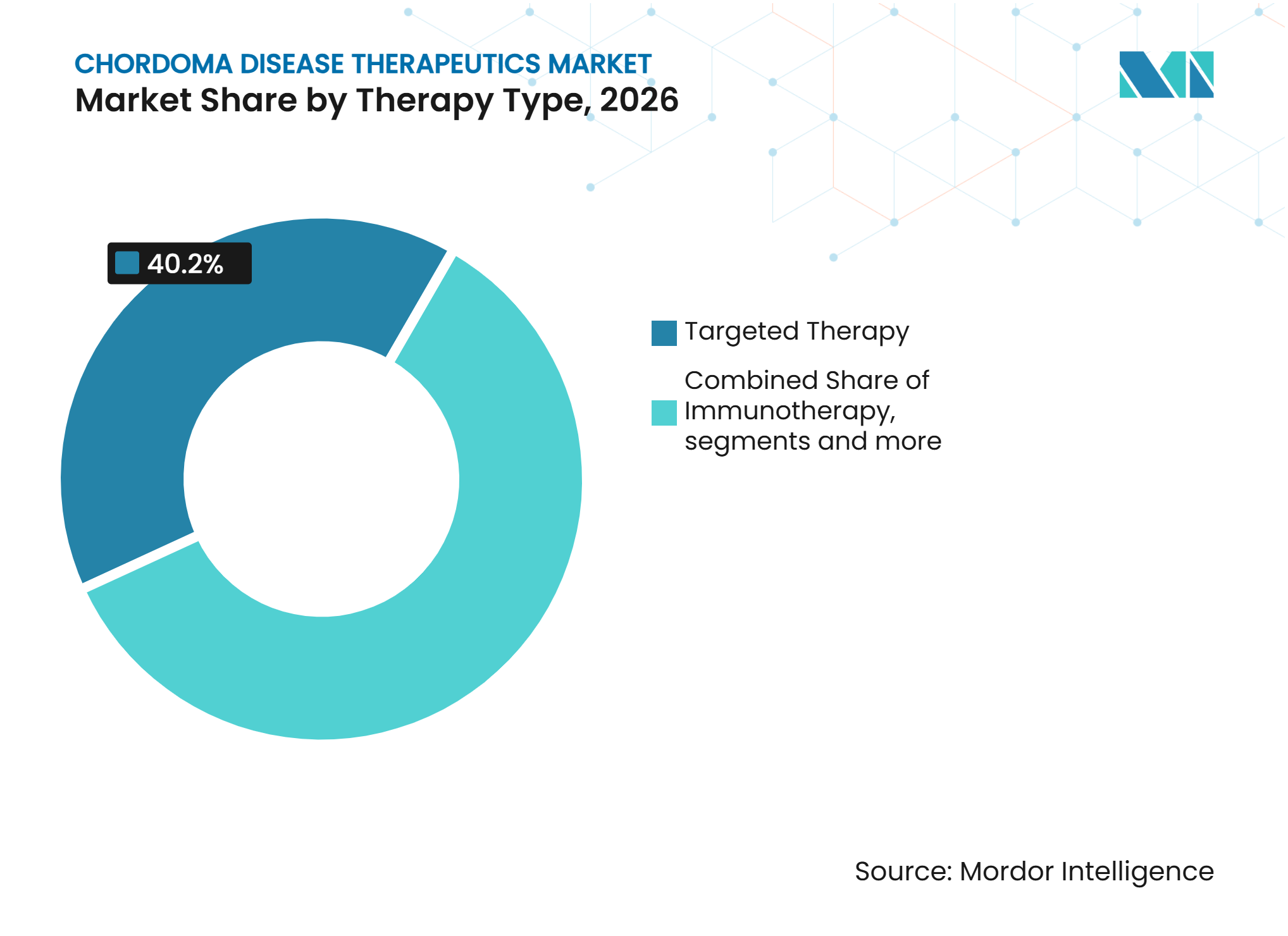
Immunotherapy Is Expanding Beyond TKI UseTargeted therapy held 40.16% of revenue in 2026, making it the largest therapy category in the chordoma disease therapeutics market. TKIs have served as the de facto first-line systemic option because they address established molecular targets. A June 2026 multicenter European study found that available targeted therapies had modest activity for many patients. That finding supports continued demand for treatment options outside established TKI regimens. Chemotherapy and other approaches retain a role in localized disease and multidisciplinary treatment planning.
Immunotherapy is forecasted to grow at a 7.06% CAGR through 2032, the highest rate among therapy types. Combination approaches are being studied for patients whose disease has progressed after established systemic treatment. Molecular profiling may help distinguish patients who are more likely to benefit from combination protocols. The Chordoma therapeutics industry is therefore placing greater emphasis on immunotherapy combinations for patients with refractory disease.



By Drug Class:
Antimetabolites Lead While Anthracyclines Gain RelevanceAntimetabolites accounted for 38.33% of revenue in 2026, giving this class the largest position in the chordoma disease therapeutics market. Pemetrexed is the primary contributor because clinicians have adapted its use from thoracic oncology. VEGFR and EGFR inhibitors also contribute to systemic treatment use. Erlotinib reported a 38.8% objective response rate in EGFR-overexpressing disease in the cited biomarker-stratified evidence. Apatinib extended progression-free survival in Chinese real-world care before combination studies expanded its clinical relevance.
Anthracyclines are expected to grow at an 8.15% CAGR through 2032, the fastest rate among drug classes. Their use is linked to poorly differentiated chordoma, where TKI sensitivity can be limited. In a 2025 Phase II trial, palbociclib produced a 39% disease control rate in 28 patients selected for the CDK4/6 pathway. Biomarker analysis identified PIK3CA, PTEN, MTAP, and MET alterations in that trial. The Chordoma therapeutics industry is also evaluating whether molecular selection can improve the performance of established cytotoxic classes.
By Route of Administration:
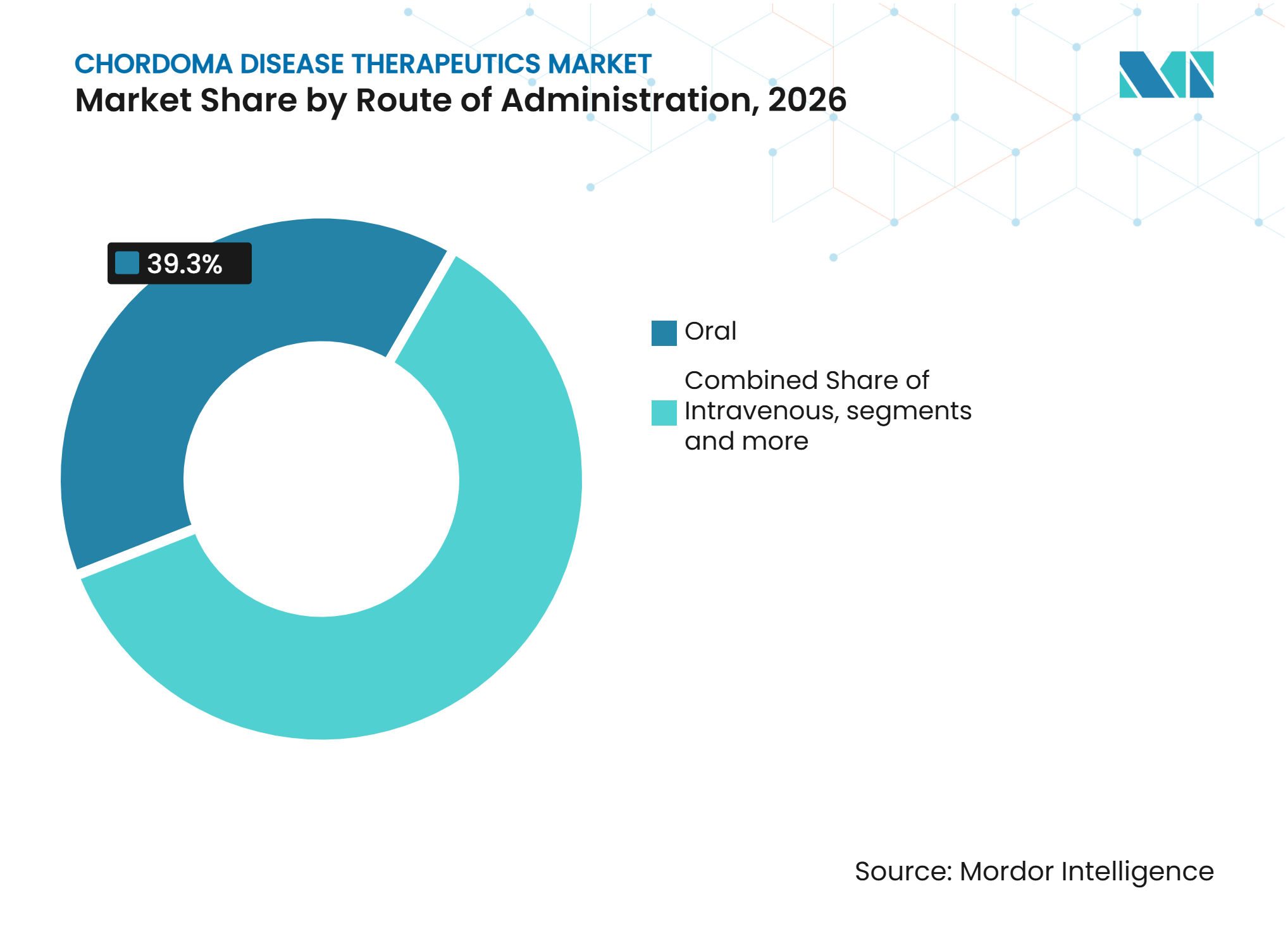
Oral Care Remains Established While IV Regimens GrowOral formulations held 39.26% of revenue in 2026, reflecting the established use of TKIs in the chordoma disease therapeutics market. Imatinib is administered at 400-800 mg per day, while erlotinib is administered at 150 mg per day. Apatinib is also administered orally in the cited treatment approaches. Oral regimens support outpatient care and reduce the need for frequent infusion appointments. This is relevant because many patients travel long distances to specialist centers. Initial treatment decisions can occur at a central academic center, while maintenance therapy can be managed closer to home.
Intravenous administration is forecasted to grow at an 8.6% CAGR through 2032. Pembrolizumab is administered at 200 mg intravenously every 3 weeks. Hospital oncology units are best placed to provide sterile preparation and infusion monitoring. This reinforces the importance of high-volume centers as biologic treatments gain clinical use. The chordoma disease therapeutics market may consequently move toward a more balanced mix of oral maintenance and hospital-based infusion care.

By End-User:
Hospitals Lead Current Care While Specialty Clinics GrowHospitals accounted for 43.63% of 2026 revenue, making them the leading end-user setting in the chordoma disease therapeutics market. Their role reflects the need for surgery, radiation, systemic therapy, pathology, and imaging to be coordinated across specialties. Academic and research institutes also host much of the current Phase 2 trial pipeline. These institutions combine clinical care with access to emerging protocols.
Specialty oncology clinics are forecasted to grow at a 7.73% CAGR through 2032. Dedicated outpatient sarcoma programs can provide molecular diagnostics and trial navigation for stable patients taking oral TKIs. They can manage care without a routine full hospital admission for every visit. This structure supports the migration of selected rare-cancer care toward outpatient settings. The chordoma disease therapeutics market, therefore, relies on hospitals for complex treatment and clinics for ongoing specialist follow-up.
Geography Analysis
North America
North America held 47.25% of 2026 revenue in the chordoma disease therapeutics market. The region has a concentrated group of specialist programs, including Memorial Sloan Kettering Cancer Center, MD Anderson Cancer Center, Northwell Health, and Massachusetts General Hospital. Fewer than 5 U.S. institutions handle a disproportionate share of cases, and individual high-volume centers treat 40-60 patients annually. United States orphan-drug rules provide 7 years of market exclusivity after approval for eligible rare-disease products. Mexico remains constrained by fewer specialist centers and significant out-of-pocket exposure for imported oncology products.
Europe
Europe is the second-largest regional setting for the chordoma disease therapeutics market. Germany, the United Kingdom, France, Italy, and Spain contain the main concentration of European expertise. The 2024 United Kingdom bone sarcoma guidelines stated that patients with chordoma require specialist center assessment. Referral systems, therefore, direct patients toward a limited group of high-volume sarcoma centers. The Cross-Border Healthcare Directive allows patients from smaller member states to seek eligible specialist care in other European Union countries. Prior authorization and incomplete cost coverage can still restrict the use of that route.
Asia-Pacific, South America, the Middle East, and Africa
Asia-Pacific is projected to record a 9.31% CAGR through 2032, the strongest regional rate in the chordoma disease therapeutics market. China is emerging as a contributor to chordoma clinical research. The Canon study examines circulating tumor DNA and radiomic biomarkers during neoadjuvant radiation across China, Singapore, Hong Kong, and Taiwan. South America, the Middle East, and Africa remain smaller settings because reimbursement for off-label biologics is limited. Tertiary oncology investment in Gulf Cooperation Council countries is creating referral demand for advanced treatment protocols.
Competitive Landscape
Market Concentration
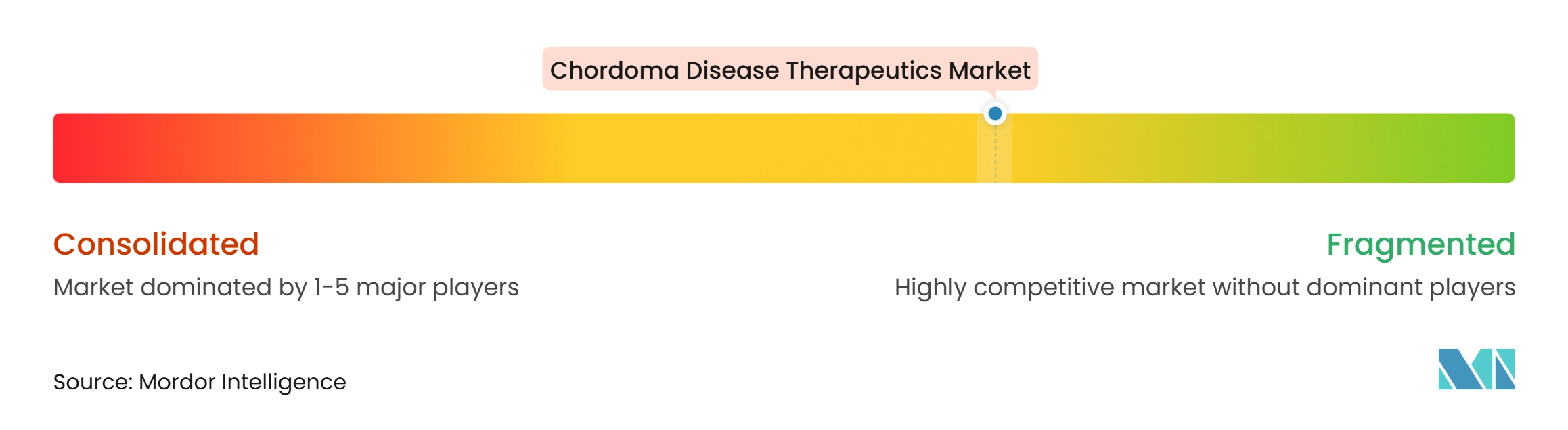
The chordoma disease therapeutics market is moderately fragmented because treatments are drawn from broad oncology portfolios, and no company has a labeled chordoma indication. Novartis, Merck & Co., Pfizer, AstraZeneca, and Roche generate revenue through off-label oncology assets. Erasca and other specialty biotechnology companies are pursuing mechanisms more closely linked to chordoma biology. Competitive position depends on clinical evidence, specialist relationships, and trial placement rather than conventional promotion. Imatinib, pembrolizumab, palbociclib, sunitinib, EGFR agents, and PD-L1 assets illustrate the wide range of repurposed products used in care. The chordoma disease therapeutics market remains dependent on evidence generated in small cohorts.
Large companies are deepening rare-cancer evidence through investigational programs and combination strategies. Bristol Myers Squibb and Roche have checkpoint inhibitor assets that may become relevant in future Phase 2 combination studies. Erasca moved ERAS-601 into a Phase 1b/2 trial at Memorial Sloan Kettering Cancer Center after Phase 1 findings showed tumor shrinkage in nearly all enrolled chordoma patients. A 2026 systematic review identified EGFR and PDGFR autocrine loops as established therapeutic axes and immune signaling as a future combination target. These findings give companies with complementary assets a basis for licensing or co-development decisions.
The Chordoma Foundation launched the TBXT Challenge in January 2025 with USD 500,000 in prizes for potent brachyury binders. Submitted compounds can receive preclinical evaluation through CF Labs. This initiative is designed to attract computational and AI-enabled discovery approaches to a historically difficult transcription factor. It may create a path for new entrants to compete with existing kinase inhibitor franchises. Competitive activity is therefore moving from broad off-label use toward more disease-focused molecular programs.
Chordoma Disease Therapeutics Industry Leaders
-
Pfizer Inc.
-
Novartis AG
-
Merck & Co., Inc.
-
Bristol Myers Squibb Company
-
F. Hoffmann-La Roche Ltd
- *Disclaimer: Major Players sorted in no particular order
Chordoma Disease Therapeutics Market Companies Covered in this Report
- Adaptimmune Therapeutics plc
- Amgen
- AstraZeneca
- Bayer
- Blueprint Medicines Corporation
- Boehringer Ingelheim
- Bristol-Myers Squibb
- Chimeric Therapeutics Limited
- Eli Lilly and Company
- Erasca, Inc.
- Roche
- Incyte
- Merck
- Novartis
- Pfizer
- Regeneron Pharmaceuticals
- Release Therapeutics
- Sanofi
- Sichuan Baili Pharmaceutical Co., Ltd.
- Takeda Pharmaceuticals
Recent Industry Developments in Chordoma Disease Therapeutics Market
- May 2026: Hengrui Medicine's camrelizumab plus apatinib combination demonstrated an ORR of 24.2% (RECIST 1.1) and a disease control rate of 90.9% with a median PFS of 28.4 months in a prospective Phase II trial of 33 refractory chordoma patients, published in the Journal of Clinical Oncology. This was the world's first prospective trial of PD-1 combined with antiangiogenic therapy in refractory chordoma, establishing a clinical efficacy benchmark that far exceeds prior monotherapy ORRs (~3.7% for single-agent apatinib).
- April 2026: Minaris and Chimeric Therapeutics announced 100% batch manufacturing and release success for the CDH17 CAR-T program (CHM-2101), reporting individual lesion reductions of 17%–40% in 2 of 4 patients at Dose Level 3 of the Phase 1/2 trial. The CDH17 platform, invented at the University of Pennsylvania, is being evaluated in gastrointestinal and neuroendocrine tumors, with manufacturing success supporting broader solid tumor expansion.
- January 2025: The Chordoma Foundation launched the global TBXT Challenge, offering an inaugural prize of USD 500,000 for researchers identifying potent binders of the TBXT/brachyury protein, with free preclinical evaluation through CF Labs for up to 96 submitted compounds. The challenge targets a transcription factor historically classified as undruggable and is designed to attract AI-driven and computational drug discovery approaches to chordoma's key molecular vulnerability.
Global Chordoma Disease Therapeutics Market Report Scope
According to the report’s scope, the chordoma disease therapeutics market represents the global segment focused on treatments for chordoma, a rare malignant bone tumor arising from remnants of the notochord, typically occurring in the skull base and spine.
The chordoma disease therapeutics market is segmented into therapy type, drug class, route of administration, end-user, and geography. By therapy type, the market is segmented into targeted therapy, immunotherapy, chemotherapy, and other therapy types. By drug class, the market is segmented into antimetabolites, anthracyclines, VEGFR inhibitors, EGFR inhibitors, and other drug classes. By route of administration, the market is segmented into oral, intravenous, and other routes. By end-user, the market is segmented into hospitals, specialty oncology clinics, and other end users. By geography, the market is segmented into North America, Europe, Asia-Pacific, the Middle East and Africa, and South America. The report also covers the estimated market sizes and trends for 17 countries across major regions globally. The report offers values (USD) for all the above segments.
Segmentation Overview
| Targeted Therapy |
| Immunotherapy |
| Chemotherapy |
| Other Therapy Types |
| Antimetabolites |
| Anthracyclines |
| VEGFR Inhibitors |
| EGFR Inhibitors |
| Other Drug Classes |
| Oral |
| Intravenous |
| Other Routes of Administration |
| Hospitals |
| Specialty Oncology Clinics |
| Other End Users |
| North America | United States |
| Canada | |
| Mexico | |
| Europe | Germany |
| United Kingdom | |
| France | |
| Italy | |
| Spain | |
| Rest of Europe | |
| Asia-Pacific | China |
| Japan | |
| India | |
| Australia | |
| South Korea | |
| Rest of Asia-Pacific | |
| Middle East and Africa | GCC |
| South Africa | |
| Rest of Middle East and Africa | |
| South America | Brazil |
| Argentina | |
| Rest of South America |
| By Therapy Type | Targeted Therapy | |
| Immunotherapy | ||
| Chemotherapy | ||
| Other Therapy Types | ||
| By Drug Class | Antimetabolites | |
| Anthracyclines | ||
| VEGFR Inhibitors | ||
| EGFR Inhibitors | ||
| Other Drug Classes | ||
| By Route of Administration | Oral | |
| Intravenous | ||
| Other Routes of Administration | ||
| By End-User | Hospitals | |
| Specialty Oncology Clinics | ||
| Other End Users | ||
| By Geography | North America | United States |
| Canada | ||
| Mexico | ||
| Europe | Germany | |
| United Kingdom | ||
| France | ||
| Italy | ||
| Spain | ||
| Rest of Europe | ||
| Asia-Pacific | China | |
| Japan | ||
| India | ||
| Australia | ||
| South Korea | ||
| Rest of Asia-Pacific | ||
| Middle East and Africa | GCC | |
| South Africa | ||
| Rest of Middle East and Africa | ||
| South America | Brazil | |
| Argentina | ||
| Rest of South America | ||
Key Questions Answered in the Report
What is driving the demand for chordoma disease therapeutics market?
Molecular profiling, orphan-drug incentives, specialist treatment centers, and increased rare-cancer research funding are expanding development activity. The market value is expected to grow from USD 7.52 billion in 2026 to USD 7.95 billion in 2027, and to reach USD 11.11 billion by 2032, at 6.92% CAGR.
Which treatment type is growing fastest for chordoma?
Immunotherapy is forecasted to grow at a 7.06% CAGR through 2032, reflecting increased evaluation of immunotherapy combinations for refractory disease.
Why are targeted therapies still widely used for chordoma?
Targeted therapy held 40.16% of revenue in 2026 because TKIs remain a common systemic option, although outcomes vary by biomarker profile.
Which region is forecasted to grow fastest?
Asia-Pacific is projected to grow at a 9.31% CAGR through 2032, supported by stronger clinical research activity in China and regional trial coordination.