China Agricultural Biologicals Market Size and Share
Market Overview
| Study Period | 2018 - 2031 |
|---|---|
| Forecast Data Period | 2026 - 2031 |
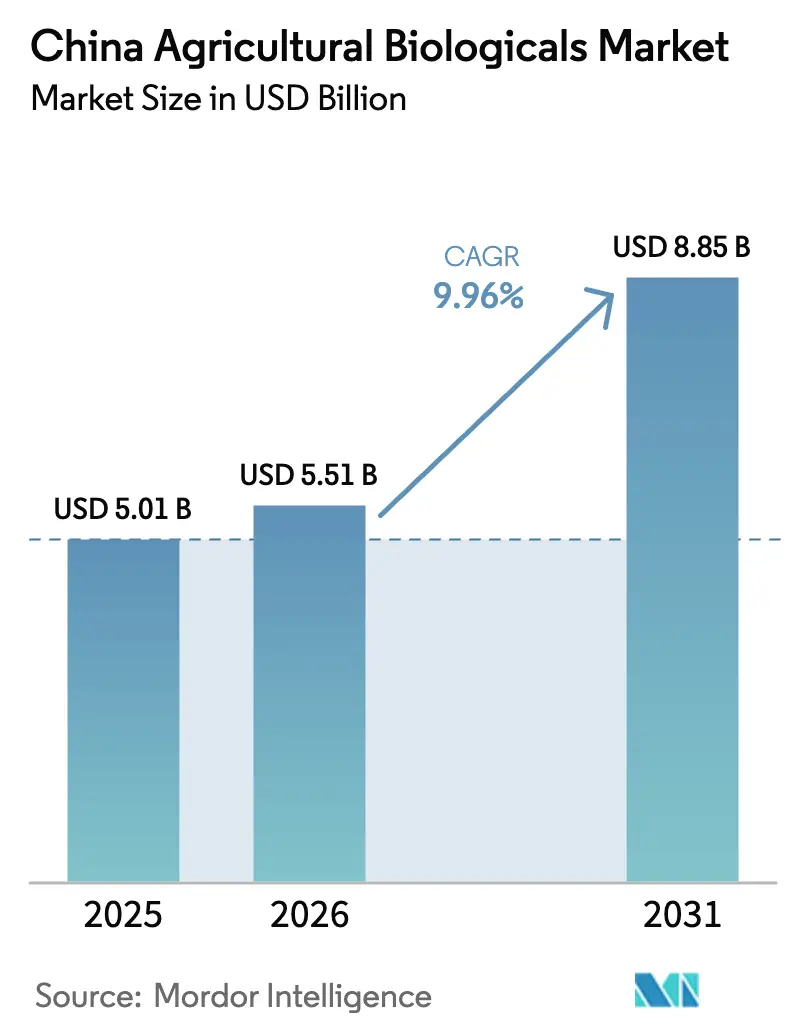
| Base Year Market Size (2025) | USD 5.01 Billion |
| Market Size (2026) | USD 5.51 Billion |
| Market Size (2031) | USD 8.85 Billion |
| Growth Rate (2026 - 2031) | 9.96 % |
| Market Concentration | Low |
Major Players *Disclaimer: Major Players sorted in no particular order Image © Mordor Intelligence. Reuse requires attribution under CC BY 4.0. | |
China Agricultural Biologicals Market Analysis by Mordor Intelligence
The China agricultural biologicals market size was valued at USD 5.01 billion in 2025 and estimated to grow from USD 5.51 billion in 2026 to reach USD 8.85 billion by 2031, at a CAGR of 9.96% during the forecast period (2026-2031). This expansion reflects Beijing’s ongoing shift toward low-residue farming that can satisfy stricter domestic food-safety rules and evolving consumer expectations for chemical-free produce. A nationwide goal to cut chemical fertilizer usage by 5% and pesticide application by 10% during the Fourteenth Five-Year Plan (2021-2025) is channeling technical and financial resources toward biological inputs[1]Source: Ministry of Agriculture and Rural Affairs, “14th Five-Year Plan for Agricultural Development,” moa.gov.cn. Mandatory residue-limit harmonization with European Union standards is driving crop exporters to replace older synthetic chemistries with microbial solutions. Parallel tax and purchase subsidies are narrowing the cost gap between biological and chemical options, particularly in Shandong, Henan, and Jiangsu, where farmer adoption is the fastest. Beyond compliance, farmers see an income upside from carbon credits, e-commerce distribution efficiencies, and soil health gains that together strengthen the long-term business case for biological adoption.
Key Report Takeaways
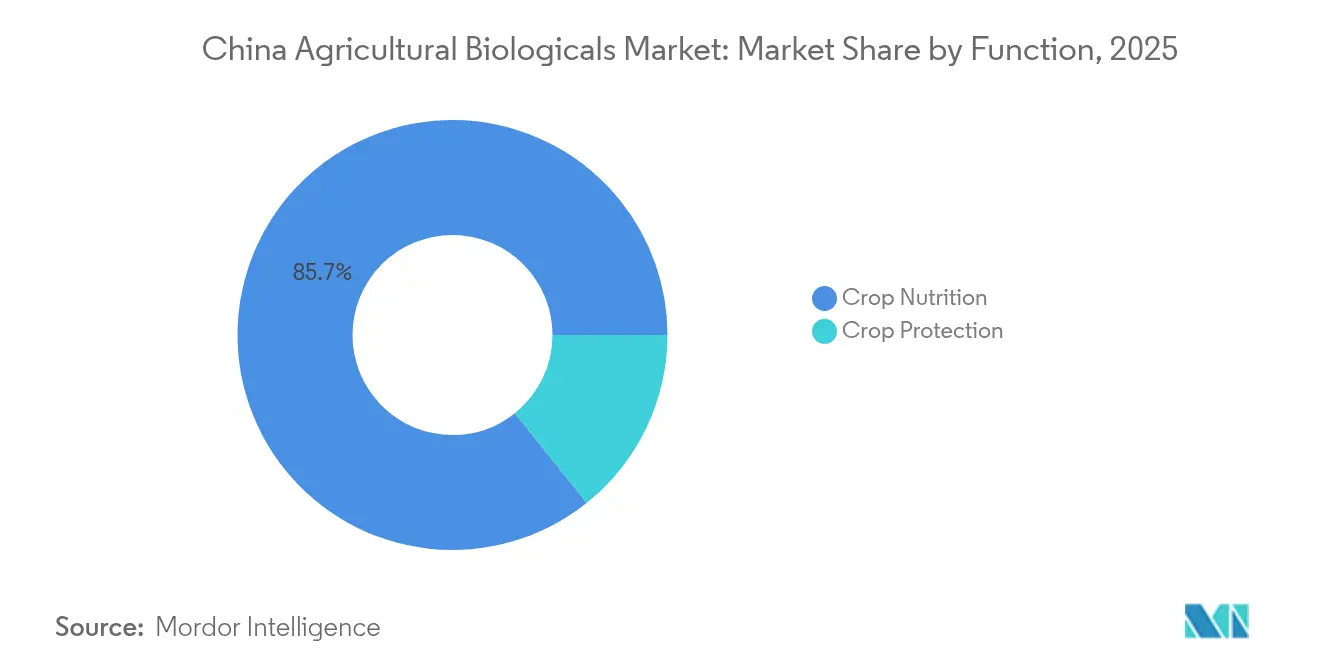
- By function, crop nutrition held 85.72% of the Chinese agricultural biologicals market share in 2025 and is projected to grow at a CAGR of 9.48%.
- By crop type, row crops accounted for an 80.15% share of the Chinese agricultural biologicals market size in 2025, while cash crops are projected to grow at a 10.28% CAGR to 2031.
Note: Market size and forecast figures in this report are generated using Mordor Intelligence’s proprietary estimation framework, updated with the latest available data and insights as of 2026.
China Agricultural Biologicals Market Trends and Insights
Drivers Impact Analysis*
| Driver | (~) % Impact on CAGR Forecast | Geographic Relevance | Impact Timeline |
|---|---|---|---|
| Government Initiatives Supporting Biological Inputs | +1.5% | National with focus in Shandong, Henan, Jiangsu | Short term (≤ 2 years) |
| Rising consumer demand for organic produce | +1.8% | Tier-1 cities and export supply chains | Medium term (2-4 years) |
| Tighter chemical-pesticide regulations | +1.2% | National, stronger in sensitive ecological zones | Medium term (2-4 years) |
| Formulation innovations boosting shelf-life | +1.0% | R&D hubs in Beijing, Shanghai, Shenzhen | Long term (≥ 4 years) |
| Biologicals linked to carbon-credit revenues | +0.8% | Guangdong and Zhejiang pilot sites | Long term (≥ 4 years) |
| E-commerce ag-input platforms adoption | +0.6% | Eastern provinces | Short term (≤ 2 years) |
| Source: Mordor Intelligence | |||


Government Initiatives for Biological Inputs
China's Ministry of Agriculture has approved seven new pesticide active ingredients, including five biopesticides, as part of its efforts to promote sustainable agriculture. Subsidies represent another initiative implemented by the government. In provinces like Shandong and Henan, additional provincial grants have increased the effective reimbursement rate to over 60%. Smallholders cultivating less than 10 hectares, who make up 85% of China’s growers, benefit significantly as cost parity with synthetic pesticides becomes attainable for the first time. Performance-based bonuses linked to improvements in soil health further encourage repeat purchases. The subsidy allocation is anticipated to increase again in the central budget for 2026, supporting short-term growth in this initiative.
Rising Consumer Demand for Organic Produce
China’s organic food sales reached CNY 101.6 billion (USD 14.2 billion) in 2024, ranking it third worldwide [2]Source: China Organic Food Development Center, “Organic Market Development Report 2024,” cofcc.org.cn. Urban households in Beijing, Shanghai, and Shenzhen typically pay premiums of 40–60% for certified produce that contains no synthetic residues. E-commerce leaders such as Tmall and JD.com report compound annual organic growth of 25%, with fresh fruits and vegetables leading the way. Because certification rules mandate the use of biological inputs for soil and pest management, every additional organic hectare directly expands the Chinese agricultural biologicals market.
Tighter Chemical-Pesticide Regulations
A 2024 decree set stricter residue limits for 127 active ingredients to align with European Union thresholds [3]Source: Ministry of Ecology and Environment, “Pesticide Residue Limits Standards Update 2024,” mee.gov.cn. Random testing now covers 15% of farmed acreage annually, and fines for non-compliance can reach as high as CNY 500,000 (USD 70,000). Chemical registration fees increased by 40% after new toxicology requirements were introduced, whereas biological dossiers enjoy a streamlined route that reduces both costs and lead times. Export-oriented cash crop growers respond by integrating microbial solutions into their spraying calendars, thereby enhancing biological penetration ahead of regulatory deadlines.
Formulation Innovations Boosting Shelf-Life
Stabilization breakthroughs have extended the ambient shelf-life of liquid biofertilizers from six months to eighteen months, slashing logistics costs by nearly one-third. Genliduo Bio-tech’s encapsulation matrix preserves Bacillus spores at room temperature, making cold-chain transport optional in most geographies. National patent filings for stabilization technology surged 180% between 2023 and 2024, underscoring the strategic race to secure intellectual property. The result is a broader distribution reach and more reliable field performance, easing one of the longest-standing objections from farmers.
Restraints Impact Analysis*
| Restraint | (~) % Impact on CAGR Forecast | Geographic Relevance | Impact Timeline |
|---|---|---|---|
| Inconsistent field performance variability | -0.9% | National, higher in regions with extreme weather | Medium term (2-4 years) |
| Low farmer awareness and technical know-how | -0.7% | Rural west and remote mountain areas | Short term (≤ 2 years) |
| Lengthy registration and approval timelines | -0.5% | National regulatory framework | Long term (≥ 4 years) |
| Cold-chain gaps for live microbials | -0.4% | Outlying western and northern provinces | Medium term (2-4 years) |
| Source: Mordor Intelligence | |||
Inconsistent Field Performance Variability
Multiyear trials across 12 provinces in China showed 15–35% yield swings for identical biological products under varying weather and soil conditions. Live microbial formulations are particularly sensitive to temperature fluctuations and erratic rainfall, which are common in China’s continental climate. Because many biologicals require two or three seasons to fully inoculate the soil microbiome, farmers accustomed to immediate chemical knockdown are wary. The variability dampens adoption rates until peer-to-peer testimonials or extension support reassure growers.
Lengthy Registration and Approval Timelines
Although the Ministry of Agriculture and Rural Affairs China launched a fast-track channel in 2024, most dossiers still take 18-24 months to clear mandatory eco-toxicity reviews. Smaller innovators lack the regulatory bandwidth to navigate the process, which slows the commercial launch pipeline. Some firms prioritize export markets with more predictable review calendars, delaying domestic availability of cutting-edge solutions.
*Our forecasts treat driver/restraint impacts as directional, not additive. The impact forecasts reflect baseline growth, mix effects, and variable interactions.
Segment Analysis
By Function: Nutrition Dominance Drives Market Expansion
Crop nutrition products controlled 85.72% of the Chinese agricultural biologicals market share in 2025, and are projected to grow at a 9.48% annual rate through 2031. Within that, the China agricultural biologicals market size for biofertilizers is projected to grow 10.05% annually through 2031 as producers of rice, wheat, and corn replace mineral nitrogen with Rhizobium and Azospirillum consortia. Organic fertilizer blends of composted manure and plant meals offer smallholders a user-friendly entry point, as their application machinery and dosage rates closely mirror traditional practices. Biostimulants are experiencing rapid uptake in greenhouse vegetables, where flavor and appearance premiums help offset higher per-hectare input costs.
Crop protection, although still a minority segment, is evolving quickly. The Ministry of Agriculture and Rural Affairs registered 23 new biocontrol agents in 2024, compared to only eight synthetics, revealing an intentional policy tilt. Multi-strain consortia broaden target-pest coverage and lengthen residual control, addressing earlier concerns over narrow specificity. As residue-free mandates spread to export fruit and cotton, the Chinese agricultural biologicals market is anticipated to witness an accelerating crossover between nutrition and protection categories.


By Crop Type: Row Crops Foundation with Cash-Crop Growth
Row crops accounted for 80.15% of the biologicals volume in 2025, primarily across 120 million hectares of rice, wheat, and corn. Nitrogen-fixing inoculants and phosphate-solubilizing bacteria reduce fertilizer costs while maintaining yields essential for national food security. Consequently, the Chinese agricultural biologicals market size devoted to row-crop systems is forecasted to increase in tandem with ongoing soil health initiatives.
Cash crops record the fastest pace, advancing at a 10.28% CAGR through 2031, with a 45% price premium on certified organic cotton and soy. Horticulture leads in revenue per hectare: greenhouse tomatoes and strawberries apply biologicals at rates three to four times those of open-field cereals, despite their modest acreage. Southern provinces deploy microbial sprays against fungal pathogens in mango and litchi orchards, while northern plastic-house installations extend growing seasons and underpin higher input intensity.

Geography Analysis
Eastern seaboard provinces, such as Shandong, Jiangsu, and Zhejiang, collectively captured 44.35% of national consumption in 2025, as research institutes, higher disposable incomes, and export-oriented agribusinesses converged there. Greenhouse complexes near Shanghai are driving demand for biostimulants that enhance color uniformity and shelf life. Reliable logistics and advisory services reinforce product performance, creating a demonstration effect that radiates inland.
The Northeast China Plain emerges as the largest white-space opportunity. The use of biofertilizers in Heilongjiang is an expanding focus in agricultural research and practice, driven by the demand for sustainable farming methods to complement or partially replace traditional chemical fertilizers. Field trials have consistently shown that biofertilizers can substantially enhance crop yields, particularly for soybeans and corn, while improving soil health under the region's specific soil conditions. Black-soil degradation and government pollution targets accelerate uptake. Central provinces, such as Henan and Hubei, blend organic and synthetic inputs in integrated nutrient-management pilots, which are displayed at 15 demonstration zones.
Western and plateau regions lag due to infrastructure gaps, but benefit from poverty-alleviation budgets that now include biological inputs. Xinjiang’s cotton exporters adopt microbial sprays to meet buyer residue thresholds. As decentralized fermentation plants reduce freight costs, the Chinese agricultural biologicals market is projected to deepen its western footprint during the latter half of the forecast period.
Competitive Landscape
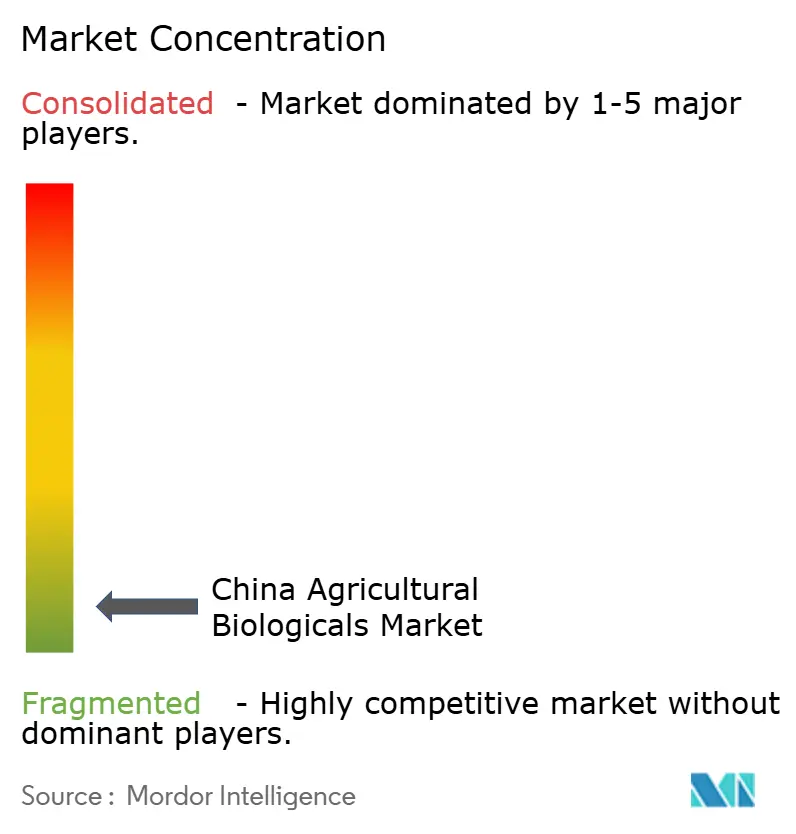
The Chinese agricultural biologicals industry remains highly fragmented, with the top five producers holding a combined significant revenue share, reflecting the proliferation of provincial start-ups and niche technology houses. Domestic leaders, such as Genliduo Bio-tech Corporation Ltd, extend their influence by pairing region-specific strains with sprawling distributor networks. Multinationals, including Novozymes A/S and Biobest Group NV, concentrate on premium segments where documented stability and regulatory dossiers justify higher price points.
Strategic emphasis centers on microbial libraries, fermentation scale-up, and spray-drying technology that together determine cost competitiveness and strain diversity. Patent submissions increased 180% year-over-year in 2024, with Chinese entities accounting for 65% of that total, indicating a rise in local R&D self-reliance. Vertical integration from lab to field trials to formulation sharpens quality control and shields intellectual property in a market where counterfeit risk persists.
Adjacent opportunities entice both incumbents and newcomers, with post-harvest decay inhibitors and digital decision-support tools bundling input sales with agronomic analytics. Synthetic biology start-ups promise bespoke microbes with expedited development cycles, threatening to disrupt legacy strain portfolios. Regulatory mastery is emerging as a key differentiator, as accelerated approval pathways reward firms that invest early in data packages aligned with national priorities.
China Agricultural Biologicals Industry Leaders
Suståne Natural Fertilizer Inc.
Biobest Group NV (Floridienne SA)
Biolchim S.p.A. (Huber AgroSolutions)
Genliduo Bio-tech Corporation Ltd (Genliduo Group)
Valent Biosciences LLC (Sumitomo Chemical Co. Ltd)
- *Disclaimer: Major Players sorted in no particular order

Recent Industry Developments
- October 2025: The World Agricultural Technology Innovation Conference (WAFI) took place in Pinggu, Beijing, under the theme "Practicing a Big Food Vision, Building a Resilient Food Supply System." Experts from over 90 countries convened to discuss global agricultural innovations. Genlido Biotechnology Co., Ltd. (Genlido) participated in the event, emphasizing its position as a "plant and soil health solution expert utilizing microbial carbon core technology."
- September 2025: Genliduo has introduced five key product series designed to address planting challenges in Northeast China. These products include Feilijiu 369, Enhanced Crop Disease-Free, Fertilizer Growth, and Seedling Superior 520. They combine organic and microbial nutrients to implement a three-pronged approach: nourishing the soil, increasing yield, and enhancing resistance to adverse conditions.
- September 2024: Chinese scientists have created the world's first biopesticide molecule targeting chitin biological processes, advancing sustainable pesticide development. The fungal chitin deacetylase inhibitors are efficient, safe, and environmentally friendly, effectively managing major crop fungal diseases, according to the Institute of Plant Protection, Chinese Academy of Agricultural Sciences (CAAS).


China Agricultural Biologicals Market Report Scope
Crop Nutrition, Crop Protection are covered as segments by Function. Cash Crops, Horticultural Crops, Row Crops are covered as segments by Crop Type.| Crop Nutrition | Biofertilizer | Azospirillum |
| Azotobacter | ||
| Mycorrhiza | ||
| Phosphate Solubilizing Bacteria | ||
| Rhizobium | ||
| Other Biofertilizers | ||
| Biostimulants | Amino Acids | |
| Fulvic Acid | ||
| Humic Acid | ||
| Protein Hydrolysates | ||
| Seaweed Extracts | ||
| Other Biostimulants | ||
| Organic Fertilizer | Manure | |
| Meal Based Fertilizers | ||
| Oilcakes | ||
| Other Organic Fertilizers | ||
| Crop Protection | Biocontrol Agents | Macrobials |
| Microbials | ||
| Biopesticides | Biofungicides | |
| Bioherbicides | ||
| Bioinsecticides | ||
| Other Biopesticides | ||
| Cash Crops |
| Horticultural Crops |
| Row Crops |
| Function | Crop Nutrition | Biofertilizer | Azospirillum |
| Azotobacter | |||
| Mycorrhiza | |||
| Phosphate Solubilizing Bacteria | |||
| Rhizobium | |||
| Other Biofertilizers | |||
| Biostimulants | Amino Acids | ||
| Fulvic Acid | |||
| Humic Acid | |||
| Protein Hydrolysates | |||
| Seaweed Extracts | |||
| Other Biostimulants | |||
| Organic Fertilizer | Manure | ||
| Meal Based Fertilizers | |||
| Oilcakes | |||
| Other Organic Fertilizers | |||
| Crop Protection | Biocontrol Agents | Macrobials | |
| Microbials | |||
| Biopesticides | Biofungicides | ||
| Bioherbicides | |||
| Bioinsecticides | |||
| Other Biopesticides | |||
| Crop Type | Cash Crops | ||
| Horticultural Crops | |||
| Row Crops | |||


Market Definition
- AVERAGE DOSAGE RATE - The average application rate is the average volume of agricultural biologicals applied per hectare of farmland in the respective region/country.
- CROP TYPE - Crop type includes Row crops (Cereals, Pulses, Oilseeds), Horticultural Crops (Fruits and vegetables) and Cash Crops (Plantation Crops, Fibre Crops and Other Industrial Crops)
- FUNCTION - Agricultural biological products provide crops with essential nutrients, prevent or control abiotic & biotic stresses, and enhance soil quality.
- TYPE - The Crop Nutrition function of agricultural biologicals includes organic fertilizer and Biofertilizer, whereas the Crop Protection function includes Biostimulants, Biopesticides and Biocontrol Agents.
| Keyword | Definition |
|---|---|
| Cash Crops | Cash crops are non-consumable crops sold as a whole or part of the crop to manufacture end-products to make a profit. |
| Integrated Pest Management (IPM) | IPM is an environment-friendly and sustainable approach to control pests in various crops. It involves a combination of methods, including biological controls, cultural practices, and selective use of pesticides. |
| Bacterial biocontrol agents | Bacteria used to control pests and diseases in crops. They work by producing toxins harmful to the target pests or competing with them for nutrients and space in the growing environment. Some examples of commonly used bacterial biocontrol agents include Bacillus thuringiensis (Bt), Pseudomonas fluorescens, and Streptomyces spp. |
| Plant Protection Product (PPP) | A plant protection product is a formulation applied to crops to protect from pests, such as weeds, diseases, or insects. They contain one or more active substances with other co-formulants such as solvents, carriers, inert material, wetting agents or adjuvants formulated to give optimum product efficacy. |
| Pathogen | A pathogen is an organism causing disease to its host, with the severity of the disease symptoms. |
| Parasitoids | Parasitoids are insects that lay their eggs on or within the host insect, with their larvae feeding on the host insect. In agriculture, parasitoids can be used as a form of biological pest control, as they help to control pest damage to crops and decrease the need for chemical pesticides. |
| Entomopathogenic Nematodes (EPN) | Entomopathogenic nematodes are parasitic roundworms that infect and kill pests by releasing bacteria from their gut. Entomopathogenic nematodes are a form of biocontrol agents used in agriculture. |
| Vesicular-arbuscular mycorrhiza (VAM) | VAM fungi are mycorrhizal species of fungus. They live in the roots of different higher-order plants. They develop a symbiotic relationship with the plants in the roots of these plants. |
| Fungal biocontrol agents | Fungal biocontrol agents are the beneficial fungi that control plant pests and diseases. They are an alternative to chemical pesticides. They infect and kill the pests or compete with pathogenic fungi for nutrients and space. |
| Biofertilizers | Biofertilizers contain beneficial microorganisms that enhance soil fertility and promote plant growth. |
| Biopesticides | Biopesticides are natural/bio-based compounds used to manage agricultural pests using specific biological effects. |
| Predators | Predators in agriculture are the organisms that feed on pests and help control pest damage to the crops. Some common predator species used in agriculture include ladybugs, lacewings, and predatory mites. |
| Biocontrol agents | Biocontrol agents are living organisms used to control pests and diseases in agriculture. They are alternatives to chemical pesticides and are known for their lesser impact on the environment and human health. |
| Organic Fertilizers | Organic fertilizer is composed of animal or vegetable matter used alone or in combination with one or more non-synthetically derived elements or compounds used for soil fertility and plant growth. |
| Protein hydrolysates (PHs) | Protein hydrolysate-based biostimulants contain free amino acids, oligopeptides, and polypeptides produced by enzymatic or chemical hydrolysis of proteins, primarily from vegetal or animal sources. |
| Biostimulants/Plant Growth Regulators (PGR) | Biostimulants/Plant Growth Regulators (PGR) are substances derived from natural resources to enhance plant growth and health by stimulating plant processes (metabolism). |
| Soil Amendments | Soil Amendments are substances applied to soil that improve soil health, such as soil fertility and soil structure. |
| Seaweed Extract | Seaweed extracts are rich in micro and macronutrients, proteins, polysaccharides, polyphenols, phytohormones, and osmolytes. These substances boost seed germination and crop establishment, total plant growth and productivity. |
| Compounds related to biocontrol and/or promoting growth (CRBPG) | Compounds related to biocontrol or promoting growth (CRBPG) are the ability of a bacteria to produce compounds for phytopathogen biocontrol and plant growth promotion. |
| Symbiotic Nitrogen-Fixing Bacteria | Symbiotic nitrogen-fixing bacteria such as Rhizobium obtain food and shelter from the host, and in return, they help by providing fixed nitrogen to the plants. |
| Nitrogen Fixation | Nitrogen fixation is a chemical process in soil which converts molecular nitrogen into ammonia or related nitrogenous compounds. |
| ARS (Agricultural Research Service) | ARS is the U.S. Department of Agriculture's chief scientific in-house research agency. It aims to find solutions to agricultural problems faced by the farmers in the country. |
| Phytosanitary Regulations | Phytosanitary regulations imposed by the respective government bodies check or prohibit the importation and marketing of certain insects, plant species, or products of these plants to prevent the introduction or spread of new plant pests or pathogens. |
| Ectomycorrhizae (ECM) | Ectomycorrhiza (ECM) is a symbiotic interaction of fungi with the feeder roots of higher plants in which both the plant and the fungi benefit through the association for survival. |


Research Methodology
Mordor Intelligence follows a four-step methodology in all our reports.
- Step-1: Identify Key Variables: In order to build a robust forecasting methodology, the variables and factors identified in Step-1 are tested against available historical market numbers. Through an iterative process, the variables required for market forecast are set and the model is built on the basis of these variables.
- Step-2: Build a Market Model: Market-size estimations for the forecast years are in nominal terms. Inflation is not a part of the pricing, and the average selling price (ASP) is kept constant throughout the forecast period.
- Step-3: Validate and Finalize: In this important step, all market numbers, variables and analyst calls are validated through an extensive network of primary research experts from the market studied. The respondents are selected across levels and functions to generate a holistic picture of the market studied.
- Step-4: Research Outputs: Syndicated Reports, Custom Consulting Assignments, Databases & Subscription Platforms.