
Chilled Soup Market Size and Share
Market Overview
| Study Period | 2022 - 2032 |
|---|---|
| Market Size (2027) | USD 1.91 Billion |
| Market Size (2032) | USD 2.32 Billion |
| Growth Rate (2027 - 2032) | 4.01 % |
| Fastest Growing Market | Asia-Pacific |
| Largest Market | North America |
| Market Concentration | Low |
Major Players *Disclaimer: Major Players sorted in no particular order Image © Mordor Intelligence. Reuse requires attribution under CC BY 4.0. | |
Chilled Soup Market Analysis by Mordor Intelligence
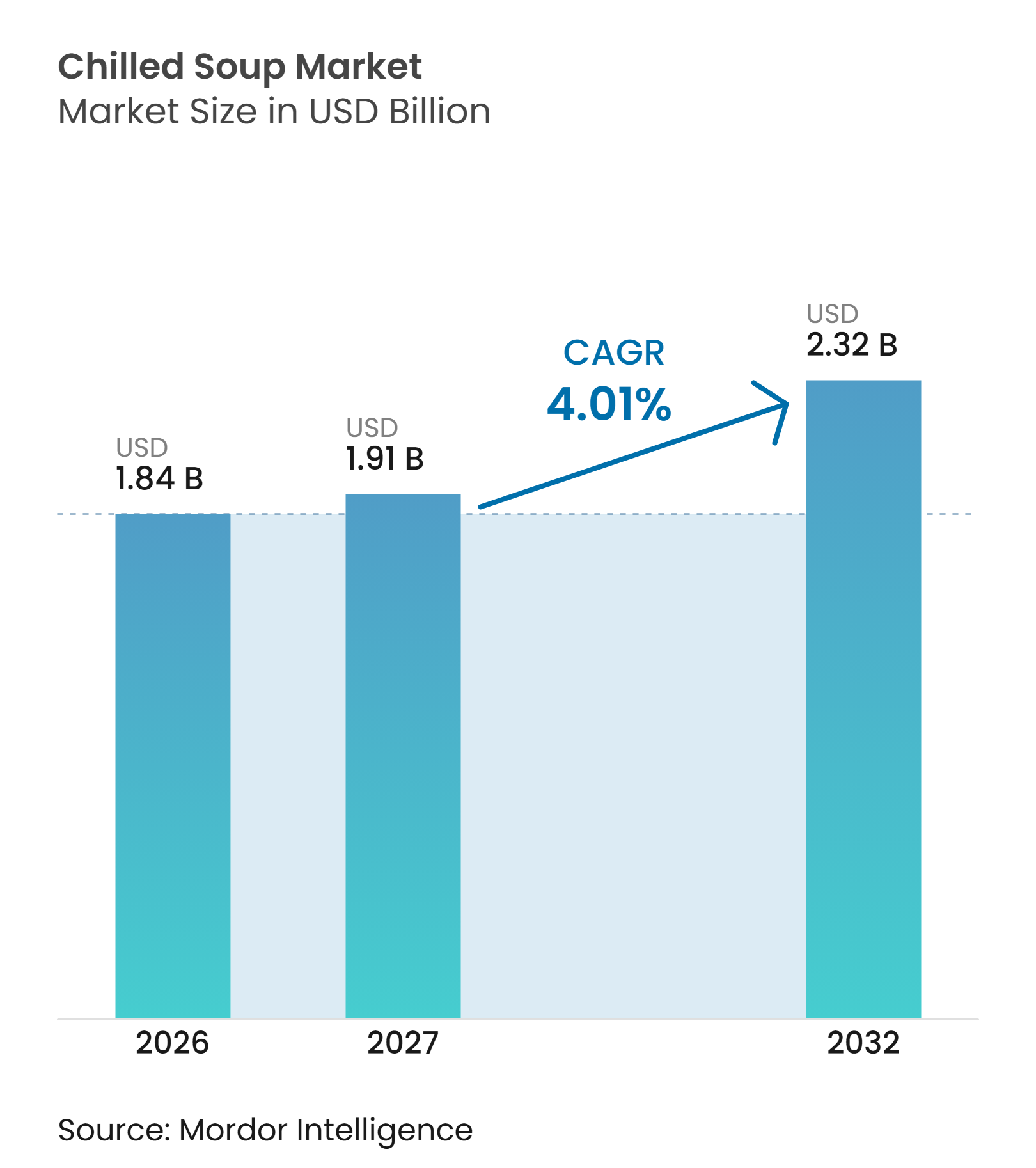
The chilled soup market size was valued at USD 1.84 billion in 2026 and is estimated to grow from USD 1.91 billion in 2027 to reach USD 2.32 billion by 2032, at a CAGR of 4.01% during the forecast period (2027-2032). Refrigerated soup is increasingly positioned as a convenient meal or light dinner rather than a seasonal product. Demand is driven by consumers seeking minimally prepared food that appears fresh and nutritionally balanced. Expanding refrigerated retail infrastructure and distribution capacity can improve access in cities where chilled prepared foods were previously less available. Product development is increasingly focused on protein-rich, plant-based, and premium varieties, creating purchase drivers beyond basic convenience. Competition remains fragmented; therefore, strong retail relationships, reliable cold-chain operations, and differentiated product formats are more important than scale alone.
Key Report Takeaways
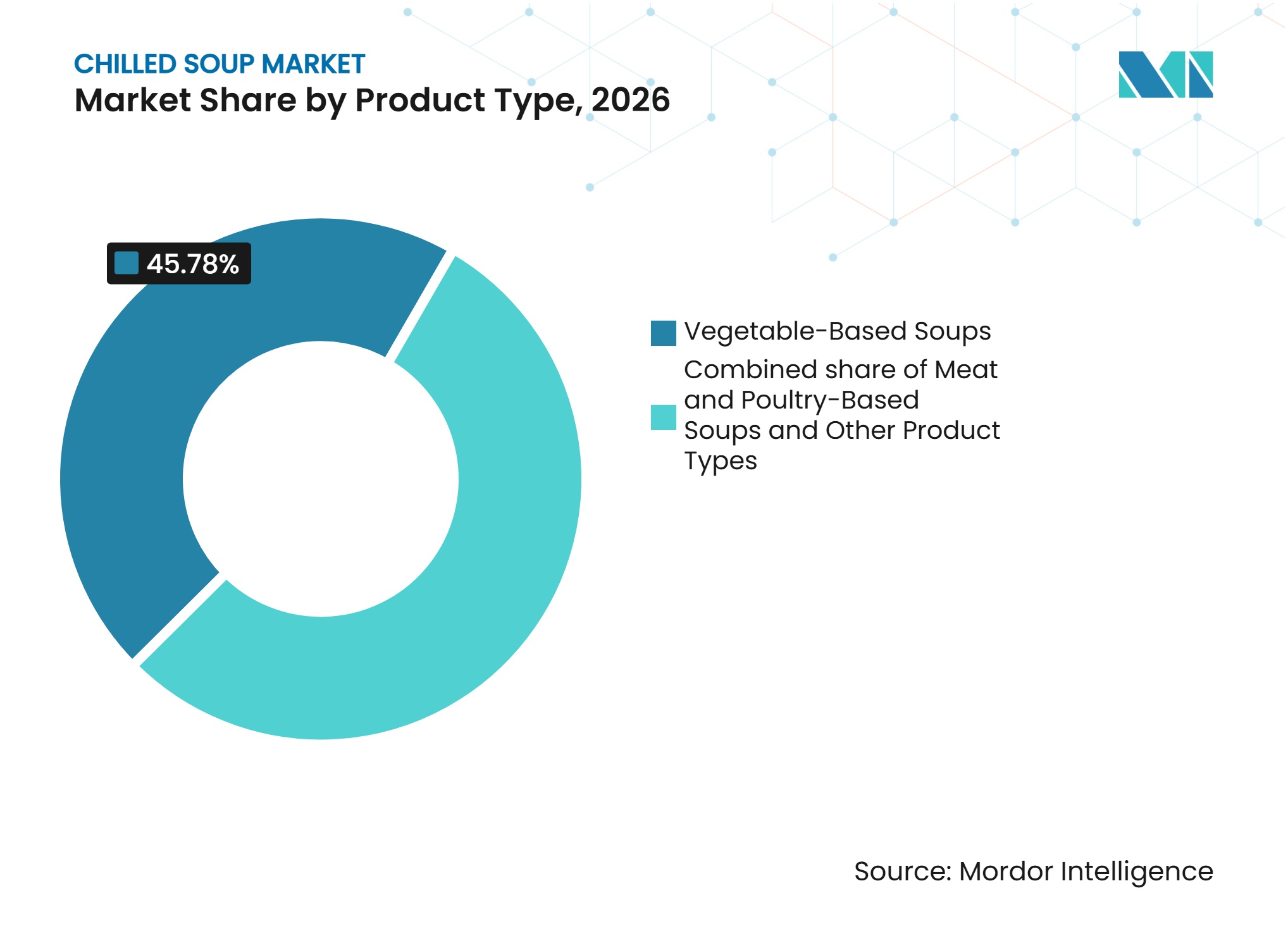
- By product type, vegetable-based soups dominated the chilled soup market, accounting for 45.78% of the market share in 2026, while meat and poultry-based soups are expected to register the fastest CAGR of 5.22% during 2027-2032.
- By packaging, pouches led the market with a 52.63% share in 2026, while canned packaging is expected to record the fastest CAGR of 5.34% during 2027-2032.
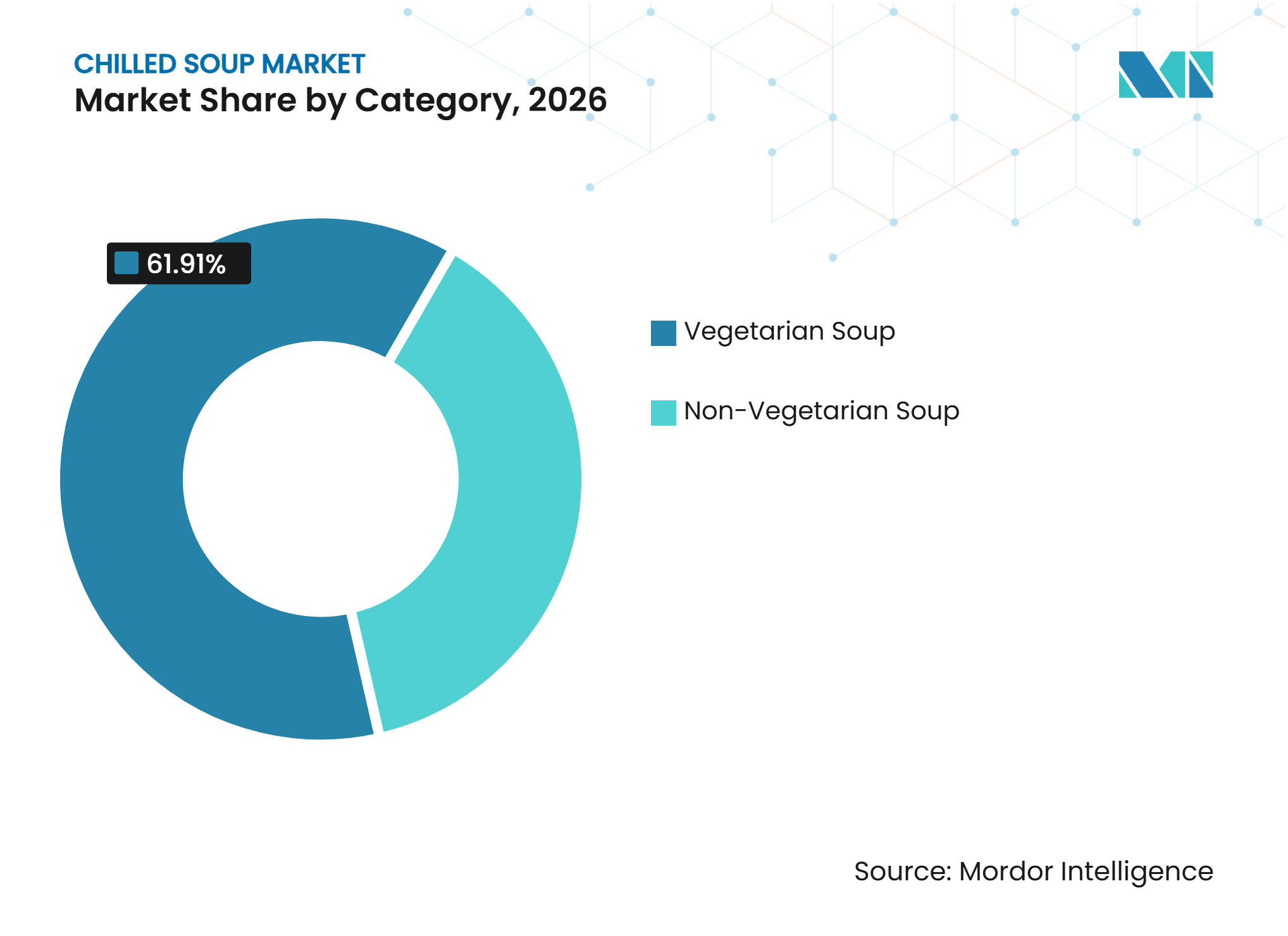
- By category, vegetarian soup dominated the market with a 61.91% share in 2026, while non-vegetarian soup is projected to register the fastest CAGR of 5.59% during 2027-2032.
- By distribution channel, supermarkets/hypermarkets accounted for the largest market share of 47.74% in 2026, while online retail stores are projected to register the fastest CAGR of 6.72% during 2027-2032.
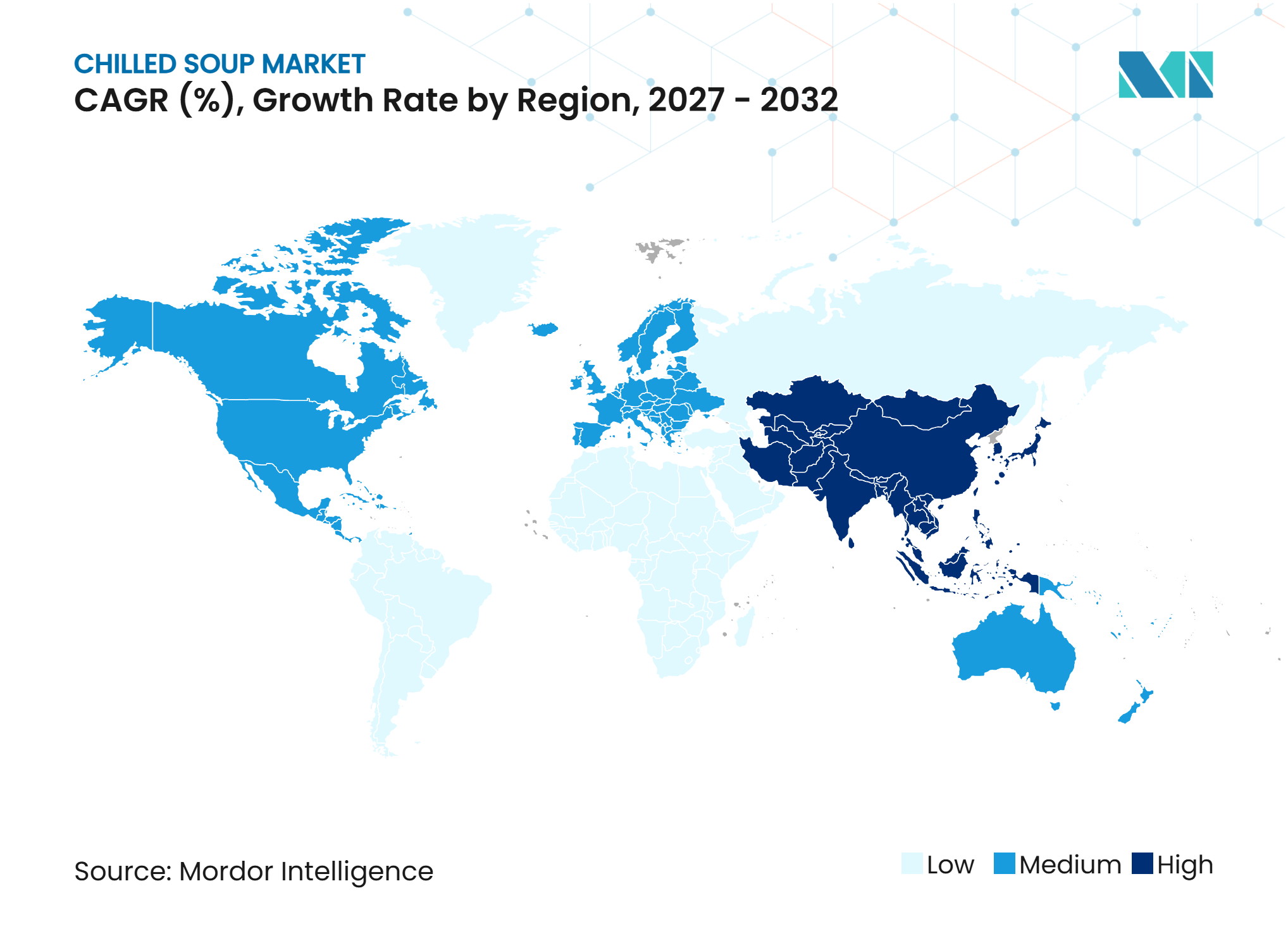
- By geography, North America dominated the chilled soup market with a 38.12% share in 2026, while Asia-Pacific is expected to register the fastest CAGR of 5.97% during 2027-2032.
Note: Market numbers in this report are based on Mordor Intelligence's proprietary estimation framework, which combines nine months of actuals with Q4 projections for base year 2026.
Market Trends and Insights
Drivers Impact Analysis of Chilled Soup Market*
| Driver | (~) % Impact on CAGR Forecast | Geographic Relevance | Impact Timeline |
|---|---|---|---|
| Rising demand for convenient meal solutions | +1.1% | Global, with concentration in North America, Western Europe, and urban Asia-Pacific | Medium term (2-4 years) |
| Preference for fresh-tasting and minimally processed foods | +0.8% | North America and Europe, with growing relevance in Asia-Pacific and Middle East and Africa | Medium term (2-4 years) |
| Expansion of refrigerated convenience food and ready-meal occasions | +0.7% | Global, led by North America, the United Kingdom, and urban Asia-Pacific | Long term (≥ 4 years) |
| Rising demand for plant-based food products | +0.6% | North America, the United Kingdom, Germany, and urban Asia-Pacific | Medium term (2-4 years) |
| Product innovation in flavours and ingredients | +0.5% | Global | Short term (≤ 2 years) |
| Growing demand for premium, organic and specialty chilled soup products | +0.4% | United Kingdom, North America, France, and Australia | Long term (≥ 4 years) |
| Source: Mordor Intelligence | |||
Rising Demand for Convenient Meal Solutions
Increasingly busy lifestyles, longer working hours, and evolving eating habits are driving consumers toward convenient meal options that require minimal preparation. Chilled soups are available in ready-to-eat and ready-to-heat formats, providing quick meal solutions without requiring extensive cooking time. According to the Agriculture and Horticulture Development Board (AHDB) Consumer Insights Report March 2025, the average evening meal preparation time in the United Kingdom declined to 31 minutes, while lunch preparation time fell to less than 15 minutes[1]. Additionally, in August 2026, PepsiCo launched Alvalle gazpacho in the United States, introducing a ready-to-eat refrigerated vegetable soup for quick meals, snacks, and everyday consumption. These developments underscore the growing relevance of convenience-driven eating habits and support demand for chilled soup products.
Growing Consumer Preference for Fresh-Tasting and Minimally Processed Food Products
Growing consumer awareness of food ingredients, processing methods, and nutritional quality is driving a shift toward products perceived as fresh, natural, and minimally processed. This preference supports demand for chilled soups, as manufacturers commonly position refrigerated formulations around fresh-tasting ingredients, including vegetables, herbs, legumes, and natural seasonings. Unlike conventional shelf-stable soups, chilled varieties often emphasize freshness and refrigerated storage, appealing to consumers seeking alternatives to heavily processed meal options. According to the International Food Information Council (IFIC), reported that 80% of American consumers considered processing before purchase in October 2025, compared with 79% in 2024[2]. This trend indicates that processing levels remain an important factor in food purchasing decisions, encouraging manufacturers to emphasize recognizable ingredients, simpler formulations, and fresh-tasting attributes to strengthen the appeal of chilled soups.
Rising Demand for Plant-Based Food Products
Plant-based offerings are expanding the chilled soup market, as vegetable-based recipes can accommodate a range of dietary preferences. Vegetarian formulations appeal to consumers seeking vegan, lower-calorie, or flexible meal options while maintaining the core convenience proposition. These ranges also provide a platform for companies to introduce meat-based recipes later without compromising their health-focused positioning. This type of range extension enables brands to address additional meal occasions while maintaining recognizable freshness cues. Producers can apply the clear ingredient and freshness expectations associated with plant-based product lines to mixed or meat-based soups. This approach provides companies with greater flexibility to serve consumers seeking both protein-rich options and straightforward ingredient lists.
Growing Demand for Premium, Organic, and Specialty Chilled Soup Products
Increasing consumer interest in high-quality ingredients, organic food products, and distinctive flavor profiles is prompting manufacturers to expand their premium and specialty chilled soup portfolios. Consumers increasingly prefer soups made with organic vegetables, natural ingredients, specialty herbs, and premium formulations that provide alternatives to conventional soup varieties. This shift creates opportunities for manufacturers to differentiate their offerings through organic certifications, restaurant-style recipes, innovative flavor combinations, and carefully selected ingredients. In addition, demand for diverse culinary experiences is driving the introduction of specialty varieties, such as Mediterranean-style gazpacho, creamy vegetable soups, and internationally inspired recipes. These developments strengthen product differentiation, broaden consumer choice, and support demand for premium chilled soup products.
Restraints Impact Analysis of Chilled Soup Market*
| Restraint | (~) % Impact on CAGR Forecast | Geographic Relevance | Impact Timeline |
|---|---|---|---|
| Limited shelf life and high product spoilage risk | -0.6% | Global, with greater exposure in emerging markets with limited cold-chain coverage | Long term (≥ 4 years) |
| Higher production, refrigeration and cold-chain distribution costs | -0.5% | Global, especially South America, Middle East and Africa, and developing Asia-Pacific markets | Medium term (2-4 years) |
| Consumer concerns regarding sodium and preservative content | -0.4% | North America, Europe, and urban Asia-Pacific | Medium term (2-4 years) |
| Seasonal fluctuations in product demand | -0.3% | Global, with greater variation in Northern Europe, Canada, and the Northern United States | Short term (≤ 2 years) |
| Source: Mordor Intelligence | |||
Limited Shelf Life and High Product Spoilage Risk
The chilled soup market relies on products remaining safe and acceptable throughout a relatively short selling period. In January 2025, Food Standards Scotland Shelf-life guidance report, states food businesses to use validated evidence to establish an appropriate shelf life and demonstrate that food remains safe and retains its intended quality during that period[3]. Temperature excursions can result in product losses, retailer returns, and increased inventory planning costs. These risks are particularly challenging for smaller companies that lack established quality systems or dense distribution networks. Consequently, the chilled soup market favors operators that can consistently control refrigeration across production, transportation, and retail channels.
Higher Production, Refrigeration, and Cold-Chain Distribution Costs
Chilled soup manufacturers incur higher operational and distribution costs because they must maintain uninterrupted temperature-controlled storage and transportation across the supply chain. Refrigerated warehousing, specialized transport vehicles, retail display equipment, energy consumption, and regular maintenance increase expenses compared with ambient soup manufacturers. Maintaining consistent refrigeration and complying with food safety requirements also increase operational complexity, particularly in regions with underdeveloped cold-chain infrastructure. These requirements can constrain market expansion by raising the financial burden on manufacturers and distributors. In addition, competition from private-label products and price-sensitive consumers limits manufacturers’ ability to pass higher operating costs on to retail prices, thereby pressuring profit margins.
*Our forecasts treat driver/restraint impacts as directional, not additive. The impact forecasts reflect baseline growth, mix effects, and variable interactions.
Chilled Soup Market Segment Analysis
By Product Type:
Vegetable-Based Soups Support Volume While Protein Formats Gain InterestVegetable-based soups accounted for 45.78% of the chilled soup market share in 2026. The segment benefits from its broad compatibility with vegetarian, vegan, allergen-conscious, and lower-calorie dietary preferences. Consumers often associate these recipes with fresh ingredients and versatile meal occasions. Vegetable-based varieties also align with the clean-label attributes sought by many refrigerated food shoppers. This broad appeal enables retailers to address multiple consumer needs with a manageable product portfolio. The chilled soup market size for vegetable-based recipes is supported by familiar flavors and suitability for lunch, dinner, and snack occasions. In addition, the availability of diverse vegetable combinations enables manufacturers to introduce differentiated recipes that target health-conscious consumers and varied taste preferences.
Meat- and poultry-based soups are forecast to grow at a CAGR of 5.22% through 2032. Protein content is becoming increasingly prominent in product claims and front-of-pack communication. Consumers seeking more filling meal options are showing interest in soup varieties containing chicken, meat, and protein-rich broths. These products also appeal to consumers seeking convenient meal solutions that combine protein content with ready-to-eat or ready-to-heat formats. Furthermore, meat and poultry ingredients enable manufacturers to position these products as more substantial meal alternatives, expanding their appeal beyond traditional soup consumption occasions.



By Packaging:
Pouches Retain Practical Advantages While Canned Formats ExpandPouches accounted for 52.63% of the chilled soup market share in 2026. They support portion control, flexible pack sizes, and efficient use of refrigerated shelf space. Brands can offer single-serve portions and family packs while retaining the familiar heat-and-serve format. Pouches also suit weekday meal occasions, as consumers value ease of handling and short preparation times. The format enables retailers to stock multiple flavors within limited deli refrigeration space. Consequently, pouches support mainstream, premium, and private-label products in the chilled soup market. However, material selection remains critical, as packaging must preserve product quality throughout refrigerated distribution.
Canned formats are forecast to grow at a CAGR of 5.34% through 2032. Portable packaging can help suppliers address demand from consumers seeking convenient, on-the-go food options. Cans can also position soup for snack and beverage consumption occasions. Cartons, tubs, and glass jars continue to serve segments in which premium presentation or sustainability messaging influences purchase decisions. Companies that account for these requirements can reduce subsequent reformulation needs and packaging transition pressures.
By Category:
Vegetarian Soup Leads While Non-Vegetarian Products Grow FasterVegetarian soup accounted for 61.91% of the chilled soup market share in 2026. The category includes a wide range of vegetable-based recipes already established in refrigerated assortments. Its strength reflects the ability of meatless products to meet multiple dietary needs within a single product range. Retailers use vegetarian offerings to address health, dietary flexibility, and ingredient transparency simultaneously. These products also align with the fresh and plant-forward cues commonly associated with chilled prepared foods. This scale gives the vegetarian segment a stable position in the chilled soup market. However, brands must maintain flavor variety, as consumer expectations extend beyond basic vegetable recipes.
Non-vegetarian soup is forecast to grow at a CAGR of 5.59% through 2032. Protein-led options provide manufacturers with a clearer opportunity to position certain soups as filling meal replacements. Brands can combine vegetables with chicken, bone broth, or other protein ingredients to retain freshness cues while increasing satiety. This combination can broaden the appeal of products that cater to both vegetable-forward and protein-forward preferences. It also creates opportunities for hybrid recipes rather than a strict separation between plant-forward and meat-based products.

By Distribution Channel:
Supermarkets Anchor Availability While Online Retail Stores GrowSupermarkets and hypermarkets accounted for 47.74% of the chilled soup market share in 2026. Their refrigerated displays and deli sections provide shoppers with direct access to soups alongside salads, meal kits, and other prepared foods. This environment encourages product trial by increasing visibility during routine grocery visits. Large-format stores can simultaneously stock mainstream, premium, and private-label products. Their established infrastructure also makes them the primary volume channel for many manufacturers. This distribution network provides the chilled soup market with practical access to consumers seeking convenient meal solutions. In-store placement and product availability remain critical, as refrigerated products cannot withstand prolonged out-of-stock periods.
Online retail stores are projected to grow at a CAGR of 6.72% through 2032. The expansion of cold-chain delivery services in major urban areas supports direct-to-consumer orders and subscription-based models. Online channels provide premium brands with greater space to communicate ingredient information, nutritional benefits, and usage occasions than limited in-store label space allows. They also enable consumers to purchase chilled soups alongside other refrigerated grocery products. This channel is particularly suited to repeat purchases of health-focused and specialty products. However, its growth depends on reliable temperature-controlled delivery and delivery economics that remain viable for both retailers and consumers.
Geography Analysis
North America
North America holds 38.12% share of the chilled soup market in 2026. Mature refrigerated retail networks support a wide range of prepared meals and enable manufacturers to position products in supermarket deli sections. The region benefits from the presence of established manufacturers, specialized refrigerated food producers, and strong private-label participation. Food safety controls and shelf-life validation remain critical compliance requirements for refrigerated products. Retailers can differentiate branded offerings from private-label products through nutrition claims and diverse flavor options. Additionally, established consumer familiarity with refrigerated convenience foods supports the availability and acceptance of chilled soup varieties across major retail outlets.
Asia-Pacific
The Asia-Pacific chilled soup market is forecast to grow at a CAGR of 5.97% through 2032. Urbanization and rising demand for convenient meal options are driving the consumption of refrigerated prepared foods in major cities. The market can expand as retailers invest in reliable refrigeration infrastructure and suppliers strengthen local cold-chain coverage. Product development must account for varying flavor preferences across China, Japan, Southeast Asia, and South Asia. Localized recipes may offer greater relevance than directly importing Western-style soup products. Manufacturers must also balance freshness-focused positioning with price points suited to local retail conditions. Effective temperature control and food safety management will remain critical as chilled distribution expands to a broader range of cities.
Europe, South America, and Middle East and Africa
Europe has well-established chilled prepared-food shelves across the United Kingdom, Germany, France, and the Netherlands. In the United Kingdom, specialist chilled soup brands compete alongside supermarket private-label offerings, making product differentiation essential. South America presents opportunities in large metropolitan areas; however, uneven cold-chain coverage can constrain national distribution. In the Middle East and Africa, opportunities are concentrated in markets with modern retail infrastructure and greater access to refrigerated imports. Companies require measured distribution strategies in these regions, as transport conditions, storage capacity, and retailer capabilities vary significantly. Market entrants should consider cold-chain reliability a core commercial requirement rather than a back-end logistics issue.
Competitive Landscape
Market Concentration
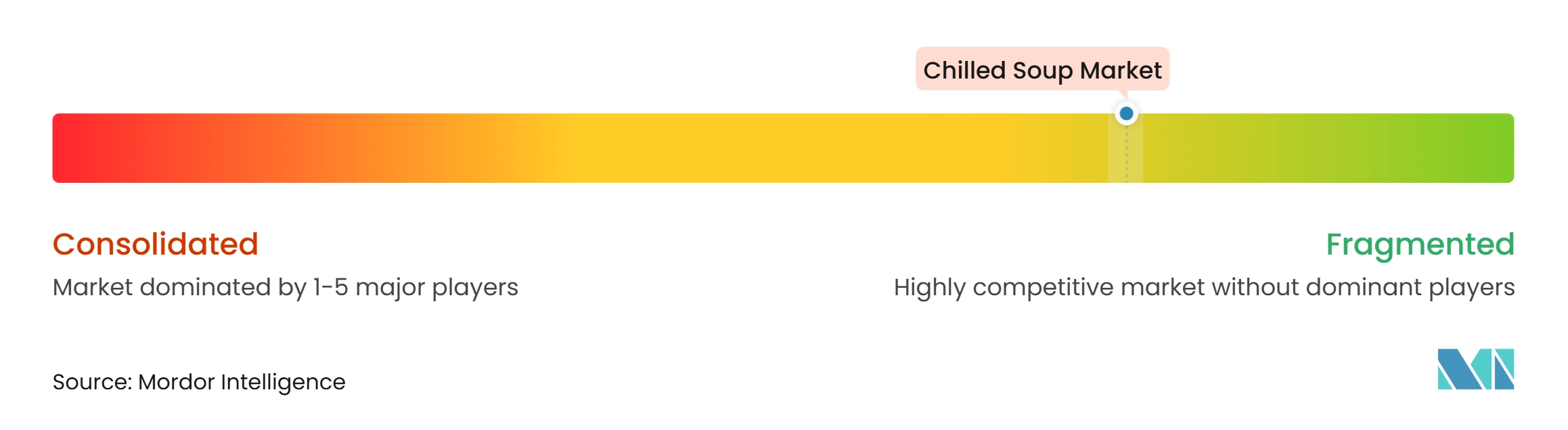
The chilled soup market is fragmented, with no single company controlling pricing or distribution across major regions. Large food companies leverage established brands, retail negotiating power, and resources for new product development. Specialist refrigerated producers offer focused manufacturing expertise, faster recipe development, and established relationships with deli buyers. Key competitive factors include product freshness, nutritional value, packaging, flavor variety, and reliable delivery. Private-label offerings intensify price competition in supermarket refrigerated sections, requiring branded companies to communicate clear product benefits that consumers can quickly understand. Protein-rich, plant-forward, and premium products represent important differentiation opportunities for suppliers.
Companies are using partnerships and product launches to address more specific dietary requirements. Campbell’s partnered with Banza in June 2026 and introduced its first gluten-free condensed chicken noodle soup. Blount Fine Foods refresh Family Kitchen packaging in July 2026 to highlight protein content and refrigerated freshness more prominently on the pack. These initiatives indicate that brands are using nutrition communication and dietary accessibility as competitive tools. They also demonstrate how packaging can reinforce category messaging without changing the core refrigerated product proposition.
Quality management remains a critical competitive requirement, as short shelf lives can increase waste and operational risk. Companies with robust quality systems and well-managed cold chains can protect product availability and strengthen retailer confidence. Larger companies may have greater capacity to invest in these systems, while specialist producers can compete through focused product expertise. This competitive landscape supports ongoing rivalry among national leaders, regional suppliers, artisanal producers, and private-label manufacturers.
Chilled Soup Industry Leaders
-
The Campbell Soup Company
-
New Covent Garden Soup Company
-
Greencore Group plc
-
Woolworths Group Limited
-
General Mills, Inc.
- *Disclaimer: Major Players sorted in no particular order
Chilled Soup Market Companies Covered in this Report
- The Campbell Soup Company
- New Covent Garden Soup Company
- Bakkavor Group plc
- Greencore Group plc
- The Hain Celestial Group, Inc.
- Blount Fine Foods
- The Kraft Heinz Company
- General Mills, Inc.
- Woolworths Group Limited
- Tio Gazpacho LLC
- Sonoma Brands
- The Billington Group
- Spanos Fine Foods
- Bol Foods
- Daylesford Organic
- Soupologie Ltd.
- Kettle Cuisine, LLC
- Spring Glen Fresh Foods, Inc.
- Ivar's Soup & Sauce Company
- Boulder Organic Foods
Recent Industry Developments in Chilled Soup Market
- August 2026: Campbell’s Company launched eight Chunky Frozen Bowls nationwide, each offering 20–28 g of protein per serving at a price of USD 5.49. This launch marked the Chunky Soup brand’s first entry into the frozen aisle and targets consumers seeking convenient, protein-rich meal options beyond the soup category’s traditional shelf-stable formats.
- August 2026: PepsiCo launched Alvalle gazpacho in the United States, expanding its presence in the refrigerated foods segment. The ready-to-eat chilled soup contains tomatoes, cucumbers, peppers, and extra-virgin olive oil. PepsiCo initially made the product available at select Whole Foods Market locations.
- July 2026: Blount’s Family Kitchen introduced refreshed packaging across its refrigerated soup line. The updated design features protein content on front-of-pack ribbons and emphasizes refrigerated freshness and ingredient quality.
Global Chilled Soup Market Report Scope
Chilled soup refers to ready-to-eat or ready-to-heat soup products that are stored, distributed, and sold under refrigerated conditions to maintain freshness, quality, and food safety.
The chilled soup market is segmented by product type, packaging, category, distribution channel, and geography. By product type, the market is segmented into vegetable-based soups, meat and poultry-based soups, and other product types. By packaging, the market is segmented into pouches, canned, and other packaging formats. By category, the market is segmented into vegetarian soup and non-vegetarian soup. By distribution channel, the market is segmented into supermarkets/hypermarkets, convenience/grocery stores, online retail stores, and other distribution channels. Based on geography, the market is classified into North America, Europe, South America, Asia-Pacific, and the Middle East and Africa. The market forecasts are provided in terms of value (USD).
Segmentation Overview
| Vegetable-Based Soups |
| Meat and Poultry-Based Soups |
| Other Product Types |
| Pouches |
| Canned |
| Other Packaging Formats |
| Vegetarian Soup |
| Non-Vegetarian Soup |
| Supermarkets/Hypermarkets |
| Convenience/Grocery Stores |
| Online Retail Stores |
| Other Distribution Channels |
| North America | United States |
| Canada | |
| Mexico | |
| Rest of North America | |
| Europe | Germany |
| United Kingdom | |
| Italy | |
| France | |
| Spain | |
| Poland | |
| Belgium | |
| Netherlands | |
| Rest of Europe | |
| Asia-Pacific | China |
| India | |
| Japan | |
| Australia | |
| Indonesia | |
| Thailand | |
| Singapore | |
| Rest of Asia-Pacific | |
| South America | Brazil |
| Argentina | |
| Peru | |
| Colombia | |
| Rest of South America | |
| Middle East and Africa | South Africa |
| Saudi Arabia | |
| United Arab Emirates | |
| Egypt | |
| Turkey | |
| Rest of Middle East and Africa |
| By Product Type | Vegetable-Based Soups | |
| Meat and Poultry-Based Soups | ||
| Other Product Types | ||
| By Packaging | Pouches | |
| Canned | ||
| Other Packaging Formats | ||
| By Category | Vegetarian Soup | |
| Non-Vegetarian Soup | ||
| By Distribution Channel | Supermarkets/Hypermarkets | |
| Convenience/Grocery Stores | ||
| Online Retail Stores | ||
| Other Distribution Channels | ||
| By Geography | North America | United States |
| Canada | ||
| Mexico | ||
| Rest of North America | ||
| Europe | Germany | |
| United Kingdom | ||
| Italy | ||
| France | ||
| Spain | ||
| Poland | ||
| Belgium | ||
| Netherlands | ||
| Rest of Europe | ||
| Asia-Pacific | China | |
| India | ||
| Japan | ||
| Australia | ||
| Indonesia | ||
| Thailand | ||
| Singapore | ||
| Rest of Asia-Pacific | ||
| South America | Brazil | |
| Argentina | ||
| Peru | ||
| Colombia | ||
| Rest of South America | ||
| Middle East and Africa | South Africa | |
| Saudi Arabia | ||
| United Arab Emirates | ||
| Egypt | ||
| Turkey | ||
| Rest of Middle East and Africa | ||
Key Questions Answered in the Report
What is the current and projected size of the chilled soup market?
The chilled soup market was valued at USD 1.84 billion in 2026 and is projected to grow to USD 2.32 billion by 2032, increasing from USD 1.91 billion in 2027 at a CAGR of 4.01% during 2027-2032.
Which product type held the largest share of the chilled soup market in 2026?
Vegetable-based soups dominated the market in 2026, accounting for 45.78% of total revenue.
Which packaging format accounted for the largest market share in 2026?
Pouches were the leading packaging format, holding 52.63% of the chilled soup market in 2026.
Which category dominated the chilled soup market in 2026?
The vegetarian soup category led the market with a 61.91% share in 2026.
Which distribution channel held the largest market share in 2026?
Supermarkets and hypermarkets dominated distribution, accounting for 47.74% of the market in 2026.