
Cellulosic Ethanol Market Size and Share
Market Overview
| Study Period | 2022 - 2032 |
|---|---|
| Market Size (2027) | USD 2.32 Billion |
| Market Size (2032) | USD 4.44 Billion |
| Growth Rate (2027 - 2032) | 13.83 % |
| Fastest Growing Market | Asia-Pacific |
| Largest Market | North America |
| Market Concentration | Low |
Major Players *Disclaimer: Major Players sorted in no particular order Image © Mordor Intelligence. Reuse requires attribution under CC BY 4.0. | |
Cellulosic Ethanol Market Analysis by Mordor Intelligence
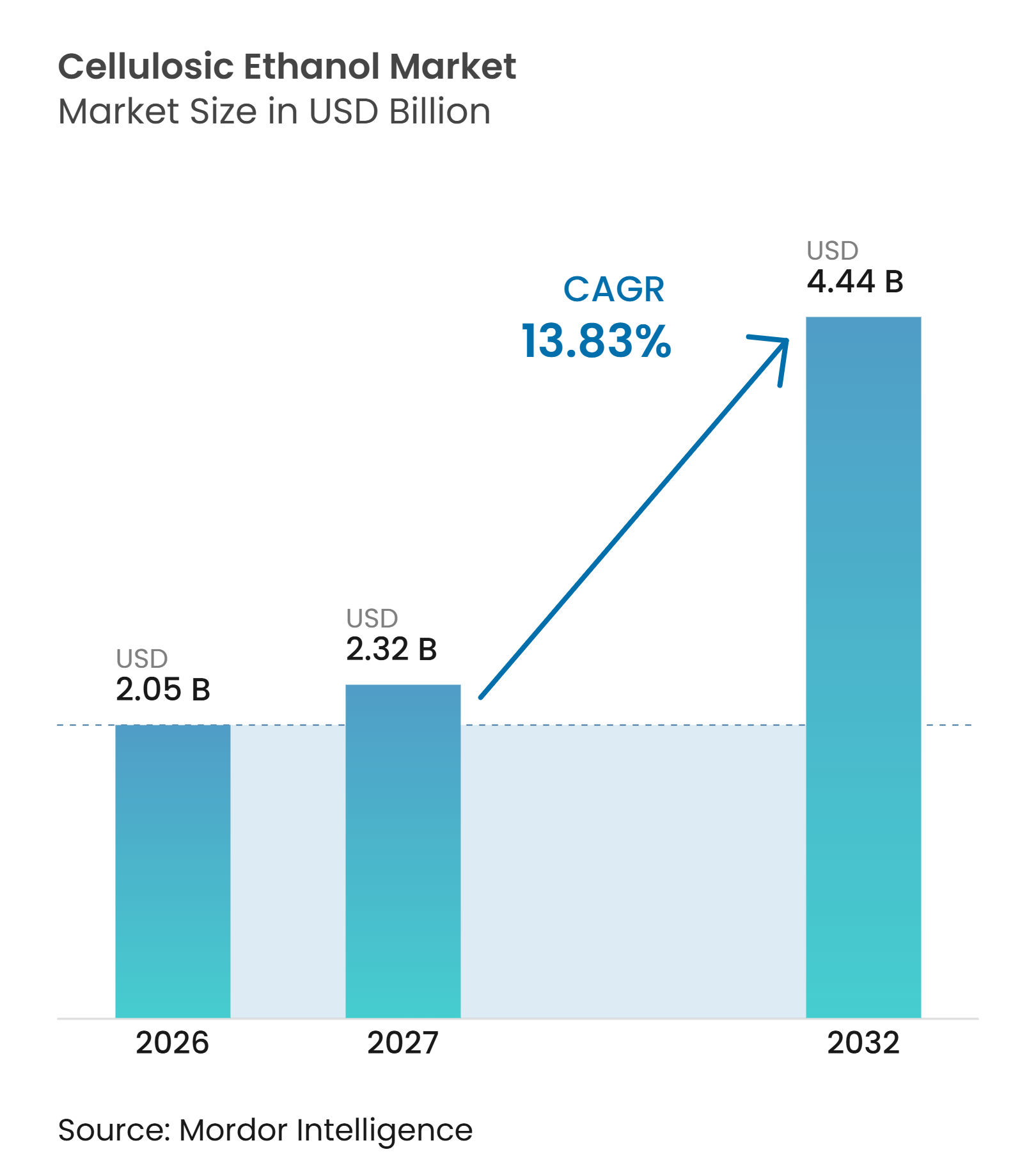
The Cellulosic Ethanol Market size was valued at USD 2.05 billion in 2026 and is estimated to grow from USD 2.32 billion in 2027 to reach USD 4.44 billion by 2032, at a CAGR of 13.83% during the forecast period (2027-2032). Decarbonization rules, integrated biorefineries, and lower enzyme costs are widening the role of cellulosic ethanol beyond conventional fuel blending. Sustainable aviation fuel demand is becoming important because ethanol can be used in the alcohol-to-jet pathway for aviation and maritime applications where electrification remains limited. Carbon-intensity incentives and longer-term purchase agreements can improve funding conditions for new facilities. Feedstock collection, pretreatment costs, and uncertain policy continuity remain material constraints on investment. The cellulosic ethanol market is therefore developing through a small group of integrated producers and a wider field of technology providers that are still working to establish consistent commercial returns.
Key Report Takeaways
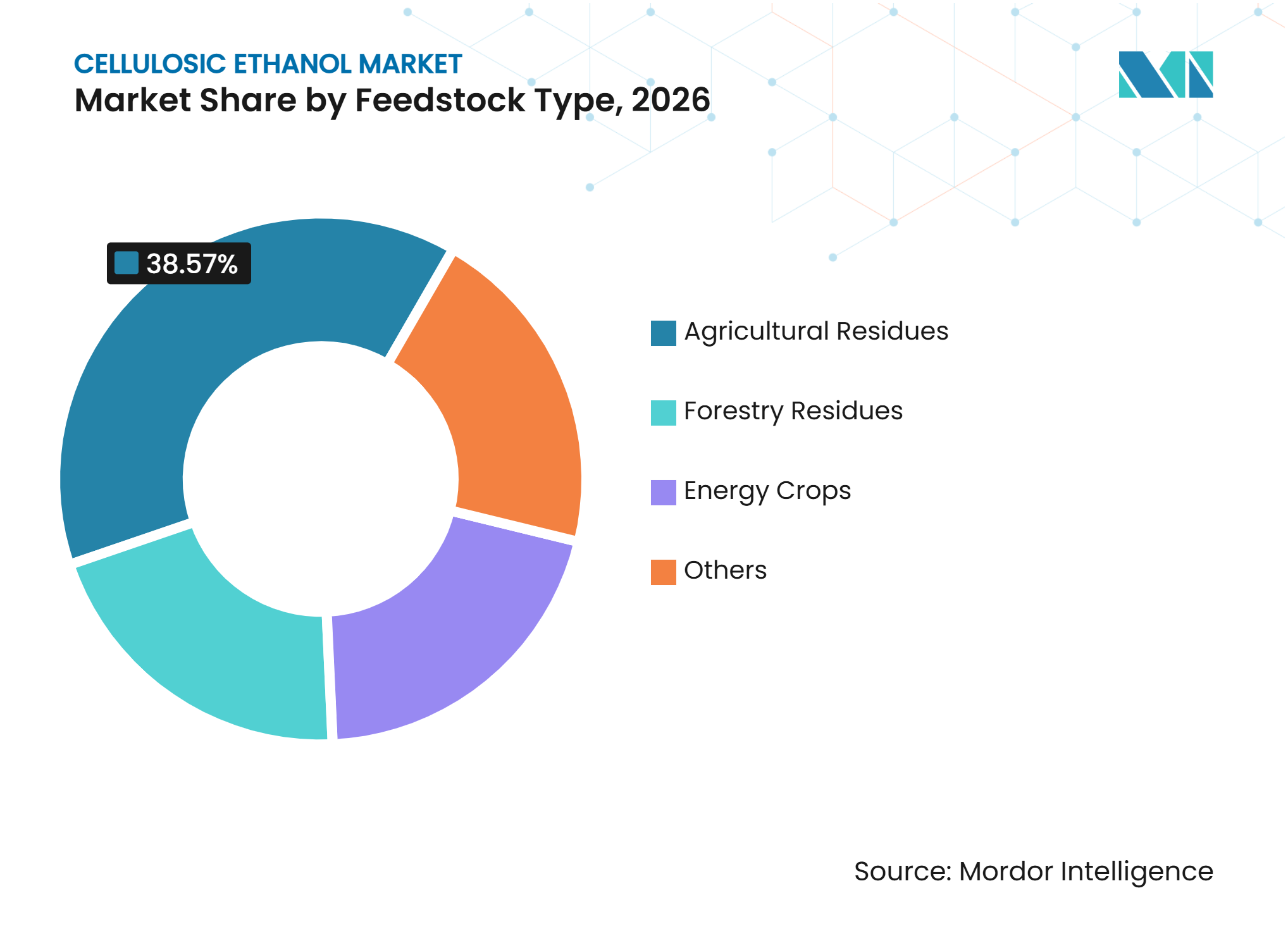
- By feedstock type, agricultural residues held 38.57% of the cellulosic ethanol market share in 2026, while energy crops are projected to advance at a 15.67% CAGR through 2032.
- By production process, enzymatic hydrolysis held 57.32% of the cellulosic ethanol market share in 2026, while thermochemical conversion is projected to advance at a 16.05% CAGR through 2032.
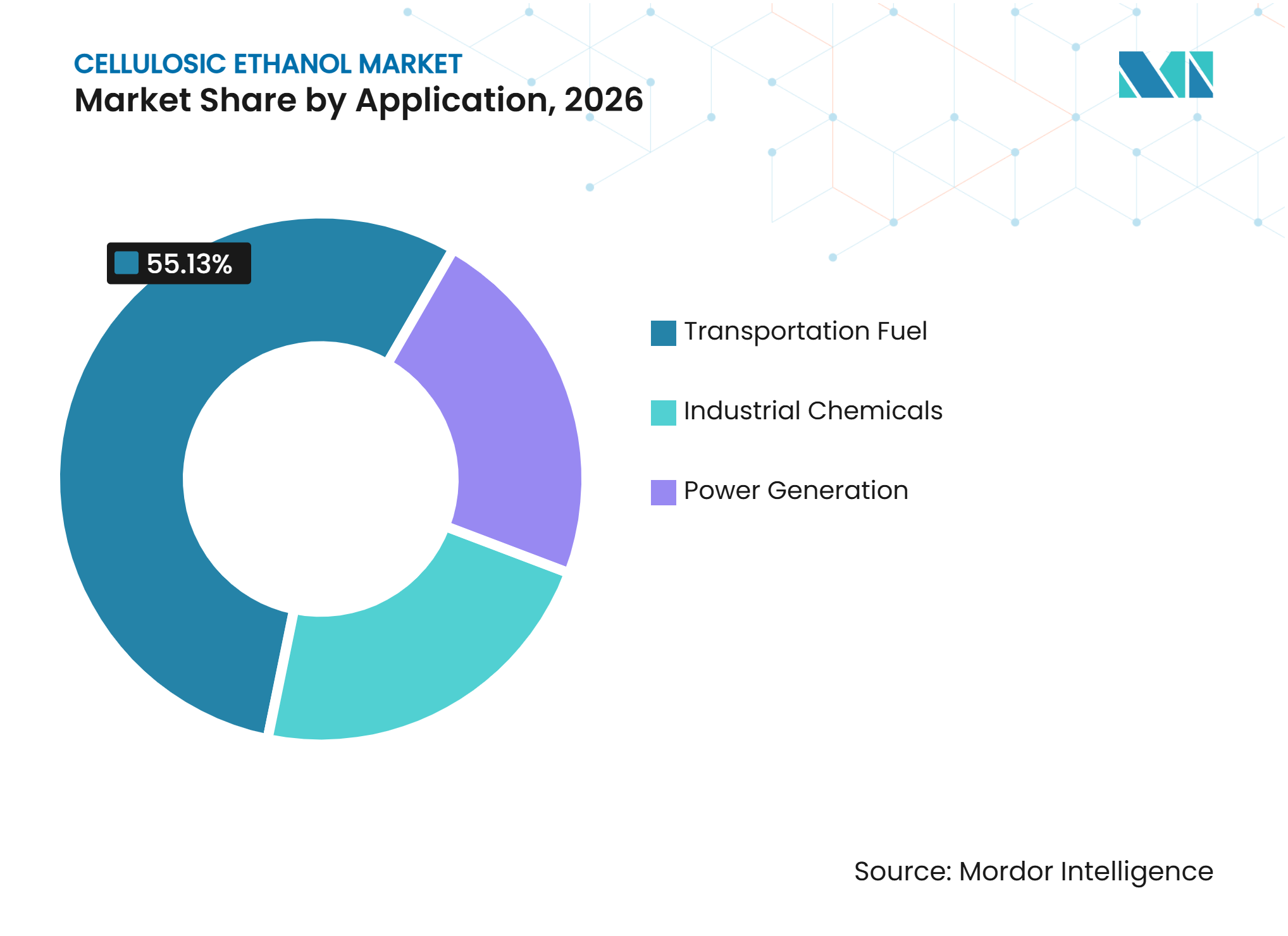
- By application, transportation fuel held 55.13% of the cellulosic ethanol market share in 2026, while power generation is projected to advance at a 16.82% CAGR through 2032.
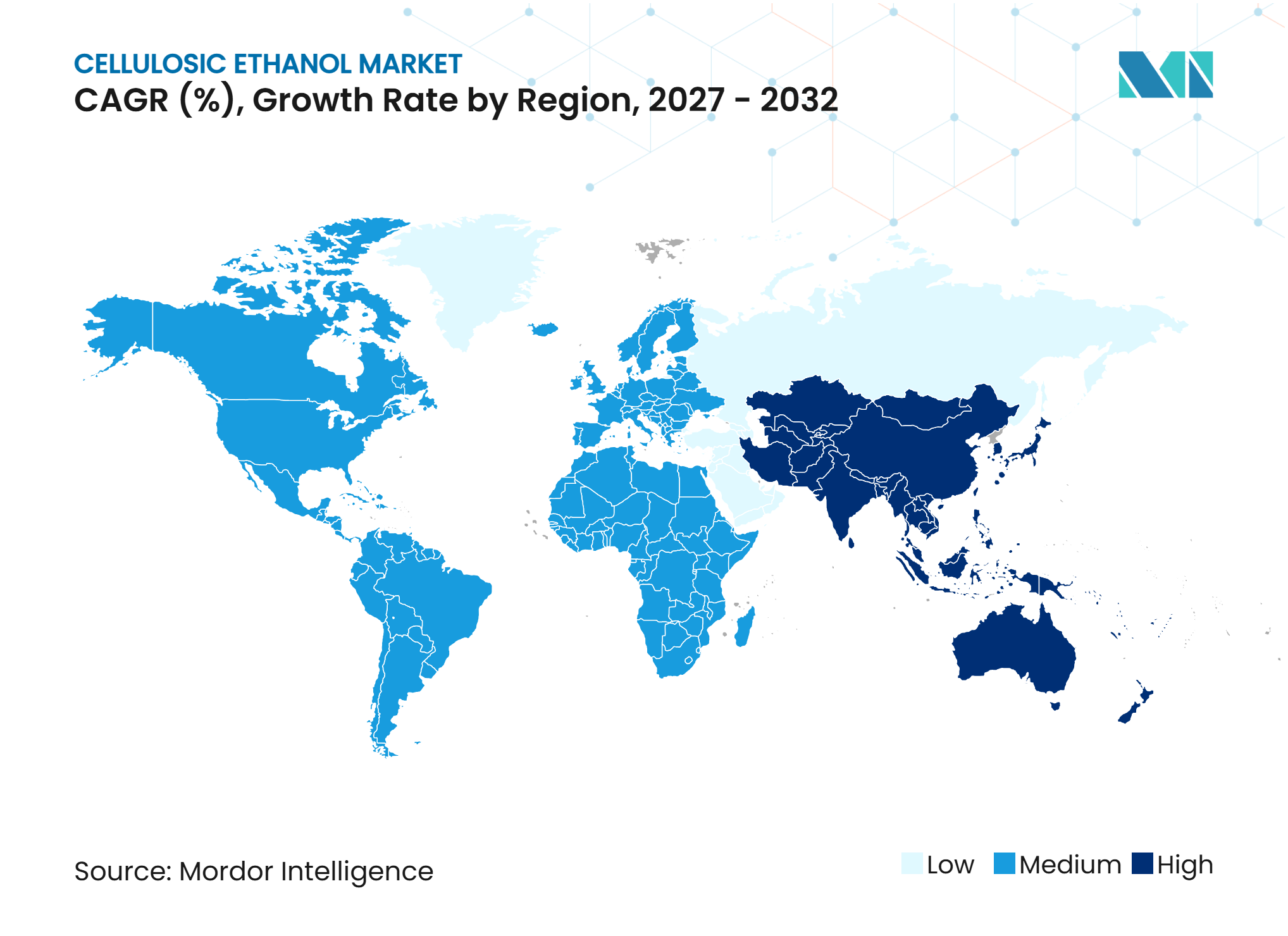
- By geography, North America held 34.06% of the cellulosic ethanol market share in 2026, while Asia-Pacific is projected to advance at a 15.93% CAGR through 2032.
Note: Market numbers in this report are based on Mordor Intelligence's proprietary estimation framework, which combines nine months of actuals with Q4 projections for base year 2026.
Market Trends and Insights
Drivers Impact Analysis of Cellulosic Ethanol Market*
| Driver | (~) % Impact on CAGR Forecast | Geographic Relevance | Impact Timeline |
|---|---|---|---|
| Low-Carbon Fuel Demand for Hard-to-Abate Transport | +4.2% | Global, with early concentration in North America, EU, and Brazil | Short term (≤ 2 years) |
| Advanced-Fuel Mandates and Carbon-Intensity Incentives | +3.6% | North America & EU; spillover to India and Brazil | Medium term (2-4 years) |
| Integration with Sugar, Ethanol and Pulp Biorefineries | +2.5% | South America (Brazil) and ASEAN, with spillover to India | Medium term (2-4 years) |
| Non-Food Feedstock Availability and Circular-Economy Adoption | +1.8% | Global; early gains in China, India, and EU member states | Short term (≤ 2 years) |
| Enzyme and Microbial Engineering Improving C5/C6 Conversion | +1.4% | Global, led by North America and Europe | Long term (≥ 4 years) |
| Source: Mordor Intelligence | |||
Low-Carbon Fuel Demand for Hard-to-Abate Transport
Aviation, maritime transport, and long-haul road freight require lower-carbon fuels because their electrification options remain limited. Cellulosic ethanol is used as a feedstock for the alcohol-to-jet pathway, which can supply sustainable aviation fuel. The International Civil Aviation Organization updated its Carbon Offsetting and Reduction Scheme for International Aviation default life-cycle emissions values in November 2025 and extended the low indirect land-use-change risk framework to 2035. The update includes values for cellulosic feedstocks and supports the assessment of residue-based ethanol pathways for sustainable aviation fuel. RAÍZEN S.A. has linked its second-generation ethanol program to a long-term Shell supply agreement for sustainable aviation fuel and other low-carbon fuel uses. This type of offtake can provide a higher-value outlet than road-fuel blending and support financing for the cellulosic ethanol market.
Advanced-Fuel Mandates and Carbon-Intensity Incentives
Advanced fuel policies increasingly assess carbon intensity, which favors fuels made from lignocellulosic materials when they meet sustainability requirements. The U.S. Environmental Protection Agency (EPA) finalized cellulosic biofuel requirements of 1.36 billion Renewable Identification Numbers for 2026 and 1.43 billion Renewable Identification Numbers for 2027[1]. The European Union Renewable Energy Directive III requires a combined 5.5% target for advanced biofuels and renewable fuels of non-biological origin by 2030. India’s Pradhan Mantri JI-VAN Yojana supports second-generation bioethanol facilities that use lignocellulosic feedstocks. The 2025 partial U.S. waiver also showed that a production shortfall can weaken near-term investment signals, so developers need contracts that reduce exposure to changing compliance values.
Integration with Sugar, Ethanol and Pulp Biorefineries
Co-located plants can use bagasse, spent liquor, or black liquor without building a separate long-distance feedstock network. This operating model reduces logistics costs and lets producers share utilities, storage, and processing infrastructure with an existing mill. Brazil’s energy planning agency projects that national second-generation ethanol production can reach 1 billion liters by 2035. The U.S. Department of Agriculture reported that RAÍZEN S.A. had 2 operating second-generation ethanol plants in August 2025, 2 plants ramping up, and 2 under construction. Replicating a proven plant configuration can lower execution risk after the first facility and give the cellulosic ethanol market a clearer route to scale in countries with similar sugar and pulp infrastructure.
Non-Food Feedstock Availability and Circular-Economy Adoption
Agricultural residues can support ethanol production without diverting food crops from their primary use. India has a sizable residue base, although collection, storage, and preprocessing determine how much of it can be converted at a commercially viable cost. China selected a 30,000-metric-ton cellulosic fuel ethanol project in Heilongjiang for its first group of Green Liquid Fuels Technology Pilot projects. The International Sustainability and Carbon Certification European Union framework can help verify that agricultural-residue ethanol meets Renewable Energy Directive III requirements. Enzyme and microbial engineering are also improving the conversion of five-carbon and six-carbon sugars, and the U.S. Department of Agriculture Agricultural Research Service began a 5-year project in May 2025 on integrated deconstruction and high-solids enzymatic hydrolysis[2]. These advances can reduce feedstock losses and broaden the materials that can serve the cellulosic ethanol market.
Restraints Impact Analysis of Cellulosic Ethanol Market*
| Restraint | (~) % Impact on CAGR Forecast | Geographic Relevance | Impact Timeline |
|---|---|---|---|
| High Pretreatment, Enzyme and Capital Costs | -2.1% | Global, most acute in North America and Europe | Long term (≥ 4 years) |
| Feedstock Seasonality, Contamination and Storage Losses | -1.5% | Global; most pronounced in India, China, and North America | Short term (≤ 2 years) |
| Inhibitor Formation and Pentose-Fermentation Variability | -0.9% | Global, particularly in facilities processing heterogeneous feedstocks | Medium term (2-4 years) |
| Source: Mordor Intelligence | |||
Feedstock Seasonality, Contamination and Storage Losses
Lignocellulosic feedstocks are often collected during harvest windows that last only 2 to 4 months. Facilities must then store material for the rest of the year, which raises the risk of moisture ingress, microbial degradation, and contamination. Rice and wheat straw can contain silica that disrupts downstream pretreatment equipment. India’s Ministry of Petroleum and Natural Gas reported that Indian Oil Corporation Ltd’s 100-kiloliter-per-day Panipat plant operated at 62% of design capacity in December 2025 after changes during November and December. Unstable feedstock quality can raise enzyme use, reduce annual plant utilization, and weaken the revenue base needed to recover fixed investment. Better aggregation and preprocessing standards are therefore central to the reliable growth of the cellulosic ethanol market.
High Pretreatment, Enzyme and Capital Costs
Cellulosic ethanol plants require complex pretreatment reactors, biomass handling systems, fermentation equipment, and separation units for dilute sugar streams. These needs keep capital intensity above that of conventional corn or sugarcane ethanol facilities. Borregaard ASA reported that advanced bioethanol prices in Europe fell during 2025 as agricultural-waste-based supply increased, adding pressure to margins at its Sarpsborg biorefinery. Inhibitory compounds such as furfural, 5-hydroxymethylfurfural, and acetic acid can form during acid-based or steam-explosion pretreatment and reduce fermentation efficiency. Facilities may need detoxification or feedstock blending, which adds expense and restricts operating flexibility. Sustainability documentation under Renewable Energy Directive III and International Sustainability and Carbon Certification European Union requirements can add administrative costs when blended feedstocks are used.
*Our forecasts treat driver/restraint impacts as directional, not additive. The impact forecasts reflect baseline growth, mix effects, and variable interactions.
Cellulosic Ethanol Market Segment Analysis
By Feedstock Type:
Agricultural Residues Lead, Energy Crops AccelerateAgricultural residues held 38.57% of the cellulosic ethanol market share in 2026. The segment includes paddy straw, wheat straw, corn stover, and sugarcane bagasse. Its position reflects the lower delivered cost available at co-located sugar and starch mills. Indian Oil Corporation Ltd’s Panipat facility and RAÍZEN S.A.’s Brazilian sites show how residue-based configurations are being applied at commercial facilities. Forestry residues remain relevant for wood-based biorefineries, although wood-cost cycles can affect profitability. Borregaard ASA uses Norwegian spruce at Sarpsborg and reported input-cost pressure in its 2025 annual report.
Energy crops are projected to advance at a 15.67% CAGR through 2032. Miscanthus, switchgrass, and Arundo donax can be cultivated on marginal land in locations where crop residues cannot support large facilities. This can be useful in parts of Southeast Asia and Sub-Saharan Africa with suitable growing conditions. The International Civil Aviation Organization’s 2025 framework includes indirect land-use-change values for cellulosic feedstocks grown on marginal land. That framework gives sustainable aviation fuel buyers a method for evaluating the lifecycle profile of energy-crop-derived ethanol. Residues and dedicated crops will continue to serve different supply conditions in the cellulosic ethanol market.



By Production Process:
Enzymatic Hydrolysis Dominates, Thermochemical Conversion SurgesEnzymatic hydrolysis held 57.32% of the cellulosic ethanol market share in 2026. Its installed base reflects long-running investment in enzyme engineering and process integration. The approach is compatible with existing sugar-mill infrastructure in Brazil and India, where bagasse is readily available. Iogen Corporation and Praj Industries Limited have supplied pretreatment and hydrolysis systems to commercial projects. Acid hydrolysis remains present in some Chinese configurations but faces inhibitor formation and corrosion challenges.
Thermochemical conversion is projected to advance at a 16.05% CAGR through 2032. Gasification pathways can handle heterogeneous waste streams, including mixed municipal waste and construction residues that are difficult for enzymatic routes to process. This flexibility makes the process relevant where feedstock quality is variable. Enerkem’s Ecoplanta project in Tarragona is a significant planned waste-to-methanol example using thermochemical gasification technology. The company stated that the project received approval in January 2025 and is designed to process non-recyclable municipal waste. The technology’s performance at large scale will influence future process choices across the cellulosic ethanol market.
By Application:
Transport Fuel Remains Central, Power Generation GainsTransportation fuel held 55.13% of the cellulosic ethanol market share in 2026. Fuel policies in the United States, the European Union, Brazil, and India provide demand mechanisms for advanced biofuels. The U.S. Renewable Fuel Standard continues to set annual cellulosic biofuel obligations. Ethanol supplied to alcohol-to-jet facilities may offer a higher-value outlet than conventional road blending. The 2025 Carbon Offsetting and Reduction Scheme for International Aviation update also recognizes lifecycle assessment methods for agricultural-residue ethanol pathways. Industrial chemicals provide another outlet through products such as bio-based ethylene, acetaldehyde, and specialty solvents.
Power generation is projected to advance at a 16.82% CAGR through 2032. Integrated sugarcane operations can use lignin residues for combined heat and power after cellulose is processed. This arrangement can improve the economics of a biorefinery because it captures value from more than one output stream. Brazil’s RenovaBio program assigns value to verified lifecycle emissions reductions through Decarbonization Credits. The National Agency of Petroleum, Natural Gas and Biofuels (ANP) oversees this framework through Resolution ANP No. 984/2025. Combined heat and power support the cellulosic ethanol market, where plants can reliably access biomass and grid or on-site energy demand.

Geography Analysis
North America
North America held 34.06% of the cellulosic ethanol market share in 2026. The U.S. Renewable Fuel Standard established a 1.36 billion Renewable Identification Number requirement for cellulosic biofuel in 2026 and a 1.43 billion Renewable Identification Number requirement for 2027. These requirements provide a regulated demand base under the Clean Air Act. The U.S. Department of Agriculture’s Advanced Biofuel Payment Program also provides payments to qualified producers. The region also shows the difficulty of sustaining projects when policy support and operating economics weaken. Abengoa Bioenergy Biomass of Kansas, LLC’s Hugoton facility was sold after its earlier operation, and POET, LLC’s Project LIBERTY plant has remained idle. These cases show that technical operation alone does not resolve feedstock, capital, and revenue risks. Canada and Mexico add potential feedstock resources, while the retirement of Enerkem’s Edmonton facility illustrates the need for reliable long-term project economics.
Asia-Pacific
Asia-Pacific is projected to advance at a 15.93% CAGR through 2032. China selected 9 Green Liquid Fuels Technology Pilot projects in 2025, including a 30,000-metric-ton cellulosic fuel ethanol project in Heilongjiang. The selected project is expected to achieve high-load stable production by June 2027. China’s renewable energy planning gives non-grain fuel ethanol a stated role, while renewable energy consumption accounting is extending to non-electric uses. India is progressing projects at Panipat, Bargarh, and Bathinda using Praj Industries Limited technology. India’s 2025 export policy created a route for eligible second-generation ethanol to access overseas markets under authorization and feedstock-certification conditions. These policy actions support larger deployment, although feedstock consistency remains a key operating condition.
Regional Dynamics Across Other Geographies
Brazil produced 120.2 million liters of second-generation ethanol in the crop year ended March 2026, a 104% year-over-year increase, according to RAÍZEN S.A. The company had operating and ramping facilities, while Vale do Rosário and Gasa were under construction. Brazil’s National Bank for Economic and Social Development approved financing for RAÍZEN S.A.’s Andradina plant in January 2025. Europe retains technical capacity through the Versalis plant in Crescentino, Italy, which held International Sustainability and Carbon Certification European Union certification in November 2025. Argentina has sugarcane resources but has not commissioned a commercial-scale facility. The Middle East and Africa remain at an early stage, with potential linked to energy crops in Sub-Saharan Africa and lower-carbon fuel diversification efforts.
Competitive Landscape
Market Concentration
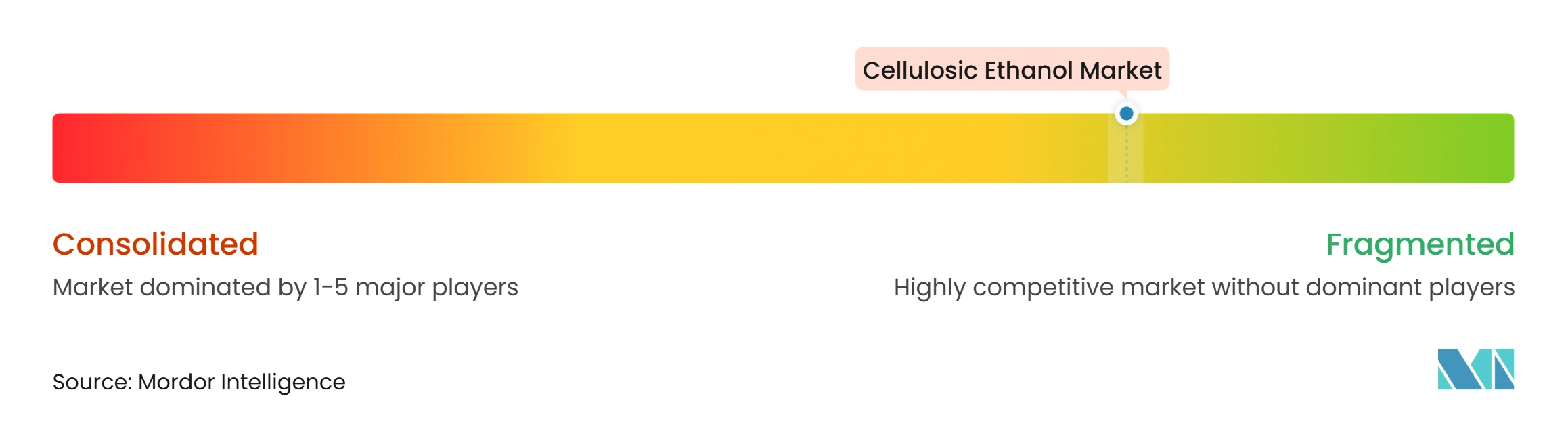
The cellulosic ethanol market is highly fragmented, with top players including RAÍZEN S.A., Shandong Longlive Bio-technology Co., Ltd., CNPC, Granbio, and Indian Oil Corporation Ltd. Competitive strength depends on feedstock integration, plant reliability, compliance credentials, and long-term buyers rather than technology ownership alone. RAÍZEN S.A. has established a large integrated sugarcane-bagasse model and reported 120.2 million liters of second-generation ethanol output in the crop year ended March 2026. Iogen Corporation has remained active in Ontario, where it sought an amendment to include biogas and biomethane activity alongside its existing operations. Borregaard ASA continues wood-based advanced bioethanol production at Sarpsborg.
Praj Industries Limited has a broad technology and engineering role in India, including the Panipat, Bargarh, and Bathinda project pipeline. Indian Oil Corporation Ltd operates the Panipat facility, where feedstock quality has affected utilization. Granbio is pursuing its Exygen project in Brazil and has continued to develop its biomass-conversion technology. These positions reflect different routes into the cellulosic ethanol market, including production, technology licensing, engineering, and fuel distribution.
Eni S.p.A is associated with PROESA technology. Enerkem has focused on its waste-to-methanol program after restructuring, including the Ecoplanta project in Spain. Shandong Longlive Bio-technology Co., Ltd. has registered cellulosic ethanol capacity but faces uncertain production status during restructuring. New projects must show dependable feedstock supply, lower processing costs, and validated sustainability compliance before they can close the gap with established integrated operations.
Cellulosic Ethanol Industry Leaders
-
RAÍZEN S.A.
-
Shandong Longlive Bio-technology Co., Ltd.
-
CNPC
-
Granbio
-
Indian Oil Corporation Ltd
- *Disclaimer: Major Players sorted in no particular order
Cellulosic Ethanol Market Companies Covered in this Report
- Abengoa Bioenergy Biomass of Kansas, LLC
- Borregaard ASA
- CNPC
- Enerkem
- Eni S.p.A
- Fiberight LLC
- Granbio
- Indian Oil Corporation Ltd
- Iogen Corporation
- Praj Industries Limited
- RAÍZEN S.A.
- Shandong Longlive Bio-technology Co., Ltd.
Recent Industry Developments in Cellulosic Ethanol Market
- October 2026: Blue Biofuels, Inc. reported progress with its Integrated Demonstration Unit (IDU), which connects biomass processing, sugar production, and fermentation to demonstrate its Cellulose-to-Sugar technology for ethanol production. The integrated testing is expected to generate operating data on yields, throughput, energy consumption and costs, supporting engineering and financing work for a planned commercial facility.
- March 2026: ANDRITZ was selected by SAFFiRE Renewables to supply refining technology for a cellulosic ethanol pilot plant in Liberal, Kansas, which will process corn stover and other agricultural residues. The equipment package includes two refiners with a combined biomass-processing capacity of 10 tonnes per day, with start-up planned for the first quarter of 2027.
Global Cellulosic Ethanol Market Report Scope
Cellulosic ethanol is a second-generation biofuel produced from non-food biomass containing cellulose, hemicellulose, and lignin, including agricultural residues, forestry waste, and dedicated energy crops. It is converted into ethanol through biochemical or thermochemical processes and can be blended with conventional gasoline to reduce dependence on fossil fuels.
The Cellulosic Ethanol Market is segmented by feedstock type, production process, application, and geography. By feedstock type, the market is segmented into agricultural residues, forestry residues, energy crops, and others. By production process, the market is segmented into enzymatic hydrolysis, acid hydrolysis, thermochemical conversion, and others. By application, the market is segmented into transportation fuel, industrial chemicals, and power generation. The report also covers the market size and forecasts for cellulosic ethanol in 15 countries across major regions. For each segment, the market sizing and forecasts have been done on the basis of value (USD).
Segmentation Overview
| Agricultural Residues |
| Forestry Residues |
| Energy Crops |
| Others |
| Enzymatic Hydrolysis |
| Acid Hydrolysis |
| Thermochemical Conversion |
| Others |
| Transportation Fuel |
| Industrial Chemicals |
| Power Generation |
| Asia-Pacific | China |
| India | |
| Japan | |
| South Korea | |
| ASEAN Countries | |
| Rest of Asia-Pacific | |
| North America | United States |
| Canada | |
| Mexico | |
| Europe | Germany |
| United Kingdom | |
| France | |
| Italy | |
| NORDIC Countries | |
| Rest of Europe | |
| South America | Brazil |
| Argentina | |
| Rest of South America | |
| Middle East and Africa | Saudi Arabia |
| South Africa | |
| Rest of Middle East and Africa |
| By Feedstock Type | Agricultural Residues | |
| Forestry Residues | ||
| Energy Crops | ||
| Others | ||
| By Production Process | Enzymatic Hydrolysis | |
| Acid Hydrolysis | ||
| Thermochemical Conversion | ||
| Others | ||
| By Application | Transportation Fuel | |
| Industrial Chemicals | ||
| Power Generation | ||
| By Geography | Asia-Pacific | China |
| India | ||
| Japan | ||
| South Korea | ||
| ASEAN Countries | ||
| Rest of Asia-Pacific | ||
| North America | United States | |
| Canada | ||
| Mexico | ||
| Europe | Germany | |
| United Kingdom | ||
| France | ||
| Italy | ||
| NORDIC Countries | ||
| Rest of Europe | ||
| South America | Brazil | |
| Argentina | ||
| Rest of South America | ||
| Middle East and Africa | Saudi Arabia | |
| South Africa | ||
| Rest of Middle East and Africa | ||
Key Questions Answered in the Report
What is the size of the cellulosic ethanol market?
The cellulosic ethanol market size was valued at USD 2.05 billion in 2026 and is estimated to grow from USD 2.32 billion in 2027 to reach USD 4.44 billion by 2032, at a CAGR of 13.83% during the forecast period (2027-2032).
What is driving demand for cellulosic ethanol?
Low-carbon fuel rules, sustainable aviation fuel demand, biorefinery integration, and use of agricultural residues support demand.
Which feedstock type held the largest share in 2026?
Agricultural residues held a 38.57% share in 2026.
Which production process held the largest share in 2026?
Enzymatic hydrolysis held a 57.32% share in 2026 because it is compatible with established sugar-mill infrastructure.