
Cattle Feed Additives Market Size and Share
Market Overview
| Study Period | 2021 - 2031 |
|---|---|
| Market Size (2026) | USD 15.80 Billion |
| Market Size (2031) | USD 20.07 Billion |
| Growth Rate (2026 - 2031) | 4.90 % |
| Fastest Growing Market | Asia-Pacific |
| Largest Market | North America |
| Market Concentration | Low |
Major Players *Disclaimer: Major Players sorted in no particular order Image © Mordor Intelligence. Reuse requires attribution under CC BY 4.0. | |
Cattle Feed Additives Market Analysis by Mordor Intelligence
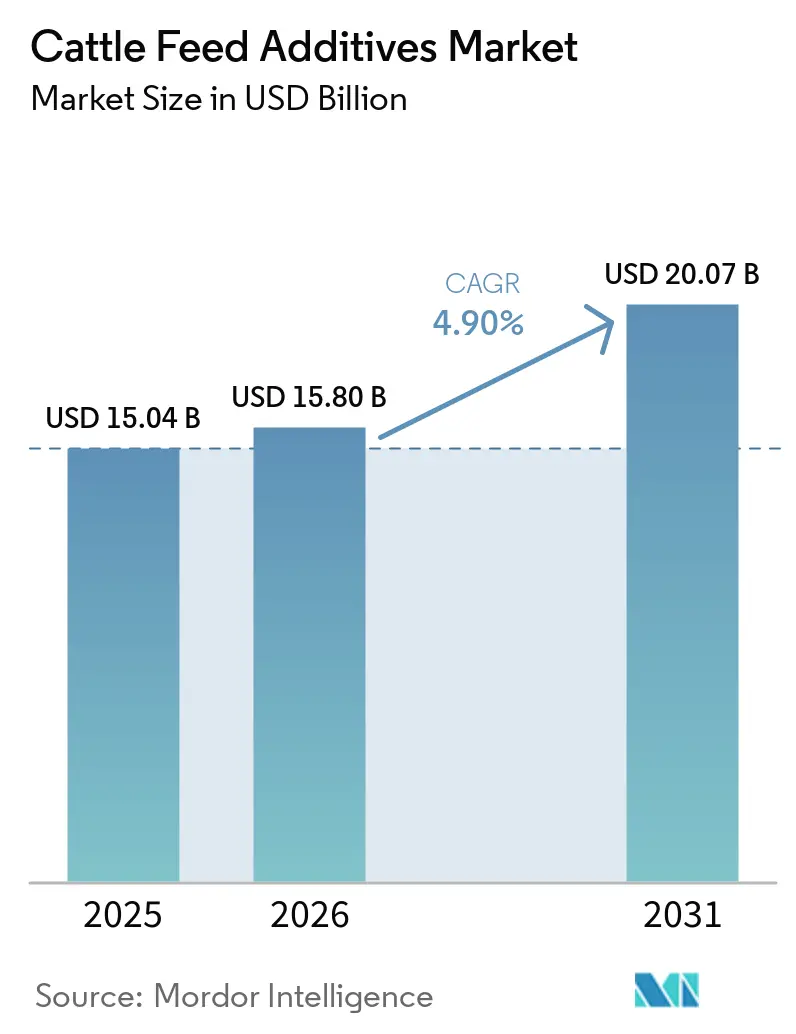
The cattle feed additives market size was valued at USD 15.04 billion in 2025 and is forecast to grow from USD 15.80 billion in 2026 to reach USD 20.07 billion by 2031, at a CAGR of 4.90% during the forecast period (2026-2031). Restrictions on antibiotic growth promoters are moving demand toward probiotics, phytogenics, organic acids, and enzymes with defined functional roles. Increasingly intensive feedlot and dairy operations in South America and the Asia-Pacific are also raising additive usage per animal as producers adopt more controlled diets. Methane-reduction initiatives create an additional avenue for value creation, as verified emissions reductions can support carbon-credit claims. Suppliers are responding by integrating products with ration-formulation advice, feed data, and herd-management support, thereby increasing the importance of performance evidence in purchasing decisions. However, the market faces slower adoption in grazing-based systems, where inconsistent dosing and difficulties in verifying returns constrain uptake.
Key Report Takeaways
- By additive type, amino acids accounted for 20.8% of the cattle feed additives market share in 2025, while probiotics are forecast to grow at the highest CAGR of 9.1% from 2026 to 2031.
- By form, dry additives accounted for 56.3% of the cattle feed additives market size in 2025, while liquid additives are forecast to grow at a CAGR of 6.2% from 2026 to 2031.
- By cattle type, dairy cattle accounted for 73.1% of the market share in 2025, while beef cattle are forecast to grow at a CAGR of 5.1% from 2026 to 2031.
- By geography, North America accounted for 48.5% of the market share in 2025, while Asia-Pacific is forecast to grow at a CAGR of 6.2% from 2026 to 2031.
Note: Market size and forecast figures in this report are generated using Mordor Intelligence’s proprietary estimation framework, updated with the latest available data and insights as of January 2026.
Global Cattle Feed Additives Market Trends and Insights
Drivers Impact Analysis*
| Driver | (~) % Impact on CAGR Forecast | Geographic Relevance | Impact Timeline |
|---|---|---|---|
| Antibiotic Growth-Promoter Reduction | +0.8% | Global, with early enforcement in Europe and North America and growing relevance in Asia-Pacific | Short term (≤ 2 years) |
| Higher Milk Yield and Feed-Conversion Targets | +0.7% | Global, with strongest relevance in commercial systems in North America, Europe, and South America | Medium term (2-4 years) |
| Methane-Reduction Economics and Carbon Claims | +0.7% | North America and Europe, with early activity in Japan, Brazil, and Australia | Long term (≥ 4 years) |
| Rumen-Microbiome Precision Nutrition | +0.5% | North America, Europe, and the Asia-Pacific | Long term (≥ 4 years) |
| Commercial Validation of Additive ROI | +0.6% | Global, with the strongest relevance in North America and Europe | Medium term (2-4 years) |
| Mycotoxin and Forage-Quality Risk Management | +0.6% | Asia-Pacific, the Middle East, and Africa, with relevance in South America and North America | Medium term (2-4 years) |
| Source: Mordor Intelligence | |||
Antibiotic Growth-Promoter Reduction
The cattle feed additives market is experiencing a sustained shift away from routine antimicrobial use for growth promotion. Commission Implementing Regulation (EU) 2026/1189, published in June 2026, updates European Union requirements for imports of certain animals and products of animal origin from third countries concerning restrictions on the use of certain antimicrobial medicinal products[1]European Commission, “Commission Implementing Regulation (EU) 2026/1189 of 4 June 2026,” EUR-Lex, eur-lex.europa.eu. The measure increases the importance of compliance with antimicrobial-use requirements across international livestock supply chains. As a result, producers and feed manufacturers are evaluating probiotics, organic acids, phytogenics, and enzymes as part of broader herd health and feed efficiency programs. Suppliers are responding by expanding non-antibiotic solutions and combining additive products with formulation guidance and technical support. This shift is creating additional opportunities for functional additives that can support animal performance while meeting evolving antimicrobial-use requirements.
Higher Milk Yield and Feed-Conversion Targets
Commercial dairy and beef operations are increasingly focused on improving milk yield, feed efficiency, and animal performance from controlled feeding programs. A 2025 study published in Animal Feed Science and Technology reported that yeast culture supplementation increased milk production in Holstein cows and improved rumen microbiota composition, antioxidant capacity, and immunity[2]“Effect of Yeast Culture Supplementation on Rumen Microbiota, Regulation Pathways, and Milk Production in Dairy Cows of Different Parities,” ScienceDirect, sciencedirect.com. The commercial market is also responding with products designed to combine productivity and animal-health benefits. In April 2026, Novonesis launched Bovacillus, a feed-stable Bacillus probiotic for lactating dairy cows in Europe, aimed at improving health and productivity while addressing the need for more efficient nutrition. In Brazil, the number of confined cattle increased from 7.96 million head in 2024 to 9.25 million head in 2025, expanding the use of controlled, high-energy feeding systems[3]“Understanding Heterogeneity in Methane Emissions from Confinement-Fed Dairy and Beef Cattle Supplemented with Bovaer: A Meta-Analysis,” Frontiers in Animal Science, frontiersin.org. These developments indicate that producers are increasingly evaluating additives based on measurable outcomes such as milk yield, feed conversion, animal health, and productivity, supporting demand for performance-oriented feed additive solutions.
Methane-Reduction Economics and Carbon Claims
Carbon-credit frameworks are expanding the commercial case for enteric methane additives beyond feed efficiency alone. A 2025 meta-analysis published in Frontiers in Animal Science found that 3-nitrooxypropanol (3-NOP) supplementation reduced methane yield by 25.9% in beef cattle and 26.4% in dairy cattle at the recommended dose of 60 mg 3-NOP per kilogram of dry matter intake. The same analysis noted that results varied across treatments due to differences in intake, diet composition, and dosing consistency. Japan approved a methodology in February 2026 that allows livestock producers to generate tradable J-Credits through qualifying methane-reduction practices. The cattle feed additives market stands to benefit where suppliers can document reductions in a format accepted by carbon programs, as such documentation can strengthen the farm-level value proposition in cases where efficiency gains alone do not offset the added cost.
Rumen-Microbiome Precision Nutrition
Research on rumen microbiota is helping product developers differentiate between broad microbial blends and strain-specific formulations. A 2025 study published in Frontiers in Veterinary Science found that lactobacilli-based direct-fed microbial (DFM) supplementation significantly altered ruminal microbiota composition and diversity over time in dairy cows. Another 2025 study published in Microbiome found that feeding probiotics-fermented distiller’s grains increased rumen enzyme activities and glycerophospholipid levels in finishing cattle by modulating rumen microbiota. These findings support continued development and evaluation of microbial and fermentation-based products using defined efficacy measures. The cattle feed additives market is likely to favor products supported by repeatable, farm-relevant results over general claims based solely on ingredient identity.
Restraints Impact Analysis*
| Restraint | (~) % Impact on CAGR Forecast | Geographic Relevance | Impact Timeline |
|---|---|---|---|
| Approval, Residue, and Functional-Claim Burden | -0.7% | North America and Europe have stringent requirements, while Asia-Pacific frameworks continue to develop | Long term (≥ 4 years) |
| Volatility in Fermentation and Vitamin Inputs | -0.5% | Global, with greater exposure in countries dependent on Chinese fermentation exports | Short term (≤ 2 years) |
| Limited Grazing-System Fit for Advanced Additives | -0.4% | South America, sub-Saharan Africa, and Oceania | Medium term (2-4 years) |
| Fragmented Farm Data and Weak Payback Measurement | -0.5% | Asia-Pacific, the Middle East and Africa, and South American smallholder systems | Long term (≥ 4 years) |
| Source: Mordor Intelligence | |||
Approval, Residue, and Functional-Claim Burden
New methane inhibitors, probiotic strains with health claims, and synthetic amino acid analogs face demanding approval processes. In the European Union, feed additives must undergo safety and efficacy assessments before authorization for a specific use, with evaluations covering the target animal, consumers, users, and the environment. Residue assessment and substantiation of proposed functional claims can further extend the regulatory pathway, particularly for products with new modes of action. These requirements increase development costs and lengthen the time between product development and commercial launch, limiting the pace at which novel cattle feed additives reach the market. Manufacturers may therefore prioritize established additive categories with clearer regulatory pathways, while smaller suppliers may find it more difficult to absorb the cost of generating the required technical and safety data.
Volatility in Fermentation and Vitamin Inputs
Fermentation-based production of feed additives, including certain amino acids and vitamins, is sensitive to feedstock availability, energy costs, production capacity, and process disruptions. Concentrated fermentation capacity makes global supply vulnerable to plant shutdowns, maintenance periods, and changes in operating rates, potentially increasing input costs for downstream feed additive manufacturers. Vitamin supply also faces price volatility, as production is concentrated among specialized manufacturers and depends on stable access to raw materials and energy. These pressures can increase the cost of vitamin premixes and other fermentation-derived additives, particularly when manufacturers pass higher input costs through the supply chain. For cattle feed producers operating under tight cost margins, sustained increases in additive costs can encourage reformulation, tighter inventory management, or delayed adoption of premium formulations. Supplier diversification, regional sourcing, strategic inventories, and upstream integration can reduce exposure, but volatility in fermentation capacity and vitamin supply remains a constraint on cost stability in the cattle feed additives market.
*Our forecasts treat driver/restraint impacts as directional, not additive. The impact forecasts reflect baseline growth, mix effects, and variable interactions.
Segment Analysis
By Additive Type: Amino Acids Lead While Probiotics Grow Faster
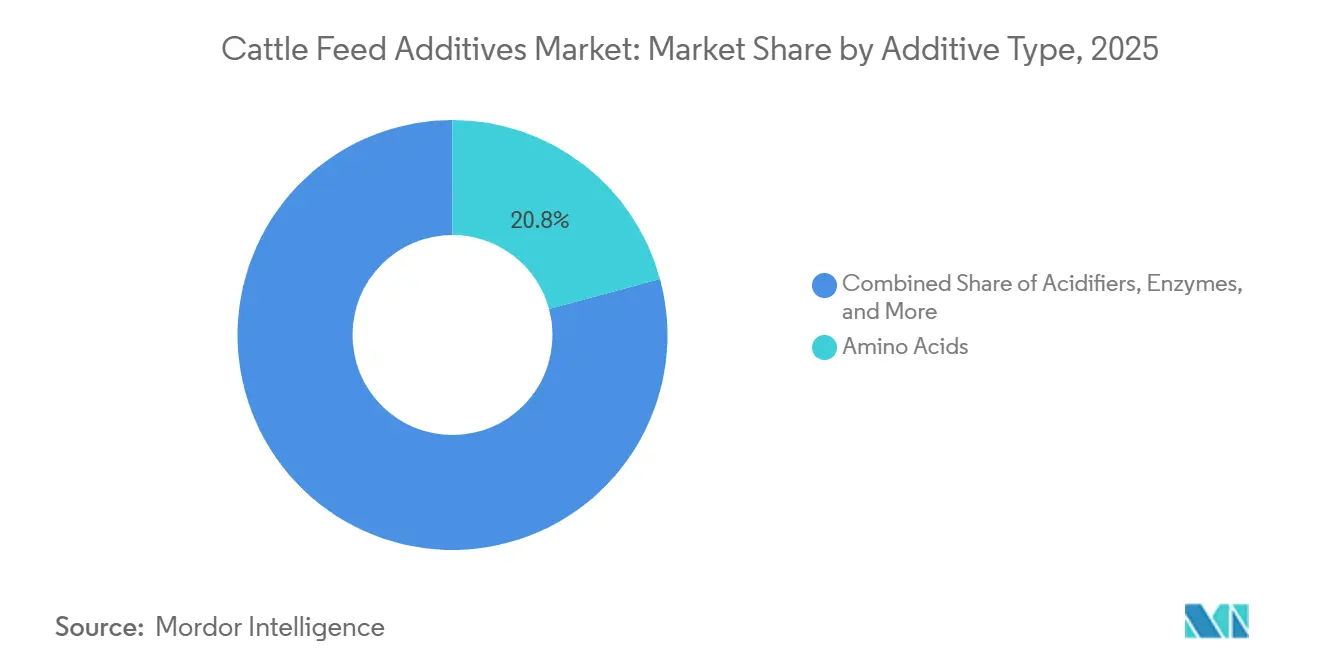
Amino acids held 20.8% of the cattle feed additives market share in 2025, making them the largest additive type by value. This position reflects their established use in protein efficiency, lean tissue development, and nitrogen-use management across commercial dairy and beef production. Protected methionine and lysine are particularly relevant in high-output dairy rations, where balancing amino acid supply supports milk protein synthesis while helping nutritionists optimize dietary protein utilization. Demand is further supported by the increasing use of precision ration formulation, as producers seek to meet animal requirements without unnecessarily increasing crude protein levels. Acidifiers, enzymes, and other functional additives complement amino acid programs by supporting feed hygiene, nutrient availability, and the utilization of fiber-rich or byproduct-based diets.
Probiotics are forecast to grow at a CAGR of 9.1% from 2026 to 2031, the highest rate among additive types. Growth is supported by increasing interest in gut health management, feed efficiency, and alternatives to antibiotic growth promoters in dairy and beef systems. A 2025 study published in Animals reported improvements in antioxidant capacity and fiber digestibility, alongside lower methane production, following yeast culture supplementation in finishing beef cattle. Probiotic demand is also expanding as producers place greater emphasis on maintaining rumen stability during feed transitions, heat stress, and high-production phases. Mycotoxin detoxifiers and phytogenics further broaden the functional additive mix by addressing feed safety and antibiotic-free production requirements, while antioxidants remain relevant in high-energy rations where feed storage and transport can increase oxidation risk. The combination of established amino acid demand and faster adoption of functional additives is widening the value pool across the cattle feed additives market.



By Form: Dry Additives Retain Scale While Liquid Delivery Gains Use
Dry additives accounted for 56.3% of the cattle feed additives market in 2025. Their dominant position reflects established premix practices, compatibility with batch mixing, ease of transportation, and relatively straightforward storage and handling. Dry formats are particularly suited to feed mills and large commercial operations that use standardized formulations and automated or semi-automated batching systems. Their stable shelf life and controlled dosing support consistent incorporation of vitamins, minerals, amino acids, enzymes, and microbial products into compound feeds and total mixed rations. These established formulation and distribution systems support the continued scale of dry additives across the cattle feed additives market.
Liquid additives are forecast to grow at a CAGR of 6.2% from 2026 to 2031, making them the fastest-growing format. Liquid delivery can reduce dust, improve dosing consistency, and facilitate automated application through feed or drinking-water systems, making the format increasingly relevant to larger livestock operations with advanced equipment. Suppliers are also expanding multifunctional additive solutions for dairy and beef producers. In October 2025, Lallemand Animal Nutrition launched LEVUCELL Trivantage, a microbial feed supplement combining three technologies for digestive and immune support in cattle. This type of multifunctional formulation can simplify additive programs and support more targeted nutritional management on commercial farms. As automated feeding and precision nutrition systems expand, liquid delivery may gain further adoption where farms have the infrastructure for controlled application, although dry products are likely to retain their scale advantage across conventional feed manufacturing and distribution channels.
By Cattle Type: Dairy Cattle Anchor Value, While Beef Cattle Expands
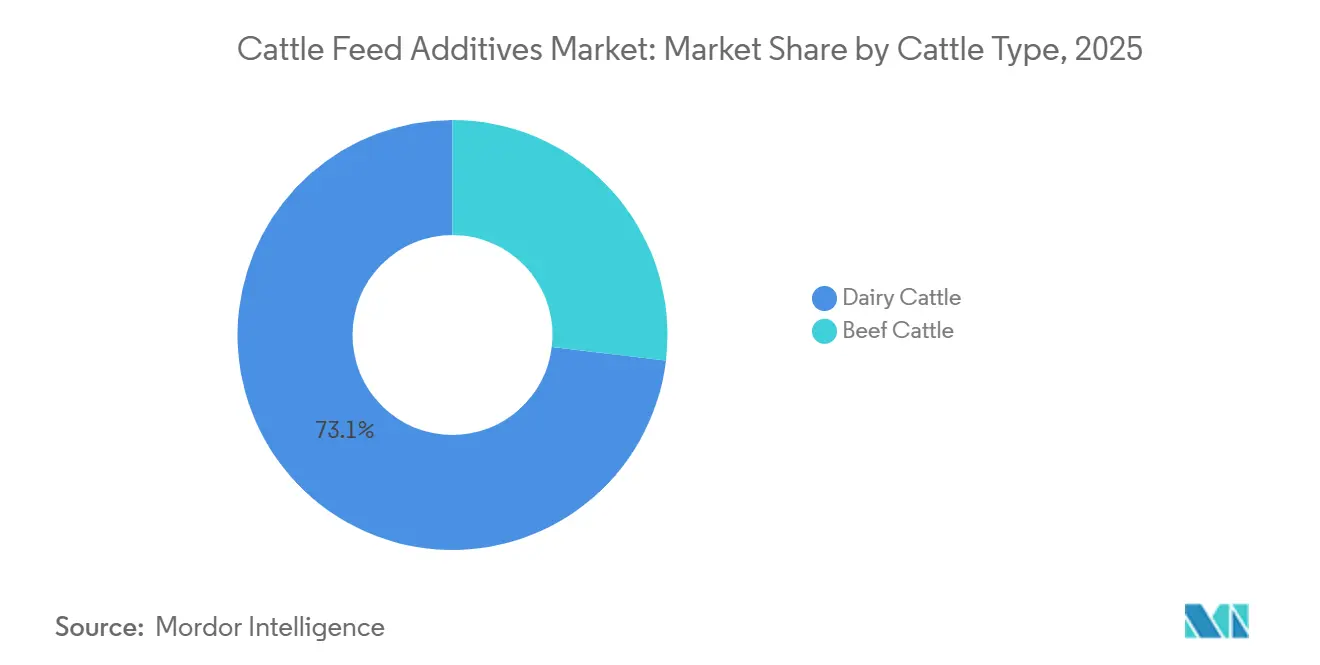
Dairy cattle represented 73.1% of the market value in 2025. This share reflects the intensive nutritional management required in commercial milk production, where producers use additives to support milk yield, milk components, rumen function, mineral balance, and feed efficiency. High-producing cows consume substantial quantities of dry matter each day, increasing the volume of nutrients and functional additives incorporated into their rations. Amino acids such as methionine, along with buffers, yeast products, minerals, and other rumen-support additives, are widely incorporated into dairy feeding programs. The growing focus on maintaining productivity during transition periods, heat stress, and other nutritional challenges further supports recurring demand for specialized additives. As dairy producers increasingly link feed formulation with productivity and herd-health outcomes, dairy cattle are expected to remain the principal demand base for cattle feed additives.
The beef cattle segment is forecast to grow at a CAGR of 5.1% from 2026 to 2031. The expansion of intensive finishing and commercial feedlot systems is driving demand for performance, feed-efficiency, gut-health, and methane-reduction additives. In Brazil, the confined cattle population increased 16% from 7.96 million head in 2024 to 9.25 million head in 2025, while beef cattle feed production increased by 7% during the same period. The greater use of controlled, high-energy rations in intensive systems increases the need for additives that support feed conversion, rumen stability, animal performance, and feed safety. This shift toward more intensive beef production is creating additional opportunities for specialized additives, particularly where producers seek measurable improvements in feed efficiency and productivity. As commercial finishing systems expand, the beef cattle segment is expected to provide an additional source of demand growth, while dairy cattle continue to account for the larger share of market value.
Geography Analysis
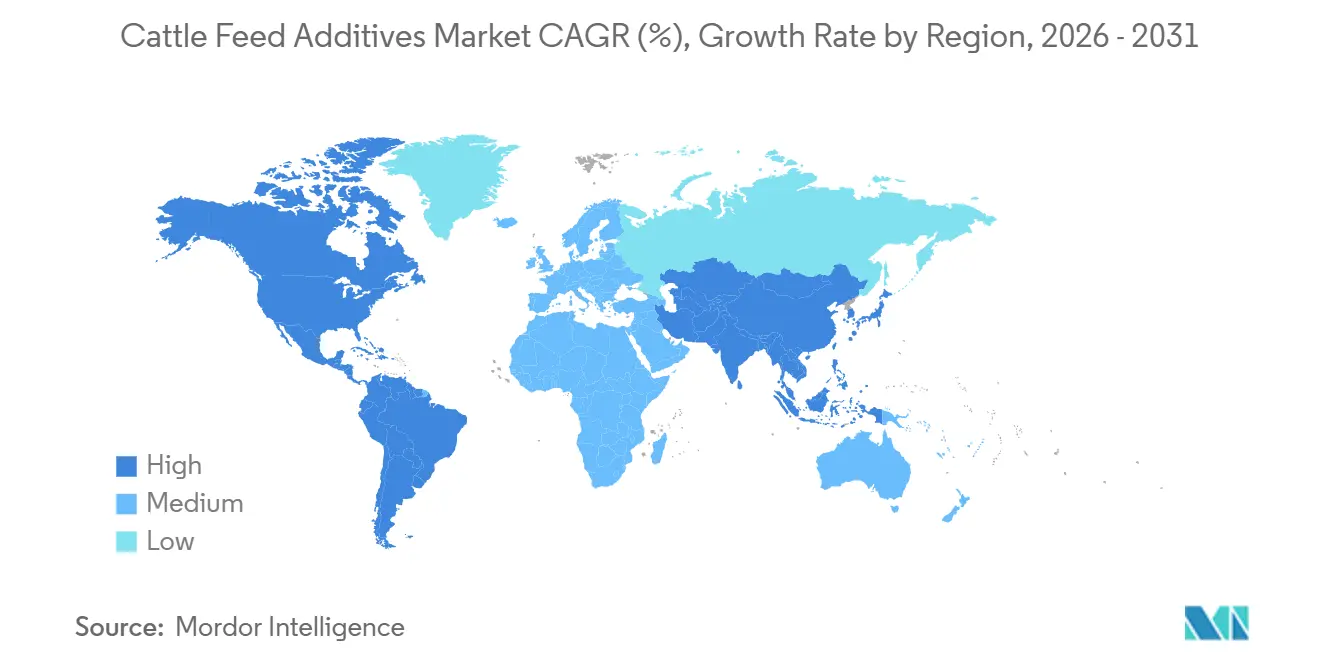
North America accounted for 48.5% of the cattle feed additives market size in 2025. The region benefits from dense feedlot activity, high additive use per animal, and established technical service networks. The United States is supporting the commercialization of methane-reduction additives following regulatory review, creating an additional application area beyond conventional performance and nutrition products. Canada has intensive Holstein dairy operations with quality assurance requirements linked to export markets, supporting demand for consistent feed quality and animal health solutions. South America is supported by Brazil's feedlot expansion and Argentina's commercial dairy and beef sectors. Brazil's animal feed production reached approximately 94 million metric tons in 2025, according to the National Union of Animal Feed Industries, reflecting the scale of the country's commercial livestock and feed manufacturing base. The expansion of confined cattle production is increasing demand for controlled, high-energy rations and additives that support feed conversion, rumen stability, and animal performance, driving demand for specialized additive adoption in the region.
Asia-Pacific is forecast to grow at a CAGR of 6.2% from 2026 to 2031, supported by China's feedlot modernization, India's organized dairy cooperatives, and the expansion of approved performance additives in China. Increasing commercialization of livestock production is raising demand for products that improve feed efficiency, gut health, and animal productivity, while more organized feeding systems are creating opportunities for precision nutrition and functional additives. Europe is supported by demand for specialty nutrition in Germany, France, the Netherlands, and the United Kingdom. Established dairy and beef industries are increasingly focused on feed efficiency, animal health, sustainability, and feed-safety requirements, supporting demand for probiotics, enzymes, phytogenics, and other specialized additives. At the same time, stringent approval requirements can extend the commercialization timeline for novel products, favoring established additive categories with clearer regulatory pathways.
The Middle East is driven by demand from confined dairy farms requiring heat-stress management and stable feed during storage and transit. High temperatures increase the importance of additives that support feed intake, rumen function, and animal performance, while increasing investment in intensive dairy production can broaden demand for specialized nutritional solutions. Africa is supported by demand concentrated in South Africa, Kenya, and Egypt, with mycotoxin control and dairy cooperative programs serving as key drivers in these markets. Growing commercial dairy production is increasing the need for mineral supplementation, rumen-support products, and feed-safety solutions, although fragmented livestock production and differences in feed manufacturing infrastructure can limit adoption. Overall, increasing livestock intensification and the shift toward more controlled feeding systems are creating opportunities for higher-value cattle feed additives across emerging regional markets.

Competitive Landscape
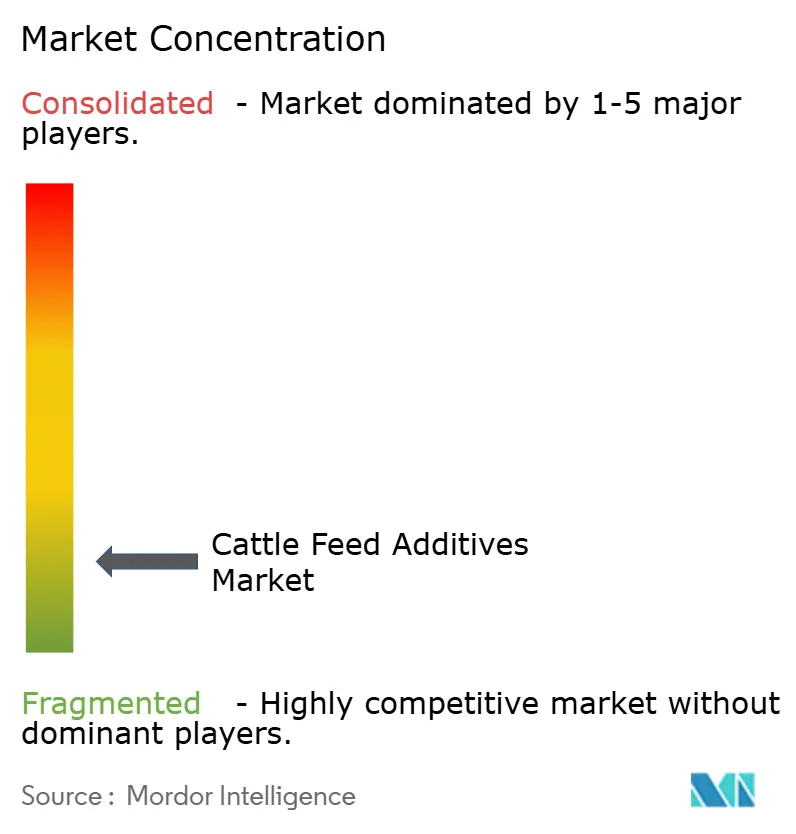
The cattle feed additives market is fragmented, with Cargill, Incorporated, DSM-Firmenich AG, Archer Daniels Midland Company, Nutreco N.V., and Alltech, Inc. among the leading participants. Regional suppliers can compete effectively when they have validated strains, local formulation knowledge, or direct technical support. This structure creates competition across both product breadth and application-specific expertise, with suppliers differentiating through formulation support, technical services, and customer relationships. Suppliers are increasingly pairing ingredients with feed data, ration advisory services, and herd-management tools to strengthen their position across commercial livestock operations.
In 2026, DSM-Firmenich AG agreed to divest its Animal Nutrition and Health business to CVC Capital Partners for EUR 2.2 billion (USD 2.4 billion), including an earnout of up to EUR 0.5 billion (USD 0.6 billion), while retaining a 20% equity stake. The transaction separates the specialty additive portfolio into an independent operating business and represents a significant change in the competitive structure of the animal nutrition sector. DSM-Firmenich AG also opened a Mycofix production plant in Jadcherla, India, in August 2025, strengthening its local manufacturing presence for mycotoxin-management products. Such investments can help suppliers improve regional availability, shorten supply chains, and respond more closely to demand across Asia-Pacific.
Methane-reduction technology is creating opportunities for companies that can connect product use to measurable improvements in animal performance and emissions outcomes. The expansion of solutions targeting enteric methane is broadening competition beyond traditional feed efficiency, gut health, and nutritional supplementation categories. Larger suppliers are also integrating feed analysis, milk recording, rumen pH sensors, and dosing systems into their service offerings, allowing them to combine additive products with farm-level data and technical support. This shift toward integrated nutrition and monitoring solutions is increasing the importance of application expertise and measurable outcomes alongside the underlying additive portfolio.
Cattle Feed Additives Industry Leaders
Cargill, Incorporated
DSM-Firmenich AG
Archer Daniels Midland Company
Nutreco N.V.
Alltech, Inc.
- *Disclaimer: Major Players sorted in no particular order

Recent Industry Developments
- February 2026: Kanematsu Corporation, Shikishima Farm Co., Ltd., and DSM-Firmenich AG launched a commercial implementation of Bovaer on Japanese Black cattle in Japan. The initiative aims to evaluate optimal feeding conditions and establish the documentation required for J-Credit issuance from methane reductions, supporting the adoption of methane-reduction feed additives in the Japanese cattle sector.
- August 2025: DSM-Firmenich Animal Nutrition & Health inaugurated a new 11,200-square-meter feed additive plant in Jadcherla, Hyderabad, India. The facility produces Mycofix mycotoxin-risk-management solutions and is intended to strengthen local production and supply of feed additives across India and the Asia-Pacific region.
- June 2025: Novonesis completed the acquisition of dsm-firmenich's share of the Feed Enzyme Alliance for EUR 1.5 billion. The transaction brought the alliance's feed enzyme sales and distribution activities under Novonesis, strengthening its position in the feed enzyme segment and expanding its animal biosolutions portfolio.


Global Cattle Feed Additives Market Report Scope
The cattle feed additives market includes additives incorporated into cattle feed to improve animal health, feed utilization, growth, and productivity.
The Cattle Feed Additives Market Report is Segmented by Additive Type (Acidifiers, Antibiotics, Antioxidants, Amino Acids, Binders, Enzymes, Flavors and Sweeteners, Minerals, Mycotoxin Detoxifiers, Phytogenics, Pigments, Prebiotics, Probiotics, Vitamins, and Yeast), by Form (Dry and Liquid), by Cattle Type (Dairy and Beef), and by Geography (North America, South America, Europe, Asia-Pacific, Middle East, and Africa). The Market Forecasts are Provided in Terms of Value.
| Acidifiers | Lactic Acid |
| Propionic Acid | |
| Fumaric Acid | |
| Other Acidifiers | |
| Antibiotics | Tetracyclines |
| Penicillins | |
| Tylosin | |
| Bacitracin | |
| Other Antibiotics | |
| Antioxidants | Butylated Hydroxyanisole (BHA) |
| Butylated Hydroxytoluene (BHT) | |
| Ethoxyquin | |
| Propyl Gallate | |
| Tocopherols | |
| Citric Acid | |
| Other Antioxidants | |
| Amino Acids | Lysine |
| Tryptophan | |
| Methionine | |
| Threonine | |
| Other Amino Acid | |
| Binders | Natural Binders |
| Synthetic Binders | |
| Enzymes | Carbohydrases |
| Phytases | |
| Other Enzymes | |
| Flavors and Sweeteners | Flavors |
| Sweeteners | |
| Minerals | Macrominerals |
| Microminerals | |
| Mycotoxin Detoxifiers | Binders |
| Biotransformers | |
| Phytogenics | Herbs & Spices |
| Essential Oil | |
| Other Phytogenics | |
| Pigments | Carotenoids |
| Curcumin & Spirulina | |
| Prebiotics | Inulin |
| Fructo Oligosaccharides | |
| Galacto Oligosaccharides | |
| Xylo Oligosaccharides | |
| Lactulose | |
| Mannan Oligosaccharides | |
| Other Prebiotics | |
| Probiotics | Lactobacilli |
| Bifidobacteria | |
| Streptococcus | |
| Pediococcus | |
| Enterococcus | |
| Other Probiotics | |
| Vitamins | Vitamin A |
| Vitamin B | |
| Vitamin C | |
| Vitamin E | |
| Other Vitamins | |
| Yeast | Live Yeast |
| Spent Yeast | |
| Torula Dried Yeast | |
| Selenium Yeast | |
| Whey Yeast | |
| Yeast Derivatives |
| Dry |
| Liquid |
| Dairy Cattle |
| Beef Cattle |
| North America | United States |
| Canada | |
| Mexico | |
| Rest of North America | |
| South America | Brazil |
| Argentina | |
| Chile | |
| Rest of South America | |
| Europe | Germany |
| France | |
| Italy | |
| Netherlands | |
| Spain | |
| Russia | |
| United Kingdom | |
| Rest of Europe | |
| Asia-Pacific | China |
| India | |
| Australia | |
| Japan | |
| Rest of Asia-Pacific | |
| Middle East | Saudi Arabia |
| Turkey | |
| Iran | |
| Rest of Middle East | |
| Africa | South Africa |
| Egypt | |
| Kenya | |
| Rest of Africa |
| By Additive | Acidifiers | Lactic Acid |
| Propionic Acid | ||
| Fumaric Acid | ||
| Other Acidifiers | ||
| Antibiotics | Tetracyclines | |
| Penicillins | ||
| Tylosin | ||
| Bacitracin | ||
| Other Antibiotics | ||
| Antioxidants | Butylated Hydroxyanisole (BHA) | |
| Butylated Hydroxytoluene (BHT) | ||
| Ethoxyquin | ||
| Propyl Gallate | ||
| Tocopherols | ||
| Citric Acid | ||
| Other Antioxidants | ||
| Amino Acids | Lysine | |
| Tryptophan | ||
| Methionine | ||
| Threonine | ||
| Other Amino Acid | ||
| Binders | Natural Binders | |
| Synthetic Binders | ||
| Enzymes | Carbohydrases | |
| Phytases | ||
| Other Enzymes | ||
| Flavors and Sweeteners | Flavors | |
| Sweeteners | ||
| Minerals | Macrominerals | |
| Microminerals | ||
| Mycotoxin Detoxifiers | Binders | |
| Biotransformers | ||
| Phytogenics | Herbs & Spices | |
| Essential Oil | ||
| Other Phytogenics | ||
| Pigments | Carotenoids | |
| Curcumin & Spirulina | ||
| Prebiotics | Inulin | |
| Fructo Oligosaccharides | ||
| Galacto Oligosaccharides | ||
| Xylo Oligosaccharides | ||
| Lactulose | ||
| Mannan Oligosaccharides | ||
| Other Prebiotics | ||
| Probiotics | Lactobacilli | |
| Bifidobacteria | ||
| Streptococcus | ||
| Pediococcus | ||
| Enterococcus | ||
| Other Probiotics | ||
| Vitamins | Vitamin A | |
| Vitamin B | ||
| Vitamin C | ||
| Vitamin E | ||
| Other Vitamins | ||
| Yeast | Live Yeast | |
| Spent Yeast | ||
| Torula Dried Yeast | ||
| Selenium Yeast | ||
| Whey Yeast | ||
| Yeast Derivatives | ||
| By Form | Dry | |
| Liquid | ||
| By Cattle Type | Dairy Cattle | |
| Beef Cattle | ||
| By Geography | North America | United States |
| Canada | ||
| Mexico | ||
| Rest of North America | ||
| South America | Brazil | |
| Argentina | ||
| Chile | ||
| Rest of South America | ||
| Europe | Germany | |
| France | ||
| Italy | ||
| Netherlands | ||
| Spain | ||
| Russia | ||
| United Kingdom | ||
| Rest of Europe | ||
| Asia-Pacific | China | |
| India | ||
| Australia | ||
| Japan | ||
| Rest of Asia-Pacific | ||
| Middle East | Saudi Arabia | |
| Turkey | ||
| Iran | ||
| Rest of Middle East | ||
| Africa | South Africa | |
| Egypt | ||
| Kenya | ||
| Rest of Africa | ||


Key Questions Answered in the Report
What is the size of the cattle feed additives market?
The cattle feed additives market is forecast to reach USD 15.80 billion in 2026 and USD 20.07 billion by 2031, growing at a CAGR of 4.90% from 2026 to 2031.
Which cattle feed additive category is growing fastest?
Probiotics are forecast to grow at a 9.1% CAGR from 2026 to 2031, supported by demand for microbial alternatives to antibiotic growth promoters.
Which cattle segment is expanding fastest?
Beef cattle are forecast to grow at a 5.1% CAGR from 2026 to 2031 as feedlots expand in Brazil and China.
Which region leads cattle feed additive demand?
North America accounted for 48.5% of the share in 2025, while Asia-Pacific is forecast to grow at a 6.2% CAGR from 2026 to 2031.
What limits the wider use of advanced cattle feed additives?
Lengthy approvals, input-cost volatility, inconsistent grazing-system delivery, and limited farm data can delay adoption.
Page last updated on:


 Your data is secure and never sold or shared.


