
Calciphylaxis Treatment Market Size and Share
Market Overview
| Study Period | 2020 - 2031 |
|---|---|
| Market Size (2026) | USD 0.73 Billion |
| Market Size (2031) | USD 1.16 Billion |
| Growth Rate (2026 - 2031) | 9.75 % |
| Fastest Growing Market | Asia-Pacific |
| Largest Market | North America |
| Market Concentration | Medium |
Major Players *Disclaimer: Major Players sorted in no particular order Image © Mordor Intelligence. Reuse requires attribution under CC BY 4.0. | |
Calciphylaxis Treatment Market Analysis by Mordor Intelligence
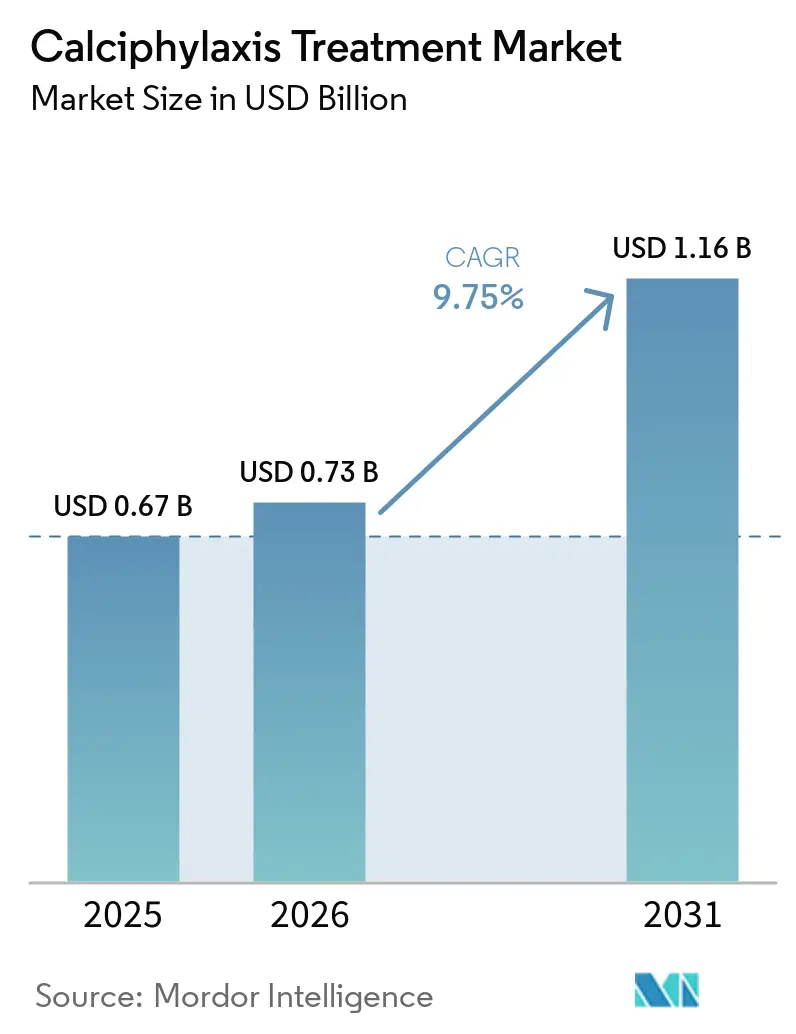
The Calciphylaxis Treatment Market size is projected to expand from USD 0.67 billion in 2025 and USD 0.73 billion in 2026 to USD 1.16 billion by 2031, registering a CAGR of 9.75% between 2026 to 2031.
Growth follows the expanding population receiving dialysis for end-stage kidney disease, which remains the main group at risk of calciphylaxis. The condition has no FDA-approved therapy, so treatment still relies on off-label medicines, dialysis changes, wound management, and specialist support. This leaves a clear opening for therapies that can show reliable clinical benefit in a difficult trial setting. The calciphylaxis treatment market also benefits when dialysis providers, wound specialists, and hospitals coordinate care earlier in the patient journey. However, inconsistent diagnosis and small clinical trial populations continue to limit product development and reimbursement decisions.
Key Report Takeaways
By treatment type, medications held 38.5% of the calciphylaxis treatment market share in 2025, while hyperbaric oxygen therapy is forecast to grow at a 10.2% CAGR through 2031.
By diagnosis, clinical assessment accounted for 43.2% of the calciphylaxis treatment market share in 2025, while imaging is projected to advance at a 10.4% CAGR through 2031.
By end user, hospitals and clinics held 62.4% of revenue in 2025, while home care is expected to grow at a 9.9% CAGR through 2031.
By route of administration, intravenous treatment held 53.1% of revenue in 2025, while topical and intralesional delivery is forecast to expand at a 10.1% CAGR through 2031.
Note: Market size and forecast figures in this report are generated using Mordor Intelligence’s proprietary estimation framework, updated with the latest available data and insights as of January 2026.
Global Calciphylaxis Treatment Market Trends and Insights
Drivers Impact Analysis*
| Driver | (~) % Impact on CAGR Forecast | Geographic Relevance | Impact Timeline |
|---|---|---|---|
| Rising ESKD and Dialysis Population | +2.0% | Global, with peak concentration in North America, Japan, and Germany | Long term (≥ 4 years) |
| Expansion of Multidisciplinary Wound and Renal Care | +1.4% | North America, Western Europe, Australia and New Zealand | Medium term (2-4 years) |
| Increasing Rare-Disease Trial and Orphan-Drug Funding | +1.8% | Global, with strongest regulatory influence in the United States and European Union | Medium term (2-4 years) |
| Greater Recognition of Calciphylaxis in High-Risk Dialysis Patients | +1.3% | North America and Europe, with expansion into core Asia Pacific countries | Short term (≤ 2 years) |
| Dialysis-Session-Compatible Formulations and Care Pathways | +1.0% | North America and Europe | Medium term (2-4 years) |
| Calcification Biomarker and Registry Infrastructure Enabling Earlier Intervention | +0.9% | North America, Europe, Australia and New Zealand | Long term (≥ 4 years) |
| Source: Mordor Intelligence | |||
Rising ESKD and Dialysis Population
The expanding dialysis population is the largest structural driver for the calciphylaxis treatment market because most cases occur in people with advanced chronic kidney disease or end-stage kidney disease. The ANZDATA Registry[1]Chaudhry A et al., “Calciphylaxis Episodes in the Australia and New Zealand Dialysis and Transplant Registry,” Clinical Journal of the American Society of Nephrology recorded 4.5 calciphylaxis episodes per 1,000 patient-years among dialysis recipients in Australia and New Zealand from 2019 to 2022. The same registry reported 12-month mortality of 50%, showing the seriousness of the condition and the need for timely management. Dialysis patients with a body mass index of at least 30 had 2.5 times the incidence seen in non-obese patients, while diabetes was linked to an adjusted 1.4-fold risk. These risk factors support a steady patient base for the calciphylaxis treatment market as dialysis services address both mineral imbalance and wound complications. Larger dialysis networks can also identify high-risk patients during recurring treatment visits.
Increasing Rare-Disease Trial and Orphan-Drug Funding
Orphan designations encourage investment in calciphylaxis programs by making a rare condition more workable for drug developers. In May 2025, the European Medicines Agency[2] European Medicines Agency, “EU/3/25/3064: Orphan Designation for Treatment of Calciphylaxis,” European Medicines Agency granted orphan designation EU/3/25/3064 to INZ-701, now called BMN 401, for treating calciphylaxis. The designation provides scientific support, fee reductions, and possible 10-year market exclusivity if the product is approved. The FDA orphan program also designated sodium thiosulfate for uremic and non-uremic calciphylaxis, while the Orphan Drug Act offers qualifying sponsors clinical trial tax credits and 7 years of exclusivity. These incentives matter in the calciphylaxis treatment market because conventional sales expectations may not support expensive trials in a small patient population. BioMarin’s 2025 acquisition of Inozyme Pharma also showed why validated rare-disease assets can attract strategic buyers before full commercialization.
Calcification Biomarker and Registry Infrastructure Enabling Earlier Intervention
Earlier recognition can increase the number of patients who receive treatment before wounds and pain become more severe. The T50 calciprotein particle assay and plasma pyrophosphate testing are being evaluated as tools that may support risk assessment and follow-up. A prospective study of 70 patients linked low plasma pyrophosphate levels with increased mortality. The Partners Calciphylaxis Biorepository and Patient Registry is registered through 2030, while the European Calciphylaxis Network is building further real-world evidence. Registry data can reduce diagnostic delays, document care patterns, and give payers clearer evidence when reviewing new treatment options. For the calciphylaxis treatment market, better case identification can widen the treated population without changing the underlying disease prevalence.
Expansion of Multidisciplinary Wound and Renal Care
Integrated care brings nephrology, wound management, hyperbaric medicine, pain services, and dialysis teams into the same treatment plan. European clinical guidance states that coordinated management should include wound surgeons, pain specialists, and dialysis nurses. One retrospective cohort reported later amputation in 6% of patients with pain improvement after hyperbaric oxygen therapy, compared with 13% in those without that improvement. Research published in 2025 identified the TYMP, IL-6, and tissue factor pathway as a potential treatment target, which may bring rheumatology and nephrology teams closer together. This model can lengthen the managed treatment episode and create demand across medicines, dressings, procedures, and dialysis services. It also gives companies in the calciphylaxis treatment market more opportunities to work through established renal care channels.
Restraints Impact Analysis*
| Restraint | (~) % Impact on CAGR Forecast | Geographic Relevance | Impact Timeline |
|---|---|---|---|
| Absence of Standardized Diagnostic and Treatment Protocols | -0.9% | Global, with greatest impact in Asia Pacific and South America | Long term (≥ 4 years) |
| Limited Randomized Evidence and Heterogeneous Treatment Response | -0.8% | Global | Medium term (2-4 years) |
| Rare-Patient Recruitment and Endpoint Variability | -0.5% | Global | Medium term (2-4 years) |
| Treatment Delivery Bottlenecks Across Dialysis, Wound, and Hyperbaric Services | -0.4% | Emerging markets, rural North America, and Southern Europe | Short term (≤ 2 years) |
| Source: Mordor Intelligence | |||
Absence of Standardized Diagnostic and Treatment Protocols
The lack of a common diagnostic algorithm means that treated patient volume remains below the underlying disease burden. A 2024 retrospective study of 302 patients reported that more than 70% of cases in an earlier referenced cohort were initially misdiagnosed. Symptoms can resemble cellulitis, pyoderma gangrenosum, and warfarin skin necrosis, which complicates referral decisions. The KDIGO 2025 conference report stated that vitamin K antagonists can carry up to an 11-fold higher calciphylaxis risk, yet anticoagulation decisions often span separate dialysis, cardiology, and hematology teams. Delayed diagnosis narrows the time available for drug treatment and wound intervention. This continues to restrain the calciphylaxis treatment market, especially where specialist nephrology services are limited.
Limited Randomized Evidence and Heterogeneous Treatment Response
The evidence base remains limited because trial recruitment is difficult and accepted disease-specific endpoints are still developing. The CALCIPHYX phase 3 trial enrolled 71 patients and did not show a statistically significant improvement in wound healing or pain with hexasodium fytate compared with placebo. The study highlighted the difficulty of using patient-centered surrogate endpoints that had not been validated prospectively. A review of 19 retrospective cohorts involving 422 chronic kidney disease patients also found no significant improvement in lesions or overall survival for intravenous sodium thiosulfate compared with no sodium thiosulfate. Payers in high-reimbursement settings may therefore request stronger randomized evidence before supporting coverage. This makes regulatory alignment and trial design central constraints for the calciphylaxis treatment market.
*Our forecasts treat driver/restraint impacts as directional, not additive. The impact forecasts reflect baseline growth, mix effects, and variable interactions.
Segment Analysis
By Treatment Type: Off-Label Medications Lead While HBOT Gains Clinical Interest
Medications held 38.5% of the calciphylaxis treatment market share in 2025, supported by established off-label use of intravenous sodium thiosulfate. Sodium thiosulfate is commonly given during hemodialysis, alongside cinacalcet and bisphosphonates used to address mineral metabolism. The FDA granted orphan designation to sodium thiosulfate for uremic and non-uremic calciphylaxis in November 2011. Dialysis optimization, debridement, dressings, surgery, and pain care remain important elements of clinical management. These services support the calciphylaxis treatment market because the condition requires more than one intervention over the course of care.
Hyperbaric oxygen therapy is projected to be the fastest-growing treatment option, with the calciphylaxis treatment market size for this segment advancing at a 10.2% CAGR through 2031. A retrospective study found that hyperbaric oxygen therapy was associated with 5.38 times the odds of pain improvement in maintenance dialysis patients. A separate study of 93 patients found longer survival for those completing a full hyperbaric course than for those receiving intravenous sodium thiosulfate alone. A French real-world study reported reduced analgesic use in 83.3% of patients after a median 3.5 months of treatment. Limited chamber capacity may constrain use, so providers that connect hyperbaric services with dialysis centers can strengthen their position in the calciphylaxis treatment industry.
By Diagnosis: Clinical Assessment Leads While Imaging Expands
Clinical diagnosis held 43.2% of revenue in 2025, reflecting the continued importance of bedside assessment, dialysis history, lesion appearance, and laboratory review. It remains the leading route for initial evaluation because it can be completed without an invasive procedure. Skin biopsy may confirm microvascular calcification, but it carries bleeding and necrosis risks in damaged tissue. A review reported microvascular calcification in 86% and fibrin thrombi in 73% of 70 deep-biopsy specimens. Blood-based tools such as T50 and plasma pyrophosphate testing remain supporting methods rather than established commercial diagnostics.
Imaging is forecast to grow at a 10.4% CAGR through 2031 as providers seek noninvasive methods for earlier lesion identification. CT radiomics has reported 89% sensitivity and 80% specificity for identifying calciphylaxis lesions. Three-phase 99mTc-methylene diphosphonate bone scans are also being used as an early screening option in dialysis settings. Greater imaging use shifts more diagnostic activity toward radiology and outpatient nephrology settings. That can influence whether medication, wound care, or referral services are initiated first. The change adds a further access channel for the calciphylaxis treatment market.
By End User: Hospitals and Clinics Lead While Home Care Develops
Hospitals and clinics held 62.4% of the calciphylaxis treatment market share in 2025 because severe cases often need hemodialysis, intravenous treatment, and coordinated wound assessment. The ANZDATA Registry reported 50% mortality at 12 months among affected dialysis patients. This clinical burden makes inpatient and dialysis-center care important when ulcers, pain, infection risk, and mineral imbalance must be addressed at the same time. Ambulatory centers support outpatient dialysis-linked sodium thiosulfate administration. Research centers also contribute through studies such as the BEAT-Calci adaptive platform trial, which targets 350 patients. Hospitals remain the main channel for the calciphylaxis treatment market because they can coordinate several specialists.
Home care is expected to be the fastest-growing end-user setting at a 9.9% CAGR through 2031. In February 2026, DaVita[3]DaVita, “Elara Caring Secures Strategic Investment from Ares and DaVita,” DaVita Newsroom and Ares Capital invested in Elara Caring to develop kidney-specific home-based care for dialysis patients at risk of preventable hospitalization. The initiative may support remote wound monitoring and earlier care escalation for people managing complex renal conditions. Home hemodialysis can enable more frequent sessions, which may improve mineral metabolism control in suitable patients. Home settings will not replace hospital care for severe wounds, but they can extend monitoring and support between clinical visits. This helps explain why the calciphylaxis treatment market is extending beyond traditional facility-based treatment.
By Route of Administration: Intravenous Delivery Leads While Local Delivery Grows
Intravenous therapy held 53.1% of revenue in 2025, driven by sodium thiosulfate administration during dialysis sessions. A common approach is 25 g in 100 mL during the final 30 to 60 minutes of hemodialysis, 3 times each week. Investigational agents, including hexasodium fytate, have also been evaluated through intravenous delivery. Oral treatment remains limited by bioavailability constraints for several therapies used in calciphylaxis. Intraperitoneal administration can be used for patients receiving peritoneal dialysis who have limited intravenous access.
Topical and intralesional options are forecast to grow at a 10.1% CAGR through 2031. A 2025 case report described complete wound healing over 7 months with topical sodium thiosulfate ointment in a patient with calciphylaxis and chronic renal failure. Clinical guidance also discusses intralesional sodium thiosulfate for patients who cannot tolerate systemic treatment. These methods can help address access limitations and local wound needs. Compounding pharmacies currently fill part of the formulation gap. Their wider use could support specialty products as the calciphylaxis treatment market develops.
Geography Analysis
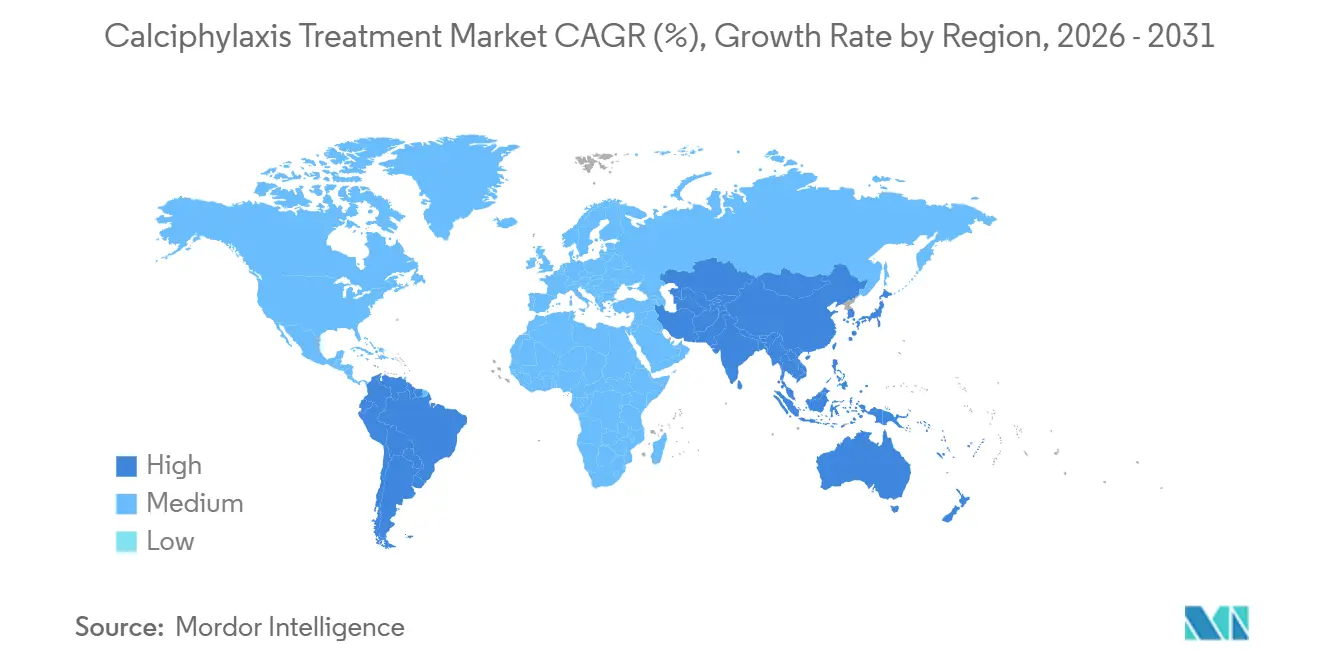
North America held 42.5% of the calciphylaxis treatment market share in 2025, supported by dialysis capacity, wound care reimbursement, and clinical research infrastructure. The CDC reports that more than 800,000 people in the United States have end-stage kidney disease, and 68% receive dialysis. Massachusetts General Hospital and its Partners Calciphylaxis Biorepository add research capacity to the regional care system. FDA orphan designation activity also provides a structured environment for therapy development. In February 2026, DaVita and Ares Capital entered their investment in Elara Caring, linking dialysis expertise with home-based kidney care.
Europe has an established renal care base in Germany, France, the United Kingdom, and Italy, but access to hyperbaric oxygen therapy remains more limited than access to medicines. National reimbursement policies for off-label sodium thiosulfate differ across the region. The European Renal Association published a detailed clinical update in 2025 that supports more consistent management pathways across member countries. France is also evaluating rheopheresis through a randomized trial for calciphylaxis. More structured clinical guidance can strengthen demand for pharmacological products and advanced wound care in the calciphylaxis treatment market.
Asia Pacific is forecast to be the fastest-growing region at a 10.2% CAGR through 2031. Japan[4]Japanese Society for Dialysis Therapy, “13-Year Revision of CKD-MBD Guidelines,” Nikkei Medical had 344,640 dialysis patients and updated its CKD-MBD guidance in December 2025 for the first time in 13 years. The revised guidance individualizes phosphate and calcium targets, which are relevant to calciphylaxis risk management. China and India have large patient pools but face higher underdiagnosis outside major urban centers. India’s national dialysis program may increase identification as dialysis access and awareness improve. Nipro’s renal care portfolio illustrates the expanding treatment infrastructure across Southeast Asia. This supports future geographic expansion of the calciphylaxis treatment market.


Competitive Landscape
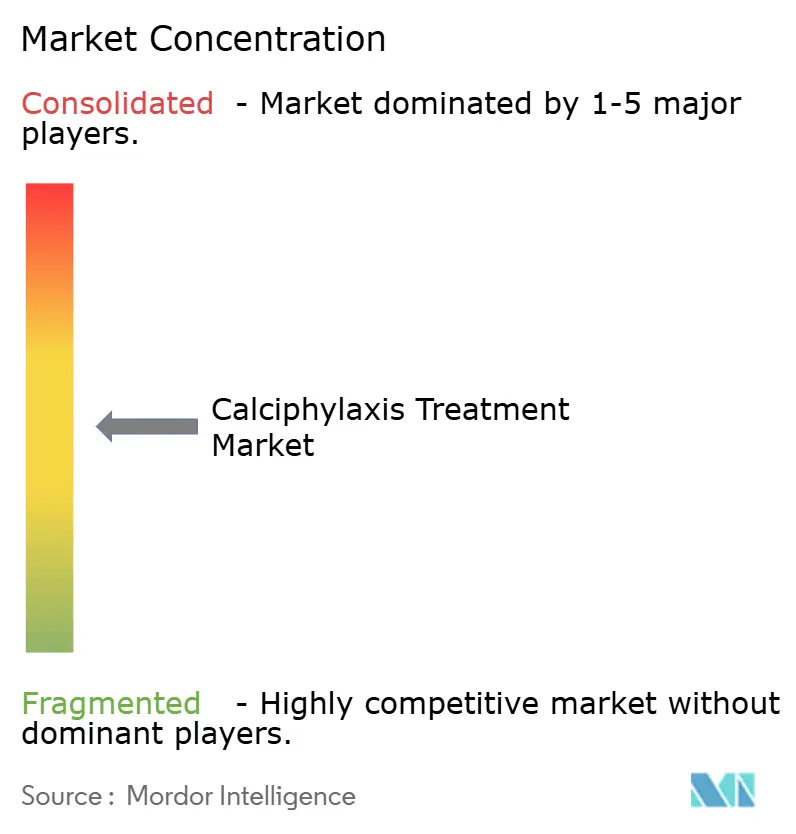
The calciphylaxis treatment market is fragmented because no company has an approved product specifically for the condition. BioMarin gained control of the most advanced novel pipeline candidate when it acquired Inozyme Pharma in 2025. BMN 401, previously called INZ-701, is an ENPP1 Fc-fusion enzyme replacement therapy that raised plasma pyrophosphate levels in the Phase 1 SEAPORT 1 study completed in December 2024. The EMA orphan designation granted in May 2025 gives the program a defined regulatory support route. BioMarin’s acquisition and planned registrational direction make it a leading pipeline participant rather than a current market leader with an approved therapy.
CSL Vifor and Sanifit retain experience from the CALCIPHYX program for hexasodium fytate. The phase 3 trial did not meet its primary wound healing or pain endpoints, which limits the near-term path for the asset. A 2024 American Society of Nephrology abstract reported an 89% reduction in calciphylaxis-related infections versus placebo in a post-hoc analysis. That finding could support continued work around infection-related outcomes, although it does not replace the missed primary endpoints. DaVita and Fresenius Medical Care use integrated dialysis care models that can influence how treatments are delivered across dialysis, wound care, and medications. The BEAT-Calci platform trial also creates a route for companies with relevant therapies to enter a shared clinical research structure.
Wound care companies including Convatec, Smith+Nephew, Mölnlycke, and Coloplast compete through products used across chronic wound categories rather than calciphylaxis-specific approvals. In March 2026, Smith+Nephew launched ALLEVYN COMPLETE CARE Foam Dressing in the United States and began European rollout. Convatec received regulatory clearance for Aquacel ConvaFiber in July 2025, expanding its wound care portfolio for chronic wound settings. Companies that pair treatment assets with useful diagnostic biomarkers may improve patient selection in future studies. The competitive outcome will depend on evidence quality, referral pathways, and the ability to work within dialysis care networks. This leaves the calciphylaxis treatment market open to both specialty drug developers and established wound care suppliers.
Calciphylaxis Treatment Industry Leaders
Baxter International Inc.
Medtronic plc
Teva Pharmaceutical Industries Ltd.
Viatris Inc.
Smith+Nephew plc
- *Disclaimer: Major Players sorted in no particular order

Recent Industry Developments
- March 2026: Smith+Nephew launched the ALLEVYN COMPLETE CARE Foam Dressing in the US, incorporating proprietary multi-layer absorbent technology backed by clinical evidence. Rollout into European markets is underway through 2026, expanding its chronic wound management footprint across calciphylaxis lesion care settings
- February 2026: DaVita and Ares Capital entered a strategic co-investment in Elara Caring, a national home health provider, with a specific objective to co-develop a kidney-specific home-based care model targeting preventable hospitalizations for dialysis patients, including those managing calciphylaxis
- May 2025: The European Medicines Agency granted orphan designation EU/3/25/3064 to INZ-701, now BMN 401, for the treatment of calciphylaxis. The designation, awarded to Inozyme Pharma Ireland Limited and now held within BioMarin, provides scientific support and potential 10-year market exclusivity upon approval
- October 2024: Inozyme Pharma announced positive interim Phase 1 SEAPORT 1 data at ASN Kidney Week 2024 in San Diego. INZ-701 significantly elevated plasma pyrophosphate levels in end-stage kidney disease hemodialysis patients, with well-tolerated safety in this high-mortality population


Global Calciphylaxis Treatment Market Report Scope
| Medication |
| Dialysis Optimization |
| Wound Care and Management |
| Hyperbaric Oxygen Therapy |
| Surgery |
| Pain and Palliative Care |
| Clinical Diagnosis |
| Skin Biopsy |
| Blood Tests |
| Imaging |
| Hospitals and Clinics |
| Ambulatory Centers |
| Medical Research Centers |
| Home-Care Settings |
| Intravenous |
| Oral |
| Topical and Intralesional |
| Intraperitoneal |
| North America | United States |
| Canada | |
| Mexico | |
| Europe | Germany |
| France | |
| United Kingdom | |
| Italy | |
| Spain | |
| Rest of Europe | |
| Asia-Pacific | China |
| Japan | |
| India | |
| South Korea | |
| Australia | |
| Rest of Asia-Pacific | |
| Middle East and Africa | GCC |
| South Africa | |
| Rest of the Middle East and Africa | |
| South America | Brazil |
| Argentina | |
| Rest of South America |
| By Treatment Type | Medication | |
| Dialysis Optimization | ||
| Wound Care and Management | ||
| Hyperbaric Oxygen Therapy | ||
| Surgery | ||
| Pain and Palliative Care | ||
| By Diagnosis | Clinical Diagnosis | |
| Skin Biopsy | ||
| Blood Tests | ||
| Imaging | ||
| By End User | Hospitals and Clinics | |
| Ambulatory Centers | ||
| Medical Research Centers | ||
| Home-Care Settings | ||
| By Route of Administration | Intravenous | |
| Oral | ||
| Topical and Intralesional | ||
| Intraperitoneal | ||
| By Geography | North America | United States |
| Canada | ||
| Mexico | ||
| Europe | Germany | |
| France | ||
| United Kingdom | ||
| Italy | ||
| Spain | ||
| Rest of Europe | ||
| Asia-Pacific | China | |
| Japan | ||
| India | ||
| South Korea | ||
| Australia | ||
| Rest of Asia-Pacific | ||
| Middle East and Africa | GCC | |
| South Africa | ||
| Rest of the Middle East and Africa | ||
| South America | Brazil | |
| Argentina | ||
| Rest of South America | ||


Key Questions Answered in the Report
What is driving demand for calciphylaxis treatment?
The growing dialysis population is the main driver, while earlier identification, specialist wound care, and orphan-drug incentives support treatment uptake.
What is the projected calciphylaxis treatment market CAGR?
The market is forecast to grow at a 9.8% CAGR from 2026 to 2031, reaching USD 1,169.7 million in 2031.
Which treatment type has the largest share?
Medications held 38.5% of revenue in 2025, mainly because intravenous sodium thiosulfate is widely used off label during hemodialysis.
Why is hyperbaric oxygen therapy growing quickly?
Hyperbaric oxygen therapy is forecast to grow at a 10.2% CAGR through 2031, supported by evidence of better pain outcomes and longer survival in retrospective studies.
Which end-user setting is growing fastest?
Home care is forecast to expand at a 9.9% CAGR through 2031 as kidney-specific home care and remote monitoring models develop.
Which region is expected to grow fastest?
Asia Pacific is expected to grow at a 10.2% CAGR through 2031 because of large dialysis populations in Japan, China, and India and improving renal care infrastructure.
Page last updated on:





