
Birch Water Market Size and Share
Market Overview
| Study Period | 2021 - 2031 |
|---|---|
| Market Size (2026) | USD 282.41 Million |
| Market Size (2031) | USD 329.27 Million |
| Growth Rate (2026 - 2031) | 3.12 % |
| Fastest Growing Market | Asia-Pacific |
| Largest Market | Europe |
| Market Concentration | Medium |
Major Players
*Disclaimer: Major Players sorted in no particular order Image © Mordor Intelligence. Reuse requires attribution under CC BY 4.0. |
|
Birch Water Market Analysis by Mordor Intelligence
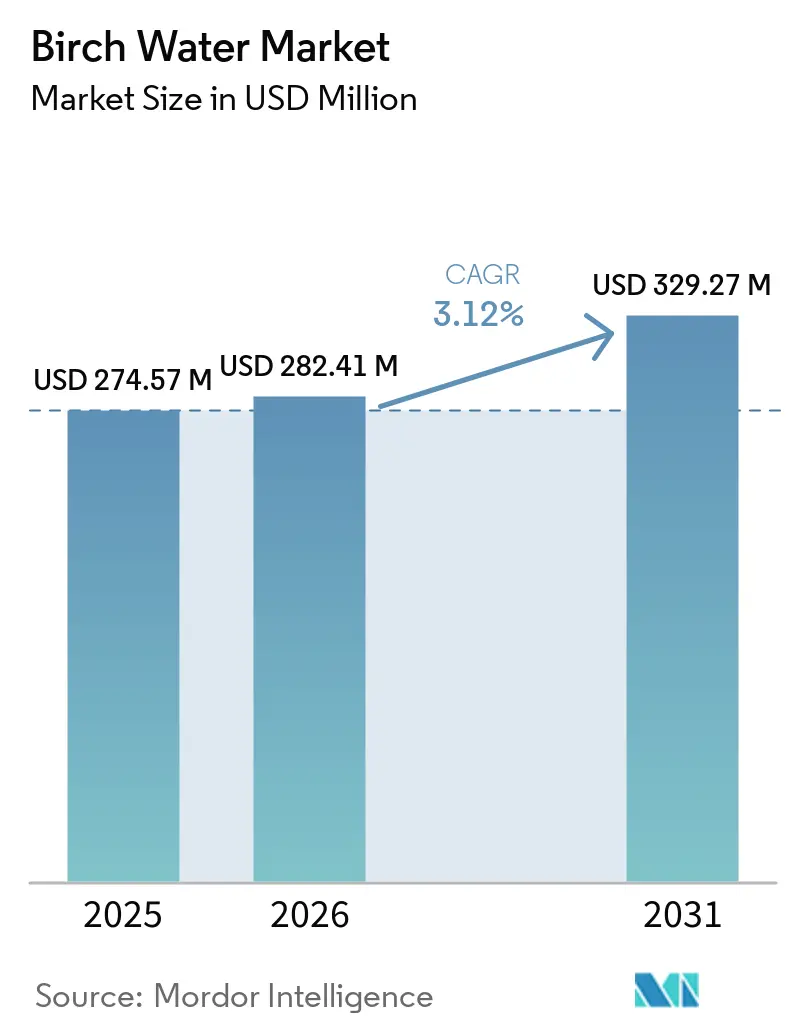
The birch water market size is expected to grow from USD 274.57 million in 2025 to USD 282.41 million in 2026 and is forecast to reach USD 329.27 million by 2031 at a 3.12% CAGR over 2026-2031. A short spring collection period limits raw material supply and supports the category’s premium positioning. Consumer demand is driven by interest in simple ingredient lists, plant-based hydration, and products with traceable origins. According to CBI Netherlands, a study supported by the association revealed that approximately 99% of European manufacturers consider clean-label products in 2025[1]Source: Center for the Promotion of Imports from Developing Countries, "Which trends offer opportunities or pose a threat on the European natural food additives market", cbi.eu. Brands with secure access to forest harvesting rights can plan production more reliably than those that purchase sap on the open market. The need to preserve freshness after collection also increases the importance of efficient processing and cold-chain capabilities. The birch water market remains a specialized beverage category; therefore, clear product education and repeat purchases will be more important than broad discounting. Competition from coconut, maple, and cactus water makes taste, origin, and product positioning critical for brands seeking shelf space.
Key Report Takeaways
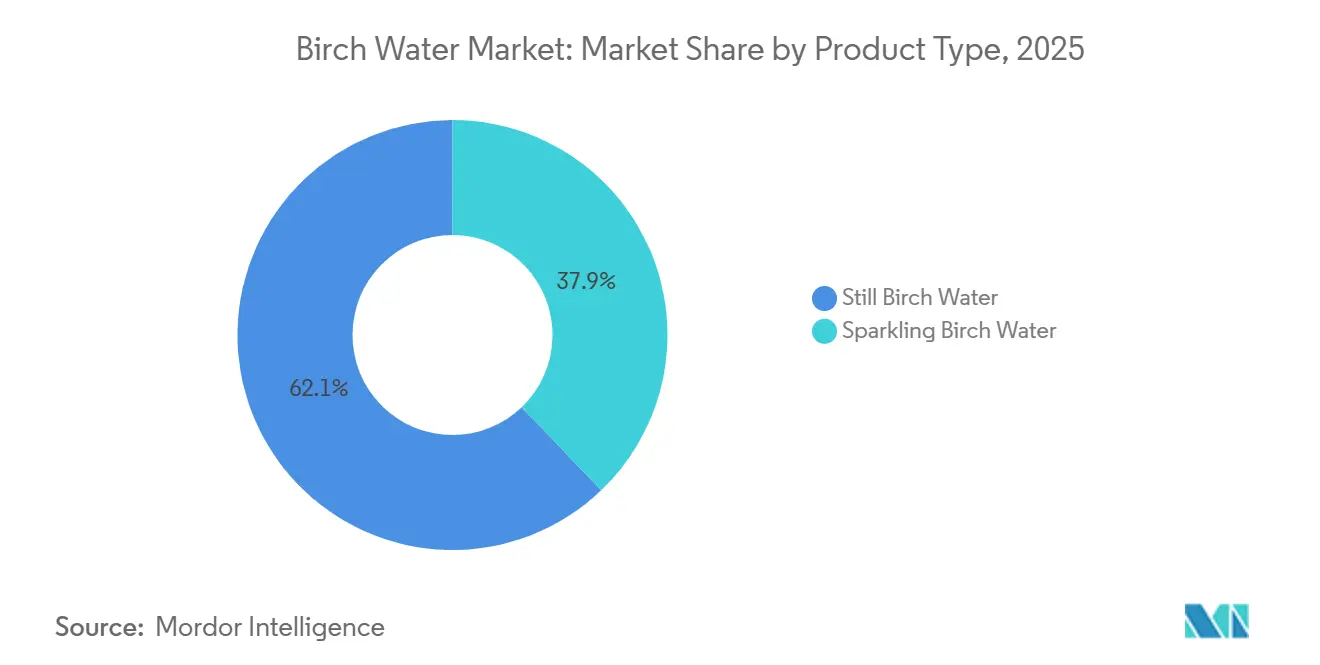
- By product type, still birch water accounted for the largest share of the birch water market, at 62.15% in 2025, while sparkling birch water is projected to grow at the fastest CAGR of 4.25% during 2026-2031.
- By flavor profile, unflavored or original birch water accounted for the largest share of the birch water market, at 64.72% in 2025, while flavored birch water is projected to grow at the fastest CAGR of 3.99% during 2026-2031.
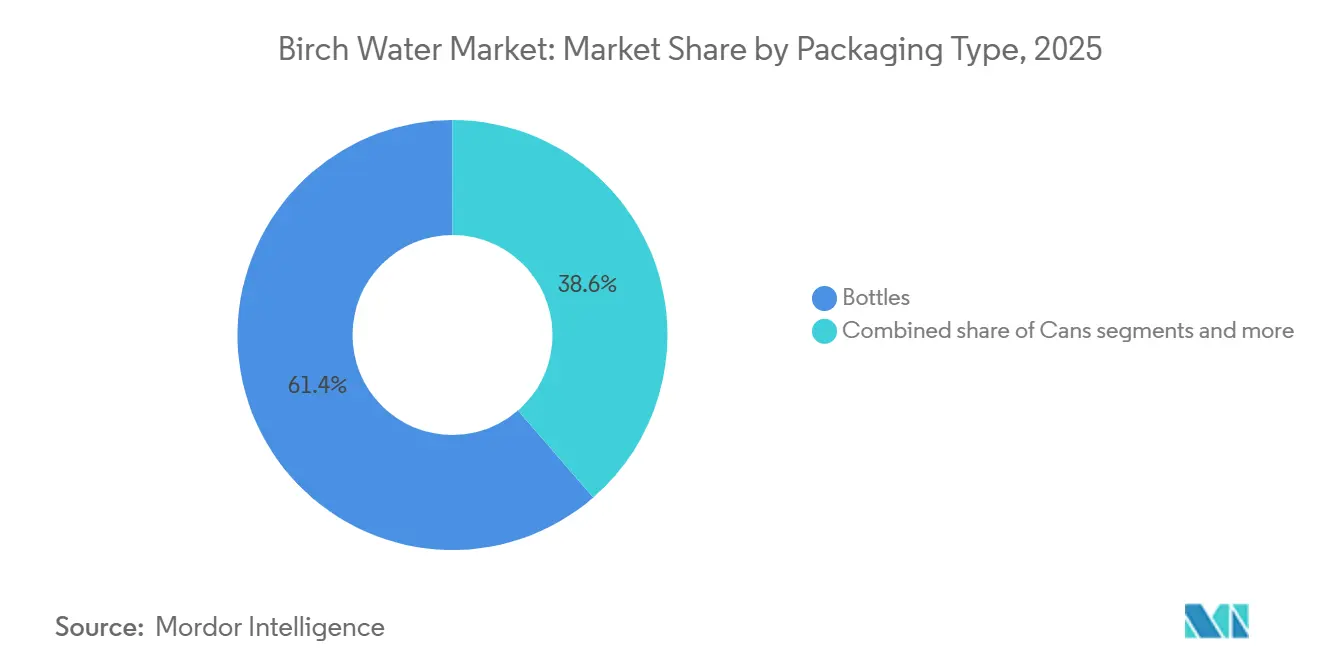
- By packaging type, bottles accounted for the largest share of the birch water market, at 61.37% in 2025, while cans are projected to grow at the fastest CAGR of 3.85% during 2026-2031.
- By distribution channel, supermarkets and hypermarkets accounted for the largest share of the birch water market, at 39.77% in 2025, while online retail stores are projected to grow at the fastest CAGR of 4.15% during 2026-2031.
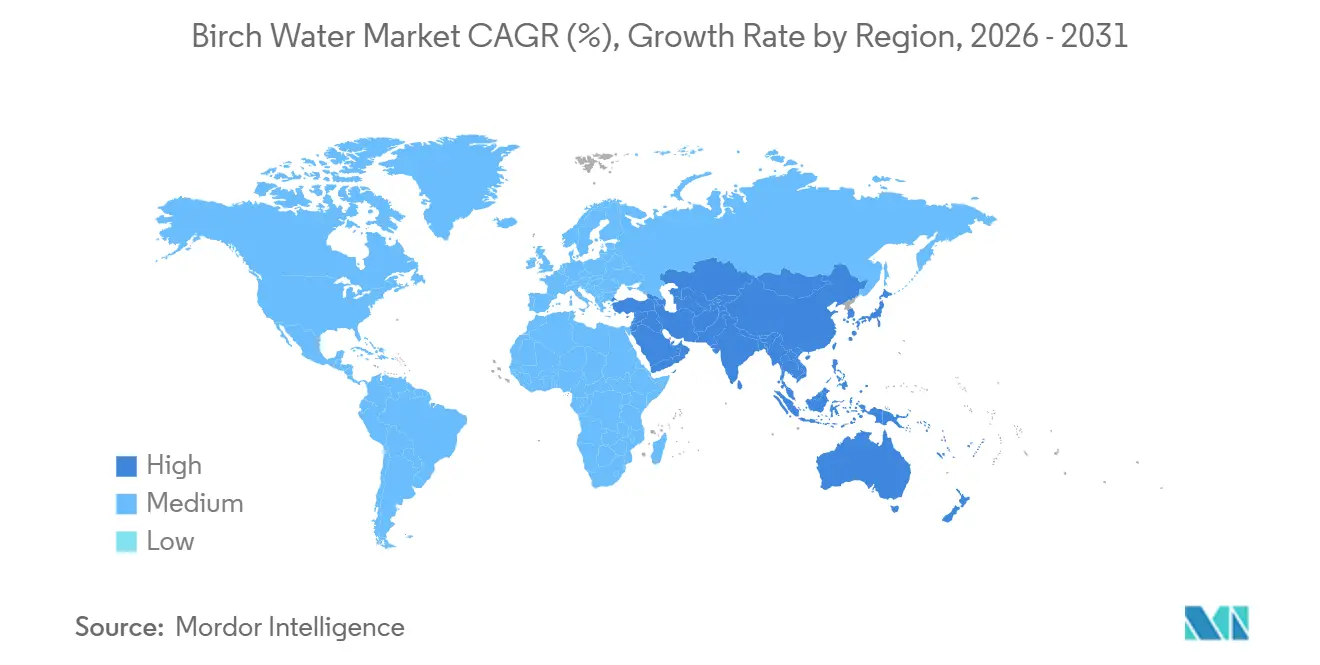
- By geography, Europe accounted for the largest share of the birch water market, at 44.91% in 2025, while Asia-Pacific is projected to grow at the fastest CAGR of 4.42% during 2026-2031.
Note: Market size and forecast figures in this report are generated using Mordor Intelligence’s proprietary estimation framework, updated with the latest available data and insights as of January 2026.
Market Trends and Insights
Drivers Impact Analysis of Birch Water Market*
| Driver | (~) % Impact on CAGR Forecast | Geographic Relevance | Impact Timeline |
|---|---|---|---|
| Demand for natural, clean-label, and low-calorie beverages | +0.5% | Global, with core impact in Europe and North America | Medium term (2-4 years) |
| Adoption of plant-based functional hydration | +0.4% | Global, with core impact in Asia-Pacific and spillover to Middle East and Africa | Medium term (2-4 years) |
| Premiumization of organic and forest-origin beverages | +0.3% | Europe and North America | Long term (≥ 4 years) |
| Expansion of e-commerce and direct-to-consumer beverage sales | +0.3% | Global, strongest in North America and Asia-Pacific | Short term (≤ 2 years) |
| Cold-climate sap collection infrastructure opportunities | +0.3% | Nordic countries, North America, and Baltic region | Long term (≥ 4 years) |
| Digital traceability for seasonal forest ingredients | +0.2% | Europe and North America | Medium term (2-4 years) |
| Source: Mordor Intelligence | |||
Demand for Natural, Clean-Label, and Low-Calorie Beverages
The birch water market benefits from growing consumer interest in beverages with recognizable ingredients, lower sugar content, and transparent production practices. Brands position birch sap as a minimally processed beverage, enabling them to communicate the product’s source without relying on extensive lists of added ingredients. Its low-calorie profile aligns with demand for alternatives to heavily sweetened beverages and provides consumers with a practical basis for comparing it with other premium water products. These preferences support products with short ingredient lists and no artificial additives, particularly in specialty and health-focused retail channels. However, the category requires clear labeling and consumer communication, as many consumers remain unfamiliar with birch sap, its seasonal harvesting process, and its suitability as an everyday beverage.
Rising Adoption of Plant-Based Functional Hydration
The birch water market benefits from demand for plant-based hydration products that do not depend on high caffeine levels or heavily fortified formulations. Birch sap contains glucose, fructose, malic acid, citric acid, and other measurable compounds that contribute to its naturally occurring composition. This composition enables brands to communicate the product’s characteristics without shifting attention away from the sap or creating an overly complex product message. The category competes for consumers who also consider premium coconut water and other botanical beverages, increasing the importance of sugar content, taste, and product origin. Clear, compliant product communication remains essential, as functional claims require appropriate substantiation under European food labeling regulations.
Premiumization of Organic and Forest-Origin Beverages
Organic certification and documented forest origin support premium positioning in the birch water market, particularly in regions where consumers expect verifiable sourcing and production practices. Certification requires records of harvesting areas and tapping methods, making it an operational commitment rather than a packaging claim added late in product development. Premium retail outlets, specialty stores, and foodservice establishments are suitable channels for small-volume products with higher unit values, as they provide context for the product’s origin. Glass bottles, detailed labels, and harvest information can help explain the product to consumers unfamiliar with birch sap. Research on food traceability indicates that QR code systems can strengthen consumer perceptions of transparency and product quality.
Expansion of E-Commerce and Direct-to-Consumer Beverage Sales
Online retail enables birch water brands to provide detailed information on product origin, ingredients, serving suggestions, and usage beyond what retail shelf space permits. This capability is particularly valuable for a category that many consumers have not tried and may not fully understand from packaging alone. Direct-to-consumer subscription models can encourage repeat purchases, enable consumers to purchase multipack formats, and help brands manage demand beyond the collection period. Online channels also provide smaller brands with access to consumers when broad supermarket listings are unavailable or when products require more explanation than conventional water brands. For instance, according to the European Commission, it is revealed that about 78% of internet users bought groceries and other products online in 2025[2]Source: European Commission, "E-commerce statistics for individuals", ec.europa.eu. The rapid forecast growth of online retail stores indicates that digital discovery, product education, and recurring orders will remain important to the category’s development.
Restraints Impact Analysis of Birch Water Market*
| Restraint | (~) % Impact on CAGR Forecast | Geographic Relevance | Impact Timeline |
|---|---|---|---|
| Short and weather-dependent birch sap harvest window | -0.4% | Global, most acute in Nordic, Baltic, and Canadian supply zones | Long term (≥ 4 years) |
| Premium pricing relative to mainstream hydration products | -0.4% | Emerging markets, South America, Middle East and Africa, and inland Asia-Pacific | Medium term (2-4 years) |
| Fresh sap perishability and processing requirements | -0.3% | Asia-Pacific and South America | Medium term (2-4 years) |
| Limited consumer understanding of birch water benefits and usage | -0.3% | North America and Asia-Pacific | Short term (≤ 2 years) |
| Source: Mordor Intelligence | |||
Short and Weather-Dependent Birch Sap Harvesting Window
The birch water market relies on a biologically limited collection season, which restricts the ability to expand supply rapidly in response to rising demand. Sap flows before budbreak in early spring, and the collection window typically lasts 10 to 14 days at a given location. A 2026 study of northwestern Spanish birch forests reported average yields of 9.5 liters per tree over seven days, ranging from 1.6 liters to 28.5 liters per tree. Warmer springs can accelerate budbreak, while frost can reduce sap pressure and disrupt collection, leaving producers with limited time to respond. Sourcing from Finland, the Baltic states, and North America can reduce reliance on a single local harvest; however, it can increase logistical complexity and require more stringent quality control and origin management.
Premium Pricing Relative to Mainstream Hydration Products
Birch water typically costs three to five times more than mainstream bottled water, limiting consumer trials in price-sensitive settings and making repeat purchases more difficult. Short harvest windows, cold-chain requirements, organic certification costs, and low production volumes contribute to these higher prices. This challenge is particularly significant in South America and the Middle East and Africa, where premium packaged beverages have narrower consumer bases and imported products incur additional distribution costs. Reducing prices can erode margins before brands achieve sufficient volumes to offset lower unit returns, particularly given the seasonal availability of raw materials. Consumer education, premium hospitality placements, online product information, and occasion-specific formats can help brands communicate value without relying on discounting.
*Our forecasts treat driver/restraint impacts as directional, not additive. The impact forecasts reflect baseline growth, mix effects, and variable interactions.
Birch Water Market Segment Analysis
By Product Type:
Still Format Leads, While Sparkling Builds Premium OccasionsStill birch water accounted for 62.15% of the birch water market share in 2025. This format reflects the category’s identity as a pure, minimally processed hydration product directly connected to birch sap collection. Its straightforward product proposition aligns with demand for clean-label beverages and enables brands to communicate a familiar message to consumers who prefer products with limited ingredients. Still products also allow brands to emphasize forest origin, harvest timing, and the sap’s natural qualities rather than focusing on formulation. The format requires limited reformulation, helping preserve the category’s established positioning in specialty retail and premium natural beverage settings.
Sparkling birch water is forecast to grow at a CAGR of 4.25% from 2026 to 2031. This format enables brands to enter premium mixers, restaurant menus, and social drinking occasions, where consumers may seek alternatives to conventional sparkling water. It can also compete with sparkling mineral water in venues where consumers want a nonalcoholic option while still expecting a premium drinking experience. Carbonation allows the birch water market to expand usage occasions without shifting away from birch sap as the primary ingredient or weakening its origin-based message. Food labeling regulations remain relevant when brands add vitamins or make functional claims; therefore, product development must align with permitted claims.


By Flavor Profile:
Original Products Lead, While Flavored Products Support TrialUnflavored or original birch water accounted for 64.72% of the global birch water market value in 2025. This segment benefits from consumer demand for minimally processed products that remain close to their harvested form. It also enables producers to emphasize the product’s source, harvesting method, seasonal availability, and natural taste. As added ingredients require clear labeling, original products play a central role in origin-led brand strategies and occupy a distinct position within premium portfolios. Original formats remain particularly important in specialty stores and among consumers who prefer straightforward product compositions over flavor-led beverage options.
Flavored birch water is forecast to grow at a CAGR of 3.99% during 2026–2031. Berry and citrus formulations can make birch water more accessible to consumers who are unfamiliar with the taste of plain birch sap or who seek greater variety in premium beverages. In Sweden, Hammars Bryggeri launched organic birch sap in cranberry and lemon variants, positioning these products as natural functional beverages for consumers seeking alternatives to caffeinated energy drinks. Flavored formats can also create foodservice opportunities in cocktails and dessert preparations, where their distinctive botanical notes may offer greater utility than standard bottled beverages. These applications may help producers extend the use of birch sap beyond core retail consumption occasions and optimize the use of seasonal supply.
By Packaging Type:
Bottles Retain Premium Visibility, While Cans Improve DistributionBottles captured 61.37% of the birch water market in 2025. Glass packaging supports the premium, forest-origin positioning used in specialty retail and foodservice, where presentation shapes how shoppers understand an unfamiliar product. It gives brands an established format for communicating product details through labels, packaging design, and information about the source of the sap. Bottles are particularly relevant in Northern and Western European settings where premium natural beverages already have a retail presence, and consumers are accustomed to packaged specialty drinks. The format remains closely linked to the category’s small-batch and origin-focused image, even as producers consider other formats for broader distribution.
Cans are projected to register a CAGR of 3.85% from 2026 to 2031. Their lower weight can reduce delivery burdens for e-commerce shipments and subscription packs, which is useful for brands building direct delivery models. Aluminum can also support recycling-focused packaging communication and provide a familiar format for consumers purchasing beverages for immediate consumption. Other formats, including tetrapaks, can serve locations where refrigerated supply chains are limited or where transport distances increase the practical value of ambient stability. SourceBirch presented ambient-stable birch sap technology at the 2025 Osaka World Expo, stating that the process provides a 12-month shelf life without preservatives

By Distribution Channel:
Supermarkets Provide Scale, While Online Retail Supports DiscoverySupermarkets and hypermarkets accounted for 39.77% of the birch water market in 2025. These stores provide volume potential for brands that have the recognition needed to compete for beverage shelf space and explain their value quickly. They also support routine purchasing for consumers who already understand the category and are willing to select it alongside more familiar hydration products. Convenience and grocery stores serve impulse purchases and top-up occasions, although limited shelf space can make category education harder. The birch water industry can use these physical channels to improve visibility outside specialty retail settings and reach consumers who may later reorder online.
Online retail stores are projected to grow at a CAGR of 4.15% during 2026-2031. Digital storefronts can provide product details, sourcing information, and serving suggestions that are difficult to communicate in a short in-store interaction. Subscription offers can support repeat purchases, the shipment of multi-pack orders, and consumer access to products that may not be stocked locally. OOZ launched organic birch sap water in the United States in June 2026 through premium East Coast retailers, including wellness-oriented grocers and hospitality venues, before expanding its route to consumers. The company’s staged entry shows how physical placements and online ordering can work together for a specialized beverage that still needs consumer education.
Geography Analysis
Europe Birch Water Market
Europe accounted for 44.91% of the birch water market in 2025. Nordic and Baltic countries have longstanding familiarity with birch sap, while Germany, the United Kingdom, and France offer established organic and specialty retail channels that support premium products. Finland combines consumer familiarity with a producer base that supports regional supply, making forest origin a credible element of brand positioning. German mineral and medicinal water sales are projected to increase at a nominal rate in 2025, indicating rising consumer interest in natural hydration options. European producers and importers must comply with food hygiene and organic requirements, which establish standards for quality, documentation, product handling, and labeling due to increasing acceptance and adoption of organic certified foods and drinks across Europe[3]Source: European Commission,"Organic rulebook fit for the future", agriculture.ec.europa.eu.
APAC Birch Water Market
Asia-Pacific is forecast to grow at a CAGR of 4.4% during 2026–2031, making it the fastest-growing region in the birch water market. China is developing domestic birch water production in Heilongjiang, while Japan and South Korea offer demand driven by wellness and skincare applications, which differ from the primary hydration focus in Western markets. SourceBirch is expected to use the 2025 Osaka World Expo to showcase its ambient-stable birch sap technology to international delegates and potential distributors. Shelf-stable formats are particularly important in the region, as they reduce reliance on refrigerated distribution and may improve the practicality of serving locations beyond core urban markets.
The Americas and MEA Birch Water Market
North America represents the second-largest regional market, supported by natural and specialty food retail channels in the United States and health-conscious consumer groups in Canada. The category remains less established than in Europe, making retail education, product trials, and online content important for building consumer familiarity. OOZ is expected to enter more than 50 premium East Coast locations in June 2026, demonstrating the role of curated retail networks in early-stage category development. South America, the Middle East, and Africa remain early-stage markets, where reliance on imports, price sensitivity, and cold-chain costs limit broader adoption. Premium hotels, bars, spas, health-focused restaurants, shelf-stable packaging, and e-commerce offer potential routes for targeted market entry before companies can sustain a wider retail presence.

Competitive Landscape
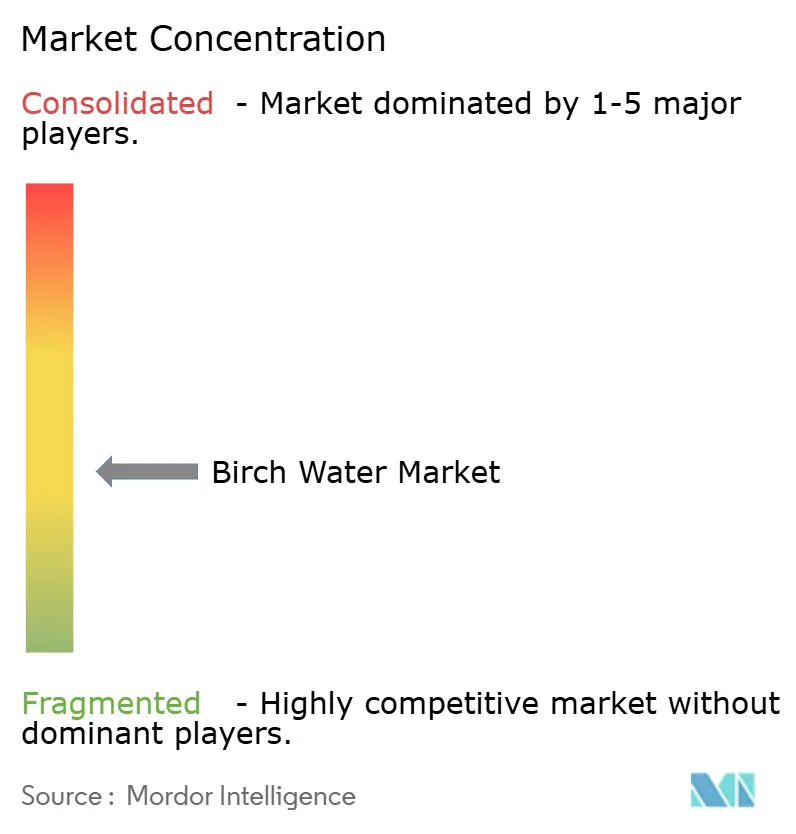
The birch water market is moderately concentrated, with no single brand holding a dominant global position. European heritage brands include Sibberi, Tapped Birch Water, Sealand Birk, BelSeva, and Nordic Koivu, which have helped establish the category through natural food and specialty retail channels. Their positioning commonly centers on organic credentials, sustainable forestry, and product origin, while newer entrants in North America and Asia-Pacific use direct-to-consumer activity and social commerce to reach consumers still learning about the category. This structure makes supply access, product education, packaging choices, and channel selection more important than broad price competition.
Secure harvesting rights are a central competitive issue in the birch water market because the sap collection period is short and weather-sensitive. Brands that source across Nordic, Baltic, and North American areas can reduce exposure to a single harvest location and support a more stable supply plan. Wider sourcing can increase transport needs, require closer quality controls, and make a clear origin story more difficult to maintain across products. SourceBirch has pursued a processing-led approach by presenting ambient-stable birch sap technology with a 12-month preservative-free shelf life. OOZ launched USDA and Euro Organic certified birch sap water in the United States in June 2026 and built early availability through premium East Coast retailers.
Product extension is another way brands can compete while staying close to the category’s natural positioning. Hammars Bryggeri introduced organic cranberry and lemon birch sap products in Sweden, offering alternatives to caffeinated energy beverages. Digital traceability can help brands show forest lot and harvest information, and research indicates that traceability tools can strengthen consumer perceptions of transparency. Foodservice, ingredient supply, skincare, and culinary uses can provide additional outlets for sap and give brands other ways to use a limited seasonal raw material. The fragmented competitive structure leaves room for differentiated brands but limits the scale advantages available to any one participant.
Birch Water Industry Leaders
-
Sealand Birk
-
Nordic Koivu Ltd.
-
Treo Brands, LLC
-
Nature On Tap Ltd.
-
The Birch Factory Aps
- *Disclaimer: Major Players sorted in no particular order
Birch Water Market Companies Covered in this Report
- Nordic Koivu Ltd.
- Alaska Wild Harvest LLC
- Sibberi
- The Birch Factory Aps
- TreeVitalise Organic Birch Water
- Tapped Birch Water
- Sealand Birk
- BelSeva
- OselBirch
- Nature On Tap Ltd.
- Treo Brands, LLC
- Sapp Inc.
- Birch Tree Water Co.
- DrinkBirk
- Byarozavik
- Absolutely Wild
- Nordic Tree Water
- OOZ
- Hammers Family Birch
- Birkentree

Recent Industry Developments in Birch Water Market
- June 2026: OOZ launched USDA Organic and EU Organic-certified birch sap water in the US market, securing placements in more than 50 premium retail locations across the East Coast within two months of launch. These locations included Happier Grocery, Pearl River Mart, and Westside Market. Founded by Christina Zhang and Tia Gong, the brand positioned its market entry as the creation of a new forest hydration category.
- June 2026: OOZ announced its participation in the 2026 Summer Fancy Food Show at the Javits Center in New York City. The company will use the event to introduce its brand to specialty retail buyers and expand distribution beyond its initial East Coast network.
- August 2025: SourceBirch debuted its ambient-stable birch sap technology at Heilongjiang Province’s promotional day during the 2025 Osaka World Expo. The technology provides a 12-month shelf life without preservatives.
- April 2025: SourceBirch introduced its shelf-stable birch sap processing approach to potential distributors in Japan and South Korea during its presentation at the Osaka World Expo.


Global Birch Water Market Report Scope
| Still Birch Water |
| Sparking Birch Water |
| Flavored Birch Water |
| Unflavored/Original Birch Water |
| Bottles |
| Cans |
| Others(tetrapacks, |
| Supermarkets/Hypermarkets |
| Convenience/Grocery Stores |
| Online Retail Stores |
| Other Distribution Channel |
| North America | |
| Europe | Germany |
| United Kingdom | |
| Italy | |
| France | |
| Spain | |
| Netherlands | |
| Sweden | |
| Belgium | |
| Finland | |
| Norway | |
| Rest of Europe | |
| Asia-Pacific | |
| South America | |
| Middle East and Africa |
| By Product Type | Still Birch Water | |
| Sparking Birch Water | ||
| By Flavor Profile | Flavored Birch Water | |
| Unflavored/Original Birch Water | ||
| By Packaging Type | Bottles | |
| Cans | ||
| Others(tetrapacks, | ||
| By Distribution Channel | Supermarkets/Hypermarkets | |
| Convenience/Grocery Stores | ||
| Online Retail Stores | ||
| Other Distribution Channel | ||
| By Geography | North America | |
| Europe | Germany | |
| United Kingdom | ||
| Italy | ||
| France | ||
| Spain | ||
| Netherlands | ||
| Sweden | ||
| Belgium | ||
| Finland | ||
| Norway | ||
| Rest of Europe | ||
| Asia-Pacific | ||
| South America | ||
| Middle East and Africa | ||


Key Questions Answered in the Report
What is the forecast growth rate for birch water through 2031?
The category is forecast to grow at a CAGR of 3.12% from 2026 to 2031, increasing from USD 282.41 million in 2026 to USD 329.27 million by 2031.
Which birch water format is expected to grow fastest?
Sparkling birch water is projected to grow at a CAGR of 4.25% between 2026 and 2031, supported by premium mixer and foodservice occasions.
Which region held the largest share in 2025?
Europe led with a 44.91% share in 2025, supported by familiarity with birch sap and established organic and specialty retail channels.
Which regional area is expected to grow fastest?
Asia-Pacific is forecast to expand at a CAGR of 4.42% during 2026-2031, supported by developing production in China and regional wellness demand.
Page last updated on:





