
Bioresorbable Polymers Market Size and Share
Market Overview
| Study Period | 2022 - 2032 |
|---|---|
| Market Size (2027) | USD 2.02 Billion |
| Market Size (2032) | USD 3.5 Billion |
| Growth Rate (2027 - 2032) | 11.65 % |
| Fastest Growing Market | Asia-Pacific |
| Largest Market | North America |
| Market Concentration | Medium |
Major Players *Disclaimer: Major Players sorted in no particular order Image © Mordor Intelligence. Reuse requires attribution under CC BY 4.0. | |
Bioresorbable Polymers Market Analysis by Mordor Intelligence
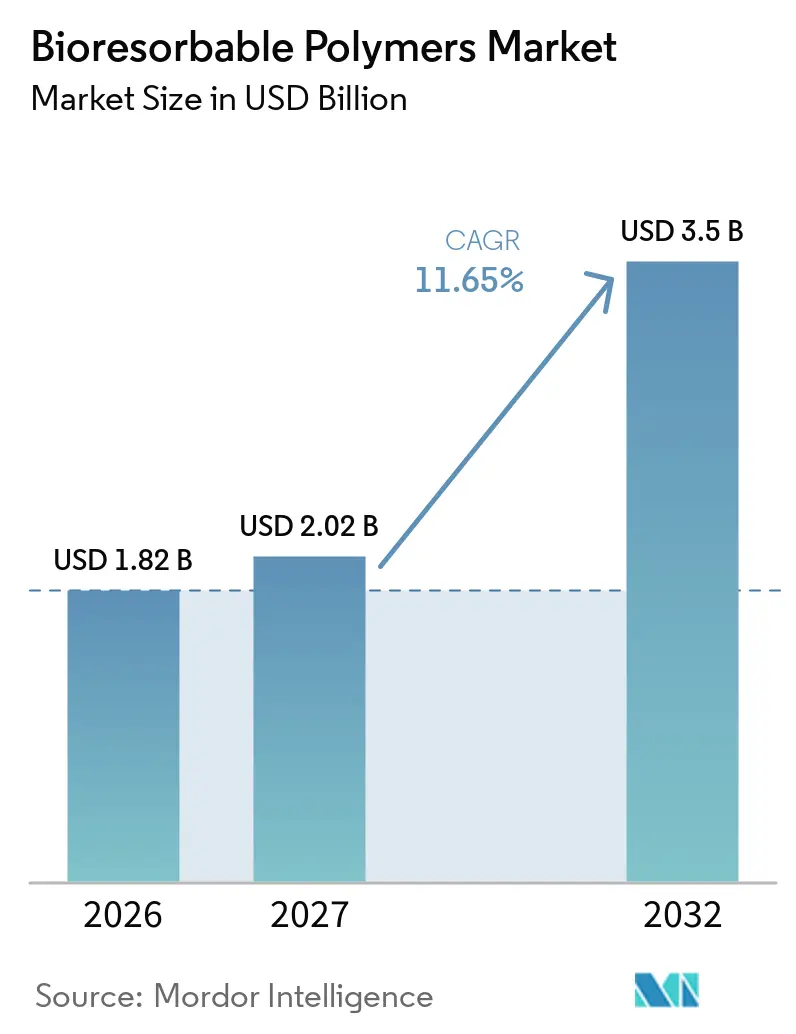
The Bioresorbable polymers market size was valued at USD 1.82 billion in 2026 and is estimated to grow from USD 2.02 billion in 2027 to USD 3.50 billion by 2032, at a CAGR of 11.65% during the forecast period (2027-2032). Growth in this market reflects a shift in medical device design toward implants that do not remain in the body after treatment. This approach reduces the need for removal procedures in orthopedic, cardiovascular, and drug delivery applications. Suppliers with GMP-certified capacity and validated degradation profiles are gaining importance, as device developers must qualify materials over extended periods. These qualification cycles can run 5 to 10 years, which supports established suppliers and makes material changes difficult after a device filing is approved. The bioresorbable polymers market also depends on aligning a polymer's degradation profile with the tissue's healing requirements.
Key Report Takeaways
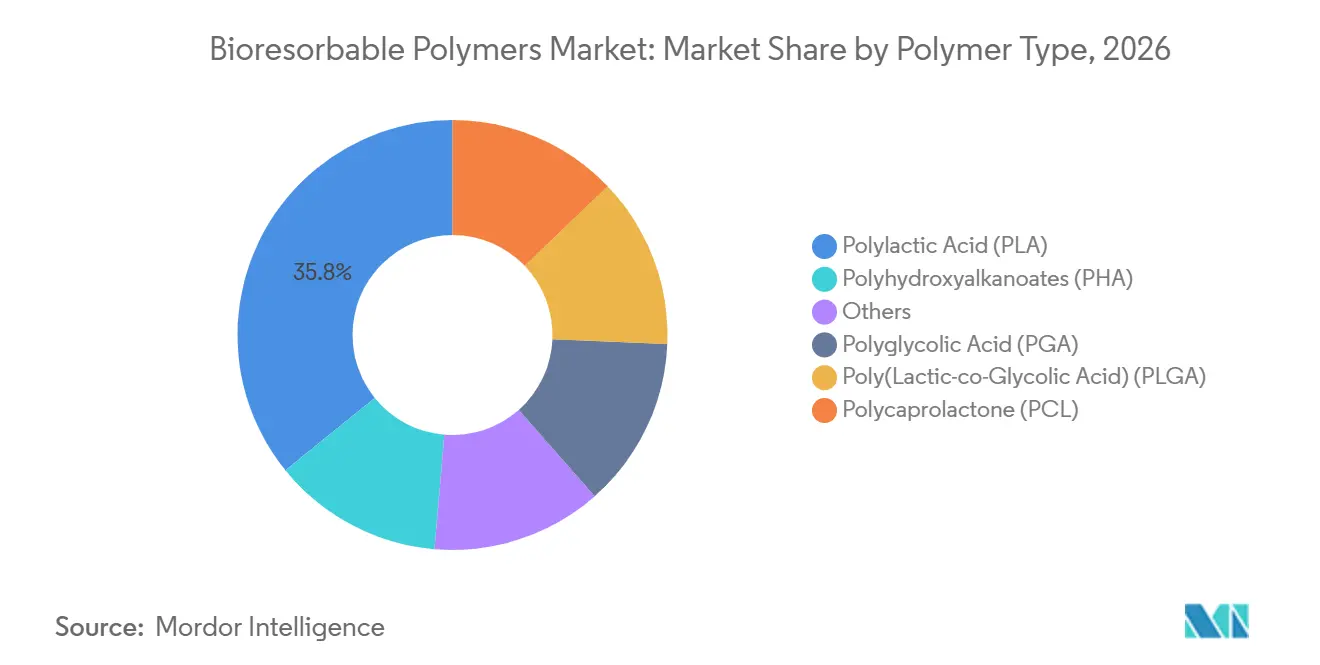
- By polymer type, Polylactic Acid (PLA) held 35.83% of the overall market share in 2026, while Polyglycolic Acid (PGA) is forecast to grow at a 12.67% CAGR through 2032.
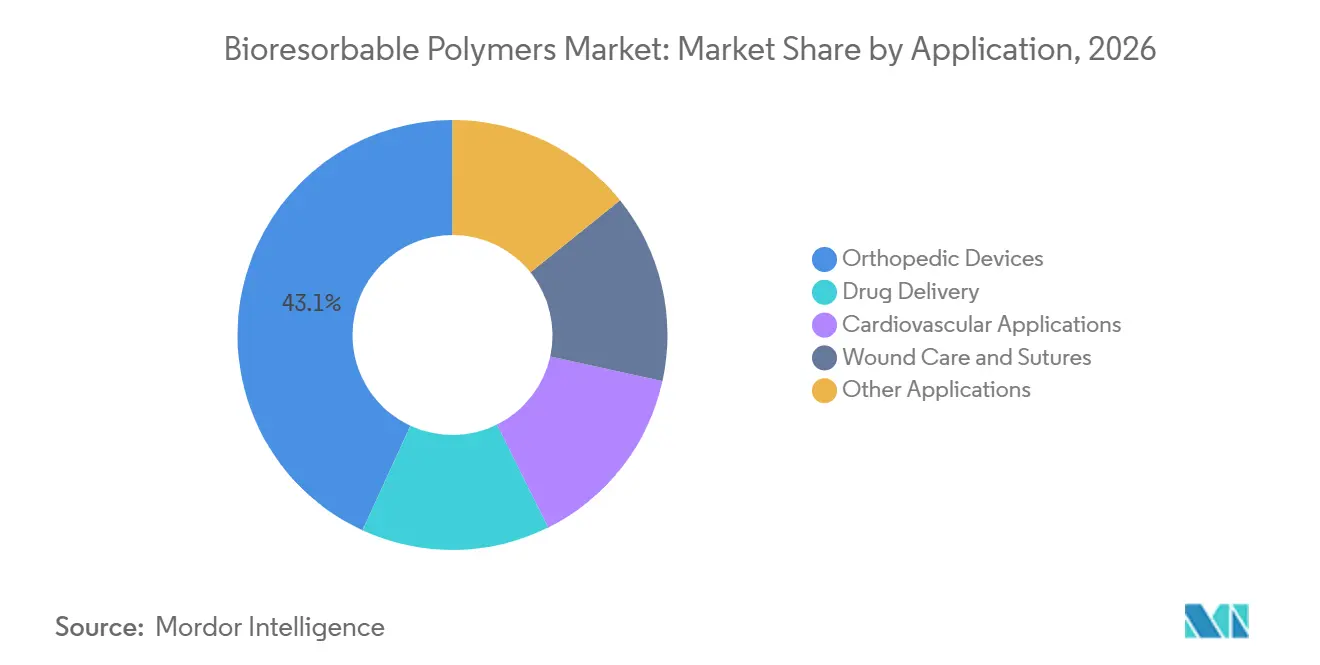
- By application, orthopedic devices accounted for 43.12% of the Bioresorbable polymers market share in 2026, while drug delivery is forecast to expand at a 12.75% CAGR through 2032.
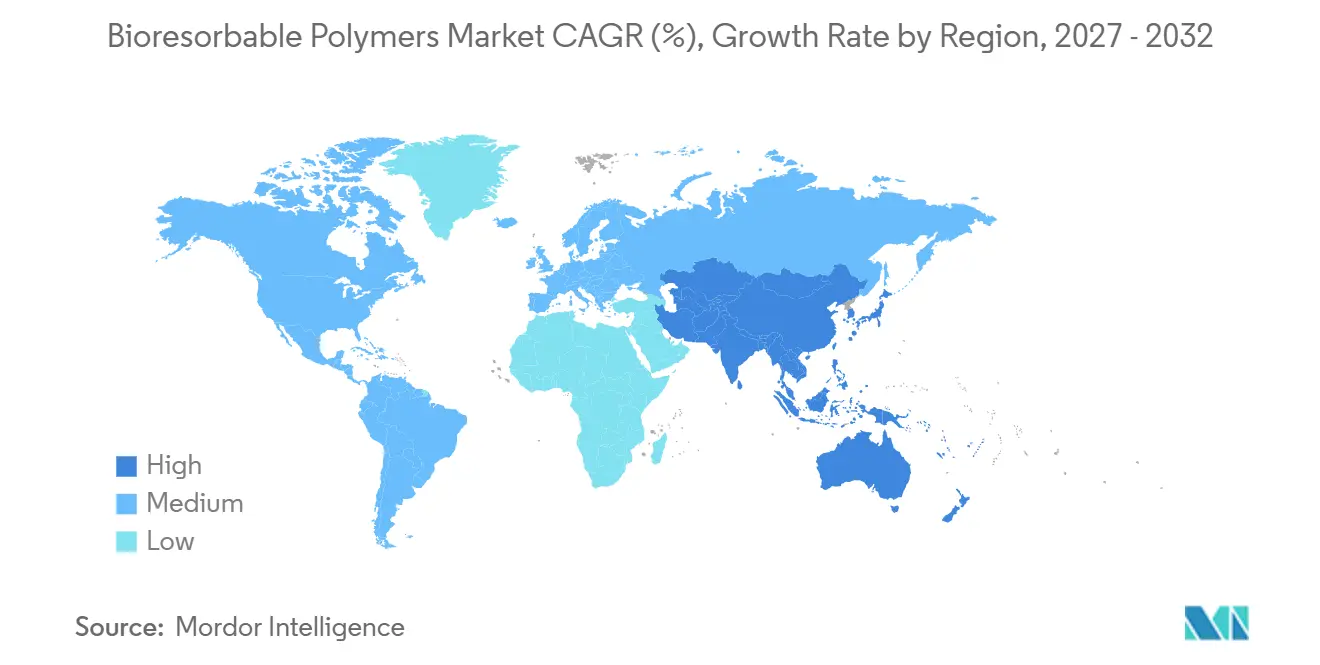
- By geography, North America held 32.45% of the overall market share in 2026, while Asia-Pacific is forecast to grow at a 12.81% CAGR through 2032.
Note: Market numbers in this report are based on Mordor Intelligence's proprietary estimation framework, which combines nine months of actuals with Q4 projections for base year 2026.
Market Trends and Insights
Drivers Impact Analysis of Bioresorbable Polymers Market*
| Drivers | (~) % Impact on CAGR Forecast | Geographic Relevance | Impact Timeline |
|---|---|---|---|
| Rising Orthopedic and Trauma Procedure Volumes | +3.2% | Global, concentrated in North America, Europe, and aging Asia-Pacific markets | Short term (≤ 2 years) |
| Shift Toward Implant Systems That Avoid Removal Surgery | +2.5% | Global, with the strongest demand in Europe and North America | Medium term (2-4 years) |
| Precision Controlled-Release Drug Delivery | +2.0% | Global, with rapid uptake in North America and Western Europe | Medium term (2-4 years) |
| Patient-Specific Devices Enabled by Additive Manufacturing | +1.4% | North America, Europe, and advanced Asia-Pacific centers | Long term (≥ 4 years) |
| Expansion of Medical-Grade Polymer Capacity and CDMO Support | +1.0% | Global, with capacity additions in the United States, Germany, the Netherlands, and China | Medium term (2-4 years) |
| Source: Mordor Intelligence | |||
Rising Orthopedic and Trauma Procedure Volumes
Orthopedic and trauma procedures remain the primary driver of demand for bioresorbable polymers, as temporary fixation devices can be resorbed once bone healing is complete. Rising geriatric populations and musculoskeletal disease rates support surgical procedure numbers. A 2025 review found that orthopedics accounted for 75% of surgical studies evaluating biodegradable polymer implants, underscoring the clinical role of resorbable materials in this specialty. The bioresorbable polymers market benefits from applications such as anterior cruciate ligament reconstruction, rotator cuff repair, and meniscal fixation. These procedures are also relevant for younger patients who may prefer to avoid retained hardware. This demand base supports the continued use of these materials in trauma and sports medicine devices.
Shift Toward Implant Systems That Avoid Removal Surgery
Permanent hardware can be associated with stress shielding, local tissue reactions, and revision procedures. Bioresorbable screws, pins, and plates are designed to degrade over months or years while mechanical load returns to healing tissue. A 2025 clinical study on absorbable cranial flap fixation reported a 100% success rate for bone flap positioning in the experimental group. The study also reported a residual implant volume of 48.80% at 48 weeks, indicating controlled degradation in the evaluated system. Avoiding a revision procedure can make these devices more attractive to hospital procurement teams, as readmissions add costs. The bioresorbable polymers market benefits from both clinical and economic interest in reducing the need for later interventions.
Precision Controlled-Release Drug Delivery
PLGA-based controlled-release systems are used in oncology, neurology, and ophthalmology applications that require sustained local drug exposure. A 2025 review described the use of PLGA implants for anti-cancer agents, corticosteroids, and growth factors across several clinical settings[1]. The same review noted that 3D printing and in situ-forming systems can improve burst-release control. The U.S. Food and Drug Administration approved the gemcitabine intravesical system, Inlexzo, in September 2025 for BCG-unresponsive non-muscle-invasive bladder cancer. The bioresorbable polymers market benefits from growing interest in controlled-release platforms, even though the approved Inlexzo system is nonresorbable. Interest in fully bioresorbable alternatives is supported by the need to deliver treatment without later device retrieval.
Patient-Specific Devices Enabled by Additive Manufacturing
Additive manufacturing enables device makers to create patient-specific plates, meshes, and scaffolds from medical-grade polymers. These designs use CT and MRI data to match complex anatomy more closely than standard devices. A 2025 study developed 4D-printed PLA/PCL spinal cages reinforced with graphene oxide. At 1 wt% graphene oxide, the study reported a tensile strength of 23.60 MPa and a compressive strength of 40.70 MPa, while maintaining biodegradability and shape-memory deployment. The bioresorbable polymers market benefits from point-of-care and customized manufacturing as clinical frameworks mature. Medical-grade polymer feedstocks require ISO 13485 certification, which limits the available supplier base and concentrates demand among suppliers capable of providing certified materials.
Restraints Impact Analysis of Bioresorbable Polymers Market*
| Restraints | (~) % Impact on CAGR Forecast | Geographic Relevance | Impact Timeline |
|---|---|---|---|
| Long and Application-Dependent Validation Cycles | -1.6% | Global, with the greatest effect in North America and Europe | Medium term (2-4 years) |
| Degradation-Particle and Inflammatory-Risk Uncertainty | -1.2% | Global, especially in high-acuity markets with rigorous surveillance | Long term (≥ 4 years) |
| Processing Sensitivity and Batch-to-Batch Consistency Risk | -0.8% | Global, particularly challenging for new entrants in Asia | Short term (≤ 2 years) |
| Source: Mordor Intelligence | |||
Long and Application-Dependent Validation Cycles
Bioresorbable medical devices require degradation kinetics studies, biocompatibility assessments, and clinical evidence, all of which vary by application. Cardiovascular devices face longer regulatory review than absorbable sutures due to higher clinical risk. The European Union Medical Devices Regulation mandates a comprehensive clinical evaluation for medical devices[2]. Changes in molecular weight, copolymer ratio, or sterilization method can necessitate new biocompatibility work under ISO 10993 requirements. These steps extend development timelines and increase the burden on smaller innovators. The bioresorbable polymers market consequently favors suppliers with established material and regulatory records.
Degradation-Particle and Inflammatory-Risk Uncertainty
Lactic acid accumulation, pH shifts, and particulate debris can trigger local inflammatory responses in poorly vascularized tissues. A 2025 review identified inflammatory responses to degradation by-products, timing mismatches, and load-bearing limitations as major barriers to broader clinical translation. PLA degradation can range from 2 months to more than 8 years, depending on molecular weight and copolymer composition. This wide range makes long-term outcomes harder to predict for certain implant locations. Device developers must therefore provide substantial follow-up evidence for regulators and customers. These requirements raise costs and extend the return period for the bioresorbable polymers market.
*Our forecasts treat driver/restraint impacts as directional, not additive. The impact forecasts reflect baseline growth, mix effects, and variable interactions.
Bioresorbable Polymers Market Segment Analysis
By Polymer Type:
PLA Leads While PGA Supports Faster-Absorbing ApplicationsPLA held 35.83% of the bioresorbable polymers market share by polymer type in 2026. Its position reflects broad regulatory acceptance, a well-characterized degradation profile, and relevance for load-bearing orthopedic fixation. PLA is suitable for plates, screws, and suture anchors where resorption timelines of two years or longer are clinically appropriate. A 2025 review described the use of PLA in knee, shoulder, ankle, and foot fixation procedures. The material's crystallinity and slow degradation support its use in trauma and sports medicine. Ashland launched additional high-molecular-weight Viatel grades in June 2025 for orthopedic and drug delivery applications, indicating continued demand for premium medical-grade PLA.
PGA is forecast to expand at a 12.67% CAGR during 2027-2032 within the bioresorbable polymers market. It is used in sutures and shorter-cycle implants where 60- to 90-day resorption is preferred. Poly(lactic-co-glycolic acid) (PLGA) can degrade over a period of 2 months to more than 1 year by adjusting the lactide-to-glycolide ratio, supporting its use in drug delivery systems and cardiovascular scaffolding. Polycaprolactone (PCL) has a two- to four-year degradation period and a low melting point, which supports its use in dentistry and in blending with PLA composites. A 2025 spinal cage study used PLA/PCL blends to support the development of biodegradable, shape-memory devices. Polyhydroxyalkanoate (PHA) remains a relatively small material category, with interest in cardiovascular and tissue-engineering research, but it faces ongoing limitations related to production costs and mechanical strength. The differences among these polymers allow device developers to select a degradation period suited to a specific clinical purpose. PGA is suited to applications requiring faster absorption, while PLA supports longer-lasting fixation. PLGA offers adjustable degradation behavior for controlled release and scaffold design. PCL is used where processing behavior and slower degradation are valuable. This range of materials enables the bioresorbable polymers market to serve several device formats and treatment settings.

By Application:
Orthopedic Devices Lead While Drug Delivery Grows FasterOrthopedic devices accounted for 43.12% of the bioresorbable polymers market in 2026. This share reflects clinical use of resorbable screws, pins, interference screws for ACL reconstruction, and suture anchors for rotator cuff repair. These devices eliminate the need for hardware removal procedures and reduce long-term infection risk associated with retained metal, while allowing imaging without metallic artifact. Cardiovascular use is also notable; in January 2025, the U.S. Food and Drug Administration approved Abbott's Esprit BTK drug-eluting resorbable scaffold for infrapopliteal artery disease in patients with chronic limb-threatening ischemia. PLA serves as the scaffold substrate, directly linking cardiovascular procedures to polymer demand. Orthopedic applications remain important because they use a range of fixation formats and require matching the device's mechanical performance to the expected healing period. This need explains why established materials with known degradation profiles remain widely used and gives suppliers an incentive to develop grades that meet both fixation and drug-delivery requirements.
Drug delivery is forecast to grow at a 12.75% CAGR through 2032, the fastest growth rate among applications in the bioresorbable polymers market. PLGA and PLA formulations are increasingly used in controlled-release approaches for chronic disease management. A 2025 review discussed biodegradable polymer-based drug-delivery approaches for corticosteroids, growth factors, and antibiotics in the management of knee osteoarthritis. Wound care and sutures remain mature applications, but antibacterial-coated and drug-eluting PGA and PLGA sutures are receiving increased attention. A 2025 review described polymer surface functionalization as an important route for improving absorbable suture performance. Tissue engineering scaffolds and craniofacial reconstruction meshes are smaller applications where 3D printing and bioactive fillers are supporting early clinical work. Together, these applications broaden the use cases served by the bioresorbable polymers market. Drug delivery requires polymers that maintain a useful local concentration while the material degrades, making degradation control central to both clinical performance and product design. This application also provides a pathway for materials suppliers to collaborate with pharmaceutical and device developers at an early stage. Wound care, sutures, and scaffold applications add demand that is less dependent on a single procedure type.
Geography Analysis
North America Bioresorbable Polymers Market
North America accounted for 32.45% of the bioresorbable polymers market share in 2026. The United States supports this position through high surgical numbers, established reimbursement for advanced medical devices, and Food and Drug Administration (FDA) pathways for polymer-containing devices. Quality-system requirements for implantable devices favor GMP-certified polymer suppliers, reinforcing the position of established specialty chemical companies with US production sites. Canada and Mexico remain smaller markets, though procedure growth in orthopedics and minimally invasive surgery supports demand. North America also benefits from active development in non-fixation orthopedic and drug delivery applications. The region provides a large base of hospitals and device developers with access to new resorbable products. While regulatory requirements can lengthen development timelines, they also create clear expectations for materials used in implantable devices. As a result, suppliers that maintain quality documentation and application support are well-positioned to serve customers in the region.
EMEA and South America Bioresorbable Polymers Market
Europe is the second-largest regional market, led by Germany, the United Kingdom, France, and the Nordic countries. The region combines advanced bioresorbable polymer production with complex surgical procedures. Corbion operates PURASORB production facilities in Gorinchem, Netherlands, and Tucker, Georgia, supporting European and global supply. In July 2025, Evonik appointed IMCD as its exclusive European distributor for RESOMER bioresorbable polymers across the European Economic Area (EEA), the United Kingdom, Switzerland, and Turkey. The agreement covers orthopedic devices, tissue reconstruction, dental meshes, and 3D-printed implantable devices. Europe's position is further reinforced by the presence of manufacturers serving global device customers, and distribution arrangements extend access to qualified polymers beyond their production locations. The range of covered applications indicates that demand is not limited to a single implant type. South America, the Middle East, and Africa remain smaller markets where the development of surgical infrastructure, private hospital growth, and the procurement of biodegradable medical materials may support future demand. However, regulatory alignment with international standards remains a constraint in these regions.
APAC Bioresorbable Polymers Market
Asia-Pacific is forecast to expand at a 12.81% CAGR through 2032, the fastest regional growth rate in the bioresorbable polymers market. China, Japan, South Korea, and India have different demand profiles but are all strengthening their medical device capabilities. China's Healthy China 2030 program and its 14th Five-Year Plan for bioeconomy development support domestic interest in medical-grade PLA, PLGA, and PGA. In July 2025, Evonik opened its largest medical device applications center in Shanghai, which includes an ISO Class 7 cleanroom for processing bioresorbable polymers for the pan-Asian market. Japan's aging population supports demand for orthopedic and cardiovascular devices. South Korea's regenerative medicine activity and India's investment in medical devices are also contributing to the development of biodegradable implants. China is significant in domestic medical and device production; Japan focuses on advanced care for an aging population; South Korea supports scaffold development through regenerative medicine; and India is building medical device manufacturing capacity. While these markets develop at different rates, each contributes a distinct source of demand, collectively supporting broader regional adoption of bioresorbable materials.
Competitive Landscape
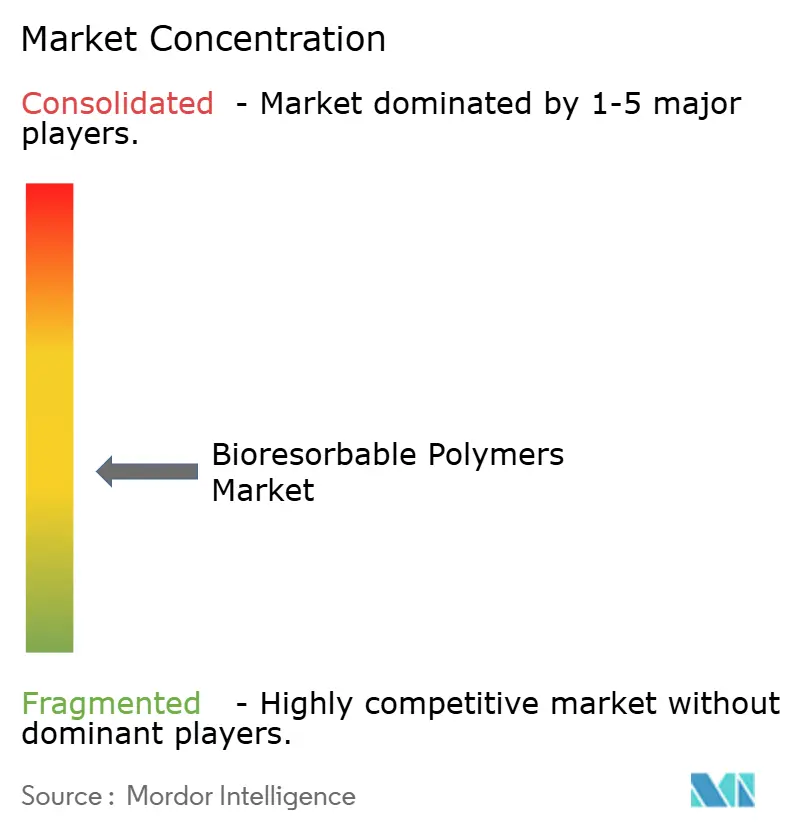
The bioresorbable polymers market is moderately fragmented. Key polymer suppliers include Evonik Industries, Corbion, Ashland, and DSM-Firmenich. Device and component manufacturing is more fragmented, as clinical specialization and regulatory approval create product-level niches. Polymer suppliers compete through certified medical-grade materials, monomer chemistry, GMP manufacturing, and formulation documentation. Qualification cycles of 5 to 10 years can be embedded in device regulatory dossiers, creating switching costs for customers. These conditions give established material suppliers a durable position in the market and make a supplier's history of quality performance important to device companies. A material must meet technical requirements and be supported by consistent documentation and manufacturing controls. This creates a different competitive environment from that of standard polymers. The available information identifies key suppliers but does not provide their combined market shares.
Evonik expanded its commercial reach in July 2025 by appointing IMCD as the European distributor for RESOMER medical device polymers. The company also opened a Shanghai medical device applications center in July 2025 to support processing work in the pan-Asian market. Corbion's EUR 50 million (~USD 56.13 million) expansion program in Gorinchem and Tucker signals its intention to add capacity for biomedical customers. Ashland added high-molecular-weight Viatel grades in June 2025 to meet orthopedic and drug-delivery demand. These moves focus on geographic access, validated capacity, and a broader range of medical applications. They also indicate that suppliers are linking capacity investment with local technical support and distribution. This is important because device developers need materials that work within established manufacturing and quality processes. A broader commercial network can make qualified materials more accessible during product development, and additional grades can help developers select a polymer profile suited to the intended device or delivery system.
At the device level, companies compete on clinical evidence, speed of regulatory clearance, surgeon training, and the integration of polymer performance with drug delivery or device functions. Abbott's FDA-approved Esprit BTK scaffold illustrates the importance of evidence and regulatory execution in a specific cardiovascular application. Additive manufacturing is a key competitive area, as qualified feedstocks are required for 3D and 4D printing workflows. Patent activity in degradation control, surface modification, and combination products can protect differentiated material platforms. The bioresorbable polymers market remains open to focused device companies that can establish strong clinical positions in defined anatomical applications. This structure gives smaller companies a path to compete by addressing a specific clinical need with credible evidence. However, it also requires them to manage material quality, device design, and regulatory work as connected parts of the same development program.
Suppliers that understand the needs of device developers can offer more than material quantities. Their technical documentation and processing support can reduce the effort required to assess a material for a new application, shifting the competitive focus toward proven execution rather than price alone. The bioresorbable polymers market is therefore shaped by relationships that can persist through a product's development and commercial life. A polymer supplier must support the customer through material selection, processing, quality documentation, and any subsequent change assessment. Device companies also need to communicate performance requirements clearly, as the same polymer class can behave differently across applications. This close connection between material and device development limits the role of suppliers that cannot offer dependable technical support, while creating room for specialists who can address a narrow clinical or manufacturing problem. The market will continue to reward companies that combine material expertise with credible regulatory and application knowledge.
Bioresorbable Polymers Industry Leaders
-
Evonik Industries AG
-
Corbion N.V.
-
Ashland
-
Geon Performance Solutions LLC
-
KLS Martin Group
- *Disclaimer: Major Players sorted in no particular order
Bioresorbable Polymers Market Companies Covered in this Report
- Ashland
- Bezwada Biomedical, LLC
- Biogeneral, Inc.
- Biotronik SE & Co. KG
- Boston Scientific Corporation
- Corbion N.V.
- dsm-firmenich
- Elixir Medical Corporation
- Evonik Industries AG
- Geon Performance Solutions LLC
- Johnson and Johnson MedTech
- KLS Martin Group
- Medtronic
- Poly-Med Incorporated
- REVA Medical, LLC
- Seqens
Recent Industry Developments in Bioresorbable Polymers Market
- September 2025: Evonik Industries launched VECOLLAN, a recombinant, non-animal-derived collagen-like protein in clinical-grade form for medical device development. The material has potential applications in orthopedics, medical aesthetics, and sports medicine within the bioresorbable polymers space, with a validated material supply committed from 2026 onward.
- September 2025: The U.S. Food and Drug Administration approved the gemcitabine intravesical system, Inlexzo, for Bacillus Calmette-Guérin (BCG)-unresponsive non-muscle-invasive bladder cancer. The system recorded an 82.4% complete response rate in 85 patients, supporting demand for bioresorbable polymer-based drug delivery systems.
Global Bioresorbable Polymers Market Report Scope
Bioresorbable polymers are materials that break down inside the body and are completely absorbed by cells or cleared through metabolic processes, eliminating the need for surgical removal. These polymers degrade over a defined period through hydrolysis or enzymatic activity, producing byproducts that the body processes and eliminates naturally.
The bioresorbable polymers market is segmented by polymer type, application, and geography. By polymer type, the market is segmented into polylactic acid (PLA), polyglycolic acid (PGA), poly(lactic-co-glycolic acid) (PLGA), polycaprolactone (PCL), polyhydroxyalkanoates (PHA), and others. By application, the market is segmented into orthopedic devices, drug delivery, cardiovascular applications, wound care and sutures, and other applications. The report also covers market sizes and forecasts for the global bioresorbable polymers across 15 countries in major regions. The market sizes and forecasts are provided in terms of value (USD).
Segmentation Overview
| Polylactic Acid (PLA) |
| Polyglycolic Acid (PGA) |
| Poly(Lactic-co-Glycolic Acid) (PLGA) |
| Polycaprolactone (PCL) |
| Polyhydroxyalkanoates (PHA) |
| Others |
| Orthopedic Devices |
| Drug Delivery |
| Cardiovascular Applications |
| Wound Care and Sutures |
| Other Applications |
| Asia-Pacific | China |
| India | |
| Japan | |
| South Korea | |
| ASEAN Countries | |
| Rest of Asia-Pacific | |
| North America | United States |
| Canada | |
| Mexico | |
| Europe | Germany |
| United Kingdom | |
| France | |
| Italy | |
| NORDIC Countries | |
| Rest of Europe | |
| South America | Brazil |
| Argentina | |
| Rest of South America | |
| Middle East and Africa | Saudi Arabia |
| South Africa | |
| Rest of Middle East and Africa |
| By Polymer Type | Polylactic Acid (PLA) | |
| Polyglycolic Acid (PGA) | ||
| Poly(Lactic-co-Glycolic Acid) (PLGA) | ||
| Polycaprolactone (PCL) | ||
| Polyhydroxyalkanoates (PHA) | ||
| Others | ||
| By Application | Orthopedic Devices | |
| Drug Delivery | ||
| Cardiovascular Applications | ||
| Wound Care and Sutures | ||
| Other Applications | ||
| By Geography | Asia-Pacific | China |
| India | ||
| Japan | ||
| South Korea | ||
| ASEAN Countries | ||
| Rest of Asia-Pacific | ||
| North America | United States | |
| Canada | ||
| Mexico | ||
| Europe | Germany | |
| United Kingdom | ||
| France | ||
| Italy | ||
| NORDIC Countries | ||
| Rest of Europe | ||
| South America | Brazil | |
| Argentina | ||
| Rest of South America | ||
| Middle East and Africa | Saudi Arabia | |
| South Africa | ||
| Rest of Middle East and Africa | ||
Key Questions Answered in the Report
What is current market size of Bioresorbable Polymers Market?
The Bioresorbable polymers market size was valued at USD 1.82 billion in 2026 and is estimated to grow from USD 2.02 billion in 2027 to USD 3.50 billion by 2032, at a CAGR of 11.65% during the forecast period (2027-2032).
Which application is growing fastest for bioresorbable polymers?
Drug delivery is the fastest-growing application, with a projected 12.75% CAGR through 2032.
Why are orthopedic devices important for bioresorbable polymers?
Orthopedic devices accounted for 43.12% of the market in 2026, driven by demand for screws, pins, anchors, and other temporary fixation devices.
Which region is expected to grow fastest through 2032?
Asia-Pacific is forecast to grow at a 12.81% CAGR through 2032, supported by device manufacturing and healthcare investment.