
Bio-Isobutene Market Size and Share
Market Overview
| Study Period | 2022 - 2032 |
|---|---|
| Market Size (2027) | USD 117.60 Million |
| Market Size (2032) | USD 186.66 Million |
| Growth Rate (2027 - 2032) | 9.68 % |
| Fastest Growing Market | Asia-Pacific |
| Largest Market | Asia-Pacific |
| Market Concentration | High |
Major Players *Disclaimer: Major Players sorted in no particular order Image © Mordor Intelligence. Reuse requires attribution under CC BY 4.0. | |
Bio-Isobutene Market Analysis by Mordor Intelligence
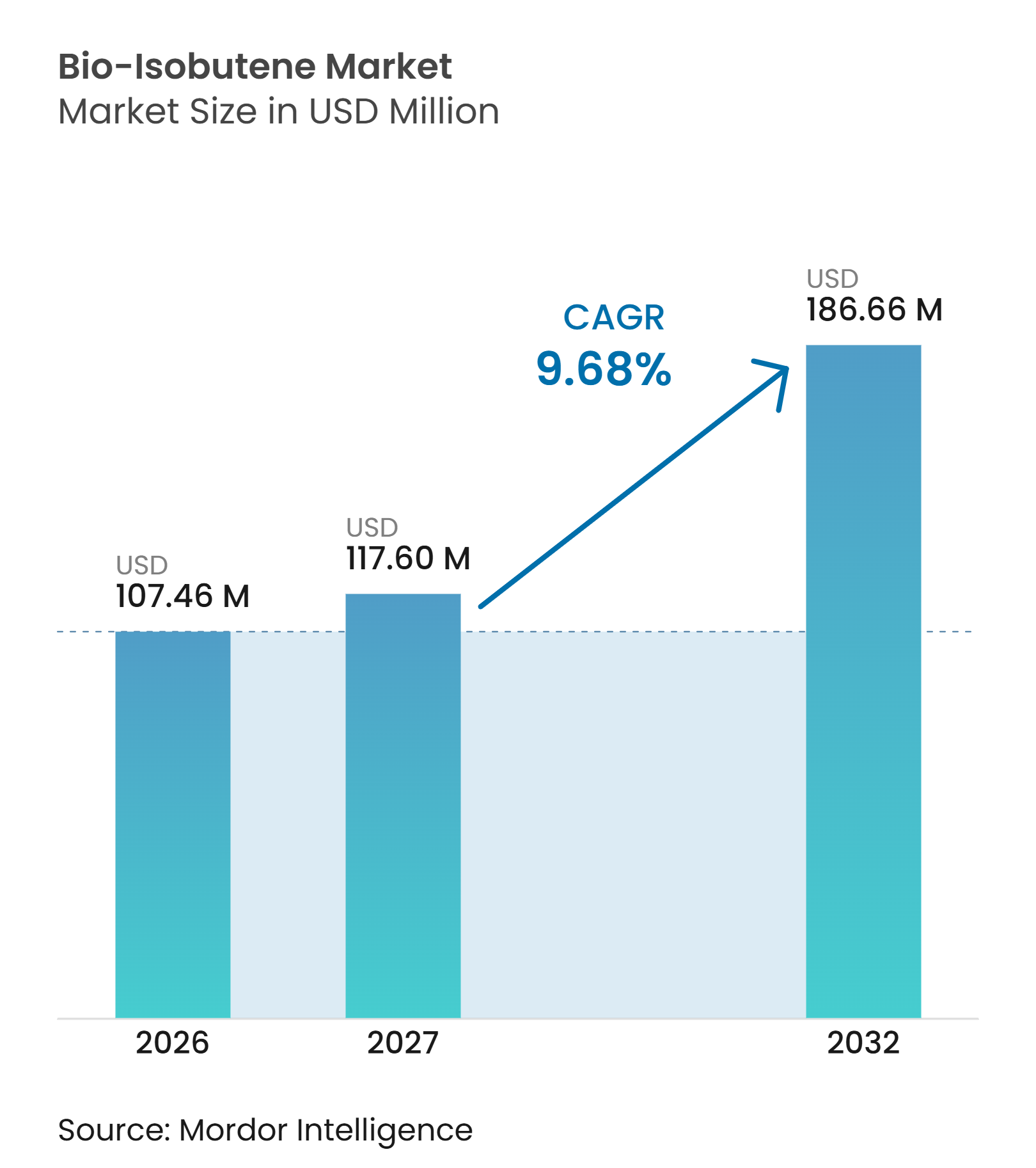
The Bio-isobutene market size was valued at USD 107.46 million in 2026 and is estimated to grow from USD 117.87 million in 2027 to USD 186.66 million by 2032, at a CAGR of 9.68% during the forecast period (2027-2032). The bio-isobutene market is supported by fuel and chemical regulations that favor lower-carbon production routes, particularly in Europe and the United States. Renewable transport mandates drive demand for bio-isobutene as a sustainable aviation fuel and gasoline-blending component, while renewable-content requirements create additional demand for specialty ingredients. Advances in fermentation are improving production performance, and agricultural residues may expand the feedstock base beyond sugar and grain. The bio-isobutene market also serves multiple end uses, including fuel, rubber, lubricant additives, and cosmetics, reducing reliance on a single customer group. However, production cost and reliable scale-up remain critical challenges, as fossil-derived isobutene holds an established cost and infrastructure advantage.
Key Report Takeaways
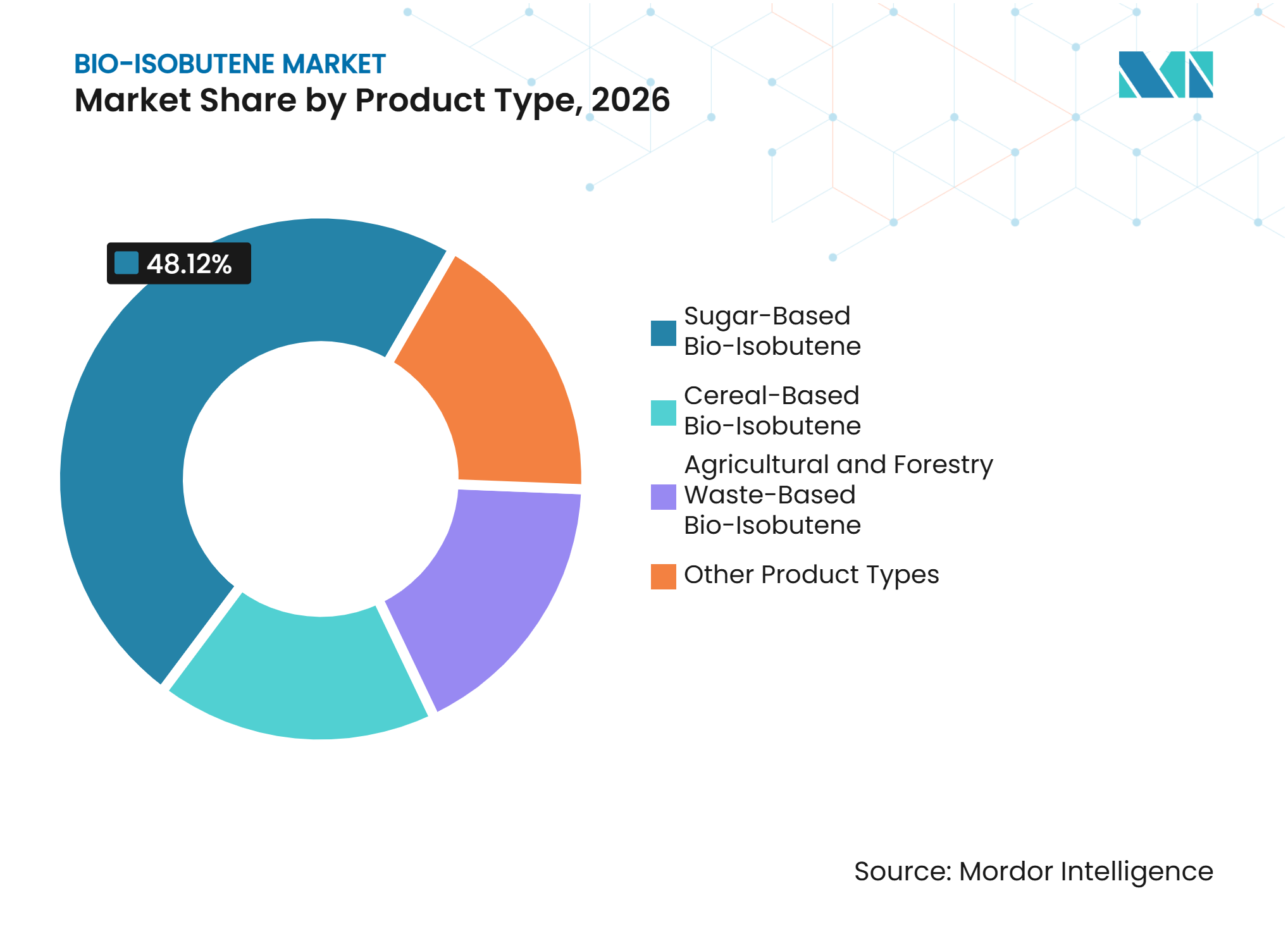
- By product type, sugar-based bio-isobutene held 48.12% of the bio-isobutene market share in 2026, while agricultural and forestry waste-based bio-isobutene is projected to grow at an 11.23% CAGR through 2032.
- By application, fuel accounted for 46.06% of the Bio-isobutene market size in 2026, while bio-based cosmetic ingredients are projected to grow at an 11.78% CAGR through 2032.
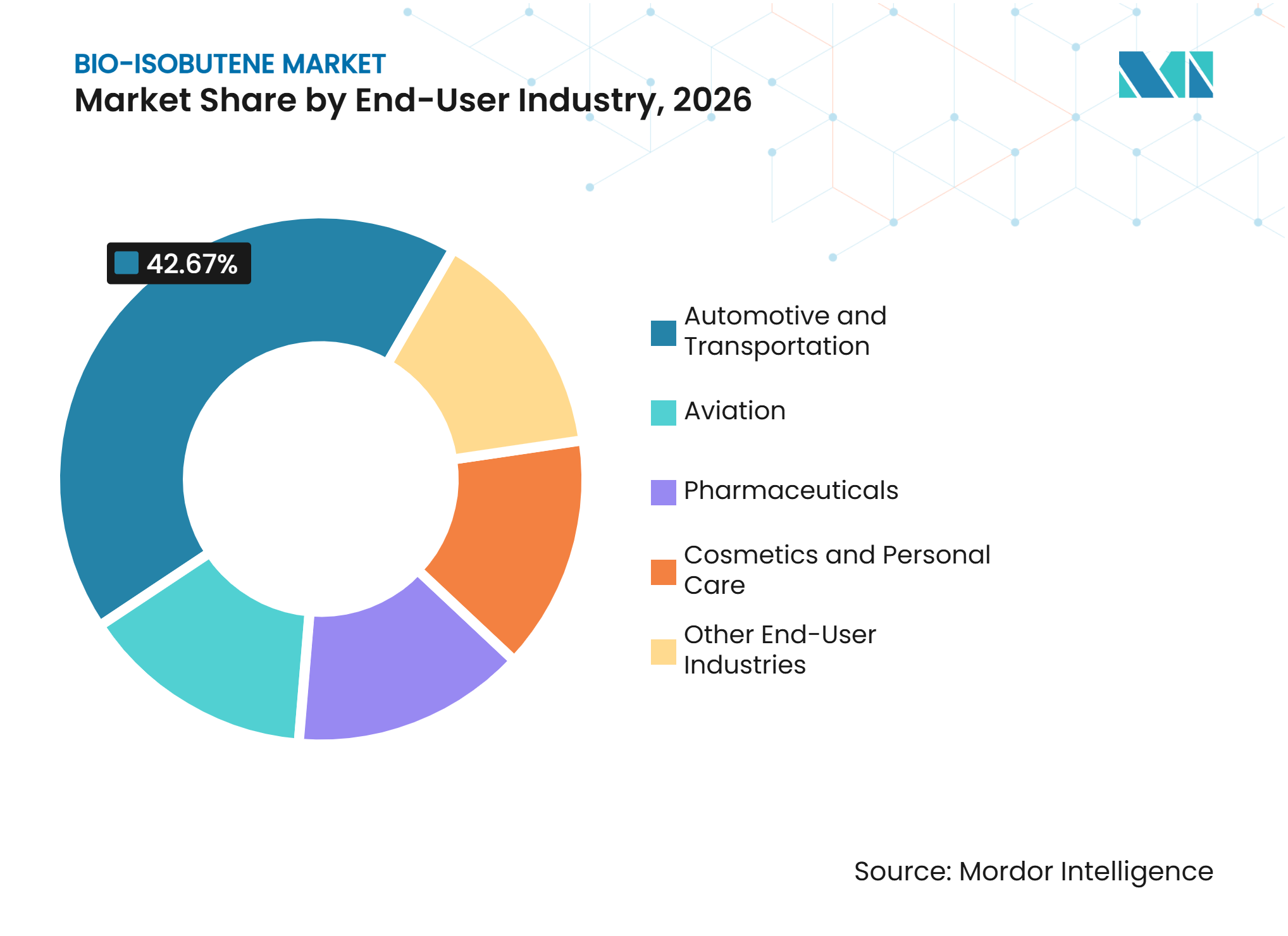
- By end-user industry, automotive and transportation held 42.67% of Bio-isobutene market share in 2026, while aviation is projected to grow at a 12.65% CAGR through 2032.
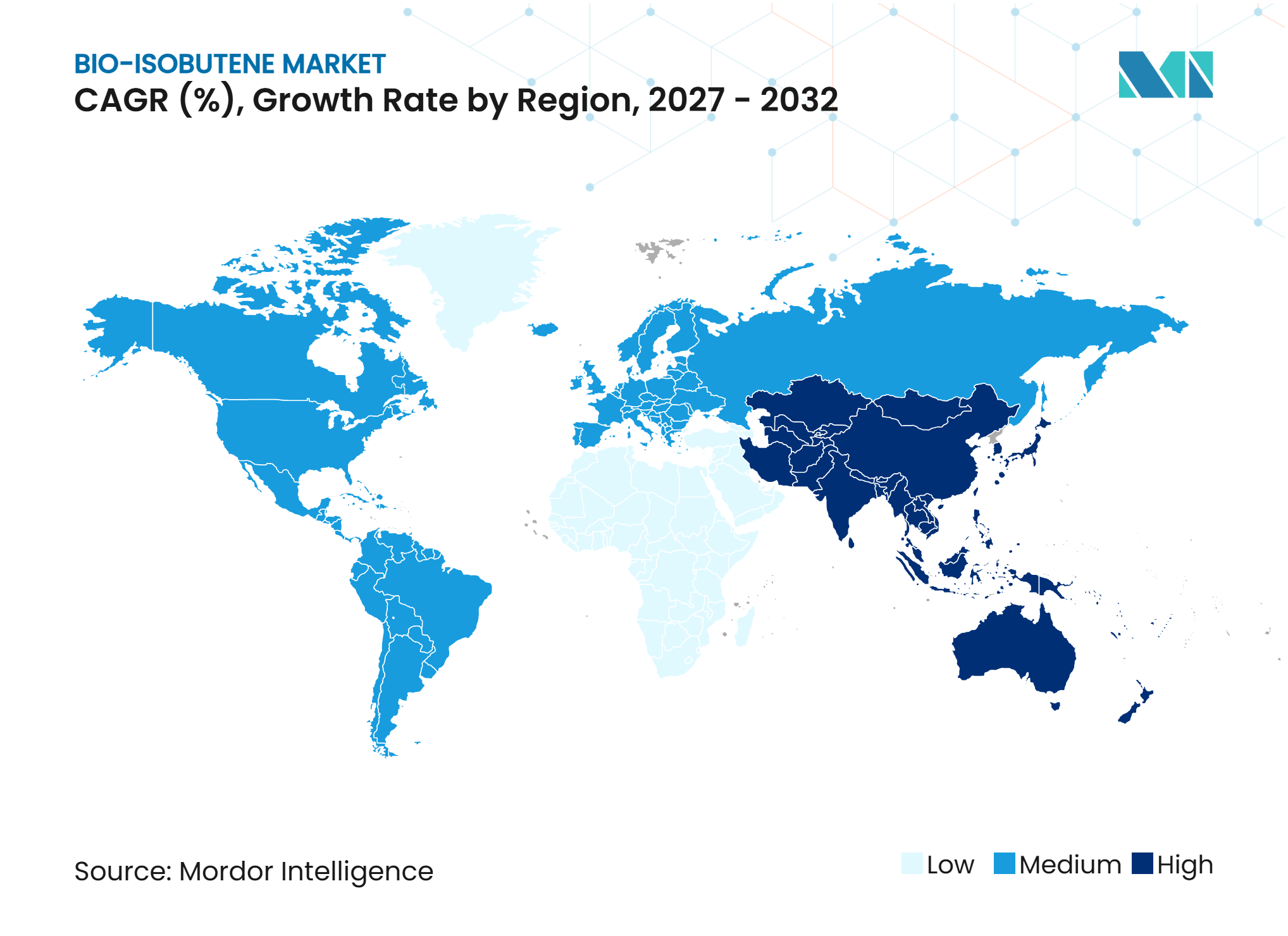
- By geography, Asia-Pacific held 38.35% of Bio-isobutene market share in 2026 and is projected to grow at an 11.56% CAGR through 2032.
Note: Market numbers in this report are based on Mordor Intelligence's proprietary estimation framework, which combines nine months of actuals with Q4 projections for base year 2026.
Market Trends and Insights
Drivers Impact Analysis of Bio-Isobutene Market*
| Drivers | (~) % Impact on CAGR Forecast | Geographic Relevance | Impact Timeline |
|---|---|---|---|
| Decarbonization Policies for Renewable Fuels and Chemicals | +2.8% | Global, with concentrated near-term effect in EU and North America | Medium term (2-4 years) |
| Demand for Bio-Based Cosmetic Ingredients | +1.9% | Asia-Pacific core, with spillover to Western Europe | Medium term (2-4 years) |
| Biotechnology Advances in Engineered Microbial Fermentation | +1.5% | Global, with R&D intensity in EU and North America | Long term (≥ 4 years) |
| Availability of Agricultural and Forestry Residues | +1.2% | EU, South America, and Asia-Pacific | Medium term (2-4 years) |
| Integration with Existing Downstream Chemical Assets | +1.0% | Global, led by EU petrochemical clusters and U.S. biorefineries | Long term (≥ 4 years) |
| Source: Mordor Intelligence | |||
Decarbonization Policies for Renewable Fuels and Chemicals
The bio-isobutene market benefits from policies that link transport and chemical demand to renewable inputs. The Renewable Energy Directive III requires Member States to achieve a 29% share of renewable energy in transport by 2030 and sets a 5.5% target for advanced biofuels and renewable fuels of non-biological origin. The directive recognizes advanced feedstocks and supports their use in transport decarbonization, making residue-based pathways more attractive. In the United States, the Environmental Protection Agency proposed renewable fuel standards for 2026 and 2027, including advanced biofuel quantity requirements that will rise in 2027. The 45Z clean fuel production credit values the carbon intensity of a production route rather than quantity alone. These measures favor producers that can direct supply toward fuel or chemicals based on the compliance value available in each outlet.
Demand for Bio-Based Cosmetic Ingredients
Cosmetics offer a higher-value route for the bio-isobutene market than many fuel applications. L'Oréal has set a target to source more than 75% of its formulation ingredients from renewable or recycled sources by 2030, up from 66% in 2025. Bio-isobutene can be converted into isododecane, which is used as a solvent and film former in long-wear makeup, giving formulators a direct way to substitute a renewable input for a petrochemical ingredient. Evonik, Abolis Biotechnologies, and L'Oréal formed a collaboration in 2025 to develop bio-sourced specialty ingredients, reflecting continued investment in biotechnology-based formulation inputs. Cosmetic-grade output requires more demanding purification, but it can improve product value and reduce producers' reliance on fuel-blending economics.
Biotechnology Advances in Engineered Microbial Fermentation
Engineered microbial systems remain central to the commercial development of bio-isobutene. A 2025 study reported that engineered Synechocystis cultures immobilized in polyvinyl alcohol-sodium alginate beads sustained production for nearly one month and achieved yields 60%-80% higher than suspension cultures. Separate research found that structure-guided enzyme engineering improved in vivo isobutene production by 4-fold in Synechocystis sp. PCC 6803[1]. These results address production yield, which directly affects the cost of fermentation-based output. Photosynthetic production can also use carbon dioxide and sunlight rather than fermentable sugars. If this route reaches commercial reliability, it could reduce exposure to sugar-price volatility and broaden long-term feedstock options.
Availability of Agricultural and Forestry Residues
Agricultural and forestry residues can support lower-carbon production while avoiding direct competition with food uses. The European Commission's 2025 Bioeconomy Strategy highlights secondary biomass, including agricultural residues, by-products, and organic waste, and proposes an investment deployment group for bio-based innovation. The Joint Research Center reported that more than 60% of EU agricultural biomass is used as animal feed, making the management of remaining biomass streams important for future bio-based applications. The OPTISOCHEM project demonstrated a wheat-straw-to-bio-isobutene chain for the production of polyisobutylene derivatives used in lubricants and adhesives. Residue supply is seasonal, however, while fermentation plants require consistent input throughout the year. Storage and pretreatment capability can therefore be an important part of a reliable supply system.
Restraints Impact Analysis of Bio-Isobutene Market*
| Restraints | (~) % Impact on CAGR Forecast | Geographic Relevance | Impact Timeline |
|---|---|---|---|
| High Development and Production Costs | -2.5% | Global | Medium term (2-4 years) |
| Scale-Up and Process Reliability Challenges | -1.9% | Global, particularly EU and North America | Long term (≥ 4 years) |
| Feedstock Quality Variability and Seasonal Availability | -1.3% | Primarily EU, South America, and Asia-Pacific | Medium term (2-4 years) |
| Source: Mordor Intelligence | |||
High Development and Production Costs
High development and production costs have continued to restrict the bio-isobutene market, particularly in price-sensitive applications. A 2025 Journal of Cleaner Production assessment found that the bio-based production route was not cost-competitive with fossil-based production under the modeled energy and capital cost conditions, even at a capacity of 358,000 tons per year[2]. Isobutene is gaseous under ambient conditions, which adds containment, compression, and product recovery requirements during fermentation. These requirements differ from those associated with liquid bio-products such as ethanol or lactic acid. Public support can reduce project risk, but producers still require improved process economics or stronger low-carbon price signals. Global Bioenergies entered receivership proceedings in September 2025 after failing to secure financing for a planned production facility, illustrating the financing pressure facing early-stage technology developers.
Scale-Up and Process Reliability Challenges
Commercial scale-up requires stable fermentation, continuous gas recovery, and consistent product quality. Gas-phase fermentation must recover gaseous output without disrupting microbial culture performance. Pilot facilities can also face contamination, variable yields, and purification losses, all of which require additional engineering work. A 2025 peer-reviewed review of fermentative butanol production noted that widespread industrial deployment remained limited despite its long development history. This comparable C4 pathway demonstrates why laboratory results do not automatically translate into repeatable industrial operation. Until the first commercial plants demonstrate consistent output, downstream buyers are likely to remain cautious about entering long-term supply agreements.
*Our forecasts treat driver/restraint impacts as directional, not additive. The impact forecasts reflect baseline growth, mix effects, and variable interactions.
Bio-Isobutene Market Segment Analysis
By Product Type:
Sugar-Based Routes Lead, Waste Feedstocks AccelerateSugar-based bio-isobutene held 48.12% of the bio-isobutene market share in 2026, reflecting its relative technical maturity. Sugar beet, sugarcane, and starch-rich cereals provide fermentable feedstocks for engineered microbial systems. These materials are widely used because their processing chains are already established in many producing regions. Cristal Union reported combined alcohol and bioethanol output of 2 million hectoliters in the 2024/25 campaign and planned 2.1 million hectoliters for the 2025/26 campaign. Such infrastructure can support reliable access to feedstock for early-stage projects. Cereal-based routes offer wider feedstock availability in North America and Central Europe, though their economics remain exposed to grain price cycles and competition from food uses.
Agricultural and forestry waste-based bio-isobutene is expected to expand at an 11.23% CAGR through 2032. This growth is linked to advanced biofuel treatment for lignocellulosic feedstocks under the Renewable Energy Directive III. Waste-based routes also address policy concerns around food-versus-fuel competition. The European Commission's Bioeconomy Strategy provides additional policy support for the valorization of secondary biomass and residues. Waste streams vary in composition and availability, making pretreatment and supply chain management important considerations. Producers that secure residues, storage capacity, and conversion capability may gain a competitive advantage. Other routes continue to serve specialized feedstock conditions where sugar, cereals, or residues are locally available.



By Application:
Fuel Demand Anchors Output While Cosmetics Growth Reshapes Revenue MixFuel accounted for 46.06% of the bio-isobutene market in 2026. Bio-isobutene can serve as a precursor for ethyl tert-butyl ether (ETBE) in gasoline and as a building block in sustainable aviation fuel (SAF) conversion pathways. Global Bioenergies signed a February 2025 term sheet with a large industrial partner to combine its fermentation technology with the partner's conversion technology for SAF production. Fuel demand is shaped by low-carbon fuel policy and the need for scalable SAF feedstocks. Lubricant additives and butyl rubber are also relevant end uses for the molecule. A 2025 study found that microbial isobutanol-derived isobutylene could produce butyl rubber with properties comparable to commercial reference grades, reducing a performance-related barrier for materials applications.
Bio-based cosmetic ingredients are projected to grow at an 11.78% CAGR through 2032. The bio-isobutene market can serve this segment through renewable isododecane and specialty ester inputs. L'Oréal's renewable and recycled ingredient target provides a procurement signal for inputs that can be verified through supply chains. Formulators also face increasing scrutiny of renewable content claims in Europe. Cosmetic and pharmaceutical applications require high purity, but these specifications can support better pricing than bulk fuel. Specialty adhesives and pharmaceutical packaging remain smaller applications, and their potential depends on producers' ability to deliver reliable grades and documentation. The overall application mix combines high-output fuel demand with higher-value specialty uses.
By End-User Industry:
Automotive Leads, Aviation Poised for Outsized GrowthAutomotive and transportation held 42.67% of the bio-isobutene market share in 2026. Demand comes from butyl rubber for tire inner liners and seals, lubricant additives, and gasoline components. Bridgestone, ENEOS Materials, and JGC Holdings announced a three-party collaboration in 2025 to develop plant-derived synthetic rubber for pilot tire production by 2028, with support from Japan's New Energy and Industrial Technology Development Organization. This indicates that tire manufacturers are planning for renewable C4 chemical inputs. ARLANXEO introduced ISCC PLUS-certified Keltan Eco grades in India in August 2025, supporting mass-balance-based bio-circular rubber supply. Pharmaceutical, cosmetics, and personal care users remain smaller end-user segments but can offer higher-value demand for certified material.
Aviation is forecast to grow at a 12.65% CAGR through 2032. ReFuelEU Aviation sets a synthetic aviation fuel requirement of 1.2% in 2030, rising to 35% in 2050, creating a long-term regulatory signal for synthetic fuel pathways. Gevo's 2025 Form 10-K reported continued engineering design work for ATJ-30 at GevoND and a conditional Department of Energy loan guarantee commitment. The company's isobutanol capability is relevant because isobutanol is a precursor in bio-isobutene-related conversion chains. Airlines require a reliable, scalable fuel supply, making conversion efficiency and project financing important factors. Aviation demand can provide an anchor for early commercial output while also increasing the importance of regulatory compliance, carbon accounting, and long-term offtake agreements.

Geography Analysis
Asia-Pacific
Asia-Pacific accounted for 38.35% of the bio-isobutene market share in 2026 and is projected to expand at a 11.56% CAGR through 2032. China's automotive and tire manufacturing base supports demand for rubber and lubricant inputs, while domestic innovation programs support fermentation research. India's E20 ethanol-blending program expands fermentation infrastructure to support C4-based bio-chemicals. ARLANXEO launched ISCC PLUS-certified Keltan Eco grades in India in 2025, establishing a commercial route for mass-balance-certified automotive materials. In Japan, Bridgestone, ENEOS Materials, and JGC Holdings are pursuing the development of plant-derived synthetic rubber for pilot tire production by 2028, with support from the New Energy and Industrial Technology Development Organization (NEDO). South Korea's cosmetics manufacturing base creates a separate demand channel for renewable isododecane and specialty esters. ISCC PLUS certification is becoming a relevant compliance factor as automotive and consumer-goods buyers increasingly require traceable renewable inputs.
North America
North America is supported by the US Renewable Fuel Standard and an integrated fuel and agricultural processing base. The Environmental Protection Agency's June 2025 proposal set total renewable-fuel obligations at 16.02% of total fuel in 2026 and 16.54% in 2027. The US Energy Information Administration reported that US sustainable aviation fuel (SAF) capacity reached 30,000 barrels per day and more than doubled by the end of 2025. This capacity expansion strengthens demand for SAF intermediates. Gevo reported record production of 69 million gallons of low-carbon ethanol in 2025 and continued alcohol-to-jet (ATJ) engineering work. The Department of Energy updated the 45ZCF-GREET tool in 2025 to expand eligible feedstocks and production methods for clean-fuel credits. Canada's SAF activity and Brazil's sugarcane ethanol base add regional depth, although Brazil's downstream opportunity remains less developed.
Europe, South America, and Middle East and Africa
Europe is shaped by RED III, ReFuelEU Aviation, and the 2025 Bioeconomy Strategy, which collectively support the use of renewable transport fuels and secondary biomass. France has sugar-fermentation infrastructure through Cristal Union and has been a development center for bio-isobutene technology. Germany hosts rubber and chemicals operations that use ISCC PLUS certification and mass-balance methods to introduce bio-circular inputs. Shell and BP canceled planned Rotterdam biofuels projects in September 2025, reducing the number of large-scale co-processing options and creating space for specialized suppliers. South America has abundant sugarcane and agricultural residues, particularly in Brazil and Argentina, but downstream demand is still emerging. The Middle East and Africa remain early-stage markets, with Saudi chemical diversification and South African biorefinery policy activity offering longer-term potential. These regions require clearer policy structures and established demand before they can match the current pace of development in Europe or Asia-Pacific.
Competitive Landscape
Market Concentration
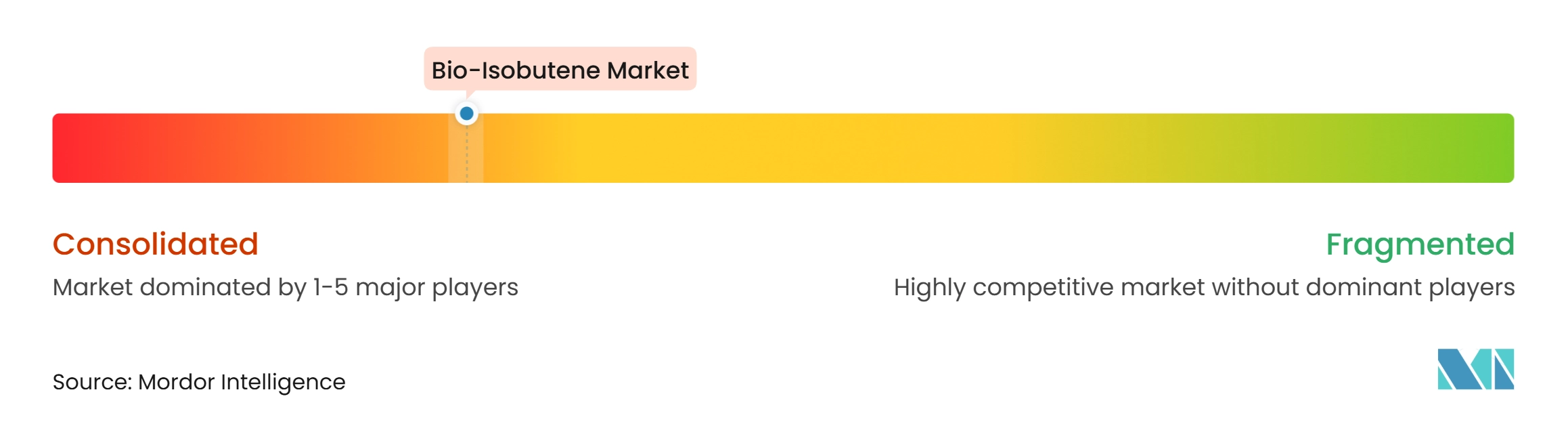
The bio-isobutene market is moderately consolidated. Specialized biotechnology developers have taken on much of the fermentation research and intellectual property risk. Diversified chemical and energy companies participate through offtake arrangements, certified product lines, and technology partnerships. Global Bioenergies entered receivership proceedings in September 2025 after failing to secure financing for a planned facility, reflecting the financial exposure of smaller pure-play developers. The company had also signed a February 2025 term sheet to combine its technology with a partner's Sustainable Aviation Fuel (SAF) conversion process, illustrating how partnerships are used to share development and conversion risks.
A second strategy involves using existing manufacturing assets rather than dedicated new bio-isobutene plants. LANXESS and ARLANXEO use mass-balance methods and International Sustainability and Carbon Certification PLUS (ISCC PLUS) certification to introduce bio-circular feedstocks into existing rubber and chemical production systems. ARLANXEO's 2025 Keltan Eco launch in India is an example of this approach reaching a commercial market. LANXESS also reported efforts to reduce the carbon footprint of products at its Botlek site in 2025. This model can scale renewable-content claims while using conventional production assets. It also makes certification and feedstock traceability central to customer acceptance, as automotive, cosmetics, and pharmaceutical buyers increasingly require credible documentation for renewable-content procurement.
The bio-isobutene market therefore gives innovators a role in production technology, while larger companies can support market access, conversion, and certification. Pharmaceutical-grade polyisobutylene and feedstock-integrated plants near sugar or grain biorefineries remain areas where supply security can matter as much as unit cost. The U.S. Patent and Trademark Office granted U.S. Patent 12,195,415 B2 in January 2025 for a renewable high-purity isobutene production process involving dehydration, dimerization, and skeletal isomerization. Continued patent activity indicates that production-process innovation remains active. Small developers require financing and operating partners to move beyond demonstration-scale assets. Large oil companies' retreat from standalone Rotterdam biofuel projects may reduce the pool of potential partners for some projects. The market structure is consequently defined by active technology development but limited proven large-scale supply.
Bio-Isobutene Industry Leaders
-
G Bioenergy
-
Gevo
-
INEOS
-
LANXESS
-
CLARIANT
- *Disclaimer: Major Players sorted in no particular order
Bio-Isobutene Market Companies Covered in this Report
- Arlanxeo Holding B.V.
- BP p.l.c.
- Bridgestone Corporation
- Butamax Advanced Biofuels LLC
- CLARIANT
- Cristal Union
- DuPont
- G Bioenergy
- Gevo
- INEOS
- L’Oréal S.A.
- LANXESS
- LanzaTech
- Shell plc
- Technip Energies N.V.
Recent Industry Developments in Bio-Isobutene Market
- November 2025: The European Commission launched a new Bioeconomy Strategy aimed at scaling bio-based innovations using biological resources, with explicit emphasis on agricultural residue valorization and a planned bioeconomy investment deployment group. This supported the availability of feedstock for lignocellulosic bio-isobutene production routes.
- September 2025: The Evry Commercial Court opened a receivership procedure against Global Bioenergies, a French biotech company and the first producer of bio-isobutene via gas-phase microbial fermentation, after the company failed to secure financing for a planned commercial production facility. Four takeover offers for the assets were submitted to the court. This proceeding removed the primary pure-play bio-isobutene producer from active market participation.
Global Bio-Isobutene Market Report Scope
Bio-isobutene (also known as bio-based isobutylene or bio-IBN) is a renewable form of isobutene, a gaseous hydrocarbon (an alkene or light olefin) traditionally produced from fossil fuels such as petroleum and crude oil. Unlike its fossil fuel-derived counterpart, bio-isobutene is produced from renewable biological feedstocks, including agricultural residues, sugars, and other biomass sources, through biological or chemical conversion processes.
The bio-isobutene market is segmented by product type, application, end-user industry, and geography. By product type, the market is segmented into sugar-based bio-isobutene, cereal-based bio-isobutene, agricultural and forestry waste-based bio-isobutene, and other product types. By application, the market is segmented into fuel, bio-based cosmetic ingredients, lubricant additives, butyl rubber and elastomers, and other applications. By end-user industry, the market is segmented into automotive and transportation, aviation, pharmaceuticals, cosmetics and personal care, and other end-user industries. The report also covers market sizes and forecasts for bio-isobutene across 15 countries in major regions. The market sizes and forecasts are provided in terms of value (USD).
Segmentation Overview
| Sugar-Based Bio-Isobutene |
| Cereal-Based Bio-Isobutene |
| Agricultural and Forestry Waste-Based Bio-Isobutene |
| Other Product Types |
| Fuel |
| Bio-Based Cosmetic Ingredients |
| Lubricant Additives |
| Butyl Rubber and Elastomers |
| Other Applications |
| Automotive and Transportation |
| Aviation |
| Pharmaceuticals |
| Cosmetics and Personal Care |
| Other End-User Industries |
| Asia-Pacific | China |
| India | |
| Japan | |
| South Korea | |
| ASEAN Countries | |
| Rest of Asia-Pacific | |
| North America | United States |
| Canada | |
| Mexico | |
| Europe | Germany |
| United Kingdom | |
| France | |
| Italy | |
| NORDIC Countries | |
| Rest of Europe | |
| South America | Brazil |
| Argentina | |
| Rest of South America | |
| Middle East and Africa | Saudi Arabia |
| South Africa | |
| Rest of Middle East and Africa |
| By Product Type | Sugar-Based Bio-Isobutene | |
| Cereal-Based Bio-Isobutene | ||
| Agricultural and Forestry Waste-Based Bio-Isobutene | ||
| Other Product Types | ||
| By Application | Fuel | |
| Bio-Based Cosmetic Ingredients | ||
| Lubricant Additives | ||
| Butyl Rubber and Elastomers | ||
| Other Applications | ||
| By End-User Industry | Automotive and Transportation | |
| Aviation | ||
| Pharmaceuticals | ||
| Cosmetics and Personal Care | ||
| Other End-User Industries | ||
| By Geography | Asia-Pacific | China |
| India | ||
| Japan | ||
| South Korea | ||
| ASEAN Countries | ||
| Rest of Asia-Pacific | ||
| North America | United States | |
| Canada | ||
| Mexico | ||
| Europe | Germany | |
| United Kingdom | ||
| France | ||
| Italy | ||
| NORDIC Countries | ||
| Rest of Europe | ||
| South America | Brazil | |
| Argentina | ||
| Rest of South America | ||
| Middle East and Africa | Saudi Arabia | |
| South Africa | ||
| Rest of Middle East and Africa | ||
Key Questions Answered in the Report
What is current market size of Bio-Isobutene Market?
The Bio-isobutene market size was valued at USD 107.46 million in 2026 and is estimated to grow from USD 117.87 million in 2027 to USD 186.66 million by 2032, at a CAGR of 9.68% during the forecast period (2027-2032).
Which application is expanding fastest?
Bio-based cosmetic ingredients are the fastest-growing application, with a forecast 11.78% CAGR through 2032.
Which region leads bio-isobutene demand?
Asia-Pacific leads with a 38.35% share in 2026 and is also the fastest-growing region at an 11.56% CAGR through 2032.
What is the principal barrier to commercial adoption?
Production costs and dependable scale-up remain the main barriers because bio-based output has not yet reached fossil-route cost competitiveness.