
Binders Scaffolders Meat Substitutes Market Size and Share
Market Overview
| Study Period | 2021 - 2031 |
|---|---|
| Market Size (2026) | USD 3.63 Billion |
| Market Size (2031) | USD 4.91 Billion |
| Growth Rate (2026 - 2031) | 6.24 % |
| Fastest Growing Market | Asia-Pacific |
| Largest Market | North America |
| Market Concentration | Medium |
Major Players *Disclaimer: Major Players sorted in no particular order Image © Mordor Intelligence. Reuse requires attribution under CC BY 4.0. | |
Binders Scaffolders Meat Substitutes Market Analysis by Mordor Intelligence
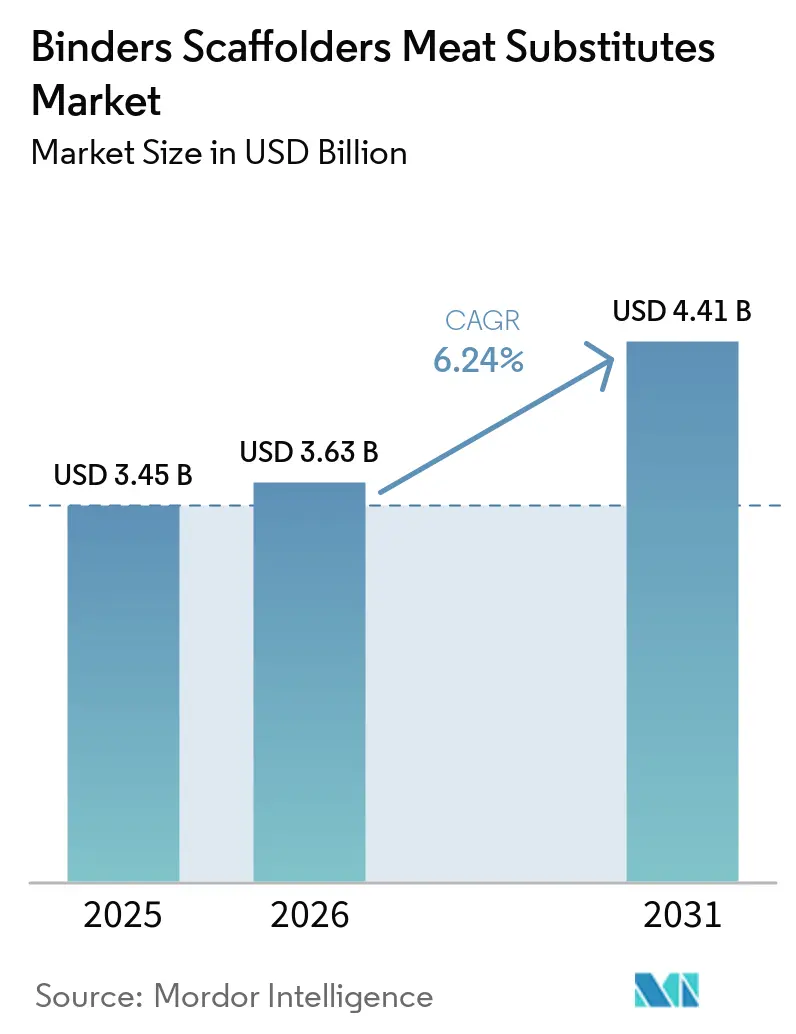
The binders scaffolders meat substitutes market size was valued at USD 3.45 billion in 2025 and estimated to grow from USD 3.63 billion in 2026 to reach USD 4.91 billion by 2031, at a CAGR of 6.24% during the forecast period 2026 to 2031. The binders scaffolders meat substitutes market depends on ingredients that retain water, bind proteins, and create a stable structure during processing and cooking. Demand is shaped by the need to improve the bite, juiciness, and appearance of plant-based foods, while cultivated meat programs require edible structures that support tissue formation. Suppliers are increasingly developing systems that combine proteins, hydrocolloids, enzymes, and starches rather than selling a single functional ingredient. Clean-label expectations are also changing customer specifications, particularly where ingredient lists and allergen declarations influence retail acceptance. The binders scaffolders meat substitutes market therefore has opportunities in reformulation, application support, and food-grade scaffold production, although regulation and raw-material costs can slow product adoption.
Key Report Takeaways
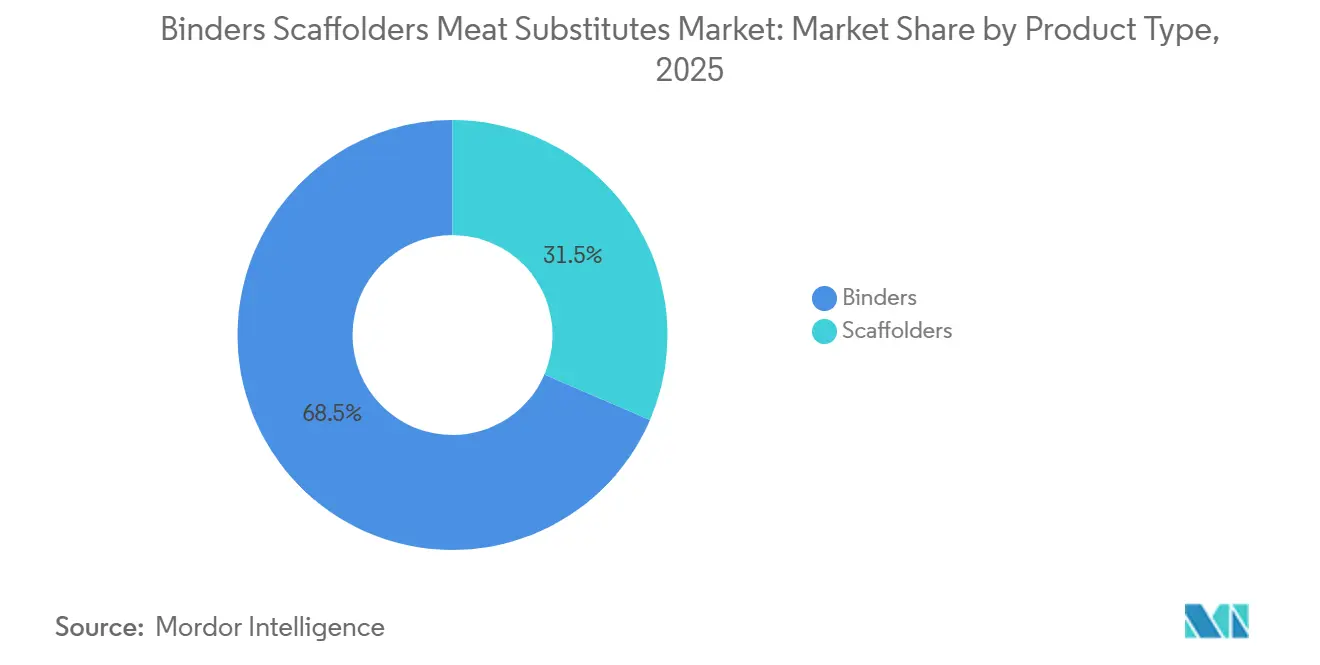
- By product type, binders held 68.54% of the binders scaffolders meat substitutes market share in 2025, while scaffolders are forecast to grow at an 8.02% CAGR through 2031.
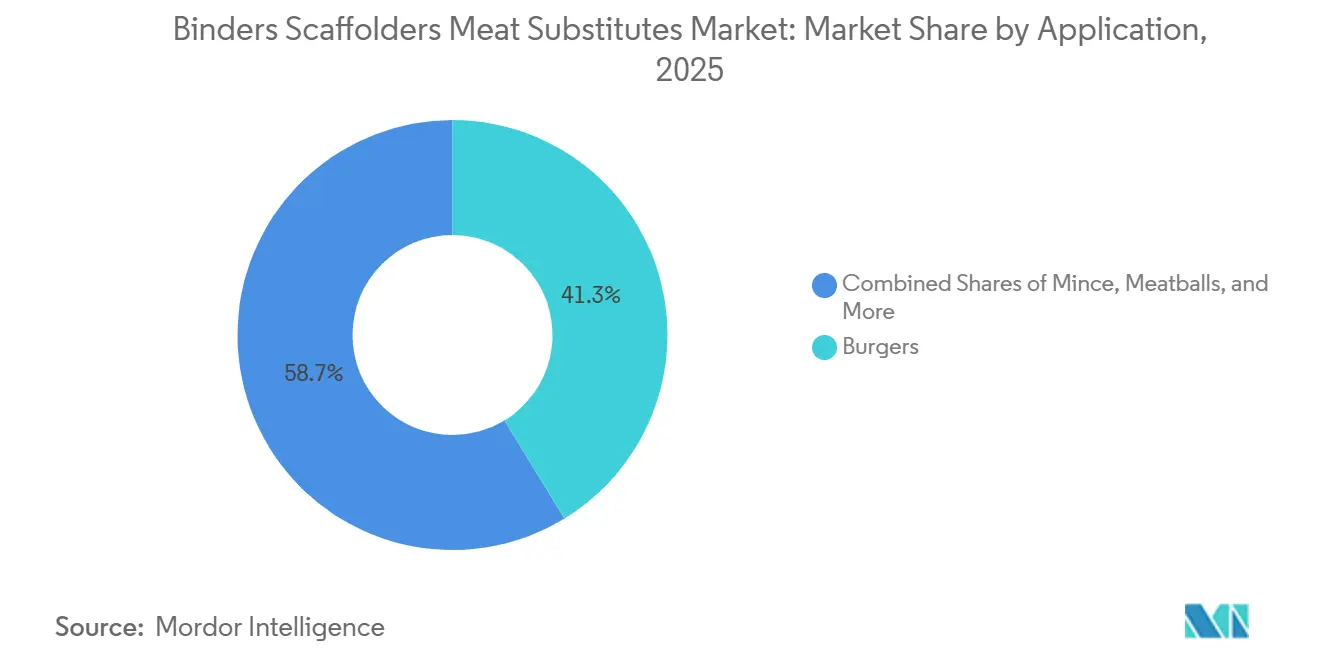
- By application, burgers accounted for 41.29% of the binders scaffolders meat substitutes market size in 2025, while meatballs are expected to record the highest CAGR of 7.46% through 2031.
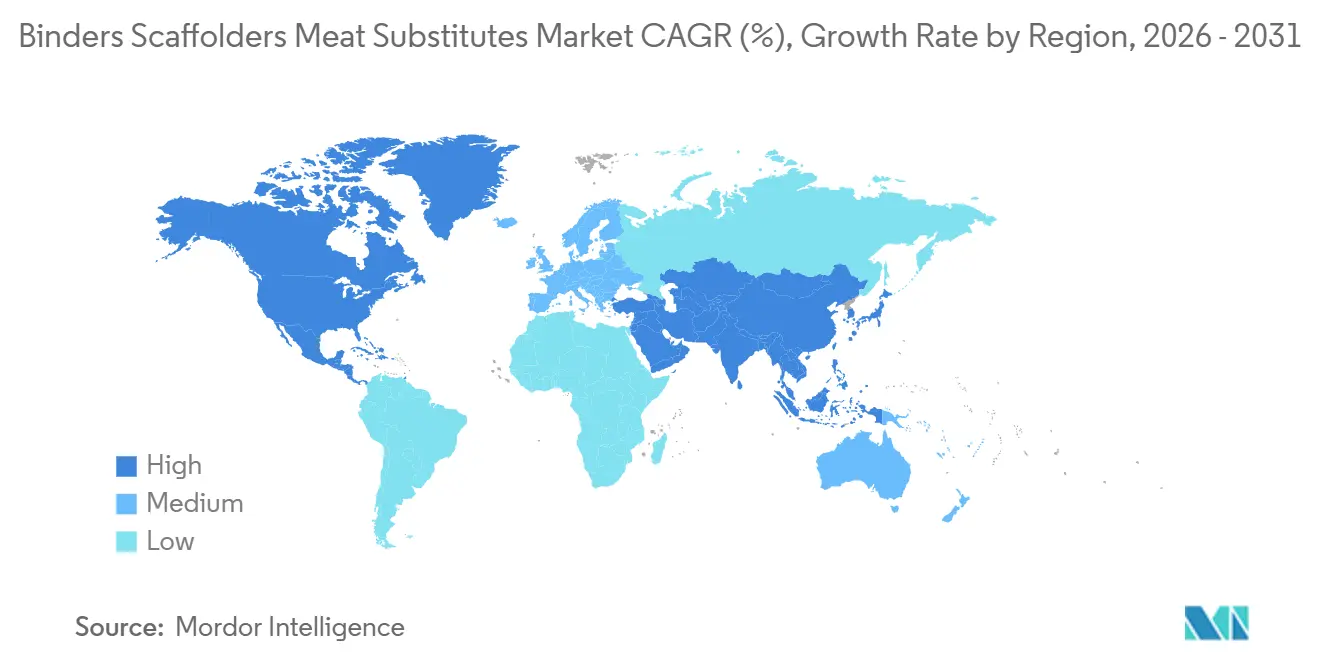
- By geography, North America held 43.27% of the binders scaffolders meat substitutes market share in 2025, while Asia-Pacific is forecast to expand at a 7.64% CAGR through 2031.
Note: Market size and forecast figures in this report are generated using Mordor Intelligence’s proprietary estimation framework, updated with the latest available data and insights as of January 2026.
Market Trends and Insights
Drivers Impact Analysis of Binders Scaffolders Meat Substitutes Market*
| Driver | (~) % Impact on CAGR Forecasts | Geographic Relevance | Impact Timeline |
|---|---|---|---|
| Flexitarian and vegan diet adoption | +1.8% | Global, with peak concentration in North America and Europe | Medium term (2–4 years) |
| Growing demand for meat-like texture and mouthfeel | +1.5% | Global; most advanced in North America, Germany, United Kingdom | Short term (≤ 2 years) |
| Cultured meat commercialization and scaffold technology advancements | +0.8% | North America, Singapore, Asia-Pacific core; spill-over to Europe | Long term (≥ 4 years) |
| Rising demand for clean-label and allergen-conscious formulations | +0.7% | North America, Europe, Australia | Medium term (2–4 years) |
| Expansion of fermentation-derived multifunctional ingredients | +0.6% | North America, Europe; spill-over to Asia-Pacific | Medium term (2–4 years) |
| AI-driven formulation optimization and real-time process control | +0.4% | North America, Netherlands, Scandinavia | Long term (≥ 4 years) |
| Source: Mordor Intelligence | |||
Flexitarian And Vegan Diet Adoption
Flexitarian households provide a wider commercial base than the smaller group of consumers who follow fully vegan diets. The binders scaffolders meat substitutes market benefits when consumers choose plant-based or mixed-protein meals without permanently changing their diet. This behavior raises the importance of familiar taste and texture because buyers compare products directly with conventional meat. Protein blends can require stronger control of moisture migration and heat response during cooking. Suppliers that support customer formulation work can therefore address a broader set of retail and foodservice products. Demand is likely to favor systems that improve sensory performance instead of only lowering ingredient cost.
Demand For Meat-Like Texture And Mouthfeel
Texture remains central to repeat purchases of meat substitutes and to the value of functional ingredients. A 2026 scientific review found that no individual polysaccharide hydrocolloid replicates the directional fiber structure of animal meat, and it described distinct roles for xanthan gum, κ-carrageenan, methylcellulose, alginate, and konjac mannan[1]. A 2025 study found that a system containing 3% microbial transglutaminase and 2% methylcellulose achieved the highest texture and sensory scores in hybrid patties. These findings support the use of complementary ingredients in the binders/scaffolders meat substitutes market. They also explain why suppliers are developing enzyme and hydrocolloid packages for specific product formats. Reformulation continues where manufacturers seek a meat-like bite with shorter and more recognizable ingredient declarations.
Cultivated Meat Commercialization And Scaffold Technology
Cultivated meat production requires an edible material that supports cells as they develop into structured tissue. A 2025 review identified biomaterials as a major issue for cellular agriculture and plant-based foods, covering the role of scaffold materials in creating structure. Three-dimensional bioprinting, electrospinning, and microcarrier systems have different costs and production requirements. In 2026, researchers reported alginate fibers made through the PASTA method that supported C2C12 myoblast differentiation and delivered a 3.5-fold DNA increase over 4 days. Plant-derived materials can address food acceptance, regulatory review, and cost considerations at the same time. The binders, scaffolders, and meat substitutes market may gain as work shifts from laboratory materials toward food-grade production methods.
Clean-Label And Allergen-Conscious Formulations
Clean-label reformulation is creating active competition among binding systems. Methylcellulose remains useful for thermal binding, but some retailers prefer simpler ingredient declarations. Potato, pea, fava bean, and other plant proteins can combine binding and nutritional roles in a single ingredient statement. In November 2025, Avebe introduced PerfectaSOL S 200 for plant-based meatballs as a potato-protein option intended to replace egg white and methylcellulose. The binders and scaffolders meat substitutes market also benefits from solutions designed to avoid major allergen labeling where performance targets can still be met. Ingredient developers must demonstrate shelf stability, cooking performance, and sensory quality before these alternatives can replace established hydrocolloid systems.
Restraints Impact Analysis of Binders Scaffolders Meat Substitutes Market*
| Restraint | (~) % Impact on CAGR Forecasts | Geographic Relevance | Impact Timeline |
|---|---|---|---|
| Complex regulatory and novel-food approval requirements | -0.9% | Europe, Asia-Pacific, and North America | Long term (≥ 4 years) |
| Fluctuating costs of proteins, hydrocolloids, seaweed, and specialty starches | -0.7% | Global, particularly Europe and Asia-Pacific | Short term (≤ 2 years) to Medium term (2-4 years) |
| Clean-label formulation and shelf-stability challenges | -0.6% | North America and Europe | Medium term (2-4 years) |
| Enzyme exposure and occupational safety concerns | -0.3% | Global manufacturing hubs, with regulatory attention in Europe and North America | Long term (≥ 4 years) |
| Source: Mordor Intelligence | |||
Complex Regulatory And Novel-Food Approval Requirements
Regulatory review can delay the introduction of novel binders and scaffold materials. The European Union requires authorization for novel foods before they can be placed on the market, and applicants must provide evidence supporting safety[2]. The United States Generally Recognized as Safe notification process provides a separate route for ingredients where the notifier concludes the intended use is generally recognized as safe. These differences influence where suppliers prioritize commercialization and customer trials. Companies working with fungal biomaterials, engineered polysaccharides, and fermentation-derived materials must allow for evidence generation and regulatory engagement. Established hydrocolloids can retain an advantage where they already have accepted food-use histories.
Fluctuating Costs Of Proteins, Hydrocolloids, Seaweed, And Specialty Starches
Input-cost changes can make product development more difficult for manufacturers with limited purchasing scale. Carrageenan, specialty starches, and protein isolates can face supply pressure when crop yields or seaweed production are disrupted. High-moisture extrusion also requires careful control of starch gelatinization, so switching ingredients can require further trials. The binders scaffolders meat substitutes market is affected when manufacturers postpone launches while evaluating cost and performance tradeoffs. Broad portfolios can help suppliers offer alternatives that preserve texture and cooking behavior. Longer-term interest in fermentation-derived inputs partly reflects the need for supply options that are less dependent on seasonal agricultural conditions.
*Our forecasts treat driver/restraint impacts as directional, not additive. The impact forecasts reflect baseline growth, mix effects, and variable interactions.
Binders Scaffolders Meat Substitutes Market Segment Analysis
By Product Type:
Binders Held Scale While Scaffolders Advanced Through Bioprocessing InvestmentBinders accounted for 68.54% of the binders scaffolders meat substitutes market size in 2025, reflecting their broad use in commercial burgers, sausages, mince, and nuggets. Methylcellulose, hydrocolloid blends, soy and pea protein systems, microbial transglutaminase, and modified starches address different processing needs. Plant-based options such as citrus fiber, psyllium husk, pea starch, and potato protein are relevant where customers seek recognizable declarations. Protein-based systems can provide binding, structure, and nutritional fortification. Roquette’s pea protein range and ADM’s Arcon products illustrate the focus on high-protein formulation applications. The binders scaffolders meat substitutes industry continue to rely on binders because they are already used at industrial scale across major product categories.
Enzyme-based products are smaller in volume but remain important for clean-label reformulation. In late 2024, Novonesis introduced Vertera ProBite to crosslink amino acids in pea or soy protein isolates and support the removal of carrageenan, alginate, or methylcellulose from product labels. A 2025 study examined konjac glucomannan as a possible methylcellulose alternative, reflecting continuing interest in cleaner binding approaches. Scaffolders are projected to grow at an 8.02% CAGR from 2026 to 2031. Natural options, including alginate, cellulose-based materials, and mycelium-derived matrices, have an advantage where food-use familiarity supports procurement. A 2026 study reported that chitosan-gelatin mesh scaffolds aligned myoblasts and supported cell-sheet formation, which may improve material efficiency in structured cultivated meat production.
By Application:
Burgers Retained Scale While Meatballs Created New Formulation DemandBurgers represented 41.29% of the binders scaffolders meat substitutes market size in 2025. Their formulation needs include stable thermal gelation, retention of fat during cooking, and a consistent bite after freeze-thaw cycles. Suppliers have developed burger systems at industrial scale because the format has been widely distributed in retail and foodservice. Mince is also an important use case because it can be applied in ready meals and home cooking. Nuggets require adhesion between the coating and the internal protein matrix. These application differences create a need for ingredients with clear process and cooking functions.
Meatballs are forecast to record a 7.46% CAGR through 2031, the fastest rate in the application segmentation. Their round shape must remain cohesive during boiling, baking, and freeze-thaw handling. Protein-based and enzyme-based binders can address these conditions where conventional hydrocolloids are less effective. Avebe’s November 2025 launch of PerfectaSOL® S 200 targeted plant-based meatballs and demonstrated the commercial focus on this application. The other application group includes sausages, deli-style analogs, and marinated whole cuts. The binders scaffolders meat substitutes market could see scaffold techniques developed for cultivated meat applied to whole-cut plant-based products as fiber-assembly methods reach pilot-scale use.

Geography Analysis
North America Binders Scaffolders Meat Substitutes Market
North America held 43.27% of the Binders scaffolders meat substitutes market share in 2025. The region combines established plant-based retail and foodservice channels with a domestic ingredient manufacturing base. The U.S. FDA GRAS notification framework remains important for companies considering new food ingredients[3]. Manufacturers are likely to continue investing in sensory improvement when mature product categories face cautious demand. Canada’s support for plant-based food processing and Mexico’s expanding urban retail channels also broaden the regional customer base.
Europe Binders Scaffolders Meat Substitutes Market
Europe remained the second-largest regional market for the Binders scaffolders meat substitutes market. Germany produced 124,900 tonnes of meat substitutes in 2025, down 1.2% from 126,500 tonnes in 2024, according to the Federal Statistical Office of Germany. This 2025 output was still more than double the 60,400 tonnes recorded in 2019. The comparison shows that the category has a larger production base than before its recent slowdown. European suppliers also need to consider the Novel Food Regulation when introducing novel binder and fermentation-derived materials.
APAC, South America and Middle East Binders Scaffolders Meat Substitutes Market
Asia-Pacific is forecast to grow at a 7.64% CAGR from 2026 to 2031, making it the fastest-growing geography. China’s protein-diversification policy direction, India’s vegetarian consumer base, and Japan’s fermentation capabilities support demand for varied ingredient solutions. India’s evolving vegan labeling requirements can encourage the use of locally sourced and clearly declarable binders. Japan is positioned to assess fermentation-derived binding systems because it has a well-established fermentation ingredient sector. Brazil’s soybean supply offers a cost advantage for protein-based binders in South America. The United Arab Emirates also provides an early market for premium food-technology ingredients as retail infrastructure and food technology investment develop.
Competitive Landscape
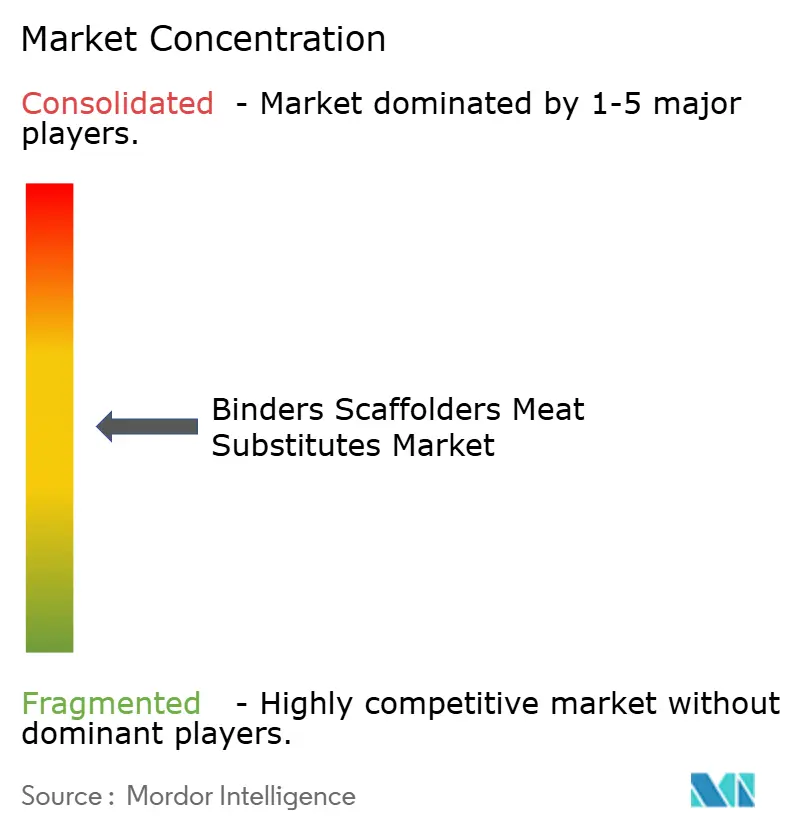
The binders scaffolders meat substitutes market has a moderately consolidated structure, with large ingredient groups competing alongside specialized scaffold and bioprocessing companies. Archer Daniels Midland, Kerry Group, Roquette Frères, and Cargill have broad raw-material access, manufacturing capacity, and product-development resources. Their scale is particularly relevant in binders, where food manufacturers need consistent supply and application support. Specialist companies compete by developing differentiated edible scaffold platforms or enzymes. No individual business has achieved clear dominance across all types of binder and scaffolder materials. Competition therefore depends on functional performance, supply reliability, regulatory readiness, and the ability to support customer reformulation.
Companies are extending portfolios toward clean-label texture solutions and fermentation-derived materials. Cargill’s partnership with Enough provides access to Abunda mycoprotein, a fibrous fermented protein that can create texture without extrusion. ADM’s Arcon soy protein portfolio addresses uses ranging from sausage yield to nugget applications. DSM-Firmenich combined investment in Meala FoodTech with distribution rights for Vertis™ PB Pea, which was introduced in June 2025 as a texturizing pea protein for meat alternatives. These actions show how established suppliers can combine commercial channels with access to newer ingredient technologies.
White-space opportunities remain in enzyme-based binders and food-grade scaffolds for structured products. Enzyme systems require wider regulatory acceptance and application data across different food formats. Electrospinning, alginate-fiber assembly, and three-dimensional bioprinting could create commercial options for plant-based whole cuts as costs decline. Research on non-animal scaffolds has documented the active development of materials for cultured meat structuration. Companies that do not develop enzyme- or fermentation-derived options may face more pressure as customers seek shorter labels and improved sensory performance. The binders scaffolders meat substitutes market also requires close attention to regulatory pathways and food-grade material standards before new solutions can be broadly adopted.
Binders Scaffolders Meat Substitutes Industry Leaders
-
Archer Daniels Midland Company
-
Kerry Group plc
-
Roquette Frères S.A.
-
Ingredion Incorporated
-
Cargill Incorporated
- *Disclaimer: Major Players sorted in no particular order
Binders Scaffolders Meat Substitutes Market Companies Covered in this Report
- Archer Daniels Midland Company
- Ingredion Incorporated
- Kerry Group plc
- Roquette Frères S.A.
- Tate & Lyle PLC
- Cargill Incorporated
- International Flavors & Fragrances Inc.
- dsm-firmenich AG
- Novonesis A/S
- Avebe U.A.
- Ashland Inc.
- Palsgaard A/S
- Gelita AG
- J.M. Huber Corporation
- CP Kelco U.S., Inc.
- Corbion N.V.
- Matrix Meats, Inc.
- Mosa Meat B.V.
- Aleph Farms Ltd.
- UPSIDE Foods, Inc.
- MycoWorks, Inc.
- Gelatex Technologies OÜ
Recent Industry Developments in Binders Scaffolders Meat Substitutes Market
- February 2026: Ingredion launched VITESSENCE Pea 100 HD, a pea protein specifically optimized for cold-pressed nutrition bars. The ingredient is designed to address common challenges such as increasing firmness, gritty mouthfeel, and chalky or powdery notes, while supporting clean-label, high-protein claims and maintaining a smoother texture throughout shelf life.
- November 2025: Avebe launched PerfectaSOL® S 200, a potato-based ingredient designed to improve binding, texture and processing performance in plant-based meat products, particularly meatballs. The launch reflects the growing development of application-specific, plant-based binders that can provide cohesion and a meat-like bite while supporting clean-label formulation requirements.
- June 2025: dsm-firmenich partnered with Meala FoodTech to launch Vertis™ PB Pea in Europe, a multifunctional pea protein designed to replace modified binders such as hydrocolloids in plant-based meat alternatives.
- November 2024: Kerry Group announced a EUR 65 million investment in a new binding systems production facility in Ireland. The investment is focused on expanding Kerry's plant-protein capabilities and developing next-generation binding technologies for meat-substitute applications, with an emphasis on improving texture, cooking performance and product quality.
Global Binders Scaffolders Meat Substitutes Market Report Scope
Segmentation Overview
| Binders | Plant-Based |
| Protein-Based | |
| Enzyme-Based | |
| Others | |
| Scaffolders | Natural |
| Synthetic | |
| 3-D Printed Scaffloders |
| Burgers |
| Mince |
| Nuggets |
| Meatballs |
| Others |
| North America | United States |
| Canada | |
| Mexico | |
| Rest of North America | |
| Europe | Germany |
| United Kingdom | |
| France | |
| Italy | |
| Spain | |
| Netherlands | |
| Rest of Europe | |
| Asia-Pacific | China |
| India | |
| Japan | |
| Australia | |
| Rest of Asia-Pacific | |
| South America | Brazil |
| Argentina | |
| Rest of South America | |
| Middle East and Africa | United Arab Emirates |
| South Africa | |
| Rest of Middle East and Africa |
| By Product Type | Binders | Plant-Based |
| Protein-Based | ||
| Enzyme-Based | ||
| Others | ||
| Scaffolders | Natural | |
| Synthetic | ||
| 3-D Printed Scaffloders | ||
| By Application | Burgers | |
| Mince | ||
| Nuggets | ||
| Meatballs | ||
| Others | ||
| By Geography | North America | United States |
| Canada | ||
| Mexico | ||
| Rest of North America | ||
| Europe | Germany | |
| United Kingdom | ||
| France | ||
| Italy | ||
| Spain | ||
| Netherlands | ||
| Rest of Europe | ||
| Asia-Pacific | China | |
| India | ||
| Japan | ||
| Australia | ||
| Rest of Asia-Pacific | ||
| South America | Brazil | |
| Argentina | ||
| Rest of South America | ||
| Middle East and Africa | United Arab Emirates | |
| South Africa | ||
| Rest of Middle East and Africa | ||
Key Questions Answered in the Report
What is the projected value of the binders scaffolders meat substitutes market by 2031?
The market is forecast to reach USD 4.91 billion by 2031, from USD 3.63 billion in 2026, at a 6.24% CAGR.
Which product category is growing fastest in binders and scaffolders for meat substitutes?
Scaffolders are projected to grow at an 8.02% CAGR from 2026 to 2031 as food-grade structures move closer to commercial use.
Why are binders important in plant-based meat products?
They help retain moisture, stabilize proteins, support cooking performance, and create a consistent texture in products such as burgers and nuggets.
Which application has the largest share in this market?
Burgers accounted for 41.29% of application value in 2025 because they remain a widely established retail and foodservice format.