
Barrier Resins Market Size and Share
Market Overview
| Study Period | 2022 - 2032 |
|---|---|
| Market Size (2027) | USD 16.01 Billion |
| Market Size (2032) | USD 20.66 Billion |
| Growth Rate (2027 - 2032) | 5.23 % |
| Fastest Growing Market | Asia-Pacific |
| Largest Market | Asia-Pacific |
| Market Concentration | Low |
Major Players *Disclaimer: Major Players sorted in no particular order Image © Mordor Intelligence. Reuse requires attribution under CC BY 4.0. | |
Barrier Resins Market Analysis by Mordor Intelligence
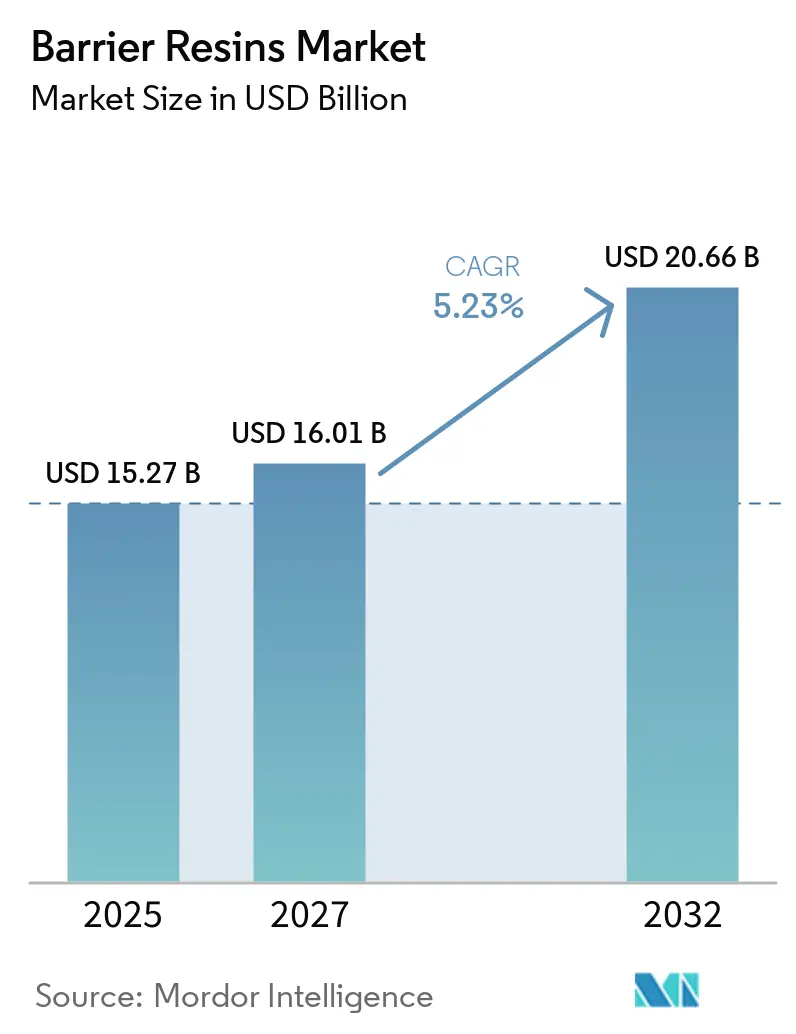
The Barrier Resins Market size was valued at USD 15.27 billion in 2026 and is estimated to grow from USD 16.01 billion in 2027 to reach USD 20.66 billion by 2032, at a CAGR of 5.23% during the forecast period (2027-2032). The barrier resins market is supported by demand for packaged food that remains fresh through longer distribution cycles. Packaging rules in Europe are moving converter investment toward materials that combine barrier performance with recyclability. The pharmaceutical cold chain is also increasing the demand for grades used in sensitive medicines and biologics. These changes favor suppliers that can combine technical support, certified materials, and a stable supply. The barrier resins market therefore has opportunities in recyclable structures, paper-based coatings, and specialized pharmaceutical films, especially where converters need dependable processing support, compliant food-contact material options, and a practical route toward recycling-oriented packaging designs, while the interaction of food-packaging volumes and higher-value medical applications also supports a broader requirement for consistent technical performance across widely different packaging formats, from lightweight food pouches to medical packs that require dependable protection during storage, distribution, and final use across diverse supply chains and customer operating conditions.
Key Report Takeaways
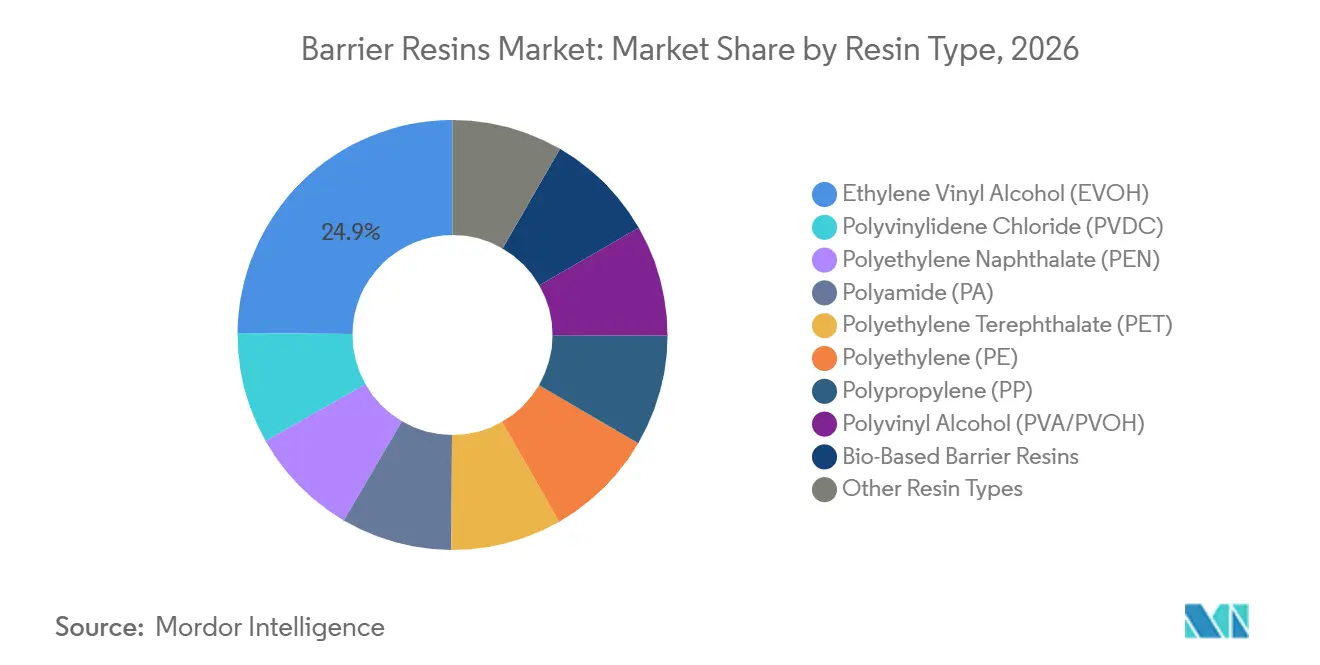
- By resin type, ethylene vinyl alcohol (EVOH) held 24.86% of the barrier resins market share in 2026 and is forecast to advance at a 5.76% CAGR through 2032.
- By barrier function, oxygen and gas barrier held 60.12% of the barrier resins market share in 2026 and is forecast to advance at a 5.91% CAGR through 2032.
- By packaging type, flexible packaging held 55.35% of the barrier resins market share in 2026 and is forecast to advance at a 6.12% CAGR through 2032.
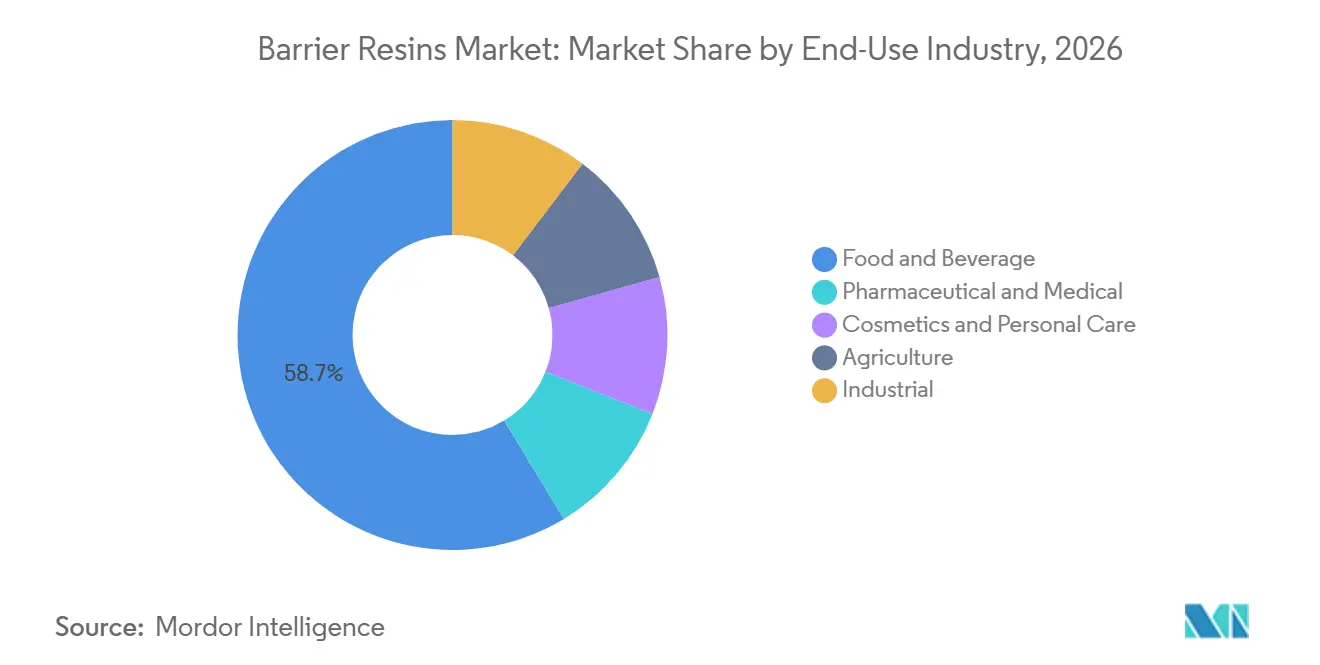
- By end-use industry, food and beverage held 58.67% of the barrier resins market share in 2026, while pharmaceutical and medical are forecast to advance at a 6.39% CAGR through 2032.
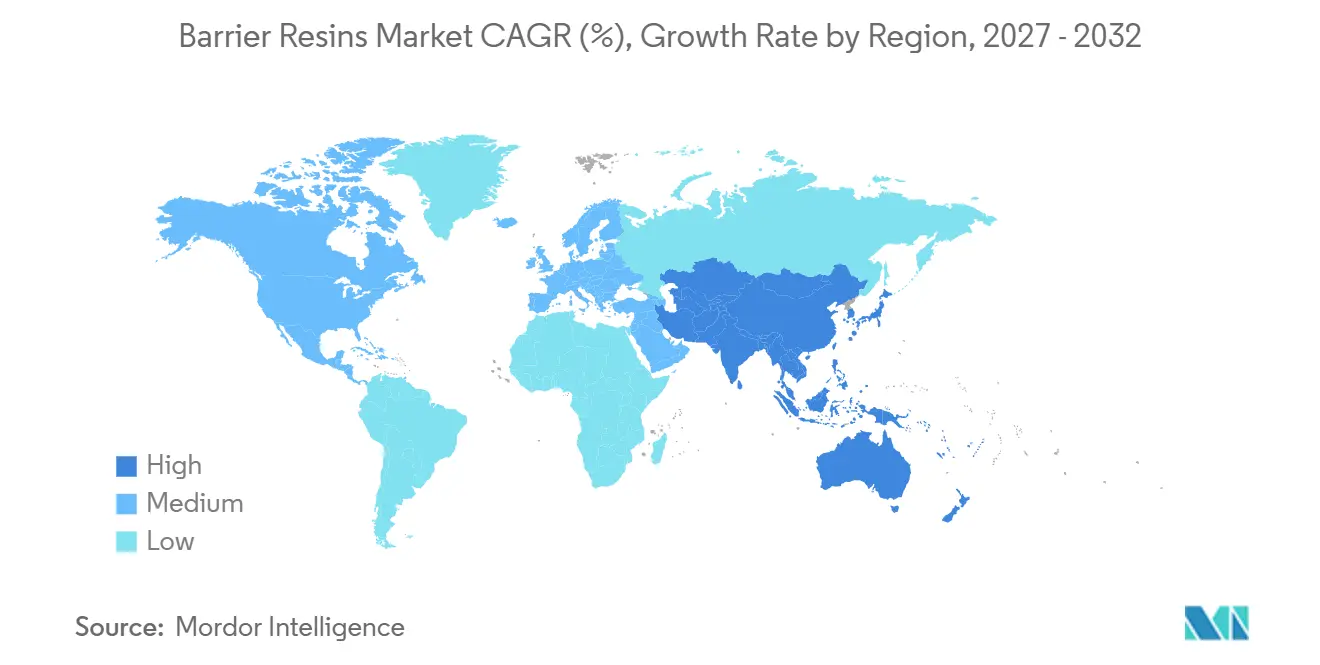
- By geography, Asia-Pacific held 42.35% of the barrier resins market share in 2026 and is forecast to advance at a 6.27% CAGR through 2032.
Note: Market numbers in this report are based on Mordor Intelligence's proprietary estimation framework, which combines nine months of actuals with Q4 projections for base year 2026.
Global Barrier Resins Market Trends and Insights
Drivers Impact Analysis*
| Driver | (~) % Impact on CAGR Forecast | Geographic Relevance | Impact Timeline |
|---|---|---|---|
| Extended Shelf-Life Requirements for Packaged Foods and Beverages | +1.8% | Global; highest intensity in APAC and North America | Short term (≤ 2 years) |
| Pharmaceutical Cold-Chain and Sensitive-Drug Packaging | +1.4% | North America & EU primary; APAC fast-scaling | Medium term (2–4 years) |
| PFAS-Free and Fluorine-Free Barrier Material Substitution | +1.0% | EU core; spillover to North America and Japan | Short term (≤ 2 years) |
| Recyclable Mono-Material Barrier Packaging Development | +0.8% | EU and APAC core; North America emerging | Medium term (2–4 years) |
| E-Commerce and Convenience Packaging Durability Requirements | +0.5% | APAC and North America; growing in MEA | Long term (≥ 4 years) |
| Source: Mordor Intelligence | |||
Extended Shelf-Life Requirements for Packaged Foods and Beverages
Shelf-life extension reduces product losses across retail and foodservice supply chains, so it has direct value for retailers managing spoilage, inventory rotation, and product availability across different food categories, and it also helps food producers meet distribution requirements without relying only on heavier packaging or shorter delivery routes. A 1 mm EVOH layer can provide an oxygen barrier comparable to a 10-meter wall of Low-Density Polyethylene (LDPE), allowing thinner multilayer structures to protect food freshness. Ready-to-eat meals and quick-commerce grocery orders need films that can withstand more demanding handling conditions than conventional shelf display, including repeated loading, delivery, and temporary temperature changes. This need is particularly relevant where cold-chain capacity is limited, and packages need to maintain performance beyond a standard retail shelf cycle. Modified Atmosphere Packaging (MAP) using EVOH can extend refrigerated protein shelf life to 21-28 days, compared with 7-10 days without barrier protection. These operating needs keep food packaging as an important demand base for the barrier resins market because they support both waste reduction and product-quality requirements.
Pharmaceutical Cold-Chain and Sensitive-Drug Packaging
Pharmaceutical cold-chain use requires more exacting barrier specifications than food packaging because the contents can lose stability after moisture or oxygen exposure, and the material must also perform consistently across storage, handling, transport, and the final dispensing environment. A packaging failure can affect product quality, documentation requirements, and patient supply, making validated materials and suppliers important to pharmaceutical customers. Cell and gene therapies stored at −70 °C need films that retain structural integrity through cryogenic distribution and subsequent handling. Specialized Polyamide (PA) and EVOH multilayer structures are suited to these requirements because they combine protection with the mechanical performance needed in distribution. Biologics, messenger RNA vaccines, and gene therapies are sensitive to moisture and oxygen, which supports demand for premium grades in the barrier resins market. This application base gives suppliers a source of demand that is less tied to routine food-packaging volumes and more closely tied to validated technical performance.
Recyclable Mono-Material Barrier Packaging Development
Recyclable mono-material packaging is increasing the interest in EVOH grades designed for low resin content, particularly where brand owners need to retain oxygen protection without moving outside established recycling guidance. The technical challenge is to maintain pack integrity, processability, and barrier performance in a structure designed for a more practical end-of-life pathway. These grades can provide oxygen protection while supporting structures that fit recycling design guidelines and reduce dependence on mixed-material designs. In August 2025, PTT Global Chemical, TPN FlexPak, and Windmoeller & Hoelscher launched a 7-layer Mono Material Machine Direction Oriented Polyethylene (MDOPE) film with EVOH for food packaging. The companies stated that the film achieved 100% recyclability while meeting oxygen protection requirements. Machine direction orientation helps distribute a barrier layer at a lower thickness, which can preserve pack performance while reducing the barrier material required. This development creates a higher-value product path in the barrier resins market for suppliers that can meet recycling and processing requirements together.
PFAS-Free and Fluorine-Free Barrier Material Substitution
Regulatory action on per- and polyfluoroalkyl substances is raising demand for alternative barrier materials in both plastic and paper-based packaging, and it also shifts development priorities from a narrow focus on barrier efficiency toward material systems that can be recycled, processed, and approved for food-contact use. The European Packaging and Packaging Waste Regulation entered into force in February 2025 and establishes requirements that support recyclable packaging design[1]. CLARIANT introduced its Per- and Polyfluoroalkyl Substances (PFAS)-free AddWorks polymer processing aids in 2025 for polyolefin extrusion. Mitsubishi Chemical Group Corporation developed a SoarnoL EVOH solution coating for paper packaging that provides oil resistance at high temperatures and under folding stress. Paper converters that move away from PFAS coatings need materials that retain functional performance while also fitting recyclability targets and existing conversion processes. This change expands potential uses for EVOH beyond multilayer plastic films in the barrier resins market and creates a new technical route for paper packaging.
Restraints Impact Analysis*
| Restraint | (~) % Impact on CAGR Forecast | Geographic Relevance | Impact Timeline |
|---|---|---|---|
| Multilayer Packaging Recycling and Separation Complexity | -0.5% | Global; highest impact in EU and North America | Medium term (2–4 years) |
| Feedstock Price Volatility and Specialty Resin Premiums | -0.4% | Global; most acute in Asia and EU | Short term (≤ 2 years) |
| Food-Contact Approval and Recyclability Certification Risk | -0.3% | EU, Japan, North America | Medium term (2–4 years) |
| Source: Mordor Intelligence | |||
Multilayer Packaging Recycling and Separation Complexity
Multilayer structures can protect products effectively but are difficult to separate in conventional mechanical recycling systems that were not designed for complex film constructions, and the problem is most visible in flexible packaging because thin layers are optimized for performance in use rather than for separation after use. They often combine EVOH, PA, polyethylene terephthalate (PET), and polyolefin layers with different processing behavior and different recycling pathways. Researchers reported that EVOH and non-polar polyethylene can phase-separate during melt processing, reducing recycled-material properties unless compatibilizers are used. This technical issue limits the use of high-barrier loading in locations with stricter recycling rules and raises the development burden for film producers. Michigan State University is developing polyester-based multilayer films intended for existing recycling streams with support from the U.S. Department of Energy[2]. Until such solutions are used at scale, recycling complexity will remain a restraint on the barrier resins market because brand owners and converters need practical end-of-life routes.
Feedstock Price Volatility and Specialty Resin Premiums
EVOH production has a high exposure to ethylene and vinyl acetate monomer costs, which makes specialty resin pricing responsive to petrochemical market changes, so suppliers and converters must plan for cost swings while maintaining the quality and consistency needed for sensitive packaging uses. Price movement in these feedstocks can raise conversion costs for specialty resins and complicate long-term pricing for converters. Cost pressure can be difficult for converters to pass through in price-sensitive, packaged food applications, especially where packaging is a visible part of the product cost. It can also encourage qualification of lower-cost domestic grades where technical requirements are less demanding, and material consistency is less critical. Premium grades retain an advantage when applications require consistent barrier performance and validated food-contact or pharmaceutical use. These cost conditions can restrain adoption in developing markets while maintaining pressure on converter margins in the barrier resins market.
*Our forecasts treat driver/restraint impacts as directional, not additive. The impact forecasts reflect baseline growth, mix effects, and variable interactions.
Segment Analysis
By Resin Type: EVOH Anchors Both Share and Growth
EVOH held 24.86% of the barrier resins market share in 2026 and is projected to advance at a 5.76% CAGR through 2032. Its performance in oxygen-sensitive food and pharmaceutical packaging supports its position in premium applications. KURARAY CO., LTD. states that a 20 µm EVOH film has oxygen transmission below 1 cm³/m²·day under dry conditions. The company introduced Circular Eval, a 100% bio-based EVOH, in 2025 with International Sustainability and Carbon Certification Plus coverage for food-contact applications in the United States and Japan, giving packaging buyers a certified material choice. EVOH remains central to the barrier resins market as packaging designs seek barrier performance and circularity credentials.
Polyvinylidene chloride (PVDC) continues to serve pharmaceutical blister and shrink-wrap uses in Asia-Pacific, while KUREHA CORPORATION’s Kuredux technology supports applications that require moisture protection and material compatibility. PA contributes structural strength and moderate barrier performance, while MXD6-grade PA can provide improved oxygen resistance and humidity tolerance. PET and polypropylene (PP) are generally used as structural outer layers in coextruded films, while polyvinyl alcohol (PVA) is gaining use as a water-soluble coating material for unit-dose products. Polyethylene naphthalate (PEN) and other resins serve high-temperature and high-clarity packaging formats. These materials give converters choices where the use environment requires a balance of barrier, strength, and clarity.

By Barrier Function: Oxygen and Gas Barrier Anchor Both Share and Growth
Oxygen and gas barrier held 60.12% of the barrier resins market share in 2026 and is projected to advance at a 5.91% CAGR through 2032. Oxygen exclusion is essential for food, pharmaceutical, and cosmetics supply chains that need to protect sensitive contents. EVOH is often selected where a low oxygen transmission rate is required. Pharmaceutical packaging can combine EVOH with PA in one coextruded structure to address both oxygen and moisture requirements, supporting demand across the principal material families. The scale of oxygen protection makes it a central functional requirement in the barrier resins market.
Moisture and water-vapor barrier serves tablets, agricultural chemicals, and water-soluble confectionery. PA and PVDC are important in these uses because EVOH performance can be affected by high humidity. South Asia and the Association of Southeast Asian Nations (ASEAN) have a stronger demand for moisture-focused barrier grades because of local ambient conditions. PET and PEN grades support applications that need both clarity and functional protection.
By Packaging Type: Flexible Packaging Anchors Both Share and Growth
Flexible packaging held 55.35% of the barrier resins market share in 2026 and is projected to advance at a 6.12% CAGR through 2032. Stand-up pouches, retort pouches, and vacuum-skin packaging drive the use of thinner barrier layers with demanding oxygen transmission specifications. Investment is moving toward EVOH-integrated PE and PP mono-material films that can enter existing recycling systems. In 2025, BOBST, Brückner, and Mitsui Chemicals, Inc. announced a mono-material metallized retort packaging solution with high oxygen and moisture barrier performance, showing that recyclable formats can address demanding retort uses. Flexible constructions often require more barrier resin per unit of surface area than rigid formats.
Pharmaceutical blister packs use protective layers for moisture-sensitive unit-dose products, while food trays use EVOH through co-injection or thermoformed multilayer sheets. Serialization requirements in pharmaceuticals favor rigid structures that support laser coding and track-and-trace functions. Klöckner Pentaplast reported that its kp Elite MAP trays received an endorsement from the Tray Circularity Evaluation Platform (TCEP), illustrating how design-for-recycling requirements are reaching rigid barrier applications. Recyclable rigid structures may reduce the growth difference with flexible packaging over time.
By End-Use Industry: Food and Beverage Lead, While Pharmaceutical and Medical Expand
Food and beverage held 58.67% of the barrier resins market share in 2026. Processed meats, dairy products, ketchup, juice, and MAP-packaged produce use barrier layers to limit aerobic spoilage. Pre-packaged meal kits and quick-commerce grocery delivery add demand for films that maintain pack conditions through handling and temperature changes.
The pharmaceutical and medical segment is projected to advance at a 6.39% CAGR through 2032. Its growth is linked to biologics, messenger RNA vaccines, and gene therapies that need protection during storage and transport. Cosmetics and personal care applications use packaging that limits oxygen and ultraviolet exposure for active formulations. Agriculture uses EVOH-lined pesticide containers and multilayer agrochemical pouches, while industrial uses include chemical liners and automotive fuel tanks, where EVOH helps limit fuel permeation. UBE Corporation nylon 6 and BASF Ultramid PA grades serve structural barrier needs across these applications.
Geography Analysis
Asia-Pacific held 42.35% of the barrier resins market share in 2026 and is projected to advance at a 6.27% CAGR through 2032. China supports regional demand through its food processing and pharmaceutical manufacturing base, while India is expanding through higher packaged food consumption and pharmaceutical production. Japan’s Positive List system for food-contact packaging entered full implementation on June 1, 2025, which tightened compliance requirements for synthetic resins. Established suppliers with certified products may have an advantage in this environment. South Korea and ASEAN add demand through the development of mono-material EVOH films.
North American food processors use EVOH in ketchup bottles, juice containers, and vacuum-packaged meat, while state-level Extended Producer Responsibility requirements encourage recycle-compatible mono-material structures. In Europe, the Packaging and Packaging Waste Regulation is changing converter investment priorities toward recyclable packaging. Germany supports pharmaceutical packaging demand through specialized manufacturing clusters. Nordic markets are adopting EVOH and PVOH coatings as alternatives for paper-based barrier structures.
South America and the Middle East and Africa represent smaller but relevant areas for the barrier resins market. Brazil’s processed food and beverage sector underpins demand in South America, while pharmaceutical packaging adds specialized requirements, and Argentina’s economic volatility can favor simpler packaging structures. In the Middle East and Africa, retail modernization in Saudi Arabia and South Africa supports cold-chain packaging for fresh and chilled foods. Pharmaceutical expansion and wider organized retail distribution can add demand in secondary cities, although feedstock and freight costs can affect material selection.
Competitive Landscape
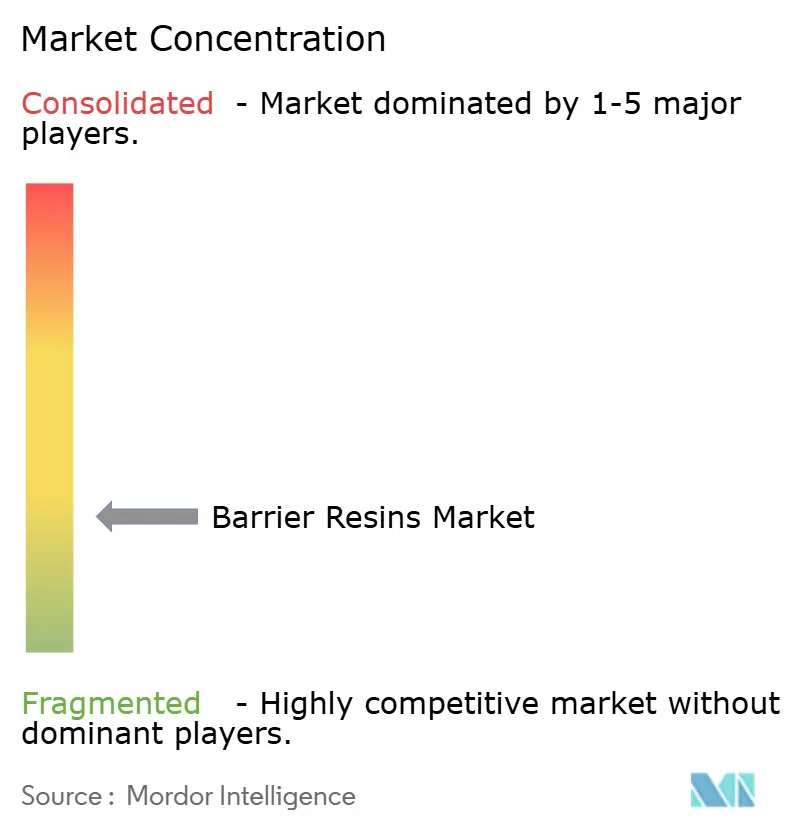
The barrier resins market is highly fragmented, with the top five players including KURARAY CO., LTD., Mitsubishi Chemical Group Corporation, Asahi Kasei Corporation, Dow, and Syensqo. In 2025, Syensqo renewed its supply agreement with Sealed Air for Ixan high-barrier polymer resin used in food packaging. Competition at the specialty level depends on material performance, reliable capacity, and sustainability credentials. Suppliers with certified bio-circular grades can address brand owner requirements for traceable materials, giving established technology suppliers a strong role in demanding applications.
KURARAY CO., LTD. is expanding its EVOH position through capacity and certification. Its report states that the Singapore plant will add 18,000 metric tons per year of EVOH capacity, is scheduled for completion at the end of 2026, and represents an investment of USD 410 million. Mitsubishi Chemical Group Corporation is developing modified EVOH chemistry and a paper coating platform based on SoarnoL. Dow has also introduced INNATE TF 220 resin for design-for-recyclability flexible packaging. These moves show that product development is focused on recyclable structures and specialized performance.
Chinese producers are becoming more relevant in mid-tier EVOH supply, with Chongqing CWS beginning commercial-scale production in 2024 and other domestic projects aimed at reducing import dependence. Incumbents can respond through bio-based and chemically recycled grades, humidity-resistant formulations, and validated recyclable multilayer structures. Arkema’s Rilsan PA11 and PA12 materials offer PA-based options for converters seeking material alternatives, while TORAY INDUSTRIES, INC. supplies advanced barrier film platforms. Competition is likely to remain strongest where converters require proven performance, food-contact compliance, and dependable technical support.
Barrier Resins Industry Leaders
-
KURARAY CO., LTD.
-
Mitsubishi Chemical Group Corporation
-
Asahi Kasei Corporation
-
Dow
-
Syensqo
- *Disclaimer: Major Players sorted in no particular order
Recent Industry Developments
- May 2026: UPM Specialty Materials and BASF collaborated to combine UPM’s barrier papers with BASF’s Joncryl HPB barrier resins for recyclable, fiber-based packaging. The collaboration supports demand for barrier resins that provide product protection while enabling alternatives to conventional plastic-based and polyethylene-laminated packaging.
- February 2026: KURARAY CO., LTD. received Association of Plastic Recyclers (APR) Design Recognition for its EVAL ethylene vinyl alcohol (EVOH) barrier resin, confirming compatibility with polyethylene film recycling streams. The recognition supports the barrier resins market by advancing high-barrier packaging materials that balance product protection with recyclability.
Global Barrier Resins Market Report Scope
Barrier resins are specialized polymer materials designed to limit the transmission of gases, moisture, and other substances through packaging and protective structures. They help preserve product quality, extend shelf life, and protect sensitive contents by providing specific barrier properties.
The Barrier Resins Market is segmented by resin type, barrier function, packaging type, end-use industry, and geography. By resin type, the market is segmented into ethylene vinyl alcohol (EVOH), polyvinylidene chloride (PVDC), polyethylene naphthalate (PEN), polyamide (PA), polyethylene terephthalate (PET), polyethylene (PE), polypropylene (PP), polyvinyl alcohol (PVA/PVOH), bio-based barrier resins, and other resin types. By barrier function, the market is segmented into oxygen and gas barrier, moisture and water-vapor barrier, and other barrier functions. By packaging type, the market is segmented into flexible packaging and rigid packaging. By end-use industry, the market is segmented into food and beverage, pharmaceutical and medical, cosmetics and personal care, agriculture, and industrial. The report also covers the market size and forecasts for barrier resins across 15 countries. For each segment, the market sizing and forecasts have been done on the basis of value (USD).
| Ethylene Vinyl Alcohol (EVOH) |
| Polyvinylidene Chloride (PVDC) |
| Polyethylene Naphthalate (PEN) |
| Polyamide (PA) |
| Polyethylene Terephthalate (PET) |
| Polyethylene (PE) |
| Polypropylene (PP) |
| Polyvinyl Alcohol (PVA/PVOH) |
| Bio-Based Barrier Resins |
| Other Resin Types |
| Oxygen and Gas Barrier |
| Moisture and Water-Vapor Barrier |
| Other Barrier Functions |
| Flexible Packaging |
| Rigid Packaging |
| Food and Beverage |
| Pharmaceutical and Medical |
| Cosmetics and Personal Care |
| Agriculture |
| Industrial |
| Asia-Pacific | China |
| India | |
| Japan | |
| South Korea | |
| ASEAN Countries | |
| Rest of Asia-Pacific | |
| North America | United States |
| Canada | |
| Mexico | |
| Europe | Germany |
| United Kingdom | |
| France | |
| Italy | |
| NORDIC Countries | |
| Rest of Europe | |
| South America | Brazil |
| Argentina | |
| Rest of South America | |
| Middle East and Africa | Saudi Arabia |
| South Africa | |
| Rest of Middle East and Africa |
| By Resin Type | Ethylene Vinyl Alcohol (EVOH) | |
| Polyvinylidene Chloride (PVDC) | ||
| Polyethylene Naphthalate (PEN) | ||
| Polyamide (PA) | ||
| Polyethylene Terephthalate (PET) | ||
| Polyethylene (PE) | ||
| Polypropylene (PP) | ||
| Polyvinyl Alcohol (PVA/PVOH) | ||
| Bio-Based Barrier Resins | ||
| Other Resin Types | ||
| By Barrier Function | Oxygen and Gas Barrier | |
| Moisture and Water-Vapor Barrier | ||
| Other Barrier Functions | ||
| By Packaging Type | Flexible Packaging | |
| Rigid Packaging | ||
| By End-Use Industry | Food and Beverage | |
| Pharmaceutical and Medical | ||
| Cosmetics and Personal Care | ||
| Agriculture | ||
| Industrial | ||
| By Geography | Asia-Pacific | China |
| India | ||
| Japan | ||
| South Korea | ||
| ASEAN Countries | ||
| Rest of Asia-Pacific | ||
| North America | United States | |
| Canada | ||
| Mexico | ||
| Europe | Germany | |
| United Kingdom | ||
| France | ||
| Italy | ||
| NORDIC Countries | ||
| Rest of Europe | ||
| South America | Brazil | |
| Argentina | ||
| Rest of South America | ||
| Middle East and Africa | Saudi Arabia | |
| South Africa | ||
| Rest of Middle East and Africa | ||
Key Questions Answered in the Report
What is the size of the barrier resins market?
The Barrier Resins Market size was valued at USD 15.27 billion in 2026 and is estimated to grow from USD 16.01 billion in 2027 to reach USD 20.66 billion by 2032, at a CAGR of 5.23% during the forecast period (2027-2032).
What is driving demand for barrier resins?
Longer food shelf life, pharmaceutical cold-chain packaging, recyclable mono-material designs, and PFAS-free material substitution support demand.
Which resin type held the largest share in 2026?
EVOH held a 24.86% share in 2026.
Which packaging type held the largest share in 2026?
Flexible packaging held a 55.35% share in 2026.