
Market Overview
| Study Period | 2021 - 2031 |
|---|---|
| Forecast Data Period | 2026 - 2031 |
| Base Year Market Size (2025) | USD 83.41 Million |
| Market Size (2026) | USD 89.56 Million |
| Market Size (2031) | USD 127.64 Million |
| Growth Rate (2026 - 2031) | 7.38 % |
| Market Concentration | Medium |
Major Players *Disclaimer: Major Players sorted in no particular order Image © Mordor Intelligence. Reuse requires attribution under CC BY 4.0. | |
Australia Water Enhancer Market Analysis by Mordor Intelligence
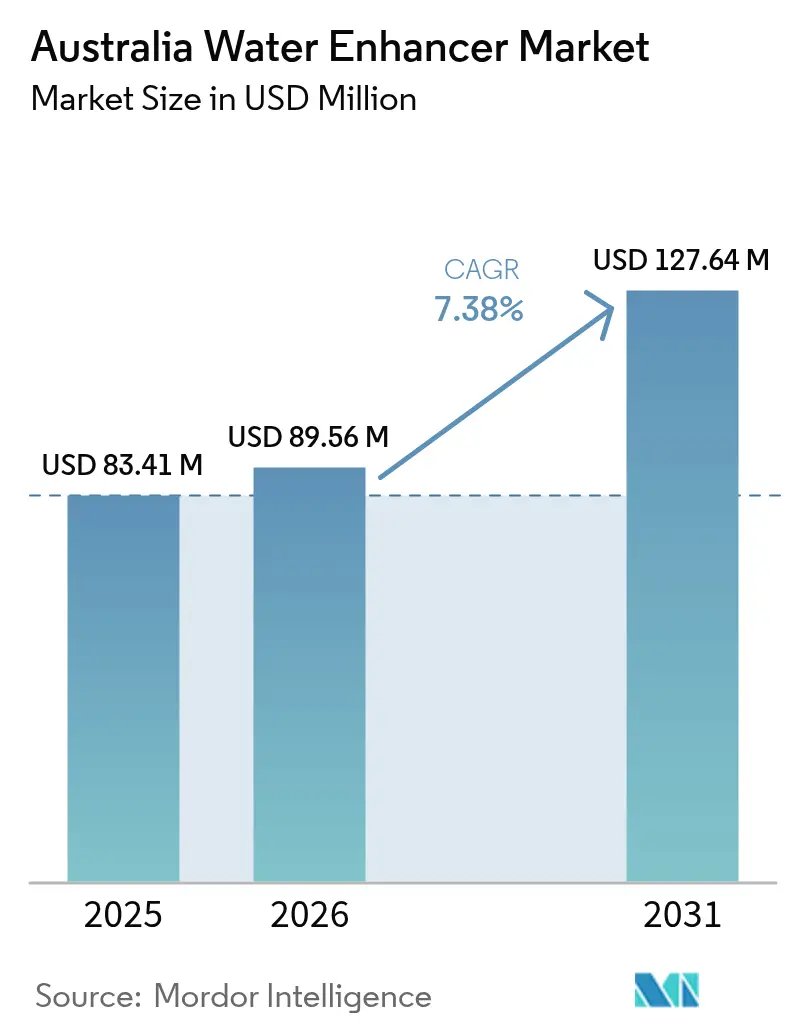
Australia water enhancers market size in 2026 is estimated at USD 89.56 million, growing from 2025 value of USD 83.41 million with 2031 projections showing USD 127.64 million, growing at 7.38% CAGR over 2026-2031. Health-conscious consumers, coupled with favorable regulations on sweeteners, are driving revenue growth. This surge occurs amidst competition for shelf space between flavored bottled water and other ready-to-drink (RTD) options. Producers are leveraging zero-calorie claims and natural flavor systems, often bundling promotions with reusable bottles, aligning closely with consumer priorities centered on wellness and sustainability. There's a noticeable shift in focus: moving from mere taste customization to performance hydration, highlighted by the rising popularity of functional extensions like electrolyte and branched-chain amino acid (BCAA) blends. Additionally, climate-driven events, such as outdoor work and sports, have intensified demand in states with higher temperatures. Meanwhile, online subscription models are challenging the traditional dominance of supermarkets, streamlining replenishment and extending their reach into regional communities.
Key Report Takeaways
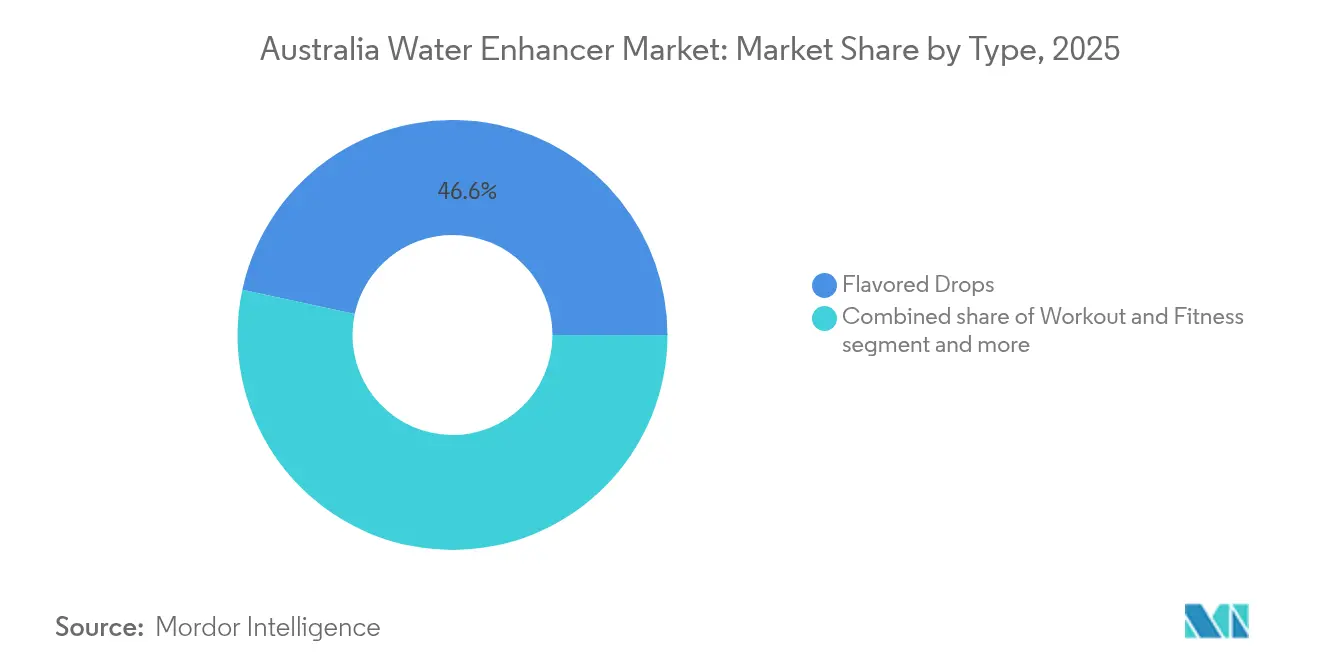
- By product type, flavored drops led with a 46.62% Australia water enhancers market share in 2025 and are on course for a 6.74% CAGR between 2026–2031, while workout and fitness enhancers are forecast to grow at the fastest 8.01% CAGR over the same horizon.
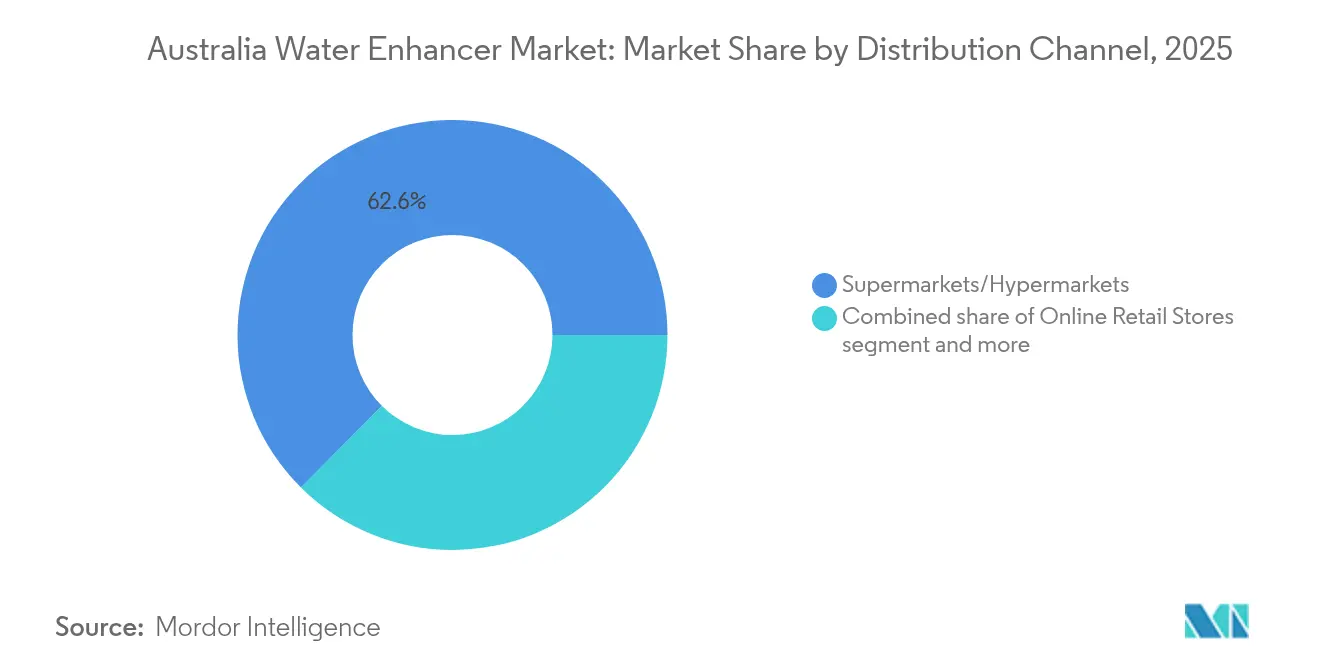
- By distribution channel, supermarkets and hypermarkets controlled 62.55% of the Australia water enhancers market size in 2025; online retail is set to expand at a 7.63% CAGR through 2031.
Note: Market size and forecast figures in this report are generated using Mordor Intelligence’s proprietary estimation framework, updated with the latest available data and insights as of 2026.
Market Trends and Insights
Drivers Impact Analysis of Australia Water Enhancer Market*
| Driver | (~) % Impact on CAGR Forecast | Geographic Relevance | Impact Timeline |
|---|---|---|---|
| Health-conscious consumers replacing sugary beverages | +1.8% | National, stronger in Sydney, Melbourne, Brisbane | Medium term (2-4 years) |
| Portability and convenience of drops/cubes | +1.2% | Regional areas with limited retail density | Short term (≤ 2 years) |
| New product launches emphasizing natural, zero-sugar claims | +1.5% | Premium SKUs in metropolitan markets | Medium term (2-4 years) |
| Heat-resistant formulations for out-of-home occasions | +0.9% | Northern Territory, Queensland, Western Australia | Long term (≥ 4 years) |
| Retailers in CDS-driven states bundling enhancers with reusable bottles | +0.6% | Container Deposit Scheme (CDS)-active jurisdictions | Short term (≤ 2 years) |
| Wide availability and merchandising in retail stores | +1.0% | National, with supermarket chains driving volume | Medium term (2-4 years) |
| Source: Mordor Intelligence | |||
Health-conscious consumers replacing sugary beverages
Australian adults are cutting back on added sugars, shifting their spending from carbonated soft drinks to low-calorie flavor solutions. This trend reflects growing health consciousness and a desire to reduce sugar-related health risks. Medical advocates push for a sugar levy, highlighting the metabolic risks of sweetened drinks and intensifying scrutiny on labels. Enhancers based on stevia and sucralose cater to sweet cravings while adhering to Food Standards Australia New Zealand (FSANZ) intake limits. These enhancers not only provide a healthier alternative but also align with regulatory standards, ensuring consumer safety. The economics are compelling: a 45 ml bottle, offering 90 servings, is significantly cheaper per liter than bottled flavored water. As grocery budgets tighten, households are increasingly viewing enhancers as a budget-friendly means to achieve healthier hydration, making them an attractive option for cost-conscious consumers.
Portability and convenience of drops/cubes format
Liquid concentrates and micro-cubes, designed to fit easily into pockets and handbags, effectively address the bulkiness issue of RTD bottles. This innovation is particularly beneficial for commuters, students, and office workers who prioritize convenience and portability in their daily routines. A mere 45 ml pack can produce approximately 18 liters of flavored water, all while weighing in at under 50 grams. This lightweight design not only promotes ease of use but also aligns with the Container Deposit Scheme (CDS) incentives, which encourage the use of reusable bottles to reduce waste. Furthermore, retailers are leveraging cross-merchandising opportunities by pairing these enhancers with stainless-steel drinkware, leading to increased basket sizes at checkouts and driving additional sales.[1] Online specialty stores are also tapping into this growing demand by offering subscription bundles that automate the restocking process, ensuring consumers never run out of their preferred products. These combined strategies create a seamless portability and convenience proposition that competitors in the RTD market find difficult to replicate, giving liquid concentrates and micro-cubes a distinct edge.
New product launches emphasizing natural, zero-sugar claims
Brand owners are racing to outdo one another with clean labels, increasingly turning to fruit concentrates, botanical extracts, and plant-based sweeteners to meet growing consumer demand for healthier and more transparent ingredient lists. Waterdrop’s microdrink cubes, which combine fruit and vitamin powders, have made their way to Woolworths nationwide and are gaining visibility as the hydration partner for the Australian Open 2025, a move that aligns with its strategy to target health-conscious and active consumers. PepsiCo’s Gatorade Hydration Booster, which made its debut overseas with a zero-sugar formulation, is now poised for an Australian launch through Asahi’s bottling network, leveraging its established distribution channels to capture market share. Vital Zing has ventured into soda flavors, aiming to attract those switching from soft drinks, all while maintaining its natural brand image to appeal to a broader audience seeking healthier alternatives. This steady stream of product launches not only keeps consumers engaged but also revitalizes shelf space in both supermarkets and e-commerce platforms, ensuring brands remain competitive in an evolving market landscape.
Heat-resistant formulations for out-of-home occasions
In Queensland, Northern Territory, and Western Australia, summer heatwaves frequently exceed 35 °C, jeopardizing the flavor stability of standard liquids[2]. This creates a significant challenge for beverage brands aiming to maintain product quality in extreme conditions. To address this, brands gain a competitive edge for outdoor activities, road trips, and sports with powder cubes and advanced liquid bases that resist separation, ensuring consistent performance even in high temperatures. Mining firms, recognizing the value of hydration solutions, incorporate electrolyte drops into worker hydration kits, ensuring trial usage among their workforce and promoting adoption in demanding environments. Powerade Drops capitalizes on its sports equity to appeal to active consumers, whereas Waterdrop’s cube sidesteps spill risks in sweltering vehicles, offering a practical solution for on-the-go hydration. With a durable taste even in high temperatures, these innovative products find consumption occasions extending well beyond the traditional household kitchen, catering to diverse consumer needs.
Restraints Impact Analysis of Australia Water Enhancer Market*
| Restraint | (~) % Impact on CAGR Forecast | Geographic Relevance | Impact Timeline |
|---|---|---|---|
| Competition from flavored bottled water, RTD teas, functional beverages | -1.1% | National, strongest among urban millennials | Medium term (2-4 years) |
| FSANZ reviews of high-intensity sweetener acceptable daily intakes | -0.5% | National, tied to federal regulation | Medium term (2-4 years) |
| Competition from flavored bottled water, RTD teas, functional beverages | -1.1% | National, with premium RTD brands capturing urban millennials | Medium term (2-4 years) |
| Consumer skepticism about product classification and efficacy | -0.4% | National, particularly among older demographics unfamiliar with category | Short term (≤ 2 years) |
| Source: Mordor Intelligence | |||
Competition from flavored bottled water, rtd teas, and functional beverages
RTD brands, strategically positioned in prime cooler facings, are successfully tapping into impulse buys at petrol stations and convenience outlets[3]. These placements ensure high visibility and capitalize on consumer behavior driven by convenience and immediacy. Premium sparkling waters, priced between AUD 3–6 per bottle, are drawing in shoppers seeking immediate refreshment, with offerings from industry giants like Coca-Cola and Asahi. These products cater to a growing demand for premium, on-the-go beverages. Meanwhile, RTD tea lines are emphasizing antioxidant and probiotic benefits, aligning with the functional promises of enhancers and appealing to health-conscious consumers. Start-ups such as Nexba and Remedy are harnessing the power of social influencers to boost brand visibility on digital platforms, effectively reaching younger, tech-savvy audiences. However, the prominent display of chilled RTDs is overshadowing enhancers, limiting their visibility and potentially diverting converts from the category. This visual dominance in retail spaces poses a challenge for enhancers to capture consumer attention and expand their market share.
FSANZ reviews of high-intensity sweetener acceptable daily intakes
FSANZ keeps a close watch on global toxicology updates, periodically reassessing the safety of stevia, sucralose, and acesulfame-K. If intake thresholds tighten, brands might have to cut back on sweetener dosages per serving. This not only complicates formulations but also drives up costs, as manufacturers may need to invest in alternative ingredients or technologies to maintain product quality. Such reformulations could change the taste, potentially pushing consumers towards other hydration options, thereby impacting market share. Additionally, labels might need more prominent warnings, which could tarnish the perception of the category as a healthy choice and deter health-conscious consumers. Thus, the looming regulatory scrutiny adds a layer of strategic uncertainty to R&D plans, forcing companies to reassess their innovation strategies and timelines.
*Our forecasts treat driver/restraint impacts as directional, not additive. The impact forecasts reflect baseline growth, mix effects, and variable interactions.
Australia Water Enhancer Market Segment Analysis
By Product Type:
Electrolyte Blends Outpace Flavor-Only OfferingsIn 2025, flavored drops captured 46.62% of the Australia water enhancers market, thanks to their widespread appeal for daily hydration across various age groups. Priced lower per serving than their functional counterparts, these drops encourage repeat purchases and dominate shelf space in supermarkets and convenience stores. With a diverse flavor range, they attract casual consumers who prioritize taste over nutritional claims, solidifying their brand presence amidst evolving preferences. The segment thrives on its easy accessibility and habit-forming allure, maintaining its volume lead even as performance-driven options rise in popularity. Additionally, their versatility allows consumers to customize water to their taste preferences, making them a convenient and appealing choice for on-the-go hydration. This adaptability ensures their continued relevance in a market where consumer preferences are constantly evolving.
Electrolyte-rich variants tailored for workouts and fitness are set to lead the market with an 8.01% CAGR from 2026 to 2031, riding the wave of increasing gym memberships and a surge in endurance sports. Positioned alongside BCAAs and vitamins in sports-nutrition aisles, these premium-priced enhancers resonate with athletes and fitness enthusiasts. To combat competition from soft drinks, manufacturers have introduced caffeine-infused variants targeting students and shift workers. Innovations like heat-stable carriers and microencapsulation techniques ensure flavor stability, even in extreme climates. Furthermore, these products cater to the growing demand for functional beverages that support hydration and recovery, making them an essential part of active lifestyles. Additionally, strategies like cross-promotions with reusable bottles, loyalty apps, and influencer-driven recipes amplify engagement, attracting both casual drinkers and dedicated enthusiasts. These marketing efforts not only boost brand visibility but also foster a sense of community among users, further driving category growth.

By Distribution Channel:
Online Subscriptions Cut Replenishment FrictionIn 2025, supermarkets and hypermarkets led Australia's water enhancers market, capturing 62.55% of national sales. Their success stemmed from savvy end-cap displays, enticing multi-buy promotions, and shoppers' familiarity with nearby beverage categories. By strategically placing products near water, sports drinks, and health snacks, these retailers encouraged trial purchases from health-conscious grocery shoppers. The channel's high foot traffic and impulse buying tendencies solidified its status as the go-to venue for everyday hydration enhancers.
On the other hand, pure-play e-commerce and direct-to-consumer platforms emerged as the fastest-growing channel, boasting a 7.63% CAGR. Their growth was fueled by subscription discounts and enticing free-shipping offers, which in turn boosted the average order value. These online platforms granted regional households and convenience-store shoppers access to a wider assortment than what local physical shelves could provide. Furthermore, influencer campaigns on social media, featuring unboxings and flavor-mix challenges, funneled traffic directly to brand websites, enhancing consumer engagement and retention. While niche channels like pharmacies, gyms, and specialty health stores remained vital for premium electrolyte formulations, petrol stations ventured into single-serve sachets for spontaneous road-trip purchases, despite facing limited shelf space. This varied channel landscape shields the market from becoming overly dependent on any single retailer's bargaining power.
Geography Analysis
New South Wales and Victoria, home to the largest metropolitan clusters, dominate in premium SKU turnover and swiftly embrace novel formats. Urban consumers in these states boast higher discretionary incomes and show a pronounced willingness to invest in natural claims, recyclability, and vitamin fortification. These preferences align with the growing trend of health-conscious and environmentally aware purchasing behaviors, making these regions key markets for premium and innovative products. Meanwhile, Queensland's tropical climate and outdoor lifestyle drive a heightened demand for electrolyte drops, especially those resilient to vehicle and backpack heat. This demand is further fueled by the state's active participation in outdoor activities and sports, where hydration solutions are essential. In Western Australia, the mining sector's prominence lends credibility to performance hydration, with electrolyte powders becoming staples in workplace health protocols. The physically demanding nature of mining work and the harsh environmental conditions make hydration products a necessity, embedding them into daily routines.
Across all states and territories, active Container Deposit Schemes bolster the habit of using reusable bottles. Retailers capitalize on this trend, often bundling stainless-steel drinkware with starter packs of enhancers. These initiatives not only promote sustainability but also encourage consumers to adopt refillable solutions, creating a shift in consumption patterns. South Australia, a trailblazer in CDS initiatives, boasts the highest rates of container returns, solidifying a foundation for refill-friendly solutions. The state's long-standing commitment to recycling has fostered a culture of environmental responsibility, making it a leader in sustainable practices.
Victoria's CDS rollout in late 2023 spurred a surge in reusable bottle sales, with early redemption statistics hinting at lasting habit formation. This development reflects a growing consumer inclination toward sustainable and cost-effective hydration options. However, remote areas in Northern Territory and Far North Queensland grapple with e-commerce freight surcharges, hindering adoption among budget-conscious households. These logistical challenges limit access to innovative products, creating a disparity in market penetration. Despite this, state health agencies persist in funding campaigns to prevent dehydration, subtly enlightening these communities about the advantages of portable flavor solutions. These campaigns play a crucial role in raising awareness and educating consumers on the benefits of hydration enhancers, gradually driving adoption even in underserved regions.
Regulatory Landscape
Australia water enhancers are regulated under the Australia New Zealand Food Standards Code, administered by Food Standards Australia New Zealand (FSANZ). Core compliance focuses on additive permissions (Standard 1.3.1 and Schedule 15), along with labeling and safety requirements under the FSANZ framework. Brands using high-intensity sweeteners and flavor systems must ensure ingredients are permitted and used within maximum permitted levels (MPLs) or Good Manufacturing Practice (GMP), and any new additive use or change in permitted conditions follows an evidence-backed application pathway outlined in the FSANZ Application Handbook (updated September 2025).
Product classification is also a regulatory hinge for innovation and claims. Standard 2.6.2 sets tight compositional limits on packaged water, while enhancer formats positioned as formulated beverages, electrolyte mixes, or sports-related hydration products typically draw on different permissions for additives and functional ingredients within the Code. FSANZ also periodically reassesses toxicology and acceptable daily intakes for sweeteners such as stevia, sucralose, and acesulfame-K, which keeps formulation and labeling diligence relevant for suppliers pursuing zero-sugar positioning.
Competitive Landscape
In Australia water enhancer market characterized by moderate concentration, beverage giants like Coca-Cola, PepsiCo, and Nestlé dominate shelf negotiations. However, these multinationals are honing in on ready-to-drink (RTD) lines, inadvertently carving out opportunities for niche brands. Waterdrop, a rising player, made waves with its 2025 roll-out at Woolworths, leveraging an innovative cube format. This design not only enhances portability but also champions sustainability, filling gaps left by traditional liquid competitors. Meanwhile, Coca-Cola Europacific Partners is bolstering its Moorabbin plant, signaling robust confidence in the enduring demand for concentrates and powders. In tandem, Powerade Drops is broadening the company's foothold in the sports domain.
Vital Zing is making strides with its stevia-infused formulations, leveraging competitive pricing through niche online outlets. This strategy has garnered a loyal following, especially among keto enthusiasts and diabetics who prioritize health-conscious and low-sugar options. On another front, Hydralyte is adeptly navigating both OTC pharmacies and the broader wellness arena, highlighting the functional appeal of its offerings. Its dual positioning allows it to cater to consumers seeking hydration solutions for both medical and lifestyle purposes.
Today's marketing strategies have shifted gears. Instead of traditional TV spots, there's a pronounced emphasis on athlete endorsements, collaborations with esports, and engaging TikTok challenges. This evolution underscores a strategic pivot towards a digitally-savvy consumer base. As the Australia water enhancers market charts its growth, key players are doubling down on investments in heat-stable chemistries, clean labels, and a robust omnichannel distribution strategy, carving out a distinct competitive edge.
Australia Water Enhancer Industry Leaders
-
The Coca-Cola Company
-
Kraft Heinz Company
-
Keurig Dr Pepper, Inc.
-
Wisdom Natural Brands
-
Bolero Drink Australia
- *Disclaimer: Major Players sorted in no particular order

Australia Water Enhancer Market Companies Covered in this Report
- The Kraft Heinz Company (MiO)
- The Coca-Cola Company (Powerade Drops)
- PepsiCo Inc. (Gatorade/Pure Kick)
- Waterdrop GmbH
- Vital Zing Ltd.
- Wisdom Natural Brands (SweetLeaf)
- Dyla LLC (Stur, Everly)
- Keurig Dr Pepper Inc.
- Bolero Drink Australia
- Nestle S.A. (Nuun)
- Heartland Food Products Group
- Asahi Beverages
- Britvic plc
- Hydralyte Australia
- Nu-Pure Beverages
- Cott Beverages
- Bionade Australia
- G Fuel Australia
- FlavorSplash (Aust.)
- MyWater Australia
Market Opportunities and Future Outlook
A clear opportunity is expanding functional hydration propositions beyond flavor-only drops, using electrolyte, vitamin, and performance-hydration positioning that fits with Australia's broader functional nutrition direction. This adjacency is strengthening, supported by Danone's June 2026 deals to consolidate Australian assets and scale functional nutrition platforms (YoPRO, Activia, Ultimate). That tends to increase retailer attention and consumer familiarity with function-led food and beverage propositions, which water enhancers can complement when brands build basket-driven offerings.
Space for channel and format development is still visible in Australia's functional beverage landscape, where IBISWorld estimates 117 businesses as of 2026. That base supports localized innovation and retailer-led ranging in pharmacies, clubs, and online subscriptions alongside supermarkets. Regulatory structure also influences where new SKUs can be built: Standard 2.6.2 constrains packaged water compositions, while Schedule 15 and Standard 1.3.1 provide more direct pathways for additive use in non-alcoholic beverage-style products when deployed within GMP/MPL limits. As a result, companies often pursue separate pipelines for everyday clean-label flavor boosters and distinct functional SKUs for sports, outdoor work, and heat-exposed occasions where stability and electrolyte delivery matter for repeat purchase.
Recent Industry Developments in Australia Water Enhancer Market
- June 2026: Danone strengthened its Australia footprint through deals that consolidated its presence, including acquiring healthy food and nutrition group Made and consolidating its majority stake in its fresh dairy joint venture with Saputo. The moves reinforced Danone's focus on scaling functional nutrition platforms in-market, raising competitive and retail emphasis on function-led wellness propositions that overlap with hydration and performance positioning.
- September 2025: Waterdrop expanded nationwide distribution at Woolworths, rolling out five microdrink cube variants across about 900 stores, covering close to 90% of the retailer's Australian footprint. The shelf placement in health-food aisles improved mainstream visibility for cube-based enhancers and increased competitive pressure on liquid-drop incumbents to match portability and sustainability cues.
- October 2024: Posca Hydrate launched a sugar-free sparkling hypertonic beverage in Australia, distributed through convenience stores, petrol stations, and fitness centers. The rollout broadened consumer exposure to functional hydration formats and intensified substitution pressure around impulse channels where enhancers have comparatively limited shelf presence.
Australia Water Enhancer Market Report Scope and Research Methodology
Market Definition and Coverage
This market covers retail sales of water enhancer products in Australia that are added to plain water for flavor and, in some cases, functional benefits such as electrolytes. The sizing is in value terms (USD) and follows products across common retail and online purchase routes.
Scope exclusions: It excludes ready-to-drink flavored water and sports drinks that are consumed as packaged beverages rather than concentrates added into water.
Segments Covered in This Report
- By Product Type
- Energy Drops
- Workout and Fitness (Electrolyte / BCAA)
- Flavoured Drops
- By Distribution Channel
- Supermarket/Hypermarket
- Convenience Stores
- Online Retail Stores
- Other Distribution Channels
Data Sources, Market Sizing, and Validation
Desk Research
Desk research is used to build the basic fact base that our model needs before any assumptions are applied. We reviewed public statistics and reference sources such as the Australian Bureau of Statistics for population and household spend signals, the Australian Government Department of Health and Aged Care for nutrition and labeling context, and Food Standards Australia New Zealand for ingredient and sweetener related rules that shape product formulation and claims.
To ground the selling environment, we also checked retailer category pages and public price points, company annual reports and investor presentations for Australia revenue commentary, and reputable press coverage for new launches and channel shifts. Where it helped fill gaps, we used paid subscriptions for company financials and news screening, and for patent and innovation scanning to understand how product formats are moving. These desk sources are illustrative only, and many other public materials were also used for data collection, cross-checks, and clarification.
Primary Interviews and Surveys
Primary work was used to test what we could not reliably infer from public sources, especially the split between flavor-first concentrates and functional formats, and how pricing changes are being passed through at shelf and online. We spoke with a mix of brand-side roles, distributors, and retail category stakeholders across Australia so the assumptions could be stress-tested before finalizing the market model.
Distribution of primary research fieldwork respondents
| Company type | Respondent position |
|---|---|
| Top tier: 39% | CXOs: 12% |
| Mid tier: 45% | Functional/Unit leaders: 43% |
| Smaller Players: 16% | Managers: 45% |
Market-Sizing & Forecasting
The market was sized using a top-down approach where consumer demand signals and retail channel structure are translated into an annual value pool for water enhancers in Australia, and then split across the main purchase routes. To keep the totals realistic, we corroborated the outcome with selective bottom-up approximations, such as sampled shelf price points times expected unit movement ranges, followed by distributor and channel checks to adjust the final value.
Key inputs used in the model include the share of shoppers buying portable flavor concentrates, average pack sizes and typical serving counts, channel mix shifts toward online, and observed price ladder changes between mainstream and functional SKUs. We also track product claim trends, for example electrolyte positioning, because these often move the average selling price and repeat purchase rates. For forecasting, scenario analysis was applied around price progression and adoption rates, and then the final trajectory was aligned to expert consensus gathered in interviews so the growth path stays practical rather than aggressive.
Data Validation & Update Cycle
Validation is done through multiple checks before numbers are signed off. We compare outputs against independent signals like visible price bands, promotional intensity, and the pace of new product activity, and then review any large variances by revisiting assumptions and re-contacting sources when needed.
Each report is refreshed annually, and interim updates are made when major shifts occur, such as regulation changes, large pricing resets, or clear channel disruptions. Before delivery, an analyst completes a final pass across key inputs and calculations so clients receive the most current view available at the time.
Mordor Intelligence's Australia Water Enhancer Market Size Compared With Other Published Estimates
Published market values for this space can differ because the product definitions are easy to stretch, and because some publishers mix concentrates with adjacent ready-to-drink options. Differences also come from which year is treated as the current base, how prices are converted into USD, and how quickly online sales and functional claims are assumed to expand.
The main gap comes from whether ready-to-drink flavored or functional waters are counted alongside concentrates, and in Mordor Intelligence's model only products intended to be added into water (drops, squeezes, or similar concentrate formats) are included, which keeps the value tied to enhancer purchases. Another driver is pricing, where some estimates apply a broad inflation lift, while others rebuild pricing by format and channel and then validate it using current shelf ranges and interview feedback.
Benchmark comparison
| Source | Market Size | Gaps in Research Methodology |
|---|---|---|
| Mordor Intelligence | USD 83.41 M (2025) | |
| Global Consultancy A | USD 161.30 M (2023) | Uses an earlier base year and a broader definition that can fold in powdered hydration mixes and adjacent functional hydration add-ins, which increases the total beyond concentrate-only enhancers. The method also appears to rely on a single headline CAGR across 2024 to 2031, which can smooth out channel and format level pricing differences. |
| Trade Publisher B | USD 287.60 M (2031) | Presents a long-horizon endpoint figure without clearly separating value growth from volume growth, and the scope language suggests inclusion of wider hydration and wellness add-ins. If ready-to-drink substitutes and broader functional categories are treated as part of enhancers, the forecast ceiling becomes structurally higher. |
Across the three figures, the spread is mostly explained by scope and base-year alignment, followed by how price and format mix are handled over time. By keeping the inputs tied to concentrate usage, channel-level pricing, and adoption assumptions checked through interviews, our sizing stays traceable and repeatable year after year.
Key Questions Answered in the Report
How large will Australia’s water-flavor segment be by 2031?
Forecasts indicate the Australia water enhancers market will reach USD 127.64 million by 2031, expanding at a 7.38% CAGR.
Which product type is growing the fastest?
Workout and fitness enhancers, rich in electrolytes and BCAAs, are projected to log the highest 8.01% CAGR between 2026–2031.
Where do most shoppers buy enhancers today?
Supermarkets and hypermarkets contribute 62.55% of 2025 sales, benefiting from high foot traffic and promotional displays.
Are online subscriptions significant for repeat purchase?
Yes, direct-to-consumer websites and pure-play e-commerce are the fastest-growing channels, advancing at a 7.63% CAGR through 2031.