
APAC Bio-Medical Waste Management Market Size and Share
| Study Period | 2020 - 2030 |
| Forecast Data Period | 2025 - 2030 |
| Historical Data Period | 2020 - 2023 |
| Market Size (2025) | USD 10.81 Billion |
| Market Size (2030) | USD 13.03 Billion |
| CAGR (2025 - 2030) | 3.81% |
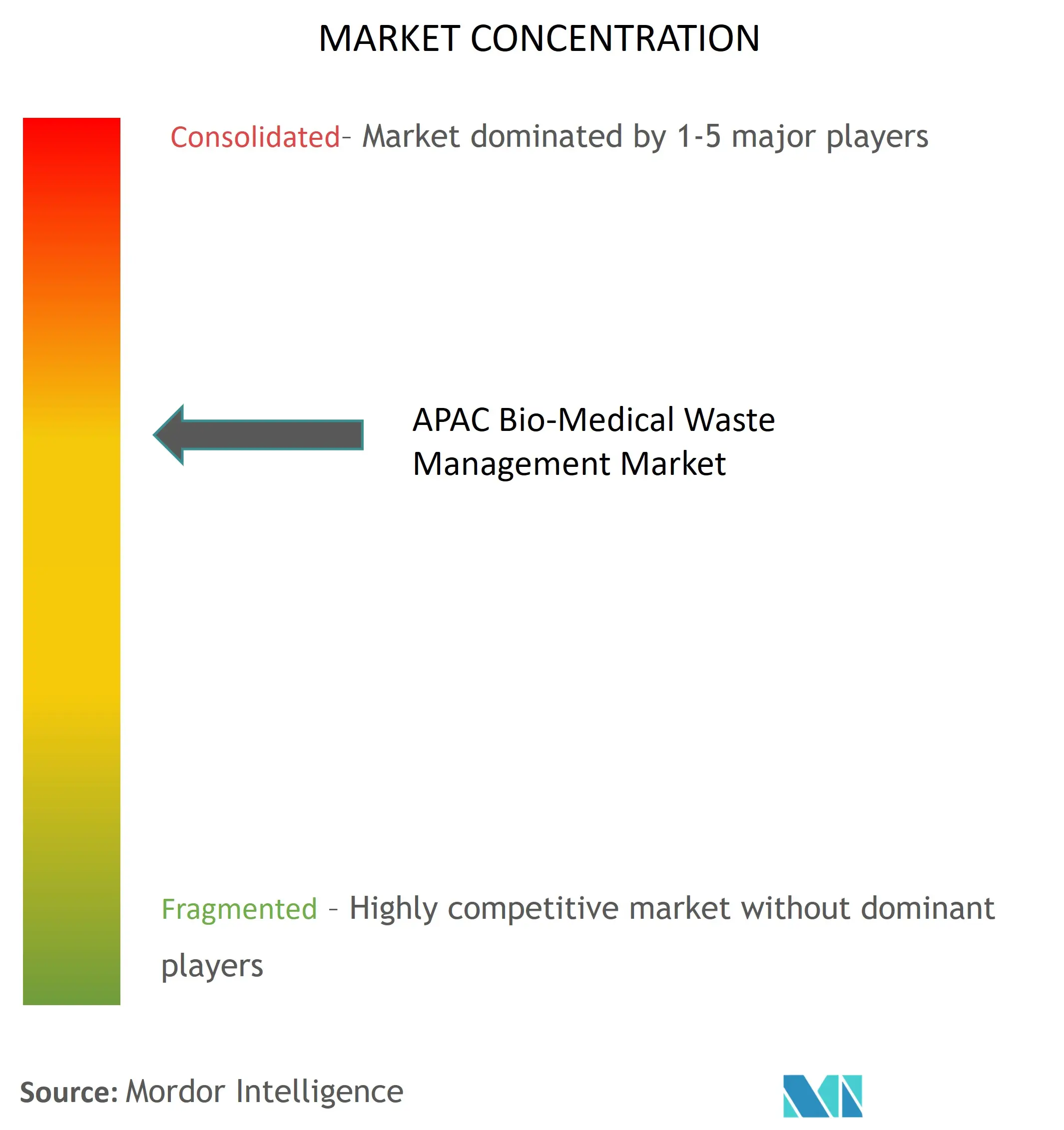
| Market Concentration | Medium |
Major Players *Disclaimer: Major Players sorted in no particular order |
APAC Bio-Medical Waste Management Market Analysis by Mordor Intelligence
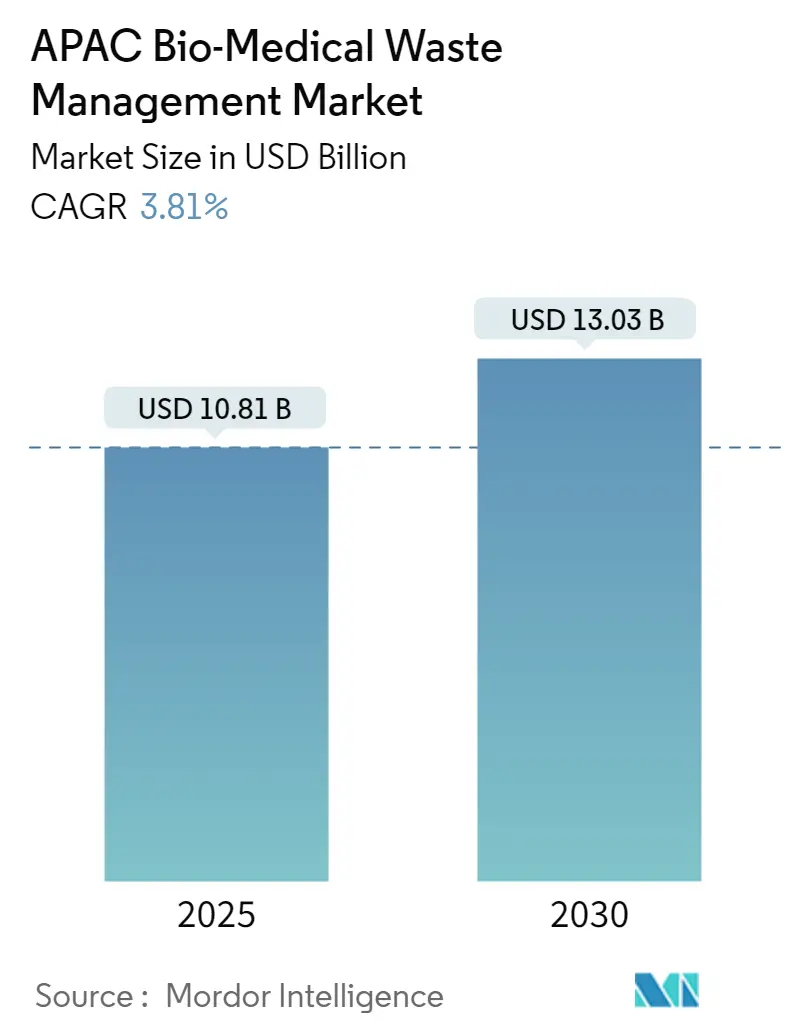
The APAC Bio-Medical Waste Management Market size is estimated at USD 10.81 billion in 2025, and is expected to reach USD 13.03 billion by 2030, at a CAGR of 3.81% during the forecast period (2025-2030).
The APAC Bio-Medical Waste Management Market focuses on the collection, treatment, and disposal of waste generated from healthcare facilities like hospitals, clinics, laboratories, and research institutions. This market is driven by stringent government regulations, the growing healthcare sector, and increasing awareness about the environmental impact of improper biomedical waste disposal.
India generates approximately 700 TPD of biomedical waste, with 640 TPD being treated, despite a combined treatment capacity of 1,590 TPD. The reported incineration capacity of the country stands at 857 TPD while autoclaving capacity is 752 TPD.
Despite this surplus capacity, 20 states in the country resort to captive treatment measures and deep pit burials due to the lack of CBWTFs. However, the rising waste generation could pose challenges if existing gaps and leakages are not addressed. All SPCBs are urged to conduct gap analyses, estimate leakages, and strategically plan newer CBWTFs to tackle this scenario.
Vietnam, with over 13,500 medical facilities, generates roughly 22 tons of plastic waste daily. Of this, more than 65% is infectious. The prevalence of infectious plastic waste is primarily due to the extensive use of plastic in various medical applications, from equipment and tools to intravenous lines and syringes.
Recognizing the gravity of the situation, CHERAD partnered with multiple hospitals in Vietnam to pilot a circular economy model. As part of the "Reducing Pollution" project, Can Tho Central General Hospital adopted an autoclave system to disinfect medical plastic waste. This initiative includes training sessions to enhance waste separation, recycling, and community engagement.
During the pandemic, Indonesia witnessed a 30% surge in daily medical waste, totaling around 382 tonnes, up from pre-pandemic figures of 293 tonnes. This data was sourced from 2,820 hospitals and 9,884 health centers nationwide. Notably, Jakarta saw a 500% spike in medical waste at the Burangkeng landfill in Bekasi, West Java, around 30 kilometers from the capital.
Indonesia, like many nations, grapples with the challenge of non-recyclable and non-biodegradable plastic waste, leading to significant landfill accumulation. The Bantar Gebang landfill in Jakarta, Indonesia's largest, witnesses over 900 trucks daily, unloading more than 5,000 tonnes of solid waste. Recognizing the urgency, Indonesia has set an ambitious target of slashing plastic waste by 70% by 2025, with a commitment of USD 1 billion annually toward this goal.
While countries like India, Vietnam, and Indonesia are making strides in biomedical waste management, disparities exist, especially between urban and rural regions. India's rapid growth underscores the evolving landscape, with emerging economies showing marked improvements in their waste management systems.
In conclusion, the management of biomedical waste remains a critical issue for many countries, particularly in the face of increasing waste generation and the challenges posed by non-recyclable materials.
While significant progress has been made, especially in emerging economies, there is a clear need for continued investment, strategic planning, and community engagement to ensure sustainable and effective waste management practices.
The efforts of countries like India, Vietnam, and Indonesia highlight the importance of addressing both capacity and operational challenges to mitigate the environmental and health impacts of biomedical waste.
APAC Bio-Medical Waste Management Market Trends and Insights
The Hazardous Waste Segment is Dominating the Market
In the financial year 2022, South Asia saw a surge in hazardous waste production, exceeding 12 million metric tons, with almost half being deemed utilizable. A report from the Indian Journal of Pharmacy Practice highlighted that the upsurge in pharmaceutical demand directly correlates with increased drug wastage.
Data from India's Central Pollution Control Board revealed that healthcare facilities in the country collectively produce over 4,075 tons of waste daily, highlighting the growing need for effective bio-medical waste management in India. A joint assessment by WHO and UNICEF found that only 58% of healthcare facilities across 24 countries have proper pharmaceutical waste management systems in place.
The report also warns that using chemical disinfectants to treat pharmaceutical waste can inadvertently release harmful compounds into the atmosphere, posing significant health risks if mishandled.
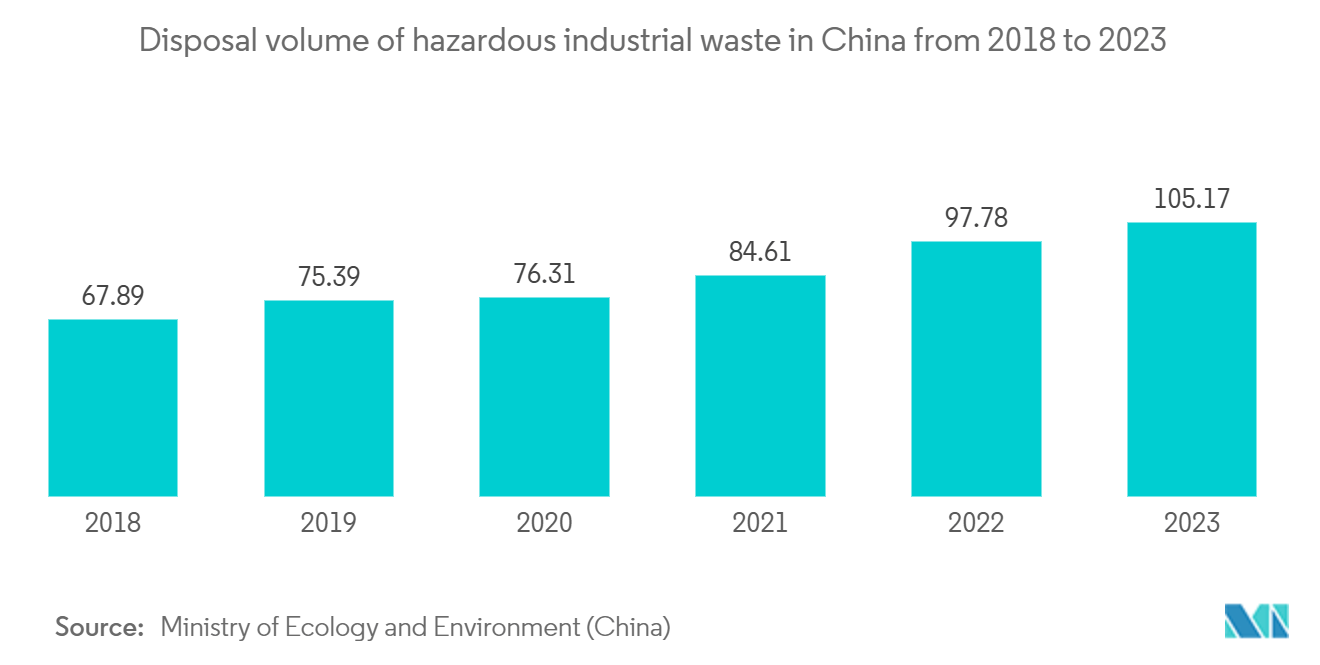
Shifting focus to Vietnam, the nation boasts over 13,500 medical facilities, collectively generating approximately 22 tons of plastic waste each day, with infectious waste accounting for over 65% of this volume. Meanwhile, in 2022, China disposed of over one million metric tons of hazardous industrial waste.
This industrial waste, spanning solid, semi-solid, and liquid forms, is inherently toxic, polluting, and hazardous if left untreated. Remediation methods encompass chemical and biological treatments, heat applications, and solidification.
In conclusion, the escalating production of hazardous waste in South Asia, Vietnam, and China underscores the urgent need for effective waste management solutions. The data highlights the critical role of proper treatment and disposal methods to mitigate health risks and environmental pollution.
As the demand for pharmaceuticals and industrial activities continues to rise, implementing robust waste management practices becomes increasingly vital to safeguard public health and the environment.


China is Poised to Lead the Market
With a population exceeding 1.4 billion, China operates a vast healthcare system that yields substantial volumes of medical waste, necessitating robust waste management solutions.
Urbanization and economic growth in China have led to the expansion of healthcare facilities, consequently escalating the generation of biomedical waste. Despite this, China's healthcare expenditure, while growing, still lags behind that of many high-income nations. Anticipating heightened pressure from an aging and increasingly affluent populace, the government plans to bolster healthcare budgets over the coming decade.
Furthermore, social expenditures are poised to be pivotal in shaping China's healthcare landscape. Xie Yaxuan, Chief Macro Analyst at China Merchants Securities, highlighted a shift in healthcare funding, with an increasing share coming from social and commercial channels, including insurance, health premiums, and social healthcare aid.
The Chinese government rolled out stringent regulations to ensure the proper disposal of medical waste, aiming to mitigate environmental and public health risks. The government established centralized disposal systems, leveraging advanced technologies like incineration, enhancing efficiency and eco-friendliness.
China's preeminence in biomedical waste management results from several factors, including its massive population and extensive healthcare system, leading to high waste generation, stringent government oversight, substantial investments in cutting-edge technologies, sustained economic growth, and increasing environmental consciousness. These elements collectively solidify China's position as a frontrunner in effective biomedical waste management.

Competitive Landscape
The bio-medical waste management market in Asia-Pacific is characterized by significant concentration, primarily led by a handful of key players. This dominance results from formidable entry barriers, substantial demands for infrastructural and technological investments, and the trend of larger entities absorbing smaller competitors.
Notable players in this landscape encompass Stericycle Inc., Veolia Environmental Services, Waste Management Inc., Clean Harbors Inc., and MedPro Disposal. Consequently, the market's competitive landscape is expected to remain stable, with these major players continuing to influence market dynamics and drive innovation.
APAC Bio-Medical Waste Management Industry Leaders
Stericycle, Inc
Veolia Environmental Services
Waste Management, Inc
Clean Harbors, Inc.
MedPro Disposal
- *Disclaimer: Major Players sorted in no particular order

Recent Industry Developments
- June 2024: The Government of Japan and UNDP delivered five specialized medical waste collection trucks to the Japanese Ministry of Health. These trucks are designated for the National Referral Hospital in Thimphu and the municipalities of Gelephu, Wangdue Phodrang, Mongar, and Phuntsholing. By ensuring prompt collection and disposal, these trucks will enhance the safe and efficient management of healthcare waste. The initiative, part of the “Project for Improvement of Infectious Waste Management,” was spearheaded by the National Medical Services under the Ministry of Health, with support from UNDP and funding from the Government of Japan. Valued at USD 2 million, this project marked the most recent collaboration in a series of Bhutan-Japan-UNDP partnerships, all aimed at fortifying the nation's health system in the wake of the COVID-19 pandemic.
- February 2023: Veolia bolstered its medical waste management services, targeting critical challenges faced by the healthcare industry and the NHS. These services aim to propel organizations toward their net-zero goals by ensuring compliant and optimized handling of waste. The enhanced capabilities specifically cater to a spectrum of clinical waste categories, including orange, yellow, red, blue, and purple. The services are tailored to manage infectious, anatomical, sharp, medicinal, cytotoxic, and cytostatic wastes. In addition to enhancing its offensive waste management, Veolia's expanded services are set to introduce a self-delivered model, offering a capacity of 15,000 tonnes of clinical waste annually, from collection to disposal. This strategic shift elevates all alternative technology (AT) waste from a D9 disposal code, with a corresponding environmental impact score of 12, from autoclaving to an R1 recovery code.


APAC Bio-Medical Waste Management Market Report Scope
Biomedical waste management encompasses several stages, i.e., waste collection, segregation, transportation, storage, treatment, and disposal. This comprehensive process includes transporting the waste to the final disposal site and ensuring its ultimate disposal.
A complete background analysis of the Asia-Pacific bio-medical waste management market, including the assessment of the economy and contribution of sectors in the economy, market overview, market size estimation for key segments, emerging trends in the market segments, market dynamics, geographical trends, and COVID-19 impact, is covered in the report.
The Asia-Pacific bio-medical waste management market is segmented by type of waste (hazardous and non-hazardous waste), service type (collection, transportation and storage, treatment and disposal, and other service types), and country (China, India, Japan, South Korea, and Rest of Asia-Pacific). The report offers market sizes and forecasts in terms of value (USD) for all the above segments.
| Hazardous |
| Non-hazardous |
| Collection |
| Transportation and Storage |
| Treatment and Disposal |
| Other Service Types |
| China |
| India |
| Japan |
| South Korea |
| Rest of Asia-Pacific |
| By Type of Waste | Hazardous |
| Non-hazardous | |
| By Service Type | Collection |
| Transportation and Storage | |
| Treatment and Disposal | |
| Other Service Types | |
| Geography | China |
| India | |
| Japan | |
| South Korea | |
| Rest of Asia-Pacific |


Key Questions Answered in the Report
How big is the APAC Bio-Medical Waste Management Market?
The APAC Bio-Medical Waste Management Market size is expected to reach USD 10.81 billion in 2025 and grow at a CAGR of 3.81% to reach USD 13.03 billion by 2030.
What is the current APAC Bio-Medical Waste Management Market size?
In 2025, the APAC Bio-Medical Waste Management Market size is expected to reach USD 10.81 billion.
Who are the key players in APAC Bio-Medical Waste Management Market?
Stericycle, Inc, Veolia Environmental Services, Waste Management, Inc, Clean Harbors, Inc. and MedPro Disposal are the major companies operating in the APAC Bio-Medical Waste Management Market.
What years does this APAC Bio-Medical Waste Management Market cover, and what was the market size in 2024?
In 2024, the APAC Bio-Medical Waste Management Market size was estimated at USD 10.40 billion. The report covers the APAC Bio-Medical Waste Management Market historical market size for years: 2020, 2021, 2022, 2023 and 2024. The report also forecasts the APAC Bio-Medical Waste Management Market size for years: 2025, 2026, 2027, 2028, 2029 and 2030.
Page last updated on:
APAC Bio-Medical Waste Management Market Report
Statistics for the 2025 APAC Bio-Medical Waste Management market share, size and revenue growth rate, created by Mordor Intelligence™ Industry Reports. APAC Bio-Medical Waste Management analysis includes a market forecast outlook for 2025 to 2030 and historical overview. Get a sample of this industry analysis as a free report PDF download.





