
Animal Feed Protein Market Size and Share
Market Overview
| Study Period | 2022 - 2032 |
|---|---|
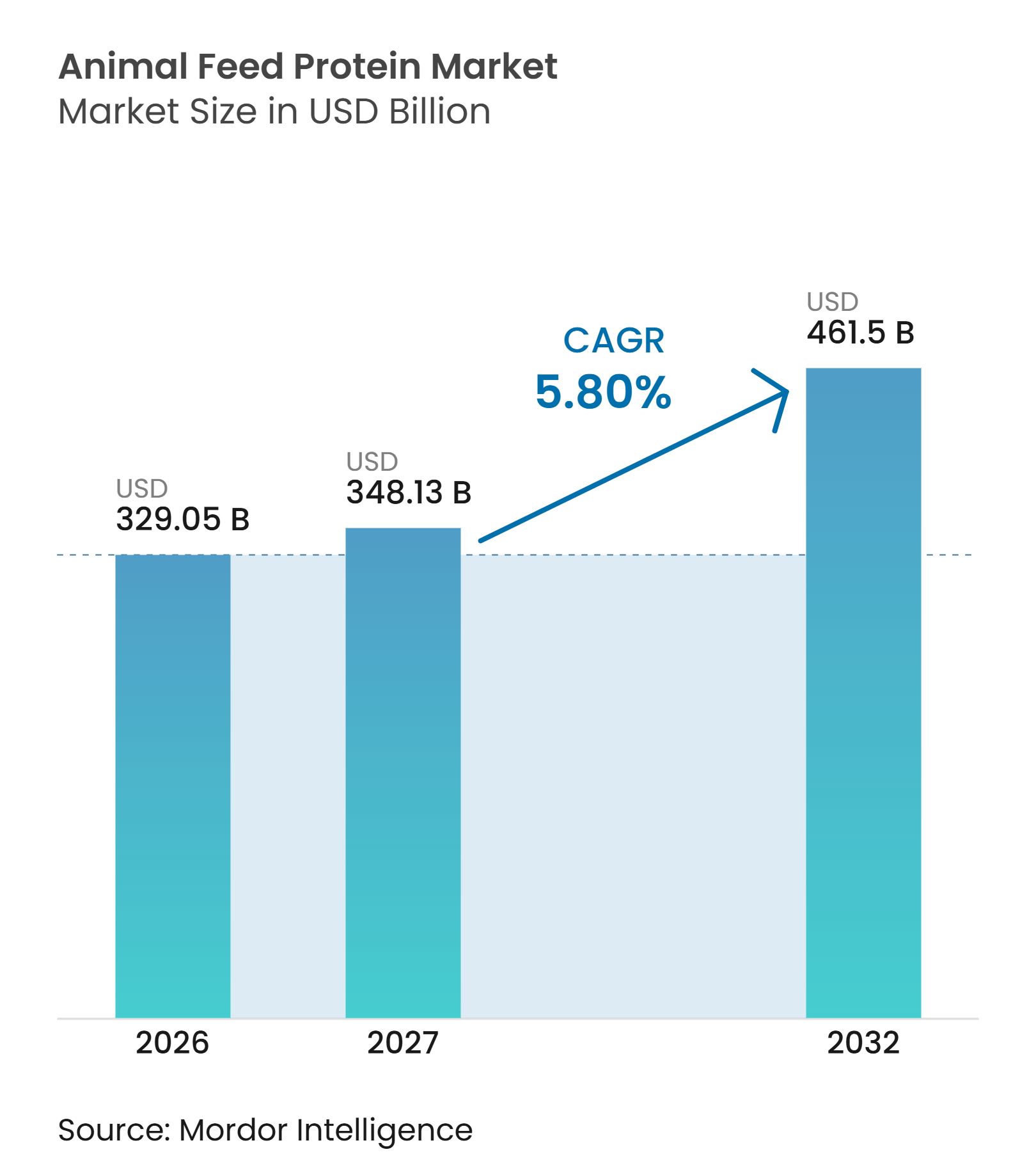
| Market Size (2027) | USD 348.13 Billion |
| Market Size (2032) | USD 461.5 Billion |
| Growth Rate (2027 - 2032) | 5.80 % |
| Fastest Growing Market | Africa |
| Largest Market | Asia-Pacific |
| Market Concentration | Medium |
Major Players *Disclaimer: Major Players sorted in no particular order Image © Mordor Intelligence. Reuse requires attribution under CC BY 4.0. | |
Animal Feed Protein Market Analysis by Mordor Intelligence
The animal feed protein market size was valued at USD 329.05 billion in 2026 and is forecast to grow from USD 348.13 billion in 2027 to USD 461.50 billion by 2032, at a CAGR of 5.80% from 2027 to 2032. The market is supported by the shift from on-farm mixing to commercial compound feed production, especially in developing livestock systems. This change increases the use of protein meals, as commercial diets are more consistent and formulated for animal performance. Aquaculture, poultry, and specialty nutrition are driving demand for protein sources with proven digestibility and reliable amino acid profiles. Large processors continue to leverage crushing capacity, trading networks, and logistics assets to maintain their positions, while specialist suppliers compete by offering species-specific formulation support. Ingredient volatility and rising traceability requirements create a clear advantage for suppliers that can offer diverse origins, stable quality, and documented sourcing.
Key Report Takeaways
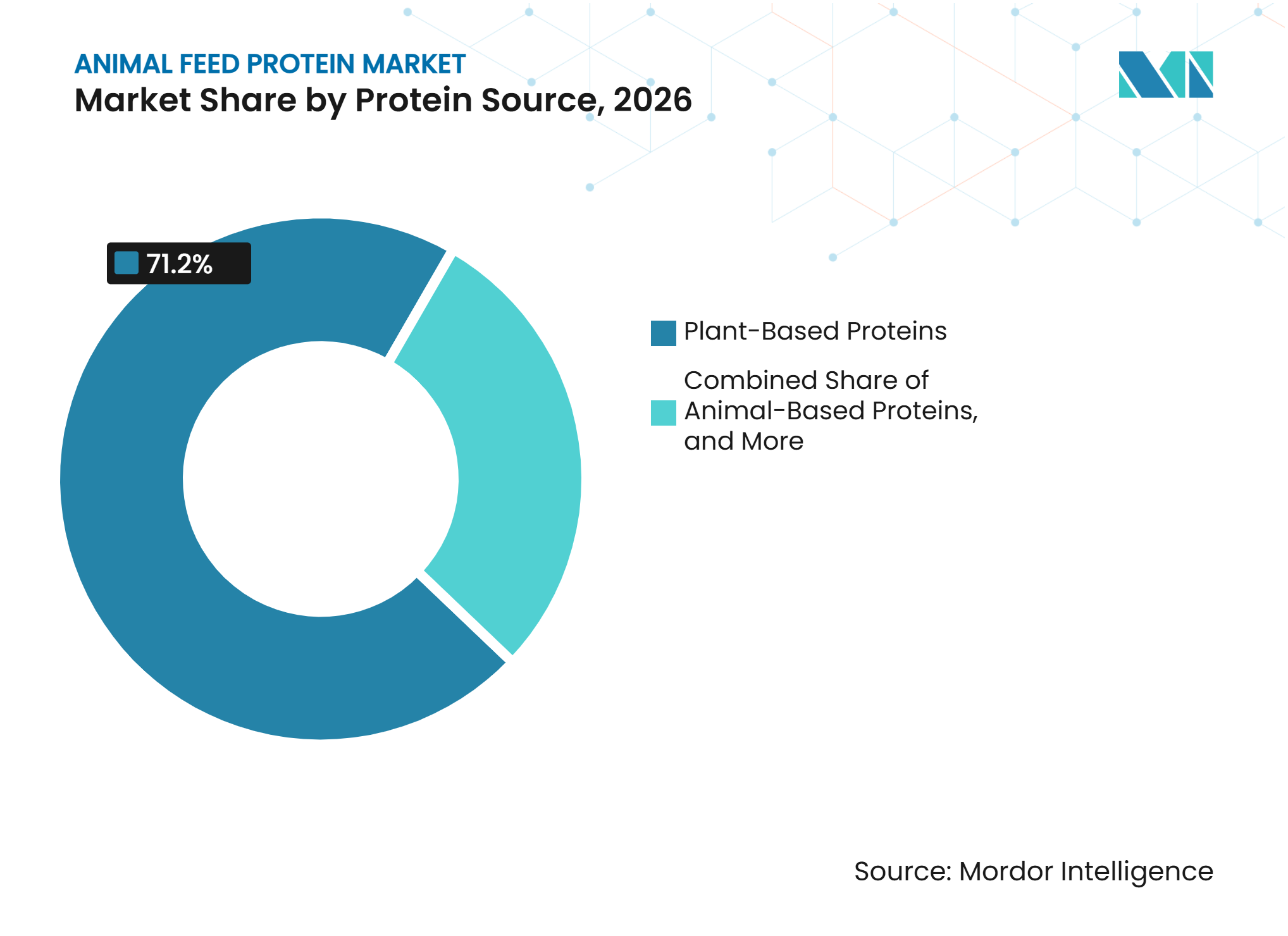
- By protein source, plant-based proteins accounted for 71.2% of the animal feed protein market share in 2026, while alternative proteins are forecast to grow at an 8.0% CAGR from 2027 to 2032.
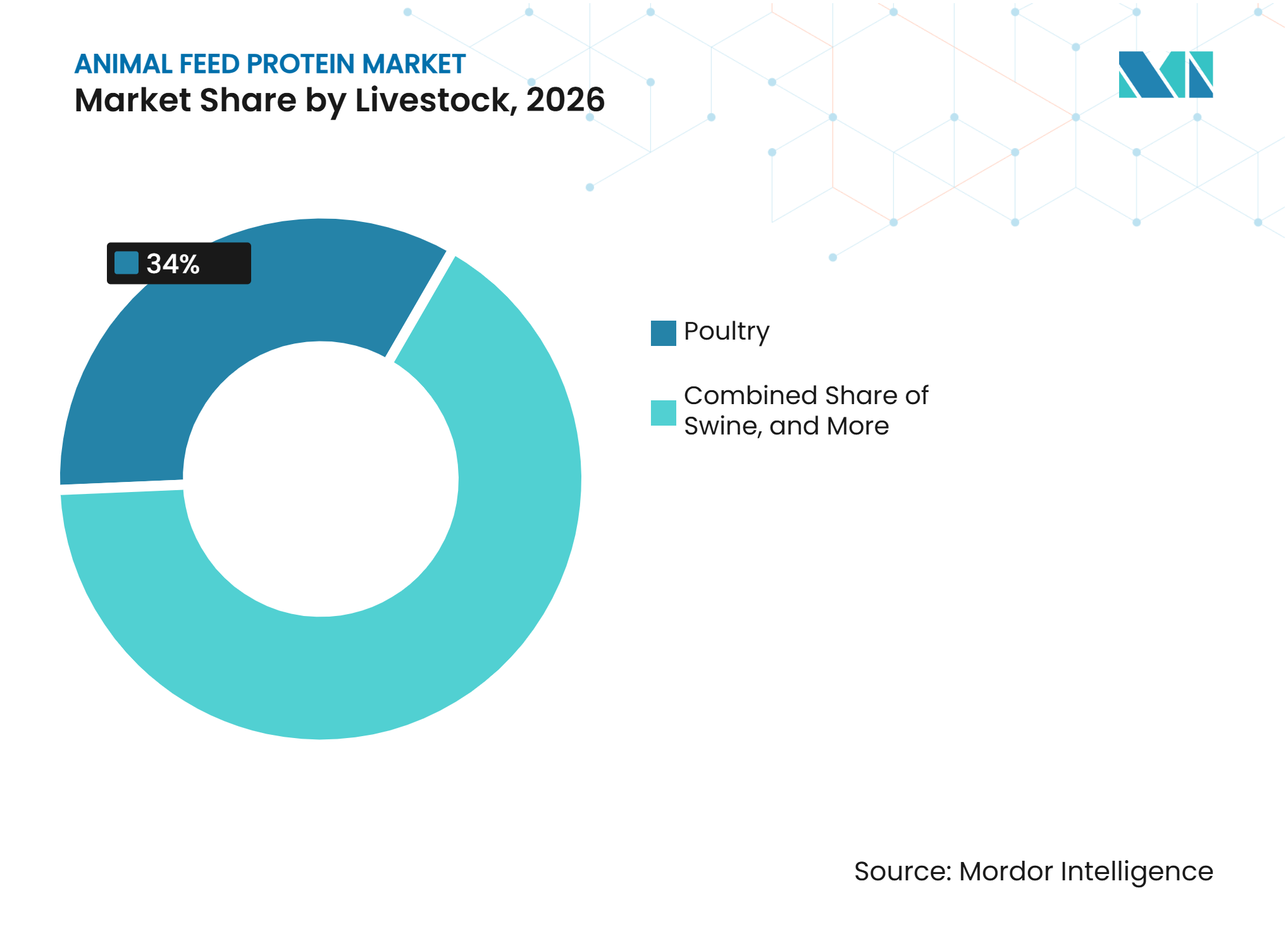
- By livestock, poultry accounted for 34.0% of the animal feed protein market size in 2026, while equine is forecast to grow at a 7.7% CAGR from 2027 to 2032.
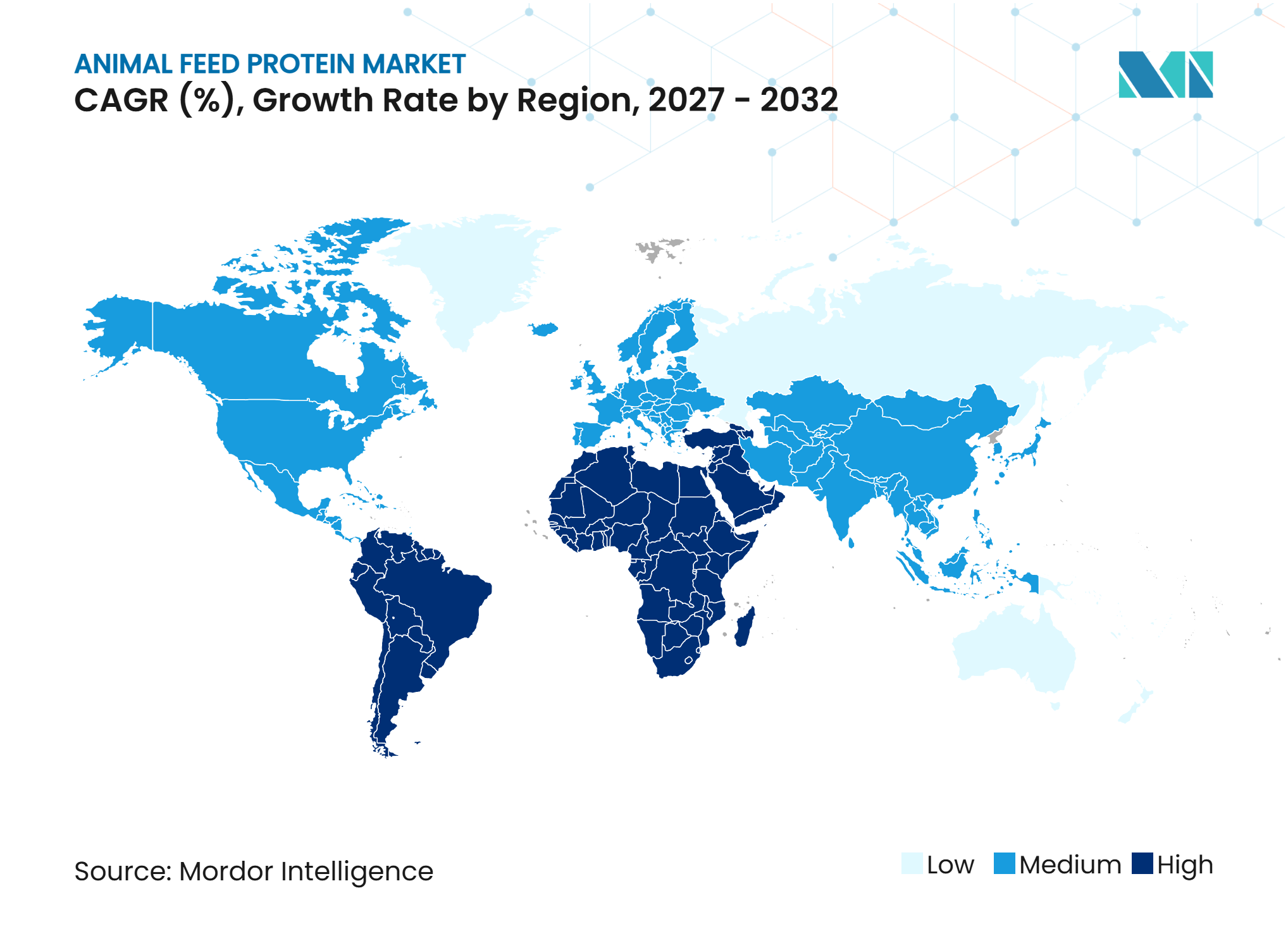
- By geography, Asia-Pacific accounted for 45.5% of the market share in 2026, while Africa is forecast to grow at a 6.3% CAGR from 2027 to 2032.
Note: Market numbers in this report are based on Mordor Intelligence's proprietary estimation framework, which combines nine months of actuals with Q4 projections for base year 2026.
Market Trends and Insights
Drivers Impact Analysis of Animal Feed Protein Market*
| Driver | (~) % Impact on CAGR Forecast | Geographic Relevance | Impact Timeline |
|---|---|---|---|
| Expansion of Commercial Livestock and Aquaculture Feed Production | +1.5% | Global, with highest intensity in Asia-Pacific, South America, and Africa | Short term (≤ 2 years) |
| Aquafeed Protein Diversification Amid Constrained Marine Supply | +0.8% | Asia-Pacific, South America, and Europe | Medium term (2-4 years) |
| Premiumization of Pet Food and Demand for Specialized Animal Nutrition | +0.6% | North America, Europe, Japan, and Australia | Medium term (2-4 years) |
| Increasing Adoption of Alternative Protein Sources in Animal Feed | +0.7% | Europe, North America, and Southeast Asia | Long term (≥ 4 years) |
| Advancements in Feed Processing and Precision Nutrition | +0.5% | North America, Europe, China, and Japan | Medium term (2-4 years) |
| Circular Utilization of Agricultural By-Products for Feed Protein Production | +0.4% | North America, Europe, Brazil, and South Africa | Long term (≥ 4 years) |
| Source: Mordor Intelligence | |||
Expansion of Commercial Livestock and Aquaculture Feed Production
The animal feed protein market benefits from the gradual shift from farm-mixed rations to commercially manufactured feed across livestock and aquaculture operations. Global feed production reached 1,440 million metric tons in 2025, an increase of 2.9% from 2024. Poultry and aquaculture accounted for the largest additions to feed output during the year. Global aquaculture feed production increased by 4.7% to 55.47 million metric tons in 2025, supported by the recovery of shrimp and salmon markets and the expansion of commercial inland aquaculture systems. In China and Sub-Saharan Africa, the adoption of commercial feed creates recurring demand for protein ingredients as feed manufacturers formulate diets to meet consistent nutritional specifications. This shift supports the use of standardized protein sources and strengthens demand for formulated protein ingredients across livestock and aquaculture production systems.
Aquafeed Protein Diversification Amid Constrained Marine Supply
The animal feed protein market benefits from aquafeed manufacturers seeking alternatives to marine-derived ingredients amid supply constraints and rising fishmeal prices. Fishmeal prices increased from USD 1,625.76 per metric ton in November 2025 to USD 2,010.01 per metric ton in February 2026, reflecting higher costs for marine-derived protein ingredients [1]. Higher procurement costs encourage the use of alternative protein sources, including soy protein concentrates, microbial proteins, insect meals, and hydrolyzed proteins, where they meet species-specific nutritional requirements. The Organisation for Economic Co-operation and Development (OECD) and the Food and Agriculture Organization of the United Nations (FAO) project that aquaculture will account for 56% of global fisheries and aquaculture production by 2034, up from 52% in the 2022–2024 base period [2]. However, the adoption of alternative ingredients depends on more than price competitiveness, as feed formulators evaluate amino acid balance, digestibility, and palatability. Suppliers that demonstrate consistent nutritional performance through validated feeding trials are better positioned to secure repeat inclusion in fish and shrimp feed formulations.
Premiumization of Pet Food and Demand for Specialized Animal Nutrition
The animal feed protein market benefits from the growing demand for premium pet food and specialized animal nutrition products. Product formulations increasingly emphasize nutritional quality, ingredient traceability, digestibility, hypoallergenic properties, and functional benefits, encouraging manufacturers to source protein ingredients with consistent nutritional profiles and documented quality. Pet food manufacturers must also balance ingredient costs with product quality requirements, creating opportunities for suppliers that offer reliable nutritional performance and traceable sourcing. Demand for specialized diets tailored to specific animal requirements further supports the use of differentiated protein ingredients across pet food and specialty animal nutrition formulations.
Increasing Adoption of Alternative Protein Sources in Animal Feed
The animal feed protein market is gaining opportunities from the adoption of alternative protein sources, including insect, microbial, fungal, algal, and fermentation-derived proteins. European Union regulations permit the use of processed animal proteins derived from farmed insects in aquaculture, poultry, and swine feed under specified conditions. Regulation (EU) 2017/893 authorized their use in aquafeed, while Regulation (EU) 2021/1372 extended this authorization to poultry and porcine feed [3]. These provisions establish a regulatory pathway for insect-based protein suppliers in the European Union's animal feed industry. These regulatory provisions provide a defined route for alternative protein suppliers to access regulated feed markets. Industry consolidation and investment in production capacity are also increasing the focus on commercial-scale output and secured customer agreements. Fermentation-derived ingredients are gaining traction in conventional feed formulations, while insect proteins are being used in aquafeed and pet food. These developments are broadening the range of protein ingredients available to feed manufacturers and supporting diversification beyond conventional plant- and animal-based sources.
Restraints Impact Analysis of Animal Feed Protein Market*
| Restraint | (~) % Impact on CAGR Forecast | Geographic Relevance | Impact Timeline |
|---|---|---|---|
| Volatility in Commodity Prices and Protein Ingredient Supply | -1.2% | Global, with strongest effect in South America, Asia-Pacific, and North America | Short term (≤ 2 years) |
| Regulatory, Traceability, and Sustainability Compliance Costs | -0.9% | European Union, North America, Brazil, and Australia | Medium term (2-4 years) |
| Mycotoxin Contamination and Feed Safety Risks | -0.6% | Asia-Pacific, Africa, South America, and North America | Medium term (2-4 years) |
| Species-Specific Inclusion Limits for Novel Protein Sources | -0.5% | European Union, United States, China, Japan, and South Korea | Long term (≥ 4 years) |
| Source: Mordor Intelligence | |||
Volatility in Commodity Prices and Protein Ingredient Supply
The animal feed protein market remains exposed to fluctuations in raw material availability and procurement costs. Weather events, biofuel policies, fisheries conditions, freight costs, and trade disruptions can affect the supply and pricing of protein ingredients. Increased soybean crushing linked to 2025 biofuel mandates has influenced soybean meal availability and downstream pricing. Changes in soybean meal prices can also affect the competitiveness of animal-based protein ingredients, including meat and bone meal, through feed formulation substitution. Feed producers in South America face additional exposure to currency fluctuations in Argentina and changes in Brazilian export policies. Although multi-origin procurement strategies can reduce dependence on individual suppliers or regions, they increase sourcing and logistics complexity, potentially pressuring manufacturers' operating margins.
Regulatory, Traceability, and Sustainability Compliance Costs
The animal feed protein market faces increasing compliance costs as feed manufacturers and buyers place greater emphasis on ingredient traceability, deforestation-free sourcing, and sustainability standards. The European Union Deforestation Regulation (EUDR), scheduled to apply from December 30, 2026, to large and medium-sized operators and from June 30, 2027, to most micro and small operators, will require due diligence for covered commodities, including soy. These requirements will increase the need for documentation, monitoring, and supply chain verification across the soybean meal supply chain. Such obligations may create additional compliance challenges for smaller South American suppliers and their trading partners. Regulatory safety assessments and feed authorization procedures also extend commercialization timelines for insect-based and single-cell proteins. In addition, investor-led environmental disclosure requirements increasingly influence supplier qualification, extending compliance obligations beyond conventional feed safety standards. These requirements increase the need for reliable traceability systems and documentation capabilities, potentially raising operating costs for protein ingredient suppliers.
*Our forecasts treat driver/restraint impacts as directional, not additive. The impact forecasts reflect baseline growth, mix effects, and variable interactions.
Animal Feed Protein Market Segment Analysis
By Protein Source:
Plant-Based Proteins Lead While Alternative Proteins ExpandPlant-based proteins accounted for 71.2% of the market share in 2026. The segment relies on established supply chains for soybean meal, rapeseed meal, and sunflower meal. Large oilseed processing systems in the United States, Brazil, and Argentina connect raw material production to feed mills across major livestock categories. This infrastructure ensures consistent availability of plant protein volumes and makes plant protein the standard base for many compound-feed diets. Major processors pair crushing capacity with commodity trading, logistics, and broad geographic coverage.
Alternative proteins are forecast to grow at a CAGR of 8.0% from 2027 to 2032, the highest growth rate among the segments. Alternative ingredients can provide digestibility and amino acid advantages when used at controlled inclusion levels in aquafeed and pet nutrition. Louis Dreyfus Company inaugurated a specialty feed protein production line in Tianjin, China, in November 2025, with an annual capacity of 60,000 metric tons of fermented soybean meal. This investment highlights the expansion of established commodity processors into value-added and specialty feed protein production.



By Livestock:
Poultry Leads While Equine Grows FastestPoultry accounted for 34% of the market share in 2026. Global broiler feed production increased by 3.7% to 400.379 million metric tons in 2025, reflecting growth in poultry feed demand across major regions. Short production cycles, feed efficiency, and integrated supply chains make poultry a major user of protein meals and amino acid supplements. Swine is another substantial consumer of soybean meal and amino acid products. Aquaculture and pet food are growing faster than the overall average due to fishmeal substitution and increased demand for differentiated nutrition.
Equine is forecast to grow at a CAGR of 7.7% from 2027 to 2032, leading livestock growth in the animal feed protein market. This demand is linked to a shift toward scientifically formulated diets for performance and companion animals. High-digestibility protein sources play a greater role in specialty diets where animal owners and managers prioritize nutritional quality. Cattle and ruminant diets remain important in terms of volume, but species-specific feeding requirements influence ingredient choices. Suppliers that can demonstrate species suitability and stable nutrient profiles are better positioned to serve the varying requirements across animal categories.

Geography Analysis
Asia-Pacific
Asia-Pacific accounted for 45.5% of the market share in 2026. China, India, Vietnam, Indonesia, and Thailand provide the region with extensive feed manufacturing capacity, and commercial feed uses higher-quality, protein-assured ingredients compared to informal rations. China's commercial aquaculture sector, India's poultry and dairy expansion, and Southeast Asian shrimp and swine production are major drivers of demand. The Organisation for Economic Co-operation and Development (OECD) and the Food and Agriculture Organization of the United Nations (FAO) project that Asia will account for 75% of global growth in aquatic animal food consumption between 2025 and 2034. Regional suppliers are strengthening oilseed processing, rendering, and aquafeed capabilities, while feed safety and quality frameworks are influencing procurement at larger-scale feed mills.
Africa
Africa is forecast to grow at a CAGR of 6.3% from 2027 to 2032. Total feed production in Africa reached 64.246 million metric tons in 2025, up 11.5% from 2024. Aquaculture feed output increased by 27.5%, while Egypt recorded a 36% increase in aquafeed production. Commercial compound feed adoption also strengthened, with broiler feed production rising 12.7% to 20.599 million metric tons in 2025. These trends create an opening for suppliers that offer affordable ingredients, technical support, and protein systems suited to local production conditions.
North America, Europe, South America, and the Middle East
North America benefits from a large oilseed crushing base. In August 2025, Cargill, Incorporated opened a new retail feed facility in Granger, Washington, with an annual production and packaging capacity of 120,000 tons of animal feed. Europe is adopting deforestation-free soy and assessing alternative proteins under a defined regulatory framework. South America supplies traded soybean meal and is increasing domestic livestock and aquaculture activity, while export policies and currency conditions remain material factors. The Middle East is expanding feed manufacturing capacity for poultry, dairy, and aquaculture, with imported protein meals remaining central inputs. In October 2025, Royal De Heus signed an agreement to acquire 100% of CJ Feed & Care's operations across five Asian countries, covering 17 feed mills. The acquisition was completed in March 2026.
Competitive Landscape
Market Concentration
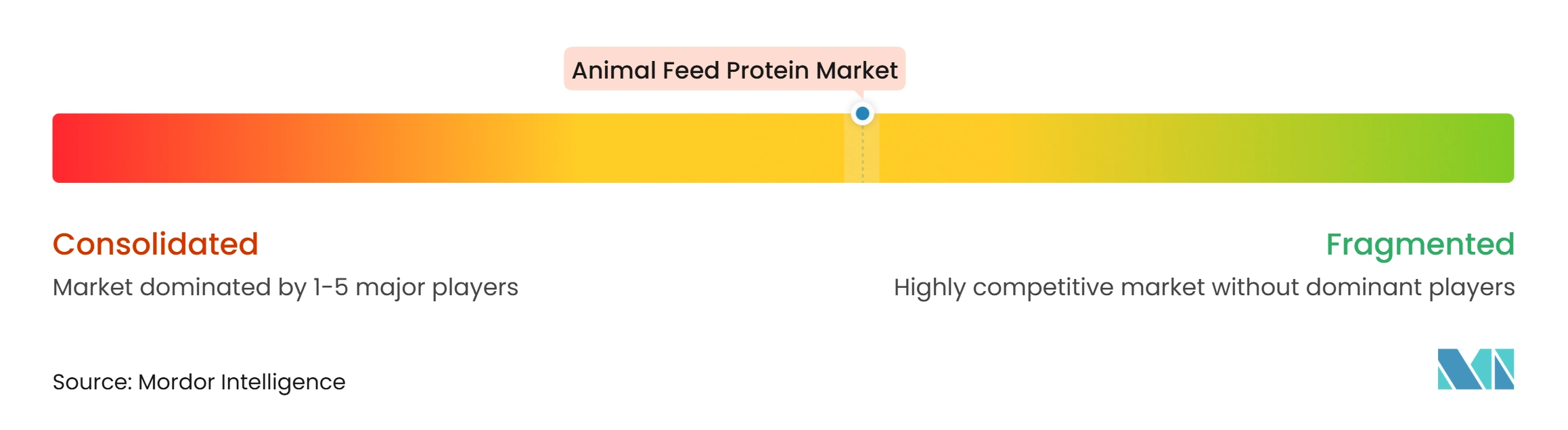
The animal feed protein market was moderately concentrated in 2026, with competition driven by large agribusiness companies and specialized protein ingredient suppliers. Cargill, Incorporated, Archer-Daniels-Midland Company, Bunge Global SA, Wilmar International Limited, and Darling Ingredients Inc. hold scale advantages in crushing, commodity sourcing, trading, and logistics. Specialist companies such as Hamlet Protein A/S, Calysta, Inc., Innovafeed SAS, Protix B.V., and APC, Inc. compete through specialized protein formulations, alternative protein technologies, species-specific nutritional solutions, and technical expertise.
Archer-Daniels-Midland Company and CJ CheilJedang announced a proposed joint venture in October 2026 to manufacture and market fermentation-derived, feed-grade amino acids across North and South America, subject to regulatory approvals. This move extends both companies' presence in precision nutrition and fermentation-based supply chains. Cargill, Incorporated expanded its micronutrition production capacity at its Engerwitzdorf facility in Austria by 50% to 30,000 metric tons per year in November 2025. These developments reflect a broader trend of combining large-scale ingredient supply with higher-value nutrition capabilities.
Affordable aquafeed protein systems remain lacking in parts of Africa and Southeast Asia, where imported fishmeal can be expensive and alternatives are limited. Insect protein suppliers with operating plants and established customer relationships hold a stronger market position than those without secured offtake. Digital formulation platforms are extending competition beyond ingredients into formulation and profitability support. The animal feed protein market favors companies that combine ingredient consistency, species expertise, documented compliance, and reliable supply.
Animal Feed Protein Industry Leaders
-
Cargill, Incorporated
-
Archer-Daniels-Midland Company
-
Bunge Global SA
-
Wilmar International Limited
-
Darling Ingredients Inc.
- *Disclaimer: Major Players sorted in no particular order
Animal Feed Protein Market Companies Covered in this Report
- Cargill, Incorporated
- Archer-Daniels-Midland Company
- Bunge Global SA
- Wilmar International Limited
- BIOCEVAL GmbH
- Darling Ingredients Inc.
- Calysta, Inc.
- Loopworm Private Limited
- Louis Dreyfus Company B.V.
- Hamlet Protein A/S
- CHS Inc.
- Innovafeed SAS
- Protix B.V.
- Entobel Holding Pte. Ltd.
- APC, Inc.
Recent Industry Developments in Animal Feed Protein Market
- October 2026: CJ CheilJedang and Archer-Daniels-Midland Company agreed to form a proposed joint venture to manufacture and market fermentation-derived feed-grade amino acids across North and South America. The venture will combine facilities in the United States and Brazil, with CJ CheilJedang holding a majority stake, subject to regulatory approvals.
- June 2026: Innovafeed SAS secured EUR 51 million in funding from existing shareholders, including Creadev, Qatar Investment Authority, Temasek, and ADM, to support commercial development of its insect-based protein and oil product ranges, expand industrial capabilities, and optimize production capacity at its fully operational Nesle facility in France, with a focus on aquaculture and pet food markets.
- November 2025: Louis Dreyfus Company inaugurated a specialty feed protein production line in Tianjin, China, with an annual capacity of 60,000 metric tons, initially focused on fermented soybean meal. The facility uses fermentation technology to improve the protein content, palatability, and digestibility of soybean meal.
Global Animal Feed Protein Market Report Scope
The animal feed protein market comprises protein-rich ingredients derived from plant, animal, and alternative sources and incorporated into animal feed formulations to meet dietary protein requirements. These ingredients provide essential amino acids that support animal growth, development, and production performance. The animal feed protein market report is segmented by protein source (plant-based proteins, animal-based proteins, and alternative proteins), by livestock (poultry, swine, cattle and ruminant, aquaculture, pet food, and equine), and by geography (North America, South America, Europe, Asia-Pacific, Middle East, and Africa). The market forecasts are provided in terms of value (USD) and volume (metric tons).
Segmentation Overview
| Plant-Based Proteins |
| Animal-Based Proteins |
| Alternative Proteins |
| Poultry |
| Swine |
| Cattle and Ruminant |
| Aquaculture |
| Pet Food |
| Equine |
| North America | United States |
| Canada | |
| Mexico | |
| Rest of North America | |
| South America | Brazil |
| Argentina | |
| Rest of South America | |
| Europe | Germany |
| United Kingdom | |
| France | |
| Italy | |
| Spain | |
| Rest of Europe | |
| Asia-Pacific | China |
| India | |
| Japan | |
| South Korea | |
| Australia | |
| Rest of Asia-Pacific | |
| Middle East | Saudi Arabia |
| United Arab Emirates | |
| Turkey | |
| Rest of Middle East | |
| Africa | South Africa |
| Egypt | |
| Nigeria | |
| Kenya | |
| Rest of Africa |
| By Protein Source | Plant-Based Proteins | |
| Animal-Based Proteins | ||
| Alternative Proteins | ||
| By Livestock | Poultry | |
| Swine | ||
| Cattle and Ruminant | ||
| Aquaculture | ||
| Pet Food | ||
| Equine | ||
| By Geography | North America | United States |
| Canada | ||
| Mexico | ||
| Rest of North America | ||
| South America | Brazil | |
| Argentina | ||
| Rest of South America | ||
| Europe | Germany | |
| United Kingdom | ||
| France | ||
| Italy | ||
| Spain | ||
| Rest of Europe | ||
| Asia-Pacific | China | |
| India | ||
| Japan | ||
| South Korea | ||
| Australia | ||
| Rest of Asia-Pacific | ||
| Middle East | Saudi Arabia | |
| United Arab Emirates | ||
| Turkey | ||
| Rest of Middle East | ||
| Africa | South Africa | |
| Egypt | ||
| Nigeria | ||
| Kenya | ||
| Rest of Africa | ||
Key Questions Answered in the Report
What is the forecast value of the animal feed protein market by 2032?
The animal feed protein market is forecast to reach USD 461.50 billion by 2032, growing at a CAGR of 5.80% from 2027 to 2032.
Which protein source accounts for the largest market share?
Plant-based proteins accounted for 71.2% of the animal feed protein market revenue in 2026, supported by established oilseed processing and supply chains.
Which livestock segment is forecast to grow fastest?
Equine feed is forecast to grow at a CAGR of 7.7% from 2027 to 2032, driven by demand for formulated specialty nutrition.
Which region accounts for the largest market share?
Asia-Pacific accounted for 45.5% of the animal feed protein market revenue in 2026, supported by feed manufacturing, aquaculture, poultry, and dairy production.
What is the main restraint affecting the animal feed protein market?
Commodity price and supply volatility remains a key restraint, as fluctuations in raw material availability, procurement costs, and trade conditions can affect protein ingredient supply and manufacturers' operating margins.