
Angiography Imaging Systems Market Size and Share
Market Overview
| Study Period | 2021 - 2032 |
|---|---|
| Market Size (2027) | USD 19.27 Billion |
| Market Size (2032) | USD 26.05 Billion |
| Growth Rate (2027 - 2032) | 6.21 % |
| Fastest Growing Market | Asia-Pacific |
| Largest Market | North America |
| Market Concentration | Medium |
Major Players *Disclaimer: Major Players sorted in no particular order Image © Mordor Intelligence. Reuse requires attribution under CC BY 4.0. | |
Angiography Imaging Systems Market Analysis by Mordor Intelligence
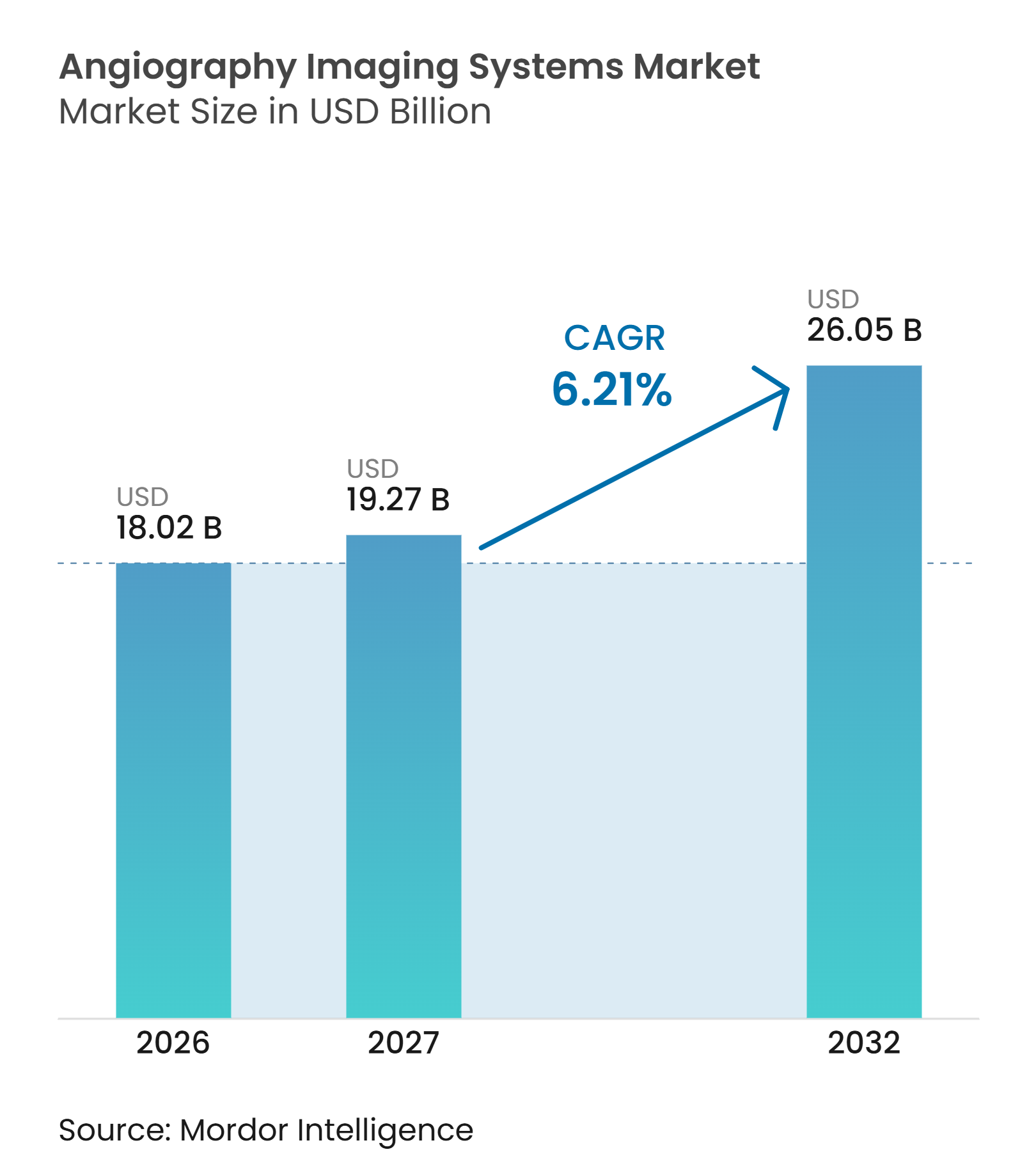
The Angiography Imaging Systems Market size is projected to expand from USD 18.02 billion in 2026 and USD 19.27 billion in 2027 to USD 26.05 billion by 2032, registering a CAGR of 6.21% between 2027 and 2032.
The angiography imaging systems market is supported by a larger cardiovascular care workload and continued demand for vascular imaging during diagnosis and treatment. The American Heart Association reported an age-adjusted cardiovascular disease death rate of 233.3 per 100,000 in 2024, compared with 224.4 per 100,000 previously, which points to sustained pressure on procedural capacity. Capital spending in the angiography imaging systems market is also moving toward hybrid rooms, advanced catheterization laboratories, and connected imaging suites that support several specialties. Vendors are responding by combining imaging hardware, dose-management software, and multi-year service support. This approach makes the angiography imaging systems market increasingly dependent on software capability, replacement timing, and the ability of hospitals to fund room conversion.
Key Report Takeaways
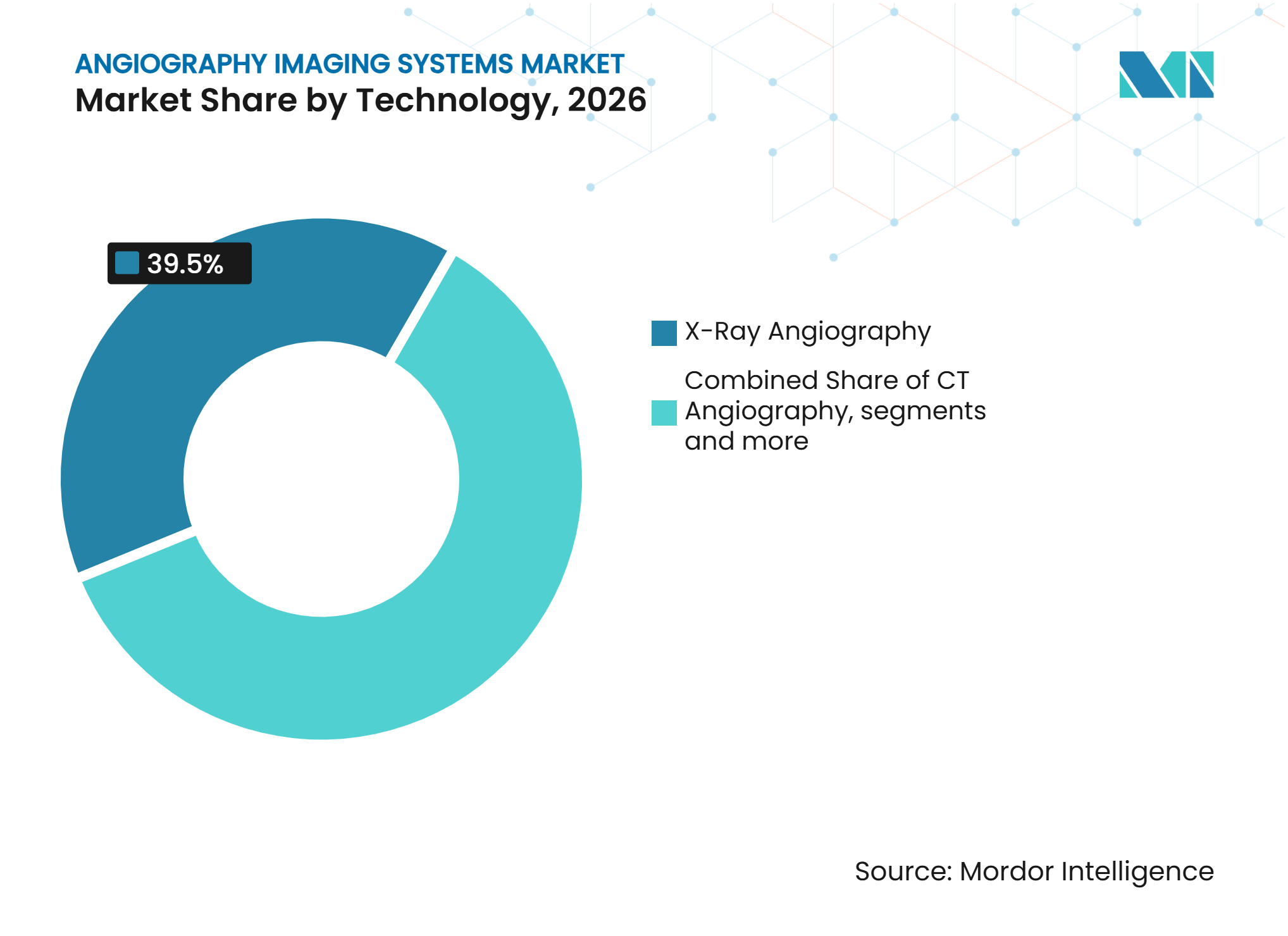
- By technology, X-ray angiography held 39.5% of the angiography imaging systems market share in 2026, while MRI angiography is forecast to grow at a 7.26% CAGR through 2032.
- By application, oncology accounted for 40.3% of the angiography imaging systems market in 2026, while cardiology is projected to advance at a 7.82% CAGR through 2032.
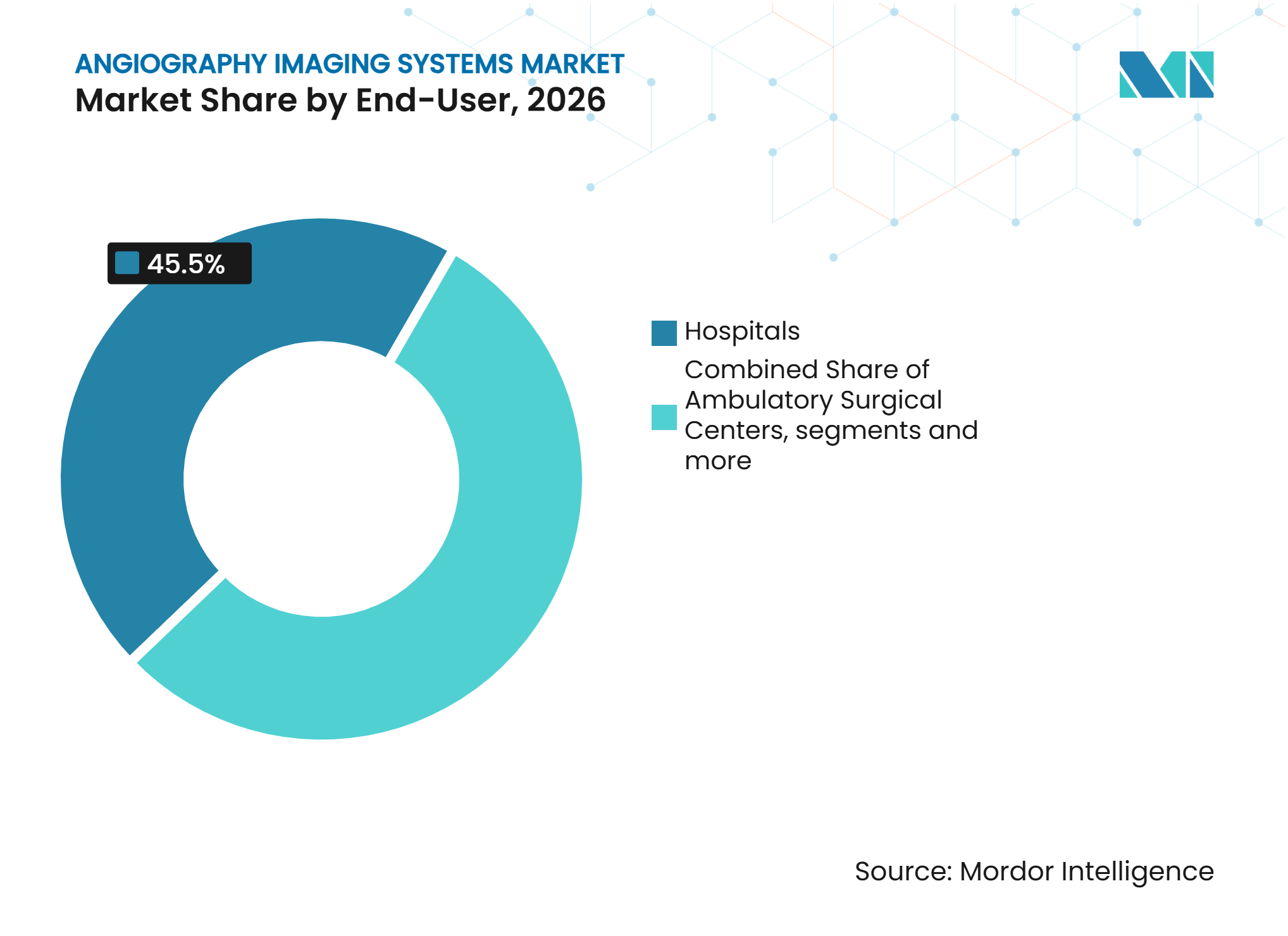
- By end-user, hospitals held a 45.51% revenue share in 2026, while diagnostic centers are forecast to expand at a 6.76% CAGR through 2032.
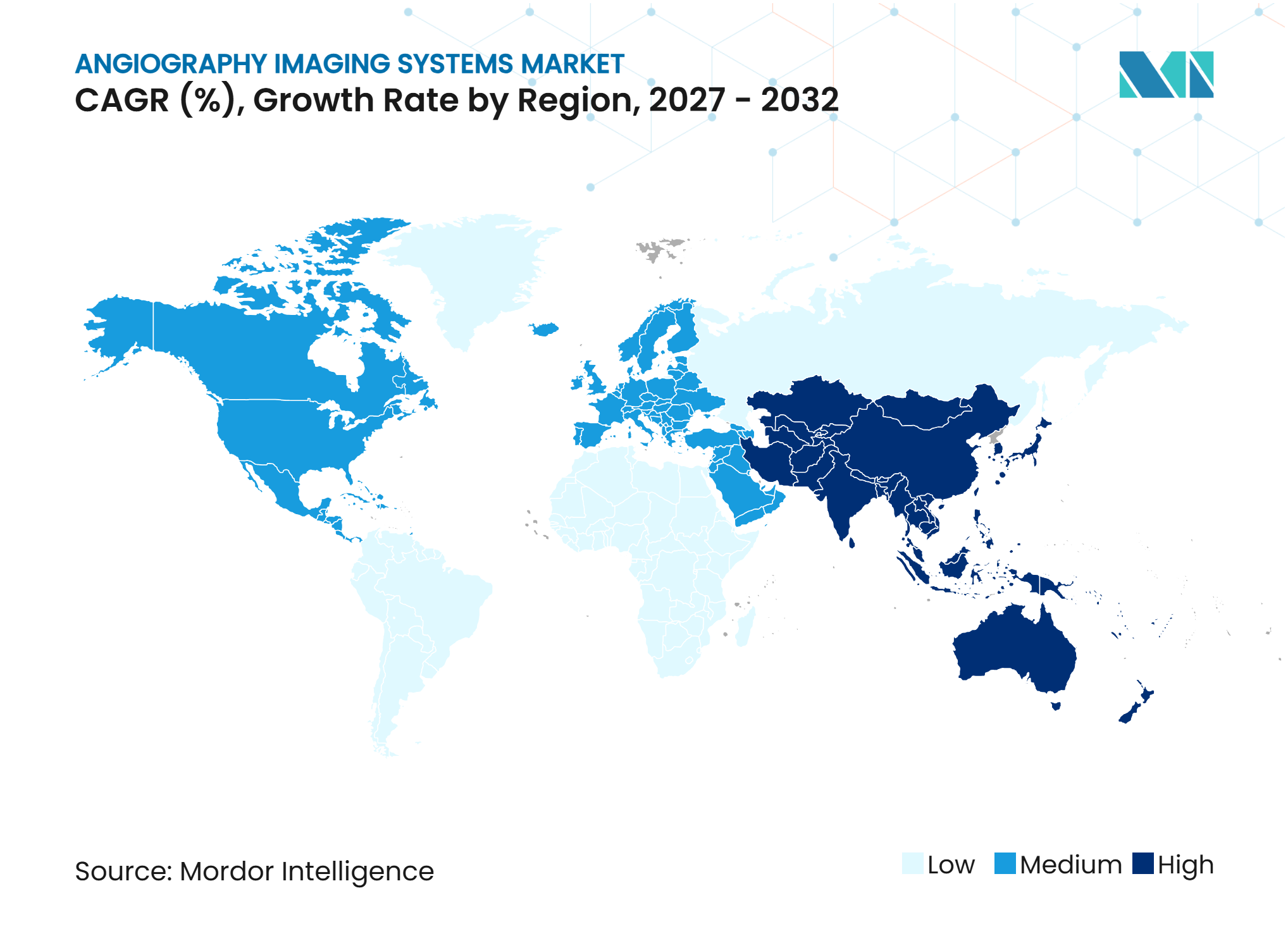
- By geography, North America held a 46.12% revenue share in 2026, while Asia-Pacific is forecast to expand at an 8.11% CAGR through 2032.
Note: Market numbers in this report are based on Mordor Intelligence's proprietary estimation framework, which combines nine months of actuals with Q4 projections for base year 2026.
Market Trends and Insights
Drivers Impact Analysis of Angiography Imaging Systems Market*
| Driver | (~) % Impact on CAGR Forecast | Geographic Relevance | Impact Timeline |
|---|---|---|---|
| Rising Cardiovascular and Cerebrovascular Disease Burden | +1.8% | Global, concentrated in North America, Europe, and East Asia | Long term (≥ 4 years) |
| Migration Toward Minimally Invasive Image-Guided Procedures | +1.4% | Global, highest adoption in North America and Europe | Medium term (2-4 years) |
| Expansion of Hybrid Operating Rooms and Advanced Cath Labs | +0.9% | North America, Europe, GCC, and APAC urban centers | Medium term (2-4 years) |
| AI-Enabled Image Reconstruction and Dose Optimization | +0.8% | Global, with leading gains in North America, Europe, and China | Medium term (2-4 years) |
| Interoperability-Driven Replacement of Legacy Angiography Platforms | +0.7% | North America and Europe, with APAC replacement activity from 2026 to 2030 | Short term (≤ 2 years) |
| Tier-2 and Rural Cath-Lab Deployment in Emerging Markets | +0.6% | APAC, MEA, and South America | Long term (≥ 4 years) |
| Source: Mordor Intelligence | |||
Rising Cardiovascular and Cerebrovascular Disease Burden
Cardiovascular disease continues to widen the clinical base that requires vascular diagnosis and intervention. The World Health Organization states that cardiovascular diseases caused 32% of deaths globally, which keeps coronary and vascular care central to hospital planning.[1] The angiography imaging systems market, therefore, benefits from recurring imaging needs across coronary disease, stroke, and aneurysm care. Growing cerebrovascular care needs in APAC can raise demand for biplane neuroradiology suites, which support complex neurological procedures. Those systems carry a higher average selling price than single-plane cardiac installations. The mix of coronary and neurological cases also raises the importance of imaging quality, workflow speed, and reliable access to specialized staff.
Migration Toward Minimally Invasive Image-Guided Procedures
Catheter-based treatment is reducing the need for open procedures across cardiology, oncology, and neurology. This shift broadens the case base for the angiography imaging systems market for real-time angiographic guidance and supports the utilization of installed systems. TACE and SIRT require angiographic guidance and remain relevant to liver-directed cancer treatment. Expanded thrombectomy eligibility windows can increase the number of procedures handled by stroke-certified centers. Structural heart procedures, including transcatheter aortic valve replacement and WATCHMAN closure, require cone-beam CT capability and 3D roadmapping software. These requirements can shorten replacement cycles because older flat-panel platforms may not support complex and higher-value procedures.
AI-Enabled Image Reconstruction and Dose Optimization
Dose reduction in the angiography imaging systems market is becoming a more important purchasing criterion for high-volume imaging centers. A multicenter study reported that the SAVE-Net model produced clinically acceptable DSA sequences at 1/7 of the standard radiation dose, with a 0.951 structural similarity index and 0.04-second processing per frame.[2] The result supports the use of AI tools when providers need lower dose exposure without a material loss of image quality. Philips introduced SmartIQ for Azurion systems in May 2026 and stated that it reduced radiation dose by more than 50% against the ClarityIQ baseline.[3] The angiography imaging systems market faces a split between platforms that can receive AI upgrades and systems without sufficient onboard computing capability. That gap can make replacement decisions earlier than the traditional hardware life cycle.
Expansion of Hybrid Operating Rooms and Advanced Cath Labs
Investment in hybrid rooms and advanced catheterization laboratories supports the angiography imaging systems market and remains a useful indicator of future imaging demand catheterization laboratories remains a useful indicator of future imaging demand. Allegheny General Hospital completed a USD 19 million cardiac catheterization and electrophysiology expansion in June 2026, adding 3 catheterization laboratories, 3 electrophysiology laboratories, and a hybrid surgical suite. Such projects support the angiography imaging systems market because they create physical space for advanced imaging and intervention. Room conversion, shielding, and ceiling-mounted equipment can extend deployment lead times by 18 to 24 months. Compact systems can be more suitable for facilities where ceiling-mounted equipment is difficult to install.
Restraints Impact Analysis of Angiography Imaging Systems Market*
| Restraint | (~) % Impact on CAGR Forecast | Geographic Relevance | Impact Timeline |
|---|---|---|---|
| High Capital, Service, and Room-Conversion Costs | -1.5% | Global, most acute in MEA, South America, and tier-2 APAC | Long term (≥ 4 years) |
| Radiation Exposure and Contrast-Related Clinical Risks | -0.8% | Global | Medium term (2-4 years) |
| Shortage of Trained Interventional Personnel | -0.6% | MEA, South Asia, and Latin America | Long term (≥ 4 years) |
| Interoperability, Cybersecurity, and Data-Lifecycle Constraints | -0.5% | Global, most pronounced in fragmented health IT environments | Medium term (2-4 years) |
| Source: Mordor Intelligence | |||
High Capital, Service, and Room-Conversion Costs
The cost structure of the angiography imaging systems market extends beyond the equipment purchase price beyond the equipment purchase price. Shielding, HVAC work, RIS and PACS integration, and commissioning can add 30% to 50% to acquisition costs. This burden is most difficult for public hospitals in MEA and Latin America with constrained capital budgets. Service agreements are also necessary for software-dependent systems and add recurring costs that some procurement structures cannot absorb. The most AI-capable platforms can carry the greatest service obligations, restricting access to private chains and academic medical centers. Compliance with IEC 60601-1 and national radiation protection rules can add further commissioning requirements before a system is used.
Radiation Exposure and Contrast-Related Clinical Risks
Radiation exposure for staff and contrast-related complications remain relevant limits for the angiography imaging systems market complications for patients can limit procedure growth. Long structural heart and peripheral interventions can expose staff to cumulative scatter radiation. This exposure can affect career choices where dose-monitoring infrastructure is limited. Contrast-induced nephropathy affected 2% to 7% of patients undergoing coronary angiography, with higher rates among patients with diabetes or renal impairment. MRI-based non-contrast protocols can therefore be preferred for some surveillance imaging. Deep learning reconstruction offers a mitigation option, although the systems capable of using it require additional capital investment.
*Our forecasts treat driver/restraint impacts as directional, not additive. The impact forecasts reflect baseline growth, mix effects, and variable interactions.
Angiography Imaging Systems Market Segment Analysis
By Technology:
X-Ray Leads, While MRI Angiography Expands Non-Invasive ImagingX-ray angiography held 39.52% of the angiography imaging systems market share in 2026. Its position reflects its established use in cardiac catheterization, PCI guidance, and real-time fluoroscopic visualization of coronary anatomy. Digital subtraction angiography retains strong temporal resolution for these procedures. CT angiography remains important for emergency vascular assessment, including aortic dissection, pulmonary embolism, and peripheral runoff. Multi-detector systems can complete aortoiliac surveys in less than 10 seconds. The angiography imaging systems market continues to rely on X-ray systems, where an intervention must be guided in real time.
MRI angiography is forecasted to grow at 7.26% CAGR through 2032. Non-contrast MRA is gaining use in neurology, renal artery assessment, and pediatric vascular imaging. These applications prioritize the avoidance of ionizing radiation. The technique can also reduce dependence on gadolinium-based contrast agents. It can broaden vascular assessment for patients with renal insufficiency who may not be suitable for contrast-enhanced studies. MR-CT Angiography remains the smallest technology group.



By Application:
Oncology Holds the Largest Revenue Base While Cardiology Grows FasterOncology accounted for 40.33% of the angiography imaging systems market in 2026. The share reflects the role of angiographic guidance in liver-directed therapies, uterine fibroid embolization, and prostatic artery embolization. TACE and SIRT are relevant procedures within interventional oncology. Metabolic risk factors, diabetes, obesity, and viral hepatitis contribute to the patient pools discussed in that research. Oncology procedures require imaging that can guide selective vascular access and treatment delivery. This provides a substantial revenue base for the angiography imaging systems market.
Cardiology is expected to grow at 7.82% CAGR through 2032. The growth is linked to structural heart programs, coronary disease care, and the extension of transcatheter valve replacement to lower-risk patients. Neurology also benefits from thrombectomy expansion in stroke care. Peripheral and vascular intervention gains support from PAD screening activity. Other applications include pediatric angiography and research settings, which remain smaller but support early use of new platforms.
By End-User:
Hospitals Hold Core Procedure Volumes While Diagnostic Centers Gain Outpatient WorkHospitals held 45.51% of the angiography imaging systems market share in 2026. They remain the main setting for high-acuity procedures that require advanced infrastructure and immediate surgical backup. These include biplane neuroradiology, structural heart interventions, and oncology embolization. Hospital systems also maintain replacement cycles as equipment ages beyond software support windows. Complex procedural capacity also supports the use of hybrid rooms within major hospitals. The angiography imaging systems industry continues to depend on this setting for its highest-complexity cases.
Diagnostic centers are forecasted to grow at 6.76% CAGR through 2032. Lower-complexity CT angiography studies are moving from hospital catheterization laboratories to outpatient imaging settings. Research identified carotid CTA, peripheral runoff studies, and pulmonary CTA for pulmonary embolism evaluation as examples. Ambulatory surgical centers are adding interventional cardiology capacity as 1-day PCI programs expand under value-based reimbursement models.

Geography Analysis
North America
North America held 46.12% of the angiography imaging systems market share in 2026. The region benefits from a dense network of catheterization laboratories, high per-capita PCI activity, and reimbursement structures that support advanced imaging investment. GE HealthCare received FDA 510(k) clearance and CE Mark for Allia Moveo in February 2026. Canon Medical also received FDA 510(k) clearance for Alphenix 4D CT in November 2025. These clearances support near-term modernization at cardiovascular centers. Canada has cath lab upgrade activity for aging populations, while private hospital expansion supports early demand in Mexico. The United States also provides reference sites for hybrid operating room models.
Europe
Europe is the second-largest regional segment for the angiography imaging systems market. Germany, the United Kingdom, and France accounted for 61% of regional interventional imaging demand in that research. The figure on annual procedures and the reported 2024 to 2025 adoption rate were excluded because their cited source was not eligible. Europe has procurement requirements under the EU Medical Device Regulation and IEC 60601 safety standards. Romania's Ponderas Academic Hospital invested EUR 1.7 million (USD 1.9 million) in a hybrid angiography suite in 2026. These projects indicate demand across both established and mid-tier European healthcare systems.
Asia-Pacific, Middle East and Africa, and South America
Asia-Pacific in the angiography imaging systems market is projected to grow at an 8.11% CAGR through 2032, the fastest regional rate. China, Japan, and India remain central to the region's replacement and first-installation activity. The estimates for the regional DSA installed base, annual replacement rate, Chinese device-industry target, and India's placement growth rate were removed because they relied on ineligible research sources. China is investing in cardiovascular disease management infrastructure at provincial and county hospitals. India's PM-JAY insurance scheme supports tertiary-care catheterization laboratory installation, and AIIMS New Delhi issued a procurement request for a biplane angiographic system in August 2025. The Middle East and Africa remain early-stage markets, while the GCC is positioned as an early technology-adoption area. South American procurement is concentrated in private hospital networks in São Paulo, Buenos Aires, and Bogotá.
Competitive Landscape
Market Concentration
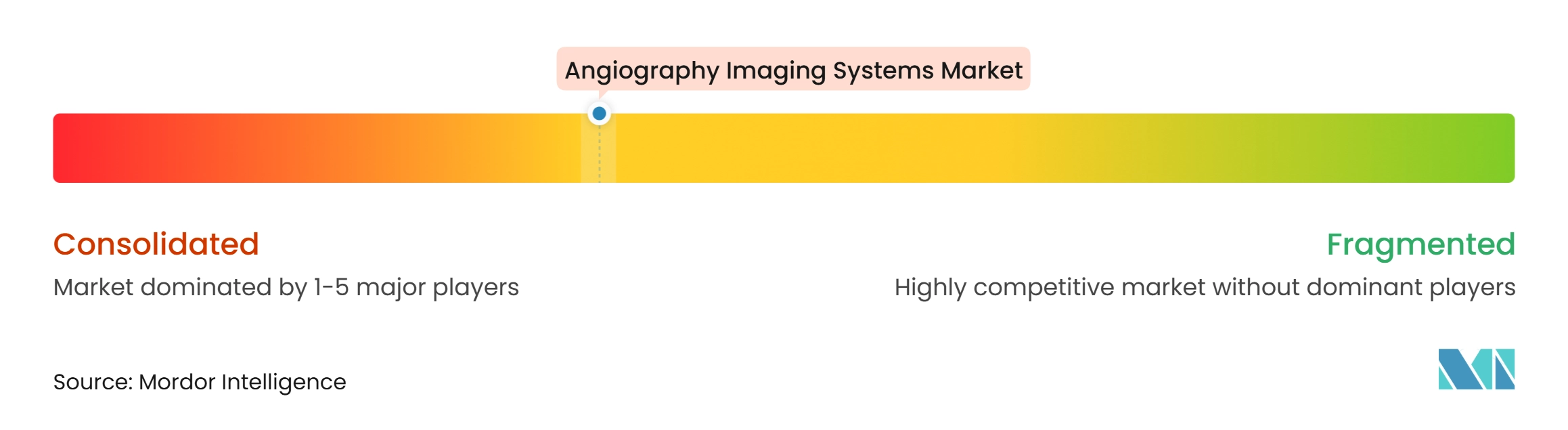
The angiography imaging systems market is moderately consolidated among multinational imaging manufacturers. GE HealthCare, Koninklijke Philips, Siemens Healthineers, and Canon Medical have major positions in North America and Europe. MicroPort Scientific, Mindray Medical, Neusoft Medical, and SHIMADZU have meaningful roles in the Asia-Pacific. Flat-panel detectors and rotational angiography as areas where leading specifications have converged. Competition is therefore increasingly based on software capability, AI integration, service coverage, and hybrid-suite integration. Remote software upgrades can turn a one-time system sale into recurring software revenue. These upgrades can also increase hospital switching costs over a 10- to 12-year system life cycle.
Siemens Healthineers used EuroPCR 2026 to present its CT-guided PCI workflow, combining Syngo.CT Coronary Cockpit and Syngo PCI Connect with Artis systems. GE HealthCare's Allia Moveo is a compact, cable-free system that can suit renovation-constrained facilities. Medtronic announced its intent to acquire CathWorks for up to USD 585 million in February 2026, adding angiography-derived FFR capability to its coronary portfolio. These moves show that the competitive field now includes both imaging manufacturers and cardiology-device companies. They also make future market-share attribution more difficult across hardware and software categories.
Premium hybrid angio-CT systems in the angiography imaging systems market remain less widely installed than conventional platforms. Canon's Alphenix 4D CT is an example of a system intended to combine diagnostic CT and interventional angiography in 1 configuration. Lower-cost deployment is another area of competition in tier-2 and rural markets. Chinese manufacturers are potential suppliers for systems priced below USD 500,000. AI-based FFR tools may reduce the role of wire-based physiological testing in some cases. New entrants must also address IEC 62304 software lifecycle requirements.
Angiography Imaging Systems Industry Leaders
-
Siemens Healthineers AG
-
GE HealthCare
-
Koninklijke Philips N.V.
-
SHIMADZU CORPORATION
-
Terumo Corporation
- *Disclaimer: Major Players sorted in no particular order
Angiography Imaging Systems Market Companies Covered in this Report
- Abbott Laboratories
- AngioDynamics
- B. Braun
- Boston Scientific
- Canon
- Cardinal Health
- Cordis
- Esaote S.p.A.
- FUJIFILM
- GE Healthcare
- Koninklijke Philips
- Medtronic
- Merit Medical Systems
- MicroPort
- Mindray
- Neusoft
- SHIMADZU CORPORATION
- Terumo
- Ziehm Imaging
- Siemens Healthineers
Recent Industry Developments in Angiography Imaging Systems Market
- June 2026: Medtronic completed the USD 550 million acquisition of Scientia Vascular, adding a portfolio of neurovascular guidewires, microcatheters, and aspiration catheters to its neurovascular suite, strengthening procedural coverage for complex cerebrovascular interventions guided by angiography systems.
- June 2026: Allegheny General Hospital completed a USD 19 million expansion of cardiac catheterization and electrophysiology labs, adding a hybrid surgical suite and tripling its catheterization laboratory footprint.
- May 2026: GE HealthCare received simultaneous FDA 510(k) clearance and CE Mark for Allia Moveo, a compact cable-free C-arm interventional imaging system featuring CleaRecon DL image reconstruction.
Global Angiography Imaging Systems Market Report Scope
According to the report’s scope, the angiography imaging systems market encompasses advanced medical devices designed to visualize blood vessels and blood flow in real time. By injecting contrast dye and using imaging modalities such as X‑ray fluoroscopy, CT angiography, and MRI angiography, these systems enable clinicians to detect blockages, aneurysms, and malformations and guide interventional procedures.
The angiography imaging systems market is segmented into technology, application, end-user, and geography. By technology, the market is segmented into X-ray angiography, CT angiography, MRI angiography, and MR-CT angiography. By application, the market is segmented into cardiology, oncology, neurology, peripheral and vascular intervention, and other applications. By end-user, the market is segmented into hospitals, ambulatory surgical centers, diagnostic centers, and other end-users. By geography, the market is segmented into North America, Europe, Asia-Pacific, the Middle East and Africa, and South America. The report also covers the estimated market sizes and trends for 17 countries across major regions globally. The report offers values (USD) for all the above segments.
Segmentation Overview
| X-Ray Angiography |
| CT Angiography |
| MRI Angiography |
| MR-CT Angiography |
| Cardiology |
| Oncology |
| Neurology |
| Peripheral and Vascular Intervention |
| Other Applications |
| Hospitals |
| Ambulatory Surgical Centers |
| Diagnostic Centers |
| Other End-Users |
| North America | United States |
| Canada | |
| Mexico | |
| Europe | Germany |
| United Kingdom | |
| France | |
| Italy | |
| Spain | |
| Rest of Europe | |
| Asia-Pacific | China |
| Japan | |
| India | |
| Australia | |
| South Korea | |
| Rest of Asia-Pacific | |
| Middle East and Africa | GCC |
| South Africa | |
| Rest of Middle East and Africa | |
| South America | Brazil |
| Argentina | |
| Rest of South America |
| By Technology | X-Ray Angiography | |
| CT Angiography | ||
| MRI Angiography | ||
| MR-CT Angiography | ||
| By Application | Cardiology | |
| Oncology | ||
| Neurology | ||
| Peripheral and Vascular Intervention | ||
| Other Applications | ||
| By End-User | Hospitals | |
| Ambulatory Surgical Centers | ||
| Diagnostic Centers | ||
| Other End-Users | ||
| By Geography | North America | United States |
| Canada | ||
| Mexico | ||
| Europe | Germany | |
| United Kingdom | ||
| France | ||
| Italy | ||
| Spain | ||
| Rest of Europe | ||
| Asia-Pacific | China | |
| Japan | ||
| India | ||
| Australia | ||
| South Korea | ||
| Rest of Asia-Pacific | ||
| Middle East and Africa | GCC | |
| South Africa | ||
| Rest of Middle East and Africa | ||
| South America | Brazil | |
| Argentina | ||
| Rest of South America | ||
Key Questions Answered in the Report
What is the projected value of the angiography imaging systems market by 2032?
The angiography imaging systems market is forecasted to reach USD 26.05 billion by 2032, from USD 18.02 billion in 2026 to USD 19.27 billion in 2027, at a 6.21% CAGR.
Which technology leads the demand for angiography imaging systems?
X-ray angiography led with 39.52% share in 2026 because it supports real-time cardiac catheterization and PCI guidance.
Which application is growing fastest for angiography imaging systems?
Cardiology is expected to grow at 7.82% CAGR through 2032, supported by structural heart procedures and coronary disease care.
Which region is growing fastest in angiography imaging systems?
Asia-Pacific is projected to grow at 8.11% CAGR through 2032, supported by hospital infrastructure and catheterization laboratory activity.