
Acute Pain Market Size and Share
Market Overview
| Study Period | 2020 - 2031 |
|---|---|
| Market Size (2026) | USD 14.13 Billion |
| Market Size (2031) | USD 18.29 Billion |
| Growth Rate (2026 - 2031) | 5.30 % |
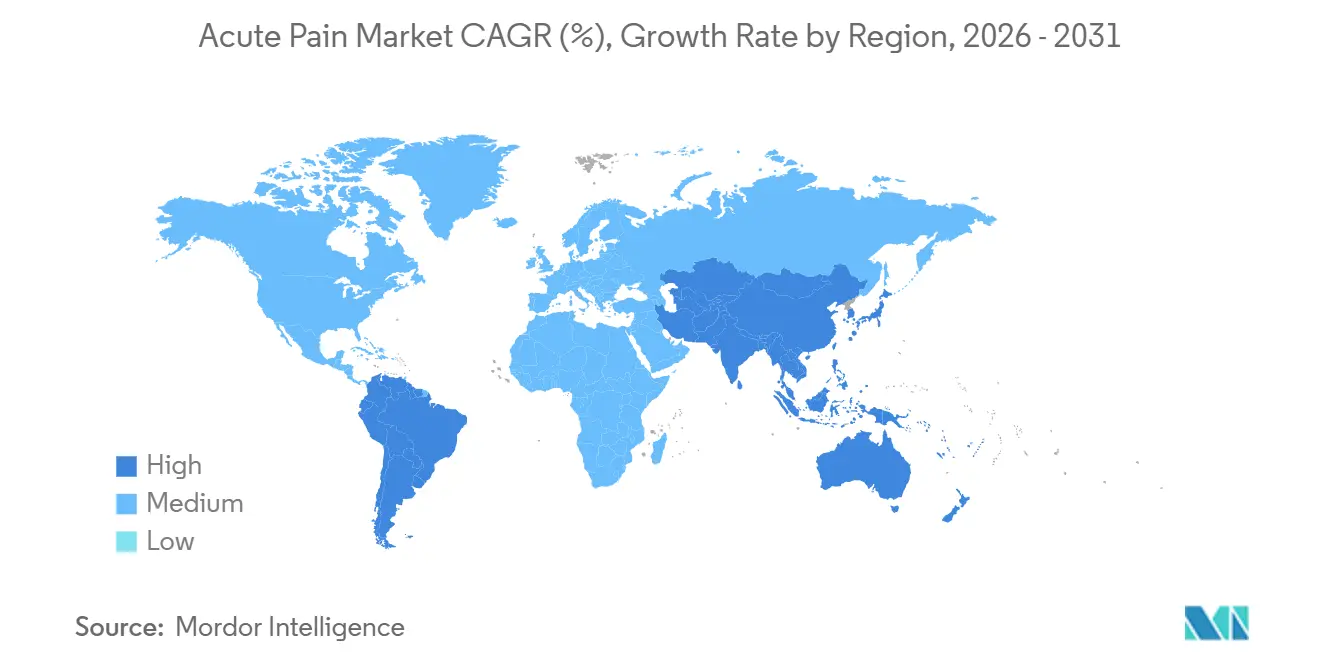
| Fastest Growing Market | Asia-Pacific |
| Largest Market | North America |
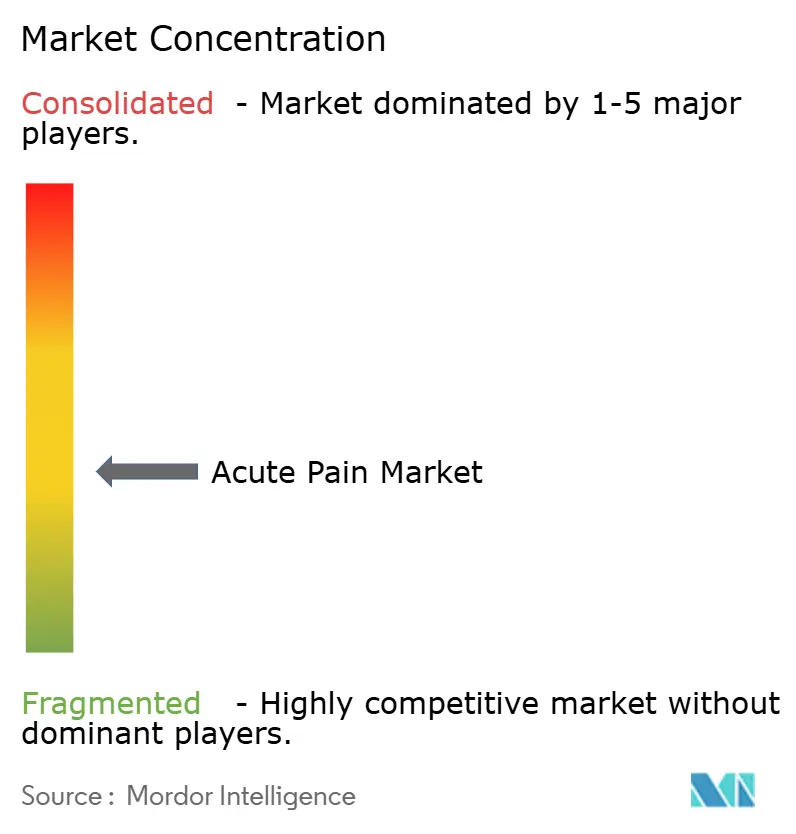
| Market Concentration | Medium |
Major Players *Disclaimer: Major Players sorted in no particular order Image © Mordor Intelligence. Reuse requires attribution under CC BY 4.0. | |
Acute Pain Market Analysis by Mordor Intelligence
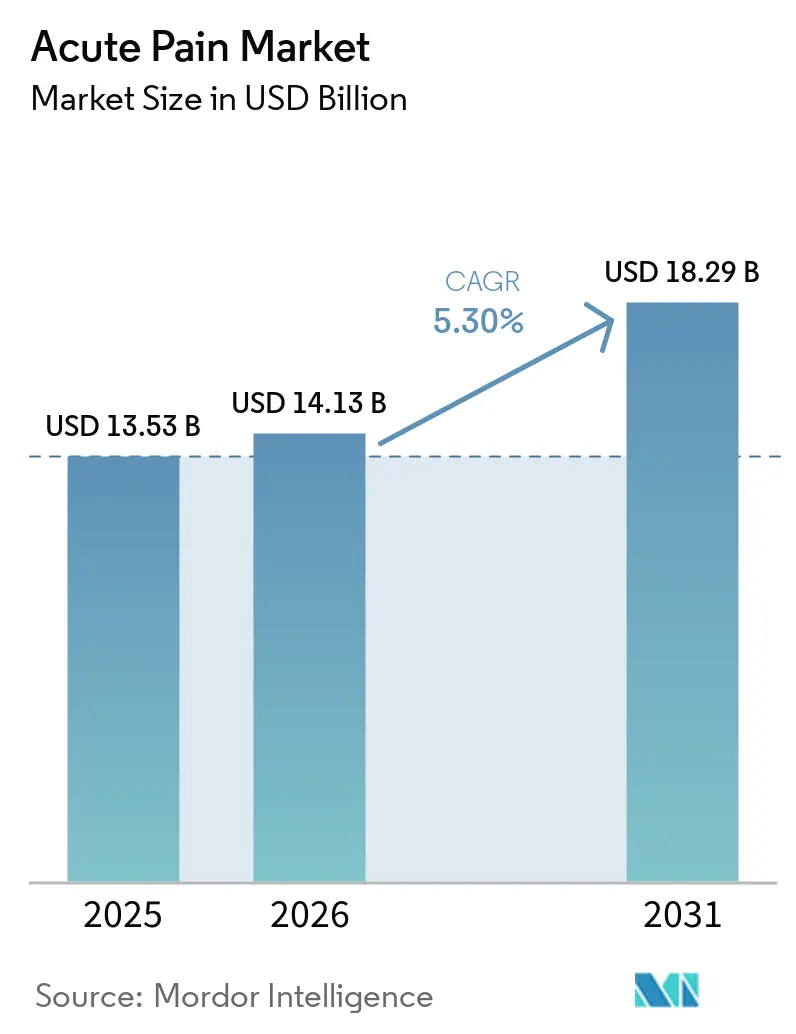
The Acute Pain Market size is projected to expand from USD 13.53 billion in 2025 and USD 14.13 billion in 2026 to USD 18.29 billion by 2031, registering a CAGR of 5.30% between 2026 to 2031.
Surgical volume, outpatient procedure migration, and multimodal treatment protocols support demand across care settings. The acute pain market is also changing as non-opioid therapies enter formularies, particularly where separate reimbursement lowers the immediate cost burden. Selective NaV1.8 inhibitors and long-acting local anesthetics give hospitals more options for moderate-to-severe postoperative pain. This creates opportunities for manufacturers that can demonstrate clinical value and work within hospital purchasing rules. Access remains uneven because premium therapies face cost and formulary barriers, especially outside large hospital systems.
Key Report Takeaways
By drug class, NSAIDs held 34.5% of the acute pain market share in 2025, while local anesthetics are projected to grow at a 6.2% CAGR through 2031.
By pain type and clinical application, postoperative pain accounted for 31.8% of the acute pain market size in 2025, while musculoskeletal and sports pain is forecast to expand at a 6.8% CAGR through 2031.
By route of administration, oral products accounted for 57.4% of revenue in 2025, while injectable and parenteral formulations are projected to grow at a 6.5% CAGR through 2031.
By distribution channel, hospital pharmacies held 48.6% of revenue in 2025, while online pharmacies are forecast to grow at a 6.4% CAGR through 2031.
By geography, North America held 42.1% of revenue in 2025, while Asia-Pacific is projected to grow at a 6.3% CAGR through 2031.
Note: Market size and forecast figures in this report are generated using Mordor Intelligence’s proprietary estimation framework, updated with the latest available data and insights as of January 2026.
Market Trends and Insights
Drivers Impact Analysis of Acute Pain Market*
| Driver | (~) % Impact on CAGR Forecast | Geographic Relevance | Impact Timeline |
|---|---|---|---|
| Rising Surgical And Procedural Volumes | +1.4% | Global, concentrated in North America, Western Europe, and urban Asia-Pacific | Long term (≥ 4 years) |
| Opioid-Sparing Treatment Adoption | +1.1% | North America and Europe, early-stage in Asia-Pacific | Medium term (2-4 years) |
| Expansion Of Ambulatory And Same-Day Surgery | +0.7% | North America, Western Europe, and urban China and India | Medium term (2-4 years) |
| Innovation For Underserved Care Settings | +0.5% | Global, with high relevance in the Middle East, Africa, and South America | Long term (≥ 4 years) |
| Hospital Shift Toward Opioid-Free Recovery | +0.4% | North America and Europe | Medium term (2-4 years) |
| Trauma, Sports Injury, And Emergency Care Demand | +0.6% | Global | Medium term (2-4 years) |
| Source: Mordor Intelligence | |||
Rising Surgical And Procedural Volumes
Surgical and procedural volumes continue to expand across developed and emerging healthcare systems. U.S. total hip arthroplasty volume rose 177%, while total knee arthroplasty volume rose 156% during the 2 decades to 2019, and procedure backlogs continued to support demand after the pandemic period. Higher-acuity procedures are moving into ambulatory settings, which increases the need for effective pain control after same-day discharge. Patients recovering at home cannot rely on extended inpatient monitoring, so providers need longer-acting and practical regimens. The 2026 American Society of Anesthesiologists guidelines[1] recommend regional analgesia and surgical-site infiltration within multimodal perioperative care. This guidance supports broader use and more consistent protocol design across the acute pain market and across the acute pain treatment pathway.
Opioid-Sparing Treatment Adoption
The move away from opioid-centered treatment has become tied to clinical practice and payment requirements. CMS Measure 477 encourages clinicians to document multimodal pain management during the perioperative period. A 2026 systematic review found that adding a second multimodal component reduced 24-hour opioid use by 5.2 mg oral morphine equivalents and reduced pain scores at 4 hours. This evidence makes the case for protocols that combine established analgesics with regional or local options. The U.S. Centers for Disease Control and Prevention[2]recommends the lowest effective opioid dose for the shortest necessary duration for acute pain. As opioid use falls, the acute pain market can still gain value because replacement therapies often carry higher prices than generic opioids, making reimbursement design important across the acute pain market.
Expansion Of Ambulatory And Same-Day Surgery
Ambulatory surgery changes the type of analgesia providers need during recovery. Same-day discharge makes prolonged intravenous opioid treatment less suitable and places greater value on therapies that cover the first 24 to 72 hours at home. Extended-release local anesthetics and bupivacaine and meloxicam combinations are designed for this period. This care model also supports regional blocks and local infiltration at the procedure site. Hospital purchasing teams therefore assess products by their fit with discharge pathways as well as their direct clinical effect. The acute pain market benefits when a treatment can support safe recovery without requiring another visit or a longer stay, which raises the value of products that fit the acute pain market in outpatient care.
Innovation For Underserved Care Settings
Rural emergency departments, community trauma clinics, and pre-hospital services often have limited access to intravenous and regional techniques. These settings need analgesics that are simple to use and suitable for acute trauma care. Medical Developments International’s Penthrox inhaler illustrates a non-opioid option intended for trauma pain where intravenous access is not available. Topical, inhaled, oral, and single-application formulations may also serve patients who cannot use conventional hospital-based treatment. Sports injuries and emergency cases widen demand beyond scheduled surgical procedures. This part of the acute pain market requires companies to match product design with local approvals, affordable pricing, and primary care distribution, giving the acute pain market a wider base than surgical care alone.
Restraints Impact Analysis of Acute Pain Market*
| Restraint | (~) % Impact on CAGR Forecast | Geographic Relevance | Impact Timeline |
|---|---|---|---|
| Opioid Safety Scrutiny And Prescribing Restrictions | -0.8% | North America, expanding to Europe and Asia-Pacific | Medium term (2-4 years) |
| High Cost Of Novel Non-Opioid Therapies | -0.5% | Global, most acute in emerging markets | Long term (≥ 4 years) |
| Trial Endpoint And Adoption Complexity | -0.3% | North America and Europe | Medium term (2-4 years) |
| Limited Reimbursement And Hospital Cost Pressures | -0.4% | Global, most severe in South America and the Middle East and Africa | Long term (≥ 4 years) |
| Source: Mordor Intelligence | |||
Opioid Safety Scrutiny And Prescribing Restrictions
Tighter opioid controls create a mixed outcome for the acute pain market. The CDC guidance limits duration and dose, while state policies can cap the supply prescribed for acute pain. These measures reduce the role of opioids but do not automatically move every patient to premium non-opioid products. Many providers and payers still rely on lower-cost NSAIDs and acetaminophen when budgets are limited. Research cited in the supplied material reported that 50% of tertiary-care patients had inadequate pain relief, while more than 80% experienced moderate-to-severe postoperative pain within 2 weeks of discharge. The result can be fragmented treatment, with patients remaining undertreated while payers resist higher-cost alternatives.
High Cost Of Novel Non-Opioid Therapies
Novel products face a difficult economic test in routine care. Vertex set the wholesale acquisition cost of JOURNAVX at USD 15.50 per 50 mg tablet when the product launched in 2025. The American College of Surgeons noted that bundled payment structures can make lower-cost NSAIDs or opioids more likely choices after surgery. Medicare's separate payment for qualifying non-opioid pain drugs began in January 2025, but the policy is scheduled to expire at the end of 2027 unless extended. This uncertainty can affect long-term purchasing commitments by hospitals and ambulatory surgery centers. In resource-limited countries, generic NSAIDs and acetaminophen are likely to retain a central role because branded alternatives remain costly.
*Our forecasts treat driver/restraint impacts as directional, not additive. The impact forecasts reflect baseline growth, mix effects, and variable interactions.
Acute Pain Market Segment Analysis
By Drug Class:
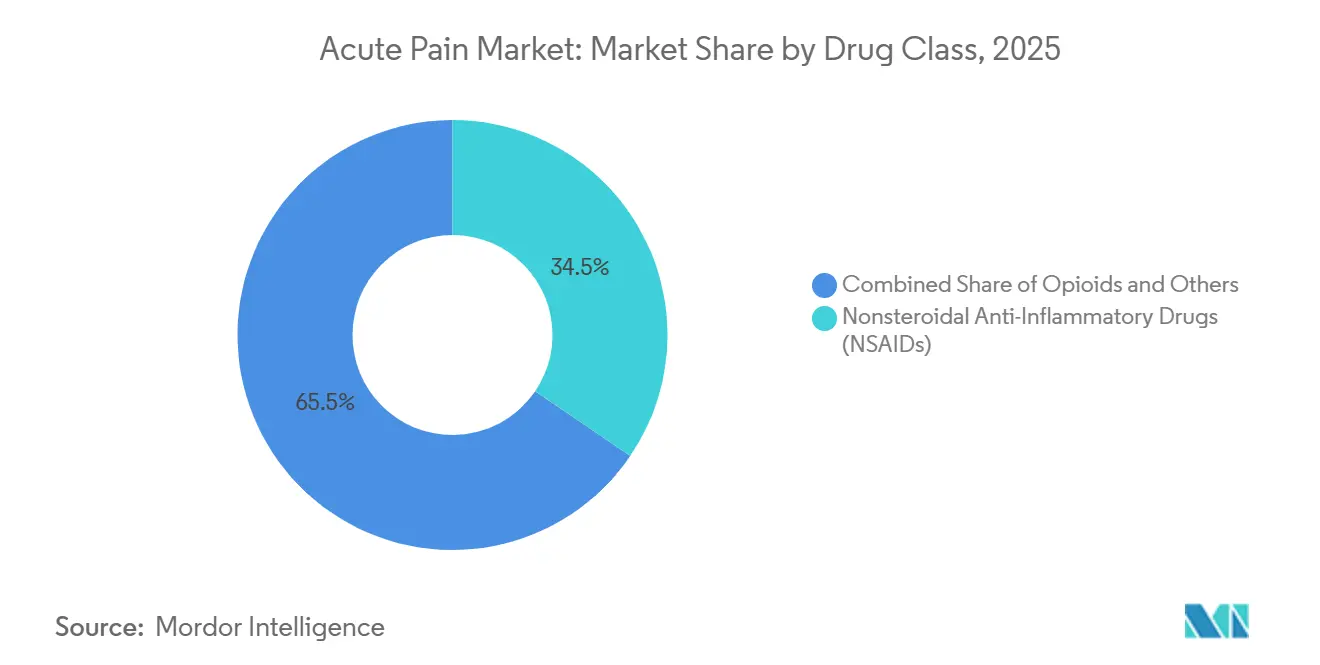
NSAIDs Remain Established While Local Anesthetics Gain UseNSAIDs held 34.5% of revenue in 2025, making them the largest drug class in the acute pain market. Their position reflects broad use in postoperative, musculoskeletal, dental, and over-the-counter care. They are supported by long clinical experience and availability across hospital, retail, and digital channels. A 2025 study[3] found that NSAIDs and dexamethasone reduced postoperative pain scores and opioid consumption more effectively than acetaminophen within multimodal regimens. That evidence can influence hospital committees that still treat acetaminophen as the default non-opioid option.
Local anesthetics are forecast to record the fastest growth at a 6.2% CAGR through 2031. Liposomal bupivacaine is used more often in orthopedic, reconstructive, and spine procedures. Pacira reported 7% year-over-year EXPAREL volume growth in the first quarter of 2026. Acetaminophen remains a widely used adjunct across age groups, while opioids remain necessary in high-severity postoperative and acute oncology settings. Gabapentinoids, ketamine, dexmedetomidine, and corticosteroids are increasingly used as components of combination protocols rather than as stand-alone choices.

By Pain Type And Clinical Application:
Postoperative Care Leads While Sports Pain ExpandsPostoperative pain accounted for 31.8% of revenue in 2025, reflecting its role in nearly every surgical specialty. It is often the most treatment-intensive application because pain may continue after a patient leaves the facility. This creates demand across hospital and retail channels. Procedure-specific protocols also make postoperative care important for label development and hospital formulary decisions. The acute pain industry continues to depend on surgical applications because they combine predictable demand with closely managed treatment pathways. These applications remain central to the acute pain market.
Musculoskeletal and sports pain is projected to grow at a 6.8% CAGR through 2031. Participation in sports, workplace injuries, and emergency trauma care are extending use beyond planned surgical settings. Trauma and injury pain remains underpenetrated because emergency department treatment is often insufficient. The supplied research cited findings that 74% of emergency department patients still reported moderate-to-severe pain at discharge despite receiving medication. Dental pain remains a high-volume indication for OTC products, while renal colic, sickle cell crises, and migraines have their own treatment needs and specialist pathways.
By Route Of Administration:
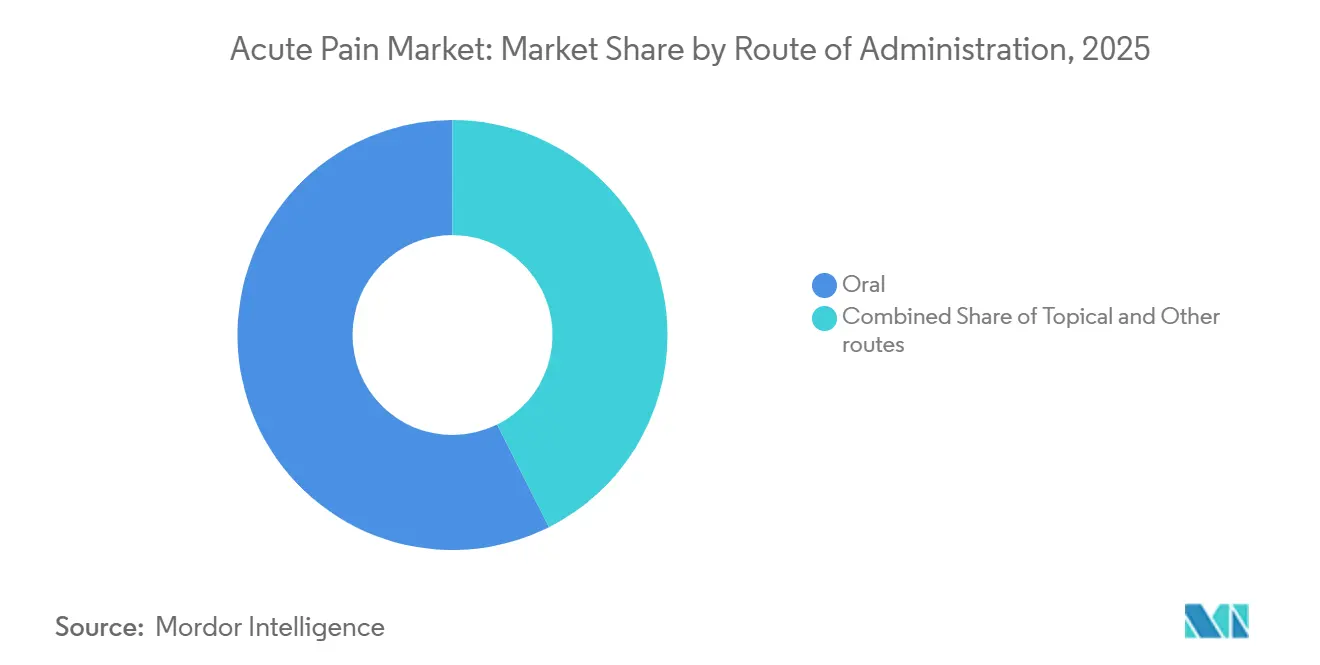
Oral Products Lead While Injectables Address Surgical NeedsOral products held 57.4% of revenue in 2025, the largest route in the acute pain market. Their lead comes from OTC analgesics, outpatient prescriptions, and self-administration. Oral non-opioid medicines such as JOURNAVX can fit outpatient care without requiring facility administration. The format also works well with retail and online pharmacy distribution. Cost and convenience remain important reasons for its broad use.
Injectable and parenteral products are forecast to grow at a 6.5% CAGR through 2031. Intraoperative nerve blocks, intravenous NSAID infusion, and extended-release injections support opioid-sparing care. Pacira’s PCRX-2002, a ropivacaine hydrogel candidate, entered Phase 2 development in 2026 for postsurgical pain. Topical and transdermal products also have a role in sports and musculoskeletal care, especially for patients who need to limit systemic NSAID exposure. Inhaled and rectal options remain niche but can be relevant where oral or intravenous access is impractical.
By Distribution Channel:
Hospitals Lead While Online Access BroadensHospital pharmacies held 48.6% of revenue in 2025, showing the importance of inpatient and perioperative treatment. Hospitals handle injectable products, branded local anesthetics, and complex surgical pain protocols. These settings generate more revenue per treatment than many OTC purchases. Their purchasing decisions also determine whether newer products reach clinicians. The acute pain industry remains divided between consumer brands in retail care and specialty products used in hospitals.
Online pharmacies are forecast to grow at a 6.4% CAGR through 2031. Direct-to-consumer OTC sales and telehealth prescription services support this change. The DEA extended certain telemedicine prescribing flexibilities through December 31, 2026. Large consumer healthcare brands can benefit from their existing digital marketing and distribution capabilities. Specialty companies with hospital-administered products are less exposed to this channel, which reinforces the different competitive models across the acute pain market.
Geography Analysis
North America Acute Pain Market
North America held 42.1% of global revenue in 2025, giving the region the largest acute pain market share. The region benefits from high procedure volumes, established hospital purchasing systems, and early adoption of multimodal protocols. Separate Medicare Part B payment for qualifying non-opioid pain drugs began in January 2025 and reduced a financial barrier in hospital outpatient departments and ambulatory surgery centers. Pacira[4] announced in July 2026 that UnitedHealthcare provides separate reimbursement for EXPAREL across outpatient settings. Canada and Mexico add volume, but uptake of novel branded non-opioids remains more limited than in the United States.
EMEA Acute Pain Market
Europe contributes meaningful demand through Germany, the United Kingdom, France, Italy, and Spain. National assessment and reimbursement processes can delay uptake of new analgesics even when clinical evidence is available. This environment favors established NSAIDs and acetaminophen until new therapies complete local reviews. Regional analgesia and multimodal care are increasingly consistent with European enhanced recovery practice. The Middle East and Africa have a two-tier profile, with Gulf Cooperation Council countries more able to adopt premium therapies while many sub-Saharan markets rely on generic medicines.
APAC and South America Acute Pain Market
Asia-Pacific is projected to grow at a 6.3% CAGR through 2031, the fastest regional rate in the acute pain market. China and India are the main growth engines because of expanding healthcare infrastructure, manufacturing capacity, and large patient populations. Japan’s aging population supports demand for non-opioid pain treatment, although regulatory reviews can slow new product access. Pacira entered an agreement with LG Chem in January 2026 to pursue EXPAREL commercialization in South Korea and Thailand. South America has rising demand for effective OTC products, but budget pressure and currency volatility limit adoption of premium therapies.
Competitive Landscape
The acute pain market includes consumer analgesics and specialty pharmaceutical innovation. Pfizer, Johnson & Johnson, Teva, Haleon, Kenvue, Reckitt Benckiser, Bayer, and Sandoz compete through scale, supply reliability, brand recognition, and access to retail and hospital channels. Their established NSAIDs, acetaminophen, and related treatments compete mainly on price and dependable supply. Specialty companies compete through distinct non-opioid mechanisms and extended-release formulations.
Vertex and Latigo Biotherapeutics are developing selective NaV1.8 inhibitors, while Pacira and Heron focus on local anesthetic and combination platforms. Heron reported USD 38.07 million in 2025 ZYNRELEF revenue, an increase of 49% from the prior year. Vertex presented Phase 4 results in March 2026 showing that 90.9% of patients using JOURNAVX within a multimodal regimen after aesthetic and reconstructive surgery did not need rescue opioids for up to 14 days. Pacira also reported real-world evidence in 2026 that associated EXPAREL use with lower opioid use and healthcare costs after total shoulder arthroplasty. These actions show how clinical evidence, reimbursement, and targeted procedure settings shape competition.
White-space opportunities include mid-tier hospitals and ambulatory surgery centers, pediatric and geriatric formulations, and trauma settings that need non-intravenous options. Scilex is advancing topical lidocaine systems and NSAID formulations for specific pain applications. In July 2026, Scilex signed a binding term sheet for a proposed USD 100 million investment to support SP-103 and other pipeline programs. Patent protection, regulatory designations, and real-world cost evidence can shape whether smaller companies challenge established products. The acute pain market remains moderately consolidated in established categories but more open in new non-opioid treatment areas, which keeps the acute pain market active for large companies and specialists.
Acute Pain Industry Leaders
-
Pfizer Inc.
-
Johnson & Johnson
-
Viatris Inc.
-
Teva Pharmaceutical Industries Ltd.
-
Bayer AG
- *Disclaimer: Major Players sorted in no particular order
Acute Pain Market Companies Covered in this Report
- Vertex Pharmaceuticals
- Pfizer
- Johnson & Johnson
- Viatris
- Teva Pharmaceutical Industries
- Bayer
- Haleon plc
- Kenvue Inc.
- Reckitt Benckiser Group
- Heron Therapeutics
- Pacira BioSciences
- Ocular Therapeutix, Inc.
- Formosa Pharmaceuticals, Inc.
- Medical Developments International Limited
- Latigo Biotherapeutics
- Neumentum, Inc.
- Scilex Holding
- Tris Pharma, Inc.
- Sandoz Group AG
- Sun Pharmaceuticals Industries
Recent Industry Developments in Acute Pain Market
- July 2026: Pacira BioSciences announced that UnitedHealthcare, covering approximately 40 million lives, now provides separate reimbursement for EXPAREL across outpatient settings, including hospital outpatient departments and ambulatory surgery centers, removing a critical financial barrier for non-opioid postsurgical pain management at the largest private insurer in the U.S.
- July 2026: Latigo Biotherapeutics published positive Phase 2 results for LTG-001, an oral NaV1.8 inhibitor, in a 343-patient abdominoplasty trial. Both high- and low-dose LTG-001 achieved statistically significant pain relief versus placebo at 48 hours, and high-dose patients were significantly less likely to require rescue opioids. The company also filed for a Nasdaq IPO under the ticker LTGO to fund Phase 3 development. This item is omitted from the citation block because the supplied source was a news publisher rather than a primary source.
- March 2026: Vertex Pharmaceuticals presented Phase 4 data for JOURNAVX at AAPM PainConnect 2026. The data showed that 90.9% of patients undergoing aesthetic and reconstructive procedures were opioid-free through up to 14 days of multimodal treatment
- January 2025: The U.S. Food and Drug Administration approved JOURNAVX, suzetrigine, as the first selective NaV1.8 pain signal inhibitor for adults with moderate-to-severe acute pain, including postoperative pain. Vertex established a wholesale acquisition cost of USD 15.50 per 50 mg tablet
Global Acute Pain Market Report Scope
Segmentation Overview
| Nonsteroidal Anti-Inflammatory Drugs |
| Acetaminophen and Paracetamol |
| Opioids |
| Local Anesthetics |
| Adjunctive Therapies |
| Postoperative Pain |
| Trauma & Injury Pain |
| Dental Pain |
| Musculoskeletal & Sports Pain |
| Acute Medical Condition Pain |
| Oral |
| Injectable and Parenteral |
| Topical and Transdermal |
| Other Routes (Inhaled, rectal, etc) |
| Hospital Pharmacies |
| Retail Pharmacies and Drug Stores |
| Online Pharmacies |
| North America | United States |
| Canada | |
| Mexico | |
| Europe | Germany |
| United Kingdom | |
| France | |
| Italy | |
| Spain | |
| Rest of Europe | |
| Asia-Pacific | China |
| India | |
| Japan | |
| South Korea | |
| Australia | |
| Rest of Asia-Pacific | |
| Middle East & Africa | GCC |
| South Africa | |
| Rest of Middle East and Africa | |
| South America | Brazil |
| Argentina | |
| Rest of South America |
| By Drug Class | Nonsteroidal Anti-Inflammatory Drugs | |
| Acetaminophen and Paracetamol | ||
| Opioids | ||
| Local Anesthetics | ||
| Adjunctive Therapies | ||
| By Pain Type and Clinical Application | Postoperative Pain | |
| Trauma & Injury Pain | ||
| Dental Pain | ||
| Musculoskeletal & Sports Pain | ||
| Acute Medical Condition Pain | ||
| By Route of Administration | Oral | |
| Injectable and Parenteral | ||
| Topical and Transdermal | ||
| Other Routes (Inhaled, rectal, etc) | ||
| By Distribution Channel | Hospital Pharmacies | |
| Retail Pharmacies and Drug Stores | ||
| Online Pharmacies | ||
| By Geography | North America | United States |
| Canada | ||
| Mexico | ||
| Europe | Germany | |
| United Kingdom | ||
| France | ||
| Italy | ||
| Spain | ||
| Rest of Europe | ||
| Asia-Pacific | China | |
| India | ||
| Japan | ||
| South Korea | ||
| Australia | ||
| Rest of Asia-Pacific | ||
| Middle East & Africa | GCC | |
| South Africa | ||
| Rest of Middle East and Africa | ||
| South America | Brazil | |
| Argentina | ||
| Rest of South America | ||
Key Questions Answered in the Report
What is driving demand for acute pain treatment?
Surgical volume, same-day procedures, and wider use of multimodal non-opioid protocols are supporting demand. The acute pain market is forecast to grow at a 5.3% CAGR through 2031.
Which drug class has the largest role in acute pain care?
NSAIDs held 34.5% of revenue in 2025 because they are used across postoperative, dental, musculoskeletal, and OTC care.
Which acute pain application is growing fastest?
Musculoskeletal and sports pain is forecast to grow at a 6.8% CAGR through 2031, supported by sports participation, workplace injury, and trauma care needs.
Why are non-opioid treatments gaining attention?
CDC guidance favors the lowest effective opioid dose for the shortest necessary duration, and multimodal treatment can reduce opioid use CDC.GOV.
How important are hospital pharmacies for acute pain products?
Hospital pharmacies held 48.6% of revenue in 2025 because they dispense injectable, branded, and perioperative therapies.