
ACTH Deficiency Treatment Market Size and Share
Market Overview
| Study Period | 2021 - 2032 |
|---|---|
| Market Size (2027) | USD 0.84 Billion |
| Market Size (2032) | USD 1.17 Billion |
| Growth Rate (2027 - 2032) | 6.78 % |
| Fastest Growing Market | Asia-Pacific |
| Largest Market | North America |
| Market Concentration | Medium |
Major Players *Disclaimer: Major Players sorted in no particular order Image © Mordor Intelligence. Reuse requires attribution under CC BY 4.0. | |
ACTH Deficiency Treatment Market Analysis by Mordor Intelligence
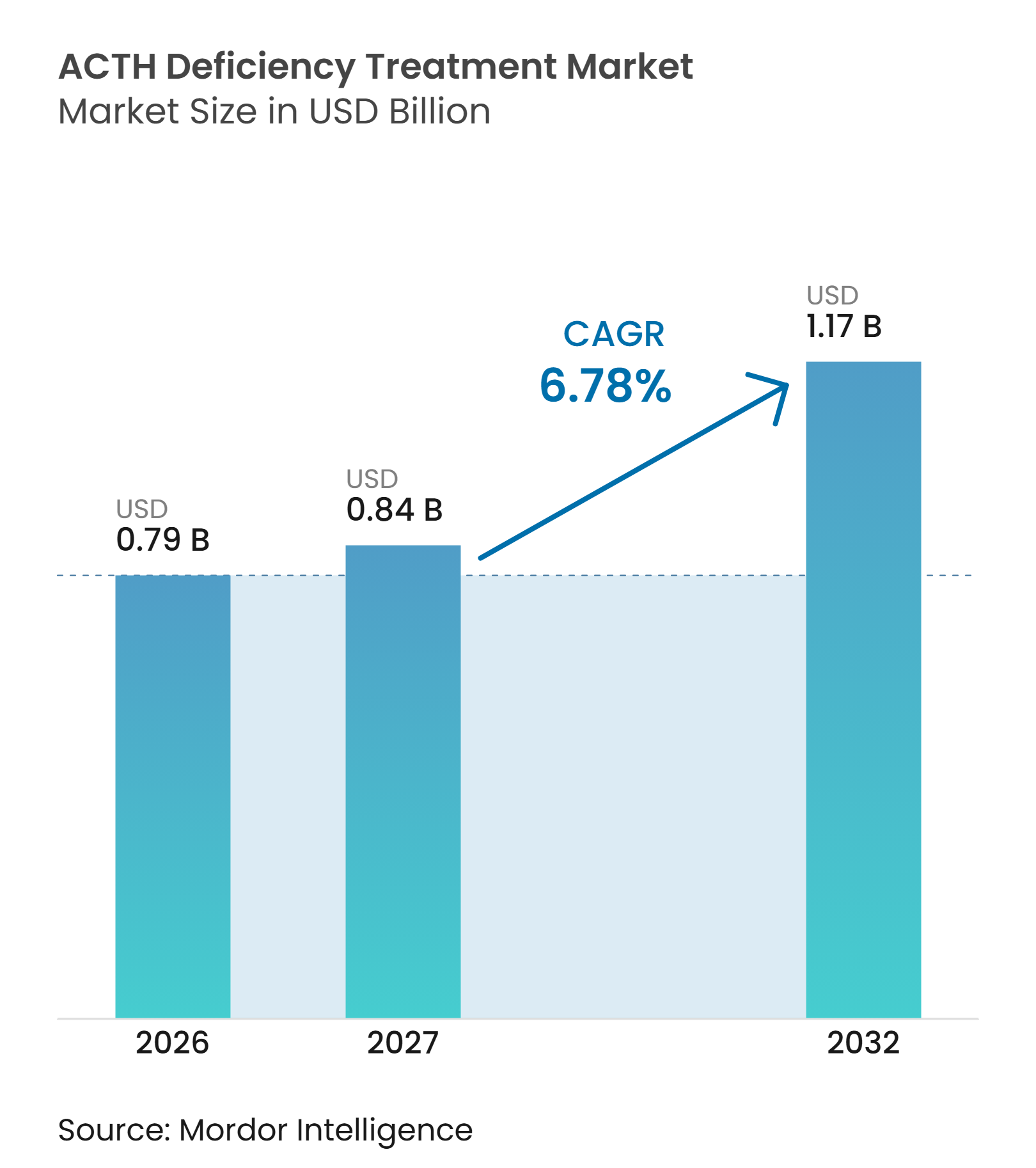
The ACTH Deficiency Treatment Market size was valued at USD 0.79 billion in 2026 and is estimated to grow from USD 0.84 billion in 2027 to reach USD 1.17 billion by 2032, at a CAGR of 6.78% during the forecast period (2027-2032).
Central adrenal insufficiency remains underrecognized, leaving a sizable patient population outside routine testing and treatment. The broader use of immune checkpoint inhibitors and increased detection of pituitary tumors are expanding the treated patient base. Pediatric liquid formulations and modified-release hydrocortisone are influencing treatment decisions by improving dosing accuracy and cortisol coverage. However, supply continuity for emergency injectable products and evidence requirements for premium formulations continue to constrain adoption. The ACTH deficiency treatment market combines sustained demand for daily hormone replacement with a growing need for emergency care products and specialist follow-up.
Key Report Takeaways
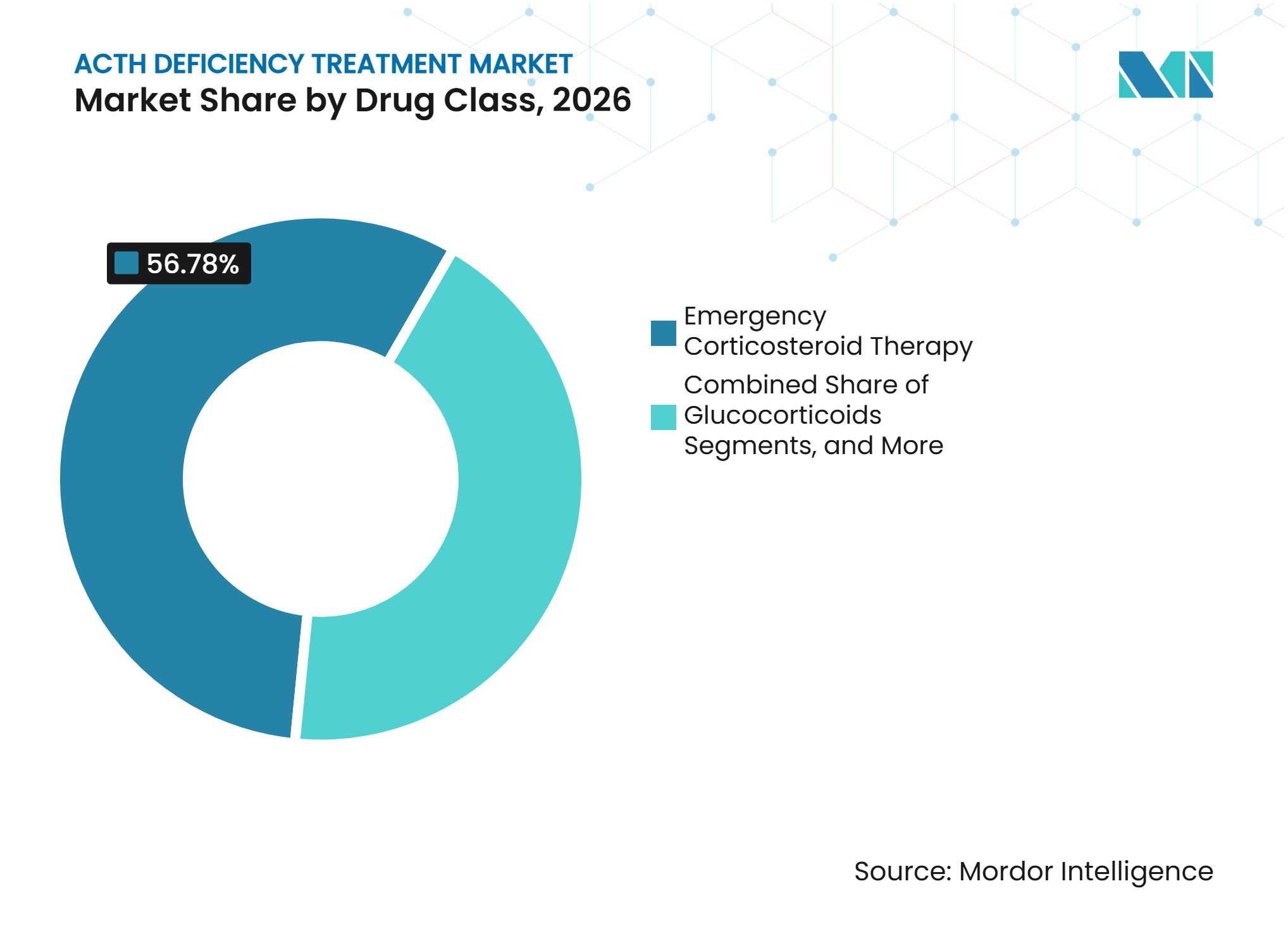
- By drug class, emergency corticosteroid therapy held 56.78% of the ACTH deficiency treatment market share in 2026, while glucocorticoids are projected to grow at a 9.12% CAGR through 2032.
- By formulation, tablets held 45.67% of the ACTH deficiency treatment market share in 2026, while oral solution and suspension is projected to grow at an 8.99% CAGR through 2032.
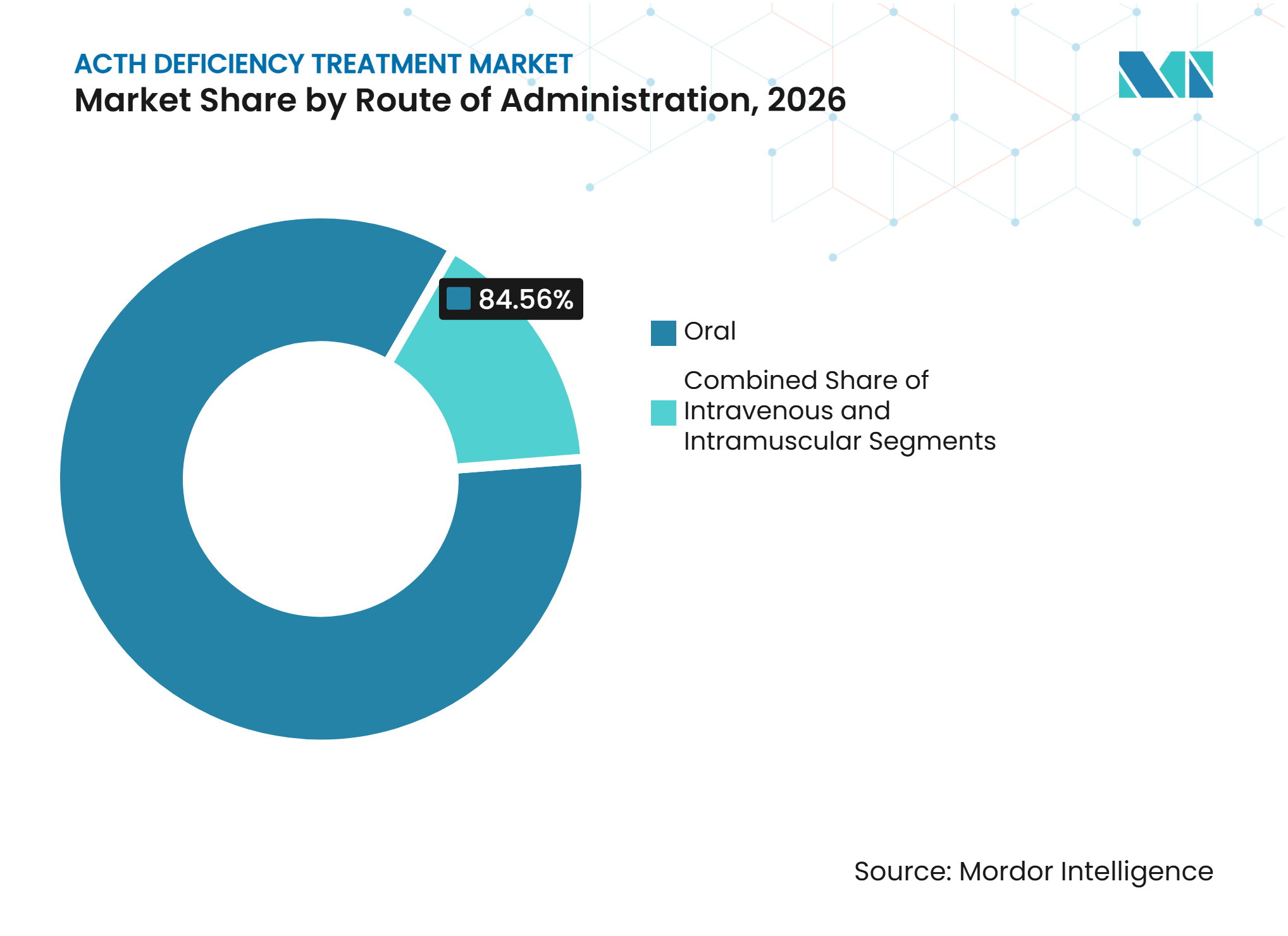
- By route of administration, the oral route accounted for 84.56% of the ACTH deficiency treatment market share in 2026, while intravenous hydrocortisone is projected to grow at an 8.76% CAGR through 2032.
- By disease etiology, pituitary adenoma or PitNET held 43.56% of the ACTH deficiency treatment market share in 2026, while post-pituitary surgery is projected to grow at a 7.56% CAGR through 2032.
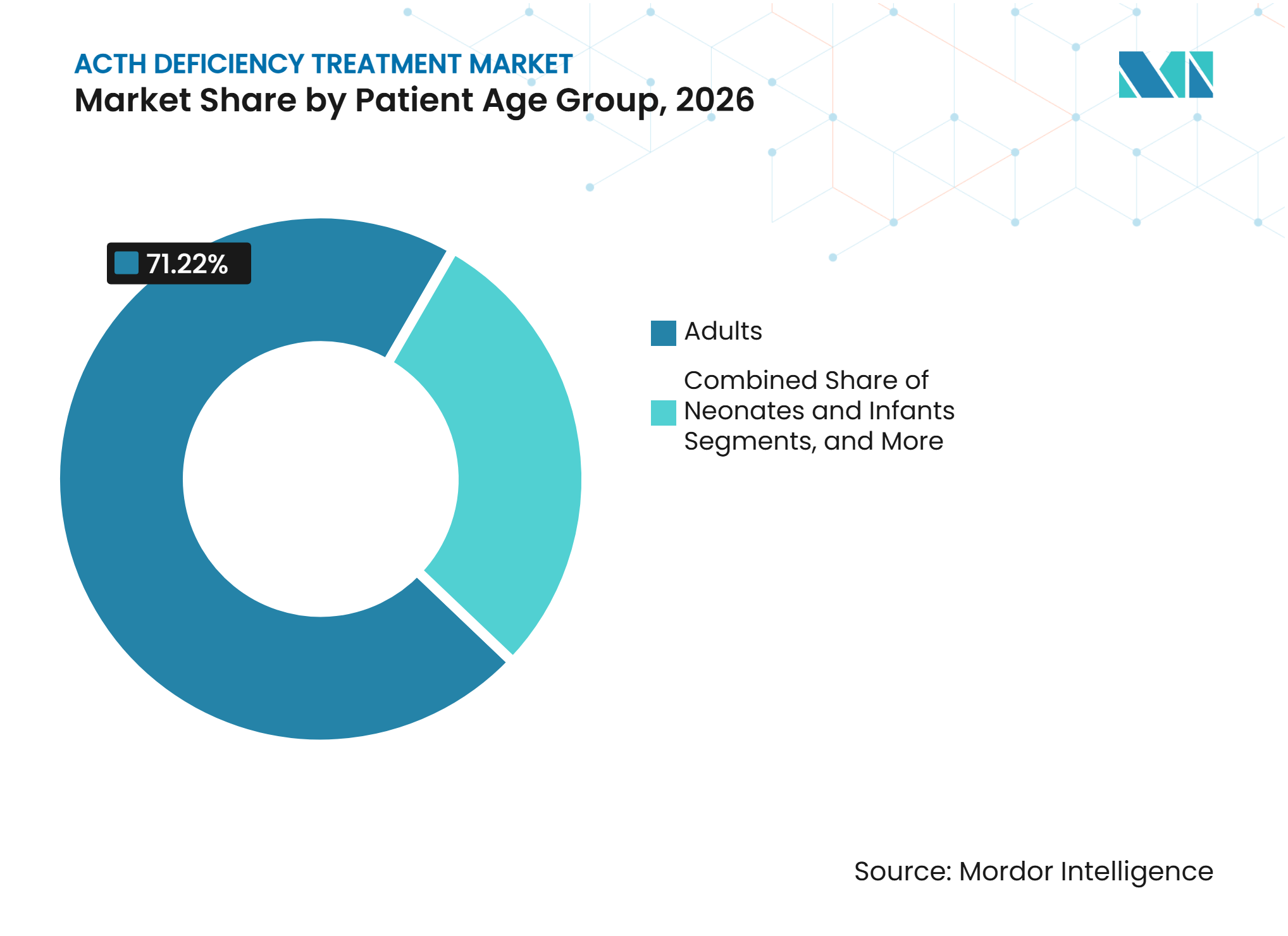
- By patient age group, adults held 71.22% of the ACTH deficiency treatment market share in 2026, while neonates and Infants are projected to grow at a 9.55% CAGR through 2032.
- By distribution channel, hospital pharmacies held 48.67% of the ACTH deficiency treatment market share in 2026, while online pharmacies are projected to grow at an 8.34% CAGR through 2032.
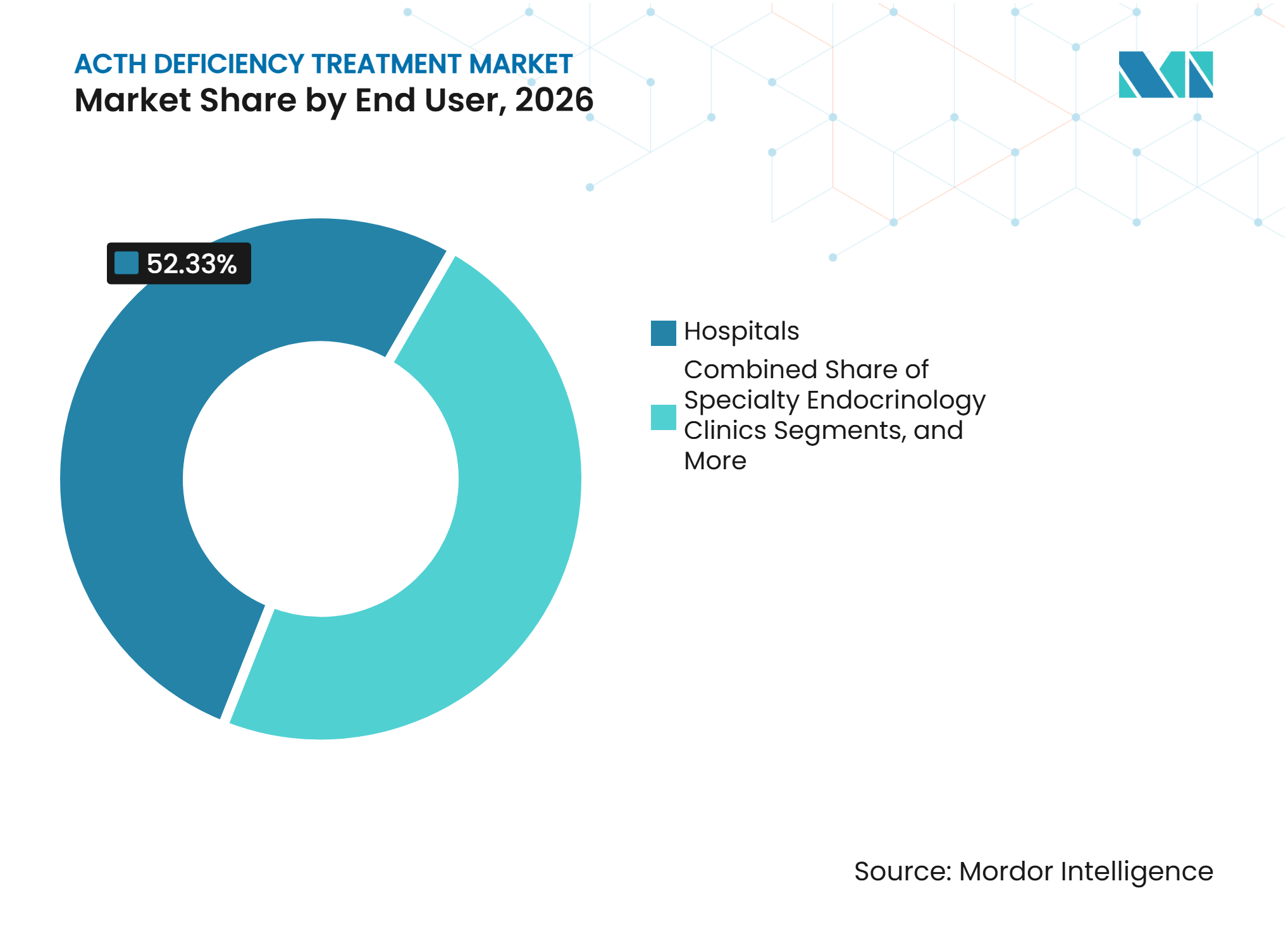
- By end user, hospitals held 52.33% of the ACTH deficiency treatment market share in 2026, while specialty endocrinology clinics are projected to grow at a 7.52% CAGR through 2032.
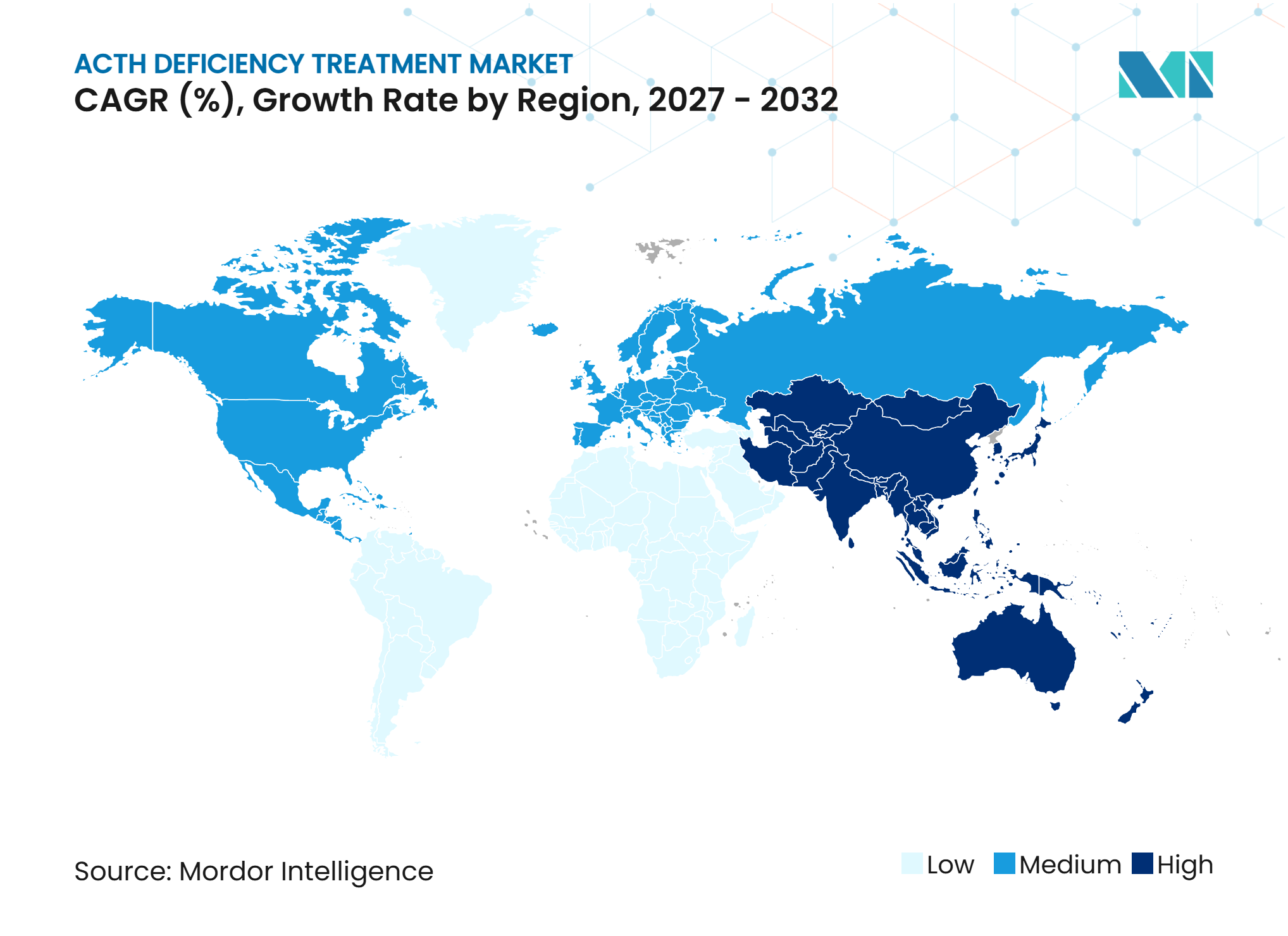
- By geography, North America held 39.65% of the ACTH deficiency treatment market share in 2026, while Asia-Pacific is projected to grow at a 10.45% CAGR through 2032.
Note: Market numbers in this report are based on Mordor Intelligence's proprietary estimation framework, which combines nine months of actuals with Q4 projections for base year 2026.
Market Trends and Insights
Drivers Impact Analysis of ACTH Deficiency Treatment Market*
| Driver | (~) % Impact on CAGR Forecast | Geographic Relevance | Impact Timeline |
|---|---|---|---|
| Rising recognition of secondary and tertiary adrenal insufficiency | +1.5% | Global, with early diagnostic gains in Asia-Pacific and the Middle East and Africa | Medium term (2-4 years) |
| Expansion of pediatric precision-dosing formulations | +0.8% | North America and Europe | Short term (≤ 2 years) |
| Adoption of circadian-profile hydrocortisone formulations | +0.9% | Europe and North America | Medium term (2-4 years) |
| Growth in emergency adrenal-crisis preparedness | +0.7% | Global, with early infrastructure gains in North America, the UK, and Europe | Medium term (2-4 years) |
| Increasing diagnosis after pituitary and immune-checkpoint disorders | +1.1% | Global, with North America and East Asia leading oncology treatment volumes | Short term (≤ 2 years) |
| ACTH-sparing and glucocorticoid-sparing innovation in congenital adrenal hyperplasia | +0.5% | North America and Western Europe | Long term (≥ 4 years) |
| Source: Mordor Intelligence | |||
Rising Recognition of Secondary and Tertiary Adrenal Insufficiency
More consistent recognition of central adrenal insufficiency is expanding the treatment pool for the ACTH deficiency treatment market. A 2026 study of 435 adults with pituitary disorders proposed updated morning cortisol thresholds using second-generation immunoassays, reducing diagnostic uncertainty that can delay treatment initiation.[1] Patients receiving long-term glucocorticoids for asthma, rheumatoid arthritis, or transplantation remain an important underdiagnosed group. Broader reflex testing in specialist settings should convert missed cases into long-term replacement therapy prescriptions.
Expansion of Pediatric Precision-Dosing Formulations
Pediatric dosing requirements are supporting demand for ready-to-use liquid hydrocortisone in the ACTH deficiency treatment market. The FDA approved KHINDIVI, a 1 mg/mL oral solution, for patients aged 5 years and older in May 2025. Eton submitted a supplemental application in July 2026 seeking approval for children under 5 years. Liquid formulations reduce dose variability associated with tablet splitting and compounded suspensions, particularly for neonates and infants, where small dose adjustments can affect clinical management.
Adoption of Circadian-Profile Hydrocortisone Formulations
Modified-release hydrocortisone is gaining attention because conventional tablets do not closely replicate the natural cortisol rhythm. In the 2025 CHAMPAIN study, Efmody achieved a median 07:00 h cortisol level of 417 nmol/L, compared with 6 nmol/L for Plenadren. The study also reported improvements in disease-specific quality-of-life and fatigue measures.[2] The European Commission expanded Efmody’s adrenal insufficiency indication in April 2026, supporting premium prescribing where clinical benefits and reimbursement align.[3]
Growth in Emergency Adrenal-Crisis Preparedness
Emergency preparedness is increasing recurring demand for injectable hydrocortisone within the ACTH deficiency treatment market. A 2025 study of 688 patients and caregivers found that more than 60% had experienced a crisis requiring parenteral hydrocortisone. Fewer than 20% successfully self-injected, while 97% preferred an autoinjector. CROSSJECT and Eton are developing the ZENEO Hydrocortisone autoinjector and ET-800 liquid formulation, which could improve patient readiness and expand the use of take-home emergency kits.
Restraints Impact Analysis of ACTH Deficiency Treatment Market*
| Restraint | (~) % Impact on CAGR Forecast | Geographic Relevance | Impact Timeline |
|---|---|---|---|
| Long-term over-replacement toxicity and monitoring burden | -0.9% | Global | Medium term (2-4 years) |
| Hydrocortisone injection supply interruptions | -0.5% | UK, Europe, and global spillover | Short term (≤ 2 years) |
| Limited clinical evidence for hard-endpoint benefits of modified-release therapy | -0.7% | Europe and North America | Long term (≥ 4 years) |
| Fragmented diagnosis and under-recognition of central adrenal insufficiency | -0.8% | Asia-Pacific, the Middle East and Africa, and South America | Long term (≥ 4 years) |
| Source: Mordor Intelligence | |||
Long-Term Over-Replacement Toxicity and Monitoring Burden
Fixed-dose replacement therapy can result in chronic overexposure because it does not replicate normal cortisol secretion. Patients may require cortisol profiling, bone density assessments, blood pressure and glucose monitoring, and dose adjustments during illness. Limited endocrinology capacity can constrain these monitoring requirements. Payers also assess higher-cost formulations closely when evidence of improved clinical outcomes remains limited, which may delay treatment optimization for long-term therapy.
Hydrocortisone Injection Supply Interruptions
Injectable hydrocortisone supply disruptions remain an operational risk for the ACTH deficiency treatment market. The UK shortage of hydrocortisone sodium phosphate began in January 2025, and permanent discontinuation was confirmed in March 2026. Patients were redirected to hydrocortisone sodium succinate powder, which requires a multistep reconstitution process. The UK government issued management guidance during the shortage, highlighting the need for alternative supply sources and simpler emergency administration devices.
*Our forecasts treat driver/restraint impacts as directional, not additive. The impact forecasts reflect baseline growth, mix effects, and variable interactions.
ACTH Deficiency Treatment Market Segment Analysis
By Drug Class:
Emergency Corticosteroid Therapy Leads While Glucocorticoids Grows FasterEmergency Corticosteroid Therapy held 56.78% of the ACTH deficiency treatment market share in 2026. Healthcare providers prescribe emergency kits for diagnosed patients, including those without a prior crisis. Sodium succinate remains the primary injectable product, while the UK withdrawal of sodium phosphate has influenced prescribing patterns. The market relies on both maintenance replacement and acute intervention therapies.
Glucocorticoids are projected to grow at a CAGR of 9.12% through 2032. Modified-release products and adjunct therapies are expanding treatment options beyond standard replacement. Providers consider clinical convenience, treatment precision, supply reliability, and reimbursement when selecting products. Generic options remain important where affordability determines access.



By Formulation:
Tablets Leads While Oral Solution and Suspension Grows FasterTablets held 45.67% of the ACTH deficiency treatment market share in 2026. They remain widely accessible across major markets and support standard daily replacement regimens. Liquid formulations enable more precise dosing for young children. KHINDIVI’s approval and proposed expansion into the under-5 population support this shift.
Oral Solutions and Suspensions are projected to grow at a CAGR of 8.99% through 2032. Demand is supported by the need for flexible pediatric dosing and improved treatment precision. Providers also consider supply reliability, clinical convenience, and reimbursement in product selection. Generic options remain relevant in price-sensitive markets.
By Route of Administration:
Oral Route Leads While Intravenous Hydrocortisone Grows FasterOral administration held 84.56% of the ACTH deficiency treatment market share in 2026. Oral products support daily, lifelong replacement therapy and generate predictable prescription volumes. Intramuscular products remain important for emergency kits. Intravenous use is increasing with pituitary surgery and immune checkpoint inhibitor-related crises.
Intravenous Hydrocortisone is projected to grow at a CAGR of 8.76% through 2032. Growth is supported by its role in acute care and hospital-based treatment settings. Providers prioritize treatment precision, product availability, and reimbursement considerations. Generic products continue to support access where affordability is a key factor.

By Disease Etiology:
Pituitary Adenoma or PitNET Leads While Post-Pituitary Surgery Grows FasterPituitary Adenoma or PitNET held 43.56% of the ACTH deficiency treatment market share in 2026. Pituitary tumors create a stable patient population requiring long-term cortisol replacement. A 2025 study reported ACTH deficiency in 36% of patients before surgery and 42% at three months after surgery. Routine postoperative endocrine assessments improve patient identification.
Post-Pituitary Surgery is projected to grow at a CAGR of 7.56% through 2032. Growth is driven by increased surgical interventions and routine endocrine monitoring after surgery. Providers evaluate treatment options based on clinical needs, supply reliability, and reimbursement. Generic therapies remain important for improving affordability and access.
By Patient Age Group:
Adults Leads While Neonates and Infants Grows FasterAdults held 71.22% of the ACTH deficiency treatment market share in 2026. This group generates the largest ongoing prescription demand due to the prevalence of pituitary disease and treatment-related causes. Newborn screening and specialist neonatal care support earlier identification of congenital cases. Pediatric liquid formulations reduce reliance on compounded suspensions.
Neonates and Infants are projected to grow at a CAGR of 9.55% through 2032. Growth is supported by earlier diagnosis and the availability of age-appropriate liquid formulations. Providers prioritize dosing precision, ease of administration, and product availability. Generic options remain important where affordability affects treatment access.
By Distribution Channel:
Hospital Pharmacies Leads While Online Pharmacies Grows FasterHospital Pharmacies held 48.67% of the ACTH deficiency treatment market share in 2026. Hospitals dispense initial therapy after crises, pituitary surgery, and oncology-related endocrine evaluations. Retail pharmacies support chronic maintenance prescriptions. Specialty home delivery supports refills, adherence monitoring, and clinical services for rare-disease therapies.
Online Pharmacies are projected to grow at a CAGR of 8.34% through 2032. Growth is supported by demand for convenient refill services and improved access to maintenance therapies. Providers consider supply reliability, reimbursement, and patient support capabilities. Generic options remain important in affordability-driven markets.
By End User:
Hospitals Leads While Specialty Endocrinology Clinics Grows FasterHospitals held 52.33% of the ACTH deficiency treatment market share in 2026. Hospitals manage diagnosis, acute stabilization, surgery, and initial emergency-kit prescriptions. Specialty endocrinology clinics increasingly manage stable patients after discharge. Regular ACTH and cortisol monitoring supports structured outpatient follow-up.
Specialty Endocrinology Clinics are projected to grow at a CAGR of 7.52% through 2032. Growth is supported by the increasing transition of stable patients to outpatient care. Providers focus on treatment precision, follow-up monitoring, and reimbursement considerations. Generic therapies remain important for expanding patient access.
Geography Analysis
North America
North America held 39.65% of the ACTH deficiency treatment market share in 2026, supported by specialist endocrinology services, pituitary centers, and established specialty pharmacy networks. The FDA approved KHINDIVI in May 2025 for eligible pediatric patients. Increasing checkpoint inhibitor use is also driving endocrinology referrals. Canada contributes through provincial drug coverage, while Mexico remains reliant on generic hydrocortisone due to uneven access to specialist care and precision formulations.
Asia-Pacific
Asia-Pacific is projected to grow at a 10.45% CAGR through 2032, the highest regional rate in the ACTH deficiency treatment market. Japan broadly reimburses hydrocortisone replacement and has a growing checkpoint inhibitor-related patient population. China is expanding rare-disease and pituitary care capacity in major hospitals, while improved MRI access is increasing the identification of post-surgical cases. India and Southeast Asia offer long-term growth potential but remain constrained by generic reliance and limited specialist density outside major cities.
Western Europe has established pituitary networks and is adopting modified-release hydrocortisone. The European Commission and UK MHRA expanded Efmody’s adrenal insufficiency indication in April and May 2026. Supply disruptions in the United Kingdom have increased focus on injectable supply resilience and autoinjector development. GCC countries, South Africa, Brazil, and Argentina face latent demand, as clinical awareness, testing capacity, and specialist access remain uneven.
Competitive Landscape
Market Concentration
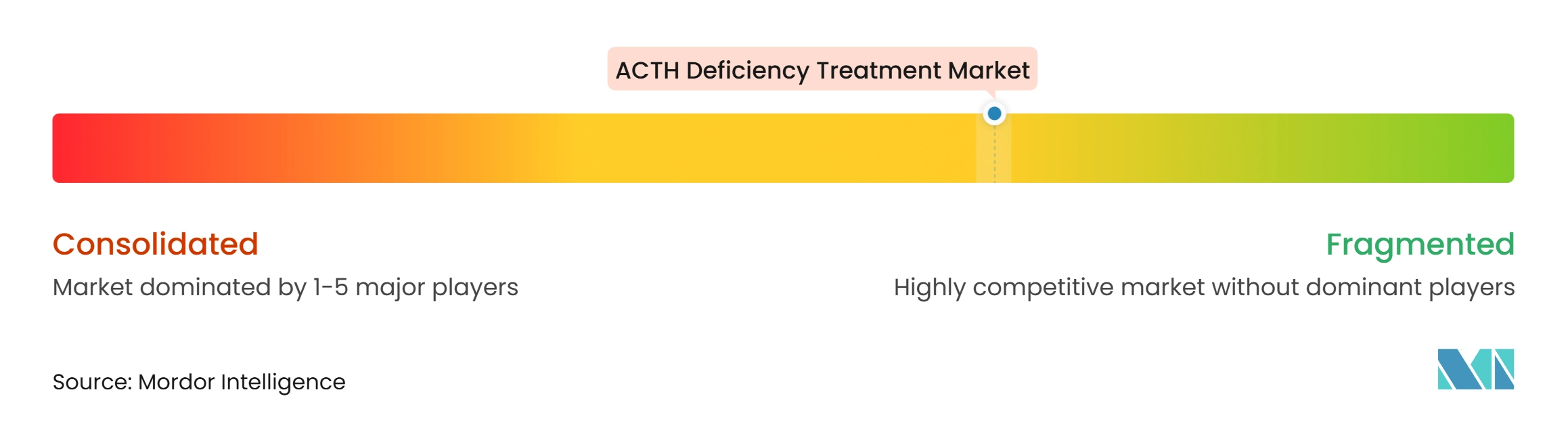
The ACTH deficiency treatment market is moderately fragmented. Generic manufacturers, including Amneal, Aurobindo, Cipla, Dr. Reddy’s Laboratories, Lupin, Sandoz, Sun Pharma, Teva, Viatris, and Zydus Lifesciences, compete across oral tablets and standard injectables. Their market position depends on pricing, active ingredient sourcing, and supply reliability. Pfizer’s Solu-Cortef, Fresenius Kabi, and Hikma maintain a presence in hospital emergency injectable care.
Specialty companies compete through differentiated formulations, regulatory protection, and clinical evidence. Eton introduced KHINDIVI and submitted its pediatric label expansion request in July 2026. Immedica expanded Efmody into adrenal insufficiency in the EU and UK during 2026. Neurocrine’s crinecerfont data showed sustained glucocorticoid dose reductions in adults with classic congenital adrenal hyperplasia. These initiatives support premium positioning where payers recognize additional clinical value.
An emergency hydrocortisone autoinjector remains a key market opportunity. CROSSJECT and Eton are advancing the ZENEO program, while Amphastar licensed AMP-110 in January 2026. Diagnostic partnerships with oncology centers may also enable earlier patient engagement across the treatment pathway. Orphan designations and formulation patents can extend exclusivity beyond commodity replacement products, while the market remains fragmented as no company controls both chronic replacement and emergency treatment.
ACTH Deficiency Treatment Industry Leaders
-
Pfizer Inc.
-
Teva Pharmaceutical Industries Ltd
-
Viatris Inc.
-
Hikma Pharmaceuticals PLC
-
Sandoz Group AG
- *Disclaimer: Major Players sorted in no particular order
ACTH Deficiency Treatment Market Companies Covered in this Report
- Amneal Pharmaceuticals
- Amphastar Pharmaceuticals
- Aurobindo Pharma
- Cipla
- Crinetics Pharmaceuticals, Inc.
- Dr. Reddy’s Laboratories
- Eton Pharmaceuticals, Inc.
- Fresenius
- H. Lundbeck
- Hikma Pharmaceuticals
- Immedica Pharma AB
- Lupin
- Neurocrine Biosciences
- Novitium Pharma LLC
- Pfizer
- Sandoz Group AG
- Sun Pharmaceuticals Industries
- Takeda Pharmaceuticals
- Teva Pharmaceutical Industries
- Viatris
- Zydus Lifesciences Limited
Recent Industry Developments in ACTH Deficiency Treatment Market
- May 2026: Immedica Pharma received MHRA approval for Efmody for adolescents aged 12 and older and adults with adrenal insufficiency.
- April 2026: The European Commission extended Efmody’s indication to adolescents aged 12 and older and adults with adrenal insufficiency.
- January 2026: Amphastar licensed AMP-110, a fully synthetic human ACTH analog, for commercialization in the United States and Canada.
- July 2025: Neurocrine presented one-year CAHtalyst Adult data showing mean glucocorticoid dose reductions of 25% and 30% in the continuous and crossover CRENESSITY groups, respectively.
Global ACTH Deficiency Treatment Market Report Scope
As per the scope of the report, adrenocorticotropic hormone (ACTH) deficiency is an endocrine disorder characterized by inadequate production or secretion of ACTH by the anterior pituitary gland, resulting in insufficient stimulation of the adrenal cortex and reduced production of cortisol. ACTH plays a critical role in regulating the body's stress response, metabolism, blood pressure, and inflammatory processes through its influence on adrenal hormone secretion.
The ACTH deficiency treatment market is segmented by drug class, formulation, route of administration, disease etiology, patient age group, distribution channel, end user, and geography. By drug class, the market includes glucocorticoids, mineralocorticoids, emergency corticosteroid therapy, hydrocortisone sodium succinate, hydrocortisone sodium phosphate, injectable dexamethasone, and other drug classes. By formulation, the market is segmented into tablets, injectables, and oral solutions and suspensions. By route of administration, the market is categorized into oral, intravenous, and intramuscular administration. By disease etiology, the market is segmented into pituitary adenoma or pituitary neuroendocrine tumor, hypothalamic disorders, post-pituitary surgery, radiation-induced ACTH deficiency, traumatic brain injury-associated ACTH deficiency, and other disease etiologies. By patient age group, the market includes neonates and infants, children, adolescents, adults, and older adults. By distribution channel, the market is segmented into hospital pharmacies, retail pharmacies, online pharmacies, and other distribution channels. By end user, the market is categorized into hospitals, specialty endocrinology clinics, diagnostic laboratories, home care and self-management, and other end users. By geography, the market is analyzed across North America, Europe, Asia-Pacific, the Middle East and Africa, and South America. The report also covers the estimated market sizes and trends for 17 countries across major regions globally. The report offers market sizes and forecasts in terms of value (USD) for the above segments.
Segmentation Overview
| Glucocorticoids | |
| Mineralocorticoids | |
| Emergency Corticosteroid Therapy | Hydrocortisone Sodium Succinate |
| Hydrocortisone Sodium Phosphate | |
| Injectable Dexamethasone | |
| Other Drug Classes |
| Tablets |
| Injectables |
| Oral Solution and Suspension |
| Oral |
| Intravenous |
| Intramuscular |
| Pituitary Adenoma or Pituitary Neuroendocrine Tumor |
| Hypothalamic Disorder |
| Post-Pituitary Surgery |
| Radiation Induced ACTH Deficiency |
| Traumatic Brain Injury Associated ACTH Deficiency |
| Other Disease Etiology |
| Neonates and Infants |
| Children |
| Adolescents |
| Adults |
| Older Adults |
| Hospital Pharmacies |
| Retail Pharmacies |
| Online Pharmacies |
| Other Distribution Channels |
| Hospitals |
| Specialty Endocrinology Clinics |
| Diagnostic Laboratories |
| Home-Care and Self-Management |
| Other End Users |
| North America | United States |
| Canada | |
| Mexico | |
| Europe | Germany |
| United Kingdom | |
| France | |
| Italy | |
| Spain | |
| Rest of Europe | |
| Asia-Pacific | China |
| India | |
| Japan | |
| Australia | |
| South Korea | |
| Rest of Asia-Pacific | |
| Middle East and Africa | GCC |
| South Africa | |
| Rest of Middle East and Africa | |
| South America | Brazil |
| Argentina | |
| Rest of South America |
| By Drug Class | Glucocorticoids | |
| Mineralocorticoids | ||
| Emergency Corticosteroid Therapy | Hydrocortisone Sodium Succinate | |
| Hydrocortisone Sodium Phosphate | ||
| Injectable Dexamethasone | ||
| Other Drug Classes | ||
| By Formulation | Tablets | |
| Injectables | ||
| Oral Solution and Suspension | ||
| By Route of Administration | Oral | |
| Intravenous | ||
| Intramuscular | ||
| By Disease Etiology | Pituitary Adenoma or Pituitary Neuroendocrine Tumor | |
| Hypothalamic Disorder | ||
| Post-Pituitary Surgery | ||
| Radiation Induced ACTH Deficiency | ||
| Traumatic Brain Injury Associated ACTH Deficiency | ||
| Other Disease Etiology | ||
| By Patient Age Group | Neonates and Infants | |
| Children | ||
| Adolescents | ||
| Adults | ||
| Older Adults | ||
| By Distribution Channel | Hospital Pharmacies | |
| Retail Pharmacies | ||
| Online Pharmacies | ||
| Other Distribution Channels | ||
| By End User | Hospitals | |
| Specialty Endocrinology Clinics | ||
| Diagnostic Laboratories | ||
| Home-Care and Self-Management | ||
| Other End Users | ||
| By Geography | North America | United States |
| Canada | ||
| Mexico | ||
| Europe | Germany | |
| United Kingdom | ||
| France | ||
| Italy | ||
| Spain | ||
| Rest of Europe | ||
| Asia-Pacific | China | |
| India | ||
| Japan | ||
| Australia | ||
| South Korea | ||
| Rest of Asia-Pacific | ||
| Middle East and Africa | GCC | |
| South Africa | ||
| Rest of Middle East and Africa | ||
| South America | Brazil | |
| Argentina | ||
| Rest of South America | ||
Key Questions Answered in the Report
What is driving demand for ACTH deficiency treatment?
Growing recognition of central adrenal insufficiency, oncology-related cases, and pituitary surgery are expanding treatment need.
What is the projected growth rate through 2032?
The ACTH deficiency treatment market is projected to grow at a 6.78% CAGR from 2027 to 2032.
Which treatment class holds the largest share?
Emergency Corticosteroid Therapy held 56.78% in 2026.
Which patient group is growing fastest?
Neonates and Infants are projected to grow at a 9.55% CAGR through 2032.
Which region is growing fastest?
Asia-Pacific is projected to grow at a 10.45% CAGR through 2032.
Is the competitive environment concentrated?
The market concentration score is 4 out of 10 because many generic and specialty companies compete across different products, with no disclosed top-player share supporting a concentrated structure.