
Acrocallosal Syndrome Therapeutics Market Size and Share
Market Overview
| Study Period | 2022 - 2032 |
|---|---|
| Market Size (2027) | USD 243.71 Million |
| Market Size (2032) | USD 396.27 Million |
| Growth Rate (2027 - 2032) | 10.21 % |
| Fastest Growing Market | Asia-Pacific |
| Largest Market | North America |
| Market Concentration | Medium |
Major Players *Disclaimer: Major Players sorted in no particular order Image © Mordor Intelligence. Reuse requires attribution under CC BY 4.0. | |
Acrocallosal Syndrome Therapeutics Market Analysis by Mordor Intelligence
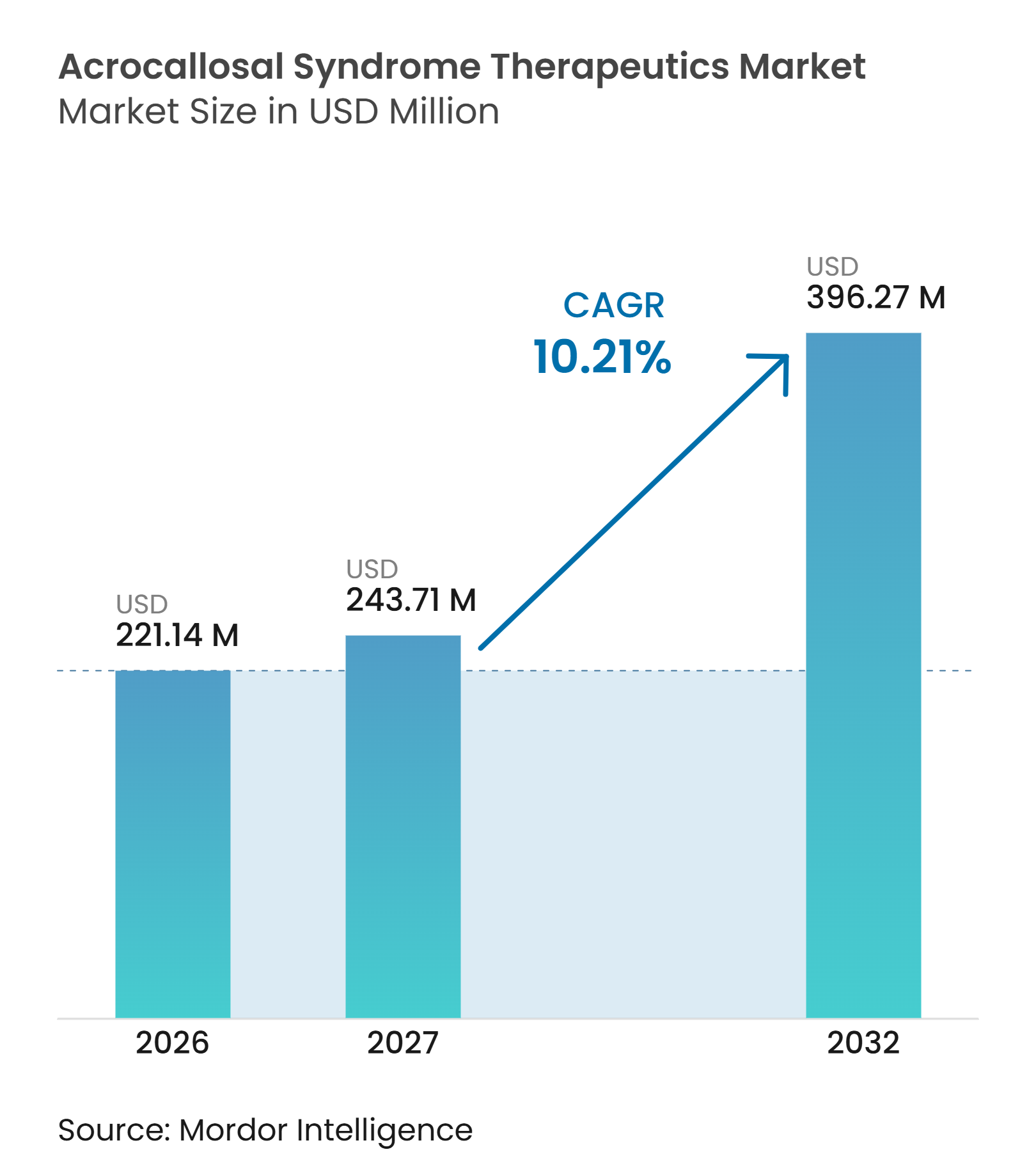
The Acrocallosal Syndrome Therapeutics Market size is projected to expand from USD 221.14 million in 2026 and USD 243.71 million in 2027 to USD 396.27 million by 2032, registering a CAGR of 10.21% between 2027 and 2032.
The acrocallosal syndrome therapeutics market is moving from care that manages symptoms toward approaches designed around the underlying KIF7 and Sonic Hedgehog pathway biology. A 2025 study showed that KIF7 loss has different effects across developing brain cell types, which strengthens the case for treatments that account for cell-specific biology rather than applying a uniform approach. Earlier genetic testing is likely to identify affected children closer to birth, when care planning and clinical follow-up can begin sooner. The acrocallosal syndrome therapeutics market also benefits from advances in adjacent rare neurological conditions because developers can reuse delivery, manufacturing, registry, and trial methods. The small and dispersed patient population limited natural-history evidence, and the narrow window for altering developmental outcomes remain material limits on commercial progress.
Key Report Takeaways
- By therapeutic modality, supportive and symptom-directed therapies held 36.76% of the acrocallosal syndrome therapeutics market share in 2026, while Gene Replacement and Gene editing is forecast to grow at a 12.76% CAGR through 2032.
- By disease, neurodevelopmental and cognitive impairment accounted for 38.76% of the acrocallosal syndrome therapeutics market size in 2026, while seizures and epilepsy is forecast to expand at a 12.99% CAGR through 2032.
- By patient and care setting, neonatal and pediatric specialty care held 31.67% revenue share in 2026, while clinical genetics and genetic counseling is forecast to grow at a 13.78% CAGR through 2032.
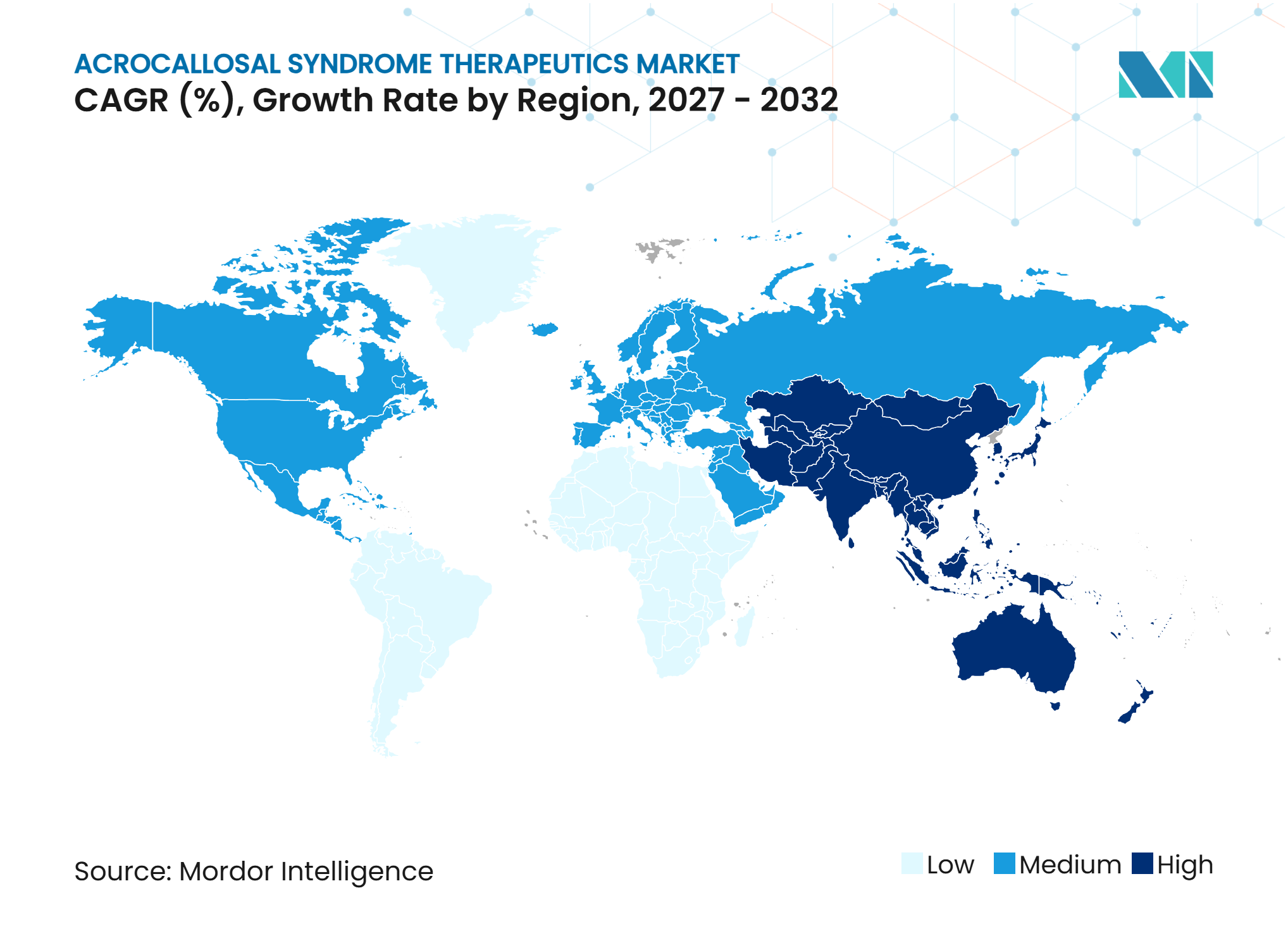
- By geography, North America held 41.87% revenue share in 2026, while Asia-Pacific is forecast to expand at an 11.65% CAGR through 2032.
Note: Market numbers in this report are based on Mordor Intelligence's proprietary estimation framework, which combines nine months of actuals with Q4 projections for base year 2026.
Market Trends and Insights
Drivers Impact Analysis of Acrocallosal Syndrome Therapeutics Market*
| Driver | (~) % Impact on CAGR Forecast | Geographic Relevance | Impact Timeline |
|---|---|---|---|
| Earlier Diagnosis of Rare Genetic Disorders | +1.8% | Global, led by North America and Western Europe | Medium term (2-4 years) |
| Molecular Diagnosis for KIF7 and GLI3 Variants | +1.6% | North America and Europe, with early gains in Asia-Pacific | Long term (≥ 4 years) |
| Orphan-Drug and Rare-Pediatric Pathways | +2.1% | North America, with spillover to Europe and Asia-Pacific | Short term (≤ 2 years) |
| Gene and Cell Therapy Platforms for Monogenic CNS Disorders | +2.4% | North America and Europe, with early Asia-Pacific activity | Medium term (2-4 years) |
| Specialist Rare-Disease Networks for Patient Identification | +1.3% | Asia-Pacific, North America, and Europe | Long term (≥ 4 years) |
| Ciliopathy Natural-History and Biomarker Reuse | +0.9% | Global, led by North America and Europe | Long term (≥ 4 years) |
| Source: Mordor Intelligence | |||
Growing Awareness and Earlier Diagnosis of Rare Genetic Disorders
Genomic newborn screening is changing the front end of the diagnosis pathway for rare pediatric conditions and can improve patient identification for the acrocallosal syndrome therapeutics market. In December 2025, the U.S. Department of Health and Human Services added Duchenne muscular dystrophy and metachromatic leukodystrophy to the Recommended Uniform Screening Panel[1]. That decision broadens the policy precedent for screening rare neurogenetic conditions when treatment options are available. GeneDx began the BEACONS initiative with a USD 14.4 million National Institutes of Health award to test whole-genome sequencing within newborn screening systems in as many as 10 U.S. states and enroll as many as 30,000 newborns. A 2026 review of genomic newborn screening studies involving more than 10,800 newborns reported a 2.2% true-positive screening rate. Broader testing can make KIF7-related cases visible earlier and give families a clearer route to specialty care.
Expansion of Molecular Diagnosis for KIF7 and GLI3 Variants
The acrocallosal syndrome therapeutics market depends on the ability to distinguish KIF7-related disease from other disorders with overlapping developmental features. Research published in 2025 found that KIF7 deletion affected Sonic Hedgehog signaling differently in developing principal neurons and inhibitory interneurons. This finding matters because a future KIF7 replacement strategy would need to consider how the target acts in different cell populations. It also supports more precise genotype and phenotype records for clinical programs. A 2025 study reported that machine learning methods applied to health records showed 82% to 90% sensitivity for identifying possible ciliopathy cases before molecular confirmation. These methods do not replace genetic testing, but they can help specialist networks prioritize patients for testing. Better molecular diagnosis can therefore improve enrollment planning and long-term follow-up in the acrocallosal syndrome therapeutics market.
Orphan-Drug Incentives and Rare-Pediatric Development Pathways
Rare pediatric development pathways support investment in conditions with very limited patient populations. Companies working in adjacent pediatric neurological diseases have used orphan status, rare pediatric designations, fast-track mechanisms, and breakthrough pathways to build development programs. Encoded Therapeutics reported FDA alignment and the start of a pivotal ETX101 study for Dravet syndrome in 2026 after the program received several rare-disease designations. These pathways can reduce review barriers and strengthen the investment case for ultra-rare indications. They also encourage developers to work with patient registries and specialist centers earlier in planning. The acrocallosal syndrome therapeutics market can benefit from this established regulatory experience, although a direct ACLS program would still need disease-specific evidence. The incentives do not resolve the small patient base, but they can make early development more feasible.
Growth of Gene and Cell Therapy Platforms for Monogenic CNS Disorders
The acrocallosal syndrome therapeutics market is supported by progress in gene therapy programs for related pediatric neurological conditions. The FDA approved Itvisma for spinal muscular atrophy in November 2025, extending access to an AAV-based gene therapy for adult patients as well as pediatric patients. Ultragenyx reported full FDA approval of FAYUVI for Sanfilippo syndrome type A in September 2026, creating a commercial reference point for intravenous AAV9 treatment in a rare pediatric neurological disorder. Capsida obtained FDA clearance to begin a clinical trial of CAP-002 for STXBP1 developmental and epileptic encephalopathy in 2025. These programs provide practical information on vector design, dosing, patient monitoring, and manufacturing. They also show that central nervous system delivery remains a demanding area where safety monitoring is essential. The acrocallosal syndrome therapeutics market may use this platform experience when direct KIF7 programs emerge.
Restraints Impact Analysis of Acrocallosal Syndrome Therapeutics Market*
| Restraint | (~) % Impact on CAGR Forecast | Geographic Relevance | Impact Timeline |
|---|---|---|---|
| Small and Geographically Dispersed Patient Population | -1.5% | Global, most acute in Asia-Pacific and South America | Long term (≥ 4 years) |
| Cost and Technical Risk of CNS Gene Therapy Development | -2.1% | Global, most acute in North America and Europe | Medium term (2-4 years) |
| Limited KIF7 and GLI3 Natural-History Evidence | -0.9% | Global | Long term (≥ 4 years) |
| Developmental Irreversibility After Birth | -0.8% | Global | Long term (≥ 4 years) |
| Source: Mordor Intelligence | |||
Extremely Small and Geographically Dispersed Patient Population
The acrocallosal syndrome therapeutics market faces a basic enrollment challenge because confirmed patients are rare and widely distributed. Small patient groups require sponsors to work across several countries and specialized treatment centers. This raises site activation, staff training, travel, and long-term follow-up costs. It also makes it harder to build a single clinical program with consistent assessments and treatment timing. The challenge is more severe in regions with limited genetic testing and referral capacity. Coordinated registries and newborn genomics programs can improve visibility, but they cannot eliminate the underlying scarcity of eligible patients.
High Cost and Technical Risk of CNS Gene-Therapy Development
A 2025 analysis reported that gene and cell therapy development can require USD 2.5 billion and that regulatory success rates remain below 10%. These economics limit the number of organizations that can sustain direct programs in the acrocallosal syndrome therapeutics market. REGENXBIO disclosed a potential integration-related central nervous system neoplasm in January 2026 in a participant treated in an intracisternal AAV program, followed by clinical holds for RGX-111 and RGX-121. Ultragenyx received a complete response letter for UX111 in July 2025 because of manufacturing facility observations unrelated to clinical data quality. These events show that safety and manufacturing can delay programs even when the underlying disease need is clear. Developers require strong vector science, manufacturing control, and long-term monitoring capabilities.
*Our forecasts treat driver/restraint impacts as directional, not additive. The impact forecasts reflect baseline growth, mix effects, and variable interactions.
Acrocallosal Syndrome Therapeutics Market Segment Analysis
By Therapeutic Modality:
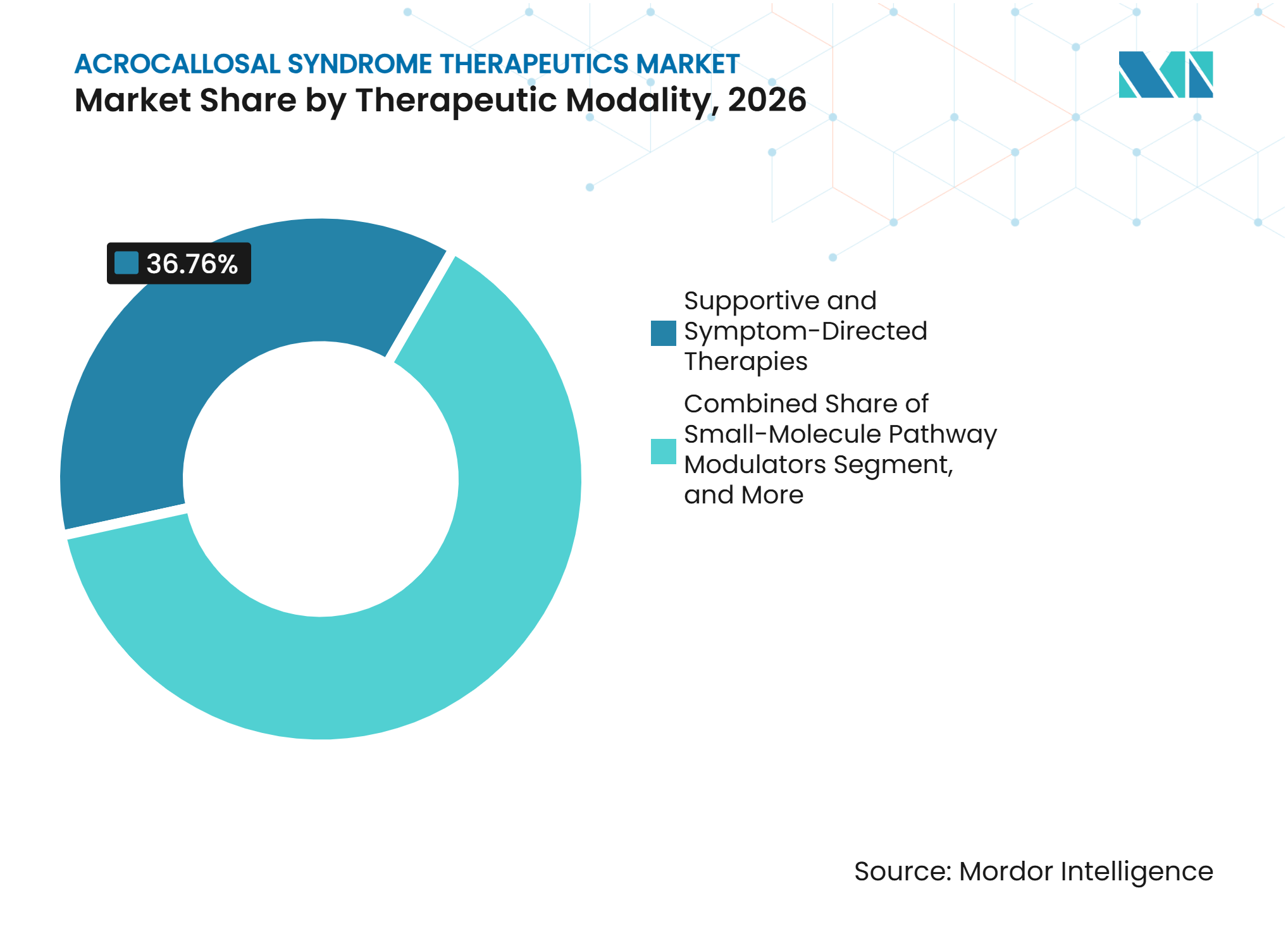
Supportive Care Holds the Largest Position While Gene Platforms AdvanceSupportive and symptom-directed therapies held a 36.76% share in 2026. The segment remains central because there is no approved disease-modifying therapy specific to ACLS. Care commonly includes seizure management, physical therapy, occupational therapy, developmental support, limb correction, and neonatal monitoring. These services address needs that occur across childhood and often continue over time. Supportive care is therefore the practical treatment baseline for patients and families. Its position also reflects the fact that structural brain malformations cannot generally be modified after birth. Small-Molecule Pathway Modulators remain early-stage options within the acrocallosal syndrome therapeutics industry because the Sonic Hedgehog pathway is relevant to KIF7 and GLI3 biology. No KIF7-directed small molecule has reached clinical testing for ACLS. RNA-based approaches are gaining attention as programs in related monogenic neurological diseases progress. BioMarin and n-Lorem Foundation announced a research collaboration in July 2026 to develop an investigational antisense oligonucleotide for ReNU syndrome. Gene Replacement and Gene Editing is forecast to grow at a 12.76% CAGR through 2032. The platform benefits from advances in AAV9 delivery, although a direct KIF7 program has not been disclosed.



By Diseases:
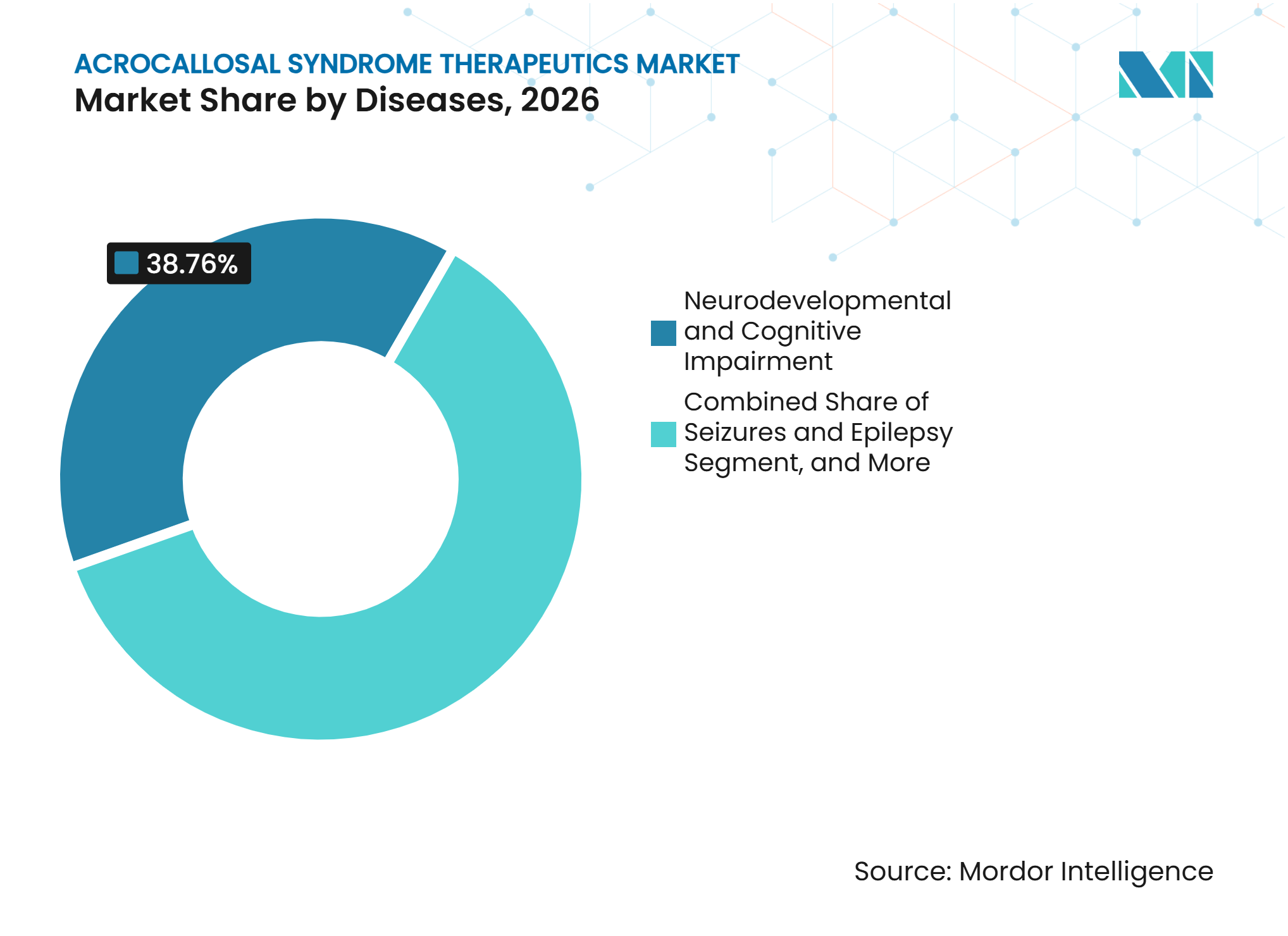
Neurodevelopmental Care Drives Demand While Epilepsy Has the Highest Growth RateNeurodevelopmental and cognitive impairment represented 38.76% of the acrocallosal syndrome therapeutics market size in 2026. Developmental delay and cognitive disability create sustained needs for behavioral, educational, rehabilitative, and family support services. These needs continue beyond acute neonatal management and account for a large share of therapeutic demand. Corpus callosum and other brain malformations remain central to diagnosis, but the malformations themselves are usually not modifiable after birth. Their clinical effects are often managed through downstream developmental and neurological care. Polydactyly, syndactyly, and limb reconstruction create a separate need for orthopedic and reconstructive care.
Seizures and epilepsy are forecast to expand at a 12.99% CAGR through 2032. Growth reflects the development of genetically targeted epilepsy treatments and broader access to molecular testing. Stoke Therapeutics completed enrollment of 162 patients in the Phase 3 EMPEROR study of zorevunersen for Dravet syndrome in June 2026. The program illustrates continued development of antisense approaches for genetic epilepsies. A 2025 review noted that expanded pediatric genetic testing is refining disease definitions and increasing identification of neurogenetic conditions. This progress may support more focused seizure care in the acrocallosal syndrome therapeutics market.

By Patient and Care Setting:
Pediatric Centers Lead While Genetics Services ExpandNeonatal and pediatric specialty care held a 31.67% share in 2026. ACLS is generally identified at birth or early in life through prenatal imaging, neonatal imaging, physical findings, or genetic testing. Pediatric specialty centers and neonatal units therefore serve as the first major points of treatment and referral. Their role includes monitoring, seizure care, developmental assessment, and coordination with surgical and rehabilitation services. This care pattern can support a hub-and-spoke model for future trial enrollment. A small number of specialized centers may identify a meaningful proportion of patients who are eligible for research.
Clinical genetics and genetic counseling are forecast to grow at a 13.78% CAGR through 2032. The BEACONS initiative provides a framework for adding genome sequencing to routine newborn screening workflows. Genetic counseling can help families understand a diagnosis, support testing of relatives, and navigate specialist referrals. It also supplies a more structured route for collecting genotype and phenotype information. Orthopedic and reconstructive surgery remains a stable setting for children who need correction of polydactyly or syndactyly. Neurology and epilepsy care continues to address seizure needs that may persist into later childhood and adulthood.
Geography Analysis
North America
North America held 41.87% of the acrocallosal syndrome therapeutics market share in 2026. The region has a dense network of rare-disease centers, clinical trial sites, genetic laboratories, and pediatric neurology services. U.S. regulatory pathways for orphan and rare pediatric conditions have encouraged programs in adjacent neurological diseases. Taysha Gene Therapies reported FDA alignment in January 2026 on its pivotal and safety plans for TSHA-102, with clinical activity spanning U.S. and Canadian sites. The cross-border trial model can support patient recruitment for ultra-rare conditions. The December 2025 update to the Recommended Uniform Screening Panel also provides a policy signal for earlier identification of treatable neurogenetic disorders. Mexico remains an earlier-stage setting because specialist referral capacity and reimbursement systems are less established. The acrocallosal syndrome therapeutics market in North America is likely to retain its lead while those clinical and diagnostic systems remain concentrated in the region.
Asia-Pacific
Asia-Pacific is forecast to grow at an 11.65% CAGR through 2032, the fastest rate among the reported regions. The growth case is based on genomic services that are starting to identify families who previously had limited access to a molecular diagnosis. The KKH Genomics for Kids in ASEAN program reported testing 510 families across 4 countries, with a 52% diagnostic success rate as of February 2026. India is building a public platform for affordable rare-disease therapies through its Cell and Gene Therapy Mission, which includes work on spinal muscular atrophy and Duchenne muscular dystrophy. Japan’s 2025 amendment to its regenerative medicine framework expanded coverage to in vivo gene therapy[2]. These shifts improve the environment for clinical genetics, advanced therapy review, and future patient-finding. China, South Korea, and Australia are also strengthening genomics and registry infrastructure. The acrocallosal syndrome therapeutics market could gain from this wider regional capability, although access will remain uneven across countries.
Europe, Middle East and Africa, and South America
Europe has a substantial position because the European Medicines Agency orphan framework and European Reference Networks support multi-country referral and research coordination. The United Kingdom’s EquipoISE program was introduced in January 2026 as an evaluation pathway for adding multiple rare conditions to newborn blood-spot screening[3]. Germany, the United Kingdom, and France are the main European centers for rare-disease development. In the Middle East and Africa, Abu Dhabi launched a genomic newborn screening program in August 2025 that covers more than 815 treatable childhood conditions. This creates a foundation for diagnosing rare genetic conditions in a region with limited ACLS-specific infrastructure. South America remains an early-stage contributor, with patient identification centered on academic genetics sites in countries such as Brazil and Argentina. These regions are relevant to the acrocallosal syndrome therapeutics market because broader geographic participation can improve registry completeness and access to multicenter research. Their progress will depend on durable funding, specialized clinical capacity, and coordinated regulatory requirements.
Competitive Landscape
Market Concentration
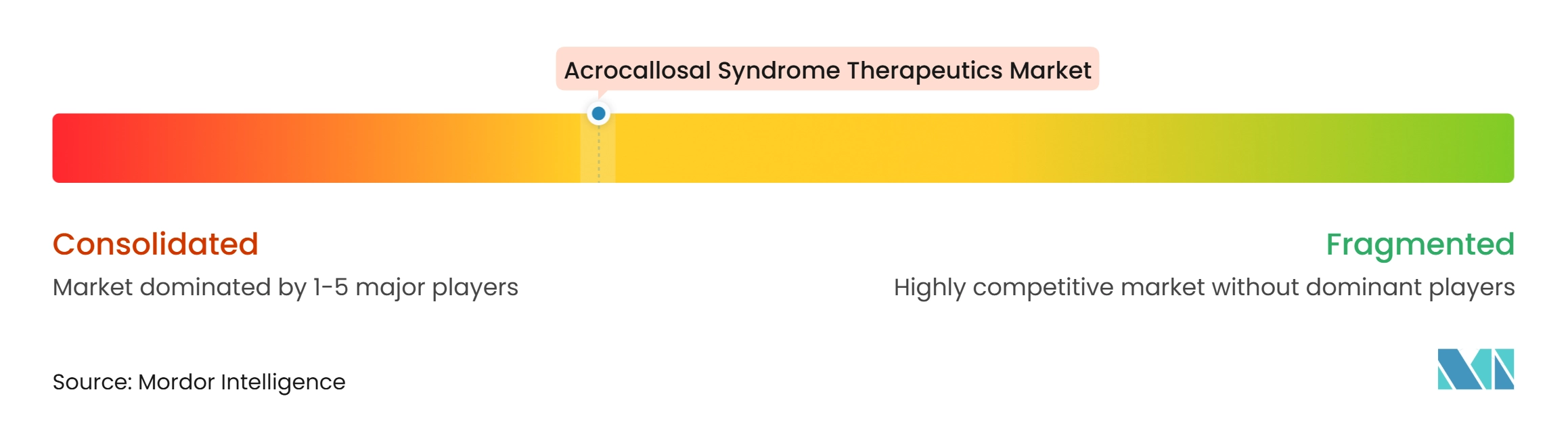
The acrocallosal syndrome therapeutics market is fragmented because no company has an approved disease-modifying product directed specifically at ACLS. Competition is shaped by access to gene therapy, RNA medicine, genetics, and rare-disease development platforms rather than by direct indication-specific competition. Smaller developers such as Capsida Biotherapeutics and Encoded Therapeutics are building central nervous system programs for rare pediatric neurological diseases with some clinical features that overlap with ACLS. Encoded announced the start of its pivotal ETX101 study for Dravet syndrome in 2026. This activity shows how a specialized company can use established regulatory routes to advance a rare pediatric program. Direct KIF7 replacement or editing activity has not been disclosed in the supplied material.
RNA platform developers such as Ionis, Stoke, and Wave Life Sciences are pursuing different methods to modify genetic neurological disease. Ionis received FDA approval for ZANVASTRO for Alexander disease in September 2026, providing a commercial reference point for an RNA therapy in an ultra-rare neurological condition. Wave Life Sciences reported up to 46% reductions in mutant huntingtin with selective allele targeting in late-2025 clinical data. These examples show the range of approaches available for monogenic nervous system conditions. Their relevance to ACLS depends on mutation biology, delivery, and safety rather than on a direct transfer of clinical evidence. The acrocallosal syndrome therapeutics industry has an opening for a first direct KIF7 program, but the biological and clinical requirements remain substantial.
AAV platform holders compete on delivery route, transgene control, manufacturing, and long-term safety monitoring. Novartis signed an option, collaboration, and license agreement with BioArctic in August 2025 for BrainTransporter technology intended to support central nervous system delivery. Ultragenyx’s FAYUVI approval illustrates continued regulatory progress for AAV9 programs in pediatric neurodegenerative disease. At the same time, the REGENXBIO regulatory event shows that safety signals can quickly change a platform’s development outlook. No combined market share of leading companies was supplied. Competition should therefore be described as diffuse rather than concentrated. The acrocallosal syndrome therapeutics market will favor organizations that can pair rare-disease patient access with disciplined clinical, manufacturing, and safety execution.
Acrocallosal Syndrome Therapeutics Industry Leaders
-
Axovia Therapeutics
-
Jaguar Gene Therapy
-
Taysha Gene Therapies, Inc.
-
Mahzi Therapeutics
-
Capsida Biotherapeutics
- *Disclaimer: Major Players sorted in no particular order
Acrocallosal Syndrome Therapeutics Market Companies Covered in this Report
- Axovia Therapeutics
- Biomarin Pharmaceutical
- Capsida Biotherapeutics
- Encoded Therapeutics, Inc.
- Ionis Pharmaceuticals
- Jaguar Gene Therapy
- Mahzi Therapeutics
- Neurogene Inc.
- Novartis
- Pfizer
- REGENXBIO
- Roche
- Rocket Pharmaceuticals, Inc.
- Sanofi
- Sarepta Therapeutics
- Stoke Therapeutics, Inc.
- Taysha Gene Therapies, Inc.
- Ultragenyx Pharmaceutical Inc.
- Wave Life Sciences Ltd.
Recent Industry Developments in Acrocallosal Syndrome Therapeutics Market
- November 2026: Stoke Therapeutics completed a successful pre-NDA meeting with the FDA, aligning on key elements of the planned U.S. NDA for zorevunersen, an investigational antisense medicine for Dravet syndrome. The company finalized a new multicomponent Vineland-3 cognitive and behavioral assessment endpoint for the NDA and confirmed a data readout timeline of Q3 2027 from the Phase 3 EMPEROR study.
- October 2026: Rocket Pharmaceuticals announced FDA alignment on enrollment, dosing, and a 12-patient pivotal efficacy population for the global pivotal Phase 2 trial of RP-A501, an AAV9 gene therapy for Danon disease. Topline results are expected in mid-2028.
- September 2026: Ultragenyx Pharmaceutical received standard full FDA approval for FAYUVI, an intravenous AAV9 gene therapy for pediatric patients with Sanfilippo syndrome type A. The approval established a commercial reference point for intravenous AAV9 therapy in rare pediatric central nervous system disease.
- September 2026: Ionis Pharmaceuticals received FDA approval for ZANVASTRO, making it the first disease-modifying medicine approved for Alexander disease. The approval was based on pivotal data that showed gait stabilization at week 61.
Global Acrocallosal Syndrome Therapeutics Market Report Scope
According to the report’s scope, acrocallosal syndrome therapeutics are treatments and supportive interventions aimed at managing the syndrome’s genetic, developmental, and neurological effects. There is currently no established cure; care is typically individualized and may include surgery, therapies, and symptom management.
The acrocallosal syndrome therapeutics market is segmented into therapeutic modality, diseases, Patient and Care Setting, and geography. By therapeutic modality, the market is segmented into supportive and symptom-directed therapies, small-molecule pathway modulators, gene replacement and gene editing, RNA-based therapies, and other therapeutic modalities. By disease, the market is segmented into neurodevelopmental and cognitive impairment, seizures and epilepsy, corpus callosum and other brain malformations, polydactyly, syndactyly, and limb reconstruction, and other diseases. By patient and care setting, the market is segmented into neonatal and pediatric specialty care, neurology and epilepsy care, clinical genetics and genetic counseling, orthopedic and reconstructive surgery, and other care settings. By geography, the market is segmented into North America, Europe, Asia-Pacific, the Middle East and Africa, and South America. The report also covers the estimated market sizes and trends for 17 countries across major regions globally. The report offers values (USD) for all the above segments.
Segmentation Overview
| Supportive and Symptom-Directed Therapies |
| Small-Molecule Pathway Modulators |
| Gene Replacement and Gene Editing |
| RNA-Based Therapies |
| Other Therapeutic Modalities |
| Neurodevelopmental and Cognitive Impairment |
| Seizures and Epilepsy |
| Corpus Callosum and Other Brain Malformations |
| Polydactyly, Syndactyly, and Limb Reconstruction |
| Other Diseases |
| Neonatal and Pediatric Specialty Care |
| Neurology and Epilepsy Care |
| Clinical Genetics and Genetic Counseling |
| Orthopedic and Reconstructive Surgery |
| Other Care Setings |
| North America | United States |
| Canada | |
| Mexico | |
| Europe | Germany |
| United Kingdom | |
| France | |
| Italy | |
| Spain | |
| Rest of Europe | |
| Asia-Pacific | China |
| Japan | |
| India | |
| Australia | |
| South Korea | |
| Rest of Asia-Pacific | |
| Middle East and Africa | GCC |
| South Africa | |
| Rest of Middle East and Africa | |
| South America | Brazil |
| Argentina | |
| Rest of South America |
| By Therapeutic Modality | Supportive and Symptom-Directed Therapies | |
| Small-Molecule Pathway Modulators | ||
| Gene Replacement and Gene Editing | ||
| RNA-Based Therapies | ||
| Other Therapeutic Modalities | ||
| By Diseases | Neurodevelopmental and Cognitive Impairment | |
| Seizures and Epilepsy | ||
| Corpus Callosum and Other Brain Malformations | ||
| Polydactyly, Syndactyly, and Limb Reconstruction | ||
| Other Diseases | ||
| By Patient and Care Setting | Neonatal and Pediatric Specialty Care | |
| Neurology and Epilepsy Care | ||
| Clinical Genetics and Genetic Counseling | ||
| Orthopedic and Reconstructive Surgery | ||
| Other Care Setings | ||
| Geography | North America | United States |
| Canada | ||
| Mexico | ||
| Europe | Germany | |
| United Kingdom | ||
| France | ||
| Italy | ||
| Spain | ||
| Rest of Europe | ||
| Asia-Pacific | China | |
| Japan | ||
| India | ||
| Australia | ||
| South Korea | ||
| Rest of Asia-Pacific | ||
| Middle East and Africa | GCC | |
| South Africa | ||
| Rest of Middle East and Africa | ||
| South America | Brazil | |
| Argentina | ||
| Rest of South America | ||
Key Questions Answered in the Report
What is the projected value of the Acrocallosal syndrome therapeutics market by 2032?
The value is projected to reach USD 396.27 million by 2032, from USD 243.71 million in 2027, at a 10.2% CAGR.
Which therapy approach currently has the largest share?
Supportive and Symptom-Directed Therapies led with 36.76% share in 2026 because no approved ACLS-specific disease-modifying therapy is available.
Which treatment approach is expected to grow the fastest?
Gene Replacement and Gene Editing is forecast to grow at a 12.76% CAGR through 2032, supported by progress in adjacent AAV and genetic medicine programs.
Why are genetic testing services important for ACLS care?
Genetic testing can identify KIF7-related disease earlier, support counseling, and help connect children to specialized care and potential research programs.
Which region has the largest reported share?
North America held 41.87% share in 2026, supported by rare-disease clinical centers, genetic testing capacity, and trial infrastructure.
What limits development of direct ACLS therapies?
The main limits are the very small patient population, limited KIF7 natural-history data, developmental changes that begin early, and the cost and safety demands of central nervous system gene therapy.