
Acoustic Puncture Assist Devices Market Size and Share
Market Overview
| Study Period | 2022 - 2032 |
|---|---|
| Market Size (2027) | USD 89.59 Million |
| Market Size (2032) | USD 117.31 Million |
| Growth Rate (2027 - 2032) | 5.54 % |
| Fastest Growing Market | Asia-Pacific |
| Largest Market | North America |
| Market Concentration | Medium |
Major Players *Disclaimer: Major Players sorted in no particular order Image © Mordor Intelligence. Reuse requires attribution under CC BY 4.0. | |
Acoustic Puncture Assist Devices Market Analysis by Mordor Intelligence
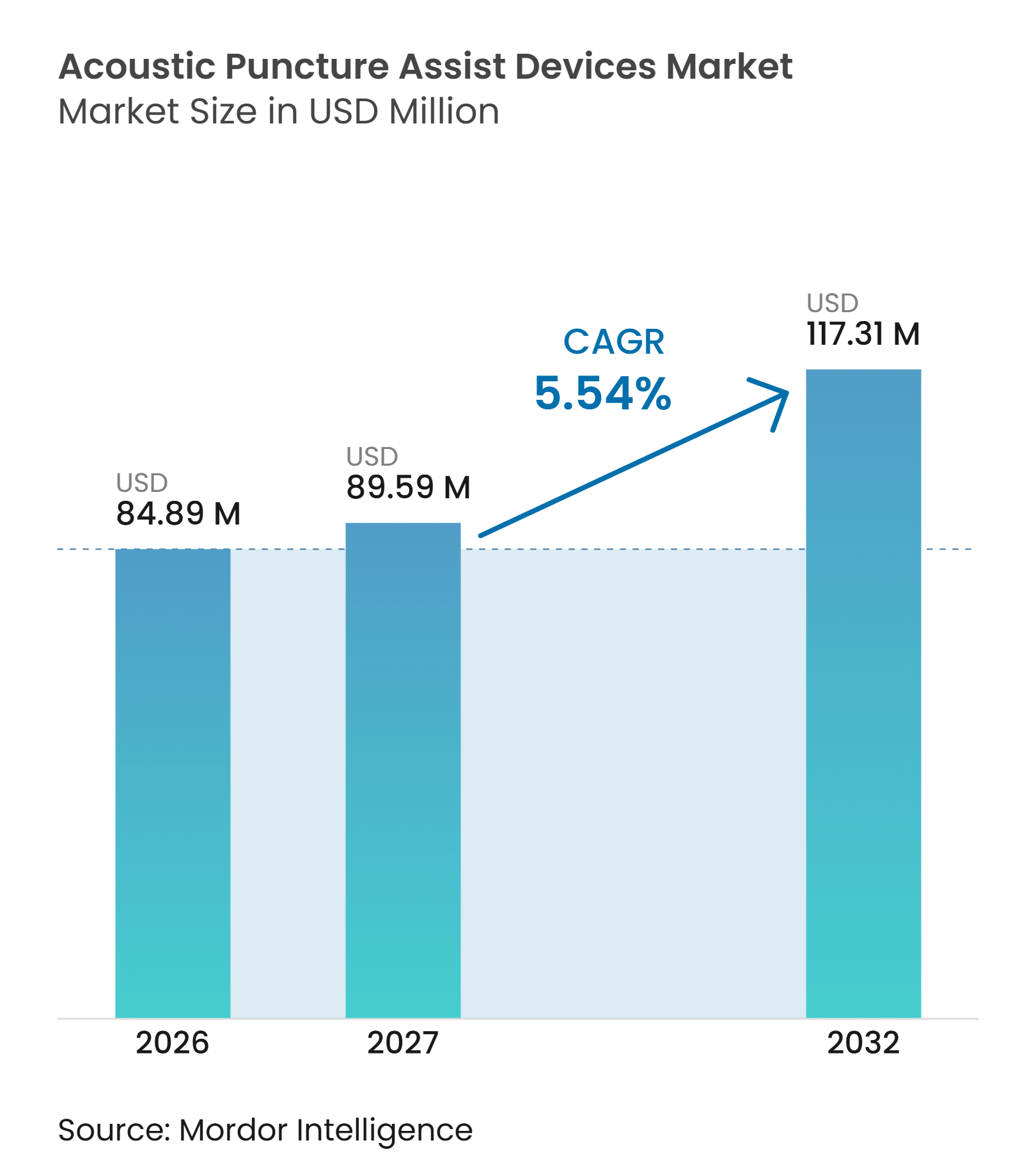
The Acoustic Puncture Assist Devices Market size was valued at USD 84.89 million in 2026 and is estimated to grow from USD 89.59 million in 2027 to reach USD 117.31 million by 2032, at a CAGR of 5.54% during the forecast period (2027-2032).
The acoustic puncture assist devices market is moving toward more measurable needle-placement workflows because pressure sensing, acoustic feedback, and anatomy guidance can document steps that previously depended on clinician feel. This change is most visible in obstetric anesthesia and interventional pain care, where hospitals are reviewing whether these tools can be adopted across their facilities. Flat Medical reported in October 2026 that more than 30 U.S. hospitals and pain centers were using its EpiFaith Smart Syringe, and several integrated delivery networks had begun value-analysis reviews for wider use. The clinical case for the acoustic puncture assist devices market depends on whether devices reduce failed placement, complications, and procedure time enough to offset equipment and disposable costs. Competition therefore centers on clinical evidence, ease of use, documentation capability, and the ability to fit within existing ultrasound and anesthesia workflows.
Key Report Takeaways
- By device configuration, standalone pressure-sensing systems held 26.8% of the acoustic puncture assist devices market share in 2026, while portable and handheld systems are forecast to grow at 8.1% CAGR through 2032.
- By application, epidural space identification accounted for 28.7% of the acoustic puncture assist devices market size in 2026, while peripheral nerve blocks are forecast to expand at 7.7% CAGR through 2032.
- By end user, hospitals held 56.4% of the acoustic puncture assist devices market share in 2026, while specialty anesthesia clinics are forecast to grow at 8.3% CAGR through 2032.
- By geography, North America accounted for 42.7% in 2026, while Asia-Pacific is forecast to grow at 6.8% CAGR through 2032.
Note: Market numbers in this report are based on Mordor Intelligence's proprietary estimation framework, which combines nine months of actuals with Q4 projections for base year 2026.
Market Trends and Insights
Drivers Impact Analysis of Acoustic Puncture Assist Devices Market*
| Driver | (~) % Impact on CAGR Forecast | Geographic Relevance | Impact Timeline |
|---|---|---|---|
| Objective Epidural-Space Confirmation | +1.40% | Global, with early gains in North America and Western Europe | Short term (≤ 2 years) |
| Ultrasound-Assisted Neuraxial Anesthesia | +1.30% | Global, with Asia-Pacific as a core growth area | Medium term (2-4 years) |
| Two-Handed Needle Control | +0.80% | North America and Europe | Short term (≤ 2 years) |
| Documented and Auditable Puncture Workflows | +0.70% | North America and Europe | Medium term (2-4 years) |
| Regional and Paravertebral Anesthesia Use | +0.50% | Global, with early gains in Asia-Pacific and South America | Medium term (2-4 years) |
| Vibroacoustic and Sensor-Fusion Guidance Development | +0.40% | Global, with research activity in Europe and North America | Long term (≥ 4 years) |
| Source: Mordor Intelligence | |||
Rising Adoption of Objective Epidural-Space Confirmation
Objective confirmation is changing epidural placement from a tactile procedure into one that can be measured and reviewed. A 2025 Cochrane review found that ultrasound guidance increased first-attempt success in neuraxial anesthesia from 556 to 778 per 1,000 patients compared with anatomical landmarks[1]. The acoustic puncture assist devices market can benefit when hospitals seek tools that supplement clinician judgment with visible or recorded signals. A preliminary 2026 assessment of EpiduraFlow reported linear pressure measurement against a manometer reference, with an R² above 0.98. Such work supports further development of compact pressure-guidance tools that can be used within sterile procedural settings.
Expansion of Ultrasound-Assisted Neuraxial Anesthesia
Ultrasound-guided neuraxial procedures are gaining institutional support because clinical guidelines increasingly define where imaging should be used. Germany’s DEGUM describes ultrasound as a means to identify nerves precisely for procedures performed without general anesthesia. Italy’s SIAARTI guidance recommends combined ultrasound and electrical nerve stimulation for peripheral nerve blocks with a motor component[2]. The Cochrane review covering 65 studies and 6,823 patients also found that ultrasound guidance reduced total procedure time by 34 seconds compared with landmark methods. RIVANNA received FDA 510(k) clearance in July 2025 for the Accuro 3S system and SpineNav-AI software, which it described as the first AI-enabled real-time neuraxial ultrasound guidance system cleared for U.S. clinical use. As ultrasound becomes more common, the acoustic puncture assist devices market gains a larger installed base that can consider integrated guidance and recording features.
Increasing Preference for Two-Handed Needle Control
Single-operator procedures are important when anesthesia teams need to perform neuraxial guidance without an additional person holding an ultrasound probe. This need is becoming more relevant as staffing constraints affect ambulatory care and hospital anesthesia services. RIVANNA’s Dual-Array probe places transducer arrays around a central opening, allowing needle advancement through the probe rather than beside it. The approach keeps the clinician’s hands focused on probe and needle control during a single procedure. It also differentiates integrated ultrasound systems from standalone pressure-sensing products. In the acoustic puncture assist devices market, equipment that reduces set-up steps may have greater appeal to outpatient sites with lean staffing and high procedure turnover.
Demand for Documented and Auditable Puncture Workflows
Hospitals increasingly consider procedural records when they assess new guidance equipment. Conventional loss-of-resistance syringes do not create a record of pressure, anatomy, or needle position. Systems that record pressure waveforms, anatomical images, or time-stamped needle information can support quality reviews and clinician credentialing. A 2026 article in Regional Anesthesia & Pain Medicine called for standardized performance reporting, objective tissue-plane sensing, and AI-assisted interpretation to support reproducible neuraxial practice. RIVANNA states that Accuro 3S includes DICOM-compatible archival workflows, which can make imaging records easier to retain in established clinical systems. This feature gives the acoustic puncture assist devices market a procurement rationale that reaches beyond individual user preference.
Restraints Impact Analysis of Acoustic Puncture Assist Devices Market*
| Restraint | (~) % Impact on CAGR Forecast | Geographic Relevance | Impact Timeline |
|---|---|---|---|
| Device and Disposable-Component Costs | -0.9% | Global, with stronger effects in price-sensitive Asia-Pacific and Middle East and Africa markets | Short term (≤ 2 years) |
| Limited Superiority Evidence Over Conventional Loss of Resistance | -0.7% | Global, with stronger resistance in Europe and North America | Medium term (2-4 years) |
| Training and Workflow-Integration Requirements | -0.5% | Global, particularly where structured residency programs are limited | Medium term (2-4 years) |
| Ambiguous Reimbursement for Standalone Guidance Devices | -0.6% | North America and Europe | Long term (≥ 4 years) |
| Source: Mordor Intelligence | |||
Additional Device and Disposable-Component Costs
Cost remains a central obstacle because guidance devices add capital, leasing, or service costs to an established procedure. Sterile accessories such as probe covers, needle guides, and sensor attachments can also create a recurring cost per procedure. This burden is sharper where public hospitals procure equipment through tenders with strict unit-cost limits. Clinical gains from fewer needle redirections, shorter procedure time, and lower complication risk may not translate directly into a separate payment under conventional billing. The acoustic puncture assist devices market therefore depends on evidence that shows value in ways procurement committees can apply to their budgets. B. Braun’s 2025 EZCOVER launch illustrates the added role of sterile accessories in ultrasound-guided nerve block procedures.
Limited Demonstration of Superiority Over Conventional Loss of Resistance
The clinical evidence base is expanding, but it has not yet produced consistent superiority findings for every type of puncture-assist device. A 2025 multicenter randomized trial found that the VerTouch tactile imaging device did not meet its prespecified intention-to-treat superiority criterion for needle insertion attempts. The reported mean difference was -0.4, with a 95% confidence interval from -1.2 to 0.3 and a p-value of 0.133. Experienced anesthesiologists may compare a device against their own success rates rather than against a broad average. A 2025 Malaysian analysis also identified cost, learning requirements, and cultural resistance as barriers to wider ultrasound-guided central neuraxial block use. These factors can slow adoption in the acoustic puncture assist devices market even when a device has a sound technical rationale.
*Our forecasts treat driver/restraint impacts as directional, not additive. The impact forecasts reflect baseline growth, mix effects, and variable interactions.
Acoustic Puncture Assist Devices Market Segment Analysis
By Device Configuration:
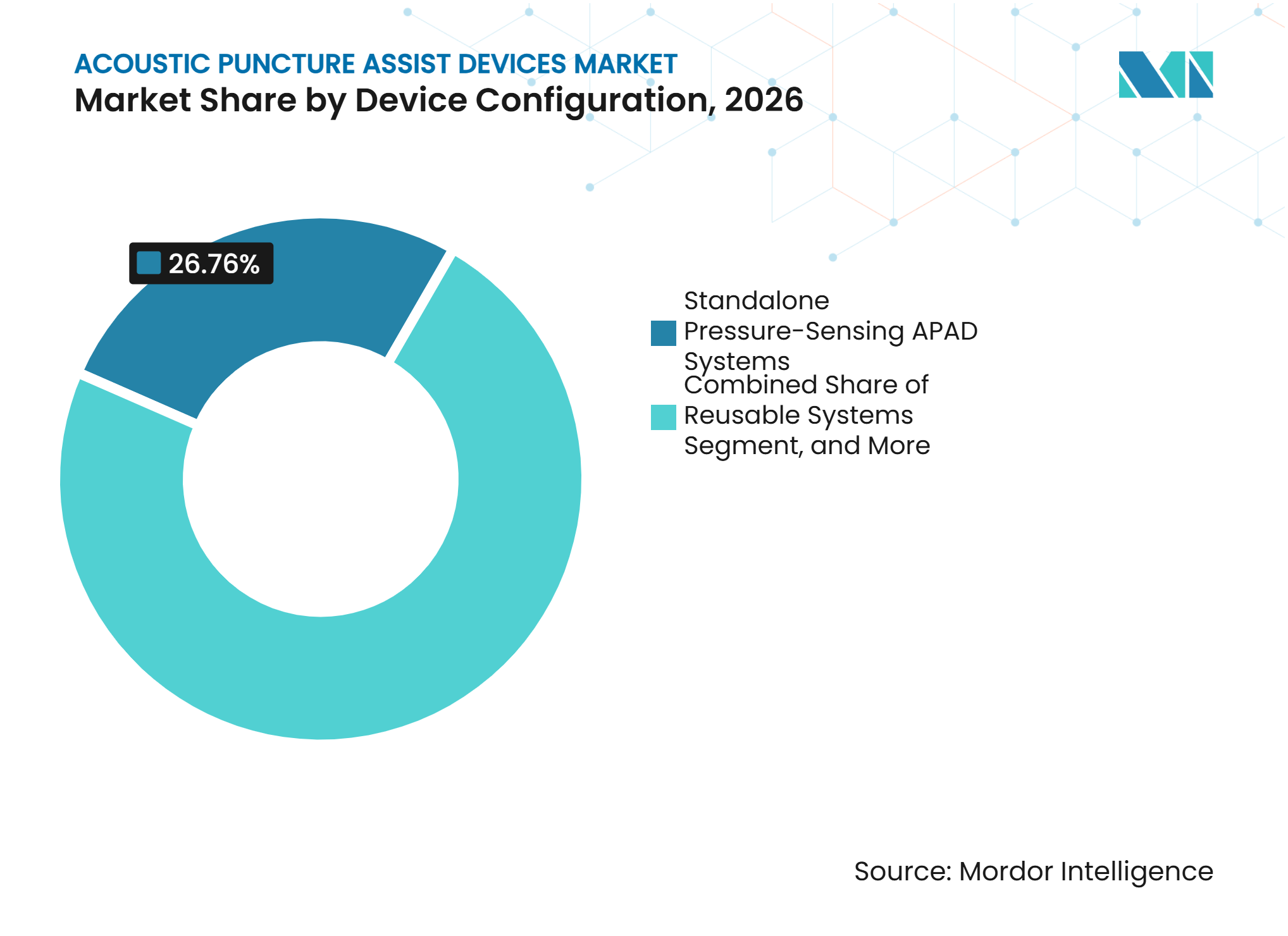
Portability Redefines Point-of-Care GuidanceStandalone pressure-sensing systems held 26.8% of the acoustic puncture assist devices market in 2026, supported by straightforward workflows that align with established loss-of-resistance training. Portable and handheld systems are forecast to expand at 8.1% CAGR through 2032, the fastest rate within device configuration. Outpatient surgery migration and limited staffing make compact systems attractive because they can be moved between procedure rooms without dedicated set-up staff. RIVANNA’s Accuro 3S received FDA clearance in July 2025 as a portable platform with Dual-Array and AI-enabled guidance features. The acoustic puncture assist devices market is therefore shifting toward devices that combine mobility, imaging, and workflow support.
Integrated acoustic and ultrasound systems provide continuous needle visualization, anatomical recognition, and documentation functions. Their higher price than standalone sensing tools makes the value of the total clinical workflow central to purchasing decisions. Cart-based and console-integrated equipment remains relevant in high-acuity hospitals where advanced imaging offsets additional set-up time. B. Braun positioned its EZCOVER probe cover set around ultrasound safety and a confirmation step before a block procedure. As portable systems become more capable, standalone systems may face greater pressure from integrated alternatives.



By Application:
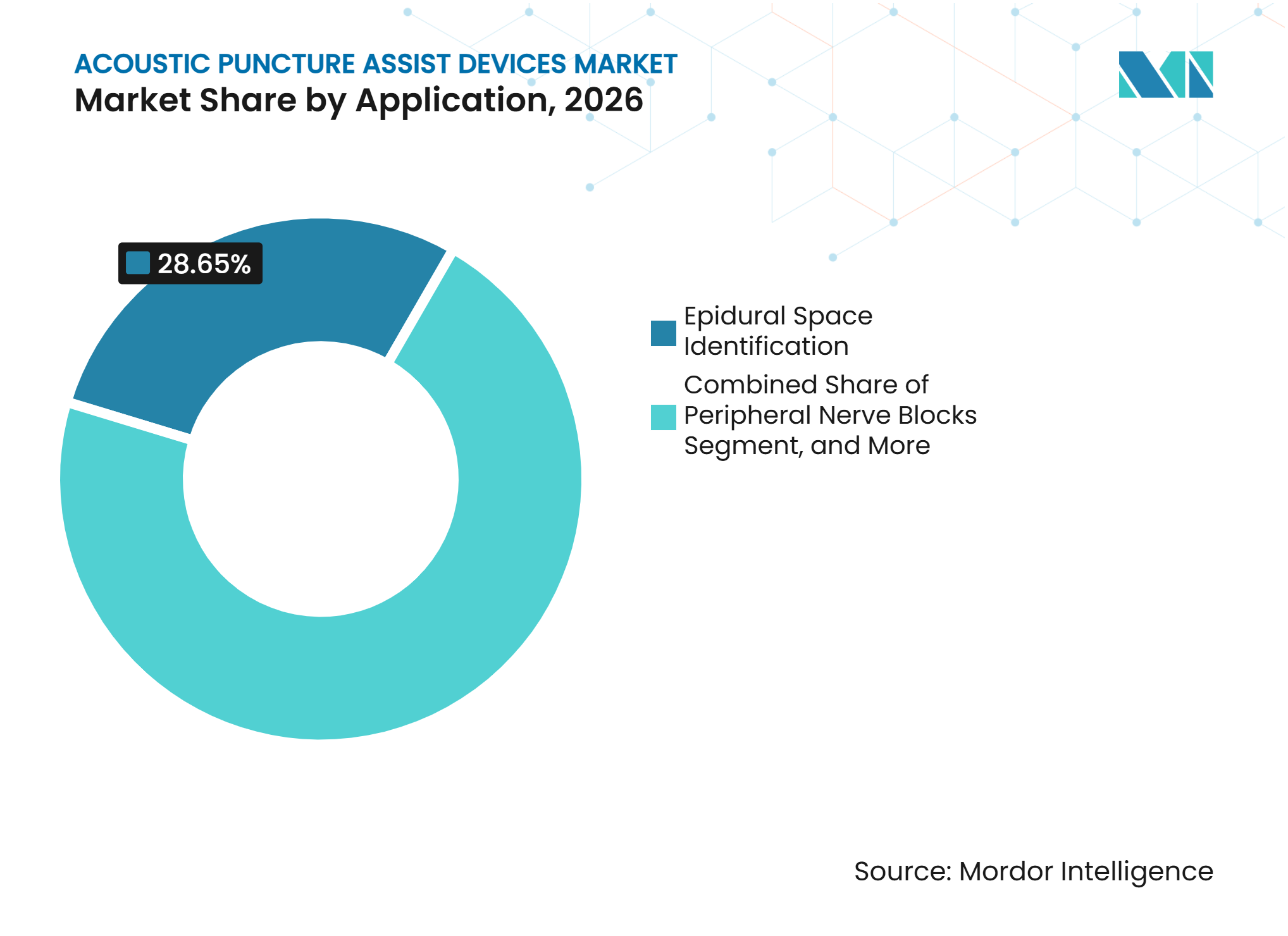
Peripheral Nerve Blocks Outpace the Core Epidural Use CaseEpidural space identification represented 28.7% of the acoustic puncture assist devices market size in 2026, supported by obstetric epidurals, chronic pain injections, and surgical neuraxial procedures. Peripheral nerve blocks are projected to record the fastest application growth at 7.7% CAGR through 2032. The increase follows wider use of enhanced recovery pathways and opioid-sparing perioperative care. B. Braun introduced an emergency department-specific nerve block tray in February 2025 for single-shot procedures and acute pain care. The product shows that manufacturers are extending guidance-related procedure support beyond specialist anesthesia rooms.
Growth in peripheral blocks also brings new users into contact with guidance equipment. Emergency physicians and other clinicians may not have the same experience with acoustic or imaging guidance as regional anesthesia specialists. This creates a need for designs that reduce training burden and support clear procedural steps. Spinal and neuraxial anesthesia, paravertebral identification, vascular access, and biopsy are further use cases that favor configurable platforms. China’s 2025 pediatric consensus set standardized guidance for ultrasound-guided nerve blocks in children, supporting more consistent procedure practice in a clinically important application. The acoustic puncture assist devices market can benefit when one system can serve several procedures without requiring separate capital equipment for each use case.

By End User:
Specialty Clinics Lead Growth as Hospitals Anchor VolumeHospitals accounted for 56.4% of the acoustic puncture assist devices market in 2026 because they carry large volumes of complex anesthesia and pain procedures. Major academic centers can also evaluate new systems through formal quality-improvement programs. Specialty anesthesia clinics are forecast to grow at 8.3% CAGR through 2032 as interventional pain and regional block care move into lower-cost outpatient settings. These clinics often have smaller rooms, limited storage, and lean teams. The resulting requirements favor portable devices with short set-up time over cart-based systems that may require more technical support.
Ambulatory surgical centers are a related end-user group because their procurement needs increasingly resemble those of specialty clinics. Growth in the complexity of procedures performed outside hospitals can make guidance technology more clinically relevant. This setting also places a premium on reliable workflow and efficient room turnover. RIVANNA received a USD 3 million grant for a military-optimized Accuro 3S program, showing that field medicine and diagnostic settings may also be relevant to the addressable user base. The acoustic puncture assist devices industry remains tied to hospital demand, but its faster growth opportunity is moving toward smaller and more mobile care environments.
Geography Analysis
North America
North America held 42.7% of the global acoustic puncture assist devices market in 2026. High procedure volumes, well-funded hospital systems, and established FDA 510(k) pathways support adoption in the region. CMS established ICD-10-PCS code XEZU3HC, effective October 1, 2026, for computer-aided intraprocedural spinal-canal navigation using real-time ultrasound and continuous needle tracking. The code gives hospitals a consistent way to record the procedure, although it does not establish payment. Regulatory influence, electronic-record integration, and academic evidence generation make the United States the central source of commercial demand.
Asia-Pacific
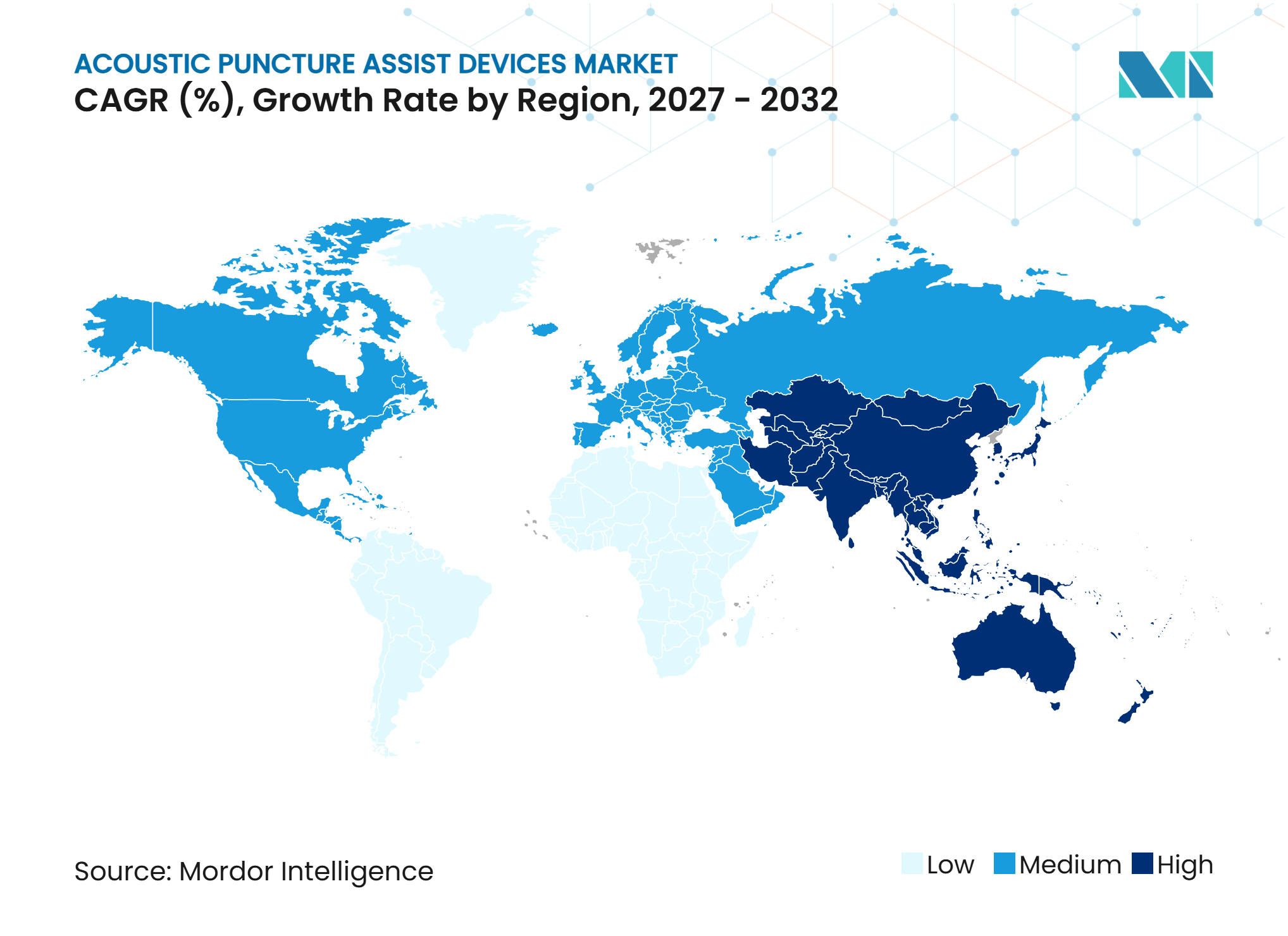
Asia-Pacific is forecast to grow at 6.8% CAGR through 2032, making it the fastest-growing regional part of the acoustic puncture assist devices market. China offers a direct pathway for product development because clinicians and regulators are formalizing practices for ultrasound-guided blocks. The 2025 Chinese expert consensus on pediatric ultrasound-guided nerve blocks provides a common clinical reference for providers treating children. India’s hospital expansion and broader insurance access can widen the patient base for neuraxial and regional anesthesia procedures. Regional growth will depend on equipment pricing, clinician training, and local compliance requirements.
Europe, Middle East and Africa, and South America
Germany’s DEGUM promotes ultrasound-guided regional anesthesia, and Italy’s SIAARTI recommends combined guidance for peripheral nerve blocks with a motor component. These positions give European hospitals a clinical framework for imaging guidance, while ISO 13485 and CE marking remain key compliance factors. Brazil and Argentina offer early opportunities, though fragmented reimbursement, import tariffs, and uneven access to training continue to restrict broader uptake.
Competitive Landscape
Market Concentration
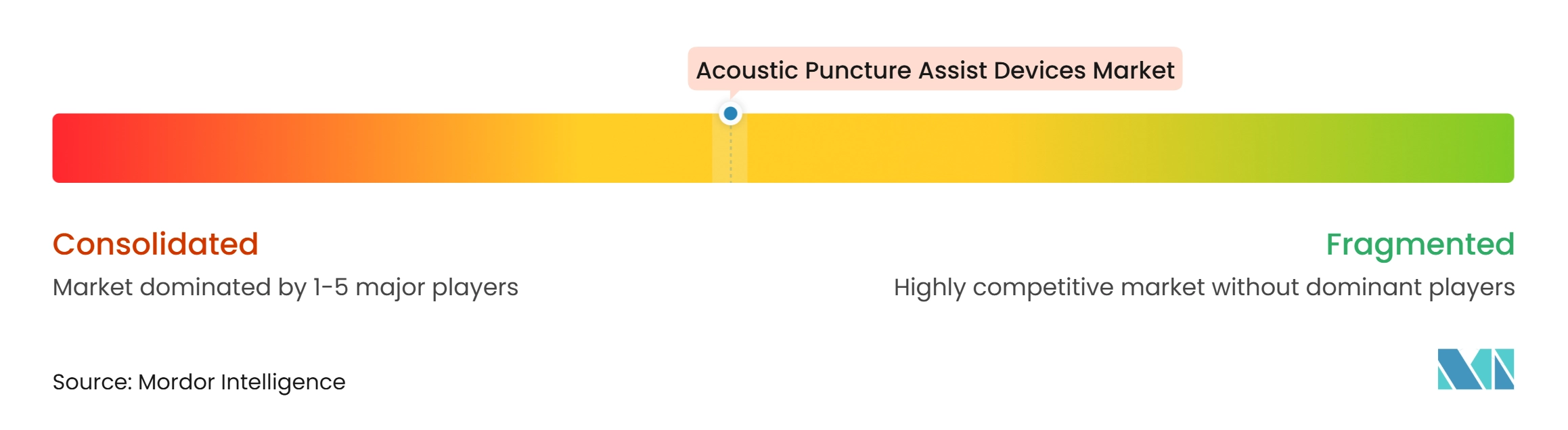
The acoustic puncture assist devices market is moderately fragmented. Pure-play specialists include Apad B.V., Milestone Scientific, RIVANNA Medical, and SURAG Medical GmbH. They compete through procedure-specific design, clinical evidence, regulatory status, and fit within anesthesia workflows. Milestone Scientific focuses on objective pressure sensing through its CompuFlo system, while RIVANNA combines ultrasound hardware with AI-guided neuraxial imaging. SURAG’s vibroacoustic sensor units were examined in a 2025 study that described a robotic test stand for needle insertion experiments.
GE HealthCare, B. Braun, Koninklijke Philips, Butterfly Network, Clarius Mobile Health, and FUJIFILM Sonosite use installed bases and distribution reach to compete. GE HealthCare announced its Nerveblox collaboration in October 2025, describing anatomical recognition across 12 nerve block procedures. In August 2026, GE HealthCare launched the compact LOGIQ e X and LOGIQ e S systems with Nerveblox AI, 510(k) clearance, and CE marking. B. Braun launched an emergency department-specific nerve block tray in February 2025 and an EZCOVER probe cover set in April 2025. These additions can be introduced through existing purchasing relationships rather than a separate platform sale.
Innovation targets difficult anatomy, including obesity, spinal deformity, and thoracic procedures, where needle visibility can be limited. A 2026 study reported that a photoacoustic beacon embedded in a needle achieved 3D tracking accuracy below 2 mm and reduced biopsy failure rates by 35% in a 12-clinician usability study. A separate 2026 study described the HUMaN system, which paired magnetic needle tracking with ultrasound imaging in a handheld design[3]. ISO 13485 quality management requirements and FDA 510(k) clearance create a high compliance threshold for new entrants.
Acoustic Puncture Assist Devices Industry Leaders
-
Equip Medikey
-
UNITRON NV
-
QRS International
-
RIVANNA Medical
-
Rocket Medical plc
- *Disclaimer: Major Players sorted in no particular order
Acoustic Puncture Assist Devices Market Companies Covered in this Report
- B. Braun
- Beckton Dickinson
- Butterfly Network, Inc.
- CIVCO Medical solutions
- Clarius Mobile Health Corp.
- Equip Medikey
- FUJIFILM
- GE HealthCare Technologies Inc.
- Koninklijke Philips
- Medky GmbH
- Mindray
- QRS International
- RIVANNA Medical
- Rocket Medical plc
- Siemens Healthineers
- SURAG Medical GmbH
- Teleflex
Recent Industry Developments in Acoustic Puncture Assist Devices Market
- September 2026: CMS established ICD-10-PCS code XEZU3HC, effective October 1, 2026, as the first dedicated national coding category for computer-aided intraprocedural spinal-canal navigation with real-time ultrasound and continuous needle tracking. RIVANNA Medical plans to incorporate the code into its outcomes framework beginning Q4 2026, creating a reimbursement data infrastructure that could support future separate payment requests.
- September 2026: Nolato AB (Sweden) announced acquisition of Dutch Unitron, a medical technology CDMO with over 100 employees and estimated 2026 sales of SEK 200 million (USD 19 million), folding it into the Nolato Unitron brand. The acquisition strengthens end-to-end medical device development and manufacturing capability, with potential implications for supply chain capacity serving APAD component manufacturers in Europe.
- August 2026: GE HealthCare launched the LOGIQ e family, LOGIQ e X and LOGIQ e S, compact laptop-format ultrasound systems integrating the Nerveblox AI tool for peripheral nerve block guidance. Both systems carry 510(k) clearance and CE Mark, extending AI-enabled anatomical landmark identification for 12 nerve block procedure types into a portable, lower-capital-cost form factor suited to community hospitals and outpatient facilities.
- October 2025: GE HealthCare and SmartAlpha announced a collaboration to commercialize Nerveblox AI on GE HealthCare's Venue POCUS family, introducing real-time anatomical recognition across 50+ structures in 12 common nerve block procedures with 97% identification accuracy, previewed at the American Society of Anesthesiologists Annual Meeting in San Antonio.
Global Acoustic Puncture Assist Devices Market Report Scope
According to the report’s scope, acoustic puncture assist devices use sound waves, typically ultrasound, to visualize a needle and guide it toward a target during a procedure. They help clinicians improve placement accuracy and reduce the risk of injury to nearby tissues.
The acoustic puncture assist devices market is segmented into device configuration, application, end user, and geography. By device configuration, the market is segmented into Standalone pressure-sensing APAD systems, integrated acoustic and ultrasound guidance systems, portable and handheld APAD systems, cart-based and console-integrated systems, reusable systems, and single-use and disposable components. By application, the market is segmented into epidural space identification, spinal and neuraxial anesthesia, paravertebral space identification, peripheral nerve blocks, vascular access and central-line placement, biopsy and tissue sampling, and other applications. By end user, the market is segmented into hospitals, ambulatory surgical centers, specialty anesthesia clinics, diagnostic imaging centers, and other end users. By geography, the market is segmented into North America, Europe, Asia-Pacific, the Middle East and Africa, and South America. The report also covers the estimated market sizes and trends for 17 countries across major regions globally. The report offers values (USD) for all the above segments.
Segmentation Overview
| Standalone Pressure-Sensing APAD Systems |
| Integrated Acoustic and Ultrasound Guidance Systems |
| Portable and Handheld APAD Systems |
| Cart-Based and Console-Integrated Systems |
| Reusable Systems |
| Single-Use and Disposable Components |
| Epidural Space Identification |
| Spinal and Neuraxial Anesthesia |
| Paravertebral Space Identification |
| Peripheral Nerve Blocks |
| Vascular Access and Central-Line Placement |
| Biopsy and Tissue Sampling |
| Other Applications |
| Hospitals |
| Ambulatory Surgical Centers |
| Specialty Anesthesia Clinics |
| Diagnostic Imaging Centers |
| Other End Users |
| North America | United States |
| Canada | |
| Mexico | |
| Europe | Germany |
| United Kingdom | |
| France | |
| Italy | |
| Spain | |
| Rest of Europe | |
| Asia-Pacific | China |
| Japan | |
| India | |
| Australia | |
| South Korea | |
| Rest of Asia-Pacific | |
| Middle East and Africa | GCC |
| South Africa | |
| Rest of Middle East and Africa | |
| South America | Brazil |
| Argentina | |
| Rest of South America |
| By Device Configuration | Standalone Pressure-Sensing APAD Systems | |
| Integrated Acoustic and Ultrasound Guidance Systems | ||
| Portable and Handheld APAD Systems | ||
| Cart-Based and Console-Integrated Systems | ||
| Reusable Systems | ||
| Single-Use and Disposable Components | ||
| By Application | Epidural Space Identification | |
| Spinal and Neuraxial Anesthesia | ||
| Paravertebral Space Identification | ||
| Peripheral Nerve Blocks | ||
| Vascular Access and Central-Line Placement | ||
| Biopsy and Tissue Sampling | ||
| Other Applications | ||
| By End User | Hospitals | |
| Ambulatory Surgical Centers | ||
| Specialty Anesthesia Clinics | ||
| Diagnostic Imaging Centers | ||
| Other End Users | ||
| Geography | North America | United States |
| Canada | ||
| Mexico | ||
| Europe | Germany | |
| United Kingdom | ||
| France | ||
| Italy | ||
| Spain | ||
| Rest of Europe | ||
| Asia-Pacific | China | |
| Japan | ||
| India | ||
| Australia | ||
| South Korea | ||
| Rest of Asia-Pacific | ||
| Middle East and Africa | GCC | |
| South Africa | ||
| Rest of Middle East and Africa | ||
| South America | Brazil | |
| Argentina | ||
| Rest of South America | ||
Key Questions Answered in the Report
What is driving demand for acoustic puncture assist devices?
Demand is supported by the need for more reliable epidural and nerve block placement, recordable procedure data, and wider use of ultrasound guidance.
How large is the acoustic puncture assist devices market?
The market is projected at USD 89.6 million in 2027 and is forecast to reach USD 117.3 million by 2032 at a 5.5% CAGR.
Which device configuration is growing fastest?
Portable and handheld systems are forecast to grow at 8.1% CAGR through 2032 because they suit outpatient and smaller clinical settings.
Which application has the highest growth outlook?
Peripheral nerve blocks are projected to grow at 7.7% CAGR through 2032 as opioid-sparing care and regional anesthesia expand.
Why do hospitals remain important buyers of puncture-assist systems?
Hospitals held 56.4% of demand in 2026 because they manage high volumes of complex procedures and can assess quality and workflow benefits.
What limits wider adoption of these devices?
Added device and disposable costs, training needs, uncertain reimbursement, and mixed evidence against conventional techniques can delay procurement.