
Acid-Sensitive APIs Market Size and Share
Market Overview
| Study Period | 2022 - 2032 |
|---|---|
| Market Size (2027) | USD 16.72 Billion |
| Market Size (2032) | USD 20.81 Billion |
| Growth Rate (2027 - 2032) | 4.47 % |
| Fastest Growing Market | Asia-Pacific |
| Largest Market | North America |
| Market Concentration | Medium |
Major Players *Disclaimer: Major Players sorted in no particular order Image © Mordor Intelligence. Reuse requires attribution under CC BY 4.0. | |
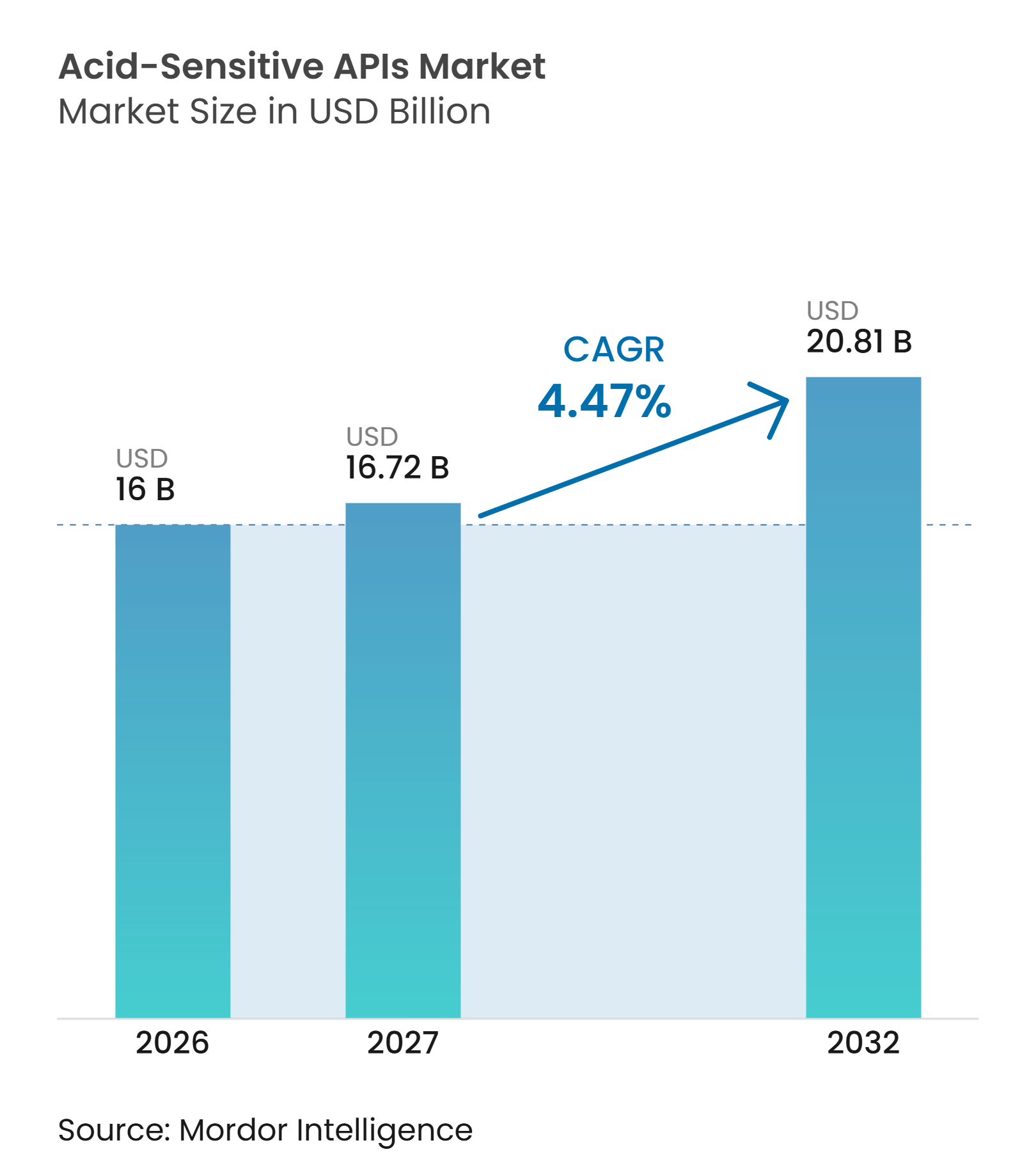
Acid-Sensitive APIs Market Analysis by Mordor Intelligence
The Acid-Sensitive APIs Market size is projected to expand from USD 16 billion in 2026 and USD 16.72 billion in 2027 to USD 20.81 billion by 2032, registering a CAGR of 4.47% between 2027 and 2032.
Growth rests on the need to protect molecules that lose activity in gastric acid, including proton pump inhibitors, pancreatic enzymes, and newer oral peptide candidates. Generic demand supports high-volume use of established enteric systems, while oral biologics and GLP-1 candidates create demand for more specialized delivery platforms. This combination supports the Acid-sensitive APIs market even when prices for established generic molecules decline. Suppliers are moving beyond raw polymer supply toward ready-to-fill capsule formats and development support. This shifts value toward companies with validated coatings, regulatory documentation, and formulation expertise.
Key Report Takeaways
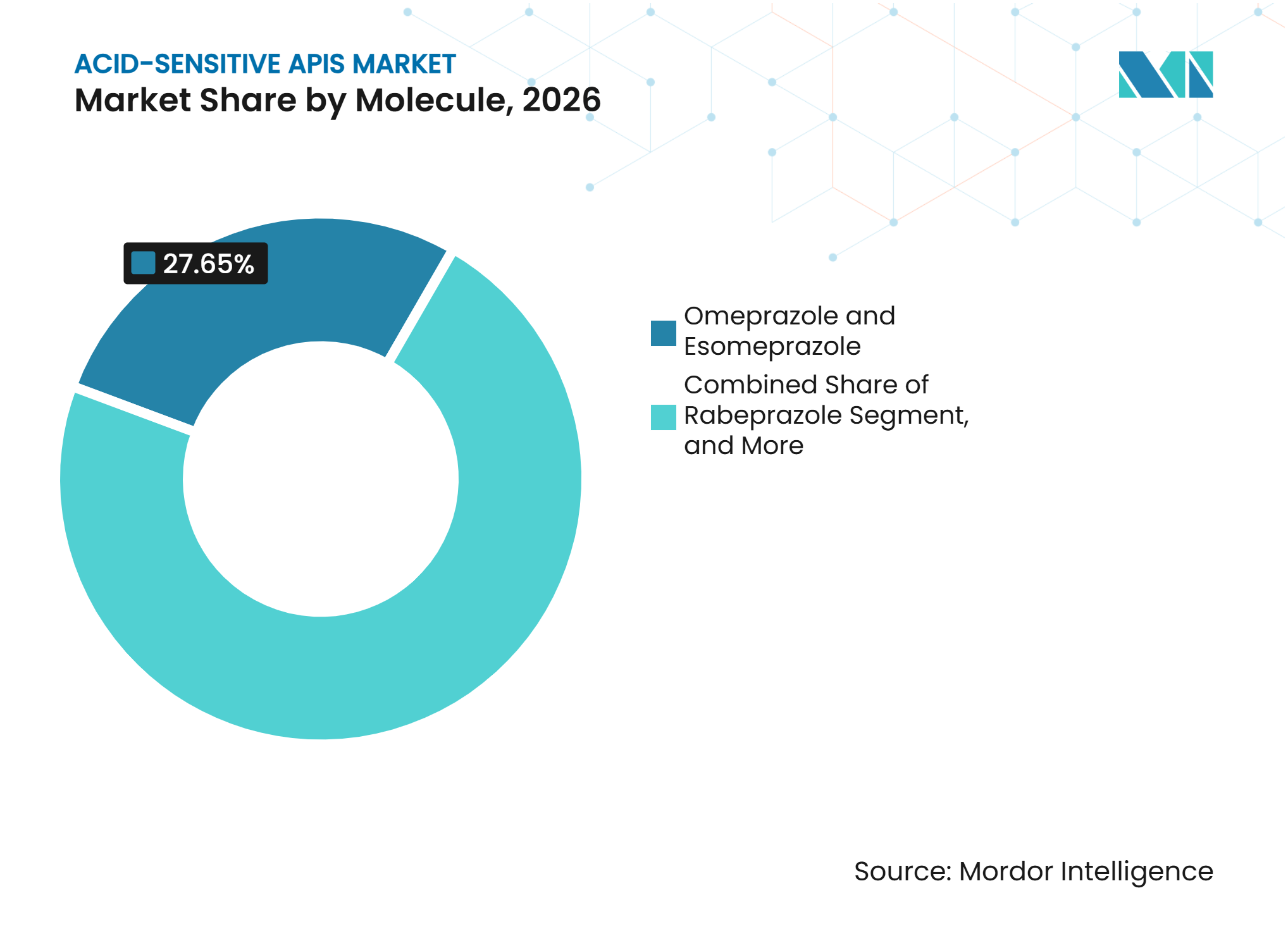
- By molecule, omeprazole and esomeprazole held 27.6% of the acid-sensitive APIs market share in 2026, while lansoprazole is projected to grow at a 6.5% CAGR through 2032.
- By therapeutic class, proton pump inhibitors held 32.7% of the acid-sensitive APIs market share in 2026, while GLP-1 receptor agonists are projected to grow at a 6.8% CAGR through 2032.
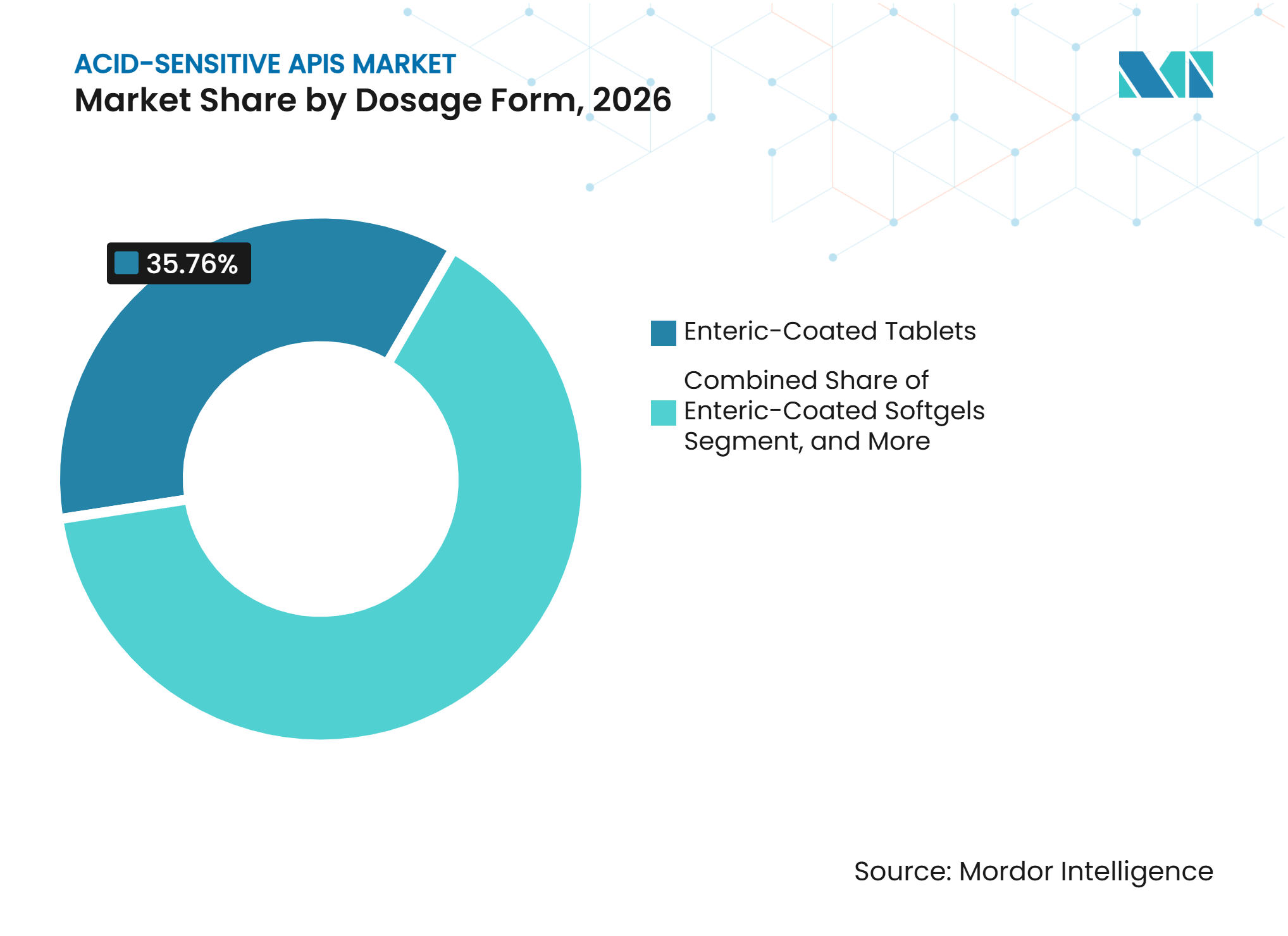
- By dosage form, enteric-coated tablets held 35.7% of the acid-sensitive APIs market share in 2026, while enteric-coated softgels are projected to grow at a 7.8% CAGR through 2032.
- By end user, pharmaceutical manufacturers held 46.7% of the acid-sensitive APIs market share in 2026, while CDMOs are projected to grow at a 7.6% CAGR through 2032.
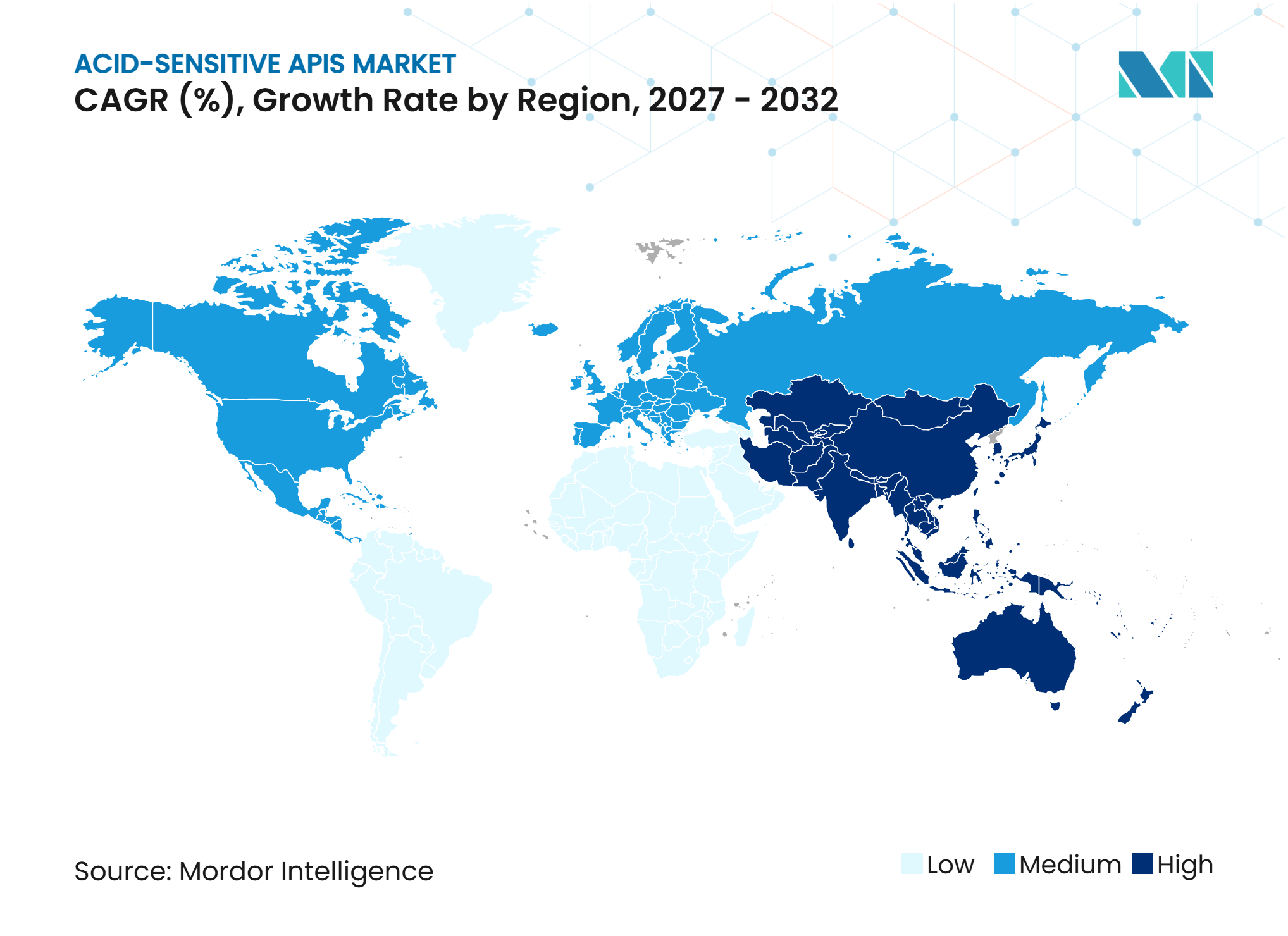
- By geography, North America held 43.5% of the acid-sensitive APIs market share in 2026, while Asia-Pacific is projected to grow at a 5.6% CAGR through 2032.
Note: Market numbers in this report are based on Mordor Intelligence's proprietary estimation framework, which combines nine months of actuals with Q4 projections for base year 2026.
Market Trends and Insights
Drivers Impact Analysis of Acid-Sensitive APIs Market*
| Driver | (~) % Impact on CAGR Forecast | Geographic Relevance | Impact Timeline |
|---|---|---|---|
| Expansion of Acid-Labile Molecules in Oral Dosage Pipelines | +1.20% | Global | Long term (≥ 4 years) |
| Genericization of Enteric-Coated Blockbusters | +0.80% | North America, Europe, Asia-Pacific | Short term (≤ 2 years) |
| Growth of CDMO and Formulation-Outsourcing Demand | +0.60% | Global, with early gains in India, United States, China | Medium term (2-4 years) |
| Ready-to-Fill Enteric Capsules Reducing Development Friction | +0.50% | Europe, North America | Medium term (2-4 years) |
| Rising Need for Site-Specific Gastrointestinal Delivery | +0.40% | North America, Europe | Long term (≥ 4 years) |
| Greater Use of Oral Peptides and Biologics | +1.00% | Global | Long term (≥ 4 years) |
| Source: Mordor Intelligence | |||
Expansion of Acid-Labile Molecules in Oral Dosage Pipelines
Oral development programs increasingly include molecules that need protection from gastric acid. Evonik reported that more than 700 oral development programs use novel active ingredients that require advanced delivery solutions, representing 1-third of new oral drug programs globally. The figure shows that advanced delivery is becoming relevant across a much wider range of oral candidates, rather than being limited to established delayed-release products. This broadens demand in the acid-sensitive APIs market beyond conventional enteric tablets and creates a need for capsule, coating, and multiparticulate options. Formulation teams are also becoming involved earlier in development decisions, when the choice of capsule shell, polymer, dose form, and release profile is still open. That early involvement matters because changes made later can require new compatibility work, dissolution studies, and regulatory documentation. A 2026 review described the move from basic gastric protection toward more predictive systems, including rapid-release double coatings and delivery triggered by both pH and microbiota. These approaches are relevant to oral peptides and biologics because their needs extend beyond resistance to stomach acid and include controlled release at a suitable intestinal location.
Genericization of Enteric-Coated Blockbusters
Patent expiries for delayed-release therapies continue to sustain demand for enteric polymers and acid-sensitive active ingredients. The Food and Drug Administration listed 29 active generic manufacturers for pantoprazole 40 mg tablets and 15 manufacturers for omeprazole 20 mg capsules in the supplied 2026 data. These products keep the acid-sensitive APIs market tied to a large base of generic proton pump inhibitor demand and recurring use of established coating systems. The large manufacturer count also shows why competition is most intense in mature molecules, where suppliers compete on price, supply reliability, and filing capability. More suppliers can reduce prices for the active ingredient, but validated coating grades are harder to replace because a new material can require formulation work and regulatory requalification. This supports ongoing demand for HPMCAS and methacrylic acid copolymers in approved formulations, even when the active ingredient itself becomes a commodity. The same dynamic allows polymer suppliers to retain a more stable position than commodity API suppliers within mature generic products.
Growth of CDMO and Formulation-Outsourcing Demand
Outsourcing now covers formulation development and release testing as well as manufacturing capacity. In September 2025, Vaxcyte entered a 15-year master services agreement with Patheon for drug-product formulation and manufacturing at its Greenville, North Carolina facility. The arrangement illustrates the longer commercial relationships that can result when a development program requires specialized production capability. This shift gives specialist CDMOs a larger role in the acid-sensitive APIs market because enteric products need controlled coating, dissolution testing, stability work, and regulatory support. ICH Q12 lifecycle management and Food and Drug Administration quality requirements raise the cost of maintaining validated release profiles after launch as well as during development. Companies with established process analytical technology, trained staff, and quality systems can absorb these obligations more easily than smaller internal operations. Outsourcing therefore grows where a developer needs technical capability and compliant processes rather than only additional production volume.
Ready-to-Fill Enteric Capsules Reducing Development Friction
Ready-to-fill enteric capsules remove coating and banding steps that can lengthen development. Evonik made EUDRACAP colon available in GMP quality in October 2025 for live biotherapeutics, oral biologics, peptides, RNA, and other sensitive actives. The platform responds to a need for delivery formats that can protect sensitive payloads while targeting the distal intestine. Lonza Capsugel reported that its enteric capsule approach met USP delayed-release requirements under fed and fasted conditions in dynamic gastrointestinal testing. These formats help developers pursue ileo-colonic and other site-specific release strategies without installing a separate coating operation or managing a further development step. They also move part of development spending from pharmaceutical plants to capsule and excipient suppliers that can provide a validated system. This gives platform suppliers a larger role in the acid-sensitive APIs market, especially in early programs that need repeatable release behavior.
Restraints Impact Analysis of Acid-Sensitive APIs Market*
| Restraint | (~) % Impact on CAGR Forecast | Geographic Relevance | Impact Timeline |
|---|---|---|---|
| High Cost of Specialized Formulation and Testing | -1.00% | Global | Short term (≤ 2 years) |
| Variable In-Vivo Gastric and Intestinal Conditions | -0.70% | Global | Long term (≥ 4 years) |
| Scale-Up Risk in Coating Integrity and Release Performance | -0.50% | Asia-Pacific, South America | Medium term (2-4 years) |
| Limited Bioavailability of Complex Oral Biologics | -0.60% | Global | Long term (≥ 4 years) |
| Source: Mordor Intelligence | |||
High Cost of Specialized Formulation, Testing, and Scale-Up
Acid-sensitive dosage forms require more development work than conventional immediate-release products. Polymer qualification, dissolution testing, stability studies, and in-vivo correlation work add cost before a product reaches commercial scale. AAPS PharmSciTech noted that the standard test sequence using 0.1 mol/L hydrochloric acid followed by buffer dissolution may not adequately predict in-vivo behavior. This can require biorelevant testing that adds further development and validation work. The burden is particularly difficult for smaller biopharma developers and generic manufacturers in emerging markets. EU GMP Annex 1 and 21 CFR Part 211 requirements also increase documentation and control needs during scale-up, making coating integrity and release performance more difficult to reproduce consistently.
Variable In-Vivo Gastric Conditions and Limited Oral Biologic Bioavailability
Differences between in vitro testing and patient conditions remain a central limitation on reliable enteric release. Gastric pH, residence time, food intake, alcohol co-ingestion, and gastrointestinal transit can all change where a coating dissolves. Longer gastric emptying after food intake can expose sensitive molecules to acid for more time than expected. The impact is greater for peptides and GLP-1 analogs because protection alone does not ensure absorption. A 2025 review found that oral absorption enhancement for GLP-1 receptor agonists remains sensitive to variability in gastrointestinal conditions[1]. These constraints can limit the addressable patient population for oral biologic programs unless the formulation has extensive protective and absorption-enhancing features.
*Our forecasts treat driver/restraint impacts as directional, not additive. The impact forecasts reflect baseline growth, mix effects, and variable interactions.
Acid-Sensitive APIs Market Segment Analysis
By Molecule:
PPIs Maintain Volume While Lansoprazole Expands Through Generic CompetitionOmeprazole and esomeprazole accounted for 27.6% of the acid-sensitive APIs market size in 2026. Their position reflects high use in gastroesophageal reflux disease, peptic ulcer disease, and protection from NSAID-related gastric injury. The benzimidazole structure requires enteric protection because proton pump inhibitor activity is vulnerable in acidic conditions. Pantoprazole also retains meaningful procurement volume, with 36 active generic manufacturers for the 40 mg tablet format in the supplied 2026 data. Erythromycin serves a separate antibiotic need because of its acid lability. Pancrelipase remains a specialized enzyme replacement product for cystic fibrosis and exocrine pancreatic insufficiency.
Lansoprazole is projected to grow at a 6.5% CAGR through 2032, making it the fastest-growing molecule in the acid-sensitive APIs market. The molecule has 13 active generic manufacturers in the United States in the supplied data, which supports continued procurement at competitive prices. Growth also reflects wider access to lower-cost products in Asia-Pacific and Latin America. Generic competition encourages differentiated release formats, including enteric mini-tablets, orally dispersible granules, and dual-layer combinations. Rabeprazole continues to serve markets that favor once-daily treatment with consistent acid suppression. Other Molecules include developing acid-labile small molecules in oncology and central nervous system programs, which adds smaller but rising demand.



By Therapeutic Class:
PPIs Provide the Base While GLP-1 Receptor Agonists Add New DemandProton pump inhibitors accounted for 32.7% of the acid-sensitive APIs market size in 2026. Their share reflects the need for delayed release across established benzimidazole therapies and the high number of generic filings. More generic suppliers increase the volume of polymer and excipient procurement even when drug prices decline. Antibiotics, led by erythromycin base, remain a stable therapeutic category. Enzyme replacement therapies use more complex formulations for smaller patient populations. Anti-inflammatory therapies requiring gastric protection and other specialized therapeutic uses add further demand across the acid-sensitive APIs market.
GLP-1 receptor agonists are projected to grow at a 6.8% CAGR through 2032. Oral semaglutide has made oral peptide delivery a practical development target, although developers still need to address enzymatic degradation and limited absorption. A Lonza Capsugel study showed that hydrophobic ion-paired exenatide in a lipid formulation and an intrinsically enteric capsule could protect the peptide and coordinate intestinal release. This work illustrates why enteric systems are becoming part of dose-exposure design rather than a simple protective layer. Food and Drug Administration 505(b)(2) pathways and European Medicines Agency hybrid applications can affect the timing of next-generation oral GLP-1 launches. The category offers a high-value opportunity for developers that can pair peptide protection with dependable absorption.
By Dosage Form:
Enteric-Coated Tablets Lead While Softgels Gain GroundEnteric-coated tablets accounted for 35.7% of the acid-sensitive APIs market size in 2026. They benefit from established manufacturing processes, broad API compatibility, and acceptance by regulators across ICH member markets. Omeprazole, pantoprazole, and lansoprazole generics support recurring demand for tablet coating. USP <711> dissolution standards and Food and Drug Administration guidance for delayed-release products provide a familiar compliance route. Enteric-Coated Hard Capsules serve products that need fill homogeneity or shell compatibility with HPMC-AS materials. Multiparticulates, pellets, and granules provide dose flexibility for pediatric and high-dose uses.
Enteric-coated softgels are projected to grow at a 7.8% CAGR through 2032. Their expansion follows wider use of lipid-based delivery strategies for peptides and biologics, plant-based shell technologies, and protected nutraceutical products. GELITA presented DELASOL technology at CPHI 2025 as a route to one-step enteric softgel production without an added coating stage. A scientific review also described advances in enteric coatings, dual-layer encapsulation, and polymer systems for peptides, proteins, and RNA therapies[2]. Amorphous solid dispersions are another developing format because HPMCAS can act as both a dispersion carrier and an enteric matrix. Shin-Etsu reports that AQOAT supports more than 14 Food and Drug Administration-approved products in this role.

By End User:
Pharmaceutical Manufacturers Hold the Largest Base While CDMOs Grow FasterPharmaceutical manufacturers accounted for 46.7% of the acid-sensitive APIs market size in 2026. The share reflects the large installed base of enteric-coating lines at branded and generic drug companies. Indian manufacturers remain significant users of acid-sensitive APIs and enteric excipients for regulated generic markets. Aurobindo Pharma reported 888 cumulative ANDA filings and 728 final United States approvals as of March 2026 in the supplied company material. Biopharmaceutical companies are a growing end-user group because they develop oral peptide and biologic candidates alongside injectable options. Compounding pharmacies and clinical research organizations remain smaller users of specialized acid-sensitive formulations.
CDMOs are projected to grow at a 7.6% CAGR through 2032. This rate reflects the transfer of coating, spray drying, and regulatory work from internal manufacturing operations to specialist partners. The Acid-sensitive APIs industry gives an advantage to CDMOs with solvent-free coating, moisture control, and validated HPMCAS spray-drying capability. These assets are not easily reproduced by general-purpose contract manufacturers. As programs become more complex, customers are more likely to select a partner with a record in controlled release and biorelevant testing. The result is a two-tier CDMO field, where technically differentiated providers compete for the most demanding projects.
Geography Analysis
North America
North America held 43.5% of the acid-sensitive APIs market share in 2026. Its scale reflects a large ANDA ecosystem, Food and Drug Administration-registered coating facilities, and a dense base of CDMOs with validated formulation capability. The supplied 2024 CMS data recorded 85.9 million proton pump inhibitor claims across molecules, supporting recurring demand for delayed-release systems. The regulatory influence of 21 CFR Part 211 and Food and Drug Administration guidance for delayed-release products maintains a high quality threshold. This favors established suppliers of polymers and coating systems that have comprehensive documentation and proven performance. Proposed United States tariff measures for pharmaceutical imports have also encouraged suppliers to consider domestic production capacity, although the policy framework remains a planning risk rather than an implemented requirement.
Asia-Pacific
Asia-Pacific is projected to grow at a 5.6% CAGR through 2032. India’s generic API base, China’s expanding oral solid dosage capacity, and demand from aging populations support this outlook. Aurobindo, Cipla, Dr. Reddy’s, and Granules India are strengthening manufacturing capacity while also pursuing complex products. Colorcon opened a 200,000-square-foot film-coating facility in Johor, Malaysia, in July 2025, creating regional capacity for enteric and functional coating systems. The investment signals that excipient suppliers expect rising oral solid dosage demand in the region. Local production of qualified coating materials can also help manufacturers reduce lead times and build more resilient supply chains.
Europe, South America, and Middle East and Africa
Europe combines strict manufacturing requirements with established demand for enteric dosage forms. Shin-Etsu announced a JPY 10 billion pharmaceutical cellulose investment that includes a new L-HPC facility in Wiesbaden, Germany, targeted for completion in the second half of 2026. EDQM standards and EU GMP Annex 1 shape quality expectations for regional manufacturers. Germany’s July 2026 public procurement awards included EUR 6.9 million for pantoprazole magensaftresistente tablets, demonstrating continued demand for enteric products. South America offers access opportunities as registration processes become more aligned across Mercosur markets. Middle East and Africa remain import-dependent for specialized enteric formats, while GCC countries are the principal demand centers for gastroenterology and metabolic therapies.
Competitive Landscape
Market Concentration
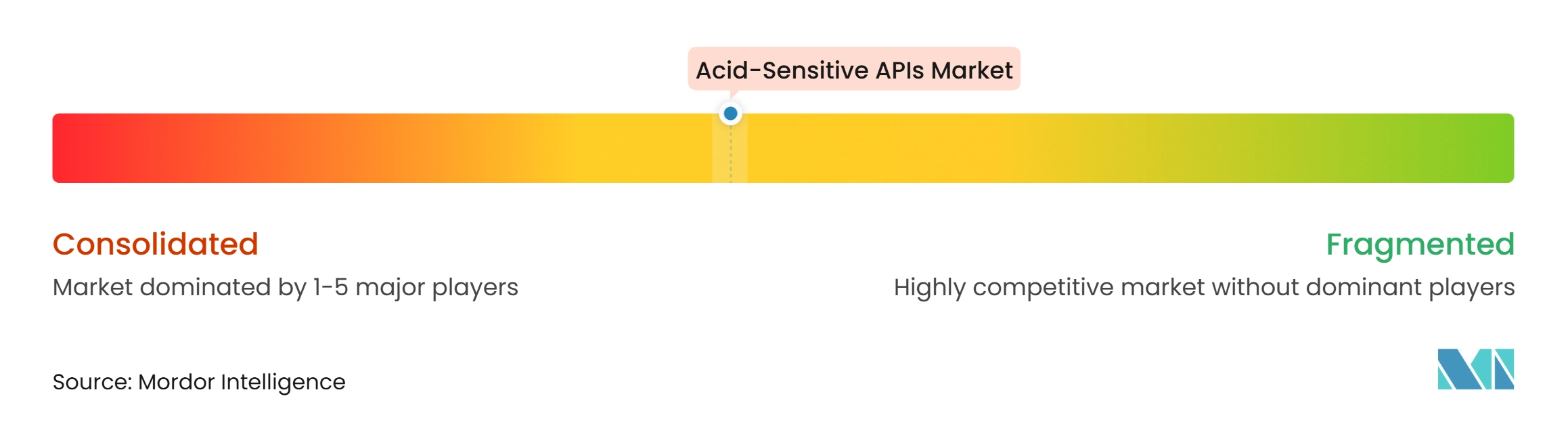
The acid-sensitive APIs market has a concentrated upstream supply base and a more fragmented downstream manufacturing base. Evonik, Shin-Etsu, Colorcon, and BASF supply many of the specialized polymers and coating systems used in commercial enteric products. Their position rests on regulatory documentation, capital-intensive production, and long-standing technical relationships with pharmaceutical companies. These barriers make replacement difficult once an excipient is part of an approved delayed-release formulation. The competitive structure rewards suppliers that can provide formulation support as well as materials. For this reason, new capsule and polymer platforms are important strategic tools rather than only product extensions.
Evonik launched EUDRACAP colon in GMP quality in October 2025, extending its role from polymer supplier to provider of a ready-to-fill delivery platform. Shin-Etsu is expanding pharmaceutical cellulose capacity in Japan and Germany, supporting supply security for excipients used in controlled and delayed-release products. SPI Pharma and Colorcon announced a global distribution and innovation partnership in October 2026 for drug delivery systems, broadening commercial access to modified-release technologies. These actions show that technical service, distribution reach, and platform ownership are increasingly linked. ISO 15378 and Food and Drug Administration cGMP expectations add compliance costs that established firms can spread across larger product portfolios.
Downstream competition includes Indian generic manufacturers, pharmaceutical companies, and specialized CDMOs. Their position depends on ANDA volume, peptide synthesis capability, and reliable enteric process validation. Pricing pressure is strongest in established small-molecule products, where many suppliers compete for the same generic opportunity. Complex biologic and GLP-1 programs offer more defensible work for CDMOs that can manage lipid formulations, intrinsic enteric capsules, and difficult absorption targets. The Acid-sensitive APIs industry therefore has a clearer divide between high-volume generic production and technically demanding delivery programs.
Acid-Sensitive APIs Industry Leaders
-
Dr. Reddy’s Laboratories
-
Lonza Group
-
Evonik Industries
-
BASF SE
-
Aurobindo Pharma
- *Disclaimer: Major Players sorted in no particular order
Acid-Sensitive APIs Market Companies Covered in this Report
- Apotex Pharmachem
- Aurobindo Pharma
- BASF
- Catalent
- ChemWerth Inc.
- Chunghwa Chemical Synthesis & Biotech Co., Ltd
- Cipla
- Colorcon
- Concord Biotech Limited
- Dr. Reddy’s Laboratories
- Evonik Industries
- Granules India
- Hikal Ltd
- Lonza Group
- Nordmark
- Patheon, part of Thermo Fisher Scientific
- Pharmaceutics International, Inc.
- RPG Life Sciences
- Shin-Etsu Chemical Co., Ltd.
- Suven Pharmaceuticals
- Teva Pharmaceutical Industries
Global Acid-Sensitive APIs Market Report Scope
According to the report’s scope, acid-sensitive APIs are active pharmaceutical ingredients that degrade or lose potency when exposed to acidic conditions, such as stomach acid. They may require protective formulations, such as enteric coatings or acid-resistant delivery systems.
The acid-sensitive APIs market is segmented into molecule, therapeutic class, dosage form, end user, and geography. By molecule, the market is segmented into omeprazole and esomeprazole, lansoprazole, rabeprazole, pantoprazole, erythromycin, pancrelipase, and other molecules. By therapeutic class, the market is segmented into proton pump inhibitors, antibiotics, enzyme replacement therapies, GLP-1 receptor agonists, anti-inflammatory drugs, and other therapeutic classes. By dosage form, the market is segmented into enteric-coated tablets, enteric-coated hard capsules, enteric-coated softgels, multiparticulates, pellets, granules, and amorphous solid dispersions. By end user, the market is segmented into pharmaceutical manufacturers, biopharmaceutical companies, contract development and manufacturing organizations, and other end users. By geography, the market is segmented into North America, Europe, Asia-Pacific, the Middle East and Africa, and South America. The report also covers the estimated market sizes and trends for 17 countries across major regions globally. The report offers values (USD) for all the above segments.
Segmentation Overview
| Omeprazole and Esomeprazole |
| Lansoprazole |
| Rabeprazole |
| Pantoprazole |
| Erythromycin |
| Pancrelipase |
| Other Molecules |
| Proton Pump Inhibitors |
| Antibiotics |
| Enzyme Replacement Therapies |
| GLP-1 Receptor Agonists |
| Anti-Inflammatory Drugs |
| Other Therapeutic Classes |
| Enteric-Coated Tablets |
| Enteric-Coated Hard Capsules |
| Enteric-Coated Softgels |
| Multiparticulates, Pellets, and Granules |
| Amorphous Solid Dispersions |
| Pharmaceutical Manufacturers |
| Biopharmaceutical Companies |
| Contract Development and Manufacturing Organizations |
| Other End Users |
| North America | United States |
| Canada | |
| Mexico | |
| Europe | Germany |
| United Kingdom | |
| France | |
| Italy | |
| Spain | |
| Rest of Europe | |
| Asia-Pacific | China |
| Japan | |
| India | |
| Australia | |
| South Korea | |
| Rest of Asia-Pacific | |
| Middle East and Africa | GCC |
| South Africa | |
| Rest of Middle East and Africa | |
| South America | Brazil |
| Argentina | |
| Rest of South America |
| By Molecule | Omeprazole and Esomeprazole | |
| Lansoprazole | ||
| Rabeprazole | ||
| Pantoprazole | ||
| Erythromycin | ||
| Pancrelipase | ||
| Other Molecules | ||
| By Therapeutic Class | Proton Pump Inhibitors | |
| Antibiotics | ||
| Enzyme Replacement Therapies | ||
| GLP-1 Receptor Agonists | ||
| Anti-Inflammatory Drugs | ||
| Other Therapeutic Classes | ||
| By Dosage Form | Enteric-Coated Tablets | |
| Enteric-Coated Hard Capsules | ||
| Enteric-Coated Softgels | ||
| Multiparticulates, Pellets, and Granules | ||
| Amorphous Solid Dispersions | ||
| By End User | Pharmaceutical Manufacturers | |
| Biopharmaceutical Companies | ||
| Contract Development and Manufacturing Organizations | ||
| Other End Users | ||
| Geography | North America | United States |
| Canada | ||
| Mexico | ||
| Europe | Germany | |
| United Kingdom | ||
| France | ||
| Italy | ||
| Spain | ||
| Rest of Europe | ||
| Asia-Pacific | China | |
| Japan | ||
| India | ||
| Australia | ||
| South Korea | ||
| Rest of Asia-Pacific | ||
| Middle East and Africa | GCC | |
| South Africa | ||
| Rest of Middle East and Africa | ||
| South America | Brazil | |
| Argentina | ||
| Rest of South America | ||
Key Questions Answered in the Report
What is driving demand for acid-sensitive APIs?
Demand is supported by generic delayed-release medicines and development of oral peptides and GLP-1 therapies that need protection from gastric acid.
What is the forecast growth rate for acid-sensitive APIs?
The sector is projected to grow at a 4.4% CAGR from 2027 to 2032, reaching USD 20.81 billion.
Which molecule group has the largest share?
Omeprazole and Esomeprazole lead by molecule with a 27.6% share in 2026.
Which dosage form is growing the fastest?
Enteric-Coated Softgels are projected to expand at a 7.8% CAGR through 2032.
Why are CDMOs gaining importance for acid-sensitive APIs?
CDMOs provide specialized coating, dissolution testing, spray drying, and regulatory support that many drug developers cannot maintain internally.
Which region is growing the fastest?
Asia-Pacific is projected to grow at a 5.6% CAGR through 2032, supported by generic API production and oral solid dosage manufacturing expansion.