
Acid Citrate Dextrose Tube Market Size and Share
Market Overview
| Study Period | 2022 - 2032 |
|---|---|
| Market Size (2027) | USD 486.49 Million |
| Market Size (2032) | USD 637.03 Million |
| Growth Rate (2027 - 2032) | 5.54 % |
| Fastest Growing Market | Asia-Pacific |
| Largest Market | North America |
| Market Concentration | Medium |
Major Players *Disclaimer: Major Players sorted in no particular order Image © Mordor Intelligence. Reuse requires attribution under CC BY 4.0. | |
Acid Citrate Dextrose Tube Market Analysis by Mordor Intelligence
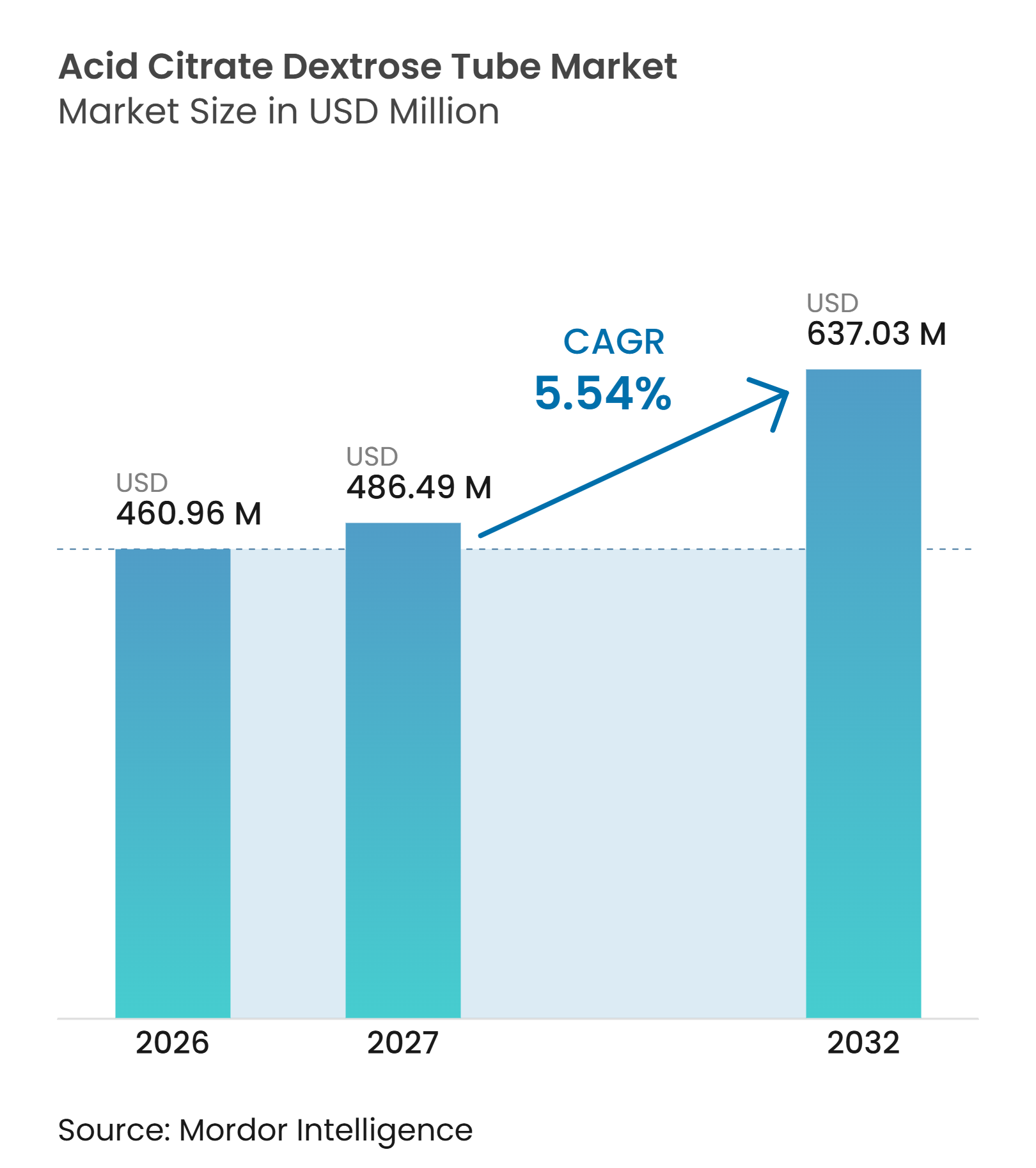
The Acid Citrate Dextrose Tube Market size is expected to grow from USD 460.96 million in 2026 to USD 486.49 million in 2027 and is forecast to reach USD 637.03 million by 2032 at 5.54% CAGR over 2027-2032.
The acid citrate dextrose tube market serves procedures where viable lymphocytes and stable cell-surface antigens are required, including apheresis, crossmatching, HLA typing, and cell therapy collection. Growth is tied to the expanding use of autologous cell and gene therapy protocols, because collection centers must use validated anticoagulant formats at the beginning of each collection workflow. Rising blood collection activity in emerging health systems also increases the number of samples used for compatibility testing and reference work. Suppliers can benefit from specialty formulations and automated collection formats, while standard tubes face greater price pressure as manufacturing capacity expands. Quality assurance, labeling control, and reliable lot release remain central to purchasing decisions because collection failures can require a patient or donor to be recollected.
Key Report Takeaways
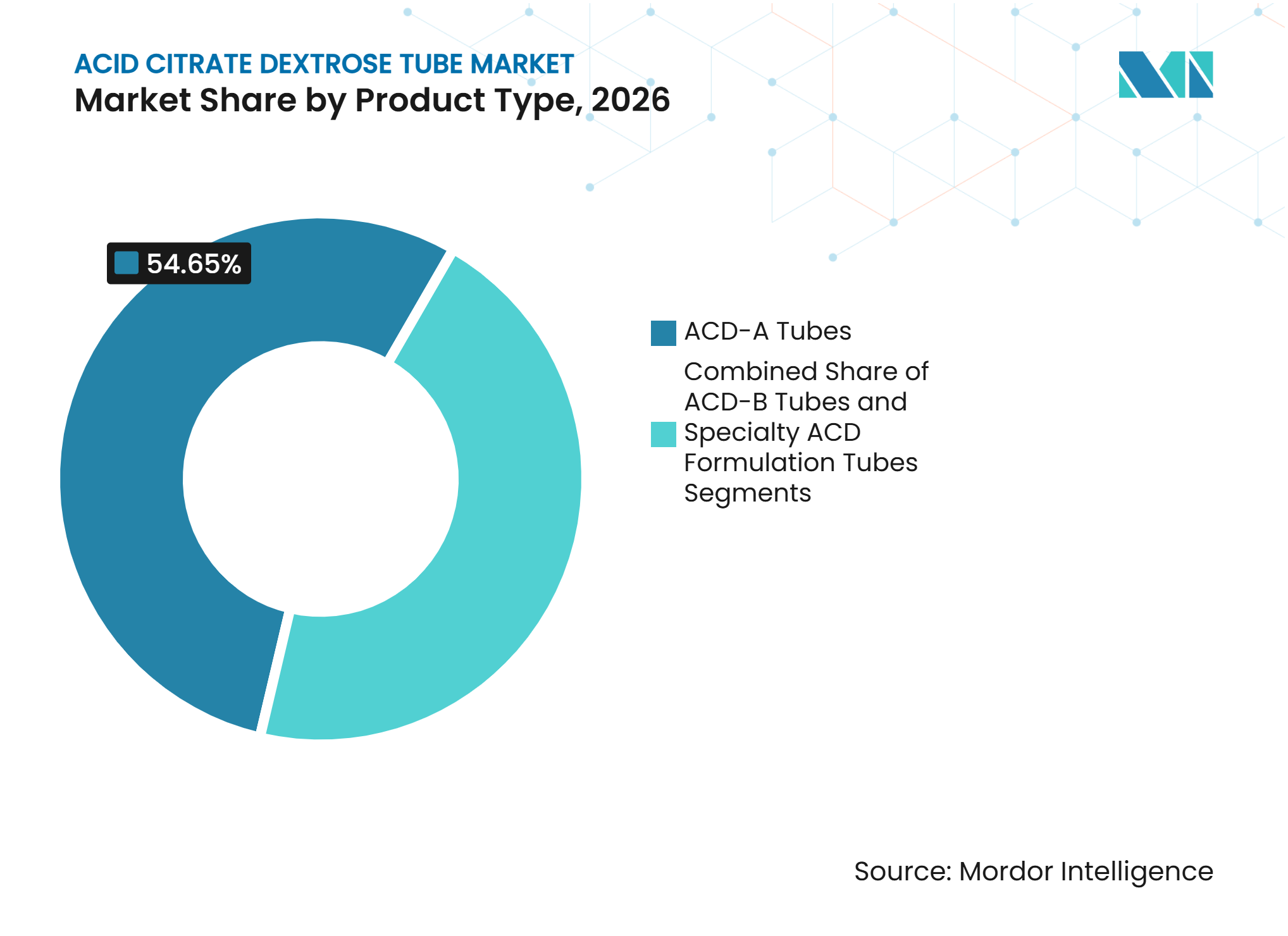
- By product type, ACD-A tubes held a 54.65% share of the acid citrate dextrose tube market in 2026, while specialty ACD formulation tubes are forecast to grow at a 7.65% CAGR through 2032.
- By tube capacity, 8.5 mL tubes held a 57.87% share in 2026, while 6.0 mL tubes are forecast to grow at a 7.44% CAGR through 2032.
- By material, plastic PET tubes held a 68.65% share in 2026, while polypropylene and double-wall tubes are forecast to grow at an 8.43% CAGR through 2032.
- By draw mechanism, vacuum-Draw Tubes held a 69.75% share in 2026 and are forecast to grow at a 7.53% CAGR through 2032.
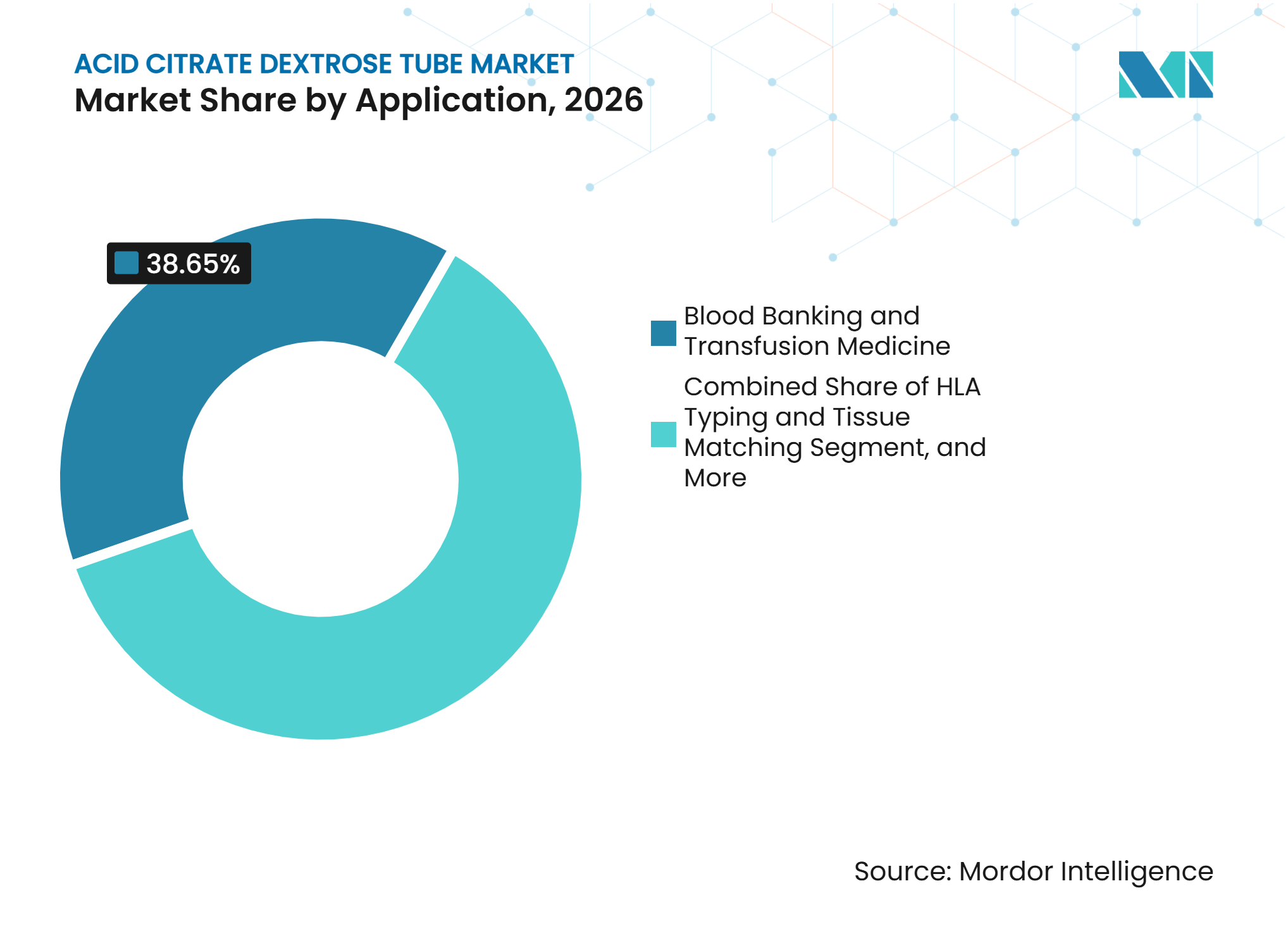
- By application, blood banking and transfusion medicine held a 38.65% share in 2026, while cell and gene therapy collection is forecast to grow at an 8.99% CAGR through 2032.
- By end user, Hospitals held a 54.76% share in 2026, while blood banks and transfusion centers are forecast to grow at an 8.96% CAGR through 2032.
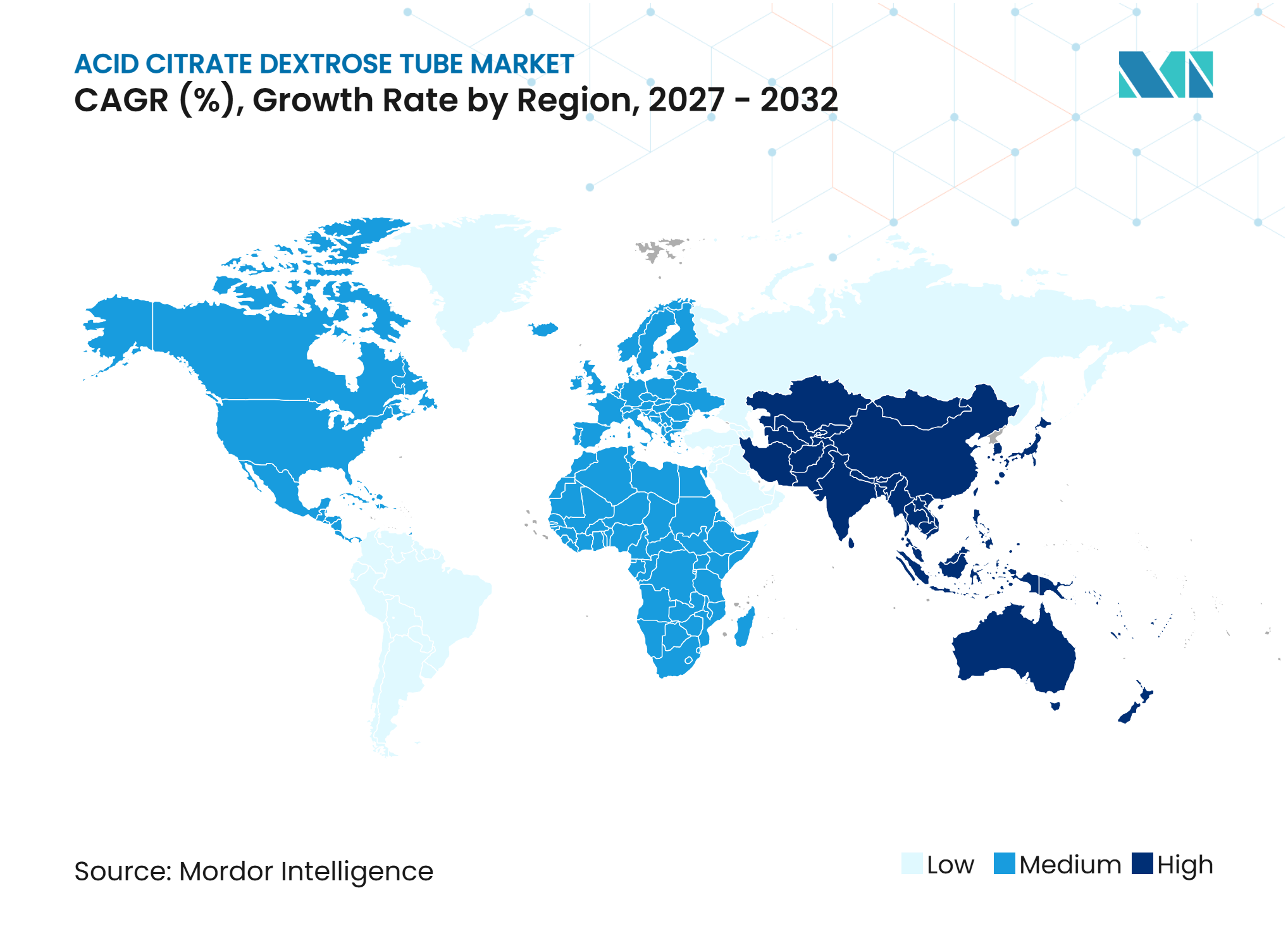
- By geography, North America held a 42.56% share in 2026, while Asia-Pacific is forecast to grow at a 6.54% CAGR through 2032.
Note: Market numbers in this report are based on Mordor Intelligence's proprietary estimation framework, which combines nine months of actuals with Q4 projections for base year 2026.
Market Trends and Insights
Drivers Impact Analysis of Acid Citrate Dextrose Tube Market*
| Driver | (~) % Impact on CAGR Forecast | Geographic Relevance | Impact Timeline |
|---|---|---|---|
| Apheresis-Based Cell Collection for Cell Therapy Manufacturing | +1.40% | Global, led by the United States with early gains in Europe and Japan | Short term (≤ 2 years) |
| Blood Banking and Transfusion Testing Volume Growth | +1.10% | Global, strongest in India, South Asia, and Sub-Saharan Africa | Long term (≥ 4 years) |
| HLA and Tissue-Typing Reference Laboratory Demand | +0.90% | North America and Europe, with spillover to South Korea and Australia | Medium term (2-4 years) |
| Expansion of Blood-Collection Infrastructure in Emerging Markets | +0.80% | Asia-Pacific, Middle East and Africa, and South America | Long term (≥ 4 years) |
| Specialty ACD Formulations for Automated Apheresis Platforms | +0.60% | North America and Europe | Medium term (2-4 years) |
| Closed-System Workflow Adoption to Reduce Repeat Collections | +0.40% | Global | Medium term (2-4 years) |
| Source: Mordor Intelligence | |||
Apheresis-Based Cell Collection for Cell Therapy Manufacturing Accelerates ACD-A Pull
Anticoagulant citrate dextrose solution A is the validated anticoagulant for Terumo BCT’s Spectra Optia Apheresis System, so accredited centers need ACD-A within their collection protocols. This requirement links the acid citrate dextrose tube market to the opening of new CAR-T and hematopoietic stem cell collection sites. The U.S. FDA had approved 36 cell and gene therapy products with a National Drug Code by May 2025, while more than 4,200 therapies were in development. Each approved therapy can support durable demand when its autologous collection process specifies ACD-A. A 2025 Blood study found that adding heparin to a standard ACD-A protocol improved CD34+ cell yields in sickle cell disease gene therapy collection, while ACD-A remained the base anticoagulant[1]. A separate 2025 review of approved CAR-T collection protocols described the need to standardize apheresis parameters, which supports protocol consistency and repeat purchasing.
Blood Banking and Transfusion Testing Volume Growth Provides Durable Baseline Demand
The acid citrate dextrose tube market benefits from crossmatch and reference workflows that depend on preserved red-cell antigens. The World Health Organization reported continued expansion in voluntary donation systems and blood-component capacity across many countries. India collected 15.71 million units of blood in 2025, according to information provided by the Ministry of Health and Family Welfare. WHO also reported 1,131 operational blood collection centers in India[2]. Growing collection capacity can create more crossmatch and reference samples. These workflows provide a stable demand base because surgical, oncology, and transfusion care require compatibility testing even when routine hematology testing uses other tube formats.
HLA and Tissue-Typing Reference Laboratory Demand Deepens Specialty Channel
HLA typing requires viable lymphocytes and preserved cell-surface antigens, which keeps ACD collection relevant in transplant matching workflows. Vanderbilt University Medical Center opened an in-house Histocompatibility and Immunogenetics Laboratory in June 2025 to reduce testing turnaround times and later offer services to other institutions[3]. This model can increase sample processing within a transplant center rather than sending samples to an outside laboratory. NHS Blood and Transplant sought rapid HLA typing systems in 2025 that covered multiple loci and supported results within 3 hours. The acid citrate dextrose tube market is supported when faster matching requirements lead centers to build dedicated testing capability. Procurement standards and laboratory validation requirements can also preserve use of familiar ACD specifications. Demand can increase as transplant programs add internal capacity and seek shorter turnaround times for donor-recipient matching.
Expansion of Blood-Collection Infrastructure in Emerging Markets Broadens the Addressable Base
Health systems in India, Southeast Asia, and Sub-Saharan Africa are building blood-collection capability that expands the potential use of ACD-formatted tubes. WHO documented India’s effort to improve quality-assured blood services and expand access through blood centers. China reported a voluntary donation rate of 11.4 donations per 1,000 people in 2025 and highlighted stronger safety measures for donation systems. The acid citrate dextrose tube market gains from these formalized networks because reference testing accompanies routine collection and component preparation. Terumo BCT announced in October 2026 that Ribeirão Preto Blood Center in Brazil deployed Reveos automated blood-processing systems. More automated component preparation can increase throughput and encourage standardized collection processes. Public blood-bank purchasing generally favors formats that are already validated within existing procedures, which supports continued use of specified collection tubes.
Restraints Impact Analysis of Acid Citrate Dextrose Tube Market*
| Restraint | (~) % Impact on CAGR Forecast | Geographic Relevance | Impact Timeline |
|---|---|---|---|
| Substitution Toward EDTA, CPD, CPDA-1, and Other Chemistries | -1.3% | Global | Long term (≥ 4 years) |
| Lot-Release, Labeling, and Recall Risk | -0.6% | North America and Europe | Short term (≤ 2 years) |
| Resin, Glass, Reagent, and Closure Input-Cost Volatility | -0.4% | Global | Medium term (2-4 years) |
| ACD Ratio Errors in Manual-Fill Workflows | -0.3% | Asia-Pacific, Middle East and Africa, and South America | Medium term (2-4 years) |
| Source: Mordor Intelligence | |||
Substitution Toward EDTA and Related Chemistries Narrows ACD’s Addressable Volume
Routine hematology and clinical chemistry testing has largely shifted toward EDTA and serum-separator formats. A 2025 Laboratory Medicine study found that K₂EDTA supported cellular morphology preservation and DNAse inhibition, making it suitable for several genomic applications. A 2025 Nature Communications study found that ACD-A performed comparably with citrate tubes for extracellular RNA stability within 4 hours but did not establish ACD as the standard choice for these workflows. The acid citrate dextrose tube market therefore remains concentrated in procedures that require intact functional cells. Minimal residual disease testing, microbiome profiling, and liquid biopsy do not automatically create new ACD demand. Suppliers must rely on growth in apheresis, crossmatching, and HLA testing rather than broad adoption in all molecular workflows. This application focus limits volume expansion but also clarifies where specialized validation matters most.
Lot-Release, Labeling, and Recall Risk Introduces Procurement Disruption
Quality events can disrupt the acid citrate dextrose tube market because a compromised tube lot may affect clinical decisions and require recollection. The FDA recorded a Class 2 recall of Greiner Bio-One coagulation tubes in 2025 after labeling placement altered the fill mark. The agency also recorded a Class 2 recall of VACUETTE clot-activator tubes made without a gel separator. These recalls did not involve ACD tubes, but they show the wider collection-tube category’s exposure to manufacturing and labeling failures. FDA Quality System Regulation requirements under 21 CFR Part 820 and ISO 13485:2016 make quality documentation essential for manufacturers and hospital buyers. Facilities may maintain qualified secondary suppliers when recalls occur, which adds procurement work and can weaken supplier loyalty.
*Our forecasts treat driver/restraint impacts as directional, not additive. The impact forecasts reflect baseline growth, mix effects, and variable interactions.
Acid Citrate Dextrose Tube Market Segment Analysis
By Product Type:
ACD-A Leads While Specialty Formulations Grow FasterACD-A tubes held 54.65% of the acid citrate dextrose tube market share in 2026. Their position reflects use in validated continuous-flow apheresis procedures, where citrate concentration must match the blood volumes processed during collection. Terumo BCT identifies anticoagulant citrate dextrose solution A as the required anticoagulant in key Spectra Optia procedures. The formulation is not readily interchangeable with ACD-B when an established apheresis circuit and collection protocol require ACD-A. ACD-B Tubes serve lower-volume manual-draw and blood-banking reference applications. Their demand is steady because use is defined by local testing procedures rather than by a broader move into new workflows. The acid citrate dextrose tube industry depends on both formats, but their demand patterns differ significantly.
Specialty ACD formulation tubes are projected to grow at a 7.65% CAGR through 2032. The acid citrate dextrose tube market size for this category grows as cell therapy manufacturers require application-specific citrate-to-dextrose ratios and compatibility documentation. Specialty products can also serve pediatric donors and weight-restricted collections where a smaller draw is necessary. The 2025 Blood research on sickle cell disease gene therapy showed that collection parameters can influence yield and collection efficiency. This gives suppliers a reason to develop configurations linked to named platforms and protocols. Generic ACD formats face greater competition from new producers, while specialized formats can compete on validation and usability. The commercial gap between these categories is likely to widen as cell therapy workflows become more standardized.



By Tube Capacity:
8.5 mL Remains the Standard While 6.0 mL Gains UseThe 8.5 mL format commanded 57.87% segment share in 2026. It fits adult apheresis reference-sample collection and common blood-banking crossmatch volumes. The NHS Blood Collection Devices framework introduced in October 2025 listed BD and Greiner Bio-One among suppliers with national pricing arrangements. Established procurement specifications support the use of familiar adult-volume formats. The 10.0 mL option remains important in procedures that require larger archives of reference or research samples. It supports extended protocols but has a narrower role than the 8.5 mL format. Capacity choice continues to depend on the patient group, workflow, and amount of specimen required.
The 6.0 mL format is projected to expand at a 7.44% CAGR through 2032. This growth reflects patient blood-management practices that seek the minimum necessary draw volume. Smaller tubes can be useful for pediatric, geriatric, and weight-restricted donors. The acid citrate dextrose tube market benefits where healthcare systems add diagnostic capacity but also want to reduce donor and patient burden. Lower-volume plastic tubes also align with the move away from breakable glass containers in routine workflows. The format requires consistent fill control so that the ACD ratio remains suitable for the intended test. Suppliers that can document performance at lower volumes can address a growing requirement without changing the core collection chemistry.
By Material:
PET Holds the Largest Position While Polypropylene and Double-Wall Designs AdvancePlastic PET tubes held 68.65% material segment share in 2026. PET provides shatter resistance and is compatible with high-throughput laboratory handling and centrifugation. BD reported ongoing investment in its Broken Bow, Nebraska, operations, which focus on Vacutainer production. Plastic also addresses safety expectations in clinical environments where tube breakage can expose staff to samples. A 2025 Clinical Chemistry evaluation found that BD and Greiner Bio-One tubes were largely analytically interchangeable across 40 analytes and several tube types. This finding indicates that manufacturing precision and material control matter alongside brand familiarity. Glass retains a limited role where users seek to avoid polymer leachables in specialized reference applications.
Polypropylene and Double-Wall Tubes are projected to grow at an 8.43% CAGR through 2032. They are used where repeated centrifugation and freeze-thaw handling make thermal stability important. Demand for these designs is supported by biobanking and cell therapy manufacturing, where specimens may move through more demanding handling cycles. Double-wall construction can also support vacuum retention over longer shelf lives. ISO 6710:2017 addresses requirements for single-use blood specimen containers, including closure performance and fill-volume marking requirements. These standards favor materials and designs that provide repeatable performance under defined conditions. Improved PET coatings will continue to limit the scope for glass, but higher-performance plastic designs can remain differentiated.
By Draw Mechanism:
Vacuum-Draw Formats Maintain a Closed-System AdvantageVacuum-draw tubes held a 69.75% segment share in 2026. They are also forecast to grow at a 7.53% CAGR through 2032, which reflects broad use in both established laboratories and new infrastructure. The sealed draw process reduces exposure during collection and supports a controlled fill volume. This matters for ACD because the intended blood-to-anticoagulant ratio must be maintained. Vacuum tubes also connect more easily with automated centrifuges, sorters, and sample-handling equipment. The acid citrate dextrose tube industry benefits from this compatibility as labs seek fewer manual handling steps. Demand is expected to remain strong where automation investment is paired with quality and staff-safety goals.
Manual-fill tubes remain useful in low-resource settings and in specialized protocols needing nonstandard volumes. Their use is more limited because manual filling can increase the risk of inconsistent ratios and repeated collections. Multiple-Draw Tubes can improve workflow efficiency when several sample types are taken from one venipuncture episode. Their share remains smaller than that of single-draw vacuum products. ISO 6710:2017 supports standardization by defining performance expectations for blood specimen containers. Automated systems validated around a defined tube geometry are unlikely to be redesigned for manual-fill alternatives without a clear operational reason. This gives vacuum products an advantage where laboratories are replacing fragmented manual processes with integrated lines.
By Application:
Blood Banking Provides Scale While Cell and Gene Therapy Drives GrowthBlood banking and transfusion medicine held 38.65% application segment share in 2026. This application links each collected unit with crossmatch or compatibility testing requirements that often need preserved cellular properties. WHO reported ongoing efforts to expand safe blood collection and component production across health systems. HLA Typing and Tissue Matching also use ACD because viable lymphocytes and intact antigens are relevant to donor-recipient matching. Molecular and DNA Testing can use ACD in select workflows, although EDTA is preferred in many routine genomic applications. The acid citrate dextrose tube market is therefore strongest where cellular integrity is a defined protocol requirement. Other applications include platelet-function testing, flow cytometry panels, and biobanking protocols.
Cell and gene therapy collection is projected to grow at an 8.99% CAGR through 2032. The acid citrate dextrose tube market size for this application rises as new autologous therapy programs need validated leukapheresis inputs. The U.S. cell and gene therapy pipeline already included more than 4,200 therapies in development as of May 2025. New collection centers can create long-lived purchasing accounts because their protocols are documented and audited. Vanderbilt’s 2025 laboratory launch shows how transplant and specialized testing capability can be brought inside an academic medical center. In Brazil, automated blood processing at Ribeirão Preto Blood Center shows continued modernization in collection infrastructure. These developments support the specialized end of the application mix rather than broad commodity volume alone.

By End User:
Hospitals Lead While Blood Banks and Transfusion Centers Grow FasterHospitals held 54.76% end-user segment share in 2026. They are the main collection point for apheresis procedures and many blood-banking draws related to surgery, oncology, and emergency care. Hospital laboratories also support specimen handling for transplant, flow cytometry, and specialized testing. Diagnostic and reference laboratories represent a stable customer group, particularly when they provide HLA typing. Vanderbilt’s Histocompatibility and Immunogenetics Laboratory is an example of a center adding in-house specialized testing capacity. The acid citrate dextrose tube market remains closely tied to hospital protocols because a product change requires laboratory validation, staff training, and procurement approval. This creates a practical barrier to frequent switching in specialty use cases.
Blood banks and transfusion centers are forecast to grow at an 8.96% CAGR through 2032. This expansion is supported by infrastructure development in India, China, Brazil, and other emerging health systems. China’s National Health Commission reported further voluntary donation and blood-safety efforts in 2025. Terumo announced in October 2026 that Versiti became the 10th U.S. blood center to adopt its FDA-cleared automation. Automated processing can increase throughput and reinforce requirements for standardized collection inputs. Pharmaceutical and biotechnology companies form another end-user group when they buy ACD tubes for cell therapy development. Their demand can rise with the number of programs moving from research into controlled manufacturing workflows.
Geography Analysis
North America
North America held a 42.56% regional share in 2026. The region has a large concentration of CAR-T, stem cell collection, and transplant programs that need protocol-specific sample collection. BD announced continued investment in its Sumter, South Carolina, facility in 2025. FDA medical device requirements under 21 CFR Part 820 shape product documentation and supplier qualification, while Terumo reported that Versiti adopted its FDA-cleared blood-processing automation in October 2026. These conditions support demand for validated products and make clinical reliability more important than unit price alone.
Asia-Pacific
Asia-Pacific is forecast to grow at a 6.54% CAGR through 2032. China and India are expanding blood donation networks and quality-assured collection capacity, which broadens the demand base for laboratory and transfusion testing. China reported a donation rate of 11.4 per 1,000 people in 2025 and described continued efforts to strengthen blood safety. WHO documented 1,131 operational collection centers in India. Domestic capacity expansion and wider hospital access can increase competition in standard tube categories while supporting regional growth.
Europe, Middle East and Africa, and South America
Europe is a mature and relatively stable setting, with SARSTEDT and Greiner Bio-One holding established positions in their home markets, while the 2025 NHS framework illustrates the importance of validated supplier arrangements. In South America, Terumo’s October 2026 automation deployment at Ribeirão Preto Blood Center shows a shift toward more consistent component preparation. Middle East and Africa demand is uneven, but hospital investment, blood-safety initiatives, and ISO 6710:2017 compliance requirements can increase use of standardized products. Newer production capacity in Turkey and elsewhere can pressure established European suppliers in nearby export markets, leaving specialty applications, documentation quality, and service reliability as key differentiators.
Competitive Landscape
Market Concentration
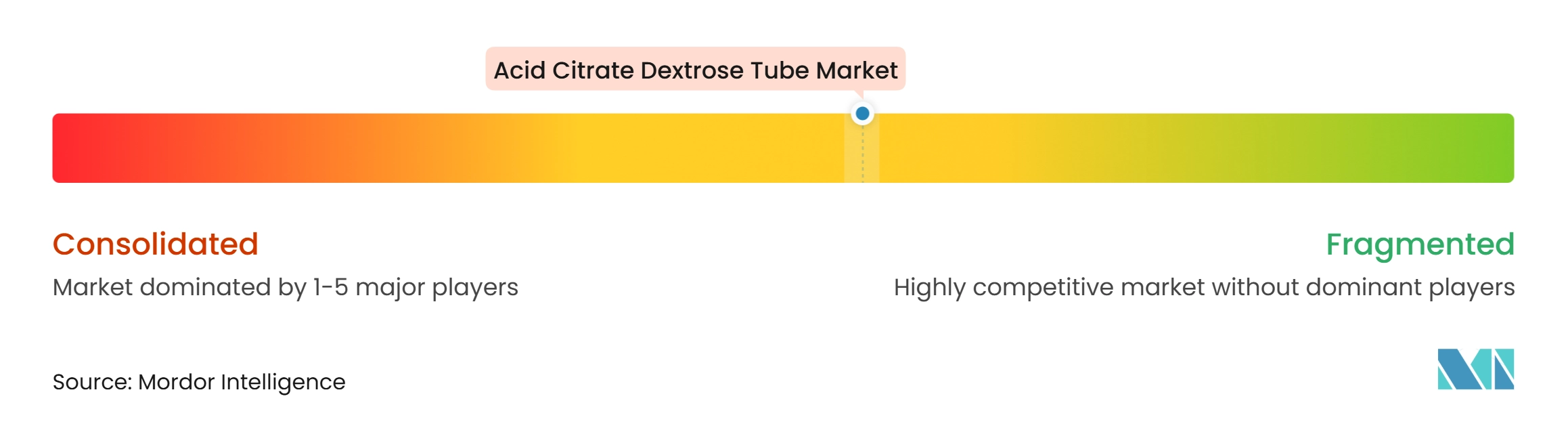
The acid citrate dextrose tube market is moderately concentrated in specialist applications and more fragmented in standard-format products. Becton, Dickinson and Company has the broadest commercial footprint through its Vacutainer franchise and domestic manufacturing network. BD announced ongoing investment in its Sumter facility, which produces Vacutainer products and other medical devices. SARSTEDT, Greiner Bio-One, and Terumo compete through regional distribution, established customer relationships, and product documentation. A 2025 Clinical Chemistry study found broad analytical interchangeability between BD and Greiner Bio-One tubes, which can make switching easier when a supplier faces a disruption.
Terumo has a strategic position in apheresis-adjacent workflows because its Spectra Optia system uses ACD-A in validated procedures. In November 2025, Terumo BCT and Santersus announced a collaboration to evaluate NucleoCapture with Spectra Optia for sepsis treatment. The collaboration can widen the clinical settings in which apheresis platforms are evaluated. In October 2026, Terumo BCT also deployed multiple Reveos systems at Ribeirão Preto Blood Center in Brazil. These moves emphasize automation and procedure integration rather than competition on tube chemistry alone.
Standard ACD-A and ACD-B chemistry is widely understood, so price competition is more pronounced in high-volume formats. Quality events can also affect competitive positioning because a hospital may qualify another supplier after a recall. FDA records of 2025 Greiner Bio-One recalls illustrate the wider category’s sensitivity to labeling and manufacturing controls. Manufacturers that support specialty apheresis and cell therapy workflows can compete on performance evidence instead of price alone.
Acid Citrate Dextrose Tube Industry Leaders
-
Becton, Dickinson and Company
-
Greiner Bio-One International GmbH
-
Terumo Corporation
-
SARSTEDT AG & Co. KG
-
Nipro Corporation
- *Disclaimer: Major Players sorted in no particular order
Acid Citrate Dextrose Tube Market Companies Covered in this Report
- Beckton Dickinson
- Cardinal Health
- CML Biotech (P) Ltd.
- FL Medical S.r.l.
- Greiner Bio One International
- Hindustan Syringes and Medical Devices Limited
- Hongyu Medical Group
- Improve Medical Instruments Co., Ltd.
- Jiangsu Kangjian Medical Apparatus Co., Ltd.
- Narang Medical
- Nipro
- QIAGEN
- Sarstedt
- Sekisui Medical Co., Ltd.
- Terumo
- Thermo Fisher Scientific
- Vitrex Medical A/S
- Weigao Group
- Zhejiang Gongdong Medical Technology Co., Ltd.
Recent Industry Developments in Acid Citrate Dextrose Tube Market
- October 2026: Terumo BCT and Ribeirão Preto Blood Center automate blood processing in Brazil. Terumo BCT deployed multiple Reveos Automated Blood Processing Systems at Ribeirão Preto Blood Center, Brazil's first public blood center to implement the platform, supporting roughly 120,000 annual transfusions and serving 5.5 million people in São Paulo. The transition targets full automation of whole-blood component preparation, increasing leukoreduction rates and improving operational efficiency as donation volumes decline against rising demand.
- November 2025: Terumo BCT and Santersus partner on NucleoCapture apheresis for sepsis. Under an exclusive collaboration, Santersus’ FDA Breakthrough Device-designated NucleoCapture, designed to remove neutrophil extracellular traps from plasma through Spectra Optia, will be evaluated in a pivotal study across the United States, United Kingdom, and Europe.
- October 2025: BD invests USD 90 million or more at Sumter, South Carolina, with USD 30 million more planned for fiscal 2026. The Sumter facility produces BD Vacutainer products and billions of medical devices annually, and BD plans to add high-speed manufacturing lines targeting next-generation collection technology.
Global Acid Citrate Dextrose Tube Market Report Scope
According to the report’s scope, an acid citrate dextrose (ACD) tube is a blood collection tube containing an anticoagulant solution of citric acid, sodium citrate, and dextrose. It prevents clotting and is commonly used for blood banking, genetic testing, and specialized laboratory tests.
The acid citrate dextrose tube market is segmented into product type, tube capacity, material, draw mechanism, application, end user, and geography. By product type, the market is segmented into ACD-A tubes, ACD-B tubes, and specialty ACD formulation tubes. By tube capacity, the market is segmented into 6.0 mL tubes, 8.5 mL Tubes, and 10.0 mL Tubes. By material, the market is segmented into Plastic PET tubes, polypropylene and double-wall tubes, and glass tubes. By draw mechanism, the market is segmented into plastic PET tubes, polypropylene and double-wall tubes, and glass tubes. By application, the market is segmented into blood banking and transfusion medicine, HLA typing and tissue matching, molecular and DNA testing, cell and gene therapy collection, and other applications. By end user, the market is segmented into hospitals, blood banks and transfusion centers, diagnostic and reference laboratories, and other end users. By geography, the market is segmented into North America, Europe, Asia-Pacific, the Middle East and Africa, and South America. The report also covers the estimated market sizes and trends for 17 countries across major regions globally. The report offers values (USD) for all the above segments.
Segmentation Overview
| ACD-A Tubes |
| ACD-B Tubes |
| Specialty ACD Formulation Tubes |
| 6.0 mL Tubes |
| 8.5 mL Tubes |
| 10.0 mL Tubes |
| Plastic PET Tubes |
| Polypropylene and Double-Wall Tubes |
| Glass Tubes |
| Vacuum-Draw Tubes |
| Manual-Fill Tubes |
| Multiple-Draw Tubes |
| Blood Banking and Transfusion Medicine |
| HLA Typing and Tissue Matching |
| Molecular and DNA Testing |
| Cell and Gene Therapy Collection |
| Other Applications |
| Hospitals |
| Blood Banks and Transfusion Centers |
| Diagnostic and Reference Laboratories |
| Other End Users |
| North America | United States |
| Canada | |
| Mexico | |
| Europe | Germany |
| United Kingdom | |
| France | |
| Italy | |
| Spain | |
| Rest of Europe | |
| Asia-Pacific | China |
| Japan | |
| India | |
| Australia | |
| South Korea | |
| Rest of Asia-Pacific | |
| Middle East and Africa | GCC |
| South Africa | |
| Rest of Middle East and Africa | |
| South America | Brazil |
| Argentina | |
| Rest of South America |
| By Product Type | ACD-A Tubes | |
| ACD-B Tubes | ||
| Specialty ACD Formulation Tubes | ||
| By Tube Capacity | 6.0 mL Tubes | |
| 8.5 mL Tubes | ||
| 10.0 mL Tubes | ||
| By Material | Plastic PET Tubes | |
| Polypropylene and Double-Wall Tubes | ||
| Glass Tubes | ||
| By Draw Mechanism | Vacuum-Draw Tubes | |
| Manual-Fill Tubes | ||
| Multiple-Draw Tubes | ||
| By Application | Blood Banking and Transfusion Medicine | |
| HLA Typing and Tissue Matching | ||
| Molecular and DNA Testing | ||
| Cell and Gene Therapy Collection | ||
| Other Applications | ||
| By End User | Hospitals | |
| Blood Banks and Transfusion Centers | ||
| Diagnostic and Reference Laboratories | ||
| Other End Users | ||
| Geography | North America | United States |
| Canada | ||
| Mexico | ||
| Europe | Germany | |
| United Kingdom | ||
| France | ||
| Italy | ||
| Spain | ||
| Rest of Europe | ||
| Asia-Pacific | China | |
| Japan | ||
| India | ||
| Australia | ||
| South Korea | ||
| Rest of Asia-Pacific | ||
| Middle East and Africa | GCC | |
| South Africa | ||
| Rest of Middle East and Africa | ||
| South America | Brazil | |
| Argentina | ||
| Rest of South America | ||
Key Questions Answered in the Report
What is the projected value of the Acid Citrate Dextrose Tube Market by 2032?
The Acid Citrate Dextrose Tube Market is projected to reach USD 637.0 million by 2032, from USD 486.5 million in 2027, at a 5.5% CAGR.
Why are ACD-A tubes important for cell therapy collection?
ACD-A is used in validated apheresis workflows and supports preservation of cells required for autologous cell and gene therapy collection.
Which acid citrate dextrose tube product type is growing fastest?
Specialty ACD Formulation Tubes are forecast to grow at a 7.65% CAGR through 2032, supported by automated apheresis and cell therapy requirements.
Which material is used most often for acid citrate dextrose tubes?
Plastic PET Tubes held 68.65% share in 2026 because they provide shatter resistance and fit high-throughput laboratory handling.
Which application is expected to grow fastest through 2032?
Cell and Gene Therapy Collection is projected to grow at an 8.99% CAGR through 2032, driven by expansion of specialized autologous collection workflows.
Which region will grow fastest in acid citrate dextrose tube demand?
Asia-Pacific is forecast to grow at a 6.54% CAGR through 2032, supported by blood-collection infrastructure and healthcare expansion.