
Acetazolamide Market Size and Share
Market Overview
| Study Period | 2021 - 2032 |
|---|---|
| Market Size (2027) | USD 405.04 Million |
| Market Size (2032) | USD 556.26 Million |
| Growth Rate (2027 - 2032) | 6.55 % |
| Fastest Growing Market | Asia-Pacific |
| Largest Market | North America |
| Market Concentration | Low |
Major Players *Disclaimer: Major Players sorted in no particular order Image © Mordor Intelligence. Reuse requires attribution under CC BY 4.0. | |
Acetazolamide Market Analysis by Mordor Intelligence
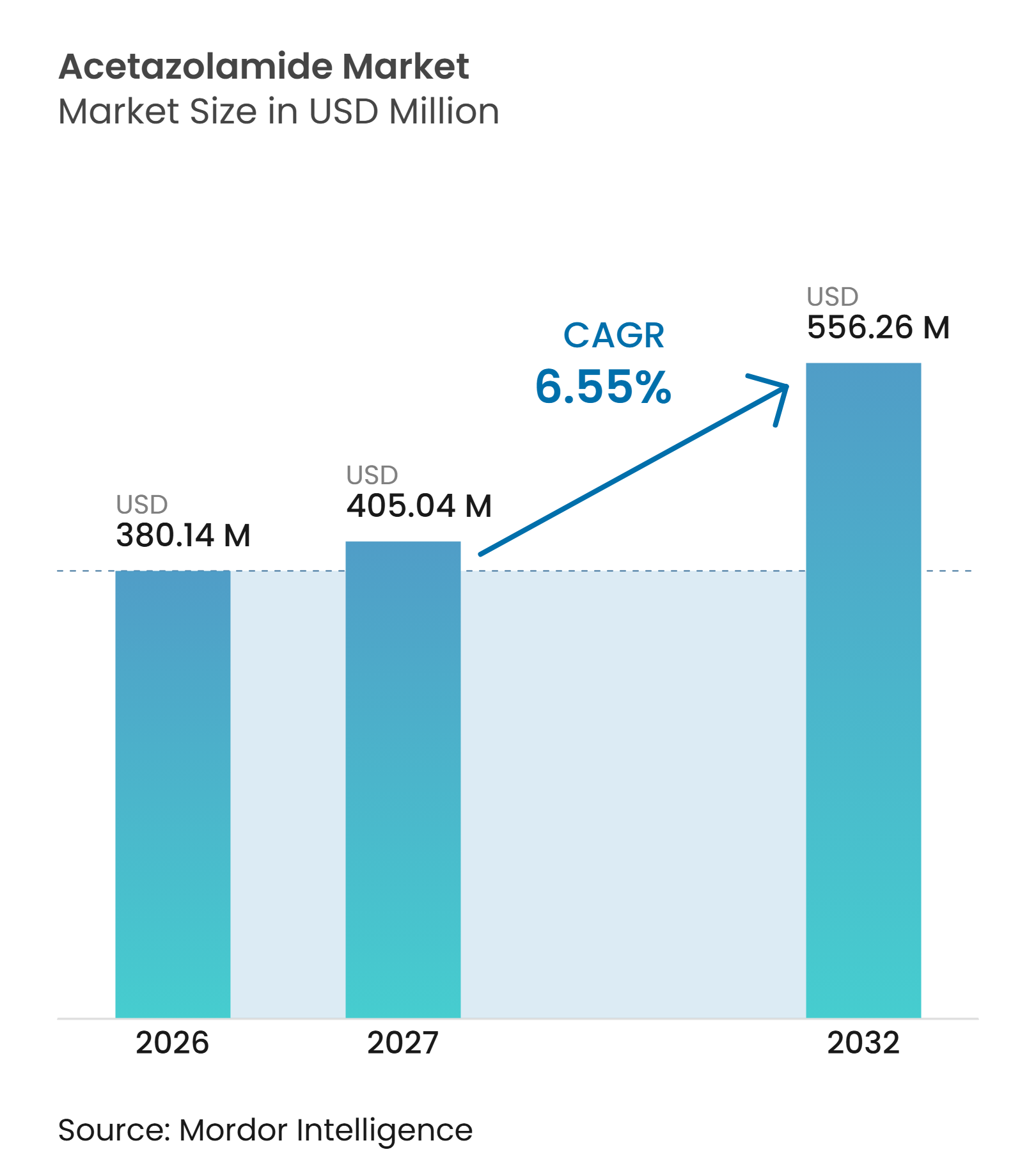
The Acetazolamide Market size was valued at USD 380.14 million in 2026 and is estimated to grow from USD 405.04 million in 2027 to reach USD 556.26 million by 2032, at a CAGR of 6.55% during the forecast period (2027-2032).
Demand is supported by use in glaucoma, acute mountain sickness, acute heart failure, epilepsy, and idiopathic intracranial hypertension. This diversified application base reduces the Acetazolamide market’s dependence on any single clinical setting and supports broader prescription demand. Generic products held 85.45% of sales in 2026, shifting commercial control toward manufacturers with reliable production capabilities and regulatory approvals. Teva’s withdrawal of Diamox IV approval in February 2025 increased reliance on generic injectable supply, while hospital shortages highlighted existing capacity constraints. The Acetazolamide market also benefits from acute-care evidence supporting intravenous use alongside loop diuretics in selected heart failure patients. However, topical alternatives limit long-term systemic use in routine glaucoma care, making reliable supply and targeted formulations critical to competitive positioning.
Key Report Takeaways
- By product type, generic acetazolamide held an 85.45% share in 2026 and is expected to grow at a CAGR of 7.77% through 2032.
- By dosage form, tablets held 63.55% share in 2026, while injectable powder for solution is projected to grow at an 8.99% CAGR through 2032.
- By strength, 250 mg held 48.67% share in 2026, while 500 mg is projected to grow at a 9.12% CAGR through 2032.
- By route of administration, oral delivery held 94.78% share in 2026, while intravenous administration is projected to grow at a 7.56% CAGR through 2032.
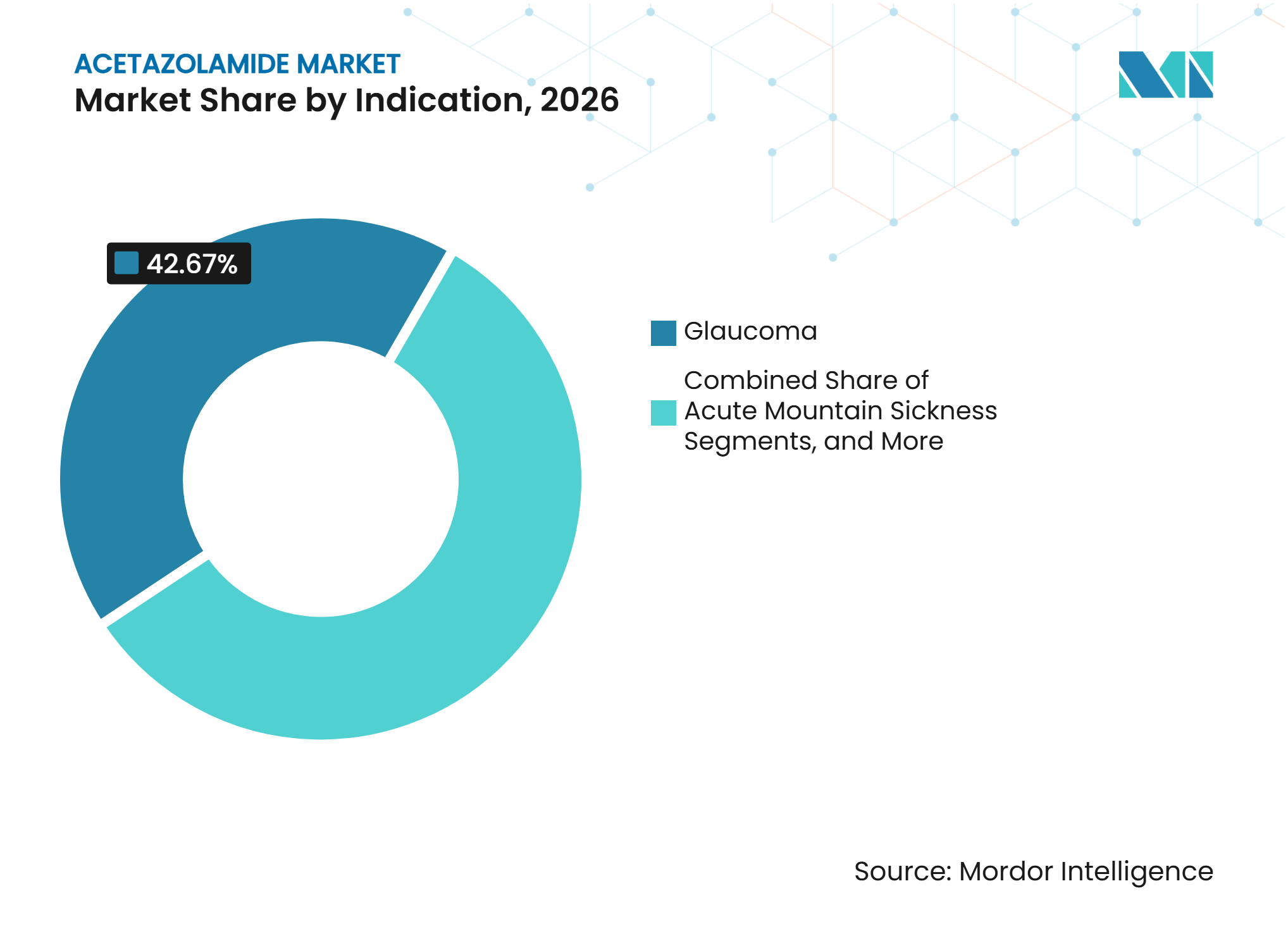
- By indication, glaucoma held 42.67% share in 2026, while acute heart failure and critical care applications are projected to grow at a 9.12% CAGR through 2032.
- By distribution channel, retail pharmacies held 44.56% share in 2026, while online pharmacies are projected to grow at an 8.34% CAGR through 2032.
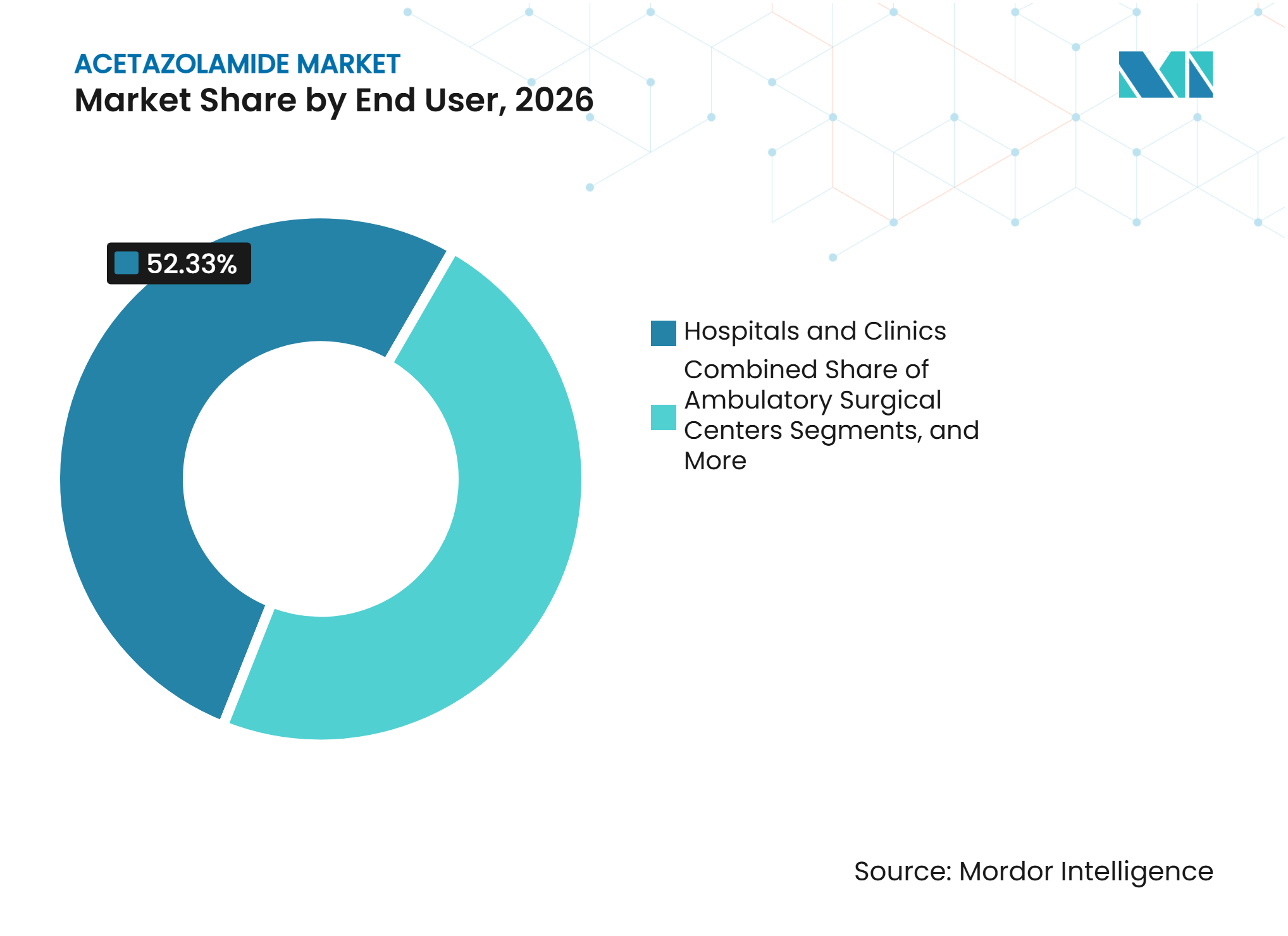
- By end user, hospitals and clinics held 52.33% share in 2026, while ophthalmology practices are projected to grow at a 6.98% CAGR through 2032.
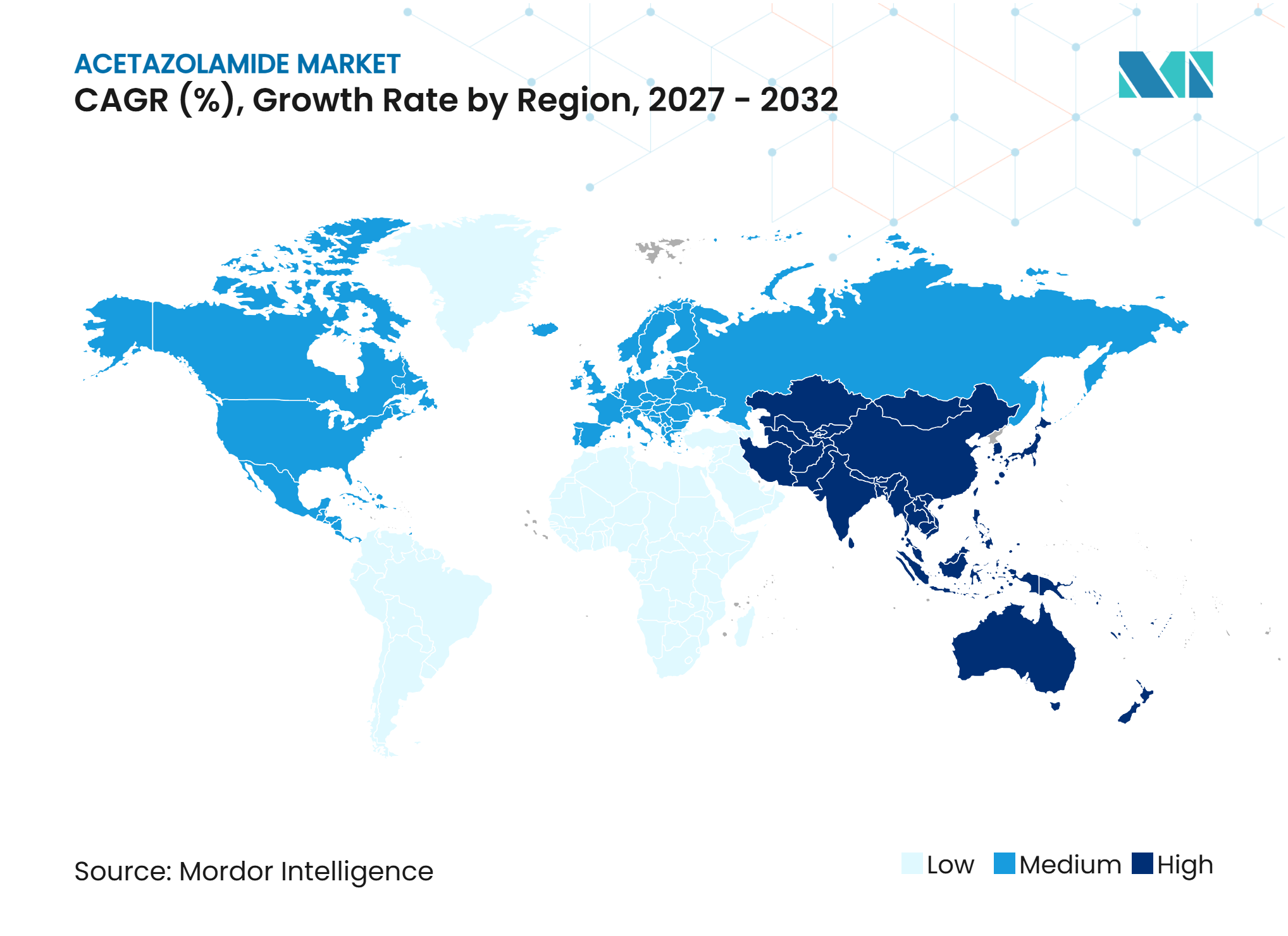
- By geography, North America held 39.65% share in 2026, while Asia-Pacific is projected to grow at an 8.44% CAGR through 2032.
Note: Market numbers in this report are based on Mordor Intelligence's proprietary estimation framework, which combines nine months of actuals with Q4 projections for base year 2026.
Market Trends and Insights
Drivers Impact Analysis of Acetazolamide Market*
| Driver | (~) % Impact on CAGR Forecast | Geographic Relevance | Impact Timeline |
|---|---|---|---|
| Rising global glaucoma burden | +1.5% | Global, with the highest burden in East Asia and North America | Long term (≥ 4 years) |
| Acute mountain sickness prophylaxis | +0.9% | Asia-Pacific, South America, and MEA high-altitude areas | Medium term (2-4 years) |
| Generic availability and regulatory approvals | +1.2% | Global, especially North America, Europe, and Asia-Pacific | Short term (≤ 2 years) |
| Acute heart failure and critical care use | +1.0% | North America and Europe | Medium term (2-4 years) |
| Pediatric and extended-release formulations | +0.6% | North America, Europe, and East Asia | Medium term (2-4 years) |
| High-altitude tourism and occupational exposure | +0.7% | Asia-Pacific, South America, and MEA | Medium term (2-4 years) |
| Source: Mordor Intelligence | |||
Rising Global Glaucoma Burden Anchors Systemic Acetazolamide Use
Open-angle glaucoma prevalence is expected to increase from 80.5 million people in 2024 to 186.6 million by 2060, including 28.9 million additional cases associated with rising myopia beyond demographic aging. The World Health Organization reports that glaucoma causes blindness or severe vision impairment in 7.7 million people worldwide.[1]This burden sustains demand for affordable therapies requiring rapid intraocular pressure reduction. Systemic acetazolamide remains relevant for inflammatory glaucoma with corneal edema and for limiting pressure spikes around cataract surgery, supporting demand in acute and refractory care despite the dominance of topical maintenance therapies.
Continued Use in Acute Mountain Sickness Prophylaxis and Occupational Exposure
Acetazolamide remains the only FDA-approved medicine for acute mountain sickness prophylaxis, supporting demand among travelers and high-altitude workers. A 2025 network meta-analysis found that 250 mg twice daily provided a five-day preventive window, with an odds ratio of 0.31 and a 95% confidence interval of 0.20 to 0.47. In a Phase III trial of 288 Chinese Han adults traveling to Lhasa, extended-release acetazolamide 500 mg daily reduced incidence to 36.9% from 55.9% with placebo and moderate or severe cases to 9.9% from 24.5%.[2] China approved a domestically developed sustained-release capsule for altitude sickness prevention in August 2026, strengthening recurring demand from construction crews, researchers, and military personnel.
Generic Availability and Regulatory Approvals Expand Patient Access
The Acetazolamide market is becoming more dependent on generic supply as branded products contract. The FDA withdrew approval of Teva’s Diamox IV new drug application, NDA 009388, for 500 mg per vial, effective February 14, 2025, while Aurobindo Pharma USA received final FDA approval in May 2025 for 125 mg and 250 mg acetazolamide tablets as AB-rated generic equivalents. Italy authorized Cetaziol 250 mg tablets for NTC S.r.l. in September 2026. FDA abbreviated new drug application requirements and European generic authorization procedures shape market entry and bioequivalence expectations, while additional approvals improve access but increase price pressure and the need for reliable production.
Acute Heart Failure Use and Formulation Innovation Support Hospital Demand
Clinical evidence is increasing interest in intravenous acetazolamide for acute decompensated heart failure. In a 2026 ADVOR trial analysis of 519 patients, acetazolamide reduced residual congestion risk by 46%, with an odds ratio of 0.54 and a 95% confidence interval of 0.36 to 0.82; residual congestion at discharge was associated with a 2.43-fold higher hazard of all-cause mortality or heart failure hospitalization.[3] The 2025 CHOICE-AHF trial reported cumulative urine output of 12,200 mL with acetazolamide, compared with 10,000 mL with dapagliflozin, over 72 hours. A biphasic tablet-in-tablet formulation reported 25.3% release at 0.5 hours and 86.5% at 10 hours, supporting opportunities for hospital supply and flexible oral dosing.
Restraints Impact Analysis of Acetazolamide Market*
| Restraint | (~) % Impact on CAGR Forecast | Geographic Relevance | Impact Timeline |
|---|---|---|---|
| Dose-related adverse effects and monitoring | -1.2% | Global, especially North America and the EU | Long term (≥ 4 years) |
| Topical and alternative therapy substitution | -1.4% | North America, Europe, and East Asia | Long term (≥ 4 years) |
| API supply concentration and shortage risk | -0.9% | Global, with disruption concentrated in North America and Europe | Short term (≤ 2 years) |
| Limited evidence for emerging applications | -0.6% | Global | Medium term (2-4 years) |
| Source: Mordor Intelligence | |||
Dose-Related Adverse Effects and Monitoring Requirements Limit Long-Term Use
Paresthesia, polyuria, gastrointestinal upset, metabolic acidosis, and kidney stone risk limit the long-term use of acetazolamide. Prescribers must monitor renal function, electrolytes, and acid-base balance, and the medicine is contraindicated in patients with creatinine clearance below 10 mL per minute. A 2025 retrospective cohort study of 1,147 glaucoma patients associates at least two years of acetazolamide use with reduced survival in multivariable analysis, with a hazard ratio of 1.152 and p=0.021. Rare but serious events, including Stevens-Johnson syndrome and aplastic anemia, further restrict chronic prescribing opportunities in the acetazolamide market.
Topical Substitution, Supply Concentration, and Evidence Gaps Constrain Adoption
Topical carbonic anhydrase inhibitors have displaced oral acetazolamide in much of long-term open-angle glaucoma management. A 2025 review reports that oral carbonic anhydrase inhibitors are largely reserved for acute pressure reduction and short preoperative use. Dexamethasone remains a guideline-recognized alternative for selected high-risk acute mountain sickness travelers. Manufacturing and quality issues account for 46% of new U.S. drug shortages, while limited evidence for emerging applications constrains standardized use beyond established indications.
*Our forecasts treat driver/restraint impacts as directional, not additive. The impact forecasts reflect baseline growth, mix effects, and variable interactions.
Acetazolamide Market Segment Analysis
By Product Type:
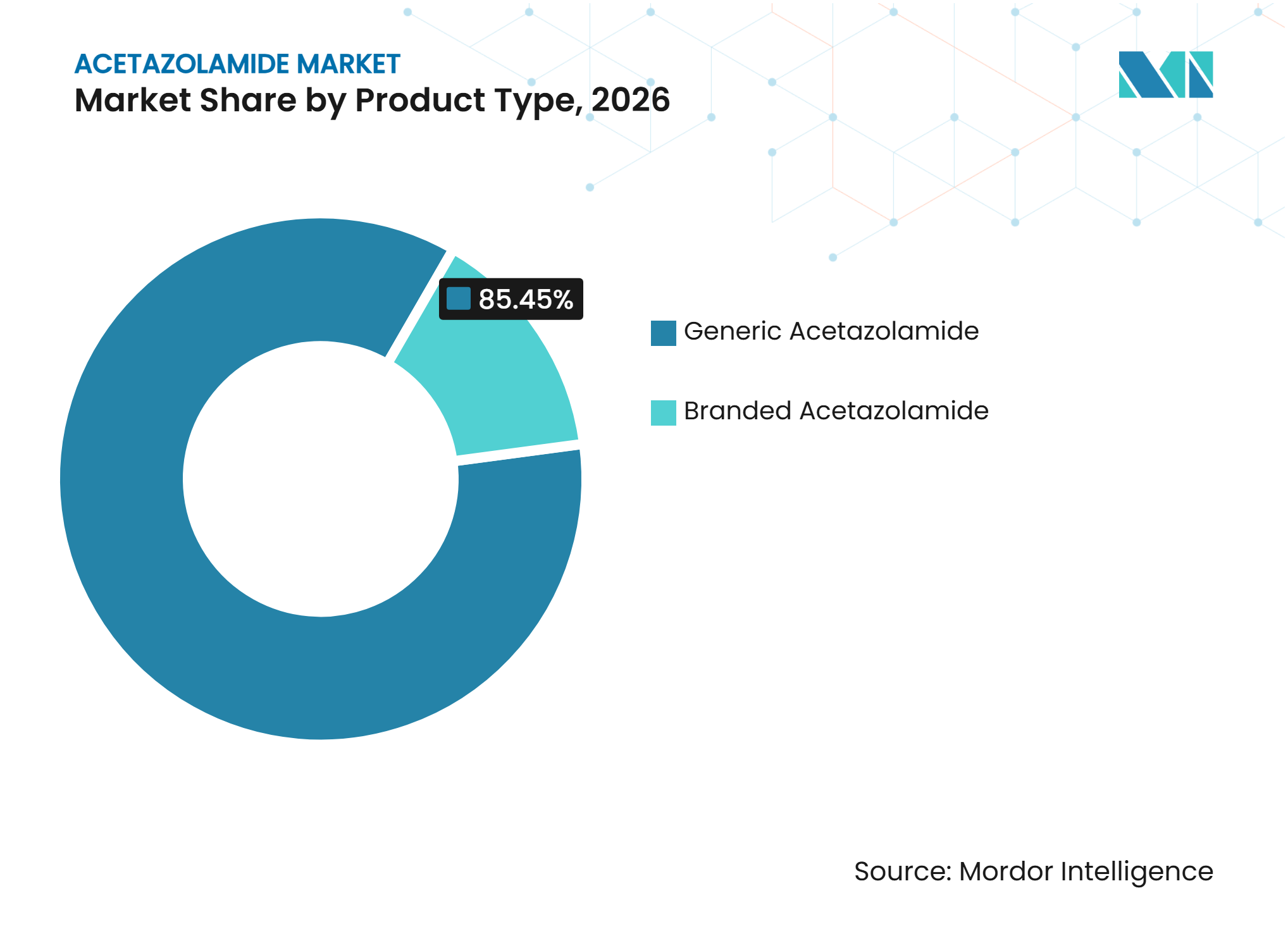
Generic Products Deepen Control as Branded Volume ContractsGeneric acetazolamide held 85.45% of acetazolamide sales in 2026, maintaining a clear commercial lead across major formulations and regions. The branded segment contracted following the FDA withdrawal of Teva's Diamox IV approval in February 2025. Aurobindo's May 2025 approval for 125 mg and 250 mg generic tablets increased the availability of AB-rated alternatives. Generic products improve access in markets where branded treatment has been difficult to afford.
Competition in the acetazolamide market centers on supply reliability, manufacturing quality, and regulatory compliance rather than brand promotion. Manufacturers must comply with current good manufacturing practice requirements, including FDA standards under 21 CFR Part 211 for US supply. Dependence on India and China for active pharmaceutical ingredient production creates geographic concentration risk. Approved injectable capacity and extended-release formulations enable generic manufacturers to compete beyond price.



By Dosage Form:
Tablets Lead While Injectable Powder Gains Hospital RelevanceTablets held 63.55% of acetazolamide sales in 2026, supported by their use in outpatient glaucoma, acute mountain sickness prophylaxis, and idiopathic intracranial hypertension treatment. Injectable powder for solution is projected to record an 8.99% CAGR through 2032. Oral tablets remain practical for recurring prescriptions because they are familiar to prescribers and do not require hospital administration.
Injectable treatment is used when immediate drug delivery is required, including in acute angle-closure glaucoma and acute heart failure. The ADVOR and CHOICE-AHF studies each used 500 mg of intravenous acetazolamide in acute-care protocols. Shortages among injectable suppliers in 2025 and 2026 indicate capacity pressure. Extended-release capsules, pediatric chewable tablets, and a 2026 biphasic formulation study demonstrating immediate- and sustained-release behavior highlight specialized formulation opportunities.
By Strength:
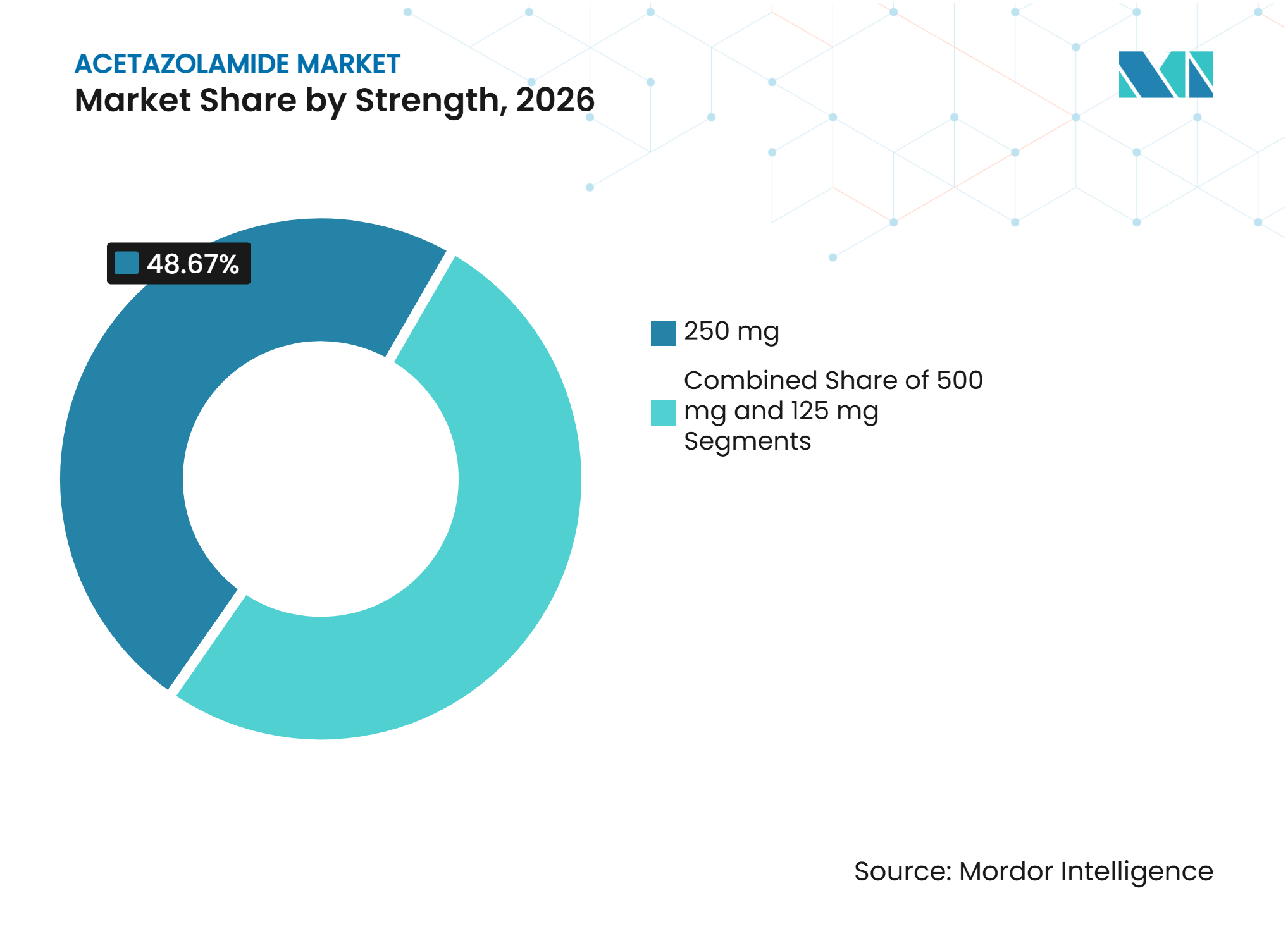
250 mg Leads While 500 mg Builds Acute-Care MomentumThe 250 mg strength held 48.67% of acetazolamide sales in 2026. It is used for glaucoma treatment, acute mountain sickness prophylaxis, and dose titration in idiopathic intracranial hypertension. The CDC identifies 250 mg twice daily as a treatment regimen for altitude illness. The 125 mg strength also supports prophylactic use where lower dosing is appropriate.
The 500 mg strength is projected to grow at a 9.12% CAGR through 2032. The ADVOR and CHOICE-AHF studies used 500 mg of intravenous acetazolamide daily in acute heart failure. In an acute mountain sickness trial, 500 mg of extended-release acetazolamide once daily reduced moderate or severe illness to 9.9%, compared with 24.5% with placebo. Supply shortages and China's approval of a 500 mg sustained-release formulation reinforce the opportunity for differentiated oral products.

By Route of Administration:
Oral Delivery Dominates While Intravenous Use ExpandsOral delivery held 94.78% of acetazolamide sales in 2026, reflecting its use in outpatient treatment for glaucoma, acute mountain sickness, epilepsy, and idiopathic intracranial hypertension. Tablets and extended-release capsules allow patients to follow physician-directed regimens outside hospital settings. Oral therapy is also well suited to planned prophylaxis before high-altitude exposure.
Intravenous administration is projected to grow at a 7.56% CAGR through 2032. It is used in acute angle-closure glaucoma and hospital heart failure protocols, where rapid delivery is important. The ADVOR and CHOICE-AHF studies used 500 mg of daily intravenous therapy in acute heart failure care. Additional qualified manufacturing lines could improve resilience for hospital purchasers facing recurring backorders.
By Indication:
Glaucoma Anchors Volume While Acute Heart Failure ExpandsGlaucoma held 42.67% of acetazolamide sales by indication in 2026. Acetazolamide remains important for acute angle-closure attacks and perioperative intraocular pressure management. It is not generally the preferred long-term treatment for open-angle glaucoma because topical options reduce systemic exposure. However, the growing disease burden and the association between myopia and future open-angle glaucoma prevalence continue to support demand.
Acute heart failure and critical care applications are projected to grow at a 9.12% CAGR through 2032. The ADVOR analysis found the strongest decongestion effect where residual congestion carried adverse clinical implications. Plasma bicarbonate levels of 27 mmol/L or higher may identify patients who could benefit more from decongestive treatment. Acute mountain sickness, idiopathic intracranial hypertension, and specialized neurological applications also support demand, including full seizure remission in 50% of patients with drug-resistant SLC6A1-related neurodevelopmental disorder receiving add-on acetazolamide.
By Distribution Channel:
Retail Leads While Online Pharmacies ExpandRetail pharmacies held 44.56% of acetazolamide sales in 2026. Their role reflects recurring dispensing of oral therapies for glaucoma, idiopathic intracranial hypertension, and epilepsy. Retail access is particularly relevant for acute mountain sickness prescriptions issued before travel. Price and reimbursement changes can affect retailers' ability to maintain consistent supply.
Online pharmacies are projected to grow at an 8.34% CAGR through 2032. Digital channels are suited to maintenance oral formulations that do not require cold-chain logistics. Hospital pharmacies remain the primary channel for injectable acetazolamide and must manage shortages through controlled allocation. A 2026 Northern Health notice reported 10 weeks of reserve supply for 500 mg vials, with resupply timing differing between the two Canadian manufacturers.
By End User:
Hospitals Lead While Ophthalmology Practices Gain RelevanceHospitals and clinics held 52.33% of acetazolamide sales in 2026. They are the primary point of care for injectable treatment in acute glaucoma, acute heart failure, and certain epilepsy cases. Institutional prescribers also use oral formulations for inpatient maintenance treatment. Hospital procurement groups prioritize product continuity because substitutions may not be straightforward in acute scenarios.
Ophthalmology practices are projected to grow at a 6.98% CAGR through 2032. Their demand is linked to glaucoma consultations and cataract procedures requiring perioperative pressure management. A 2025 review reported postoperative intraocular pressure of 22.11 mmHg with oral acetazolamide versus 36.36 mmHg without treatment. A 2025 case report also described the use of 500 mg of oral extended-release acetazolamide before prolonged steep Trendelenburg positioning, with postoperative intraocular pressure of 11 mmHg.
Geography Analysis
North America
North America holds 39.65% of the acetazolamide market share in 2026, supported by established glaucoma care, active generic approvals, and hospital procurement networks. Supply pressure for injectable acetazolamide has increased the strategic value of qualified suppliers. The region continues to prioritize supply continuity for sterile injectable medicines. The American College of Physicians reported that manufacturing and quality issues caused 46% of new U.S. drug shortages, highlighting structural supply risks. Canada also faces continued disruption, with a Northern Health notice listing different expected resupply dates for Marcan and SteriMax products. These conditions influence hospital procurement and supplier qualification decisions.
Asia-Pacific
Asia-Pacific is projected to grow at an 8.44% CAGR through 2032, driven by altitude medicine, manufacturing capacity, and myopia-linked glaucoma demand. China approved its first domestically developed sustained-release acetazolamide capsules for altitude sickness prevention in August 2026. This approval strengthens the region’s locally developed formulation pipeline. Phase III evidence supporting the product reported an acute mountain sickness incidence of 36.9%, compared with 55.9% for placebo. India remains an important production base for generic medicines serving export markets. Quality systems and active pharmaceutical ingredient sourcing therefore remain key regional business considerations.
Europe, Middle East and Africa, and South America
Europe, the Middle East and Africa, and South America show distinct demand patterns shaped by reimbursement, altitude exposure, and healthcare capacity. Italy authorized Cetaziol 250 mg tablets in September 2026, adding a locally registered generic option. This development expands the availability of generic acetazolamide in the Italian market. In the United Kingdom, a June 2025 price concession of GBP 75.25 (USD 98.99) for a 112-pack of 250 mg tablets followed a GBP 9.71 (USD 12.77) price in April 2025. This change reflects the impact of supply conditions on dispensing economics. European Medicines Agency procedures and national reimbursement policies remain important considerations in European procurement.
Competitive Landscape
Market Concentration
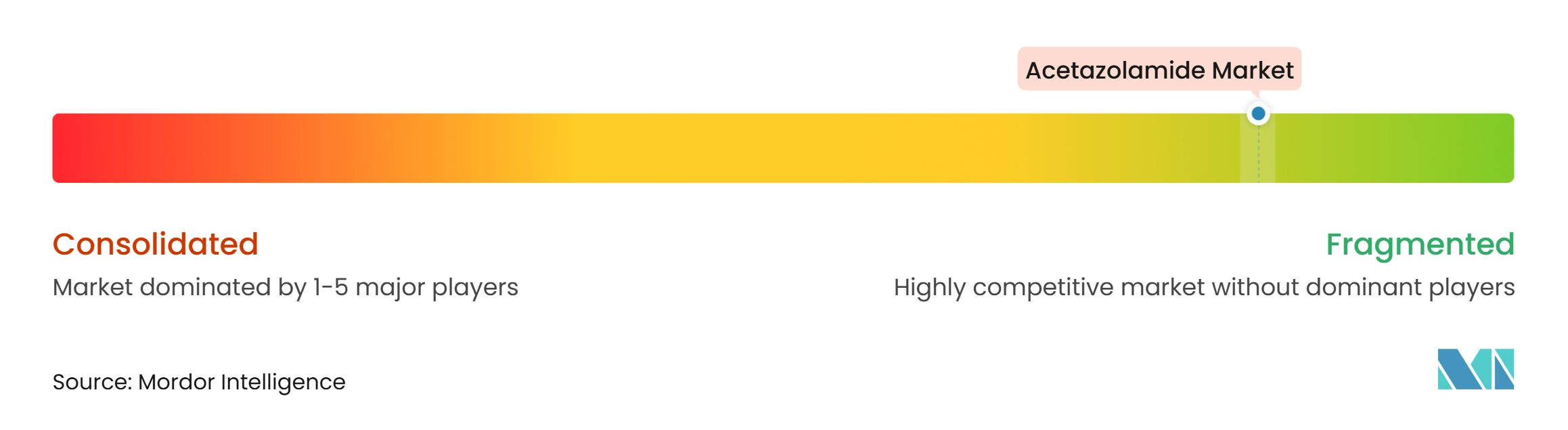
The Acetazolamide market is fragmented, with no consolidated market share data available for leading companies. Indian generic manufacturers compete through scale, export capabilities, and cost-efficient production. North American specialty generic companies leverage hospital relationships, product availability, and regulatory compliance, while European producers serve hospital systems through locally registered generic products. The withdrawal of branded Diamox IV increased the responsibility of generic manufacturers to ensure supply continuity. Companies with strong quality assurance and reliable sterile injectable production capabilities hold a competitive advantage.
Aurobindo Pharma USA expanded its oral portfolio after receiving FDA approval for acetazolamide tablets in May 2025. NTC S.r.l. received Italian authorization for Cetaziol 250 mg tablets in September 2026, with Fine Foods & Pharmaceuticals N.T.M. S.p.A. serving as the manufacturer. ANI Pharmaceuticals reported Q3 2026 generics net revenue of USD 104.5 million, up 10.7% from Q3 2025, and launched 16 generic products year to date. These developments demonstrate that approved oral portfolios, geographic registrations, and operational execution can strengthen market positioning.
White-space opportunities remain in reliable 500 mg injectable supply and pediatric oral products designed for weight-based dosing. Hospital pharmacies have started using 3D printing for individualized pediatric acetazolamide chewable tablets, highlighting the need for suitable commercial formulations. A 2026 research study on a biphasic tablet-in-tablet product also indicates potential for once-daily coverage with rapid initial release. Manufacturers can differentiate through sterile capacity, extended-release development, and robust quality systems, while success will depend on regulatory approval, clinical usability, and reliable product access rather than a dominant brand.
Acetazolamide Industry Leaders
-
Viatris Inc.
-
Teva Pharmaceutical Industries Ltd
-
Sun Pharmaceutical Industries Limited
-
Zydus Lifesciences Limited
-
Lupin Limited
- *Disclaimer: Major Players sorted in no particular order
Acetazolamide Market Companies Covered in this Report
- Ajanta Pharma Limited
- Alembic Pharmaceuticals
- ANI Pharmaceuticals Inc.
- Apotex
- Aurobindo Pharma
- Cipla
- Dr. Reddy’s Laboratories
- Emcure Pharmaceuticals Limited
- Hikma Pharmaceuticals
- Lupin
- Novitium Pharma LLC
- Polpharma SA
- Sandoz Group
- Strides Pharma Science
- Sun Pharmaceuticals Industries
- Teva Pharmaceutical Industries
- Torrent Pharmaceuticals Limited
- Viatris
- Zydus Lifesciences Limited
Recent Industry Developments in Acetazolamide Market
- September 2026: Italy’s AIFA authorized Cetaziol, acetazolamide 250 mg tablets, for NTC S.r.l., manufactured by Fine Foods & Pharmaceuticals N.T.M. S.p.A. in Brembate, Italy. The five-year authorization expanded the registered generic acetazolamide product landscape in Italy.
- August 2026: China’s NMPA approved the country’s first domestically developed sustained-release acetazolamide capsules for altitude sickness prevention, developed at the People’s Hospital of Xizang. Phase III trials demonstrated a 14.6% absolute reduction in moderate-to-severe acute mountain sickness incidence compared with placebo.
- July 2026: Northern Health in British Columbia issued a provincial shortage notice for acetazolamide 500 mg injectable vials, as Marcan and SteriMax experienced supply backorders. Marcan supply was expected by the end of July 2026, while SteriMax supply was anticipated in January 2027, leaving hospitals with 10 weeks of reserve inventory.
- May 2025: Aurobindo Pharma USA received final FDA approval for Acetazolamide Tablets USP 125 mg and 250 mg as AB-rated generic equivalents to Diamox Tablets. The approval expanded competition in the U.S. oral acetazolamide generics market.
Global Acetazolamide Market Report Scope
As per the scope of the report, Acetazolamide is a prescription medication belonging to the carbonic anhydrase inhibitor class, which works by inhibiting the carbonic anhydrase enzyme responsible for regulating carbon dioxide and bicarbonate conversion in the body. This mechanism reduces bicarbonate reabsorption in the kidneys, increases urinary bicarbonate and sodium excretion, and decreases the production of certain body fluids, including aqueous humor in the eyes and cerebrospinal fluid.
The acetazolamide market is segmented by product type, dosage form, strength, route of administration, indication, distribution channel, end user, and geography. By product type, the market is segmented into branded acetazolamide and generic acetazolamide. By dosage form, the market includes tablets, extended-release capsules, and injectable powder for solution. By strength, the market is categorized into 125 mg, 250 mg, and 500 mg. By route of administration, the market is segmented into oral and intravenous formulations. By indication, the market includes glaucoma, acute mountain sickness, epilepsy, edema associated with congestive heart failure, drug-induced edema, idiopathic intracranial hypertension, acute heart failure and critical care applications, and other clinical applications. By distribution channel, the market is segmented into hospital pharmacies, retail pharmacies, online pharmacies, and specialty pharmacies. By end user, the market includes hospitals and clinics, ambulatory surgical centers, ophthalmology practices, neurology practices, home care settings, and other end users. By geography, the market is analyzed across North America, Europe, Asia-Pacific, the Middle East and Africa, and South America. The report also covers the estimated market sizes and trends for 17 countries across major regions globally. The report offers market sizes and forecasts in terms of value (USD) for the above segments.
Segmentation Overview
| Branded Acetazolamide |
| Generic Acetazolamide |
| Tablets |
| Extended-Release Capsules |
| Injectable Powder for Solution |
| 125 mg |
| 250 mg |
| 500 mg |
| Oral |
| Intravenous |
| Glaucoma |
| Acute Mountain Sickness |
| Epilepsy |
| Edema Associated With Congestive Heart Failure |
| Drug-Induced Edema |
| Idiopathic Intracranial Hypertension |
| Acute Heart Failure and Critical Care Applications |
| Other Clinical Applications |
| Hospital Pharmacies |
| Retail Pharmacies |
| Online Pharmacies |
| Specialty Pharmacies |
| Hospitals and Clinics |
| Ambulatory Surgical Centers |
| Ophthalmology Practices |
| Neurology Practices |
| Homecare Settings |
| Other End Users |
| North America | United States |
| Canada | |
| Mexico | |
| Europe | Germany |
| United Kingdom | |
| France | |
| Italy | |
| Spain | |
| Rest of Europe | |
| Asia-Pacific | China |
| India | |
| Japan | |
| Australia | |
| South Korea | |
| Rest of Asia-Pacific | |
| Middle East and Africa | GCC |
| South Africa | |
| Rest of Middle East and Africa | |
| South America | Brazil |
| Argentina | |
| Rest of South America |
| By Product Type | Branded Acetazolamide | |
| Generic Acetazolamide | ||
| By Dosage Form | Tablets | |
| Extended-Release Capsules | ||
| Injectable Powder for Solution | ||
| By Strength | 125 mg | |
| 250 mg | ||
| 500 mg | ||
| By Route of Administration | Oral | |
| Intravenous | ||
| By Indication | Glaucoma | |
| Acute Mountain Sickness | ||
| Epilepsy | ||
| Edema Associated With Congestive Heart Failure | ||
| Drug-Induced Edema | ||
| Idiopathic Intracranial Hypertension | ||
| Acute Heart Failure and Critical Care Applications | ||
| Other Clinical Applications | ||
| By Distribution Channel | Hospital Pharmacies | |
| Retail Pharmacies | ||
| Online Pharmacies | ||
| Specialty Pharmacies | ||
| By End User | Hospitals and Clinics | |
| Ambulatory Surgical Centers | ||
| Ophthalmology Practices | ||
| Neurology Practices | ||
| Homecare Settings | ||
| Other End Users | ||
| By Geography | North America | United States |
| Canada | ||
| Mexico | ||
| Europe | Germany | |
| United Kingdom | ||
| France | ||
| Italy | ||
| Spain | ||
| Rest of Europe | ||
| Asia-Pacific | China | |
| India | ||
| Japan | ||
| Australia | ||
| South Korea | ||
| Rest of Asia-Pacific | ||
| Middle East and Africa | GCC | |
| South Africa | ||
| Rest of Middle East and Africa | ||
| South America | Brazil | |
| Argentina | ||
| Rest of South America | ||
Key Questions Answered in the Report
What is the projected value of the acetazolamide market by 2032?
The acetazolamide market is projected to reach USD 556.25 million by 2032, from USD 405.04 million in 2027, at a 6.55% CAGR. Growth is supported by demand in glaucoma, altitude illness prevention, acute heart failure, epilepsy, and idiopathic intracranial hypertension. The combination of outpatient and acute-care uses gives suppliers several routes to serve clinical demand.
Which acetazolamide product type has the largest share?
Generic acetazolamide held 85.45% share in 2026, reflecting broad generic availability and reduced branded presence.
Why is injectable acetazolamide growing faster than tablets?
Injectable powder for solution is projected to grow at an 8.99% CAGR because of hospital demand in acute heart failure and acute glaucoma care.
Which medical use is growing fastest for acetazolamide?
Acute heart failure and critical care applications are projected to grow at a 9.12% CAGR through 2032, supported by the ADVOR and CHOICE-AHF findings.
Which region is expected to record the strongest growth?
Asia-Pacific is projected to grow at an 8.44% CAGR through 2032, supported by altitude medicine, formulation approvals, and glaucoma demand.
What limits longer-term use of acetazolamide?
Systemic adverse effects, monitoring needs, topical glaucoma alternatives, and supply interruptions limit extended treatment use. These factors favor selective, short-course treatment in many routine care settings.