
Aarskog-Scott Syndrome Treatment Market Size and Share
Market Overview
| Study Period | 2021 - 2032 |
|---|---|
| Market Size (2027) | USD 2.75 Billion |
| Market Size (2032) | USD 3.71 Billion |
| Growth Rate (2027 - 2032) | 6.20 % |
| Fastest Growing Market | Asia-Pacific |
| Largest Market | North America |
| Market Concentration | Medium |
Major Players *Disclaimer: Major Players sorted in no particular order Image © Mordor Intelligence. Reuse requires attribution under CC BY 4.0. | |
Aarskog-Scott Syndrome Treatment Market Analysis by Mordor Intelligence
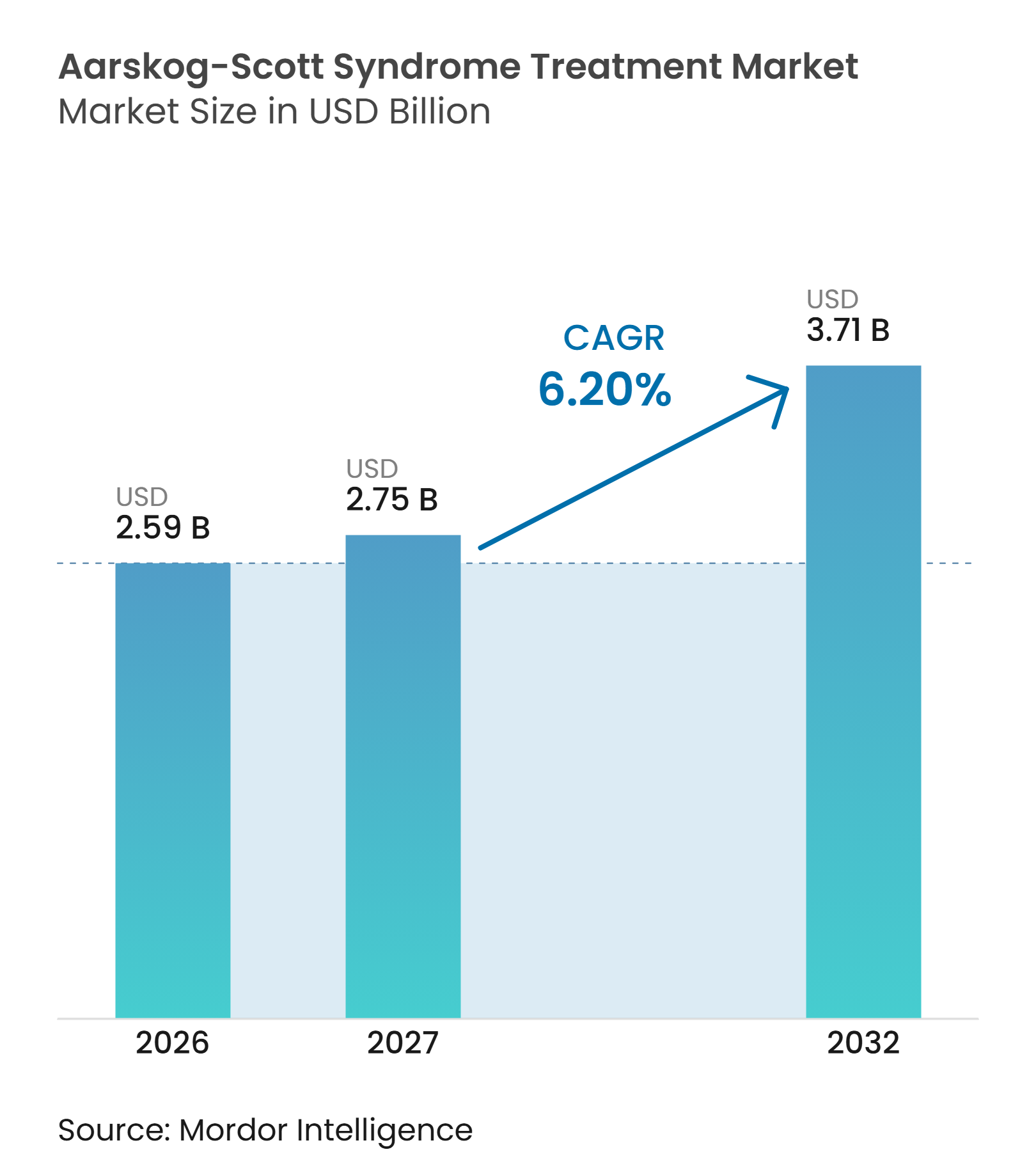
The Aarskog-Scott Syndrome Treatment Market size was valued at USD 2.59 billion in 2026 and is estimated to grow from USD 2.75 billion in 2027 to reach USD 3.71 billion by 2032, at a CAGR of 6.20% during the forecast period (2027-2032).
The Aarskog-Scott syndrome treatment market encompasses surgery, growth hormone treatment, orthopedic care, dental care, and developmental support for FGD1-related faciogenital dysplasia. Market growth depends on earlier diagnosis and improved access to specialist care, as no approved therapy is specifically designed for this condition. The market benefits from coordinated care at pediatric centers across endocrinology, surgery, genetics, rehabilitation, and dental specialties. Improved patient identification can expand service reach by connecting families with available care options. Competitive activity focuses on supportive-care products and service delivery, while diagnostic under-recognition and limited clinical evidence remain key constraints.
Key Report Takeaways
- By treatment type, surgical interventions held 34.67% of the Aarskog-Scott syndrome treatment market share in 2026, while physical and occupational therapy is forecast to grow at a 7.34% CAGR through 2032.
- By manifestation treated, craniofacial manifestations accounted for 29.88% of the Aarskog-Scott syndrome treatment market size in 2026, while growth and endocrine manifestations are projected to expand at an 8.44% CAGR through 2032.
- By patient age group, pediatric patients held 44.56% revenue share in 2026, while adolescent patients are forecast to grow at a 9.45% CAGR through 2032.
- By end user, hospitals held 36.67% revenue share in 2026, while pediatric and orthopedic centers are projected to expand at a 7.55% CAGR through 2032.
- By geography, North America held 41.23% revenue share in 2026, while Asia-Pacific is forecast to grow at an 8.78% CAGR through 2032.
Note: Market numbers in this report are based on Mordor Intelligence's proprietary estimation framework, which combines nine months of actuals with Q4 projections for base year 2026.
Market Trends and Insights
Drivers Impact Analysis of Aarskog-Scott Syndrome Treatment Market*
| Driver | (~) % Impact on CAGR Forecast | Geographic Relevance | Impact Timeline |
|---|---|---|---|
| Increasing molecular diagnosis of FGD1-related cases | +1.2% | Global, with highest concentration in North America, Europe, and East Asia | Medium term (2-4 years) |
| Expansion of pediatric endocrinology access | +0.9% | APAC core, spillover to MEA and South America | Long term (≥ 4 years) |
| Preference for weekly growth hormone administration | +1.0% | North America and Europe, early stage in APAC | Short term (≤ 2 years) |
| Rare-disease referral-network maturation | +0.7% | North America and Europe | Medium term (2-4 years) |
| Genotype-phenotype registries creating treatable patient visibility | +0.5% | Global | Long term (≥ 4 years) |
| Multidisciplinary management of lifelong manifestations | +0.8% | North America, Europe, and East Asia | Medium term (2-4 years) |
| Source: Mordor Intelligence | |||
Increasing Molecular Diagnosis of FGD1-Related Cases
FGD1 sequence analysis identifies 90% of pathogenic variants, while targeted deletion and duplication analysis identifies the remaining 10%, enabling more definitive confirmation of Aarskog-Scott syndrome. The American Academy of Pediatrics recommends genome sequencing as a first-tier test for children with global developmental delay or intellectual disability due to its higher diagnostic yield and cost-effectiveness. A 2026 study of 111 patients identified 62 distinct FGD1 variants, of which 11% occurred de novo; therefore, a negative family history does not rule out the condition. Confirmed prevalence is estimated at 1 in 25,000, although mild cases may remain undiagnosed, and genome testing can differentiate the condition from Noonan syndrome and Robinow-Silverman-Smith syndrome.[1]
Expansion of Pediatric Endocrinology Access
Limited access to pediatric endocrinologists has restricted growth hormone assessment and treatment in many countries. Since 2022, the Temasek Foundation and KK Women’s and Children’s Hospital Genomics for Kids in ASEAN program has provided genetic testing to 510 families across Singapore, Malaysia, the Philippines, and Vietnam. The program reported a 52% diagnostic success rate, compared with the global benchmark of 25% to 40%, and reduced the average time to diagnosis from 7.6 years to weeks. Merck KGaA reported 16.4% organic sales growth for Saizen in Q3 2026 and introduced Growzen Connect in South Korea, while telehealth, registries, and insurance coverage can improve specialist follow-up.
Preference for Weekly Growth Hormone Administration
Once-weekly growth hormone products can reduce the long-term treatment burden for children requiring therapy. The FDA approved SKYTROFA for adults with growth hormone deficiency in July 2025 after the foresiGHt study reported improvements in trunk fat reduction and total lean mass at 38 weeks. In February 2026, the FDA approved Sogroya for pediatric patients with idiopathic short stature, small for gestational age without catch-up growth, and Noonan syndrome, based on Phase 3 REAL8 results showing noninferiority to daily somatropin and superiority in Noonan syndrome. These broader indications provide additional evidence-supported weekly options, while Ascendis expects full enrollment in its HighLiGHts Phase 3 basket trial in the first half of 2027.
Rare-Disease Referral-Network Maturation
Referral networks are increasingly important to the Aarskog-Scott syndrome treatment market, as patients may require coordinated assessment across multiple specialties. The FDA’s October 2026 Fit-for-Purpose Rare Disease Framework Initiative supports a regulatory approach that reflects rare-disease development requirements and incorporates patient experience data. Texas Children’s Hospital in Austin described its craniofacial surgery program as a global center for Treacher Collins syndrome care in 2025, demonstrating the value of specialist centers for complex pediatric conditions. Similar referral models, supported by registries and genotype-phenotype programs, can improve access to genetics services and supportive treatment for undiagnosed adults and children.
Restraints Impact Analysis of Aarskog-Scott Syndrome Treatment Market*
| Restraint | (~) % Impact on CAGR Forecast | Geographic Relevance | Impact Timeline |
|---|---|---|---|
| No disease-specific approved therapy | -1.5% | Global | Long term (≥ 4 years) |
| Unknown true prevalence and diagnostic under-recognition | -1.2% | Global, most acute in MEA and South America | Long term (≥ 4 years) |
| Limited aarskog-scott-specific clinical evidence | -1.0% | Global | Medium term (2-4 years) |
| Catch-up growth reducing persistent growth-hormone demand | -0.8% | North America and Europe | Short term (≤ 2 years) |
| Source: Mordor Intelligence | |||
No Disease-Specific Approved Therapy
No regulatory agency has approved a pharmacotherapy specifically for Aarskog-Scott syndrome. GeneReviews notes that no clinical practice guidelines have been established, which may complicate reimbursement when patients do not meet eligibility criteria for available treatments, including growth hormone therapy. A 2025 report found growth hormone concentrations within or slightly below the normal range, and five genetically confirmed patients showed only modest correction with recombinant growth hormone treatment.[2] The FDA’s Plausible Mechanism Framework may support rare-disease products with a clear molecular rationale; however, no Aarskog-Scott syndrome-specific program has been identified in clinical development, limiting the market’s near-term potential.
Catch-Up Growth Reducing Persistent Growth-Hormone Demand
Some patients experience spontaneous catch-up growth during childhood and puberty, potentially reducing the duration of growth hormone therapy. A 2026 cohort study of 111 patients reported a mean adult height of 164 cm, with growth hormone used in 11 patients. The authors recommended delaying treatment for patients with mild-to-moderate short stature to allow for spontaneous improvement, while GeneReviews also advises delayed treatment in younger patients without documented growth hormone deficiency.[3] This pattern positions the market as a lower-volume growth hormone opportunity than conditions involving persistent growth failure.
*Our forecasts treat driver/restraint impacts as directional, not additive. The impact forecasts reflect baseline growth, mix effects, and variable interactions.
Aarskog-Scott Syndrome Treatment Market Segment Analysis
By Treatment Type:
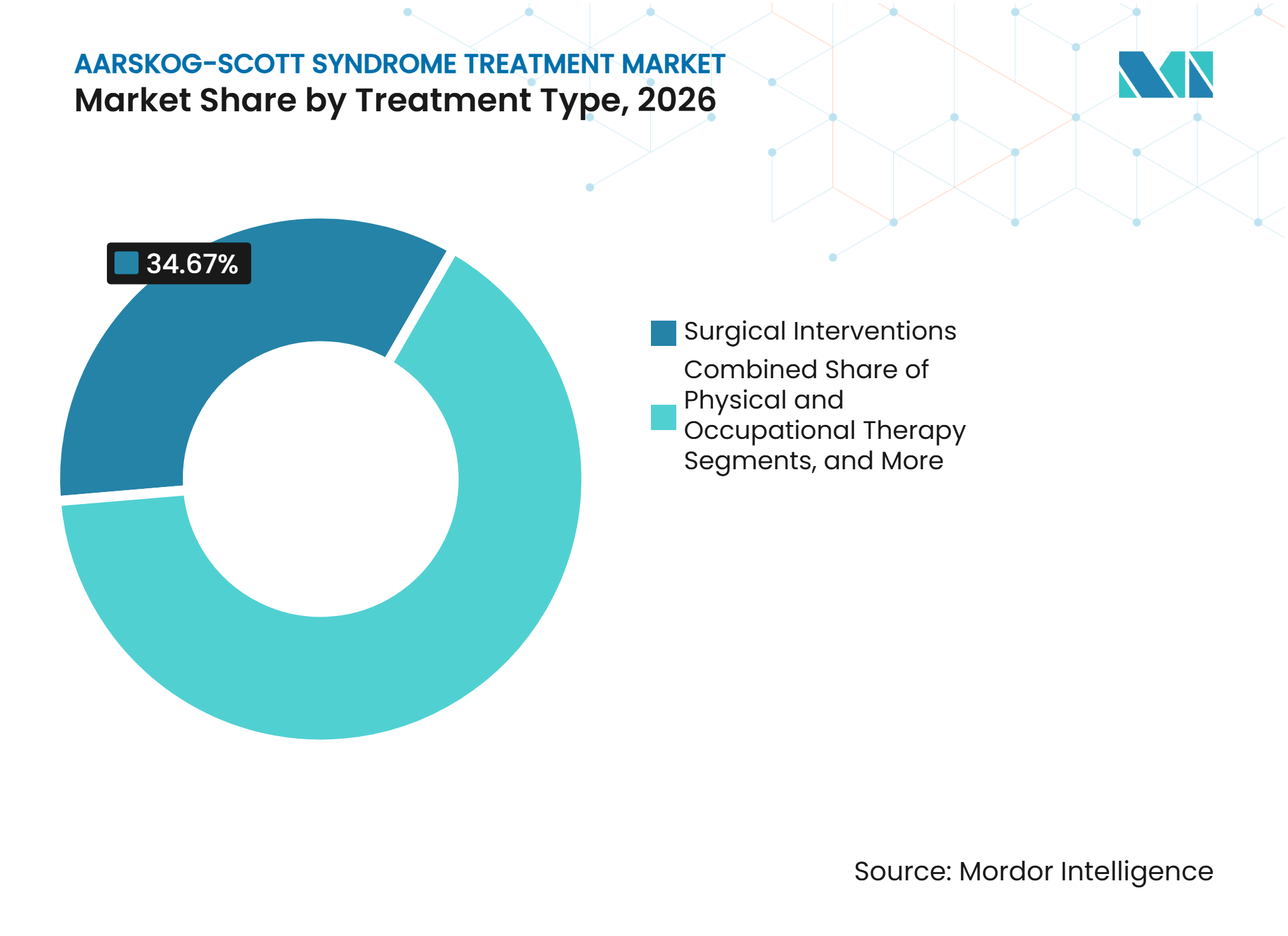
Surgical Care Leads Revenue While Rehabilitation Grows FasterSurgical Interventions held 34.67% of the Aarskog-Scott syndrome treatment market share in 2026. The segment leads as many patients require procedures for cryptorchidism, inguinal hernia, cleft lip and palate, ptosis, and craniofacial concerns. Intervention rates include 68% for cryptorchidism, 30% to 40% for inguinal hernia, and 6% for cleft lip and palate repair. These requirements sustain childhood surgical volumes and demand for hospital and medical device services.
Physical and Occupational Therapy is the fastest-growing treatment segment at a 7.34% CAGR through 2032. A Virginia Tech study published in 2025 found that intensive therapy of 3 to 6 hours daily over four weeks improved receptive communication in all participating children and gross motor control in one-third of participants with rare X-linked genetic mutations. Growth hormone therapy, orthopedic treatment, dental and orthodontic treatment, and developmental, behavioral, and rehabilitation support address recurring care needs. Dental anomalies affect 80% of patients, while Align Technology made its mandibular advancement product commercially available in the United States and Canada in April 2025 and received CE Mark recognition for its palatal expander in 2025.



By Manifestation Treated:
Craniofacial Care Has the Broadest Base While Endocrine Care ExpandsCraniofacial Manifestations commanded 29.88% of the Aarskog-Scott syndrome treatment market size in 2026. Facial features were present in 100% of patients in the 2026 FGD1 cohort, while 72% had metatarsus varus and 56% had camptodactyly. These conditions generate demand for pediatric surgery, reconstructive care, orthodontics, and follow-up services. Less invasive craniofacial approaches can shorten recovery periods and support focused care pathways.
Growth and Endocrine Manifestations are forecast to grow at an 8.44% CAGR through 2032. Sogroya’s 2026 pediatric approvals for idiopathic short stature, small for gestational age without catch-up growth, and Noonan syndrome expanded the clinical evidence base for weekly treatment in adjacent conditions. The European Medicines Agency’s Committee for Medicinal Products for Human Use issued a positive opinion for the same product variation in September 2026. Limb and skeletal, ophthalmologic, genitourinary, dental and oral, and neurodevelopmental and behavioral manifestations require ongoing care, with learning difficulties affecting 70% of patients and ADHD affecting 35%.
By Patient Age Group:
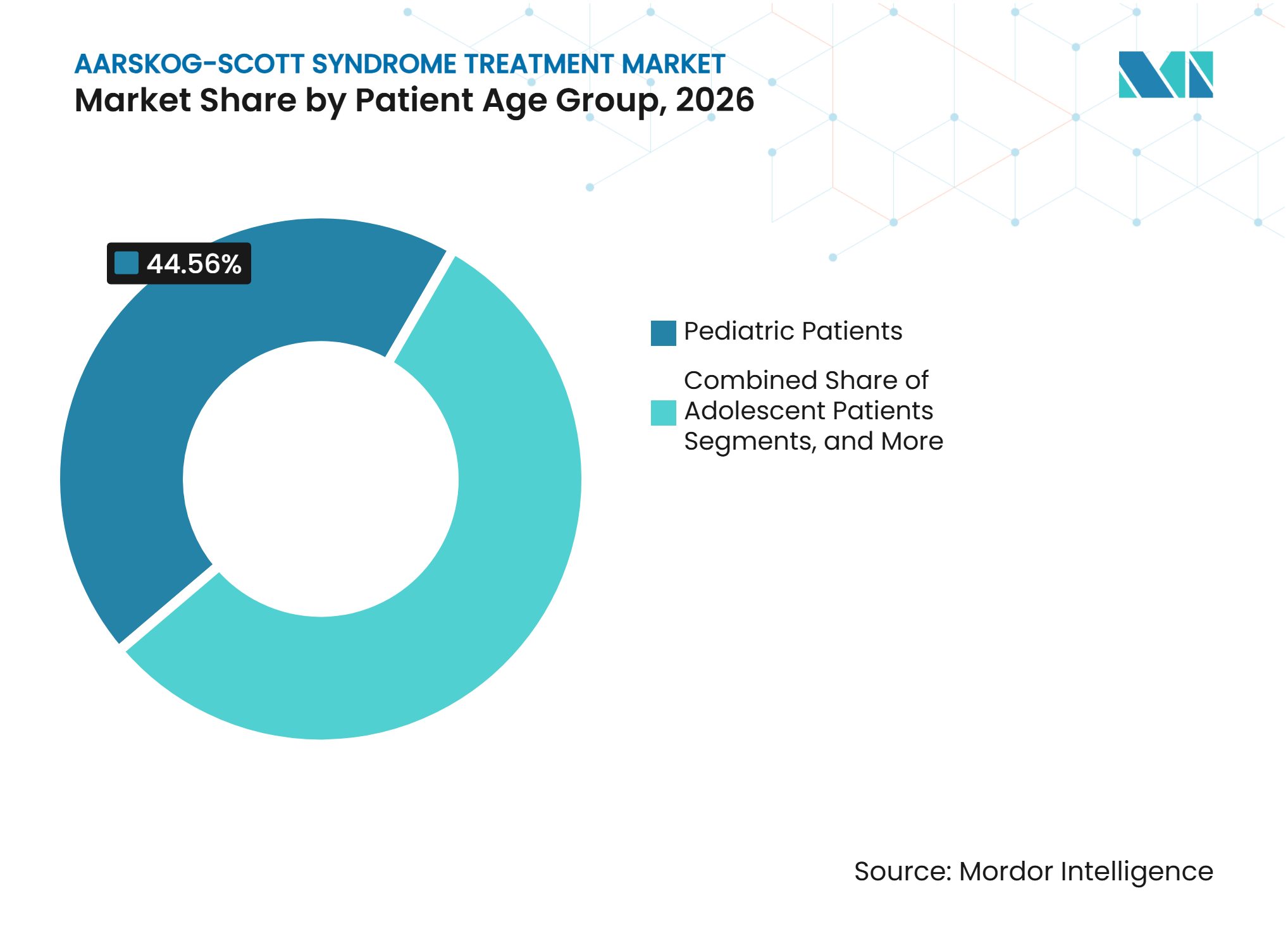
Early Childhood Drives Spending While Adolescence Adds DemandPediatric Patients accounted for 44.56% of 2026 revenue. This group requires treatment for early-onset manifestations, including cryptorchidism, foot malposition, cleft repair, hernia, and ptosis. Early diagnosis often connects children with endocrinology, genetics, orthopedic, dental, and ophthalmologic care. Coordinated care includes prescriptions, procedures, evaluations, and multiyear monitoring, supporting the segment’s leading market position.
Adolescent Patients are the fastest-growing age group at a 9.45% CAGR through 2032. Growth reflects increased identification of older patients and needs that become more apparent during adolescence, including orthodontic care, growth hormone assessment, and behavioral support. ADHD affects 10% to 30% of patients. Align Technology reported 935,800 teen and growing-kids case starts in 2025, with teen and kids clear-aligner volumes increasing 8.3% year over year in Q3 2025 and 6.9% year over year in Q4 2025; adults remain an emerging group, with 20 patients aged 20 and older in the 2026 cohort requiring specialist input.

By End User:
Hospitals Retain the Largest Role While Specialist Centers ExpandHospitals held 36.67% of 2026 revenue. They remain the primary setting for surgery, complex growth hormone initiation, and multidisciplinary diagnostic workups. Academic hospitals and major pediatric centers integrate craniofacial surgery, endocrinology, and genetics services. Texas Children’s Hospital in Austin reported a specialist craniofacial program in 2025 that supports patients with complex facial conditions and long-term care needs.
Pediatric and Orthopedic Centers are forecast to grow at a 7.55% CAGR through 2032. Growth reflects increased outpatient management of growth-related concerns, orthopedic complications, and musculoskeletal surveillance. Stryker launched Synchfix EVT in February 2026 as the first ankle syndesmotic fixation device specifically indicated for adolescent patients. Rehabilitation centers are gaining relevance, while academic and research institutions support future care protocols through registries, cohorts, and genotype-phenotype research, broadening outpatient care channels.
Geography Analysis
North America
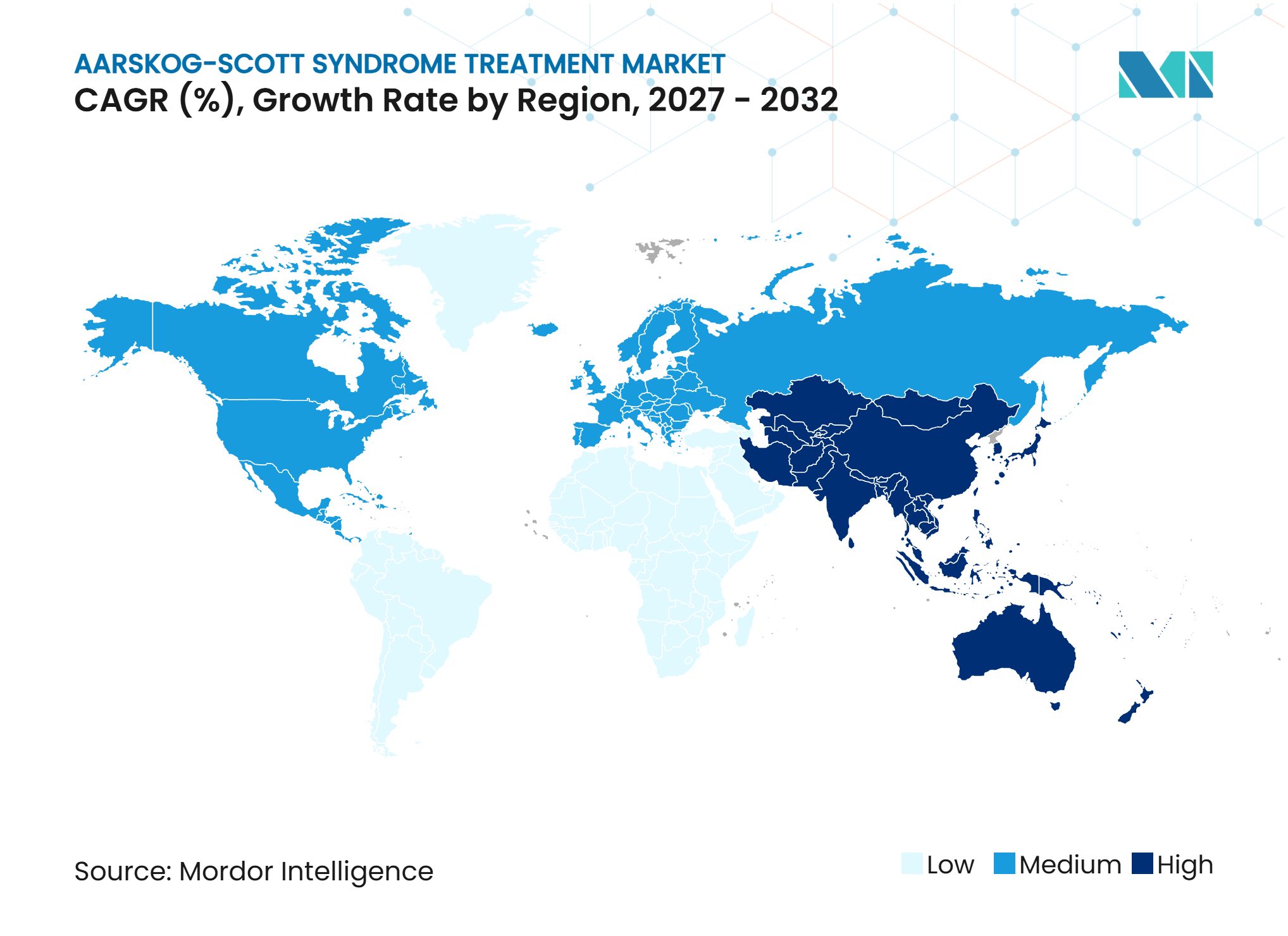
North America is projected to account for 41.23% of revenue in 2026. The United States benefits from established rare-disease infrastructure, specialty centers, and broad access to genetic testing and growth hormone products. The Rare Pediatric Disease Priority Review Voucher program is expected to be reauthorized through September 2029 under the Mikaela Naylon Give Kids a Chance Act. The FDA’s 2026 rare-disease framework is expected to maintain regulatory focus on development programs for small patient populations. Canada supports the regional market through its publicly funded healthcare system and pediatric genetics capabilities, while Mexico remains at an earlier stage of rare-disease care development.
Asia-Pacific
Asia-Pacific is forecast to grow at a CAGR of 8.78% through 2032. Growth is supported by expanded genomic testing, specialist capacity, and insurance initiatives across China, Japan, India, and South Korea. The Temasek Foundation and KKH program has expanded testing access across four ASEAN countries and reported a 52% diagnostic success rate. In 2026, Japan is expected to place Pharming’s Joenja on its National Health Insurance drug-price schedule, reflecting greater support for rare-disease therapies. In South Korea, the Growzen Connect platform enables remote monitoring of somatropin adherence data. China’s domestic biosimilar growth hormone capacity could improve the affordability of long-term treatment.
Europe, Middle East, and South America
Europe remains a key region, with Germany, the United Kingdom, France, Italy, and Spain hosting clinical centers and research groups that influence care practices. The European Medicines Agency’s anticipated September 2026 CHMP opinion on Sogroya may introduce an additional weekly treatment option for eligible patients, subject to a European Commission decision. Great Ormond Street Hospital’s planned 2026 nitinol-spring procedure is expected to demonstrate continued innovation in pediatric craniofacial surgery. In the Middle East and Africa, access remains concentrated in GCC countries and South Africa, while sequencing availability varies across the region. Brazil leads South America, where ANVISA is expected to approve Sogroya for Noonan syndrome in November 2026. Argentina’s genetics clinical-trial network provides additional, though limited, diagnostic capacity in the region.
Competitive Landscape
Market Concentration
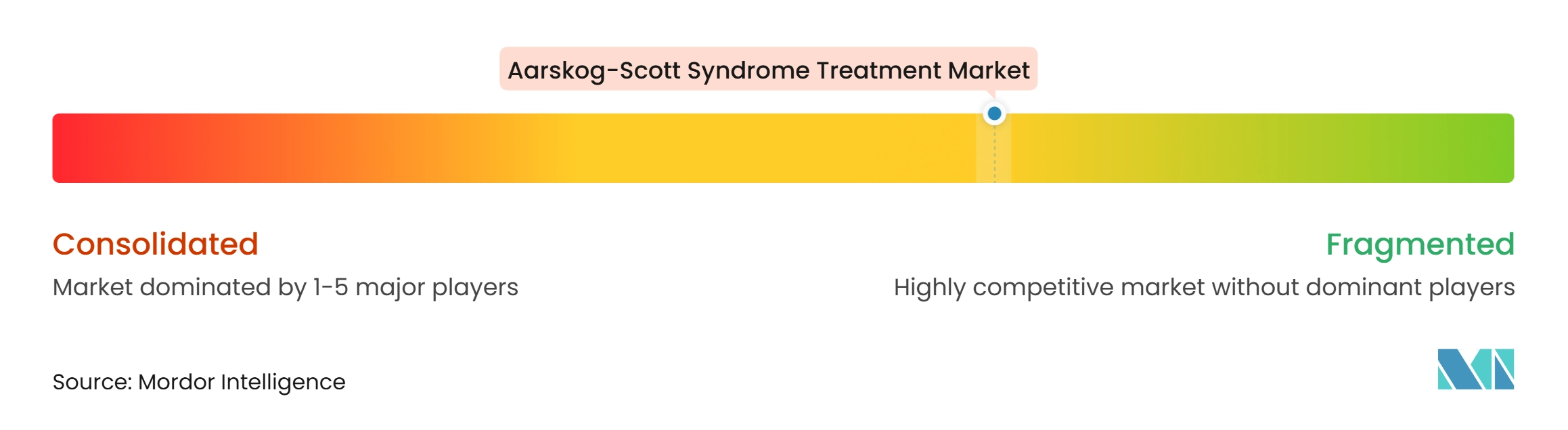
The Aarskog-Scott syndrome treatment market is fragmented across growth hormone products, surgical services, orthopedic and rehabilitation devices, and dental technologies. No company holds a dominant position across these categories because no approved therapy specifically targets Aarskog-Scott syndrome. Novo Nordisk and Ascendis Pharma have advanced weekly growth hormone options that may be used in adjacent eligible conditions; Sogroya had five pediatric and adult indications after its February 2026 approvals. Ascendis reported SKYTROFA revenue of EUR 206 million in 2025 and more than 20,000 unique global enrollments.
Merck KGaA reported 16.4% organic growth for Saizen in Q3 2026 and added a digital adherence-management element through Growzen Connect in South Korea. Johnson & Johnson maintains a position in craniomaxillofacial trauma and reconstruction through DePuy Synthes CMF, while its planned separation of the orthopedics business in October 2025 could affect its strategic position in orthopedic care; Zimmer Biomet acquired Monogram Technologies in 2025 and continues to invest in orthopedic technologies that may extend into pediatric niches.
Align Technology’s 2025 product activity addresses oral and craniofacial needs through its palatal expander and mandibular advancement systems. Competition remains driven by product breadth, specialist access, adherence support, regulatory compliance, and evidence generation, as companies address distinct clinical manifestations without a dedicated label or standardized treatment protocol for Aarskog-Scott syndrome.
Aarskog-Scott Syndrome Treatment Industry Leaders
-
Pfizer Inc.
-
Novo Nordisk A/S
-
Eli Lilly and Company
-
Johnson & Johnson
-
Teva Pharmaceutical Industries Ltd
- *Disclaimer: Major Players sorted in no particular order
Aarskog-Scott Syndrome Treatment Market Companies Covered in this Report
- Align Technology
- Anhui Anke Biotechnology (Group) Co. Ltd
- Ascendis Pharma A/S
- Bausch + Lomb Corporation
- Biocon Biologics Limited
- Eli Lilly and Company
- FERRING PHARMACEUTICALS INC.
- Genentech
- GeneScience Pharmaceuticals
- Johnson & Johnson
- LG Chem Ltd
- Merck
- Novo Nordisk
- Pfizer
- Stryker
- Teva Pharmaceutical Industries
- Tonghua Dongbao Pharmaceutical Co. Ltd
- Zimmer Biomet
Recent Industry Developments in Aarskog-Scott Syndrome Treatment Market
- November 2026: Novo Nordisk received ANVISA approval in Brazil for Sogroya (somapacitan) for pediatric patients with Noonan syndrome. The approval expanded access to once-weekly growth hormone therapy in South America and supported potential future access for eligible patients with FGD1-related growth deficiency.
- September 2026: The EMA’s CHMP adopted a positive opinion for Sogroya across three pediatric indications in Europe: Noonan syndrome, idiopathic short stature, and small for gestational age. The product remained pending European Commission marketing authorization.
- September 2026: Great Ormond Street Hospital performed a craniosynostosis repair using custom nitinol superelastic springs developed with UCL bioengineers through CT-based digital skull modeling. The procedure had a 45-minute operating time and used individualized force calibration for children with complex cranial deformities.
Global Aarskog-Scott Syndrome Treatment Market Report Scope
As per the scope of the report, Aarskog-Scott syndrome treatment refers to tailored, symptom-focused medical care, surgery, and developmental therapies used to manage a rare genetic condition that affects physical growth, facial features, limbs, and genitals.
The Aarskog-Scott syndrome treatment market is segmented by treatment type, manifestation treated, patient age group, end user, and geography. By treatment type, the market includes growth hormone therapy, orthopedic treatment, surgical interventions, physical and occupational therapy, dental and orthodontic treatment, developmental, behavioral, and rehabilitation support, and other supportive treatments. By manifestation treated, the market is segmented into craniofacial manifestations, limb and skeletal manifestations, genitourinary manifestations, growth and endocrine manifestations, dental and oral manifestations, ophthalmologic manifestations, neurodevelopmental and behavioral manifestations, and other manifestations. By patient age group, the market is categorized into pediatric patients, adolescent patients, and adult patients. By end user, the market is segmented into hospitals, specialty clinics, pediatric and orthopedic centers, rehabilitation centers, academic and research institutions, and other end users. By geography, the market is analyzed across North America, Europe, Asia-Pacific, the Middle East and Africa, and South America. The report also covers the estimated market sizes and trends for 17 countries across major regions globally. The report offers market sizes and forecasts in terms of value (USD) for the above segments.
Segmentation Overview
| Growth Hormone Therapy |
| Orthopedic Treatment |
| Surgical Interventions |
| Physical and Occupational Therapy |
| Dental and Orthodontic Treatment |
| Developmental, Behavioral, and Rehabilitation Support |
| Other Supportive Treatments |
| Craniofacial Manifestations |
| Limb and Skeletal Manifestations |
| Genitourinary Manifestations |
| Growth and Endocrine Manifestations |
| Dental and Oral Manifestations |
| Ophthalmologic Manifestations |
| Neurodevelopmental and Behavioral Manifestations |
| Others |
| Pediatric Patients |
| Adolescent Patients |
| Adult Patients |
| Hospitals |
| Speciality Clinics |
| Pediatric and Orthopedic Centers |
| Rehabilitation Centers |
| Academic and Research Institutions |
| Other End Users |
| North America | United States |
| Canada | |
| Mexico | |
| Europe | Germany |
| United Kingdom | |
| France | |
| Italy | |
| Spain | |
| Rest of Europe | |
| Asia-Pacific | China |
| India | |
| Japan | |
| Australia | |
| South Korea | |
| Rest of Asia-Pacific | |
| Middle East and Africa | GCC |
| South Africa | |
| Rest of Middle East and Africa | |
| South America | Brazil |
| Argentina | |
| Rest of South America |
| By Treatment Type | Growth Hormone Therapy | |
| Orthopedic Treatment | ||
| Surgical Interventions | ||
| Physical and Occupational Therapy | ||
| Dental and Orthodontic Treatment | ||
| Developmental, Behavioral, and Rehabilitation Support | ||
| Other Supportive Treatments | ||
| By Manifestation Treated | Craniofacial Manifestations | |
| Limb and Skeletal Manifestations | ||
| Genitourinary Manifestations | ||
| Growth and Endocrine Manifestations | ||
| Dental and Oral Manifestations | ||
| Ophthalmologic Manifestations | ||
| Neurodevelopmental and Behavioral Manifestations | ||
| Others | ||
| By Patient Age Group | Pediatric Patients | |
| Adolescent Patients | ||
| Adult Patients | ||
| By End User | Hospitals | |
| Speciality Clinics | ||
| Pediatric and Orthopedic Centers | ||
| Rehabilitation Centers | ||
| Academic and Research Institutions | ||
| Other End Users | ||
| By Geography | North America | United States |
| Canada | ||
| Mexico | ||
| Europe | Germany | |
| United Kingdom | ||
| France | ||
| Italy | ||
| Spain | ||
| Rest of Europe | ||
| Asia-Pacific | China | |
| India | ||
| Japan | ||
| Australia | ||
| South Korea | ||
| Rest of Asia-Pacific | ||
| Middle East and Africa | GCC | |
| South Africa | ||
| Rest of Middle East and Africa | ||
| South America | Brazil | |
| Argentina | ||
| Rest of South America | ||
Key Questions Answered in the Report
What is the Aarskog-Scott syndrome treatment market size?
The Aarskog-Scott syndrome treatment market is valued at USD 2.75 billion in 2027 and is forecast to reach USD 3.71 billion by 2032, at a 6.20% CAGR.
Which treatment type has the largest share?
Surgical Interventions holds the largest share at 34.67% in 2026 because many patients need management for cryptorchidism, hernia, cleft lip and palate, ptosis, or craniofacial concerns.
Why is genetic testing important for Aarskog-Scott syndrome?
FGD1 sequence analysis identifies 90% of pathogenic variants, with deletion and duplication analysis supporting detection of the remaining 10%.
Which region is growing fastest?
Asia-Pacific is forecast to grow at an 8.78% CAGR through 2032, supported by genomic testing, specialty care, and rare-disease coverage initiatives.
What is driving demand among adolescents?
Adolescent Patients is forecast to grow at a 9.45% CAGR through 2032 as older patients are identified and require orthodontic care, growth assessment, and behavioral support.