
Yoga and Meditation Centers Market Size and Share
Market Overview
| Study Period | 2021 - 2031 |
|---|---|
| Market Size (2026) | USD 14.85 Billion |
| Market Size (2031) | USD 23.34 Billion |
| Growth Rate (2026 - 2031) | 9.46 % |
| Fastest Growing Market | North America |
| Largest Market | Asia-Pacific |
| Market Concentration | Low |
Major Players *Disclaimer: Major Players sorted in no particular order Image © Mordor Intelligence. Reuse requires attribution under CC BY 4.0. | |
Yoga and Meditation Centers Market Analysis by Mordor Intelligence
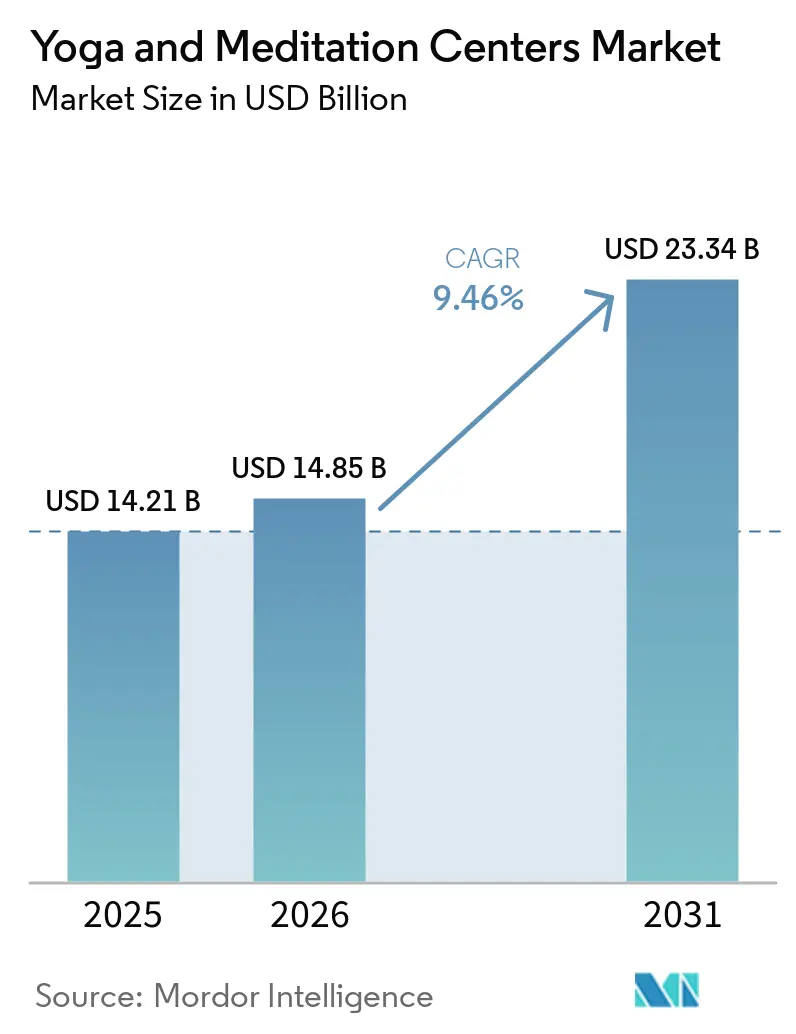
The yoga and meditation centers market was valued at USD 14.21 billion in 2025 and estimated to grow from USD 14.85 billion in 2026 to reach USD 23.34 billion by 2031, at a CAGR of 9.5% during the forecast period (2026–2031). Growth is driven by rising mental health needs and the appeal of affordable, accessible mind-body practices attracting consumers, employers, and wellness operators. Asia-Pacific led revenue in 2025, while North America is expected to record the fastest growth through 2031, reflecting the influence of cultural roots and digital adoption on demand. Hybrid service models that combine studio access with digital libraries and guided sessions are improving customer retention and revenue per user. The market remains fragmented at the studio level, but platform consolidation is increasing in the software and wellness infrastructure segment, highlighted by the March 2026 Playlist and EGYM merger. This shift creates opportunities for operators to connect community-based practices, corporate wellness programs, and retreat offerings while ensuring consistent service quality[1].
Key Report Takeaways
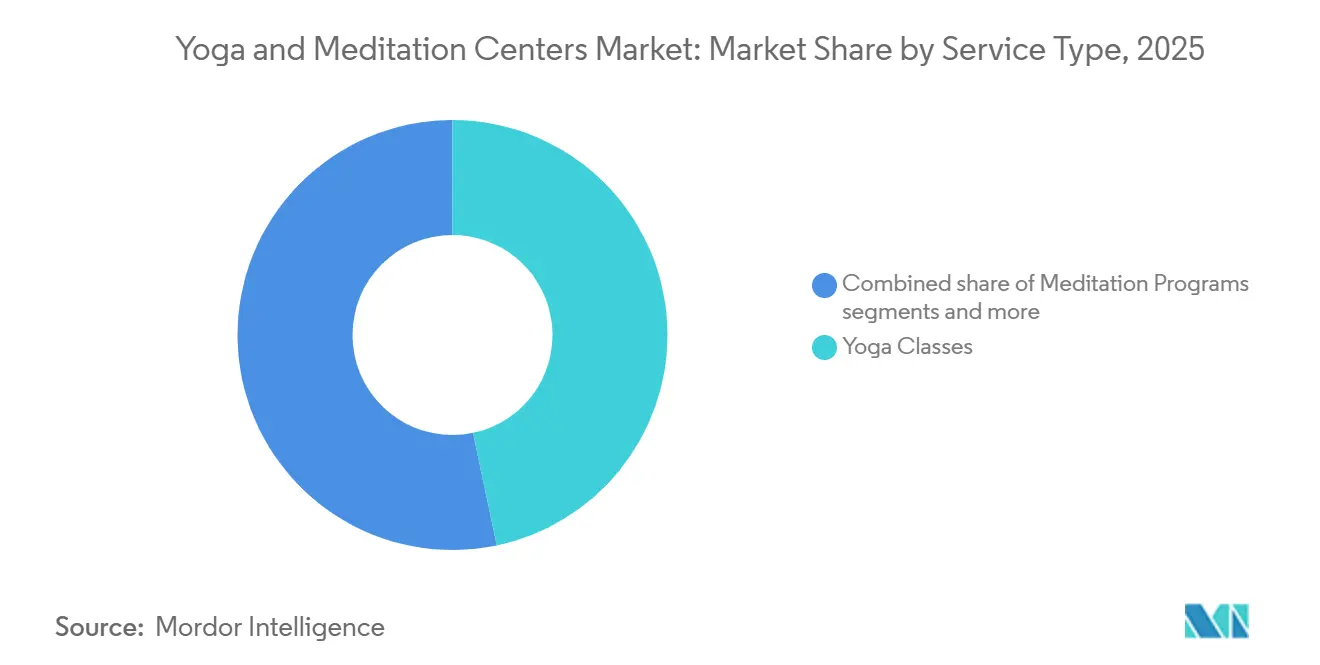
- By service type, Yoga Classes held a 46.71% share of the Yoga and Meditation Centers Market in 2025, while Wellness & Retreat Programs are projected to grow at the highest CAGR of 10.13% by 2031.
- By end user, Individual Consumers accounted for an 83.42% share of the Yoga and Meditation Centers Market in 2025, while Corporate Wellness Participants are projected to grow at the highest CAGR of 11.74% by 2031.
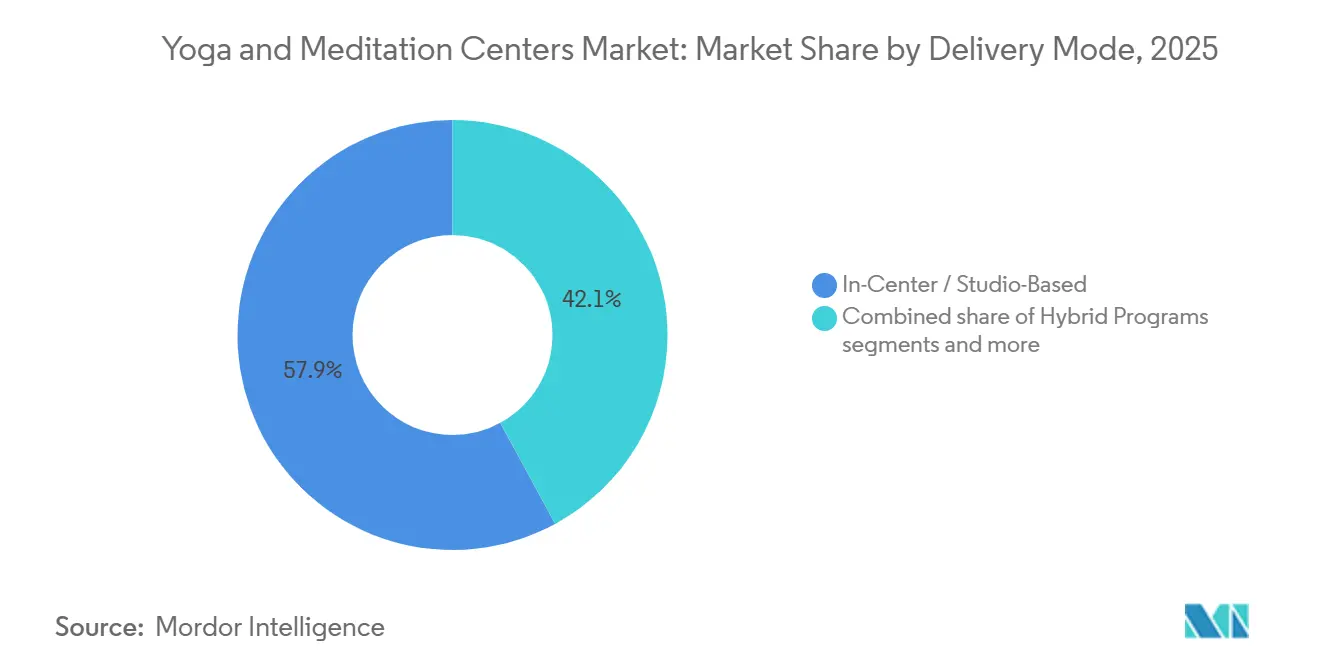
- By delivery mode, In-Center/Studio-Based services held a 57.92% share of the Yoga and Meditation Centers Market in 2025, while Hybrid Programs are projected to grow at the highest CAGR of 10.64% by 2031.
- By pricing model, Membership-Based Programs commanded a 42.41% share of the Yoga and Meditation Centers Market in 2025, while Retreat & Package Programs are projected to grow at the highest CAGR of 10.94% by 2031.
- By geography, Asia-Pacific captured a 31.43% share of the Yoga and Meditation Centers Market in 2025, while North America is projected to grow at the highest CAGR of 11.46% by 2031.
Note: Market size and forecast figures in this report are generated using Mordor Intelligence’s proprietary estimation framework, updated with the latest available data and insights as of January 2026.
Global Yoga and Meditation Centers Market Trends and Insights
Drivers Impact Analysis*
| Driver | (~) % Impact on CAGR Forecast | Geographic Relevance | Impact Timeline |
|---|---|---|---|
| Rising Demand for Stress Relief and Mental Wellness Programs | +2.8% | Global | Short term (≤ 2 years) |
| Growing Adoption of Corporate Wellness Partnerships | +1.6% | North America & Europe, spill-over to Asia-Pacific | Medium term (2-4 years) |
| Expansion of Hybrid Yoga and Guided Meditation Delivery Models | +1.4% | Global, with early gains in North America and East Asia | Short term (≤ 2 years) |
| Rising Demand for Age-Specific Wellness Offerings | +0.9% | North America, Europe, East Asia | Medium term (2-4 years) |
| Increased Monetization Through Membership and Subscription Bundles | +0.8% | North America, Europe, Australia | Short term (≤ 2 years) |
| Growing Preference for Community-Based Mind-Body Wellness Spaces | +0.6% | Asia-Pacific core, North America | Long term (≥ 4 years) |
| Source: Mordor Intelligence | |||
Rising Demand for Stress Relief and Mental Wellness Programs
The yoga and meditation centers market is experiencing growing demand driven by the widespread need for mental health support across both developed and emerging economies. The World Health Organization highlights that mental, neurological, and substance-use conditions affect a significant portion of the global population, driving the demand for wellness services. In the Asia-Pacific region, mental health challenges remain a critical concern, with millions of individuals affected. Evidence supporting the benefits of these services is also increasing. A meta-analysis of randomized controlled trials found that app-based meditation programs effectively reduced depression and anxiety compared to control groups. This reinforces the complementary roles of yoga and meditation within broader healthcare strategies. The market benefits from consumer spending, employer wellness programs, and public health initiatives, particularly in India, where yoga holds strong cultural significance and acceptance[2].
Growing Adoption of Corporate Wellness Partnerships
Corporate demand is becoming a dependable growth driver for the yoga and meditation centers market as employers increasingly prioritize mental well-being as an operational focus rather than an optional benefit. Surveys indicate that all employers now include mental health in their well-being strategies, supporting programs focused on mindfulness, stress management, and yoga. Official Data also show that many employers plan to either maintain or increase their well-being incentive budgets in the coming years. This trend is significant because multi-employee contracts help providers reduce acquisition costs and secure recurring revenue without requiring proportional increases in studio capacity. For operators in India, this creates opportunities in urban corporate hubs, where challenges such as burnout, employee retention, and hybrid work models are driving demand for structured wellness programs[3].
Expansion of Hybrid Yoga and Guided Meditation Delivery Models
Hybrid delivery is transforming the yoga and meditation centers market by catering to users seeking both flexibility and instructor-led practice. According to the International Telecommunication Union, by 2025, over 58% of the global population is expected to own a smartphone, significantly increasing the potential audience for on-demand yoga and meditation content. Additionally, operators combining studio access with digital content have reported improved retention rates, higher average revenue per user, and lower acquisition costs than those relying solely on a single delivery mode. In India, digital access enables service providers to reach beyond metro studio catchment areas while maintaining the relevance of premium in-person formats in major cities. Consequently, the market is shifting toward a model where online sessions complement membership relationships rather than replace studio-based interactions.
Rising Demand for Age-Specific Wellness Offerings
Age-based positioning is driving new opportunities in the yoga and meditation centers market, as wellness needs vary significantly among seniors, working adults, prenatal users, and younger demographics. Projections indicate that the population aged 65 and above will grow substantially by 2050, particularly in the Asia-Pacific and Europe. This trend is increasing demand for mobility-focused yoga, balance-enhancing exercises, and low-impact meditation routines designed for older individuals. At the same time, younger workers are focusing on stress management earlier, creating demand for structured mindfulness practices to prevent serious health issues. In India, efforts by the Ministry of AYUSH, such as promoting yoga through the annual International Day of Yoga, have enhanced public awareness and adoption of age-specific practice formats.
Restraints Impact Analysis*
| Restraint | (~) % Impact on CAGR Forecast | Geographic Relevance | Impact Timeline |
|---|---|---|---|
| High Instructor Dependence and Limited-Service Standardization | -0.9% | Global | Long term (≥ 4 years) |
| Premium Pricing Sensitivity in Price-Conscious Urban Markets | -0.7% | South Asia, Southeast Asia, South America | Medium term (2-4 years) |
| Space and Compliance Constraints for Studio Expansion | -0.5% | North America, Europe, Asia-Pacific urban centers | Medium term (2-4 years) |
| Difficulty Retaining Customers in Low-Commitment Wellness Categories | -0.6% | Global, with greater intensity in digital-first markets | Short term (≤ 2 years) |
| Source: Mordor Intelligence | |||
High Instructor Dependence and Limited-Service Standardization
The yoga and meditation centers market depends heavily on the quality of instructors, creating challenges for scaling compared to wellness models driven by software. Member loyalty is often linked to specific instructors, making instructor turnover significant risks to studio performance, even if the location remains operational. Standardization efforts are hindered by regional and organizational differences in training and accreditation standards, complicating franchising, underwriting, and quality control processes. Recent regulatory developments, such as the European Union AI Act, are beginning to shape the use of technology-based guidance tools in wellness settings, introducing additional compliance requirements for operators exploring AI-supported instruction. These factors collectively present a scaling challenge for the market, where achieving consistent quality of service must be balanced with maintaining the human connection that users highly value.
Premium Pricing Sensitivity in Price-Conscious Urban Markets
Price sensitivity poses a significant challenge in the yoga and meditation centers market, particularly in cost-conscious urban areas across South Asia and Southeast Asia. Membership fees in cities such as Mumbai and Jakarta often exclude a large portion of the potential customer base from accessing studio services. Research from Carnegie Mellon University highlighted that only a small percentage of users who download meditation apps remain active after the first month, with average usage limited to a few sessions. This suggests that free or low-cost alternatives struggle to retain users over time. The market faces a challenge where studio services may be perceived as costly, while digital options fail to encourage sustained engagement[4]. In India, adopting tiered pricing models and offering basic digital access with optional upgrades appears to be a more practical approach compared to relying solely on a single membership structure.
*Our forecasts treat driver/restraint impacts as directional, not additive. The impact forecasts reflect baseline growth, mix effects, and variable interactions.
Segment Analysis
By Service Type: Studio Yoga Dominates, but Retreat Programs Lead Growth
Yoga classes accounted for 46.71% of the market share of yoga and meditation centers in 2025, making them the primary source of revenue. This is due to their broad demographic appeal, frequent repeat usage, and consistent monthly cash flow from regular schedules. Meditation Programs and Teacher Training & Certification Programs generated less revenue but played a strategic role in enhancing customer lifetime value. Teacher training is particularly significant as it allows advanced students to transition into the instructor base. In India, this progression is culturally accepted due to long-standing yoga traditions.
Wellness and Retreat Programs are projected to grow at a 10.13% compound annual growth rate (CAGR) through 2031, making them the fastest-growing service type in the yoga and meditation centers market. This growth reflects a shift toward immersive, multi-day experiences combining yoga, meditation, nutrition guidance, and recovery. These programs generate higher revenue per customer compared to standard monthly plans. India is well-positioned in this segment due to its yoga heritage, retreat appeal, and visibility during International Day of Yoga, which enhances its credibility for immersive, practice-led travel and residential formats. Operators must carefully manage food, accommodation, and health-related compliance as retreat formats become more mainstream.

By End User: Individuals Drive Revenue, Corporations Drive Growth
Individual Consumers accounted for 83.42% of revenue in 2025, making them the largest segment in the yoga and meditation centers market. This segment relies heavily on direct consumer spending through studio visits, app subscriptions, and retreat bookings. While this provides a stable revenue base, it also indicates saturation risks in mature markets with high penetration. Future growth is expected to focus on increasing spending per user through personalization, community programs, and complementary offerings rather than acquiring new practitioners. In India, urban operators are advised to adopt broader wallet-share strategies instead of relying solely on new customer acquisition.
Corporate Wellness Participants are projected to grow at an 11.74% CAGR through 2031, making it the fastest-growing end-user segment. This reflects a shift in employer practices, with mental well-being becoming a formal part of workforce support. Business-to-business contracts reduce acquisition costs, improve revenue predictability, and expand geographic reach without significant studio infrastructure investments. Employees initially using employer-funded programs may later transition to direct-paying users, making this channel particularly relevant for India’s office clusters, technology hubs, and multinational service centers.
By Delivery Mode: Studios Hold Ground, Hybrid Accelerates
In-center/studio-based delivery accounted for 57.92% of the market share in the yoga and meditation centers market in 2025, underscoring the importance of physical attendance. This is attributed to social interaction, direct instructor feedback, and the sensory appeal of wellness spaces, which digital services struggle to replicate. In India, community-driven routines and trusted instructors encourage repeat attendance. Physical formats also help operators differentiate through experience rather than content volume. Despite digital-first competitors, the studio model remains significant.
Hybrid programs are expected to grow at a compound annual growth rate (CAGR) of 10.64% through 2031, making them the fastest-growing delivery mode in the yoga and meditation centers market. Online sessions now complement in-person memberships rather than replace them. Operators using this model report better retention, higher average revenue per user, and lower customer acquisition costs compared to single-format providers. In India, metro users can continue digital practice between studio visits, while smaller-city users access content without a dense local studio network. This approach expands operators’ reach while maintaining the credibility of in-person instruction.
By Pricing Model: Memberships Anchor Revenue, Retreats Anchor Growth
Membership-based programs generated 42.41% of revenue in 2025, maintaining their position as the primary pricing format in the yoga and meditation centers market. This model is favored for its predictable monthly billing, which improves cash flow visibility and supports planning for instructors, leases, and scheduling. Features such as digital libraries, priority booking, and guest privileges enhance the value for subscribers. These programs are particularly effective in India’s urban markets, where users seek routine with flexibility during weekdays and weekends. Pay-per-session options remain relevant for occasional users but provide less revenue stability for operators.
Retreat and package programs are expected to grow at a compound annual growth rate (CAGR) of 10.94% through 2031, surpassing other pricing formats. This model benefits from higher booking values and reduced churn after purchase. It aligns with the trend toward bundled wellness commitments over sporadic participation. In India, this approach addresses both domestic and inbound wellness demand, especially when operators combine practice sessions, accommodation, and post-retreat digital follow-up into a single offering. This pricing structure is increasingly resilient for providers delivering clear value within defined program periods.
Geography Analysis
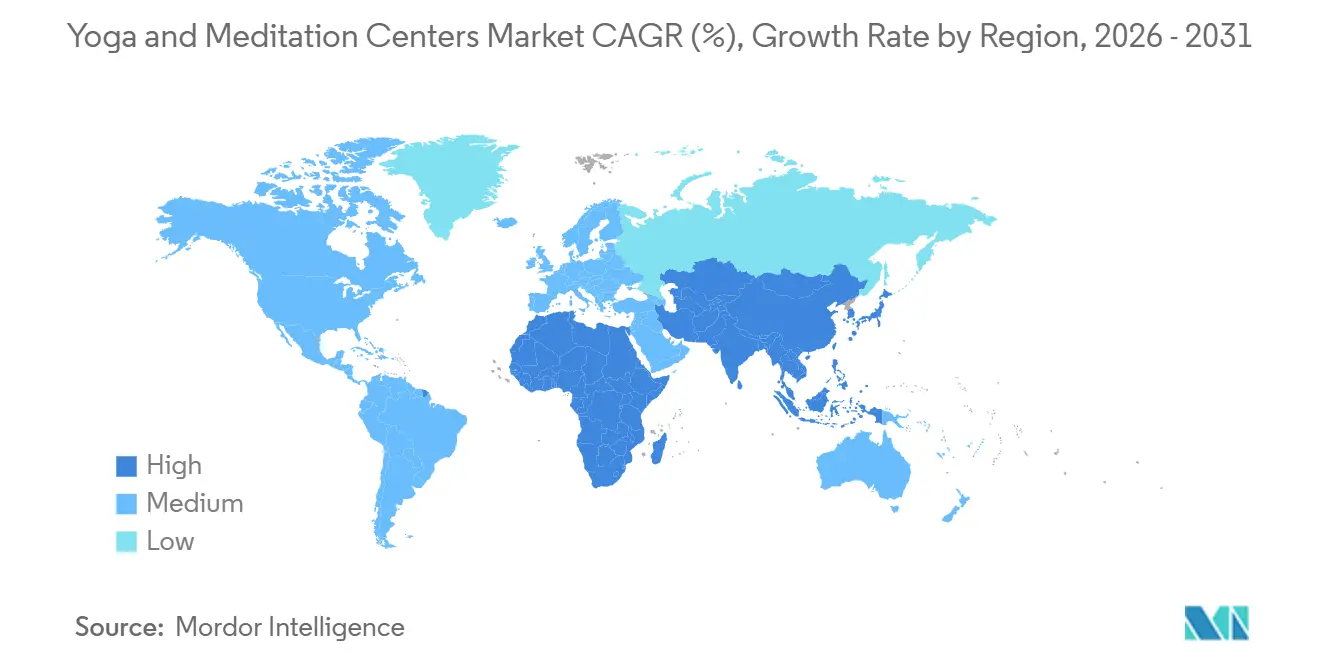
Asia-Pacific held 31.43% of the yoga and meditation centers market share in 2025, driven by India's cultural roots, public policy support, and recognition of yoga as a cost-effective wellness practice. The Ministry of AYUSH promoted yoga through International Day of Yoga events, increasing participation in urban and semi-urban areas. Unmet mental health needs also supported growth, with 289 million individuals in the WHO South-East Asia region affected by mental, neurological, or substance-use conditions. Urban wellness spending, digital adoption, and retreat tourism in China and Southeast Asia further boosted the market. North America is projected to grow at an 11.47% CAGR through 2031, supported by employer investments in mental health programs, widespread smartphone usage, franchise models, and growing acceptance of digital wellness subscriptions, enabling expansion beyond major cities.
South America is expected to grow at a 7.4% CAGR through 2031, driven by urban wellness demand in Brazil and rising interest in English-language digital content in Chile and Argentina. Europe is forecast to grow at a 5.8% CAGR through 2031, supported by high wellness spending and established studio infrastructure. Germany and the United Kingdom lead the market, while GDPR compliance has raised standards for digital wellness products. The Middle East and Africa are projected to grow at an 8.1% CAGR through 2031, driven by wellness tourism and expatriate demand in the UAE and Saudi Arabia. Established brands increasingly view the region as a near-term expansion opportunity. Regional trends indicate that while India's heritage remains a strength, growth increasingly depends on digital delivery, employer-funded demand, and structured formats.
Competitive Landscape
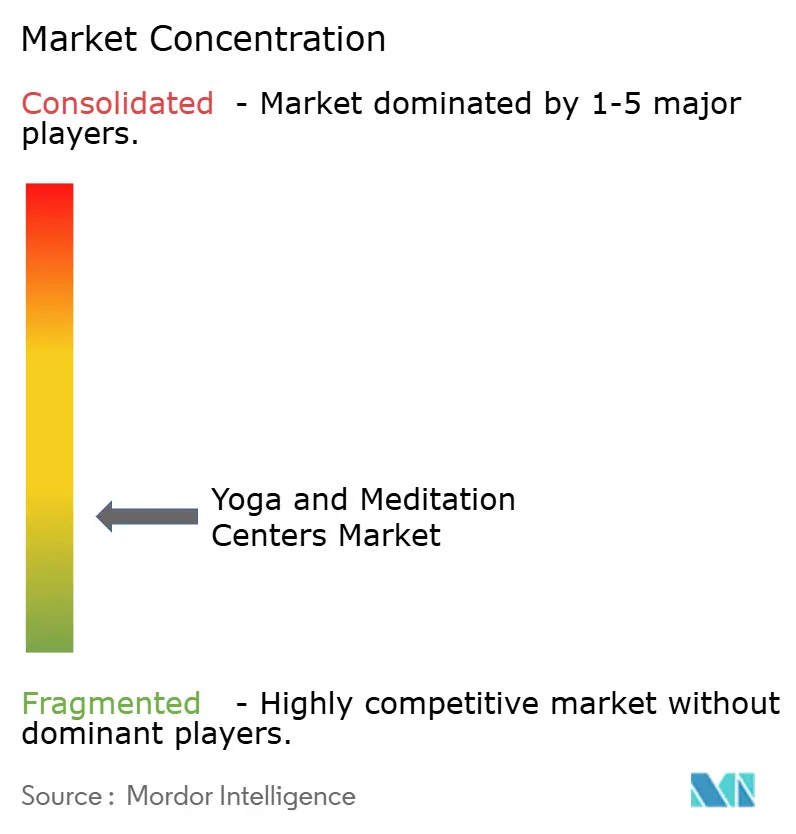
The yoga and meditation centers market is highly fragmented, with the top players holding a small share. This reflects the local and trust-based nature of the market, where users often remain loyal to specific teachers and communities. Technology platforms are reshaping competition by aggregating studios, processing payments, and collecting user data. The Playlist and EGYM merger integrated Mindbody, ClassPass, and EGYM Wellpass into a unified platform, strengthening infrastructure while the studio base remains fragmented. Consolidation is occurring through operating systems and distribution networks rather than direct studio ownership.
Strategies vary by business model. Digital-first players focus on enterprise relationships, insurer pathways, and recurring content subscriptions. Large studio chains expand through geographic densification and franchising. CorePower Yoga opened a new studio in Del Mar Highlands, San Diego, maintaining operations across multiple locations in the United States and Washington, D.C. YogaSix expanded internationally, launching in Tokyo and entering Germany earlier.
Gaia, Inc. focuses on exclusive digital content and subscription-based economics. It reported significant revenue, a large member base across numerous countries, and a high gross margin. The underserved middle segment remains significant, catering to consumers seeking limited studio sessions and a strong digital library at an affordable price. India’s demand mix favors operators combining affordability, community, and hybrid access over single-focus models.
Yoga and Meditation Centers Industry Leaders
-
Headspace Inc.
-
Calm.com, Inc.
-
Mindbody, Inc.
-
ClassPass Inc.
-
Gaia, Inc.
- *Disclaimer: Major Players sorted in no particular order
Recent Industry Developments
- June 2026: CorePower Yoga opened its 15th San Diego studio in Del Mar Highlands and operates over 220 locations across 23 United States and Washington, D.C.
- April 2026: STROM Group opened two AWŪ urban wellness sanctuaries in Québec, located in Brossard and Québec City, with a combined annual guest capacity of over 100,000. The company plans to expand to Seattle by 2027.
- March 2026: Playlist, parent of Mindbody, ClassPass, and Booker, merged with EGYM to create a global full-stack fitness and wellness operating system valued at USD 7.5 billion, with USD 785 million in new equity.
- January 2026: EGYM and Playlist, backed by Mayfair, announced a merger agreement, initiating a platform-driven consolidation phase in fitness and wellness technology.
Global Yoga and Meditation Centers Market Report Scope
| Yoga Classes |
| Meditation Programs |
| Wellness & Retreat Programs |
| Teacher Training & Certification Programs |
| Individual Consumers |
| Corporate Wellness Participants |
| In-Center / Studio-Based |
| Online / Virtual Sessions |
| Hybrid Programs |
| Membership-Based Programs |
| Pay-Per-Session |
| Retreat & Package Programs |
| North America | United States |
| Canada | |
| Mexico | |
| South America | Brazil |
| Peru | |
| Chile | |
| Argentina | |
| Rest of South America | |
| Europe | United Kingdom |
| Germany | |
| France | |
| Spain | |
| Italy | |
| BENELUX (Belgium, Netherlands, and Luxembourg) | |
| NORDICS (Denmark, Finland, Iceland, Norway, and Sweden) | |
| Rest of Europe | |
| Asia-Pacific | India |
| China | |
| Japan | |
| Australia | |
| South Korea | |
| South East Asia (Singapore, Malaysia, Thailand, Indonesia, Vietnam, and Philippines) | |
| Rest of Asia-Pacific | |
| Middle East and Africa | United Arab Emirates |
| Saudi Arabia | |
| South Africa | |
| Nigeria | |
| Rest of Middle East and Africa |
| By Service Type | Yoga Classes | |
| Meditation Programs | ||
| Wellness & Retreat Programs | ||
| Teacher Training & Certification Programs | ||
| By End User | Individual Consumers | |
| Corporate Wellness Participants | ||
| By Delivery Mode | In-Center / Studio-Based | |
| Online / Virtual Sessions | ||
| Hybrid Programs | ||
| By Pricing Model | Membership-Based Programs | |
| Pay-Per-Session | ||
| Retreat & Package Programs | ||
| By Geography | North America | United States |
| Canada | ||
| Mexico | ||
| South America | Brazil | |
| Peru | ||
| Chile | ||
| Argentina | ||
| Rest of South America | ||
| Europe | United Kingdom | |
| Germany | ||
| France | ||
| Spain | ||
| Italy | ||
| BENELUX (Belgium, Netherlands, and Luxembourg) | ||
| NORDICS (Denmark, Finland, Iceland, Norway, and Sweden) | ||
| Rest of Europe | ||
| Asia-Pacific | India | |
| China | ||
| Japan | ||
| Australia | ||
| South Korea | ||
| South East Asia (Singapore, Malaysia, Thailand, Indonesia, Vietnam, and Philippines) | ||
| Rest of Asia-Pacific | ||
| Middle East and Africa | United Arab Emirates | |
| Saudi Arabia | ||
| South Africa | ||
| Nigeria | ||
| Rest of Middle East and Africa | ||
Key Questions Answered in the Report
What is the 2026 to 2031 growth outlook for yoga and meditation centers?
The yoga and meditation centers market is forecast to grow from USD 14.85 billion in 2026 to USD 23.34 billion by 2031 at a 9.46% CAGR, supported by hybrid delivery, corporate demand, and premium retreat formats.
Which service category leads current revenue, and which one is growing fastest?
Yoga Classes led revenue with 46.71% share in 2025, while Wellness & Retreat Programs are projected to grow the fastest at a 10.13% CAGR through 2031.
Why is corporate demand becoming important for providers?
Corporate Wellness Participants are expected to grow at a 11.74% CAGR through 2031 as employers continue to fund mental well-being programs and seek structured stress-management solutions.
Which delivery format is strongest today?
In-Center or Studio-Based services remained the largest format, with a 57.92% revenue share in 2025, because instructor interaction, community, and the physical practice environment still matter.
Why does Asia-Pacific remain the largest region?
Asia-Pacific accounted for 31.43% of revenue in 2025 due to India’s yoga heritage, expanding regional wellness infrastructure, and broad unmet demand for accessible mental wellness support.
How concentrated is the competitive landscape?
The market is fragmented, with the top 5 players accounting for 22% of revenue in 2025 and the top player accounting for only 4%, even though software and platform consolidation is increasing.