
Vutrisiran Market Size and Share
Market Overview
| Study Period | 2020 - 2031 |
|---|---|
| Market Size (2026) | USD 2.93 Billion |
| Market Size (2031) | USD 9.64 Billion |
| Growth Rate (2026 - 2031) | 26.86 % |
| Fastest Growing Market | Asia-Pacific |
| Largest Market | North America |
| Market Concentration | High |
Major Players *Disclaimer: Major Players sorted in no particular order Image © Mordor Intelligence. Reuse requires attribution under CC BY 4.0. | |
Vutrisiran Market Analysis by Mordor Intelligence
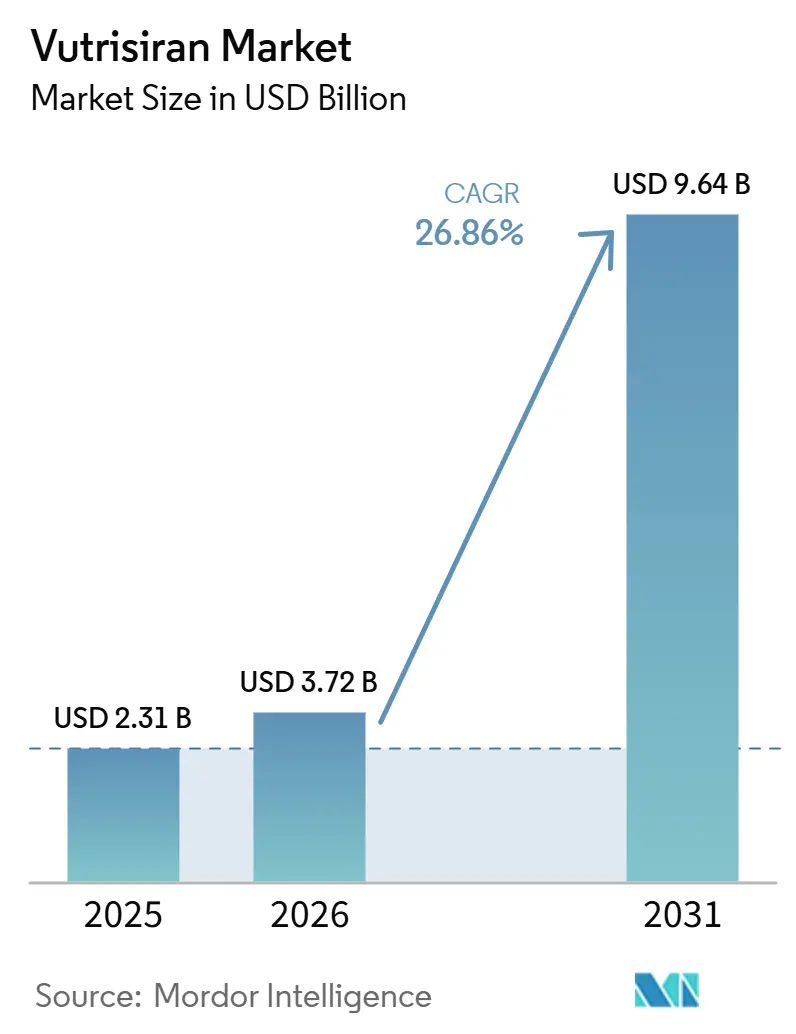
The Vutrisiran market size was valued at USD 2.31 billion in 2025 and estimated to grow from USD 2.93 billion in 2026 to reach USD 9.64 billion by 2031, at a CAGR of 26.9% during the forecast period 2026-2031. The main reason for this sharp rise in the vutrisiran market is the wider use of AMVUTTRA after the March 2025 U.S. approval for ATTR-CM, followed by approvals in Europe, Canada, and Japan during 2025 and 2026. Full-year 2025 AMVUTTRA net product revenue reached USD 2.31 billion, up 138% from 2024, and Alnylam’s 2026 total TTR revenue guidance of USD 4.4 billion to USD 4.7 billion points to continued commercial scale-up across the vutrisiran market. The next stage of growth in the vutrisiran market depends on bringing more patients into care, since a large part of the eligible population still remains undiagnosed and Alnylam’s March 2026 collaboration with Viz.ai across 2,000 U.S. hospitals is aimed directly at that gap. Competitive pressure in the vutrisiran market remains active because tafamidis and acoramidis still serve overlapping ATTR-CM patients, yet the July 2026 Phase 3 setback for eplontersen narrowed the most immediate direct silencer threat. Pricing remains the main barrier for the vutrisiran market, because annual treatment cost levels of USD 450,000 to USD 500,000 continue to create reimbursement friction even where clinical adoption is improving.
Key Report Takeaways
- By indication, hATTR Polyneuropathy held 72.4% of the vutrisiran market share in 2025, while ATTR Cardiomyopathy is projected to expand at 29.5% CAGR through 2031.
- By distribution channel, hospital pharmacies accounted for 83.8% of the vutrisiran market size in 2026 and are projected to grow at 27.12% CAGR through 2031.
- By end user, hospitals held 64.2% of the vutrisiran market in 2025, while specialty clinics are forecasted to expand at 27.23% CAGR through 2031.
- By geography, North America captured 74.8% of the vutrisiran market in 2025, while Asia-Pacific is projected to grow at 30.8% CAGR through 2031.
Note: Market size and forecast figures in this report are generated using Mordor Intelligence’s proprietary estimation framework, updated with the latest available data and insights as of January 2026.
Market Trends and Insights
Drivers Impact Analysis of Vutrisiran Market*
| Driver | % Impact on CAGR Forecast | Geographic Relevance | Impact Timeline |
|---|---|---|---|
| Expanding Approved Use Across hATTR-PN and ATTR-CM | +8.2% | Global, with strongest relevance in the United States, EU, Japan, Canada, and Brazil | Short term (≤ 2 years) |
| Rising Diagnosis Rates for Transthyretin Amyloidosis | +5.1% | United States, Japan, and Nordic countries | Medium term (2-4 years) |
| Preference for Quarterly Subcutaneous Disease-Modifying Therapy | +4.3% | Global | Short term (≤ 2 years) |
| Broader Cardiologist and Neurologist Adoption After Label Expansion | +4.8% | North America and Europe, with spillover into Asia-Pacific | Medium term (2-4 years) |
| Stronger Referral Pathways Through Amyloidosis Centers of Excellence | +2.6% | North America and Europe, with emerging relevance in core Asia-Pacific markets | Medium term (2-4 years) |
| Payer Support for High-Value Rare Disease Therapies | +3.2% | North America and Western Europe | Long term (≥ 4 years) |
| Source: Mordor Intelligence | |||
Expanding Approved Use Across hATTR-PN and ATTR-CM
Vutrisiran moved from a polyneuropathy-only product to a therapy used in both hATTR-PN and ATTR-CM, and that shift is the strongest near-term growth driver for the vutrisiran market. The March 2025 FDA decision gave Alnylam the first RNAi approval in ATTR-CM, which created an early lead before any comparable silencer reached the same setting.[1]Source: Alnylam Pharmaceuticals, “New Data Presented at ACC.26 Further Support Benefits of Vutrisiran in ATTR-CM and Potential of Zilebesiran for Hypertension Management,” BusinessWire, businesswire.com HELIOS-B showed a 28% reduction in the combined endpoint of all-cause mortality and recurrent cardiovascular events in the overall population, and the reduction reached 33% in patients not using background TTR stabilizers. The same program also reported amyloid regression on cardiovascular magnetic resonance imaging in 22% of treated patients, while no regression was seen in placebo groups, which strengthened the disease-modifying profile supporting the vutrisiran market. Regulatory expansion in Europe, Canada, and Japan kept adding new treated populations through 2025 and 2026, and that pace is faster than many rare disease launches achieve. As a result, the vutrisiran market is no longer tied only to a narrow hereditary neuropathy base and is now linked to a broader cardiology treatment pool.
Rising Diagnosis Rates for Transthyretin Amyloidosis
The vutrisiran market still depends heavily on better diagnosis because ATTR amyloidosis remains underdetected in routine practice. A 2025 U.S. study found that only 44% to 54% of Medicare patients with ATTRwt-CM received the recommended non-invasive pathway that combines 99mTc-PYP scintigraphy with complete monoclonal protein testing.[2]Source: Debbie Turner et al., “Treatment Preferences Among Individuals with Primary Hyperoxaluria Type 1,” Orphanet Journal of Rare Diseases, doi.org That gap shows that the commercial ceiling is still set more by patient finding than by treatment awareness alone in the vutrisiran market. Cardiologists have become the main referral source for ATTR-CM, and screening is moving deeper into heart failure workups as awareness improves. Alnylam’s March 2026 work with Viz.ai uses an FDA-cleared echocardiography AI tool across 2,000 U.S. hospitals, which directly targets earlier case finding and referral coordination. Better diagnostic conversion should widen the treated population over time and keep the vutrisiran market tied to care-pathway expansion rather than to label expansion alone.
Preference for Quarterly Subcutaneous Disease-Modifying Therapy
The quarterly dosing model gives the vutrisiran market a practical advantage because AMVUTTRA is delivered as a 25 mg subcutaneous injection every 3 months, needs no premedication, and can be administered in 1 to 2 minutes. Real-world evidence presented at ACC.26 showed high adherence and persistence with quarterly healthcare professional administered dosing in routine practice. This matters for the vutrisiran market because ATTR-CM patients are usually older and often manage many other medicines at the same time. Broader siRNA preference research also supports the appeal of less frequent injection schedules, with 75% of patients in one rare disease study favoring quarterly dosing over monthly treatment. HELIOS-A also showed 87% sustained TTR knockdown across 2.5 years, which supports the clinical durability of the schedule and not just its convenience. Together, those features help the vutrisiran market hold attention in both neurology and cardiology settings where treatment burden can shape long-term use.
Broader Cardiologist and Neurologist Adoption After Label Expansion
Before the ATTR-CM approval, prescribing in the vutrisiran market was centered mostly on neurologists working in specialized hATTR-PN programs. The broader label brought cardiologists, heart failure specialists, and cardiac amyloidosis teams into the prescribing base, which changed the commercial shape of the vutrisiran market. Heart Failure 2026 analyses showed consistent benefit in patients with atrial fibrillation, low systolic blood pressure, heavy comorbidity burden, and background heart failure therapy use. Those results address real prescribing concerns in the same patient groups that dominate day-to-day cardiology practice. Alnylam’s January 2026 strategy update pointed to more than 75,000 potential ATTR-CM patients in the United States, which shows how much of the vutrisiran market still depends on physician education and referral depth. Wider prescriber reach should keep lifting uptake as diagnosis, referral, and treatment pathways become more routine across cardiology networks.
Restraints Impact Analysis of Vutrisiran Market*
| Restraint | % Impact on CAGR Forecast | Geographic Relevance | Impact Timeline |
|---|---|---|---|
| High Annual Therapy Cost and Reimbursement Friction | -3.8% | Global, with strongest pressure in Europe, the Middle East, and emerging markets | Long term (≥ 4 years) |
| Limited Patient Pool and Slow Diagnostic Conversion | -2.5% | Global, with strongest effect in South America and the Middle East and Africa | Long term (≥ 4 years) |
| Competing TTR Stabilizers and RNAi Therapies | -2.4% | North America and Europe, with spillover into Asia-Pacific and South America | Medium term (2-4 years) |
| Need for Specialized Injection Site Coordination | -1.8% | Global, with strongest effect in the Middle East and Africa, South America, and rural Asia-Pacific | Long term (≥ 4 years) |
| Source: Mordor Intelligence | |||
High Annual Therapy Cost and Reimbursement Friction
The biggest commercial brake on the vutrisiran market is treatment cost, with annual therapy pricing estimated at USD 450,000 to USD 500,000. Ireland’s National Centre for Pharmacoeconomics did not support reimbursement at the submitted price for hATTR-PN, and access moved forward only after confidential price negotiations in May 2024. Canada’s Drug Agency supported reimbursement for ATTR-CM in 2026 with a 13-0 vote, but it attached conditions that reflect cost-effectiveness pressure common in rare disease funding. Those payer steps show that regulatory approval does not automatically translate into fast penetration across the vutrisiran market. From 2027 onward, lower-cost tafamidis generics could become the first option in some systems before access to vutrisiran is granted, especially where step therapy rules are strict. That dynamic could slow near-term uptake in price-sensitive countries even when demand drivers for the vutrisiran market remain favorable.
Limited Patient Pool and Slow Diagnostic Conversion
The vutrisiran market is also limited by the fact that many patients are still not identified early enough for treatment. A 2025 U.S. analysis showed that only 44% to 54% of Medicare patients with ATTRwt-CM received the recommended non-invasive diagnostic pathway, which points to a weak conversion funnel from suspected disease to confirmed therapy candidates. Published clinical reporting also showed diagnosis delays ranging from 2 to 7 years across countries, which means many patients enter treatment late.[3]Source: Clinical Practice Authors, “Clinical Practice and Diagnostic Trends in Hereditary Transthyretin Amyloidosis,” Medicina, mdpi.com Genetic testing capacity for hereditary variants remains uneven in several healthcare systems, especially outside core North American and Western European markets. That leaves the vutrisiran market with a narrower real-world patient base than the underlying disease burden suggests. Unless diagnosis rates improve further, the pace of market expansion will continue to lag the drug’s clinical potential in several geographies.
*Our forecasts treat driver/restraint impacts as directional, not additive. The impact forecasts reflect baseline growth, mix effects, and variable interactions.
Vutrisiran Market Segment Analysis
By Indication:
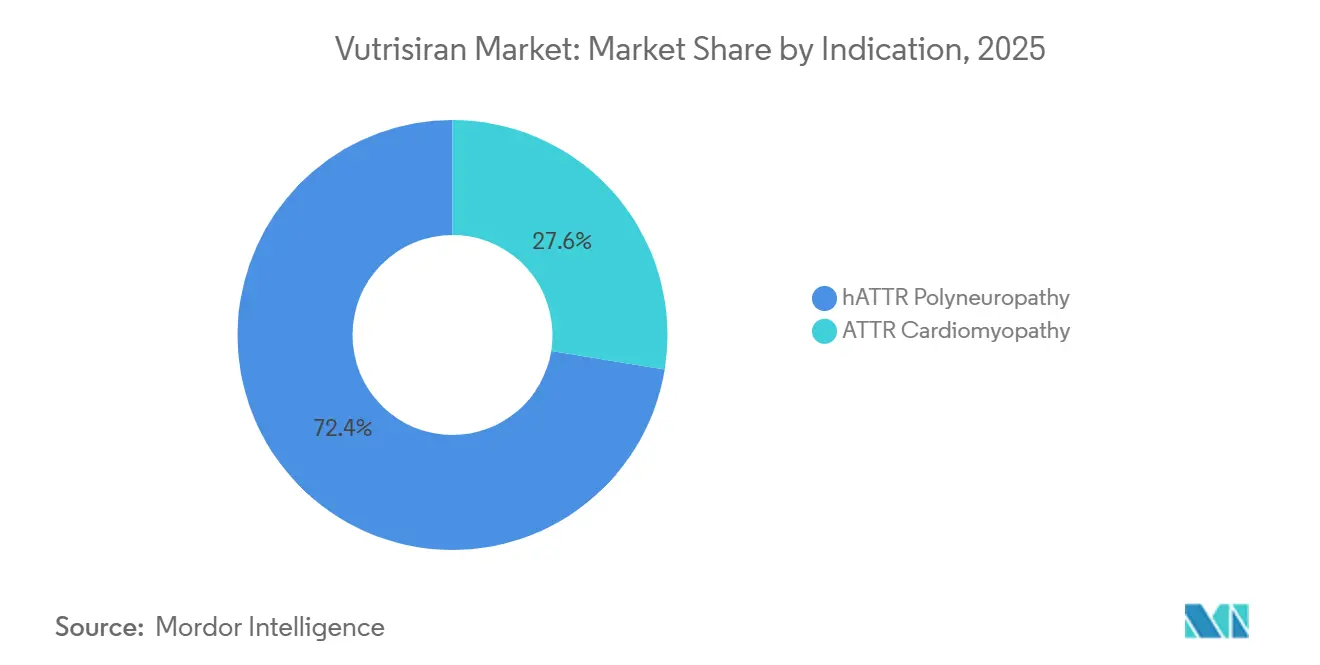
Cardiomyopathy Reshapes the Commercial ProfilehATTR Polyneuropathy held 72.4% of the vutrisiran market in 2025, which reflected its earlier approval and its established treatment base since 2022. Long-term HELIOS-A extension data published in 2026 confirmed sustained neurological benefit after more than 4 years of continuous treatment, which supports retention in this part of the vutrisiran industry. That durable benefit keeps hATTR-PN clinically important even as the revenue mix changes over time. At the same time, ATTR Cardiomyopathy is projected to expand at 29.5% CAGR through 2031, which makes it the strongest growth engine within the vutrisiran market. The cardiomyopathy pool is larger than the hereditary neuropathy pool, and awareness programs around cardiac amyloidosis are widening faster than older neuropathy referral patterns.
ATTR Cardiomyopathy is expected to move into the lead by the end of the forecast period, which changes the center of the vutrisiran industry from neurology toward cardiology. A dedicated HELIOS-B subgroup analysis in East Asian patients showed efficacy and safety results in Japanese and Korean patients that were consistent with the broader trial population. That evidence supports the commercial case in Japan and also strengthens future access discussions in other Asia-Pacific markets. The 22% amyloid regression rate seen on cardiac imaging adds a structural recovery message that has not been central to stabilizer therapy positioning. This is why the vutrisiran market is being shaped less by legacy indication history and more by the broader scale of ATTR-CM treatment adoption.



By Distribution Channel:
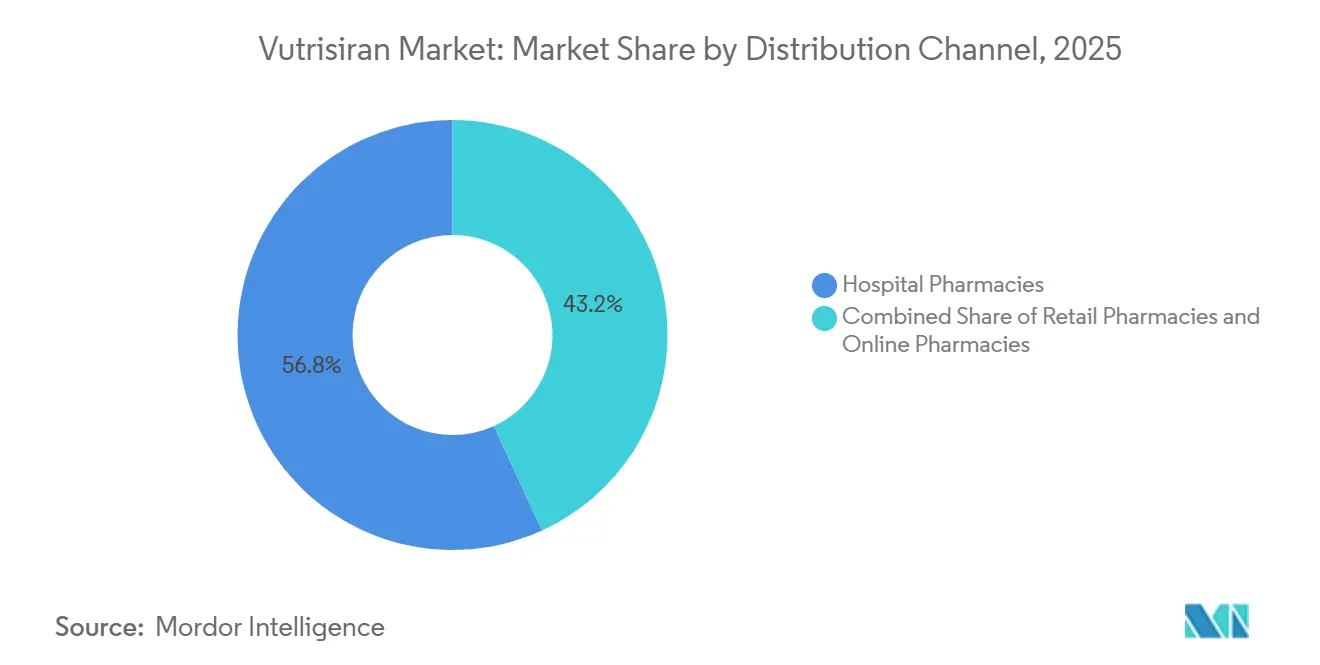
Hospital Pharmacies Anchor Access Across Both IndicationsHospital pharmacies accounted for 83.8% of the vutrisiran market size in 2026 and are projected to expand at 27.12% CAGR through 2031, which confirms that they remain the main access point for the drug. This channel stays dominant because AMVUTTRA is supplied through specialty distributors or specialty pharmacies and then administered by a healthcare professional in neurology offices, cardiology offices, or ambulatory infusion suites. Commercial payer policies also continue to steer treatment away from higher-cost hospital outpatient settings and into physician office or infusion-based models. That policy design still supports hospital-linked procurement even when the actual injection happens in office-based care. Retail pharmacies remain a limited part of the vutrisiran market because they are not built around cold-chain specialty handling, vitamin A counseling, and rare disease coordination requirements.
Online pharmacies have the clearest long-term opening in the vutrisiran industry, even though they remain a smaller route today. Some payer policies in the United States already allow home administration through specialty infusion vendors for selected patients, which could expand the role of remote fulfillment over time. The appeal is strongest for maintenance patients who are stable and want to avoid repeated travel to treatment centers. Even so, the vutrisiran market should remain hospital-pharmacy-led across the forecast window because specialist oversight still matters at each stage of access and administration. Online fulfillment can still gain incremental share as patient volumes rise and home-based care models become more accepted.
By End User:
Specialty Clinics Gain Ground as ATTR-CM Programs ScaleHospitals held 64.2% of the vutrisiran market in 2025, which reflects the historic role of large academic amyloidosis centers in both diagnosis and treatment. Major centers of excellence have been the main sites for hATTR-PN and ATTR-CM care because they bring neurology, cardiology, imaging, and genetic expertise together in one place. That model helped the early vutrisiran market scale in a controlled way after launch. Specialty clinics are projected to grow at 27.23% CAGR through 2031 as community cardiologists and neurologists set up focused ATTR programs outside large academic hospitals. The simplified quarterly dosing schedule supports this shift because it is easier to integrate into outpatient specialty care than more complex infusion-based models.
Specialty clinics are the fastest-moving end-user segment in the vutrisiran industry because they sit closer to routine cardiology and neurology referral flows. Home care settings remain smaller but are gaining interest for established patients who want fewer quarterly hospital visits. Australia’s prescribing approach already allows a shift from specialist-center administration to general practitioner or local service delivery once treatment is established. Academic and research institutes stay important because observational programs such as DemonsTTRate are building real-world evidence around more than 2,000 ATTR-CM patients over as long as 5 years. That evidence base helps the vutrisiran market not only clinically, but also in reimbursement and access discussions.
Geography Analysis
North America Vutrisiran Market
North America held 74.8% of the vutrisiran market share in 2025, with the United States remaining the most advanced commercial setting for ATTR treatment. The March 2025 FDA approval for ATTR-CM expanded the prescriber base beyond neurologists and brought cardiologists and heart failure specialists directly into the uptake path. Alnylam’s estimate of more than 75,000 potential ATTR-CM patients in the United States shows that the vutrisiran market still has a large untreated pool even after rapid revenue growth. Canada added another important step when Health Canada approved AMVUTTRA for ATTR-CM in December 2025 and Canada’s Drug Agency followed with a positive reimbursement recommendation in 2026.
Europe Vutrisiran Market
Europe is an expanding region for the vutrisiran market because the June 2025 European Commission approval created the regulatory base for wider commercial rollout. Uptake still moves at different speeds because each country follows its own reimbursement timetable after central approval. The Netherlands moved to expand reimbursement conditions to cover ATTR-CM, which shows that payer discussions are following the label expansion. The June 2026 expansion of the GENESIS Pharma partnership into Denmark, Finland, Norway, and Sweden also extends reach into a region with meaningful ATTR-CM prevalence and established rare disease care pathways.
APAC, South America and MEA Vutrisiran Market
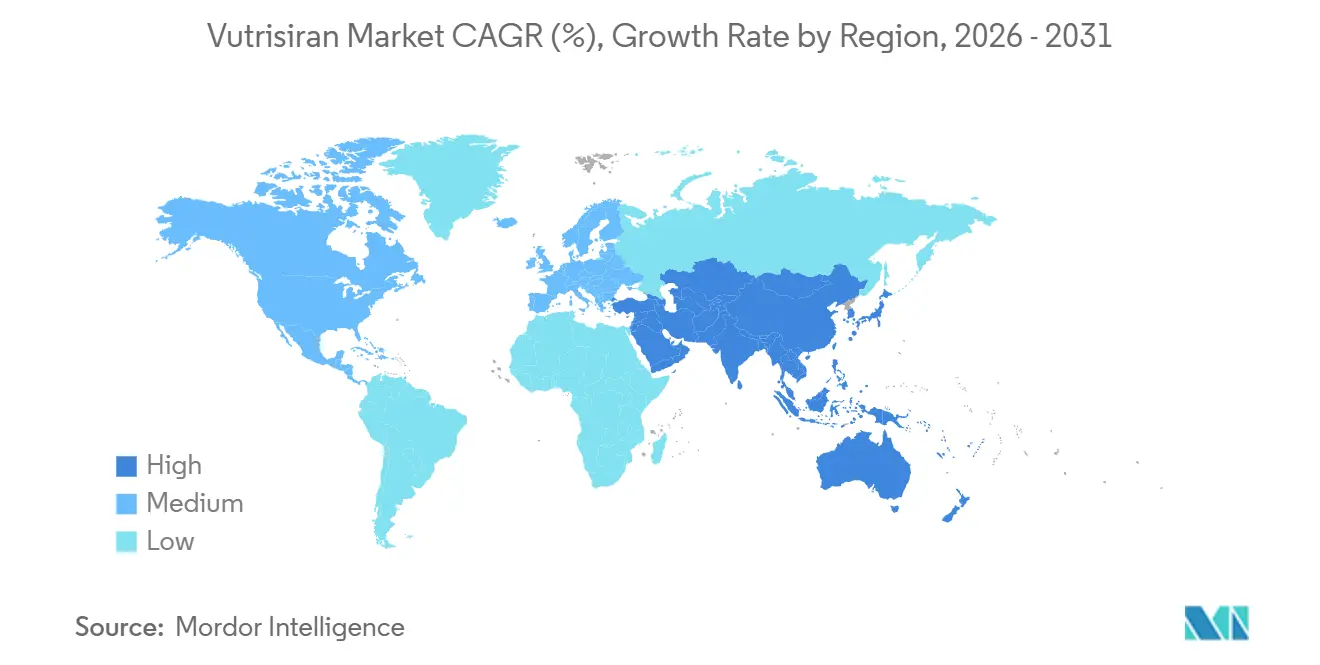
Asia-Pacific is projected to deliver the fastest vutrisiran market size growth at 30.8% CAGR through 2031, supported by Japan’s high ATTR-CM prevalence and regulatory progress. A 2025 systematic review estimated Japan’s ATTR-CM prevalence at 100 cases per million per year, which was the highest level among the tracked countries cited in the source set. The East Asian HELIOS-B subgroup also showed that Japanese and Korean patients had efficacy and safety outcomes consistent with the full study population. That evidence supports the regional case for the vutrisiran market as more cardiology programs in Asia-Pacific begin to evaluate access and reimbursement. South America and the Middle East and Africa still represent earlier-stage opportunities because diagnostic depth, specialist networks, and reimbursement systems are less developed than in North America, Europe, and Japan.

Competitive Landscape
The vutrisiran market is concentrated around one marketed product, AMVUTTRA, but it still faces meaningful therapeutic competition from TTR stabilizers used in overlapping ATTR-CM patients. Pfizer’s tafamidis franchise generated USD 3.9 billion in the first 9 months of 2024, which shows how large the wider ATTR-CM treatment pool already is outside the direct silencer class. BridgeBio’s acoramidis also entered the field after its FDA approval in November 2024, which intensified the fight for first-line positioning in cardiomyopathy. In July 2026, AstraZeneca and Ionis reported that eplontersen failed to meet the primary endpoint in the CARDIO-TTRansform Phase 3 trial, which removed the most immediate direct silencer challenge facing the vutrisiran market.
Alnylam’s strategy in the vutrisiran market extends beyond efficacy and includes earlier patient capture, manufacturing scale, and pipeline expansion. The March 2026 collaboration with Viz.ai placed an FDA-cleared echocardiography AI pathway across 2,000 U.S. hospitals, which helps shape referrals before prescribing decisions are even made. In June 2026, Alnylam and Inceptive Nucleics formed an AI collaboration valued at up to USD 2 billion to support the discovery of next-generation RNAi therapeutics. In January 2026, Alnylam also committed USD 250 million to its Norton, Massachusetts facility to build out siRELIS, its proprietary siRNA enzymatic-ligation manufacturing platform. Those moves show that leadership in the vutrisiran market is being defended through clinical data, care pathways, and supply capability at the same time.
The main competitive advantage of AMVUTTRA in the vutrisiran market remains its silencing mechanism and its cardiovascular outcomes profile. The reported 87% sustained TTR knockdown and first-in-class mortality reduction claim help support a premium position against stabilizer-based therapy choices. Even so, future tafamidis generic entry from 2027 onward could change treatment sequencing and expand the pool of switch or second-line patients that later enter the vutrisiran market. That means the product-level concentration is high, while therapeutic competition around price, access, and line of therapy remains active across the broader ATTR treatment landscape.
Vutrisiran Industry Leaders
Alnylam Pharmaceuticals, Inc.
- *Disclaimer: Major Players sorted in no particular order

Vutrisiran Market Companies Covered in this Report
- Alnylam Pharmaceuticals

Recent Industry Developments in Vutrisiran Market
- July 2026: AstraZeneca and Ionis Pharmaceuticals announced that eplontersen (Wainua) failed to meet the primary endpoint of the CARDIO-TTRansform Phase 3 trial in ATTR-CM patients. The composite of cardiovascular mortality and recurrent cardiovascular events through Week 140 was not significantly improved over placebo in a population predominantly on standard-of-care stabilizers, removing the most prominent near-term competitive silencer threat to vutrisiran's ATTR-CM position.
- June 2026: Alnylam and Inceptive Nucleics formed a strategic AI collaboration valued at up to USD 2 billion, including USD 30 million upfront in cash and equity, to integrate foundation AI models with Alnylam's RNAi discovery platform and accelerate next-generation siRNA candidates.
- June 2026: GENESIS Pharma expanded its commercial partnership with Alnylam to Denmark, Finland, Norway, and Sweden, adding to the existing Southeast European territory for RNAi therapeutics including vutrisiran.
- May 2026: New HELIOS-B analyses presented at Heart Failure 2026 demonstrated consistent clinical benefit across ATTR-CM sub-populations, including patients with atrial fibrillation, low systolic blood pressure, and high comorbidity burden, while a pooled safety analysis covered more than 25,000 patient-years of TTR-silencing RNAi experience.
- March 2026: Alnylam partnered with Viz.ai to develop an AI-enabled ATTR-CM care pathway using an FDA-cleared echocardiography AI algorithm integrated into electronic health records across 2,000 U.S. hospitals, with the aim of improving earlier identification and care coordination.


Global Vutrisiran Market Report Scope
| hATTR Polyneuropathy |
| ATTR Cardiomyopathy |
| Hospital Pharmacies |
| Retail Pharmacies |
| Online Pharmacies |
| Hospitals |
| Specialty Clinics |
| Home Care Settings |
| Academic and Research Institutes |
| North America | United States |
| Canada | |
| Mexico | |
| Europe | Germany |
| United Kingdom | |
| France | |
| Italy | |
| Spain | |
| Rest of Europe | |
| Asia-Pacific | China |
| India | |
| Japan | |
| South Korea | |
| Australia | |
| Rest of Asia-Pacific | |
| South America | Brazil |
| Argentina | |
| Rest of South America | |
| Middle East and Africa | GCC |
| South Africa | |
| Rest of Middle East & Africa |
| By Indication | hATTR Polyneuropathy | |
| ATTR Cardiomyopathy | ||
| By Distribution Channel | Hospital Pharmacies | |
| Retail Pharmacies | ||
| Online Pharmacies | ||
| By End User | Hospitals | |
| Specialty Clinics | ||
| Home Care Settings | ||
| Academic and Research Institutes | ||
| By Geography | North America | United States |
| Canada | ||
| Mexico | ||
| Europe | Germany | |
| United Kingdom | ||
| France | ||
| Italy | ||
| Spain | ||
| Rest of Europe | ||
| Asia-Pacific | China | |
| India | ||
| Japan | ||
| South Korea | ||
| Australia | ||
| Rest of Asia-Pacific | ||
| South America | Brazil | |
| Argentina | ||
| Rest of South America | ||
| Middle East and Africa | GCC | |
| South Africa | ||
| Rest of Middle East & Africa | ||


Key Questions Answered in the Report
What is driving growth in the vutrisiran space through 2031?
Growth is being driven by the expansion into ATTR-CM, wider regulatory access, stronger cardiology adoption, and a forecast rise from USD 3.72 billion in 2026 to USD 9.64 billion by 2031 at a 26.9% CAGR.
Which indication is leading revenue today and which one is growing fastest?
HATTR Polyneuropathy led with 72.4% share in 2025, while ATTR Cardiomyopathy is the fastest-growing indication with a 29.5% CAGR through 2031.
Why are hospital pharmacies still dominant for AMVUTTRA access?
Hospital pharmacies held 83.8% share in 2026 because the therapy depends on specialty distribution, cold-chain handling, and healthcare professional administration.
Which region is currently the largest for vutrisiran adoption?
North America led with 74.8% share in 2025 because it had the earliest broad cardiology access and the deepest diagnosis and referral infrastructure.
Why is Asia-Pacific drawing attention in future planning?
Asia-Pacific is expected to grow at 23.8% CAGR through 2031, supported by Japan’s high ATTR-CM prevalence and supportive clinical data in East Asian patients.
What is the biggest commercial risk for AMVUTTRA uptake?
The main risk is reimbursement pressure tied to annual treatment costs of USD 450,000 to USD 500,000, which can delay access even after regulatory approval.
Page last updated on:





