
Vasomotor Symptoms Market Size and Share
Market Overview
| Study Period | 2020 - 2031 |
|---|---|
| Market Size (2026) | USD 4.45 Billion |
| Market Size (2031) | USD 6.35 Billion |
| Growth Rate (2026 - 2031) | 7.35 % |
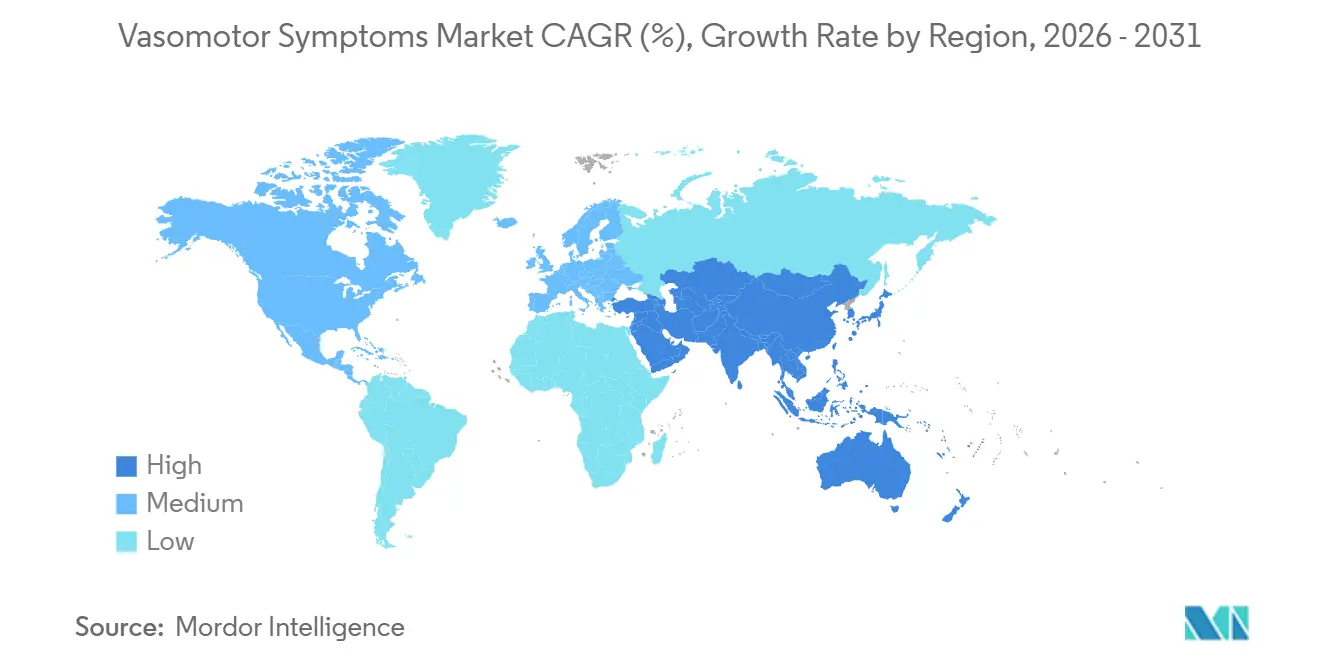
| Fastest Growing Market | Asia-Pacific |
| Largest Market | North America |
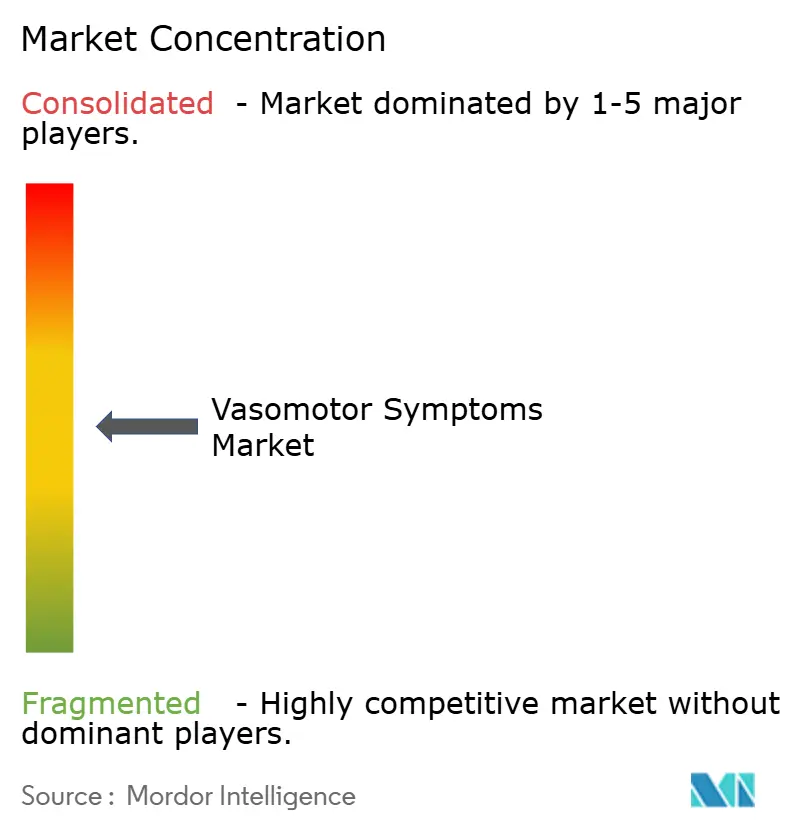
| Market Concentration | Medium |
Major Players *Disclaimer: Major Players sorted in no particular order Image © Mordor Intelligence. Reuse requires attribution under CC BY 4.0. | |
Vasomotor Symptoms Market Analysis by Mordor Intelligence
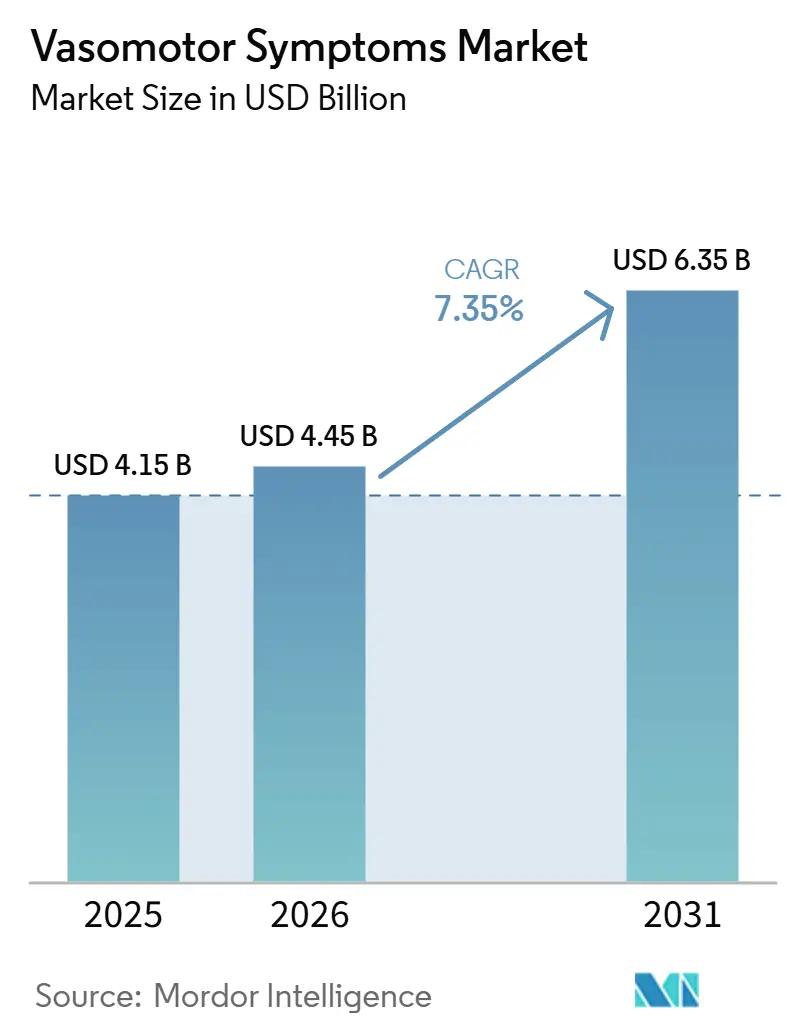
The vasomotor symptoms market was valued at USD 4.2 billion in 2025 and estimated to grow from USD 4.5 billion in 2026 to reach USD 6.4 billion by 2031, at a CAGR of 7.4% during the forecast period 2026-2031. The demand base for the vasomotor symptoms market remains structurally strong because more than 1 billion women were in their postmenopausal years in 2025, and that total is expected to rise to 1.2 billion by 2030. The clinical need also remains broad because up to 80% of women experience hot flashes or night sweats during the menopausal transition, which keeps a large share of patients in need of symptom relief across different care settings. The vasomotor symptoms market is also changing because the rapid arrival of new non-hormonal neurokinin receptor antagonists has widened prescribing choice and created a more active competitive field after a long period of limited therapeutic change. Growth in the vasomotor symptoms market still faces friction from liver safety monitoring for fezolinetant, uneven reimbursement outside developed markets, and social stigma that reduces care-seeking in parts of Asia and the Middle East and Africa. Access is widening at the same time through employer menopause programs, virtual care expansion, and digital support tools, which together support the current growth path of the vasomotor symptoms market.
Key Report Takeaways
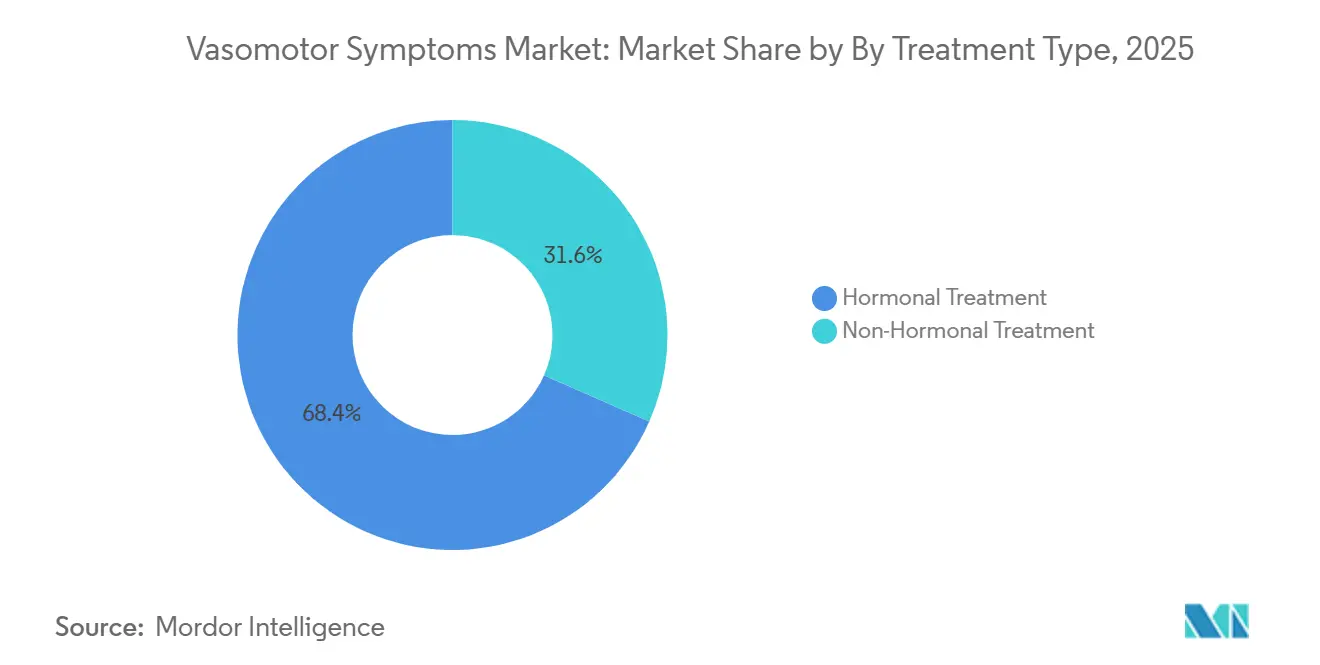
- By treatment type, hormonal treatment held 68.4% share in 2025, while non-hormonal treatment is forecasted to expand at 10.8% CAGR through 2031.
- By route of administration, oral delivery held 56.5% share in 2025, while transdermal gel and spray formats are projected to grow at 8.8% CAGR through 2031.
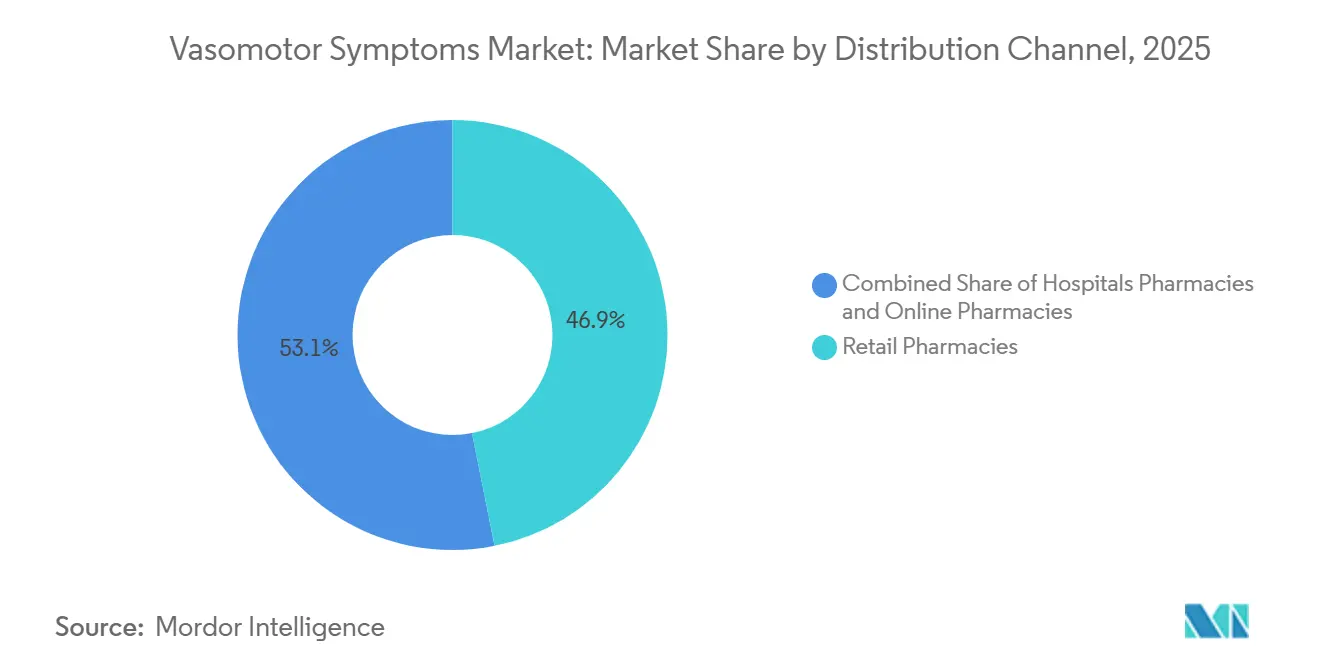
- By distribution channel, retail pharmacies held 46.9% share in 2025, while online pharmacies are projected to advance at 12.7% CAGR through 2031.
- By menopausal stage, early post-menopause held 43.6% share in 2025, while perimenopause is projected to grow at 8.4% CAGR through 2031.
- By geography, North America held 41.9% share in 2025, while Asia-Pacific is projected to expand at 10.5% CAGR through 2031.
Note: Market size and forecast figures in this report are generated using Mordor Intelligence’s proprietary estimation framework, updated with the latest available data and insights as of January 2026.
Market Trends and Insights
Drivers Impact Analysis of Vasomotor Symptoms Market*
| Driver | % Impact on CAGR Forecast | Geographic Relevance | Impact Timeline |
|---|---|---|---|
| Rise In Post-Menopausal Female Population Base | +2.1% | Global | Long term (≥ 4 years) |
| Growing Pharmaceutical Investment In Women's Health Portfolios | +1.5% | North America, Europe, Asia-Pacific | Medium term (2-4 years) |
| Rapid Approvals Of Neurokinin-3 Receptor Antagonists | +1.2% | North America, Europe, Australia, Canada | Short term (≤ 2 years) |
| Employer Adoption Of Menopause Benefits Platforms | +0.8% | North America, Europe | Medium term (2-4 years) |
| AI-Enabled Precision Dosing and Companion Diagnostics | +0.50% | North America & EU; spill-over to South Korea and China | Medium term (2–4 years) |
| Expansion Of Tele-Menopause Virtual Clinics In Underserved Regions | +0.7% | Asia-Pacific, South America, Middle East and Africa, Rural North America | Medium term (2-4 years) |
| Source: Mordor Intelligence | |||
Rise in Post-Menopausal Female Population Base
The vasomotor symptoms market continues to benefit from a large and durable demographic base that keeps new patients entering treatment consideration every year. More than 1 billion women were in their postmenopausal years in 2025, and the World Health Organization expects that figure to reach 1.2 billion by 2030.[1]World Health Organization, “Menopause,” WHO Fact Sheet, who.int The burden is not evenly distributed because a large share of postmenopausal women will live in lower and middle-income countries where treatment infrastructure remains thinner than in OECD markets. Since up to 80% of women experience vasomotor symptoms during the menopausal transition, population growth adds to an already under-treated pool rather than only widening a fully served market.
Growing Pharmaceutical Investment in Women's Health Portfolios
The vasomotor symptoms market is drawing more visible pharmaceutical attention as large companies deepen their women’s health focus through acquisitions, approvals, and late-stage development activity. Sun Pharmaceutical Industries announced in April 2026 that it would acquire Organon & Co. in a cash deal valued at USD 11.75 billion, bringing together a broad women’s health portfolio with global reach across more than 140 countries. Bayer expanded the commercial profile of elinzanetant through approvals in the UK, the United States, and the European Union during 2025, which shows sustained capital commitment to a new non-hormonal class. Astellas also moved fezolinetant forward in Japan in 2026 through a positive Phase 3 readout, which keeps the pipeline active across major regions rather than only in North America and Europe. This pattern matters for the vasomotor symptoms market because bigger portfolios usually bring stronger launch support, wider registration effort, and more consistent payer engagement.
Rapid Approvals of Neurokinin-3 Receptor Antagonists
The vasomotor symptoms market has changed materially because 2 neurokinin receptor antagonists reached approval within a short period and created a new non-hormonal treatment lane. Fezolinetant became the first NK-3 receptor antagonist approved by the FDA in May 2023, and Bayer’s elinzanetant then secured approvals in the UK, the United States, and the European Union during 2025.[2]Semantic Scholar, “The Global Population of Postmenopausal Women and Long-Term Health,” Semantic Scholar PDF, pdfs.semanticscholar.org Elinzanetant also received a broader European label that includes hot flashes caused by adjuvant endocrine therapy for breast cancer, which gives it a wider addressable use case than other approved non-hormonal options. The broader pipeline remains active in China, where additional NK-3 antagonist candidates were in Phase 2 development. Each approval also gives payers and clinicians a reason to revisit treatment pathways, so the effect on the vasomotor symptoms market extends beyond a single launch event.
Employer Adoption of Menopause Benefits Platforms
Employer-backed care models are opening a separate access route for the vasomotor symptoms market, especially for therapies that may face reimbursement hurdles in standard plans. The Society for Human Resource Management reported that 5% of U.S. employers offered menopause-specific benefits in 2024, up from 4% in 2023.[3]Sun Pharmaceutical Industries, “Sun Pharma Signs Definitive Agreement to Acquire Organon,” Business Wire, businesswire.com Sun Life U.S. added a menopause benefit through Progyny in March 2025 and cited evidence that 73% of women do not seek proper treatment for menopause symptoms, which shows why employers see a gap worth addressing. CVS Health also became the first U.S. company to earn Menopause Friendly Accreditation in March 2025, embedding clinical and non-clinical support into employee and customer benefits. These programs matter for the vasomotor symptoms market because they can lower patient friction and create a more direct route into consultation, prescription, and follow-up care.
Expansion of Tele-Menopause Virtual Clinics in Underserved Regions
Virtual care is becoming an important access lever for the vasomotor symptoms market because specialist capacity does not expand quickly enough through traditional clinic models alone. The Uniformed Services University has operated a telehealth model since June 2024 for U.S. military personnel and families, showing that menopause care can be delivered at scale across dispersed populations. In Australia, the New South Wales Government launched a fourth virtual menopause hub for south-west Sydney in July 2026, extending specialist access across Western Sydney and the Murrumbidgee district to as many as 200 women per month in the initial phase. Digital women’s health platforms are also tying consultation and medicine fulfillment together, which supports faster treatment initiation through online channels. This matters for the vasomotor symptoms market because underserved geographies often need service redesign more than incremental clinic expansion.
AI-Enabled Precision Dosing and Companion Diagnostics
Digital decision support is starting to shape the vasomotor symptoms market by making symptom staging and therapy planning more structured. Fraunhofer Institute for Experimental Software Engineering launched the PETRA AI project in November 2025, and the program is developing an app that provides individually tailored menopause therapy recommendations while routing anonymized data back into research. Natural Cycles also launched NC° Perimenopause in 2025, using cycle patterns, wearable data, and symptom tracking to help identify menopausal stage earlier. The practical value for the vasomotor symptoms market is that more consistent staging can shorten the time between symptom recognition and treatment selection. Over time, these tools can also support better real-world evidence generation, which is important for newer therapies that still need stronger long-term utilization data.
Restraints Impact Analysis of Vasomotor Symptoms Market*
| Restraint | % Impact on CAGR Forecast | Geographic Relevance | Impact Timeline |
|---|---|---|---|
| Long-Term Hepatic Safety Concerns For NK-3 Antagonists | -0.6% | Global, most acute in North America and Europe | Short term (≤ 2 years) |
| Limited Reimbursement Outside OECD Markets | -0.8% | Asia-Pacific, Middle East and Africa, South America | Long term (≥ 4 years) |
| Cultural Stigma Suppressing Care-Seeking In Asia And Middle East And Africa | -0.5% | Asia-Pacific, Middle East and Africa | Long term (≥ 4 years) |
| Regulatory Ambiguity For Botanical OTC Supplements | -0.4% | Global | Medium term (2-4 years) |
| Source: Mordor Intelligence | |||
Long-Term Hepatic Safety Concerns for NK-3 Antagonists
Safety monitoring remains one of the clearest near-term constraints on the vasomotor symptoms market because it directly affects prescribing comfort and patient follow-through. The FDA first issued a Drug Safety Communication on fezolinetant in September 2024 and then added a boxed warning in December 2024 after postmarketing reports of serious liver injury. The revised protocol requires baseline liver function testing, monthly testing for the first 3 months, and further testing at months 6 and 9, which adds a practical burden to routine use. The European Medicines Agency also issued a direct healthcare professional communication in 2025, showing that the monitoring issue is not limited to the United States. Even though elinzanetant showed a cleaner hepatic profile in the OASIS trials, prescriber confidence in the broader class will still depend on longer-term safety experience.
Limited Reimbursement Outside OECD Markets
Uneven reimbursement slows the vasomotor symptoms market because treatment access depends on more than clinical need alone. NICE recommended fezolinetant for National Health Service use in England and required funding within 90 days for eligible patients, which shows how formal reimbursement can speed uptake once a pathway is established. Outside Western Europe, many national health technology assessment systems have not yet fully evaluated NK-3 antagonists, which leaves newer therapies in a holding pattern across large patient populations. In the United States, UnitedHealthcare requires prior authorization for fezolinetant and elinzanetant, including evidence of prior treatment use, which shows that access conditions remain controlled even in advanced markets. These hurdles matter for the vasomotor symptoms market because they restrict conversion from diagnosed need into paid treatment.
Cultural Stigma Suppressing Care-Seeking in Asia and Middle East and Africa
Social attitudes continue to limit the vasomotor symptoms market in several regions because stigma keeps many women from seeking care or even discussing symptoms. A 2025 scoping review across low and middle income countries found that many women in Asian and African settings still viewed menopause as a natural phase that does not require medical attention, while some women in China were described within family settings as mentally unstable. In Nigeria, 80.6% of women without experienced stigma accessed professional care compared with 48.6% of women who had encountered stigma, which shows how social context directly changes treatment behavior. The same review also pointed to provider knowledge gaps across China, Malaysia, Thailand, Nigeria, and the Middle East, which limits evidence-based management even after women enter the health system. A 2026 analysis in Frontiers in Global Women’s Health found that many Middle Eastern countries still lack national guidelines or public education campaigns on menopause, which keeps care pathways weak.
Regulatory Ambiguity for Botanical OTC Supplements
The supplement segment creates a more uncertain part of the vasomotor symptoms market because rules on claims and evidence differ across major jurisdictions. Harvard Health noted in 2025 that the U.S. framework allows structure-function claims for supplements but does not allow disease claims, while scrutiny has increased for products positioned around symptom relief without adequate substantiation. In Europe, the Court of Justice of the European Union confirmed in 2025 that botanical products cannot make health claims without formal authorization based on scientific evaluation, which narrowed the acceptable marketing language for many menopause-positioned supplements. A Frontiers in Nutrition review also noted a long gap in comprehensive global guidance on natural health products, which leaves the broader policy environment uneven. This limits the vasomotor symptoms market because it raises compliance costs, weakens product differentiation, and leaves many consumers more cautious about botanical alternatives.
*Our forecasts treat driver/restraint impacts as directional, not additive. The impact forecasts reflect baseline growth, mix effects, and variable interactions.
Vasomotor Symptoms Market Segment Analysis
By Treatment Type:
Hormonal Therapy Dominant, Non-Hormonal Momentum BuildsHormonal treatment held 68.4% of vasomotor symptoms market share in 2025, which made it the largest revenue pool across treatment options. This position reflects long clinical use, broad physician familiarity, and strong evidence that menopausal hormone therapy can reduce vasomotor symptom frequency by as much as 75% versus placebo. Estrogen-only products serve women without a uterus, while combination estrogen-progesterone products remain central for women with an intact uterus, so prescribing patterns are shaped by standard risk screening and patient history. Hormonal therapy also benefits from established payer pathways in developed markets, which supports stable use in primary care and OB/GYN settings.
The vasomotor symptoms market size for non-hormonal treatment is projected to expand at 10.8% CAGR through 2031, making it the fastest-growing treatment group. This expansion is being driven mainly by NK-targeted therapies, especially fezolinetant from Astellas and elinzanetant from Bayer, which have given clinicians a new option for patients who cannot or do not want to use hormones. SSRIs and SNRIs still hold a practical role for women with hormone contraindications, although their use is more selective and their effect profile is less direct than targeted NK therapies. Herbal and dietary supplements remain the most fragmented corner of the vasomotor symptoms industry, and their growth is constrained by tighter rules on symptom claims and weaker product differentiation.



By Route of Administration:
Oral Leadership Tested by Transdermal InnovationOral delivery accounted for 56.5% of the vasomotor symptoms market in 2025, which kept it ahead of all other administration routes. This lead reflects the long-established role of oral hormone therapy and the fact that both approved NK-targeted therapies are taken orally once daily. Physician comfort with tablet-based regimens also supports oral continuity because titration, counseling, and refill behavior are already well understood in routine practice. The Asia-Pacific Menopause Federation’s 2025 consensus statement further noted that oral hormone therapy remains the most common format prescribed across the region.
Transdermal gel and spray formulations are projected to grow at 8.8% CAGR through 2031, which makes them the most dynamic route. Their appeal comes from bypassing first-pass hepatic metabolism, reducing thromboembolism risk relative to some oral options, and providing steadier hormone exposure in daily use. This route is especially relevant in a vasomotor symptoms market where liver monitoring has become more prominent around some non-hormonal agents, because clinicians may place higher value on cleaner delivery logic in the overall treatment plan. Patches, parenteral formats, and vaginal or topical routes remain important for narrower clinical needs, but they do not yet match the scale of oral use or the current momentum of transdermal innovation.
By Distribution Channel:
Retail Holds Share, Digital Channels Outpace Traditional MetricsRetail pharmacies held 46.9% share in 2025, which kept them as the main dispensing point for branded hormonal products, generic therapies, and over-the-counter supplements. Their lead is tied to geographic reach, same-day access, and routine use by patients who receive prescriptions from primary care or gynecology practices. Retail formats also remain important in the vasomotor symptoms market because they bridge prescription therapy and self-care purchases in one setting. This channel should remain relevant even as newer therapies expand, since patients still need local refill access and pharmacist support.
The vasomotor symptoms market size for online pharmacies is projected to advance at 12.7% CAGR through 2031, which makes digital fulfillment the fastest-growing channel. Growth is being supported by tele-menopause models that combine consultation, prescribing, and home delivery in a single patient workflow. This structure fits the needs of women who want privacy, convenience, and easier follow-up, especially in perimenopause and early post-menopause when symptom patterns may shift quickly. Hospital pharmacies remain smaller in overall volume, but they still matter for institution-led gynecology and oncology care, particularly as elinzanetant’s breast cancer-related indication expands its relevance in formal care settings.
By Menopausal Stage:
Early Post-Menopause Dominates, Perimenopause Commands the Growth CurveEarly post-menopause accounted for 43.6% of the vasomotor symptoms market size in 2025, reflecting the period when hot flashes and night sweats are often most frequent and most disruptive. This stage usually draws the highest treatment intensity because the symptom burden is clearer and the evidence base for intervention is well established. Both hormonal and non-hormonal options are heavily studied in this group, which supports confident prescribing. Late post-menopause holds a smaller share because symptom severity often eases over time and new treatment starts become less common.
Perimenopause is projected to grow at 8.4% CAGR through 2031, which makes it the fastest-moving stage category in the vasomotor symptoms market. Earlier symptom recognition is supporting this shift because clinicians are paying more attention to vasomotor symptoms before final menstrual cessation rather than waiting for confirmed post-menopausal status. Digital tools such as NC° Perimenopause are also pushing care earlier by helping women identify stage changes through symptom and cycle tracking. This has commercial importance because earlier entry can lengthen average treatment duration and reward therapies with better tolerability and easier ongoing use.
Geography Analysis
North America Vasomotor Symptoms Market
North America held 41.9% of vasomotor symptoms market share in 2025, which made it the leading regional contributor. The region benefits from strong specialist access, early adoption of new therapies, and better-established reimbursement systems than most other markets. The FDA’s 2024 boxed warning on fezolinetant added monitoring complexity, but it also increased attention on class differentiation rather than stopping commercial interest in non-hormonal care. Employer-sponsored menopause programs from organizations such as Sun Life U.S. and CVS Health are also widening access beyond standard payer channels.
Europe Vasomotor Symptoms Market
Europe remained the second-largest regional block and continues to be shaped by formal reimbursement reviews and regulatory milestones. Bayer reported that around 40% of women in Europe experience moderate to severe vasomotor symptoms based on data from the OASIS clinical program. The European Commission approved elinzanetant in November 2025 for both menopause-associated vasomotor symptoms and vasomotor symptoms related to endocrine therapy for breast cancer, which gave the region the broadest approved non-hormonal label in the category. NICE also required National Health Service funding for fezolinetant within 90 days for eligible patients, although reimbursement remains uneven across European countries and creates a two-speed access pattern.
APAC, MEA and South America Vasomotor Symptoms Market
The Asia-Pacific vasomotor symptoms market size is projected to grow at 10.5% CAGR through 2031, which makes it the fastest-growing regional segment. Japan remains a key country to watch because Astellas reported positive Phase 3 results for fezolinetant there in February 2026, supporting a future regulatory filing. Australia has also moved early with elinzanetant approval and expanded access through a fourth virtual menopause hub in New South Wales during 2026. At the same time, provider knowledge gaps in parts of Asia and persistent stigma in the Middle East and Africa continue to suppress diagnosis and treatment uptake. South America remains a smaller opportunity set, and future expansion there is likely to depend on stronger structured access pathways and broader women’s health engagement.

Competitive Landscape
The vasomotor symptoms market has a moderately concentrated structure, with Bayer AG, Astellas Pharma, Pfizer, AbbVie, and Organon appearing as major reference points alongside generic manufacturers and focused women’s health players. The competitive field is not locked by one company because leadership is divided between established hormonal portfolios and newer non-hormonal innovation. April 2026 brought the most significant consolidation step when Sun Pharmaceutical Industries announced its plan to acquire Organon & Co. for USD 11.75 billion, a move that would combine more than 70 products across over 140 markets and create a larger global women’s health platform. This deal matters for the vasomotor symptoms market because scale can strengthen commercial reach, payer negotiation, and portfolio bundling across adjacent women’s health categories.
Bayer has built a clear differentiation point through elinzanetant, which is the only approved non-hormonal therapy with a dual indication that includes endocrine-therapy-related vasomotor symptoms in breast cancer patients. Astellas remains central to the vasomotor symptoms market through fezolinetant and by continuing to extend the product into Japan after its positive 2026 Phase 3 outcome. Generic players such as Cipla, Lupin, Teva, and Viatris are better positioned in hormonal therapy, where long product histories and patent expiry create more room for volume competition. In contrast, the NK-targeted segment remains protected by newer intellectual property and more limited direct competition.
Strategic moves in the vasomotor symptoms market are increasingly centered on access as much as on molecule development. Bayer used sequential approvals across the UK, the United States, and the European Union in 2025 to establish a broad launch footprint for elinzanetant. Sun Pharma chose a portfolio acquisition route, which could quickly increase its relevance in women’s health without waiting for a single product cycle to mature. A real-world evidence presentation at ENDO 2026 also supported the value case for fezolinetant by showing improvement in hot flashes, depression, and anxiety symptoms across 656 women. White space remains in precision selection tools, real-world evidence generation, and broader registration outside OECD markets, so competition in the vasomotor symptoms market is likely to stay active rather than become winner-take-all.
Vasomotor Symptoms Industry Leaders
AbbVie Inc.
Astellas Pharma Inc.
Bayer AG
Endoceutics Inc.
Viatris Inc.
- *Disclaimer: Major Players sorted in no particular order
Vasomotor Symptoms Market Companies Covered in this Report
- Abbvie
- Astellas Pharma
- Bayer
- Besins Healthcare
- Cipla
- Eisai
- Endoceutics Inc.
- Ferring Pharmaceuticals
- Fervent Pharmaceuticals
- Hisamitsu Pharmaceutical Co.
- KaNDy Therapeutics
- Knight Therapeutics Inc.
- Lupin
- Mithra Pharmaceuticals
- Novo Nordisk
- Organon and Co.
- Pfizer
- Sun Pharma Industries Ltd.
- Teva Pharmaceutical Industries
- Theramex
- Viatris

Recent Industry Developments in Vasomotor Symptoms Market
- April 2026: Sun Pharmaceutical Industries signed a definitive agreement to acquire Organon & Co. for USD 14.00 per share in an all-cash transaction with an enterprise valuation of USD 11.75 billion. The deal, expected to close in early 2027, integrates Organon's portfolio of over 70 women's health and general medicine products across 140+ markets into Sun Pharma's global operations, projecting a top-3 ranking in global women's health.
- February 2026: Astellas Pharma announced that its STARLIGHT 2 Phase 3 pivotal study of fezolinetant in Japan met its primary endpoint for treating VMS associated with menopause. Full results are expected to be submitted for publication and presented at a scientific congress in late 2026, and the data will support a regulatory filing in Japan.
- November 2025: The European Commission granted marketing authorization for Bayer's Lynkuet (elinzanetant) in the EU for both menopause-associated VMS and VMS caused by adjuvant endocrine therapy for breast cancer, making it the only non-hormonal VMS drug globally with this dual indication.
- March 2025: Sun Life US added a menopause benefit for employees via Progyny, recognizing that 73% of women do not seek proper treatment for menopause symptoms.
- March 2025: CVS Health became the first US company to earn the Menopause Friendly Accreditation from MiDOViA, embedding clinical and non-clinical menopause solutions, including a virtual provider network, into its employee and customer benefits framework.


Global Vasomotor Symptoms Market Report Scope
| Hormonal Treatment | Estrogen |
| Progesterone | |
| Estrogen-Progesterone Combination | |
| Non-Hormonal Treatment | NK-3 Receptor Antagonists |
| SSRIs | |
| SNRIs | |
| Gabapentinoids | |
| Herbal and Dietary Supplements |
| Oral |
| Transdermal Patch |
| Transdermal Gel and Spray |
| Parenteral, Injectable |
| Topical, Vaginal and Derma |
| Hospital Pharmacies |
| Retail Pharmacies |
| Online Pharmacies |
| Perimenopause |
| Early Post-Menopause, Less Than 5 Years |
| Late Post-Menopause, More Than 5 Years |
| North America | United States |
| Canada | |
| Mexico | |
| Europe | Germany |
| United Kingdom | |
| France | |
| Italy | |
| Spain | |
| Rest of Europe | |
| APAC | China |
| India | |
| Japan | |
| Australia | |
| South Korea | |
| Rest of APAC | |
| Middle East and Africa | GCC |
| South Africa | |
| Rest of Middle East and Africa | |
| South America | Brazil |
| Argentina | |
| Rest of South America |
| By Treatment Type | Hormonal Treatment | Estrogen |
| Progesterone | ||
| Estrogen-Progesterone Combination | ||
| Non-Hormonal Treatment | NK-3 Receptor Antagonists | |
| SSRIs | ||
| SNRIs | ||
| Gabapentinoids | ||
| Herbal and Dietary Supplements | ||
| By Route of Administration | Oral | |
| Transdermal Patch | ||
| Transdermal Gel and Spray | ||
| Parenteral, Injectable | ||
| Topical, Vaginal and Derma | ||
| By Distribution Channel | Hospital Pharmacies | |
| Retail Pharmacies | ||
| Online Pharmacies | ||
| By Menopausal Stage | Perimenopause | |
| Early Post-Menopause, Less Than 5 Years | ||
| Late Post-Menopause, More Than 5 Years | ||
| Geography | North America | United States |
| Canada | ||
| Mexico | ||
| Europe | Germany | |
| United Kingdom | ||
| France | ||
| Italy | ||
| Spain | ||
| Rest of Europe | ||
| APAC | China | |
| India | ||
| Japan | ||
| Australia | ||
| South Korea | ||
| Rest of APAC | ||
| Middle East and Africa | GCC | |
| South Africa | ||
| Rest of Middle East and Africa | ||
| South America | Brazil | |
| Argentina | ||
| Rest of South America | ||


Key Questions Answered in the Report
What is the current size of the vasomotor symptoms space and how fast is it growing?
The vasomotor symptoms market was valued at USD 4.2 billion in 2025, stands at USD 4.5 billion in 2026, and is forecast to reach USD 6.4 billion by 2031 at a 7.4% CAGR.
Which treatment category currently leads vasomotor symptom care?
Hormonal treatment led in 2025 with 68.4% share because it has the longest clinical history, broad physician familiarity, and the strongest symptom-reduction evidence.
Why are non-hormonal therapies gaining more attention?
Non-hormonal treatment is forecast to grow at 10.8% CAGR through 2031 because NK-targeted therapies have expanded options for women who cannot or do not want to use hormones.
Which region is the largest today and which one is growing fastest?
North America held 41.9% share in 2025, while Asia-Pacific is projected to grow fastest at 10.5% CAGR through 2031.
What are the main risks affecting adoption of newer therapies?
The main near-term issue is liver safety monitoring around fezolinetant, while uneven reimbursement and social stigma continue to slow conversion from unmet need into treated demand.
How are care delivery models changing in this field?
Online pharmacies are projected to grow at 12.7% CAGR, and employer programs, tele-menopause clinics, and digital staging tools are making consultation and treatment access easier.
Page last updated on:





