
Urban Farming Market Size and Share
Market Overview
| Study Period | 2022 - 2032 |
|---|---|
| Market Size (2027) | USD 198.66 Billion |
| Market Size (2032) | USD 277.15 Billion |
| Growth Rate (2027 - 2032) | 6.89 % |
| Fastest Growing Market | Asia-Pacific |
| Largest Market | North America |
| Market Concentration | Medium |
Major Players *Disclaimer: Major Players sorted in no particular order Image © Mordor Intelligence. Reuse requires attribution under CC BY 4.0. | |
Urban Farming Market Analysis by Mordor Intelligence
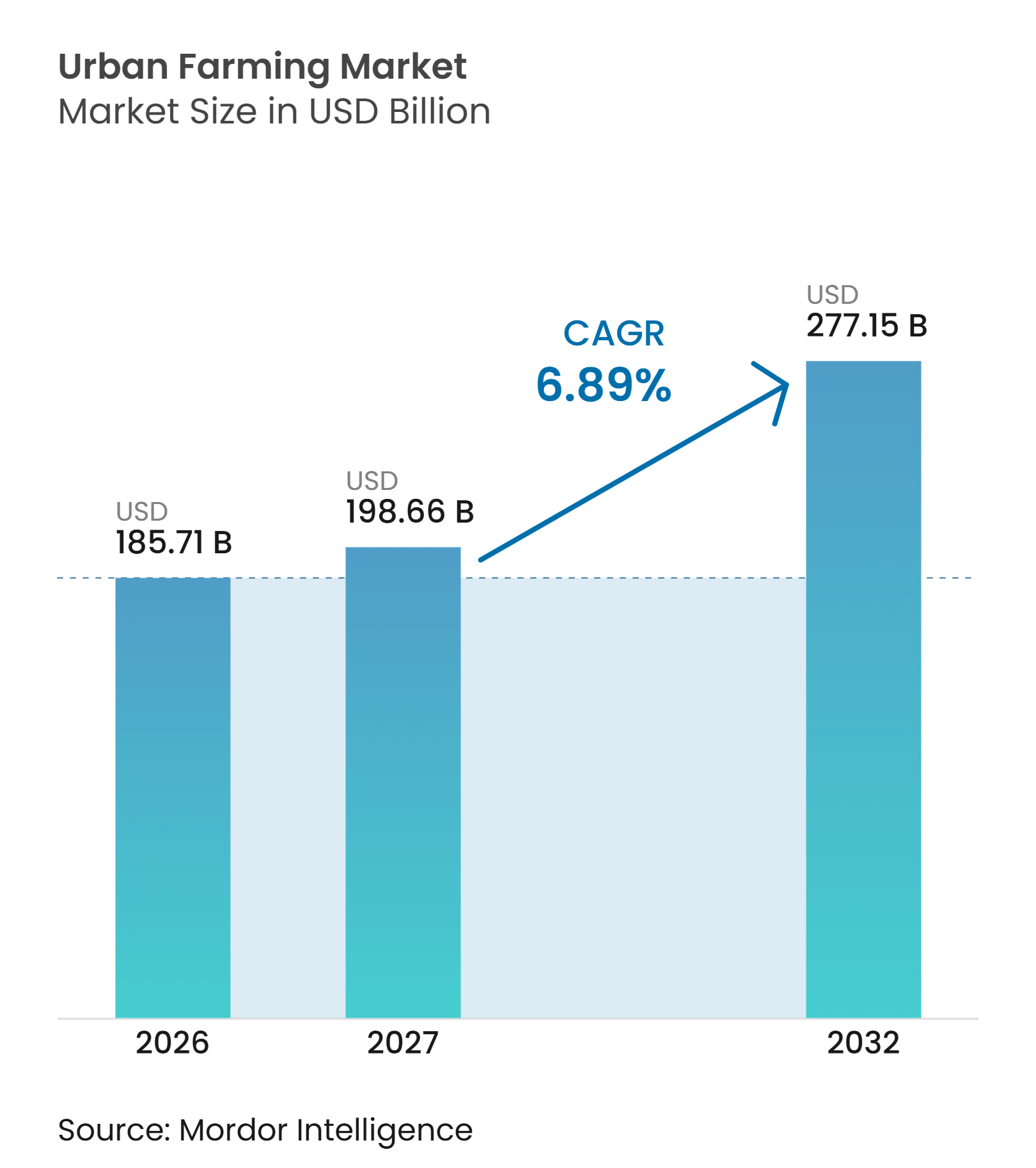
The urban farming market size is projected to expand from USD 185.71 billion in 2026 and USD 198.66 billion in 2027 to reach USD 277.15 billion by 2032, registering a CAGR of 6.89% during the forecast period (2027-2032). Food production inside cities shortens the path from cultivation to consumption and allows controlled-environment operators to supply crops throughout the year. The Urban farming market is moving toward models that show viable operating economics and dependable retail integration, rather than pursuing capacity without a clear route to profitability. This shift favors greenhouse and hybrid operators that can manage energy use while meeting retailer requirements for consistent supply. Retailers are also becoming operating partners through farms located near stores and distribution points, which can reduce the time between harvest and sale. The Urban farming market therefore has openings in food security programs, specialty crops, and modular facilities that suit locations where conventional agricultural supply chains are less developed.
Key Report Takeaways
-
By farming structure, vertical farming held the largest share at 32.5% of the urban farming market size in 2026, while container farming is forecast to grow at the fastest CAGR of 9.1% from 2027 to 2032.
-
By growing technology, hydroponics held 52.2% of the urban farming market share in 2026, while aeroponics is estimated to grow at the highest CAGR of 9.4% from 2027 to 2032.
-
By crop type, vegetables accounted for 43.3% of the urban farming market size in 2026, while herbs and microgreens are forecast to grow at the fastest CAGR of 9.6% from 2027 to 2032.
-
By producer type, commercial urban farming companies accounted for 57.3% of the urban farming market size in 2026, while household and residential growers are projected to grow at the fastest CAGR of 8.1% from 2027 to 2032.
-
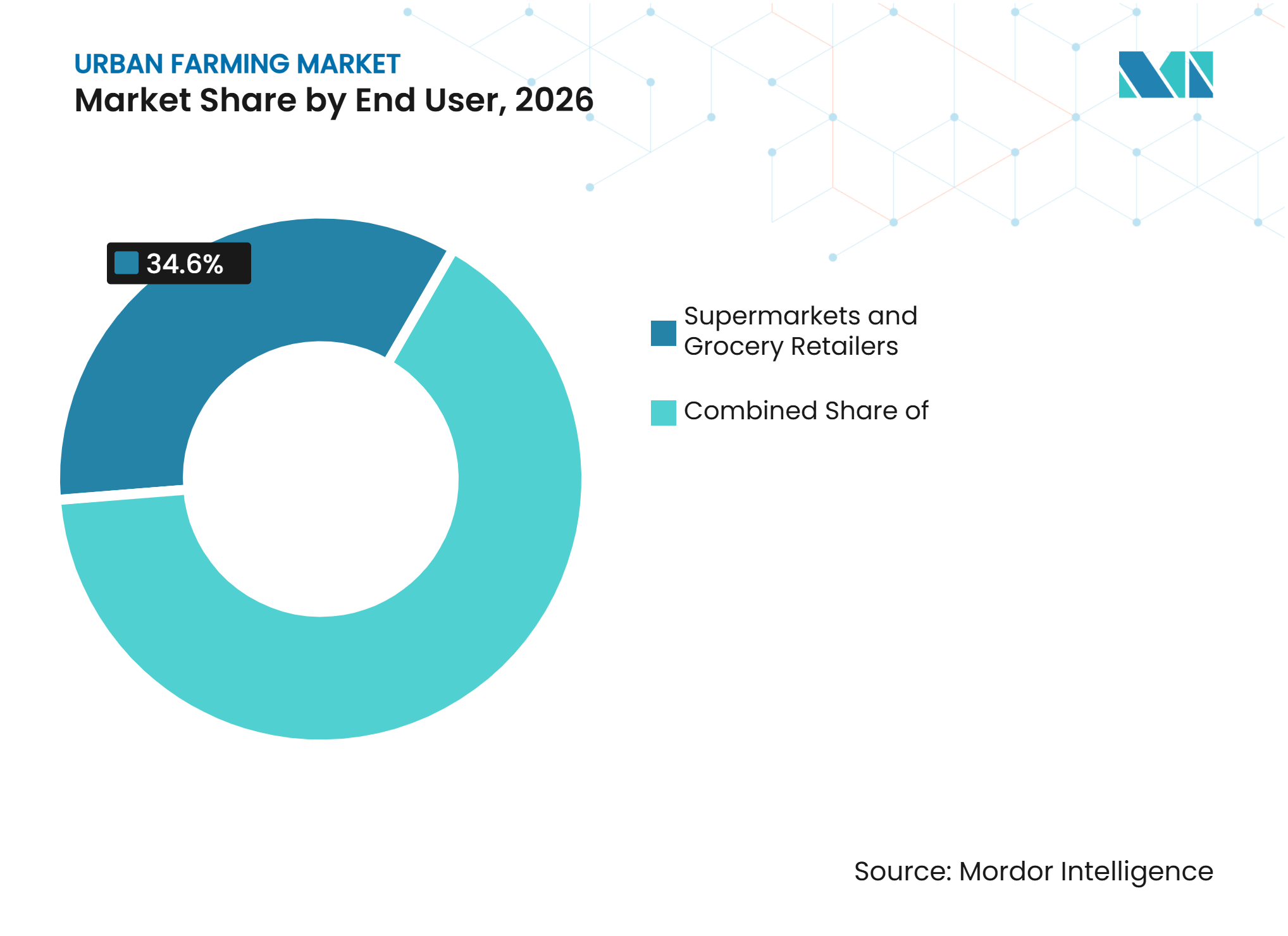
By end user, supermarkets and grocery retailers accounted for the largest share of the urban farming market, at 34.6% in 2026, while restaurants and foodservice operators are projected to grow at the fastest CAGR of 9.5% from 2027 to 2032.
-
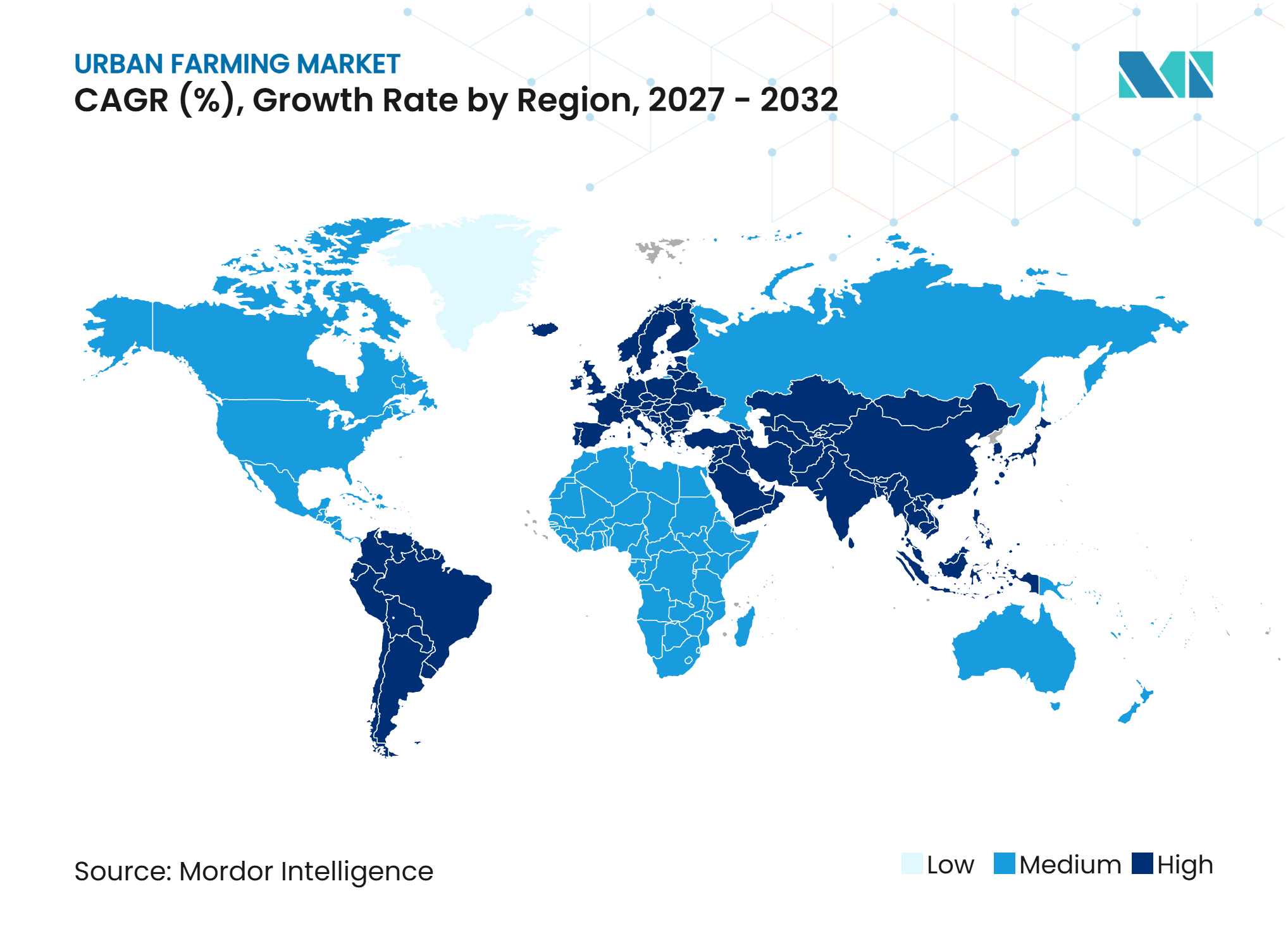
By geography, North America held 33.4% of the urban farming market share in 2026, while Asia-Pacific is estimated to grow at the highest CAGR of 10.2% from 2027 to 2032.
Note: Market numbers in this report are based on Mordor Intelligence's proprietary estimation framework, which combines nine months of actuals with Q4 projections for base year 2026.
Market Trends and Insights
Drivers Impact Analysis of Urban Farming Market*
| Driver | (~) % Impact on CAGR Forecast | Geographic Relevance | Impact Timeline |
|---|---|---|---|
| Urban Food Security and Import-Resilience Demand | +1.50% | Global, with highest relevance in Singapore, Saudi Arabia, the United Arab Emirates, Japan, and other import-dependent cities | Short term (≤ 2 years) |
| Rising Demand for Fresh, Local and Traceable Produce | +1.20% | North America and Europe, with notable relevance in the United States, Canada, Germany, the United Kingdom, Japan, and Australia | Medium term (2-4 years) |
| Declining Access to Productive Land Near Cities | +1.00% | Asia-Pacific and the Middle East, with spillover to South America and particular relevance in Singapore, Japan, China, India, and Gulf cities | Long term (≥ 4 years) |
| Commercialization of Modular Indoor Farming | +0.90% | Global, with early gains in the United States, China, India, Singapore, and the United Arab Emirates | Medium term (2-4 years) |
| Foodservice and Retail Demand for Year-Round Specialty Crops | +0.80% | North America and Asia-Pacific, with relevance in the United States, Canada, Japan, South Korea, and premium Gulf markets | Short term (≤ 2 years) |
| Public and Private Investment in Controlled-Environment Agriculture | +0.60% | Asia-Pacific, the Middle East and Africa, and Europe, with particular relevance in China, India, Singapore, Saudi Arabia, and the United Arab Emirates | Long term (≥ 4 years) |
| Source: Mordor Intelligence | |||
Urban Food Security and Import Resilience Demand
Food security is becoming an operating priority for many urban economies that depend heavily on imported food. Singapore’s 30 by 30 policy seeks to meet 30% of the country’s nutritional needs through domestic production by 2030[1]. The policy gives controlled-environment farming a clearer place in the country’s wider food supply planning. The Urban farming market benefits when public authorities treat indoor production as part of essential local infrastructure rather than a niche food format. Governments in import-dependent Gulf cities are also directing funds toward indoor facilities because they can support local vegetable availability. This creates demand that is linked to food resilience as well as commercial produce sales. Farms with dependable off-take arrangements can present a more manageable risk profile to investors. The result is a stronger basis for large facilities where local supply is strategically important.
Rising Demand for Fresh, Local, and Traceable Produce
Retailers and foodservice buyers increasingly require clear information about inputs, growing conditions, and harvest dates. The Urban farming market can respond because digital monitoring allows operators to track production at the batch level. Short supply chains also support rapid delivery of perishable produce to stores. Walmart Canada and Lufa Farms announced a May 2025 arrangement that moved produce from a 127,000-square-foot rooftop greenhouse to store shelves within 1 hour of harvest[2]. That arrangement shows how local production can fit within a large retailer’s daily operating model. Controlled-environment systems can improve consistency when they use connected monitoring and predictive controls. This matters for buyers that need steady quality across repeat deliveries. The preference for fresh, local, and traceable products therefore supports operators that can combine production records with dependable fulfillment.
Declining Access to Productive Land Near Cities
Urban expansion reduces the availability of productive land close to population centers. The urban farming market offers a way to bring food production to rooftops, basements, disused buildings, and other built environments. A 2025 Horticulturae review found that soilless cultivation can support production in non-arable urban locations. This capability is particularly relevant in dense cities where conventional farms are far from the point of consumption. It also gives operators more options when land values make large open-field sites impractical. Facilities can use vertical space and recirculating systems to produce crops within smaller footprints. The use of urban buildings does not remove the need for appropriate planning approvals or infrastructure. It does, however, create a practical route for cities that need more local production capacity. The resulting demand is strongest where land constraints and food supply concerns occur together.
Public and Private Investment in Controlled-Environment Agriculture
Public funding can help urban growers address the initial cost of equipment, food safety improvements, and site development. New York State awarded USD 2.5 million to 51 urban farms and community gardens through its Urban Farms and Community Gardens Grant Program in 2025[3]. The program supported infrastructure, food safety upgrades, and production expansion. Such support can reduce early project risks for smaller organizations and help them improve their operating capabilities. In India, commercial hydroponics accounted for 60% of the domestic hydroponics market and grew at 22% annually, according to the cited 2025 government analysis. The Urban farming market gains when public support helps projects reach a stage where private capital can assess real operating performance. Investment is most effective when paired with clear commercial buyers and achievable energy costs. This approach can improve access to controlled-environment agriculture in regions where conventional agricultural finance remains limited.
Restraints Impact Analysis of Urban Farming Market*
| Restraint | (~) % Impact on CAGR Forecast | Geographic Relevance | Impact Timeline |
|---|---|---|---|
| Electricity-Intensive Lighting and Climate Control | -1.5% | Global, with high relevance in Germany, the United Kingdom, Japan, South Africa, and Gulf markets | Short term (≤ 2 years) |
| High Capital Costs and Uneven Financing Access | -1.3% | Global, with greatest relevance for small operators in South America, Africa, and South Asia | Medium term (2-4 years) |
| Limited Economies of Scale for Small Urban Farms | -1.0% | Global, especially in fragmented municipal markets and lower-income neighborhoods | Long term (≥ 4 years) |
| Zoning, Building Code, and Food Safety Friction | -0.8% | Global, with greatest relevance in cities without clear urban-agriculture zoning | Medium term (2-4 years) |
| Source: Mordor Intelligence | |||
Electricity-Intensive Lighting and Climate Control
Electricity use remains a major operating constraint for indoor farming. A 2025 Sustainability review found that lighting and climate control can represent 52% to 80% of a vertical farm’s total operating cost, depending on the crop and facility design[4]. High energy prices can weaken the savings in land and water that make controlled production attractive. The Urban farming market is therefore more difficult to scale in places with high tariffs or carbon-intensive electricity. Better control systems can reduce this pressure but do not eliminate it. A 2025 study of adaptive lighting reported a 20% improvement in energy efficiency and a 15% improvement in crop yield. A 2026 University of Georgia project, supported by the United States Department of Agriculture, reported 6% lower energy costs and 13% higher yields with fluorescence-based biofeedback lighting. These results show that energy optimization is improving, but it must become widely deployable for the constraint to ease.
High Capital Costs and Uneven Financing Access
Large indoor farms require spending on lighting, heating, ventilation, air conditioning, automation, structural work, and working capital. The original research describes facility development investments that can exceed USD 40 million for large installations. This scale of spending favors operators supported by strategic companies or sovereign investors. Smaller independent operators face a more limited path to debt and growth capital. The Urban farming market is therefore uneven across regions with different financing conditions. Public grants can cover early infrastructure or food safety needs, but they do not always cover the full move to commercial scale. This issue is pronounced in South America, Africa, and South Asia, where dedicated lending for precision agriculture is less established. Financing decisions increasingly depend on demonstrated production performance and a credible customer base. The restraint will continue until equipment costs, lending practices, and commercial proof points improve together.
*Our forecasts treat driver/restraint impacts as directional, not additive. The impact forecasts reflect baseline growth, mix effects, and variable interactions.
Urban Farming Market Segment Analysis
By Farming Structure:
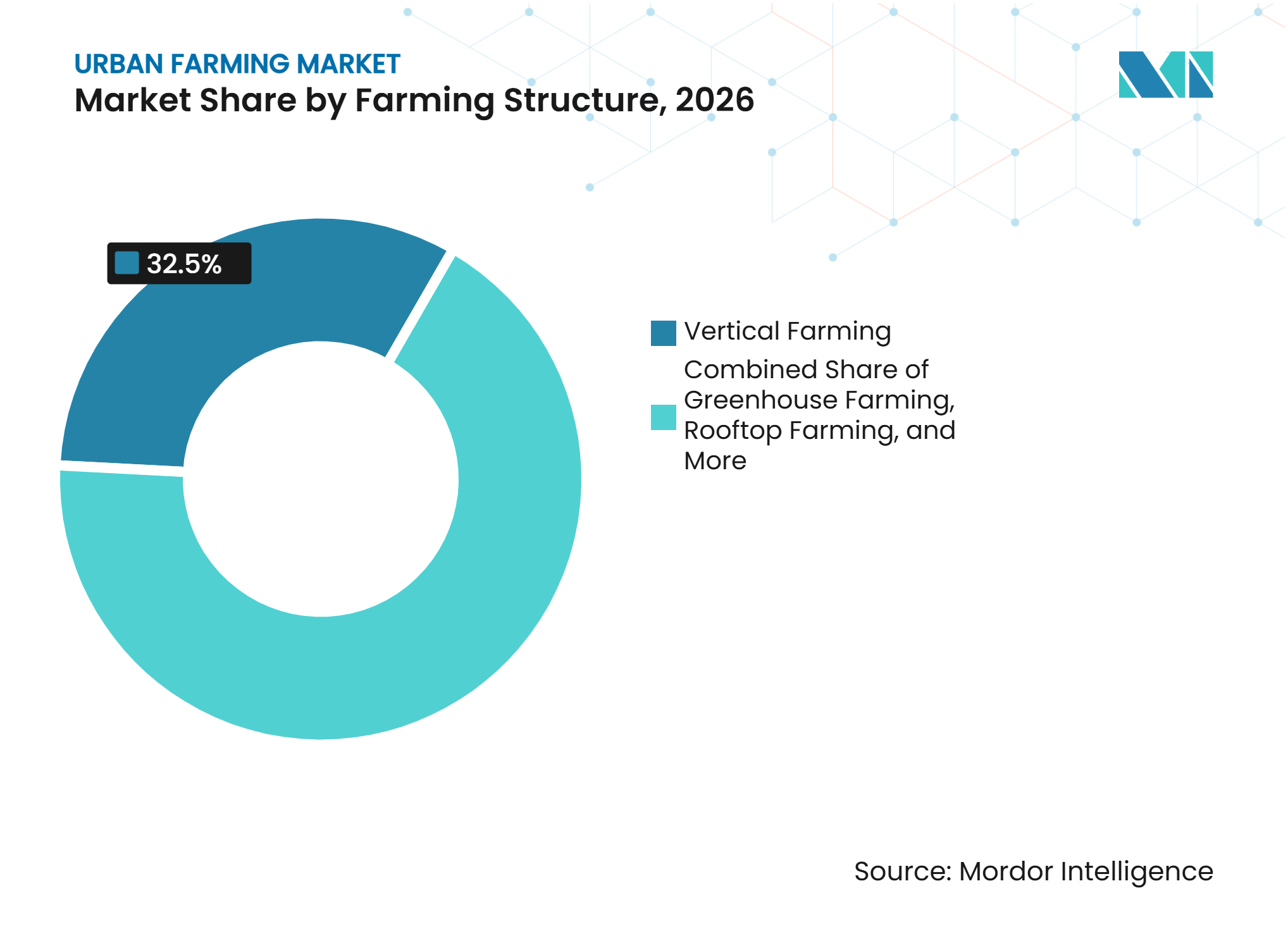
Modular Formats Broaden Market AccessVertical farming accounted for the largest share of the urban farming market in 2026, at 32.5%, driven by the growing adoption of multilayer cultivation systems that maximize production in limited urban spaces. Its leadership reflects the ability to increase growing capacity without requiring additional land, making it suitable for densely populated cities. Greenhouse farming is a more economically stable cultivation format, as access to natural daylight reduces dependence on artificial lighting and helps manage operating costs. Rooftop farming also plays a significant role in urban food production, allowing buildings to host cultivation closer to consumers. For instance, Lufa Farms operates rooftop greenhouses in Montreal and has integrated its production into a major retailer's store supply network. Open-ground and community plots serve a smaller commercial role but remain important for local participation and food access. Overall, established production practices and broader commercial familiarity continue to support vertical farming's leading position, while alternative structures provide additional routes for urban agricultural development.
Building on the demand for space-efficient cultivation, container farming is emerging as the fastest-growing structural format, with the segment projected to expand at a 9.1% CAGR from 2027 to 2032. Its growth is supported by modular infrastructure that allows operators to expand production capacity in stages rather than commit to large-scale developments from the outset. Flatpack growing rooms and standardized hydroponic arrays further improve deployment flexibility, particularly for smaller urban sites. These systems enable soilless cultivation in locations such as rooftops, basements, and other spaces unsuitable for conventional agriculture. However, commercial adoption depends on access to defined buyers, manageable energy costs, and financially viable operating models. Rooftop developments also require appropriate building approvals and planning permissions. Research published in Cities highlights the importance of structured governance in integrating agricultural facilities into urban buildings. Consequently, container farming is widening access to controlled urban cultivation, although its commercial viability remains closely linked to local infrastructure, regulatory conditions, and operating economics.



By Growing Technology:
Hydroponics Commands Market LeadershipHydroponics accounted for 52.2% of the urban farming market share in 2026, supported by its established commercial adoption and growing technological advancements. Its leadership reflects its long-standing use, broad crop compatibility, and well-developed supplier base. Recirculating water systems and precise nutrient delivery enable operators to maintain consistent production and meet the quality requirements of retail buyers. The technology is particularly suitable for dense urban locations, as it eliminates dependence on arable soil. A 2025 Horticulturae review highlighted how soilless systems enable precise control over water and nutrient delivery in enclosed environments. Aquaponics maintains a smaller market presence by integrating fish cultivation with plant production through a closed-loop system, while soil-based farming remains relevant in community settings where advanced infrastructure is not economically justified. Consequently, hydroponics continues to represent the most established technology for commercial urban food production.
Building on the established adoption of hydroponics, aeroponics is emerging as the fastest-growing technology, with its urban farming market projected to expand at a CAGR of 12.1% from 2027 to 2032. Its mist-based nutrient delivery system is reported to reduce fertilizer consumption by 60% and water use by 90% compared with hydroponics, making it particularly attractive for arid and resource-constrained regions. Aeroponics can also facilitate pesticide-free production when supported by appropriate facility designs and operating practices. Meanwhile, technological advancements in sensing and automation are improving the efficiency of urban farming systems across cultivation formats. An IEEE study in 2026 reported a 28% reduction in energy consumption per gram of dry biomass through an integrated machine-learning-calibrated sensing platform. These developments are broadening technology selection beyond resource efficiency alone, requiring operators to evaluate crop suitability, energy requirements, operational reliability, and initial capital investment when selecting an appropriate cultivation system.
By Crop Type:
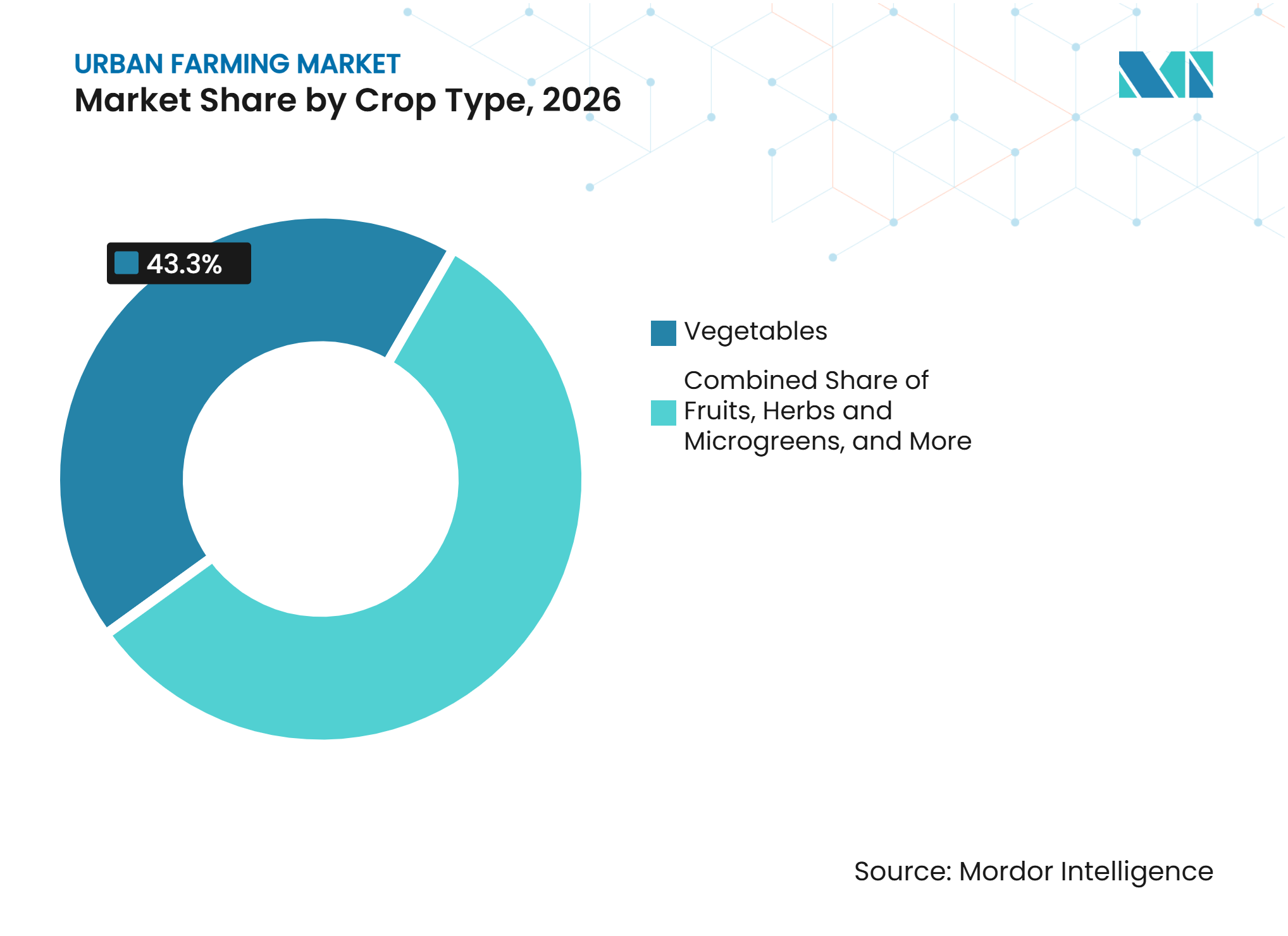
Vegetables Anchor Revenue, Herbs Drive PremiumsVegetables accounted for 43.3% of the urban farming market by crop type in 2026, supported by consistent demand for fresh produce. Leafy greens, tomatoes, cucumbers, and bell peppers drive this position because retailers and foodservice buyers require regular supplies. Controlled cultivation enables year-round production with consistent quality and predictable harvesting schedules. Vegetables also fit established grocery assortments and distribution networks, making them easier to commercialize. Their broad customer base makes them the primary revenue anchor for commercial farms. Fruits hold a smaller but high-value position, particularly strawberries, where local availability can be limited. Flowers and ornamentals remain a smaller category. This crop mix highlights the dominance of everyday produce, while specialized crops offer higher-margin opportunities.
Herbs and microgreens are the fastest-growing crop category, with a projected CAGR of 9.6% from 2027 to 2032. Their growth reflects demand from foodservice buyers and premium retailers seeking differentiated products. These crops can command prices two to three times those of commodity greens, improving revenue potential where conventional leafy green prices face pressure. LED spectral engineering and targeted nutrient delivery further support crop-specific quality and nutritional attributes. These technologies allow growers to tailor production to buyer requirements. However, specialty crops require stable local demand because their customer base is narrower. Their growth reflects a shift toward differentiated crops that offer stronger margins than standard leafy greens.

By Producer Type:
Commercial Operators Define ScaleCommercial Urban Farming Companies accounted for the largest share of the urban farming market by producer type, representing 57.3% in 2026. Their leadership reflects investments in multi-site production networks, standardized crop programs, and professional supply-chain management. For instance, Gotham Greens operated 13 climate-controlled greenhouse facilities across 9 US states, with an annual production capacity of 100 million heads of lettuce, according to the cited 2026 update. Household and residential growers contribute through indoor growing systems and home gardening, while community-based organizations support local food production and food security. New York State's 2025 program supported 51 urban farms and community gardens. Commercial operators retain an advantage in supplying retailers and foodservice buyers requiring consistent volumes and reliable deliveries.
Household and Residential Growers are projected to record the fastest growth, at a CAGR of 8.1% from 2027 to 2032, supported by increasing interest in home-grown food, compact hydroponic systems, and indoor gardening solutions. The availability of space-efficient growing equipment is encouraging households to adopt small-scale cultivation in apartments, balconies, and residential buildings. Rising interest in fresh produce and greater accessibility to automated growing systems are further supporting adoption. Unlike commercial facilities, residential growing primarily serves household consumption, although it also creates demand for hydroponic equipment, growing media, seeds, and nutrient solutions. This expanding participation is strengthening the residential segment's role in the urban farming landscape.
By End User:
Retailers Become Strategic PartnersSupermarkets and Grocery Retailers accounted for the largest share of the urban farming market by end user, representing 34.6% in 2026. Their leadership reflects high-volume procurement requirements, the demand for fresh produce, and growing partnerships with farms located near retail outlets. Urban farming enables retailers to source leafy greens, herbs, and other vegetables with shorter transportation times and improved product freshness. For instance, Walmart Canada and Lufa Farms established a 2025 supply model that moved rooftop greenhouse produce to store shelves within 1 hour. Restaurants and foodservice operators represent another major customer group, particularly for freshly harvested herbs, microgreens, and specialty greens. Hotels and hospitality operators, institutional buyers, and other commercial customers further diversify demand. Retailers are increasingly becoming strategic partners in urban farming supply chains.
Restaurants and Foodservice Operators are projected to record the fastest growth, at a CAGR of 9.5% from 2027 to 2032, driven by increasing demand for locally sourced ingredients and consistent supplies of specialty produce. Restaurants increasingly value freshly harvested herbs, microgreens, and leafy vegetables that support menu differentiation and product quality. Direct procurement arrangements with nearby urban farms also help reduce transportation time and improve supply flexibility. Hotels and hospitality operators are expanding interest in on-site cultivation to support sustainability initiatives and premium dining experiences. Institutional buyers, including hospitals, schools, and corporate campuses, are also exploring localized food procurement. These developments are strengthening demand in foodservice and expanding the commercial customer base for urban farming.
Geography Analysis
North America
North America accounted for 33.4% of the urban farming market share in 2026. The region benefits from established demand for locally grown produce, commercial greenhouse capacity, and developed retail supply chains. The United States contributes much of the region’s output through commercial greenhouse operators. Gotham Greens had 13 facilities in 9 states and distributed across all 50 states in the cited 2026 update. Canada has a distinct rooftop model led by Lufa Farms in Montreal. Its 2025 partnership with Walmart Canada showed that harvested produce can reach a retail floor within 1 hour. The pace reflects a mature setting where growth depends more on operating scale and retailer partnerships than on a broad increase in the number of new entrants.
Asia-Pacific
Asia-Pacific is estimated to grow at a 10.2% CAGR from 2027 to 2032, the highest rate among the reported regions. Dense cities, limited land, and public food security programs support this position. Singapore’s 30 by 30 policy gives local production a direct national objective. The Agri-Food Innovation Park at Lim Chu Kang supports the development of precision farming in the country. India’s commercial hydroponics category accounted for 60% of the domestic hydroponics market and grew at 22% annually, according to the cited government analysis. Japan provides an established premium consumer base for controlled-environment crops. China contributes volume through government-backed pilots. The Urban farming market size in Asia-Pacific is supported by food security priorities and a concentration of technology-focused operators.
Emerging Regions, Diverging Trajectories
Europe is estimated to grow significantly, with activity in the Netherlands, Germany, the United Kingdom, and France. The source material identifies energy tariffs and planning compliance as factors that shape private investment in the region. A governance review confirms that clear rules are important for rooftop and building-integrated farming. The Middle East is supported by food security spending and investment in indoor production. Africa is estimated to grow significantly, with urban population growth supporting selective greenhouse investment in South Africa, Kenya, and Egypt. South America is estimated to grow significantly as climate disruption increases food-price volatility and commercial activity remains in its early stages. Russia grows more moderately within the European cluster due to its energy infrastructure and financing conditions. Singapore’s updated siting guidance also shows that mixed regions need to address operational issues such as noise, odor, and production scale. These markets differ in maturity, but all need workable energy, finance, and regulatory conditions.
Competitive Landscape
Market Concentration
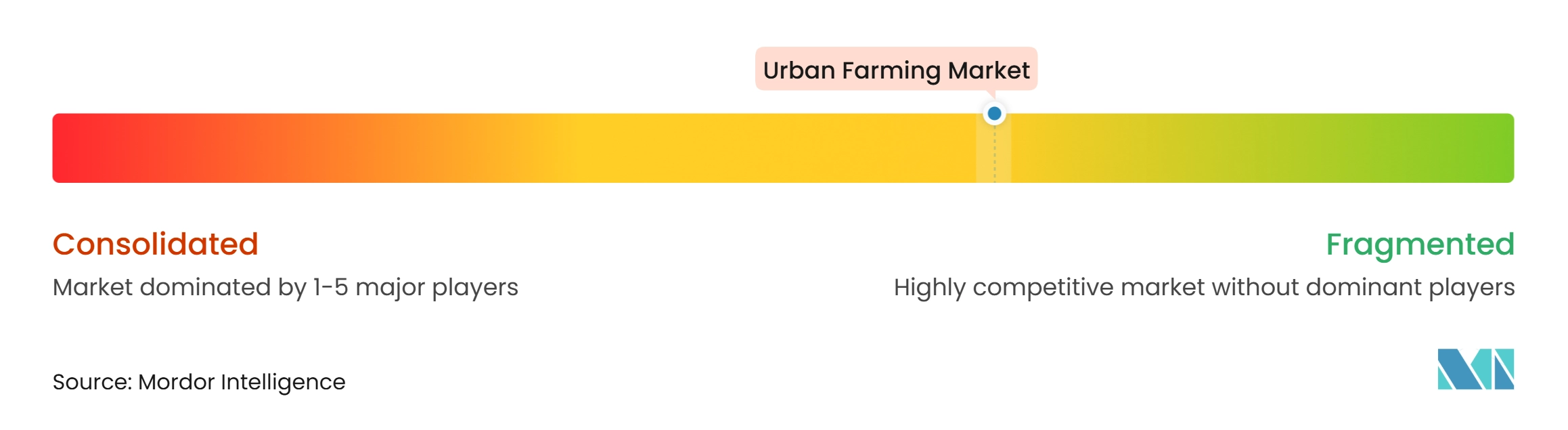
The urban farming market is characterized by a diverse competitive landscape, where vertically integrated commercial operators serve organized retail channels, while community organizations, household growers, and regional farms contribute to localized production. Competition centers on dependable retail supply, traceability, and operational efficiency. Operators are moving away from capacity expansion without proven economics. Greenhouse and hybrid formats can offer greater resilience where they reduce dependence on fully enclosed lighting systems. The competitive field includes Gotham Greens, Lufa Farms, Vertical Harvest, Oishii, Bustanica, ComCrop, Sustenir Agriculture, Artisan Green, Citiponics, Archisen (Just Produce), Greenphyto, Sky Greens, Singrow, Edible Garden City, Aeroganics, Triton Foodworks, and Living Greens Organics. These companies operate across vertical farms, rooftop greenhouses, container farms, indoor hydroponic systems, and aeroponic facilities. Their presence across North America, the Middle East, Singapore, Southeast Asia, and India reflects the global nature of the urban farming market.
Technology is becoming an increasingly important point of differentiation. Operators are adopting artificial intelligence-driven climate control, connected sensors, robotics, and precise nutrient management to improve production consistency and manage energy consumption. Adaptive lighting systems are also helping growers improve energy efficiency and crop yields, strengthening the role of automation in operational performance. Oishii integrated artificial intelligence-driven robotic harvesting technology into its vertical strawberry and tomato operations in March 2025, addressing labor cost pressures in fruit-focused vertical farming. The sector is also developing specialized aeroponic, harvesting, and nutrient-delivery capabilities. However, technology alone does not secure competitiveness, as buyers also require stable volumes and consistent service. Companies combining technical capabilities with established retail and foodservice relationships are better positioned to convert operational efficiency into repeat sales.
Retail partnerships provide another route to competitive differentiation. Lufa Farms and Walmart Canada established a direct connection between rooftop greenhouse production and retail stores in May 2025. Bustanica expanded its consumer reach through a United Arab Emirates grocery delivery platform in February 2025. Gotham Greens continued to strengthen its commercial presence through an expanding network of climate-controlled greenhouse facilities and distribution channels across the United States. These developments demonstrate that competitive advantage increasingly depends on connecting production facilities with established customer channels. Opportunities remain in specialty herbs, microgreens, and modular facilities serving institutional buyers. The market continues to accommodate local and regional operators, but sustainable competitive positions increasingly depend on cost management, technological capabilities, and reliable customer demand.
Urban Farming Industry Leaders
-
Gotham Greens
-
Greenphyto
-
Bustanica
-
Triton Foodworks
-
Lufa Farms
- *Disclaimer: Major Players sorted in no particular order
Urban Farming Market Companies Covered in this Report
- Gotham Greens
- Lufa Farms
- Vertical Harvest
- Oishii
- Bustanica
- ComCrop
- Sustenir Agriculture
- Artisan Green
- Citiponics
- Archisen (Just Produce)
- Greenphyto
- Sky Greens
- Singrow
- Edible Garden City
- Aeroganics
- Triton Foodworks
- Living Greens Organics
Recent Industry Developments in Urban Farming Market
- June 2026: Intelligent Growth Solutions (IGS), a Scotland-based agricultural technology company, shipped 800 Growth Trays for the first phase of its Dubai GigaFarm project at Food Tech Valley. The project involves the deployment of 200 vertical farming Growth Towers, supporting local food production and reducing dependence on imported produce.
- March 2026: The Government of Sikkim inaugurated its Organic Urban Farming Programme. The initiative promotes terrace farming, kitchen gardening, window gardening, and rooftop cultivation, with saplings and plants distributed to interested urban residents.
- May 2025: Lufa Farms launched a supply partnership with a major Canadian grocery retailer, delivering produce from its 127,000-square-foot hydroponic rooftop greenhouse to retail shelves within 1 hour of harvest. The arrangement is the first of its kind linking a rooftop urban farm directly to an in-store retail floor, signaling a scalable model for hyperlocal retail-integrated urban farming.
Global Urban Farming Market Report Scope
Urban farming refers to the cultivation, production, and harvesting of crops within urban and peri-urban areas using various farming structures and growing technologies. It includes vertical farming, greenhouse farming, rooftop farming, container farming, and open-ground and community plots, utilizing hydroponics, aeroponics, aquaponics, and soil-based cultivation. The market covers the production of vegetables, fruits, herbs, microgreens, flowers, and ornamental crops by commercial farming companies, household growers, and community-based organizations for residential, retail, foodservice, hospitality, and institutional consumption.
The scope excludes conventional rural agriculture, livestock farming, aquaculture, forestry, agricultural input sales, and standalone technology or equipment revenues not directly associated with urban crop production.
The Urban Farming Market is segmented by Farming Structure (Vertical Farming, Greenhouse Farming, Rooftop Farming, Container Farming, and Open-Ground and Community Plots), by Growing Technology (Hydroponics, Aeroponics, Aquaponics, Soil-Based Farming, and Other Growing Technologies), by Crop Type (Vegetables, Fruits, Herbs and Microgreens, Flowers and Ornamentals, and Other Crop Types), by Producer Type (Commercial Urban Farming Companies, Household and Residential Growers, Community-Based Urban Farming Organizations, and Other Urban Farming Producers), by End User (Restaurants and Foodservice Operators, Supermarkets and Grocery Retailers, Hotels and Hospitality Operators, Institutional Buyers, and Other Commercial Buyers), and by Geography (North America, South America, Europe, Asia-Pacific, the Middle East, and Africa). The Market Forecasts are Provided in Terms of Value (USD).
Segmentation Overview
| Vertical Farming |
| Greenhouse Farming |
| Rooftop Farming |
| Container Farming |
| Open-Ground and Community Plots |
| Hydroponics |
| Aeroponics |
| Aquaponics |
| Soil-Based Farming |
| Other Growing Technologies |
| Vegetables |
| Fruits |
| Herbs and Microgreens |
| Flowers and Ornamentals |
| Other Crop Types |
| Commercial Urban Farming Companies |
| Household and Residential Growers |
| Community-Based Urban Farming Organizations |
| Other Urban Farming Producers |
| Restaurants and Foodservice Operators |
| Supermarkets and Grocery Retailers |
| Hotels and Hospitality Operators |
| Institutional Buyers |
| Other Commercial Buyers |
| North America | United States |
| Canada | |
| Mexico | |
| South America | Brazil |
| Argentina | |
| Rest of South America | |
| Europe | Germany |
| United Kingdom | |
| France | |
| Italy | |
| Spain | |
| Russia | |
| Rest of Europe | |
| Asia-Pacific | China |
| India | |
| Japan | |
| Singapore | |
| South Korea | |
| Australia | |
| Rest of Asia-Pacific | |
| Middle East | Saudi Arabia |
| United Arab Emirates | |
| Israel | |
| Turkey | |
| Rest of Middle East | |
| Africa | South Africa |
| Egypt | |
| Kenya | |
| Rest of Africa |
| By Farming Structure | Vertical Farming | |
| Greenhouse Farming | ||
| Rooftop Farming | ||
| Container Farming | ||
| Open-Ground and Community Plots | ||
| By Growing Technology | Hydroponics | |
| Aeroponics | ||
| Aquaponics | ||
| Soil-Based Farming | ||
| Other Growing Technologies | ||
| By Crop Type | Vegetables | |
| Fruits | ||
| Herbs and Microgreens | ||
| Flowers and Ornamentals | ||
| Other Crop Types | ||
| By Producer Type | Commercial Urban Farming Companies | |
| Household and Residential Growers | ||
| Community-Based Urban Farming Organizations | ||
| Other Urban Farming Producers | ||
| By End User | Restaurants and Foodservice Operators | |
| Supermarkets and Grocery Retailers | ||
| Hotels and Hospitality Operators | ||
| Institutional Buyers | ||
| Other Commercial Buyers | ||
| By Geography | North America | United States |
| Canada | ||
| Mexico | ||
| South America | Brazil | |
| Argentina | ||
| Rest of South America | ||
| Europe | Germany | |
| United Kingdom | ||
| France | ||
| Italy | ||
| Spain | ||
| Russia | ||
| Rest of Europe | ||
| Asia-Pacific | China | |
| India | ||
| Japan | ||
| Singapore | ||
| South Korea | ||
| Australia | ||
| Rest of Asia-Pacific | ||
| Middle East | Saudi Arabia | |
| United Arab Emirates | ||
| Israel | ||
| Turkey | ||
| Rest of Middle East | ||
| Africa | South Africa | |
| Egypt | ||
| Kenya | ||
| Rest of Africa | ||
Key Questions Answered in the Report
What is the projected value of the Urban Farming Market by 2032?
The Urban Farming Market is estimated to reach USD 277.15 billion by 2032.
Which growing technology leads urban farming?
Hydroponics led with 52.2% share in 2026 because it has an established commercial base and precise water and nutrient management.
Which region is expanding fastest?
Asia-Pacific is estimated to grow at the highest CAGR of 10.2% from 2027 to 2032.
What limits the expansion of indoor urban farms?
Electricity-intensive lighting and climate control, high capital requirements, limited scale at small sites, and uncertain zoning and food safety requirements constrain expansion.