
Market Overview
| Study Period | 2021 - 2031 |
|---|---|
| Forecast Data Period | 2026 - 2031 |
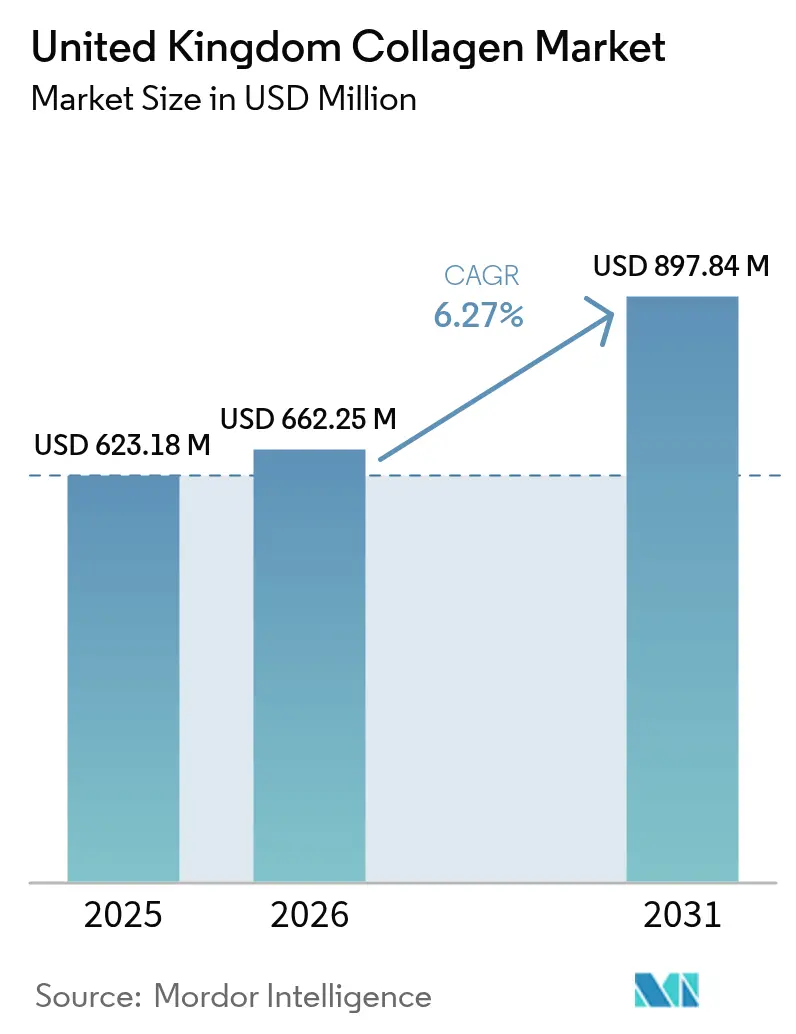
| Base Year Market Size (2025) | USD 623.18 Million |
| Market Size (2026) | USD 662.25 Million |
| Market Size (2031) | USD 897.84 Million |
| Growth Rate (2026 - 2031) | 6.27 % |
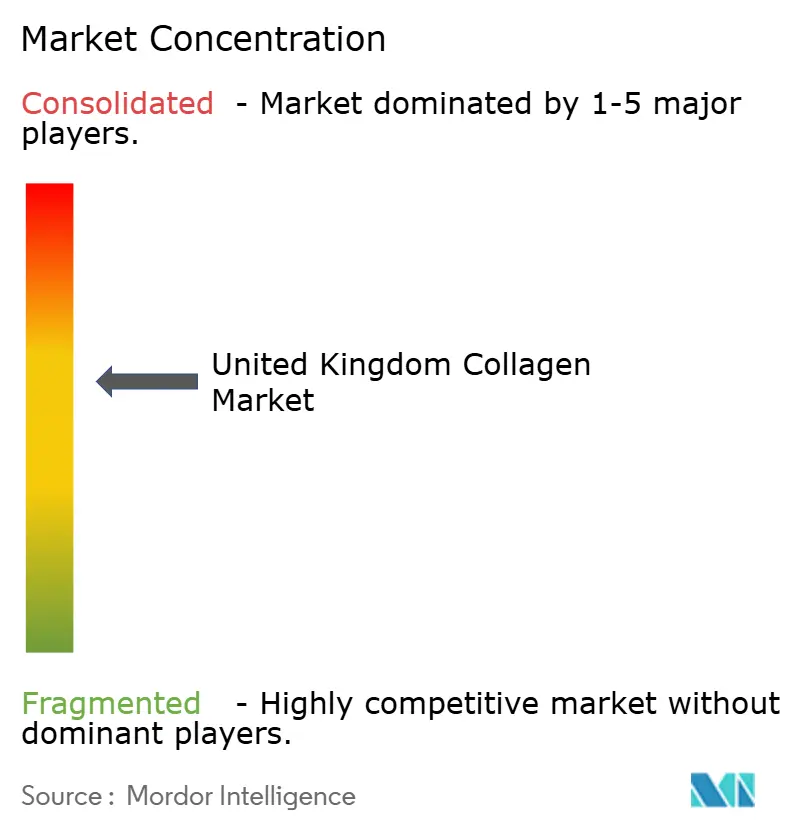
| Market Concentration | Medium |
Major Players *Disclaimer: Major Players sorted in no particular order Image © Mordor Intelligence. Reuse requires attribution under CC BY 4.0. | |
United Kingdom Collagen Market Analysis by Mordor Intelligence
United Kingdom collagen market size in 2026 is estimated at USD 662.25 million, growing from 2025 value of USD 623.18 million with 2031 projections showing USD 897.84 million, growing at 6.27% CAGR over 2026-2031. Robust growth in the industry is driven by an aging population, the National Health Service's (NHS) expanding adoption of collagen biomaterials, and a consumer shift towards high-protein, multifunctional ingredients. This demand is bolstered by a diverse range of applications, including dietary supplements that support overall health, medical dressings that enhance wound healing, and premium beauty products that cater to skin rejuvenation and anti-aging needs. Industry players are rolling out bioactive peptide formats that promise quicker absorption and target specific health benefits, focusing on joint comfort, improved skin elasticity, and accelerated post-operative wound healing. The Food Standards Agency's (FSA) post-Brexit Novel Food pathway offers regulatory clarity, spurring product launches and fostering innovation in the market. At the same time, rising costs of livestock-based raw materials are pushing the industry to explore marine and biotech alternatives, which provide sustainable and cost-effective solutions while meeting consumer demand for environmentally friendly products.
Key Report Takeaways
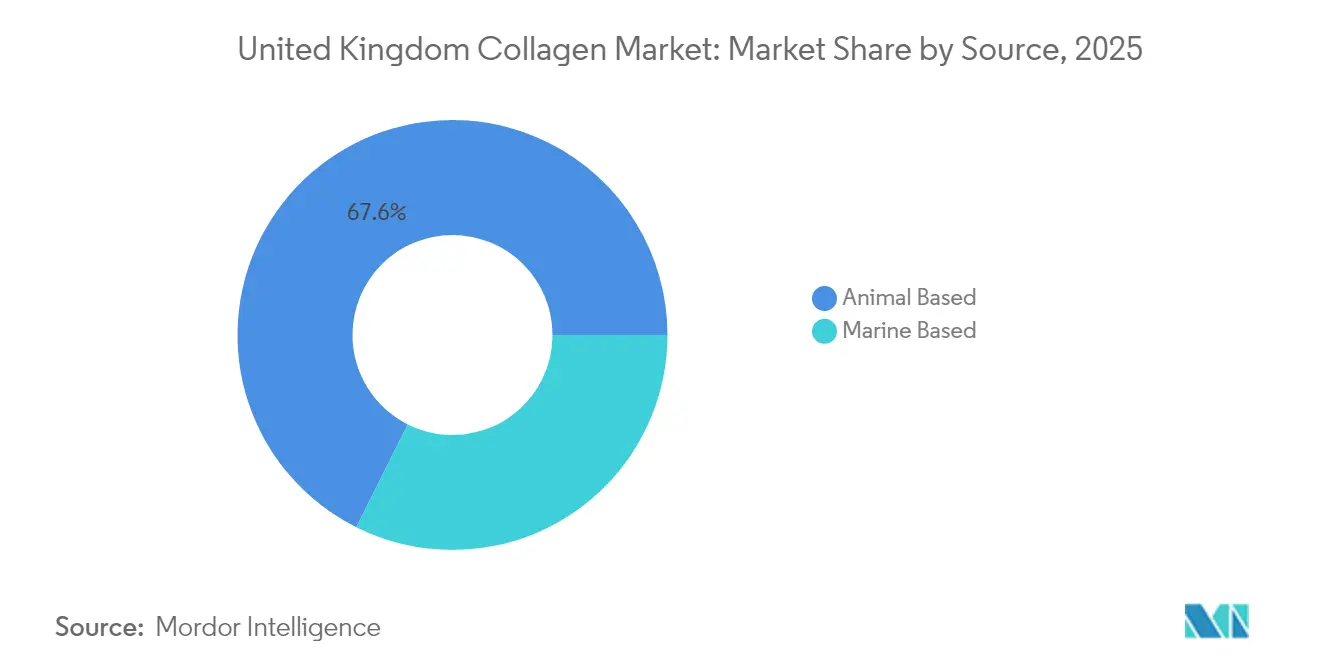
- By source, animal-based collagen captured 67.62% of the United Kingdom collagen market share in 2025, while plant-based formats are forecast to register the fastest 8.11% CAGR between 2026-2031.
- By end user, dietary supplements commanded 46.85% of the United Kingdom collagen market size in 2025, whereas personal care and cosmetics is projected to expand at a 6.63% CAGR through 2031.
- By geography, Southeast England led consumption with 28.75% value share in 2025; Scotland’s coastal belt is forecast to grow the fastest at a 7.01% CAGR owing to marine-collagen production clusters.
Note: Market size and forecast figures in this report are generated using Mordor Intelligence’s proprietary estimation framework, updated with the latest available data and insights as of 2026.
Market Trends and Insights
Drivers Impact Analysis of United Kingdom Collagen Market*
| Driver | (~) % Impact on CAGR Forecast | Geographic Relevance | Impact Timeline |
|---|---|---|---|
| Aging population seeking joint and skin benefits | +1.8% | Nationwide, strongest in Southeast England | Long term (≥ 4 years) |
| Sports-nutrition and high-protein lifestyles | +1.2% | Urban centers, notably London and Manchester | Medium term (2-4 years) |
| Beauty-driven nutricosmetics boom | +1.5% | Affluent postal codes across the UK | Medium term (2-4 years) |
| NHS uptake of collagen wound biomaterials | +0.9% | Nationwide hospitals and clinics | Long term (≥ 4 years) |
| Expansion of sustainable marine supply chain | +0.7% | Scottish and Southwest coastal regions | Long term (≥ 4 years) |
| Subscription-led D2C e-commerce models | +0.6% | Metropolitan areas nationwide | Short term (≤ 2 years) |
| Source: Mordor Intelligence | |||
Ageing population seeking joint and skin health benefits
With the number of citizens aged 65 and older steadily increasing, the market for mobility and skin health solutions is expanding. Seniors participating in randomized-controlled trials showed marked improvements in joint function and retention of lean mass through physiotherapy and daily collagen peptide intake. This demographic's purchasing power allows for premium pricing, as they are often willing to invest in products that enhance their quality of life. Additionally, the trust in supplement efficacy is heightened by the clinical spill-over from NHS wound-care products, which have established a strong reputation for reliability and effectiveness. As the mindset of active aging becomes more prevalent, formulators are combining collagen with vitamin C and hyaluronic acid, creating holistic benefit stacks that address multiple health concerns, such as skin elasticity, hydration, and joint health, appealing to self-managing seniors who prioritize overall well-being.
Growth of sports-nutrition and high-protein lifestyles
Urban consumers, increasingly adopting strength training and recovery routines, are turning to collagen. They value it as a functional protein, noting its unique glycine and proline ratios, which differ from those found in whey and contribute to its distinct benefits for muscle repair, joint health, and skin elasticity. Convenient formats like ready-to-drink beverages and snacks cater to their on-the-go lifestyle, offering ease of consumption without compromising nutritional goals. This is further enhanced by peptide technologies, boasting absorption rates four times faster than native proteins, which makes collagen an efficient option for post-workout recovery and daily wellness. Once the domain of elite athletes, this segment now appeals to a broader lifestyle audience, including fitness enthusiasts, aging populations, and individuals seeking overall wellness. The marketing narrative has evolved too, shifting focus from mere muscle-building to a holistic approach emphasizing body composition, joint support, skin health, and the resilience of connective tissues.
Beauty and nutricosmetics boom in the United Kingdom
Despite macroeconomic uncertainties, the nation's premium beauty spending has surged, with collagen supplements now touted as "ingestible skin care." Major brands bolster their premium pricing by leveraging third-party dermatological accreditations to validate their wrinkle-reduction claims, which resonate strongly with consumers seeking scientifically backed solutions. Social media trends, going viral, have intensified word-of-mouth marketing, especially for single-serve sachets and flavored powders sold through direct-to-consumer channels, making these products more accessible and appealing to a broader audience. Additionally, the convenience of these formats aligns with the busy lifestyles of modern consumers, further driving their popularity. For environmentally conscious beauty shoppers, sustainable sourcing credentials, particularly marine peptides certified by the Marine Stewardship Council, further enhance the product's value proposition by addressing growing consumer demand for eco-friendly and ethically sourced ingredients. These certifications not only reinforce brand trust but also position the products as a responsible choice in the premium beauty market.
NHS uptake of collagen-based wound-care biomaterials
Collagen-based wound care products are gaining traction within the National Health Service (NHS), bolstering market fundamentals and affirming their therapeutic benefits across diverse consumer segments. The NHS allocates £587 million through its procurement frameworks for advanced wound care products, with collagen dressings firmly positioned in standardized categories. The inclusion of collagen dressings, like the Generic Biopad Collagen dressing, in the NHS Drug Tariff underscores both regulatory endorsement and established reimbursement channels, effectively lowering barriers to adoption[1]. These frameworks ensure consistent availability and affordability of collagen-based products, further driving their usage in clinical settings. Beyond conventional wound care, clinical uses now encompass treatments for diabetic foot ulcers and surgical procedures, addressing critical healthcare needs. Companies such as Convatec are at the forefront, crafting specialized products tailored for NHS integration[2]. This institutional endorsement not only validates collagen's therapeutic efficacy but also amplifies consumer trust across its varied applications, fostering broader acceptance and market growth.
Restraints Impact Analysis of United Kingdom Collagen Market*
| Restraint | (~) % Impact on CAGR Forecast | Geographic Relevance | Impact Timeline |
|---|---|---|---|
| Rising veganism and ethical concerns | -0.8% | Nationwide, stronger in major cities | Medium term (2-4 years) |
| Volatile livestock raw-material pricing | -1.1% | Processing hubs and import corridors | Short term (≤ 2 years) |
| Novel-Food regulatory hurdles | -0.6% | UK regulatory jurisdiction | Long term (≥ 4 years) |
| Consumer skepticism over health claims | -0.4% | Educated urban populations | Medium term (2-4 years) |
| Source: Mordor Intelligence | |||
Rising veganism and ethical concerns
With one of Europe's highest rates of vegan adoption, the United Kingdom is significantly impacting the sales of animal-derived collagen. This shift in consumer preferences has prompted brands to innovate by introducing recombinant-fermentation peptides, such as Evonik's Vecollage Fortify L, which replicate Type I and III collagen sequences without relying on animal inputs. These alternatives not only cater to vegan consumers but also align with the growing demand for sustainable and ethical products. Additionally, recombinant-fermentation technology offers scalability and consistency in production, addressing challenges associated with traditional collagen sourcing. To effectively appeal to flexitarian skeptics, brands must prominently emphasize cruelty-free sourcing and reduced carbon footprints on the front label, ensuring transparency and building trust with environmentally conscious consumers.
Volatile livestock-derived raw-material pricing
Animal-derived collagen manufacturers, reliant on stable raw material prices and availability, grapple with margin compression risks due to agricultural input volatility. The 2024 UK Food Security Report highlights significant surges in agricultural input costs[3]. Geopolitical events have notably driven up fertilizer prices, which in turn have escalated livestock feed costs and, subsequently, collagen raw material prices. Adding to this pricing volatility are Brexit-related trade dynamics: with 64% of the UK's food imports sourced from the EU, manufacturers face currency fluctuations and regulatory compliance costs that influence collagen ingredient pricing. In response, manufacturers are turning to vertical integration and alternative sourcing strategies to buffer against these cost fluctuations. However, these strategies demand both capital and operational adjustments. While there's a notable shift towards marine collagen sources to reduce reliance on livestock, marine raw materials come with their own set of sustainability and availability challenges, curbing scalability.
*Our forecasts treat driver/restraint impacts as directional, not additive. The impact forecasts reflect baseline growth, mix effects, and variable interactions.
United Kingdom Collagen Market Segment Analysis
By Source:
Sustainability-Anchored DiversificationIn 2025, the UK collagen market saw animal-derived peptides firmly at the helm, commanding a robust 67.62% market share. This dominance is largely attributed to established supply chains, competitive pricing, and a consumer base well-acquainted with bovine and porcine sources. Even with rising sustainability concerns, the versatility of animal collagen in nutraceuticals, functional foods, and personal care ensures its continued preference. UK manufacturers enjoy the advantages of a seasoned processing infrastructure and dependable sourcing channels, leading to consistent pricing benefits. Retailers, recognizing the demand, allocate prime shelf space to these traditional formats. Thus, while there's a burgeoning interest in alternative sources, animal peptides steadfastly anchor the UK's collagen market, ensuring both stability and revenue.
On the other hand, marine and biotech collagen formats, though starting from a smaller base, are witnessing rapid growth and attracting significant investments. Marine collagen, boasting a systemic absorption rate four times faster, is particularly sought after in sports nutrition, glycemic-control beverages, and markets catering to active lifestyles. Its appeal is further bolstered by sustainability credentials, with brands emphasizing zero-waste strategies by valorizing fish-processing by-products. This aligns seamlessly with the UK's rising consumer inclination towards circular economy principles. Biotech collagen, while demanding substantial capital, is carving its niche due to its consistent batch quality, a trait highly valued by cosmetic formulators for achieving desired texture and performance. The FSA's clearer Novel Food pathway is streamlining the adoption of fermentation-derived molecules by easing regulatory hurdles. Additionally, regional investments in purification units at Grangemouth and Plymouth are fortifying local supply chains, especially in the evolving post-Brexit trade landscape. Collectively, marine and biotech collagens are not just reshaping the competitive arena but are elevating the category from mere commodities to specialized functional bioactives, emphasizing metabolic health benefits.

By End User:
Healthcare Backbone Supports Consumer UpsideIn 2025, dietary supplements dominated the United Kingdom's collagen market, capturing 46.85% of the total revenue. This stronghold is primarily bolstered by an aging population, especially women, who are increasingly turning to proactive measures for joint health and skin care. The supplement category has evolved, with gummies and stick packs leading the charge in mass-market retail, thanks to their convenience and taste. Concurrently, specialized e-commerce platforms have carved out a niche for premium hydrolyzed collagen powders, often bundled in subscription models to foster repeat purchases and build consumer loyalty. These trends position supplements as the primary driver of volume, seamlessly intertwining wellness, beauty, and preventive health in ways unmatched by other sectors. Given the sustained enthusiasm from proactive consumers, dietary supplements are set to cement their pivotal role in bolstering the UK collagen market.
Conversely, the personal care and cosmetics sector is emerging as the fastest-growing application, with projections indicating a CAGR of 6.63% through 2031. This surge is fueled by a growing consumer fascination with "ingestible beauty," now seen as a natural extension of daily skincare. While millennials were the early adopters, Gen X's swift embrace has broadened the demographic reach. This segment capitalizes on collagen's versatile benefits: topical applications cater to surface needs, while ingestibles promote internal beauty, fostering a synergistic demand cycle. Furthermore, cosmetic formulators are drawn to collagen for its consistency and functionality, enhancing its allure in premium skincare and nutricosmetic offerings. As trust in collagen as a sustainable beauty and wellness remedy deepens, the personal care and cosmetics sector is poised to outstrip all other collagen applications in growth, potentially redefining the market's future demand landscape.
Geography Analysis
In the UK collagen market, regional dynamics are influenced by factors like income levels, industrial history, and access to raw materials. Southeast England, led by London, dominates with a 28.75% share of consumption. This is largely due to the presence of numerous specialty retailers, private aesthetic clinics, and direct-to-consumer fulfillment hubs. This concentration not only boosts consumption but also accelerates the introduction of new products, particularly from digitally-savvy supplement brands targeting affluent households. The region's well-developed logistics infrastructure and proximity to high-income consumers further enhance its position as a key market hub.
Scotland's coastal stretch, from Aberdeen to Oban, is emerging as the fastest-growing area, with projections of a 7.01% CAGR. This growth is driven by marine collagen extraction facilities, strategically located near fisheries and operating under zero-waste mandates. Local councils are incentivizing the upcycling of fish skins with green grants, attracting processing investments. This not only shortens supply chains but also fosters skilled job creation. Additionally, the region's focus on sustainability aligns with global collagen market trends, making it an attractive destination for investors seeking eco-friendly production practices.
The Midlands and Northern regions play a pivotal role, producing significant outputs through established bovine-rendering and pharmaceutical-grade gelatin plants catering to healthcare clients. In the wake of Brexit, customs challenges led many processors to shift their raw-material inflow routes from Dover to Liverpool, aiming to alleviate congestion. This strategic adjustment has helped maintain supply chain efficiency despite regulatory changes. Additionally, Northern Ireland is capitalizing on its dual-market access, maintaining robust cross-border trade with the Republic of Ireland. This is particularly evident in the export of medical-device collagen, which meets the stringent standards of both UKCA and CE markings. The region's ability to navigate complex regulatory environments has positioned it as a critical player in the collagen supply chain.
Regulatory Landscape
In the United Kingdom, collagen intended for human consumption is regulated as a product of animal origin, with hygiene and production requirements aligned to retained/ assimilated EU rules, including Regulation (EC) 852/2004 (HACCP-based food hygiene controls) and Regulation (EC) 853/2004 (specific rules for foods of animal origin). Establishments handling collagen must operate under approved conditions and meet defined processing and safety specifications, including residue and contaminant limits, and pack labeling requirements such as marking packs with \"COLLAGEN FIT FOR HUMAN CONSUMPTION\" and the preparation date.
For trade and border compliance in Great Britain, imports must originate from approved establishments, carry appropriate identification marks, and be accompanied by the relevant GB model health certificate (for example, the GBHC431 certificate for collagen). Where collagen is formulated into foods that use additives, use is governed by the UK's assimilated additive framework (including assimilated Regulation (EU) 1333/2008), while non-traditional sources (such as fermentation-derived or other novel formats) interact with the Food Standards Agency's Novel Foods pathway and associated dossier requirements.
Value Chain Analysis
The UK collagen value chain starts with upstream animal-origin raw materials (bovine/porcine by-products and marine skins) sourced domestically in limited volumes and, more structurally, through imports routed into Great Britain under health certification and approved-establishment rules. Midstream processing includes extraction and hydrolysis into peptides, drying, and quality assurance to meet microbiological and chemical criteria, with compliance governed by UK requirements for collagen production and handling in approved premises.
Downstream value addition is concentrated in formulation, blending, flavouring, and packaging into dietary supplement powders, gummies, stick packs, functional foods, and personal care inputs, supported by ingredient distributors and technical partners. Industry activity highlights distributor-led portfolio building, including Willows Ingredients partnerships for traceable bovine collagen peptides (Pepcol Collagen Solutions, July 2024) and for bovine gelatine and hydrolysed collagen distribution (Gelprime, November 2025), reflecting a chain where differentiation comes from traceability, application support, and reliable import-compliant supply rather than primary raw material control.
Competitive Landscape
The United Kingdom's collagen market exhibits moderate concentration. Strategic consolidation is on the rise, highlighted by RTI Surgical's 2024 acquisition of Glasgow's Collagen Solutions. This move gives the U.S. firm comprehensive oversight, spanning from biomaterial research and development to the production of finished medical devices. The acquisition underscores a trend towards vertical integration, particularly in hastening innovation cycles for cardiac and orthopedic implants.
Rousselot and Nitta Gelatin are carving out a niche through technological differentiation, rolling out peptide platforms tailored for glucose modulation and supporting the gut-joint axis. Their collaborations with contract formulation firms in Surrey and Nottingham facilitate the swift transition of these peptide innovations into market-ready products. Meanwhile, biotech newcomers like Evonik are pioneering fermentation-derived vegan collagen, garnering swift traction with ethical cosmetics brands prioritizing cruelty-free standards.
Direct-to-consumer brands are harnessing micro-influencer strategies and data-driven subscription pricing to capture market share, all without the heft of traditional ad budgets. However, they tread carefully under compliance watch; only those brands bolstering their claims with randomized-controlled data enjoy sustained success. Established players, armed with regulatory know-how, adeptly maneuver through FSA dossiers and MHRA device registrations, a savvy edge that leaves underfunded startups grappling with extended approval delays.
United Kingdom Collagen Industry Leaders
-
Darling Ingredients Inc.
-
Nitta Gelatin Inc.
-
Tessenderlo Group
-
Weishardt Holding SA
-
GELITA AG
- *Disclaimer: Major Players sorted in no particular order
United Kingdom Collagen Market Companies Covered in this Report
- Darling Ingredients (Rousselot)
- GELITA AG
- Nitta Gelatin Inc.
- Tessenderlo Group (PB Gelatins)
- Weishardt Holding SA
- Vital Proteins LLC
- Collagen Solutions plc
- Hunter & Gather Foods Ltd
- Proto-col (On Group Ltd)
- Bare Biology Ltd
- Revive Collagen (Rejuvenated Ltd)
- Planet Paleo Ltd
- Primal Living Ltd
- Your Good Health Co Ltd
- Ewald-Gelatine GmbH
- Italgelatine S.p.A.
- Lapi Gelatine SpA
- SAS Gelatines Weishardt
- Integra LifeSciences Corp.
- Rousselot BV (Peptan)
Market Opportunities and Future Outlook
Opportunities in the United Kingdom collagen market are shaped by regulatory clarity on animal-origin trade and the whitespace created by sustainability-driven sourcing shifts. The Great Britain import regime (approved establishments plus GB model health certificates such as GBHC431) rewards suppliers and distributors that can run tight documentation, traceability, and batch controls, creating room for UK-based formulators and distributors to win share by de-risking procurement for brands that sell into retail and e-commerce.
A second opportunity is the build-out of non-animal and alternative supply capabilities that address vegan/ethical demand and raw-material volatility. UK-linked innovation platforms are active in recombinant and bioengineered collagen, including ProColl (Swansea) using synthetic biology to manufacture recombinant collagen proteins and LeafyColl (Cambridge) developing plant-based systems to produce human-identical collagen proteins, while established collagen-processing know-how also exists in adjacent applications such as Devros collagen-based edible casings and films in Scotland. These capabilities align with the Food Standards Agency's Novel Foods guidance and provide a pathway for differentiated claims, formats, and supply resiliency within the UK's premium supplement and beauty ecosystems.
Recent Industry Developments in United Kingdom Collagen Market
- May 2026: GELITA introduced its Curaderm bioactive collagen peptide positioned around skin barrier support and repair, marketed with a 5 to 10 gram daily intake range. The launch broadened the company's UK-relevant innovation focus from classic beauty positioning toward higher-dose, condition-linked nutrition concepts that can be translated into premium supplement SKUs.
- December 2025: Darling Ingredients and Tessenderlo Group signed definitive agreements to combine Rousselot with PB Leiner into a new joint venture, Nextida, with Darling holding 85% and Tessenderlo 15%. The transaction concentrates global gelatin and collagen capacity under a single platform, strengthening scale advantages in sourcing, manufacturing footprint, and customer contracting for health, wellness, and nutrition applications that supply into the UK market.
- February 2024: Evonik launched Vecollage Fortify L, a fermentation-derived vegan collagen ingredient aimed at beauty and personal care formulations. The launch expanded the addressable collagen category for UK brands that require animal-free positioning, reinforcing competition from biotech alternatives alongside conventional bovine and marine peptides.
United Kingdom Collagen Market Report Scope and Research Methodology
Market Definition and Coverage
For this study, the United Kingdom collagen market is defined as the value of collagen ingredients sold into end uses such as food and beverages, supplements, personal care and cosmetics, and animal feed across the UK.
Scope exclusions: This sizing excludes collagen-based finished medical devices and clinical services, and it does not count unrelated proteins that are marketed as collagen alternatives.
Segments Covered in This Report
- By Source
- Animal-based
- Marine-based
- By End User/Application
- Food and Beverages
- Dietary Supplements
- Personal Care and Cosmetics
- Pharmaceuticals
- Animal Nutrition
Data Sources, Market Sizing, and Validation
Desk Research
Desk research was used to set the boundaries of what counts as collagen demand in the UK and to identify the main drivers behind consumption. We relied on public and official sources such as UK Food Standards Agency updates (including Novel Food guidance), NHS publications for biomaterial and wound care context, and UK Office for National Statistics releases for population and age-structure indicators that feed into beauty and healthy-aging demand.
We also reviewed trade and industry materials that are open and easy to verify, including HMRC trade statistics for import and export direction, plus association and academic sources (such as peer reviewed nutrition and dermatology journals) to understand typical use levels and claims-backed application trends. To keep company level facts consistent, we used general sources like annual reports, investor presentations, and reputable press. When disclosures were limited, we selectively checked paid company financials and a patent database. The desk sources listed here are not exhaustive, and we used additional public references for data collection, cross-checking, and clarification.
Primary Interviews and Surveys
Primary work focused on validating what actually drives volumes and pricing in the UK, especially by end use, form (animal based and marine based), and buying channel. We spoke with a mix of ingredient suppliers, brand owners, distributors, and downstream users across supplements, food and beverages, and personal care. This input was used to close gaps around average pricing, mix shifts, and the pace of reformulation.
Distribution of primary research fieldwork respondents
| Company type | Respondent position |
|---|---|
| Top tier: 26% | CXOs: 13% |
| Mid tier: 56% | Functional/Unit leaders: 39% |
| Smaller Players: 18% | Managers: 48% |
Market-Sizing & Forecasting
Sizing started with a top-down build where UK demand pools were reconstructed from end-use consumption logic, trade direction, and the typical penetration of collagen across supplements, beauty, and food launches. In practice, the model applies a value equation by end use, where volumes are inferred from category scale and collagen adoption, and then converted to value using average selling prices that reflect form and purity differences.
To keep the totals realistic, we used selective bottom-up approximations as a check, such as supplier and distributor roll-ups, sampled price points, and channel checks on fast moving supplement formats. Inputs that materially affect the outcome included the share of marine collagen in premium formats, product mix between peptides and gelatin-style uses, UK healthy-aging demand indicators tied to age cohorts, import reliance and currency timing for landed costs, and average inclusion rates in food and beverage applications. For forecasting, we ran scenario analysis because price and mix can change quickly, and we aligned scenarios to what interviewees expected for raw material availability, pricing pass-through, and end-use demand growth. Where bottom-up information was incomplete, gaps were handled by using conservative ranges and then rebalancing to match the top-down demand pool by end use.
Data Validation & Update Cycle
Validation was done through triangulation across independent signals so that no single assumption drives the final number. We checked the model against import trends, category growth direction in supplements and personal care, and pricing reality from interviews, and then reviewed outliers before sign-off.
A multi-step review is followed, where assumptions are re-tested when a key input shifts, such as a sharp currency move or a visible change in marine versus animal based sourcing. The report is refreshed annually, and interim updates are made when material events occur that can change pricing, availability, or demand. Before delivery, we rechecked the latest public updates so the final view reflects the most recent market conditions.
Mordor Intelligence's United Kingdom Collagen Market Size Measured Against Other Published Estimates
Published market sizes for UK collagen can vary because each publisher draws the line differently on what is counted, and they also make different choices on pricing, currency timing, and how quickly end uses are assumed to adopt collagen.
By checking import direction, end-use penetration, and refreshed ASP bands, Mordor Intelligence keeps the UK total tied to collagen ingredient demand in food and beverages, supplements, personal care and cosmetics, and animal feed, rather than mixing in adjacent finished goods or global revenues that only partially land in the UK.
Benchmark comparison
| Source | Market Size | Gaps in Research Methodology |
|---|---|---|
| Mordor Intelligence | USD 0.62 B (2025) | |
| Trade Journal A | USD 0.74 B (2025) | Typically uses broader retail value logic, which can pull in collagen-fortified finished products and beauty bundles, and it may apply a single price per kg without adjusting for marine premium and purity shifts. |
| Industry Association B | USD 0.56 B (2025) | Often focuses on member-reported ingredient sales, which can miss smaller importers and private label flows, and it may understate demand where collagen is purchased through distributors and cross-border channels. |
The spread in the table largely comes from whether the estimate is limited to ingredient value in the UK, and whether prices are updated for mix changes between animal based and marine collagen. Our approach stays traceable to clear end-use demand pools and repeatable price and mix checks, which makes year-to-year updates easier to explain and verify.
Key Questions Answered in the Report
How large is the United Kingdom collagen market today?
The market measured USD 662.25 million in 2026 and is projected to reach USD 897.84 million by 2031.
Which segment consumes the most collagen in the UK?
Dietary supplements led with 46.85% share in 2025, driven by seniors and wellness-oriented consumers.
What CAGR is expected for personal-care uses of collagen?
Personal care and cosmetics is forecast to grow at a 6.63% CAGR during 2026-2031.
How important is marine collagen in future supply?
Marine peptides offer faster absorption and sustainability benefits, supporting a 7.01% CAGR in Scottish coastal production zones.