
Two Wheeler Tires Market Size and Share
Market Overview
| Study Period | 2020 - 2032 |
|---|---|
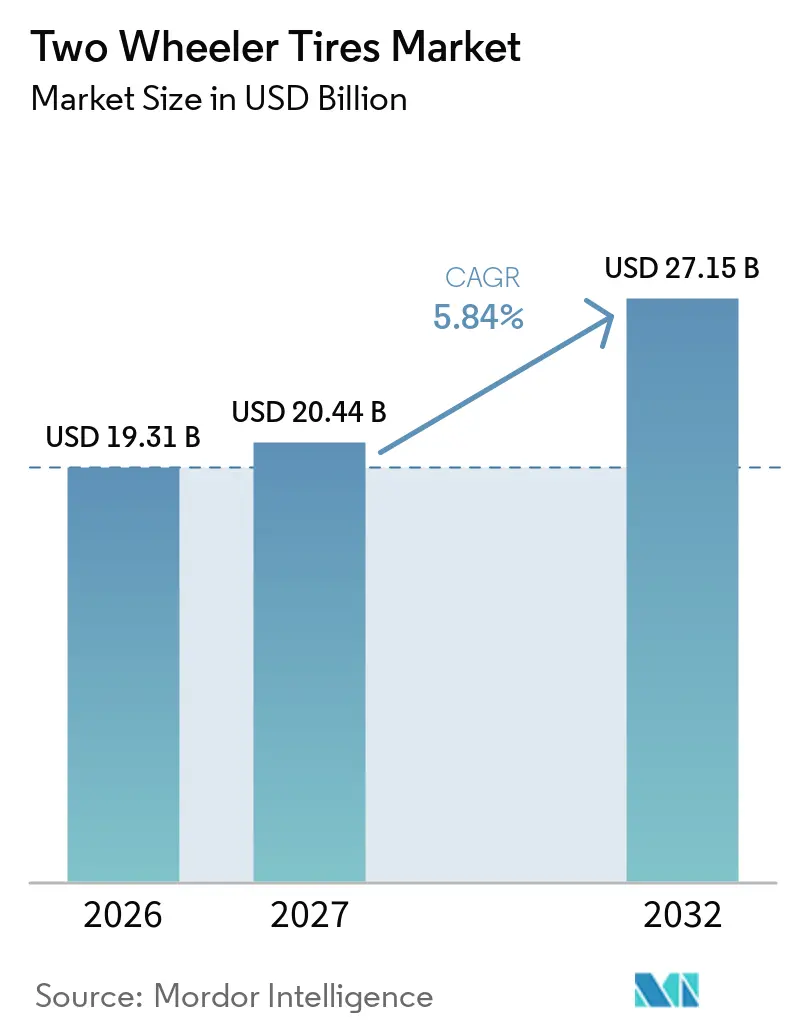
| Market Size (2027) | USD 20.44 Billion |
| Market Size (2032) | USD 27.15 Billion |
| Growth Rate (2027 - 2032) | 5.84 % |
| Fastest Growing Market | Asia-Pacific |
| Largest Market | Asia-Pacific |
| Market Concentration | Medium |
Major Players *Disclaimer: Major Players sorted in no particular order Image © Mordor Intelligence. Reuse requires attribution under CC BY 4.0. | |
Two Wheeler Tires Market Analysis by Mordor Intelligence
The two-wheeler tires market size was valued at USD 19.31 billion in 2026 and is estimated to grow from USD 20.44 billion in 2027 to reach USD 27.15 billion by 2032, at a CAGR of 5.84% during the forecast period (2027-2032). The two-wheeler tires market is supported by a large vehicle base and repeated replacement demand, especially in countries where motorcycles and scooters are essential transport. New global two-wheeler sales reached 65 million units in 2025, while electric two-wheeler sales grew faster than the wider category, which is changing OEM tire requirements and replacement demand. Greater delivery use is shortening replacement cycles in dense urban areas, creating demand that is less tied to new-vehicle sales. Manufacturers are also adjusting product portfolios toward radial, tubeless, and electric-vehicle fitments. These changes create an opportunity for companies that can align tire compounds, fitment data, and distribution inventories with changing vehicle use.
Key Report Takeaways
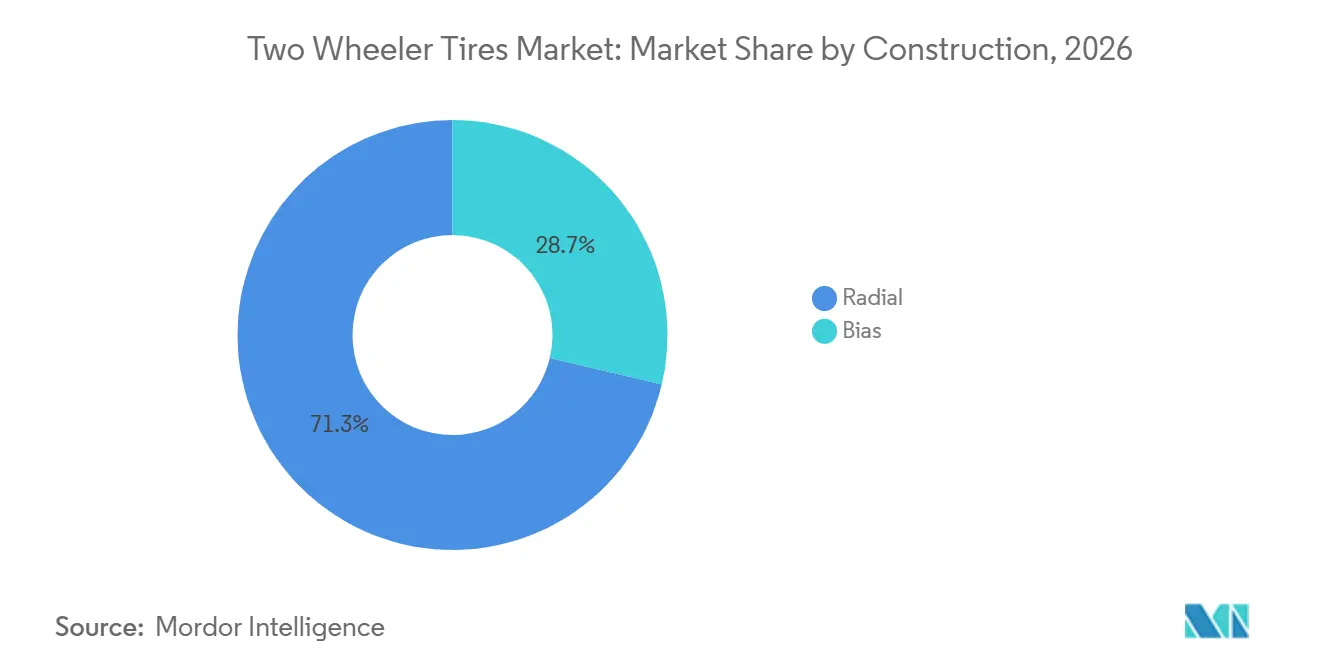
- By construction, radial tires held a 71.28% share in 2026 and are forecast to grow at a 6.05% CAGR through 2032.
- By tube type, tubeless tires held a 67.71% share in 2026 and are forecast to grow at a 6.17% CAGR through 2032.
- By vehicle type, motorcycles held a 73.37% share in 2026 and are forecast to grow at a 6.11% CAGR through 2032.
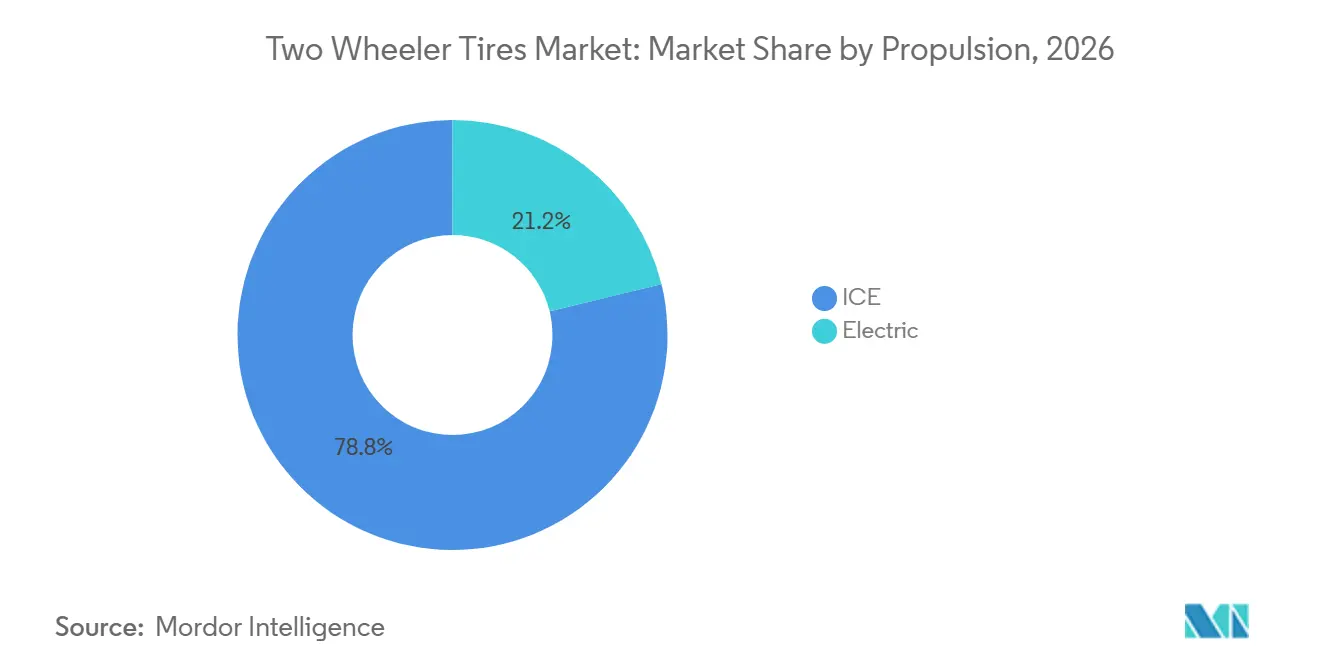
- By propulsion, ICE tires held a 78.81% share in 2026, while electric tires are forecast to grow at a 9.86% CAGR through 2032.
- By rim size, 13–17-inch tires held a 61.72% share in 2026 and are forecast to grow at a 6.01% CAGR through 2032.
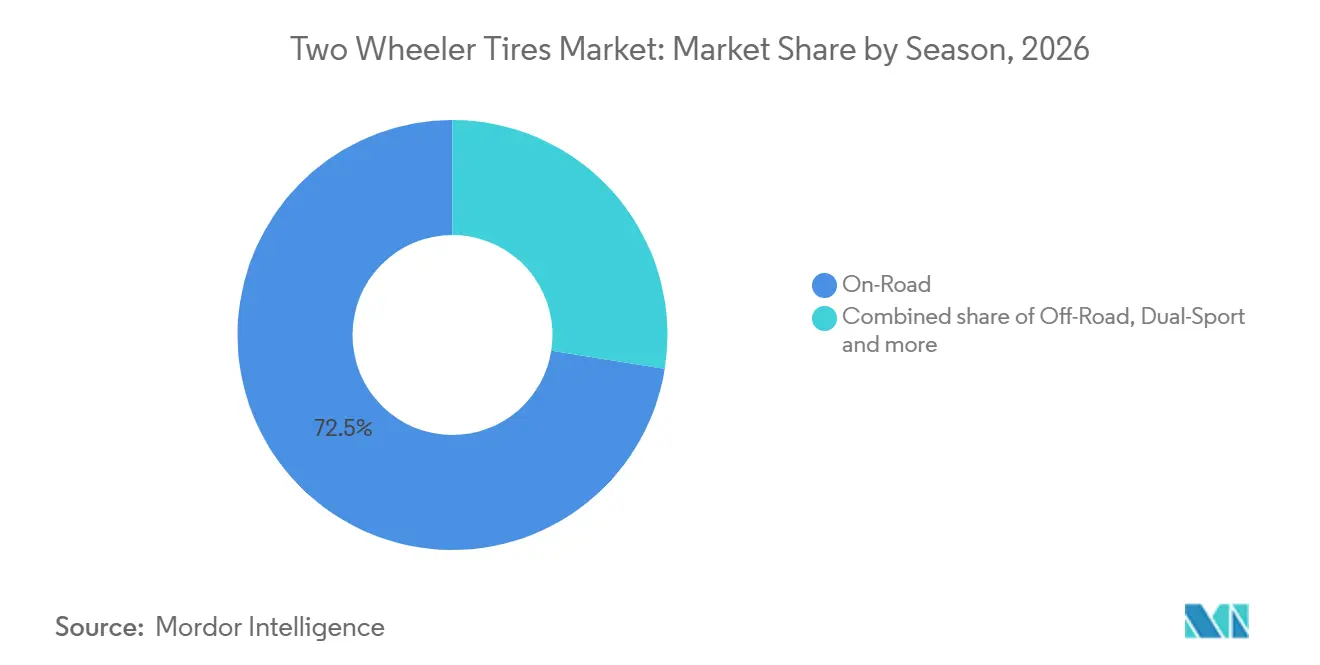
- By season and use, on-road tires held a 72.46% share in 2026, while off-road tires are forecast to grow at a 6.78% CAGR through 2032.
- By sales channel, replacement and aftermarket sales held a 61.38% share in 2026 and are forecast to grow at a 6.81% CAGR through 2032.
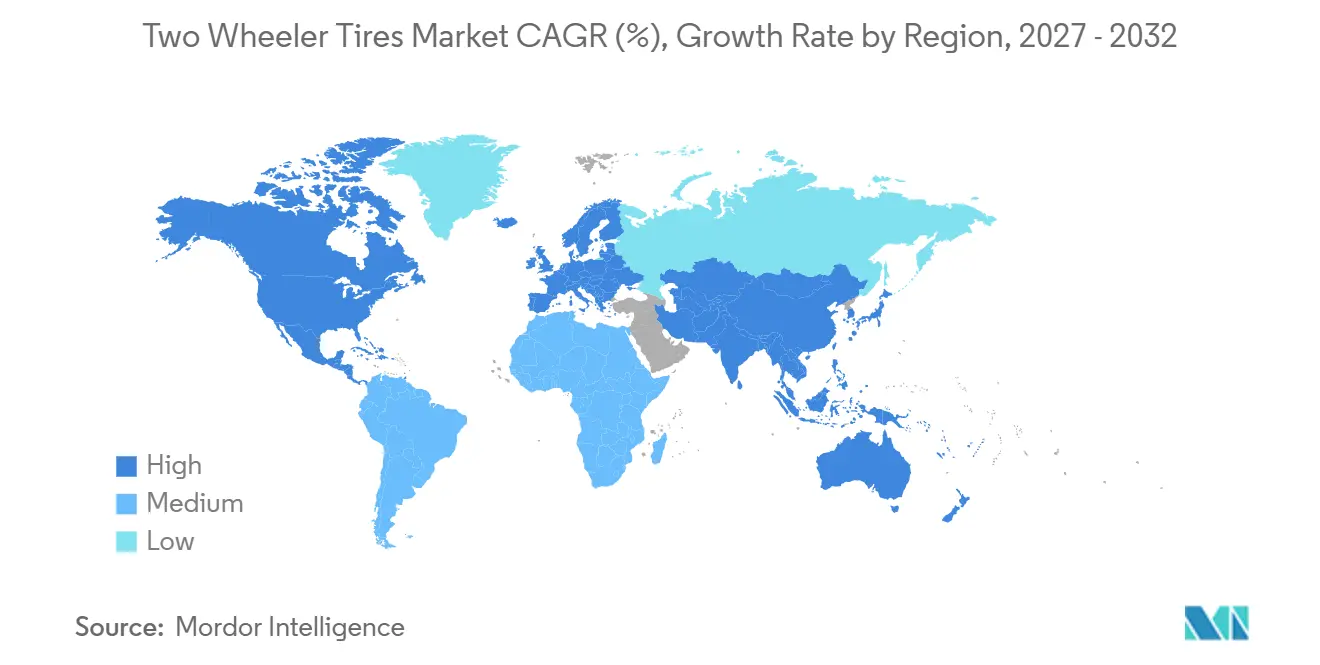
- By geography, Asia-Pacific held a 68.47% share in 2026 and is forecast to grow at a 6.93% CAGR through 2032.
Note: Market numbers in this report are based on Mordor Intelligence's proprietary estimation framework, which combines nine months of actuals with Q4 projections for base year 2026.
Market Trends and Insights
Drivers Impact Analysis of Two Wheeler Tires Market*
| Driver | (~) % Impact on CAGR Forecast | Geographic Relevance | Impact Timeline |
|---|---|---|---|
| Rising Two-Wheeler Parc and Replacement Demand | +1.8% | Global, concentrated in Asia-Pacific and South America | Short term (≤ 2 years) |
| Electric Two-Wheeler Penetration | +1.2% | China, India, Vietnam; secondary: Europe, Southeast Asia | Medium term (2–4 years) |
| Tubeless and Radial Adoption | +0.9% | Asia-Pacific, with spillover to South America and Middle East and Africa | Medium term (2–4 years) |
| Urban Delivery and Commuter Utilization | +0.7% | Asia-Pacific, South America, Middle East and Africa | Short term (≤ 2 years) |
| OEM Localization and Platform-Specific Fitment Complexity | +0.4% | Asia-Pacific, Europe | Long term (≥ 4 years) |
| Climate and Road-Surface Variability Driving Premiumization | +0.3% | Europe, North America, Southeast Asia | Long term (≥ 4 years) |
| Source: Mordor Intelligence | |||
Rising Two-Wheeler Parc and Replacement Demand
Global two-wheeler sales reached 65 million units in 2025, with India, China, Indonesia, Vietnam, the Philippines, Brazil, Mexico, Thailand, Pakistan, and Europe accounting for 85% of demand. This broad installed base supports the two-wheeler tires market because tires are replaced repeatedly over a vehicle’s operating life. Household ownership exceeds 85% in Vietnam, Thailand, and Indonesia, and exceeds 50% in India, pointing to substantial daily use across South and Southeast Asia [1]. Informal fleets and vehicles not fully reflected in registration datasets can sustain replacement purchases even when new sales soften. This makes demand less dependent on OEM volumes than in vehicle categories with lower use intensity. The two-wheeler tires market therefore benefits when suppliers maintain service coverage in local replacement channels rather than concentrating only on original fitment.
Electric Two-Wheeler Penetration
Electric two-wheelers are changing the technical requirements of the two-wheeler tires market. Vietnam’s electric two-wheeler share also rose in 2025 as planned low-emission zones in Hanoi and Ho Chi Minh City encouraged adoption. Instant motor torque raises tread shear during acceleration and braking, while battery weight requires stronger beads and higher load ratings. India’s PM E-DRIVE program, expanded in August 2026 to INR 11,900 crore, supports about 4.6 million electric two-wheelers through March 2028, supporting the broader supply chain for electric mobility [2]. Manufacturers that move fitment portfolios beyond ICE specifications can reduce the risk of carrying replacement inventory that does not meet electric-vehicle requirements.
Tubeless and Radial Adoption
The move from tube-type bias tires to tubeless radial products is raising product specifications in the two-wheeler tires market. Tubeless products reduce the risk of sudden deflation caused by inner-tube failure, which is important for fleet riders traveling high daily distances. Radial construction improves heat dissipation, ride comfort, and fuel efficiency, particularly for users operating at higher speeds or carrying loads. India’s BIS certification and Europe’s ECE R75 requirements influence OEM homologation and support higher-specification fitments. These compliance factors make it harder for lower-specification products to secure new-vehicle programs. The combined effect of OEM standards and consumer preference for safer fitments supports higher-value replacement demand in the two-wheeler tires market.
Urban Delivery and Commuter Utilization
Platform-based delivery services are turning discretionary two-wheeler use into high-utilization work across Asia, South America, and Africa. Riders in dense urban clusters can travel 70–80 km daily, which can reduce tire replacement cycles to 6–12 months. This pattern increases tire spending without requiring a comparable expansion in the vehicle fleet. It also extends the two-wheeler tires market beyond metropolitan centers as food delivery platforms enter smaller Indian cities. Organized retailers and local distributors can benefit when they provide fitting, inspection, and replacement services near where riders work. Tire management services for fleets could also make recurring replacement demand more visible to manufacturers and distributors.
Restraints Impact Analysis of Two Wheeler Tires Market*
| Restraint | (~) % Impact on CAGR Forecast | Geographic Relevance | Impact Timeline |
|---|---|---|---|
| Natural Rubber and Synthetic Raw-Material Volatility | -0.8% | Global, primary impact on Asia-Pacific manufacturers | Short term (≤ 2 years) |
| Low-Cost Imports and Price Competition | -0.5% | South America, Middle East and Africa, North America | Medium term (2–4 years) |
| EV Torque and Load Mismatch Increasing Warranty Risk | -0.3% | China, India, Europe | Medium term (2–4 years) |
| Fragmented Fitment Data and Quality Enforcement Raising Returns | -0.2% | Middle East and Africa, South America, Southeast Asia | Long term (≥ 4 years) |
| Source: Mordor Intelligence | |||
Natural Rubber and Synthetic Raw-Material Volatility
Raw-material availability remains a constraint for the two-wheeler tires market because rubber inputs directly affect manufacturing costs. Weather disruptions in Thailand and Malaysia can further limit tapping activity and seasonal availability. Smaller manufacturers are more exposed to spot-price movements, while larger companies can use synthetic rubber, longer supply contracts, or backward integration to manage risk. This difference can widen the operating gap between global majors and smaller producers. Material innovation, including bio-based and recycled-content compounds, can become a cost-management tool as well as an environmental initiative.
Low-Cost Imports and Price Competition
Low-cost imports can reduce aftermarket pricing power in South America, Africa, and parts of Southeast Asia. Brazil extended antidumping duties on motorcycle tires from China, Thailand, and Vietnam for up to five years in December 2025, showing that market access and trade measures remain important competitive factors. South Africa’s International Trade Administration Commission imposed provisional anti-circumvention measures in June 2025 on tires rerouted from China through Thailand, Vietnam, and Cambodia. Lower-priced products increasingly meet acceptable performance expectations in mainstream applications, narrowing the gap that branded suppliers use to defend margins. Trade reviews can take 12–24 months, leaving time for price expectations to reset in affected markets. The two-wheeler tires market can therefore experience pressure on aftermarket average selling prices even when formal duties remain in place.
*Our forecasts treat driver/restraint impacts as directional, not additive. The impact forecasts reflect baseline growth, mix effects, and variable interactions.
Two Wheeler Tires Market Segment Analysis
By Construction:
Radial Tires Lead Current ValueRadial tires held 71.28% of the two-wheeler tires market share in 2026 and registered a CAGR of 6.05% through 2032, confirming their position as the leading construction across applications with greater demands on heat control, comfort, and handling. Their position reflects better heat dissipation, ride comfort, and fuel efficiency for riders who cover higher daily distances, including delivery workers, commuters, and touring riders. Radial products are particularly relevant to mid-size and premium motorcycles because these vehicles place greater demands on high-speed stability, thermal control, predictable wet grip, and longer-distance durability. Bias tires remain relevant in rural and off-highway conditions across South and Southeast Asia, where their stiffer sidewalls and lower unit cost suit unpaved roads, lower-speed journeys, and buyers who place greater weight on initial purchase price. The two-wheeler tires industry must serve both segments because vehicle fleets, road conditions, rider budgets, and product-service networks remain diverse.
Bridgestone announced the BATTLAX ADVENTURE A42 in October 2026 for a global launch beginning in January 2027. The product uses Pulse Groove water-drainage technology and dual-polymer compounds designed to improve wet performance and wear life. Bridgestone reported that European adventure tire demand grew 45% over the preceding decade, supporting a higher-value radial application where riders expect traction, wear resistance, and confidence in varied weather. Radial adoption has been slower in India’s 100–150cc commuter class than aggregate share figures may suggest, because bias designs remain familiar, widely stocked, and affordable in the highest-volume platforms. This leaves a path for upgrades in a large replacement category, even when buyers continue to make decisions primarily on purchase price and ease of local replacement. The two-wheeler tires market size for radial products can benefit from mix improvement as more commuter riders shift to higher-specification fitments.
By Tube Type:
Tubeless Products Change Fitment NormsTubeless tires are projected to grow at a 6.17% CAGR from 2027 to 2032 and also accounted for the largest share in 2026 with a market share of 67.71%. Their growth reflects puncture resistance, lower rolling resistance, and slower air loss after a puncture, which are useful where roadside service coverage is limited or rider utilization is high. These benefits matter to delivery and commuter riders because an unplanned tire failure can interrupt earnings, postpone travel, and increase service costs. Tube-type tires remain important for spoke-wheel motorcycles and entry-level models in rural South Asia and Sub-Saharan Africa. Alloy rims that support tubeless products can still represent a material cost that many buyers are unwilling to accept, particularly where the existing vehicle remains functional. The two-wheeler tires industry must therefore manage both fitment types during a gradual transition.
Tubeless scooter tires are becoming a differentiated product group rather than a basic replacement purchase. They can serve ICE and electric scooters when designs match vehicle load, urban usage, rolling-resistance needs, and the practical requirement for reliable daily operation. A single tubeless product can simplify distributor inventory because it does not require separate inner-tube logistics or a separate inventory stream for replacement tubes. This can improve product availability in emerging-market distribution networks, where service locations may keep limited stock and riders often need a rapid replacement. OEM and replacement channels may increasingly use common tubeless specifications where rim design permits, allowing suppliers to build larger, more efficient product runs. The two-wheeler tires market is likely to see this benefit first in fleets and urban scooters, where downtime, rider safety, and daily utilization carry clear economic value.
By Vehicle Type:
Motorcycles Anchor Global DemandMotorcycles held 73.37% of the two-wheeler tires market share in 2026 and are forecast to grow at a 6.11% CAGR through 2032. Their scale spans commuter, sport, cruiser, and off-road vehicles, each with different tire performance needs and different expectations for price, mileage, grip, and ride quality. Commuter motorcycles make up a substantial share of volume in India, Indonesia, Vietnam, and the Philippines, where they remain essential when public transport coverage is limited, and family travel must remain affordable. Sports and cruiser models create higher-value demand for platform-specific compounds, construction, and higher-speed performance. This broad range allows the two-wheeler tires market to serve several income groups through a single vehicle category.
Bridgestone launched the BATTLAX RACING STREET RS12 in January 2026 for Europe and North America. The road-legal tire uses race-tire compound technology and the HE-MS BELT structure to deliver dry-grip performance. Scooters and mopeds complement motorcycles in dense urban markets, where maneuverability, practical storage, lower operating costs, and ease of use influence purchases. Scooters and mopeds account for a large share of tire volume in the Philippines. A richer mix of sport, cruiser, and adventure motorcycles can support average selling prices in mature markets through products that carry higher technical specifications. This mix can partly offset slower unit demand where commuter ownership is already widespread, and replacement buyers have more product choices.
By Propulsion:
Electric Tires Outpace ICE GrowthThe electric propulsion segment is projected to grow at a 9.86% CAGR from 2027 to 2032, while ICE tires held a 78.81% share in 2026 and are expected to remain the largest source of tire demand during the forecast period. Electric models nevertheless require different load, torque, and wear characteristics, which makes a direct transfer of ICE fitments unreliable for every vehicle and operating condition. China is therefore an important reference market for electric tire design, fleet use, replacement timing, and aftermarket availability. The two-wheeler tires market size for electric fitments is growing from a smaller base, but requires separate development, testing, and fitment guidance for distributors and service locations.
Electric motors place peak torque on tread compounds from the first movement of the vehicle, increasing wear pressures during frequent starts and stops in city traffic. Battery packs add weight and can require stronger bead construction and higher load-index ratings than standard ICE applications. Products that do not meet these needs can create warranty and safety risks if distributors do not update fitment choices as electric fleets expand. Honda planned a 400 billion yen, or USD 2.68 billion, electrification investment for 2026-2030, signaling a larger OEM pipeline for electric two-wheelers. The IEA reported that India’s electric two-wheeler manufacturing capacity reached 10 million units annually in 2024 and could increase to 17 million units if announced capacity is realized. Suppliers that establish electric-specific fitment data, product specifications, dealer training, and local availability early can create a stronger position in the replacement channel.
By Rim Size:
Mid-Size Rims Lead DemandUp-to-12-inch tires held a 26.14% share of the two-wheeler tires market in 2026. The category reflects the prevalence of scooters and small-displacement motorcycles in China, Vietnam, Indonesia, and the Philippines, where these vehicles support routine personal mobility and commercial trips in dense cities. The 13–17-inch category held the largest share, at 61.72%, and is forecast to grow at a 6.01% CAGR through 2032. Growth is linked to mid-capacity, sport, cruiser, and adventure motorcycles, which need larger wheel formats and higher-performing tires. Broad rim-size coverage remains necessary because rider use, vehicle capability, and road conditions differ greatly by geography.
Tires above 17 inches serve a narrower but higher-value group of premium and racing users. Aftermarket customization, long-distance touring, and performance upgrades support replacement spending in this category. Bridgestone’s A42 launch covers 17–21-inch sizes and targets adventure-tourer fitments. Michelin launched the Anakee Adventure 2 in January 2026 for trail and adventure motorcycles. Michelin stated that the product provides 21% longer rear-tire life and improved wet grip compared with its predecessor. These introductions show that product development is concentrated where customers place higher value on safety, durability, and performance across changing road surfaces.
By Season/Use:
Off-Road Tires Grow Faster Than On-Road ProductsOn-road tires held a 72.46% share of the two-wheeler tires market in 2026. Urban and semi-urban commuting supports this leading position across Asia and South America, where most riders travel on paved roads for work, education, household trips, and local commerce. Off-road tires are forecast to grow at a 6.78% CAGR through 2032, the fastest rate among the season and use categories. Adventure riding supports demand in Europe and North America, while utility transport supports demand in rural Africa and Southeast Asia. The two-wheeler tires market must meet distinct requirements for on-road commuting, trail use, and mixed-surface riding.
Dual-sport tires serve riders who use city roads during the week and unpaved routes during leisure travel or longer trips. Michelin’s Anakee Adventure 2 has an M+S marking and a tread design intended for trail traction. Racing tires remain a high-value niche supported by track users and motorsport technology. Bridgestone announced the RACING BATTLAX V03 slick tire in October 2025 for European and North American track use. Informal agricultural and rural last-mile uses in emerging economies may not be fully captured in formal demand data. This means off-road demand can be less visible than its contribution to transport, livelihoods, and local access would indicate.

By Sales Channel:
Replacement Demand Expands FasterThe replacement and aftermarket channel held a 61.38% share in 2026 and is forecast to grow at a 6.81% CAGR from 2027 to 2032. OEM held the remaining 38.62% because most new two-wheelers leave factories with manufacturer-specified tires and limited buyer choice at the initial point of sale. Replacement demand is rising through delivery fleets, branded upgrades, organized retailers, and digital fitment commerce, where riders can compare products more easily than at new-vehicle purchase. The share of OEM in the two-wheeler tires market remains substantial because OEM contracts set the first fitment standard and often influence later rider preferences. Yet replacement purchases give riders and fleet operators greater scope to choose brands, constructions, and performance levels. This makes aftermarket distribution a central point of competition.
OEM contracts can lock product specifications and pricing 12–24 months before vehicle production, creating a longer planning cycle for suppliers. Current aftermarket performance can therefore shape a supplier’s position in a future OEM negotiation, particularly when customer experience confirms wear life, service support, and fitment quality. Brands that gain rider loyalty through replacement channels may be more likely to protect or win original-equipment business. Digital fitment platforms can strengthen this link when they provide reliable tire and rim matching, clear availability, and access to nearby installation. Fleet tire-management services can combine inspections, fitting, and replacements into a recurring offering that helps commercial riders manage costs. The two-wheeler tires market can become more service-oriented, where delivery fleets require predictable uptime and controlled operating costs.
Geography Analysis
Asia-Pacific
Asia-Pacific held 68.47% of the share of the two-wheeler tires market in 2026 and is forecast to grow at a 6.93% CAGR through 2032. More than 85% of households in Vietnam, Thailand, and Indonesia own a two-wheeler, while two-wheelers accounted for 77% of vehicle sales and production in India in FY2025. This ownership base creates high replacement demand and supports a broad network of OEM suppliers, local retailers, and service workshops. China sold about 7.2 million electric two-wheelers in 2025, more than half of the global electric total, showing how quickly electric specifications can become important in a large regional market. Vietnam’s electric share also rose in 2025, strengthening the need for tires designed for electric scooter loads and torque. India’s BIS requirements affect quality and OEM fitment choices. The two-wheeler tires market size in the region is therefore supported by both conventional replacement demand and a growing electric-vehicle product tier.
Europe
Europe has a more premium demand profile, shaped by adventure, trail, and sport motorcycles. Bridgestone cited a 45% rise in European adventure tire demand over the preceding decade in its A42 launch. This customer group values wet performance, durability, and comfort for longer rides. Michelin’s Anakee Adventure 2 shows the product focus, with stated improvements in wet grip and rear-tire longevity. Urban electric scooter use is also increasing in cities with clean-air policies. ECE R75 type approval and end-of-life tire obligations raise compliance barriers for lower-cost imports. The share of the two-wheeler tires market for premium products can benefit when compliance and performance requirements support established suppliers.
North America, South America, and Middle East and Africa
North America is oriented toward premium, sport, and recreational motorcycles, where performance radial tires receive higher aftermarket spending. South America combines large urban commuter fleets with trade-policy uncertainty. Brazil’s December 2025 extension of antidumping duties on motorcycle tires from China, Thailand, and Vietnam can influence prices and supplier access. The Middle East and Africa includes very different use cases, from recreational riding in Saudi Arabia and the UAE to daily commercial and transport uses in Sub-Saharan Africa. Kenya’s electric two-wheeler share increased from 7.4% in 2024 to 14.9% by October 2025, supported by motorcycle-taxi electrification and VAT exemptions. The two-wheeler tires market needs flexible product positioning across these regions because a standardized premium portfolio will not address every local use pattern.
Competitive Landscape
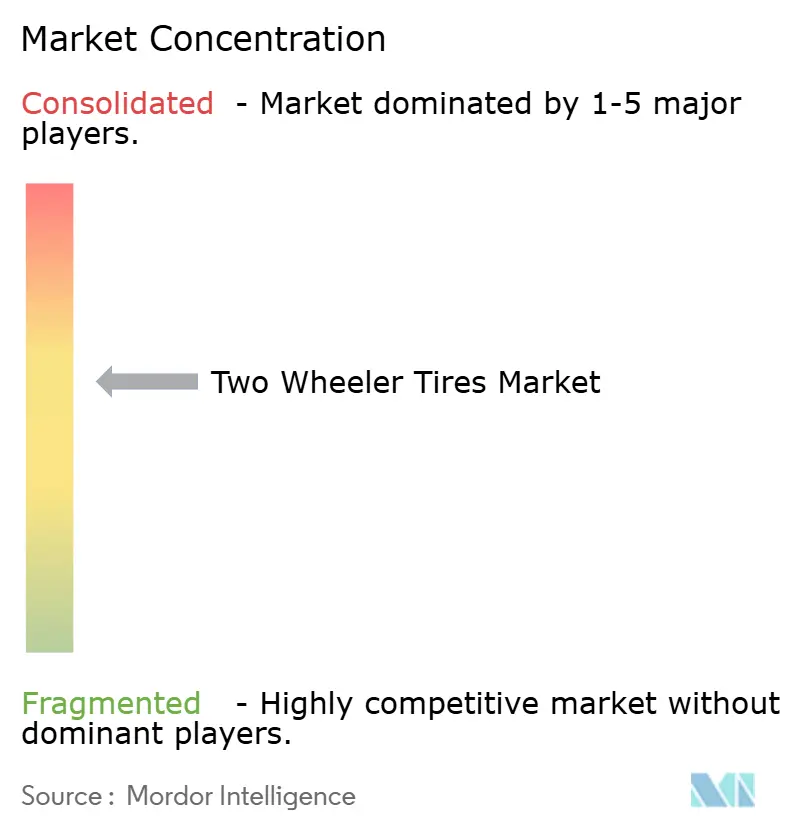
The two-wheeler tires market is moderately concentrated. Indian manufacturers hold an advantage in Asia-Pacific OEM supply through volume capacity, local relationships, and platform-specific agreements. Global manufacturers compete through tire compounds, performance positioning, and brand recognition. Bridgestone’s A42 uses Pulse Groove water-drainage technology and dual-polymer compounds for adventure motorcycles [3]. Michelin’s Anakee Adventure 2 targets trail and adventure users through wet-grip and longevity improvements. These releases show that product innovation remains important in high-value segments of the two-wheeler tires market.
The aftermarket is a major area of competition because riders select replacement products after the original tire wears out. Smaller regional producers can serve lower-priced volume segments that are difficult for global brands to address profitably. Chinese manufacturers are expanding exports to price-sensitive aftermarket markets in Africa and Southeast Asia. South Africa’s 2025 provisional anti-circumvention action illustrates the regulatory response to this competitive pressure. Reliable fitment information can become a meaningful source of differentiation as electric models become more common. Companies that link product design, local inventory, and clear fitment guidance can reduce returns and protect customer trust.
A key competitive gap remains electric-specific replacement tires. China alone sold about 7.2 million electric two-wheelers in 2025, creating a growing installed base with needs that differ from ICE vehicles. Suppliers need tread compounds that manage torque and tire structures that support higher vehicle weight. Bridgestone’s January 2026 RS12 launch demonstrates continued investment in racing-derived performance technology for road products. Michelin’s January 2026 Anakee Adventure 2 launch demonstrates similar attention to the growing trail and adventure category. Competition in the two-wheeler tires market will depend on how well companies combine performance products with mass-market availability.
Two Wheeler Tires Industry Leaders
-
MRF Limited
-
TVS Srichakra Limited
-
CEAT Limited
-
Apollo Tyres Limited
-
Bridgestone Corporation
- *Disclaimer: Major Players sorted in no particular order
Two Wheeler Tires Market Companies Covered in this Report
- MRF Limited
- TVS Srichakra Limited
- CEAT Limited
- Apollo Tyres Limited
- Compagnie Générale des Établissements Michelin
- Bridgestone Corporation
- Pirelli & C. S.p.A.
- Continental AG
- Sumitomo Rubber Industries, Ltd.
- Cheng Shin Rubber Industry Co., Ltd.
- Inoue Rubber Co., Ltd.
- Kenda Rubber Industrial Co., Ltd.
- Reifenwerk Heidenau GmbH & Co. Produktions KG
- The Yokohama Rubber Co., Ltd.
- Timsun Thailand Co., Ltd.
- Deestone Corporation Public Company Limited
- Hwa Fong Rubber (Thailand) Public Company Limited
- JK Tyre & Industries Limited
- Ralson India Limited
- Hangzhou Zhongce Rubber Co., Ltd.
- Giti Tire Pte. Ltd.
Recent Industry Developments in Two Wheeler Tires Market
- October 2026: Bridgestone Corporation announced the BATTLAX ADVENTURE A42 adventure-touring tire, with a global rollout from January 2027 in 6 sizes, 9 more sizes in 2028, and 18% longer front and 25% longer rear wear life than its predecessor.
- July 2026: CEAT approved an investment of about INR 1,205 crore to raise its two-wheeler tire capacity by 66%, from about 80,000 to 133,000 tires a day, by FY2031.
- May 2026: TVS Srichakra approved capital expenditure of up to INR 220 crore at its Madurai plants, including INR 110 crore for two-wheeler tire capacity.
- January 2026: Michelin launched the Anakee Adventure 2 for trail and adventure motorcycles, offering 21% longer rear-tire life than its predecessor and M+S marking.
- January 2026: Bridgestone Corporation launched the BATTLAX RACING STREET RS12 in Europe and North America, bringing race-tire compound technology and its HE-MS BELT structure to a road-legal tire.
Global Two Wheeler Tires Market Report Scope
The two-wheeler tires market report is segmented by construction (radial and bias), tube type (tubeless and tube-type), vehicle type (motorcycles and scooters and mopeds), propulsion (ICE and electric), rim size (up to 12", 13–17", and above 17"), season/use (on-road, off-road, dual-sport, and racing), sales channel (OEM and replacement/aftermarket), and geography (North America, Europe, Asia-Pacific, South America, and Middle East and Africa). The market forecasts are provided in terms of value (USD) and volume (units).
Segmentation Overview
| Radial |
| Bias |
| Tubeless |
| Tube-Type |
| Motorcycles | Commuter |
| Sports | |
| Cruiser | |
| Off-Road | |
| Scooters and Mopeds |
| ICE |
| Electric |
| Up to 12" |
| 13–17" |
| Above 17" |
| On-Road |
| Off-Road |
| Dual-Sport |
| Racing |
| OEM |
| Replacement/Aftermarket |
| North America | United States |
| Canada | |
| Mexico | |
| Rest of North America | |
| Europe | Germany |
| France | |
| Italy | |
| United Kingdom | |
| Spain | |
| Russia | |
| Rest of Europe | |
| Asia-Pacific | China |
| India | |
| Japan | |
| Indonesia | |
| Vietnam | |
| Thailand | |
| Malaysia | |
| Philippines | |
| South Korea | |
| Australia | |
| Rest of Asia-Pacific | |
| South America | Brazil |
| Argentina | |
| Colombia | |
| Chile | |
| Rest of South America | |
| Middle East and Africa | Turkey |
| Saudi Arabia | |
| United Arab Emirates | |
| South Africa | |
| Nigeria | |
| Kenya | |
| Egypt | |
| Rest of Middle East and Africa |
| By Construction | Radial | |
| Bias | ||
| By Tube Type | Tubeless | |
| Tube-Type | ||
| By Vehicle Type | Motorcycles | Commuter |
| Sports | ||
| Cruiser | ||
| Off-Road | ||
| Scooters and Mopeds | ||
| By Propulsion | ICE | |
| Electric | ||
| By Rim Size | Up to 12" | |
| 13–17" | ||
| Above 17" | ||
| By Season/Use | On-Road | |
| Off-Road | ||
| Dual-Sport | ||
| Racing | ||
| By Sales Channel | OEM | |
| Replacement/Aftermarket | ||
| By Geography | North America | United States |
| Canada | ||
| Mexico | ||
| Rest of North America | ||
| Europe | Germany | |
| France | ||
| Italy | ||
| United Kingdom | ||
| Spain | ||
| Russia | ||
| Rest of Europe | ||
| Asia-Pacific | China | |
| India | ||
| Japan | ||
| Indonesia | ||
| Vietnam | ||
| Thailand | ||
| Malaysia | ||
| Philippines | ||
| South Korea | ||
| Australia | ||
| Rest of Asia-Pacific | ||
| South America | Brazil | |
| Argentina | ||
| Colombia | ||
| Chile | ||
| Rest of South America | ||
| Middle East and Africa | Turkey | |
| Saudi Arabia | ||
| United Arab Emirates | ||
| South Africa | ||
| Nigeria | ||
| Kenya | ||
| Egypt | ||
| Rest of Middle East and Africa | ||
Key Questions Answered in the Report
What is the projected value of the two-wheeler tires market by 2032?
The two-wheeler tires market is projected to reach USD 27.15 billion by 2032, rising from USD 19.31 billion in 2026 at a 5.84% CAGR.
Which tire construction leads global demand?
Radial tires led with a 71.28% share in 2026 because they offer heat dissipation, ride comfort, and fuel-efficiency benefits.
Why are electric two-wheelers changing tire requirements?
Electric models create higher torque loads and carry heavier batteries, increasing the need for reinforced bead construction, appropriate load ratings, and suitable tread compounds.
Which sales channel is growing the fastest?
The replacement and aftermarket channel is forecast to grow at a 6.81% CAGR through 2032, supported by delivery fleets and shorter tire replacement cycles.
Which region has the strongest outlook?
Asia-Pacific held a 68.47% share in 2026 and is forecast to expand at a 6.93% CAGR through 2032, supported by high ownership and electric two-wheeler adoption.
Which vehicle type generates the largest tire demand?
Motorcycles held a 73.37% share in 2026 and are forecast to grow at a 6.11% CAGR through 2032.