
Market Overview
| Study Period | 2020 - 2031 |
|---|---|
| Forecast Data Period | 2026 - 2031 |
| Historical Data Period | 2020 - 2024 |
| Growth Rate | 4.95 % |
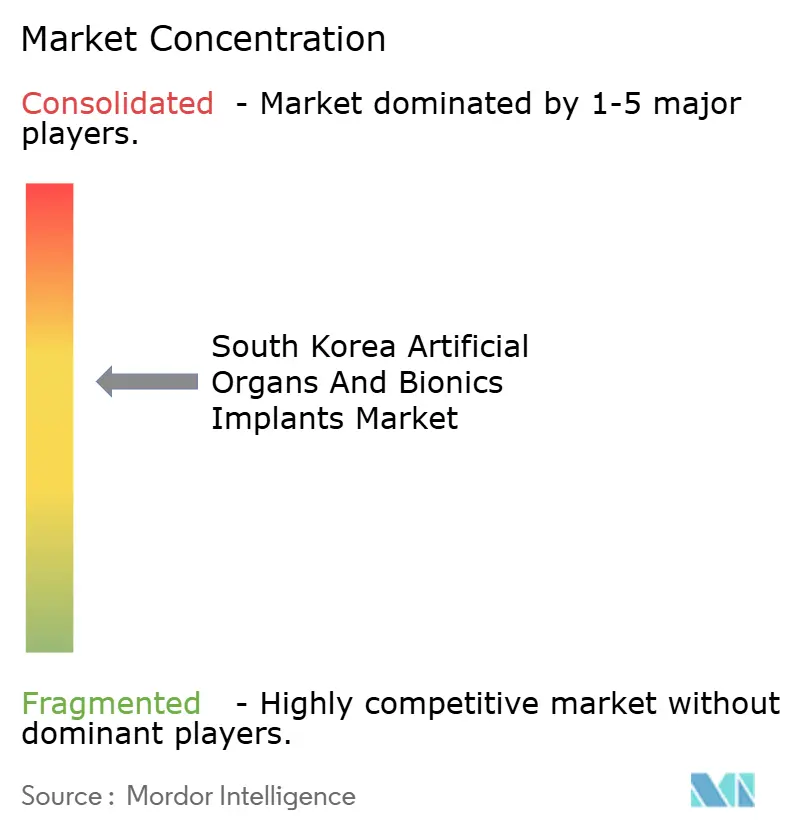
| Market Concentration | Medium |
Major Players *Disclaimer: Major Players sorted in no particular order Image © Mordor Intelligence. Reuse requires attribution under CC BY 4.0. | |
South Korea Artificial Organs And Bionics Implants Market Analysis by Mordor Intelligence
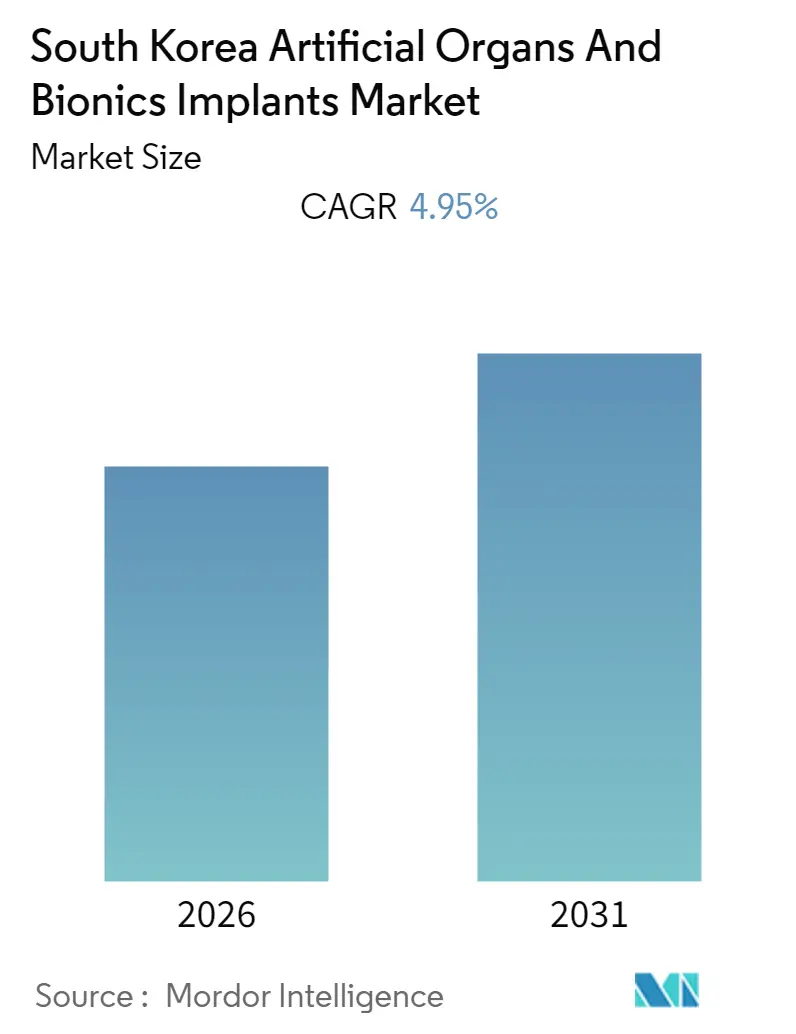
The South Korea Artificial Organs and Bionics Implants Market size is expected to register a CAGR of 4.95% during the forecast period.
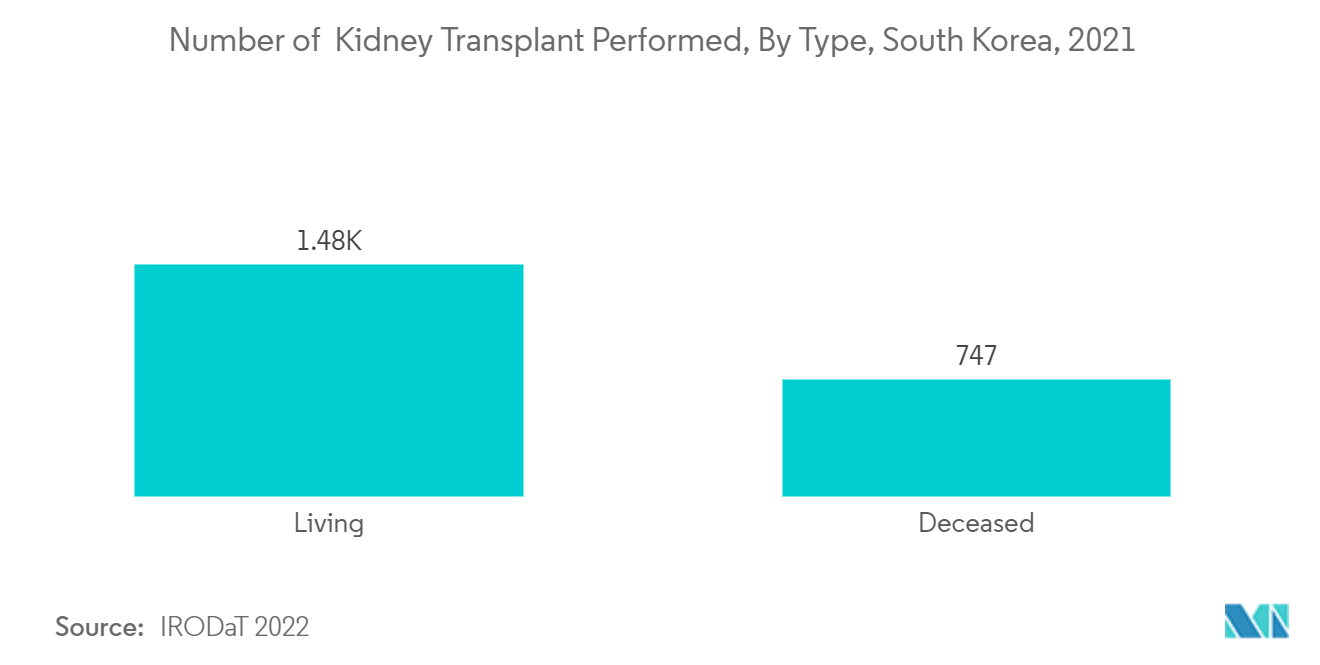
The COVID-19 pandemic is an unprecedented public health threat that has harmed communities, industries, enterprises, and people throughout South Korea. COVID-19 hampered the supply and manufacture of artificial organs and bionics. According to the study published in December 2021, during COVID-19, the number of deceased donor organ transplants in Korea remained stable in 2020, but the number of living donor organ transplants decreased dramatically. As a result of the potential for contamination from COVID-19 infection, organ transplantation in the country has been drastically reduced, significantly impacting the market growth. Additionally, the industry is expected to gain momentum during the following five years as more organ transplant surgeries are anticipated over the forecast period.
The key factors responsible for the growth of the artificial organ and bionics implants market include the rising geriatric population and technological advancements in the artificial organ and bionics implants market. For instance, according to the 2022 statistics published by the United Nations Population Fund, in South Korea, a large proportion of the living population is aged 15-64 and accounts for 71% in 2022. In addition, as per the same source, 17% of the population is aged 65 years and above in 2022. Thus, the rising geriatric populations are more prone to develop chronic diseases resulting in organ failure. This is expected to increase the adoption of artificial organs and bionics, thereby propelling the growth of the studied market.
Another primary factor is the scarcity of donor organs. The lack of availability of potential organs to transplant has been a major issue. According to the study published in the Korean Journal of Transplant in September 2021, in Korea, the number of organ transplants has steadily increased, with over 4,000 transplants conducted in 2020. Bionics and artificial organs can cater to those in need of organ transplantations and replacements are expected to propel the demand for artificial organs and bionics, thereby boosting the market growth during the forecast period.
Moreover, various strategic activities by research institutes and market players are expected to support the growth of the market. For instance, in March 2021, a research team in Korea developed a method that enables stem cells to differentiate into specific cell types, including osteoblasts or vascular mural cells, without the need for additional pretreatment. This technology is anticipated to make it easier to produce artificial organs for transplantation, such as artificial skin and cardiac patches, or artificial organs for preclinical studies. Thus, such research and development activities by various institutes in Korea to bring technologically advanced organ into the market is expected to boost the growth of the market over the forecast period.
However, expensive procedures may restrain the market over the forecast period.
Note: Market size and forecast figures in this report are generated using Mordor Intelligence’s proprietary estimation framework, updated with the latest available data and insights as of 2026.
South Korea Artificial Organs And Bionics Implants Market Trends and Insights
Artificial Kidney Segment is Expected to Show Better Growth in the Forecast Years
Hemodialysis is a method for removing waste products such as creatinine and urea, as well as free water from the blood when the kidneys are in kidney failure, which is used to clean the patient's blood. The artificial kidney is also called a dialysis machine. The segment is driven by the increasing prevalence of kidney diseases and product launches by the key market players.
According to the study published in Kidney International Supplements in February 2022, chronic renal disease is predicted to affect 6.7% of Korean people aged 19 and up (CKD). In 2020, the prevalence of CKD was 6.7%. In 2020, the prevalence of CKD grew dramatically with age. CKD affects an estimated 27.3% of adults aged 70 and over and 11.1% of those in their 60s. As a result of the increasing prevalence of renal illnesses, which may result in kidney failure and damage, the need for artificial kidneys is projected to promote market expansion during the forecast period.
Furthermore, research has been conducted in South Korea to bring technologically advanced products to the market. For instance, in April 2021, Nephria Bio Inc., a spin-off of the South Korean medical device business EOFlow Co. Ltd, linked a licensing deal with the University to use the two-dimensional material found at Drexel as a filter in a wearable artificial kidney device it is developing. Many of the millions of people suffering from end-stage kidney disease throughout the world may be able to move more freely as a result of this technology, rather than spending hours each week tethered to massive dialysis equipment.
Thus, all the factors mentioned above are expected to boost segment growth over the forecast period.


Cochlear Implants is Expected to Hold a Significant Market Share Over the Forecast Period
Cochlear implants convert sound into electrical signals that restore hearing by replacing damaged parts of the cochlea and transmitting the signals to the brain. People use it as a hearing aid for low to high hearing loss. These cochlear implants are surgically implanted and consist of two parts. The inside component is implanted under the skin, while the other external component is worn at the back of the ear. The significant factors bolstering segment growth are the upsurge in hearing impairment in the growing geriatric population, the risk of hearing loss due to exposure to noise in recreational settings in the younger population, and technological advancements and increased battery life of cochlear implants.
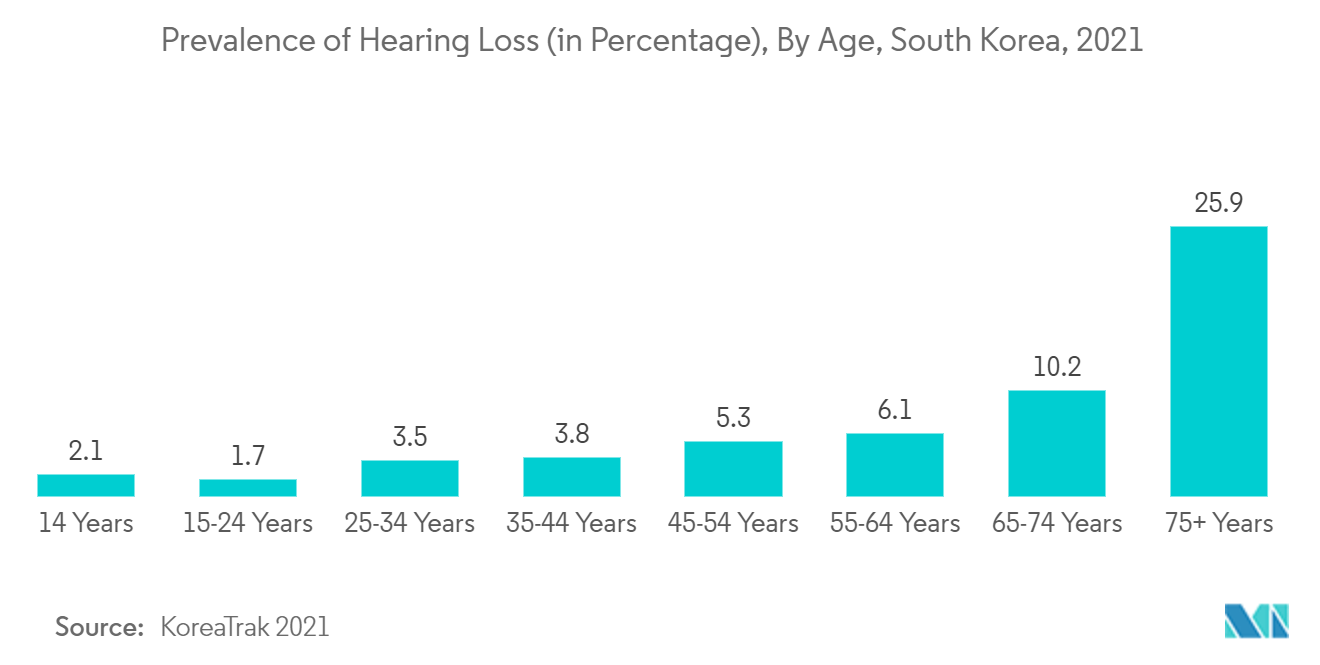
According to the KoreaTrak 2021 survey, hearing loss was reported by 5.9% of people in South Korea, and it impacted 6.6% of adults aged 18 and up and 25.9% of people aged 74 and up. Furthermore, 36.5% of those who reported hearing loss use hearing aids. Thus, with the growing prevalence of hearing loss and rising in the adoption of hearing aids in the country, the demand for cochlear implants is expected to increase during the forecast period.
Additionally, a favorable reimbursement scenario in the country is expected to propel the market's growth. For instance, as per the KoreaTrak 2021 survey, one out of every ten hearing aid owners (11%) had their hearing aids fully subsidized, while nearly half (48%) received partial reimbursement. As a result, all of the above factors, such as the growing burden of hearing loss and the adoption of hearing aids, are expected to drive market growth.
Competitive Landscape
The South Korean artificial organ and bionics implants market is moderately competitive and consists of several major players. The majority of the artificial organs and bionics are being manufactured by the global key players. Market leaders with more funds for research and a better distribution system have established their position in the market. Some of the market players are Asahi Kasei Medical Co. Ltd, Berlin Heart GmbH, Boston Scientific Corporation, Ossur, and others.
South Korea Artificial Organs And Bionics Implants Industry Leaders
Asahi Kasei Medical Co., Ltd
Ossur
Getinge AB
Medtronic PLC
Terumo Corporation
- *Disclaimer: Major Players sorted in no particular order

Market Opportunities and Future Outlook
South Korea has an active public R&D pipeline that creates room for next-generation artificial organs and bionic implants to move from lab validation into regulated product development. In 2026, the pan-ministry Advanced Medical Device R&D Project (Phase 2) launched with a stated KRW 940.8 billion budget across 2026-2032, and the roadmap explicitly names organoid technology and implantable brain-AI-robot interface systems as strategic targets, matching the direction of artificial organ engineering and advanced implant categories.
In the near term, the more immediate opportunity is converting government-funded platforms into clinically and commercially scalable manufacturing and verification capabilities. This is particularly relevant for biofabricated and cell-based products, where evidence standards and process controls can determine how quickly programs progress. The Ministry of Health and Welfare opened 2026 funding calls for cell-based artificial blood (red blood cells and platelets) manufacturing and verification platforms, and KHIDI announced the first round of 2026 funding for the pan-ministry program (KRW 59.325 billion). Together, these steps offer a practical route for local research groups and device makers to partner on validation, quality systems, and eventual MFDS submissions for advanced implantable and bioengineered products.
Recent Industry Developments
- June 2026: Ossur Philadelphia shipped Dynamic and Light AFO orthopedic bracing components into South Korea via Baimtec Material Co., Ltd. This supports local availability of advanced orthotics and continues channel development through distribution partners. It also indicates Ossur is scaling access and aftersales support across major hospital networks in South Korea.
- March 2026: Getinge published its Annual Report for 2025 and highlighted continued regulatory progress across its medical device portfolio in global markets, including South Korea. This supports its ongoing approvals and compliance work that underpin hospital adoption and tender competitiveness for advanced device lines.
- May 2024: The South Korean government advanced implementation details under the Act on the Safety of and Support for Advanced Regenerative Medicine and Advanced Biological Products, strengthening the operational framework around advanced biologics and regenerative therapies. Clearer execution rules support translational programs that feed future artificial tissue, organoid, and bioengineered implant development pathways.


Research Methodology Framework and Report Scope
Market Definition and Coverage
This market covers the value of implanted artificial organ devices and bionic implant solutions used in South Korea to replace or support a human body function, across hospital and specialty care use where the device is selected, implanted, and monitored.
Scope exclusions: External wearables without implantation, general surgical consumables, and purely diagnostic equipment are not counted in this market value.
Segmentation Overview
- By Type
- Artificial Organ
- Artificial Heart
- Artificial Kidney
- Cochlear Implants
- Other Artificial Organs
- Bionics
- Ear Bionics
- Orthopedic Bionic
- Cardiac Bionics
- Other Bionics
- Artificial Organ
Data Sources, Market Sizing, and Validation
Desk Research
Desk research was used to build the starting structure for the model and to keep assumptions tied to observable demand signals in South Korea. We relied on public sources such as Ministry of Food and Drug Safety approvals and safety notices, National Health Insurance Service and Health Insurance Review and Assessment Service statistics, Korea Disease Control and Prevention Agency publications, and OECD health indicators, which together help frame procedure volumes and access patterns.
To refine product and pricing logic, we also reviewed company annual reports, investor presentations, peer reviewed clinical literature on implant adoption, and updates from medical societies and hospital procurement announcements where available. For certain checks, paid subscriptions for company financial intelligence and patent databases were used to validate product presence and track innovation direction. The sources listed here are illustrative only, and many other public references were used during data collection and clarification.
Primary Interviews and Surveys
Primary work focused on validating what really drives sales in the country, especially how implant volumes move by therapy area and how pricing differs by hospital class and reimbursement pathway. We spoke with clinicians, hospital procurement and biomedical staff, distributors, and local commercial teams, then used follow up questions to align the model with operating realities across major metro areas and provincial care settings.
Distribution of primary research fieldwork respondents
| Company type | Respondent position |
|---|---|
| Top tier: 36% | CXOs: 12% |
| Mid tier: 50% | Functional/Unit leaders: 41% |
| Smaller Players: 14% | Managers: 47% |
Market-Sizing & Forecasting
Sizing starts with a top down build where procedure volumes and treated patient pools are reconstructed for South Korea, then mapped to realistic implant utilization rates by device type, followed by price bands reflecting the local reimbursement and tendering environment. To keep the totals grounded, we corroborated outputs with selective bottom-up approximations using supplier presence checks, distributor channel discussions, and sampled ASP times volume math for high visibility implant categories.
Key inputs used in the model include indicators such as implant procedure volumes and waitlist pressure, the share of cases handled by tertiary hospitals versus smaller centers, reimbursement coverage and coding changes, imported device reliance and currency effects on pricing, and the pace of new device approvals and technology refresh (for example, iteration cycles in cochlear implants and cardiac support devices). Where a bottom-up signal was missing for a niche category, we filled gaps using adoption ratios from similar therapies and then stress tested them in expert follow ups. Forecasts were built using scenario analysis supported by short cycle leading indicators, and the final growth path was reviewed against what clinicians and procurement teams expect to change over the next few years.
Data Validation & Update Cycle
Outputs are checked in several steps so the final numbers do not rely on a single assumption. We compare modeled values against independent signals like approval counts, reimbursement direction, and the implied per procedure spend, then review any large jumps that do not match known policy or adoption events.
Before sign off, the model is peer reviewed, and outliers trigger re checks of the underlying inputs and, when needed, quick re contacts with respondents to confirm what changed. Reports are refreshed annually, and interim updates are made when material events occur, such as major regulatory actions or reimbursement adjustments. Right before delivery, a final pass is completed so clients receive the latest updated view available at that time.
Mordor Intelligence's South Korea Artificial Organs Bionic Implants Market Size Compared With Other Published Estimates
It is normal to see different market values published for artificial organs and bionic implants, even when the same country is being discussed. The gaps usually come from what device categories are included, whether the study is anchored to procedure based demand or shipment style supply signals, and how pricing is converted and carried forward across years.
In this study, the spread is mainly explained by whether external estimates bundle adjacent medtech like non implanted assistive devices, and whether they project steep price inflation without tying it back to reimbursement behavior and import mix. That linkage is handled more cautiously after procedure mapping and hospital level validation, a modeling choice applied by Mordor Intelligence.
Benchmark comparison
| Source | Market Size | Gaps in Research Methodology |
|---|---|---|
| Mordor Intelligence | USD 0.61 B (2024) | |
| Global Consultancy A | USD 0.49 B (2026) | Uses a later base year and appears to emphasize a narrower device mix centered on a few high growth implant applications, which can understate near term value for mature implant categories. |
| Industry Publisher B | USD 0.61 B (2024) | Keeps the same headline year but applies a different growth path and pricing progression logic through 2035, which can shift the implied market curve when reimbursement and import driven pricing are not stress tested locally. |
The table shows that differences are not only about the year chosen, they also come from scope and the way pricing and adoption are carried through the forecast. Our approach stays traceable because each major number can be tied back to a demand pool, an uptake rate, and a realistic price band that can be revisited when policies or clinical practice changes.


Key Questions Answered in the Report
What is the current South Korea artificial organ and bionics implants market size?
The South Korea artificial organ and bionics implants market is projected to register a CAGR of 4.95% during the forecast period (2026-2031)
Who are the key players in South Korea artificial organ and bionics implants market?
Asahi Kasei Medical Co., Ltd, Ossur, Getinge AB, Medtronic PLC and Terumo Corporation are the major companies operating in the South Korea Artificial Organs and Bionics Market.
What years does this South Korea artificial organ and bionics implants market cover?
The report covers the South Korea artificial organ and bionics implants market historical market size for years: 2019, 2020, 2021, 2022, 2023 and 2024. The report also forecasts the South Korea artificial organ and bionics implants market size for years: 2026, 2027, 2028, 2029, 2030 and 2031.
Page last updated on:





