
Market Overview
| Study Period | 2020 - 2031 |
|---|---|
| Forecast Data Period | 2026 - 2031 |
| Base Year Market Size (2025) | USD 1.24 Billion |
| Market Size (2026) | USD 1.33 Billion |
| Market Size (2031) | USD 1.87 Billion |
| Growth Rate (2026 - 2031) | 7.11 % |
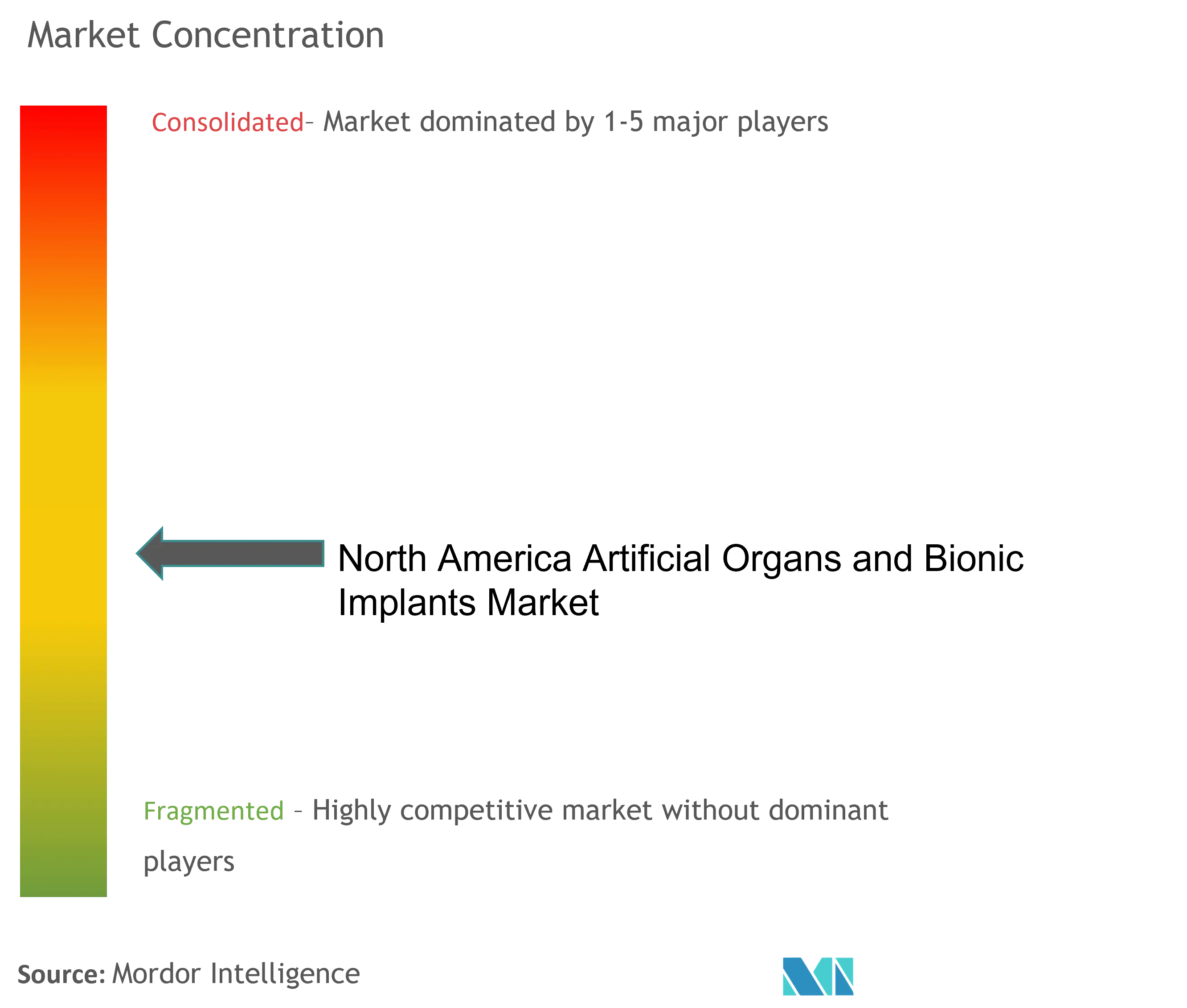
| Market Concentration | Low |
Major Players *Disclaimer: Major Players sorted in no particular order Image © Mordor Intelligence. Reuse requires attribution under CC BY 4.0. | |
North America Artificial Organs And Bionics Market Analysis by Mordor Intelligence
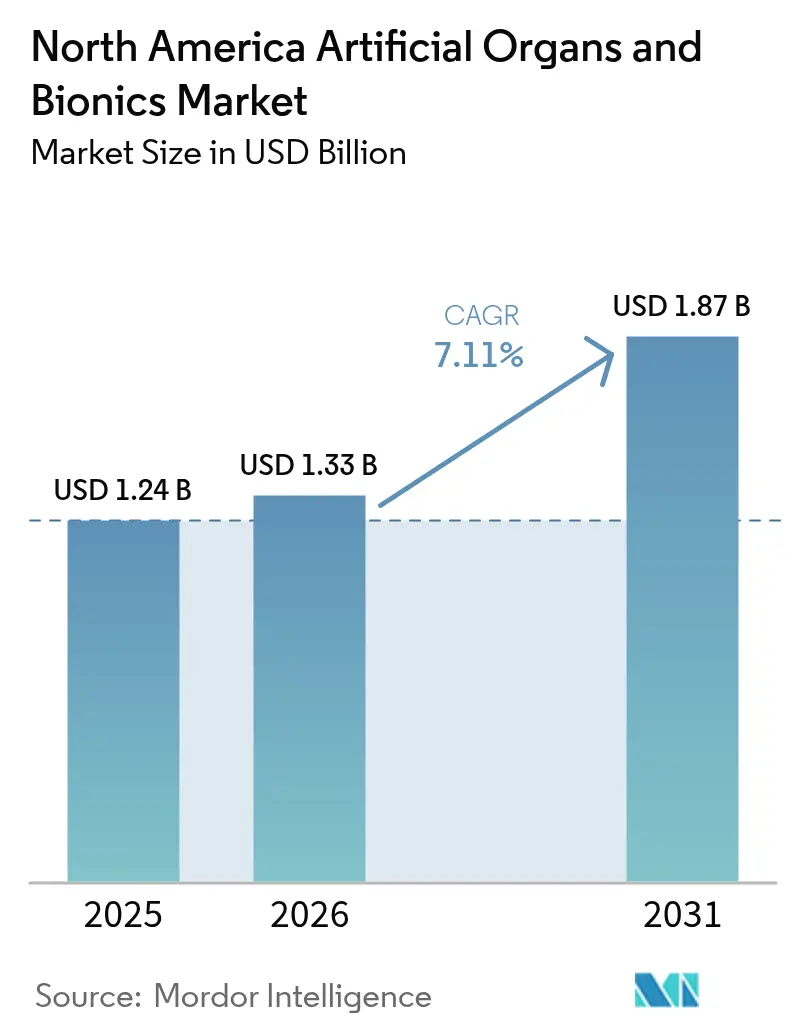
The North America Artificial Organs And Bionics Market size in 2026 is estimated at USD 1.33 billion, growing from 2025 value of USD 1.24 billion with 2031 projections showing USD 1.87 billion, growing at 7.11% CAGR over 2026-2031.
- The COVID-19 pandemic had a significant impact on the market as the pandemic was often associated with heart and kidney failures. For instance, according to an article published by Scientific Reports in November 2022, a study was conducted in the United States that showed that COVID-19 impacts patients' organ systems, and it often results in organ failure, thereby increasing transplant waiting lists. Thus, the increased number of organ failures significantly impacted the market growth. However, as the pandemic has subsided currently, the studied market is expected to have stable growth during the forecast period of the study.
- Factors such as the increased incidence of disabilities and organ failures, the high incidence of road accidents leading to amputations, and technological advancements in artificial organs and bionics are expected to boost market growth.
- The increasing number of organ failures in the region is a major factor driving market growth. For instance, according to an article published by the Heart and Stroke Foundation of Canada in February 2022, it is estimated in Canada, there were 750,000 people living with heart failure in 2022, and 100,000 people are diagnosed with this incurable condition each year. The source also stated that heart failure touches one in three Canadians, either because they have it themselves or because it affects a family member or close friend. Thus, the high burden of heart failure rate in the country is expected to boost the market growth, as artificial hearts are often used for heart failure patients.
- Furthermore, the rising road traffic accident cases are also expected to boost market growth. For instance, according to the data published by Ontario Provincial Police in 2021, there were an estimated 60,544 road crash cases in Ontario, Canada, 2021, which increased by 8% when compared to the previous year. The source also stated that there were 7,215 collisions involving commercial motor vehicles in 2021, which increased by 17% compared to the previous year. There was a 26% increase in commercial motor vehicle collisions. Thus, the high incidence of road traffic incidents in the country is also expected to boost the usage of artificial organs and bionic implants during the forecast period of the study.
- Thus, due to the aforementioned factors, such as the rising prevalence of heart and kidney failures and the increasing number of road traffic accident cases, the studied market is expected to experience growth. However, the expensive procedures and the risk of compatibility issues and malfunctions are expected to hinder market growth.
Note: Market size and forecast figures in this report are generated using Mordor Intelligence’s proprietary estimation framework, updated with the latest available data and insights as of 2026.
North America Artificial Organs And Bionics Market Trends and Insights
Artificial Kidney Segment is Estimated to Witness a Healthy Growth Over the Forecast Period
- An artificial kidney is a medical device that replaces the human kidney. These medical devices are typically used to lower the time for kidney transplantation or to permanently replace the kidneys in the case that a kidney transplant is not possible. The increasing prevalence of kidney failure and the rising product launches by key market players are the major factors driving the segment growth.
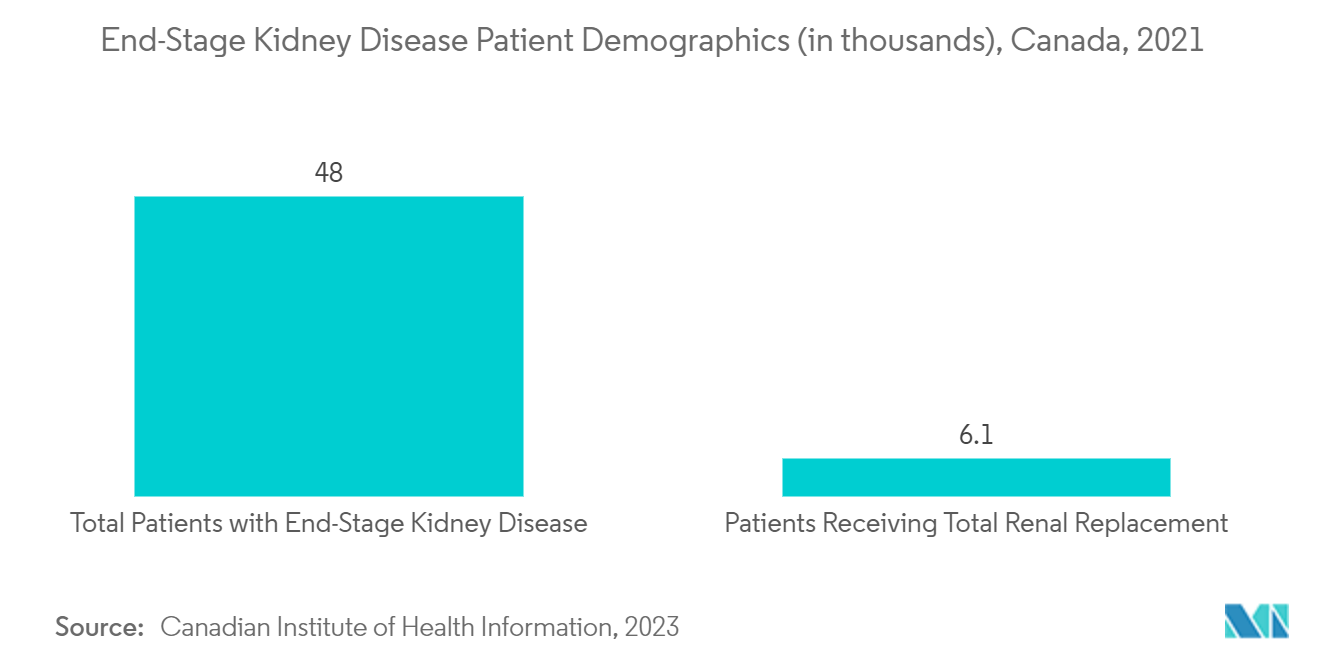
- The rising prevalence of kidney failure is the major factor driving the segment's growth. For instance, according to the data published by the Kidney Foundation of Canada in 2022, it is estimated that 1 in 10 Canadians had kidney disease in 2022, which is around 4 million people. The leading cause of kidney failure in the country is estimated to be diabetes, and the number of people living with endstage kidney disease has grown 31% in the last 10 years, and 54% of new patients are over the age of 65. The source also stated that more than 52,000 Canadians were being treated for kidney failure in 2022. Thus, the high prevalence of kidney failure in the country is expected to boost segment growth.
- Furthermore, according to an article published by Frontiers in October 2022, chronic kidney disease (CKD) is a major public health problem in Mexico that is associated with major adverse health events that ultimately lead to kidney failure. The source also stated that there is a high prevalence of CKD in Mexico, and it is expected to grow in the coming years.
- Thus, the high burden of kidney failure is expected to boost the usage of artificial kidneys during the forecast period of the study. Moreover, as kidney failure is mostly associated with old age, the rising elderly population in the region is also expected to boost segment growth.
- Thus, due to the aforementioned factors, such as the rising prevalence of kidney failures and the rising geriatric population, the studied segment is expected to experience growth.


United States is Expected to be Hold a Significant Market Share Over the Forecast Period
- The artificial organs and bionic implants market in the United States is mainly driven by the increasing prevalence of heart and kidney failure, rising road accidents, increasing developments by major market players, and the country's increasing healthcare expenditure.
- According to an article published by the American Heart Association in June 2022, the lifetime risk of developing heart failure remained high in the United States in 2022, with variation across racial and ethnic groups ranging from 20% to 45% after 45 years of age. Thus, the high prevalence of heart failures in the country is expected to boost market growth.
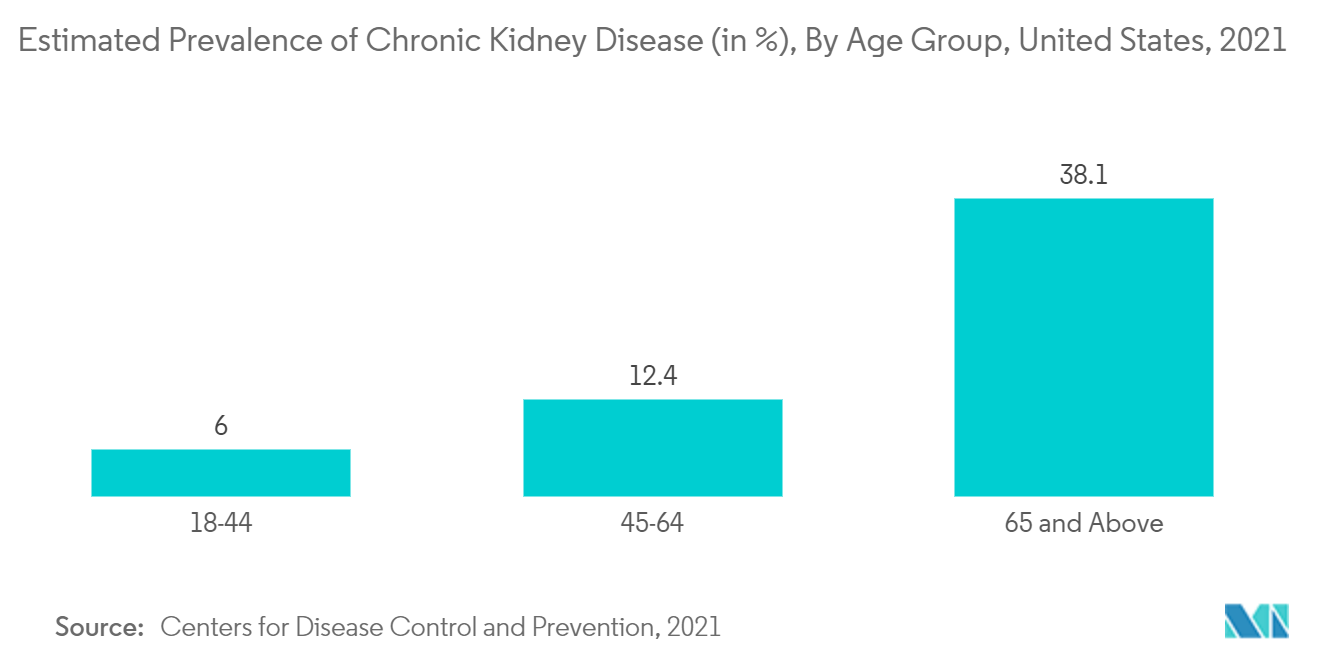
- Moreover, according to the data updated by the CDC in 2021, chronic kidney disease (CKD) had a high prevalence in the United States in 2021, and CKD was more common in women (14%) than men (12%). The source also stated that CKD was most common among people ages 65 or older (38%), followed by people ages 45 to 64 (12%) and people ages 18 to 44 (6%). Thus, the high burden of CKD in the country will lead to a high prevalence of kidney failure, thus driving the market growth.
- Furthermore, according to the data published by the National Highway Traffic Safety Administration in April 2022, the incidence of road traffic accidents is increasing in the United States. Thus, the rising road traffic accident cases are also expected to boost the usage of artificial organs and bionic implants.
- Thus, due to the aforementioned factors, such as the rising prevalence of heart and kidney failures and the rising road traffic accidents, the studied segment is expected to experience growth.
Competitive Landscape
The North America artificial organs and bionics market is moderately competitive and consists of several major players. Some of the companies that are currently dominating the market are Abiomed Inc., Asahi Kasei Medical Co., Ltd., Baxter International, Inc., Berlin Heart GmbH, Boston Scientific Corporation, Cyberonics Inc., Esko Bionics, Ossur, Cochlear Ltd., and Medtronic Inc.
North America Artificial Organs And Bionics Industry Leaders
Abiomed Inc
Baxter International, Inc.
Boston Scientific Corporation
Medtronic Inc.
Ossur
- *Disclaimer: Major Players sorted in no particular order

Market Opportunities and Future Outlook
Opportunities in North America center on (i) improving the path from advanced implantable device development to commercialization and (ii) increasing procedure access through hospital workflows that support minimally invasive techniques. In 2026, FDA actions and product launches created tangible entry points for newer technologies. Medtronic launched the Mosaic Neo mitral bioprosthesis in the U.S. after FDA approval, and Artivion received FDA PMA for the AMDS Hybrid Prosthesis in acute DeBakey Type I aortic dissections, removing the prior HDE-related institutional review board requirement. Together, these steps broaden the set of commercially available options for complex cardiovascular conditions that overlap with cardiac bionics and related implant segments covered in this report.
Adoption economics also hinge on how next-generation organ replacement and neurotechnology adjacencies mature. United Therapeutics received FDA clearance to proceed with the EXPRESS clinical study for its UHeart gene-edited xenoheart, underscoring continued clinical translation aimed at easing donor organ constraints. In parallel, programs such as the Kidney Innovation Accelerator (KidneyX) keep innovation focused on bioartificial kidney concepts. For bionics, U.S. reimbursement discussions for brain-computer interfaces (BCIs), including an emphasis on functional, real-world evidence, indicate that coverage definitions can act as a gate for broader use of emerging assistive and restorative technologies.
Recent Industry Developments
- June 2026: Medtronic submitted 510(k) filings to the U.S. FDA to expand the Hugo robotic-assisted surgery system into general and gynecologic specialties in the United States. The expansion broadens the addressable procedure base for robotics-enabled implantation workflows, which can support adoption of complex bionics and implant categories in hospital settings.
- April 2026: Medtronic launched the Mosaic Neo mitral bioprosthesis in the United States following FDA approval. The launch supports expanded options for structural heart procedures and aligns with demand for devices compatible with sternotomy, minimally invasive cardiac surgery, and robotic access.
- March 2026: Medtronic received U.S. FDA approval for the OmniaSecure defibrillation lead for conduction system pacing, enabling placement in the left bundle branch area. This approval adds to the cardiac bionics portfolio, with technology intended to support more physiologic pacing approaches within electrophysiology care pathways.


Research Methodology Framework and Report Scope
Market Definition and Coverage
This market is defined as the revenues generated in North America from artificial organs and bionic implants used to replace or restore body functions, including implanted and external assistive device systems delivered through medical care channels.
Scope exclusions: We exclude pharmaceuticals, general surgical consumables, and non-medical consumer wearables that are not positioned as artificial organ or bionic implant solutions.
Segmentation Overview
- By Type
- Artificial Organ
- Artificial Heart
- Artificial Kidney
- Artificial Lungs
- Cochlear Implants
- Other Organ Types
- Bionics
- Vision Bionics
- Ear Bionics
- Orthopedic Bionic
- Cardiac Bionics
- Artificial Organ
- Geography
- United States
- Canada
- Mexico
Data Sources, Market Sizing, and Validation
Desk Research
Desk research is used to build the starting structure of the market and to set realistic boundaries on what products qualify as artificial organs and bionics in North America. We lean on public and official sources such as the FDA device databases and safety communications, the US Centers for Medicare and Medicaid Services utilization and payment references, the US Centers for Disease Control and Prevention disease burden indicators, and Statistics Canada health statistics to understand procedure volumes and patient pools.
To cross-check the market direction, we also review sources like annual reports, investor presentations, and reputable healthcare press coverage to capture product launches, label expansions, and pricing signals. Where needed, paid subscriptions for company financials and news intelligence, patent databases, and shipment-level trade data are used to confirm company exposure, innovation activity, and import patterns for relevant components and finished devices. These desk research sources are illustrative, and many other references were also used for data collection, validation, and clarification.
Primary Interviews and Surveys
Primary work is used to pressure-test the desk assumptions and fill gaps on adoption timing, replacement cycles, and how pricing moves across hospitals and specialty clinics. We spoke with a mix of device-side leaders, clinicians, procurement stakeholders, and service providers across the United States, Canada, and Mexico so regional reimbursement and access differences could be reflected in the model. When responses did not align, follow-up questions were asked so the final inputs stayed consistent with real-world procedure and implant patterns.
Distribution of primary research fieldwork respondents
| Company type | Respondent position |
|---|---|
| Top tier: 34% | CXOs: 12% |
| Mid tier: 52% | Functional/Unit leaders: 36% |
| Smaller Players: 14% | Managers: 52% |
Market-Sizing & Forecasting
Sizing starts with a top-down build that reconstructs demand from treated cohorts and procedure volumes for major implant and artificial organ use cases, and then applies realistic penetration and eligibility filters by country. Once that demand pool is formed, average selling price ranges are assigned using a mix of public reimbursement signals, disclosed pricing commentary, and interview inputs, which are then adjusted for mix shifts across device categories.
Selective bottom-up checks are then used to keep the totals grounded, such as rolling up a sample of supplier revenues that are clearly tied to North America artificial organs and bionics, and validating implied units against procedure capacity and install base behavior. In the model, a few practical inputs that matter most include chronic disease prevalence signals linked to organ failure, transplant waitlist pressure as a substitution indicator, annual implant and procedure counts, replacement and revision rates, and country-level reimbursement coverage changes.
For forecasting, we use scenario analysis supported by a simple multivariate regression where the strongest drivers are procedure growth, coverage expansion, and price progression assumptions. Where granular splits are not consistently available, gaps are handled by applying stable mix shares anchored to the closest year with confirmed signals, followed by sensitivity checks to ensure the forecast does not overreact to a single indicator.
Data Validation & Update Cycle
Outputs are validated through several passes that compare the implied market value against independent signals, such as procedure trends, import patterns for key device categories, and major regulatory or reimbursement milestones. When large variances show up across countries or device groups, assumptions are revisited and, if needed, additional calls are made to clarify what is driving the mismatch.
Before sign-off, the model and its inputs go through an internal review so formulas, unit logic, and currency treatment are consistent across the time series. Reports refresh annually, and interim updates are triggered by material events like major approvals, recalls, reimbursement shifts, or sudden demand disruptions. Right before delivery, we do a final scan of the latest public updates so clients receive the most current view available.
Mordor Intelligence's North America Artificial Organs Bionics Market Market Size Versus Other Published Estimates
Published estimates for this market can vary a lot, even when the topic label looks the same. Differences usually come from what device types are counted, whether the estimate is limited to implanted medical systems, how procedures are translated into revenue, and how quickly pricing and adoption assumptions are refreshed.
By tracking treated-cohort build-ups and price-per-implant ranges, Mordor Intelligence keeps the estimate focused on artificial organ and bionic implant revenues tied to clinical use in the United States, Canada, and Mexico, which can diverge from studies that bundle broader medical device categories or include wider service and rehab spend.
Benchmark comparison
| Source | Market Size | Gaps in Research Methodology |
|---|---|---|
| Mordor Intelligence | USD 1.24 B (2025) | |
| Regional Consultancy A | USD 8.20 B (2024) | This figure appears to use a broader definition that likely rolls in adjacent implant categories and end-user spending lines beyond core artificial organs and bionics, which expands the counted revenue pool. |
| Trade Journal B | USD 15.43 B (2022) | The estimate is higher largely because the year and pricing basis are earlier and the scope is commonly treated as a wider regional medical device umbrella, where category boundaries and currency timing can lift totals. |
The table shows that the spread is mostly explained by scope and counting rules, and then amplified by different base years and pricing progression choices. When the market is tied back to clear procedure-linked demand signals and a tight device boundary, the resulting number is easier to audit, update, and reuse in planning.


Key Questions Answered in the Report
How big is the North America Artificial Organs And Bionics Market?
The North America Artificial Organs And Bionics Market size is expected to reach USD 1.33 billion in 2026 and grow at a CAGR of 7.11% to reach USD 1.87 billion by 2031.
What is the current North America Artificial Organs And Bionics Market size?
In 2026, the North America Artificial Organs And Bionics Market size is expected to reach USD 1.33 billion.
Who are the key players in North America Artificial Organs And Bionics Market?
Abiomed Inc, Baxter International, Inc., Boston Scientific Corporation, Medtronic Inc. and Ossur are the major companies operating in the North America Artificial Organs And Bionic Implants Market.
What years does this North America Artificial Organs And Bionics Market cover, and what was the market size in 2025?
In 2025, the North America Artificial Organs And Bionics Market size was estimated at USD 1.33 billion. The report covers the North America Artificial Organs And Bionics Market historical market size for years: 2019, 2020, 2021, 2022, 2023 and 2024. The report also forecasts the North America Artificial Organs And Bionics Market size for years: 2026, 2027, 2028, 2029, 2030 and 2031.
Page last updated on:





