
Smallpox Treatment Market Size and Share
Market Overview
| Study Period | 2020 - 2031 |
|---|---|
| Market Size (2026) | USD 507.90 Million |
| Market Size (2031) | USD 742.56 Million |
| Growth Rate (2026 - 2031) | 7.89 % |
| Fastest Growing Market | Asia-Pacific |
| Largest Market | North America |
| Market Concentration | High |
Major Players *Disclaimer: Major Players sorted in no particular order Image © Mordor Intelligence. Reuse requires attribution under CC BY 4.0. | |
Smallpox Treatment Market Analysis by Mordor Intelligence
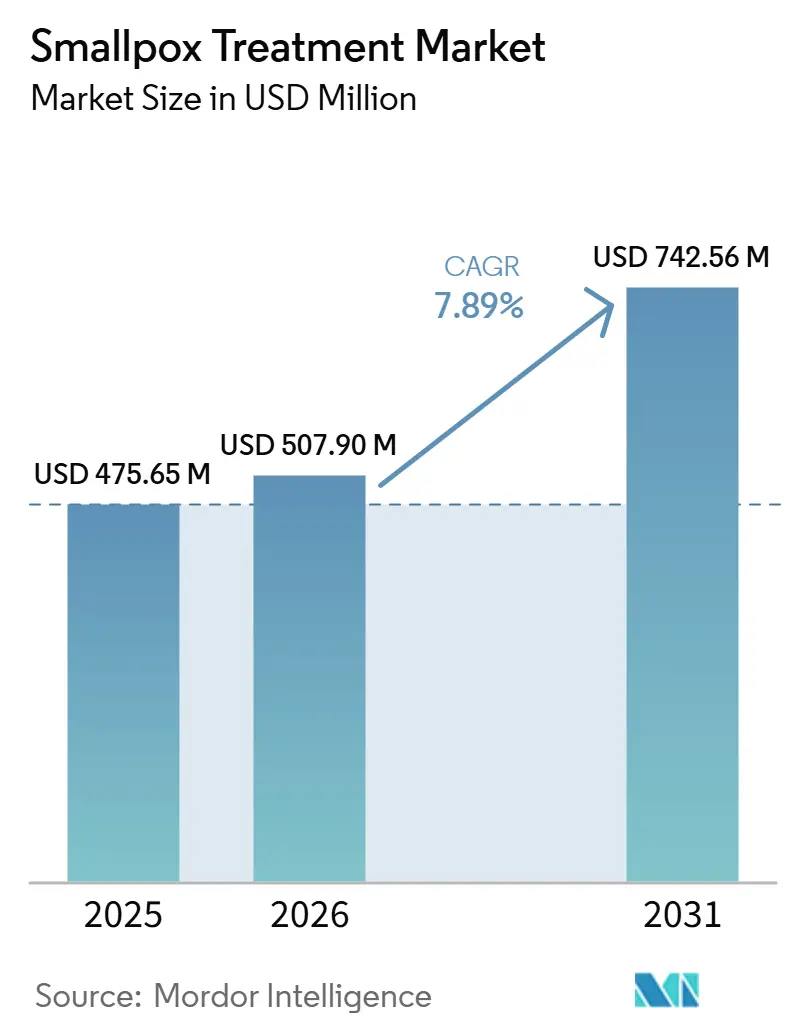
The Smallpox Treatment Market size was valued at USD 475.65 million in 2025 and is estimated to grow from USD 507.90 million in 2026 to reach USD 742.56 million by 2031, at a CAGR of 7.89% during the forecast period (2026-2031).
Government procurement, rather than routine patient demand, remains the primary revenue source for the smallpox treatment market. Multi-year contracts provide suppliers with revenue visibility, while sales remain tied to public budgets and stockpile renewal decisions. The 2022 mpox outbreak strengthened the policy rationale for preparedness purchases by showing that smallpox vaccines and antivirals can support responses to related orthopoxviruses. In March 2026, the European Medicines Agency retained tecovirimat for smallpox, cowpox, and vaccinia complications while removing its mpox indication, reinforcing its smallpox-focused role in public stockpiles.
Key Report Takeaways
- By product, antiviral drugs held 60.34% of the smallpox treatment market share in 2025, while vaccines are forecast to grow at an 8.82% CAGR through 2031.
- By disease type, Variola Major accounted for 68.36% of the smallpox treatment market share in 2025 and is projected to expand at an 8.23% CAGR through 2031.
- By route of administration, parenteral products held 72.36% share in 2025, while oral products are forecast to record a 9.35% CAGR through 2031.
- By end user, public health agencies held 42.32% share in 2025, while hospitals and clinics are projected to grow at an 8.54% CAGR through 2031.
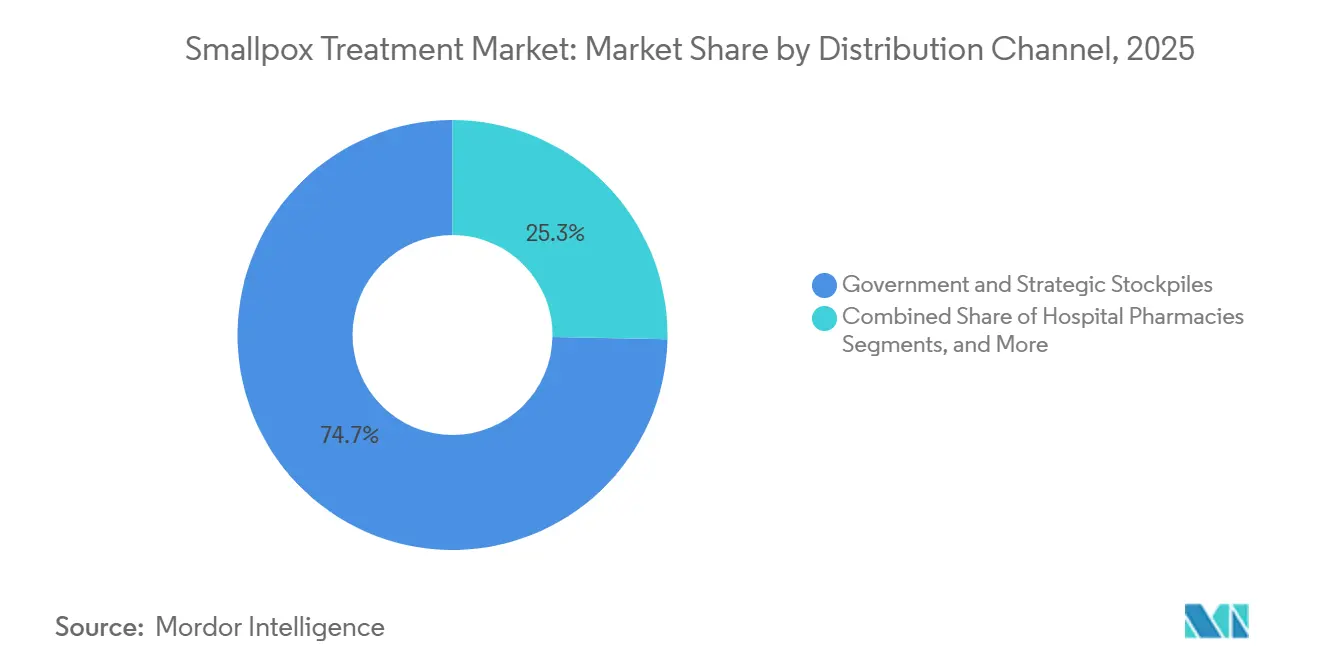
- By distribution channel, government and strategic stockpiles held 74.68% share in 2025, while hospital pharmacies are projected to grow at an 8.16% CAGR through 2031.
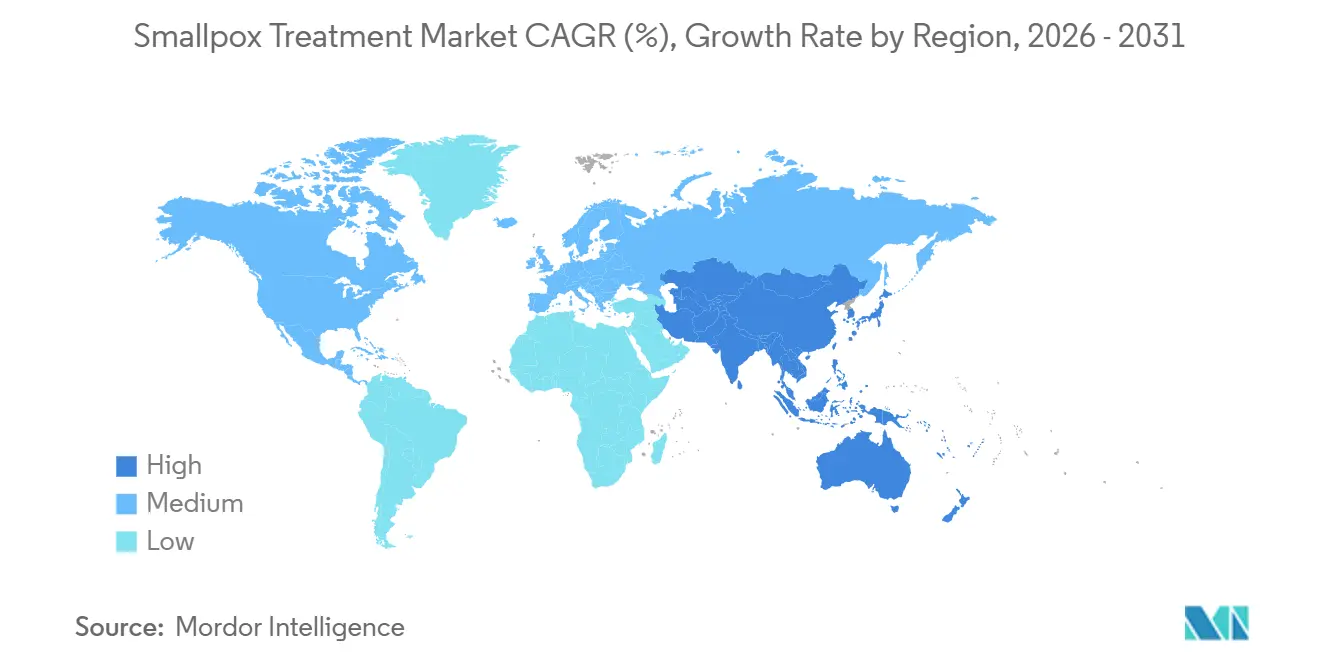
- By geography, North America held 43.21% share in 2025, while Asia-Pacific is forecast to grow at an 8.76% CAGR through 2031.
Note: Market size and forecast figures in this report are generated using Mordor Intelligence’s proprietary estimation framework, updated with the latest available data and insights as of January 2026.
Market Trends and Insights
Drivers Impact Analysis of Smallpox Treatment Market*
| DRIVER | (~) % IMPACT ON CAGR FORECAST | GEOGRAPHIC RELEVANCE | IMPACT TIMELINE |
|---|---|---|---|
| Government stockpiling and medical-countermeasure procurement | +2.8% | Global, with highest concentration in North America, EU, and Japan | Short term (≤ 2 years) |
| Orthopoxvirus preparedness after mpox outbreaks | +1.9% | Global, with accelerated uptake in Asia-Pacific and Sub-Saharan Africa | Medium term (2-4 years) |
| Reduced population immunity after routine vaccination ended | +1.2% | Global, with disproportionate exposure among people born after 1980 | Long term (≥ 4 years) |
| Animal rule pathway for approval without human efficacy trials | +0.7% | North America and EU, with spillover to Japan and Canada | Medium term (2-4 years) |
| Dual-mechanism need to address tecovirimat resistance | +0.6% | North America and EU, with emerging relevance in Asia-Pacific procurement | Medium term (2-4 years) |
| Diversification of strategic stockpiles beyond the united states | +0.5% | Asia-Pacific, EU, Middle East and Africa, and Canada | Long term (≥ 4 years) |
| Source: Mordor Intelligence | |||
Government Stockpiling and Medical-Countermeasure Procurement
Stockpile refresh contracts remained the largest revenue driver for the smallpox treatment market. In March 2025, SIGA Technologies received a USD 26 million order for IV TPOXX under its BARDA 19C contract, following a USD 113 million oral TPOXX order in July 2024. In June 2026, Emergent BioSolutions received a USD 52.7 million contract modification for ACAM2000 vaccine, ancillaries, and diluent replacement lots. The National Academies stated that anthrax and smallpox capacity sustainment was expected to account for nearly two-thirds of Strategic National Stockpile procurement spending during FY2022 through FY2026.[1]National Academies of Sciences, Engineering, and Medicine, “Future State of Smallpox Medical Countermeasures, Chapter 2, State of Smallpox Medical Countermeasures Readiness,” National Academies, nationalacademies.org. These requirements favored suppliers that already met Animal Rule, quality, and stockpile qualification standards.
Orthopoxvirus Preparedness After Mpox Outbreaks
The 2022 multi-country mpox outbreak changed how many governments assessed orthopoxvirus preparedness. Governments increasingly positioned smallpox medical countermeasures as assets with applications beyond a narrow bioterrorism scenario. Bavarian Nordic reported DKK 3,105 million (approximately USD 450 million) in Public Preparedness revenue in 2025, including government demand for its MVA-BN vaccine platform. Bavarian Nordic’s April 2024 EU strategic reserve contract for MVA-BN was valued at EUR 65 million (approximately USD 70 million) and helped establish a coordinated procurement route for member states. Research on vaccine development and stockpiling also highlighted the shift toward more coordinated preparedness arrangements in Europe. South Korea’s National Vaccine Stockpiling Mid- to Long-Term Plan for 2024 to 2028 indicated that preparedness was becoming part of longer-term national planning. This broader buyer base supported the smallpox treatment market even without an active smallpox event.
Reduced Population Immunity After Routine Smallpox Vaccination Ended
Routine smallpox vaccination ended after eradication in 1980, leaving people born after that year without baseline vaccination-derived orthopoxvirus immunity. This increased the population that authorities would need to protect during a reintroduction event. The National Academies identified waning immunity as a reason for the United States to diversify its smallpox medical countermeasures and improve vaccine and therapeutic options. As a result, some preparedness discussions moved stockpile planning beyond narrow ring-vaccination assumptions. A larger susceptible population increased the value of products that authorities could deploy quickly outside specialist treatment settings. Recognition of other orthopoxviruses, including Alaskapox and vaccinia-like viruses, further supported ongoing readiness planning. Although this demand was precautionary, it provided the smallpox treatment market with a longer-term public health rationale.
Animal Rule Pathway for Approval Without Human Efficacy Trials
The FDA Animal Rule enabled approvals when human efficacy trials were not ethical or feasible. This pathway played a central role in the approval of TPOXX and Tembexa for smallpox. It allowed developers to use animal efficacy evidence, along with other required data, for products intended for an eradicated disease. The process shortened the route from research funding to a stockpile-ready product compared with a conventional clinical program. It also allowed governments to consider procurement before developers could generate human Phase 3 efficacy evidence. The EMA used related exceptional-circumstances provisions for tecovirimat. This regulatory framework gave established developers an advantage because building suitable animal models, manufacturing capacity, and government relationships took several years.
Restraints Impact Analysis of Smallpox Treatment Market*
| RESTRAINT | (~) % IMPACT ON CAGR FORECAST | GEOGRAPHIC RELEVANCE | IMPACT TIMELINE |
|---|---|---|---|
| Eradicated disease and minimal routine clinical demand | -0.8% | Global, most acute in lower-income countries with limited biosecurity budgets | Long term (≥ 4 years) |
| Limited human efficacy evidence for approved therapeutics | -0.5% | North America and EU, with risk highlighted by the EMA mpox review | Medium term (2-4 years) |
| High cost and long lead times for stockpile rotation | -0.4% | Global, especially in mid-tier economies building first-generation reserves | Medium term (2-4 years) |
| Low resistance barrier and sparse variola-specific surveillance | -0.3% | North America and EU | Long term (≥ 4 years) |
| Source: Mordor Intelligence | |||
Eradicated Disease and Minimal Routine Clinical Demand
The variola virus does not circulate in any human population, making all purchases precautionary. Governments fund preparedness for a severe but uncertain event, which can strain budgets as other public health priorities compete for funding. The WHO Smallpox Vaccine Emergency Stockpile supports countries that do not maintain independent reserves and also reflects uneven global coverage. With no routine clinical demand, the smallpox treatment market depends on sustained policy commitment and government willingness to maintain inventory.
Limited Human Efficacy Evidence for Approved Therapeutics
The EMA removed the mpox indication for tecovirimat in March 2026 after clinical trial findings did not support the indication. However, it retained a positive benefit-to-risk balance for smallpox, cowpox, and vaccinia complications. Smallpox approvals remain based on the Animal Rule because conventional human efficacy trials are not possible. This creates a policy risk if governments seek stronger real-world evidence before renewing contracts, increasing the importance of resistance monitoring, post-authorization evidence, complementary mechanisms, and clear deployment data.
*Our forecasts treat driver/restraint impacts as directional, not additive. The impact forecasts reflect baseline growth, mix effects, and variable interactions.
Smallpox Treatment Market Segment Analysis
By Product:
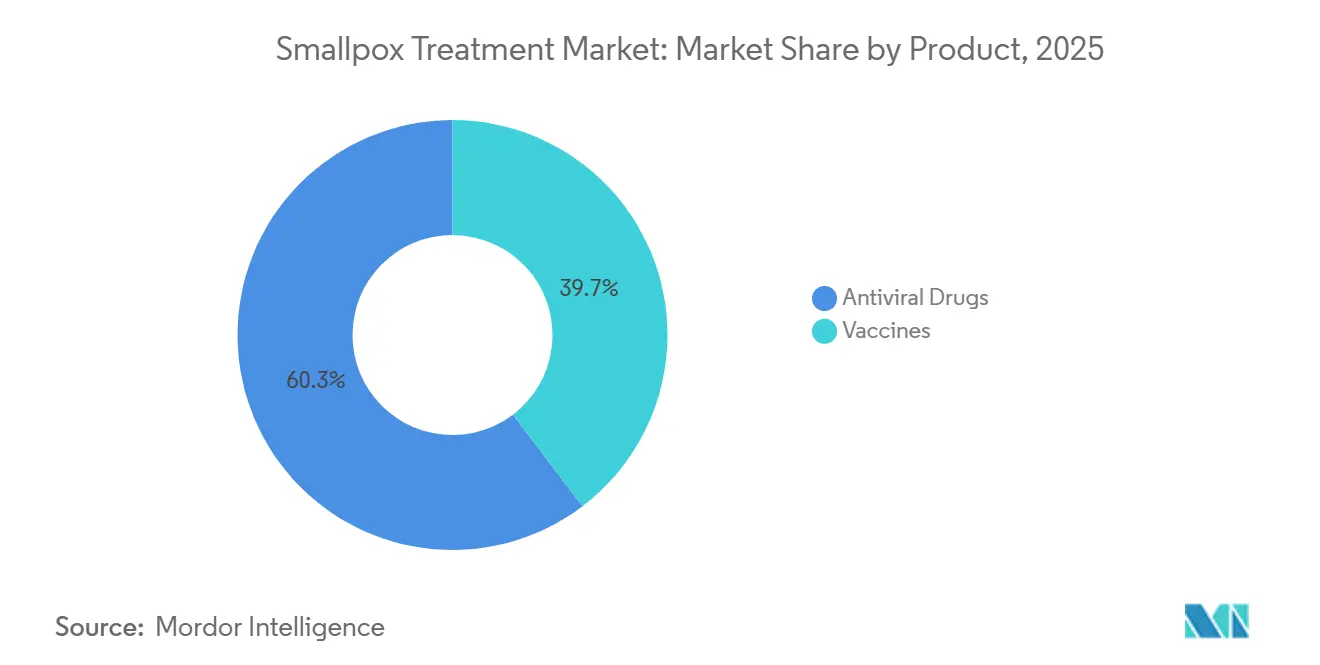
Antiviral Drugs and Vaccines Serve Complementary Stockpile RolesAntiviral drugs held a 60.34% share in 2025, led by tecovirimat in national stockpiles across the United States, Canada, Europe, and Japan. The segment benefits from demand for treatment after exposure. The FDA approved TPOXX for oral smallpox treatment in 2018 and approved an intravenous formulation in 2022 for patients unable to take capsules. Public health authorities also hold brincidofovir as a second-line option under the Animal Rule, while cidofovir remains relevant in institutional protocols despite intravenous administration and renal toxicity concerns.
Vaccines are projected to be the fastest-growing product group, registering an 8.82% CAGR through 2031. In March 2025, the FDA approved a freeze-dried JYNNEOS formulation, improving its suitability for long-term storage. BARDA exercised USD 143.6 million in options under Bavarian Nordic’s existing 10-year supply contract, with deliveries planned for 2026. ACAM2000 remains part of the United States Strategic National Stockpile and received expanded FDA approval for mpox in 2024, while Japan’s LC16m8 and Moderna’s mRNA-1769 candidate support future supply diversity.


By Disease Type:
Variola Major Concentrates Market Economics and R&D PriorityVariola Major held 68.36% of the smallpox treatment market size in 2025 and is also forecast to register the fastest 8.23% CAGR through 2031. Preparedness plans focus on this form because it historically caused the highest disease burden and presents the clearest biodefense concern. Its historical case fatality rate ranged from 15% to 35%, compared with below 1% for Variola Minor. Animal model studies use related orthopoxvirus surrogates, keeping development and procurement focused on the more severe threat scenario.
Variola Minor, hemorrhagic smallpox, malignant smallpox, and modified smallpox make up the remainder of this segmentation. Hemorrhagic and malignant forms historically had very high fatality rates, but their rarity limited their role in volume modeling. Modified smallpox may present atypical clinical features in partially immune people, including vaccinated military personnel and healthcare workers. A large event in a low-immunity population could increase demand for intravenous antivirals, supportive care products, and multiple therapeutic formats.
By Route of Administration:
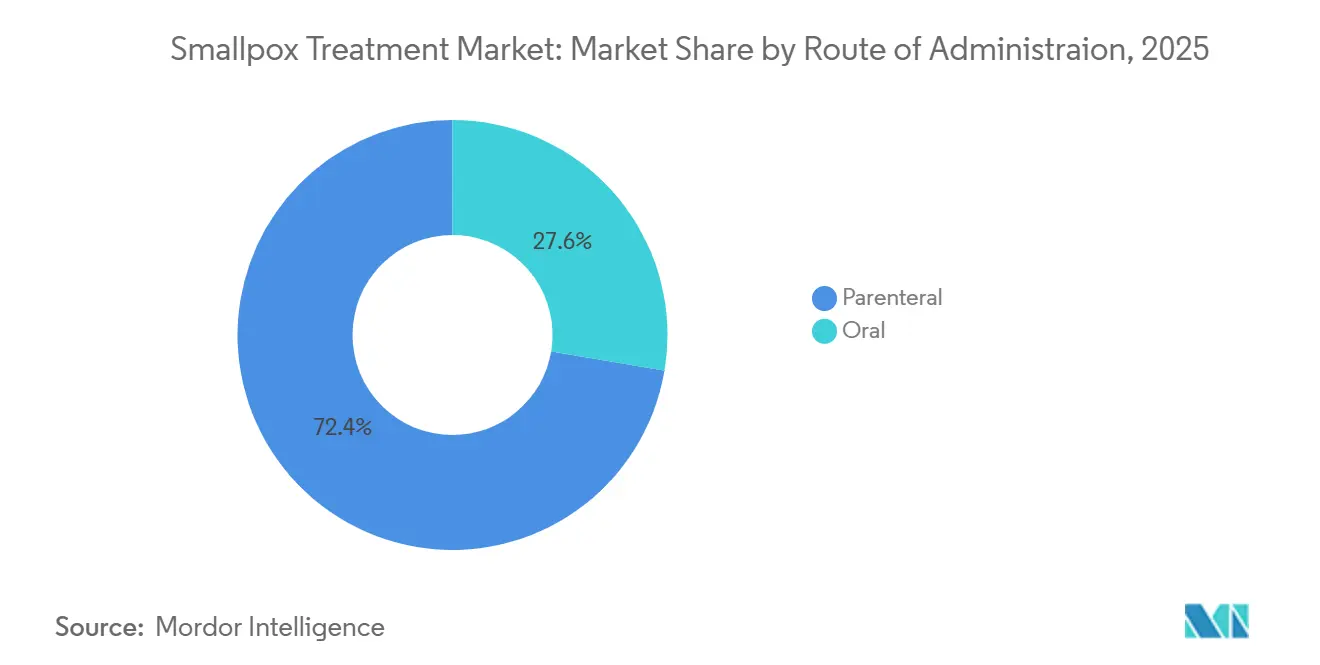
Oral Products Gain Ground While Parenteral Products Remain CentralParenteral products held a 72.36% share in 2025, reflecting the institutional deployment model for vaccines and intravenous antivirals. Healthcare providers administer vaccines through subcutaneous or intradermal routes, while intravenous tecovirimat and cidofovir remain necessary for patients unable to take oral therapy. The share reflects stockpile composition more than patient preference. Hospitals and public health agencies continue to rely on parenteral products for severe cases, vaccine campaigns, and emergency treatment protocols.
Oral products are forecast to grow at a 9.35% CAGR through 2031. Oral tecovirimat is suitable for mass-dispensing scenarios where intravenous capacity would be constrained. SIGA’s BARDA 19C contract includes a supplemental new drug application planned within 12 months for oral tecovirimat as smallpox post-exposure prophylaxis. If approved, that indication would extend oral use beyond treatment and give governments more flexible deployment options without replacing the need for parenteral medicines.
By End User:
Public Health Agencies Lead While Hospitals and Clinics ExpandPublic health agencies held a 42.32% share in 2025. They manage procurement, stockpile oversight, and distribution in most major purchasing countries. In the United States, ASPR and CDC structures manage these roles, while HERA and rescEU support coordinated preparedness in Europe. Japan’s Ministry of Health, Labour and Welfare plays a comparable role in national planning, and military and defense agencies remain important buyers through separate preparedness programs.
Hospitals and clinics are forecast to register the highest end-user CAGR at 8.54% through 2031. Governments are increasingly considering pre-positioned hospital reserves that can be activated without waiting for central logistics. This shift reflects lessons from COVID-19, when centralized stockpiles could not always meet immediate local needs. Hospitals also provide clinical capacity for severe cases and intravenous administration, while ambulatory care centers and homecare settings may become more relevant for oral post-exposure prophylaxis.
By Distribution Channel:
Government Stockpiles Dominate While Hospital Pharmacies GrowGovernment and strategic stockpiles held a 74.68% share in 2025. This channel dominates because government institutions act as the primary buyers and prepare these products for public emergencies. The U.S. Strategic National Stockpile, EU rescEU reserve, Japan’s national stockpile, Canadian preparedness reserves, and the WHO emergency stockpile provide the core demand base. Commercial distribution remains limited under normal conditions, as public procurement cycles determine product availability.
Hospital pharmacies are expected to be the fastest-growing channel, registering an 8.16% CAGR through 2031. Their expansion follows the broader move toward decentralized readiness. They can support severe case treatment and controlled dispensing of oral antivirals, while specialty pharmacies remain relevant for compassionate use and expanded-access programs. Retail pharmacies would matter mainly in a mass-dispensing event, and hospital pharmacy growth changes where inventory is held without displacing government purchasing.

Geography Analysis
North America Smallpox Treatment Market
North America held a 43.21% share in 2025. The United States supported regional demand through the Strategic National Stockpile, BARDA development funding, and Project BioShield procurement authority. Multi-year purchase agreements for vaccines and antivirals created a predictable demand base for established suppliers. Canada formalized multi-year medical countermeasure arrangements, while Mexico remained a smaller market aligned with Pan American Health Organization guidance.
APAC Smallpox Treatment Market
Asia-Pacific is forecast to grow at a CAGR of 8.76% from 2026 to 2031. Japan approved TEPOXX and used LC16m8 within its bioterrorism response framework. SIGA received a USD 13 million oral TPOXX order from an Asia-Pacific customer in January 2026 under a multi-year agreement. South Korea’s 2024 to 2028 vaccine stockpiling plan indicated a shift from event-based purchasing to longer-term preparedness.
EMEA and South America Smallpox Treatment Market
Europe developed a coordinated reserve model through rescEU and HERA while retaining national programs in Germany, France, and the United Kingdom. Bavarian Nordic secured MVA-BN orders for the EU strategic reserve, supporting regional vaccine capacity. France confirmed in May 2026 that tecovirimat remained authorized for smallpox, cowpox, and vaccinia complications after the mpox indication was withdrawn. The Middle East and Africa remained at an earlier stage in formal stockpile development, while Brazil and Argentina built capacity in line with Pan American Health Organization frameworks.

Competitive Landscape
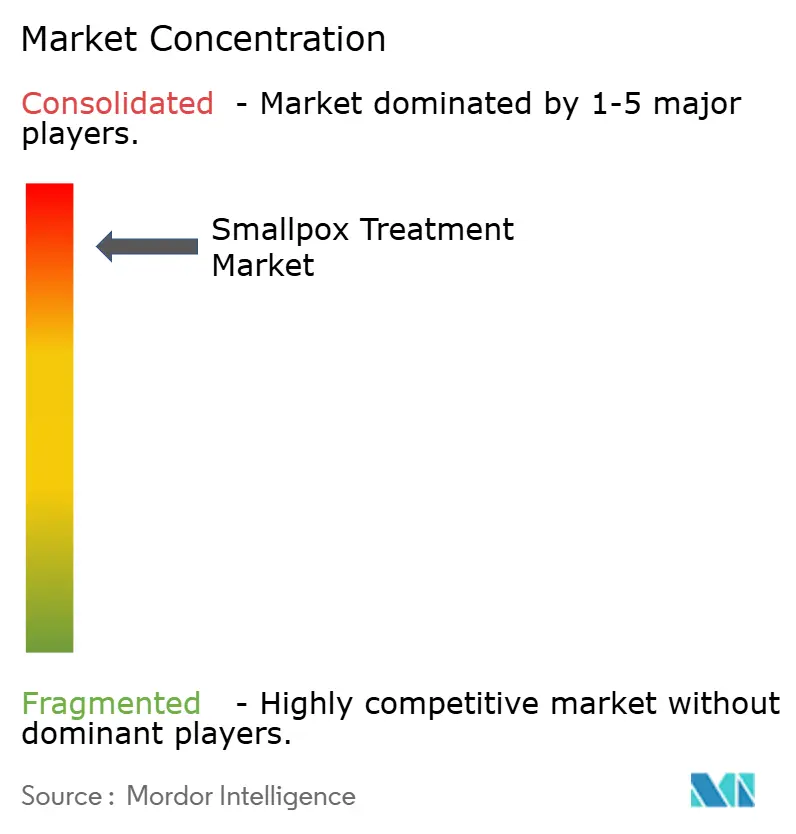
The smallpox treatment market is concentrated around SIGA Technologies, Bavarian Nordic, and Emergent BioSolutions. SIGA has a leading antiviral position through TPOXX and its long-running BARDA 19C contract. Bavarian Nordic supplies JYNNEOS, IMVANEX, and IMVAMUNE under large public preparedness contracts. Emergent provides ACAM2000 and vaccinia immune globulin intravenous for related stockpile needs. Entry barriers include Animal Rule evidence requirements, specialized manufacturing, security standards, and multi-year government qualification processes. These factors make it difficult for a new supplier to displace an established product quickly. Competition is therefore based on contract performance, product readiness, and portfolio gaps rather than routine commercial promotion. In the smallpox treatment market, an approved product must also be available when an emergency occurs, not simply be commercially licensed. Companies must maintain validated manufacturing processes, inventory controls, and the ability to work with public agencies that set exact delivery and storage requirements.
Potential openings remain in products that address the limits of current stockpiles. A combination antiviral approach could reduce dependence on tecovirimat where resistance is a concern. A replication-deficient vaccine with a stronger safety profile could serve immunocompromised populations that cannot use some existing vaccines. Pediatric oral options are another unmet need, as reflected in SIGA’s funded development program. GeoVax, Tonix Pharmaceuticals, and Moderna are building vaccine pipeline positions that could broaden competition later in the forecast period. Research into VP37 resistance could also lead to future antiviral candidates.
Smallpox Treatment Industry Leaders
SIGA Technologies, Inc.
Bavarian Nordic A/S
Chimerix, Inc.
Emergent BioSolutions Inc.
Tonix Pharmaceuticals Holding Corp.
- *Disclaimer: Major Players sorted in no particular order
Smallpox Treatment Market Companies Covered in this Report
- Bavarian Nordic
- Bharat Biotech International Limited
- BioFactura, Inc.
- BioNTech
- Cangene Corporation
- Chimerix, Inc.
- Dynavax Technologies
- Elusys Therapeutics, Inc.
- Emergent Bio Solutions
- General Dynamics Information Technology, Inc.
- GlaxoSmithKline
- Inovio Pharmaceuticals, Inc.
- KM Biologics Co., Ltd.
- Merck
- Moderna
- Pfizer
- Sanofi
- SIGA Technologies, Inc.
- Tonix Pharmaceuticals
- Vaxart, Inc.

Recent Industry Developments in Smallpox Treatment Market
- June 2026: Bavarian Nordic secured a government contract worth over DKK 700 million to supply the MVA-BN smallpox and mpox vaccine in 2026 and 2027.
- March 2026: The EMA’s CHMP confirmed a positive benefit-risk balance for Tecovirimat SIGA for smallpox, cowpox, and vaccinia complications.
- March 2026: GeoVax Labs initiated procurement discussions with global health and preparedness organizations for its GEO-MVA vaccine candidate.
- September 2025: Emergent BioSolutions received a USD 56 million ASPR contract modification for ACAM2000 supply, raising projected 2025 sales to over USD 120 million.
- June 2025: BARDA modified SIGA’s 19C contract to add USD 27 million for TPOXX pediatric development and manufacturing activities.


Global Smallpox Treatment Market Report Scope
As per the scope of the report, smallpox is a severe, highly contagious, and fatal disease caused by the variola virus. There is no proven cure for active smallpox, but management relies on supportive care, the smallpox vaccine, and specific antiviral medications.
The smallpox treatment market is segmented by product, disease type, route of administration, end user, distribution channel, and geography. By product, the market includes antiviral drugs and vaccines. By disease type, the market is segmented into variola major, variola minor, hemorrhagic smallpox, malignant (flat) smallpox, and modified smallpox. By route of administration, the market is segmented into oral and parenteral. By end user, the market is segmented into hospitals & clinics, ambulatory care centers, public health agencies, military & defense agencies, and homecare. By distribution channel, the market is segmented into government & strategic stockpiles, hospital pharmacies, specialty pharmacies, and retail pharmacies. By geography, the market is analyzed across North America, Europe, Asia-Pacific, the Middle East and Africa, and South America. The report also covers the estimated market sizes and trends for 17 countries across major regions globally. The report offers the market sizes and forecasts in terms of value (USD) for the above segments.
| Antiviral Drugs | Tecovirimat |
| Brincidofovir | |
| Cidofovir | |
| Others | |
| Vaccines | ACAM2000 |
| JYNNEOS (MVA-BN) | |
| LC16m8 |
| Variola Major |
| Variola Minor |
| Hemorrhagic Smallpox |
| Malignant (Flat) Smallpox |
| Modified Smallpox |
| Oral |
| Parenteral |
| Hospitals & Clinics |
| Ambulatory Care Centers |
| Public Health Agencies |
| Military & Defense Agencies |
| Homecare |
| Government & Strategic Stockpiles |
| Hospital Pharmacies |
| Specialty Pharmacies |
| Retail Pharmacies |
| North America | United States |
| Canada | |
| Mexico | |
| Europe | Germany |
| United Kingdom | |
| France | |
| Italy | |
| Spain | |
| Rest of Europe | |
| Asia-Pacific | China |
| India | |
| Japan | |
| Australia | |
| South Korea | |
| Rest of Asia-Pacific | |
| Middle East and Africa | GCC |
| South Africa | |
| Rest of Middle East and Africa | |
| South America | Brazil |
| Argentina | |
| Rest of South America |
| By Product | Antiviral Drugs | Tecovirimat |
| Brincidofovir | ||
| Cidofovir | ||
| Others | ||
| Vaccines | ACAM2000 | |
| JYNNEOS (MVA-BN) | ||
| LC16m8 | ||
| By Disease Type | Variola Major | |
| Variola Minor | ||
| Hemorrhagic Smallpox | ||
| Malignant (Flat) Smallpox | ||
| Modified Smallpox | ||
| By Route of Administration | Oral | |
| Parenteral | ||
| By End User | Hospitals & Clinics | |
| Ambulatory Care Centers | ||
| Public Health Agencies | ||
| Military & Defense Agencies | ||
| Homecare | ||
| By Distribution Channel | Government & Strategic Stockpiles | |
| Hospital Pharmacies | ||
| Specialty Pharmacies | ||
| Retail Pharmacies | ||
| By Geography | North America | United States |
| Canada | ||
| Mexico | ||
| Europe | Germany | |
| United Kingdom | ||
| France | ||
| Italy | ||
| Spain | ||
| Rest of Europe | ||
| Asia-Pacific | China | |
| India | ||
| Japan | ||
| Australia | ||
| South Korea | ||
| Rest of Asia-Pacific | ||
| Middle East and Africa | GCC | |
| South Africa | ||
| Rest of Middle East and Africa | ||
| South America | Brazil | |
| Argentina | ||
| Rest of South America | ||


Key Questions Answered in the Report
What is the forecast value of the smallpox treatment market by 2031?
The forecast value is USD 742.56 million globally in total by 2031, rising from USD 507.90 million in 2026 at a 7.89% CAGR.
Which product category holds the largest position?
Antiviral drugs held 60.34% share in 2025, supported by government stockpiling of products such as tecovirimat.
Which product category is expected to grow fastest?
Vaccines are forecast to grow at an 8.82% CAGR through 2031, supported by demand for storage-ready products such as freeze-dried JYNNEOS.
Why are governments the main purchasers of smallpox countermeasures?
Smallpox is eradicated, so products are purchased mainly for national preparedness and strategic stockpiles rather than routine treatment.
Which region is projected to grow fastest?
Asia-Pacific is forecast to expand at an 8.76% CAGR through 2031 as Japan, South Korea, and other countries formalize preparedness programs.
Which companies are central suppliers?
SIGA Technologies, Bavarian Nordic, and Emergent BioSolutions hold established positions across antivirals, vaccines, and immune globulin products.
Page last updated on:





