
Russia Satellite Communications Market Size and Share
| Study Period | 2019 - 2030 |
| Forecast Data Period | 2025 - 2030 |
| Historical Data Period | 2019 - 2023 |
| Market Size (2025) | USD 1.17 Billion |
| Market Size (2030) | USD 2.15 Billion |
| CAGR (2025 - 2030) | 12.91% |
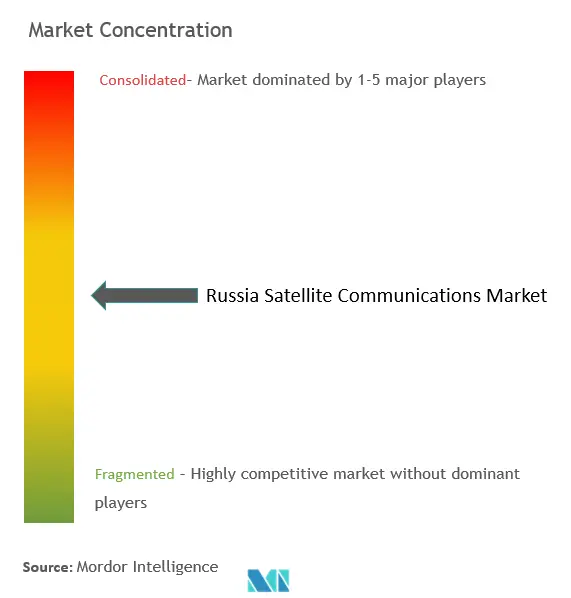
| Market Concentration | Medium |
Major Players *Disclaimer: Major Players sorted in no particular order |
Russia Satellite Communications Market Analysis by Mordor Intelligence
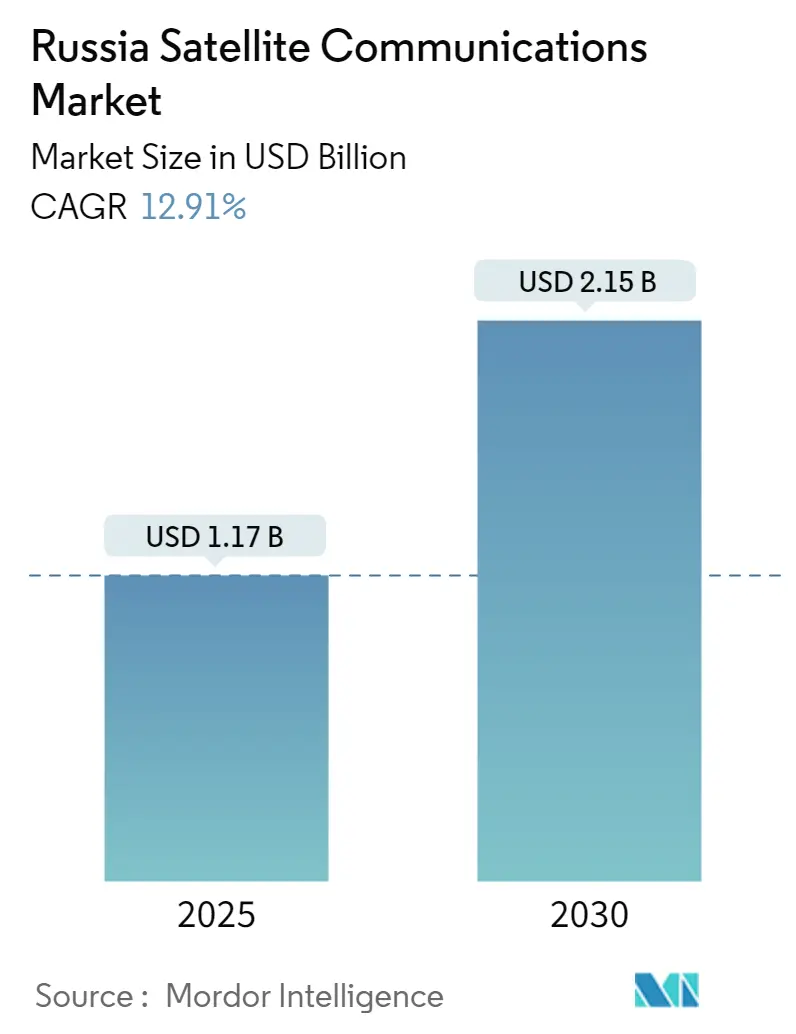
The Russia Satellite Communications Market size is estimated at USD 1.17 billion in 2025, and is expected to reach USD 2.15 billion by 2030, at a CAGR of 12.91% during the forecast period (2025-2030).
- The utilization of satellite-based remote sensing and Earth observation technologies is expanding across multiple industries, including agriculture, environmental monitoring, natural resource management, and urban planning. The Russia satellite communications market will benefit from the increasing demand for satellite imagery, data analytics, and geospatial services.
- Russia is the largest country in the world, spanning vast and diverse geographical terrains. It includes remote areas, vast stretches of land, and regions with challenging or limited terrestrial infrastructure. Satellite communications provide a reliable and efficient means of connectivity, bridging the gaps in communication infrastructure and ensuring communication coverage across the country.
- Moreover, satellite communications play a crucial role in connecting remote and underserved areas in Russia. These areas may lack access to traditional forms of communication infrastructure, such as fiber-optic networks or cellular coverage. Satellites provide a means to deliver voice, data, and internet services to these areas, enabling connectivity for businesses, communities, and individuals.
- Further, the Russian government has been actively promoting and investing in the satellite communications sector. Initiatives such as the Federal Space Program and the Digital Economy Program aim to enhance Russia's satellite infrastructure, expand coverage, and improve connectivity across the country. Government support and investments play a crucial role in driving the growth of the satellite communications market.
- The COVID-19 has had a significant impact on the Russia satellite communications market. The pandemic caused disruptions in the global supply chain, including the satellite manufacturing industry. Delays in satellite launches and manufacturing schedules impacted the deployment of new satellite systems, which could have slowed down the expansion and growth of the Russia satellite communications market.
- However, the increasing demand for telecommunications and internet services in Russia is a significant driver for satellite communications. Satellites facilitate broadband connectivity, data transmission, voice services, and video streaming, bridging the digital divide and providing access to communication services in rural and remote areas where traditional networks may be insufficient.
- However, regulatory frameworks and licensing procedures can pose challenges to the growth of the satellite communications market. Complex and time-consuming licensing processes, regulatory restrictions, and compliance requirements may hinder the entry of new satellite operators and limit market competition.
Russia Satellite Communications Market Trends and Insights
Portable segment by platform is expected to grow at a higher pace.
- The growing consumption of mobile data and the increasing demand for internet connectivity indicate a significant need for reliable and widespread communication services. As more people in Russia rely on mobile devices and internet access for various activities, such as remote work, online education, e-commerce, and digital entertainment, the demand for high-speed and reliable connectivity continues to rise.
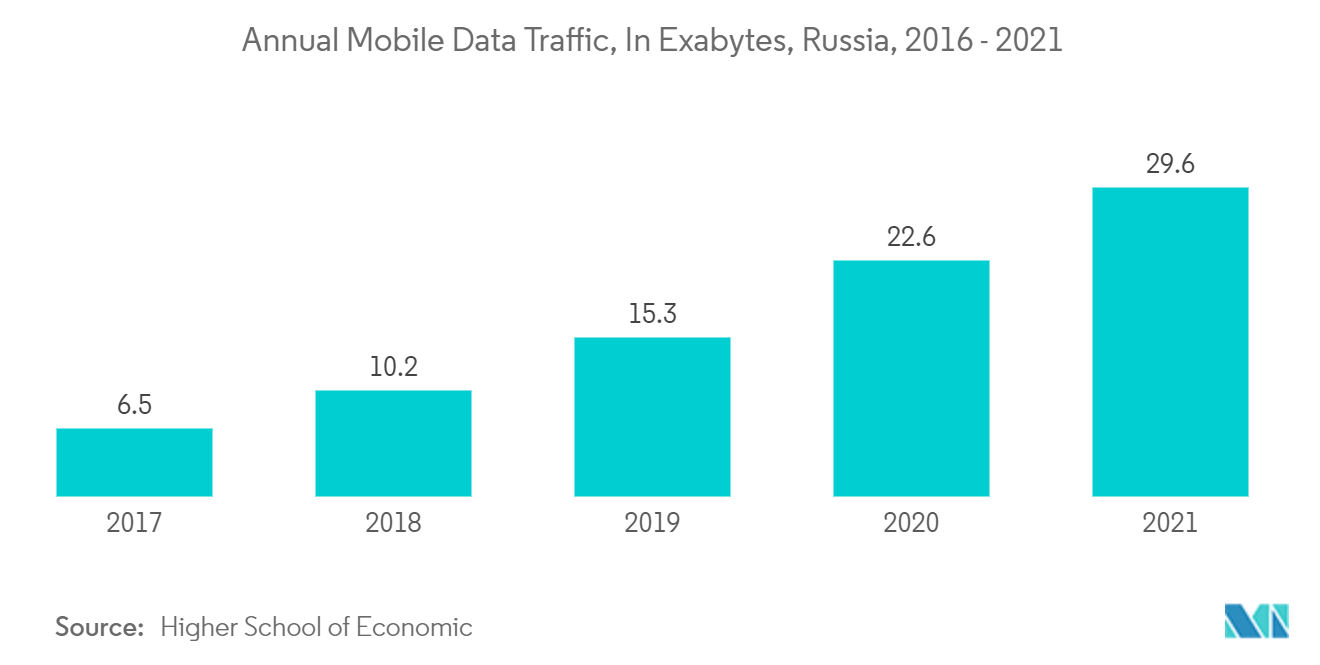
- Moreover, according to the Higher School of Education, in 2021, 29.6 exabytes of mobile data were used in Russia, up from 22.6 exabytes the year before. Mobile internet traffic in the nation rose consistently throughout the study period. Such significant trends of increasing mobile internet traffic highlight the need for portable-based satellite communication infrastructure solutions and services to support the growing connectivity requirements of individuals, businesses, and various sectors in the country.
- Additionally, the demand for broadband connectivity is increasing across all sectors of society, including businesses, educational institutions, healthcare facilities, and individuals. Satellites offer an effective solution for extending broadband coverage to areas where it is economically unviable or challenging to deploy terrestrial infrastructure. This drives the growth of the satellite communications market in Russia.
- Moreover, the Russian satellite communications market plays a vital role in bridging the digital divide between urban and rural areas. Remote regions with limited or no access to terrestrial networks can benefit from satellite-based internet connectivity, enabling them to participate in the digital economy, access online education, and leverage digital services.
- As the demand for telecommunications and internet services continues to rise in Russia, the satellite communications market is expected to experience sustained growth. This, in turn, is expected to poise a growth factor for growth in the portable-based satellite communications market in the Russian market to meet the increasing demand for telecommunications and internet services, driving growth and innovation in the industry.


Defense and Government Segment to Hold a Significant Market Share
- The defense and government sectors prioritize secure and reliable communication systems for national security purposes. Satellite communications play a crucial role in ensuring secure and resilient communication channels for military operations, intelligence gathering, and emergency response. The need for secure and encrypted communication drives this segment's demand for satellite communication services.
- Further, defense and government organizations rely on satellite communications for command and control systems. These systems facilitate real-time communication, data transmission, and coordination among various units and command centers. Satellites provide the necessary connectivity for efficient command and control, enhancing situational awareness and decision-making capabilities.
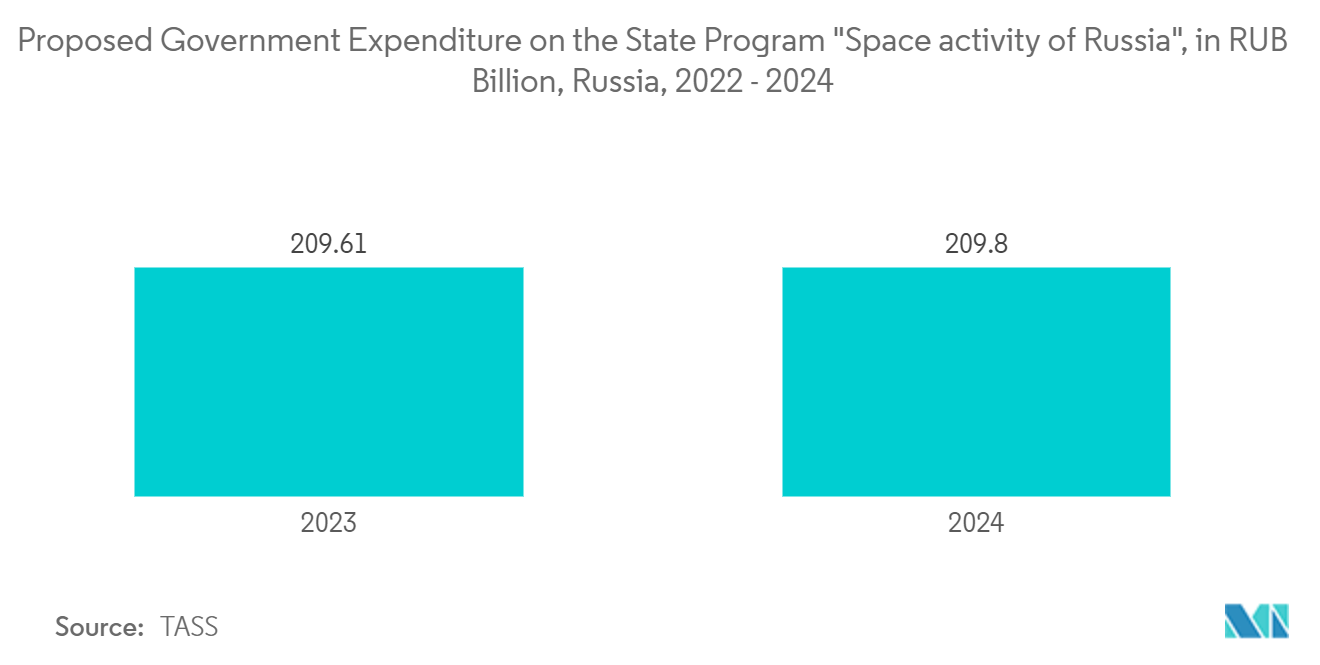
- Furthermore, the consistent government spending on space operations indicates a significant level of financial support for the sector. According to the Ministry of Finance of the Russian Federation, as of 2021, it was expected that Russian government spending on space operations would mostly remain constant during the following three years. It was anticipated that spending would increase again, reaching RUB 209.8 billion (USD 2.56 billion) in 2024, after a little dip in 2023. Additionally, Russia is now ranked fifth among nations with the most significant government spending on space programs. Such financial backing enables the government to invest in satellite communication infrastructure, research and development, and other related activities. As a result, the government can hold a significant share of the satellite communications market.
- Moreover, government initiatives and funding play a significant role in driving the adoption of satellite communication services in the defense and government sector. Investments in satellite infrastructure, research and development, and technology modernization contribute to the sector's market share. Government support promotes developing and deploying satellite communication systems tailored to the specific needs of defense and government organizations.

Competitive Landscape
The Russia satellite communications market is expected to be moderately consolidated. While multiple players exist, a few key companies hold significant market shares and exert considerable influence. A few major players have established infrastructure, capabilities, and expertise in providing satellite communication services. Some prominent market players include Russian Satellite Communications Company (RSCC), AltegroSky GC, Hughes Network Systems, LLC, RTCOMM, JSC Gazprom Space Systems, etc.
In April 2023, the new Situation Centre for the Russian Satellite Communications Company (RSSC) was announced to be operational, increasing the enterprise's capacity to deliver reliable services. Clients' technical assistance and traffic monitoring will be integrated into a single complex. Based on the operations control division of RSCC, the high-end software and hardware center was developed. Modern technological features and an automatic emergency alarm system have been included after an upgrade.
In April 2023, the federal satellite operator RTCOMM introduced the HotSpot service for Wi-Fi Internet access during a meeting with the Khabarovsk Territory business community. Using the service, users may set up a secure digital environment for working and communicating in off-the-grid locations, such as mines, exploration sites, woods, and territorial seas.
Russia Satellite Communications Industry Leaders
Russian Satellite Communications Company (RSCC)
AltegroSky GC
Hughes Network Systems, LLC
RTCOMM (JSC RTComm.RU)
JSC Gazprom Space Systems
- *Disclaimer: Major Players sorted in no particular order

Recent Industry Developments
- May 2023: The conference "Communication, Navigation, New Products and Technologies at Sea - 2023" in Murmansk included participation from the federal operator RTCOMM and representatives from the fishing and ship repair industries. The service provider used a stabilized antenna and satellite communication channels to offer consumers broadband Internet access with the Marine VSAT service.
- March 2023: The Russian space agency Roscosmos declared that the agency had launched a Luch-5X relay satellite on its heavy-lift rocket Proton M. The Luch relay satellite system, which has three satellites orbiting the Earth, was created to transport data and provide information support, including for the Russian component of the International Space Station.


Russia Satellite Communications Market Report Scope
Satellite communication is the transfer of data and information via satellites orbiting the Earth. It enables long-distance communication by relaying signals between ground stations and satellite receivers in orbit, enabling television broadcasts, internet access, and phone calls. The Satellite Communication (SATCOM) market is defined based on the revenues generated from the types that are being used in various end-use industries such as Maritime, Defense & Government, Enterprises, and Media & Entertainment, among other end-users.
The Russia Satellite Communications market is segmented based on the type (Equipment and Services), platform (Portable, Land, Maritime, and Airborne), and end-user vertical (Maritime, Defense & Government, Enterprises, Media & Entertainment, and other end-user verticals). Common satellite communication services include voice calling and internet access for different applications. The market sizes and forecasts are provided in terms of value (USD) for all the above segments.
| Ground Equipment |
| Services |
| Portable |
| Land |
| Maritime |
| Airborne |
| Maritime |
| Defense and Government |
| Enterprises |
| Media and Entertainment |
| Other End-user Verticals |
| By Type | Ground Equipment |
| Services | |
| By Platform | Portable |
| Land | |
| Maritime | |
| Airborne | |
| By End-user Vertical | Maritime |
| Defense and Government | |
| Enterprises | |
| Media and Entertainment | |
| Other End-user Verticals |


Key Questions Answered in the Report
How big is the Russia Satellite Communications Market?
The Russia Satellite Communications Market size is expected to reach USD 1.17 billion in 2025 and grow at a CAGR of 12.91% to reach USD 2.15 billion by 2030.
What is the current Russia Satellite Communications Market size?
In 2025, the Russia Satellite Communications Market size is expected to reach USD 1.17 billion.
Who are the key players in Russia Satellite Communications Market?
Russian Satellite Communications Company (RSCC), AltegroSky GC, Hughes Network Systems, LLC, RTCOMM (JSC RTComm.RU) and JSC Gazprom Space Systems are the major companies operating in the Russia Satellite Communications Market.
What years does this Russia Satellite Communications Market cover, and what was the market size in 2024?
In 2024, the Russia Satellite Communications Market size was estimated at USD 1.02 billion. The report covers the Russia Satellite Communications Market historical market size for years: 2019, 2020, 2021, 2022, 2023 and 2024. The report also forecasts the Russia Satellite Communications Market size for years: 2025, 2026, 2027, 2028, 2029 and 2030.
Page last updated on:
Russia Satellite Communications Market Report
Statistics for the 2025 Russia Satellite Communications market share, size and revenue growth rate, created by Mordor Intelligence™ Industry Reports. Russia Satellite Communications analysis includes a market forecast outlook for 2025 to 2030 and historical overview. Get a sample of this industry analysis as a free report PDF download.





