
Ready-to-Drink Alcohol Market Size and Share
Market Overview
| Study Period | 2027 - 2032 |
|---|---|
| Market Size (2027) | USD 4.85 Billion |
| Market Size (2032) | USD 9.38 Billion |
| Growth Rate (2027 - 2032) | 14.10 % |
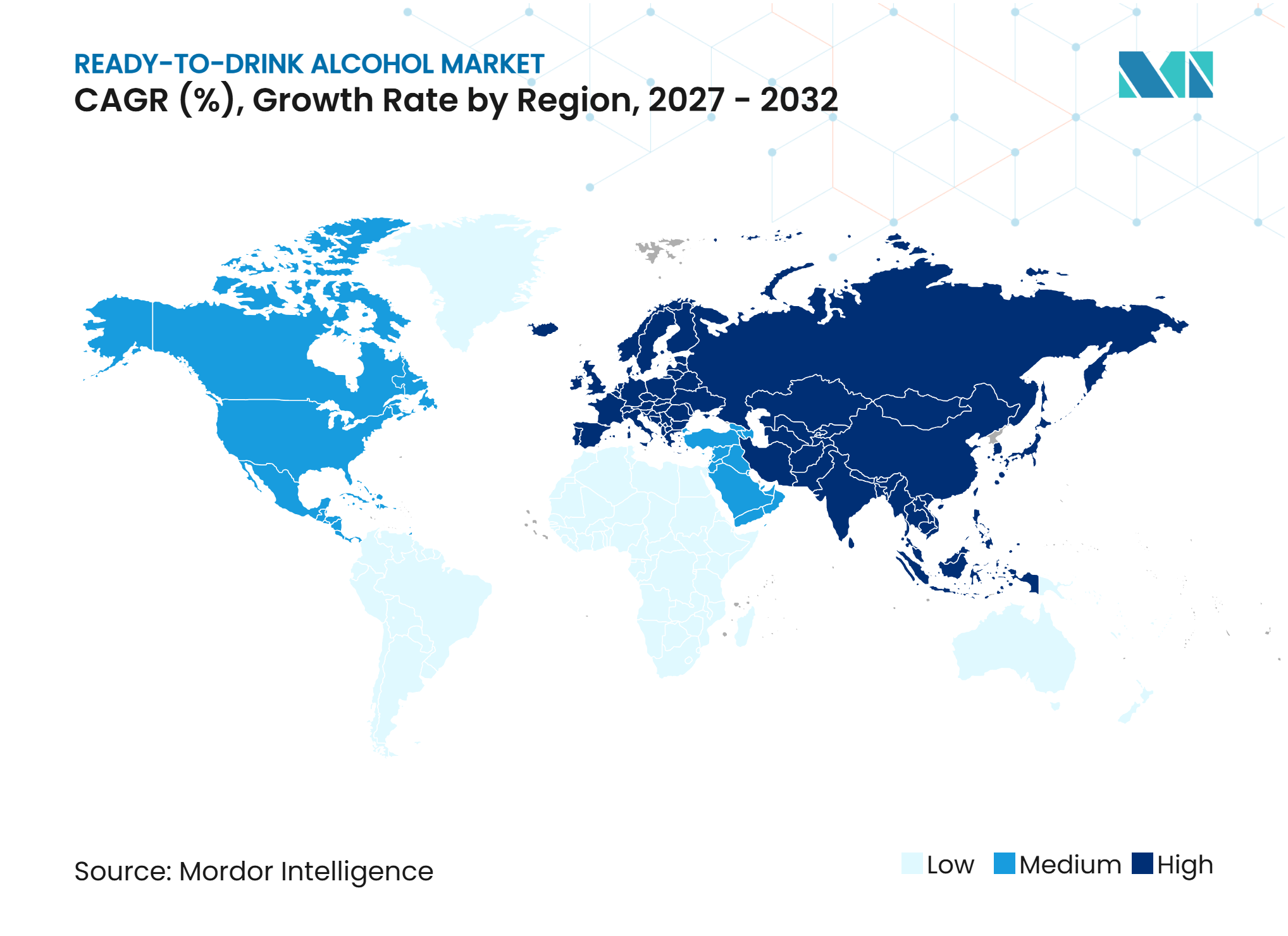
| Fastest Growing Market | Asia-Pacific |
| Largest Market | Europe |
| Market Concentration | Medium |
Major Players *Disclaimer: Major Players sorted in no particular order Image © Mordor Intelligence. Reuse requires attribution under CC BY 4.0. | |
Ready-to-Drink Alcohol Market Analysis by Mordor Intelligence
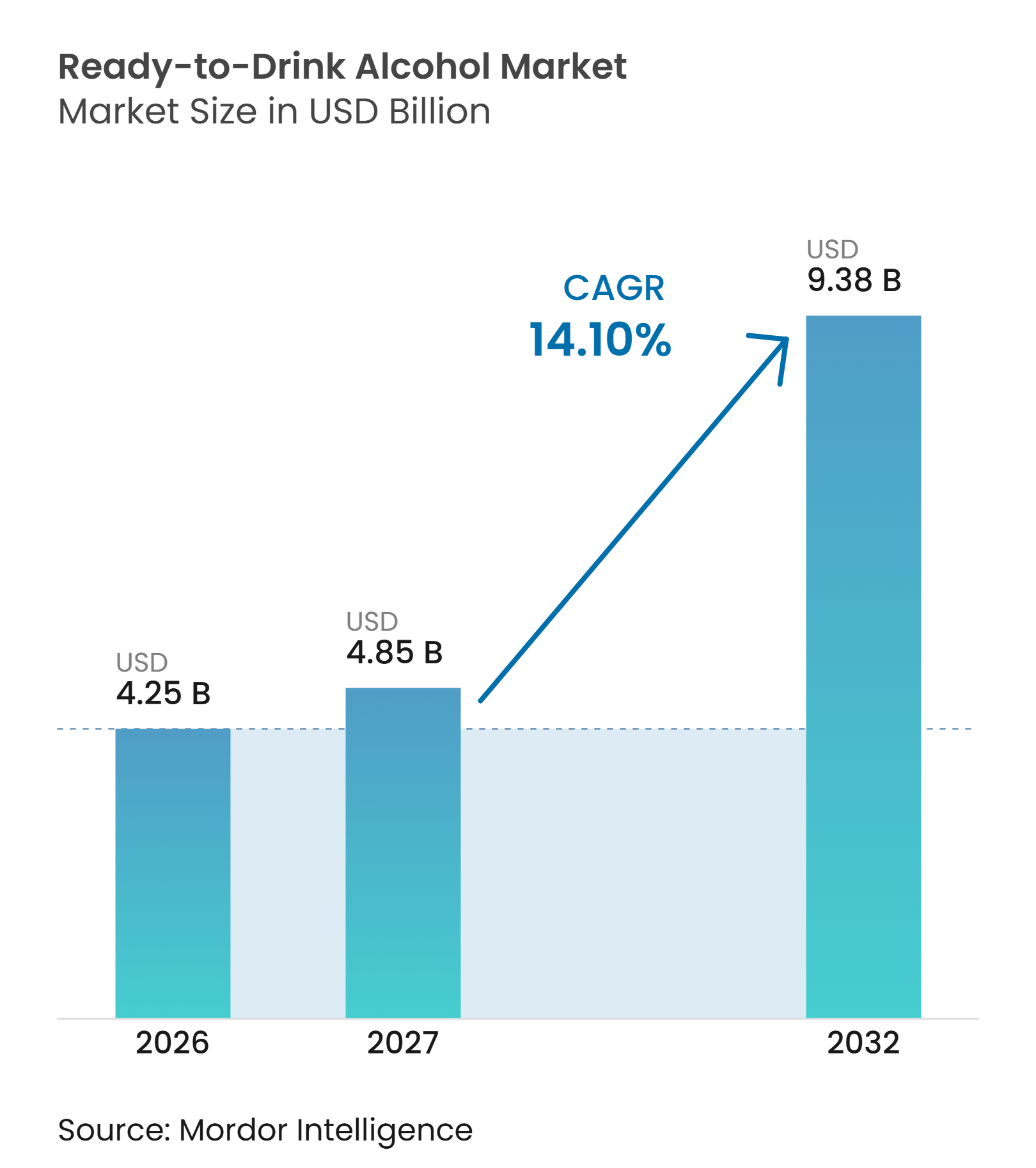
The Ready-to-Drink (RTD) Alcohol Market size is expected to increase from USD 4.25 billion in 2026 to USD 4.85 billion in 2027 and reach USD 9.38 billion by 2032, growing at a CAGR of 14.10% over 2027–2032. Growth is supported by rising consumer preference for convenient, ready-to-consume alcoholic beverages and the expanding popularity of premium, craft-oriented, and flavored RTD products. Malt-based beverages continue to dominate the market, while spirit-based formulations are gaining momentum through innovative cocktail offerings and premium product launches. Fruity flavors and standard-alcohol-content products remain important demand categories, whereas herbal and botanical flavors and low-alcohol variants create opportunities for product differentiation. The expansion of canned cocktails, portable single-serve packaging, and retail and e-commerce distribution further improves product accessibility. However, stringent alcohol marketing regulations, high excise duties, and competition from traditional alcoholic beverages and non-alcoholic alternatives may constrain market expansion. Geographically, Europe holds the largest market share, while Asia-Pacific is expected to record the fastest growth, supported by evolving consumer preferences and expanding demand for innovative alcoholic beverage formats. Growth therefore favors manufacturers that can strengthen product innovation, develop differentiated flavor and alcohol-base portfolios, and expand distribution while navigating varying regulatory and taxation environments.
Key Report Takeaways
- By alcohol base, malt-based beverages accounted for the largest share of the ready-to-drink alcohol market at 80.00% in 2026, while spirit-based beverages are forecast to grow fastest at a 19.00% CAGR over 2027–2032.
- By alcohol content (ABV), standard / medium alcohol beverages dominated with a 72.00% market share in 2026, while low-alcohol beverages are projected to record the fastest growth at a 16.50% CAGR over 2027–2032.
- By flavor, fruity beverages led with a 35.00% share of the ready-to-drink alcohol market in 2026, while herbal and botanical flavors are expected to grow fastest at a 16.50% CAGR over 2027–2032.
- By price tier, mass market / standard products accounted for the largest share at 54.00% in 2026, while premium products are forecast to grow fastest at a 16.00% CAGR over 2027–2032.
- Among geographies, Europe led with a 32.00% share of the ready-to-drink alcohol market in 2026, while Asia-Pacific is projected to grow fastest at a 17.00% CAGR over 2027–2032.
Note: Market numbers in this report are based on Mordor Intelligence's proprietary estimation framework, which combines nine months of actuals with Q4 projections for base year 2026.
Market Trends and Insights
Drivers of Ready-to-Drink Alcohol Market*
| Driver | (~) % Impact on CAGR Forecast | Geographic Relevance | Impact Timeline |
|---|---|---|---|
| Rising consumer preference for convenient and ready-to-consume alcoholic beverages | +1.0% | Global, particularly North America and Europe, where established RTD consumption patterns support demand for convenient beverage formats | Medium term (2–4 years) |
| Growing popularity of premium and craft-oriented RTD alcoholic beverages | +0.8% | Global, particularly North America and Europe, with increasing premiumization opportunities across Asia-Pacific | Medium term (2–4 years) |
| Increasing demand for low-alcohol and flavored alcoholic beverage variants | +0.7% | Global, particularly Europe and North America, where demand for lower-alcohol and differentiated beverage options is expanding | Medium term (2–4 years) |
| Expansion of product portfolios through innovative cocktail and spirit-based formulations | +0.6% | Global, particularly North America, Europe and Asia-Pacific, where manufacturers are diversifying spirit-based RTD offerings | Long term (More than 4 years) |
| Growing adoption of canned cocktails and portable single-serve packaging | +0.5% | Global, particularly North America and Europe, supported by demand for convenient packaging and on-the-go consumption | Short term (Less than 2 years) |
| Expanding retail availability and e-commerce distribution of RTD alcoholic beverages | +0.4% | Global, particularly Asia-Pacific and North America, where expanding organized retail and digital distribution improve product accessibility | Medium term (2–4 years) |
| Source: Mordor Intelligence | |||
Rising Consumer Preference for Convenient and Ready-to-Consume Alcoholic Beverages
Changing consumer lifestyles and increasing demand for convenient beverage formats are supporting the adoption of ready-to-drink (RTD) alcoholic beverages. Consumers are increasingly seeking pre-mixed cocktails, canned alcoholic beverages, and single-serve products that reduce preparation time and offer consistent taste and convenience. Malt-based drinks, spirit-based cocktails, and wine-based RTD products provide manufacturers with opportunities to serve different consumption occasions through accessible product formats. The growing availability of portable packaging also supports consumption at social gatherings, outdoor events, and informal occasions. For manufacturers, convenience-led demand creates opportunities to expand product portfolios through innovative formulations, varied pack sizes, and easy-to-consume alcoholic beverage offerings.
Growing Popularity of Premium and Craft-Oriented RTD Alcoholic Beverages
Consumer interest in premium alcoholic beverages is encouraging manufacturers to introduce RTD products with higher-quality ingredients, distinctive flavor profiles, and cocktail-inspired formulations. Premiumization is increasingly associated with consumers seeking differentiated drinking experiences rather than simply higher-priced products. The International Wine and Spirits Record (IWSR) identifies selective premiumization as an important beverage alcohol trend, highlighting demand for higher-quality products and unique consumption experiences, particularly within cocktail-oriented categories [1]. This trend creates opportunities for manufacturers to introduce premium spirit-based RTDs, craft-inspired malt beverages, and wine-based cocktails. Brands are also investing in recognizable spirit labels, sophisticated packaging, and differentiated formulations to strengthen their positioning. Consequently, premium and craft-oriented offerings provide opportunities to improve product differentiation and capture consumers seeking convenient alternatives to traditionally prepared cocktails.
Increasing Demand for Low-Alcohol and Flavored Alcoholic Beverage Variants
Growing interest in alcohol moderation and experimentation with different beverage profiles is supporting demand for low-alcohol and flavored RTD products. Consumers seeking greater control over alcohol consumption are creating opportunities for manufacturers to offer products with varying alcohol-by-volume (ABV) levels without compromising taste and drinking experience. Ipsos identifies moderation, flavor exploration, and convenience as important consumer trends shaping the alcoholic beverage industry in 2026 [2]. Fruity, citrus, herbal, and botanical formulations allow manufacturers to appeal to consumers seeking alternatives to conventional beer and spirit-based beverages. Product diversification across alcohol strengths and flavor profiles also enables brands to address different consumption occasions and consumer preferences. This creates opportunities for manufacturers to expand low-alcohol product lines and develop differentiated flavored RTD offerings.
Expansion of Product Portfolios Through Innovative Cocktail and Spirit-Based Formulations
Manufacturers are increasingly expanding their RTD portfolios through pre-mixed cocktails and spirit-based formulations that replicate popular bar-style beverages in convenient formats. Products inspired by established cocktails, including margaritas, mojitos, gin and tonics, and vodka-based mixes, allow consumers to access familiar beverage experiences without purchasing individual ingredients or preparing drinks themselves. The IWSR identifies cocktail culture, innovative offerings, and demand for unique drinking experiences as important factors supporting the development of premium beverage alcohol products. Spirit-based RTDs also enable established spirits companies to extend recognizable brands into new consumption occasions and retail categories. Increasing product variety across spirit types, flavor combinations, and alcohol strengths provides manufacturers with opportunities to differentiate their portfolios. These developments support innovation-led competition and expand the range of products available within the RTD alcohol market.
Growing Adoption of Canned Cocktails and Portable Single-Serve Packaging
The increasing adoption of canned cocktails and portable packaging formats is supporting the accessibility of ready-to-drink alcoholic beverages across different consumption occasions. Aluminum cans offer lightweight, convenient, and portable packaging that eliminates the need for additional preparation and supports single-serve consumption. NielsenIQ reports that single-serve cans account for more than 30% of RTD dollar sales, highlighting the importance of portable formats within the category. Canned cocktails are also gaining popularity for social gatherings, outdoor activities, and informal occasions where consumers prefer convenient beverage options. Manufacturers are introducing different can sizes, multipacks, and resealable packaging formats to improve product convenience and shelf differentiation. Consequently, packaging innovation provides opportunities to strengthen retail visibility, expand consumption occasions, and attract consumers seeking easy-to-carry alcoholic beverages.
Expanding Retail Availability and E-Commerce Distribution of RTD Alcoholic Beverages
The expansion of retail distribution channels is improving consumer access to ready-to-drink alcoholic beverages across supermarkets, convenience stores, liquor stores, and permitted online retail platforms. Greater shelf availability allows manufacturers to reach consumers through multiple purchasing occasions, while convenience stores support immediate purchases through accessible single-serve formats. NielsenIQ reported that online sales of RTD and prepared cocktails increased by 20.2%, compared with 3.3% growth for total alcohol e-commerce sales, highlighting the growing importance of digital distribution. E-commerce platforms also provide opportunities for manufacturers to improve product visibility, communicate flavor and ingredient information, and offer multipacks where local regulations permit. However, online alcohol sales remain subject to age-verification requirements, licensing conditions, and country-specific distribution regulations. Continued expansion across physical and digital retail channels can therefore support market penetration and improve product accessibility.
Restraints of Ready-to-Drink Alcohol Market*
| Restraint | (~) % Impact on CAGR Forecast | Geographic Relevance | Impact Timeline |
|---|---|---|---|
| Stringent government regulations and restrictions on alcoholic beverage marketing | −0.8% | Global, particularly Europe and North America, where alcohol advertising, promotional activities, and product marketing are subject to strict regulatory requirements | Long term (More than 4 years) |
| High excise duties and varying taxation policies across countries | −0.7% | Global, particularly Europe and Asia-Pacific, where differences in alcohol taxation and excise structures influence product pricing and affordability | Medium term (2–4 years) |
| Competition from traditional alcoholic beverages and non-alcoholic alternatives | −0.5% | Global, particularly North America and Europe, where RTD products compete with established beer, wine, spirits, and emerging non-alcoholic beverage categories | Medium term (2–4 years) |
| Fluctuations in raw material, packaging, and distribution costs | −0.4% | Global, particularly markets dependent on imported spirits, agricultural inputs, aluminum packaging, and international distribution networks | Short term (Less than 2 years) |
| Source: Mordor Intelligence | |||
Stringent Government Regulations and Restrictions on Alcoholic Beverage Marketing
The RTD alcohol market operates within a highly regulated environment, where government policies governing alcohol production, distribution, advertising, and sales can restrict manufacturers' commercial activities. Regulations on alcohol marketing, sponsorships, promotional campaigns, and digital advertising vary across countries and may limit how brands communicate with consumers. Restrictions on advertising to underage audiences, mandatory health warnings, and limitations on promotional discounts can further complicate product marketing.[3] These requirements increase compliance responsibilities for manufacturers and distributors, particularly companies operating across multiple jurisdictions. Smaller and emerging RTD brands may face additional challenges in establishing brand awareness when access to conventional promotional channels is restricted. Consequently, regulatory differences and evolving alcohol-control policies can limit market expansion and increase the complexity of introducing new products.
High Excise Duties and Varying Taxation Policies Across Countries
High excise duties and differences in alcohol taxation structures can increase the retail prices of ready-to-drink alcoholic beverages and affect consumer affordability. Tax treatment may vary depending on alcohol content, beverage classification, production method, and the underlying alcohol base, creating different cost implications for malt-based, spirit-based, wine-based, and cider-based RTD products. Manufacturers operating internationally must also navigate differences in import duties, licensing charges, and other country-specific fiscal requirements. Higher taxation can be particularly challenging for premium and spirit-based RTD products, where additional ingredient and production costs already contribute to elevated selling prices. These cost pressures may restrict consumption in price-sensitive markets and complicate pricing strategies across distribution channels. Manufacturers therefore need to optimize production costs, product formulations, and market-specific pricing to remain competitive.[4]
*Our forecasts treat driver/restraint impacts as directional, not additive. The impact forecasts reflect baseline growth, mix effects, and variable interactions.
Ready-to-Drink Alcohol Market Segment Analysis
By Alcohol Base:
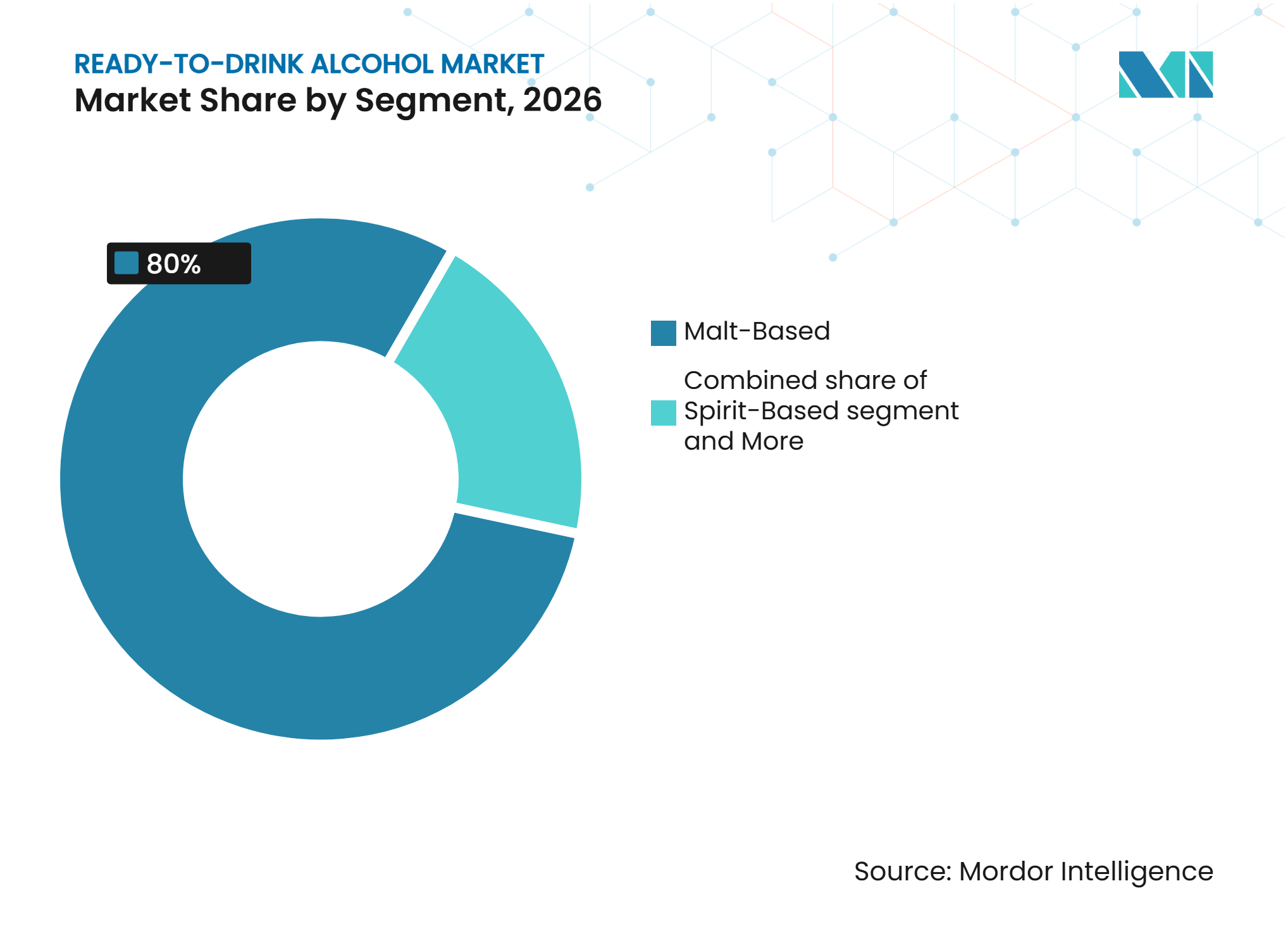
Malt-Based Beverages Lead While Spirit-Based Products Expand FasterIn 2026, malt-based beverages accounted for an estimated 80.00% of the Ready-to-Drink Alcohol Market, making them the leading alcohol base segment. Their dominance reflects the established consumer familiarity with beer-based RTD products, including flavored malt beverages and other convenient alcoholic formats. Malt-based offerings benefit from established brewing infrastructure, broad retail distribution, and relatively accessible price positioning. Meanwhile, spirit-based beverages are projected to record the fastest growth, at an estimated CAGR of 19.00% through 2032. Pre-mixed cocktails made with vodka, rum, gin, tequila, and whiskey allow manufacturers to offer bar-inspired drinking experiences in convenient formats. Premium cocktail formulations and innovative flavor combinations further support the expansion of this category.
Wine-based beverages provide another product category, offering consumers convenient alternatives to traditional wine consumption through bottled and canned formats. Cider and other fermented alcohol-based RTD products also contribute to category diversity through fruit-oriented flavors and alternative fermentation profiles. However, manufacturers across all alcohol-base categories need to maintain consistent taste, product quality, and appropriate alcohol content while managing production and regulatory requirements.



By Alcohol Content (ABV):
Standard / Medium Alcohol Dominates While Low-Alcohol Products Expand FasterIn 2026, standard / medium alcohol beverages accounted for an estimated 72.00% of the Ready-to-Drink Alcohol Market, making them the leading alcohol-content segment. Their position reflects the established demand for RTD products that deliver a conventional alcoholic drinking experience while offering the convenience of pre-mixed formulations. These products appeal to consumers seeking familiar alcohol strengths across malt-based beverages, canned cocktails, and wine-based offerings. Meanwhile, low-alcohol beverages are projected to record the fastest growth, at an estimated CAGR of 16.50% through 2032. Increasing interest in alcohol moderation and controlled consumption is encouraging manufacturers to introduce lighter formulations that retain recognizable flavors and convenient packaging.
High-alcohol RTD beverages serve consumers seeking stronger pre-mixed options, particularly within spirit-based cocktail formats. Their development provides opportunities for brands to offer differentiated products across alcohol strengths and consumption occasions. However, manufacturers need to balance alcohol concentration, flavor stability, regulatory classification, and consumer expectations when developing products across ABV categories.
By Flavor:
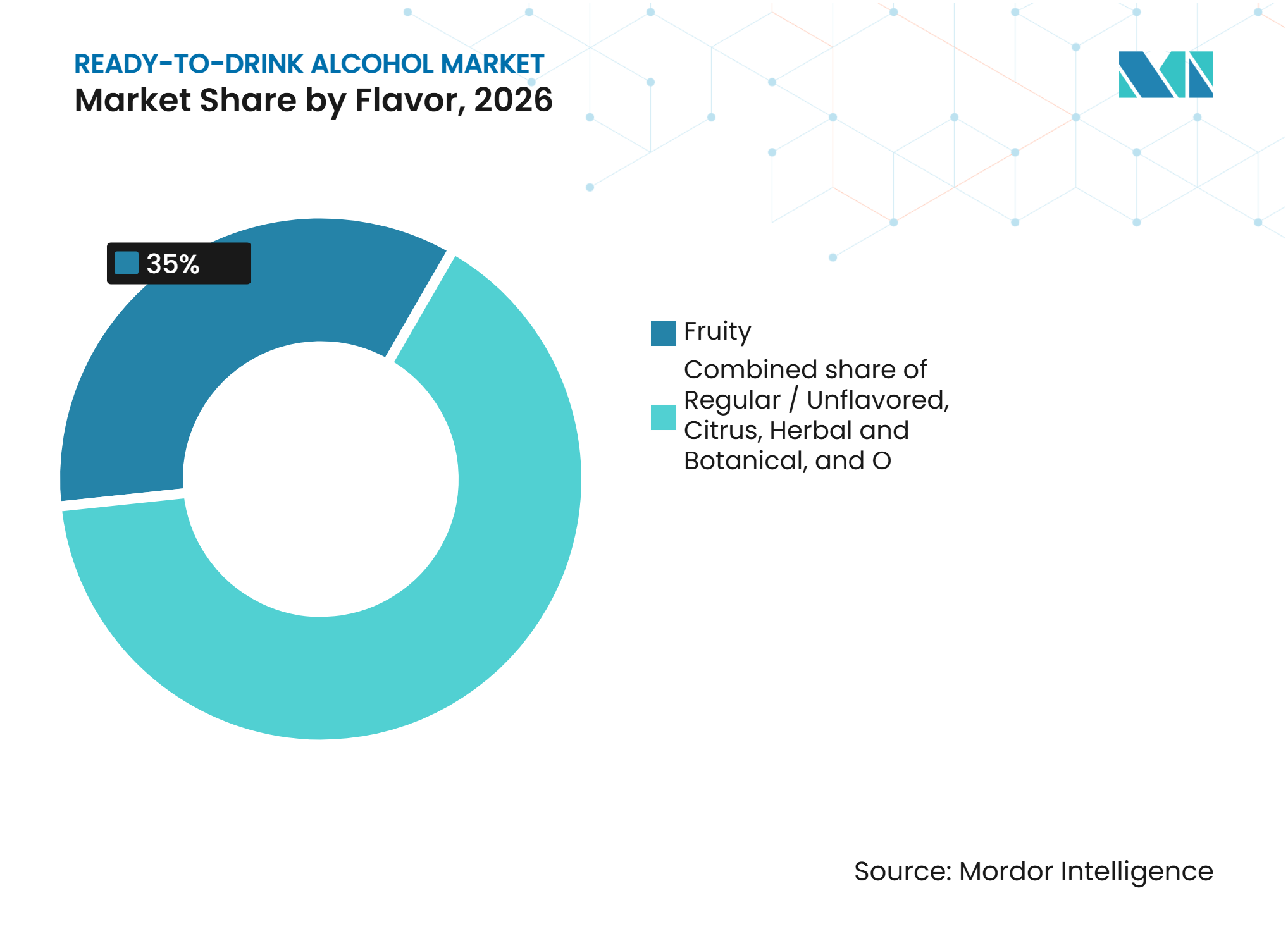
Fruity Beverages Lead While Herbal and Botanical Variants Expand FasterIn 2026, fruity beverages accounted for an estimated 35.00% of the Ready-to-Drink Alcohol Market, making them the leading flavor segment. Their position reflects broad consumer familiarity with fruit-flavored alcoholic beverages and the versatility of fruit ingredients across malt-based drinks, spirit-based cocktails, and wine-based formulations. Flavors such as berry, peach, mango, watermelon, and tropical fruit allow manufacturers to develop approachable products with distinctive taste profiles. Meanwhile, herbal and botanical flavors are projected to record the fastest growth, at an estimated CAGR of 16.50% through 2032. Ingredients such as mint, basil, rosemary, and other botanical extracts provide opportunities to develop sophisticated cocktail-inspired beverages and differentiate premium RTD offerings.
Citrus-flavored beverages also contribute to category demand through familiar profiles associated with lemon, lime, orange, and grapefruit. Regular / unflavored products continue to serve consumers who prefer conventional alcoholic beverage characteristics, while other flavors provide additional opportunities for experimentation. Manufacturers need to maintain flavor consistency and balance sweetness, acidity, and alcohol characteristics to strengthen consumer acceptance across different formulations.

By Price Tier:
Mass Market / Standard Products Lead While Premium Offerings Expand FasterIn 2026, mass market / standard products accounted for an estimated 54.00% of the Ready-to-Drink Alcohol Market, making them the leading price-tier segment. Their position reflects demand for affordable and accessible alcoholic beverages across supermarkets, convenience stores, liquor retailers, and other distribution channels. Standard-priced malt-based drinks and mainstream flavored alcoholic beverages benefit from broad consumer reach and established brand availability. Meanwhile, premium products are projected to record the fastest growth, at an estimated CAGR of 16.00% through 2032. Premiumization is encouraging manufacturers to introduce spirit-based cocktails, higher-quality ingredients, distinctive flavor combinations, and sophisticated packaging to appeal to consumers seeking differentiated drinking experiences.
Craft and artisanal products represent a specialized category, with smaller producers and established beverage companies introducing limited-edition formulations and distinctive product concepts. These offerings can attract consumers interested in unique ingredients, local production, and innovative cocktail experiences. However, manufacturers across price tiers need to balance ingredient costs, packaging investments, brand positioning, and retail pricing to maintain competitiveness and profitability.
Geography Analysis
Europe Ready-to-Drink Alcohol Market
Europe accounted for an estimated 32.00% of the Ready-to-Drink Alcohol Market in 2026, making it the largest regional market. The region benefits from established beer, wine, and spirits industries, strong brand recognition, and extensive alcoholic beverage distribution networks. Countries such as the United Kingdom, Germany, France, Italy, and Spain provide opportunities for manufacturers to expand pre-mixed cocktails, flavored malt beverages, and canned alcoholic drinks. Established cocktail consumption patterns and growing interest in convenient premium beverage formats further support product diversification. However, manufacturers must navigate country-specific alcohol advertising restrictions, excise duties, and regulations governing product distribution.
Asia-Pacific Ready-to-Drink Alcohol Market
Asia-Pacific is projected to be the fastest-growing regional market, with an estimated CAGR of 17.00% over 2027–2032. Rising urbanization, evolving consumer preferences, and increasing exposure to international alcoholic beverage brands are creating opportunities for RTD manufacturers across China, Japan, India, Thailand, Singapore, Indonesia, South Korea, and Australia. The region's established beer and spirits industries provide a foundation for developing flavored malt beverages, spirit-based cocktails, and innovative single-serve products. Growing interest in premium alcoholic beverages and convenient consumption formats also supports product innovation. However, differences in alcohol regulations, taxation, cultural preferences, and retail distribution structures require manufacturers to adapt their portfolios to individual country markets.
North America, South America, and Middle East and Africa
North America represents an established market for canned cocktails, flavored malt beverages, and spirit-based RTD products, particularly in the United States and Canada, where established beverage brands and retail networks support category availability. South America offers opportunities through established beer and spirits consumption, particularly in Brazil, Argentina, Colombia, Peru, and Chile, alongside opportunities for flavored and locally positioned alcoholic beverages. In the Middle East and Africa, market development varies considerably because of differences in alcohol consumption patterns, regulatory frameworks, and product availability. South Africa, Nigeria, and selected markets in the Middle East provide opportunities for manufacturers operating within applicable licensing and distribution requirements. Across these regions, companies need to manage taxation, regulatory compliance, distribution costs, and local consumer preferences to strengthen market penetration.
Competitive Landscape
Market Concentration
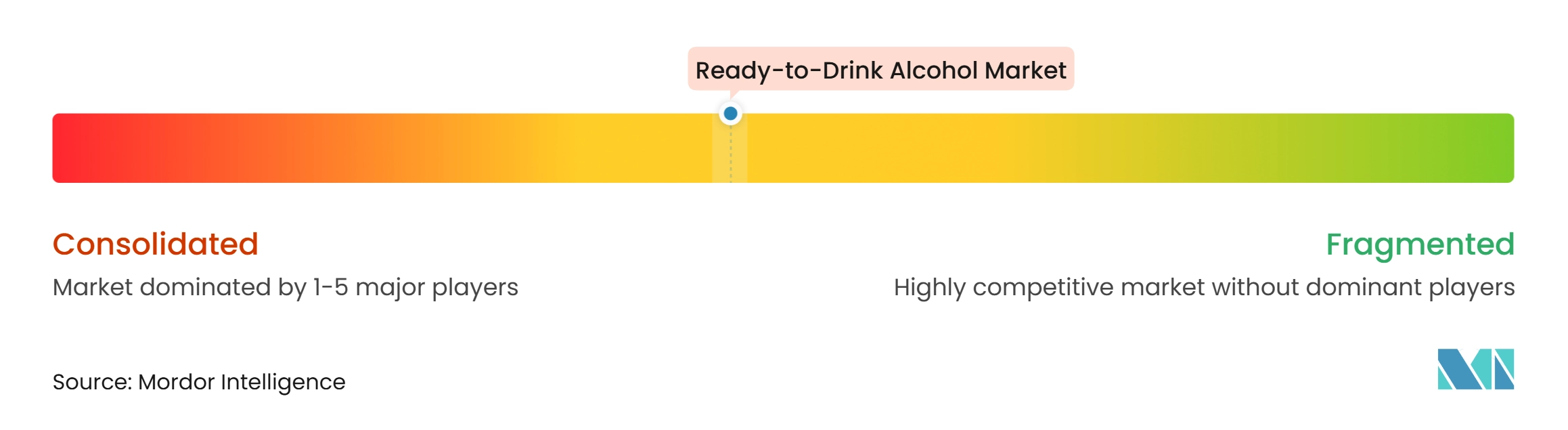
The Ready-to-Drink Alcohol Market includes multinational beverage companies, established beer and spirits manufacturers, specialist RTD brands, and regional alcoholic beverage producers competing through product innovation, brand positioning, pricing, and distribution reach. Companies participate in the market through malt-based beverages, spirit-based cocktails, wine-based drinks, and other fermented alcoholic beverages. Large beverage groups benefit from established manufacturing capabilities, extensive brand portfolios, and established retail networks, while specialist RTD producers focus on differentiated flavors, convenient packaging, and premium product positioning. The competitive landscape therefore reflects varying levels of participation across alcohol bases, product formats, and regional markets.
Competitive strategies in the Ready-to-Drink Alcohol Market focus on expanding product portfolios, introducing innovative cocktail formulations, and strengthening premium and craft-oriented offerings. For example, Diageo markets spirit-based RTD products through brands such as Smirnoff Ice and its pre-mixed cocktail portfolio, while Anheuser-Busch InBev participates through flavored malt beverages and ready-to-drink offerings. Brown-Forman extends its Jack Daniel's brand into ready-to-drink cocktails, while The Boston Beer Company competes through products such as Twisted Tea and other flavored alcoholic beverages. These strategies allow manufacturers to leverage established brands while targeting consumers seeking convenient, flavored, and differentiated alcoholic beverage formats. Product innovation across alcohol bases, flavor profiles, and alcohol content also enables companies to address premiumization and changing consumption preferences.
Brand strength, sourcing, regulatory compliance, and distribution capabilities remain important competitive considerations. Companies with established relationships across retailers, bars, restaurants, and e-commerce platforms can improve product availability and market penetration, while regional producers can use local consumer preferences and established distribution networks to strengthen their positions. However, varying excise duties, alcohol advertising restrictions, licensing requirements, packaging costs, and competition from traditional alcoholic beverages can affect operating conditions across markets. Manufacturers must also maintain consistent product quality and comply with country-specific requirements governing alcohol content, labeling, and marketing claims. These factors make portfolio diversification, brand development, regulatory compliance, and efficient distribution important areas of competition.
Ready-to-Drink Alcohol Industry Leaders
-
Anheuser-Busch
-
Diageo plc
-
Pernod Ricard SA
-
Brown-Forman Corporation
-
Asahi Group Holdings Ltd.
- *Disclaimer: Major Players sorted in no particular order
Ready-to-Drink Alcohol Market Companies Covered in this Report
- Anheuser-Busch InBev SA/NV
- Diageo plc
- Brown-Forman Corporation
- Bacardi Limited
- Pernod Ricard SA
- Constellation Brands Inc.
- Mark Anthony Group Inc.
- The Boston Beer Company Inc.
- Molson Coors Beverage Company
- Heineken N.V.
- Asahi Group Holdings Ltd.
- Suntory Holdings Limited
- Campari Group
- Carlsberg A/S
- Kirin Holdings Company Limited
- E. & J. Gallo Winery
- BuzzBallz LLC
- Beam Suntory
- William Grant & Sons Ltd.
- Halewood Wines & Spirits
Recent Industry Developments in Ready-to-Drink Alcohol Market
- October 2026: Diageo India launched Smirnoff ICE in India, introducing the ready-to-drink range across Goa, Bengaluru, and Mumbai. The launch features two expressions, Smirnoff ICE and Smirnoff ICE MAX, expanding the brand's presence in India's RTD alcohol category and offering consumers flavored alternatives to traditional alcoholic beverages.
- June 2026: Brown-Forman launched el Jimador Tequila Spritz nationwide in the United States. Made with 100% Blanco Tequila, the canned RTD cocktail was introduced in three flavors: Mango, Lime, and Orange. The launch expanded Brown-Forman's spirit-based RTD portfolio and extended the el Jimador brand into the growing canned cocktail segment.
- February 2026: Surfside expanded its spirits-based RTD portfolio with four new offerings, including Blueberry Lemonade and a Half & Half variety pack. Made with vodka, real brewed tea, and lemonade, the additions extended the brand's flavored canned cocktail range and strengthened its presence in the ready-to-drink iced tea and lemonade category.
- May 2026: On The Rocks Premium Cocktails, owned by Suntory Global Spirits, introduced its first canned cocktail range, expanding beyond its established bottled RTD offerings. The collection debuted in three varieties: Sparkling Lime Margarita, Mango and Mint Mojito, and Cucumber and Lemongrass Mule. Made with premium spirits, the carbonated cocktails extended the brand's portfolio into convenient, single-serve formats.
Global Ready-to-Drink Alcohol Market Report Scope
For this study, the Ready-to-Drink (RTD) Alcohol Market is defined as the sales value of commercially produced alcoholic beverages that are pre-mixed, packaged, and sold in ready-to-consume formats. The market covers malt-based, spirit-based, wine-based, cider, and other fermented alcohol-based beverages, segmented by alcohol content into low-alcohol, standard / medium-alcohol, and high-alcohol products; by flavor into regular / unflavored, fruity, citrus, herbal and botanical, and other flavors; and by price tier into mass market / standard, premium, and craft / artisanal products. The market includes packaged alcoholic beverages such as canned cocktails, flavored malt beverages, pre-mixed spirit drinks, and other ready-to-drink alcoholic formulations. The market is analyzed across North America, Europe, Asia-Pacific, South America, and the Middle East and Africa, with country-level coverage as specified in the report. Market sizing and forecasts are presented in value terms (USD) across the defined segments and geographies.
Segmentation Overview
| Malt-Based | Spirit-Based |
| Wine-Based | |
| Cider and Other Fermented Alcohol Bases |
| Low Alcohol | Standard / Medium Alcohol |
| High Alcohol |
| Regular / Unflavored | Fruity |
| Citrus | |
| Herbal and Botanical | |
| Other Flavors |
| Mass Market / Standard | Premium |
| Craft / Artisanal |
| North America | United States |
| Canada | |
| Mexico | |
| Rest of North America | |
| Europe | United Kingdom |
| Germany | |
| France | |
| Italy | |
| Spain | |
| Sweden | |
| Belgium | |
| Poland | |
| Netherlands | |
| Rest of Europe | |
| Asia-Pacific | China |
| Japan | |
| India | |
| Thailand | |
| Singapore | |
| Indonesia | |
| South Korea | |
| Australia | |
| Rest of Asia-Pacific | |
| South America | Brazil |
| Argentina | |
| Colombia | |
| Peru | |
| Chile | |
| Rest of South America | |
| Middle East and Africa | South Africa |
| Saudi Arabia | |
| United Arab Emirates | |
| Nigeria | |
| Egypt | |
| Morocco | |
| Turkey | |
| Rest of Middle East and Africa |
| By Alcohol Base | Malt-Based | Spirit-Based |
| Wine-Based | ||
| Cider and Other Fermented Alcohol Bases | ||
| By Alcohol Content (ABV) | Low Alcohol | Standard / Medium Alcohol |
| High Alcohol | ||
| By Flavor | Regular / Unflavored | Fruity |
| Citrus | ||
| Herbal and Botanical | ||
| Other Flavors | ||
| By Price Tier | Mass Market / Standard | Premium |
| Craft / Artisanal | ||
| By Geography | North America | United States |
| Canada | ||
| Mexico | ||
| Rest of North America | ||
| Europe | United Kingdom | |
| Germany | ||
| France | ||
| Italy | ||
| Spain | ||
| Sweden | ||
| Belgium | ||
| Poland | ||
| Netherlands | ||
| Rest of Europe | ||
| Asia-Pacific | China | |
| Japan | ||
| India | ||
| Thailand | ||
| Singapore | ||
| Indonesia | ||
| South Korea | ||
| Australia | ||
| Rest of Asia-Pacific | ||
| South America | Brazil | |
| Argentina | ||
| Colombia | ||
| Peru | ||
| Chile | ||
| Rest of South America | ||
| Middle East and Africa | South Africa | |
| Saudi Arabia | ||
| United Arab Emirates | ||
| Nigeria | ||
| Egypt | ||
| Morocco | ||
| Turkey | ||
| Rest of Middle East and Africa | ||
Key Questions Answered in the Report
What is the projected size of the Ready-to-Drink (RTD) Alcohol Market?
The Ready-to-Drink (RTD) Alcohol Market is estimated at USD 4.25 billion in 2026 and is projected to reach USD 9.38 billion by 2032, growing at a CAGR of 14.10% over 2027–2032.
Which segment holds the largest share of the Ready-to-Drink Alcohol Market?
Malt-based beverages hold the largest share of the Ready-to-Drink Alcohol Market, accounting for 80.00% in 2026. Their established consumer base and wide availability across retail channels support their leading position.
Which segment is expected to grow fastest in the Ready-to-Drink Alcohol Market?
Spirit-based beverages are projected to be the fastest-growing alcohol-base segment, recording a CAGR of 19.00% over 2027–2032. Innovation in pre-mixed cocktails and premium spirit-based offerings supports this growth outlook.
Which region is expected to grow fastest in the Ready-to-Drink Alcohol Market?
Asia-Pacific is projected to be the fastest-growing regional market, registering a CAGR of 17.00% over 2027–2032. Evolving consumer preferences, increasing demand for innovative alcoholic beverages, and expanding availability of RTD products support the region's growth.