
Rapid Antigen Testing Market Size and Share
Market Overview
| Study Period | 2021 - 2032 |
|---|---|
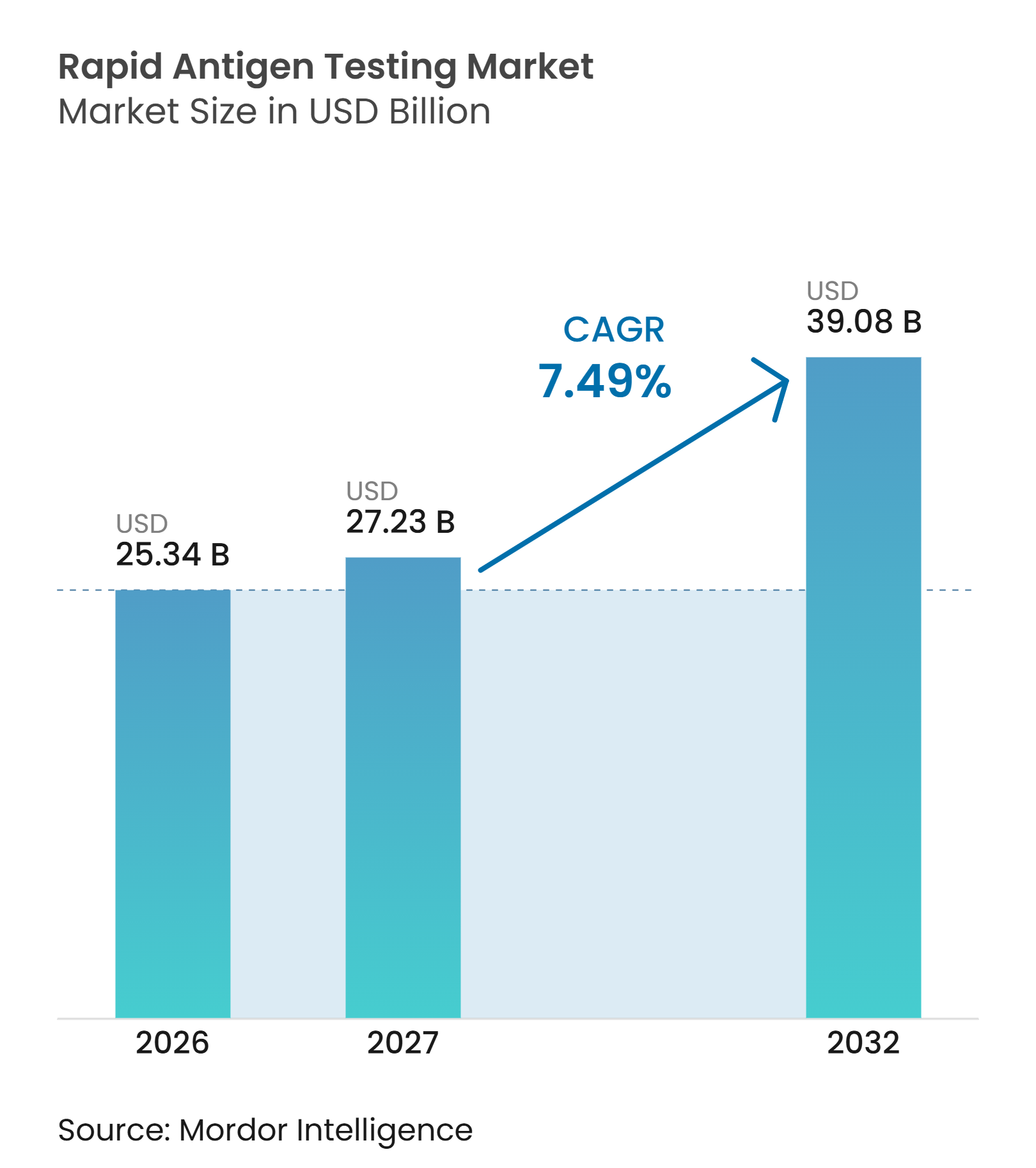
| Market Size (2027) | USD 27.23 Billion |
| Market Size (2032) | USD 39.08 Billion |
| Growth Rate (2027 - 2032) | 7.49 % |
| Fastest Growing Market | Asia-Pacific |
| Largest Market | North America |
| Market Concentration | Low |
Major Players *Disclaimer: Major Players sorted in no particular order Image © Mordor Intelligence. Reuse requires attribution under CC BY 4.0. | |
Rapid Antigen Testing Market Analysis by Mordor Intelligence
The Rapid Antigen Testing Market size is projected to expand from USD 25.34 billion in 2026 and USD 27.23 billion in 2027 to USD 39.08 billion by 2032, registering a CAGR of 7.49% between 2027 and 2032.
The rapid antigen testing market is moving from emergency purchasing toward routine use in hospitals, pharmacies, and homes. Respiratory co-infections are supporting demand for tests that identify more than 1 pathogen during the same clinical visit. Diagnostic decisions are also shifting closer to patients, which gives retail, pharmacy, and outpatient settings a larger role. Product developers are responding with multiplex formats, digital readers, and simpler specimen collection. Regulatory evidence requirements and sensitivity limits in low-viral-load cases continue to shape which products can be used in higher-risk settings.
Key Report Takeaways
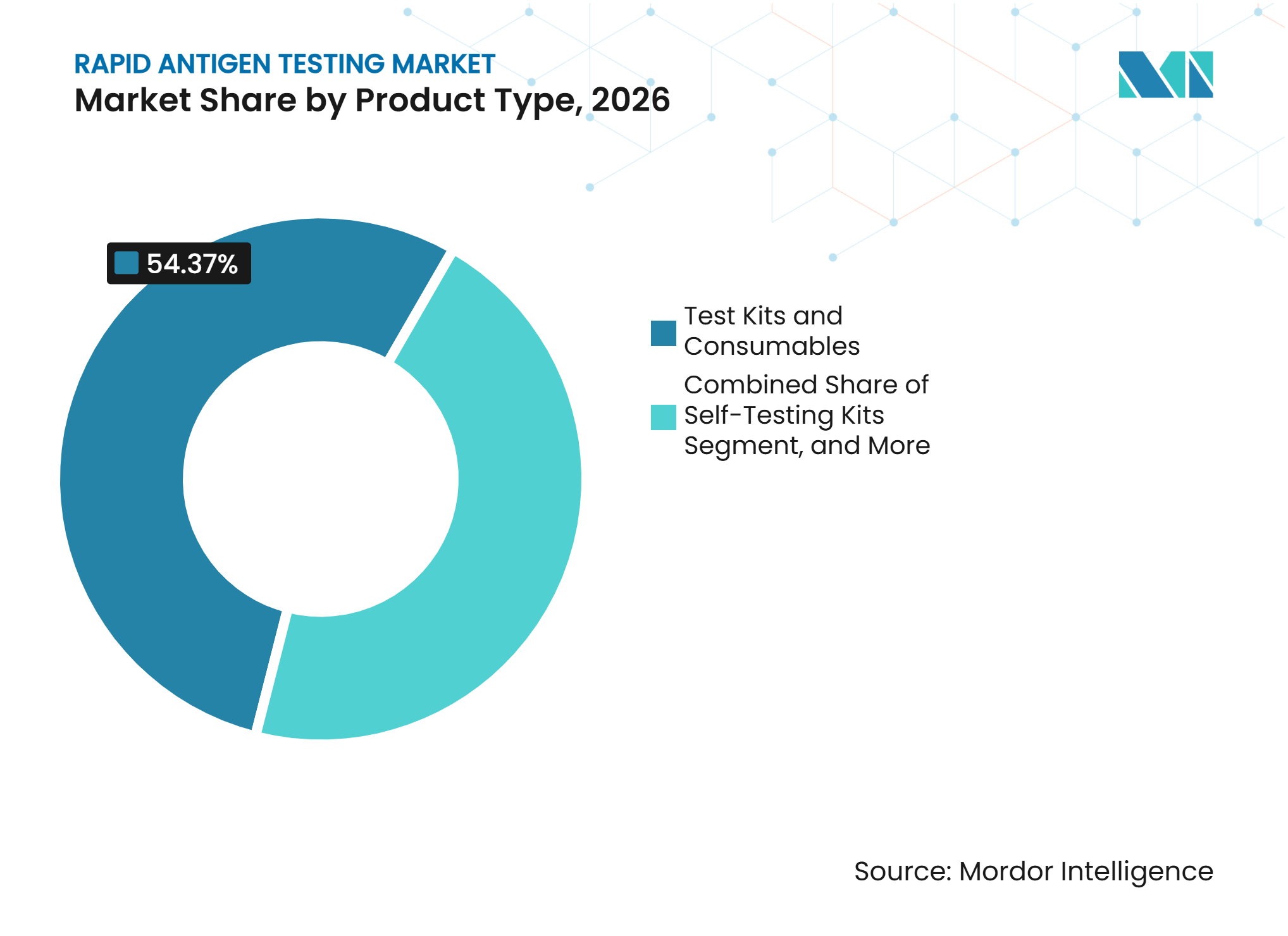
- By product type, Test Kits and Consumables held 54.37% of revenue in 2026, while Self-Testing Kits are forecast to expand at a CAGR of 7.92% through 2032 in the rapid antigen testing market.
- By technology, Lateral Flow Immunoassays accounted for 46.72% of revenue in 2026, while Microfluidic-Based Antigen Tests are forecast to grow at a CAGR of 8.15% through 2032.
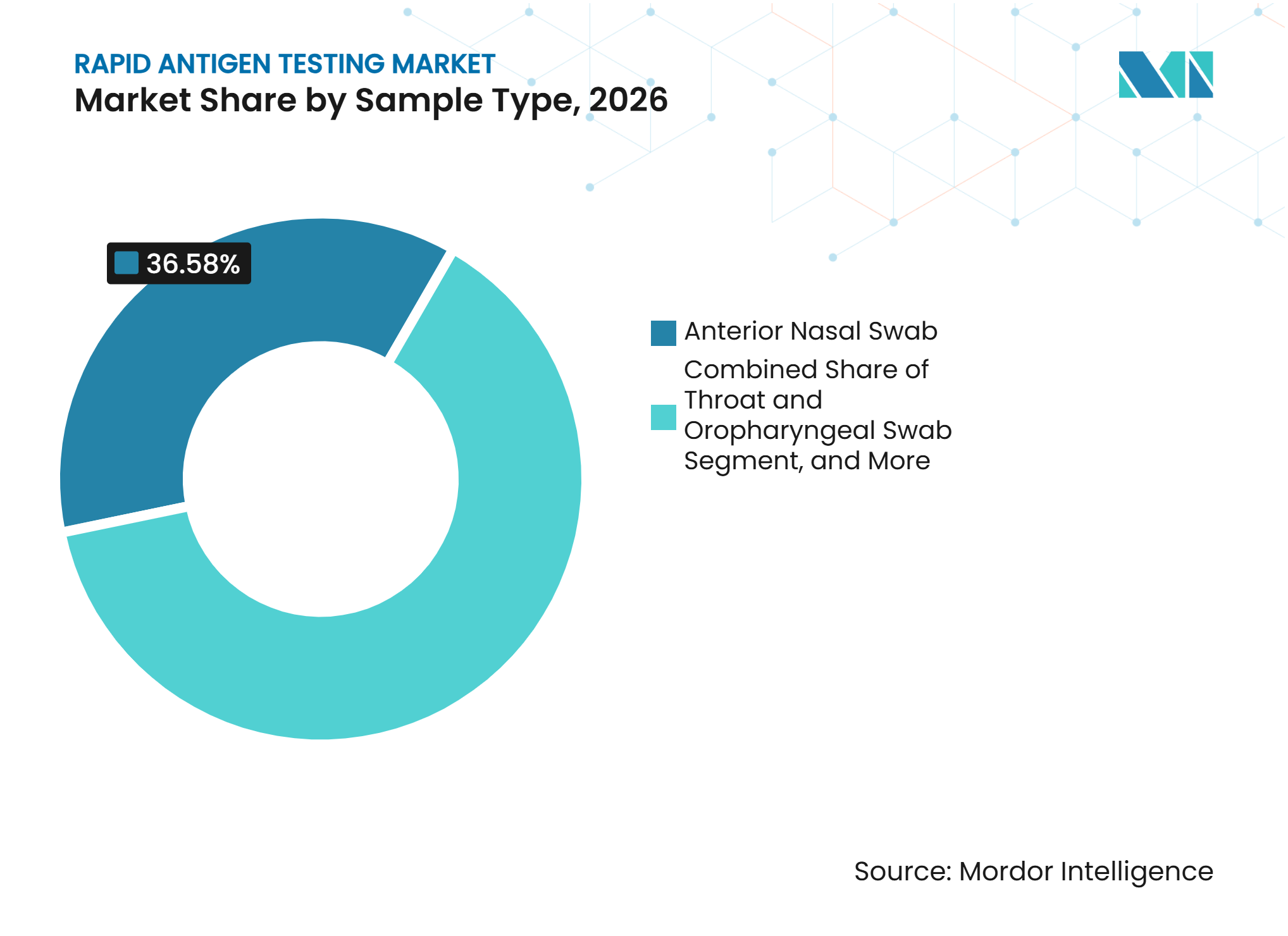
- By sample type, Anterior Nasal Swab held 36.58% of revenue in 2026, while Throat and Oropharyngeal Swab is forecast to advance at a CAGR of 8.46% through 2032 in the rapid antigen testing market.
- By end user, Hospitals and Clinics accounted for 41.29% of revenue in 2026, while Home Care Settings are forecast to grow at a CAGR of 9.27% through 2032.
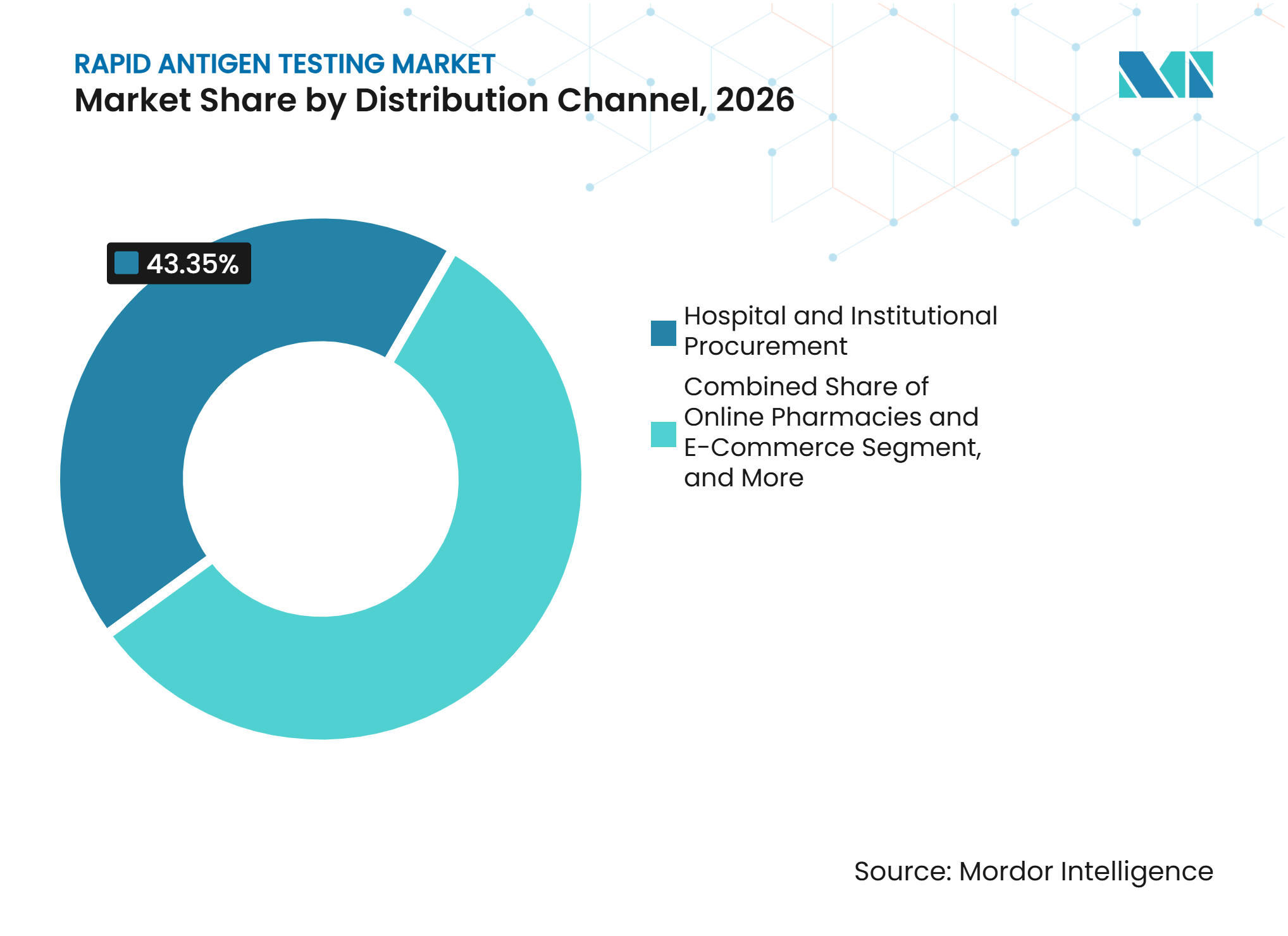
- By distribution channel, Hospital and Institutional Procurement held 43.35% of revenue in 2026, while Online Pharmacies and E-Commerce are forecast to expand at a CAGR of 9.58% through 2032 in the rapid antigen testing market.
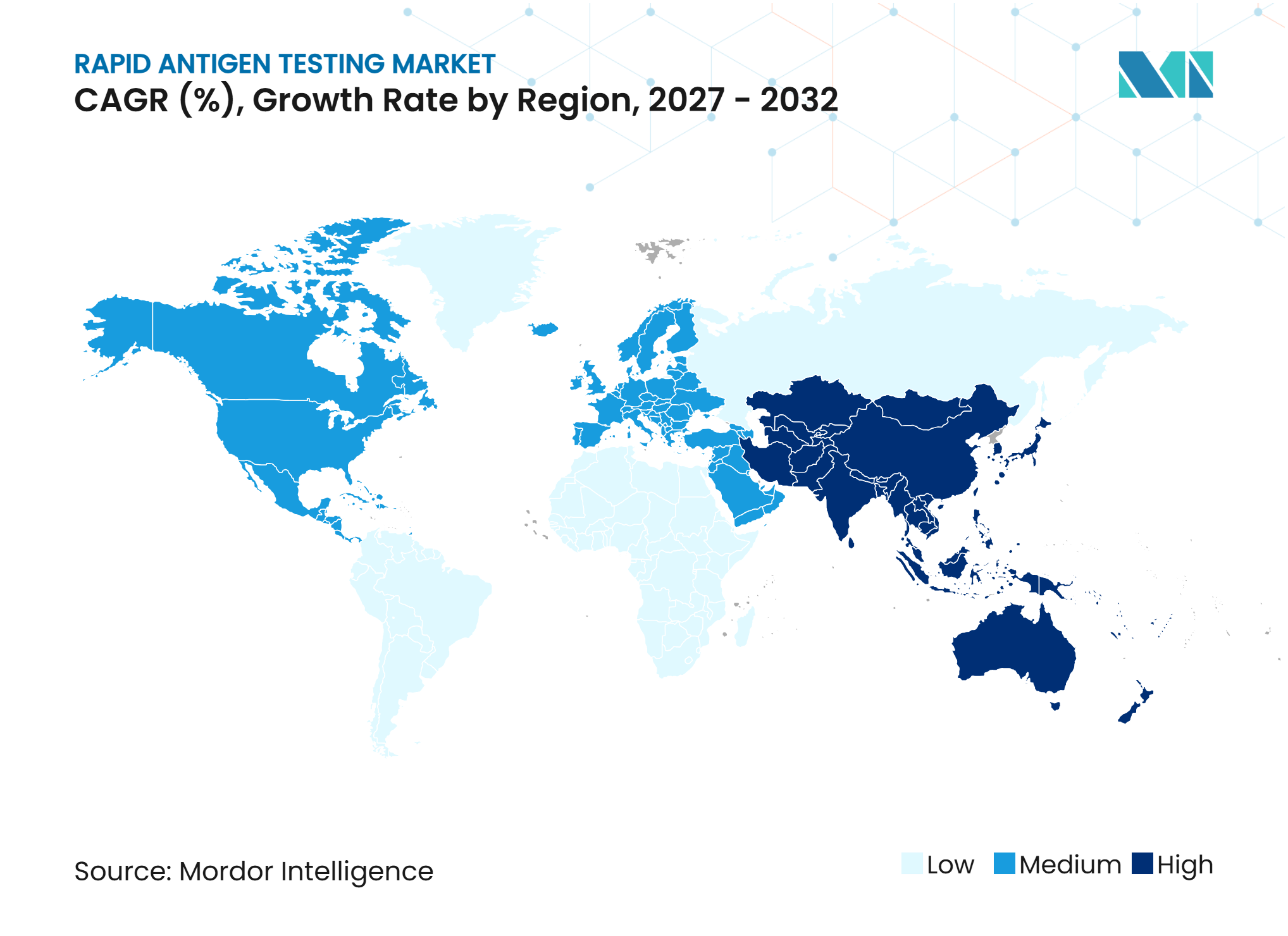
- By geography, North America held 38.57% of revenue in 2026, while Asia-Pacific is forecast to grow at a CAGR of 10.53% through 2032.
Note: Market numbers in this report are based on Mordor Intelligence's proprietary estimation framework, which combines nine months of actuals with Q4 projections for base year 2026.
Market Trends and Insights
Drivers Impact Analysis of Rapid Antigen Testing Market of Rapid Antigen Testing Market*
| Driver | (~) % Impact on CAGR Forecast | Geographic Relevance | Impact Timeline |
|---|---|---|---|
| Rising respiratory and infectious disease testing demand | +1.8% | Global | Medium term (2–4 years) |
| Decentralized testing and shorter clinical decision cycles | +1.5% | North America & EU | Medium term (2–4 years) |
| Expansion of multiplex respiratory antigen panels | +1.2% | Global, APAC core | Medium term (2–4 years) |
| Home testing and pharmacy-based diagnostic access | +1.0% | North America, EU, APAC | Short term (≤ 2 years) |
| Public-health preparedness and pooled procurement | +0.6% | LMICs, MEA, South America | Long term (≥ 4 years) |
| Digital reader and result-connectivity adoption | +0.5% | North America, EU, APAC | Long term (≥ 4 years) |
| Source: Mordor Intelligence | |||
Rising Respiratory And Infectious Disease Testing Demand
The rapid antigen testing market is supported by the simultaneous circulation of SARS-CoV-2, influenza A, influenza B, and RSV. This combination has made multi-pathogen testing more relevant across outpatient, pharmacy, and hospital pathways. The rapid antigen testing market benefits when clinicians can use a first-line result to separate respiratory cases before making isolation or treatment decisions. A 2025 review found that point-of-care testing can support clinical decisions, infection control, and antimicrobial stewardship in primary care settings.[1] The recurring presence of several respiratory viruses reduces the dependence of test volumes on a single outbreak. It also creates a clearer role for combination formats where patients present with similar symptoms but require different management pathways.
Decentralized Testing And Shorter Clinical Decision Cycles
The rapid antigen testing market is being shaped by testing that occurs closer to the point of care. Tests that return results in 10-20 minutes can help emergency departments and outpatient clinics make faster cohorting decisions. Faster results can also guide the need for follow-up molecular testing when symptoms, prevalence, or patient risk warrant it. This changes the purchasing process because emergency teams, outpatient clinics, and pharmacy networks have a stronger role in product selection. The rapid antigen testing market therefore favors suppliers that can provide training, workflow support, and dependable local distribution. Quality management remains important because point-of-care programs must work within established laboratory governance arrangements.
Expansion Of Multiplex Respiratory Antigen Panels
Multiplex panels are widening the clinical use of the rapid antigen testing market because they reduce the need for several separate tests. Roche received FDA clearance in August 2025 for cobas Respiratory 4-flex, which detects SARS-CoV-2, influenza A, influenza B, and RSV in a single run.[2] Biotech also reported EU IVDR CE 3018 self-test certification for a 5-in-1 consumer antigen kit in May 2025.[3] These formats can simplify the patient experience when symptoms are not specific to 1 infection. They can also support a higher-value product mix because one cassette addresses a broader diagnostic question. The rapid antigen testing market is likely to reward manufacturers that can demonstrate reliable performance across each analyte rather than adding targets without sufficient validation.
Home Testing And Pharmacy-Based Diagnostic Access
Home testing has become a lasting part of the rapid antigen testing market rather than a temporary pandemic practice. ACON Laboratories received FDA clearance in May 2025 for an over-the-counter test that detects and differentiates SARS-CoV-2, influenza A, and influenza B. Home tests give consumers an early result before they seek professional care or use telehealth services. Pharmacies can also provide advice on repeat testing, symptom monitoring, and escalation when a result does not align with a patient’s condition. This channel places more importance on instructions, packaging, and straightforward sample collection. The rapid antigen testing market gains reach through this access model, although consumer confidence still depends on consistent performance and clear directions.
Restraints Impact Analysis of Rapid Antigen Testing Market of Rapid Antigen Testing Market*
| Restraint | (~) % Impact on CAGR Forecast | Geographic Relevance | Impact Timeline |
|---|---|---|---|
| Lower sensitivity at low viral loads | -0.8% | Global | Short term (≤ 2 years) |
| False-negative risk in asymptomatic and early-stage cases | -0.6% | North America & EU | Medium term (2–4 years) |
| Regulatory divergence and evidence burden | -0.5% | Global, EU core | Medium term (2–4 years) |
| Seasonal demand volatility and excess capacity | -0.4% | North America, EU | Short term (≤ 2 years) |
| Source: Mordor Intelligence | |||
Lower Sensitivity At Low Viral Loads
Analytical performance is a central constraint for the rapid antigen testing market, particularly when viral loads are low. A 2025 review of point-of-care infectious disease diagnostics reported that performance validation remains essential before new tools are used broadly in clinical practice. A 2025 Journal of Medical Virology evaluation found that a combined SARS-CoV-2, influenza, and RSV rapid antigen test had stronger performance in samples with lower cycle-threshold values. These limits mean that negative results cannot always rule out infection in patients with compatible symptoms. Hospitals often retain reflex molecular testing pathways for high-risk patients and clinically sensitive decisions. The resulting additional cost and time can reduce the practical advantage of a rapid test in selected settings.
False-Negative Risk In Asymptomatic And Early-Stage Cases
False-negative results are a separate concern when the rapid antigen testing market serves asymptomatic screening or early-stage infection. A 2025 Cochrane review hosted by the U.S. National Library of Medicine found that the sensitivity of rapid antigen tests varied by symptoms and testing context. Lower pre-test probability can make workplace, travel, and event screening programs harder to manage with a single test alone. Repeat-testing instructions and confirmatory pathways can improve risk management, but they add complexity for employers and consumers. This limits the use of self-tests where users may not understand when a negative result needs further review. The rapid antigen testing market retains a role in screening, but product labeling and public health guidance need to set realistic expectations.
*Our forecasts treat driver/restraint impacts as directional, not additive. The impact forecasts reflect baseline growth, mix effects, and variable interactions.
Rapid Antigen Testing Market Segment Analysis
By Product Type:
Consumables Lead, While Self-Testing Kits Support Consumer AccessTest Kits and Consumables commanded 54.37% of the rapid antigen testing market share in 2026. Disposable test formats create repeat purchases across hospitals, clinics, retail channels, and household settings. This model benefits suppliers that already have product listings, logistics capacity, and reliable supply for routine orders. The rapid antigen testing industry also relies on consumables because each episode of testing needs a new cassette or strip. Institutional buyers often consider clinical documentation, supply assurance, and ease of use before changing suppliers. These requirements can support continued demand for established consumable portfolios. They also give manufacturers a reason to align their test menus with common respiratory presentations. The product category remains important because it connects recurring demand with a relatively simple testing workflow. Its position does not remove the need for performance monitoring, especially where results influence isolation or treatment decisions.
Self-Testing Kits are forecast to grow at a CAGR of 7.92% through 2032. Their adoption rests on improved access to tests outside hospitals and laboratories. FDA clearance for ACON’s Flowflex Plus home test in 2025 added a multiplex option for consumers. Consumer products need instructions that explain collection, timing, interpretation, and the circumstances that require clinical follow-up. They also need packaging that can distinguish a multiplex test from a single-pathogen test without confusing users. Retail pharmacies and online sellers are central to visibility because they are often the first contact point for users with respiratory symptoms. The rapid antigen testing market depends on consumers trusting that they can complete each step correctly. As product menus expand, manufacturers will need to keep usability as visible as analytical claims. This segment supports wider access, but it does not replace confirmatory testing where clinical risk is high.


By Technology:
Lateral Flow Supports Scale, While Microfluidics Improves AutomationLateral Flow Immunoassays held 46.72% of the rapid antigen testing market share in 2026. Their position reflects low material use, established manufacturing methods, rapid results, and broad familiarity among users. The format works well when a test needs to be portable, inexpensive, and simple to run. Research published in 2025 showed that DNA-origami signal amplification could improve lateral-flow sensitivity in experimental systems.[4] Another 2025 Nature Communications study reported 90% sensitivity for influenza A using a plasmonic scattering-enhanced lateral-flow system in clinical validation. These approaches show how the established strip format can incorporate improved signal detection. Commercial adoption will depend on whether those advances can be manufactured consistently and at prices suitable for routine testing. Lateral-flow platforms remain the practical baseline for products that must serve high-volume and decentralized testing needs.
Microfluidic-Based Antigen Tests are forecast to expand at a CAGR of 8.15% through 2032. Their value proposition is built around controlled fluid handling, quantitative output, and the potential for multi-analyte testing from 1 specimen. Automation can reduce user-dependent variation and support more consistent operation in clinics and pharmacies. Microfluidic systems may also provide a clearer route to connected readers and electronic reporting. The rapid antigen testing industry uses these capabilities to compete where basic visual-read strips do not provide enough operational control. Instrument-linked formats can be relevant for organizations that need audit trails, standardized quality checks, or result transfer into clinical systems. They must still prove that their additional workflow benefits justify their cost and maintenance requirements. The rapid antigen testing market will continue to use several technologies because care settings have different volume, budget, and connectivity needs.
By Sample Type:
Anterior Nasal Swabs Remain Practical, While Throat Formats Broaden OptionsAnterior Nasal Swab accounted for 36.58% of the rapid antigen testing market size in 2026. The specimen is commonly used because it is more comfortable than deeper nasal collection and can support self-collection. Its convenience is especially relevant for pharmacy and home testing, where users may have limited training. bioMérieux received FDA clearance and a CLIA waiver in August 2025 for anterior nasal swabs with its BIOFIRE SPOTFIRE Respiratory/Sore Throat Panel Mini. The clearance added anterior nasal collection to nasopharyngeal and throat swab options for the panel. This type of validation matters because sampling choice can affect both user acceptance and test performance. Nasopharyngeal swabs continue to serve settings that prioritize analytical sensitivity and trained collection. The rapid antigen testing market therefore needs specimen choices that match both clinical purpose and the user’s ability to collect a sample correctly.
Throat and Oropharyngeal Swab is forecast to grow at a CAGR of 8.46% through 2032. The format can be useful where a respiratory pathway includes sore-throat symptoms or where a multiplex panel uses the same sample for several targets. It can also complement anterior nasal collection in clinical environments that seek additional specimen options. Users may require more support with throat collection because technique can affect specimen quality. This makes professional oversight, product instructions, and workflow design important factors in adoption. Blood and serum samples remain relevant for antigen testing in other indications, including malaria, hepatitis B surface antigen, and sepsis-related applications. Those uses have different clinical pathways from mainstream respiratory testing. The rapid antigen testing market can serve these applications through specialized portfolios rather than a single universal collection method. Sample innovation will remain useful when it improves comfort without reducing reliable detection.

By End User:
Hospitals And Clinics Maintain Scale, While Home Care Settings Grow FasterHospitals and Clinics accounted for 41.29% of the rapid antigen testing market size in 2026. Their testing volumes come from emergency departments, inpatient units, urgent care, and outpatient respiratory visits. Rapid results can support cohorting, isolation, and faster choices about follow-up testing for patients with respiratory symptoms. The rapid antigen testing industry is relevant in these settings because a test may be performed by nursing or emergency staff rather than laboratory personnel. This model depends on training, defined escalation pathways, and quality oversight. Diagnostic laboratories and reference centers continue to support confirmatory testing when antigen results are negative or unclear. Their role remains important for high-risk patients and clinical decisions that need stronger analytical confidence. Hospitals also evaluate connectivity, throughput, and the availability of multiplex testing when they select a platform. These requirements help explain why institutional use remains the largest end-user setting.
Home Care Settings are forecast to advance at a CAGR of 9.27% through 2032. Growth reflects consumer preference for early testing, reduced travel, and access through pharmacy and online channels. FDA-cleared home tests can allow users to start the diagnostic process before they enter a clinic. This can help patients decide whether to seek professional advice, although it does not replace care for severe symptoms. Home testing also creates a larger need for plain instructions and access to professional support after a result. Schools, workplaces, and long-term care settings can use self-test programs as a separate institutional category. Their needs differ from hospital procurement because they emphasize ease of use, availability, and repeat testing policies. The rapid antigen testing market gains a broader user base when these settings have clear policies for positive, negative, and invalid results. Responsible growth depends on aligning consumer access with practical guidance.
By Distribution Channel:
Institutional Procurement Provides Stability, While E-Commerce Expands ReachHospital and Institutional Procurement held 43.35% of revenue in 2026. Tender-based purchasing can create long sales cycles because buyers assess clinical evidence, supply reliability, quality systems, and contract terms. These processes can make switching difficult once a test is included in a hospital workflow. Sapphiros announced in November 2025 that Roche would receive exclusive access to at least 1 billion lateral-flow tests annually under a supply and manufacturing option agreement. The agreement illustrates why large suppliers seek dependable capacity for public health and institutional demand. Institutional customers also value compatible readers, reporting, and quality control when tests are used across multiple departments. The rapid antigen testing market benefits from these stable relationships because they provide recurring volume outside consumer purchasing cycles. Product suppliers still need to meet evolving evidence expectations as health systems update their respiratory pathways. The channel remains central because hospitals and clinics manage many high-acuity testing decisions.
Online Pharmacies and E-Commerce are forecast to grow at a CAGR of 9.58% through 2032. Online channels allow consumers to compare formats, identify multi-pathogen products, and receive tests without visiting a store. They also shift competition toward brand clarity, trusted product descriptions, and delivery reliability. Retail pharmacies provide a related physical route, particularly when a consumer wants advice about product selection or follow-up steps. The rapid antigen testing market needs both channels because users have different access needs and levels of confidence with self-testing. Online sellers must present regulated product information accurately and avoid claims that exceed intended use. Manufacturers need to maintain inventory visibility because respiratory demand can rise quickly during seasonal peaks. Consumer-facing sales will not eliminate institutional procurement, but they require distinct marketing, education, and distribution capabilities. The two channels can expand access when clinical limitations and result interpretation are explained clearly.
Geography Analysis
North America
North America held 38.57% of the rapid antigen testing market size in 2026. The United States has a large retail pharmacy network and a well-established pathway for over-the-counter diagnostic products. FDA clearances in 2025 covered several multiplex respiratory test formats, including ACON’s home test and Roche’s respiratory assay. These approvals enlarge the product menu for pharmacies, healthcare providers, and clinical laboratories. Federal support also continues to encourage new approaches to decentralized respiratory diagnostics. Sapphiros announced a BARDA collaboration for a single-use digital antigen test with smartphone connectivity. The regional opportunity depends on connecting home and pharmacy testing to sensible follow-up care. Compliance with FDA requirements remains important as suppliers add more pathogens and consumer-use claims.
Asia-Pacific
Asia-Pacific is forecast to grow at a CAGR of 10.53% through 2032, the fastest rate in the rapid antigen testing market. The region combines manufacturing capacity with sizeable demand for accessible respiratory testing. Australia’s Therapeutic Goods Administration listed a 5-pathogen combination antigen self-test in August 2025. This regulatory action shows growing regional acceptance of multi-pathogen consumer formats. Local manufacturing and more affordable products can support wider access, but each country retains its own registration, distribution, and evidence requirements. The rapid antigen testing market needs suppliers to adapt to these country-level compliance factors rather than treating Asia-Pacific as a single purchasing environment.
Europe, Middle East And Africa, And South America
Europe, the Middle East and Africa, and South America form a mixed group with different procurement conditions and regulatory priorities. In Europe, IVDR requirements continue to place emphasis on clinical evidence and documented product performance for in vitro diagnostics. This can favor suppliers that have invested in complete technical files and post-market evidence. The World Health Organization prequalified 2 rapid SARS-CoV-2 antigen tests in December 2025, making them eligible for procurement by United Nations agencies and pooled purchasing programs. WHO and the Medicines Patent Pool also announced a 2025 sublicensing agreement with Codix Bio in Nigeria for rapid diagnostic test technology transfer. This supports the development of regional manufacturing capacity for tests that can be adapted beyond SARS-CoV-2. In South America, pharmacy expansion and disease surveillance can improve access, while fragmented purchasing and currency movements can complicate supply planning. The rapid antigen testing market in these regions will depend on affordable products, durable distribution arrangements, and procurement structures that can support routine rather than emergency demand.
Competitive Landscape
Market Concentration
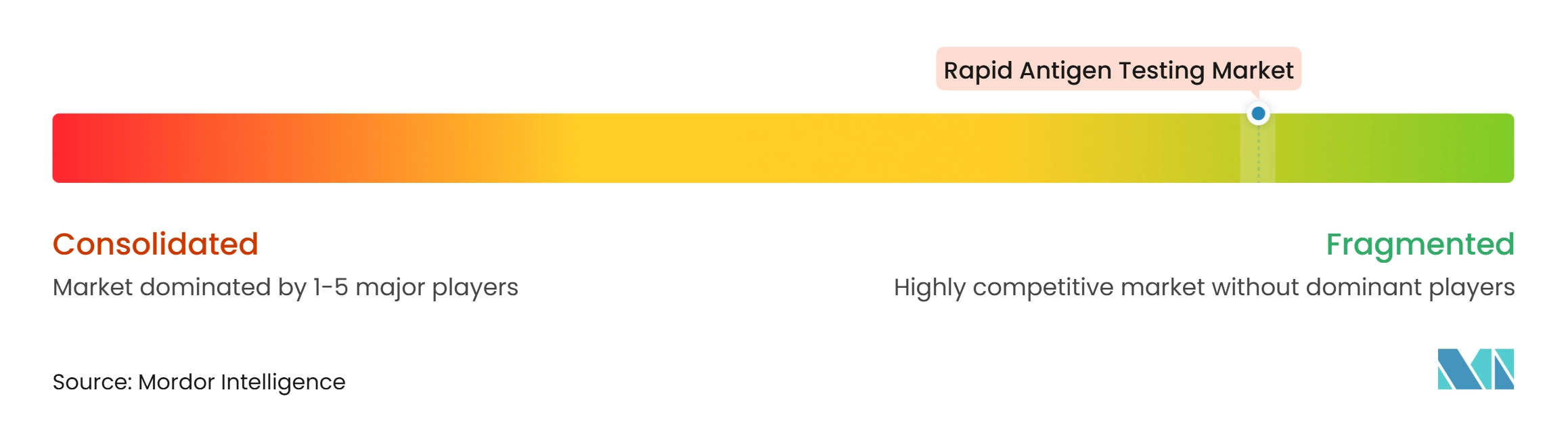
The rapid antigen testing market includes global diagnostics companies, specialized point-of-care suppliers, and lower-cost regional manufacturers. Abbott Laboratories, F. Hoffmann-La Roche Ltd, Danaher Corporation, QuidelOrtho Corporation, and bioMérieux SA have broad institutional capabilities across assays, instruments, and healthcare channels. Competition is shaped by performance, regulatory evidence, distribution reach, connected reporting, and the number of pathogens covered by a test. Product portfolios also differ in their ability to support home use, professional use, and instrument-assisted testing. Buyers often assess clinical documentation before considering the lowest listed product price. This makes quality records and consistent supply important commercial assets for established suppliers. It also leaves room for regional companies that can meet local registration and tender requirements. Product availability can become especially important when seasonal respiratory demand places pressure on normal ordering patterns. Manufacturers with diversified production and established logistics can respond more predictably to institutional replenishment needs. Suppliers must balance broad menus with clear instructions because added complexity can slow adoption in routine clinical workflows. Established firms can use training, service, and post-market support to reinforce relationships with professional buyers. The rapid antigen testing market is not defined only by the selling price of a cassette because hospitals and health systems also value supply assurance and workflow fit. Suppliers with established clinical relationships can link tests to readers, laboratory information systems, and quality programs. Smaller companies can still compete when they offer efficient manufacturing or products suited to local tenders. The field therefore includes both integrated platforms and high-volume commodity-style products. Each model needs credible validation to win and retain trust in clinical settings.
Multiplexing is a major area of competition in the rapid antigen testing market. Roche received clearance for cobas Respiratory 4-flex in August 2025, extending its respiratory testing offer across 4 viral targets. The clearance demonstrates the importance of addressing several common respiratory pathogens in one workflow. QuidelOrtho announced plans in June 2025 to acquire LEX Diagnostics after FDA clearance, while discontinuing its Savanna platform. The transaction was intended to strengthen its molecular diagnostics direction and access to an ultrafast multiplex platform. bioMérieux expanded specimen options for its BIOFIRE SPOTFIRE Respiratory/Sore Throat Panel Mini through an FDA clearance and CLIA waiver for anterior nasal specimens. This gives providers another collection option within an established respiratory and sore-throat testing workflow. These moves show that companies are seeking broader menus, simpler collection, or faster result pathways. Connected reporting and reader systems can provide another point of differentiation when customers need standardized records. These tools can also strengthen quality oversight where results are produced outside central laboratories. The rapid antigen testing market will favor strategies that improve clinical usefulness without making frontline workflows more difficult.
Rapid Antigen Testing Industry Leaders
-
Abbott Laboratories
-
Becton, Dickinson and Company (BD)
-
Danaher Corporation
-
QuidelOrtho Corporation
-
Siemens Healthineers AG
- *Disclaimer: Major Players sorted in no particular order
Rapid Antigen Testing Market Companies Covered in this Report
- Abbott Laboratories
- Access Bio
- Acon Laboratories
- Beckton Dickinson
- bioMérieux
- Bionote
- Danaher
- Roche
- Healgen Scientific LLC
- iHealth Labs
- LumiraDx Limited
- Orasure Technologies
- OSANG Healthcare Co. Ltd.
- Princeton BioMeditech Corporation
- QuidelOrtho
- SD Biosensor Inc.
- SEKISUI Diagnostics, LLC
- Siemens Healthineers
- Thermo Fisher Scientific
- Trinity Biotech plc
Recent Industry Developments in Rapid Antigen Testing Market
- 2025: Sapphiros announced a strategic supply and manufacturing option agreement with Roche, granting Roche exclusive access to at least 1 billion lateral flow tests annually from Sapphiros' UK-based reel-to-reel manufacturing facility (capacity: up to 5 billion diagnostics per year). The agreement also includes access to Sapphiros' future multiplex molecular POC technology, positioning Roche with surge-ready manufacturing capacity at pandemic scale.
- December 2025: WHO prequalified the first 2 rapid antigen detection tests for SARS-CoV-2, SD Biosensor's STANDARD Q COVID-19 Ag Test and ACON Biotech's Flowflex SARS-CoV-2 Antigen Rapid Test.
- August 2025: F. Hoffmann-La Roche Ltd received FDA 510(k) clearance for cobas Respiratory 4-flex, which detects SARS-CoV-2, influenza A, influenza B, and RSV in a single run on cobas systems.
Global Rapid Antigen Testing Market Report Scope
As per the report scope, rapid antigen testing is a diagnostic method that detects specific proteins (antigens) from pathogens such as viruses or bacteria in patient samples. It provides results within minutes, enabling quick identification of infectious diseases and timely clinical decision-making. Rapid antigen tests are widely used at the point of care for conditions such as COVID-19, influenza, respiratory syncytial virus (RSV), and malaria due to their speed, convenience, and cost-effectiveness.
The rapid antigen testing market is segmented by product type, technology, sample type, end user, distribution channel, and geography. By product type, the market is segmented into test kits and consumables, readers and instruments, professional test systems, and self-testing kits. By technology, the market is segmented into lateral flow immunoassays, fluorescence immunoassays, microfluidic-based antigen tests, chemiluminescence and other immunoassays, and others. By sample type, the market is segmented into anterior nasal swab, nasopharyngeal swab, throat and oropharyngeal swab, blood and serum, and others. By end user, the market is segmented into hospitals and clinics, diagnostic laboratories and reference centers, home care settings, and others. By distribution channel, the market is segmented into hospital and institutional procurement, retail pharmacies, online pharmacies and e-commerce, and others. By geography, the market is segmented into North America, Europe, Asia-Pacific, the Middle East and Africa, and South America. The market report also covers estimated market sizes and market trends for 17 countries across major regions worldwide. The report offers market value (in USD) for the above segments.
Segmentation Overview
| Test Kits and Consumables |
| Readers and Instruments |
| Professional Test Systems |
| Self-Testing Kits |
| Lateral Flow Immunoassays |
| Fluorescence Immunoassays |
| Microfluidic-Based Antigen Tests |
| Chemiluminescence and Other Immunoassays |
| Others |
| Anterior Nasal Swab |
| Nasopharyngeal Swab |
| Throat and Oropharyngeal Swab |
| Blood and Serum |
| Others |
| Hospitals and Clinics |
| Diagnostic Laboratories and Reference Centres |
| Home Care Settings |
| Others |
| Hospital and Institutional Procurement |
| Retail Pharmacies |
| Online Pharmacies and E-Commerce |
| Others |
| North America | United States |
| Canada | |
| Mexico | |
| Europe | Germany |
| United Kingdom | |
| France | |
| Italy | |
| Spain | |
| Rest of Europe | |
| Asia-Pacific | China |
| India | |
| Japan | |
| Australia | |
| South Korea | |
| Rest of Asia-Pacific | |
| Middle East and Africa | GCC |
| South Africa | |
| Rest of Middle East and Africa | |
| South America | Brazil |
| Argentina | |
| Rest of South America |
| By Product Type | Test Kits and Consumables | |
| Readers and Instruments | ||
| Professional Test Systems | ||
| Self-Testing Kits | ||
| By Technology | Lateral Flow Immunoassays | |
| Fluorescence Immunoassays | ||
| Microfluidic-Based Antigen Tests | ||
| Chemiluminescence and Other Immunoassays | ||
| Others | ||
| By Sample Type | Anterior Nasal Swab | |
| Nasopharyngeal Swab | ||
| Throat and Oropharyngeal Swab | ||
| Blood and Serum | ||
| Others | ||
| By End User | Hospitals and Clinics | |
| Diagnostic Laboratories and Reference Centres | ||
| Home Care Settings | ||
| Others | ||
| By Distribution Channel | Hospital and Institutional Procurement | |
| Retail Pharmacies | ||
| Online Pharmacies and E-Commerce | ||
| Others | ||
| By Geography | North America | United States |
| Canada | ||
| Mexico | ||
| Europe | Germany | |
| United Kingdom | ||
| France | ||
| Italy | ||
| Spain | ||
| Rest of Europe | ||
| Asia-Pacific | China | |
| India | ||
| Japan | ||
| Australia | ||
| South Korea | ||
| Rest of Asia-Pacific | ||
| Middle East and Africa | GCC | |
| South Africa | ||
| Rest of Middle East and Africa | ||
| South America | Brazil | |
| Argentina | ||
| Rest of South America | ||
Key Questions Answered in the Report
What is the projected value of rapid antigen testing by 2032?
The sector is forecast to reach USD 39.08 billion by 2032, expanding at a CAGR of 7.49% from 2027. The projection reflects continuing demand for decentralized respiratory testing in hospitals, pharmacies, and home settings.
Which product category leads rapid antigen testing revenue?
Test Kits and Consumables led with 54.37% of revenue in 2026. The category benefits from repeat purchases because each testing episode uses a new cassette or strip across clinical and consumer settings.
Which technology is growing fastest in rapid antigen testing?
Microfluidic-Based Antigen Tests are forecast to grow at a CAGR of 8.15% through 2032. Their appeal comes from controlled sample handling, quantitative outputs, and potential compatibility with connected readers.
Why are multiplex antigen tests becoming more important?
Multiplex formats can identify several respiratory viruses from 1 test, which supports quicker triage when symptoms overlap. Their value depends on clear validation for every analyte included in the panel.
Which region is expected to grow fastest through 2032?
Asia-Pacific is forecast to grow at a CAGR of 10.53% through 2032. Regional manufacturing capacity, accessible testing needs, and regulatory acceptance of combination formats support this outlook.
What is the main limitation of rapid antigen tests?
Sensitivity can be lower at low viral loads and in asymptomatic testing. Some clinical pathways therefore use repeat testing or confirmatory molecular testing when symptoms and patient risk make a negative antigen result insufficient.