
Radial Head Resection Implants Market Size and Share
Market Overview
| Study Period | 2021 - 2032 |
|---|---|
| Market Size (2027) | USD 602.84 Million |
| Market Size (2032) | USD 816.29 Million |
| Growth Rate (2027 - 2032) | 6.25 % |
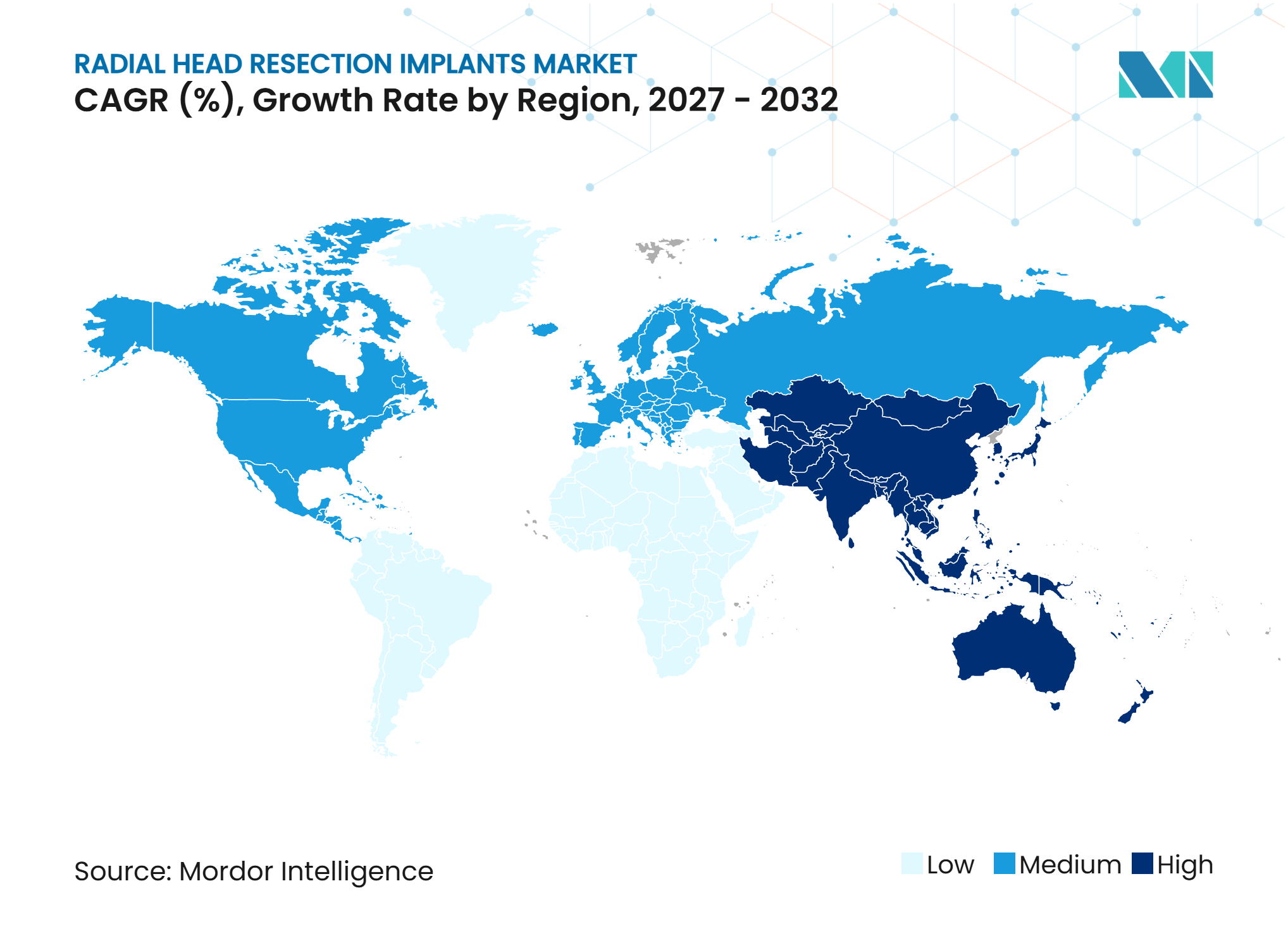
| Fastest Growing Market | Asia-Pacific |
| Largest Market | North America |
| Market Concentration | Medium |
Major Players *Disclaimer: Major Players sorted in no particular order Image © Mordor Intelligence. Reuse requires attribution under CC BY 4.0. | |
Radial Head Resection Implants Market Analysis by Mordor Intelligence
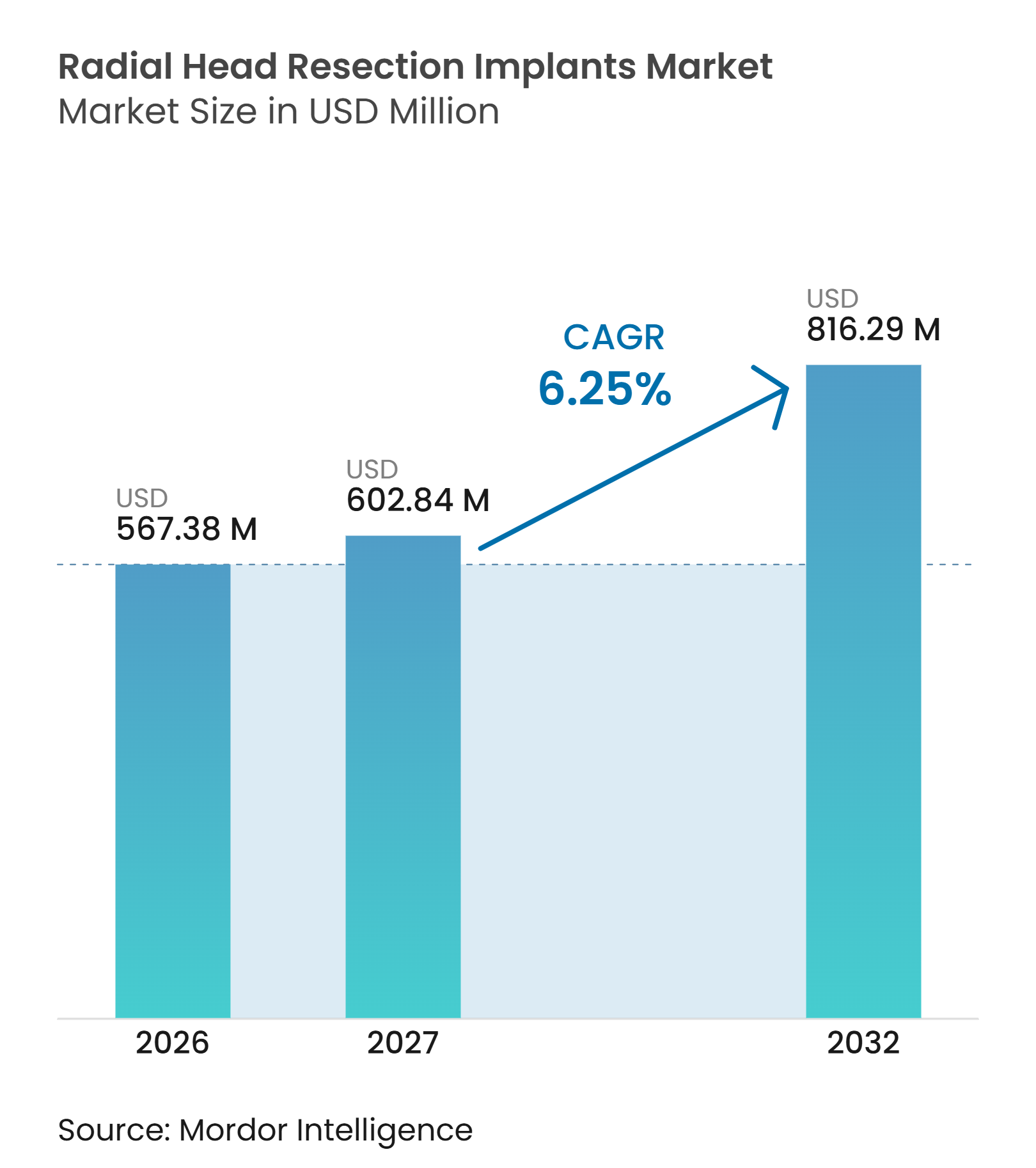
The Radial Head Resection Implants Market size is expected to grow from USD 567.38 million in 2026 to USD 602.84 million in 2027 and is forecast to reach USD 816.29 million by 2032 at 6.25% CAGR over 2027-2032.
Irreparable Mason type III and IV fractures continue to support procedure demand because they often require replacement rather than fixation. Radial head arthroplasty has exceeded fixation in case volume among ABOS examination candidates, which supports the continued shift toward replacement in complex fractures. Manufacturers are responding with modular systems, alternative bearing surfaces, and fixation options that can accommodate varied anatomy and revision needs. The radial head resection implants market also faces limits from revision risk, uneven specialist access, and evidence gaps that encourage hospitals to favor established systems.
Key Report Takeaways
- By product architecture, modular implants held 52.3% of revenue in 2026, while monoblock implants are forecast to grow at an 8.5% CAGR through 2032.
- By implant polarity, monopolar implants held 58.8% of the market in 2026, while bipolar implants are forecast to grow at an 8.8% CAGR through 2032.
- By material, cobalt-chromium alloys held 32.7% of the market in 2026, while pyrocarbon is forecast to grow at a 9.1% CAGR through 2032.
- By implant size, the 20-25 mm range held 55.7% of the market in 2026 and is forecast to grow at a 9.8% CAGR through 2032.
- By application, primary radial head replacement held 38.8% of the market in 2026, while revision radial head replacement is forecast to grow at a 9.7% CAGR through 2032.
- By end user, hospitals held 62.5% of the market in 2026, while specialty orthopedic clinics are forecast to grow at a 9.5% CAGR through 2032.
- By geography, North America held 42.6% of the market in 2026, while Asia-Pacific is forecast to grow at a 7.5% CAGR through 2032.
Note: Market numbers in this report are based on Mordor Intelligence's proprietary estimation framework, which combines nine months of actuals with Q4 projections for base year 2026.
Market Trends and Insights
Drivers Impact Analysis of Radial Head Resection Implants Market*
| Driver | (~) % Impact on CAGR Forecast | Geographic Relevance | Impact Timeline |
|---|---|---|---|
| Rising Incidence of Irreparable and Comminuted Radial Head Fractures | 1.70% | Global, concentration in North America and APAC | Short term (≤ 2 years) |
| Increasing Use of Radial Head Arthroplasty in Complex Elbow Instability | 1.30% | North America & EU | Medium term (2–4 years) |
| Shift Toward Anatomical and Modular Implant Systems | 1.40% | Global | Medium term (2–4 years) |
| Demand for Cartilage-Preserving and Porous-Fixation Technologies | 0.80% | North America, EU, APAC core | Long term (≥ 4 years) |
| Growing Use of Intraoperative Sizing and Alignment Technologies | 0.60% | North America, EU | Medium term (2–4 years) |
| Source: Mordor Intelligence | |||
Rising Incidence of Irreparable and Comminuted Radial Head Fractures
Radial head fractures create a defined clinical base for the radial head resection implants market because comminuted injuries cannot always be reconstructed reliably. A 2025 registry study reported that concurrent elbow dislocation occurred in 25.9% of radial head fracture cases, increasing the need for procedures that restore joint stability[1]. Complex injury patterns require surgeons to consider ligament integrity, forearm stability, and the risk of proximal radial migration rather than treating the fracture alone. This favors arthroplasty when fixation cannot preserve a stable and functional radiocapitellar relationship. The same injury burden supports demand across mature trauma systems and expanding orthopedic centers. It also places greater importance on product availability, surgical training, and implant options that can be selected during a time-sensitive trauma procedure.
Increasing Use of Radial Head Arthroplasty in Complex Elbow Instability
Radial head arthroplasty is increasingly used when terrible triad injuries or Essex-Lopresti lesions require the radial head to contribute to forearm stability. A 2026 population-based cohort study of 3,159 surgical cases associated arthroplasty with a 10-year cumulative reoperation incidence of 10.4%, compared with 15.8% for open reduction and internal fixation[2]. That clinical result reinforces the role of replacement in cases where fracture fixation is unlikely to provide durable stability. The radial head resection implants market benefits when clinical decision-making gives greater weight to long-term reoperation risk. Younger patients receiving arthroplasty for severe injuries may also require follow-up over a longer period, making revision planning relevant to the product lifecycle. The commercial opportunity therefore extends beyond primary trauma procedures to systems that support difficult revision surgery.
Shift Toward Anatomical, Modular, and Alignment Technologies
Modular implants allow the surgeon to select the head and stem separately, which supports intraoperative adjustment for anatomy and fracture pattern. The radial head resection implants market is shaped by this need for flexibility, particularly in tertiary trauma centers that manage severe fracture-dislocations. A 2025 long-term study reported 100% survivorship for loose-fit modular implants, compared with 92.1% for press-fit modular systems at 14.5 years. Arthrex received FDA clearance in July 2026 for a modular fixed-axis cobalt-chromium-molybdenum radial head replacement system with press-fit and free-floating stem options. Patient-specific instrumentation also showed improved clinical outcomes in total elbow arthroplasty in a 2025 study, supporting the broader use of planning and alignment tools in elbow reconstruction. These developments favor systems that simplify sizing decisions while retaining options for surgeons managing variable anatomy.
Demand for Cartilage-Preserving and Porous-Fixation Technologies
Alternative materials and fixation concepts address concerns that hard implant surfaces and rigid stems can affect the native capitellum and surrounding bone. Pyrocarbon has an elastic modulus of 17-21 GPa, close to the 15-25 GPa range cited for cortical bone in the supplied clinical evidence. A 2025 systematic review of 330 pyrocarbon radial head arthroplasties reported a 6.4% implant-related revision rate and symptomatic loosening in 1.5% of cases. A 2025 study also reported low bone resorption around an interconnected-porosity radial head stem, showing the role porous structures may play in fixation strategy. Synthetic-cartilage and polymer designs seek to reduce hard-surface contact with native cartilage, which addresses a clinical concern in conventional metallic reconstruction. The radial head resection implants market is therefore likely to reward designs that address cartilage contact and fixation without adding unnecessary procedural complexity.
Restraints Impact Analysis of Radial Head Resection Implants Market*
| Restraint | (~) % Impact on CAGR Forecast | Geographic Relevance | Impact Timeline |
|---|---|---|---|
| Revision Risk from Loosening, Stiffness, and Capitellar Erosion | -0.9% | Global | Short term (≤ 2 years) |
| Limited Long-Term Comparative Evidence Across Implant Designs | -0.7% | Global | Medium term (2–4 years) |
| Surgeon Dependence on Implant Availability and Familiarity | -0.5% | Global, especially non-tertiary settings | Medium term (2–4 years) |
| Limited Reimbursement and Specialist Access in Emerging Markets | -0.8% | APAC (ex-China/Japan), MEA, South America | Long term (≥ 4 years) |
| Source: Mordor Intelligence | |||
Revision Risk From Loosening, Stiffness, and Capitellar Erosion
Revision risk remains a practical restraint because outcomes depend on stem selection, implant size, surgical technique, and patient anatomy. A 2026 meta-analysis covering 4,467 elbows reported revision rates of 3.4% for loose-fit stems and 8.0% for press-fit stems before adjustment for follow-up time[3]. The same evidence found that the apparent survival advantage disappeared after accounting for follow-up duration, which cautions against simple design claims. Stiffness, pain, loosening, and cartilage wear can require further surgery, especially when sizing or alignment is not appropriate. This clinical sensitivity can limit use outside centers that perform elbow reconstruction regularly. It also supports demand for trial systems, education, and design features that help avoid overstuffing and unstable reconstruction.
Evidence, Surgeon Familiarity, Reimbursement, and Specialist Access Constraints
Limited long-term comparative evidence leaves surgeons and hospital buyers with few definitive reasons to move from familiar systems to newer designs. A 2025 meta-analysis found no significant difference in revision rates or functional outcomes between monopolar and bipolar implants, despite their different designs. Hospitals can therefore standardize on legacy products when a newer system has a higher price without clearly superior long-term evidence. Surgeon familiarity also matters because low-volume settings may not maintain the implant inventory or technical experience needed for complex revision cases. Reimbursement constraints and incomplete specialist access narrow treatment availability in several emerging markets. These factors make clinical evidence, distributor support, and usable instrumentation as important as material novelty for the radial head resection implants market.
*Our forecasts treat driver/restraint impacts as directional, not additive. The impact forecasts reflect baseline growth, mix effects, and variable interactions.
Radial Head Resection Implants Market Segment Analysis
By Product Architecture:
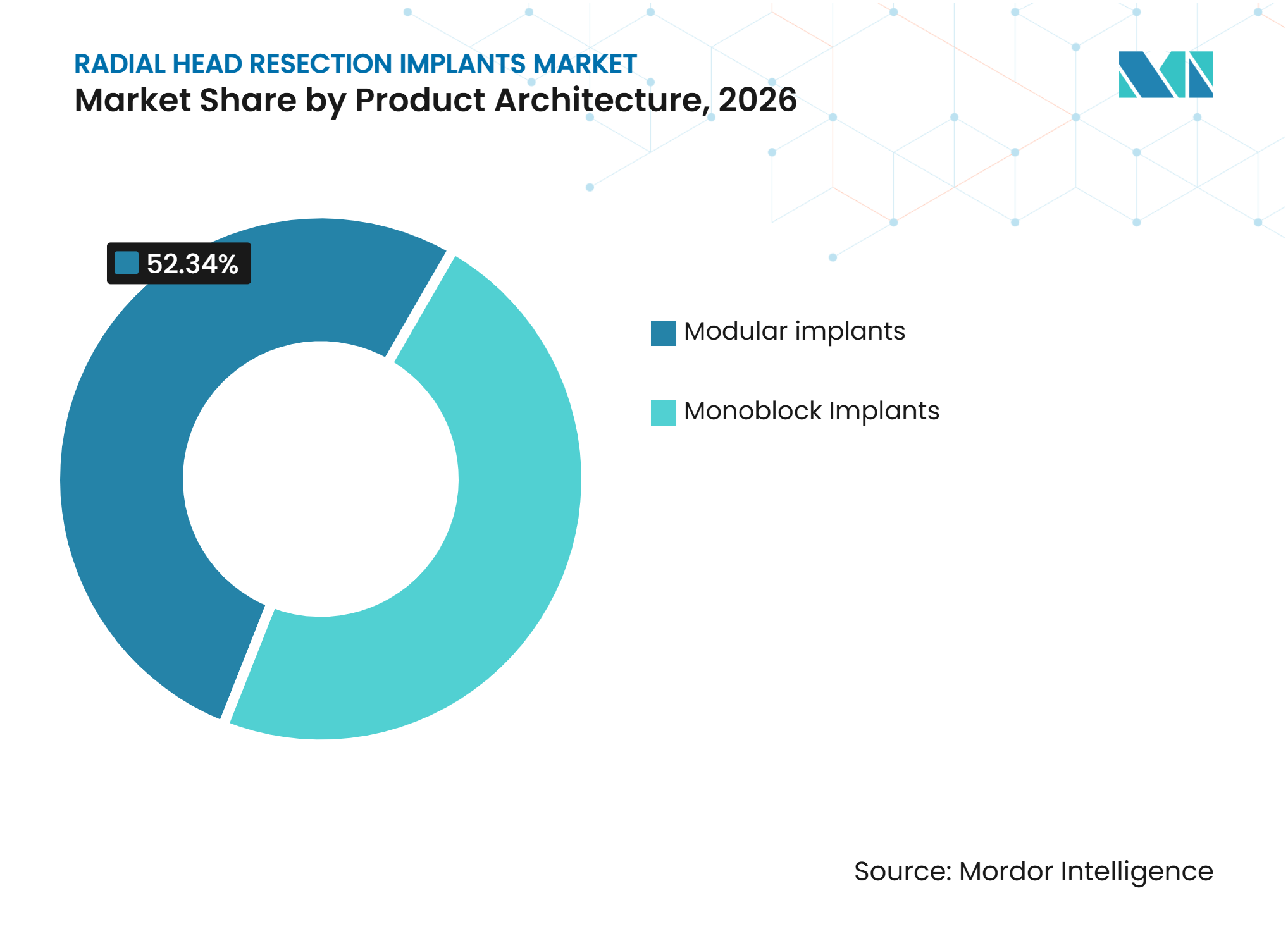
Modular Design Leads, Monoblock AcceleratesModular implants held 52.3% of revenue in 2026, giving them the leading position in the radial head resection implants market share. Their separate head and stem components allow surgeons to refine fit, restore length, and respond to uncertainty in the fractured anatomy during surgery. This feature is relevant in comminuted fractures, where landmarks are disrupted and the original head may not be useful as a direct guide. Broad modular portfolios also help hospitals manage varied trauma presentations without changing the core surgical workflow or training pathway for each case. Acumed’s Anatomic Radial Head Solutions 2 offers 924 head-stem combinations, while Stryker’s Evolve Proline offers 324 combinations, demonstrating the value placed on extensive size and configuration choice.
Monoblock implants are forecast to grow at an 8.5% CAGR through 2032. Their one-piece construction removes the modular junction and may reduce concerns about fretting or component dissociation during use. This design can also reduce the number of trays, instruments, and assembly steps needed for a procedure, which may be relevant in time-sensitive trauma care. A 2026 study of 19 patients using a DePuy Synthes monoblock loose-fit system reported a Mayo Elbow Performance Score of 90 and no revisions at a mean 14.9-month follow-up. The supplied clinical review also links loose-fit approaches with fewer concerns about rigid stem fixation in selected patients. In the radial head resection implants industry, monoblock systems appeal where lower instrumentation demands, accessible pricing, and direct workflow matter most.



By Implant Polarity:
Monopolar Dominates, Bipolar Gains in Complex InstabilityMonopolar implants commanded 58.8% of revenue in 2026, making them the largest polarity category. Their established clinical history and simpler implantation approach support continued use in straightforward acute Mason type III fracture cases. The 2025 meta-analysis of 809 patients reported similar Mayo Elbow Performance Scores for monopolar and bipolar systems, at 86.7 and 87.4, respectively. It also reported statistically similar revision rates of 4.1% for monopolar devices and 6.6% for bipolar devices. These findings support the ongoing role of monopolar products when surgeons prefer a conventional fixed-axis reconstruction with familiar instrumentation, published clinical experience, predictable operating-room steps, and straightforward availability through established trauma purchasing channels in the radial head resection implants market.
Bipolar implants are forecast to grow at an 8.8% CAGR through 2032. Their articulation can accommodate forearm rotation in complex instability cases, including terrible triad injuries and Essex-Lopresti lesions. This functional distinction gives bipolar systems a place when injury severity makes rotational accommodation particularly important to the planned reconstruction. A 2025 study of 64 bipolar radial head arthroplasty patients reported a mean Oxford Elbow Score of 88 and high patient satisfaction. A separate 2025 long-term study of cemented bipolar Judet prostheses reported 90% patient satisfaction and a mean Mayo Elbow Performance Score of 89. The evidence helps explain why bipolar products are gaining consideration at centers treating complex elbow instability, where surgeons may prioritize rotational accommodation, stability assessment, and a construct suited to multi-structure injury patterns in the radial head resection implants market.
By Material:
Cobalt-Chromium Leads, Pyrocarbon Grows FastestCobalt-chromium alloys held 32.7% of revenue in 2026, supported by established manufacturing processes and use across major implant platforms. The material remains common in radial head articular surfaces because manufacturers and surgeons have long experience with its mechanical properties and instrument compatibility. Arthrex’s 2026 FDA-cleared system uses cobalt-chromium-molybdenum components with two stem choices. Titanium retains an important role in stem construction because its lower elastic modulus can support efforts to reduce stress shielding. Stainless steel remains relevant in lower-priced trauma systems, although it has less importance in premium arthroplasty applications where suppliers in the radial head resection implants market emphasize instrument compatibility, material positioning, and access to a wider range of implant configurations.
Pyrocarbon is forecast to grow at a 9.1% CAGR through 2032, the highest material growth rate in the supplied estimates. Its material properties have made it relevant to designs intended to reduce the mismatch between an implant and the surrounding bone. The supplied evidence base also identifies clinical interest in implant surfaces that limit adverse interaction with native cartilage. Synthetic-cartilage and polymer designs represent an emerging alternative because they seek to change the contact surface against native cartilage without abandoning implant stability. Porous titanium stems form another material pathway for the radial head resection implants market, as manufacturers seek fixation without overly rigid load transfer.
By Implant Size:
20-25 mm Anchors Volume and Leads GrowthThe 20-25 mm range held 55.7% of revenue in 2026 and is forecast to grow at a 9.8% CAGR through 2032. This combination makes the 20-25 mm range the largest and fastest-growing implant-size category in the supplied segmentation. The range aligns with commonly required adult sizing and serves a broad portion of routine trauma cases treated in hospital and specialist settings. A 2025 registry study shows that fracture patterns frequently involve instability and co-injury, which increases the value of accurate sizing during reconstruction. Intraoperative trials and radiolucent sizing tools may strengthen use of this mid-range category by allowing direct assessment before final placement.
Implants below 20 mm address smaller adult patients and the limited pediatric portion of clinical demand. Implants above 25 mm remain necessary for larger anatomy and selected degenerative or post-traumatic indications. The supplied clinical record notes that larger diameters can be associated with a higher revision risk, making careful sizing a continuing clinical priority during primary and revision surgery. This emphasis on avoiding overstuffing directs attention toward systems that offer multiple trial sizes rather than a narrow selection of final implants. The radial head resection implants market therefore benefits from inventory strategies that combine broad diameter coverage with clear intraoperative decision support, accessible trial components, reliable stock availability, and practical guidance for selecting a stable reconstruction without unnecessary component changes.
By Application:
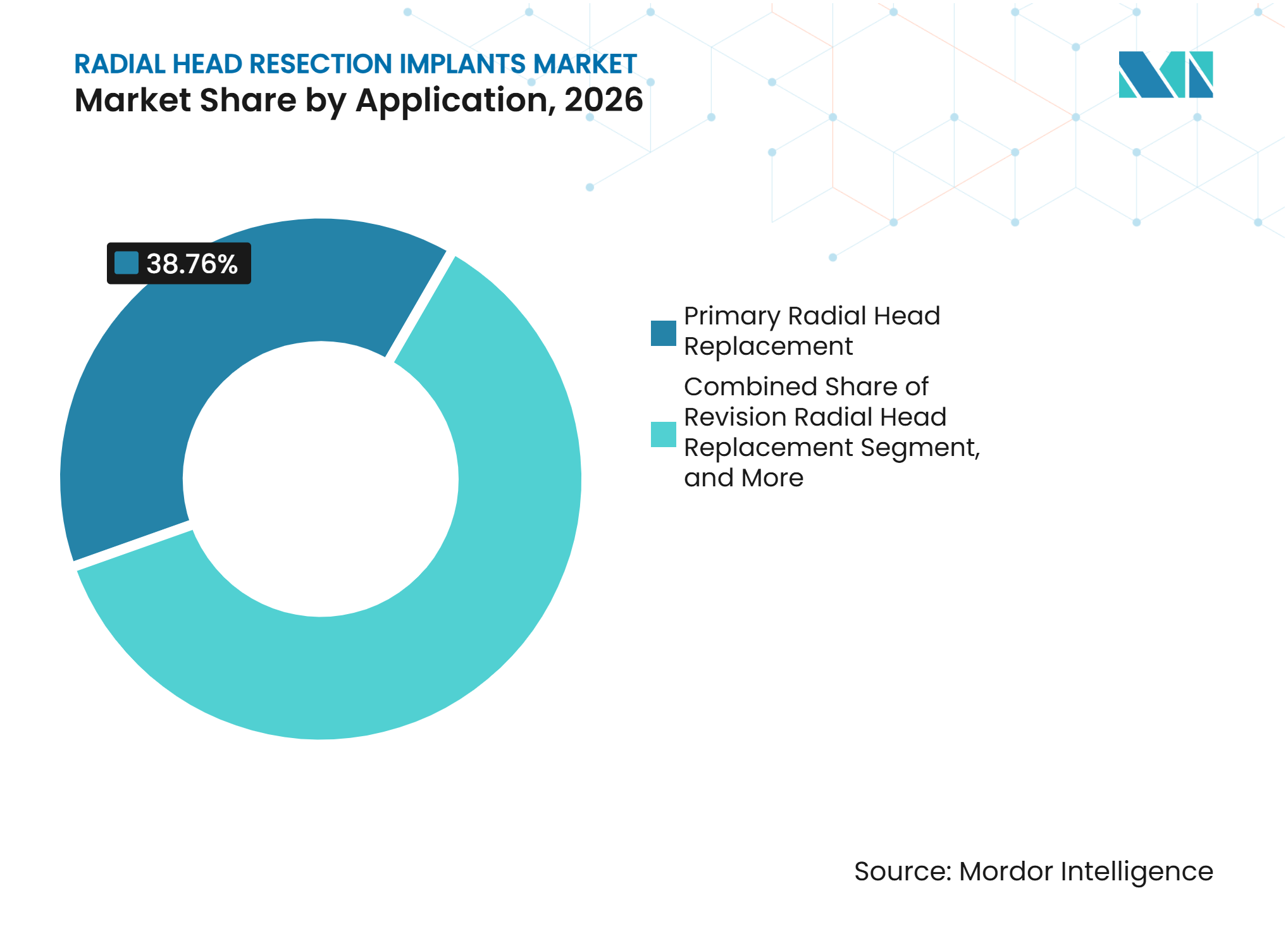
Primary Replacement Largest, Revision Fastest GrowingPrimary radial head replacement held 38.8% of revenue in 2026 and remains the largest application. It is used most often when a non-reconstructable Mason type III or IV fracture requires a stable replacement rather than fixation. The pathway is supported by established surgeon familiarity in trauma and upper-extremity settings, as well as a widely understood need to restore stability when the native head cannot be repaired. A 2025 observational study found that arthroplasty had surpassed surgical fixation among ABOS examination candidates. The clinical shift supports a durable role for primary replacement in the radial head resection implants market.
Revision radial head replacement is forecast to grow at a 9.7% CAGR through 2032. Revision procedures often require longer stems, broader size ranges, and more flexibility when bone stock has been compromised by prior surgery or loosening. A population-based 2026 study supports this focus on long-term outcomes because its reoperation findings differentiated arthroplasty from fixation in complex cases. Pre-existing capitellar lesions and prior failed fixation can make these cases technically demanding and can complicate implant selection. Suppliers that provide revision-specific inventories, specialized instruments, surgeon education, and clear options for compromised bone stock can therefore compete beyond the initial trauma procedure and support the longer follow-up needs that distinguish the radial head resection implants market.

By End User:
Hospitals Lead, Specialty Clinics EmergeHospitals held 62.5% of revenue in 2026, reflecting the acute-trauma profile of many primary radial head arthroplasty procedures. They have operating rooms, imaging, anesthesia, and multidisciplinary support for patients with unstable fracture-dislocations or significant associated injuries. Large hospital purchasing groups also influence implant selection through contracts, stock management, and standardized surgical sets that can reduce variation across teams. This channel remains central for complex cases that require immediate access to multiple implant sizes, trial devices, and revision components. Hospitals retain a leading role because emergency presentations and tertiary referrals continue to concentrate in these settings.
Specialty orthopedic clinics are forecast to grow at a 9.5% CAGR through 2032. These sites can concentrate upper-extremity surgeons, dedicated staff, and implant inventory around a smaller set of procedures and referral networks. A 2025 ASES membership survey found that facility implant reimbursement was the most regionally variable barrier to orthopedic access in the United States. The reported gap was 30 percentage points higher in southern states than in the Northeast. Clinic growth will depend on reimbursement, referral pathways, access to appropriate inventory, and the ability to manage complex cases without weakening patient access, factors that can alter the channel mix for the radial head resection implants market across different healthcare systems.
Geography Analysis
North America
North America held 42.6% of revenue in 2026, giving it the leading position in the radial head resection implants market share. The region combines high procedure volumes, dense orthopedic subspecialty coverage, and a mature payer environment. The United States remains the principal launch setting for new systems because its trauma and upper-extremity surgeons adopt specialized devices through established hospital and outpatient networks. Arthrex received FDA 510(k) clearance in July 2026 for its radial head replacement system, showing continued product development for the United States. Medartis acquired the Avenger Radial Head System in March 2025 and began immediate United States distribution, expanding its elbow trauma offering.
Asia-Pacific
Asia-Pacific is forecast to grow at a 7.5% CAGR through 2032, the highest rate among the reported regions. Growth is linked to expanding hospital capacity, rising traumatic injuries, and broader insurance coverage in China, India, and South Korea. India’s insurance expansion supports a larger potential payer base for surgical care, though the supplied source does not provide a radial-head-specific coverage measure. China’s procurement environment can place pressure on implant prices while increasing access to surgical treatment. The Radial Head Resection Implants Market will require pricing, training, and distribution models that reflect substantial differences across Asia-Pacific healthcare systems.
Europe, Middle East and Africa, and South America
Europe remains an important procedural base, with Germany, the United Kingdom, and France supporting much of the region’s orthopedic activity. Europe’s regulatory influence comes from the Medical Device Regulation 2017/745, which requires conformity assessment and CE marking for eligible devices. Germany’s reimbursement structure can favor established systems when hospitals face bundled payments and limited recovery for high-value implants, as reported by BVASK in 2025. Middle East and Africa volumes remain concentrated in private hospital networks and expanding specialty centers, while South America offers a gradual opportunity as access to complex orthopedic care expands.
Competitive Landscape
Market Concentration
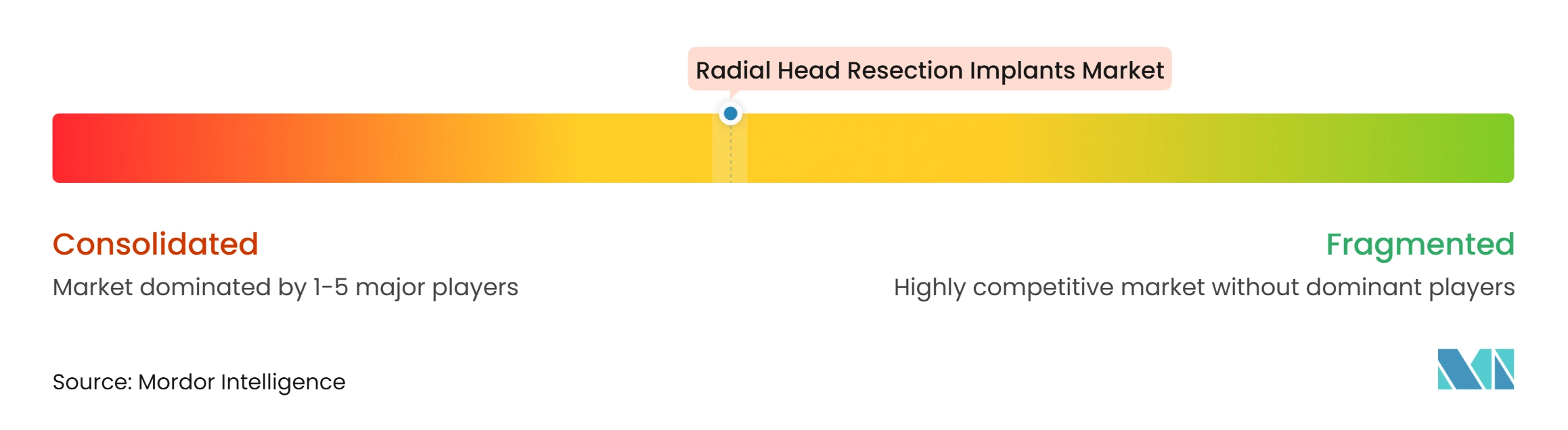
The radial head resection implants market has moderate to high concentration. Stryker, Acumed, Zimmer Biomet, DePuy Synthes, and Smith & Nephew account for the bulk of commercial revenue through broad portfolios and established hospital relationships. Their established systems can offer multiple head and stem choices, surgeon education, and placement within wider trauma contracts. These features create switching costs for hospitals that already use a company’s instruments and operating-room procedures.
Medartis, BioPoly, Adler Ortho, implantcast GmbH, and other focused suppliers compete through material differentiation, instrument design, and regional pricing. Medartis acquired the Avenger Radial Head System from In2Bones Global in March 2025, adding arthroplasty and plate fixation options to its elbow trauma portfolio. Arthrex entered the category with FDA clearance for a modular fixed-axis system in July 2026. This clearance introduced press-fit and free-floating stem choices in a single product platform. Companies can differentiate by assisting surgeons with selection, sizing, and instrumentation rather than competing only on implant materials.
The radial head resection implants market has open opportunities in revision systems, porous stems, and digital planning tools. The 2025 porous-stem study indicates that fixation design remains a viable area for product development. Patient-specific instrumentation research also supports a role for better planning and alignment in elbow reconstruction. Regulatory requirements can slow global entry because manufacturers must satisfy FDA requirements, EU Medical Device Regulation requirements, and country-specific rules in Asia-Pacific. Suppliers with robust clinical evidence and reliable service may have an advantage as hospitals seek to reduce revision exposure.
Radial Head Resection Implants Industry Leaders
-
Johnson & Johnson MedTech
-
Stryker
-
Zimmer Biomet
-
Acumed
-
Smith & Nephew
- *Disclaimer: Major Players sorted in no particular order
Radial Head Resection Implants Market Companies Covered in this Report
- Acumed
- Adler Ortho
- Arthrex
- Aston Medical
- Auxein Medical
- Beznoska
- BioPoly LLC
- ChM sp. z o.o.
- In2Bones Global, Inc.
- implantcast GmbH
- Integra LifeSciences
- Johnson & Johnson MedTech
- Medartis
- Siora Surgicals
- Skeletal Dynamics
- Smiths Group
- Stryker
- XLO Orthopaedic
- Zimmer Biomet
Recent Industry Developments in Radial Head Resection Implants Market
- July 2026: Arthrex, Inc. received FDA 510(k) clearance, K260624, for its Radial Head Replacement System, a modular fixed-axis cobalt-chromium-molybdenum prosthesis with dual stem options.
- January 2026: Smith & Nephew completed the acquisition of Integrity Orthopaedics for USD 225 million upfront, plus up to USD 225 million in performance-based payments. The transaction focused on shoulder rotator cuff repair and reflects broader upper-extremity portfolio investment.
- March 2025: Medartis AG acquired the Avenger Radial Head System from In2Bones Global, Inc., a wholly owned subsidiary of CONMED Corporation, and launched immediate United States commercial distribution.
Global Radial Head Resection Implants Market Report Scope
According to the report’s scope, radial head resection implants are devices used to replace the radial head at the elbow after it has been removed due to injury or disease. They help maintain elbow stability and support movement and load transfer between the forearm and elbow.
The radial head resection implants market is segmented into product architecture, implant polarity, material, implant size, application, end user, and geography. By product architecture, the market is segmented into modular implants and monoblock implants. The modular implants segment is further bifurcated into standard modular implants, anatomical modular implants, and revision modular implants. By implant polarity, the market is segmented into monopolar implants and bipolar implants. By material, the market is segmented into cobalt-chromium alloys, titanium alloys, stainless steel, pyrolytic carbon, and synthetic cartilage and polymer-based materials. By implant size, the market is segmented into Below 20 mm, 20-25 mm, and Above 25 mm. By application, the market is segmented into primary radial head replacement, revision radial head replacement, replacement after radial head resection, and replacement for degenerative or post-traumatic disability. By end user, the market is segmented into hospitals, ambulatory surgical centers, and specialty orthopedic clinics. By geography, the market is segmented into North America, Europe, Asia-Pacific, the Middle East and Africa, and South America. The report also covers the estimated market sizes and trends for 17 countries across major regions globally. The report offers values (USD) for all the above segments.
Segmentation Overview
| Modular Implants | Standard Modular Implants |
| Anatomical Modular Implants | |
| Revision Modular Implants | |
| Monoblock Implants |
| Monopolar Implants |
| Bipolar Implants |
| Cobalt-Chromium Alloys |
| Titanium Alloys |
| Stainless Steel |
| Pyrocarbon |
| Synthetic-Cartilage and Polymer-Based Materials |
| Below 20 mm |
| 20-25 mm |
| Above 25 mm |
| Primary Radial Head Replacement |
| Revision Radial Head Replacement |
| Replacement After Radial Head Resection |
| Replacement for Degenerative or Post-Traumatic Disability |
| Hospitals |
| Ambulatory Surgical Centers |
| Specialty Orthopedic Clinics |
| North America | United States |
| Canada | |
| Mexico | |
| Europe | Germany |
| United Kingdom | |
| France | |
| Italy | |
| Spain | |
| Rest of Europe | |
| Asia-Pacific | China |
| Japan | |
| India | |
| Australia | |
| South Korea | |
| Rest of Asia-Pacific | |
| Middle East and Africa | GCC |
| South Africa | |
| Rest of Middle East and Africa | |
| South America | Brazil |
| Argentina | |
| Rest of South America |
| By Product Architecture | Modular Implants | Standard Modular Implants |
| Anatomical Modular Implants | ||
| Revision Modular Implants | ||
| Monoblock Implants | ||
| By Implant Polarity | Monopolar Implants | |
| Bipolar Implants | ||
| By Material | Cobalt-Chromium Alloys | |
| Titanium Alloys | ||
| Stainless Steel | ||
| Pyrocarbon | ||
| Synthetic-Cartilage and Polymer-Based Materials | ||
| By Implant Size | Below 20 mm | |
| 20-25 mm | ||
| Above 25 mm | ||
| By Application | Primary Radial Head Replacement | |
| Revision Radial Head Replacement | ||
| Replacement After Radial Head Resection | ||
| Replacement for Degenerative or Post-Traumatic Disability | ||
| By End User | Hospitals | |
| Ambulatory Surgical Centers | ||
| Specialty Orthopedic Clinics | ||
| Geography | North America | United States |
| Canada | ||
| Mexico | ||
| Europe | Germany | |
| United Kingdom | ||
| France | ||
| Italy | ||
| Spain | ||
| Rest of Europe | ||
| Asia-Pacific | China | |
| Japan | ||
| India | ||
| Australia | ||
| South Korea | ||
| Rest of Asia-Pacific | ||
| Middle East and Africa | GCC | |
| South Africa | ||
| Rest of Middle East and Africa | ||
| South America | Brazil | |
| Argentina | ||
| Rest of South America | ||
Key Questions Answered in the Report
What is the projected value of radial head resection implants by 2032?
The Radial Head Resection Implants Market is forecast to reach USD 816.3 million by 2032, from USD 602.8 million in 2027, with a 6.2% CAGR. The estimate reflects continued use in complex trauma care, a growing need for revision-capable systems, and demand for designs that allow surgeons to manage anatomy that cannot be reconstructed with fixation alone in severe and unstable elbow injuries.
Which product architecture has the largest share of radial head resection implants?
Modular implants lead with 52.3% of revenue in 2026 because surgeons can select heads and stems separately during surgery. Their configuration range also supports varied anatomy, complex fracture patterns, revision planning, and a practical choice of head and stem combinations during a time-sensitive operating-room procedure.
Why are radial head arthroplasty procedures increasing for complex fractures?
Arthroplasty is increasingly selected when reconstruction cannot restore stability, and a 2026 cohort study linked it with lower 10-year reoperation incidence than fixation JOURNAL OF SHOULDER AND ELBOW SURGERY. This is especially relevant in complex instability injuries where the radial head contributes to forearm support and where surgeons must balance bone reconstruction, ligament management, stability, and expected functional recovery over a long postoperative period for many patients treated in specialized trauma and reconstruction settings.
Which material is expected to grow fastest for radial head implants?
Pyrocarbon is forecast to grow at a 9.1% CAGR through 2032, supported by interest in materials that may better address cartilage contact and load transfer. Porous titanium and synthetic-cartilage concepts also show how suppliers are exploring alternatives to conventional hard-surface designs, including approaches intended to address fixation and contact with native cartilage.
Which region is expected to grow fastest through 2032?
Asia-Pacific is forecast to record the highest regional growth at a 7.5% CAGR, supported by expanding hospital capacity and broader access to orthopedic care. Local procurement, reimbursement, training, and regulatory pathways will determine how quickly demand converts into procedure volume, while supplier service models need to account for wide differences in hospital capability across the region.
What are the leading risks for suppliers and hospitals using radial head implants?
Revision risk, limited long-term comparative evidence, uneven specialist access, and reimbursement constraints can slow adoption of newer systems. Careful sizing, suitable fixation, practical surgeon training, and reliable inventory management remain important risk-control measures, particularly where complex injuries are managed outside high-volume tertiary orthopedic centers.