
Pureed Food Market Size and Share
Market Overview
| Study Period | 2022 - 2032 |
|---|---|
| Market Size (2027) | USD 25.91 Billion |
| Market Size (2032) | USD 30.52 Billion |
| Growth Rate (2027 - 2032) | 3.33 % |
| Fastest Growing Market | Asia-Pacific |
| Largest Market | North America |
| Market Concentration | Low |
Major Players *Disclaimer: Major Players sorted in no particular order Image © Mordor Intelligence. Reuse requires attribution under CC BY 4.0. | |
Pureed Food Market Analysis by Mordor Intelligence
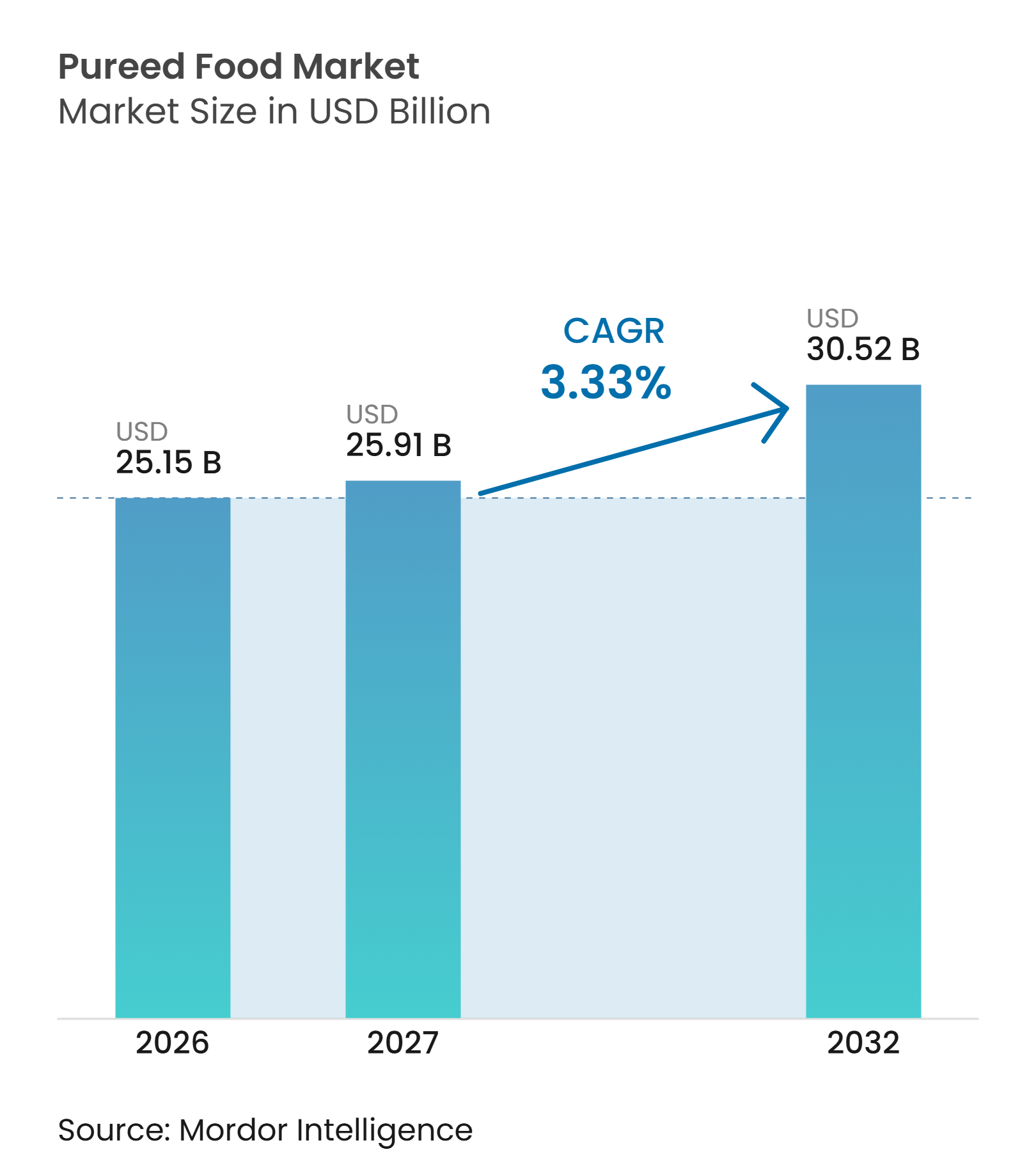
The pureed food market size was valued at USD 25.15 billion in 2026 and is estimated to grow from USD 25.91 billion in 2027 to reach USD 30.52 billion by 2032, at a CAGR of 3.33% during the forecast period (2027-2032). The Pureed Food Market is driven by demand from working-parent households seeking convenient infant nutrition and older adults requiring texture-modified meals. These applications make demand less susceptible to changes in discretionary spending, as infant feeding and clinical nutrition address essential needs. Producers are increasingly emphasizing ingredient transparency, functional nutrition, and portable formats, particularly spouted pouches. However, the category faces a necessary packaging transition, as concerns regarding multilayer pouch materials increase pressure to adopt recyclable structures. Processing by-products are also emerging as viable inputs for fruit and vegetable purées, helping integrated processors manage raw material costs and meet waste-reduction commitments.
Key Report Takeaways
- By product type, fruit puree dominated the market with a share of 42.93% in 2026 and is anticipated to register the fastest CAGR of 4.18% during 2027-2032.
- By packaging, pouches dominated the market with a share of 52.61% in 2026 and are also anticipated to register the fastest CAGR of 4.42% during 2027-2032.
- By form, conventional puree dominated the market with a share of 75.41% in 2026, while organic puree is anticipated to register the fastest CAGR of 4.67% during 2027-2032.
- By application, infant food and baby nutrition dominated the market with a share of 33.56% in 2026, while medical and clinical nutrition is anticipated to register the fastest CAGR of 4.57% during 2027-2032.
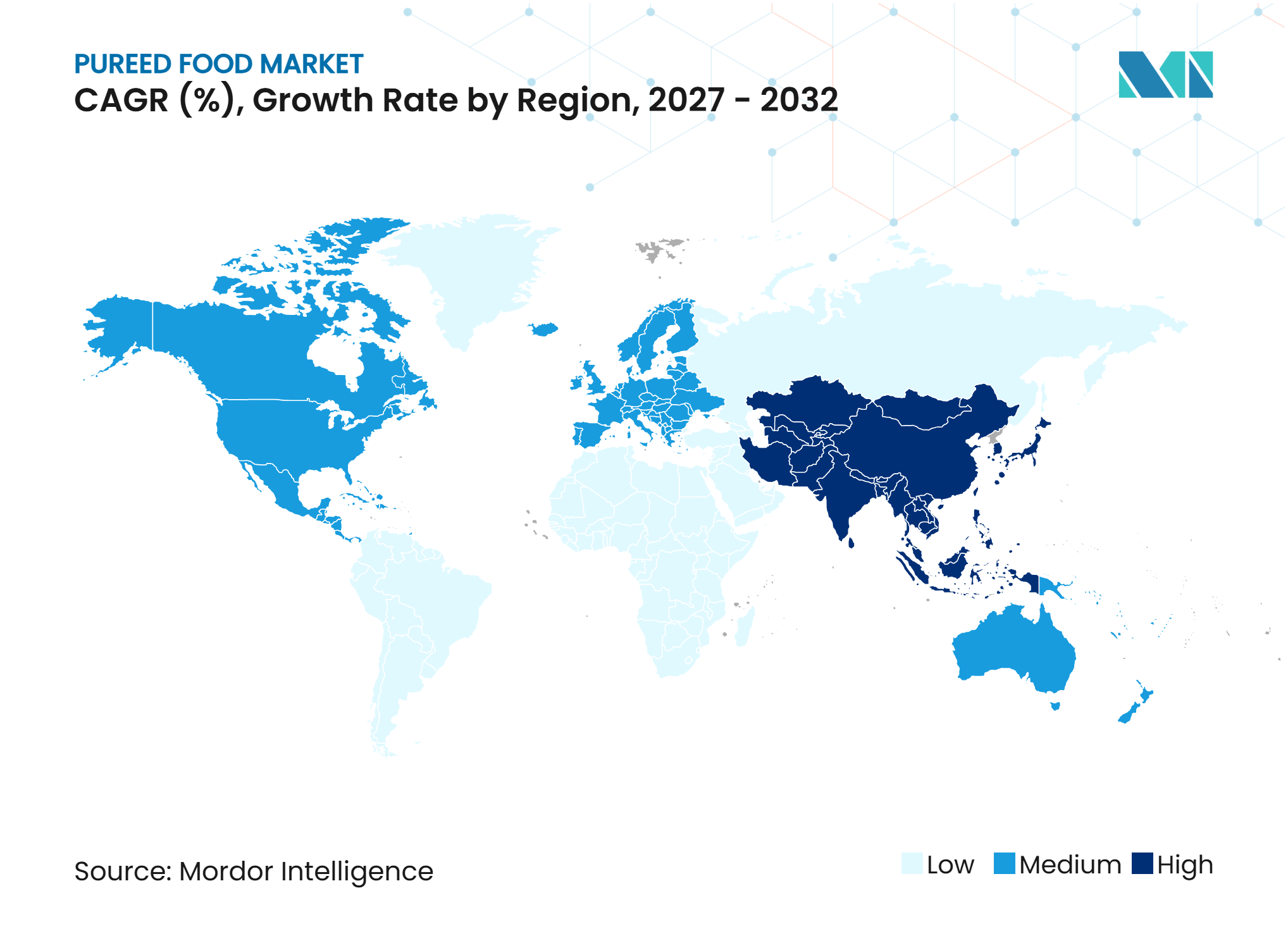
- By geography, North America dominated the pureed food market with a share of 43.82% in 2026, while Asia-Pacific is anticipated to register the fastest CAGR of 4.84% during 2027-2032.
Note: Market numbers in this report are based on Mordor Intelligence's proprietary estimation framework, which combines nine months of actuals with Q4 projections for base year 2026.
Market Trends and Insights
Drivers Impact Analysis of Pureed Food Market*
| Driver | (~) % Impact on CAGR Forecast | Geographic Relevance | Impact Timeline |
|---|---|---|---|
| Rising demand for convenient infant and baby food products | +0.8% | Global, concentrated in North America, Europe, and Asia-Pacific | Medium term (2-4 years) |
| Increasing prevalence of swallowing difficulties among the aging population | +0.7% | Global, strongest in Japan, Germany, Italy, and Australia | Long term (≥ 4 years) |
| Growing adoption of pureed foods in medical and clinical nutrition | +0.5% | Global, with North America and Europe leading and Asia-Pacific gaining | Long term (≥ 4 years) |
| Increasing consumer preference for organic food products | +0.5% | North America and Europe, with demand emerging in Asia-Pacific | Medium term (2-4 years) |
| Product innovation and diversification across fruit and vegetable varieties | +0.4% | Global | Medium term (2-4 years) |
| Focus on food waste reduction and utilization of agricultural produce | +0.2% | Europe and North America | Long term (≥ 4 years) |
| Source: Mordor Intelligence | |||
Rising Demand for Convenient Infant and Baby Food Products
Convenience remains a key purchase consideration in infant nutrition, particularly among dual-income urban households with limited time for home preparation. According to the Organic Trade Association’s March 2026 report, United States organic baby food and formula sales grew by 8.8% in 2025, exceeding growth in the broader organic grocery category[1]. The association also reported that parents purchasing commercial baby food showed a strong preference for organic products, increasing the importance of credible organic offerings in the pureed food market. Spouted pouches address the need for portable, portion-controlled feeding and have become a major retail format for prepared purées. This format supports away-from-home consumption while reducing the preparation burden on caregivers. The combination of convenience, premium ingredients, and ease of handling continues to drive manufacturers’ focus on packaging design and retail availability.
Increasing Prevalence of Swallowing Difficulties Among the Aging Population
Swallowing difficulties are common among older adults and occur more frequently in institutional settings, where they can affect food safety and nutritional intake. The International Dysphagia Diet Standardisation Initiative provides a common framework for texture-modified meals, including Level 4 purées, supporting standardized procurement by hospitals and care providers. Consequently, the Pureed Food Market benefits as care providers seek products with validated textures, consistent nutritional content, and predictable preparation. Frozen formats are particularly relevant for institutional kitchens, as they simplify inventory management and service planning. Additionally, standardized portion sizes and ready-to-serve formulations help healthcare facilities reduce meal preparation time, minimize food wastage, and maintain consistency across patient meal services.
Growing Adoption of Pureed Foods in Medical and Clinical Nutrition
The growing need for specialized nutritional support among patients with dysphagia, neurological disorders, stroke-related complications, and age-related swallowing difficulties is driving the adoption of pureed foods in medical and clinical nutrition. Hospitals, rehabilitation centers, and long-term care facilities increasingly use texture-modified meals to support safer swallowing while ensuring adequate calorie and nutrient intake for patients who cannot comfortably consume regular foods. In January 2025, the United States Food and Drug Administration (FDA) issued final guidance establishing a lead action level of 10 parts per billion (ppb) for several categories of processed baby foods, including fruit and vegetable purees and meat-based mixtures[2]. This guidance highlights the importance of safety controls for nutritionally vulnerable consumer groups. Such regulatory attention, coupled with healthcare providers’ need for standardized textures and nutritionally balanced formulations, is supporting demand for commercially prepared pureed foods across institutional healthcare settings.
Increasing Consumer Preference for Organic Food Products
Growing consumer preference for organic and clean-label food products is driving demand for organic purees in infant nutrition, beverages, and other food applications. Consumers increasingly prefer products made from organically cultivated fruits and vegetables that contain minimal synthetic pesticide residues, artificial additives, and preservatives. This preference is particularly strong among health-conscious parents, who prioritize ingredient quality and transparency when selecting baby food products. Organic purees also enable manufacturers to develop premium product portfolios with recognizable ingredients, natural flavor profiles, and certified organic sourcing. Consequently, manufacturers are expanding their organic fruit and vegetable puree offerings to meet consumer demand for alternatives to conventionally processed food products.
Restraints Impact Analysis of Pureed Food Market*
| Restraint | (~) % Impact on CAGR Forecast | Geographic Relevance | Impact Timeline |
|---|---|---|---|
| High processing and manufacturing costs | -0.3% | Global, most acute in North America and Europe | Long term (≥ 4 years) |
| Stringent food safety regulations and quality requirements | -0.2% | European Union, North America, Japan, and Australia | Long term (≥ 4 years) |
| Fluctuations in raw material availability and agricultural prices | -0.2% | Global, with emerging markets most exposed | Medium term (2-4 years) |
| High packaging and cold-chain distribution expenses | -0.3% | Global, especially for perishable purée formats | Medium term (2-4 years) |
| Source: Mordor Intelligence | |||
High Processing and Manufacturing Costs
Pureed food manufacturing requires specialized equipment for washing, peeling, pulping, blending, homogenization, and thermal treatment, resulting in significant capital investment. According to an article published by the Food and Drink Federation in February 2026, average production costs in the United Kingdom increased by 4.4%, rising to 5.3% for smaller businesses[3]. Homogenization, pasteurization, and aseptic filling also require energy-intensive processes and specialized equipment. High-speed pouch production lines require substantial capital investment, which smaller processors may find more difficult to absorb. Fluctuating agricultural input costs add further pressure, particularly for processors without integrated supply arrangements. These cost conditions may encourage consolidation and favor suppliers with higher production volumes and established operating systems.
High Packaging and Cold-Chain Distribution Expenses
Perishable puree requires refrigerated transportation and retail display space, increasing the delivered cost of chilled and fresh-pressed products. These requirements limit distribution in price-sensitive regions and areas with underdeveloped cold-chain infrastructure. Packaging costs are also increasing as extended producer responsibility frameworks raise the financial burden associated with multilayer flexible materials in Europe. Although mono-material structures improve recyclability, their adoption may require retooling and extensive testing to maintain adequate oxygen and moisture barrier performance. Food safety and quality regulations in the European Union, North America, Japan, and Australia require validated processes and comprehensive documentation. For premium, organic, and cold-pressed brands, these combined cost and compliance requirements can reduce margins despite higher retail prices.
*Our forecasts treat driver/restraint impacts as directional, not additive. The impact forecasts reflect baseline growth, mix effects, and variable interactions.
Pureed Food Market Segment Analysis
By Product Type:
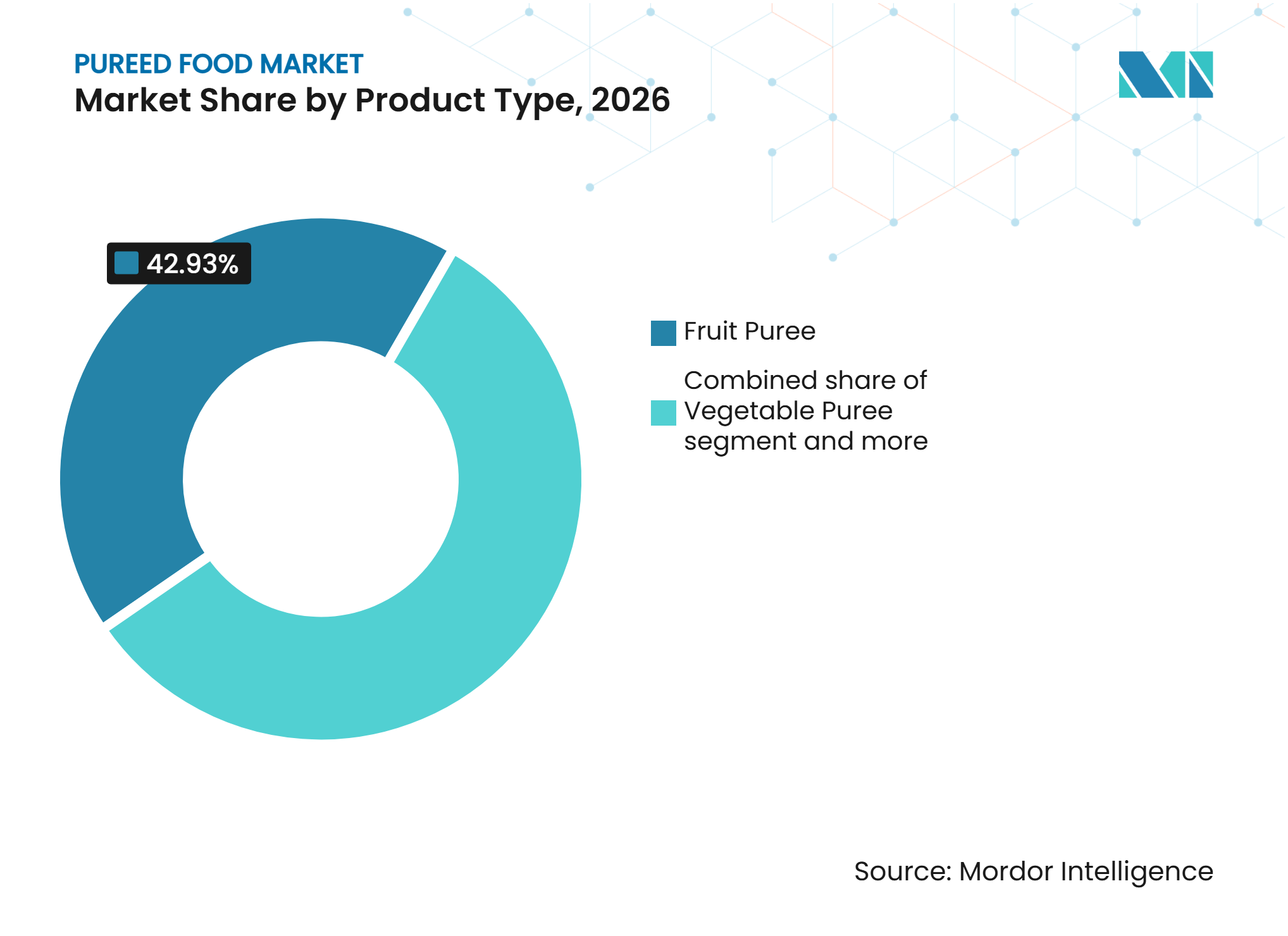
Fruit Puree Anchors Demand Across Multiple UsesFruit puree accounted for 42.93% of the pureed food market in 2026 and is projected to register a CAGR of 4.18% through 2032. It serves infant nutrition, beverages, bakery and confectionery, and foodservice applications, reducing reliance on any single buyer group. Its broad applicability supports demand for varied flavors, Brix specifications, and product formats. Fruit-based products can meet both retail requirements and ingredient demand from beverage and bakery manufacturers. High-pressure processing can further support this positioning by extending refrigerated shelf life without conventional thermal treatment.
Vegetable puree is the second-largest product type and is gaining traction in infant food and foodservice applications. Operators use vegetable bases in sauces and prepared meals to reduce caloric density while maintaining texture. Meat and poultry puree serves a narrower but important role in medical nutrition, particularly in protein-focused Level 4 diets. Grain and legume purees are relevant for plant-based and allergen-aware infant feeding. These formats support staged complementary feeding approaches that pediatric nutrition guidance increasingly recognizes. However, product development must balance nutritional value, taste, texture, and processing stability.



By Packaging:
Pouches Lead While Material Choices ChangePouches accounted for 52.61% of packaging value in 2026 and are forecast to grow at a CAGR of 4.42% through 2032. Their portability, portion-control capabilities, and compatibility with aseptic, retort, and high-pressure processing support this growth. Convenience has positioned pouches as a preferred format for infant nutrition and on-the-go consumption, increasing interest in mono-material polyethylene and polypropylene alternatives. Packaging suppliers are increasingly evaluated based on safety, recyclability, barrier performance, and cost. Lightweight construction and reduced transportation requirements further strengthen the appeal of flexible pouches among manufacturers seeking packaging efficiency.
Glass jars remain relevant for premium organic infant products and specialty foodservice applications. Their visual appeal and consumer perception of lower migration risk support their premium positioning. Their rigid structure and strong barrier properties also help protect product quality, flavor, and integrity during storage. Plastic containers continue to serve bulk foodservice and ingredient supply applications, where cost efficiency and ease of handling are critical. Suppliers that develop recyclable formats without compromising shelf life can strengthen their position in the Pureed Food Market.
By Form:
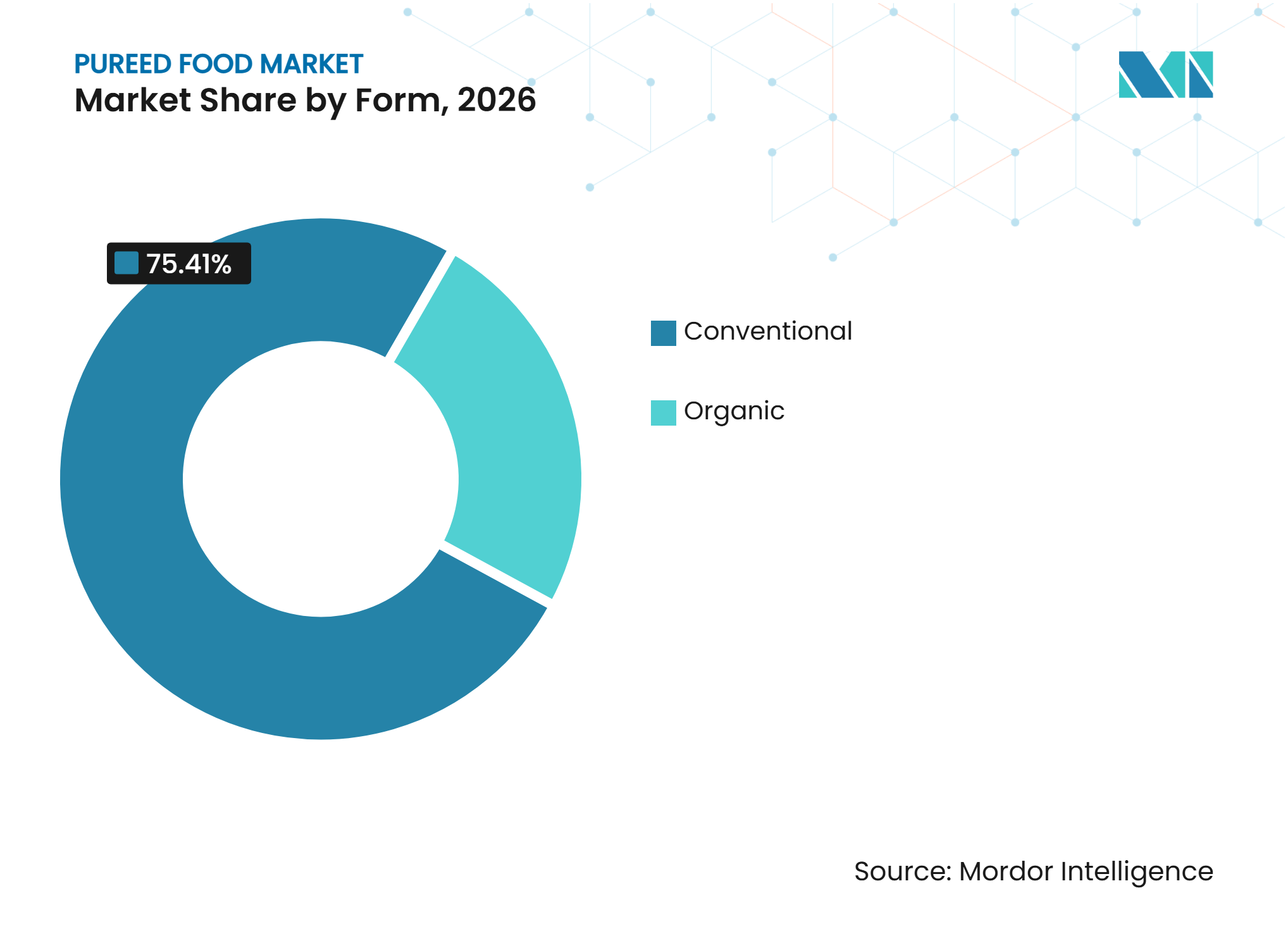
Organic Gains While Conventional Remains EssentialConventional products accounted for 75.41% of the market in 2026, reflecting their importance in affordable infant feeding, foodservice, and ingredient applications. This form maintains broad availability across developed and emerging economies. However, conventional product lines may lose shelf space and pricing power as retailers expand their private-label organic assortments. A narrowing input-cost gap could further weaken the historical price advantage of conventional products. Suppliers operating across both forms can serve budget-conscious customers while responding to premium demand. This divide makes portfolio architecture a key consideration across the Pureed Food Market.
Organic is the fastest-growing form, with a forecast CAGR of 4.67% during 2027-2032. Demand reflects growing consumer preferences for certified ingredients, clean labels, and transparent sourcing. This trend is particularly prominent in infant nutrition, where parents increasingly prioritize ingredient traceability and the absence of synthetic pesticides when selecting products. United States organic baby food manufacturers benefit from the United States Department of Agriculture Organic label, while comparable regional certifications serve as key purchase signals in infant nutrition. For many younger parents, organic products are increasingly an expected option rather than a niche choice.

By Application:
Infant Nutrition Leads While Clinical Use ExpandsInfant Food and Baby Nutrition accounted for 33.56% of the market in 2026, supported by prepared feeding formats and ongoing premiumization. Parents prioritize portion control, simple ingredients, and trusted certifications when selecting products. Pouches remain popular because they are convenient for travel and quick feeding occasions. Fruit and vegetable blends also offer a familiar way to introduce new flavors during complementary feeding. Retailers use organic and clean-label claims to differentiate infant food ranges. These factors position infant nutrition at the center of category volume and brand investment.
Medical and Clinical Nutrition is projected to grow at a CAGR of 4.57% through 2032. This application is evolving beyond generic hospital catering toward meals that enhance patient dignity and visual appeal. Beverage manufacturers use fruit and vegetable purées as natural sweeteners, colorants, and flavor bases. Bakery and confectionery producers use concentrated purées for clean-label reformulation, while foodservice and catering customers require consistent viscosity and Brix values. Pet food and nutraceutical applications offer further potential for functional fruit and vegetable ingredients.
Geography Analysis
North America
North America accounted for 43.82% of the pureed food market in 2026. Strong spending on infant food, well-established organic retail channels, and institutional healthcare procurement support regional growth. This demand encourages national brands and private-label manufacturers to invest in certified organic products and convenient pouch formats. Food safety regulations and organic certification requirements influence supplier selection in the United States and Canada. The region also has a well-developed clinical nutrition system that can procure standardized texture-modified foods at scale. Packaging safety remains a strategic concern, as parents and retailers increasingly scrutinize material composition.
Asia-Pacific
Asia-Pacific is projected to record the fastest regional growth, with a CAGR of 4.84% during 2027-2032. Urbanization, rising disposable incomes, an increasing number of dual-income households, and an aging population are supporting demand across infant and clinical applications. These factors position texture-modified foods as a significant opportunity in the region. Regulatory approvals for new ingredients can further support product differentiation in infant nutrition. However, national food standards, clinical texture frameworks, and retailer requirements remain critical compliance considerations. Producers must develop formulations that align with local preferences while meeting quality expectations. The Asia-Pacific pureed food market can benefit from products designed for both family care and formal care settings.
Europe, South America, and the Middle East and Africa
Europe is a mature region for organic infant food and care-facility foodservice, with Germany, France, the United Kingdom, Italy, and the Netherlands playing significant roles. Germany and Italy have substantial demand for medically indicated texture-modified products due to their aging population profiles. The Netherlands and France also support European processing and ingredient exports. South America serves as a developing supply base for tropical fruit purée concentrates, particularly in Brazil, Peru, and Argentina. In the Middle East and Africa, demand is concentrated in Gulf Cooperation Council retail channels, South Africa’s organized food sector, and urban centers in Saudi Arabia.
Competitive Landscape
Market Concentration
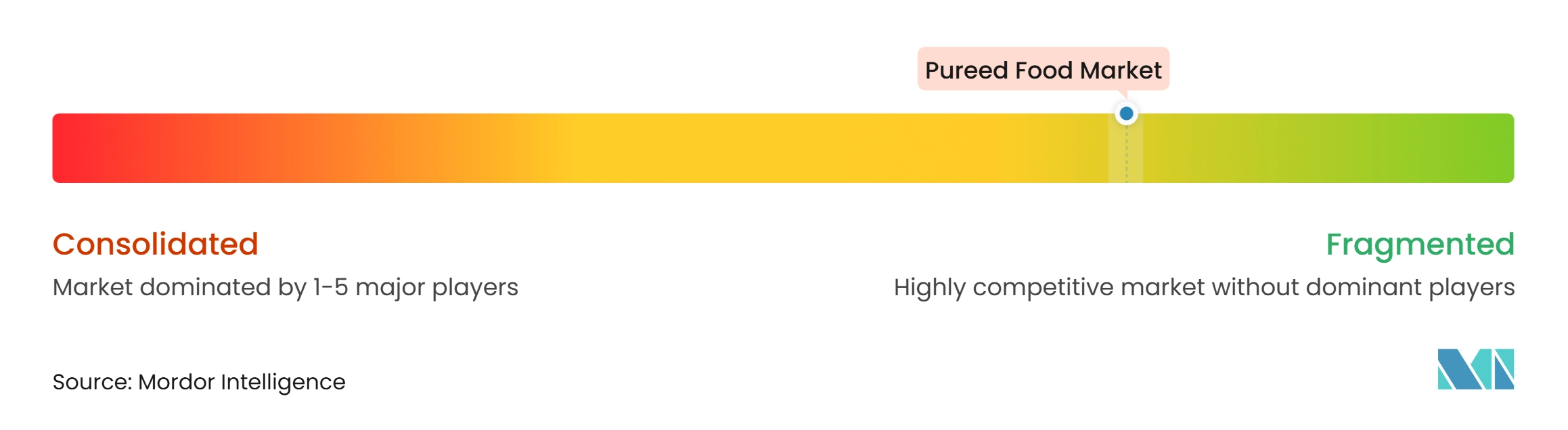
The Pureed Food Market is fragmented, with distinct competitive groups that include global infant nutrition brands, ingredient suppliers, and medical nutrition specialists. Nestlé S.A., Danone S.A., and The Kraft Heinz Company maintain strong positions in mainstream infant nutrition through established brands, extensive distribution networks, and regulatory compliance capabilities. DÖHLER GmbH, SVZ International B.V., AGRANA Beteiligungs-AG, Kerry Group plc, and Ingredion Incorporated compete through ingredient quality, traceability, formulation support, and processing expertise. Their role is particularly important across beverage, bakery, and foodservice supply chains. Market participants must address varying requirements across retail, hospital, and industrial customer segments.
Clinical nutrition creates a distinct competitive space for specialists such as apetito and The Pure Food Co. These companies focus on texture-modified meals and patient-specific nutritional needs rather than mass-market infant products. Institutional foodservice markets in Indonesia, India, and Brazil also present opportunities for suppliers that can address growing elder-care requirements. Premium single-origin fruit purées with traceable supply chains can cater to upscale foodservice customers. These opportunities support focused competition rather than a single, uniform category strategy.
Packaging is increasingly becoming a competitive capability rather than merely a procurement consideration. New brands can still enter the category, particularly in refrigerated clean-label infant food and medical nutrition, as consumer trust can shift rapidly following concerns regarding ingredient or packaging safety. Incumbents must demonstrate credible product safety practices, transparent sourcing, and fit-for-purpose packaging to maintain their market positions. The Pureed Food Market remains accessible to specialized entrants and supports differentiation through product formats.
Pureed Food Industry Leaders
-
Nestlé S.A.
-
The Kraft Heinz Company
-
Danone S.A.
-
The Hain Celestial Group, Inc.
-
Ingredion Incorporated
- *Disclaimer: Major Players sorted in no particular order
Pureed Food Market Companies Covered in this Report
- Nestlé S.A.
- Danone S.A.
- The Kraft Heinz Company
- Hero Group
- The Hain Celestial Group, Inc.
- HiPP GmbH & Co. Vertrieb KG
- Bonduelle SA
- AGRANA Beteiligungs-AG
- DÖHLER GmbH
- SVZ International B.V.
- Ingredion Incorporated
- Kerry Group plc
- Ardo
- Oregon Fruit Products, LLC
- Les vergers Boiron
- The Perfect Purée of Napa Valley
- Tree Top, Inc.
- Hormel Foods Corporation
- apetito
- The Pure Food Co
Recent Industry Developments in Pureed Food Market
- June 2026: Beech-Nut Nutrition Company introduced eight new baby and toddler food products, including three organic Stage 2 fruit purees, two puree jar variety packs, and a Beef & Veggies pouch.
- February 2026: Piko Provisions launched puree line for toddlers, featuring three flavors: Lū'au Stew, Palaʻai Pie, and Pitaya Bowl. The products contain locally sourced ingredients, including kabocha squash, banana, and taro, and offer higher protein and healthy fat content.
- January 2025: The Perfect Purée of Napa Valley introduced Camu Camu and Soursop purées for the specialty foodservice and beverage industries.
Global Pureed Food Market Report Scope
Pureed food refers to food products processed into a smooth, semi-liquid consistency by blending or grinding ingredients such as fruits, vegetables, meat, and poultry.
The pureed food market is segmented by product type, packaging, form, and application. By product type, the market is segmented into fruit puree, vegetable puree, meat and poultry puree, and other product types. By packaging, the market is segmented into glass jars, plastic containers, pouches, and other packaging types. By form, the market is segmented into conventional and organic. By application, the market is segmented into infant food and baby nutrition, medical and clinical nutrition, beverages, bakery and confectionery, foodservice and catering, and other applications. Based on geography, the market is classified into North America, Europe, Asia-Pacific, South America, and the Middle East and Africa. The market forecasts are provided in terms of value (USD).
Segmentation Overview
| Fruit Puree |
| Vegetable Puree |
| Meat and Poultry Puree |
| Other Product Types |
| Glass Jars |
| Plastic Containers |
| Pouches |
| Other Packaging Types |
| Conventional |
| Organic |
| Infant Food and Baby Nutrition |
| Medical and Clinical Nutrition |
| Beverages |
| Bakery and Confectionery |
| Foodservice and Catering |
| Other Applications |
| North America | United States |
| Canada | |
| Mexico | |
| Rest of North America | |
| Europe | Germany |
| United Kingdom | |
| Italy | |
| France | |
| Spain | |
| Netherlands | |
| Rest of Europe | |
| Asia-Pacific | China |
| India | |
| Japan | |
| Australia | |
| Indonesia | |
| Rest of Asia-Pacific | |
| South America | Brazil |
| Argentina | |
| Peru | |
| Rest of South America | |
| Middle East and Africa | South Africa |
| Saudi Arabia | |
| Rest of Middle East and Africa |
| By Product Type | Fruit Puree | |
| Vegetable Puree | ||
| Meat and Poultry Puree | ||
| Other Product Types | ||
| By Packaging | Glass Jars | |
| Plastic Containers | ||
| Pouches | ||
| Other Packaging Types | ||
| By Form | Conventional | |
| Organic | ||
| By Application | Infant Food and Baby Nutrition | |
| Medical and Clinical Nutrition | ||
| Beverages | ||
| Bakery and Confectionery | ||
| Foodservice and Catering | ||
| Other Applications | ||
| By Geography | North America | United States |
| Canada | ||
| Mexico | ||
| Rest of North America | ||
| Europe | Germany | |
| United Kingdom | ||
| Italy | ||
| France | ||
| Spain | ||
| Netherlands | ||
| Rest of Europe | ||
| Asia-Pacific | China | |
| India | ||
| Japan | ||
| Australia | ||
| Indonesia | ||
| Rest of Asia-Pacific | ||
| South America | Brazil | |
| Argentina | ||
| Peru | ||
| Rest of South America | ||
| Middle East and Africa | South Africa | |
| Saudi Arabia | ||
| Rest of Middle East and Africa | ||
Key Questions Answered in the Report
What is the current size and future growth outlook of the pureed food market?
The pureed food market was valued at USD 25.15 billion in 2026 and is estimated to reach USD 25.91 billion in 2027. The market is projected to grow to USD 30.52 billion by 2032, registering a CAGR of 3.33% during 2027-2032.
Which product type held the largest share of the pureed food market in 2026?
Fruit puree was the largest product type segment in 2026, accounting for 42.93% of the pureed food market.
Which packaging segment dominated the pureed food market in 2026?
Pouches dominated the packaging segment in 2026, accounting for 52.61% of the pureed food market.
Which form held the largest share of the pureed food market in 2026?
Conventional pureed food dominated the form segment in 2026, accounting for 75.41% of the market.
Which application dominated the pureed food market in 2026?
Infant food and baby nutrition dominated the application segment in 2026, accounting for 33.56% of the market.