
Pressure Vessel Composites Market Size and Share
Market Overview
| Study Period | 2022 - 2032 |
|---|---|
| Market Size (2027) | USD 2.65 Billion |
| Market Size (2032) | USD 4.16 Billion |
| Growth Rate (2027 - 2032) | 9.45 % |
| Fastest Growing Market | Asia-Pacific |
| Largest Market | Asia-Pacific |
| Market Concentration | Medium |
Major Players *Disclaimer: Major Players sorted in no particular order Image © Mordor Intelligence. Reuse requires attribution under CC BY 4.0. | |
Pressure Vessel Composites Market Analysis by Mordor Intelligence
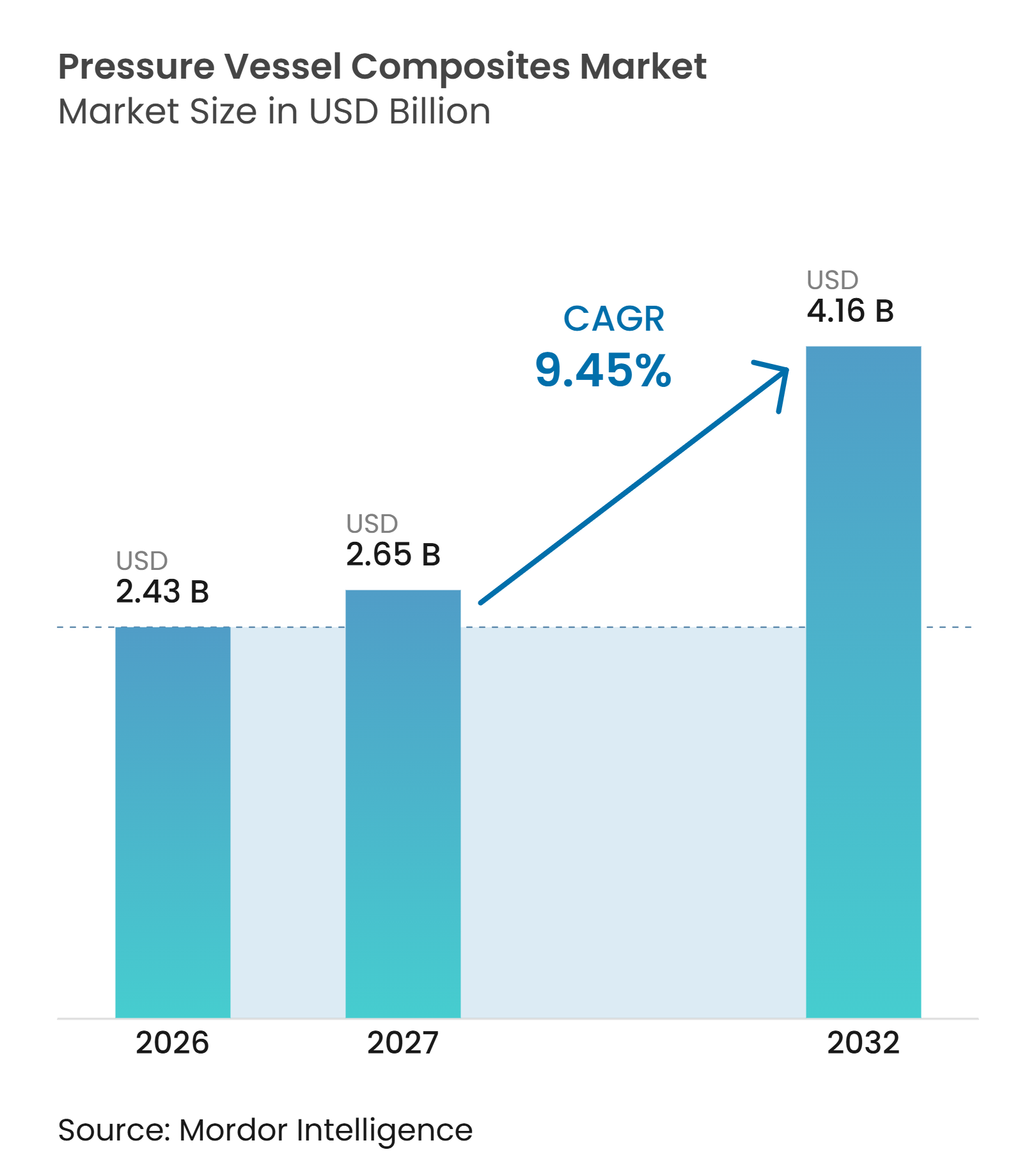
The Pressure Vessel Composites Market size was valued at USD 2.43 billion in 2026 and is estimated to grow from USD 2.65 billion in 2027 to reach USD 4.16 billion by 2032, at a CAGR of 9.45% during the forecast period (2027-2032). Demand is shifting from steel vessels toward carbon fiber-reinforced polymer systems as hydrogen storage, compressed natural gas fleets, and lightweight aerospace systems require lower-weight equipment. Hydrogen infrastructure is creating demand for both fixed storage and mobile multiple-element gas container systems, which increase the number of cylinders needed around each refueling location. Suppliers are responding by expanding certified product lines, increasing automated winding capacity, and forming partnerships with hydrogen distribution companies. Carbon fiber availability, vessel qualification costs, and differing certification systems continue to shape the cost and timing of new product launches. The pressure vessel composites market also benefits from replacement demand in compressed natural gas fleets while hydrogen applications move from pilot projects toward commercial deployment.
Key Report Takeaways
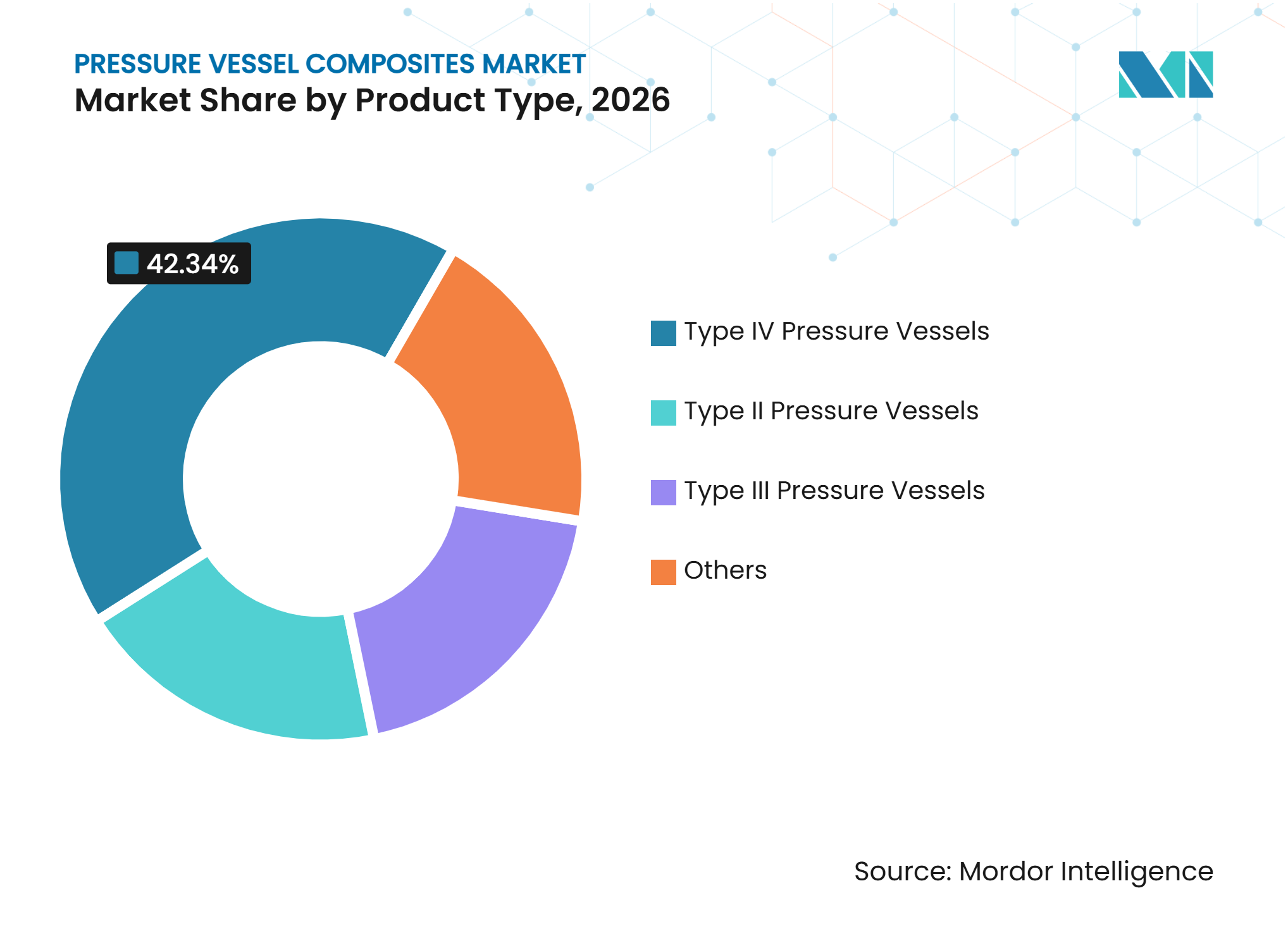
- By product type, Type IV pressure vessels held 42.34% of the pressure vessel composites market share in 2026 and are projected to advance at a 10.88% CAGR through 2032.
- By application, hydrogen storage held 34.67% of the pressure vessel composites market share in 2026 and is projected to advance at an 11.45% CAGR through 2032.
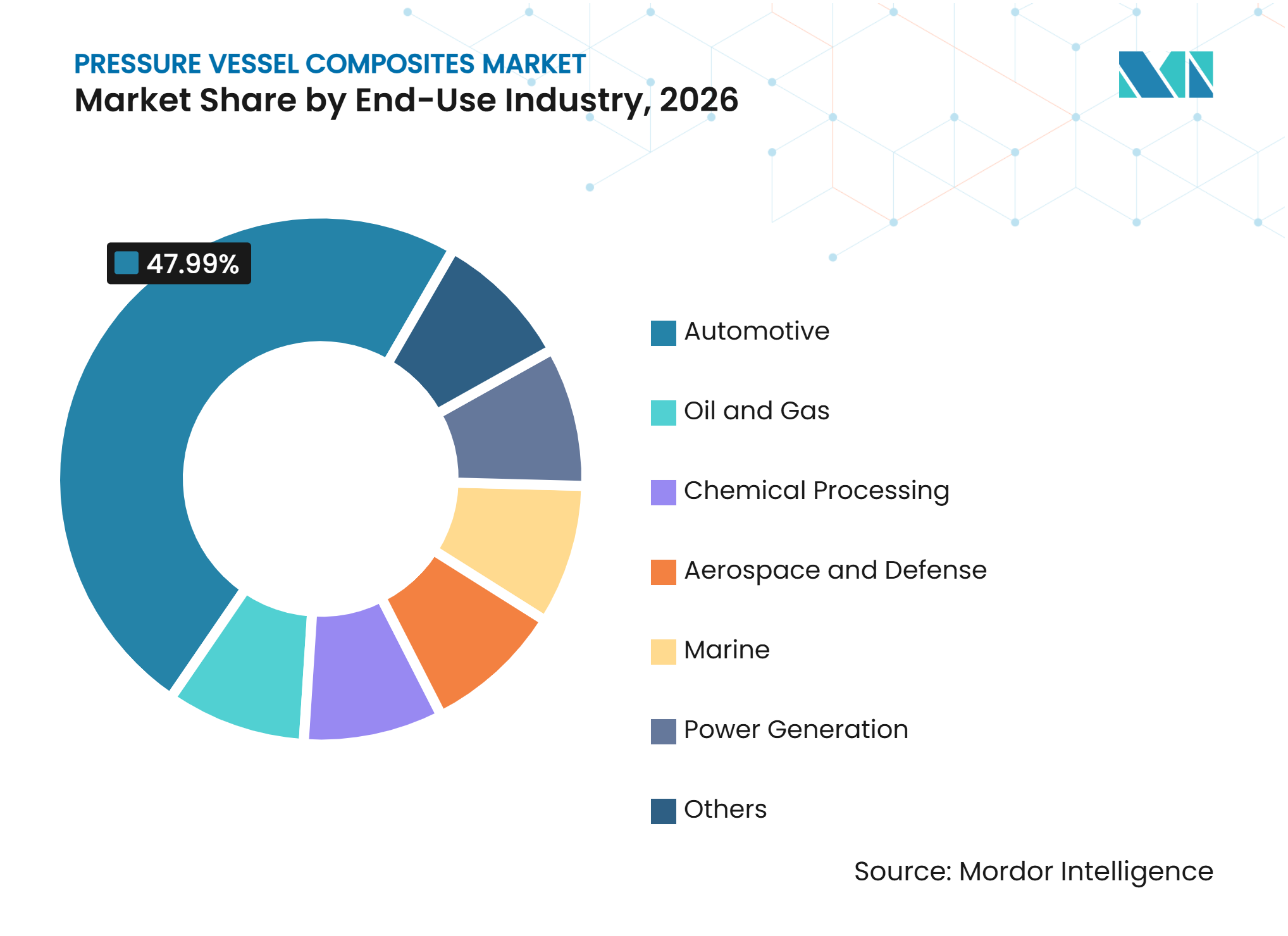
- By end-use industry, automotive held 47.99% of the pressure vessel composites market share in 2026, while power generation is projected to advance at an 11.78% CAGR through 2032.
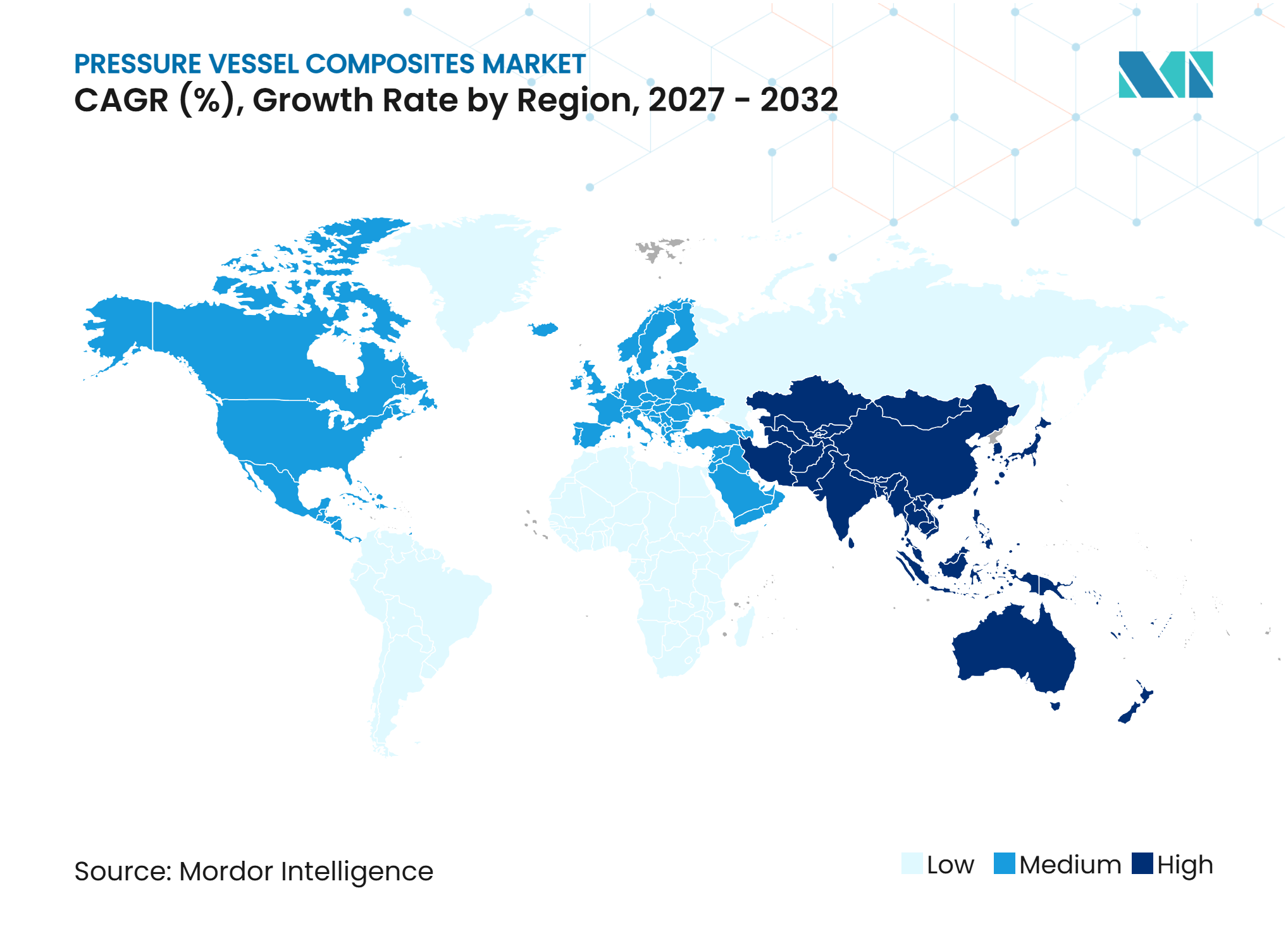
- By geography, Asia-Pacific held 37.51% of the pressure vessel composites market share in 2026 and is projected to advance at an 11.33% CAGR through 2032.
Note: Market numbers in this report are based on Mordor Intelligence's proprietary estimation framework, which combines nine months of actuals with Q4 projections for base year 2026.
Market Trends and Insights
Drivers Impact Analysis of Pressure Vessel Composites Market*
| Driver | (~) % Impact on CAGR Forecast | Geographic Relevance | Impact Timeline |
|---|---|---|---|
| Hydrogen Mobility and Refueling Infrastructure Expansion | +2.5% | Global, led by Asia-Pacific, EU, and North America | Medium term (2-4 years) |
| Lightweighting Requirements for Heavy-Duty Vehicles and Aerospace Platforms | +1.9% | North America, EU, Japan, South Korea | Long term (≥ 4 years) |
| Carbon-Fiber-Enabled Energy-Density Improvements | +1.5% | Global, with early gains in EU, Japan, and South Korea | Long term (≥ 4 years) |
| Expansion of CNG and Renewable Natural Gas Fleets | +1.1% | Asia-Pacific (China, India, ASEAN Countries), North America | Medium term (2-4 years) |
| Stringent High-Pressure Storage Safety Requirements | +0.8% | Global; compliance factors strongest in EU, US, and China | Short term (≤ 2 years) |
| Source: Mordor Intelligence | |||
Hydrogen Mobility and Refueling Infrastructure Expansion
Hydrogen refueling station construction creates demand for 350 bar and 700 bar composite cylinders in fixed storage and mobile distribution systems. Regulation (EU) 2023/1804 requires hydrogen refueling stations at 200 km intervals along specified Trans-European Transport Network core corridors from 2030, which provides a defined infrastructure signal for suppliers in Europe. The U.S. Department of Energy supported hydrogen infrastructure projects in 2025, including a heavy-duty truck refueling station at the Port of Texas. Each refueling site also requires cylinder packages for transporting hydrogen from production locations, so equipment demand is not limited to the station itself. FORVIA and H2 Energy expanded their arrangement in December 2025 to manufacture multiple element gas container units using European Agreement Concerning the International Carriage of Dangerous Goods by Road (ADR)-certified and Transportable Pressure Equipment Directive-certified Type III tanks. China’s hydrogen development plans and Chongqing’s 2025-2035 station plan support a larger regional equipment base[1].
Lightweighting Requirements for Heavy-Duty Vehicles and Aerospace Platforms
Composite cylinders can reduce the mass of a cylinder set by 30%-40% compared with steel alternatives, which can improve payload capacity or help fleets meet axle requirements. This benefit supports their higher unit cost in heavy-duty applications where each vehicle carries several tanks. The U.S. Pipeline and Hazardous Materials Safety Administration issued a special permit in July 2025 for non-Department of Transportation composite overwrapped pressure vessels used in space applications, based on ISO 11119-2 requirements with stated variations[2]. Toyoda Gosei Co., Ltd. supplied large hydrogen tanks for Hino Motors’ Hino Profia Z Fuel Cell Vehicle (FCV) truck in 2025, with 6 tanks per truck and a capacity of 200-230 L at 700 bar. Type IV systems weigh 30% less than Type III alternatives, while polymer liners avoid the hydrogen embrittlement issue associated with metallic liners. These operating benefits give the pressure vessel composites market a route into heavy trucks, aerospace systems, and other applications where weight is an operating constraint.
Carbon-Fiber-Enabled Energy-Density Improvements
Carbon fiber performance determines how much hydrogen a vessel can contain at a given weight and pressure. High-pressure wet filament winding at 700 bar requires fiber tensile strengths above 5,500 MPa, while T1100-class fibers reach 6,600 MPa and support thinner vessel walls. These material advances can improve storage efficiency above 7 wt% and support Department of Energy gravimetric targets for onboard hydrogen storage. Beijing Tianhai Industrial Co., Ltd. achieved 10 μm liner machining precision on automated 70 MPa storage cylinders, showing that manufacturing precision is becoming a competitive factor alongside fiber selection. Quantum Fuel Systems and OneH2 announced a 930 bar Type IV cylinder in April 2025 for tube trailers, with each cylinder designed to store up to 27 kg of hydroge. The pressure vessel composites market is therefore developing around 700-bar onboard storage while distribution systems pursue higher-pressure designs to increase transported volumes.
Expansion of CNG and Renewable Natural Gas Fleets
Compressed natural gas and renewable natural gas fleets provide steady demand where hydrogen refueling infrastructure remains limited. Type II and Type III cylinders operating at 200-250 bar can support scale in composite manufacturing before 700-bar hydrogen systems become widely deployed. Renewable natural gas can use existing compressed natural gas cylinder systems, allowing operators to shift fuel sources without replacing vessels or refueling equipment. This compatibility lowers adoption barriers and extends the useful life of fleet assets. The United Nations Economic Commission for Europe Regulation No. 110 establishes requirements for compressed natural gas vehicle equipment and provides a common compliance basis for composite cylinder designs. Hexagon Composites ASA maintains gas distribution capacity for compressed natural gas, renewable natural gas, and hydrogen through its Mobile Pipeline business, which can respond when new distribution opportunities emerge.
Restraints Impact Analysis of Pressure Vessel Composites Market*
| Restraint | (~) % Impact on CAGR Forecast | Geographic Relevance | Impact Timeline |
|---|---|---|---|
| High Carbon Fiber and Qualification Costs | -1.4% | Global; most acute in North America and EU for new entrants | Long term (≥ 4 years) |
| Long Certification and Qualification Cycles | -0.8% | Global; most acute for new designs targeting EU and US markets | Medium term (2-4 years) |
| Limited Hydrogen Refueling and Fleet Utilization | -0.5% | Emerging markets in MEA and South America; spillover in ASEAN Countries | Short term (≤ 2 years) |
| Source: Mordor Intelligence | |||
High Carbon Fiber and Qualification Costs
Carbon fiber represents 60%-70% of the manufactured cost of a Type IV pressure vessel. The aerospace and hydrogen-grade precursor supply chain is concentrated among Japanese, German, and U.S. producers, which creates a cost floor for cylinder manufacturers. This cost structure can limit adoption in price-sensitive compressed natural gas commercial vehicle applications, especially in emerging economies. FABER INDUSTRIE SPA invested largely in forged-parts capacity and product development, as part of a wider response to supply and manufacturing costs. Full homologation against United Nations Economic Commission for Europe Regulation No. 134 or ISO 11119-3 can require burst, fatigue, fire, and environmental testing before commercial sales begin. The European Union-funded NACHIP project includes work by FABER INDUSTRIE SPA on cost-efficient hydrogen transport cylinders through optimized winding patterns and liner production methods.
Long Certification and Qualification Cycles
Composite pressure vessel certification can take 18-36 months from design to commercial approval because testing programs are sequential. Requirements include destructive and non-destructive testing under ISO 11119, ISO 19881 for land vehicle fuel containers, and United Nations Economic Commission for Europe Regulation No. 134. China’s GB/T 44457-2024 added a domestic compliance requirement for imported cylinders in 2025, which can lengthen market entry for designs certified elsewhere. The long process can prevent end users from quickly replacing Type II systems with Type IV systems when material costs change. The Pipeline and Hazardous Materials Safety Administration requested feedback in 2025 on evaluating pressure relief devices for composite overwrapped pressure vessels, indicating that testing expectations may continue to develop. Companies with testing capability and established homologation portfolios have an advantage because smaller entrants face the same approval process with fewer resources.
*Our forecasts treat driver/restraint impacts as directional, not additive. The impact forecasts reflect baseline growth, mix effects, and variable interactions.
Pressure Vessel Composites Market Segment Analysis
By Product Type:
Type IV Pressure Vessels Lead Both Scale and GrowthType IV pressure vessels held 42.34% of the pressure vessel composites market share in 2026 and are projected to advance at a 10.88% CAGR through 2032. Their polymer liners, low weight, and suitability for 700-bar service support their use in fuel cell electric vehicles and hydrogen distribution equipment. NPROXX introduced the AH620-70 and AH710-70 in January 2025 as large-diameter Type IV cylinders certified under United Nations Economic Commission for Europe Regulation No. 134 for heavy-duty vehicles. The certification provided a route for equipment designed specifically for trucks and buses rather than passenger cars. Automation investments by automotive suppliers also support consistent carbon fiber winding at higher production volumes.
Type III pressure vessels remain relevant for hydrogen transport and heavy-duty compressed natural gas applications because metal liners can help with heat dissipation during fast filling. FORVIA and H2 Energy completed a December 2025 collaboration using certified 38-MPa Type III tanks for hydrogen trailer logistics, with an estimated 33% cost reduction against stationary trailer solutions. Type II Pressure Vessels remain established in bus and commercial vehicle fleets where weight requirements are less demanding and lower cost is important. Other designs include liner-free Type V vessels and thermoset-free architectures, which remain at an early stage. ISO 17533:2025 provides a pathway for assessing the first life extension and second life of vehicle hydrogen storage systems in stationary use, creating a future requalification option.



By Application:
Hydrogen Storage Leads Both Scale and GrowthHydrogen storage held 34.67% of the pressure vessel composites market share in 2026 and is projected to advance at an 11.45% CAGR through 2032. Its growth reflects the need for carbon fiber composite cylinders at the 700-bar pressure class. Multiple-element gas container trailers provide mobile distribution between hydrogen production facilities and refueling locations, creating demand that is linked to network density as well as vehicle sales. Quantum Fuel Systems’ 930 bar system showed that distribution equipment can operate beyond the standard pressure used in passenger vehicles. The pressure vessel composites industry is consequently serving both vehicle tanks and the logistics equipment that supplies them.
Vehicles converted between 2015 and 2022 are entering cylinder replacement cycles, which maintain demand even when new fleet additions are limited. Renewable natural gas storage is developing through biomethane projects in Europe and North America that use existing compressed natural gas infrastructure. Chemical and industrial gas storage supports demand in petrochemical, process, and power facilities where lower vessel weight reduces loads on skids and platforms. Specialty applications broaden the addressable range of the pressure vessel composites market without requiring the same technical specification as onboard hydrogen storage.
By End-Use Industry:
Automotive Remains the Largest User While Power Generation AcceleratesAutomotive held 47.99% of the pressure vessel composites market share in 2026. Fuel cell passenger vehicles, buses, and heavy trucks use several high-capacity Type IV cylinders within each powertrain. A Class 8 hydrogen truck can require up to eight 70 MPa Type IV cylinders, compared with 2 tanks in a passenger car, which increases vessel value per vehicle. ILJIN Hysolus supplied Type IV tanks for Hyundai NEXO programs, reflecting the role of established automotive supply relationships. The segment continues to be central to the pressure vessel composites market because vehicle platforms require proven quality, volume capacity, and certification coverage.
Power generation is projected to advance at an 11.78% CAGR through 2032. Hydrogen buffer storage can support peaker plants and distributed energy systems, where composite cylinders can replace steel vessels at large-scale installations. Oil and gas applications include lightweight accumulator vessels and chemical injection systems. Chemical processing uses composite containers for chlorine, ammonia, and specialty gases when lower vessel weight reduces structural loading. Aerospace and defense programs use high-performance composite overwrapped pressure vessels for satellite propellant tanks and launch vehicle pressurization, while marine demand is emerging through hydrogen ferries and offshore support vessels. Doosan Mobility Innovation's 15 kW fuel cell powerpack for delivery drones, using Type IV hydrogen storage systems with ILJIN, further illustrates demand from applications beyond road vehicles.

Geography Analysis
Asia-Pacific
Asia-Pacific held 37.51% of the pressure vessel composites market share in 2026 and is projected to advance at an 11.33% CAGR through 2032. China is expanding its hydrogen station framework through GB/T 44457-2024, while regional plans in Chongqing support station construction through 2035. South Korea’s export-oriented fuel cell electric vehicle supply chain supports Type IV tank production for passenger vehicles and tube trailers. Japan adds large commercial truck tanks through Toyoda Gosei Co., Ltd. and the Toyota Mirai supply chain, while government support for 1,000 hydrogen refueling stations by 2030 provides a clearer demand outlook. India and ASEAN countries add demand through compressed natural gas fleets that use Type II and Type III designs. Suppliers with production close to regional vehicle and infrastructure programs can reduce delivery time and respond more easily to local compliance needs.
North America
The pressure vessel composites market in North America is supported by hydrogen infrastructure funding and a concentration of established cylinder producers. The U.S. Department of Energy supported USD 80.7 million in hydrogen-related projects in 2025, including USD 24.8 million for a heavy-duty truck refueling station at the Port of Texas. FORVIA received a 2025 order from a North American automotive manufacturer for Type IV storage systems in medium-duty commercial trucks, indicating movement from pilot work toward series production. Quantum Fuel Systems’ 930 bar design also positions the region as a development location for high-density hydrogen distribution. Luxfer Gas Cylinders’ consolidation of its Pomona facility into Riverside is expected to generate USD 4 million in annual savings and reflects production rationalization ahead of higher infrastructure demand.
Europe, South America, and Middle East and Africa
Europe operates under the Transportable Pressure Equipment Directive, EN 17339 requirements for carbon composite hydrogen cylinders, and Alternative Fuels Infrastructure Regulation station obligations, which provide a regulatory basis for hydrogen logistics equipment. The pressure vessel composites market in Europe benefits from these shared compliance requirements. FABER INDUSTRIE participates in the NACHIP project on lower-cost hydrogen transport cylinder designs. Hexagon Composites ASA maintains gas distribution capability for compressed natural gas, renewable natural gas, and hydrogen from its European base. France’s 2025 hydrogen strategy targets 4.5 GW of electrolysis capacity by 2030, which can increase demand for storage and distribution equipment as projects proceed. South America relies mainly on compressed natural gas vehicle fleets in Brazil and Argentina, while Chile’s 2025 low-carbon hydrogen strategy could support future export storage projects. The Middle East and Africa demand is linked to Saudi industrial gases and South African mining and chemical processing, where specialty gas storage is expanding with infrastructure investment.
Competitive Landscape
Market Concentration
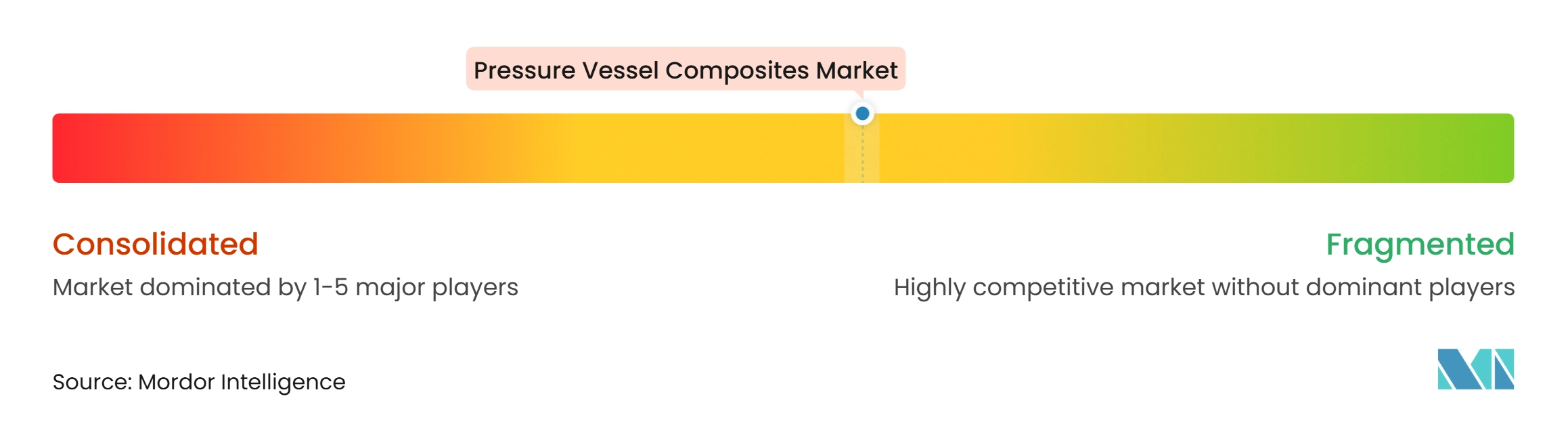
The pressure vessel composites market is moderately concentrated, with top players including Hexagon Composites ASA, Luxfer Gas Cylinders, Worthington Enterprises, NPROXX, and FABER INDUSTRIE SPA. Mid-tier suppliers serve regional compressed natural gas and renewable natural gas fleets, where cost and local service coverage can be more decisive. Fiber winding automation, liner materials, and the range of approvals remain key points of competition. FORVIA reports 33 certified containers across multiple sizes and operates a mass-production facility in Allenjoie, France, with a target capacity of 100,000 tanks annually. Hexagon Composites ASA combines its long experience in Type IV distribution systems with global activity in mobile pipeline and fuel systems.
Cost reduction is a central competitive theme in the pressure vessel composites market. Umoe Advanced Composites’ 350-bar glass-fiber multiple element gas container trailers present a lower-cost alternative for hydrogen distribution, with the company citing at least 40% lower capital expenditure than carbon fiber systems. Suppliers are also developing thermoplastic-lined vessels, automated dry fiber winding, and products that can be assessed for second-life use. Automated dry fiber winding can reduce winding time from 3 hours to 15 minutes compared with conventional wet winding. These approaches may lower manufacturing time and create more options for fleet operators that need large cylinder volumes. NPROXX’s joint venture relationship with Cummins shows how powertrain and industrial equipment companies are entering the pressure vessel composites market through partnerships rather than only internal development.
Geographic manufacturing capacity is also becoming more important as demand shifts toward Asia-Pacific. Umoe Advanced Composites began large-scale production at its 12,000 m² Jiaxing, China facility in 2025, with potential annual capacity of 20,000 composite cylinders. Beijing Tianhai Industrial Co., Ltd. operates automated cylinder production through Beijing Tianhai Hydrogen Energy and is expanding capacity for domestic and export supply. NPROXX supplies high-pressure hydrogen storage systems from Germany for heavy-duty mobility applications, while Toyoda Gosei supports Japanese commercial truck programs. The pressure vessel composites market is served through storage, distribution, recertification, fuel cell, and related composite applications.
Pressure Vessel Composites Industry Leaders
-
Hexagon Composites ASA
-
Luxfer Gas Cylinders
-
Worthington Enterprises
-
NPROXX
-
FABER INDUSTRIE SPA
- *Disclaimer: Major Players sorted in no particular order
Pressure Vessel Composites Market Companies Covered in this Report
- Beijing Tianhai Industrial Co., Ltd.
- Doosan Mobility Innovation
- Everest Kanto Cylinder Limited
- FABER INDUSTRIE SPA
- FORVIA
- Hexagon Composites ASA
- ILJIN
- Lianyungang Zhongfu Lianzhong Composites Group Co., Ltd.
- Luxfer Gas Cylinders
- NPROXX
- Quantum Fuel Systems
- Steelhead Composites, Inc.
- Toyoda Gosei Co., Ltd.
- Umoe Advanced Composites
- Worthington Enterprises
Recent Industry Developments in Pressure Vessel Composites Market
- July 2026: Avanco Composites introduced a Type 4.5 composite pressure vessel featuring a thermoplastic composite overwrap designed to fuse with the polymer liner material. The technology aims to improve structural integration and performance in high-pressure gas storage applications, supporting the pressure vessel composites market through advancements in lightweight, carbon-fiber-reinforced vessel designs.
- April 2026: CST Composites established its US manufacturing operation through its joint venture, CST Optimum, in Utah, producing filament-wound composite pressure vessels for compressed natural gas (CNG) and other high-pressure applications. The facility manufactures certified Type III and Type IV vessels, supporting the pressure vessel composites market through expanded regional production capabilities and access to North American automotive, aerospace, defense and energy customers.
Global Pressure Vessel Composites Market Report Scope
Pressure vessel composites are advanced materials used to manufacture lightweight, high-strength vessels capable of storing gases and liquids under high pressure. These composites typically combine carbon fiber or glass fiber with polymer resins to provide high strength, corrosion resistance, and reduced weight compared to conventional metal vessels. They are increasingly used in hydrogen storage, natural gas transportation, and industrial gas storage applications.
The Pressure Vessel Composites Market is segmented by product type, application, end-use industry, and geography. By product type, the market is segmented into Type II pressure vessels, Type III pressure vessels, Type IV pressure vessels, and others. By application, the market is segmented into hydrogen storage, compressed natural gas storage, renewable natural gas storage, chemical and industrial gas storage, and others. By end-use industry, the market is segmented into automotive, oil and gas, chemical processing, aerospace and defense, marine, power generation, and others. The report also covers the market size and forecasts for pressure vessel composites in 15 countries across major regions. For each segment, the market sizing and forecasts have been done on the basis of value (USD).
Segmentation Overview
| Type II Pressure Vessels |
| Type III Pressure Vessels |
| Type IV Pressure Vessels |
| Others |
| Hydrogen Storage |
| Compressed Natural Gas Storage |
| Renewable Natural Gas Storage |
| Chemical and Industrial Gas Storage |
| Others |
| Automotive |
| Oil and Gas |
| Chemical Processing |
| Aerospace and Defense |
| Marine |
| Power Generation |
| Others |
| Asia-Pacific | China |
| India | |
| Japan | |
| South Korea | |
| ASEAN Countries | |
| Rest of Asia-Pacific | |
| North America | United States |
| Canada | |
| Mexico | |
| Europe | Germany |
| United Kingdom | |
| France | |
| Italy | |
| NORDIC Countries | |
| Rest of Europe | |
| South America | Brazil |
| Argentina | |
| Rest of South America | |
| Middle East and Africa | Saudi Arabia |
| South Africa | |
| Rest of Middle East and Africa |
| By Product Type | Type II Pressure Vessels | |
| Type III Pressure Vessels | ||
| Type IV Pressure Vessels | ||
| Others | ||
| By Application | Hydrogen Storage | |
| Compressed Natural Gas Storage | ||
| Renewable Natural Gas Storage | ||
| Chemical and Industrial Gas Storage | ||
| Others | ||
| By End-Use Industry | Automotive | |
| Oil and Gas | ||
| Chemical Processing | ||
| Aerospace and Defense | ||
| Marine | ||
| Power Generation | ||
| Others | ||
| By Geography | Asia-Pacific | China |
| India | ||
| Japan | ||
| South Korea | ||
| ASEAN Countries | ||
| Rest of Asia-Pacific | ||
| North America | United States | |
| Canada | ||
| Mexico | ||
| Europe | Germany | |
| United Kingdom | ||
| France | ||
| Italy | ||
| NORDIC Countries | ||
| Rest of Europe | ||
| South America | Brazil | |
| Argentina | ||
| Rest of South America | ||
| Middle East and Africa | Saudi Arabia | |
| South Africa | ||
| Rest of Middle East and Africa | ||
Key Questions Answered in the Report
What is the size of the pressure vessel composites market?
The pressure vessel composites market size was valued at USD 2.43 billion in 2026 and is estimated to grow from USD 2.65 billion in 2027 to reach USD 4.16 billion by 2032, at a CAGR of 9.45% during the forecast period (2027-2032).
Which product type held the largest share in 2026?
Type IV pressure vessels held a 42.34% share in 2026.
Which application is projected to advance fastest through 2032?
Hydrogen storage is projected to advance at an 11.45% CAGR through 2032.
Why are composite pressure vessels used for hydrogen?
Composite vessels reduce weight, support high-pressure storage, and can avoid hydrogen embrittlement risks associated with metallic liners.