
Prenatal Diagnostic Software Market Size and Share
Market Overview
| Study Period | 2021 - 2032 |
|---|---|
| Market Size (2027) | USD 312.84 Million |
| Market Size (2032) | USD 578.42 Million |
| Growth Rate (2027 - 2032) | 13.08 % |
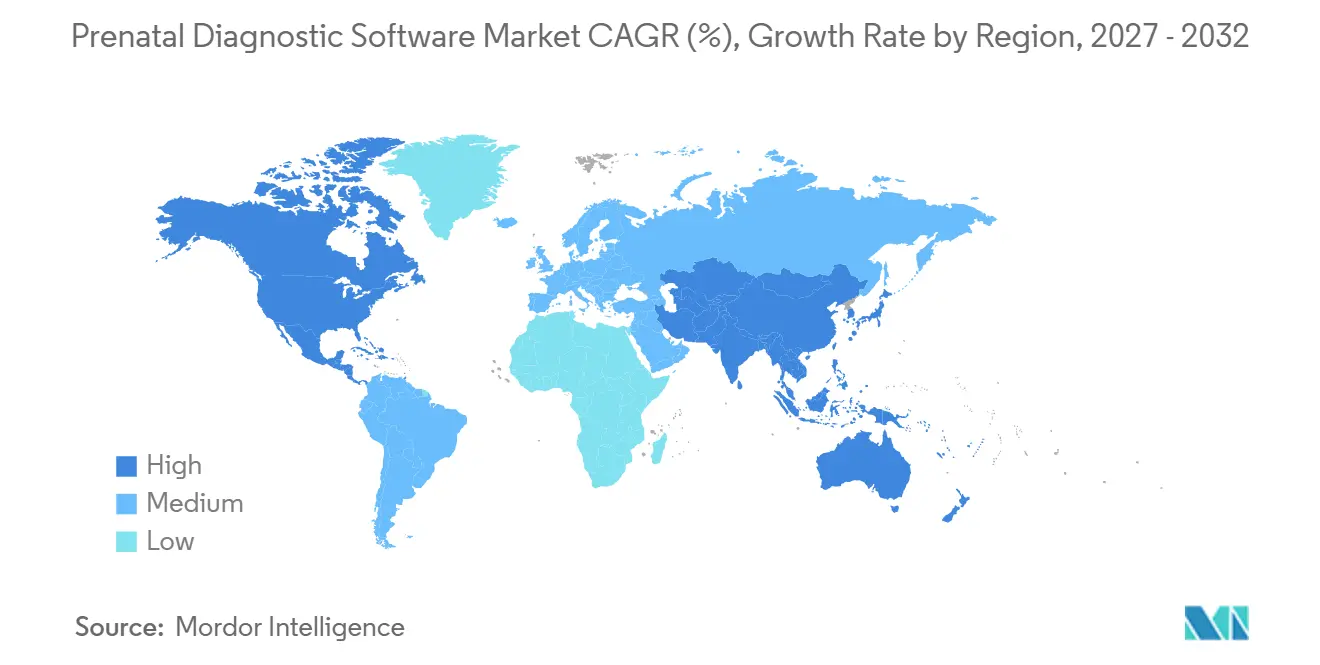
| Fastest Growing Market | Asia-Pacific |
| Largest Market | North America |
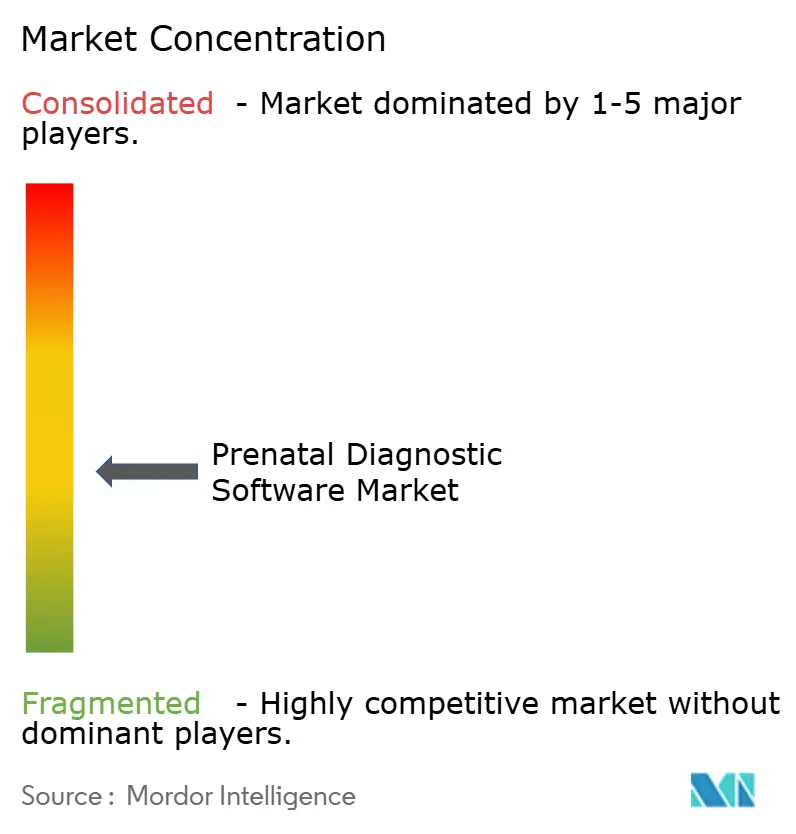
| Market Concentration | Medium |
Major Players *Disclaimer: Major Players sorted in no particular order Image © Mordor Intelligence. Reuse requires attribution under CC BY 4.0. | |
Prenatal Diagnostic Software Market Analysis by Mordor Intelligence
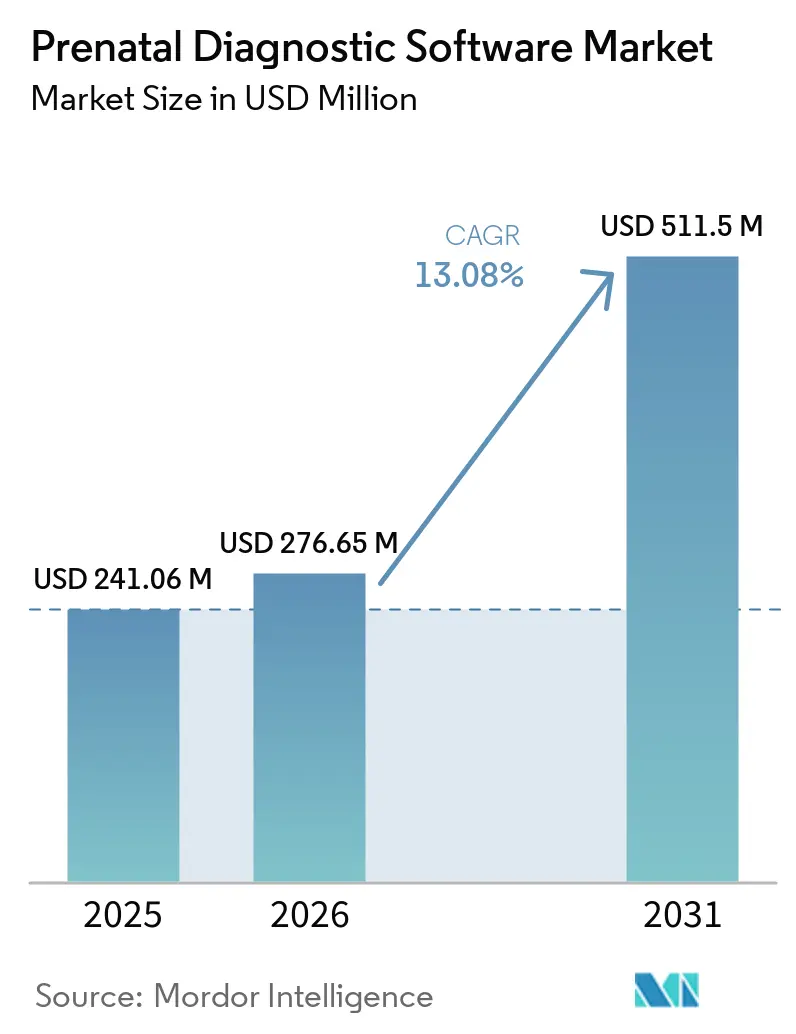
The Prenatal Diagnostic Software Market size is expected to grow from USD 276.65 million in 2026 to USD 312.84 million in 2027 and is forecast to reach USD 578.42 million by 2032 at 13.08% CAGR over 2027-2032.
The prenatal diagnostic software market is growing as non-invasive prenatal testing moves into routine first-trimester care in higher-income health systems. Lower sequencing costs and broader testing volumes are shifting attention toward the software used to interpret results and issue clinical reports. Artificial intelligence is also widening the use of fetal ultrasound analysis beyond specialist maternal-fetal medicine settings. Integrated platforms, secure data handling, and workflow connectivity are becoming important factors in purchasing decisions. The prenatal diagnostic software market also has room to expand as genomic, imaging, and maternal health information are combined in more complete risk assessments.
Key Report Takeaways
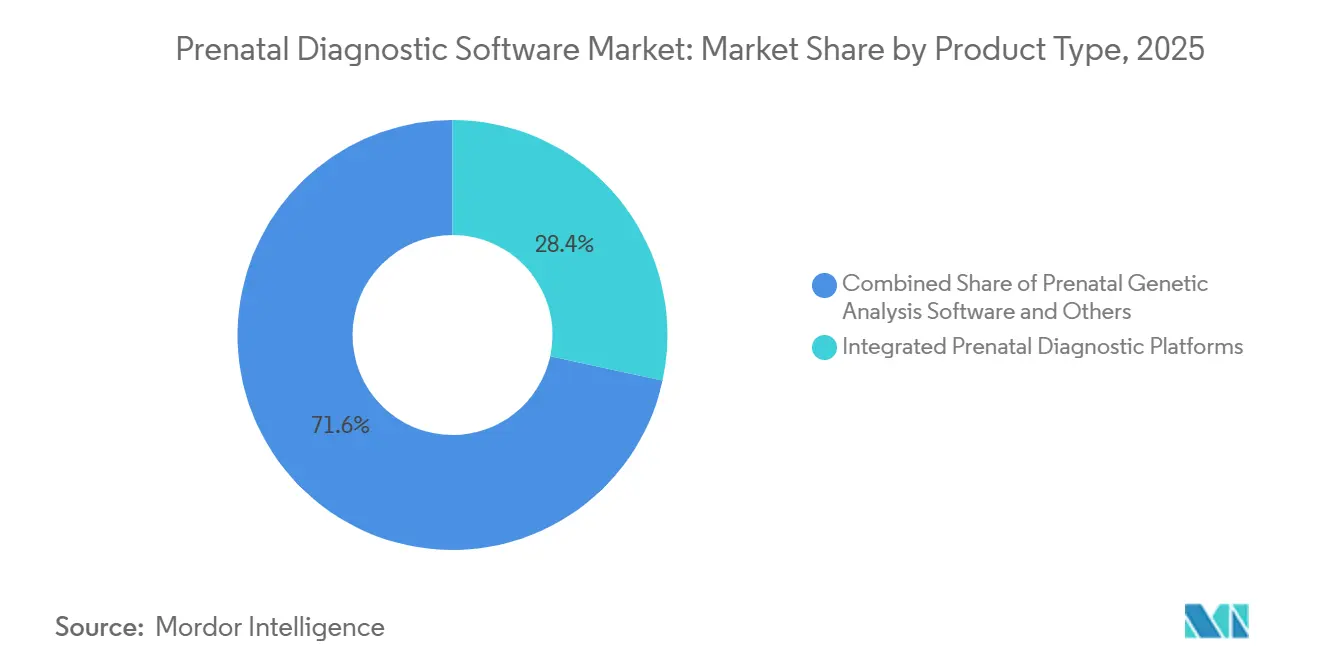
By product type, integrated prenatal diagnostic platforms led with 28.4% revenue share in 2026, while prenatal ultrasound analysis software is forecast to grow at a 13.8% CAGR through 2032.
By technology, NGS bioinformatics held 24.9% revenue share in 2026, while AI and machine learning is projected to expand at a 13.6% CAGR through 2032.
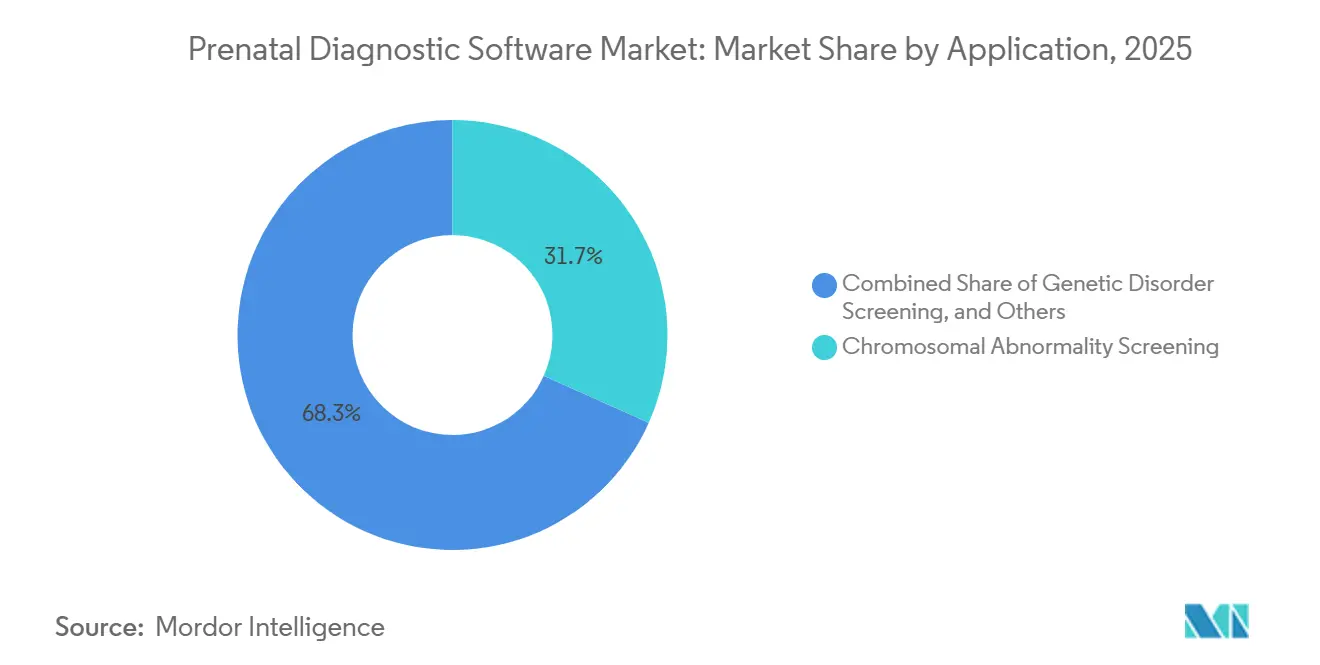
By application, chromosomal abnormality screening accounted for 31.7% of the prenatal diagnostic software market size in 2026, while fetal structural anomaly detection is projected to grow at a 14.2% CAGR through 2032.
By deployment, cloud-based systems held 46.8% revenue share in 2026 and are projected to advance at a 13.7% CAGR through 2032.
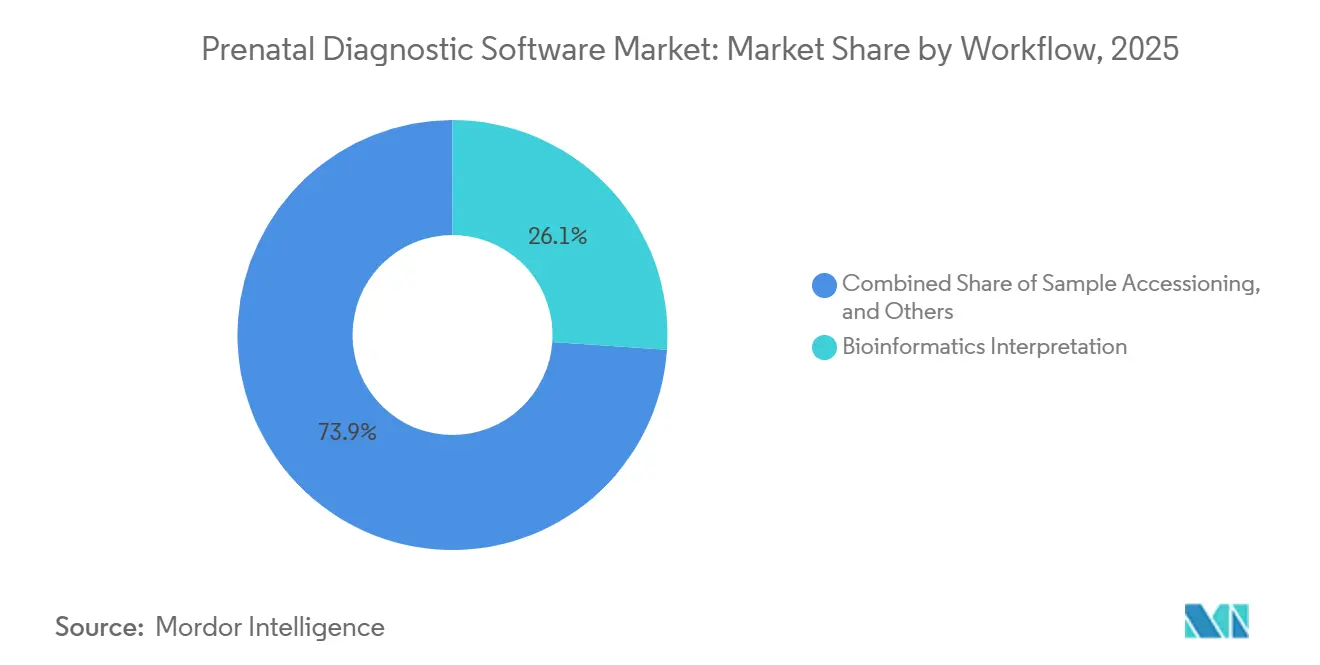
By workflow, bioinformatics interpretation accounted for 26.1% revenue share in 2026, while risk assessment and decision support is forecast to grow at a 14.4% CAGR through 2032.
By end user, diagnostic laboratories held 37.5% revenue share in 2026, while maternal-fetal medicine centers are forecast to grow at a 13.5% CAGR through 2032.
By geography, North America held 40.11% revenue share in 2026, while Asia-Pacific is forecast to expand at a 14.1% CAGR through 2032.
Note: Market numbers in this report are based on Mordor Intelligence's proprietary estimation framework, which combines nine months of actuals with Q4 projections for base year 2026.
Market Trends and Insights
Drivers Impact Analysis of Prenatal Diagnostic Software Market*
| Driver | (~) % Impact on CAGR Forecast | Geographic Relevance | Impact Timeline |
|---|---|---|---|
| Broader Adoption of Non-Invasive Prenatal Testing | +2.9% | Global, strongest in North America and Western Europe | Short term (≤ 2 years) |
| Integration With EHR and Laboratory Workflows | +2.1% | North America and Europe | Medium term (2-4 years) |
| Expansion of AI-Assisted Prenatal Ultrasound Interpretation | +2.5% | Global, accelerating in Asia-Pacific and the Middle East and Africa | Medium term (2-4 years) |
| Rising Demand for Early Detection of Chromosomal and Genetic Disorders | +2.3% | Global, particularly East Asia and high-maternal-age settings | Medium term (2-4 years) |
| Need for Remote and Decentralized Maternal-Fetal Screening | +1.7% | Asia-Pacific, with spillover to the Middle East, Africa, and South America | Long term (≥ 4 years) |
| Fetal-Fraction Optimization and Repeat-Test Reduction | +1.4% | North America and Europe | Short term (≤ 2 years) |
| Source: Mordor Intelligence | |||
Broader Adoption of Non-Invasive Prenatal Testing
The prenatal diagnostic software market benefits when non-invasive prenatal testing becomes a routine option rather than a specialist test. Guideline support and payer decisions have raised uptake in several developed health systems, increasing the number of test results that laboratories must process. Japan[1] reported that women aged 35 years and older accounted for 30.4% of births in 2023, compared with 14% in 2003. This demographic shift increases demand for screening and creates a larger base of eligible patients. Per-sample software licensing can give laboratories recurring revenue as volumes rise. As testing reaches more average-risk pregnancies, the ability to manage high volumes efficiently becomes more important than serving only specialist high-risk cases.
Expansion of AI-Assisted Prenatal Ultrasound Interpretation
AI-assisted ultrasound is addressing variation in how fetal images are captured and interpreted across care settings. A study[2]of AI methods for fetal ultrasound reported a pooled sensitivity of 0.84 and a specificity of 0.87 for intrauterine growth restriction detection. FetalCLIP was trained on 210,035 paired fetal ultrasound images and outperformed the tested baselines for gestational age estimation, congenital heart defect detection, and fetal structure segmentation. These tools can support less specialized obstetric settings where experienced maternal-fetal medicine staff are limited. The prenatal diagnostic software market can therefore reach clinics and community settings that previously relied on referrals for complex interpretation. Regulatory clearances and clinical validation remain central to adoption because providers need evidence that the tool can be safely incorporated into care.
Integration of Prenatal Diagnostics With EHR and Laboratory Workflows
Health systems increasingly expect prenatal platforms to connect with electronic health records and laboratory systems. HL7 FHIR-compatible connections can reduce manual transcription between sequencing results and clinical records. They can also support longitudinal tracking of fetal risk alongside maternal histories and help programs document screening compliance. Vendors that provide validated integration modules can win longer enterprise contracts because replacing established pipelines carries clinical and certification risk. The prenatal diagnostic software market is also moving away from isolated laboratory information systems, where those systems lack prenatal bioinformatics and structured reporting. In European public procurement, the need for connected clinical records can support adoption independently of short-term commercial sales cycles.
Rising Demand for Early Detection of Chromosomal and Genetic Disorders
Prenatal testing is expanding beyond common trisomies to single-gene disorders and copy-number variants. These uses require more complex software for haplotype reconstruction, de novo variant calling, and parental carrier data integration. Natera launched its 21-gene Fetal Focus single-gene NIPT in January 2026, reporting 96% overall sensitivity and 98% population-weighted specificity across 294 samples in the blinded EXPAND trial. Disease-specific analytical workflows can be harder to reproduce than standard chromosomal screening pipelines. The prenatal diagnostic software market has an opportunity to serve laboratories that need validated interpretation for expanded panels. Progress in these applications depends on clinical validation, reporting quality, and appropriate clinical follow-up.
Restraints Impact Analysis of Prenatal Diagnostic Software Market*
| Restraint | (~) % Impact on CAGR Forecast | Geographic Relevance | Impact Timeline |
|---|---|---|---|
| Regulatory Classification and Clinical-Validation Complexity | -1.8% | Global, particularly Europe during the IVDR and MDR transition | Medium term (2-4 years) |
| Privacy, Cybersecurity, and Cross-Border Genomic-Data Requirements | -1.4% | Europe, North America, China, and India | Long term (≥ 4 years) |
| Reimbursement Variation and Unequal Access to Advanced Screening | -1.2% | South America, the Middle East, Africa, and emerging Asia-Pacific | Long term (≥ 4 years) |
| Clinical Interpretation Risks From False-Positive and Incidental Findings | -0.8% | Global | Medium term (2-4 years) |
| Source: Mordor Intelligence | |||
Regulatory Classification and Clinical-Validation Complexity
Regulatory requirements can slow the introduction of prenatal software, especially for smaller developers. Under EU IVDR Regulation 2017/746, much prenatal testing software falls within Class C or D requirements that require notified body assessment. Legacy prenatal IVD manufacturers face final compliance deadlines of December 31, 2027 for Class III devices and December 31, 2028 for Class IIb devices. Quality management, laboratory accreditation, clinical validation, and post-market monitoring add further cost and time. BrightHeart received FDA approval for a predetermined change control plan in May 2025, which allows certain future model updates without separate submissions. These obligations favor well-funded suppliers and can limit the number of smaller vendors able to compete across regions.
Privacy, Cybersecurity, and Cross-Border Genomic-Data Requirements
Genomic information requires durable safeguards because it is persistent and can identify biological relatives. Privacy rules in Europe, China, India, and North America can require different hosting, processing, and data-transfer arrangements. These requirements can divide global cloud deployments into separate regional environments. They also increase spending on data residency, federated learning, local model inference, and cybersecurity controls. The prenatal diagnostic software market may therefore develop around separate U.S., European, and Chinese data ecosystems rather than one fully interoperable platform network. Suppliers that build privacy-preserving systems early may be better positioned for regulated enterprise contracts, but those investments are demanding for early-stage companies.
*Our forecasts treat driver/restraint impacts as directional, not additive. The impact forecasts reflect baseline growth, mix effects, and variable interactions.
Prenatal Diagnostic Software Market Segment Analysis
By Product Type:
Integrated Platforms Anchor Demand, Ultrasound Software ExpandsIntegrated prenatal diagnostic platforms held 28.4% of the prenatal diagnostic software market share in 2026. Health systems use these platforms to bring sequencing intake, variant calling, risk scoring, and clinical reporting into a single environment. Integrated systems can make recurring enterprise licensing more predictable for suppliers. They also create switching costs once validated pipelines and audit trails become part of laboratory operations. Clinical reporting and decision support are increasingly delivered as modules within broader platforms. Workflow and care coordination functions follow the same pattern. This reduces the role of standalone point solutions in larger laboratory accounts. The prenatal diagnostic software market is consequently rewarding suppliers that can support the whole testing and reporting process.
Prenatal ultrasound analysis software is the fastest-growing product type, with a forecast CAGR of 13.8% through 2032. AI tools are moving from specialist research settings into routine obstetric practice as evidence and regulatory approvals accumulate. FetalCLIP[3] illustrates this direction through a model built on paired fetal ultrasound images for several imaging tasks. Laboratory information management software remains necessary for sample tracking, quality control, and audit records. Prenatal-specific modules can include cfDNA quality checks and chain-of-custody functions. Genetic analysis software has a different role because it converts raw sequencing data into clinically useful variant calls. Basic chromosomal pipelines face more standardization, while single-gene workflows can retain higher value because of their greater analytical complexity.

By Technology:
NGS Bioinformatics Leads, AI Extends Clinical UseNGS bioinformatics held 24.9% of revenue in 2026, making it the largest technology category. It provides the computational foundation for cfDNA-based non-invasive prenatal testing at scale. The growing range of sequenced panels is increasing both workload and clinical complexity. Single-gene disorders, copy-number variants, and multi-omics features require more advanced analysis than standard aneuploidy testing. The prenatal diagnostic software market relies on these pipelines to turn sequencing output into validated clinical information. Laboratories also need traceable versions and quality controls for their workflows. This makes the technology important to both routine volume testing and expanded clinical panels. Its role remains central as diagnostic scope broadens.
AI and machine learning are the fastest-growing technology categories, with a forecast CAGR of 13.6% through 2032. Its main uses include computer vision for structural anomaly detection and risk models that combine genomic, biometric, and maternal information. Research on AI-supported ultrasound has shown strong performance for growth restriction detection in controlled study settings. Rule-based clinical decision support still provides the guideline structure that regulators and payers expect. Computer vision can complement those systems in tasks that depend on image pattern recognition. Microarray and cytogenetic analysis software remains relevant for confirmatory testing and structural rearrangements. Multi-omics analytics is still developing, although it may become important for platforms that combine genomic, transcriptomic, and epigenomic data.
By Application:
Chromosomal Screening Leads, Structural Detection Grows FastestChromosomal abnormality screening accounted for 31.7% of the prenatal diagnostic software market size in 2026. Its leading position reflects high testing volumes and established reimbursement in major health systems. Validated pipelines process trisomy 21, 18, and 13 results repeatedly at the laboratory scale. This creates recurring demand for reliable interpretation and reporting software. The application is financially predictable because it serves a broad and established use case. Expansion to average-risk pregnancies has reinforced those volumes. Genetic disorder screening and carrier screening are adding new requirements for monogenic testing. These applications need more specialized bioinformatics than standard aneuploidy screening.
Fetal structural anomaly detection is forecast to grow at a 14.2% CAGR through 2032. The category is supported by AI-enabled ultrasound tools that can help identify subtle markers of cardiac and brain defects. Regulatory clearance for computer-assisted fetal imaging supports institutional purchasing decisions. Maternal-fetal risk assessment is another developing application because cfDNA and biomarker models may help assess preeclampsia and preterm birth risk. Pregnancy monitoring and dating also gained support from Delivery Date AI, which received FDA De Novo clearance in March 2026. Workflow and clinical management tools support coordination among obstetric, genetics, and neonatology teams. Their value is most visible in centers managing complex pregnancies.
By Deployment:
Cloud Leads, Edge Systems Improve AccessCloud-based deployment held 46.8% of revenue in 2026 and is forecast to grow at a 13.7% CAGR through 2032. Cloud delivery lets suppliers update approved AI models across client locations without individual hardware changes. Per-sample pricing can also align software expense with laboratory test volume. The prenatal diagnostic software market has adopted this model because it can lower entry barriers for mid-sized laboratories and clinics. Delivery Date AI is a cloud-based software as a medical device that processes standard ultrasound images and integrates into existing workflows. On-premises deployment remains important where genomic data rules restrict cloud processing. This is particularly relevant in government-directed hospital settings in China, South Korea, and Gulf Cooperation Council markets.
Hybrid deployments are gaining relevance in large hospital networks. These models can process routine cases in cloud environments while directing more complex cases to specialist workstations. Edge and offline-enabled systems serve settings with limited connectivity. The FADA model was designed to run fetal ultrasound interpretation on a commodity smartphone in 60 seconds per case. This approach could support prenatal screening in rural parts of sub-Saharan Africa and South Asia. EDAN Instruments introduced Nano OB Assist, an AI-enabled handheld ultrasound system for lower-resource prenatal screening in Africa. These systems do not replace higher-capacity clinical platforms, but they can expand the entry point for screening where infrastructure is limited.
By Workflow:
Bioinformatics Interpretation Leads, Decision Support AdvancesBioinformatics interpretation held 26.1% of revenue in 2026, making it the largest workflow step. This stage translates raw sequencing reads into variant calls and chromosomal risk scores. It is also highly auditable because laboratories must show validated pipelines and traceable version histories. Compliance needs under CLIA and IVDR reinforce the importance of this workflow. The prenatal diagnostic software market depends on this step for both analytical quality and report consistency. Integrated systems are reducing manual steps in sample accessioning and laboratory analysis. This can reduce chain-of-custody gaps and data-entry errors. Reporting remains a separate need as tests become more complex.
Risk assessment and decision support is the fastest-growing workflow, with a forecast CAGR of 14.4% through 2032. AI models can combine cfDNA findings, fetal biometry, maternal history, and biochemical markers into composite risk scores. This can help clinicians decide which cases need specialist follow-up. Natera's EDEN study is enrolling up to 7,500 participants to evaluate cfDNA-based assessment of preeclampsia risk at 9 to 15 weeks. Reporting and genetic counseling tools are also becoming more important as expanded panels create incidental findings and single-gene results. AIT launched a commercial verification study in 2026 for an AI genetic counseling support system that automates medical history intake, pedigree visualization, and risk stratification. Such systems can support counseling capacity, although clinical responsibility remains with qualified care teams.
By End User:
Diagnostic Laboratories Lead, MFM Centers GrowDiagnostic laboratories accounted for 37.5% of end-user revenue in 2026. Their position reflects high testing volumes, established bioinformatics infrastructure, and economies of scale in per-sample licensing. Reference laboratories can process large NIPT volumes and negotiate contracts based on volume tiers. This makes them important enterprise customers for platform suppliers. The prenatal diagnostic software market is closely tied to these laboratories because they generate much of the routine testing volume. Hospitals and health systems are also widening their software use across obstetrics, neonatology, and genetics. Integrated platforms can make these cross-departmental purchases easier to justify. Public health programs are a separate buyer group where the national NIPT rollout creates population-scale demand.
Maternal-fetal medicine centers are forecast to grow at a 13.5% CAGR through 2032. Their focus on high-risk pregnancies creates demand for premium ultrasound analysis, structural anomaly detection, and risk-scoring tools. Obstetrics and gynecology clinics benefit from cloud pricing that avoids large upfront technology spending. Fertility and reproductive medicine centers are an emerging buyer group for preimplantation genetic testing software with related bioinformatics needs. Academic and research institutions contribute clinical datasets used in validation studies and regulatory submissions. National screening programs in the Netherlands, Denmark, and Belgium also create public-sector procurement requirements. The prenatal diagnostic software market must therefore serve both high-volume laboratories and distributed clinical users with different operational needs.
Geography Analysis
North America Prenatal Diagnostic Software Market
North America held 40.11% of global revenue in 2026, representing the largest regional prenatal diagnostic software market share. High NIPT use, CLIA-certified reference laboratories, and a flow of prenatal AI clearances support regional demand. Large laboratory networks also generate datasets used to develop and validate AI models. BrightHeart's predetermined change control plan approval in May 2025 gives an example of a United States pathway for defined post-clearance model updates.
Europe Prenatal Diagnostic Software Market
Europe is the second-largest regional segment and is changing as IVDR obligations reshape supplier requirements. Class C and D prenatal IVD software requires a notified body assessment under the EU framework. Germany, France, and the United Kingdom have demand from national screening programs, private laboratories, and public hospitals. Italy and Spain move more slowly because procurement is divided across regional health authorities.
APAC Prenatal Diagnostic Software Market
Asia-Pacific is the fastest-growing region, with a forecast CAGR of 14.1% through 2032. China is a key source of momentum through domestic approvals for prenatal AI devices and cost-competitive sequencing infrastructure. Kaili Medical [4] received China's first approval for an AI prenatal ultrasound device in March 2025. Hangzhou SciDiagnostics received a Class III registration for AI chromosome karyotype analysis software in May 2026, with analysis time reported to fall from 34.42 minutes to 11.19 minutes. In Japan, women aged 35 years and older accounted for 30.4% of live births in 2023, while invasive amniocentesis fell from 16,454 cases in 2014 to 5,620 in 2023. India, South Korea, and Australia have support from private healthcare expansion, regulated IVD demand, and private insurance coverage.
Competitive Landscape
The prenatal diagnostic software market has a semi-consolidated structure. Illumina, F. Hoffmann-La Roche, Thermo Fisher Scientific, and QIAGEN have advantages through sequencing infrastructure, laboratory relationships, and bioinformatics capabilities. Specialty suppliers compete more directly in clinical interpretation, reporting, and imaging analysis. Sonio SAS, BrightHeart, Ultrasound AI, Diagnoly, and Delft Imaging are building positions through regulatory clearance and multicenter clinical validation. Illumina's 2026 patent action against BillionToOne shows that intellectual property disputes can affect competition in cfDNA testing methods.
Natera is using prospective clinical studies to support expanded prenatal risk management. Its EXPAND study supported the January 2026 Fetal Focus launch, while its EDEN study is evaluating early risk assessment for preeclampsia and adverse pregnancy outcomes. BrightHeart's May 2025 predetermined change control plan approval provides a route for defined model updates after clearance. Chinese suppliers, including Kaili Medical and SciDiagnostics, are using domestic approvals and cost advantages to build their positions. Suppliers are also differentiating through cloud governance, local deployment, and privacy-preserving model development.
The prenatal diagnostic software market needs suppliers to balance broad platform coverage with clinical specialization. Large genomics firms can build from existing laboratory and sequencing relationships. AI-focused companies can move quickly in imaging and decision-support applications. Smaller suppliers face greater difficulty when they need validation, regulatory approval, data infrastructure, and sales coverage at the same time. This structure supports competition among established suppliers and focused challengers.
Prenatal Diagnostic Software Industry Leaders
-
F. Hoffmann-La Roche Ltd
-
Thermo Fisher Scientific Inc.
-
Agilent Technologies, Inc.
-
QIAGEN N.V.
-
GE HealthCare
- *Disclaimer: Major Players sorted in no particular order
Prenatal Diagnostic Software Market Companies Covered in this Report
- Agilent Technologies
- BGI Genomics Co., Ltd.
- Bio-Rad Laboratories
- CENTOGENE N.V.
- The Cooper Companies
- Delft Imaging
- Eurofins
- Roche
- GE HealthCare Technologies Inc.
- Hologic
- Illumina
- Koninklijke Philips
- LabCorp
- Myriad Genetics
- Natera, Inc.
- PerkinElmer
- QIAGEN
- Quest Diagnostics
- Revvity, Inc.
- Sonio SAS
- Thermo Fisher Scientific
- Ultrasound AI
- Yourgene Health
Recent Industry Developments in Prenatal Diagnostic Software Market
- May 2026: Natera launched Enhanced Panorama™ NIPT, powered by SNP-informed deep sequencing, cutting the no-call rate to 0.5% in low-fetal-fraction samples. A 3,323-patient prospective blinded study validated 100% sensitivity for trisomy 21 and 13 at challenging low fetal fractions
- March 2026: Ultrasound AI received FDA De Novo clearance for Delivery Date AI, a cloud-based SaMD that predicts delivery dates from standard ultrasound images with R² accuracy of 0.92 across 5,700+ patients in a peer-reviewed study, and integrates into existing OB/MFM workflows in seconds
- January 2026: Natera launched its 21-gene Fetal Focus single-gene NIPT using LinkedSNP technology, achieving 96% overall sensitivity and 98% population-weighted specificity across 294 samples in the EXPAND trial and extending non-invasive detection to Tay-Sachs, Gaucher, galactosemia, and 18 other severe early-onset inherited conditions
- April 2025: Diagnoly raised EUR 5.5 million in a Seed round led by Mutuelles Impact (XAnge) and Newfund HEKA, bringing total funding to EUR 6.4 million. The company operated with both FDA clearance (September 2024) and CE Mark (March 2025) at the time of the raise, active in approximately 20 European sites
Global Prenatal Diagnostic Software Market Report Scope
Segmentation Overview
| Prenatal Genetic Analysis Software |
| Prenatal Ultrasound Analysis Software |
| Laboratory Information Management Software |
| Clinical Reporting and Decision Support Software |
| Workflow and Care Coordination Software |
| Integrated Prenatal Diagnostic Platforms |
| NGS Bioinformatics |
| cfDNA Analysis |
| Microarray and Cytogenetic Analysis |
| AI and Machine Learning |
| Computer Vision Ultrasound Analytics |
| Rule-Based Clinical Decision Support |
| Multi-Omics Analytics |
| Chromosomal Abnormality Screening |
| Genetic Disorder Screening |
| Fetal Structural Anomaly Detection |
| Maternal-Fetal Risk Assessment |
| Pregnancy Monitoring and Dating |
| Workflow and Clinical Management |
| Carrier Screening |
| Cloud-Based |
| On-Premises |
| Hybrid |
| Edge/Offline-Enabled |
| Sample Accessioning |
| Laboratory Analysis |
| Bioinformatics Interpretation |
| Risk Assessment and Decision Support |
| Reporting and Genetic Counselling |
| Hospitals and Health Systems |
| Diagnostic Laboratories |
| Maternal-Fetal Medicine Centers |
| Obstetrics and Gynecology Clinics |
| Fertility and Reproductive Medicine Centers |
| Academic and Research Institutions |
| Public Health Programs |
| North America | United States |
| Canada | |
| Mexico | |
| Europe | Germany |
| United Kingdom | |
| France | |
| Italy | |
| Spain | |
| Rest of Europe | |
| Asia-Pacific | China |
| India | |
| Japan | |
| Australia | |
| South Korea | |
| Rest of Asia-Pacific | |
| Middle East and Africa | GCC |
| South Africa | |
| Rest of Middle East and Africa | |
| South America | Brazil |
| Argentina | |
| Rest of South America |
| By Product Type | Prenatal Genetic Analysis Software | |
| Prenatal Ultrasound Analysis Software | ||
| Laboratory Information Management Software | ||
| Clinical Reporting and Decision Support Software | ||
| Workflow and Care Coordination Software | ||
| Integrated Prenatal Diagnostic Platforms | ||
| By Technology | NGS Bioinformatics | |
| cfDNA Analysis | ||
| Microarray and Cytogenetic Analysis | ||
| AI and Machine Learning | ||
| Computer Vision Ultrasound Analytics | ||
| Rule-Based Clinical Decision Support | ||
| Multi-Omics Analytics | ||
| By Application | Chromosomal Abnormality Screening | |
| Genetic Disorder Screening | ||
| Fetal Structural Anomaly Detection | ||
| Maternal-Fetal Risk Assessment | ||
| Pregnancy Monitoring and Dating | ||
| Workflow and Clinical Management | ||
| Carrier Screening | ||
| By Deployment | Cloud-Based | |
| On-Premises | ||
| Hybrid | ||
| Edge/Offline-Enabled | ||
| By Workflow | Sample Accessioning | |
| Laboratory Analysis | ||
| Bioinformatics Interpretation | ||
| Risk Assessment and Decision Support | ||
| Reporting and Genetic Counselling | ||
| By End User | Hospitals and Health Systems | |
| Diagnostic Laboratories | ||
| Maternal-Fetal Medicine Centers | ||
| Obstetrics and Gynecology Clinics | ||
| Fertility and Reproductive Medicine Centers | ||
| Academic and Research Institutions | ||
| Public Health Programs | ||
| By Geography | North America | United States |
| Canada | ||
| Mexico | ||
| Europe | Germany | |
| United Kingdom | ||
| France | ||
| Italy | ||
| Spain | ||
| Rest of Europe | ||
| Asia-Pacific | China | |
| India | ||
| Japan | ||
| Australia | ||
| South Korea | ||
| Rest of Asia-Pacific | ||
| Middle East and Africa | GCC | |
| South Africa | ||
| Rest of Middle East and Africa | ||
| South America | Brazil | |
| Argentina | ||
| Rest of South America | ||
Key Questions Answered in the Report
What is driving demand for prenatal diagnostic software?
Routine NIPT adoption, AI-assisted ultrasound, and connected laboratory workflows are increasing demand for interpretation, reporting, and risk-assessment tools. Broader screening for average-risk pregnancies also increases the volume that the prenatal diagnostic software market must support through validated clinical workflows.
How large is prenatal diagnostic software in 2027?
The prenatal diagnostic software market is valued at USD 312.84 million in 2027 and is forecast to reach USD 578.42 million by 2032 at a 13.08% CAGR. Growth is linked to higher testing volumes and greater use of software for sequencing interpretation, imaging analysis, and clinical reporting.
Which prenatal diagnostic software product type leads revenue?
Integrated prenatal diagnostic platforms led product revenue with a 28.4% share in 2026 because they combine testing, interpretation, risk scoring, and reporting functions. These systems can also reduce the need for separate point solutions in the prenatal diagnostic software market at large laboratory and hospital sites.
Which technology is growing fastest in prenatal diagnostics?
AI and machine learning is forecast to grow at a 13.6% CAGR through 2032. Its primary uses include fetal ultrasound image analysis and composite risk models that bring genomic, biometric, maternal history, and biomarker information into clinical decision support.
Why are cloud-based prenatal platforms widely used?
Cloud-based deployment held 46.8% of revenue in 2026 and supports centralized updates and per-sample pricing for laboratories and clinics. On-premises and hybrid systems remain necessary where national genomic-data rules or hospital policies restrict cloud processing.
Which region is expanding fastest for prenatal diagnostic software?
Asia-Pacific is forecast to grow at a 14.1% CAGR through 2032, supported by Chinese device approvals, aging maternal demographics, and expanding healthcare access. Japan's shift from invasive testing toward cfDNA screening and the growth of private healthcare networks also support demand.