
Plant-Based Burger Market Size and Share
Market Overview
| Study Period | 2022 - 2032 |
|---|---|
| Market Size (2027) | USD 6.66 Billion |
| Market Size (2032) | USD 12.54 Billion |
| Growth Rate (2027 - 2032) | 13.49 % |
| Fastest Growing Market | Asia-Pacific |
| Largest Market | North America |
| Market Concentration | Medium |
Major Players *Disclaimer: Major Players sorted in no particular order Image © Mordor Intelligence. Reuse requires attribution under CC BY 4.0. | |
Plant-Based Burger Market Analysis by Mordor Intelligence
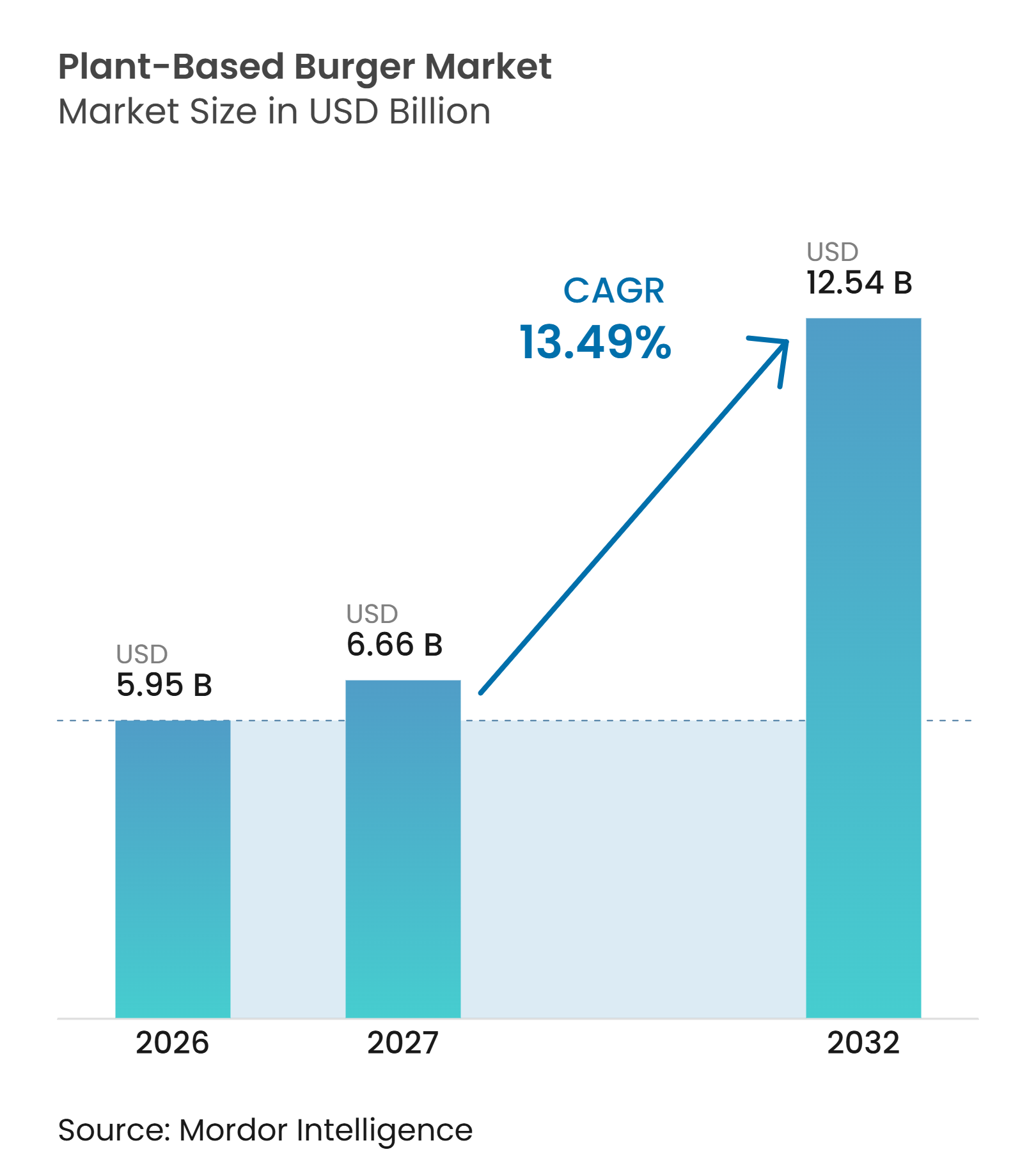
The plant-based burger market size is expected to grow from USD 5.95 billion in 2026 to USD 6.66 billion in 2027 and is forecast to reach USD 12.54 billion by 2032 at a 13.49% CAGR over 2027-2032. The market is experiencing strong growth, supported by increasing consumer interest in alternative protein sources, flexitarian diets, and more sustainable food choices. Product innovation, improvements in taste and texture, and advancements in plant-protein formulations are strengthening the appeal of plant-based burgers to a wider consumer base. Growing availability across retail and foodservice channels, alongside expanding cold-chain infrastructure and digital distribution, is improving product accessibility and encouraging consumer trial. Rising interest in clean-label, organic, and nutritionally enhanced food products is also creating opportunities for premium product development. Furthermore, increased investment in research and development, expanded production capacity, and strategic collaborations across the food industry are supporting market development and broadening the adoption of plant-based burgers.
Key Report Takeaways
-
By protein source, soy held 36.42% of the plant-based burger market share in 2026, while pea is forecast to record a 14.62% CAGR from 2027 to 2032.
-
By product form, frozen products held 83.76% of the plant-based burger market share in 2026, while shelf-stable products are forecast to grow at a 15.21% CAGR from 2027 to 2032.
-
By nature, conventional products held 88.31% of category value in 2026, while organic products are forecast to grow at a 14.87% CAGR from 2027 to 2032.
-
By distribution channel, supermarkets and hypermarkets held 58.27% of the plant-based burger market share in 2026, while online retail and e-commerce are forecast to grow at a 17.19% CAGR from 2027 to 2032.
-
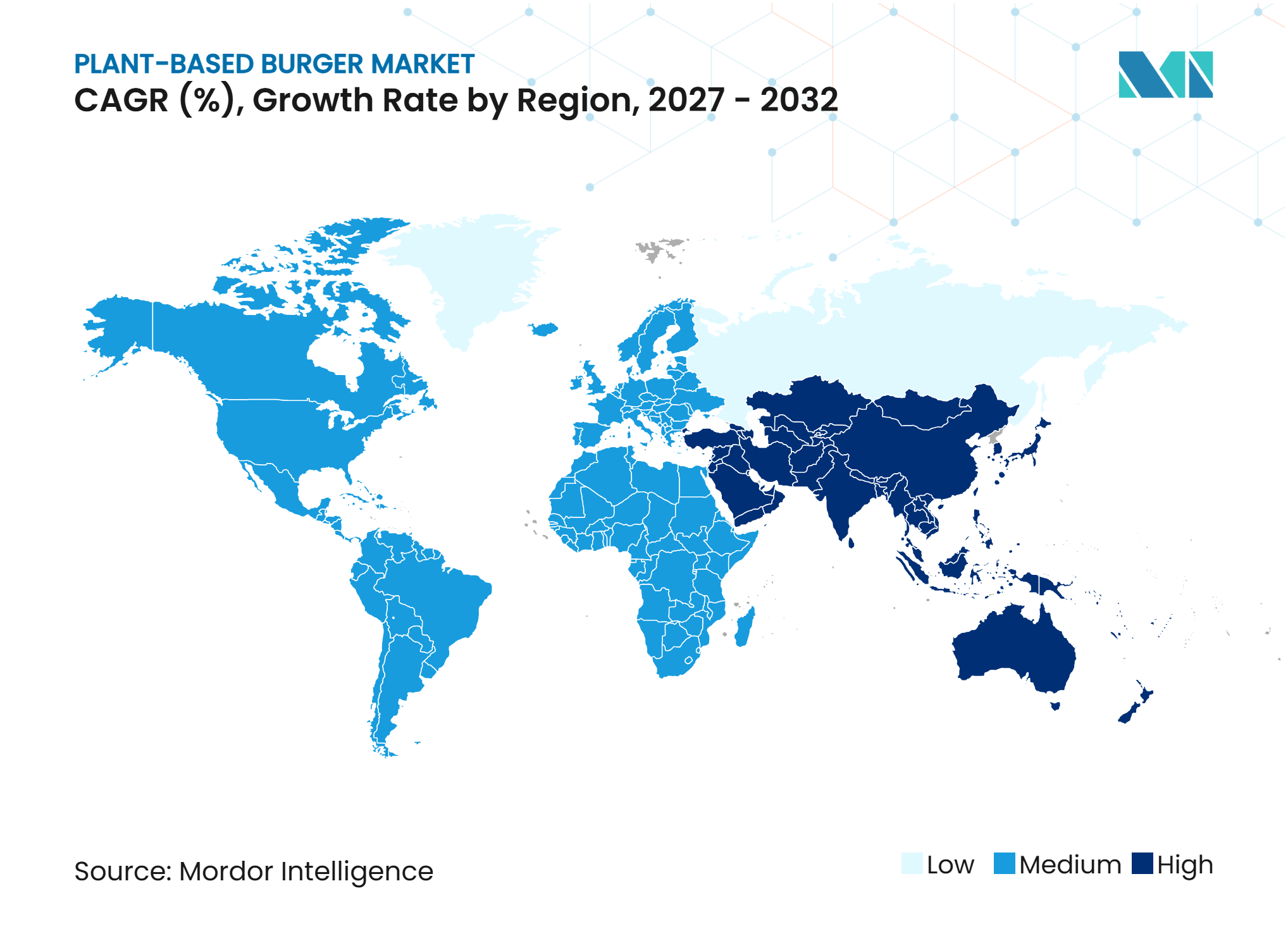
By geography, North America held 31.46% of regional value in 2026, while Asia-Pacific is forecast to grow at a 15.70% CAGR from 2027 to 2032.
Note: Market numbers in this report are based on Mordor Intelligence's proprietary estimation framework, which combines nine months of actuals with Q4 projections for base year 2026.
Market Trends and Insights
Drivers Impact Analysis of Plant-Based Burger Market*
| Driver | (~) % Impact on CAGR Forecast | Geographic Relevance | Impact Timeline |
|---|---|---|---|
| Increasing flexitarian adoption and meat-reduction intent | +2.5% | Global, with particular strength in North America and Western Europe | Medium term (2–4 years) |
| Rising health and nutrition consciousness | +2.0% | Global; highest in North America, Western Europe, and urban Asia-Pacific | Medium term (2–4 years) |
| Improvements in taste, texture, and cooking performance | +1.8% | Global; critical for mainstream adoption in North America and Europe | Short term (≤ 2 years) |
| Expansion of retail availability and e-commerce distribution | +1.5% | Global; accelerating fastest in Asia-Pacific and Western Europe | Short to medium term |
| Growing foodservice and QSR adoption | +1.2% | North America, Europe, Asia-Pacific; emerging in South America | Medium term (2–4 years) |
| Diversification of plant protein sources and localized product formulations | +0.8% | Asia-Pacific core, spill-over to South America | Long term (≥ 4 years) |
| Source: Mordor Intelligence | |||
Increasing Flexitarian Adoption and Meat-Reduction Intent
Growing consumer interest in flexitarian diets and reduced meat consumption is supporting demand for plant-based burger alternatives, as consumers increasingly incorporate plant-derived proteins into their regular eating habits. According to the 2025 Public Attitudes Survey by Eating Better and The Food Foundation, 22% of United Kingdom consumers reported eating less meat than a year earlier, while two-thirds expressed openness to reducing meat consumption. Similarly, 2025 consumer research by the Good Food Institute (GFI) found that 42% of surveyed United States adults considered plant-based meat appealing, while 51% were at least somewhat likely to consume it[1]. These changing dietary preferences are creating opportunities for plant-based burgers to gain wider acceptance as alternative protein options.
Rising Health and Nutrition Consciousness
Increasing consumer awareness of dietary quality, protein intake, and nutritional benefits is supporting interest in plant-based burger alternatives. Consumers are increasingly considering nutritional attributes such as protein content, fiber, and nutrient composition when evaluating food choices, creating opportunities for products that align with health-conscious eating preferences. According to the International Food Information Council's (IFIC) 2025 Food and Health Survey, 38% of Americans identified being a good source of protein as a defining characteristic of healthy food, making it the most frequently selected criterion[2]. This growing emphasis on nutritional value is encouraging manufacturers to develop plant-based burgers with enhanced protein and fiber profiles, supporting their appeal among health-conscious consumers.
Improvements in Taste, Texture and Cooking Performance
Advancements in food science and plant-protein processing are improving the sensory characteristics of plant-based burgers, making them increasingly comparable to conventional meat products in flavor, texture, juiciness, and cooking performance. According to NECTAR's 2025 Taste of the Industry study, which evaluated 122 plant-based meat products across 14 categories through blind sensory testing, 20 products were rated as equally good as or better than their conventional meat counterparts by at least 50% of participants[3]. These findings highlight the progress achieved through product formulation and sensory innovation. Continued improvements in protein structuring, flavor development, and cooking characteristics are supporting product acceptance and encouraging broader consumer adoption.
Expansion of Retail Availability and E-Commerce Distribution
Expanding retail availability and the growing adoption of e-commerce platforms are improving consumer access to plant-based burgers across multiple purchasing channels. Wider product placement in supermarkets, hypermarkets, specialty food stores, and convenience retailers is increasing product visibility and making alternative protein options more accessible to mainstream consumers. At the same time, online grocery platforms and direct-to-consumer channels are providing additional purchasing opportunities through convenient ordering, broader product selection, and home delivery. These distribution developments are helping manufacturers reach diverse consumer groups, strengthen product awareness and encourage repeat purchases, supporting the wider penetration of plant-based burgers in the food market.
Restraints Impact Analysis of Plant-Based Burger Market*
| Restraint | (~) % Impact on CAGR Forecast | Geographic Relevance | Impact Timeline |
|---|---|---|---|
| Price premiums and consumer trade-down | -1.5% | Global; most acute in North America and Europe among price-sensitive segments | Short to medium term (≤ 4 years) |
| Persistent taste, texture, and juiciness gaps | -1.2% | Global; most acute in North America and mature European markets | Medium term (2–4 years) |
| Ultra-processed food perceptions and ingredient-list concerns | -0.8% | North America, United Kingdom, Germany, Australia; emerging in Asia-Pacific | Short to medium term |
| Allergen management and regulatory compliance complexity | -0.5% | Europe, United Kingdom (novel food authorization); Asia-Pacific (variable national standards) | Medium to long term |
| Source: Mordor Intelligence | |||
Price Premiums and Consumer Trade-Down
The relatively higher prices of plant-based burgers compared with conventional meat products can influence purchasing decisions and limit their adoption among price-sensitive consumers. Differences in ingredient costs, specialized processing requirements, product formulation, and manufacturing scale can contribute to higher retail prices, making affordability an important consideration for households. During periods of tighter consumer spending, shoppers may prioritize lower-cost protein options or shift back towards conventional meat products to manage grocery expenditure. This price sensitivity can also affect repeat purchases, particularly among consumers who are still exploring plant-based alternatives. Consequently, manufacturers face the challenge of improving production efficiencies and maintaining competitive pricing to encourage broader consumer adoption.
Persistent Taste, Texture and Juiciness Gaps
Despite improvements in product formulation and processing technologies, replicating the taste, texture, juiciness, and cooking characteristics of conventional meat remains an important challenge for plant-based burger manufacturers. Differences in protein structure, fat composition, and moisture retention can influence the overall sensory experience, affecting consumer satisfaction and product acceptance. Some consumers may also perceive plant-based burgers as having distinct flavors, firmer textures, or different cooking behavior compared with traditional meat-based alternatives. These sensory differences can influence purchasing preferences, particularly among flexitarian consumers who expect a comparable eating experience when switching between protein options. Continued innovation in ingredient selection, flavor development, and protein structuring remains important for improving product appeal and encouraging repeat consumption.
*Our forecasts treat driver/restraint impacts as directional, not additive. The impact forecasts reflect baseline growth, mix effects, and variable interactions.
Plant-Based Burger Market Segment Analysis
By Protein Source:
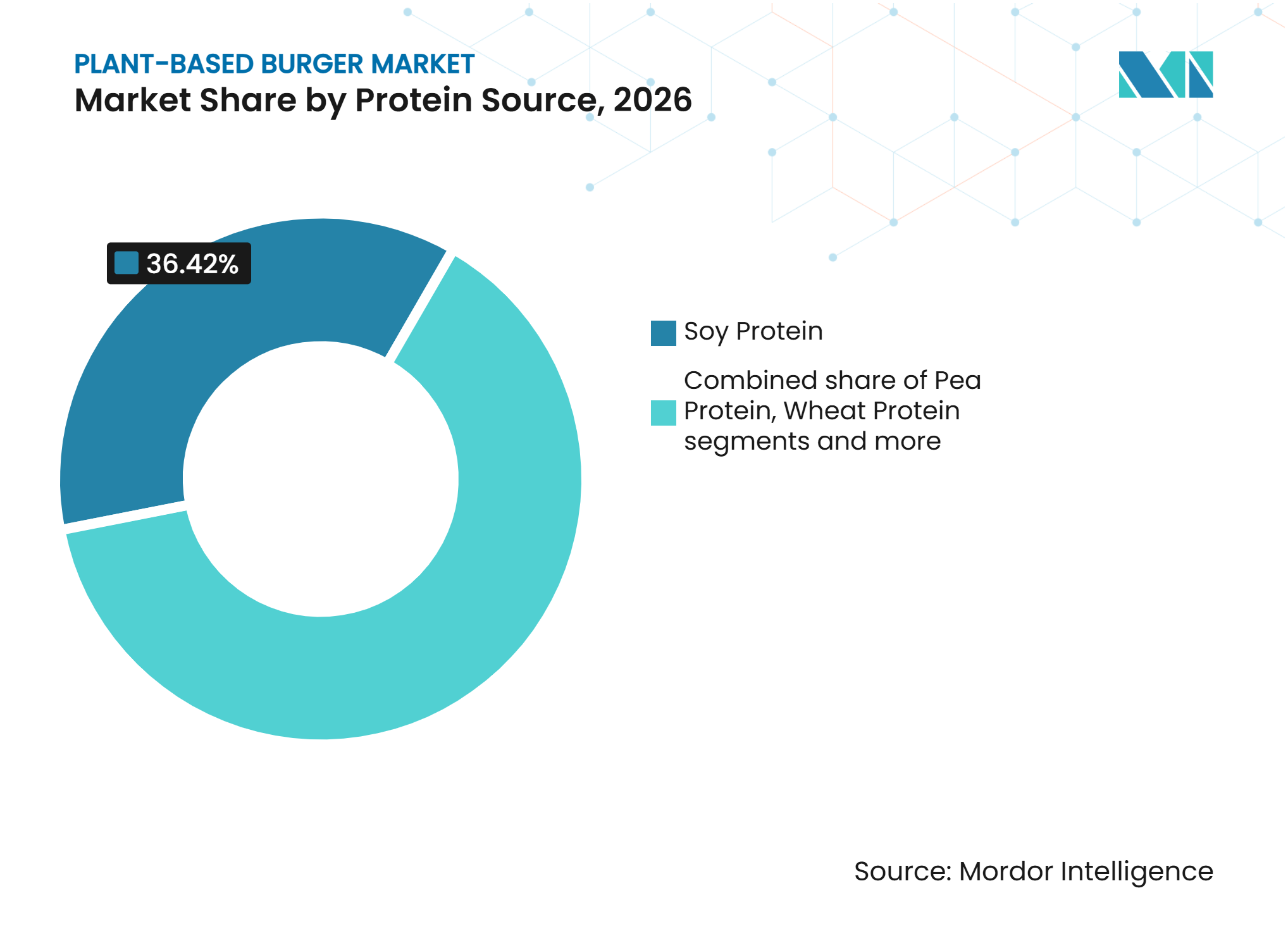
Soy Dominates but Pea Protein Gains GroundSoy protein holds the largest share of the plant-based burger market, accounting for 36.42% in 2026, supported by its established use in meat alternatives, favorable nutritional composition, functional versatility, and widespread availability. Its protein characteristics and processing adaptability make it suitable for developing burger formulations with desirable texture and consistency. Established ingredient supply chains and familiarity among food manufacturers further support its widespread incorporation into plant-based products. Soy protein also offers formulation flexibility across product types, making it an important ingredient for manufacturers seeking scalable, commercially viable burger alternatives. Its established position in food processing continues to support its leading market share.
Pea protein is projected to be the fastest-growing protein source, registering a CAGR of 14.62% during 2027–2032, driven by increasing interest in alternative plant protein ingredients and diversification of product formulations. Its functional properties, nutritional composition, and compatibility with different food applications are encouraging wider adoption among manufacturers. Growing investment in ingredient processing and production capacity is also improving the availability of specialized pea protein ingredients. Additionally, ongoing advances in protein extraction and structuring technologies are enabling their incorporation into burger formulations. Increasing demand for varied plant protein sources and product innovation are expected to strengthen pea protein's market position over the forecast period.



By Product Form:
Frozen Leads but Shelf-Stable Challenges ConventionFrozen products hold the largest share of the plant-based burger market, accounting for 83.76% in 2026, supported by their longer shelf life, convenient storage, and established distribution infrastructure. Frozen formats allow manufacturers and retailers to maintain product quality while supporting wider distribution and inventory management. Their compatibility with existing frozen food supply chains also facilitates retail availability and household storage. Additionally, established consumer familiarity with frozen foods and the demand for convenient preparation support the demand for frozen plant-based burgers. These operational and distribution advantages continue to reinforce the dominance of frozen products in the market.
Shelf-stable products are projected to be the fastest-growing category, registering a CAGR of 15.21% during 2027–2032, supported by their storage convenience, extended shelf life and reduced dependence on temperature-controlled distribution. These characteristics provide manufacturers with greater flexibility in product transportation, inventory management, and market accessibility. Shelf-stable formats also create opportunities to expand distribution through retail outlets and foodservice channels with limited cold-storage infrastructure. Improvements in food preservation, packaging technologies, and product formulation are further supporting the development of these products. Growing interest in convenient and easily accessible food options is expected to accelerate adoption over the forecast period.
By Nature:
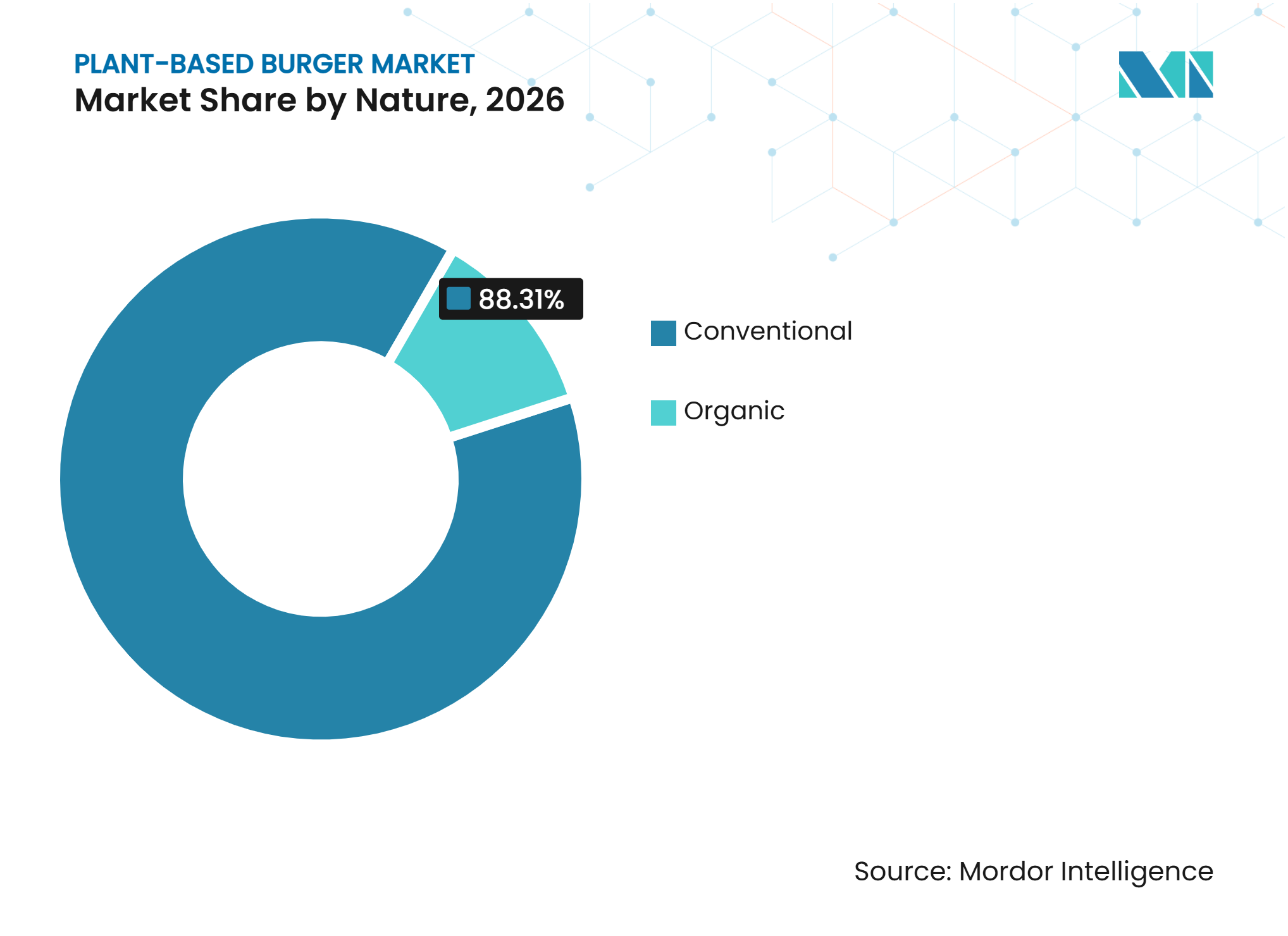
Conventional Remains the Value Base, Organic Captures Premium GrowthConventional plant-based burgers hold the largest share of the market, accounting for 88.31% in 2026, supported by their established presence across mainstream retail and foodservice channels. Their wider availability, established manufacturing processes, and consumer familiarity contribute to their leading position. Conventional formulations also provide manufacturers with greater flexibility in ingredient selection, product development, and pricing strategies. Established distribution networks and broad product accessibility further support their adoption across different consumer groups. Continued product innovation and formulation improvements are helping maintain the strong position of conventional plant-based burgers in the market.
Organic plant-based burgers are projected to be the fastest-growing category, registering a CAGR of 14.87% during 2027–2032, driven by increasing consumer interest in natural ingredients, clean-label formulations and food products with recognizable ingredient profiles. Growing awareness of ingredient transparency and preferences for minimally processed food options are encouraging manufacturers to explore organic formulations. Increasing availability through specialty food retailers and health-focused distribution channels is also improving product accessibility. Additionally, developments in organic ingredient sourcing and formulation are supporting the introduction of differentiated products. Rising interest in health-oriented and premium food alternatives is expected to support the expansion of organic plant-based burgers over the forecast period.

By Distribution Channel:
Hypermarkets Anchor the Market, E-Commerce AcceleratesSupermarkets and hypermarkets account for the largest share of the distribution channel, representing 58.27% in 2026, supported by their extensive retail networks, broad product assortments, and established consumer purchasing patterns. These outlets provide manufacturers with opportunities to improve product visibility, reach a wider customer base, and encourage product discovery through established grocery shopping channels. Their existing cold-storage infrastructure also supports the availability of frozen plant-based burgers alongside conventional food products. Additionally, prominent shelf placement and promotional activities help strengthen consumer awareness and product accessibility. These factors continue to support supermarkets and hypermarkets as the primary distribution channels for plant-based burgers.
Online retail and e-commerce are projected to be the fastest-growing distribution channels, registering a CAGR of 17.19% during 2027–2032, driven by increasing adoption of digital grocery and demand for convenient purchasing options. Online platforms provide consumers with access to a wider range of products, brands and specialized food categories, supporting product discovery and purchase flexibility. Improvements in delivery infrastructure and cold-chain logistics are also facilitating the distribution of temperature-sensitive food products through digital channels. Additionally, targeted promotions, product information, and subscription-based purchasing options are creating further opportunities for manufacturers to engage consumers. The continued expansion of online grocery services is expected to strengthen e-commerce penetration in the plant-based burger market.
Geography Analysis
North America
North America holds the largest share of the plant-based burger market, accounting for 31.46% in 2026, supported by established plant-based food consumption patterns, developed retail infrastructure and widespread availability of alternative protein products. The region benefits from strong product innovation, growing consumer interest in protein diversification, and the established presence of plant-based food manufacturers. Foodservice channels, particularly quick-service restaurants (QSRs), are also supporting market development by introducing plant-based burger options into mainstream menus and providing consumers with opportunities to explore alternative protein products. Additionally, improvements in plant protein sourcing, formulation, and manufacturing capabilities are supporting product development and commercial availability. Continued retail penetration and foodservice collaborations are expected to strengthen the region's position in the global market.
Asia-Pacific
Asia-Pacific is projected to be the fastest-growing regional market, registering a CAGR of 15.70% during 2027–2032, driven by increasing urbanization, changing dietary preferences and expanding demand for convenient food products. Growing interest in alternative protein sources, supported by established vegetarian food cultures in several markets, is creating opportunities for plant-based burger manufacturers. The expansion of quick-service restaurant networks, modern retail infrastructure, and online grocery platforms is further improving product accessibility. Additionally, rising investments in food technology, alternative protein processing, and local manufacturing capabilities are supporting the development of regionally adapted products. Increasing consumer exposure to international food trends and growing interest in diversified protein options are expected to accelerate market adoption across the region.
Europe, South America, Middle East and Africa
Europe represents an established market for plant-based burgers, supported by a developed alternative protein industry, consumer awareness, and the widespread availability of plant-based products through retail and foodservice channels. Continued product innovation, clean-label preferences, and expanding foodservice offerings are supporting category development across the region. Meanwhile, South America is witnessing gradual market development as urbanization, changing dietary preferences, and expanding modern retail and quick-service restaurant networks improve access to alternative protein products. Brazil, Argentina, and Colombia offer opportunities for manufacturers to introduce plant-based burger products through established foodservice and specialty retail channels. In the Middle East and Africa, growing health consciousness, increasing exposure to international food trends, and the expansion of modern retail infrastructure are creating opportunities for market development, particularly in urban consumer markets.
Competitive Landscape
Market Concentration
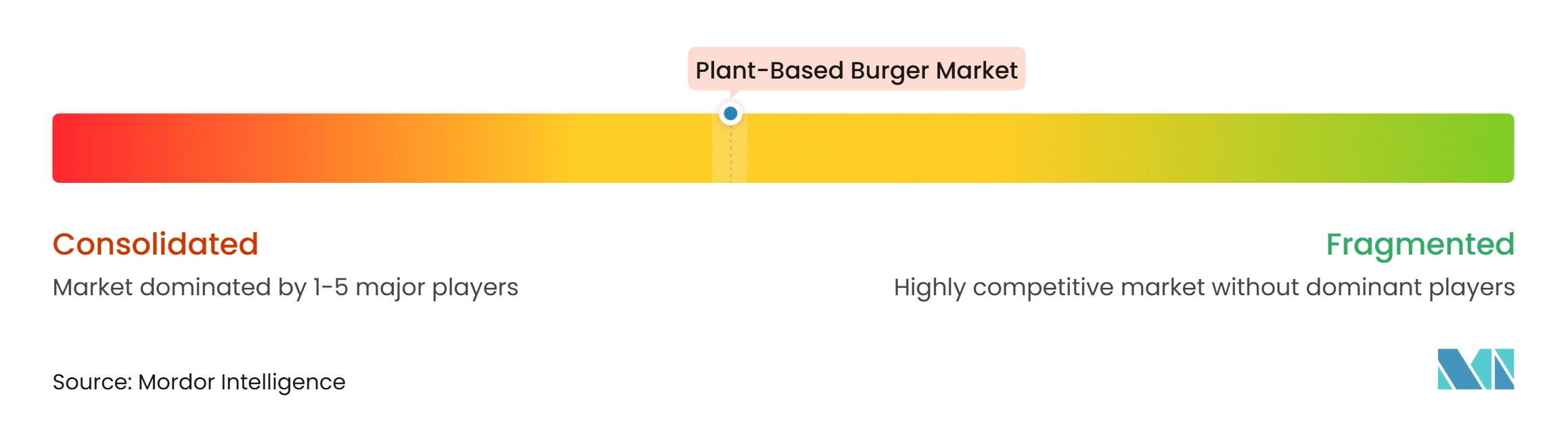
The plant-based burger market is moderately concentrated, with established food manufacturers and specialized alternative-protein companies accounting for a significant share of the market. Leading players include Beyond Meat Inc., Impossible Foods Inc., Nestlé S.A., Maple Leaf Foods Inc., and The Kraft Heinz Company, which maintain competitive positions through established brand portfolios, product innovation capabilities, and extensive distribution networks. Their presence across retail and foodservice channels, supported by investments in product development and manufacturing capabilities, strengthens their participation in the global market. The competitive structure also reflects the growing importance of product differentiation, brand recognition, and distribution reach in attracting consumers.
Leading players are focusing on expanding their plant-based burger portfolios through product launches, improvements in taste and texture, nutritional enhancements, and the development of new formulations. Companies are also strengthening their distribution networks through retail partnerships, foodservice collaborations, and expansion into additional markets. Investments in research and development, ingredient innovation, and production efficiencies are supporting efforts to improve product quality and commercial scalability. Furthermore, manufacturers are increasingly emphasizing protein content, clean-label formulations and product versatility to address evolving consumer preferences and strengthen brand positioning.
Emerging players and regional manufacturers are contributing to market competition through differentiated product formulations, localized product development, and targeted distribution strategies. Companies such as Heura Foods, Vivera B.V., v2food Pty Ltd, OmniFoods and Moving Mountains Foods are expanding their presence through alternative protein innovations and partnerships with retail and foodservice operators. These companies are focusing on regional taste preferences, ingredient diversification, and improvements in product accessibility to strengthen their market positions. Smaller manufacturers and food technology companies are also exploring blended-protein formulations, organic ingredients and alternative protein sources, creating additional opportunities for product differentiation and competitive expansion.
Plant-Based Burger Industry Leaders
-
Beyond Meat Inc.
-
Impossible Foods Inc.
-
Nestlé S.A.
-
Maple Leaf Foods
-
Kraft Heinz, Inc.
- *Disclaimer: Major Players sorted in no particular order
Plant-Based Burger Market Companies Covered in this Report
- Beyond Meat Inc.
- Impossible Foods Inc.
- Nestlé S.A.
- Kellanova
- Oumph!
- Conagra Brands, Inc.
- Maple Leaf Foods
- Quorn
- Kraft Heinz, Inc.
- Turtle Island Foods, Inc.
- Amy's Kitchen, Inc.
- Dr. Praeger's Sensible Foods, Inc.
- Heura Foods, S.L.
- Vivera B.V.
- The Hain Celestial Group, Inc.
- v2food Pty Ltd
- Moving Mountains Foods
- OmniFoods
- BEFORETHEBUTCHER INC.
- Hungry Planet, Inc.
Recent Industry Developments in Plant-Based Burger Market
- September 2026: Impossible Foods partnered with Tesco to launch four products in selected supermarkets in the United Kingdom, including newly developed Impossible Burger Patties. The patties were formulated specifically for the United Kingdom and European markets, with 18 g of protein and 4 g of dietary fiber per patty. The launch also marked the company's expansion into the United Kingdom grocery retail.
- September 2026: Beyond Meat introduced its Beyond Veggie range as part of its Phytosphere nutrition portfolio. The new burger range included Chipotle Black Bean and Spiced Chickpea varieties, made with more than 10 fruits, vegetables, legumes, seeds, and plant proteins.
- March 2026: Beyond Burger was reintroduced across 66 BurgerFi restaurants in the United States. The relaunch followed discussions between BurgerFi and the animal-welfare organization Mercy For Animals to restore a fully vegan burger option to the restaurant chain's menu.
- November 2025: Dr. Praeger's introduced its new Grillhouse Burger line, which comprised the Grillhouse Burger and the Grillhouse Cheddar Burger. The meat-free products were launched nationwide at Whole Foods Market in the United States, expanding the company's plant-based burger portfolio.
Global Plant-Based Burger Market Report Scope
The plant-based burger market encompasses the production and sale of burgers made primarily from plant-derived proteins as alternatives to conventional meat-based burgers. The market is segmented by protein source into soy, pea, wheat, mycoprotein, and others; product form into frozen, chilled or refrigerated, and shelf-stable; nature into conventional and organic; distribution channel into supermarkets, convenience stores, specialty stores, online retail, and foodservice; and geography into North America, Europe, Asia-Pacific, South America, and the Middle East and Africa. The market forecasts are provided in USD.
Segmentation Overview
| Soy Protein |
| Pea Protein |
| Wheat Protein |
| Mycoprotein |
| Other Protein Sources |
| Frozen |
| Chilled/Refrigerated |
| Shelf-Stable/Ambient |
| Conventional |
| Organic |
| Supermarkets/Hypermarkets |
| Convenience Stores |
| Specialty/Health Food Stores |
| Online Retail/E-Commerce |
| Foodservice |
| North America | United States |
| Canada | |
| Mexico | |
| Rest of North America | |
| Europe | Germany |
| United Kingdom | |
| Italy | |
| France | |
| Spain | |
| Netherlands | |
| Poland | |
| Belgium | |
| Sweden | |
| Rest of Europe | |
| Asia-Pacific | China |
| India | |
| Japan | |
| Australia | |
| Indonesia | |
| South Korea | |
| Thailand | |
| Singapore | |
| Rest of Asia-Pacific | |
| South America | Brazil |
| Argentina | |
| Colombia | |
| Chile | |
| Peru | |
| Rest of South America | |
| Middle East and Africa | South Africa |
| Saudi Arabia | |
| United Arab Emirates | |
| Nigeria | |
| Egypt | |
| Morocco | |
| Turkey | |
| Rest of Middle East and Africa |
| By Protein Source | Soy Protein | |
| Pea Protein | ||
| Wheat Protein | ||
| Mycoprotein | ||
| Other Protein Sources | ||
| By Product Form | Frozen | |
| Chilled/Refrigerated | ||
| Shelf-Stable/Ambient | ||
| By Nature | Conventional | |
| Organic | ||
| By Distribution Channel | Supermarkets/Hypermarkets | |
| Convenience Stores | ||
| Specialty/Health Food Stores | ||
| Online Retail/E-Commerce | ||
| Foodservice | ||
| By Geography | North America | United States |
| Canada | ||
| Mexico | ||
| Rest of North America | ||
| Europe | Germany | |
| United Kingdom | ||
| Italy | ||
| France | ||
| Spain | ||
| Netherlands | ||
| Poland | ||
| Belgium | ||
| Sweden | ||
| Rest of Europe | ||
| Asia-Pacific | China | |
| India | ||
| Japan | ||
| Australia | ||
| Indonesia | ||
| South Korea | ||
| Thailand | ||
| Singapore | ||
| Rest of Asia-Pacific | ||
| South America | Brazil | |
| Argentina | ||
| Colombia | ||
| Chile | ||
| Peru | ||
| Rest of South America | ||
| Middle East and Africa | South Africa | |
| Saudi Arabia | ||
| United Arab Emirates | ||
| Nigeria | ||
| Egypt | ||
| Morocco | ||
| Turkey | ||
| Rest of Middle East and Africa | ||
Key Questions Answered in the Report
What is the projected value of the plant based burger market by 2032?
The market is projected to reach USD 12.54 billion by 2032, growing at a 13.49% CAGR from 2027 to 2032.
Which protein source leads plant-based burger sales?
Soy leads by protein source with a 36.42% share in 2026, while pea protein is the fastest-growing source at a 14.62% CAGR through 2032.
Which sales channel will grow fastest through 2032?
Online retail and e-commerce are forecast to grow at a 17.19% CAGR as digital platforms broaden assortment and product discovery.
Which region is expected to expand fastest?
Asia-Pacific is forecast to grow at a 15.70% CAGR from 2027 to 2032.