
Phototherapy Lamps Market Size and Share
Market Overview
| Study Period | 2021 - 2032 |
|---|---|
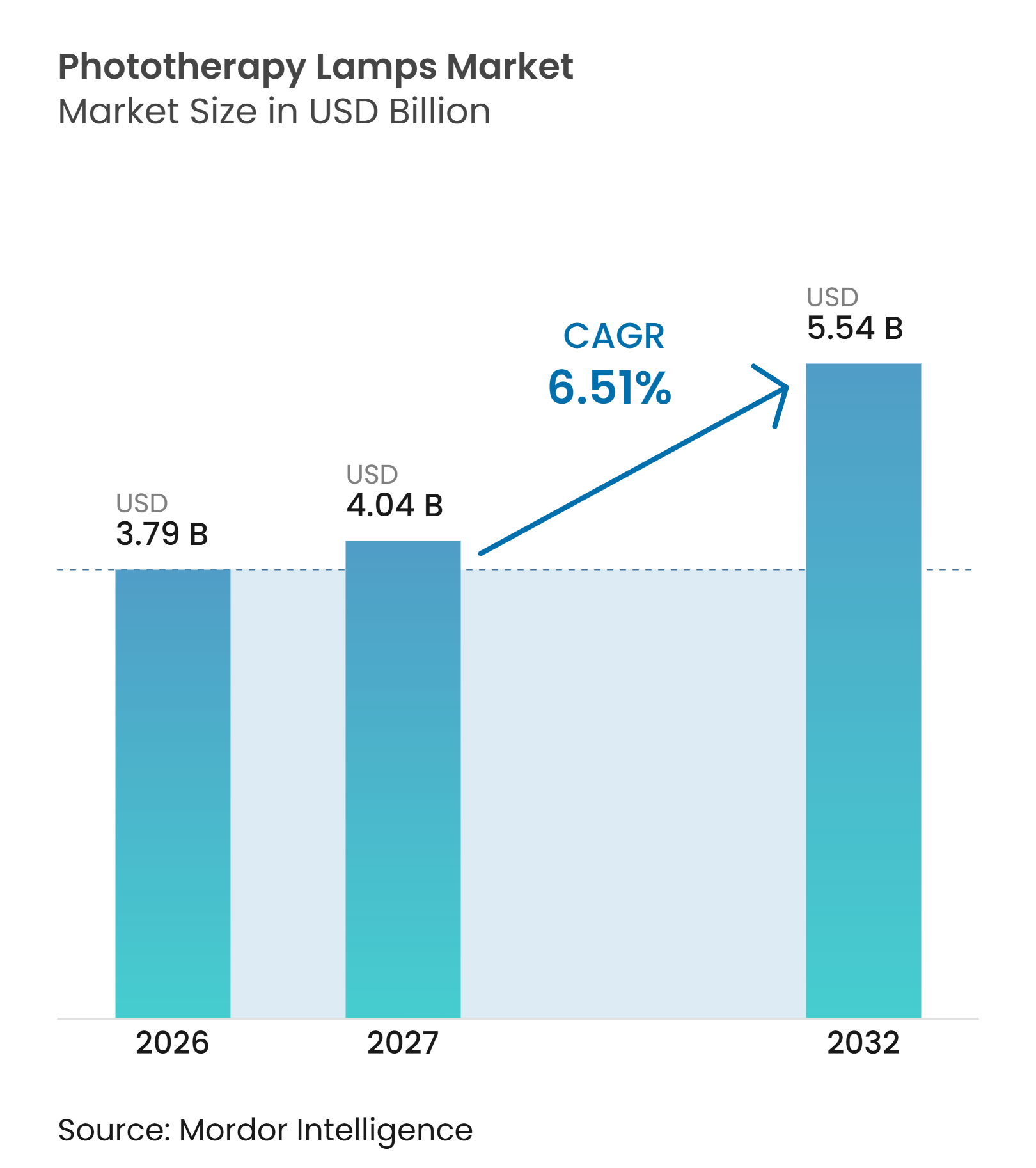
| Market Size (2027) | USD 4.04 Billion |
| Market Size (2032) | USD 5.54 Billion |
| Growth Rate (2027 - 2032) | 6.51 % |
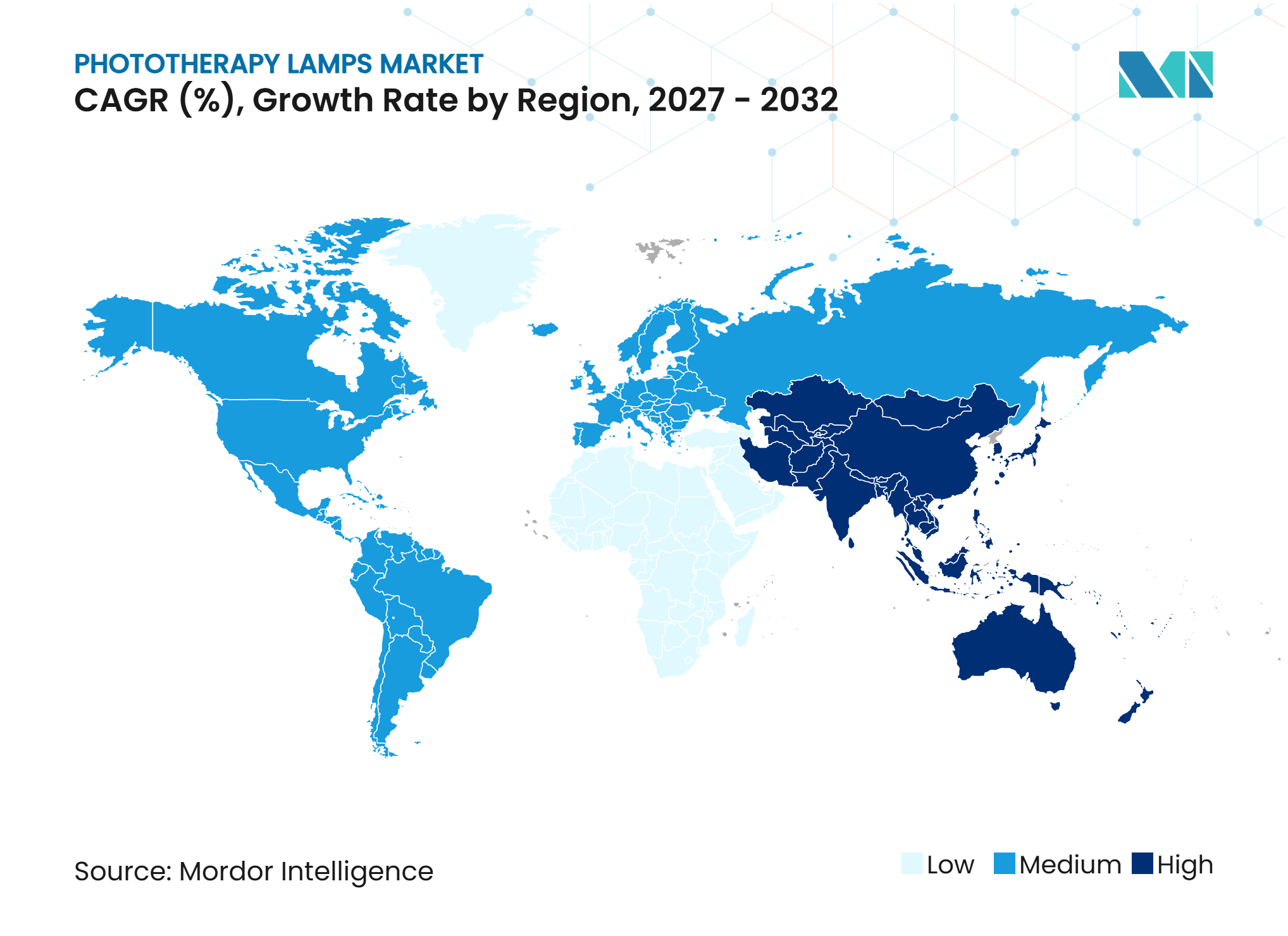
| Fastest Growing Market | Asia-Pacific |
| Largest Market | North America |
| Market Concentration | Medium |
Major Players *Disclaimer: Major Players sorted in no particular order Image © Mordor Intelligence. Reuse requires attribution under CC BY 4.0. | |
Phototherapy Lamps Market Analysis by Mordor Intelligence
The Phototherapy Lamps Market size is projected to expand from USD 3.79 billion in 2026 and USD 4.04 billion in 2027 to USD 5.54 billion by 2032, registering a CAGR of 6.51% between 2027 and 2032.
The phototherapy lamps market is supported by persistent neonatal jaundice needs and broader use of light-based care for psoriasis, vitiligo, eczema, and atopic dermatitis. Clinical demand is shifting toward LED equipment because it offers more targeted wavelengths, lower heat exposure, and longer operating life than fluorescent and halogen equipment. Payer coverage and smaller connected devices are extending phototherapy beyond hospitals into supervised homecare settings. The phototherapy lamps market also faces budget pressure in lower-income health systems, while complex device approval rules make regulatory capability an important competitive advantage.
Key Report Takeaways
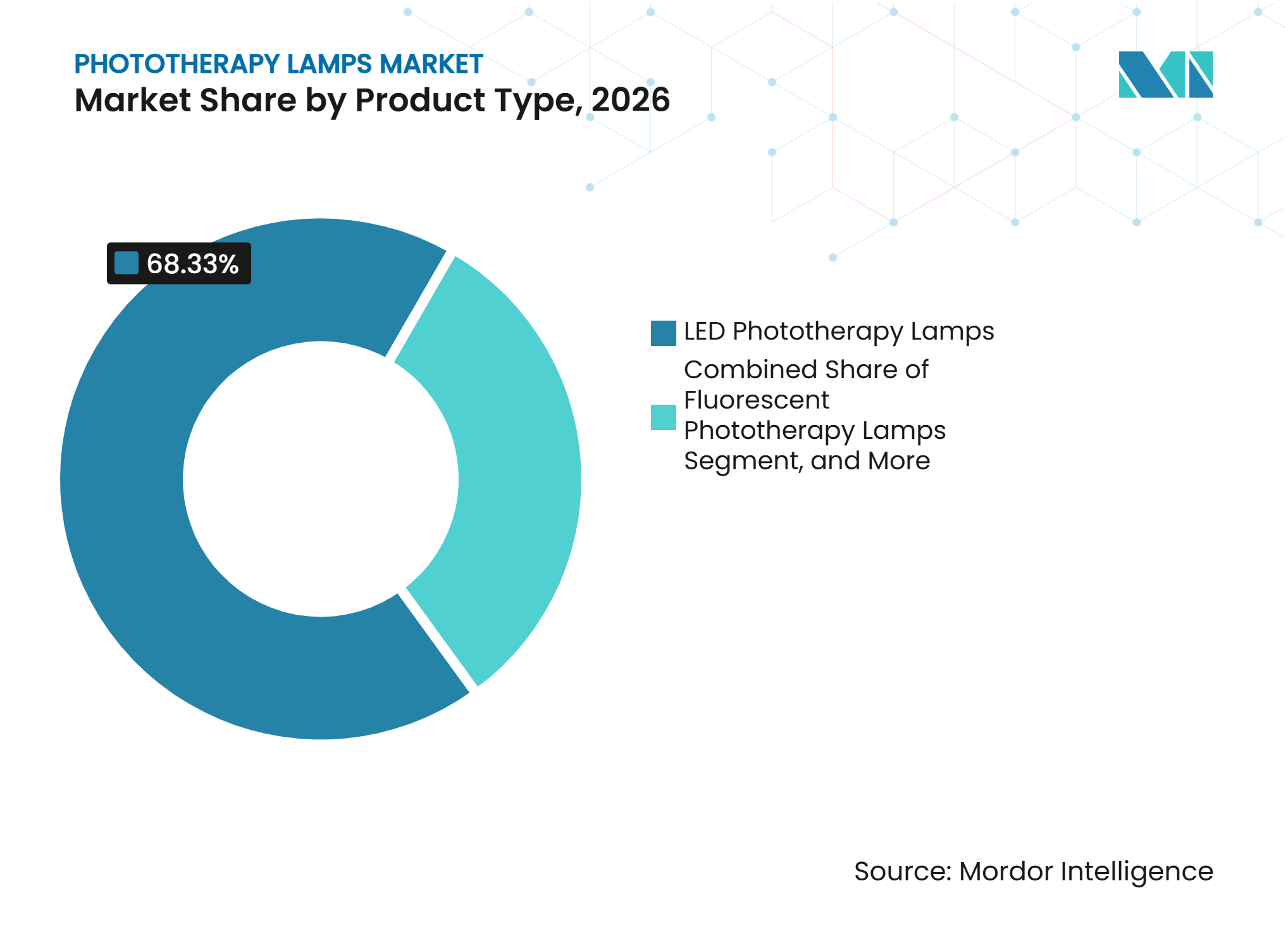
- By product type, LED lamps held 68.3% of the phototherapy lamps market share in 2026, while LED lamps are forecast to grow at an 8.5% CAGR through 2032.
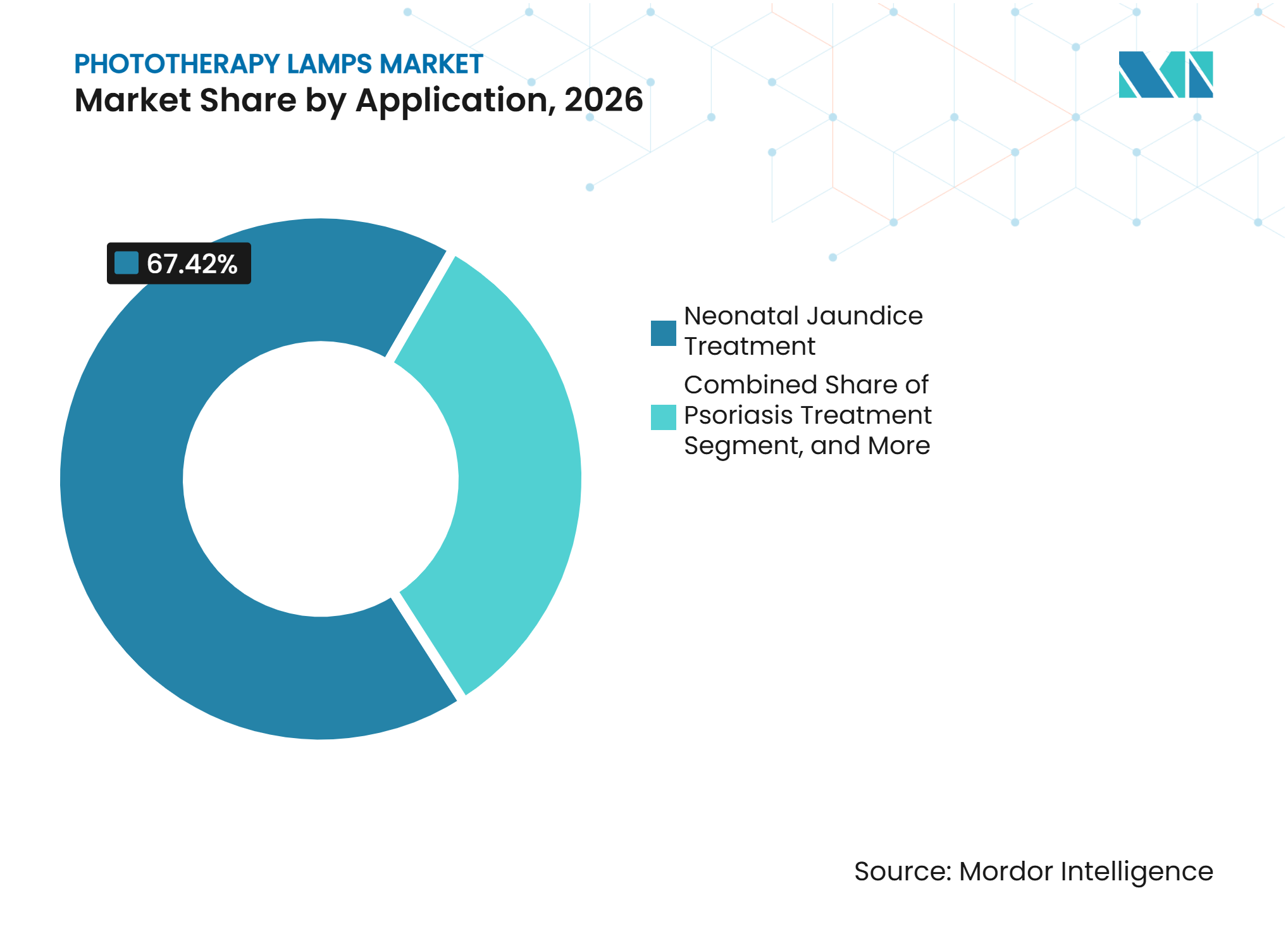
- By application, neonatal jaundice treatment accounted for 67.4% of the phototherapy lamps market size in 2026, while neonatal jaundice treatment is forecast to grow at a 9.2% CAGR through 2032.
- By end user, hospitals and NICUs held a 68.8% revenue share in 2026, while homecare is forecast to grow at a 9.7% CAGR through 2032.
- By geography, North America held a 41.32% revenue share in 2026, while Asia-Pacific is forecast to grow at a 7.54% CAGR through 2032.
Note: Market numbers in this report are based on Mordor Intelligence's proprietary estimation framework, which combines nine months of actuals with Q4 projections for base year 2026.
Market Trends and Insights
Drivers Impact Analysis of Phototherapy Lamps Market*
| Driver | % Impact on CAGR Forecast | Geographic Relevance | Impact Timeline |
|---|---|---|---|
| Rising Incidence of Neonatal Jaundice and Premature Births | +2.10% | Global; highest in Sub-Saharan Africa, South Asia, Southeast Asia | Long term (≥ 4 years) |
| Rising Burden of Psoriasis, Vitiligo, Eczema, and Other Photosensitive Disorders | +1.40% | North America, Europe; growing in Asia-Pacific | Medium term (2–4 years) |
| Migration From Fluorescent and Halogen Lamps to LED Phototherapy Lamps | +1.80% | Global; accelerating in APAC and MEA | Medium term (2–4 years) |
| Expansion of Neonatal Intensive Care and Dermatology Infrastructure | +0.90% | Asia-Pacific, Middle East and Africa; spill-over to South America | Long term (≥ 4 years) |
| Growth of Home-Based and Portable Phototherapy | +1.20% | North America (regulatory leadership); early adoption in Europe | Short term (≤ 2 years) |
| Wearable and Family-Centered Neonatal Phototherapy Designs | +0.70% | North America, Europe; early clinical trials globally | Medium term (2–4 years) |
| Source: Mordor Intelligence | |||
Rising Incidence of Neonatal Jaundice, Premature Births, and Care Infrastructure
Neonatal jaundice creates a consistent clinical need for the phototherapy lamps market because light therapy remains a standard treatment option for newborns with elevated bilirubin. A 2025 study reported that neonatal jaundice affects 60% of full-term newborns and up to 80% of preterm newborns in the first week of life[1]. A 2025 analysis of Global Burden of Disease data found that the age-standardized mortality rate for neonatal jaundice fell 56.8% between 1990 and 2021, while prevalence rose 41.5% during the same period. Better neonatal survival therefore increases the group of children who need monitoring and treatment, even when mortality declines. A 2026 Pediatric Research analysis reported that Sub-Saharan Africa and South Asia accounted for 68% of incident extreme hyperbilirubinemia cases and 90% of deaths in 2023. Demand in these regions depends on neonatal intensive care capacity, donor-supported procurement, and public investment in newborn care, which links equipment demand to wider health-system development.
Rising Burden of Psoriasis, Vitiligo, Eczema, and Other Photosensitive Disorders
The phototherapy lamps market is also supported by demand from dermatology settings, where narrowband UVB and excimer treatment are used for psoriasis, vitiligo, eczema, and related conditions. The American Medical Association CPT Editorial Panel approved updates to codes 96920-96922 that extend reimbursable targeted phototherapy indications to vitiligo, atopic dermatitis, and alopecia areata from January 1, 2027. STRATA Skin Sciences stated that the coverage change could expand the addressable patient group to more than 30 million people in the United States. Aetna’s clinical policy bulletin classified excimer laser, PUVA, and narrowband UVB as medically necessary for vitiligo after inadequate response to topical agents. A 2026 multicenter study reported an 85.5% response rate for XTRAC 308-nm excimer treatment combined with oral JAK inhibitors in pediatric progressive vitiligo, compared with 53.8% in a tacrolimus control group. These coverage and clinical developments support a broader role for supervised light treatment in specialty dermatology.
Migration From Fluorescent and Halogen Lamps to LED Phototherapy Lamps
The replacement of fluorescent and halogen equipment with LED systems creates demand that is not limited to changes in patient volumes. LED systems can be tuned to wavelengths relevant to bilirubin absorption, generally 450-475 nm, and narrowband UVB treatment, generally 311 nm for dermatology applications. Their lower thermal exposure and longer service life can reduce replacement-part use and biomedical engineering downtime for hospitals. Revised IEC 60601-2-50 requirements in 2025 added dose-precision and skin-burn-prevention requirements for infant phototherapy safety. These compliance factors favor equipment with consistent irradiance control and increase the value placed on LED performance. A 2025 study of next-generation LED therapeutic devices described improved safety, portability, and light distribution for wearable and implantable formats relative to bulkier legacy equipment[2].
Growth of Home-Based, Portable, and Family-Centered Phototherapy
Homecare is changing how suppliers serve the phototherapy lamps market, especially in the United States. Cigna removed earlier restrictions on home phototherapy for 19.2 million covered lives in July 2025. Phothera reported that concurrent coverage changes by Cigna and Elevance Health opened restriction-free access to home devices for more than 66.7 million Americans with psoriasis, eczema, and vitiligo. The National Psoriasis Foundation also reported that Elevance Health revised home phototherapy coverage criteria after evidence on home narrowband UVB treatment[3]. Smaller form factors, straightforward controls, remote dose monitoring, and physician oversight are increasingly important for products intended for home use. Family-centered neonatal designs make it possible to consider treatment models that reduce separation between newborns and caregivers while maintaining clinical supervision.
Restraints Impact Analysis of Phototherapy Lamps Market*
| Restraint | % Impact on CAGR Forecast | Geographic Relevance | Impact Timeline |
|---|---|---|---|
| High Acquisition and Lifecycle Costs of Advanced Systems | -0.80% | Global; most acute in Sub-Saharan Africa, South Asia, Latin America | Long term (≥ 4 years) |
| Treatment-Related Safety and Exposure Risks | -0.50% | Global; higher concern in homecare settings | Medium term (2–4 years) |
| Stringent Device Approval and Clinical Compliance Requirements | -0.60% | North America, Europe; growing compliance burden in APAC | Medium term (2–4 years) |
| Replacement Demand Displaced by Refurbished and Used Equipment | -0.40% | Sub-Saharan Africa, South Asia, parts of Latin America | Long term (≥ 4 years) |
| Source: Mordor Intelligence | |||
High Acquisition, Lifecycle, Safety, and Refurbished-Equipment Constraints
Advanced LED systems can require capital spending that public hospitals in lower-income settings find difficult to fund. The burden continues after purchase because calibration, recertification, replacement parts, and maintenance add to lifecycle costs. These constraints slow purchasing within the phototherapy lamps market where procurement decisions are tied to annual public budgets. A 2025 open-source device study found that a neonatal phototherapy unit meeting American Academy of Pediatrics and UNICEF irradiance specifications could be fabricated with USD 93.00 in material costs. The large cost difference between low-cost designs and commercial systems helps explain the continued use of refurbished equipment in South Asia, Sub-Saharan Africa, and parts of Latin America. Used equipment can defer new-device purchases and reduce replacement-cycle revenues. Safety considerations also remain material, particularly for homecare products, because dose accuracy, thermal exposure, and appropriate clinical supervision affect acceptance.
Stringent Device Approval and Clinical Compliance Requirements
Phototherapy device approval requirements vary by jurisdiction and add cost to product development in the phototherapy lamps market. In the United States, phototherapy systems are Class II medical devices that require Food and Drug Administration 510(k) clearance. The European Union’s Medical Device Regulation transition has extended product-registration timelines in some markets and gives larger suppliers an advantage when they have established regulatory resources. Portable and wearable systems can face added clinical validation requirements because their designs differ from traditional overhead units. Natus Sensory reported that TheraB Medical’s SnugLit wearable phototherapy device received Food and Drug Administration 510(k) clearance in January 2026 after a multiyear clinical validation process. Compliance with IEC 60601-2-50, Food and Drug Administration requirements, and European Union Medical Device Regulation requirements can become a barrier for smaller innovators and can favor acquisition or partnership as a route to commercialization.
*Our forecasts treat driver/restraint impacts as directional, not additive. The impact forecasts reflect baseline growth, mix effects, and variable interactions.
Phototherapy Lamps Market Segment Analysis
By Product Type:
LED Replacement Broadens Clinical and Homecare UseLED lamps held 68.3% of revenue in 2026. Their position reflects targeted output at bilirubin-relevant wavelengths, longer operating life, lower heat exposure, and improved consistency compared with fluorescent alternatives. Hospitals are also giving more weight to irradiance precision because infant phototherapy safety requirements have strengthened. Fluorescent lamps remain in use in resource-constrained hospitals where installed systems can remain in service for long periods. UV lamps retain a specialist role in psoriasis, vitiligo, eczema, and atopic dermatitis care. Halogen lamps continue to lose relevance as hospitals replace older equipment during upgrade cycles.
LED lamps are forecast to grow at an 8.5% CAGR from 2027 to 2032, exceeding the total phototherapy lamps market growth rate. A 2025 European Journal of Pediatrics pilot study found that the Jauni wearable LED device enabled 83% of treated newborns to complete phototherapy within 48 hours. The device delivered irradiance of 25-30 µW/cm²/nm at 470 nm, and the study reported no serious adverse events. Wearable LED formats therefore widen the range of potential care settings without changing the clinical purpose of phototherapy. Suppliers can also use product tiers, from standard overhead lamps to connected premium systems, to address differing hospital, clinic, and homecare budgets.



By Application:
Neonatal Jaundice Maintains the Largest Treatment BaseNeonatal jaundice treatment accounted for 67.4% of the phototherapy lamps market size in 2026. The segment is anchored in the frequency of neonatal jaundice and the standard role of phototherapy in lowering bilirubin. Psoriasis represents the next major application, using narrowband UVB panels and 308-nm excimer devices in planned courses of care. Vitiligo treatment is gaining attention as payer policies and clinical evidence support phototherapy options. Eczema and atopic dermatitis can benefit from the January 2027 expansion of targeted-phototherapy reimbursement codes. Acne and cosmetic dermatology are served mainly by lower-priced consumer and semi-professional blue-light devices.
Neonatal jaundice treatment is forecast to grow at a 9.2% CAGR from 2027 to 2032, making it a central growth engine for the phototherapy lamps market. A 2026 analysis across 204 countries estimated that extreme hyperbilirubinemia in 2023 was associated with USD 6.9 billion-USD 10.4 billion in welfare losses and USD 13.0 billion in DALY-based human-capital losses. This burden reinforces the case for newborn screening and treatment capacity in South Asia and Sub-Saharan Africa. The Canadian Paediatric Society updated its position statement in March 2025 to introduce universal bilirubin screening. Screening protocols support continuing demand because hospitals need the capability to provide treatment when bilirubin results require action. The clinical urgency makes neonatal equipment purchases less discretionary than many other categories of capital equipment.

By End User:
Hospitals and NICUs Retain Revenue Leadership as Homecare ExpandsHospitals and NICUs held 68.8% of revenue in 2026, reflecting the concentration of neonatal care and specialist dermatology services in institutional settings. These facilities require calibrated equipment, formal safety processes, and trained staff. Dermatology clinics form the second-largest end-user group, using narrowband UVB panels and 308-nm excimer systems within structured treatment courses. Hospital procurement remains important for overhead neonatal lamps and for higher-capacity dermatology equipment. Institutional buyers also value service support, compliance documentation, and integration with established care workflows. Homecare adoption is testing the historic dominance of in-clinic treatment as coverage policies change and equipment becomes simpler to use.
Homecare is forecast to grow at a 9.7% CAGR from 2027 to 2032. Phothera launched in January 2025 after combining Daavlin and National Biological Corporation, bringing together Food and Drug Administration-cleared narrowband UVB devices, ClearLink dosimetry controllers, and insurance navigation. This model combines equipment supply, connected dose control, and assistance with coverage decisions. Birth centers, community facilities, and rural health posts are a separate emerging user group where portable and battery-operated designs may be relevant. Their needs differ from those of specialty clinics because consistent grid power and biomedical support can be limited. Product design for these settings must balance portability, light output, durability, and safe operation.
Geography Analysis
North America
North America held 41.3% of the phototherapy lamps market in 2026. The region benefits from dense NICU capacity, established specialist dermatology networks, and insurance structures that support replacement demand. Cigna’s July 2025 policy update and Elevance Health’s related coverage revision expanded access to home phototherapy for psoriasis, eczema, and vitiligo. The changes increased the practical importance of residential procurement in a region previously led by institutional purchases. Natus Sensory and Canadian Hospital Specialties entered a multi-year agreement in February 2026 to expand access to newborn-care products across Canadian health systems. The agreement covers phototherapy, hearing screening, and NICU connectivity, showing how suppliers are combining product access with education and distribution. Food and Drug Administration clearance remains a central compliance factor for new products in the United States. The phototherapy lamps market has higher per-capita use in North America because of long-standing investment in neonatal and specialist care. Connected home devices are likely to be most relevant where payer coverage and remote clinical oversight are both available.
Asia-Pacific
Asia-Pacific is forecast to grow at a 7.5% CAGR from 2027 to 2032. High birth volumes, expanding NICU capacity, and greater access to specialist dermatology support the region’s demand profile. The region combines large public hospital systems with growing private care networks, creating demand across a broad range of price points. India’s device-production incentive framework and unmet neonatal-care needs support interest in lower-cost LED platforms for hospitals and community settings. Phoenix Medical Systems and Nice Neotech were identified in the supplied draft as domestic suppliers scaling affordable LED equipment. Japan and South Korea are more mature settings where interest is moving toward workflows that combine bilirubin measurement with phototherapy delivery. Regulatory requirements vary across the region and add complexity for international suppliers. The phototherapy lamps market size in Asia-Pacific is also shaped by the ability of providers to add capacity beyond major urban hospitals. Affordable LED equipment and portable formats are important where health systems are extending care to smaller facilities.
Europe, Middle East and Africa, and South America
Europe, the Middle East and Africa, and South America show different demand conditions within the wider phototherapy lamps market. Germany and France have supported wearable-phototherapy clinical trials, while European Union Medical Device Regulation compliance can lengthen registration processes and favor suppliers with established regulatory teams. The United Kingdom’s Photonet audit program tracks UVB treatment outcomes across Scottish dermatology centers, supporting procurement that emphasizes documented performance. Gulf Cooperation Council countries are investing in premium NICU infrastructure through hospital expansion and medical tourism. Sub-Saharan Africa has substantial unmet neonatal need, which supports the relevance of solar-powered and battery-operated LED solutions where electrification is limited. In South America, Brazil’s unified public health procurement system favors cost-competitive suppliers, including Fanem Ltda. Argentina’s macroeconomic volatility can interrupt capital-equipment purchasing across the region. These mixed geographies require suppliers to align product design, price, power requirements, and distribution support with local care capacity. European compliance factors, public purchasing rules, and infrastructure limits elsewhere can all affect the speed of adoption. The phototherapy lamps market share across these regions is therefore shaped less by a single purchasing model and more by local clinical capacity and procurement conditions.
Competitive Landscape
Market Concentration
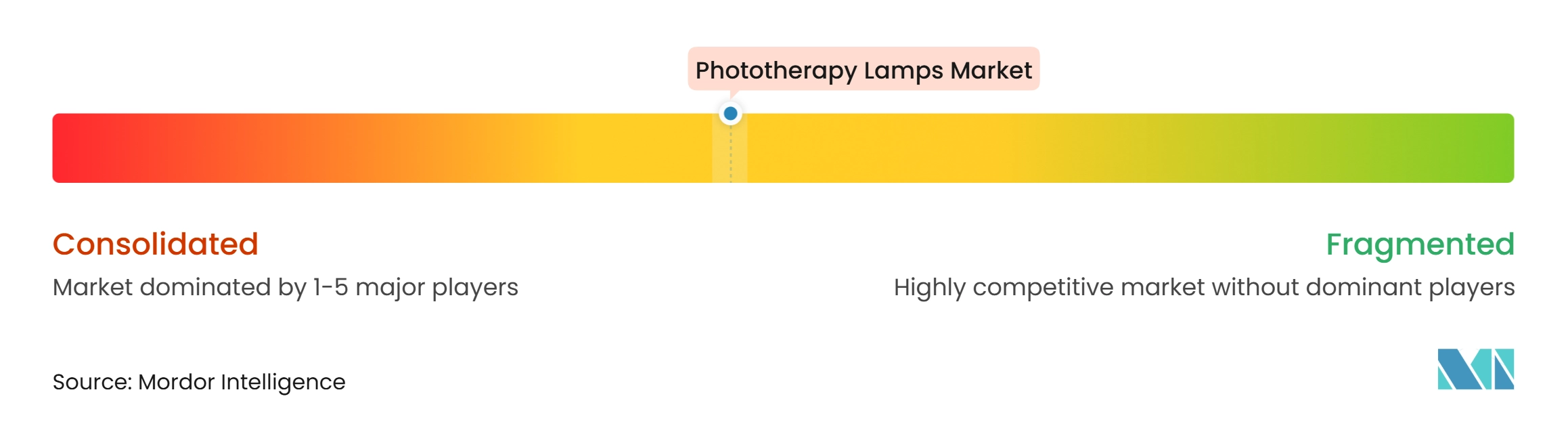
The phototherapy lamps market is moderately concentrated, with the top 5 manufacturers holding 48%-49% of global revenue in 2025 according to the supplied draft. Competition is becoming stronger in standard LED platforms as Chinese and Indian manufacturers add capacity and reduce unit prices. Leading suppliers are responding by emphasizing software, connected workflows, wearable designs, and coverage support instead of competing only on lamp hardware. Dräger launched BiliPredics in March 2025, a predictive bilirubin-management software solution designed to work with the BiliLux LED lamp and the Jaundice Meter JM-105. The software forecasts bilirubin progression 30, 48, or 60 hours ahead and supports more individualized treatment planning. This approach positions the lamp within a broader clinical workflow rather than as a standalone device.
Natus Sensory acquired TheraB Medical in February 2026, adding the SnugLit wearable swaddle-style phototherapy device to its newborn-care portfolio. The move extends its reach from traditional overhead systems toward family-centered and potential homecare models. Natus Sensory also acquired Keriton in January 2026 to connect breast milk and formula management with phototherapy, NicView monitoring, and Neometrics case-management systems. This shows a strategy of linking phototherapy to a connected NICU environment. STRATA Skin Sciences is pursuing a different route by supporting treatment protocols that combine XTRAC excimer laser therapy with JAK inhibitors in progressive vitiligo. Its 2026 clinical publication was presented as support for a more personalized approach to dermatology treatment.
The connected homecare segment remains open because no supplier has been identified in the supplied draft as a clear leader across devices, reimbursement support, and remote clinical workflows. The January 2027 CPT expansion gives suppliers an opportunity to connect in-clinic and home-use phototherapy within one care pathway. Cost-focused developers are also pursuing equipment designs intended for settings with limited resources. The USD 93.00 material-cost finding for an open-source neonatal device shows why price pressure can persist against premium systems. IEC 60601-2-50 compliance remains a technical threshold for neonatal products and can add to entry costs. Suppliers with demonstrated safety, regulatory capability, and distribution support are better placed to compete where hospitals value reliability and service. The phototherapy lamps market therefore combines price competition in basic LED products with higher-value differentiation in software, connectivity, and care-model support.
Phototherapy Lamps Industry Leaders
-
GE HealthCare Technologies Inc.
-
Natus Medical Incorporated
-
Drägerwerk AG & Co. KGaA
-
ATOM MEDICAL Corp.
-
Herbert Waldmann GmbH & Co. KG
- *Disclaimer: Major Players sorted in no particular order
Phototherapy Lamps Market Companies Covered in this Report
- ATOM MEDICAL Corp.
- Beurer
- Bistos Co., Ltd.
- Daavlin Company, The
- Dragerwerk
- Fanem Ltda.
- Fanem Ltda.
- GE HealthCare Technologies Inc.
- Herbert Waldmann GmbH & Co. KG
- Ibis Medical Equipment and Systems Pvt. Ltd.
- National Biological Corporation
- Natus Medical
- Nice Neotech Medical Systems Pvt. Ltd.
- Ningbo David Medical Device
- PhotoMedex
- Phothera Phototherapy
- Phoenix Medical Systems
- Shanghai SIGMA High-tech Co., Ltd.
- Shenzhen Kaiyan Medical Equipment Co., Ltd.
- STRATA Skin Sciences, Inc.
- Thera B Medical Products
- UVBioTek
- Xuzhou Kaixin Electronic Equipment Co., Ltd.
Recent Industry Developments in Phototherapy Lamps Market
- February 2026: Natus Sensory acquired TheraB Medical, adding SnugLit, the first Food and Drug Administration 510(k)-cleared wearable swaddle-style phototherapy device for neonatal jaundice, with clearance received in January 2026, to its newborn-care portfolio. The acquisition expands Natus Sensory’s addressable care settings from traditional overhead phototherapy to family-centered models and emerging homecare channels.
- February 2026: Natus Sensory and Canadian Hospital Specialties signed a multiyear distribution agreement covering Natus Sensory’s full newborn-care portfolio, including phototherapy, hearing screening, and NICU connectivity, across Canadian health systems with joint clinical education programs.
- January 2026: Sensory acquired Keriton, a cloud-based breast milk and formula management platform, integrating it with its phototherapy, NicView monitoring, and Neometrics case-management systems to build a unified connected NICU ecosystem.
- March 2025: Dräger launched BiliPredics, a CE-certified and Food and Drug Administration-registered predictive bilirubin-management software solution from NeoPredics. The product forecasts individual bilirubin progression 30, 48, or 60 hours ahead and integrates with Dräger’s BiliLux LED lamp and Jaundice Meter JM-105.
Global Phototherapy Lamps Market Report Scope
According to the report’s scope, phototherapy lamps emit specific wavelengths of light to treat conditions such as newborn jaundice and certain skin disorders. They work by helping the body break down substances or reducing abnormal skin-cell activity.
The phototherapy lamps market is segmented into product type, application, end user, and geography. By product type, the market is segmented into LED phototherapy lamps, fluorescent phototherapy lamps, UV phototherapy lamps, halogen phototherapy lamps, and other product types. By application, the market is segmented into neonatal jaundice treatment, psoriasis treatment, vitiligo treatment, eczema and atopic dermatitis treatment, acne and cosmetic dermatology treatment, and other applications. By end user, the market is segmented into hospitals and neonatal intensive care units, dermatology clinics and specialty clinics, homecare settings, and other end users. By geography, the market is segmented into North America, Europe, Asia-Pacific, the Middle East and Africa, and South America. The report also covers the estimated market sizes and trends for 17 countries across major regions globally. The report offers values (USD) for all the above segments.
Segmentation Overview
| LED Phototherapy Lamps |
| Fluorescent Phototherapy Lamps |
| UV Phototherapy Lamps |
| Halogen Phototherapy Lamps |
| Other Product Types |
| Neonatal Jaundice Treatment |
| Psoriasis Treatment |
| Vitiligo Treatment |
| Eczema and Atopic Dermatitis Treatment |
| Acne and Cosmetic Dermatology Treatment |
| Other Applications |
| Hospitals and Neonatal Intensive Care Units |
| Dermatology Clinics and Specialty Clinics |
| Homecare Settings |
| Other End Users |
| North America | United States |
| Canada | |
| Mexico | |
| Europe | Germany |
| United Kingdom | |
| France | |
| Italy | |
| Spain | |
| Rest of Europe | |
| Asia-Pacific | China |
| Japan | |
| India | |
| Australia | |
| South Korea | |
| Rest of Asia-Pacific | |
| Middle East and Africa | GCC |
| South Africa | |
| Rest of Middle East and Africa | |
| South America | Brazil |
| Argentina | |
| Rest of South America |
| By Product Type | LED Phototherapy Lamps | |
| Fluorescent Phototherapy Lamps | ||
| UV Phototherapy Lamps | ||
| Halogen Phototherapy Lamps | ||
| Other Product Types | ||
| By Application | Neonatal Jaundice Treatment | |
| Psoriasis Treatment | ||
| Vitiligo Treatment | ||
| Eczema and Atopic Dermatitis Treatment | ||
| Acne and Cosmetic Dermatology Treatment | ||
| Other Applications | ||
| By End User | Hospitals and Neonatal Intensive Care Units | |
| Dermatology Clinics and Specialty Clinics | ||
| Homecare Settings | ||
| Other End Users | ||
| Geography | North America | United States |
| Canada | ||
| Mexico | ||
| Europe | Germany | |
| United Kingdom | ||
| France | ||
| Italy | ||
| Spain | ||
| Rest of Europe | ||
| Asia-Pacific | China | |
| Japan | ||
| India | ||
| Australia | ||
| South Korea | ||
| Rest of Asia-Pacific | ||
| Middle East and Africa | GCC | |
| South Africa | ||
| Rest of Middle East and Africa | ||
| South America | Brazil | |
| Argentina | ||
| Rest of South America | ||
Key Questions Answered in the Report
What is the projected value of the phototherapy lamps market by 2032?
The projected value is USD 5.54 billion by 2032, growing from USD 4.04 billion in 2027 at a 6.51% CAGR. Growth is linked to neonatal treatment demand, dermatology care, LED replacement, and wider supervised home use.
Which phototherapy lamp type has the largest share?
LED lamps lead, with a 68.3% share in 2026, and they are also forecast to grow at an 8.5% CAGR through 2032. Their advantages include targeted wavelengths, longer service life, lower heat exposure, and more consistent irradiance control.
Why is neonatal jaundice important for phototherapy demand?
Neonatal jaundice treatment accounted for 67.4% of 2026 revenue and is forecast to grow at a 9.2% CAGR through 2032. The condition is common in newborns, and hospital screening protocols require providers to maintain treatment capability when bilirubin results indicate intervention.
How is home phototherapy changing care delivery?
Coverage changes by Cigna and Elevance Health expanded restriction-free home access for more than 66.7 million Americans in 2025. This supports devices with simple interfaces, compact formats, and remote dose monitoring under physician oversight.
Which region has the largest revenue share?
North America led with 41.3% in 2026, supported by established NICU capacity, specialist care, and reimbursement structures. Insurance coverage changes for home treatment also broaden the channel mix beyond hospitals and dermatology clinics.
What limits adoption of advanced phototherapy equipment?
Capital costs, lifecycle service needs, safety requirements, and complex approval rules can limit adoption, especially in resource-constrained settings. These factors can slow procurement in the phototherapy lamps market and support continued use of older or refurbished equipment.