
Pharmaceutical CDMO Automation Market Size and Share
Market Overview
| Study Period | 2021 - 2032 |
|---|---|
| Market Size (2027) | USD 6.11 Billion |
| Market Size (2032) | USD 10.48 Billion |
| Growth Rate (2027 - 2032) | 11.40 % |
| Fastest Growing Market | Asia-Pacific |
| Largest Market | North America |
| Market Concentration | Low |
Major Players *Disclaimer: Major Players sorted in no particular order Image © Mordor Intelligence. Reuse requires attribution under CC BY 4.0. | |
Pharmaceutical CDMO Automation Market Analysis by Mordor Intelligence
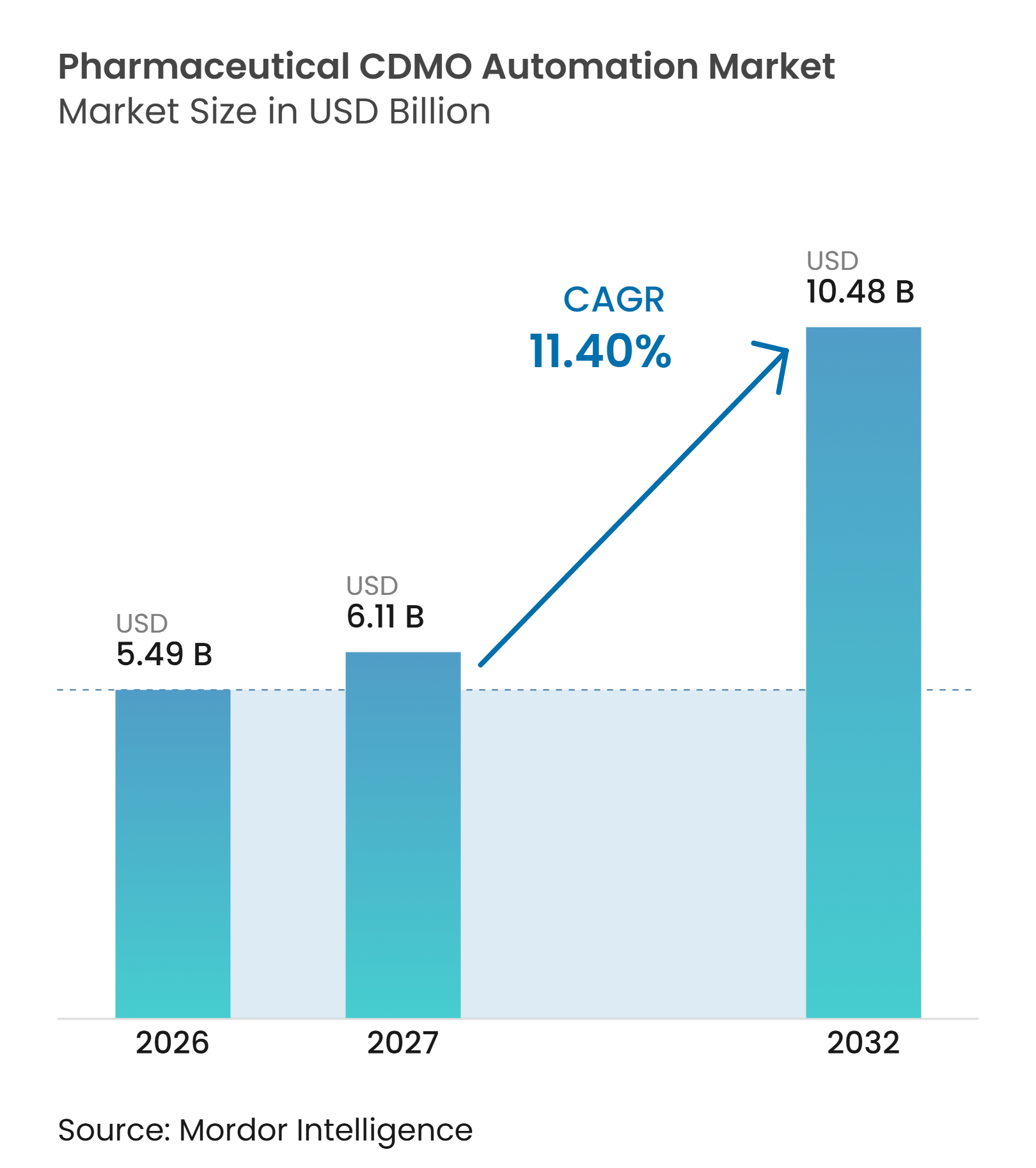
The Pharmaceutical CDMO Automation Market size was valued at USD 5.49 billion in 2026 and is estimated to grow from USD 6.11 billion in 2027 to reach USD 10.48 billion by 2032, at a CAGR of 11.40% during the forecast period (2027-2032).
The pharmaceutical CDMO automation market is growing as sponsors place more complex biologics, cell and gene therapies, and highly potent small molecules with external manufacturers. These programs require repeatable processing, controlled environments, and records that can support quality review. CDMOs are therefore using automation as part of their technical qualification for new programs, rather than treating it only as a way to reduce labor. Demand also favors systems that connect process control, batch records, laboratory information, and quality workflows. This is raising the value of established automation platforms that can be used across multiple client programs.
Key Report Takeaways
- By service type, commercial manufacturing held 43.16% of the Pharmaceutical CDMO Automation Market share in 2026, while clinical manufacturing is projected to grow at a 15.40% CAGR through 2032.
- By automation offering, hardware accounted for 52.20% of the Pharmaceutical CDMO Automation Market share in 2026, while software is forecast to expand at a 21.38% CAGR through 2032.
- By automation mode, semi-automatic systems held 58.47% of the Pharmaceutical CDMO Automation Market share in 2026, while fully automatic systems are projected to grow at a 14.87% CAGR through 2032.
- By process stage, fill-finish and aseptic processing held 27.11% of the Pharmaceutical CDMO Automation Market share in 2026, while inspection and container closure integrity testing is forecast to grow at a 15.12% CAGR through 2032.
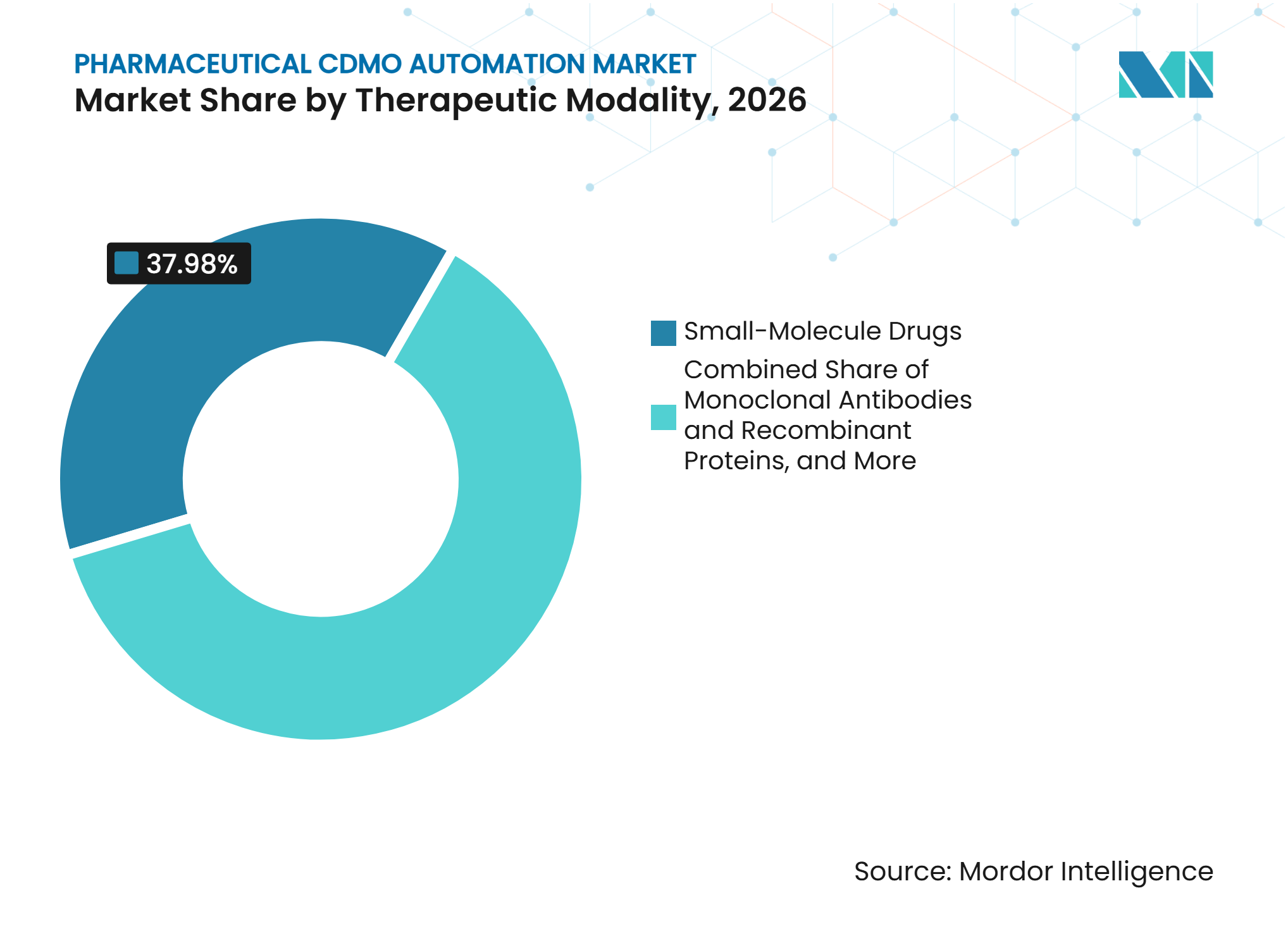
- By therapeutic modality, small-molecule drugs accounted for 37.98% of the Pharmaceutical CDMO Automation Market share in 2026, while cell and gene therapies are projected to expand at a 12.76% CAGR through 2032.
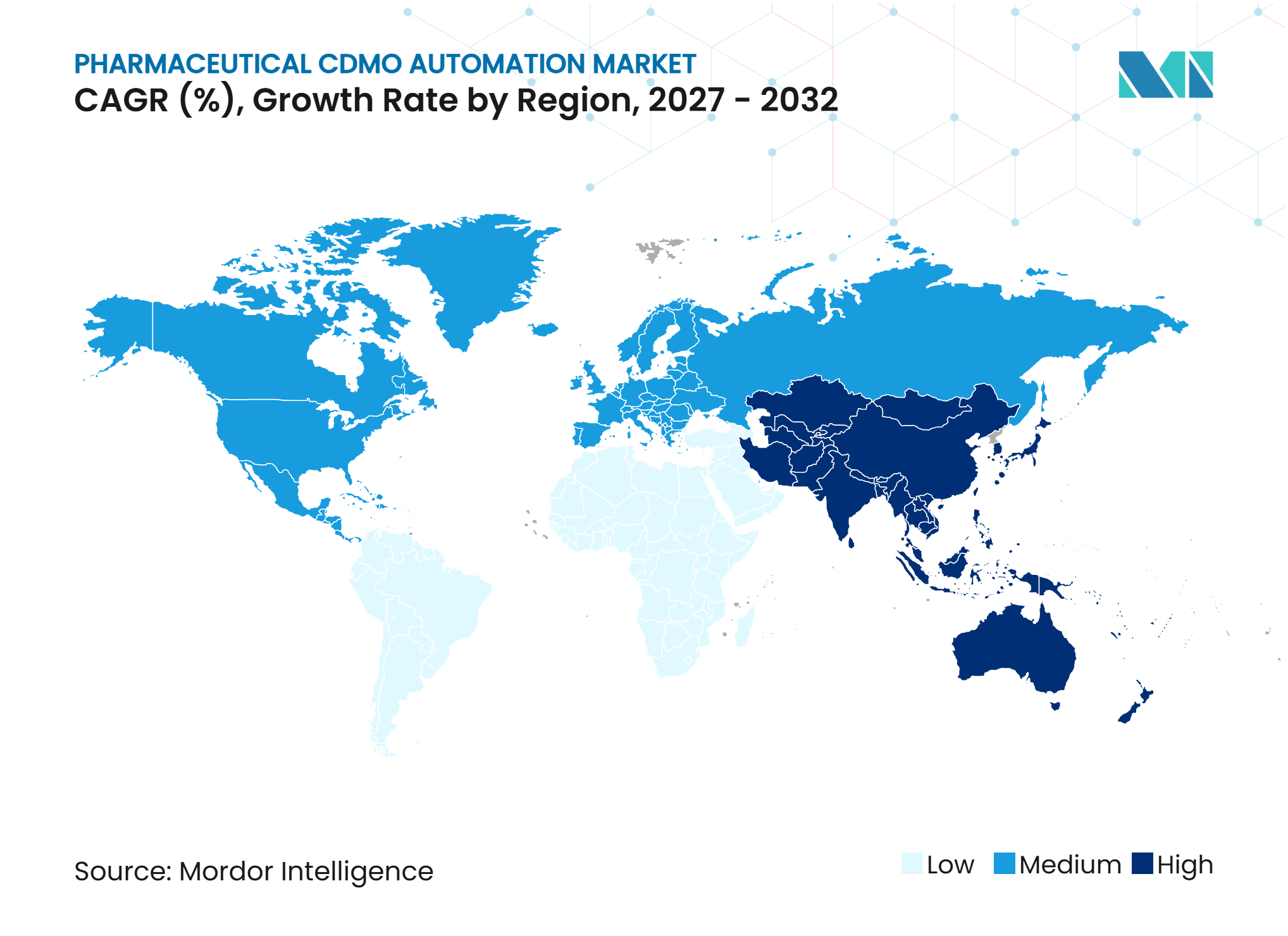
- By geography, North America held 41.29% of the Pharmaceutical CDMO Automation Market share in 2026, while Asia-Pacific is forecast to grow at a 17.36% CAGR through 2032.
Note: Market numbers in this report are based on Mordor Intelligence's proprietary estimation framework, which combines nine months of actuals with Q4 projections for base year 2026.
Market Trends and Insights
Drivers Impact Analysis of Pharmaceutical CDMO Automation Market*
| Driver | (~) % Impact on CAGR Forecast | Geographic Relevance | Impact Timeline |
|---|---|---|---|
| Outsourcing of Complex Manufacturing and CMC Activities | +2.0% | Global, led by North America and Europe | Long term (≥ 4 years) |
| Expansion of Biologics, Advanced Therapies, and Sterile Products | +2.5% | Global, strongest in North America, Europe, and South Korea | Long term (≥ 4 years) |
| Regulatory Pressure for Real-Time Monitoring and Data Integrity | +1.5% | North America and Europe, with spillover to Asia-Pacific and MEA | Medium term (2-4 years) |
| Labor Shortages and Need to Reduce Manual Intervention | +1.8% | North America and Europe, emerging in Asia-Pacific | Short term (≤ 2 years) |
| Standardized Digital Manufacturing Across Multi-Site Networks | +1.2% | Global, led by large multi-site operators | Long term (≥ 4 years) |
| Automation of Small-Batch and Personalized Medicine Manufacturing | +0.8% | North America and Europe, with early gains in Japan and South Korea | Long term (≥ 4 years) |
| Source: Mordor Intelligence | |||
Outsourcing of Complex Manufacturing and CMC Activities
Large pharmaceutical and biotechnology companies are placing more complex programs with CDMOs as advanced modalities, narrow therapeutic windows, and high-potency compounds exceed the practical limits of many internal manufacturing networks. This changes the criteria that sponsors use to assess potential manufacturing partners. CDMOs increasingly need validated digital batch records, model-based process controls, and consistent equipment configurations before a commercial program is awarded. These capabilities can help secure clinical-stage preferred-partner agreements that later move into commercial supply. AstraZeneca’s planned USD 50 billion investment in U.S. manufacturing through 2030 includes AI and automation, which the company links to speed and resilience in its network. In the Pharmaceutical CDMO Automation Market, this makes automation capital spending relevant to commercial positioning as well as operational execution.
Expansion of Biologics, Advanced Therapies, and Sterile Products
Biologics and advanced therapies require close control of cell culture conditions, closed processing steps, and aseptic environments. These needs make automation more important because manual handling can create variation and contamination risk. Fully or semi-automated approaches to cell therapy manufacturing can reduce operator hands-on time, improve reproducibility, and lower contamination risk relative to manual workflows.[1] Antibody-drug conjugates add another requirement because toxic payload attachment needs precise control through each conjugation stage. Inline monitoring can support better visibility during these operations. The Pharmaceutical CDMO Automation Market therefore favors platform systems that support a modality across multiple client programs. This model can spread validation work across a broader program base.
Regulatory Pressure for Real-Time Monitoring and Data Integrity
The FDA’s January 2025 draft guidance on in-process controls under 21 CFR Section 211.110 supports advanced manufacturing, continuous processes, and real-time monitoring. The guidance also states that process models alone do not replace the need for appropriate in-process testing. The direction of travel is clear for CDMOs that depend on separate systems and manual data reconciliation. They need ongoing, reviewable control of data across manufacturing, laboratory, and quality workflows. Unified manufacturing execution, laboratory information, and quality systems can reduce the burden of maintaining this control. They can also support shorter batch release cycles when their data structures are properly validated.
Automation of Small-Batch and Personalized Medicine Manufacturing
Small-batch and personalized therapies need reliable execution even when each production run serves a limited patient population. Cell and gene therapy manufacturing is a clear example because one failed batch can affect a patient’s access to a one-time treatment. Closed and robotics-assisted workflows can reduce handling variation at these smaller scales. Automated platforms can also support scale-out by allowing multiple controlled production units instead of relying only on a single large facility. Japan’s Ministry of Economy, Trade and Industry supported 13 regenerative CDMO projects in July 2025, including work involving Nikon Cell Innovation, through its regenerative medicine manufacturing initiative.[2] This support reflects the importance of production infrastructure for advanced therapy programs.
Restraints Impact Analysis on Pharmaceutical CDMO Automation Market*
| Restraint | (~) % Impact on CAGR Forecast | Geographic Relevance | Impact Timeline |
|---|---|---|---|
| High Capital Expenditure and Long Validation Cycles | -1.5% | Global, most acute in emerging CDMO markets | Short term (≤ 2 years) |
| Legacy-System Integration and Interoperability Constraints | -1.0% | Global, especially multi-site CDMOs formed through acquisitions | Medium term (2-4 years) |
| Cybersecurity and Artificial Intelligence Validation Risk | -0.8% | North America and Europe, with global effects from regulatory divergence | Medium term (2-4 years) |
| Limited Transferability of PAT Models Across Products and Sites | -0.5% | Global, most pronounced in biologics and antibody-drug conjugate manufacturing | Long term (≥ 4 years) |
| Source: Mordor Intelligence | |||
High Capital Expenditure and Long Validation Cycles
A unified, GMP-compliant automation platform requires substantial capital and can take years to implement across a CDMO network. Mid-tier manufacturers may find this difficult when revenue depends on facility utilization and client programs have uneven timing. New computerized systems also require validation before they can be used for commercial production. A process introduced to an automated line still requires its own process performance qualification. This limits how much of the original validation work can be reused across different products. The Pharmaceutical CDMO Automation Market can therefore favor existing validated configurations when modernization would interrupt active capacity.
Legacy-System Integration and Interoperability Constraints
Established CDMOs often operate with information systems accumulated through organic expansion and acquisitions. These can include paper records, proprietary equipment protocols, vendor-specific process analytical technology software, and separate enterprise resource planning systems. When systems do not connect, operators must transfer and reconcile information manually. Those steps can create errors and make audit preparation harder. The difficulty increases when a company must harmonize several newly acquired sites. Integration can take years when sites have different data definitions, equipment histories, and quality practices.
*Our forecasts treat driver/restraint impacts as directional, not additive. The impact forecasts reflect baseline growth, mix effects, and variable interactions.
Pharmaceutical CDMO Automation Market Segment Analysis
By Service Type:
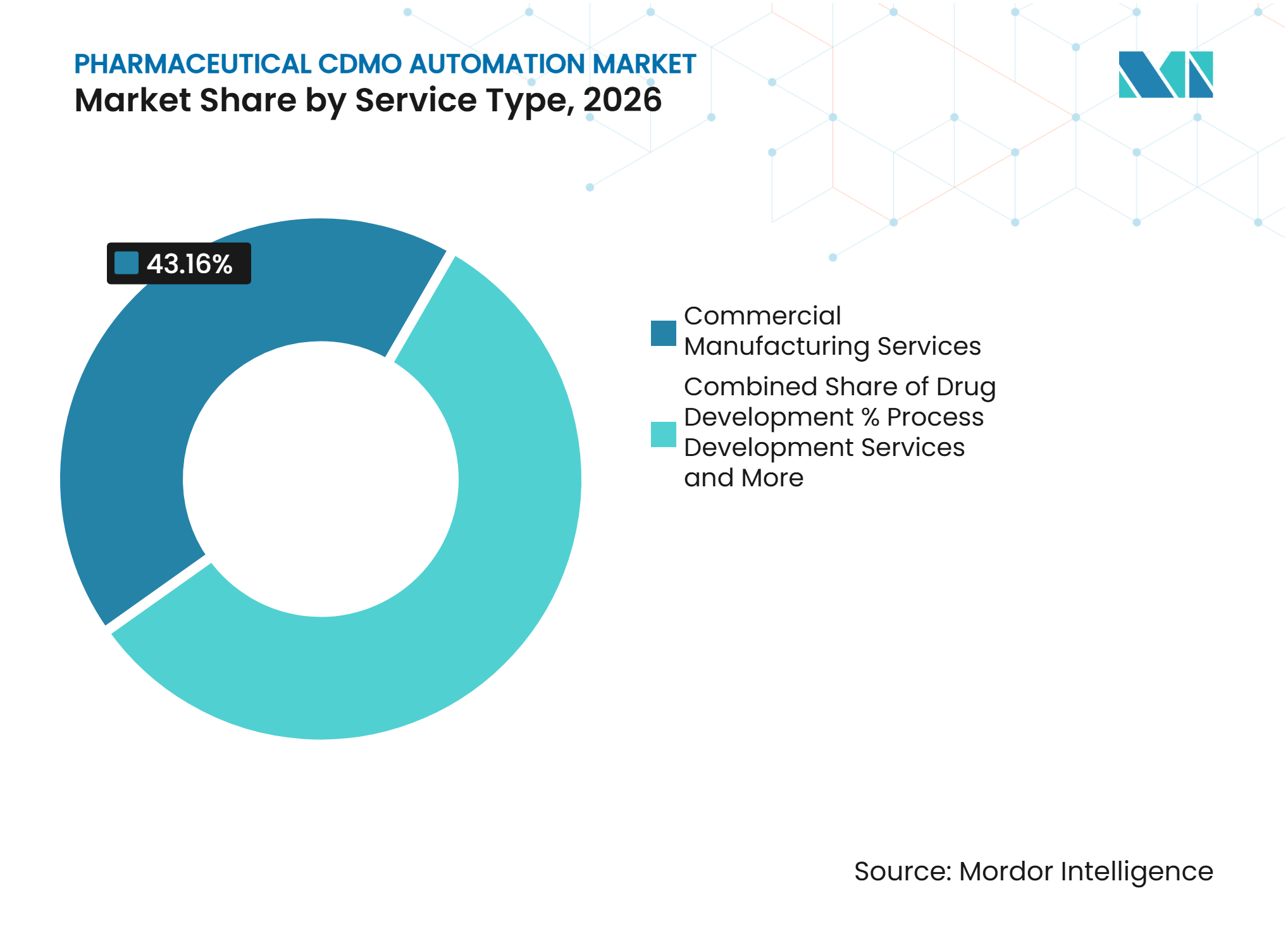
Commercial Programs Anchor Demand, Clinical Throughput Signals GrowthCommercial manufacturing services hold 43.16% of the Pharmaceutical CDMO Automation Market share in 2026. Long-term supply agreements can justify multi-year investment in integrated automation because the same process is expected to operate for an extended period. Once a process is qualified on a particular automated configuration, a move to a less-automated setup can create comparability concerns. Analytical and regulatory support activities also use electronic quality systems and digitally supported deviation investigation to improve batch disposition. This can reduce delays between production and release. Packaging and serialization work is increasingly connected with vision inspection, automated labeling, and aggregation systems as track-and-trace requirements expand.
Clinical manufacturing services are forecast to grow at a 15.40% CAGR through 2032. This part of the Pharmaceutical CDMO Automation Market serves cell and gene therapy programs where closed workflows and careful handling are central to program execution. Automation can reduce human variation even when batch sizes remain small. Drug development services also use automation in analytical activities to support faster development timelines. Automated warehouse systems and connected cold-chain monitoring are becoming more relevant to temperature-sensitive biologics. Together, these functions broaden automation beyond the production suite.



By Automation Offering:
Hardware Anchors the Foundation, Software Redefines the Value EquationHardware accounted for 52.20% of the Pharmaceutical CDMO Automation Market share in 2026. The segment includes the physical systems needed to equip sterile suites and bioprocessing areas. Isolator-based fill-finish lines are important where manufacturers are updating older restricted-access barrier systems to meet current aseptic expectations. Integration, consulting, and maintenance providers support CDMOs that do not have sufficient internal systems expertise. Their work connects equipment controls with plant-level manufacturing execution systems and enterprise data platforms. This supporting role remains necessary because automation hardware does not produce full value when it operates as a stand-alone asset.
Software is forecast to expand at a 21.38% CAGR through 2032. CDMOs are moving from a hardware-focused decision toward using automated assets to generate accessible and useful operating information. Samsung Biologics’ ExellenS framework shows how common software architecture can support faster technology transfer across plants. Manufacturing execution, laboratory information, and quality management systems can give sponsors stronger batch visibility. Digital twins and simulation tools are also being assessed by life sciences manufacturers as they seek better process understanding. This strengthens the role of software in the Pharmaceutical CDMO Automation Market.
By Automation Mode:
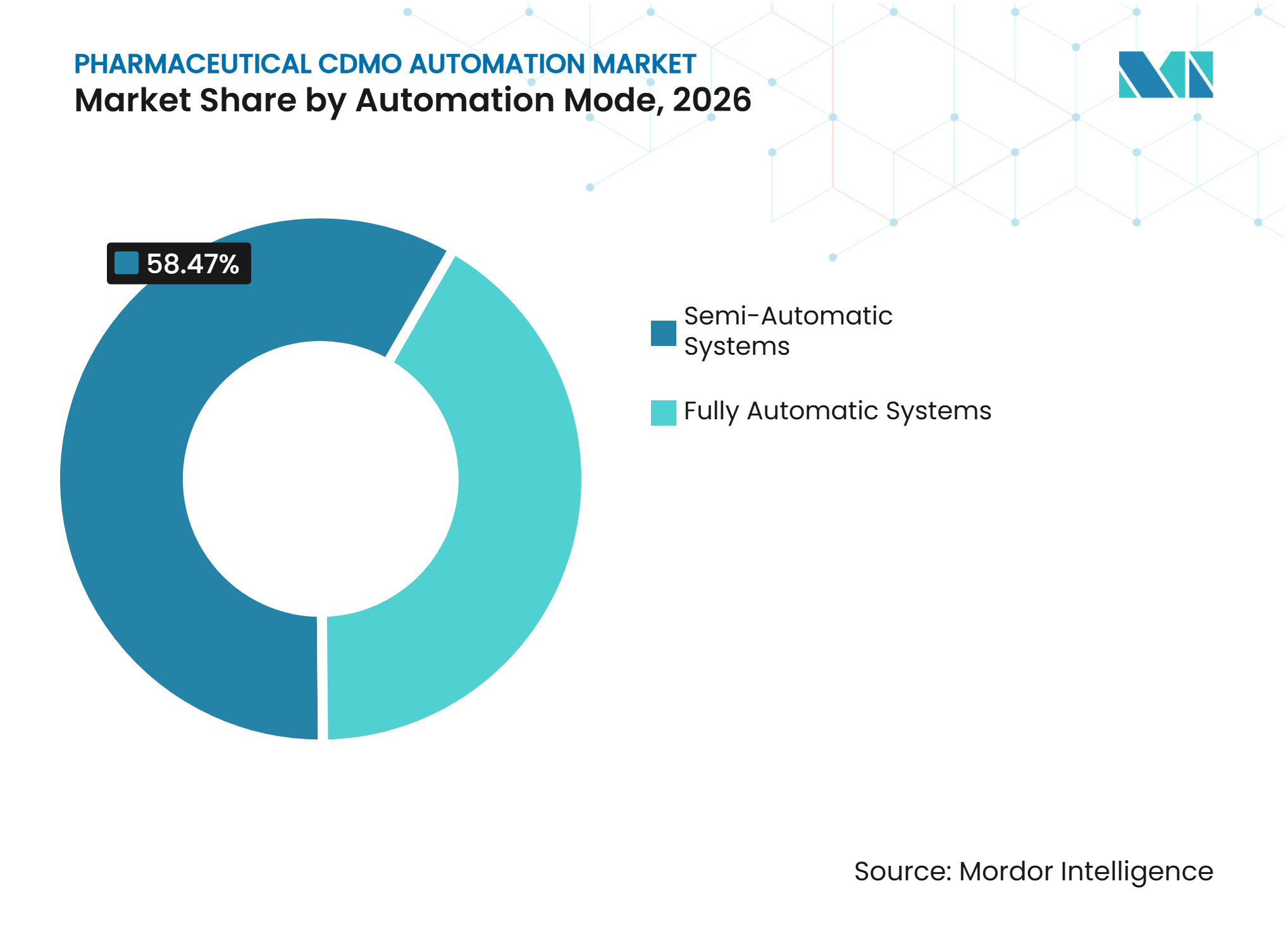
Semi-Automatic Systems Lead, Full Automation Gains as Economics ShiftSemi-automatic systems held 58.47% of the Pharmaceutical CDMO Automation Market share in 2026. These systems allow human judgment to supplement automated process steps when full automation is not yet technically or economically appropriate. They can be useful for multi-product CDMOs that frequently change among diverse client programs. This flexibility can be difficult to achieve with a rigid, fully automated line. Collaborative robots accounted for 23.7% of pharmaceutical and life sciences robot units ordered in the second quarter of 2025.[3] Their use often reflects an intentional human-in-the-loop design.
Fully automatic systems are projected to grow at a 14.87% CAGR through 2032. The case for these systems is strongest when reducing human intervention supports contamination control and repeatability. Automated, closed manufacturing platforms for cell therapies can lower the number of manual activities required during production. Modular and single-use continuous platforms may support adoption because they reduce some equipment reconfiguration work. They can also suit facilities that need greater flexibility than traditional fixed automation lines offer. The shift will remain tied to whether a CDMO can validate the system for its client and product mix.

By Process Stage and Application:
Sterile Fill-Finish Anchors Demand, Inspection Systems AccelerateFill-finish and aseptic processing captured 27.11% of the Pharmaceutical CDMO Automation Market share in 2026. Biologics volumes and sterility requirements support demand for controlled fill-finish systems. The 2022 revision of EU GMP Annex 1 reinforces the use of isolation and restricted-access approaches in aseptic manufacturing. PCI Pharma Services acquired Ajinomoto Althea in May 2025, adding United States sterile fill-finish capability with isolator technology for prefilled syringes, cartridges, and highly potent antibody-drug conjugates. Bioreactor and fermentation systems are also incorporating inline metabolite monitoring, automated feeding, and process controls. These capabilities help align upstream operations with the wider Pharmaceutical CDMO Automation Market.
Inspection and container closure integrity testing is forecast to grow at a 15.12% CAGR through 2032. FDA and USP guidance has increased attention on deterministic, non-destructive testing methods. These methods include vacuum decay, headspace analysis, and high-voltage leak detection. They can avoid product consumption and variable results associated with some probabilistic approaches. This is significant for biologics and gene therapies with high value per unit and limited batch sizes. Purification and chromatography automation is also moving forward through inline sensors that support cut-point decisions and pool management.
By Therapeutic Modality:
Small Molecules Sustain Volume, Cell and Gene Therapies Define the Growth FrontierSmall-molecule drugs accounted for 37.98% of the Pharmaceutical CDMO Automation Market share in 2026. Mature CDMO facilities have a large installed base of automated API synthesis, granulation, tableting, and film-coating equipment. Peptide and oligonucleotide manufacturing is adding demand for process analytical technology-enabled continuous platforms as GLP-1 agonists scale. Monoclonal antibodies and recombinant proteins need multi-bioreactor architectures and integrated process control. Vaccine requirements vary by platform, but they continue to support automation investment across CDMO networks. These volume-oriented modalities keep the Pharmaceutical CDMO Automation Market grounded in established manufacturing activity.
Cell and gene therapies are forecast to grow at a 12.76% CAGR through 2032. Their workflows can benefit from automation from leukapheresis processing through cell culture, transduction, and cryopreservation. Closed systems can reduce contamination risk and improve consistency while supporting scale-out. Research on cell-based advanced therapy medicinal products reports lower hands-on time and improved reproducibility from multi-step automated systems. Japan’s regenerative medicine manufacturing initiative gives a policy signal in favor of related production capacity. The segment remains central to the growth profile of the Pharmaceutical CDMO Automation Market.
Geography Analysis
North America
North America held 41.29% of the Pharmaceutical CDMO Automation Market share in 2026. The region’s manufacturing base includes major investments in biologics, fill-finish, cell therapy, and API capacity. FUJIFILM Biotechnologies opened its USD 3.2 billion Holly Springs, North Carolina facility in September 2025, adding large-scale biomanufacturing capacity to the U.S. network. Skilled validation and automation labor remains difficult to secure, strengthening the case for systems that reduce manual dependence. FDA guidance on in-process controls is also influencing how sites plan real-time monitoring and process control. These factors sustain demand for integrated automation at new and upgraded facilities.
Asia-Pacific
Asia-Pacific is projected to grow at a 17.36% CAGR through 2032. South Korea is building scale through Samsung Biologics, which is applying its ExellenS framework across a 784,000-liter network that includes Plant 5.[4] Japan has targeted regenerative medicine manufacturing infrastructure through its national support program. China’s Pharmaceutical Industry Digital Intelligence Transformation Plan for 2025 to 2030 sets a target of more than 100 digital smart pharmaceutical factories. These policies encourage MES, AI, and industrial internet adoption across domestic pharmaceutical manufacturing. The Pharmaceutical CDMO Automation Market in the region is supported by both capacity creation and national industrial policy.
Europe, Middle East and Africa, and South America
Europe remains an active automation upgrade area because EU GMP Annex 1 guides investment in aseptic operations and electronic records. Cybersecurity requirements also matter as digital manufacturing systems become more connected. Established CDMOs in Germany, Switzerland, the United Kingdom, France, and Spain are investing in isolator-based fill-finish lines and more resilient operational technology. India continues to attract CDMO investment, with automation activity centered on large-scale solid-dose and API manufacturing. Middle East and Africa and South America remain earlier-stage automation markets. Brazil and GCC countries are focal points for sterile fill-finish projects where governments seek greater supply security for vaccines and essential medicines.
Competitive Landscape
Market Concentration
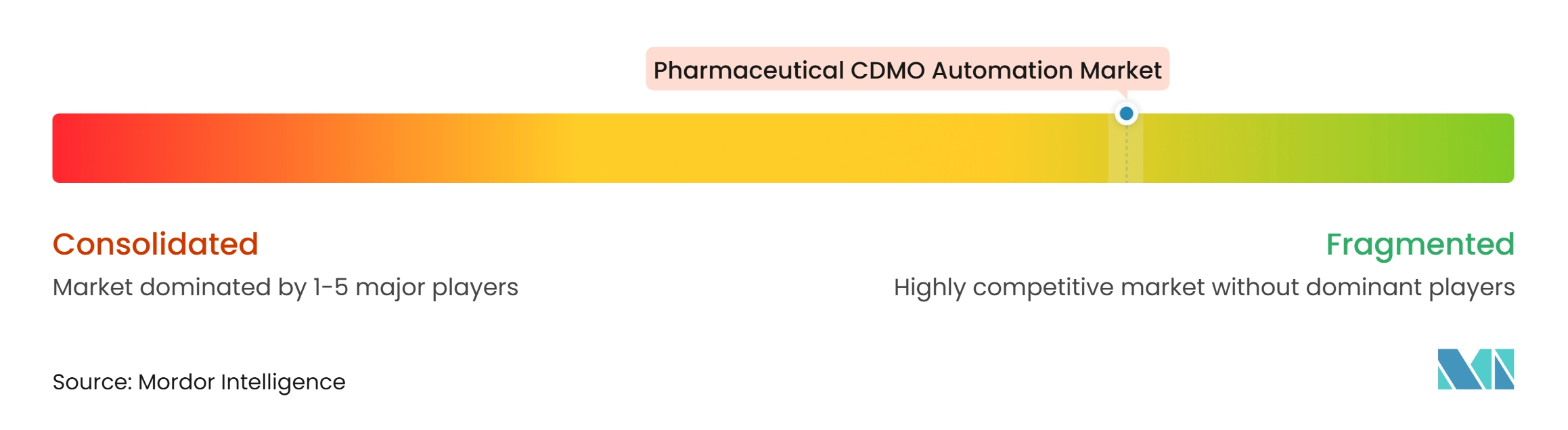
The Pharmaceutical CDMO Automation Market operates within a fragmented CDMO sector where automation capability is increasingly a differentiator alongside production capacity. Lonza, Samsung Biologics, FUJIFILM Biotechnologies, Thermo Fisher Scientific, and Catalent are among the large organizations building more connected manufacturing networks. These companies aim to standardize equipment, software, and process parameters across sites. This can shorten technology transfer and reduce scale-up risk for sponsors. Samsung Biologics’ ExellenS framework is one example of a company using common manufacturing configurations and data architecture across facilities. The result is a higher barrier for CDMOs that still rely on disconnected systems.
Competition is also forming around specific modalities. Cell and gene therapy CDMOs with validated, end-to-end automated workflows have a potential advantage in autologous programs. Antibody-drug conjugate specialists can differentiate through contained payload handling and controlled conjugation processes. PCI Pharma Services strengthened its North American sterile product capability through the Ajinomoto Althea acquisition. Bora Group agreed in May 2026 to acquire MacroGenics’ GMP manufacturing operations for USD 122.5 million, extending its biologics platform. These moves show that manufacturing capability and automation readiness are being built through both internal investment and acquisitions.
Mid-tier CDMOs face a choice between building automation depth internally and working with specialist partners. Manufacturers that connect shop-floor data with quality systems can provide clients with stronger batch visibility. Those operating fragmented legacy environments may find it harder to win complex programs when sponsors see data integrity as a quality risk. The International Society for Pharmaceutical Engineering’s GAMP guide addresses validation considerations for AI-enabled GxP computerized systems. This gives companies a more defined framework for deploying newer automation tools. The competitive landscape remains open in specialist areas, even as large multi-site CDMOs extend their integrated platforms.
Pharmaceutical CDMO Automation Industry Leaders
-
Catalent Inc.
-
Lonza Group AG
-
Samsung Biologics Co. Ltd
-
Thermo Fisher Scientific Inc.
-
WuXi AppTec Co. Ltd
- *Disclaimer: Major Players sorted in no particular order
Pharmaceutical CDMO Automation Market Companies Covered in this Report
- Aenova Group GmbH
- AGC Inc.
- Ajinomoto Bio-Pharma Services
- Alcami
- Boehringer Ingelheim
- Cambrex
- Catalent
- CordenPharma International GmbH
- Exela Pharma Sciences
- FUJIFILM Biotechnologies
- Lonza Group
- Merck
- PCI Pharma Services
- Piramal Group
- Recipharm
- Samsung Biologics Co. Ltd
- Siegfried Holding AG
- Thermo Fisher Scientific
- Vetter Pharma International GmbH
- WuXi App Tec
Recent Industry Developments in Pharmaceutical CDMO Automation Market
- November 2026: PharmaLogic Holdings agreed to acquire Lantheus Holdings' CDMO business and Springfield, New Jersey, United States manufacturing facility, adding a dedicated radiopharmaceutical manufacturing site with strict containment and automation requirements, positioning PharmaLogic as the only independent radiopharmaceutical CDMO of scale.
- May 2026: Bora Group agreed to acquire the GMP manufacturing operations of MacroGenics Inc., including a biologics drug substance facility in Rockville, Maryland, for USD 122.5 million, extending its end-to-end biologics platform under the Bora Biologics brand.
- April 2026: ROIS CDMO closed on the acquisition of Bristol Myers Squibb's sterile fill-finish and packaging site in Phoenix, Arizona, with plans to install an Optima prefilled syringe isolator line by 2027, projecting an additional 65-70 million PFS units per annum.
- October 2025: Samsung Biologics launched ExellenS, standardizing bioreactor configurations, automation systems, and MES architecture across its five-plant, 784,000-liter global network, underpinning consistent quality delivery and faster technology transfer for clients.
Global Pharmaceutical CDMO Automation Market Report Scope
As per the scope of the report, pharmaceutical CDMO automation refers to the integration of robotics, digital control systems, process analytical technology (PAT), and enterprise software across contract drug development and manufacturing operations to enhance batch consistency, regulatory compliance, operational efficiency, and multi-client scalability.
The pharmaceutical CDMO automation market is segmented by service type, automation offering, automation mode, process stage and application, therapeutic modality, and geography. By service type, the market is segmented into drug development and process development services, analytical and regulatory support services, clinical manufacturing services, commercial manufacturing services, packaging and serialization services, and other service types. By automation offering, the market is categorized into automation hardware, automation software, and automation integration, consulting, and maintenance services. By automation mode, the market is segmented into semi-automatic systems and fully automatic systems. By process stage and application, the market is segmented into drug-substance manufacturing, bioreactor and fermentation operations, formulation and blending, purification and chromatography, fill-finish and aseptic processing, inspection and container closure integrity testing, and others. By therapeutic modality, the market is segmented into small-molecule drugs, monoclonal antibodies and recombinant proteins, vaccines, cell and gene therapies, antibody-drug conjugates, mRNA and lipid nanoparticle products, and others. By geography, the market is analyzed across North America, Europe, Asia-Pacific, the Middle East and Africa, and South America. The report also covers the estimated market sizes and trends for 17 countries across major regions globally. The report offers market sizes and forecasts in terms of value (USD) for the above segments.
Segmentation Overview
| Drug Development and Process Development Services |
| Analytical and Regulatory Support Services |
| Clinical Manufacturing Services |
| Commercial Manufacturing Services |
| Packaging and Serialization Services |
| Other Service Types (Logistics and Supply Chain Services, among others) |
| Automation Hardware |
| Automation Software |
| Automation Integration, Consulting, and Maintenance Services |
| Semi-Automatic Systems |
| Fully Automatic Systems |
| Drug-Substance Manufacturing |
| Bioreactor and Fermentation Operations |
| Formulation and Blending |
| Purification and Chromatography |
| Fill-Finish and Aseptic Processing |
| Inspection and Container Closure Integrity Testing |
| Others (Lyophilization and Cold Chain, among others) |
| Small-Molecule Drugs |
| Monoclonal Antibodies and Recombinant Proteins |
| Vaccines |
| Cell and Gene Therapies |
| Antibody-Drug Conjugates |
| mRNA and Lipid Nanoparticle Products |
| Others (Peptides and Oligonucleotides, among others) |
| North America | United States |
| Canada | |
| Mexico | |
| Europe | Germany |
| United Kingdom | |
| France | |
| Italy | |
| Spain | |
| Rest of Europe | |
| Asia-Pacific | China |
| Japan | |
| India | |
| Australia | |
| South Korea | |
| Rest of Asia-Pacific | |
| Middle East and Africa | GCC |
| South Africa | |
| Rest of Middle East and Africa | |
| South America | Brazil |
| Argentina | |
| Rest of South America |
| By Service Type | Drug Development and Process Development Services | |
| Analytical and Regulatory Support Services | ||
| Clinical Manufacturing Services | ||
| Commercial Manufacturing Services | ||
| Packaging and Serialization Services | ||
| Other Service Types (Logistics and Supply Chain Services, among others) | ||
| By Automation Offering | Automation Hardware | |
| Automation Software | ||
| Automation Integration, Consulting, and Maintenance Services | ||
| By Automation Mode | Semi-Automatic Systems | |
| Fully Automatic Systems | ||
| By Process Stage and Application | Drug-Substance Manufacturing | |
| Bioreactor and Fermentation Operations | ||
| Formulation and Blending | ||
| Purification and Chromatography | ||
| Fill-Finish and Aseptic Processing | ||
| Inspection and Container Closure Integrity Testing | ||
| Others (Lyophilization and Cold Chain, among others) | ||
| By Therapeutic Modality | Small-Molecule Drugs | |
| Monoclonal Antibodies and Recombinant Proteins | ||
| Vaccines | ||
| Cell and Gene Therapies | ||
| Antibody-Drug Conjugates | ||
| mRNA and Lipid Nanoparticle Products | ||
| Others (Peptides and Oligonucleotides, among others) | ||
| By Geography | North America | United States |
| Canada | ||
| Mexico | ||
| Europe | Germany | |
| United Kingdom | ||
| France | ||
| Italy | ||
| Spain | ||
| Rest of Europe | ||
| Asia-Pacific | China | |
| Japan | ||
| India | ||
| Australia | ||
| South Korea | ||
| Rest of Asia-Pacific | ||
| Middle East and Africa | GCC | |
| South Africa | ||
| Rest of Middle East and Africa | ||
| South America | Brazil | |
| Argentina | ||
| Rest of South America | ||
Key Questions Answered in the Report
What is the Pharmaceutical CDMO Automation Market size?
The market is projected to rise from USD 5.49 billion in 2026 to USD 10.48 billion by 2032 at an 11.40% CAGR.
What is driving demand for pharmaceutical CDMO automation?
Complex biologics, advanced therapies, sterile products, and the need for stronger batch data are increasing demand for automated manufacturing systems.
Which automation offering is growing fastest in CDMO manufacturing?
Automation software is projected to grow at a 21.38% CAGR through 2031 as CDMOs connect manufacturing, laboratory, and quality data.
Which service type has the largest share in CDMO automation?
Commercial manufacturing holds 43.16% share in 2026 because long-term supply programs can support integrated automation investment.
Which region is growing fastest for pharmaceutical CDMO automation?
Asia-Pacific is projected to grow at a 17.36% CAGR through 2032, supported by manufacturing capacity investment and digital manufacturing policies.
Why are cell and gene therapies important for CDMO automation?
These therapies benefit from closed and robotics-assisted workflows that reduce manual handling, support consistency, and limit contamination risk.