
OTC (Over-the-Counter) Braces & Supports Market Size and Share
Market Overview
| Study Period | 2021 - 2032 |
|---|---|
| Market Size (2027) | USD 1.51 Billion |
| Market Size (2032) | USD 2.01 Billion |
| Growth Rate (2027 - 2032) | 5.84 % |
| Fastest Growing Market | Asia-Pacific |
| Largest Market | North America |
| Market Concentration | Low |
Major Players *Disclaimer: Major Players sorted in no particular order Image © Mordor Intelligence. Reuse requires attribution under CC BY 4.0. | |
OTC (Over-the-Counter) Braces & Supports Market Analysis by Mordor Intelligence
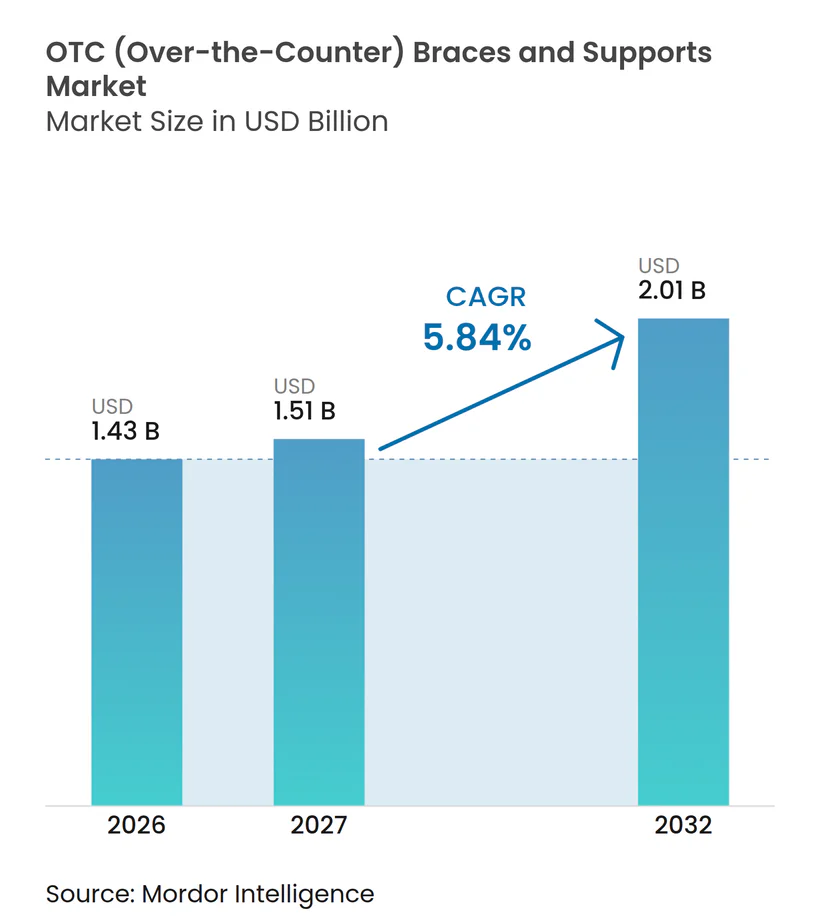
The OTC Braces & Supports Market size is projected to expand from USD 1.43 billion in 2026 and USD 1.51 billion in 2027 to USD 2.01 billion by 2032, registering a CAGR of 5.84% between 2027 and 2032.
Growth reflects a rising burden of musculoskeletal conditions, older populations seeking non-surgical support, and wider acceptance of self-managed orthopedic care. The category is moving from a primarily clinical purchase toward a consumer health purchase through pharmacies, retail stores, and digital channels. Clinical evidence, product comfort, and brand trust are becoming more important because many soft supports face limited barriers to entry. The OTC (Over-the-Counter) braces & supports market also faces pressure from low-quality products sold through open online marketplaces and from limited reimbursement for non-prescribed items. Companies that link evidence-based products with clear fitting guidance and trusted distribution are better placed to serve both medical and consumer needs.
Key Report Takeaways
- By product type, Knee Braces & Supports held 32.47% of the OTC (Over-the-Counter) braces & supports market share in 2026, while Compression Sleeves & Wraps are projected to grow at a 6.12% CAGR through 2032.
- By application, Osteoarthritis Management accounted for 28.15% of the OTC (Over-the-Counter) braces & supports market size in 2026, while Sports Injury Prevention is projected to expand at a 6.58% CAGR through 2032.
- By distribution channel, Online Stores/E-commerce held 43.92% of the OTC (Over-the-Counter) braces & supports market share in 2026, while Retail Pharmacies & Drug Stores are projected to grow at a 7.24% CAGR through 2032.
- By end user, Hospitals and Clinics accounted for 48.39% of the OTC (Over-the-Counter) braces & supports market size in 2026, while Ambulatory Surgical Centers are projected to expand at a 7.81% CAGR through 2032.
- By geography, North America held a 36.73% revenue share in 2026, while Asia-Pacific is projected to grow at an 8.47% CAGR through 2032.
Note: Market numbers in this report are based on Mordor Intelligence's proprietary estimation framework, which combines nine months of actuals with Q4 projections for base year 2026.
Market Trends and Insights
Drivers Impact Analysis of OTC (Over-the-Counter) Braces & Supports Market*
| Driver | (~) % Impact on CAGR Forecast | Geographic Relevance | Impact Timeline |
|---|---|---|---|
| Rising Musculoskeletal Disorders and Sports Injuries | +1.6% | Global | Short term (≤ 2 years) |
| Aging Population and Mobility Preservation | +1.3% | Global, concentrated in Asia-Pacific and Europe | Long term (≥ 4 years) |
| E-commerce, Telehealth and Direct-to-Consumer Access | +0.8% | Global, amplified in Asia-Pacific and North America | Medium term (2-4 years) |
| Self-Care and Preventive Orthopedics Adoption | +0.7% | North America and Europe | Medium term (2-4 years) |
| Clinician-to-Consumer Product Commercialization | +0.5% | North America, Europe, and spill-over to Asia-Pacific | Medium term (2-4 years) |
| Fit and Comfort Innovation Improving Adherence | +0.4% | Global | Long term (≥ 4 years) |
| Source: Mordor Intelligence | |||
Rising Musculoskeletal Disorders and Sports Injuries
Musculoskeletal conditions are increasing the need for accessible products that support daily movement and recovery. The global burden reached 1.69 billion cases in 2021 and was 95% higher than in 1990, with the published forecast pointing to further growth through 2035. In the United Kingdom, more than 20.2 million adults had a musculoskeletal condition in 2025. Work-related musculoskeletal disorders caused 7.1 million lost working days in Great Britain during 2024/25 and represented 27% of work-related ill-health cases.[1] Demand also comes from adults aged 25 to 45 who participate in sports and manage minor injuries outside formal care settings. This creates continuing demand from chronic conditions as well as repeat purchases linked to active lifestyles.
Aging Population and Mobility Preservation
Older adults represent a durable source of demand for knee, spinal, and compression supports. The population aged 60 years and over reached 1.4 billion in 2025 and is expected to exceed 2.1 billion by 2050. Japan had 29% of its population aged 65 years and older in 2025, which supports demand for products used in osteoarthritis management and fall prevention. Germany reported an osteoarthritis prevalence of 16.5% among adults in 2025. These demographics increase pressure on health systems to manage mobility problems before they require costly interventions. The OTC (Over-the-Counter) braces & supports market therefore benefits when self-care products help older consumers remain active between clinical visits.
E-commerce, Telehealth and Direct-to-Consumer Access
Digital access has widened the reach of non-prescription orthopedic supports. Online Stores/E-commerce accounted for 43.9% of sales in 2026, supported by digital sizing guides, product comparison tools, and direct brand sites. Mobile self-care pathways can also improve the consumer experience for lower-complexity orthopedic injuries. A 2025 study found a median satisfaction score of 7.8 out of 10 among users of a mobile self-care solution, and 59% preferred the digital pathway to in-person follow-up. Telehealth providers can recommend braces as part of a wider treatment pathway, which links care advice with product access. The OTC (Over-the-Counter) braces & supports market can benefit when digital recommendations are paired with accurate fitting information and clear product instructions.
Self-Care and Preventive Orthopedics Adoption
Consumer interest in preventive care is expanding the use of braces beyond post-injury recovery. The 2025 STADA Health Report described preventive health routines across 31 European countries, including practices related to musculoskeletal health. Recreational athletes were 25% more willing than the general public to seek proactive physiotherapist guidance in a 2025 APTA survey.[2] The same group is more likely to consider a support product before discomfort becomes chronic. Preventive use is particularly relevant for sports, exercise, occupational strain, and active aging. This behavior supports product messaging that centers on mobility and everyday activity rather than only injury response.
Restraints Impact Analysis of OTC (Over-the-Counter) Braces & Supports Market*
| Restraint | (~) % Impact on CAGR Forecast | Geographic Relevance | Impact Timeline |
|---|---|---|---|
| Reimbursement Exclusion for Non-Prescribed OTC Braces | -0.8% | North America and Europe | Short term (≤ 2 years) |
| Limited Clinical Evidence for Some OTC Claims | -0.5% | Global | Medium term (2-4 years) |
| Counterfeit and Low-Quality Online Products | -0.5% | Global, concentrated in Asia-Pacific and online-first markets | Medium term (2-4 years) |
| Sizing, Comfort and Instruction Failures Causing Non-Compliance | -0.4% | Global | Long term (≥ 4 years) |
| Source: Mordor Intelligence | |||
Reimbursement Exclusion for Non-Prescribed OTC Braces
Reimbursement limits keep many consumers sensitive to price, even when a brace may offer clinical value. Flexible spending and health savings accounts in the United States can cover eligible braces without a prescription under the CARES Act framework. Conventional insurance coverage is less consistent for non-prescribed orthopedic products. This creates a difference between prescribed products that qualify for coverage and OTC alternatives that may serve a similar function. The result is a limit on premium pricing, particularly for advanced materials and higher-support designs. The OTC (Over-the-Counter) braces & supports market needs stronger evidence and clearer value communication to reduce this constraint.
Evidence, Product Quality, and Correct Use
Clinical support is strongest for some knee osteoarthritis applications and weaker across several other product categories. A 2025 review of 17 studies covering 706 patients found differing outcomes across knee injury conditions. The FDA classifies many soft orthopedic supports as Class I exempt devices, which do not require clinical trial data before market entry.[3] Low-quality or misbranded online products can damage consumer trust, as shown by an FDA warning letter issued to an online OTC medical-products vendor in October 2025.[4] Incorrect self-sizing, poor comfort, and unclear instructions can further reduce wear time. The OTC (Over-the-Counter) braces & supports market is better served when retailers, brands, and clinicians make quality standards and fitting guidance easier to understand.
*Our forecasts treat driver/restraint impacts as directional, not additive. The impact forecasts reflect baseline growth, mix effects, and variable interactions.
OTC (Over-the-Counter) Braces & Supports Market Segment Analysis
By Product Type:
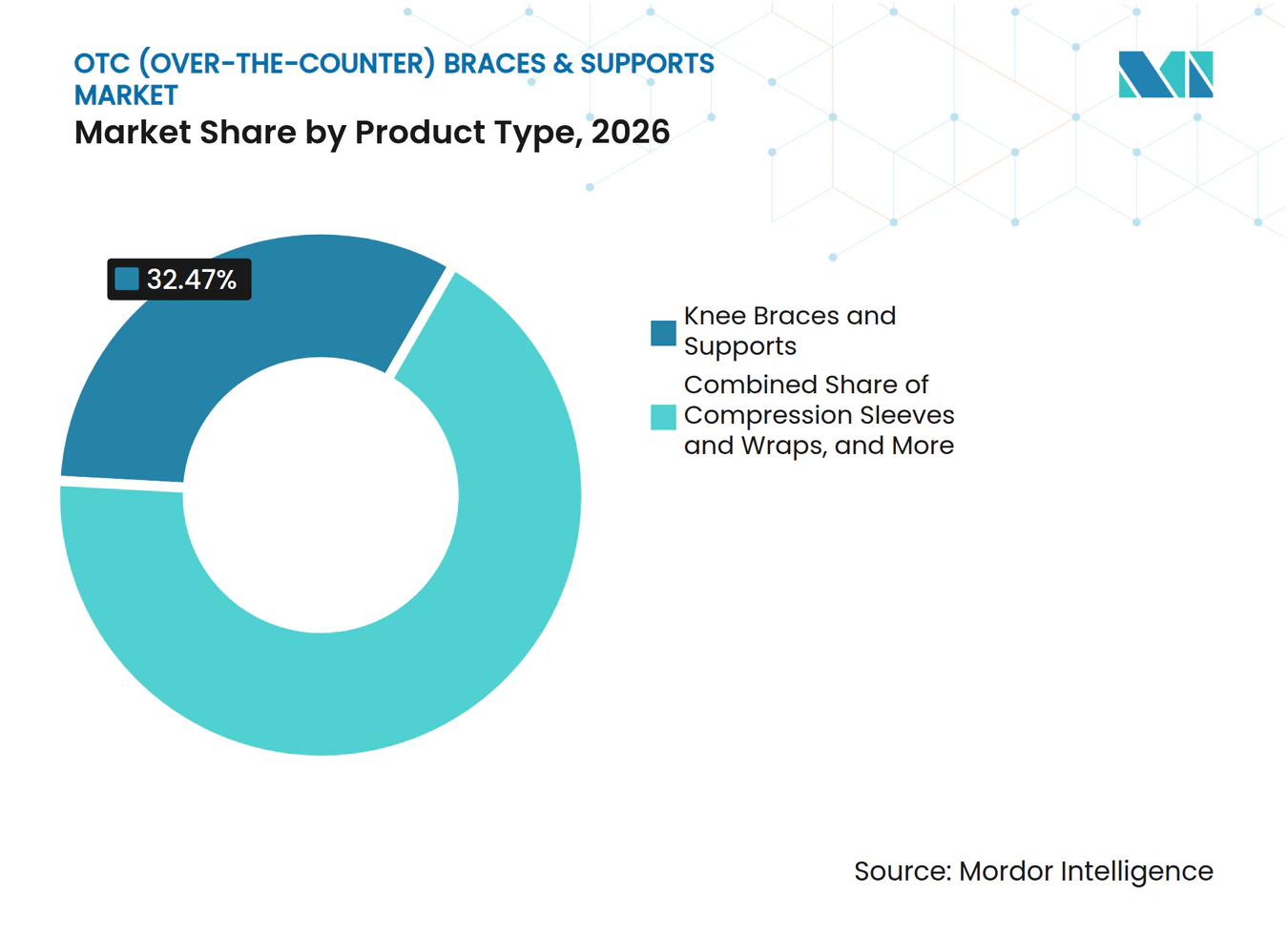
Knee Braces Lead, Compression Sleeves Expand Use CasesKnee Braces & Supports held 32.47% of the OTC (Over-the-Counter) braces & supports market share in 2026. Their position reflects the scale of osteoarthritis and the depth of clinical work around knee support. A 2025 network meta-analysis of 139 randomized controlled trials found knee bracing ranked highest across WOMAC pain, function, and stiffness outcomes among the evaluated treatments. The PROP OA trial reported a 6.13-point mean difference in KOOS pain at 6 months for compartment-specific bracing. Ankle supports also serve sports injury prevention needs. Back and spine supports remain relevant for lower-back strain and workplace use. These categories have established demand because the consumer purpose is usually easy to understand.
Compression Sleeves & Wraps are projected to grow at a 6.12% CAGR through 2032. They are used across athletic recovery, rehabilitation, and selected post-operative applications. The format is simple to purchase and usually requires less instruction than a structured brace. Manufacturers are adding graduated compression, antimicrobial properties, and moisture-wicking fabrics to support all-day use. These changes bring medical compression closer to performance apparel in consumer perception. Wrist, hand, elbow, and shoulder products remain smaller categories. They remain important in occupational settings and post-operative care. The OTC (Over-the-Counter) braces & supports industry has room to improve segment-specific evidence for these smaller product lines.



By Application:
Osteoarthritis Management Anchors Demand, Sports Prevention Grows FasterOsteoarthritis Management accounted for 28.15% of the OTC (Over-the-Counter) braces & supports market size in 2026. This application benefits from an older population and the high prevalence of knee symptoms. Germany reported osteoarthritis among 16.5% of adults in 2025. Published clinical guidance describes bracing as a non-surgical option for knee osteoarthritis management. Ligament injury management and post-operative rehabilitation also represent substantial applications. These uses often involve a more defined recovery pathway and a higher spend per episode. They also depend more closely on clinician fitting and advice.
Sports Injury Prevention is projected to grow at a 6.58% CAGR through 2032. Younger adults in endurance sports, gym exercise, and team activities are increasingly considering support products before serious injury occurs. The APTA findings on proactive guidance among recreational athletes support this behavior. Occupational Support remains less developed despite the level of work-related musculoskeletal symptoms. European survey material identified bone, joint, or muscle problems among 28% of workers in the preceding 12 months. Medical rehabilitation and daily-living support offer steadier demand among older users. The OTC (Over-the-Counter) braces & supports industry can address these needs through products designed for repeated and comfortable use.
By Distribution Channel:
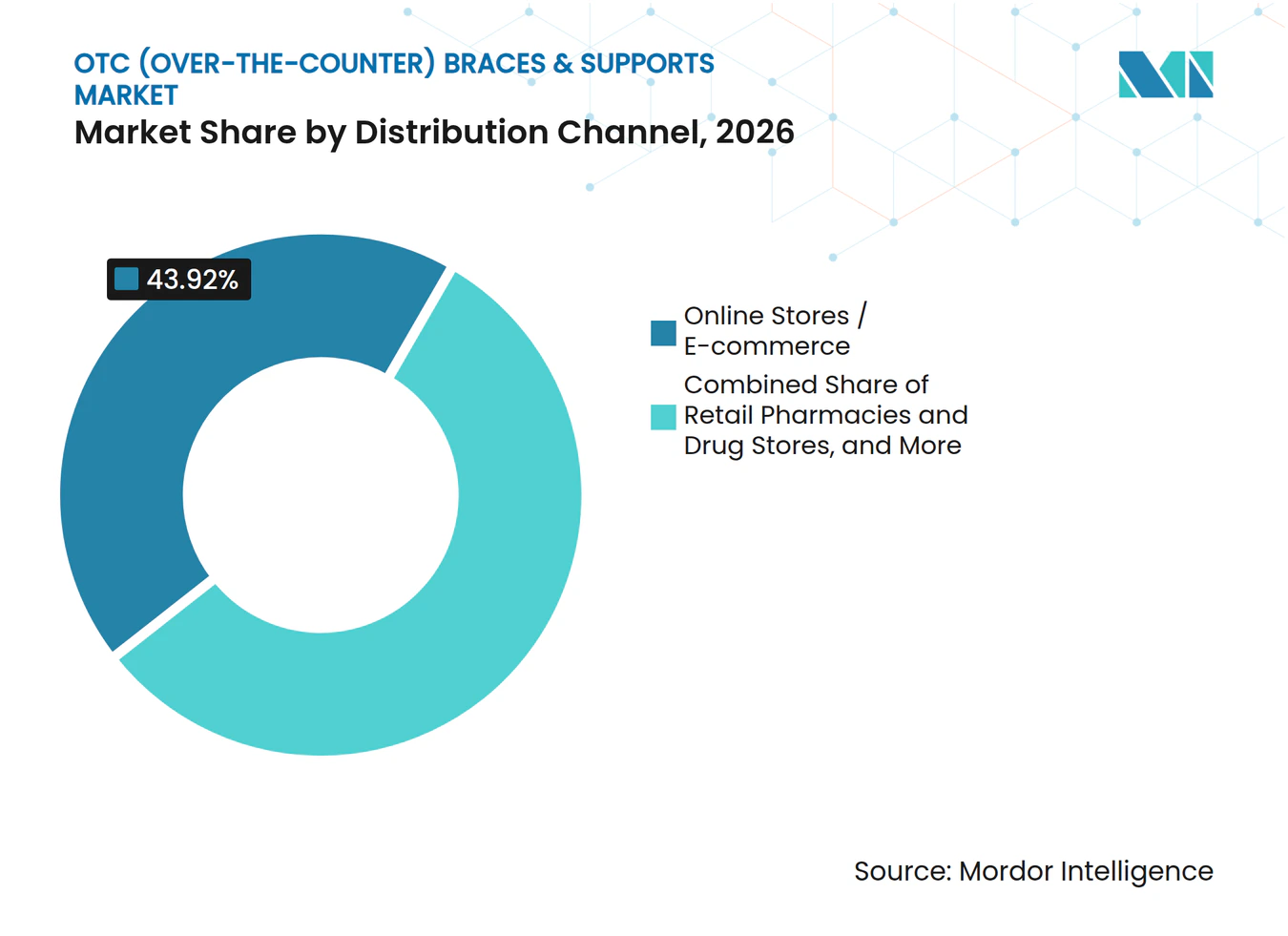
E-commerce Leads, Pharmacies Gain RelevanceOnline Stores/E-commerce held 43.92% of the OTC (Over-the-Counter) braces & supports market share in 2026. The channel gives consumers access to broad product selection, price comparisons, ratings, and digital sizing resources. It also allows brands to explain the use of specialized products directly. Hospital pharmacies and specialty orthopedic stores handle smaller volumes but can support technically complex purchases. Their customer base often includes people recovering from surgery or managing persistent symptoms. Online channels have limits when consumers need help with measurement or brace placement. Clear sizing tools and reliable quality controls remain central to channel performance.
Retail Pharmacies & Drug Stores are projected to grow at a 7.24% CAGR through 2032. The channel benefits from demand for pharmacist guidance and an established local presence. Pharmacy shelves can act as a visible quality screen for consumers who are concerned about unfamiliar online sellers. Staff training and concise clinical materials can make this role more useful. The channel can also link a purchase to a broader discussion of pain management or mobility. This creates an advantage for manufacturers able to support pharmacy education and merchandising. The OTC (Over-the-Counter) braces & supports market will continue to rely on both digital access and physical guidance.

By End User:
Hospitals and Clinics Remain Central, ASCs ExpandHospitals and Clinics accounted for 48.39% of the OTC (Over-the-Counter) braces & supports market size in 2026. They are important dispensing points after surgery and during conservative treatment for musculoskeletal conditions. Physiotherapy departments also routinely assess and fit supports. In 2025, the Western Cape Department of Health and Wellness issued a framework tender for orthopedic braces across its institutions. Public procurement favors suppliers with documented quality and dependable fulfillment. Health systems also use formulary arrangements to standardize product selection. This gives clinically supported brands an advantage over unverified alternatives.
Ambulatory Surgical Centers are projected to grow at a 7.81% CAGR through 2032. Their growth is linked to the continued movement of orthopedic care toward outpatient settings. Same-day discharge pathways often include a brace or support as part of post-operative care. This raises the value of products that are simple for patients to use at home. Physical therapy centers, sports organizations, and home users represent the remaining end-user base. Remote physiotherapy can further connect home users with recommended supports. The OTC (Over-the-Counter) braces & supports market is positioned to benefit as outpatient pathways require practical recovery tools outside hospitals.
Geography Analysis
North America
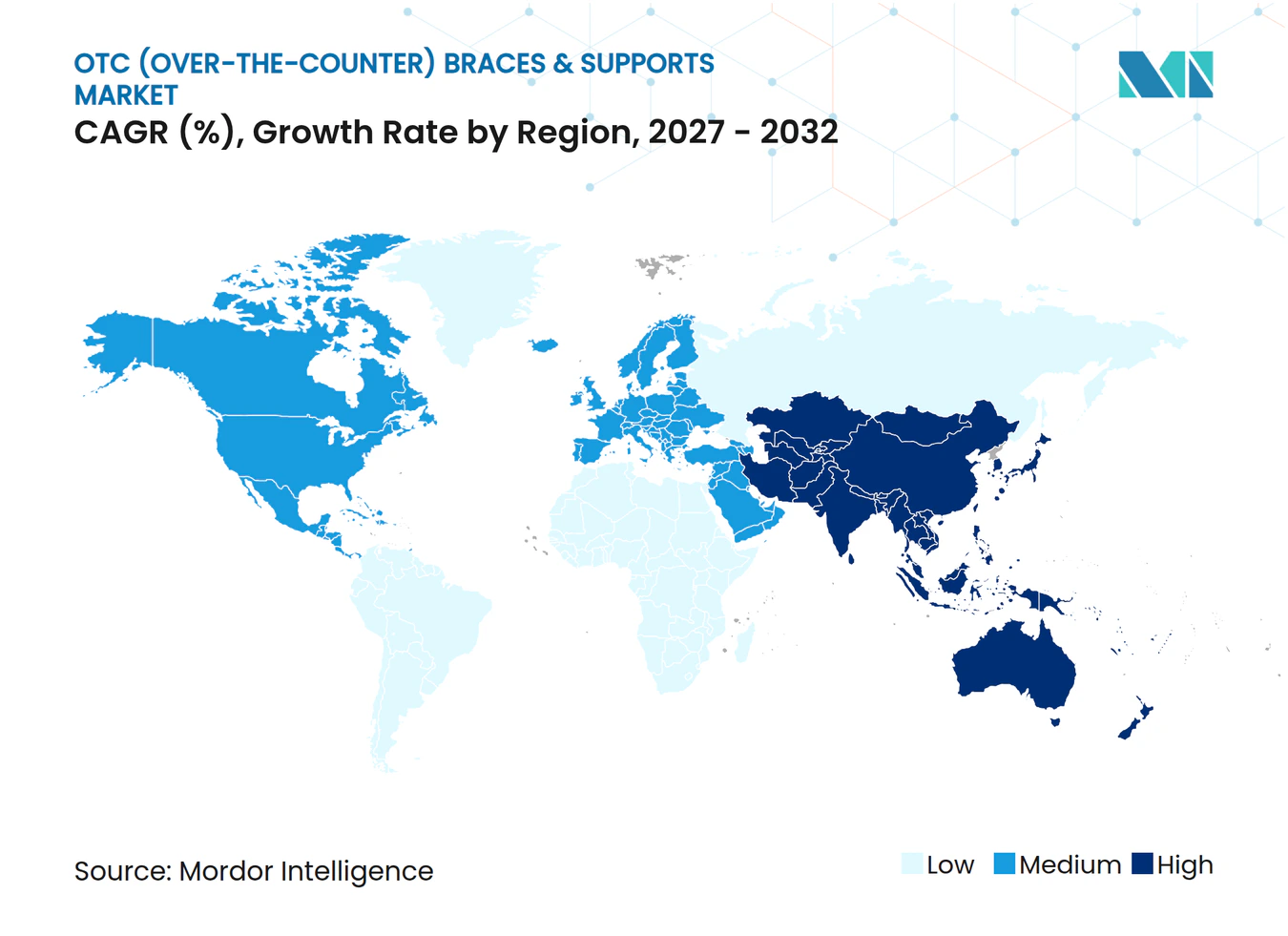
North America accounted for 36.73% of the OTC (Over-the-Counter) braces & supports market size in 2026. The United States combines high osteoarthritis demand, broad retail pharmacy coverage, and established direct-to-consumer e-commerce. Outpatient surgery pathways are increasing the use of take-home supports after orthopedic procedures. Canada has workplace health programs and selected coverage for prescribed supports. Mexico is expanding access through health awareness and retail pharmacy growth. The FDA regulates many soft supports as Class I exempt devices, making retailer standards and manufacturer documentation important quality influences. The region favors companies that can pair consumer marketing with credible clinical information.
Asia-Pacific
Asia-Pacific is projected to expand at an 8.47% CAGR through 2032, the fastest regional rate. Japan combines an older population with formal approval processes for certain ready-made braces. The Ministry of Health, Labor and Welfare maintains an approved list for ready-made braces and orthoses. Japan Sigmax reported its fourth consecutive year as the leader in hospital-segment brace shipment value in 2025. India has rising musculoskeletal needs and expanding orthopedic care access. China supports rehabilitation through Healthy China 2030 and selected reimbursement pathways for orthopedic supports. The OTC (Over-the-Counter) braces & supports market share is shaped by both institutional endorsement and price-sensitive consumer demand across this diverse region.
Europe, Middle East and Africa, and South America
Europe has a strong clinical heritage and several established manufacturers, including Bauerfeind, Medi, Thuasne, and BSN Medical. The United Kingdom reported self-reported musculoskeletal conditions among 17.9% of adults aged 16 and over in 2024. Bauerfeind assigned separate Hilfsmittelnummer identifiers to GenuTrain variants in May 2026, supporting direct statutory insurance billing for those products. CE marking and ISO-based quality systems remain important compliance factors in Europe. The Middle East and Africa have lower insurance coverage and more uneven access outside urban areas. Gulf markets offer a premium opportunity due to higher health spending and sports participation. Brazil and Argentina are supported by sports and workplace demand, although economic volatility can limit near-term purchasing power.
Competitive Landscape
Market Concentration
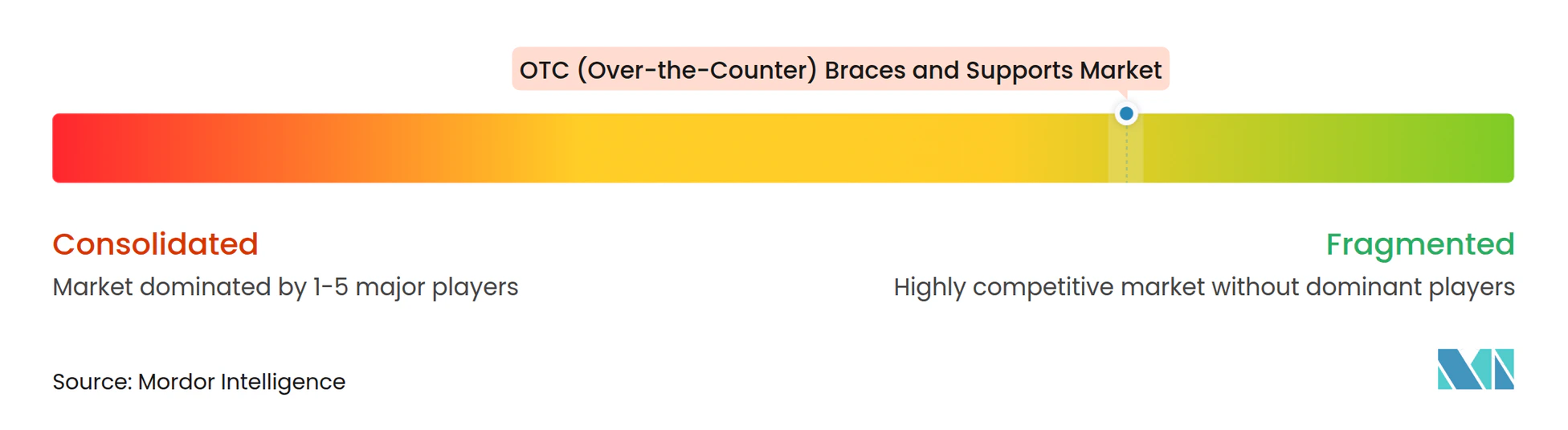
The OTC (Over-the-Counter) braces & supports market is moderately fragmented, with global specialists competing alongside regional and private-label suppliers. Bauerfeind AG, Össur hf., Medi GmbH & Co. KG, and Enovis Corporation through DJO have strong positions in premium product categories. Price-led competitors remain active in high-volume soft support categories. This structure leaves room for regional brands that understand local distribution and reimbursement practices. It also means that a large number of products can look similar to consumers at the point of purchase. Clinical evidence helps leading manufacturers support premium pricing where products are otherwise easy to copy. Bauerfeind has used clinical data around SecuTec OA to support this position. Össur’s Osteoarthritis Action Alliance relationship reinforces its evidence-based access strategy. These actions make product credibility a more visible part of competition.
Portfolio expansion also remains a central competitive approach. Enovis reported seven small acquisitions in fiscal year 2025, indicating continued interest in building product breadth. Aspen Medical Products acquired Advanced Orthopedics in January 2025, extending its orthopedic support offering. Enovis launched the Spinamic Hybrid Scoliosis Brace through DJO in June 2026, combining corrective performance with a comfort focus. Bauerfeind introduced a limitation kit for the SecuTec Genu in August 2026, extending its application for acute ACL rehabilitation. These moves show how established suppliers are expanding around clinical and recovery needs. Product breadth can also help companies serve hospitals, pharmacies, and direct consumers with related offerings. It can reduce reliance on a single use case when demand varies across sports, osteoarthritis care, and post-operative recovery.
Performance apparel brands and digital health platforms are creating additional pressure in compression and smart-wear products. Their direct-to-consumer capabilities can be difficult for traditional device companies to match. They can use consumer-oriented content and online buying journeys to reach active users before they enter a clinical treatment pathway. Occupational bracing for manual and logistics workers remains an opportunity because many existing products were designed first for sports or clinical care. These workers may need supports that remain comfortable during repeated movement and longer shifts. The FDA’s 2025 enforcement action against an online vendor shows continued attention to product compliance in digital channels. Companies with dependable fitting guidance, clear evidence, and validated products are better protected from low-quality competition. They can also use pharmacy, hospital, and clinician relationships to reinforce trust at the time of purchase.
OTC (Over-the-Counter) Braces & Supports Industry Leaders
-
Aspen Medical Products LLC
-
Bauerfeind AG
-
Essity AB
-
Ottobock SE & Co. KGaA
-
Zimmer Biomet Holdings Inc.
- *Disclaimer: Major Players sorted in no particular order
OTC (Over-the-Counter) Braces & Supports Market Companies Covered in this Report
- 3M
- ALCARE Co. Ltd.
- Aspen Medical Products
- Bauerfeind
- Bird & Cronin
- Breg
- BSN medical GmbH
- DeRoyal Industries
- Enovis Corporation
- Essity
- McDavid Inc.
- medi
- Mueller Sports Medicine
- Össur hf.
- Ottobock
- Thuasne SAS (operating as Thuasne Group)
- Trulife Group Ltd.
- Tynor Orthotics Pvt. Ltd.
- Vissco Rehabilitation Aids Private Limited
- Zimmer Biomet
Recent Industry Developments in OTC (Over-the-Counter) Braces & Supports Market
- October 2026: Bauerfeind, GripCare Compression Glove Add-on: Bauerfeind introduced the optional GripCare accessory for its compression glove, extending therapeutic options for patients with lipoedema or lymphoedema, a growing clinical indication for compression products and a reinforcement of the company's upper-extremity portfolio.
- August 2026: Össur, Partnership Renewal with Hunter Woodhall through 2028: Össur extended its sponsorship of Paralympic gold medallist Hunter Woodhall, reinforcing its positioning as the performance orthotics brand of choice for elite athletes and supporting global consumer brand awareness.
- June 2026: Enovis, Spinamic Hybrid Scoliosis Brace Launch: Enovis launched the Spinamic Hybrid Scoliosis Brace through DJO, combining corrective performance with improved patient comfort for adolescent idiopathic scoliosis, bridging the OTC-adjacent and prescription brace categories.
Global OTC (Over-the-Counter) Braces & Supports Market Report Scope
As per the scope of the report, OTC (Over-the-Counter) braces & supports are non-prescription orthopedic support devices designed to provide stability, compression, pain relief, and injury prevention for muscles, joints, and ligaments. These products are readily available through pharmacies, retail stores, sporting goods outlets, and online channels without requiring a physician's prescription. Common products include knee braces, ankle supports, wrist braces, back supports, compression sleeves, and posture support devices used for managing minor injuries, osteoarthritis, and everyday musculoskeletal discomfort.
The OTC (Over-the-Counter) braces & supports market is segmented by product type, application, distribution channel, end user, and geography. By product type, the market is segmented into knee braces & supports, ankle braces & supports, wrist & hand braces & supports, back & spine supports, elbow braces & supports, shoulder braces & supports, neck & cervical supports, compression sleeves & wraps, and others. By application, the market is segmented into sports injury prevention, medical rehabilitation, daily living support, occupational support, post-operative rehabilitation, osteoarthritis management, ligament injury management, and others. By distribution channel, the market is segmented into retail pharmacies & drug stores, hospital pharmacies, specialty orthopedic stores, online stores/e-commerce, and others. By end user, the market is segmented into home care settings, hospitals and clinics, ambulatory surgical centers, and others. The geography segment is further divided into North America, Europe, Asia-Pacific, the Middle East and Africa, and South America. The report also covers the estimated market sizes and trends for 17 countries across major regions globally. The report offers the market size and forecasts in value (USD) for the above segments.
Segmentation Overview
| Knee Braces & Supports |
| Ankle Braces & Supports |
| Wrist & Hand Braces & Supports |
| Back & Spine Supports |
| Elbow Braces & Supports |
| Shoulder Braces & Supports |
| Neck & Cervical Supports |
| Compression Sleeves & Wraps |
| Others |
| Sports Injury Prevention |
| Medical Rehabilitation |
| Daily Living Support |
| Occupational Support |
| Post-Operative Rehabilitation |
| Osteoarthritis Management |
| Ligament Injury Management |
| Others |
| Retail Pharmacies & Drug Stores |
| Hospital Pharmacies |
| Specialty Orthopedic Stores |
| Online Stores / E-commerce |
| Others |
| Home Care Settings |
| Hospitals and Clinics |
| Ambulatory Surgical Centers |
| Others |
| North America | United States |
| Canada | |
| Mexico | |
| Europe | Germany |
| United Kingdom | |
| France | |
| Italy | |
| Spain | |
| Rest of Europe | |
| Asia-Pacific | China |
| India | |
| Japan | |
| Australia | |
| South Korea | |
| Rest of Asia-Pacific | |
| Middle East and Africa | GCC |
| South Africa | |
| Rest of Middle East and Africa | |
| South America | Brazil |
| Argentina | |
| Rest of South America |
| By Product Type | Knee Braces & Supports | |
| Ankle Braces & Supports | ||
| Wrist & Hand Braces & Supports | ||
| Back & Spine Supports | ||
| Elbow Braces & Supports | ||
| Shoulder Braces & Supports | ||
| Neck & Cervical Supports | ||
| Compression Sleeves & Wraps | ||
| Others | ||
| By Application | Sports Injury Prevention | |
| Medical Rehabilitation | ||
| Daily Living Support | ||
| Occupational Support | ||
| Post-Operative Rehabilitation | ||
| Osteoarthritis Management | ||
| Ligament Injury Management | ||
| Others | ||
| By Distribution Channel | Retail Pharmacies & Drug Stores | |
| Hospital Pharmacies | ||
| Specialty Orthopedic Stores | ||
| Online Stores / E-commerce | ||
| Others | ||
| By End User | Home Care Settings | |
| Hospitals and Clinics | ||
| Ambulatory Surgical Centers | ||
| Others | ||
| By Geography | North America | United States |
| Canada | ||
| Mexico | ||
| Europe | Germany | |
| United Kingdom | ||
| France | ||
| Italy | ||
| Spain | ||
| Rest of Europe | ||
| Asia-Pacific | China | |
| India | ||
| Japan | ||
| Australia | ||
| South Korea | ||
| Rest of Asia-Pacific | ||
| Middle East and Africa | GCC | |
| South Africa | ||
| Rest of Middle East and Africa | ||
| South America | Brazil | |
| Argentina | ||
| Rest of South America | ||
Key Questions Answered in the Report
What is the projected value of OTC braces and supports by 2032?
The category is forecast to reach USD 2.01 billion by 2032, growing at a 5.84% CAGR from 2027.
Which product category has the largest sales share?
Knee Braces & Supports lead with 32.47% share in 2026, supported by their role in osteoarthritis care and recovery.
Which use case is growing fastest?
Sports Injury Prevention is projected to grow at a 6.58% CAGR through 2032 as active consumers increasingly use supports preventively.
Why are online sales important for braces and supports?
Online Stores/E-commerce held 43.92% share in 2026 because they offer broad selection, comparison tools, and digital sizing support.
Why are retail pharmacies growing faster than online stores?
Retail Pharmacies & Drug Stores are expected to grow at a 7.24% CAGR through 2032 as consumers seek pharmacist guidance and trusted product selection.
Which region is expected to grow fastest?
Asia-Pacific is projected to grow at an 8.47% CAGR through 2032, supported by aging populations, rehabilitation access, and digital commerce.