
Organic Beer Market Size and Share
Market Overview
| Study Period | 2022 - 2032 |
|---|---|
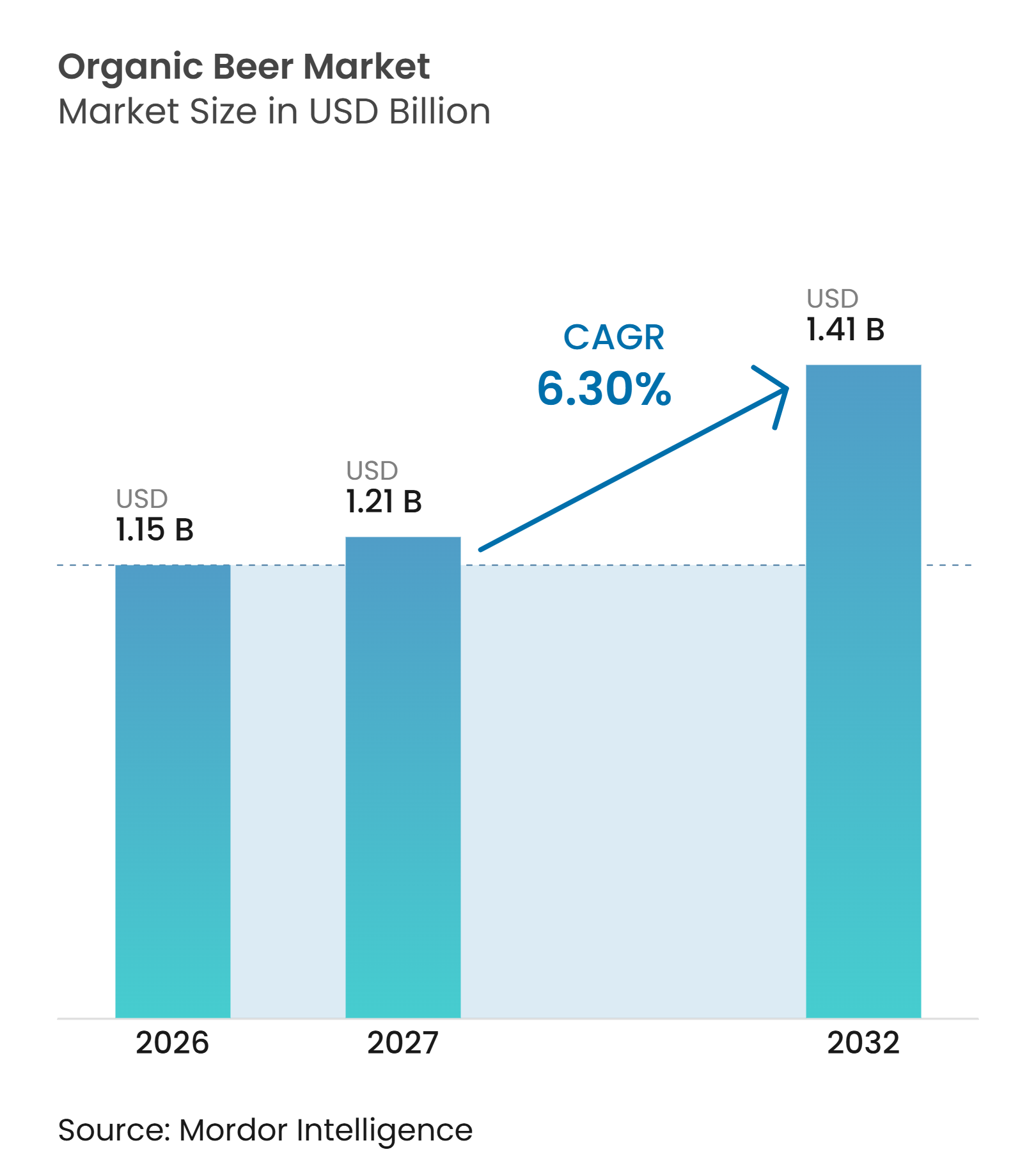
| Market Size (2027) | USD 1.21 Billion |
| Market Size (2032) | USD 1.41 Billion |
| Growth Rate (2027 - 2032) | 6.30 % |
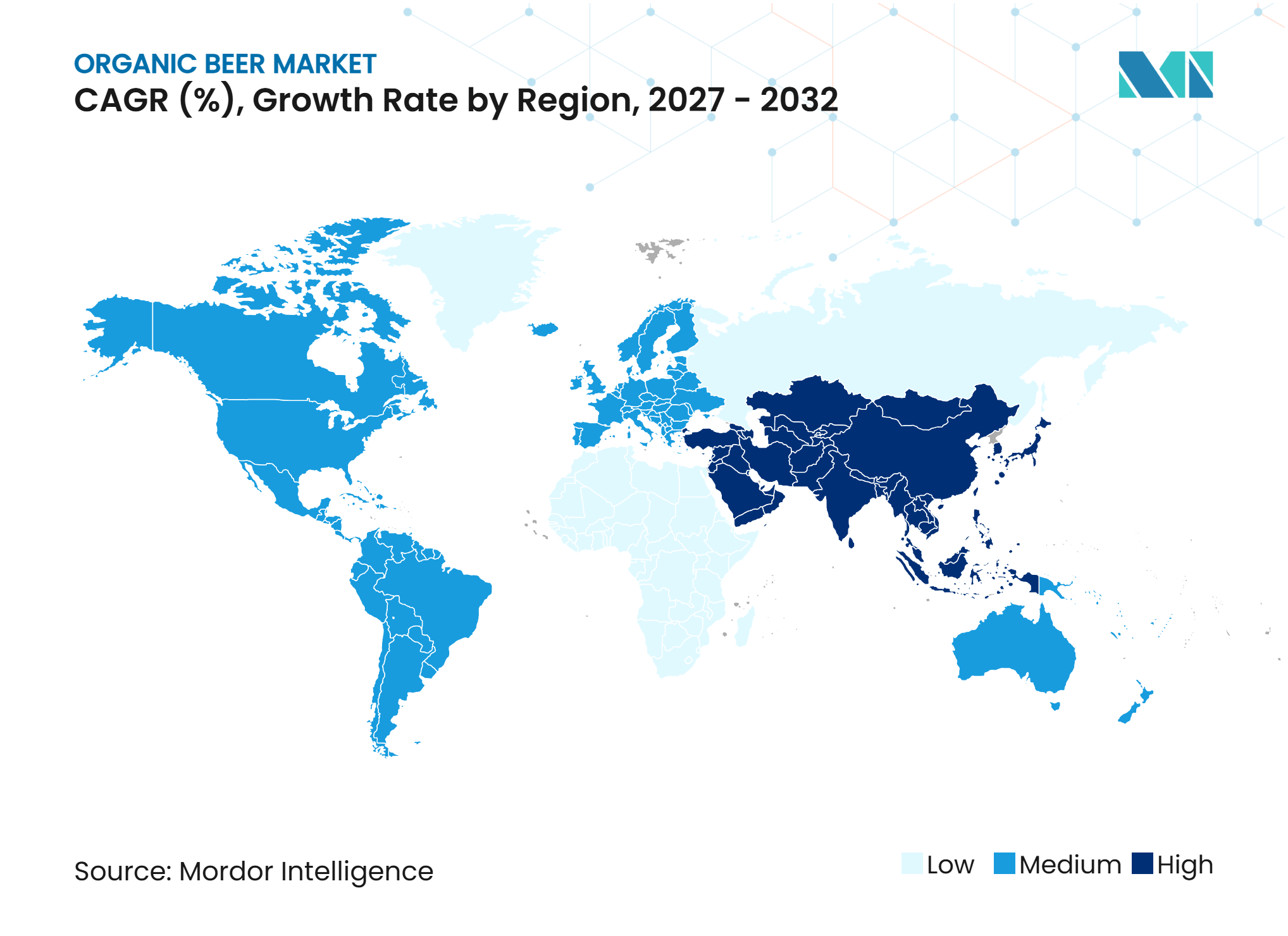
| Fastest Growing Market | Asia-Pacific |
| Largest Market | Europe |
| Market Concentration | Low |
Major Players *Disclaimer: Major Players sorted in no particular order Image © Mordor Intelligence. Reuse requires attribution under CC BY 4.0. | |
Organic Beer Market Analysis by Mordor Intelligence
The organic beer market size is expected to grow from USD 1.15 billion in 2026 to USD 1.21 billion in 2027 and is forecast to reach USD 1.41 billion by 2032 at a 6.30% CAGR over 2027-2032. Demand for organic beer is supported by growing consumer interest in certified ingredients, transparent product information, and beverage choices that reflect sustainability concerns. Certification strengthens consumer confidence by providing assurance on ingredient sourcing, agricultural practices, and production standards. Expanding retail acceptance of natural and specialty beverages is improving product visibility and accessibility across mainstream distribution channels. Breweries are also strengthening relationships with agricultural suppliers to secure consistent access to organic raw materials, improve supply chain transparency, and support responsible sourcing practices.
Key Report Takeaways
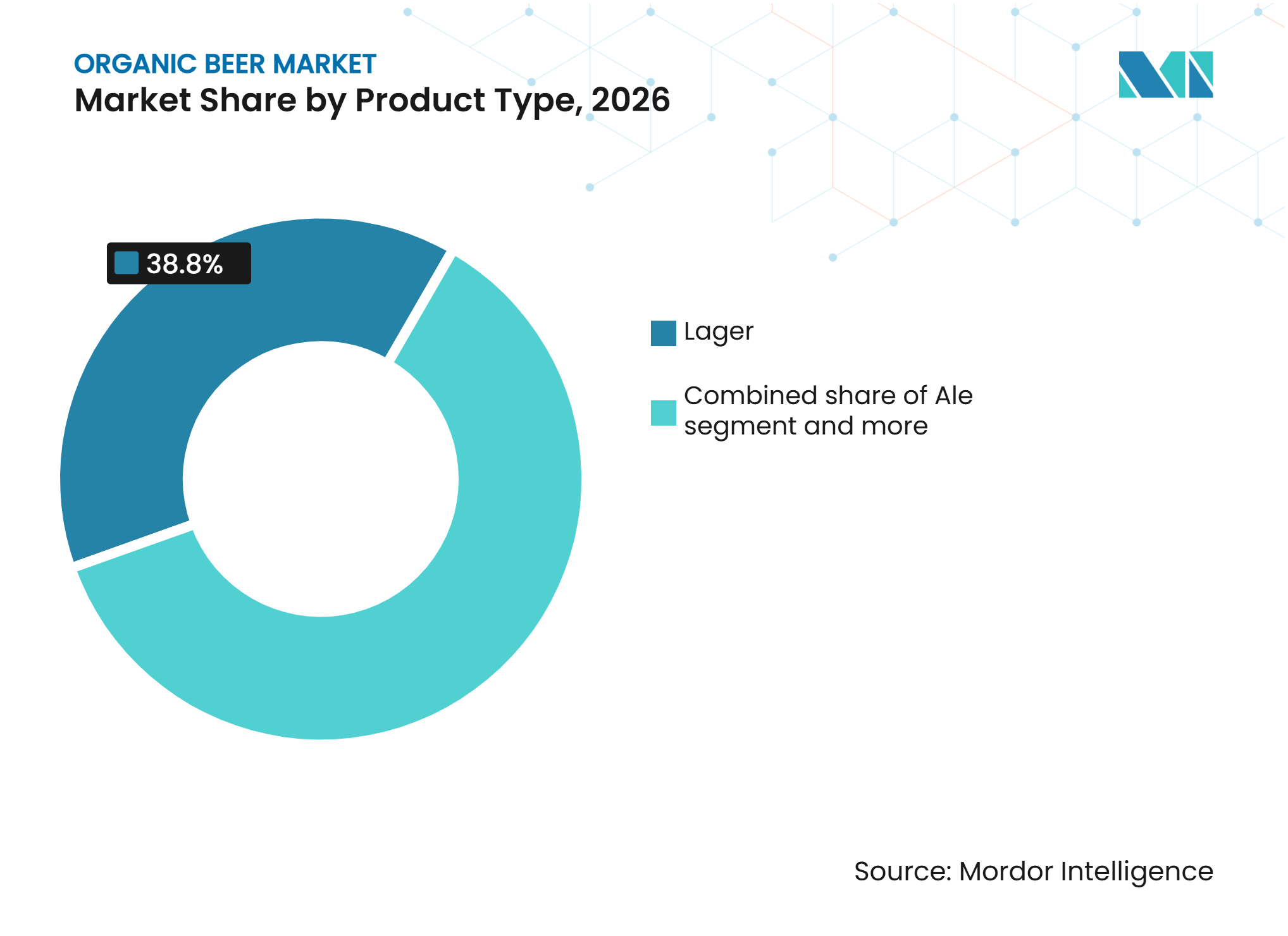
• By product type, lager held 38.81% of the organic beer market share in 2026, while Ale is forecast to expand at a CAGR of 8.21% through 2032.
• By category, standard held 62.12% of the organic beer market share in 2026, while premium is projected to expand at a CAGR of 8.51% through 2032.
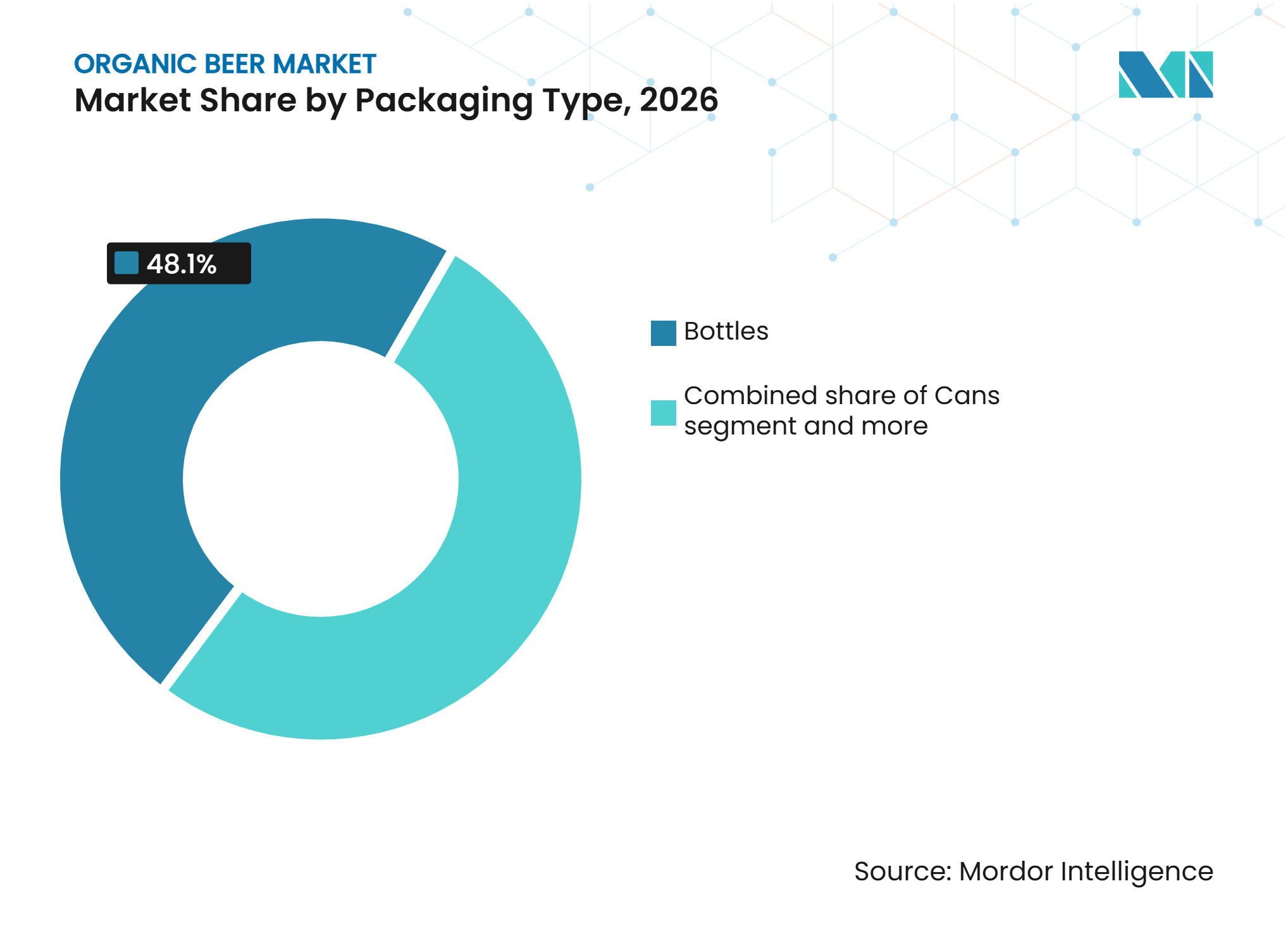
• By packaging type, bottles held 48.11% of the organic beer market share in 2026, while cans are projected to expand at a CAGR of 9.18% through 2032.
• By distribution channel, off-trade held 62.61% of the organic beer market share in 2026, while on-trade is forecast to expand at a CAGR of 7.23% through 2032.
• By geography, Europe held 41.61% of the organic beer market share in 2026, while Asia-Pacific is projected to expand at a CAGR of 8.81% through 2032.
Note: Market numbers in this report are based on Mordor Intelligence's proprietary estimation framework, which combines nine months of actuals with Q4 projections for base year 2026.
Market Trends and Insights
Drivers Impact Analysis of Organic Beer Market*
| Driver | (~) % Impact on CAGR Forecast | Geographic Relevance | Impact Timeline |
|---|---|---|---|
| Rising demand for certified, clean-label alcoholic beverages | +1.5% | Global | Short term (≤ 2 years) |
| Growing consumer preference for organic and sustainably produced beer | +1.3% | Global, with early adoption in Western Europe and North America | Medium term (2–4 years) |
| Expansion of organic and sustainable beverage retail assortments | +1.0% | North America and Europe | Short term (≤ 2 years) |
| Increasing adoption of organic brewing ingredients by craft breweries | +0.9% | North America and Western Europe | Medium term (2–4 years) |
| Regenerative grain and farm-to-brewery collaborations | +0.8% | North America and Europe | Medium term (2–4 years) |
| Organic ingredient traceability as a brand differentiator | +0.7% | Global, particularly Europe and North America | Long term (4–6 years) |
| Source: Mordor Intelligence | |||
Rising Demand for Certified, Clean-Label Alcoholic Beverages
Consumers are increasingly considering ingredient sourcing, production practices, and sustainability credentials when evaluating beer products. For instance, in March 2026, according to research from Auburn University, the willingness of 1,150 United States beer consumers to pay for beer made with locally sourced hops and barley, as well as for products carrying upcycling certification, was measured, highlighting the relevance of transparent sourcing and sustainability credentials in consumer purchasing decisions and reflecting in product innovation, with Patagonia Provisions and Deschutes Brewery launching Patagonia Provisions Organic IPA in October 2026, brewed with organic hops, organic malted barley, and Regenerative Organic Certified® Kernza® in the organic beer market [1].
Growing Consumer Preference for Organic and Sustainably Produced Beer
Consumer interest in beer is increasingly shaped by ingredient sourcing, environmental responsibility, and sustainable agricultural practices. For instance, in February 2025, according to the Organisation for Economic Co-operation and Development, 37,000 consumers across 40 countries reported strong interest in organic, locally produced, and eco-friendly product claims [2]. It also highlighted the role of environmental awareness and consumer trust in willingness to pay more for products carrying sustainability claims. This preference is reflected in brewery initiatives, with Carlsberg launching Grobund in June 2025, its first Danish beer brewed entirely with regeneratively grown barley malt. The initiative incorporates farming practices such as reduced tillage and cover cropping to support soil health and biodiversity, demonstrating how breweries are responding to consumer interest in environmentally responsible production.
Expansion of Organic and Sustainable Beverage Retail Assortments
The growing availability of organic and sustainably produced beverages across supermarkets, specialty stores, and online retail channels is improving product accessibility and visibility. Retailers are increasingly broadening their product assortments to meet consumer demand for certified organic products and environmentally responsible production. This shift is driven by rising consumer awareness of health and environmental concerns, prompting retailers to allocate more shelf space and create dedicated sections for organic products. Wider shelf availability and dedicated organic product sections help consumers identify and compare products, while also providing beverage manufacturers with greater opportunities to reach a broader customer base. The growth of e-commerce has further supported this trend, enabling consumers to access a wider range of organic beverages beyond what is available in physical stores.
Increasing Adoption of Organic Brewing Ingredients by Craft Breweries
Craft breweries are increasingly using organically produced agricultural ingredients to differentiate their beer products and support sustainable brewing practices. Growing emphasis on ingredient quality, agricultural sustainability, and responsible sourcing is encouraging brewers to incorporate organic raw materials into their production processes. This shift creates opportunities for breweries to build closer relationships with organic farmers and ingredient suppliers, improving sourcing transparency and supporting more consistent access to certified raw materials. Using organic ingredients allows craft breweries to address consumer interest in products with clear ingredient origins and environmentally responsible production methods, while strengthening their position in the specialty beer market.
Restraints Impact Analysis of Organic Beer Market*
| Restraint | (~) % Impact on CAGR Forecast | Geographic Relevance | Impact Timeline |
|---|---|---|---|
| Premium pricing and consumer trade-down risk | -0.8% | Global, most acute in price-sensitive MEA and South America | Short term (≤ 2 years) |
| Limited availability of certified organic malt and hops | -0.7% | North America and European Union import-dependent markets | Medium term (2–4 years) |
| Multi-jurisdiction certification and labeling complexity | -0.5% | Global, particularly exporters operating across North America, Europe, and Asia-Pacific | Medium term (2–4 years) |
| Climate-related variability in organic hop sourcing | -0.6% | North America and Europe, particularly major hop-producing regions | Long term (≥ 4 years) |
| Source: Mordor Intelligence | |||
Premium Pricing and Consumer Trade-Down Risk
Organic beer production generally entails higher sourcing and compliance costs due to certified agricultural ingredients, specialized handling, and organic certification requirements. These additional costs can translate into higher retail prices than conventionally produced beer, making it harder to attract consumers who prioritize affordability. Price sensitivity can also influence purchasing frequency and encourage consumers to switch to lower-priced conventional alternatives when household budgets are constrained. This limits organic beer brands' ability to expand beyond premium and specialty consumer segments, making competitive pricing and efficient sourcing important for broader market penetration.
Limited Availability of Certified Organic Malt and Hops
Reduced hop production and declining cultivation acreage can constrain the availability of brewing ingredients, making it more difficult for organic beer manufacturers to secure consistent raw material supplies. For instance, in December 2025, according to the United States Department of Agriculture, total United States hop production declined by 5% in 2025 compared with the previous year, while harvested acreage decreased by 7%. The report also recorded a decline in organic hop acreage from 482 acres in 2024 to 409 acres in 2025, indicating a smaller area dedicated to organic hop cultivation [3]. This can increase procurement pressure, make it harder to secure the required certified ingredients, and limit organic beer producers' ability to consistently maintain or expand production.
*Our forecasts treat driver/restraint impacts as directional, not additive. The impact forecasts reflect baseline growth, mix effects, and variable interactions.
Organic Beer Market Segment Analysis
By Product Type:
Lager Supports Broad Access While Ale Expands ChoiceLager held 38.81% of the organic beer market share in 2026. Lager’s familiar taste profile makes it an accessible choice for consumers exploring certified organic beer. Its suitability for large-scale production and broad retail distribution supports its availability across supermarkets, specialty liquor stores, and other retail channels. The established popularity of this style allows breweries to introduce organic certification while retaining the taste characteristics consumers already enjoy. This creates opportunities to reach mainstream buyers and strengthen market penetration. Stout and porter further expand consumer appeal by offering distinctive flavors and traditional brewing characteristics that attract craft beer enthusiasts. Together, these styles enable organic breweries to serve a broad consumer base, accommodate diverse taste preferences, and strengthen product variety across retail channels.
Ale is projected to expand at a CAGR of 8.21% through 2032. The broad range of ale styles, including pale ale, India pale ale, farmhouse ale, and sour beer, allows breweries to develop distinctive organic products based on different hop varieties, grains, and brewing techniques. This variety creates opportunities for producers to differentiate their offerings and appeal to consumers seeking unique flavor profiles and craft brewing characteristics. Ale also provides flexibility for product innovation, enabling breweries to explore new ingredient combinations and fermentation approaches while expanding their organic portfolios. These styles strengthen the presence of organic beer in specialty retailers and hospitality channels by catering to consumers seeking variety, distinctive flavors, and transparent ingredient sourcing.



By Category:
Standard Beer Builds Reach While Premium Beer Gains ValueStandard held 62.12% of the organic beer market share in 2026. Standard organic beer offerings appeal to consumers seeking certified products in familiar styles and accessible price ranges. Their availability across natural food retailers, supermarkets, and specialty liquor stores supports product visibility and encourages first-time purchases. Clear ingredient information and visible organic certification help consumers understand the product's sourcing standards and distinguish certified beer from conventional alternatives. Established organic standards also provide retailers with a consistent basis for identifying and communicating certified products. These offerings play an important role in expanding the consumer base, strengthening mainstream retail presence, and supporting wider adoption of organic beer.
Premium is forecast to expand at a CAGR of 8.51% through 2032. Premium organic beer gives breweries greater opportunities to differentiate their offerings through distinctive ingredients, specialized brewing methods, and closer relationships with organic growers. Transparent communication about certification and sustainable sourcing helps strengthen product credibility and communicate the value behind premium positioning. These products are well suited to specialist liquor stores, restaurants, and taprooms, where retailers and brewery staff can explain their unique characteristics to consumers. Premium offerings also allow breweries to build stronger brand identities, serve consumers seeking distinctive beer experiences, and support higher-value product portfolios. Alongside standard organic beer, this segment helps manufacturers address diverse purchasing preferences while strengthening the overall market positioning of organic beer.
By Packaging Type:
Bottles Retain Premium Appeal While Cans Gain GroundBottles held 48.11% of the organic beer market share in 2026. Glass packaging remains well suited to specialty organic beer, premium products, gifting, and retail formats that benefit from detailed product presentation. Its label space allows breweries to clearly communicate organic certification, ingredient information, producer identity, and sourcing practices. This supports consumer confidence and helps smaller breweries highlight the distinctive qualities of their products. Glass bottles also remain prevalent in restaurants, specialist retailers, and premium beverage selections, where product presentation enhances the overall drinking experience. Their established association with specialty beer further supports brand recognition and provides organic beer manufacturers with an effective format for communicating product quality and differentiation.
Cans are projected to expand at a CAGR of 9.18% through 2032. Cans offer organic beer manufacturers a lightweight, portable, and convenient packaging option that supports distribution across supermarkets, specialty retailers, and outdoor consumption occasions. Their ability to protect beer from light and oxygen helps maintain product quality, while their practical handling and storage characteristics support efficient distribution. The format also provides flexibility for single-unit sales and multipacks, allowing breweries to cater to different purchasing preferences and consumption occasions. Strong recycling performance further supports the appeal of aluminum cans for brands communicating their environmental commitments. Their convenience and accessibility make cans particularly suitable for introducing organic beer to new consumers and encouraging repeat purchases, complementing glass bottles in the overall packaging mix.

By Distribution Channel:
Off-Trade Delivers Volume While On-Trade Builds TrialOff-trade held 62.61% of the organic beer market share in 2026. Off-trade channels, including specialty liquor stores, natural food retailers, supermarkets, and other retail outlets, provide organic beer manufacturers with broad access to household consumers. These channels support product visibility, convenient purchasing, and repeat buying by making certified beer available alongside other alcoholic and organic beverage options. Retailers can strengthen category awareness through clear shelf displays and product placement that highlights organic certification and ingredient sourcing. The availability of different pack formats also encourages product trial and accommodates varied purchasing preferences. Off-trade retail therefore plays an important role in expanding consumer reach, improving product accessibility, and supporting the wider adoption of organic beer.
On-trade is projected to expand at a CAGR of 7.23% through 2032. On-trade channels, including restaurants, taprooms, hotels, and sustainability-focused hospitality venues, provide organic beer manufacturers with opportunities to introduce certified products through dining and social occasions. Staff recommendations, menu visibility, and food-pairing suggestions help consumers discover unfamiliar organic beer styles and understand their distinctive qualities. Clear communication of organic certification and brewery information also strengthens product credibility and supports hospitality operators in offering responsibly produced beverage options. These venues create valuable opportunities for premium product positioning, consumer engagement, and brand awareness. Positive tasting experiences can further encourage customers to seek out the same organic beer through retail channels, thereby supporting broader market recognition and repeat purchases.
Geography Analysis
Europe
Europe held 41.61% of the organic beer market share in 2026. Europe benefits from an established brewing tradition, developed organic retail networks, and a common regulatory framework for certified products. The European Union organic regulation provides consistent requirements for production, certification, labeling, and the use of the organic logo, supporting consumer recognition and cross-border distribution. Continued industry engagement around organic production standards also helps breweries and retailers strengthen compliance and product transparency. Germany further supports regional market development through its established organic food and beverage market and brewery investment in production efficiency and sustainability. These factors create favorable conditions for organic beer manufacturers to expand certified product offerings, strengthen consumer confidence, and improve market access across the region.
Asia-Pacific
Asia-Pacific is forecast to expand at a CAGR of 8.81% through 2032. Asia-Pacific offers opportunities for organic beer manufacturers through growing urban retail networks, specialty bars, premium beverage outlets, and interest in international beer styles. The region's diverse consumer preferences and market structures allow producers to develop products for different drinking occasions and customer groups. Established craft beer and premium retail channels in markets such as Australia, alongside expanding urban and hospitality channels across other countries, provide varied routes for market development. Country-specific certification requirements and regulatory frameworks also encourage manufacturers to strengthen local compliance, packaging, and distribution strategies. Adapting product positioning and market entry approaches to individual countries can help organic beer brands build consumer awareness, improve retail access, and expand their regional presence.
Diversified Growth Drivers Across Remaining Geographies
North America benefits from an established craft brewing ecosystem, specialized retail networks, and continued product innovation, creating opportunities for organic beer manufacturers to introduce differentiated and certified offerings. The region's interest in diverse beer styles and non-alcoholic alternatives also supports portfolio expansion. South America offers opportunities through developing craft beer markets, urban premium retail, and hospitality channels, particularly in major markets such as Brazil and Argentina. In the Middle East and Africa, tourism-oriented hospitality venues and demand from international consumer groups provide opportunities in markets with established alcohol retail channels, while certified non-alcoholic alternatives can address a wider range of consumer preferences.
Competitive Landscape
Market Concentration
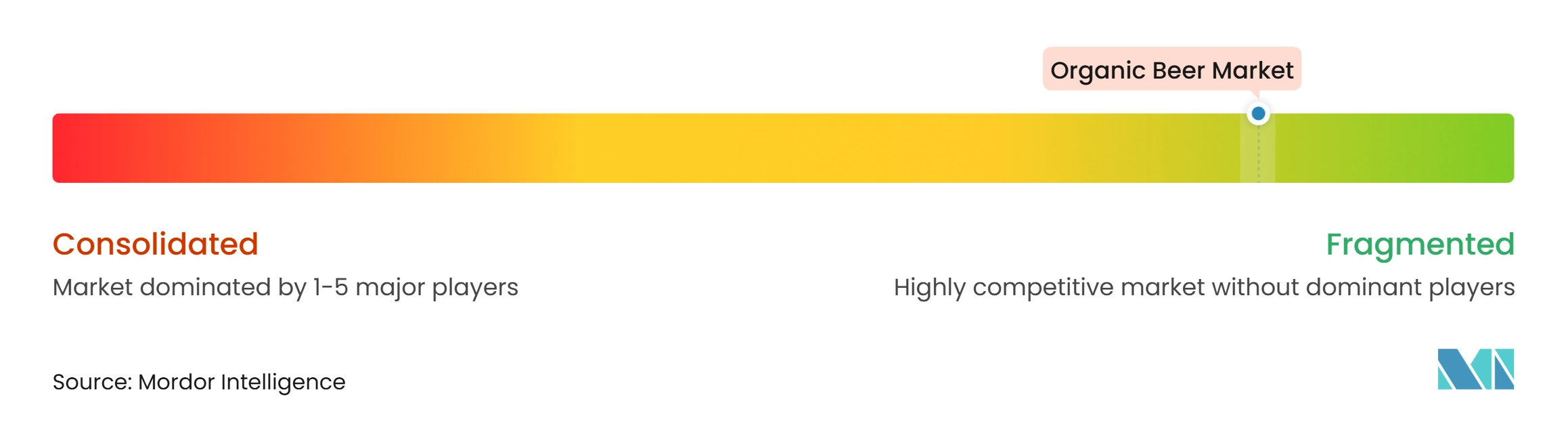
The organic beer market remains fragmented, with numerous specialist breweries and regional producers contributing to market development. Competition is shaped by organic certification, transparent ingredient sourcing, consistent product quality, and strong consumer trust. Established certification frameworks bolster product credibility and enable manufacturers to strengthen their market positioning. Smaller breweries benefit from regional sourcing relationships and specialized product offerings, while larger brewers can use their distribution capabilities to expand their certified organic portfolios.
Product innovation and portfolio diversification are strengthening competitive opportunities across the market. Breweries are broadening their offerings with diverse beer styles and non-alcoholic formats to address evolving consumer preferences and attract broader customer groups. Investments in production facilities, energy efficiency, and brewing partnerships further support operational development and strengthen sustainability positioning. These initiatives enable manufacturers to enhance product differentiation, improve production capabilities, and expand their market reach.
The organic non-alcoholic beer segment also creates opportunities to reach consumers seeking alcohol-free alternatives while retaining familiar beer characteristics. Consistent access to certified brewing ingredients and strong relationships with organic growers support production continuity and portfolio expansion. Overall, the fragmented competitive landscape allows manufacturers to build distinct market positions through product innovation, credible certification, reliable sourcing, operational improvements, and wider distribution networks.
Organic Beer Industry Leaders
-
Eel River Brewing Company
-
Aslan Brewing Company
-
Hopworks Urban Brewery
-
Protector Brewery LLC
-
Black Isle Brewing Co. Ltd.
- *Disclaimer: Major Players sorted in no particular order
Organic Beer Market Companies Covered in this Report
- Eel River Brewing Company
- Aslan Brewing Company
- Hopworks Urban Brewery
- Protector Brewery LLC
- Black Isle Brewing Co. Ltd.
- Brasserie Dupont SPRL
- Brasserie de Brunehaut S.A.
- Brouwerij Huyghe
- Brauhaus Gusswerk GmbH
- Riedenburger Brauhaus (Michael Krieger GmbH & Co. KG)
- Neumarkter Lammsbräu Gebr. Ehrnsperger KG
- Brauerei Clemens Härle KG
- Rother Bräu Bayerische Exportbierbrauerei GmbH
- Stroud Brewery Ltd.
- Peak Brewing Company
- Kirin Holdings Company, Limited (New Belgium Brewing Company, Inc.)
- Deschutes Brewery
- Sierra Nevada Brewing Co.
- Samuel Smith Old Brewery
- Crannóg Ales (BNA Brewing Co.)
Recent Industry Developments in Organic Beer Market
- August 2026: Tap Social Movement and Stroud Brewery launched an organic Extra Hazy Pale Ale featuring tropical flavor notes and orange peel. The collaboration introduced an organic beer offering to Tap Social Movement's portfolio and expanded the reach of Stroud Brewery's organic products.
- March 2026: Brasserie Dupont launched Fomo, an organic, gluten-free specialty beer brewed with buckwheat. The product features a dry, balanced flavor profile with fruity and cereal notes, expanding the brewery's organic beer portfolio to cater to consumers seeking gluten-free alternatives.
Global Organic Beer Market Report Scope
The organic beer market includes beer produced using certified organic ingredients and production practices that comply with applicable organic standards, offering consumers an alternative to conventionally produced beer. The market is segmented by Product Type, Category, Packaging Type, Distribution Channel, and Geography. Based on Product Type, the market is segmented into Lager, Ale, Stout and Porter, and Other Product Types. Based on Category, the market is segmented into Standard and Premium organic beer. Based on Packaging Type, the market is segmented into Bottles, Cans, and Other Packaging Types. Based on Distribution Channel, the market is segmented into On-trade and Off-trade, with Off-trade further segmented into Speciality/ Liquor Stores and Other Distribution Channels. By geography, the market is segmented into North America, Europe, Asia-Pacific, South America, and the Middle East and Africa. For each segment, market forecasts are provided in terms of value (USD).
Segmentation Overview
| Lager |
| Ale |
| Stout and Porter |
| Other Product Types |
| Standard |
| Premium |
| Bottles |
| Cans |
| Other Packaging Types |
| On-trade | |
| Off-trade | Speciality/ Liquor Stores |
| Other Distribution Channels |
| North America | United States |
| Canada | |
| Mexico | |
| Rest of North America | |
| Europe | Germany |
| United Kingdom | |
| Italy | |
| France | |
| Spain | |
| Netherlands | |
| Poland | |
| Belgium | |
| Sweden | |
| Rest of Europe | |
| Asia-Pacific | China |
| India | |
| Japan | |
| Australia | |
| Indonesia | |
| South Korea | |
| Thailand | |
| Singapore | |
| Rest of Asia-Pacific | |
| South America | Brazil |
| Argentina | |
| Colombia | |
| Chile | |
| Peru | |
| Rest of South America | |
| Middle East and Africa | South Africa |
| Saudi Arabia | |
| United Arab Emirates | |
| Nigeria | |
| Egypt | |
| Morocco | |
| Turkey | |
| Rest of Middle East and Africa |
| By Product Type | Lager | |
| Ale | ||
| Stout and Porter | ||
| Other Product Types | ||
| By Category | Standard | |
| Premium | ||
| By Packaging Type | Bottles | |
| Cans | ||
| Other Packaging Types | ||
| By Distribution Channel | On-trade | |
| Off-trade | Speciality/ Liquor Stores | |
| Other Distribution Channels | ||
| By Geography | North America | United States |
| Canada | ||
| Mexico | ||
| Rest of North America | ||
| Europe | Germany | |
| United Kingdom | ||
| Italy | ||
| France | ||
| Spain | ||
| Netherlands | ||
| Poland | ||
| Belgium | ||
| Sweden | ||
| Rest of Europe | ||
| Asia-Pacific | China | |
| India | ||
| Japan | ||
| Australia | ||
| Indonesia | ||
| South Korea | ||
| Thailand | ||
| Singapore | ||
| Rest of Asia-Pacific | ||
| South America | Brazil | |
| Argentina | ||
| Colombia | ||
| Chile | ||
| Peru | ||
| Rest of South America | ||
| Middle East and Africa | South Africa | |
| Saudi Arabia | ||
| United Arab Emirates | ||
| Nigeria | ||
| Egypt | ||
| Morocco | ||
| Turkey | ||
| Rest of Middle East and Africa | ||
Key Questions Answered in the Report
What is the market size of organic beer?
The organic beer market is estimated to reach USD 1.15 billion in 2026, increasing to USD 1.21 billion in 2027. By 2032, the market is projected to reach USD 1.41 billion, growing at a CAGR of 6.30% during 2027–2032.
Which product type leads organic beer sales?
Lager led with a 38.81% of the organic beer market share in 2026. Its familiar flavor profile, broad retail fit, and ability to carry clear certification information make it a practical entry point for buyers who are trying an organic product for the first time.
Which organic beer category is growing fastest?
Premium is forecast to expand at a CAGR of 8.51% through 2032. This category can support detailed ingredient stories, specialist retail positioning, and higher prices that give brewers more flexibility when certified hops and malt cost more than conventional inputs.
Why are cans gaining traction in certified beer?
Cans are projected to expand at a CAGR of 9.18% through 2032 as they support portability, efficient logistics, and strong recycling performance. They also give breweries a practical format for multipacks, outdoor consumption, and retail trial without replacing bottles in specialty settings.