
Olive Oil Market Size and Share
Market Overview
| Study Period | 2021 - 2031 |
|---|---|
| Market Size (2026) | USD 26.32 Billion |
| Market Size (2031) | USD 35.84 Billion |
| Growth Rate (2026 - 2031) | 6.42 % |
| Fastest Growing Market | Asia-Pacific |
| Largest Market | North America |
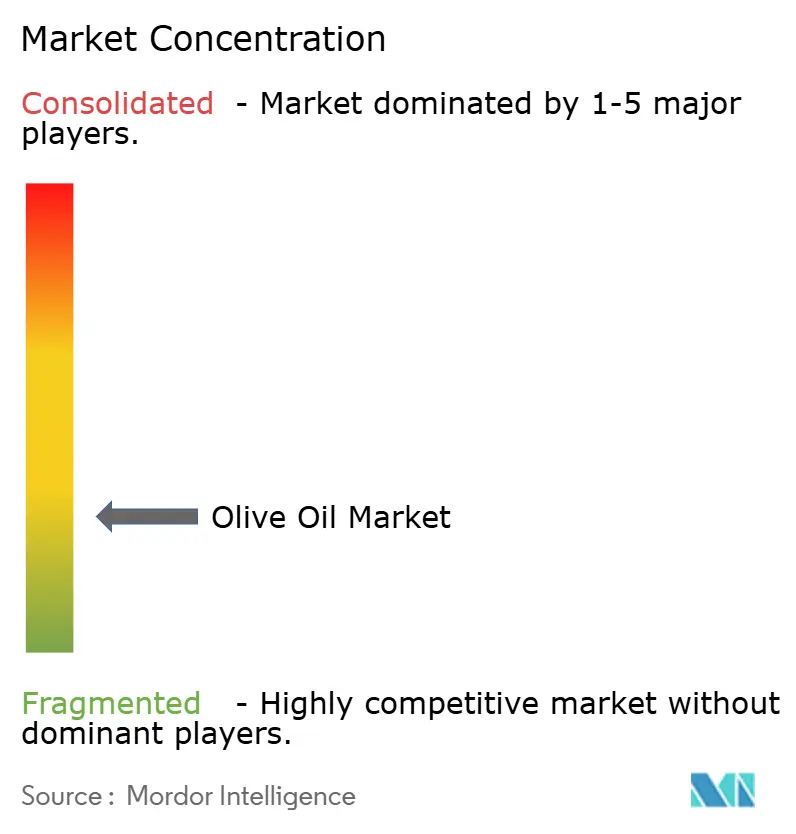
| Market Concentration | Low |
Major Players *Disclaimer: Major Players sorted in no particular order Image © Mordor Intelligence. Reuse requires attribution under CC BY 4.0. | |
Olive Oil Market Analysis by Mordor Intelligence
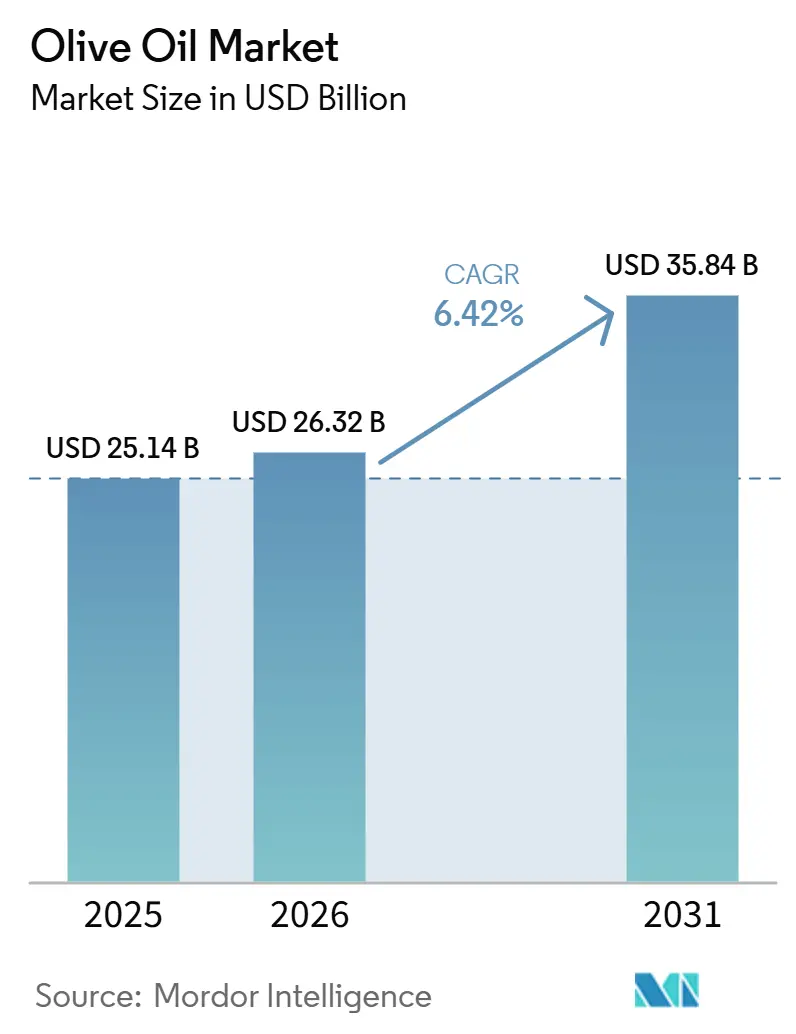
The olive oil market size was valued at USD 25.14 billion in 2025 and estimated to grow from USD 26.32 billion in 2026 to reach USD 35.84 billion by 2031, at a CAGR of 6.42% during the forecast period (2026-2031). Health research is supporting demand for extra virgin olive oil, particularly where consumers value dietary quality and cardiovascular health. Supply conditions have improved after several difficult harvests, but weather remains a material risk for producers and bottlers. Producers are also using traceability, higher-phenolic products, and certified sourcing to protect premium positions. The olive oil market is expanding beyond household food use as personal care, pharmaceutical, and nutraceutical applications create additional demand. Competition remains fragmented, although integrated suppliers can strengthen their position through control of sourcing, processing, and retail supply.
Key Report Takeaways
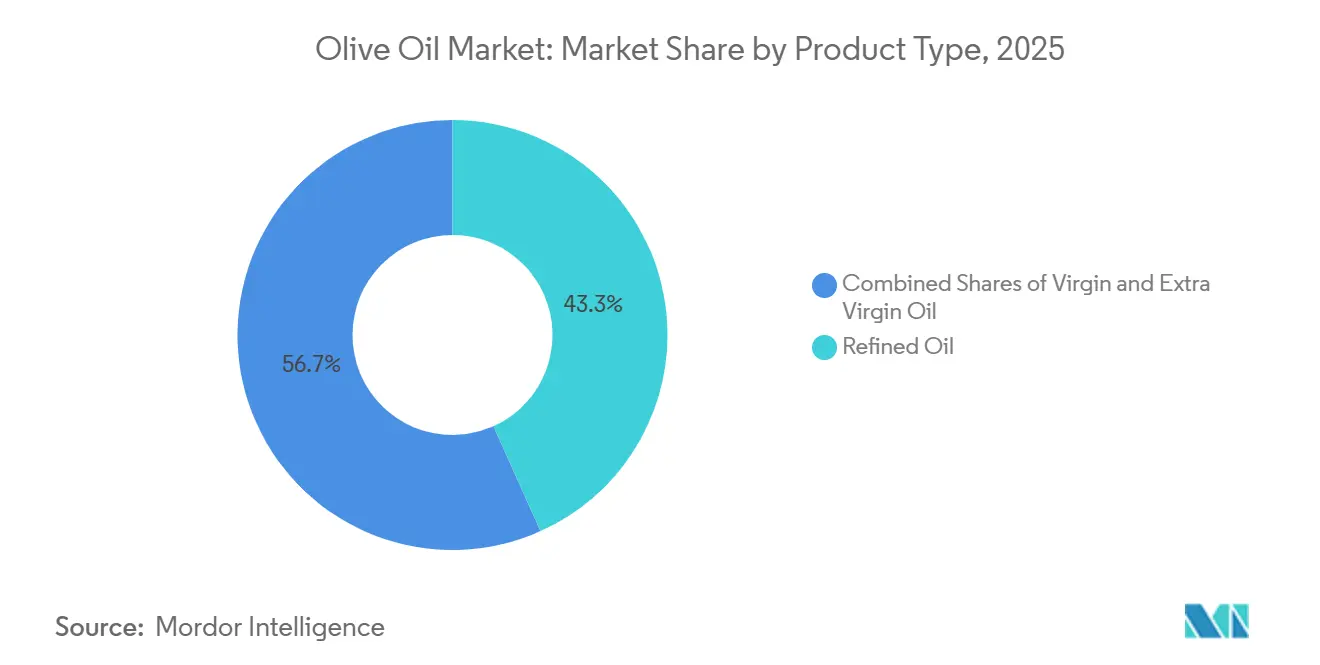
- By product type, refined oil held 43.28% of the olive oil market share in 2025, while extra virgin oil is forecast to grow at a CAGR of 7.56% through 2031.
- By nature, conventional olive oil held 75.48% of the olive oil market share in 2025, while organic olive oil is forecast to expand at a CAGR of 7.68% through 2031.
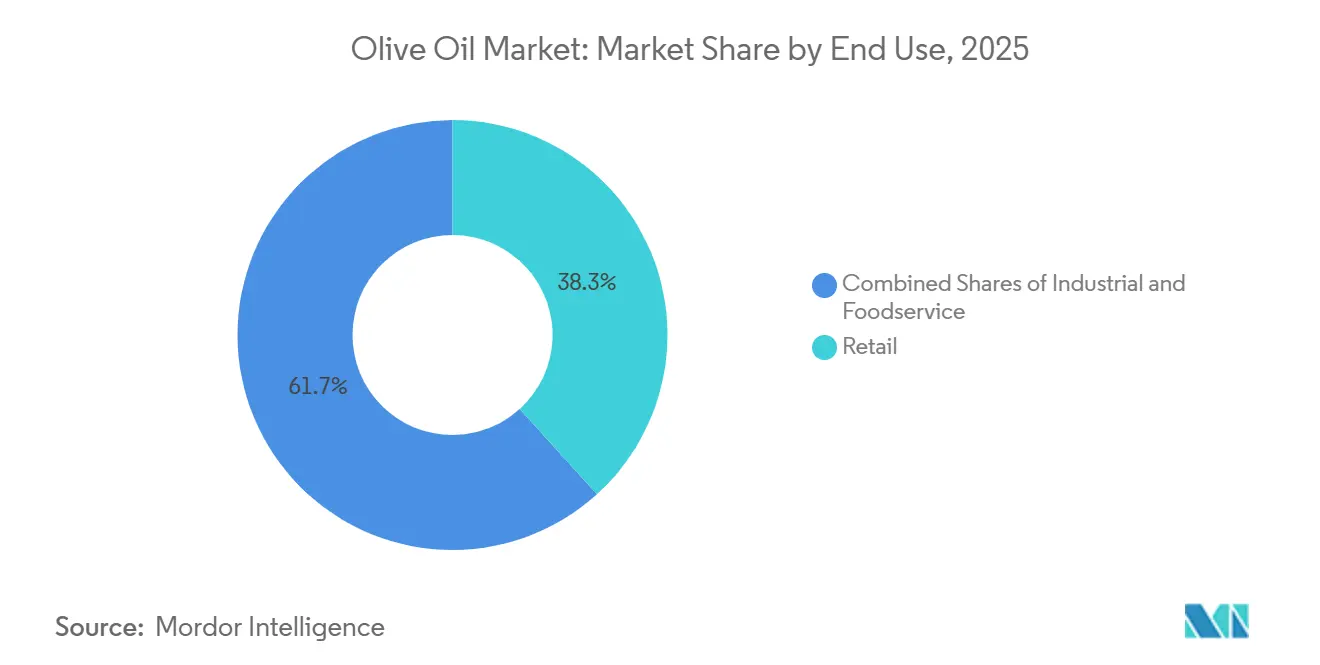
- By end use, retail accounted for 38.27% of the olive oil market size in 2025, while industrial use is forecast to advance at a CAGR of 8.02% through 2031.
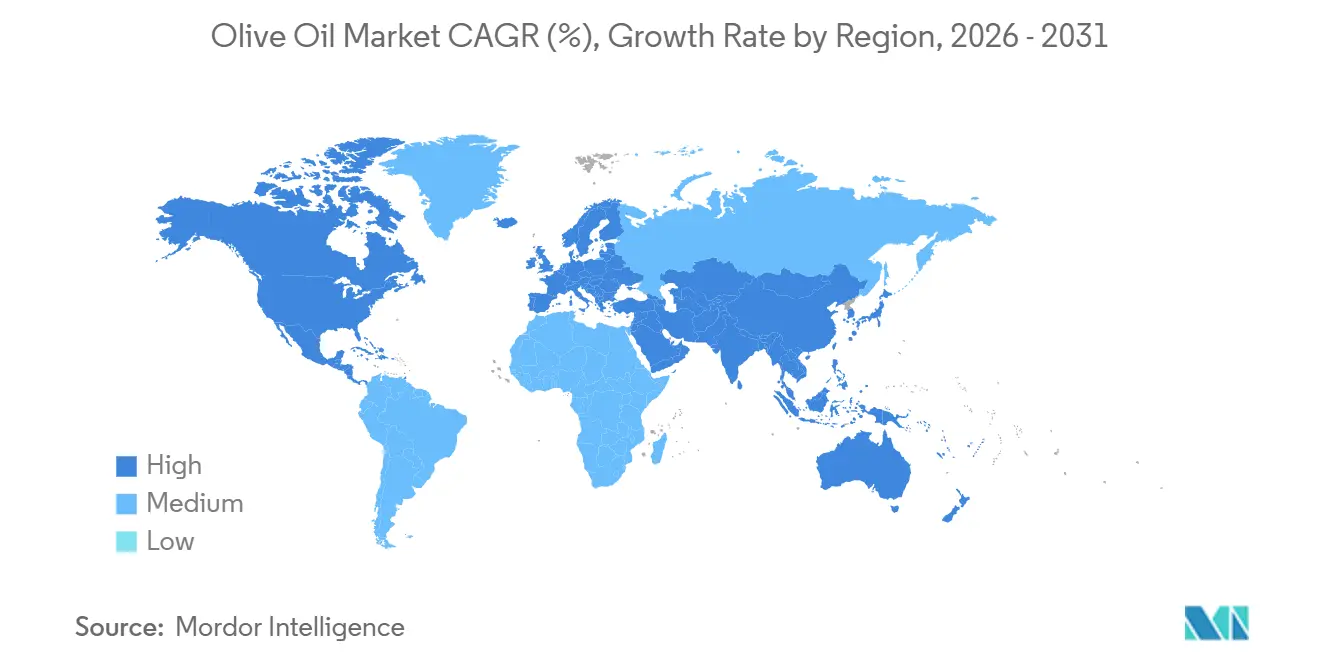
- By geography, North America held 42.18% of the olive oil market share in 2025, while Asia-Pacific is forecast to grow at a CAGR of 7.82% through 2031.
Note: Market size and forecast figures in this report are generated using Mordor Intelligence’s proprietary estimation framework, updated with the latest available data and insights as of January 2026.
Market Trends and Insights
Drivers Impact Analysis of Olive Oil Market*
| Drivers | (~) % Impact on CAGR Forecasts | Geographic Relevance | Impact Timeline |
|---|---|---|---|
| Growing Adoption of Heart-Healthy Oils | +1.2% | Global, strongest in North America, Europe, and urban Asia-Pacific | Medium term (2-4 years) |
| Greater Consumer Shift Toward Natural Olive Oil from Refined Fats | +1.0% | Global; led by North America and Western Europe | Short term (≤ 2 years) |
| Advancements in Olive Cultivation and Processing Technologies | +0.7% | Mediterranean supply base; spill-over to South America (Chile, Argentina) | Long term (≥ 4 years) |
| Rising Adoption of Olive Oil in Cosmetics and Personal Care Products | +0.6% | Asia-Pacific (India, China), North America, Europe | Medium term (2-4 years) |
| Increasing Demand for Clean-Label Ingredients | +0.5% | North America and EU; emerging in South Korea and Australia | Medium term (2-4 years) |
| Growing Adoption of Plant-Based and Flexitarian Diets | +0.8% | North America, Western Europe, Australia | Medium term (2-4 years) |
| Source: Mordor Intelligence | |||
Growing Adoption of Heart-Healthy Oils
Health evidence gives consumers a clear reason to select extra virgin products. A 2025 American Heart Journal analysis of 7,102 participants in the PREDIMED cohort associated daily extra virgin olive oil intake above 40 g with a lower risk of composite cardiovascular outcomes[1]Source: American Heart Journal, “Extra-Virgin Olive Oil and Additional Cardiovascular Outcomes in the PREDIMED Trial,” American Heart Journal, sciencedirect.com. The reported outcomes included stroke, peripheral artery disease, and atrial fibrillation. This evidence supports product communication that focuses on dietary patterns rather than on taste alone. A 2025 study also found improvements in systolic and mean blood pressure among patients with systemic lupus erythematosus who received an extra virgin olive oil intervention. A separate 2025 clinical trial found that high-phenolic extra virgin olive oil containing 1,021 mg/kg of phenolics reduced lipoprotein(a) more effectively than a standard-phenolic formulation at equal total polyphenol intake. These results give producers a basis for premium products that disclose and substantiate phenolic content.
Greater Consumer Shift Toward Natural Olive Oil from Refined Fats
Consumer interest in minimally processed fats and recognizable ingredients supports demand. A 2025 modeling study found that extra virgin olive oil could serve as the primary fat source in Mediterranean, pesco-vegetarian, and ovo-lacto-vegetarian dietary patterns while maintaining nutritional adequacy and sustainability measures. This positions olive oil across several dietary preferences instead of limiting it to traditional Mediterranean cooking. Deoleo reported an 18.00% increase in domestic Spanish sales volume in 2025 as availability and pricing improved. The result indicates that some demand returned when price pressure eased after the earlier shortage period. Demand also benefits when retailers present extra virgin products as a daily cooking oil rather than as a specialty purchase. This approach can support wider household use while retaining a distinct premium tier for certified and high-phenolic products.
Advancements in Olive Cultivation and Processing Technologies
Better productivity and supply visibility are required as weather conditions become less predictable. The European Commission’s SMARTOLIVE project is developing a system that combines sensors, decision support, drone monitoring, irrigation management, nutrient application, and fruit maturity assessment[2]Source: European Commission, “Sustainable Management and Applications for Resource-Efficient Technologies in Olive,” CORDIS, cordis.europa.eu. These tools can help growers use water and inputs more efficiently while improving harvest decisions. A 2025 scientific review identified blockchain, connected sensors, and nanotechnology as important tools for olive farming and processing. Blockchain records can provide verifiable batch information from grove to bottle. Encapsulation methods can also help preserve olive oil compounds during storage and transport. These capabilities strengthen quality control and support premium pricing where buyers require documented origin.
Rising Adoption of Olive Oil in Cosmetics and Personal Care Products
Olive-derived ingredients have a broader role in personal care because they can support natural formulation claims. A 2024 review reported extra virgin olive oil squalene concentrations of 3,864.50 to 6,359.90 mg/kg. The review found that these levels were substantially higher than those reported for other analyzed vegetable oils. Olive oil can therefore serve both as an emollient and as a source of identifiable bioactive compounds for skincare products. Research on olive industry by-products also found polyphenols and peptides in mill wastewater, pomace, leaves, and seeds that have antioxidant and anti-inflammatory activity. Using these materials can create value from process residues and reduce waste-management pressure. This application base adds demand sources that are less connected to food retail cycles.
Restraints Impact Analysis of Olive Oil Market*
| Restraint | (~) % Impact on CAGR Forecasts | Geographic Relevance | Impact Timeline |
|---|---|---|---|
| Climate Change and Weather-Related Supply Volatility | -1.3% | Mediterranean production zone; global supply chain spill-over | Short term (≤ 2 years) |
| High Olive Oil Prices Compared to Other Vegetable Oils, Limiting its Adoption | -1.0% | Price-sensitive markets: Asia-Pacific, South America, MEA | Short to medium term (≤ 2 years) |
| Risk of Adulteration and Quality Fraud | -0.5% | Global, with concentrated enforcement in EU and North America | Medium term (2-4 years) |
| Stringent Quality and Certification Requirements | -0.4% | EU, North America, export-facing producing countries | Short to medium term (≤ 2 years) |
| Source: Mordor Intelligence | |||
Climate Change and Weather-Related Supply Volatility
Climate exposure remains a central risk for the olive oil market because production is concentrated in Mediterranean growing regions. A 2025 study identified declining solar irradiance and increasing water stress as linked long-term risks for olive production in the eastern Mediterranean. Spain also experienced severe weather in 2025, including Storm Claudia, which affected olive crops in some areas and reduced fruit suitable for extra virgin classification. The U.S. Department of Agriculture projected a 10.00% fall in global output for the 2025/26 crop year[3]Source: U.S. Department of Agriculture Foreign Agricultural Service, “EU Olive Oil Outlook 2025,” U.S. Department of Agriculture, apps.fas.usda.gov. It estimated EU output at 2.055 million metric tons, compared with 2.107 million metric tons in 2024/25. The olive oil market therefore needs resilient groves, diversified sourcing, and long-term supply agreements to limit disruption.
High Olive Oil Prices Compared to Other Vegetable Oils, Limiting Its Adoption
Price remains a barrier for the olive oil market in households that compare it directly with sunflower, soybean, and palm oils. International Olive Council data showed that EU consumer prices declined by 26.00% year over year by May 2025 as supply recovered. The decline improved access but did not eliminate the price gap against other vegetable oils. During the preceding shortage period, higher prices led some consumers to select sunflower oil and blends. The strongest effect remains in price-sensitive markets, where olive oil is often used only for selected dishes or health occasions. Private label, efficient packing, and better logistics can narrow this gap without removing the quality distinction that supports branded products. The olive oil market must balance lower entry prices with the cost of verified origin, certification, and quality control.
*Our forecasts treat driver/restraint impacts as directional, not additive. The impact forecasts reflect baseline growth, mix effects, and variable interactions.
Olive Oil Market Segment Analysis
By Product Type:
Extra Virgin Supports Premium Demand While Refined Oil Leads VolumeRefined oil held 43.28% of the olive oil market share in 2025. It remains important for foodservice, industrial blending, and retail formats where cost, neutral flavor, and heat performance guide purchasing. The olive oil market size for refined oil is supported by buyers who use the product in high-volume cooking and prepared-food applications. Extra virgin oil is forecast to grow at a CAGR of 7.56% through 2031. Its growth is linked to health research, clean-label preferences, and consumer interest in recognizable sourcing. The American Heart Journal findings on extra virgin olive oil give retailers a stronger evidence base for premium shelf placement. Extra virgin products also allow producers to differentiate through harvest timing, origin, polyphenol content, and sensory profile. The olive oil market uses these attributes to separate higher-priced offerings from mainstream refined products.
Virgin oil serves consumers who want a quality step above refined oil but do not choose the premium price of extra virgin products. It occupies a useful middle position in markets where knowledge of grades is improving. This makes the olive oil market more accessible to first-time users who are learning the difference between refined, virgin, and extra virgin oils. Producers can use clear labeling to explain the intended cooking use and quality characteristics of each grade. High-phenolic, single-estate, PDO, and PGI extra virgin products are gaining importance in specialty retail and digital channels. These products depend on credible verification because provenance claims have limited value without documentation. The segment also benefits from traceability systems that show a product’s path from grower through bottling. This increases the importance of consistent quality controls across the olive oil market.



By Nature:
Organic Olive Oil Builds Demand Through Verified Production PracticesConventional olive oil held 75.48% of the olive oil market share in 2025. Its scale reflects broad availability and its role in retail, foodservice, and industrial purchases. Conventional products remain the entry point for many households because price and pack size are key considerations. Organic olive oil is forecast to grow at a CAGR of 7.68% through 2031. This growth is tied to demand for verified production methods and simple ingredient labels. The olive oil market size for organic products also benefits from buyer requirements in premium grocery channels. The Centre for the Promotion of Imports reported continuing growth in European organic food sales between 2023 and 2025 after a contraction in 2022. France and Germany remain important markets for organic olive oil in Europe.
Organic extra virgin olive oil also has relevance beyond food retail. Personal care manufacturers can specify certified organic inputs when they develop products under recognized natural and organic cosmetic standards. This creates a separate channel for organic suppliers in the olive oil market. Producers must maintain traceable records and certification discipline to retain access to these channels. Retailers can provide longer-term commitments for certified supply when continuity matters to their private-label programs. These commitments can offer more predictable demand than short-term spot sales. Conventional oil will continue to account for most volume because it serves broader price points and usage occasions. Organic growth will depend on whether suppliers can meet certification requirements without making the final product inaccessible to regular consumers.
By End Use:
Industrial Applications Expand the Revenue BaseRetail accounted for 38.27% of the olive oil market size in 2025. Supermarkets and hypermarkets remain the main environment for product discovery and repeat purchase. Retail channels carry everyday refined oil as well as single-origin and high-phenolic extra virgin products. Industrial use is forecast to grow at a CAGR of 8.02% through 2031. This segment uses olive oil in cosmetics, nutraceutical ingredients, and pharmaceutical applications. ADM’s purified pharmaceutical GMP olive oil has Drug Master File number 034152 for refined olive oil IV. The record supports use as an excipient or active pharmaceutical ingredient in products such as injectables, softgels, and parenteral nutrition. These uses give the olive oil market access to contracts that can be longer term than food purchases.
Online retail is increasing the visibility of specialty olive oil products that have limited space in conventional stores. It supports direct sales of limited-edition, single-estate, and origin-certified products. Foodservice is also relevant because restaurants and hotels purchase oils across multiple quality grades. The olive oil market can benefit as professional kitchens rebuild purchasing after disruptions in earlier years. Industrial buyers require documentation on composition, quality, and supply consistency. This favors suppliers with integrated quality systems and clear records. Contract-based pharmaceutical and cosmetic demand can partly reduce exposure to changes in household cooking demand. As a result, end-use diversification strengthens the olive oil market across both premium food and nonfood applications.
Geography Analysis
North America Olive Oil Market
North America held 42.18% of the olive oil market share in 2025. The United States is the principal regional demand center, and USDA data projected record consumption of 478,000 metric tons for the 2025/26 marketing year. The olive oil market size in North America is supported by health-oriented purchasing, established supermarket distribution, and demand for premium extra virgin products. Branded suppliers compete alongside private labels in mass retail and warehouse-club channels. Canada remains sensitive to changes in trade conditions and sourcing patterns. Mexico provides a potential expansion path as modern grocery formats become more widely available. The olive oil market in the region can grow through clearer quality communication and products suited to routine cooking.
Europe and South America Olive Oil Market
Europe remains the main production center and a major consuming region for the olive oil market. The USDA estimated EU production at 2.055 million metric tons in 2025/26. Consumption differs widely within the region, with Greece at 9.30 liters per person annually and Spain at 7.50 liters, compared with 1.00 liter in Germany and the Netherlands. This difference leaves room for wider use in Northern and Eastern European households. Certified PDO and PGI products face pressure when the price gap versus blended oils increases. European producers must therefore protect quality credentials while supplying more accessible offerings. Brazil’s olive oil imports increased by 40.50% in the first 6 months of the 2025/26 crop year compared with the same period a year earlier. This gives the olive oil market an expanding import destination in South America.
APAC and MEA Olive Oil Market
Asia-Pacific is forecast to grow at a CAGR of 7.82% through 2031, the fastest regional rate in the olive oil market. China has demand from food manufacturing, where oil properties can be relevant in sauces, convenience foods, and processed products. India has room for longer-term growth, but high prices continue to limit broad household use. The Middle East and Africa include producer-consumer countries such as Turkey, Morocco, and Egypt, as well as premium import markets. Saudi Arabia, the United Arab Emirates, and South Africa support branded imports through food culture, expatriate demand, and higher-income consumer groups. These regional differences require distinct pack sizes, quality grades, and pricing strategies. The olive oil market cannot rely on a single export model across the region.

Competitive Landscape
The olive oil market is fragmented, with regional bottlers, cooperatives, and family-owned producers operating across Spain, Italy, Portugal, and Greece. Large operators strengthen their position through integration across cultivation, milling, refining, bottling, and distribution. They also use sourcing across several producing countries to reduce reliance on a single harvest. Deoleo reported EUR 821 million in revenue and EUR 50 million in EBITDA for 2025. It also reported an 11.00% increase in volume and a 26.00% reduction in net financial debt to EUR 86 million. These results show the value of disciplined supply management when prices and availability normalize. The olive oil market rewards suppliers that can maintain shelf presence through both short crops and more balanced seasons.
Traceability is becoming an important competitive capability in the olive oil market. A 2024 review described how blockchain-based systems can provide tamper-resistant records across olive oil supply chains. These records can help buyers validate provenance, batch history, and quality-related information. The EU maintains conformity checks and methods of analysis for olive oil under Commission Implementing Regulation (EU) 2022/2105. Suppliers with strong internal quality systems can respond more effectively to retailer and regulator requirements. The olive oil market also has an opportunity for cooperative and origin-focused brands that can show direct grower relationships. Such firms can compete in specialty retail even when they do not match the distribution scale of global brands.
Innovation in production methods will shape cost and quality competition in the olive oil market. Super-intensive operations can deliver more regular yields when they are supported by managed irrigation and technology. Traditional groves retain importance for heritage, origin, and high-value product positioning. Companies must decide where they can compete on volume and where they can compete on differentiated quality. Deoleo’s reported progress under its EVOO-lution program is one example of a strategy based on branded products, supply discipline, and improved finances. The European Commission’s SMARTOLIVE initiative is another example of how monitoring technology can improve farm and processing decisions. The olive oil market will remain open to a wide range of producers, but verified quality and reliable supply will become more important competitive requirements.
Olive Oil Industry Leaders
Deoleo S.A.
Borges Agricultural & Industrial Edible Oils
Migasa Group
Grupo Ybarra Alimentación
Sovena Group
- *Disclaimer: Major Players sorted in no particular order
Olive Oil Market Companies Covered in this Report
- Deoleo S.A.
- Acesur Group
- Migasa Group
- Borges Agricultural & Industrial Edible Oils
- Sovena Group
- Grupo Ybarra Alimentación
- Salov S.p.A.
- Monini S.p.A.
- Costa d'Oro S.p.A.
- Farchioni Olii S.p.A.
- Colavita S.p.A.
- Gallo Worldwide (Victor Guedes S.A.)
- Cargill Inc.
- Bunge Global SA
- Pompeian Inc.
- Oliviers & Co.
- Aceites Maeva S.L.
- Jaencoop Group
- Gaea Products S.A.
- Minerva S.A. Edible Oils

Recent Industry Developments in Olive Oil Market
- July 2026: Celebrity chef Gordon Ramsay launched KRUDE, a premium extra virgin olive oil brand developed for both professional chefs and home cooks. The initial portfolio includes four chef-inspired varieties: Chef's Blend, Robust, Mild, and Organic, crafted to deliver restaurant-quality flavor and versatility across different culinary applications.
- July 2026: Olive Oils From Spain launched its new U.S. consumer campaign, "All in a Drop," to promote Spanish extra virgin olive oil by introducing American consumers to sobremesa, the traditional Spanish custom of lingering at the table after meals.
- June 2026: Season, America's leading sardine brand, expanded beyond its seafood portfolio with the launch of a premium organic extra virgin olive oil (EVOO) range sourced from a single-family farm in the Moroccan desert. The new lineup includes 10× Hydroxytyrosol Finishing Oil, Desert Olive Tree Pearls, and Premium Organic Cooking Oil, all produced from first cold-pressed Moroccan olives with a focus on high polyphenol content, sustainability, and premium quality.


Global Olive Oil Market Report Scope
| Refined Oil |
| Virgin Oil |
| Extra Virgin Oil |
| Organic |
| Conventional |
| Retail | Supermarkets/Hypermarkets |
| Specialty Stores | |
| Online Retail Channels | |
| Other Retail Channels | |
| Foodservice | |
| Industrial |
| North America | United States |
| Canada | |
| Mexico | |
| Rest of North America | |
| Europe | Germany |
| United Kingdom | |
| France | |
| Italy | |
| Spain | |
| Netherlands | |
| Sweden | |
| Poland | |
| Belgium | |
| Rest of Europe | |
| Asia-Pacific | China |
| India | |
| Japan | |
| Australia | |
| South Korea | |
| Vietnam | |
| Indonesia | |
| Thailand | |
| Singapore | |
| Rest of Asia-Pacific | |
| South America | Brazil |
| Argentina | |
| Chile | |
| Peru | |
| Colombia | |
| Rest of South America | |
| Middle East and Africa | United Arab Emirates |
| Saudi Arabia | |
| South Africa | |
| Nigeria | |
| Egypt | |
| Morocco | |
| Turkey | |
| Rest of Middle East and Africa |
| Product Type | Refined Oil | |
| Virgin Oil | ||
| Extra Virgin Oil | ||
| Nature | Organic | |
| Conventional | ||
| End Use | Retail | Supermarkets/Hypermarkets |
| Specialty Stores | ||
| Online Retail Channels | ||
| Other Retail Channels | ||
| Foodservice | ||
| Industrial | ||
| By Geography | North America | United States |
| Canada | ||
| Mexico | ||
| Rest of North America | ||
| Europe | Germany | |
| United Kingdom | ||
| France | ||
| Italy | ||
| Spain | ||
| Netherlands | ||
| Sweden | ||
| Poland | ||
| Belgium | ||
| Rest of Europe | ||
| Asia-Pacific | China | |
| India | ||
| Japan | ||
| Australia | ||
| South Korea | ||
| Vietnam | ||
| Indonesia | ||
| Thailand | ||
| Singapore | ||
| Rest of Asia-Pacific | ||
| South America | Brazil | |
| Argentina | ||
| Chile | ||
| Peru | ||
| Colombia | ||
| Rest of South America | ||
| Middle East and Africa | United Arab Emirates | |
| Saudi Arabia | ||
| South Africa | ||
| Nigeria | ||
| Egypt | ||
| Morocco | ||
| Turkey | ||
| Rest of Middle East and Africa | ||


Key Questions Answered in the Report
What is the forecast growth rate for olive oil through 2031?
The olive oil market is forecast to grow at a CAGR of 6.42% from 2026 to 2031, reaching USD 35.84 billion by 2031.
Which product type leads olive oil sales?
Refined oil led product type demand with a 43.28% share in 2025, supported by foodservice, industrial blending, and accessible retail formats.
Which olive oil segment is growing the fastest?
Industrial end use is forecast to grow at a CAGR of 8.02% through 2031, supported by pharmaceutical, cosmetic, and nutraceutical applications.
Which region has the largest demand for olive oil?
North America held a 42.18% share in 2025, with the United States as the principal regional demand center.
Page last updated on:


 Your data is secure and never sold or shared.


