
Nutritional Supplements Market Size and Share
Market Overview
| Study Period | 2021 - 2031 |
|---|---|
| Market Size (2026) | USD 189.75 Billion |
| Market Size (2031) | USD 261.19 Billion |
| Growth Rate (2026 - 2031) | 6.60 % |
| Fastest Growing Market | Europe |
| Largest Market | North America |
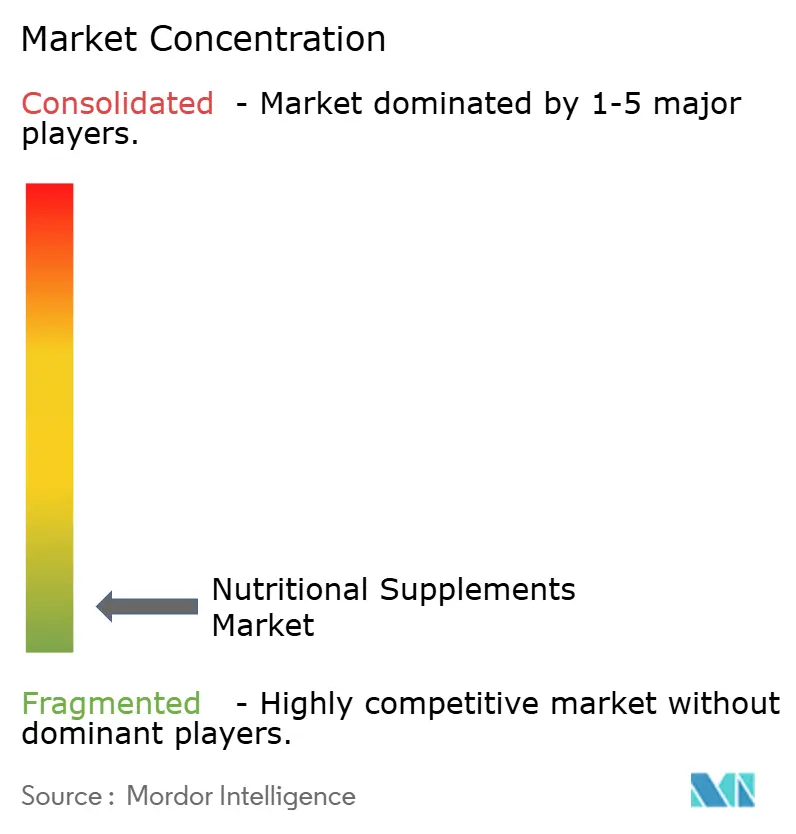
| Market Concentration | Low |
Major Players
*Disclaimer: Major Players sorted in no particular order Image © Mordor Intelligence. Reuse requires attribution under CC BY 4.0. |
|
Nutritional Supplements Market Analysis by Mordor Intelligence
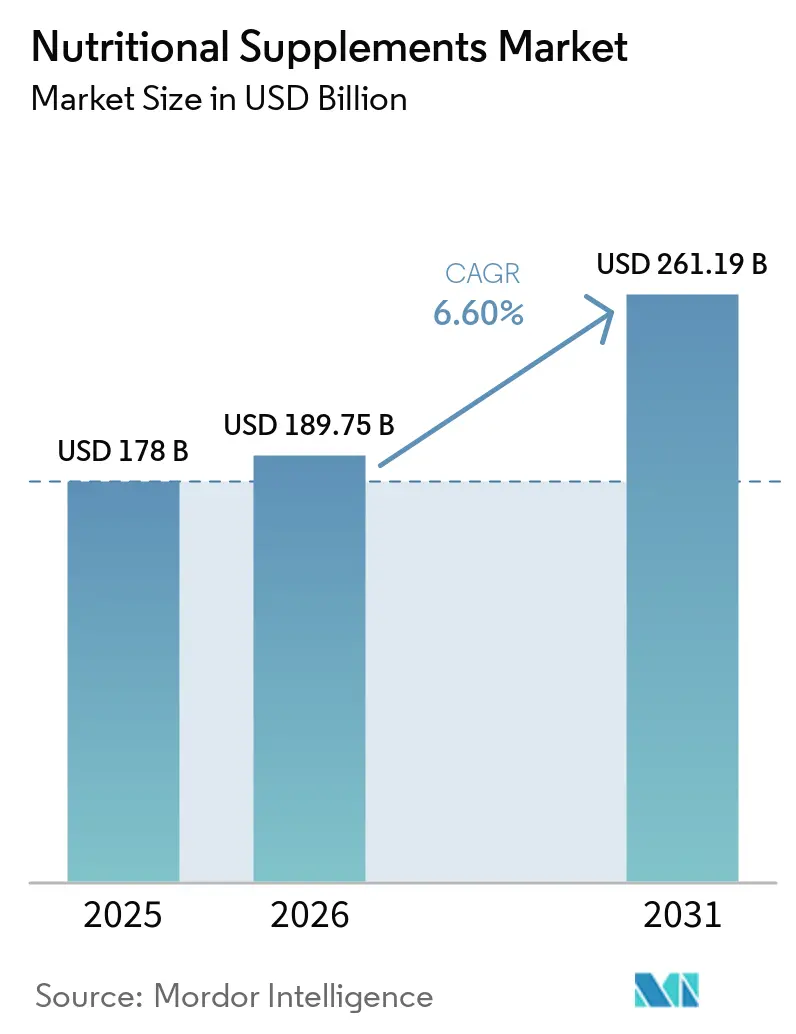
The nutritional supplements market was valued at USD 178.00 billion in 2025 and is estimated to grow from USD 189.75 billion in 2026 to USD 261.19 billion by 2031, at a CAGR of 6.60% during the forecast period 2026-2031. Consumer use has shifted from occasional fitness purchases toward routine health management. The National Institutes of Health noted that the United States supplement category includes more than 100,000 products, which supports broad consumer choice but also creates a fragmented supplier base. Demand is expanding in Asia-Pacific and Latin America as health awareness rises among middle-income consumers. Urbanization, rising disposable incomes, and greater access to fitness-related information are driving more consumers in these regions to seek out sports nutrition and dietary supplement products. The sports nutrition and dietary supplements market is also attracting investment from larger consumer goods groups seeking to acquire premium brands, establish direct relationships with buyers, and expand formulation capabilities. These investors view the market as a long-term growth opportunity, particularly as consumer preferences shift toward functional and health-oriented products.
Key Report Takeaways
- By product type, sports nutrition accounted for 48.81% of the nutritional supplements market share in 2025, while dietary supplements are forecast to grow at a CAGR of 8.53% through 2031.
- By consumer group, unisex formulations represented 55.23% of global sales in 2025, while the kids and children segment is projected to grow at a CAGR of 8.95% through 2031.
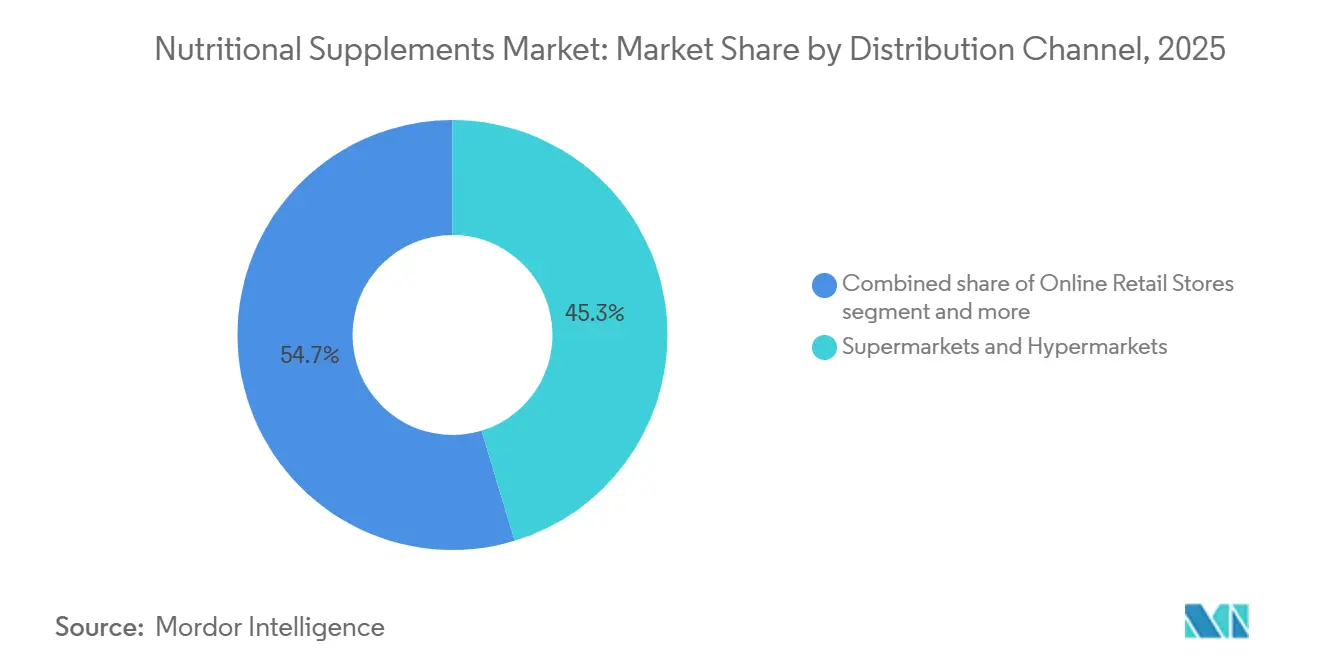
- By distribution channel, supermarkets and hypermarkets accounted for 45.33% of global sales in 2025, while online retail stores are forecast to grow at a CAGR of 9.71% through 2031.
- By geography, North America accounted for 28.68% of global sales in 2025, while Europe is forecast to grow at a CAGR of 8.08% through 2031.
Note: Market size and forecast figures in this report are generated using Mordor Intelligence’s proprietary estimation framework, updated with the latest available data and insights as of January 2026.
Global Nutritional Supplements Market Trends and Insights
Drivers Impact Analysis*
| Driver | (~) % Impact on CAGR Forecast | Geographic Relevance | Impact Timeline |
|---|---|---|---|
| Growing consumer focus on preventive health and wellness | +1.3% | Global, with concentrated near-term gains in North America and Western Europe; spill-over to Southeast Asia and Latin America | Medium term (2–4 years) |
| Rising demand for vitamins and minerals | +1.0% | Global; most pronounced in North America, Europe, and rapidly urbanizing Asia-Pacific markets | Short term (≤ 2 years) |
| Clean-label, plant-based and sustainable formulations | +0.8% | North America and European Union; early adoption in Australia, Japan, South Korea | Medium term (2–4 years) |
| Expansion of sports and active nutrition | +1.1% | Global, led by North America; fastest adoption velocity in Southeast Asia, India, and Eastern Europe | Medium term (2–4 years) |
| Expansion of functional and condition-specific supplements | +0.9% | North America, Western Europe; spill-over to Gulf Cooperation Council and South Korea | Long term (≥ 4 years) |
| Rapid growth of convenient supplement formats | +0.7% | Global; gummy adoption concentrated in North America, Europe, and East Asia | Short term (≤ 2 years) |
| Source: Mordor Intelligence | |||
Growing Consumer Focus on Preventive Health and Wellness
Rising attention to preventive healthcare and overall wellness is encouraging consumers to adopt a more proactive approach to nutrition, disease-risk management, and healthy aging, supporting demand for nutritional supplements. This trend is reinforced by the scale of healthcare spending in developed markets, with UK total healthcare expenditure reaching approximately USD 460.61 billion in 2025 in both nominal and real terms, according to the Office for National Statistics[1]Source: Office for National Statistics, "Healthcare expenditure, UK Health Accounts: 2024 and 2025", ons.gov.uk. As consumers and healthcare systems place greater emphasis on maintaining health and addressing nutritional needs before serious health issues arise, demand is expanding for vitamins, minerals, probiotics, omega-3 products, and other supplements positioned around immunity, energy, bone health, cognitive wellness, and healthy aging.
Clean-Label, Plant-Based, and Sustainable Formulations
Growing consumer preference for clean-label, plant-based, and sustainably sourced nutritional supplements is encouraging manufacturers to reformulate products around natural ingredients, transparent labeling, vegan alternatives, and environmentally responsible sourcing. This trend is particularly strong among younger consumers, as Gen Z and Millennials are willing to pay around 20–30% more for products carrying claims such as organic, natural, high protein, and no artificial ingredients[2]Source: Ingredion, "Less mystery, more meaning: Clean labels win consumer preference", ingredion.com. This willingness to pay a premium is encouraging supplement brands to develop plant-based proteins, botanical formulations, non-GMO products, and sustainably sourced ingredients, while emphasizing ingredient transparency and traceability. As consumers increasingly associate clean formulations with health, quality, and responsible consumption, these attributes are becoming key differentiators and supporting premiumization across the nutritional supplements market.
Expansion of Sports and Active Nutrition
Increasing participation in sports and individual fitness activities is expanding the consumer base for sports and active nutrition supplements, including protein, amino acids, creatine, electrolytes, and recovery products. In the United States, the share of the population participating in individual sports increased from 42.1% in 2023 to 42.5% in 2025, according to the Sports & Fitness Industry Association (SFIA)[3]Source: Sports & Fitness Industry Association (SFIA), "2026 Sports, Fitness & Leisure Activities Topline Participation Report", sfia.users.membersuite.com. This broader participation base is encouraging consumers to incorporate nutritional supplements into their exercise and wellness routines. As more individuals engage in structured fitness programs and recreational sports, demand for products that support endurance, strength, and recovery is rising across both competitive athletes and casual fitness enthusiasts. Growing interest in muscle development, performance, recovery, hydration, and active lifestyles is creating additional opportunities for sports-oriented nutritional supplement products. Manufacturers are responding by expanding their product portfolios to address specific performance and recovery needs, further reinforcing the role of nutritional supplements in active lifestyle management.
Expansion of Functional and Condition-Specific Supplements
Growing consumer interest in targeted health outcomes is driving demand for functional and condition-specific nutritional supplements designed to address specific needs rather than provide general nutrition alone. Consumers are increasingly seeking products for digestive health, cognitive function, bone and joint health, cardiovascular wellness, immunity, sleep, stress management, women's health, men's health, healthy aging, and weight management. This shift is encouraging manufacturers to develop specialized formulations with targeted ingredients, enabling brands to differentiate their products and appeal to specific consumer groups. The expansion of personalized wellness and preventive self-care is further supporting demand for supplements positioned around specific health goals and life stages.
Restraints Impact Analysis*
| Restraint | (~) % Impact on CAGR Forecast | Geographic Relevance | Impact Timeline |
|---|---|---|---|
| Misleading or exaggerated health claims | -0.5% | Global; enforcement most active in North America and the European Union; emerging scrutiny in Eastern Europe | Short term (≤ 2 years) |
| Raw-material volatility and sustainable-input constraints | -0.7% | Global, most acute in Europe and North America where whey protein supply is tightest | Short term (≤ 2 years) |
| High product costs and price sensitivity | -0.4% | Primarily affects South America, Middle East and Africa, and Southeast Asia; secondary pressure in lower-income U.S. consumer segments | Medium term (2–4 years) |
| Stringent and fragmented regulatory frameworks | -0.5% | Global; most complex in the European Union and Asia-Pacific | Long term (≥ 4 years) |
| Source: Mordor Intelligence | |||
Misleading or Exaggerated Health Claims
The use of misleading, exaggerated, or insufficiently substantiated health claims can restrain the nutritional supplements market by reducing consumer confidence and increasing regulatory scrutiny. Claims related to immunity, weight management, anti-aging, cognitive performance, or disease prevention may create unrealistic expectations when not adequately supported by scientific evidence. This can prompt regulators to impose stricter requirements on product labeling, advertising, and marketing communications, increasing compliance costs for manufacturers. Additionally, repeated exposure to overstated claims can make consumers more skeptical of supplement efficacy, particularly for emerging ingredients and products, potentially limiting adoption and weakening trust in the broader nutritional supplements category.
Raw-Material Volatility and Sustainable-Input Constraints
Fluctuations in the availability, quality, and sourcing of key raw materials can restrain the nutritional supplements market by making it more difficult for manufacturers to maintain consistent product quality and reliable supply. The industry depends on a diverse range of inputs, including botanical extracts, vitamins, minerals, marine-derived ingredients, probiotics, plant proteins, and specialty compounds, some of which are sensitive to agricultural conditions, sourcing limitations, and sustainability requirements. Growing consumer preference for organic, plant-based, ethically sourced, and traceable ingredients is increasing pressure on manufacturers to establish reliable and sustainable supply chains. These challenges can increase procurement, quality-control, certification, and formulation costs while potentially limiting the availability of certain premium ingredients and affecting manufacturers' ability to maintain consistent pricing and product availability.
*Our forecasts treat driver/restraint impacts as directional, not additive. The impact forecasts reflect baseline growth, mix effects, and variable interactions.
Segment Analysis
By Product Type: Sports Protein Anchors Revenue as Dietary Supplements Accelerate
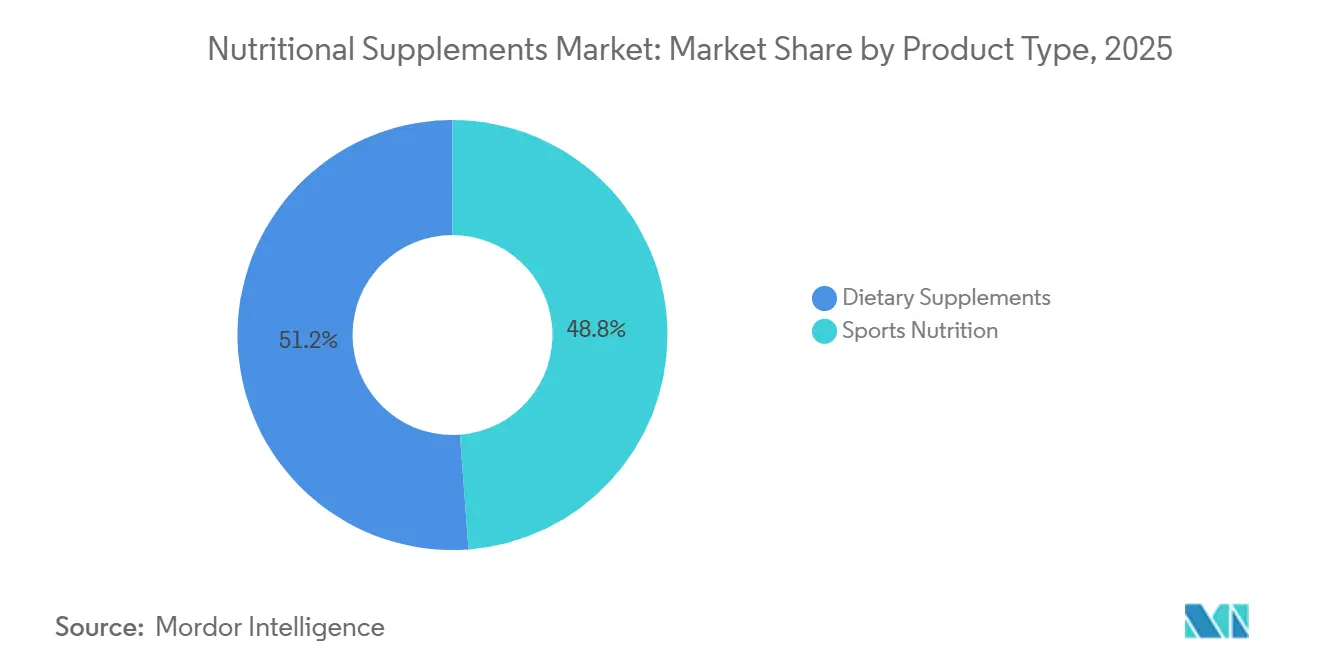
Sports nutrition accounted for 48.81% of the overall market in 2025, making it the largest revenue-generating segment. Within this segment, sports protein powder, protein RTDs, and protein bars represent the highest-volume sub-categories. Protein bars are gaining traction as an on-the-go format that spans both sports nutrition and functional food. Sports non-protein products, including pre-workouts, creatine, electrolytes, and BCAAs, are recording notable growth, driven by creatine's increasing adoption as a mainstream wellness ingredient beyond elite athletes.
The dietary supplements segment, while currently smaller, is forecast to grow at a CAGR of 8.53% through 2031, outpacing sports nutrition. Vitamins and minerals, probiotics and prebiotics, and collagen formulations are attracting a broader consumer base across demographics. Herbal supplements and fatty acids (omega-3s) contribute meaningfully to overall volume, while the collagen sub-category is benefiting from growing interest in beauty-from-within products and clinical evidence supporting joint health, particularly among the 35–55 age cohort.


By Consumer Group: Unisex Formulations Lead Scale as Kids' Nutrition Accelerates
Unisex formulations accounted for 55.23% of the consumer group segment in 2025, reflecting the historical design convention of most sports protein, creatine, and multi-nutrient supplement lines. This broad-appeal positioning allows brands to achieve packaging and SKU economies of scale while addressing the majority of the active adult population. As a result, unisex products remain the default choice for most supplement manufacturers, particularly in categories where performance outcomes are not significantly differentiated by gender.
The kids/children consumer group is forecast to grow at 8.95% CAGR through 2031, the fastest of any consumer group, as parents apply the same preventive health logic to pediatric nutrition that drives their own supplement usage. This trend is supported by growing awareness of nutritional gaps in children's diets and increased pediatrician recommendations for supplementation. Supplement use among children is an established consumer behavior among families in the United States, supporting sustained demand for age-appropriate supplement formulations as parents seek products tailored to children's nutritional needs.
By Distribution Channel: Supermarkets Lead as Online Channels Redefine Discovery
Supermarkets and hypermarkets accounted for 45.33% of total market sales in 2025, supported by broad geographic coverage, promotional pricing, and the consumer tendency to bundle supplement purchases with routine grocery shopping. Pharmacies and drugstores represent a high-trust channel, particularly for condition-specific supplements and vitamins, where healthcare-setting credibility influences purchase decisions. Specialty and health food stores serve health-conscious consumers and premium-format buyers, offering brands a trial and brand-building platform that is disproportionate to the channel's volume share.
Despite the dominance of mass channels in value terms, online retail is forecast to grow at a 9.71% CAGR through 2031, the fastest rate among all distribution channels. Subscription-based purchasing models are improving customer retention and lowering repeat purchase friction, while AI-driven personalization tools are enabling platforms to match consumers with products aligned to their specific health goals. At the same time, influencer-led social commerce is reshaping how consumers discover supplements, shortening the path from awareness to purchase and expanding the reach of both established brands and newer market entrants.

Geography Analysis
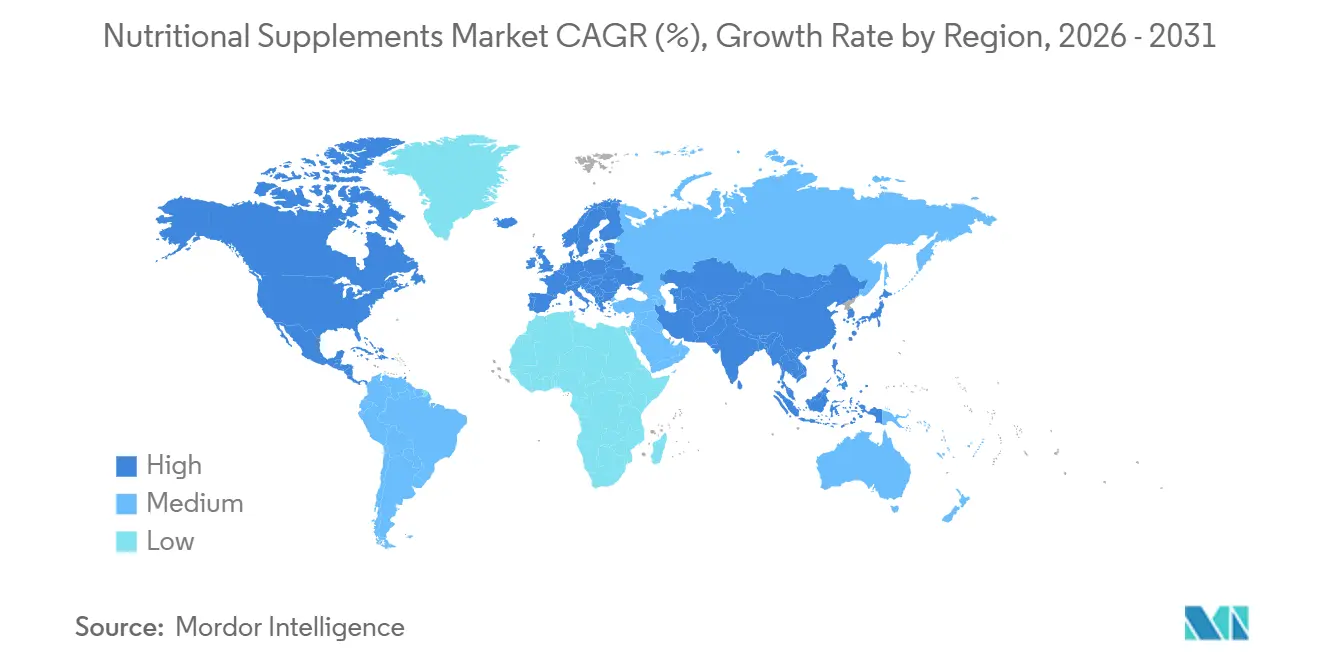
North America remains the largest geography in the market, holding a 28.68% share in 2025, supported by well-established supplement consumption habits, high disposable income, and a mature retail infrastructure. The United States is driven by innovation in protein formats, social commerce discovery, and the mainstream adoption of creatine, collagen, and magnesium. Canada and Mexico contribute meaningful volume in North America, with Mexico showing particular momentum in sports nutrition as gym culture expands in urban centers. The 2026 Food and Drug Administration regulatory modernization agenda, including finalized New Dietary Ingredient guidance, Generally Recognized As Safe reform, and Good Manufacturing Practice (GMP) updates, introduces both compliance costs and a more defined competitive environment that benefits well-capitalized manufacturers.
Europe is the fastest-growing geography, forecast at a CAGR of 8.08% through 2031. This growth reflects the region's ongoing shift from reactive healthcare to preventive nutrition, as well as the scale of innovation in sports and active nutrition formats. The United Kingdom ranked as the leading European country for sports nutrition product launches over the past two years, with Germany, Spain, the Netherlands, and Italy following closely, according to Innova Market Insights data from June 2026. European sports nutrition brands face a distinct challenge: performance nutrition launches with natural claims declined from 29% in 2023 to 19% in 2025 in Germany, indicating that "natural" positioning without clinical substantiation is losing commercial traction, even as consumer demand for genuine clean-label products intensifies.
Asia-Pacific presents the most structurally diverse demand landscape, with China, Japan, India, South Korea, and Indonesia each operating under distinct regulatory, cultural, and retail conditions. South Africa anchors supplement demand in Africa, which remains an earlier-stage but fast-expanding market, benefiting from urbanization, rising health awareness, and the growth of international supplement brands through e-commerce. However, infrastructure constraints and import duties continue to limit market penetration in lower-income markets across Nigeria, Morocco, and Egypt.

Competitive Landscape
The nutritional supplements market is highly consolidated, with no single player holding a dominant share. Global conglomerates such as Nestlé S.A., Abbott Laboratories, Bayer AG, and Haleon plc compete alongside specialist brands including GNC Holdings, NOW Health Group, Vitabiotics, and Jamieson Wellness. Strategic approaches are diverging: large players are pursuing acquisitions to secure premium brand equity and digital capabilities, while mid-tier specialists are focusing on niche ingredient categories such as NAD+, creatine monohydrate, and collagen peptides to build defensible positions that larger players cannot easily replicate. This divergence reflects broader structural shifts in the market, where brand trust, personalization, and ingredient transparency are increasingly influencing purchasing decisions across consumer segments.
Technology is emerging as a key differentiator in a market that has historically competed on formulation and price. Advances in biometric tracking, biomarker analysis, and genetic profiling are enabling companies to move beyond standardized products toward individualized supplementation protocols. Herbalife's 2025 acquisition of HBL Link BioScience, which uses biometric, biomarker, and genetic data to formulate personalized nutritional supplements at scale, along with its acquisition of digital health platform Pro2col, represents a concrete example of a major incumbent repositioning as a precision nutrition company. These moves signal a broader industry shift where data infrastructure and digital engagement are becoming as important as product formulation in determining competitive positioning.
White-space opportunities are most visible in clinically validated pediatric nutrition (where gummy formats dominate new product launches), GLP-1 companion supplements (a nascent but rapidly materializing sub-category driven by the growing adoption of GLP-1 receptor agonist medications), and senior-specific active nutrition (where brands have historically underserved the 55+ cohort despite strong willingness to pay). In each of these areas, the gap between consumer demand and available product offerings remains wide, presenting meaningful opportunities for brands that can combine clinical credibility with accessible formats and targeted marketing.
Nutritional Supplements Industry Leaders
-
Amway Corporation
-
Herbalife Ltd.
-
Nestle S.A.
-
Abbott Laboratories
-
Bayer AG
- *Disclaimer: Major Players sorted in no particular order

Recent Industry Developments
- July 2026: Premier Protein launched Premier Protein Ultimate, a new ready-to-drink protein shake delivering 42g of protein in a 14-ounce bottle, along with 220 calories, 2g of sugar, and vitamins C and E. Available in four flavors, the product expands the brand's sports and active nutrition portfolio and addresses growing consumer demand for convenient, higher-protein options.
- June 2026: Applied Nutrition expanded its U.S. operations by acquiring the assets of Nutrablend Group for USD 16 million. The acquisition includes a 107,000-square-foot manufacturing facility in Buffalo, New York, along with two in-house brands.
- April 2026: Unilever signed an agreement to acquire Grüns, a fast-growing U.S. vitamins, minerals, and supplements (VMS) company with a strong position in the greens supplement category. Grüns offers a daily nutrient-support gummy containing more than 60 ingredients, including organic fruits and vegetables, vitamins, minerals, and prebiotic fiber. The company has also expanded into products targeting children's nutrition, cognitive support, immunity, and energy.


Global Nutritional Supplements Market Report Scope
Nutritional supplements are products formulated to complement a normal diet by providing concentrated sources of nutrients or other substances with nutritional or physiological effects, including vitamins, minerals, proteins, amino acids, fatty acids, and botanical or other bioactive compounds. They are typically consumed in the form of tablets, capsules, powders, liquids, or gummies.
The nutritional supplements market is segmented by product type, consumer group, distribution channel, and geography. By product type, the market is segmented into sports nutrition and dietary supplements. By consumer group, the market is segmented into men, women, unisex, and kids/children. By distribution channel, the market is segmented into supermarkets and hypermarkets, online retail stores, and other distribution channels. By geography, the market is segmented into North America, Europe, Asia-Pacific, South America, and the Middle East and Africa. The report provides market size and forecasts in terms of value (USD) for all the above segments.
| Sports Nutrition | Sports Protein Powder |
| Protein RTD | |
| Protein Bars | |
| Sports Non-Protein Products | |
| Dietary Supplements | Vitamins and Minerals |
| Collagen | |
| Fatty Acids | |
| Herbal Supplements | |
| Enzymes | |
| Prebiotics and Probiotics | |
| Other Product Type |
| Men |
| Women |
| Unisex |
| Kids/Children |
| Supermarkets and Hypermarkets |
| Pharmacies and Drugstores |
| Online Retail Stores |
| Specialty and Health Food Stores |
| North America | United States |
| Canada | |
| Mexico | |
| Rest of North America | |
| Europe | United Kingdom |
| Germany | |
| France | |
| Italy | |
| Spain | |
| Russia | |
| Sweden | |
| Belgium | |
| Poland | |
| Netherlands | |
| Rest of Europe | |
| Asia-Pacific | China |
| Japan | |
| India | |
| Thailand | |
| Singapore | |
| Indonesia | |
| South Korea | |
| Australia | |
| New Zealand | |
| Rest of Asia-Pacific | |
| South America | Brazil |
| Argentina | |
| Colombia | |
| Chile | |
| Rest of South America | |
| Middle East and Africa | United Arab Emirates |
| South Africa | |
| Saudi Arabia | |
| Nigeria | |
| Egypt | |
| Morocco | |
| Turkey | |
| Rest of Middle East and Africa |
| Product Type | Sports Nutrition | Sports Protein Powder |
| Protein RTD | ||
| Protein Bars | ||
| Sports Non-Protein Products | ||
| Dietary Supplements | Vitamins and Minerals | |
| Collagen | ||
| Fatty Acids | ||
| Herbal Supplements | ||
| Enzymes | ||
| Prebiotics and Probiotics | ||
| Other Product Type | ||
| By Consumer Group | Men | |
| Women | ||
| Unisex | ||
| Kids/Children | ||
| By Distribution Channel | Supermarkets and Hypermarkets | |
| Pharmacies and Drugstores | ||
| Online Retail Stores | ||
| Specialty and Health Food Stores | ||
| Geography | North America | United States |
| Canada | ||
| Mexico | ||
| Rest of North America | ||
| Europe | United Kingdom | |
| Germany | ||
| France | ||
| Italy | ||
| Spain | ||
| Russia | ||
| Sweden | ||
| Belgium | ||
| Poland | ||
| Netherlands | ||
| Rest of Europe | ||
| Asia-Pacific | China | |
| Japan | ||
| India | ||
| Thailand | ||
| Singapore | ||
| Indonesia | ||
| South Korea | ||
| Australia | ||
| New Zealand | ||
| Rest of Asia-Pacific | ||
| South America | Brazil | |
| Argentina | ||
| Colombia | ||
| Chile | ||
| Rest of South America | ||
| Middle East and Africa | United Arab Emirates | |
| South Africa | ||
| Saudi Arabia | ||
| Nigeria | ||
| Egypt | ||
| Morocco | ||
| Turkey | ||
| Rest of Middle East and Africa | ||


Key Questions Answered in the Report
What is the projected value of the nutritional supplements sector by 2031?
The market is projected to reach USD 261.19 billion by 2031, growing at a 6.60% CAGR from 2026.
Which product category has the largest sales base?
Sports nutrition held 48.81% of product-type sales in 2025, supported by protein powders, ready-to-drink products, bars, creatine, and hydration products.
Which distribution channel is growing fastest?
Online retail stores are forecast to record a 9.71% CAGR through 2031, supported by subscriptions, direct consumer engagement, and wider product discovery.
Which region currently has the largest sales share?
North America held 28.68% of global sales in 2025, supported by established supplement use, strong retail access, and high consumer spending.
Page last updated on:


 Your data is secure and never sold or shared.



