
North America Vinyl Wallpaper Market Size and Share
Market Overview
| Study Period | 2020 - 2031 |
|---|---|
| Forecast Data Period | 2026 - 2031 |
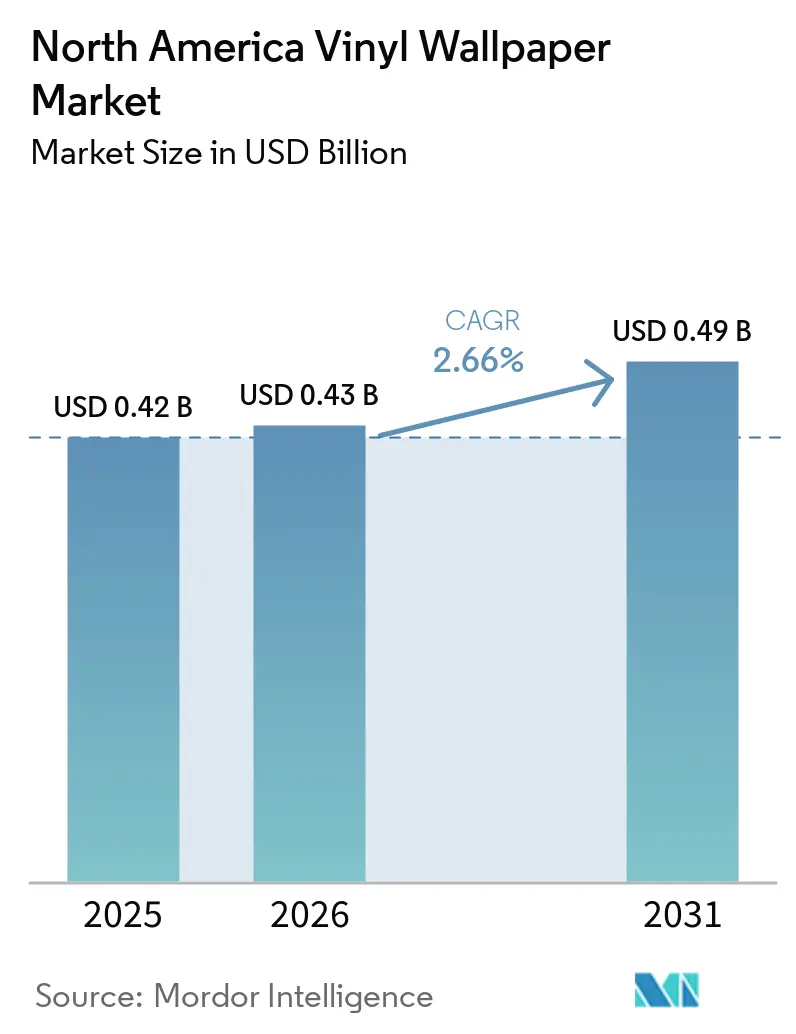
| Base Year Market Size (2025) | USD 0.42 Billion |
| Market Size (2026) | USD 0.43 Billion |
| Market Size (2031) | USD 0.49 Billion |
| Growth Rate (2026 - 2031) | 2.66 % |
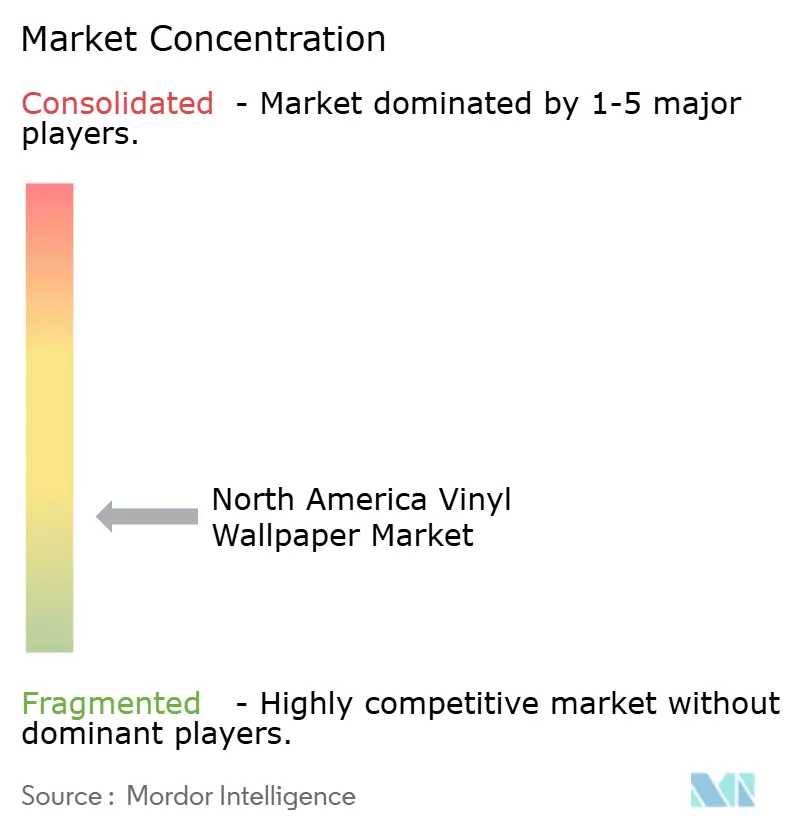
| Market Concentration | Low |
Major Players *Disclaimer: Major Players sorted in no particular order Image © Mordor Intelligence. Reuse requires attribution under CC BY 4.0. | |
North America Vinyl Wallpaper Market Analysis by Mordor Intelligence
The North America vinyl wallpaper market size was valued at USD 0.42 billion in 2025, is estimated at USD 0.43 billion in 2026, and is forecast to reach USD 0.49 billion by 2031, growing at a 2.66% CAGR during 2026–2031. Residential remodeling supports demand because households are investing in existing homes rather than moving. Private residential improvement spending rose 8.1% year over year in May 2026, according to the U.S. Census Bureau[1]. An older housing base also supports recurring replacement demand, since the average U.S. home was 41 years old in 2023. Commercial buyers continue to favor materials that can withstand cleaning, abrasion, and moisture. This gives the North America vinyl wallpaper market a demand base that extends beyond discretionary decorative purchases.
Key Report Takeaways
- By product type, solid vinyl held 42.0% of the North American vinyl wallpaper market share in 2025, while fabric-backed vinyl is forecast to grow at a 3.60% CAGR through 2031.
- By installation type, traditional and non-self-adhesive formats held 67.0% of the market value in 2025, while self-adhesive formats are forecast to grow at a 3.80% CAGR through 2031.
- By application, renovation and remodeling held 61.0% of the market value in 2025, while new construction is forecast to grow at a 1.97% CAGR through 2031.
- By end user, residential users held 64.0% of the market value in 2025, while commercial users are forecast to grow at a 3.39% CAGR through 2031.
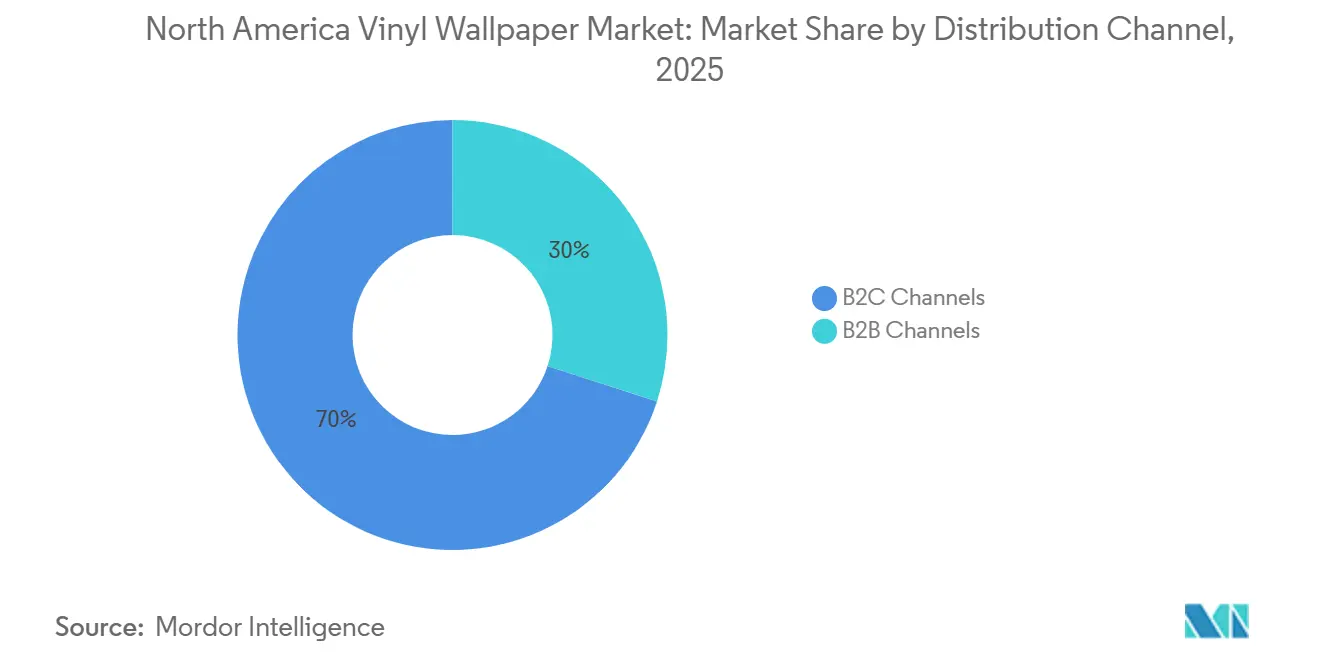
- By distribution channel, B2C held 70.0% of the market value in 2025, while B2B channels are forecast to grow at a 3.50% CAGR through 2031.
- By geography, the United States accounted for 76.0% of 2025 revenue, and Mexico is projected to grow at a 3.40% CAGR through 2031.
Note: Market size and forecast figures in this report are generated using Mordor Intelligence’s proprietary estimation framework, updated with the latest available data and insights as of January 2026.
North America Vinyl Wallpaper Market Trends and Insights
Drivers Impact Analysis*
| Driver | (~) % Impact on CAGR Forecast | Geographic Relevance | Impact Timeline |
|---|---|---|---|
| Durable and Washable Wallcovering Demand | +0.55% | North America, strongest in the United States commercial and institutional settings | Medium term (2-4 years) |
| Residential Renovation and Remodeling Activity | +0.65% | United States, with secondary influence in Canada | Short term (≤ 2 years) |
| Hospitality, Healthcare, and Office Refurbishment | +0.45% | United States, Canada, and Mexican border cities | Medium term (2-4 years) |
| Growth of Peel-and-Stick and DIY Installation | +0.40% | United States and Canada, especially urban renter locations | Short term (≤ 2 years) |
| Digital Printing and Short-Run Customization | +0.25% | North America, led by the United States hospitality and premium residential projects | Long term (≥ 4 years) |
| Compliance-Led Demand for Low-Emission Wallcoverings | +0.20% | United States and Canada | Long term (≥ 4 years) |
| Source: Mordor Intelligence | |||
Residential Renovation and Remodeling Activity Sustains Baseline Demand
Higher mortgage rates have kept many homeowners in their current homes, directing spending toward interior improvements. NAHB forecast 3% inflation-adjusted remodeling growth for 2026 and 2% growth for 2027. The association reported 128,000 remodeling firms at the start of 2025, compared with 69,000 in 2000[2]. Bathroom, kitchen, and whole-house renovations create regular opportunities to replace wall surfaces. Aging-in-place work also favors finishes that are durable, moisture-resistant, and easy to maintain. This makes renovation activity a consistent source of demand for the North America vinyl wallpaper market. Homeowners can use wallcoverings to update rooms without undertaking structural changes. Remodelers can also recommend products that match moisture, cleaning, and visual requirements within a single project. This recurring work supports demand across both professionally installed and do-it-yourself formats.
Durable and Washable Wallcovering Demand Anchors Commercial Specification Cycles
Commercial facilities require wall finishes that can handle repeated cleaning and daily wear. The Wallcoverings Association specifies 16 performance tests for Type II vinyl products, including abrasion, stain, tear, and adhesion requirements[3]. Hotels, health care facilities, and offices use these standards when selecting wallcoverings. Products with performance documentation can remain on preferred supplier lists through replacement cycles. This shifts some purchasing decisions away from aesthetic preference and toward maintenance needs. The North America vinyl wallpaper market, therefore, benefits when project teams prioritize lifecycle performance. Washable surfaces can reduce the burden of maintaining common areas and high-contact spaces. Buyers can also compare products based on their ability to retain appearance after regular cleaning. This favors suppliers that pair design choice with tested performance information.
Hospitality, Healthcare, and Office Refurbishment Accelerates High-Performance Vinyl Adoption
Refurbishment programs create demand for materials that meet operational requirements and project schedules. Hotel corridors, lobbies, patient spaces, and offices need surfaces that resist stains and regular cleaning. Type II vinyl can meet durability requirements that decorative consumer products may not meet. Certified wallcoverings can also support procurement processes where technical documentation is reviewed before purchase. These needs make commercial renovation less sensitive to short-term shifts in home decor preferences. They also expand the addressable use of the North America vinyl wallpaper market beyond residential interiors. Refurbishment teams need products that can be installed with minimal disruption to occupied facilities. Wallcovering selection may also be coordinated with furniture, lighting, and other planned interior updates. This creates opportunities for suppliers that can provide dependable availability alongside technical information.
Peel-and-Stick and DIY Installation Opens a Structurally New Consumer Channel
Self-adhesive vinyl is forecast to grow at a 6.4% CAGR through 2031. The United States has more than 45 million renter-occupied housing units, providing a large base for removable decor. Renter households often need products that can be removed without permanent wall damage. Peel-and-stick formats reduce reliance on professional installation and shorten refresh cycles. They also fit online and home-center sales models where shoppers compare designs and installation methods. This format brings new customers into the North America vinyl wallpaper market while traditional products retain commercial applications. The format suits smaller projects where consumers prefer to manage installation themselves. It can also support quick updates in bedrooms, children's rooms, and shared rental spaces. Retailers can use clear instructions and room-visualization tools to make these products easier to evaluate before purchase.
Restraints Impact Analysis*
| Restraint | (~) % Impact on CAGR Forecast | Geographic Relevance | Impact Timeline |
|---|---|---|---|
| Competition from Paint and Digital Wall Printing | -0.45% | United States and Canada | Short term (≤ 2 years) |
| Installation Labor Requirements | -0.30% | United States and Canada, especially in large metropolitan locations | Short term (≤ 2 years) |
| Vinyl Resin, Plasticizer, and Freight Cost Volatility | -0.30% | North American supply chain, with the greatest impact on the United States manufacturers | Medium term (2-4 years) |
| Recycling and End-of-Life Constraints for PVC Wallcoverings | -0.20% | United States and Canada | Long term (≥ 4 years) |
| Source: Mordor Intelligence | |||
Competition from Paint and Digital Wall Printing Caps Price Expansion
Paint remains the most widely used interior wall finish in North America. Textured and faux-finish paint can reproduce some wallpaper effects with a simpler installation process. Digital wall printing also serves custom mural projects in hospitality and retail spaces. These alternatives can reduce the appeal of wallpaper where cost and installation speed are the main criteria. Vinyl retains a clearer position in settings that require documented washability, durability, and fire performance. The North America vinyl wallpaper market remains strongest where those technical needs are part of the specification. Paint also benefits from wide contractor familiarity and a well-established retail supply chain. Digital printing offers flexibility for single-site murals, but it does not necessarily provide the same performance record as specified vinyl. Suppliers need to explain the maintenance and compliance advantages that distinguish performance wallcovering from decorative alternatives.
Installation Labor Requirements Constrain Project Velocity and Channel Reach
Paste-applied commercial vinyl requires trained installers and careful surface preparation. AGC and NCCER found that 92% of construction firms reported difficulty finding qualified workers. Limited labor availability can delay refurbishment projects and postpone product orders. The effect is most visible in large metropolitan areas with active commercial construction. Self-adhesive products reduce this issue for some residential projects, but not for high-performance commercial installations. Labor availability will continue to shape installation choices across the North America vinyl wallpaper market. Delays can be costly when a hotel, office, or health care space has a fixed reopening date. Contractors may also limit the number of jobs they accept when skilled crews are unavailable. Manufacturers that provide clear installation guidance can help projects reduce avoidable rework and scheduling pressure.
*Our forecasts treat driver/restraint impacts as directional, not additive. The impact forecasts reflect baseline growth, mix effects, and variable interactions.
Segment Analysis
By Product Type/Construction Type: Solid Vinyl Leads Volume as Fabric-Backed Formats Gain Specification Traction
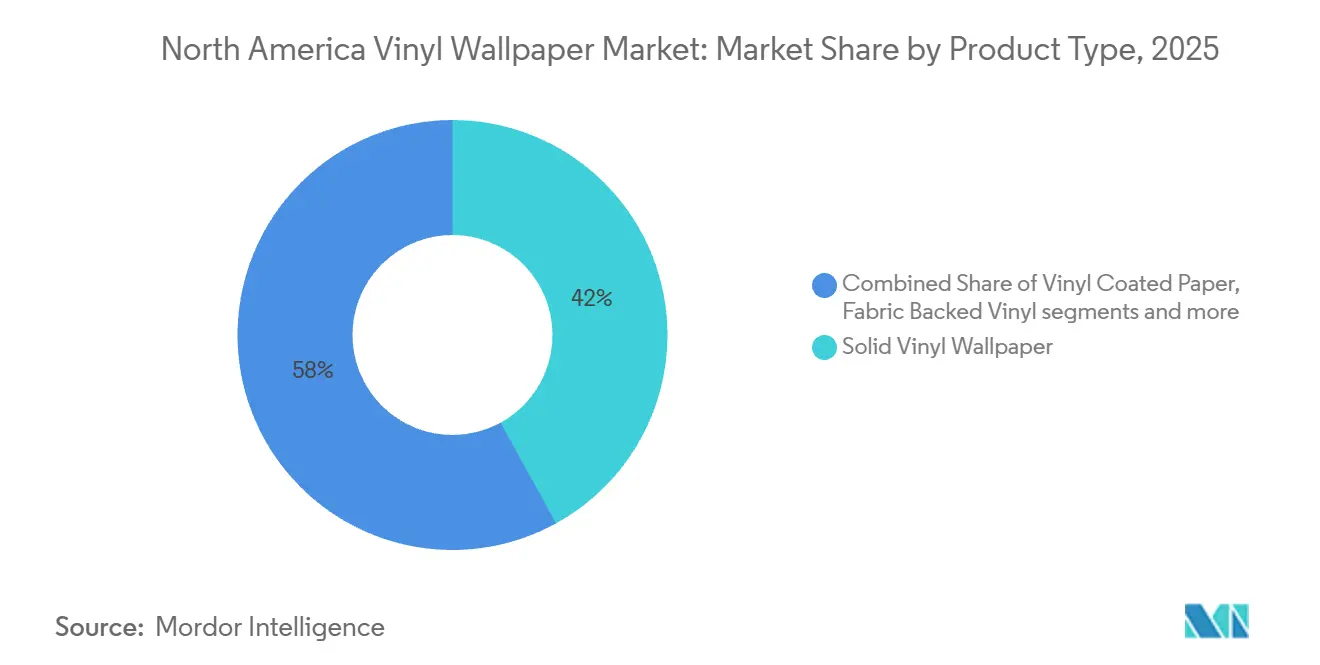
Solid vinyl held 42.0% of the North America vinyl wallpaper market share in 2025. Its familiar construction and broad design range support use in residential renovation and light commercial settings. A one-piece vinyl face can keep production and purchase costs accessible for volume projects. Vinyl-coated paper remains relevant for buyers seeking limited washability at a lower price. Non-woven vinyl products offer paste-the-wall installation, which can simplify work in furnished interiors. These constructions allow suppliers to serve different budgets and installation needs.
Fabric-backed vinyl is forecast to grow at a 3.60% CAGR through 2031. Woven backings improve dimensional stability and tear resistance in high-traffic locations. Hotels and health care facilities use these properties when wall surfaces face frequent contact and cleaning. Type II performance criteria are particularly relevant for corridors, lobbies, and institutional interiors. Suppliers are also introducing lighter constructions to improve handling and project scheduling. Product development, therefore, moves toward performance formats that remain practical for installers.

By Installation Type: Traditional Formats Dominate While Self-Adhesive Reshapes Consumer Economics
Traditional and non-self-adhesive products held 67.0% of the 2025 installation market value. These formats remain common in commercial, health care, and high-end residential work. Paste-applied products are suited to installations where permanence and documented Type II performance matter. Professional installers and design teams use them for projects with defined durability requirements. Paste-the-wall non-woven formats can reduce some preparation steps for residential projects. Traditional installation will remain important where technical performance drives the purchase decision.
Self-adhesive vinyl is projected to be the fastest-growing installation type, at an 3.80% CAGR during 2026–2031. Removable formats appeal to renters and homeowners who want faster updates. The products are sold through home centers, specialty retailers, and direct online channels. Their lower dependence on skilled labor changes the economics of small projects. Digital preview tools can help shoppers evaluate patterns before ordering. This has created a consumer-led growth path within the North America vinyl wallpaper market.
By Application: Renovation Demand Anchors the Market While New Construction Adds Specification-Grade Volume
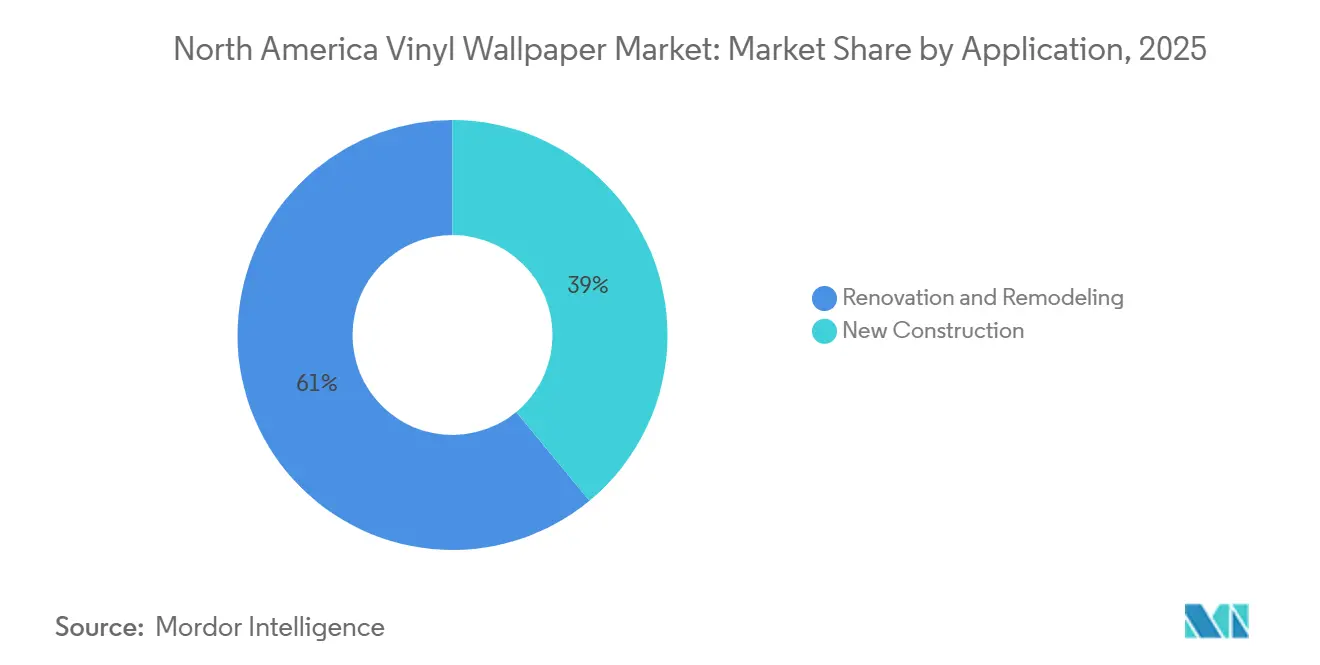
Renovation and remodeling held 61.0% of the application market value in 2025. The North America vinyl wallpaper market size tied to renovation is supported by the large existing housing base. Home improvement accounted for 44% of the United States residential construction spending in the first quarter of 2025, according to NAHB. Kitchens and bathrooms can favor vinyl because moisture resistance is important in these spaces. Whole-house projects also create opportunities for design changes and wallcovering replacement. Renovation demand provides the main volume base for this application split.
New construction is forecast to grow at a 1.97% CAGR through 2031. Commercial and multifamily projects account for much of this growth opportunity. These projects can carry higher wallcovering values per square foot than residential renovations. Project teams often require grade-compliant products with documented performance. Mexico's 2025 formal housing output rose 8.2% to 138,645 registered homes, according to the Registro Único de Vivienda (RUV). New construction, therefore, supports specification-grade demand even while renovation remains the larger application.
By End User: Residential Volume Provides the Base; Commercial Drives Value Growth
Residential users held 64.0% of the North America vinyl wallpaper market share in 2025. Living rooms, bedrooms, kitchens, bathrooms, and children's rooms form the main residential use cases. Accent walls and themed rooms are common settings for removable designs. The large residential base gives suppliers broad retail reach through online stores and home centers. Paint, ceramic tile, and textured panels remain competing options for homeowners. Residential demand remains important because it anchors product volume across the region.
Commercial users are forecast to grow at a 3.39% CAGR through 2031. Hospitality, health care, and institutional buyers often purchase against formal performance specifications. Antimicrobial-treated Type II products are relevant for high-contact areas that need repeated cleaning. Hotel renovation cycles can also create recurring replacement orders. Commercial projects typically require technical support, samples, and installer coordination. This segment drives value growth because specified products carry higher service and performance requirements.
By Distribution Channel: B2C Scale Anchors Volume While B2B Channels Command the Growth Rate
B2C channels held 70.0% of the distribution market value in 2025. These channels include home centers, specialty wallpaper stores, online outlets, local shops, and larger retailers. Home centers provide wide physical access for mass-market residential products. Online channels are particularly relevant for self-adhesive designs and custom orders. Specialty retailers face pressure from broader online selections and faster direct delivery. B2C remains the main volume route for the North America vinyl wallpaper market.
B2B channels are forecast to grow at a 3.50% CAGR through 2031. Contractors, installers, designers, architects, and institutional buyers form the core of this route to market. A commercial procurement decision can cover large quantities of performance vinyl. Sample availability, technical records, and certification support influence supplier selection. Hotel and health care work especially depend on professional installation and documented products. B2B growth reflects the expanding value of specification-led projects.
Geography Analysis
The United States held 76.0% of the North America vinyl wallpaper market share in 2025. Its position reflects a deep base of renovation activity, commercial refurbishment, and do-it-yourself purchasing. Private residential improvement spending increased 8.1% year over year in May 2026. This contractor base supports both traditional wallcovering sales and project specification work. Hotel, office, and residential activity reinforce the country's leading role.
Canada provides a stable regional contribution, although renovation sentiment was cautious in the second half of 2025. The Canadian Home Builders' Association reported a Renovation Market Index of 48.3 out of 100 and a Future Conditions Index of 35.2[4]. Renovation remains more significant than new construction for wallcovering replacement decisions. This supports demand for residential products that are durable and easy to maintain. Canadian buyers also benefit from established retail and contractor channels. The country remains a measured but consistent part of the North America vinyl wallpaper market.
Mexico is projected to grow at a 3.40% CAGR during 2026–2031. Formal housing output increased 8.2% in 2025, reaching 138,645 homes registered under the Single Housing Registry, according to the Registro Único de Vivienda (RUV). The recovery expands the base of residential interiors that may require wall finishes. Infrastructure and nearshoring activity also support hotel, office, and retail development in major industrial locations. Construction activity began from a compressed 2025 base, which limits immediate absolute volume. Mexico nevertheless offers the strongest regional growth rate during the forecast period.
Competitive Landscape
The North America vinyl wallpaper market has a fragmented supply base. York Wallcoverings, Koroseal Interior Products, and Brewster Home Fashions are established, domestic suppliers. Tempaper & Co. and WallPops serve consumer demand for removable formats. Graham & Brown, Sanderson Design Group, and Phillip Jeffries have distribution or showroom presence in the region. Competition is strongest in residential do-it-yourself and online sales, where design and visibility matter. Commercial purchasing is more concentrated around suppliers with recognized performance credentials.
Commercial suppliers compete through Type II and Type III portfolios, technical documentation, and specification support. Wallcoverings Association W-101 and W-102 standards provide a common performance reference for buyers. NSF/ANSI 342 and low-emission documentation can influence institutional buying decisions. Consumer brands compete more directly through licensed designs, retail access, and digital shopping tools. Graham & Brown launched its Garden in the Sky collection in August 2026, developed with creative director Kate Berry. The move extends a design-led offering across premium residential and hospitality applications.
Phillip Jeffries introduced Enchanted Garden in August 2026, adding murals, laser-cut botanicals, woven textures, and metallic finishes. These moves show how suppliers address both design differentiation and material requirements. The North America vinyl wallpaper industry also has room for low-emission materials, recycled-content products, and custom-print-ready substrates. Smaller online brands may challenge conventional catalogs through faster custom design options. The North America vinyl wallpaper market remains divided between fragmented consumer sales and more specialized commercial procurement.
North America Vinyl Wallpaper Industry Leaders
-
York Wallcoverings
-
Brewster Home Fashions LLC
-
F. Schumacher & Co.
-
Graham & Brown Ltd
-
Phillip Jeffries Ltd.
- *Disclaimer: Major Players sorted in no particular order
Recent Industry Developments
- May 2026: Graham & Brown launched Garden in the Sky, a wallpaper collection developed in collaboration with style editor and creative director Kate Berry, inspired by her terrace garden overlooking New York City. Each design began as a hand-painting by a Graham & Brown artist and Royal Horticultural Society member.
- May 2026: Phillip Jeffries introduced Enchanted Garden, its Summer 2026 wallcovering collection featuring immersive murals, laser-cut botanicals, woven textures, and metallic accents.
- February 2026: Graham & Brown launched its 80th anniversary collection on February 2, 2026, reimagining 8 archive designs in contemporary colorways to mark 4 generations of design.
North America Vinyl Wallpaper Market Report Scope
| Solid Vinyl Wallpaper |
| Vinyl Coated Paper |
| Fabric Backed Vinyl |
| Non-Woven Vinyl Wallpapers |
| Other Product Type |
| Traditional/Non Self-Adhesive |
| Self-Adhesive / Peel-and-Stick Vinyl Wallpaper |
| New Construction |
| Renovation and Remodeling |
| Residential | Living Room |
| Kitchen | |
| Bedroom | |
| Bathroom | |
| Kids Room | |
| Commercial |
| B2C Channels | Hypermarkets and Supermarkets |
| Specialty Wallpaper Stores | |
| Home Centers | |
| Online | |
| Local Shops (unorganized channels) | |
| Other Distribution Channels | |
| B2B Channels (Contractors and Installers, Interior Designers and Architects, Project Procurement and Institutional Sales) |
| United States |
| Canada |
| Mexico |
| By Product Type/Construction Type | Solid Vinyl Wallpaper | |
| Vinyl Coated Paper | ||
| Fabric Backed Vinyl | ||
| Non-Woven Vinyl Wallpapers | ||
| Other Product Type | ||
| By Installation Type | Traditional/Non Self-Adhesive | |
| Self-Adhesive / Peel-and-Stick Vinyl Wallpaper | ||
| By Application | New Construction | |
| Renovation and Remodeling | ||
| By End User | Residential | Living Room |
| Kitchen | ||
| Bedroom | ||
| Bathroom | ||
| Kids Room | ||
| Commercial | ||
| By Distribution Channel | B2C Channels | Hypermarkets and Supermarkets |
| Specialty Wallpaper Stores | ||
| Home Centers | ||
| Online | ||
| Local Shops (unorganized channels) | ||
| Other Distribution Channels | ||
| B2B Channels (Contractors and Installers, Interior Designers and Architects, Project Procurement and Institutional Sales) | ||
| By Geography | United States | |
| Canada | ||
| Mexico | ||
Key Questions Answered in the Report
What is the 2026 value of North America vinyl wallpaper sales?
The North America vinyl wallpaper market size was USD 0.43 billion in 2026 and is forecast to reach USD 0.49 billion by 2031.
What is driving demand for vinyl wallcoverings in North America?
Remodeling, commercial refurbishment, washable surfaces, and self-adhesive formats support demand across residential and commercial uses.
Which vinyl wallpaper construction type led demand in 2025?
Solid vinyl led construction types with 42.0% share in 2025, while fabric-backed vinyl is forecast to grow at 6.20% CAGR through 2031.
Why are peel-and-stick wallcoverings growing?
Self-adhesive products suit renter households, reduce installation needs, and are forecast to grow at a 6.44% CAGR through 2031.