
North America Data Center Risk Engineering and Management Market Size and Share
Market Overview
| Study Period | 2021 - 2032 |
|---|---|
| Forecast Data Period | 2027 - 2032 |
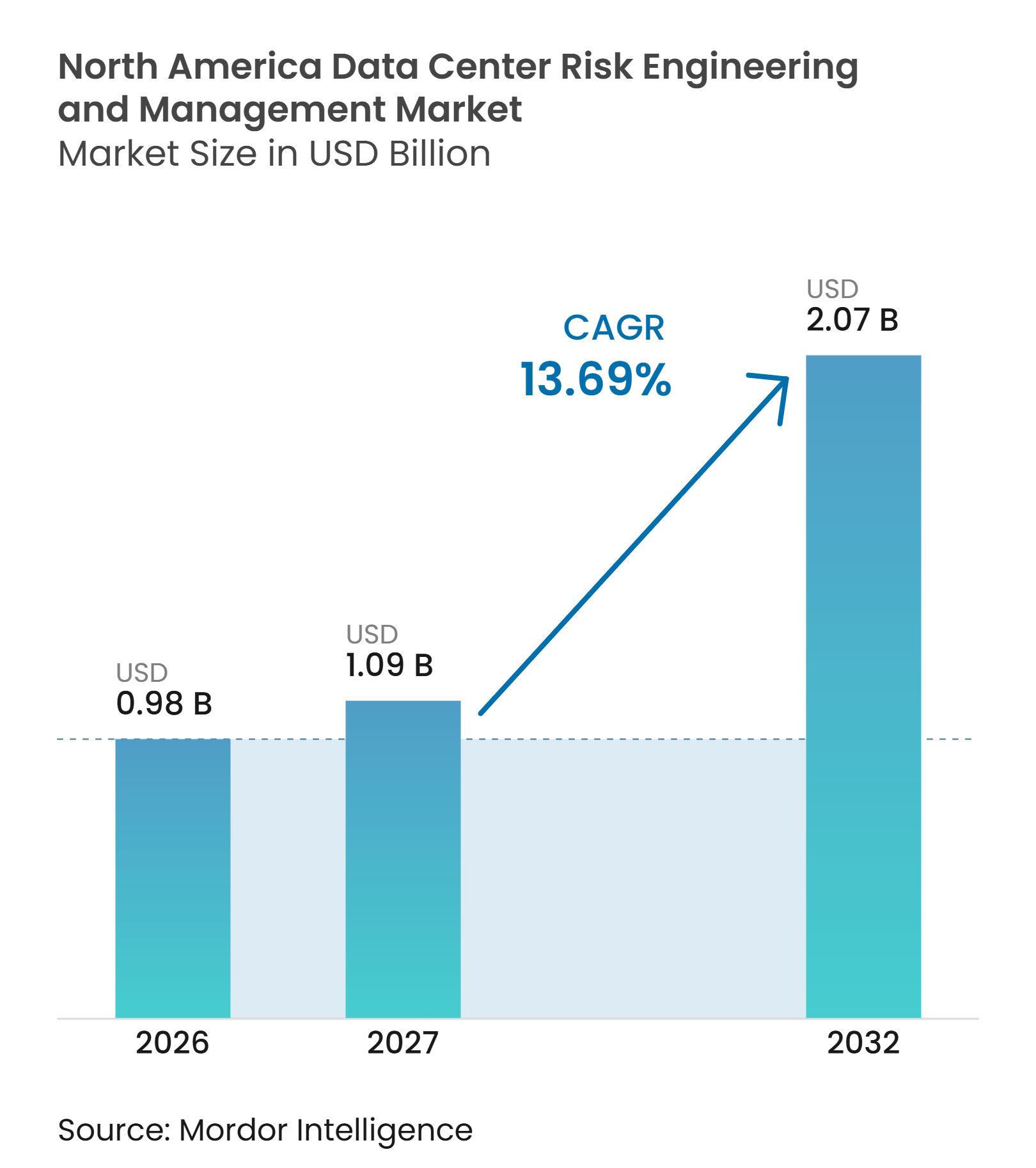
| Base Year Market Size (2026) | USD 0.98 Billion |
| Market Size (2027) | USD 1.09 Billion |
| Market Size (2032) | USD 2.07 Billion |
| Growth Rate (2027 - 2032) | 13.69 % |
| Market Concentration | Medium |
Major Players *Disclaimer: Major Players sorted in no particular order Image © Mordor Intelligence. Reuse requires attribution under CC BY 4.0. | |
North America Data Center Risk Engineering and Management Market Analysis by Mordor Intelligence
The North America data center risk engineering and management market size is projected to expand from USD 0.98 billion in 2026 to USD 1.09 billion in 2027, and to USD 2.07 billion by 2032, registering a CAGR of 13.69% from 2027 to 2032. AI-oriented facilities are raising the technical demands placed on electrical distribution, cooling systems, and commissioning programs. Operators, lenders, and insurers increasingly require documented resilience before committing capital or renewing coverage. This has shifted many engagements from isolated commissioning assignments toward longer operational programs. New grid obligations and the expansion of large campuses also broaden the work required before facilities are energized. The North America data center risk engineering and management market therefore benefits from demand across design, construction, commissioning, retrofit, and operations.
Key Report Takeaways
- By service type, Risk Assessment and Auditing held 30.72% of the North America data center risk engineering and management market share in 2026, while Reliability and Availability Engineering is projected to expand at a 14.52% CAGR through 2032.
- By risk category, Electrical and Power Infrastructure Risk held a 29.47% share in 2026, while Cooling and Thermal Management Risk is projected to expand at a 14.63% CAGR through 2032.
- By assessment method, Qualitative Risk Assessment held a 32.64% share in 2026, while Continuous Risk Assessment and Monitoring is projected to expand at a 14.57% CAGR through 2032.
- By engagement model, One-Time Assessment and Audit held a 34.18% share in 2026, while Continuous Risk Management Services is projected to expand at a 14.69% CAGR through 2032.
- By project lifecycle stage, Operational Risk Management held a 35.83% share in 2026, while Expansion, Retrofit, and Modernization are projected to expand at a 14.58% CAGR through 2032.
- By data center size, Large Data Centers held 37.49% share in 2026, while Hyperscale Data Centers are projected to expand at a 14.64% CAGR through 2032.
- By data center type, Colocation Facilities held 40.62% share in 2026, while CSPs are projected to expand at a 14.56% CAGR through 2032.
- By geography, the United States held 83.46% regional share in 2026, while Canada is projected to expand at a 14.67% CAGR through 2032.
Note: Market numbers in this report are based on Mordor Intelligence's proprietary estimation framework, which combines nine months of actuals with Q4 projections for base year 2026.
Market Trends and Insights
Drivers Impact Analysis of North America Data Center Risk Engineering and Management Market*
| Driver | (~) % Impact on CAGR Forecast | Geographic Relevance | Impact Timeline |
|---|---|---|---|
| AI and High-Density Computing Raise Power and Cooling Assurance Needs | +3.8% | Global, concentrated in the United States and Canada | Short term (≤ 2 years) |
| Hyperscale Campus Expansion Raises Lifecycle Risk Engineering Demand | +3.1% | North America core, with spillover to Canada and Mexico | Medium term (2-4 years) |
| Insurer, Lender, and Tenant Requirements for Documented Resilience | +2.4% | Global, strongest in the United States | Short term (≤ 2 years) |
| Grid Interconnection Complexity Increases Electrical Reliability Engineering Needs | +1.7% | United States, Canada, and Mexico | Medium term (2-4 years) |
| Recurring Compliance and Operational Assurance Requirements | +1.2% | National, with early gains across primary and secondary U.S. markets | Medium term (2-4 years) |
| Liquid-Cooling Deployment Creates Testing and Engineering Demand | +0.9% | Global, concentrated in U.S. and Canadian hyperscale builds | Short term (≤ 2 years) |
| Source: Mordor Intelligence | |||
AI And High-Density Computing Increase Power And Cooling Assurance Needs
A 2025 U.S. Department of Energy report found that current design standards assume rack densities of 10-15 kW, while AI workloads already require 30-50 kW.[1] The same report noted that some hyperscale deployments approach 100 kW and high-performance computing installations reach 250 kW, which changes the scale at which teams must test power and heat performance. These conditions link electrical delivery and thermal management more closely than in conventional data centers because an interruption in either system can affect the other. Harmonic distortion, localized hot spots, and coolant-loop pressure problems cannot be addressed through static qualitative audits alone, particularly where facility operators need evidence that a design can operate safely at varying AI load levels. An IEEE Access study found that air-cooling test methods do not capture immersion-specific mechanisms such as absorption, environmental stress cracking, and oxidation. The North America data center risk engineering and management market gains work earlier in design and through early operations, as these systems require specialized validation, documented test plans, and follow-up review after commissioning.
Hyperscale Campus Expansion Raises Demand For Lifecycle Risk Engineering
Each hyperscale campus needs risk engineering during site selection, design review, commissioning, and operational assurance. This turns a project assignment into a multi-year program, especially when facilities are upgraded for successive AI hardware generations. Primary North American markets recorded a 1% vacancy rate for a second consecutive year in JLL's 2025 report, while 64% of the 35 GW construction pipeline moved beyond traditional mature markets. The median capacity of data centers under development rose from 11 MW in 2016 to 130 MW by June 2026, increasing the engineering oversight needed for each project and increasing the consequences of design changes made late in delivery. Allianz Commercial documented local opposition that delayed or blocked at least 75 U.S. projects valued at USD 130 billion in the first quarter of 2026, underscoring the need for providers to play a clearer role in assessing permitting, community concerns, and construction sequencing. These conditions make site and community risk review a more regular part of lifecycle work, while projects of this scale widen the North America data center risk engineering and management market opportunity.
Insurer, Lender, And Tenant Requirements for Documented Resilience
Underwriters and lenders require evidence of resilience in electrical redundancy, fire protection, cooling reliability, and business continuity before committing capital. This shifts the focus from available capacity to the documentation demonstrating that a facility can recover from disruption and continue to meet service commitments. Aon expanded its Data Center Lifecycle Insurance Protection Program to USD 3.5 billion in April 2026, combining risk engineering and analytics with lifecycle coverage. Allianz Commercial reported switchgear lead times of up to 80 weeks and transformer lead times of up to 50 weeks, which can leave owners exposed if replacement planning is not assessed during the design stage. Longer restoration times require validation of business interruption assumptions as well as equipment specifications and maintenance plans. The North America data center risk engineering and management market is therefore supported by pre-build advisory work that starts before final site selection and follows asset decisions through construction and operations.
Grid Interconnection Complexity Increases Electrical Reliability Engineering Needs
Data center load growth at transmission scale requires closer work between risk specialists and utility-grade electrical engineers. An OSTI-published analysis of a July 2024 Eastern Interconnection incident described how a sub-100-millisecond transmission fault triggered cascading loss of 1,500 MW of data center load. SERC's April 2026 guidance recommended modeling, real-time monitoring, interconnection coordination, and event analysis for emerging large loads. California ISO proposed large-load requirements covering ride-through capability, post-fault power recovery, and ramp rates, which require engineers to connect facility behavior with grid operating needs. Grid connection timelines average 4 or more years in primary U.S. markets, which moves risk engineering well ahead of commissioning and makes early data quality more important. This longer planning cycle supports electrical reliability assignments throughout the North America data center risk engineering and management market, including feasibility review, interconnection support, and commissioning preparation.
Restraints Impact Analysis of North America Data Center Risk Engineering and Management Market*
| Restraint | (~) % Impact on CAGR Forecast | Geographic Relevance | Impact Timeline |
|---|---|---|---|
| Scarcity of Data Center-Specific Risk Engineers and Commissioning Specialists | -1.8% | Global, sharpest in North America | Short term (≤ 2 years) |
| Fragmented Standards and Jurisdictional Compliance Requirements | -1.0% | National, with early friction in U.S. primary markets and Canada | Medium term (2-4 years) |
| High Cost of Continuous Monitoring and Specialist Testing Equipment | -0.6% | Global | Medium term (2-4 years) |
| Limited Loss History for Next-Generation AI Data Centers | -0.4% | Global | Long term (≥ 4 years) |
| Source: Mordor Intelligence | |||
Scarcity Of Data Center-Specific Risk Engineers And Commissioning Specialists
Commissioning agents are among the most competitive roles in the sector because an AI facility requires power-plant-like startup practices. Senior commissioning roles can take 60-90 days to fill, while scarce professionals may already be committed to projects 12-18 months ahead. Colt Data Centers stated in January 2026 that high-voltage specialists, commissioning engineers, and controls personnel compete across overlapping schedules. Practical experience remains difficult to reproduce quickly through training programs. Uptime Institute estimates that nearly 300,000 qualified staff are needed globally, with commissioning specialists among the harder positions to fill. This limits delivery capacity even as demand expands across the North America data center risk engineering and management market.
Fragmented Standards And Jurisdictional Compliance Requirements
No consolidated risk engineering standard applies across all North American data centers. Providers must address ASHRAE 90.4, ANSI/TIA-942-C, NEMA BS 31060-2025, emerging NERC large-load standards, and state and local codes. The NEMA guidance provides a fire and life safety framework for data center design. However, IEEE research found that air-cooling standards do not cover the distinct failure modes of immersion-cooled facilities. Multiple frameworks add cost and lengthen assessments, particularly for projects that cross jurisdictions. The resulting duplication can also produce inconsistent risk records for insurers and internationally owned operators.
*Our forecasts treat driver/restraint impacts as directional, not additive. The impact forecasts reflect baseline growth, mix effects, and variable interactions.
North America Data Center Risk Engineering and Management Market Segment Analysis
By Service Type:
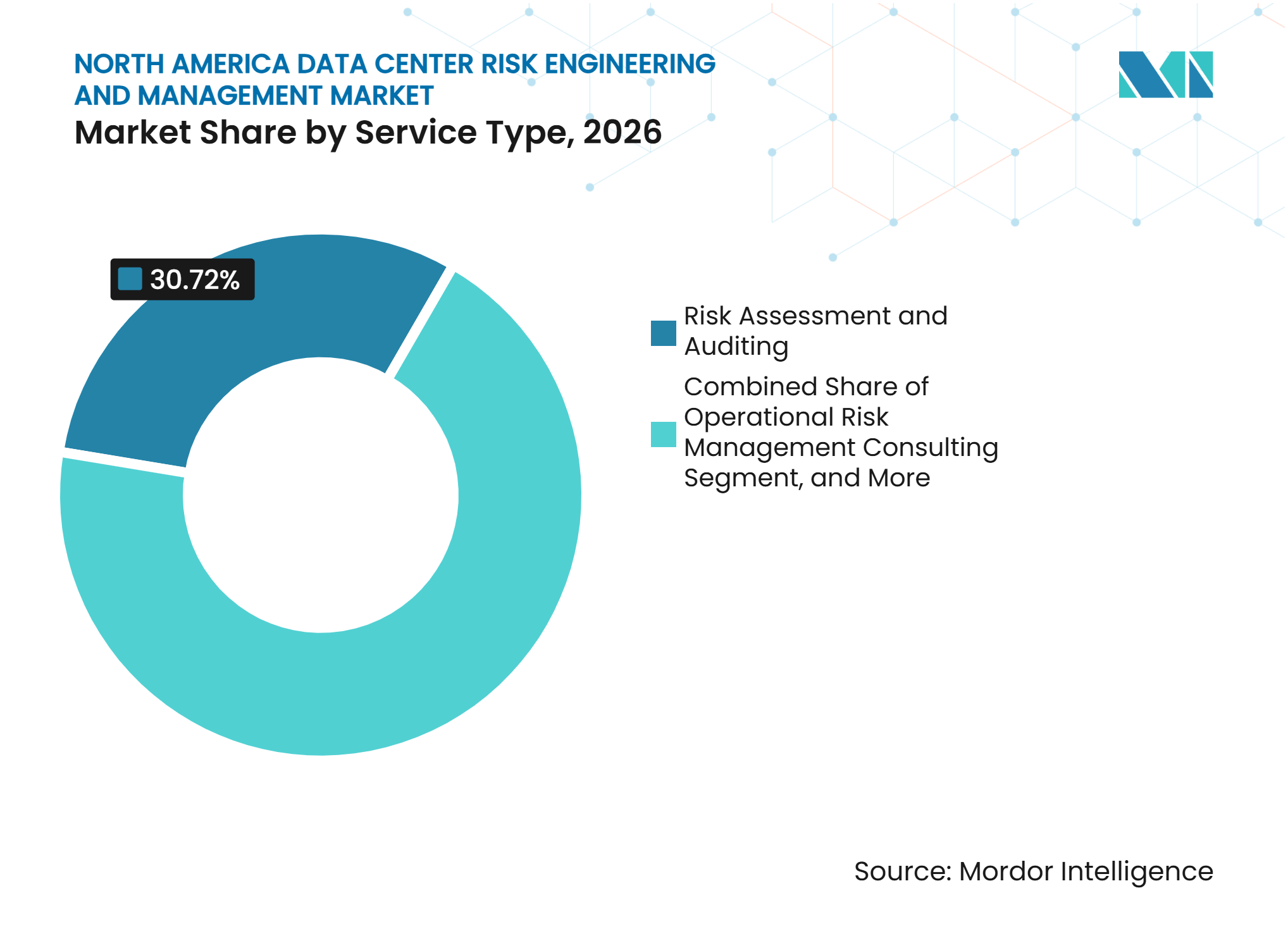
Auditing Leads While Reliability Engineering AdvancesRisk Assessment and Auditing held a 30.72% share in 2026. Insurer submissions, lender due diligence, and tenant onboarding continue to create mandatory audit cycles. The service offers a clear starting point for owners that need an independent view of project and operational exposure. Reliability and Availability Engineering is projected to record a 14.52% CAGR from 2027 to 2032. Its growth reflects AI workloads that have rapid ramp patterns and nonlinear thermal loads. These operational conditions require ongoing reliability modeling rather than a single inspection.
FMEA, fault tree analysis, and root cause analysis are gaining importance in liquid-cooled environments. An IEEE Access study found that immersion-specific failure mechanisms, including absorption and corrosion, are not reflected in air-cooled standards. Risk Mitigation Planning, Hazard Identification, and Risk Evaluation remain important at the project front end. Operational Risk Management Consulting supports recurring work when owners retrofit facilities for AI workloads. Compliance and Engineering Certification Support is also emerging as a separate revenue line from 2027, supported by NERC requirements and TIA's planned AI addendum. The mix moves service providers toward programs that combine compliance, reliability, and operations support.



By Risk Category:
Power Risk Leads While Thermal Risk Grows FastestElectrical and Power Infrastructure Risk held a 29.47% share in 2026. Power delivery remains a central concern because it underpins cooling, fire protection, and all critical systems. Allianz Commercial identified fire losses as the most severe and water losses as the most frequent construction loss categories. Cooling and Thermal Management Risk is projected to grow at a 14.63% CAGR through 2032. Liquid cooling at hyperscale AI sites and the limits of air-cooling frameworks above 30 kW per rack support this expansion. The two categories increasingly overlap when engineers assess power quality, heat rejection, and system resilience.
Fire and Life Safety Risk is supported by NEMA BS 31060-2025, which provides a data center design framework. Structural and Building Infrastructure Risk also remains material because Swiss Re found that more than 40% of U.S. data center capacity lies in significant-to-very-high tornado-day zones. Supply Chain and Equipment Availability Risk has become more visible as switchgear lead times reach 80 weeks and transformer lead times reach 50 weeks. Environmental and Climate Risk, Operational and Human Error Risk, and Physical Security and Access Risk cover separate sources of disruption. Providers that can assess power, thermal, fire, structural, and environmental exposure together hold an advantage over firms focused on a single discipline.
By Assessment Method:
Qualitative Methods Lead While Monitoring Gains GroundQualitative Risk Assessment held 32.64% share in 2026, making it the most common entry method for the North America data center risk engineering and management market. It is used during construction, commissioning, and operating assurance stages. The method provides owners with a structured way to identify exposure before investing in more detailed models. Continuous Risk Assessment and Monitoring is projected to expand at a 14.57% CAGR through 2032. Digital monitoring platforms and AI-driven anomaly detection support this shift in operating facilities. Demand for continuous methods is driven by the need to track changes in equipment, load profiles, and operating conditions.
Quantitative Risk Assessment and Scenario-Based Risk Analysis are gaining traction as underwriters seek probabilistic loss estimates rather than narrative descriptions. Simulation and Digital Modeling also support commissioning validation and ongoing risk measurement through digital twin approaches. TIA initiated the Data Center Excellence Quality Standard in February 2026 using the ISO 9001 High-Level Structure. Reliability-Centered Assessment is being adapted from aerospace and power generation as facility criticality increases.[2] ANSI/TIA-942-C certification had surpassed 1,000 certifications across more than 800 data centers in over 60 countries by March 2026. These certifications favor documented, repeatable, and auditable assessment methods.
By Engagement Model:
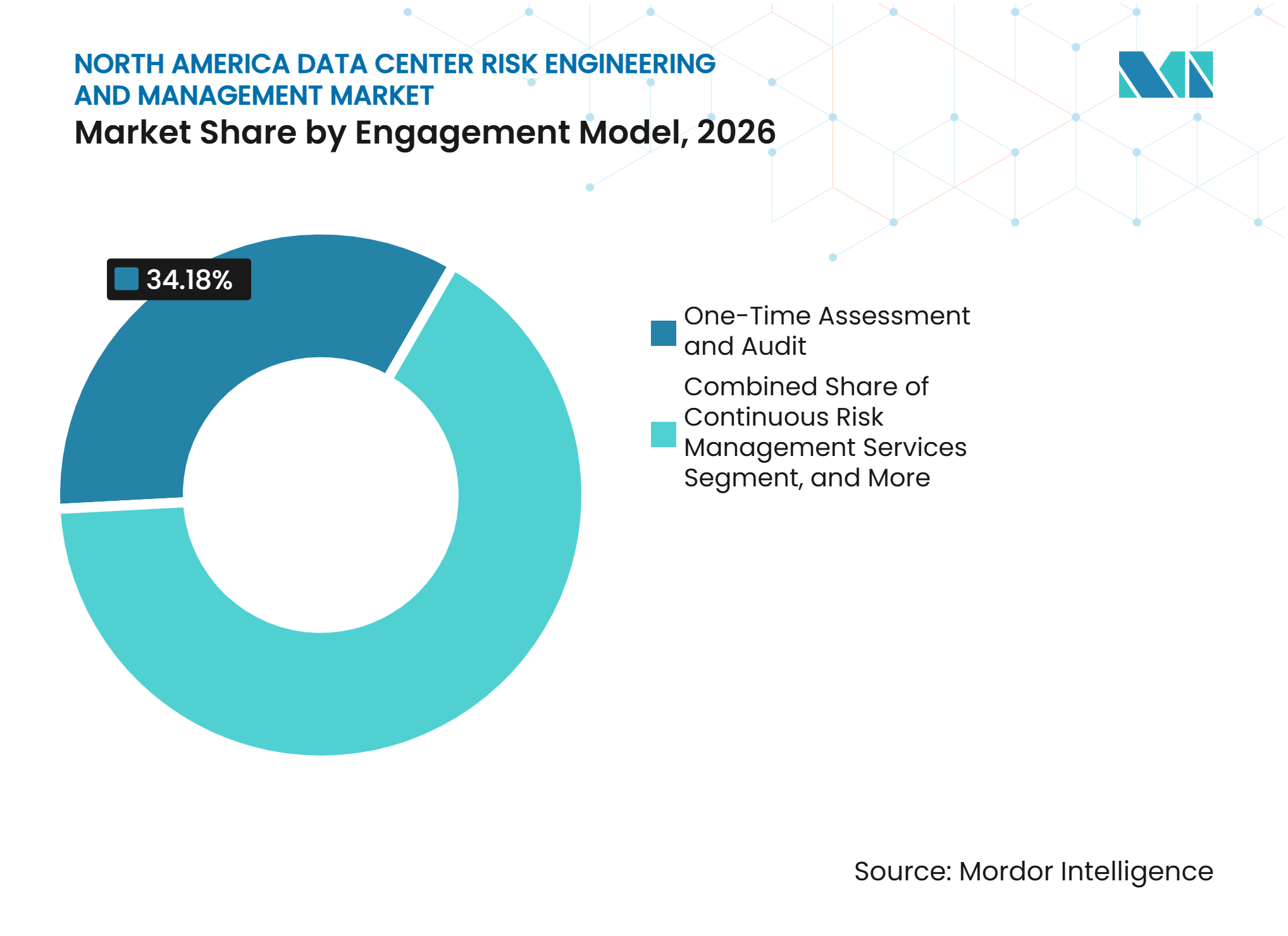
One-Time Audits Lead While Continuous Programs Reshape RevenueOne-Time Assessment and Audit held a 34.18% share in 2026. These engagements address due diligence and loan covenant requirements that often determine whether construction financing proceeds. The model remains useful when an owner needs a defined review of a site, design, or asset. Continuous Risk Management Services is projected to grow at a 14.69% CAGR through 2032. Insurers and lenders increasingly recognize that a static audit cannot reflect a cooling system that may change within 18 months of commissioning. This strengthens the case for recurring engineering oversight throughout the site's operating life.
Periodic Risk Review and Managed Risk Engineering serve mid-tier customers, often through longer facilities management agreements. Integrated Engineering and Advisory Services appeal to hyperscalers seeking to embed risk teams in their operating model. A one-time assessment yields a single engagement fee, whereas continuous services generate annual recurring revenue. Enterprise tenants in colocation facilities increasingly request documented risk programs as a condition of occupancy. That requirement shifts the choice of engagement from discretionary procurement to a lease-level obligation. It also supports a steadier revenue base within the North America data center risk engineering and management market.

By Project Lifecycle Stage:
Operations Anchors Spending While Modernization Leads GrowthOperational Risk Management held a 35.83% share in 2026. The installed base requires ongoing engineering attention as owners place AI workloads in facilities originally designed for lower-density computing. This stage includes review of resilience, maintenance, operating procedures, and changing load conditions. Expansion, Retrofit, and Modernization is projected to grow at a 14.58% CAGR through 2032. Operators are upgrading electrical and cooling infrastructure for GPU clusters without building every facility from the ground up. The North America data center risk engineering and management market benefits because each retrofit requires a revised risk baseline.
Site Selection and Feasibility are also receiving more attention as projects encounter power, permitting, and community constraints. Construction and Commissioning now involve broader integrated systems testing for facilities with critical loads of 100 MW or more. Silverback Connect reported that commissioning professionals may be committed 12-18 months in advance. Bain and Company found that disciplined integration of risk and engineering into design can reduce construction timelines by up to 1 year. These factors make lifecycle coordination central to both project delivery and operating reliability.
By Data Center Size:
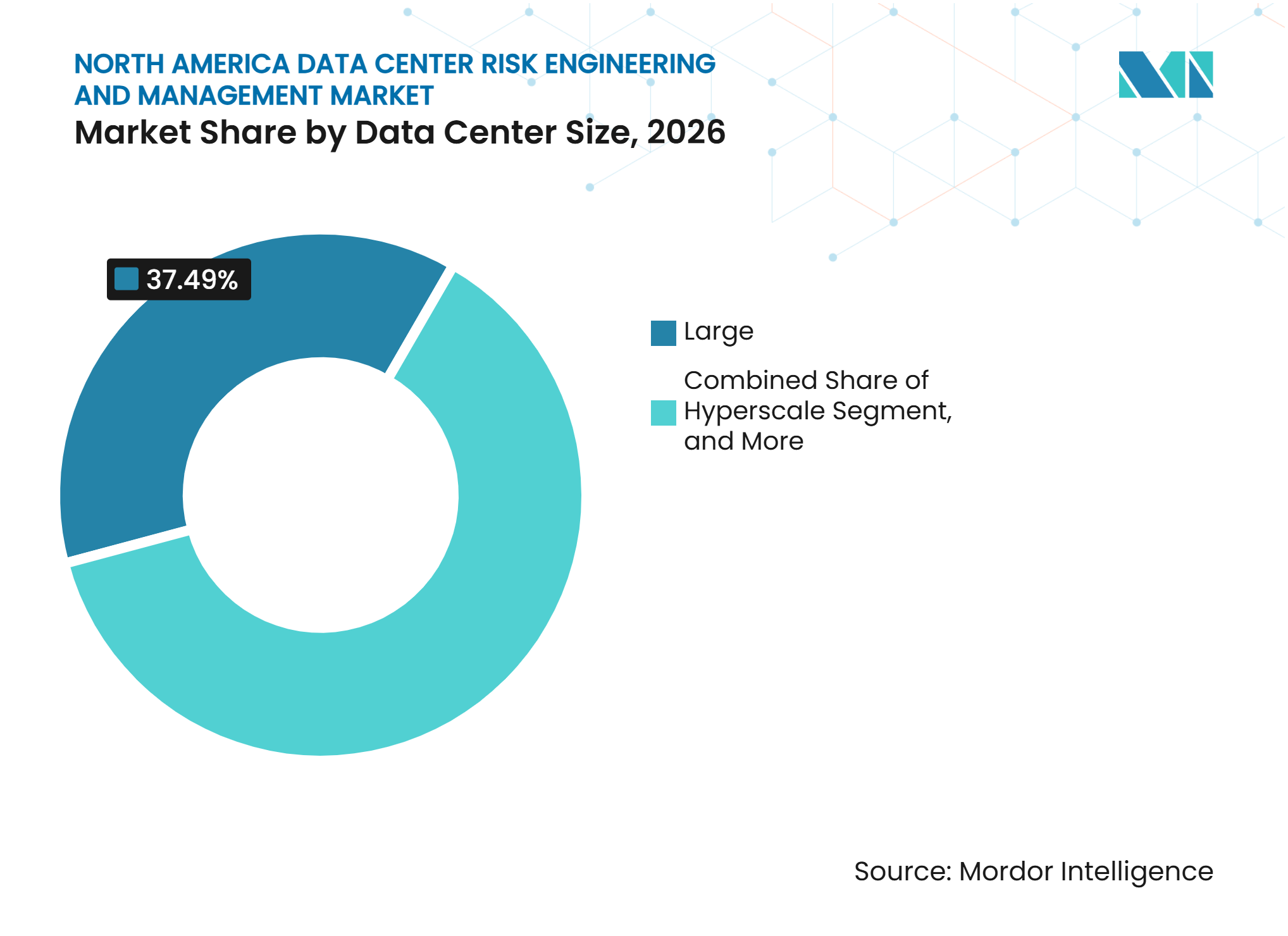
Large Facilities Lead While Hyperscale Sets The Growth PaceLarge Data Centers held a 37.49% share in 2026. Mature enterprise and colocation operators support this position through multi-redundant power systems, chilled-water plants, and multi-tenant security needs. These facilities need multidisciplinary risk programs even when they are not new construction. Hyperscale Data Centers are projected to grow at a 14.64% CAGR through 2032. A single campus can represent an investment of up to USD 20 billion, making risk engineering a routine part of financing and insurance discussions. Small and medium data centers add aggregate demand through standardized certifications and edge computing deployments.
Hyperscale projects require more extensive commissioning than conventional facilities. Programs may test 100 MW or more of critical load across parallel cooling loops and multi-feed electrical systems. Campuses phased over 18-36 months trigger new commissioning and risk work with each phase. Aggreko announced in April 2025 that it would double its liquid-cooled load bank fleet to 240 MW in 2026 to support North American data center testing. This equipment expansion reflects the practical demands of testing liquid-cooled systems at scale. The North America data center risk engineering and management market captures this demand through testing plans, validation, and operational readiness reviews.
By Data Center Type:
Colocation Leads Demand While CSPs AccelerateColocation Facilities held a 40.62% share in 2026. Lease structures and service-level commitments require operators to maintain documented engineering certifications for tenants and insurance renewals. This makes risk engineering a continuing part of occupancy management rather than a project-only cost. CSPs are projected to grow at a 14.56% CAGR through 2032. Hyperscaler self-builds are bringing continuous risk oversight from design through operations. Enterprise and edge data centers form another source of demand with different procurement needs.
Enterprise facilities often purchase risk engineering through IT governance programs. Edge sites require lighter, faster assessments because they are distributed and have limited on-site staffing. Boyd introduced a rack emulator with NVIDIA in August 2025 to validate direct-to-chip liquid cooling systems for high-density GPU racks. Uptime Institute Tier certification remains widely recognized for its assurance of resilience in colocation facilities. ISO 27001 risk assessment frameworks provide a basis for compliance with recurring work in edge and enterprise facilities. These varied use cases widen the client base of the North America data center risk engineering and management market.
Geography Analysis
United States
The United States held 83.46% of the North America data center risk engineering and management market share in 2026. The country has the region's largest installed base and a deep ecosystem of insurers, lenders, regulators, certification bodies, and specialist providers. JLL reported that vacancy in primary markets remained at 1% for a second consecutive year, while median facility capacity reached 130 MW by June 2026. Project values can reach USD 20 billion for a single hyperscale campus, increasing the need for independently documented resilience. Swiss Re found that more than 40% of U.S. data center capacity is exposed to significant-to-very-high tornado-day zones. That exposure supports structural and climate risk work, as well as electrical and cooling assessments. NERC's developing large-load standards also bring regulatory influence to interconnection studies and protection coordination for qualifying sites.
Canada
Canada is projected to record a 14.67% CAGR from 2027 to 2032. The country is moving from planning into a more active hyperscale construction cycle, supported by the 2025 Sovereign AI Compute Strategy and the 2026 AI for All Strategy. BCG estimated that Canada had 0.3 GW of AI data center capacity against domestic demand of 1.3 GW by 2030, while 3.5-4 GW of projects were already planned. Meta began construction in July 2025 of a 1 GW facility in Sturgeon County, Alberta, with an investment exceeding CAD 13 billion (USD 9.6 billion) at the Bank of Canada's 2025 average exchange rate. Alberta's grid operator reported that 29 projects sought more than 16 GW of grid connections in June 2025, against a 1.2 GW connection limit through 2028. This mismatch makes interconnection reviews, electrical studies, and grid coordination immediate priorities. Risk engineering demand in Canada is consequently shaped by power availability and the work required before projects can advance.
Mexico And Regional Dynamics
Mexico's operational IT data center capacity increased from 115.5 MW in 2024 to 280 MW in 2026, creating a new base for demand in risk engineering. MEXDC stated that reliable power access is the primary constraint on further expansion. Interconnection timelines involving CFE and CENACE are causing developers to seek independent project assessments earlier in the design process. MEXDC estimated that the sector could attract more than USD 18.1 billion in direct investment through 2030 and reach 1,516 MW of installed capacity. The association also warned that unresolved energy bottlenecks could redirect investment to other hubs in South America. iAmericas recommended integrating CFE and CENACE grid code compliance from the design phase, positioning compliance factors as a key part of feasibility work. These constraints make the wider regional opportunity more dependent on power planning and compliance than on facility construction alone.
Competitive Landscape
Market Concentration
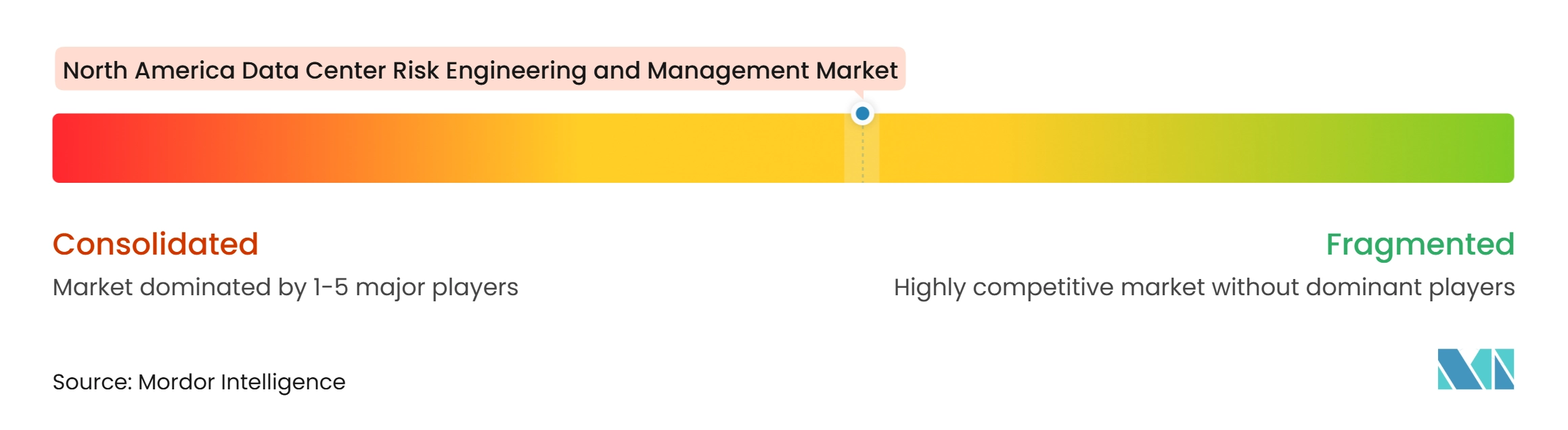
The North America data center risk engineering and management market is moderately concentrated at the top and fragmented across mid-tier and specialist firms. Integrated insurance carriers compete through lifecycle engineering capacity and the insurance capacity they can provide with those services. Specialist inspection and certification bodies compete on testing credentials, technical depth, and geographic reach. Risk advisory providers combine engineering, insurance placement, and analytics to support longer programs. Zurich Resilience Solutions formed a Data Center Risk Advisory Practice in January 2026 with more than 100 specialist risk engineers. The practice reported a Transactional Net Promoter Score of 97, showing the service differentiation that larger providers seek. Smaller firms can compete where customers need specific technical expertise or local delivery.
The leading strategic pattern is the combination of engineering, insurance, and analytics into integrated platforms. This model puts pressure on standalone engineering consultancies that do not provide insurance-linked services. Aon expanded its lifecycle program to USD 3.5 billion in April 2026 and extended coverage to operating sites, linking risk engineering, analytics, property damage, business interruption, and cyber coverage. FM expanded its data center insurance limits to USD 5 billion through FM Intellium in January 2026 after creating the specialized unit in 2025.[3] WTW launched Digital Infrastructure Protector in April 2026 for data center construction and operations. These moves show how insurance capacity and risk engineering are being positioned as a combined offer.
Opportunities remain in continuous monitoring services, AI-assisted FMEA using digital twin data, and engineering for liquid-cooled and immersion-cooled facilities. These areas remain less standardized than conventional data center inspection work. Commissioning specialists can also expand into risk advisory by using their load-bank and systems-testing capabilities in recurring contracts. TIA's DCE 9000 initiative is expected to affect supplier qualification as participation grows among operators and manufacturers. Providers with established international certification programs are well placed to respond.
North America Data Center Risk Engineering and Management Industry Leaders
-
FM Insurance Company Limited
-
Zurich Insurance Company Ltd.
-
Aon plc
-
Marsh LLC
-
Uptime Institute, LLC
- *Disclaimer: Major Players sorted in no particular order
North America Data Center Risk Engineering and Management Market Companies Covered in this Report
- FM Insurance Company Limited
- Zurich Insurance Company Ltd.
- Aon plc
- Marsh & McLennan Companies, Inc.
- Uptime Institute, LLC
- Bureau Veritas SA
- SGS Société Générale de Surveillance SA
- Intertek Group plc
- TÜV SÜD AG
- UL Solutions Inc.
- DNV AS
- DEKRA SE
- BSI Group
- Schellman & Company, LLC
- Coalfire Systems, Inc.
- EPI Group
- SOCOTEC Group
- DQS Holding GmbH
- LRQA Limited
- Kiwa N.V.
- RINA S.p.A.
- Applus+
- Element Materials Technology Group Limited
- National Technical Systems, Inc.
- NV5 Global, Inc.
- Salute Mission Critical
Recent Industry Developments in North America Data Center Risk Engineering and Management Market
- June 2026: NEMA, ASHRAE, and the Pacific Northwest National Laboratory jointly released the trilateral AI Data Center Energy Performance Framework, a comprehensive set of technical standards and best practices covering planning, integrated design, energy and thermal efficiency, grid-interactive design, commissioning and performance validation, operations, and retrofit and modernization strategies for AI data center development.
- April 2026: Aon plc expanded its Data Center Lifecycle Insurance Protection Program to USD 3.5 billion in a second capacity increase, extending coverage beyond construction-phase risks to existing operational sites, integrating risk engineering, analytics, property damage, business interruption, and cyber coverage up to USD 400 million.
- April 2026: WTW launched Digital Infrastructure Protector, a new insurance and risk engineering program for data center construction and operations, adding specialized capacity for digital infrastructure risk transfer globally.
- March 2026: TIA announced the initiation of Addendum 1, Artificial Intelligence to ANSI/TIA-942-C, targeting mid-2027 publication, and launched the Data Center Excellence Quality Standard, DCE 9000, initiative, a quality management system for data center physical infrastructure built on the ISO 9001 High-Level Structure.
North America Data Center Risk Engineering and Management Market Report Scope
North America Data Center Risk Engineering and Management Market refers to the market for services and solutions that identify, assess, mitigate, and manage operational, infrastructure, cybersecurity, and compliance risks across data center facilities in North America.
The North America Data Center Risk Engineering and Management Market Report is Segmented by Service Type (Risk Assessment and Auditing, Reliability and Availability Engineering, Failure Mode and Effects Analysis (FMEA), Fault Tree and Root Cause Analysis, Hazard Identification and Risk Evaluation, Risk Mitigation Planning, Operational Risk Management Consulting, and Compliance and Engineering Certification Support), Risk Category (Electrical and Power Infrastructure Risk, Cooling and Thermal Management Risk, Fire and Life Safety Risk, Structural and Building Infrastructure Risk, Environmental and Climate Risk, Operational and Human Error Risk, Supply Chain and Equipment Availability Risk, and Physical Security and Access Risk), Assessment Method (Qualitative Risk Assessment, Quantitative Risk Assessment, Reliability-Centered Assessment, Scenario-Based Risk Analysis, Simulation and Digital Modeling, and Continuous Risk Assessment and Monitoring), Engagement Model (One-Time Assessment and Audit, Periodic Risk Review, Continuous Risk Management Services, Managed Risk Engineering, and Integrated Engineering and Advisory Services), Project Lifecycle Stage (Site Selection and Feasibility, Design and Engineering, Construction and Commissioning, Operational Risk Management, and Expansion, Retrofit, and Modernization), Data Center Size (Small, Medium, Large, and Hyperscale), Data Center Type (Colocation, Cloud Service Providers (CSPs), and Enterprise and Edge), and Geography (United States, Canada, and Mexico). The Market Forecasts Are Provided in Terms of Value (USD).
Segmentation Overview
| Risk Assessment and Auditing |
| Reliability and Availability Engineering |
| Failure Mode and Effects Analysis (FMEA) |
| Fault Tree and Root Cause Analysis |
| Hazard Identification and Risk Evaluation |
| Risk Mitigation Planning |
| Operational Risk Management Consulting |
| Compliance and Engineering Certification Support |
| Electrical and Power Infrastructure Risk |
| Cooling and Thermal Management Risk |
| Fire and Life Safety Risk |
| Structural and Building Infrastructure Risk |
| Environmental and Climate Risk |
| Operational and Human Error Risk |
| Supply Chain and Equipment Availability Risk |
| Physical Security and Access Risk |
| Qualitative Risk Assessment |
| Quantitative Risk Assessment |
| Reliability-Centered Assessment |
| Scenario-Based Risk Analysis |
| Simulation and Digital Modeling |
| Continuous Risk Assessment and Monitoring |
| One-Time Assessment and Audit |
| Periodic Risk Review |
| Continuous Risk Management Services |
| Managed Risk Engineering |
| Integrated Engineering and Advisory Services |
| Site Selection and Feasibility |
| Design and Engineering |
| Construction and Commissioning |
| Operational Risk Management |
| Expansion, Retrofit, and Modernization |
| Small |
| Medium |
| Large |
| Hyperscale |
| Colocation |
| Cloud Service Providers (CSPs) |
| Enterprise and Edge |
| United States |
| Canada |
| Mexico |
| By Service Type | Risk Assessment and Auditing |
| Reliability and Availability Engineering | |
| Failure Mode and Effects Analysis (FMEA) | |
| Fault Tree and Root Cause Analysis | |
| Hazard Identification and Risk Evaluation | |
| Risk Mitigation Planning | |
| Operational Risk Management Consulting | |
| Compliance and Engineering Certification Support | |
| By Risk Category | Electrical and Power Infrastructure Risk |
| Cooling and Thermal Management Risk | |
| Fire and Life Safety Risk | |
| Structural and Building Infrastructure Risk | |
| Environmental and Climate Risk | |
| Operational and Human Error Risk | |
| Supply Chain and Equipment Availability Risk | |
| Physical Security and Access Risk | |
| By Assessment Method | Qualitative Risk Assessment |
| Quantitative Risk Assessment | |
| Reliability-Centered Assessment | |
| Scenario-Based Risk Analysis | |
| Simulation and Digital Modeling | |
| Continuous Risk Assessment and Monitoring | |
| By Engagement Model | One-Time Assessment and Audit |
| Periodic Risk Review | |
| Continuous Risk Management Services | |
| Managed Risk Engineering | |
| Integrated Engineering and Advisory Services | |
| By Project Lifecycle Stage | Site Selection and Feasibility |
| Design and Engineering | |
| Construction and Commissioning | |
| Operational Risk Management | |
| Expansion, Retrofit, and Modernization | |
| By Data Center Size | Small |
| Medium | |
| Large | |
| Hyperscale | |
| By Data Center Type | Colocation |
| Cloud Service Providers (CSPs) | |
| Enterprise and Edge | |
| By Geography | United States |
| Canada | |
| Mexico |
Key Questions Answered in the Report
What is the size of the North America data center risk engineering and management market?
The market is projected to expand from USD 0.98 billion in 2026 and USD 1.09 billion in 2027 to USD 2.07 billion by 2032, at a 13.69% CAGR.
What is driving demand for data center risk engineering in North America?
AI workloads, hyperscale construction, insurer and lender documentation requirements, and more complex grid interconnection needs are key demand factors.
Which service type leads the North America data center risk engineering and management market?
Risk Assessment and Auditing leads with 30.72% share in 2026, while Reliability and Availability Engineering has the highest forecast CAGR of 14.52%.
Why are continuous risk management services growing?
Operators, tenants, insurers, and lenders increasingly need ongoing assurance because facility equipment and cooling designs can change soon after commissioning.
Which country has the largest regional position?
The United States holds 83.46% share in 2026, supported by its large installed base, high-capacity projects, and established insurance and engineering ecosystem.